Great Bird Island
Great Bird Island, Antigua and Barbuda
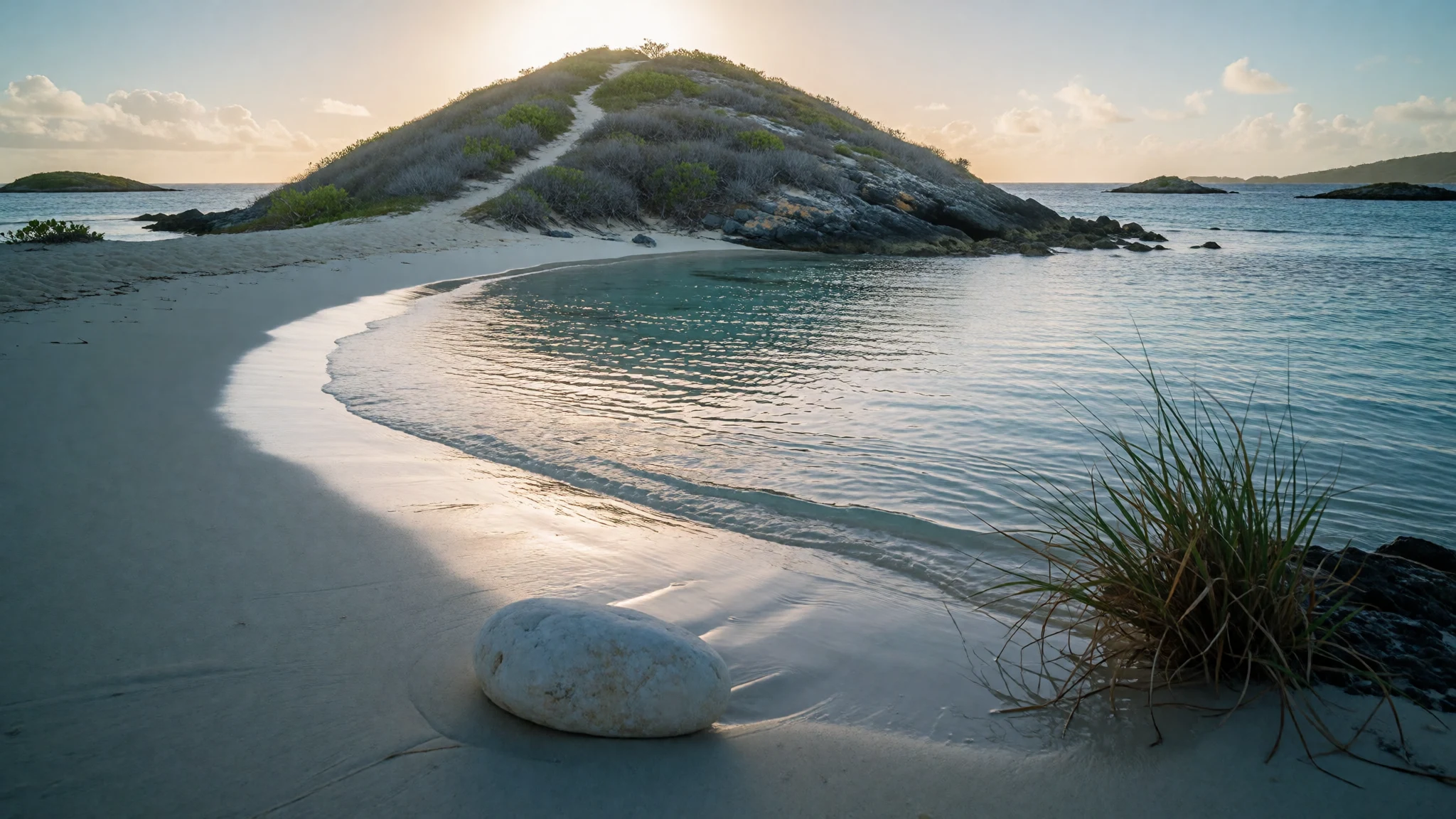
Great Bird Island is a small, quiet islet off Antigua's northeast coast, made for snorkelling, a short hilltop walk and watching seabirds.
The place
Great Bird Island is a tiny, uninhabited islet off the northeast coast of Antigua, set in the shallow, reef-sheltered water of the North Sound. It is privately owned but open to visitors, and it is small enough to cross on foot in a matter of minutes. The island is a rounded hump of scrub and rock with a few pale beaches on its calmer side. Most people reach it by boat from the Antiguan mainland, on an organised day trip or a chartered catamaran or speedboat, and the landing is a beach, not a jetty. There is no village, shop or restaurant here, so the day is built around whatever the boat brings. The appeal is simple: clear shallow water, snorkelling over seagrass and small patches of reef, a short path to a hilltop viewpoint, and seabirds circling the cliffs. A scatter of other small islands sits close by, and boats often combine several stops. The Atlantic-facing side is rougher, while the bay on the lee is calm, which is why boats gather there. Heat is the main hazard, because shade is thin and the sun at this latitude is strong for most of the year. On days when cruise ships are in port, several boats can land at once. Early or late in the day the island empties and the birds are easier to hear. Great Bird works best as a half-day of swimming, walking and looking, not as a place to fill a whole holiday.
Its story
Great Bird Island has a modest human history and a rather better-known natural one. Like the rest of Antigua's offshore islets, it was never settled in any serious way. The land was too small and too dry for plantation crops, which shaped so much of the main island's past, and it served mainly as a landmark for fishing boats and a stopping place for sailors. Its significance in recent decades comes from wildlife. The Antiguan racer, a slender, harmless snake, once clung on in a tiny range after introduced predators devastated it on the mainland. Offshore islets like this one became refuges, and conservation groups worked with local people to remove rats and protect what remained. Great Bird became one of the places where that effort is easiest to see, though the snakes themselves are shy and rarely seen by day-trippers. Seabirds nest on the cliffs and rocks, and the red-billed tropicbird, with its long white tail streamers, is the one most visitors remember. The island's private ownership has kept development off it, and visits are handled by boat operators who work from the mainland. That arrangement is fragile, since more boats and more feet mean more pressure on vegetation, nesting ground and reef. What looks like an empty beach is also a small, working conservation site, and the story of the place is largely about how little needs to be added to keep it that way.
What to see
- The hilltop path — Centre of the island
On Great Bird Island, a short, steep track climbs from the landing beach through low scrub to the high point of the islet. The effort is small, but the reward is a wide view over the reef, the neighbouring islets and the northeast coast of Antigua. Wear shoes with grip, because the ground is loose and rocky.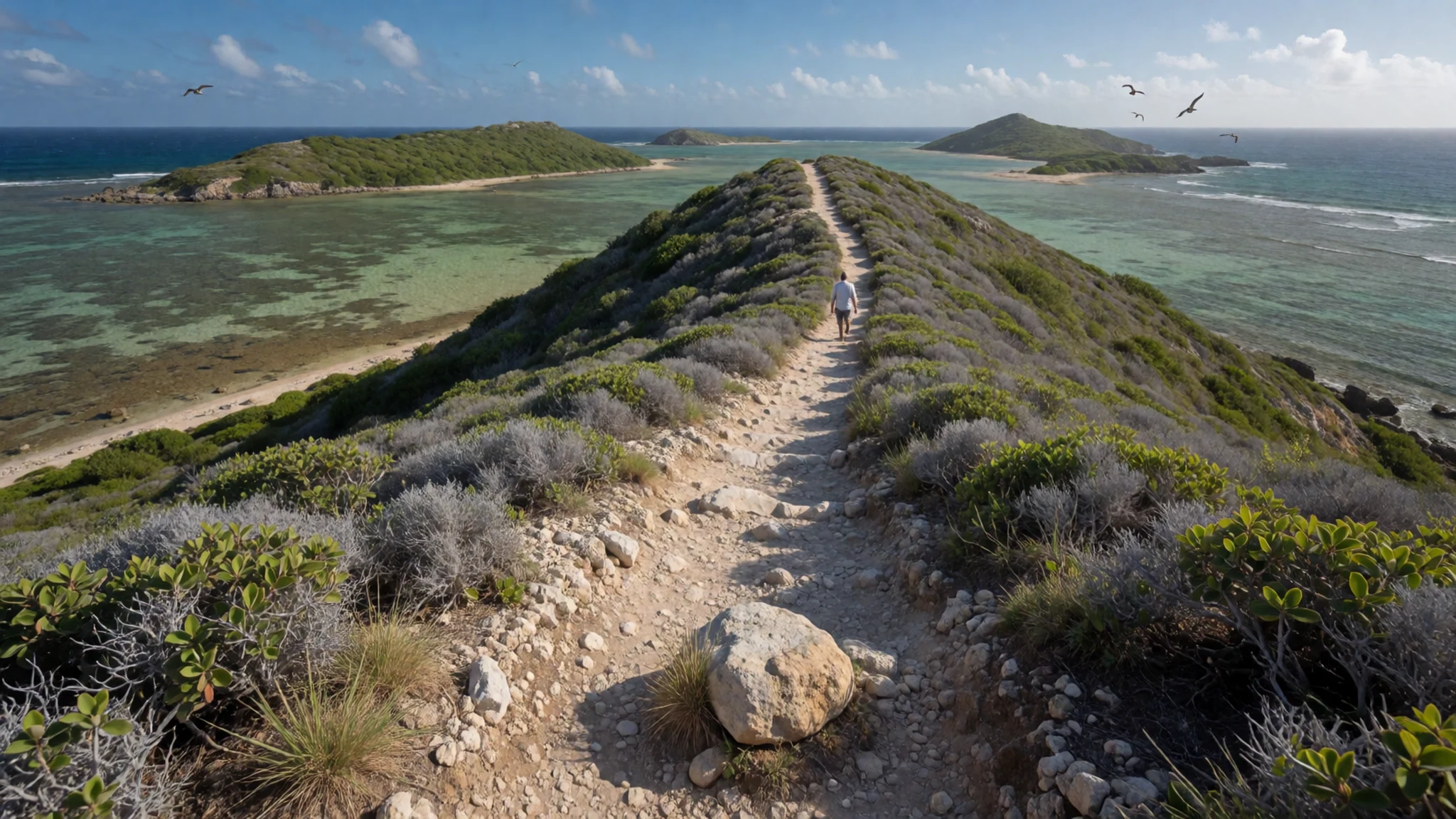
- The lee-side beach and snorkelling — Lee side of the island
The calm bay on the sheltered side is where boats anchor and where most swimming happens. The water is shallow and clear, with seagrass, small fish and patches of coral close to shore. It suits beginners and children, though the reef is fragile, so avoid standing on it or touching it.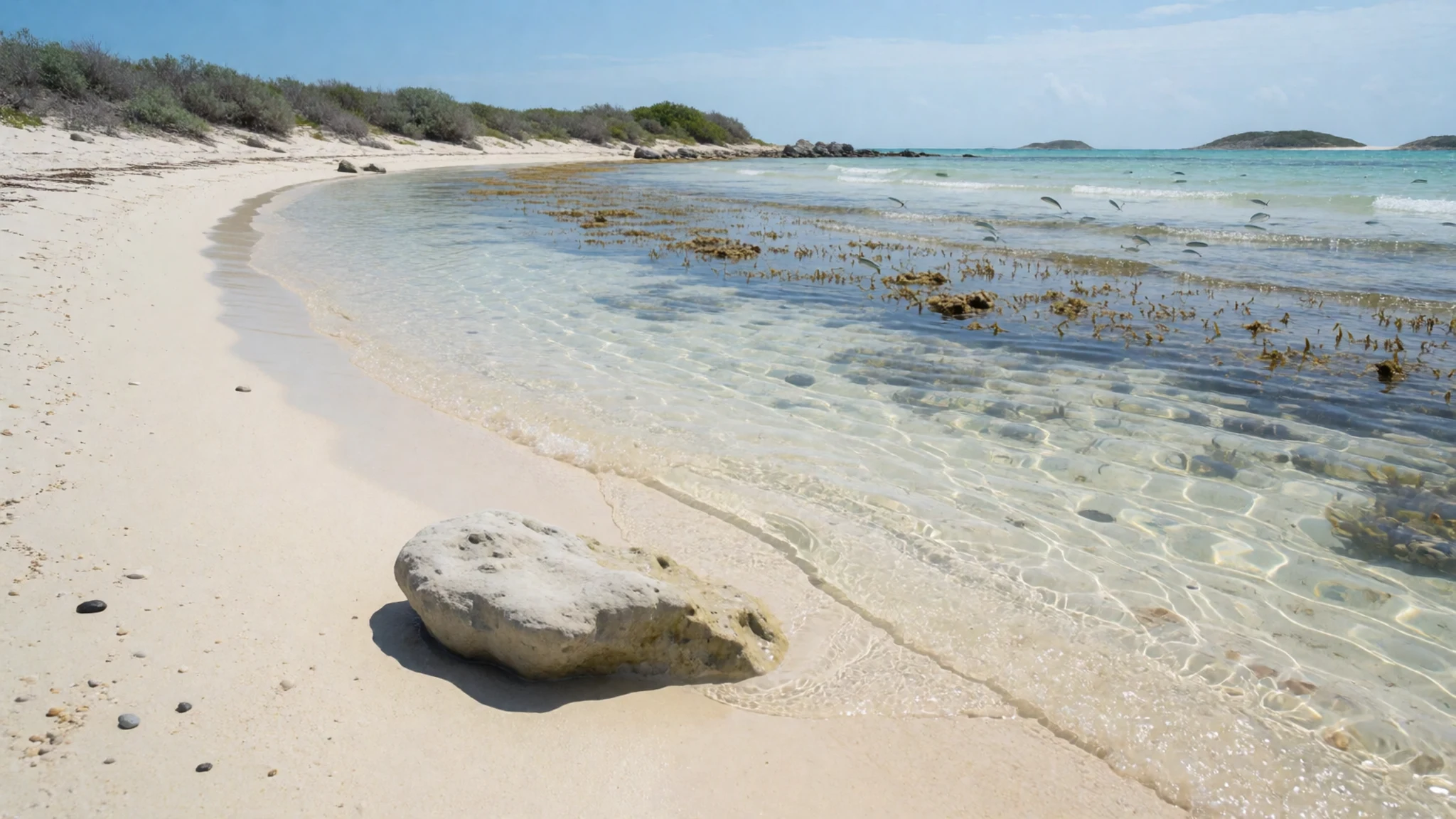
- Red-billed tropicbirds — Cliffs and rocky edges
The cliffs and rocky edges of Great Bird Island host nesting seabirds, including the red-billed tropicbird, a white bird with a red bill and long tail streamers. Look up from the viewpoint or from a boat just offshore. Binoculars help, and quiet behaviour matters, since disturbed birds may abandon their nests.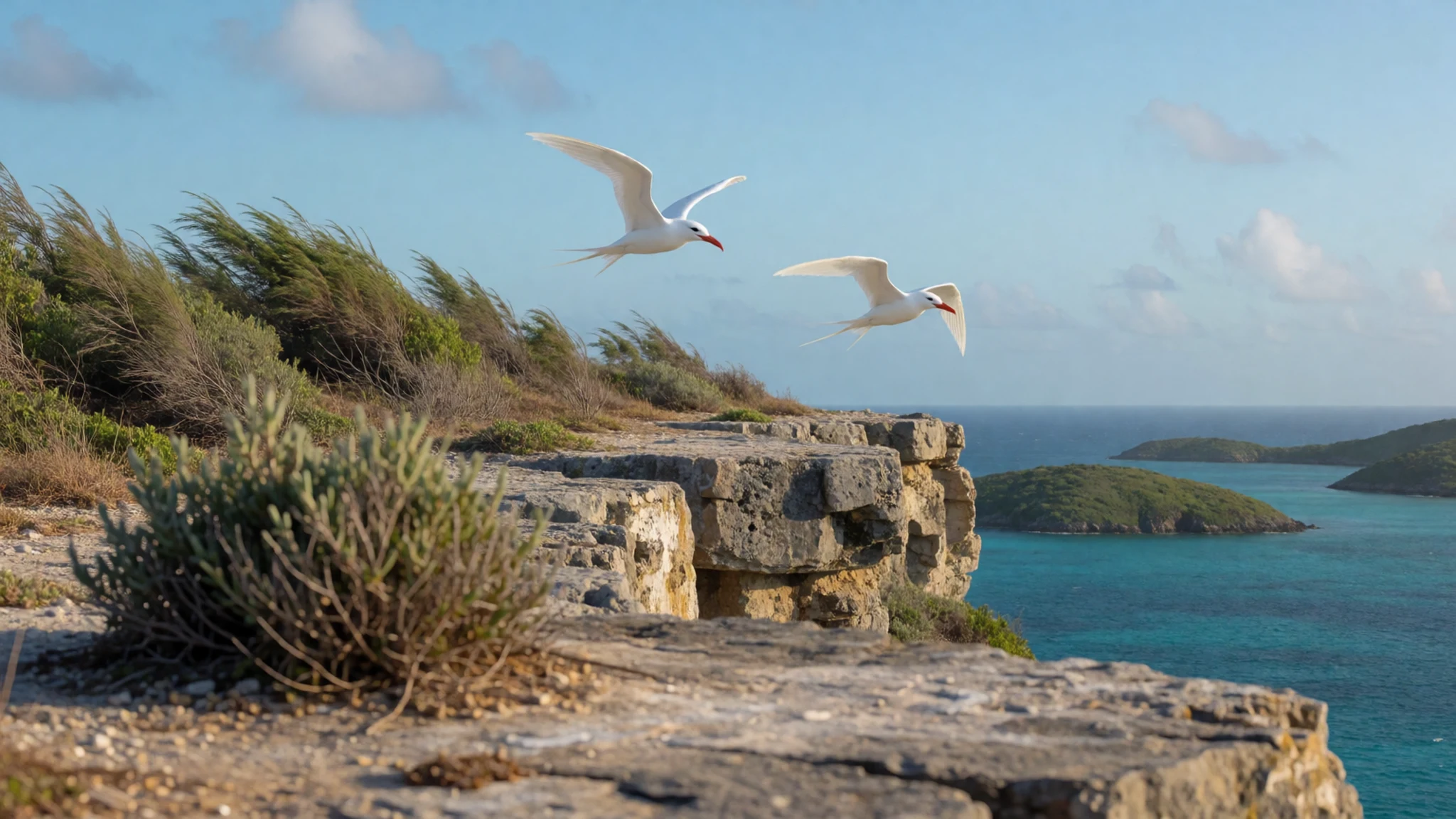
- Antiguan racer habitat — Scrub and interior paths
The scrub behind the beach is part of the habitat that helped the Antiguan racer survive. Visitors rarely see the snake, which is harmless and shy, but the vegetation is worth a slow look. Staying on the path keeps eggs, burrows and plant roots intact, and that is why the walkways are narrow.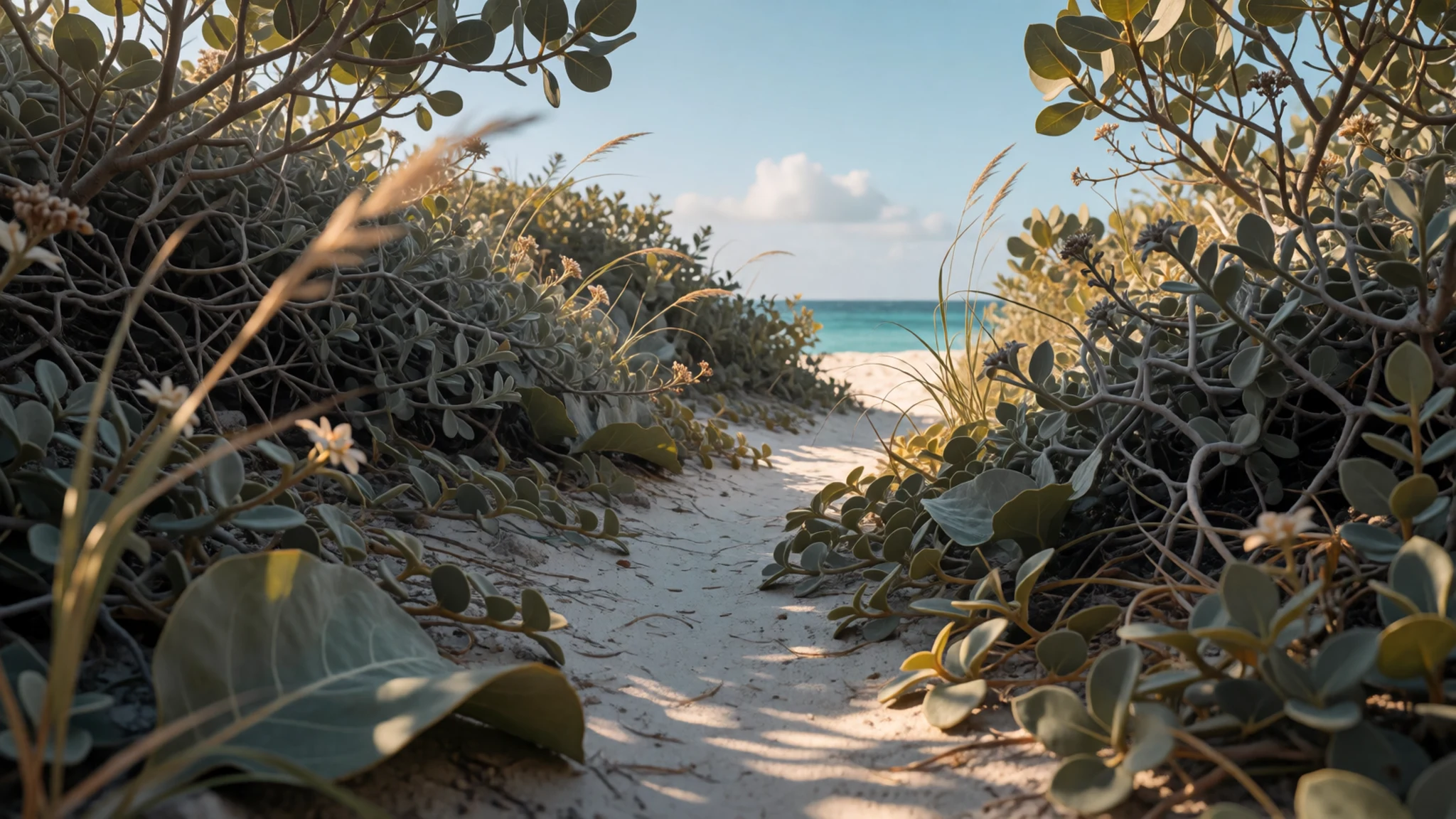
- The boat ride across the North Sound — North Sound, northeast Antigua
The journey to Great Bird Island is part of the visit. Boats cross shallow, bright water past mangroves and low islets, and many operators stop at neighbouring rocks, including Hell's Gate Island, for more snorkelling or a swim. Sea conditions change with the wind, so ask the operator about the route and the swell.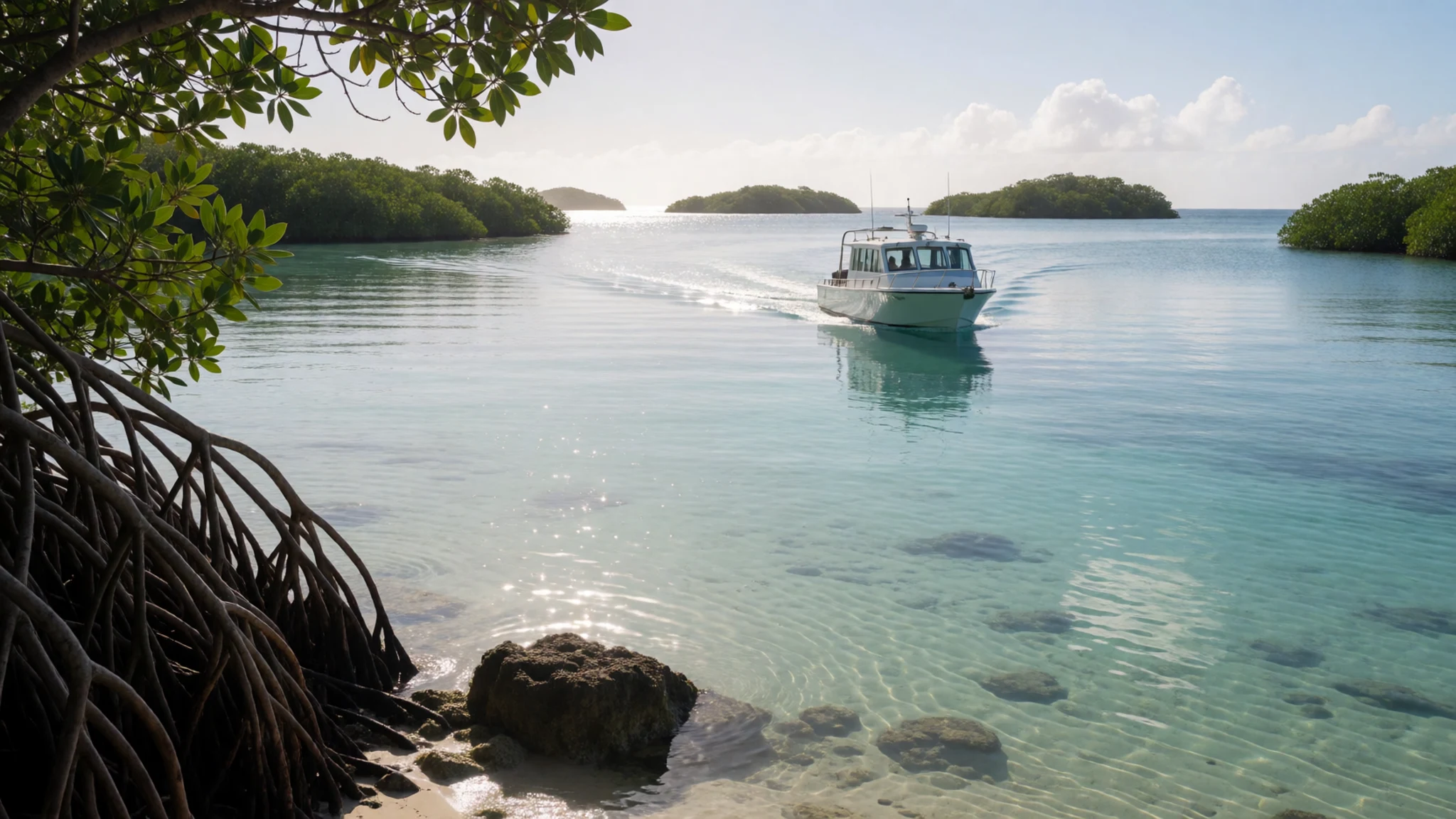
Culture
Great Bird Island has no resident community of its own, so its culture is really that of northeast Antigua, a place shaped by fishing, sailing and the island's long sugar-era history. Day trips are usually run by Antiguan boat crews, and the atmosphere on board is part of the experience: music, banter, rum punch and a barbecue lunch on the sand are common. Antigua is English-speaking, with a lilting local Creole in everyday talk, and visitors will find a courteous, relaxed pace of life. Greetings matter, and a spoken 'good morning' before any request is the normal way to begin a conversation. Conservation is also now part of local identity. The Antiguan racer has become a point of pride, and boat operators often explain how the islets are protected. Sunday is quieter across the main island, with church services and family gatherings, and the coastline fills with locals at weekends. Beaches in Antigua are public up to the high-water mark, though access across private land can be restricted, and Great Bird is private property that happens to welcome visitors. Behaving as a guest, with respect for the crew, the owners and the wildlife, is what keeps that welcome in place. Take every piece of rubbish back to the boat, and keep to the marked paths so nesting birds and fragile vegetation are not disturbed.
What to wear
Great Bird Island has no traditional costume of its own, so the clothing story belongs to Antigua as a whole. Historically, the dress of the island reflected its African and British heritage. Women wore cotton head-wraps and full skirts, and the madras-style checked cloth common across the eastern Caribbean was used for headties and festival wear. The national dress today is usually a madras or plaid pattern in the colours of the flag, worn on Independence Day and at cultural events. Cotton and linen suit the heat, and both appear in everyday wear. Day-to-day, people on the island dress casually and neatly: light shirts, shorts, sundresses and sandals, with smarter clothes for church and offices. Swimwear is for the beach and boat only, and covering up when walking through a town or village is the local norm. For a visit to Great Bird Island, wear swimwear under a light cover-up, a long-sleeved sun shirt and a wide-brimmed hat, because shade is limited. Reef-safe sun cream is kind to the coral. Bring shoes that grip for the hilltop path, such as trainers or sturdy sandals, and water shoes if the shoreline is stony. A thin waterproof layer or dry bag helps on a boat, since spray and sudden showers are common, especially in the wetter months.
What to eat
- Ducana and saltfish — Village eateries and weekend stalls on the main island
A steamed parcel of grated sweet potato, coconut and spice, wrapped in a leaf, eaten with salted cod stewed with onions and peppers. It is a national dish of Antigua and a classic weekend breakfast or lunch.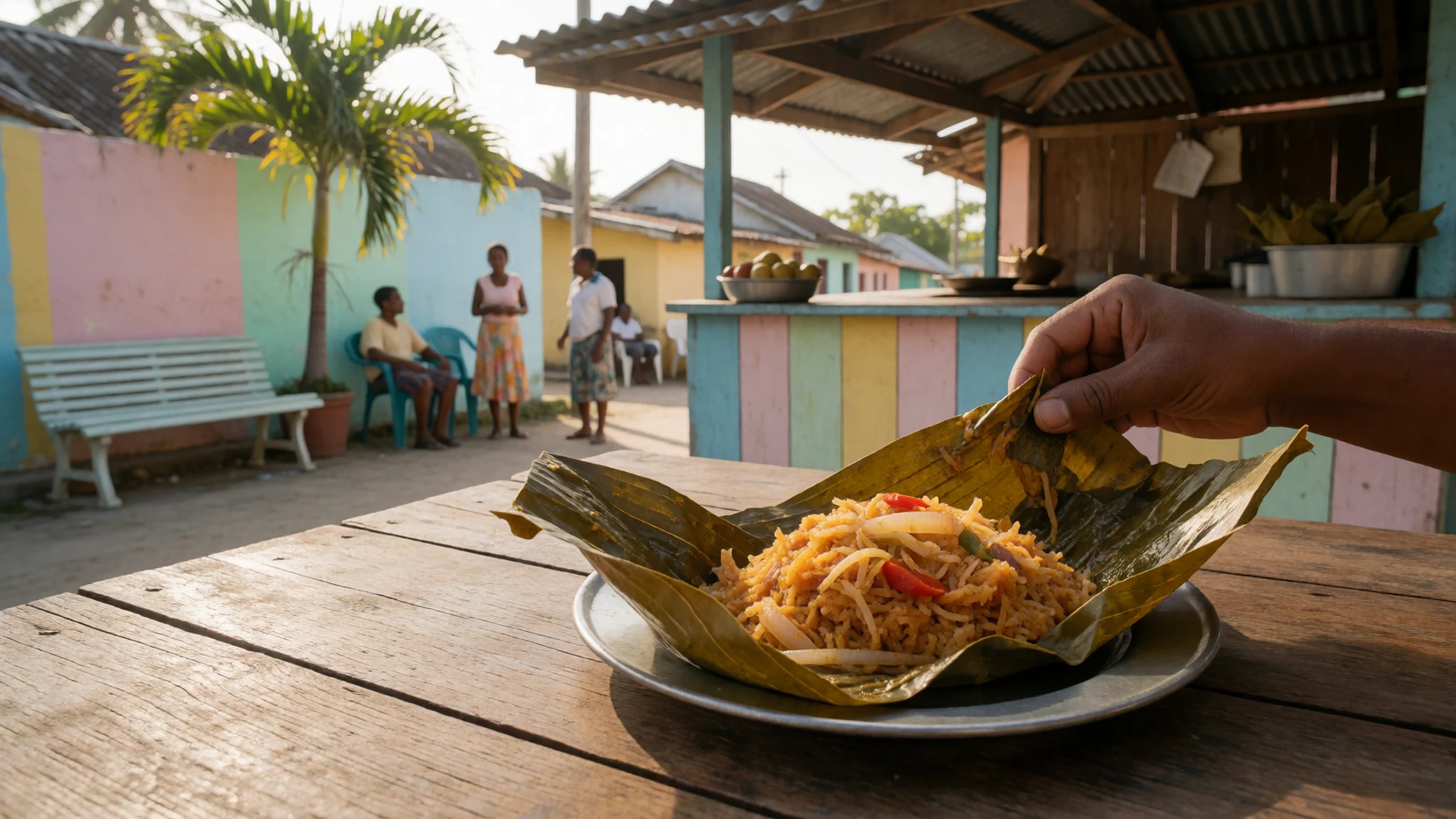
- Fungee and pepperpot — Local eateries in St John's and village restaurants
Fungee is a smooth cornmeal paste, similar to polenta, served beside pepperpot, a thick stew of greens, pumpkin and meat. The two are usually served together and are common at family meals and festivals.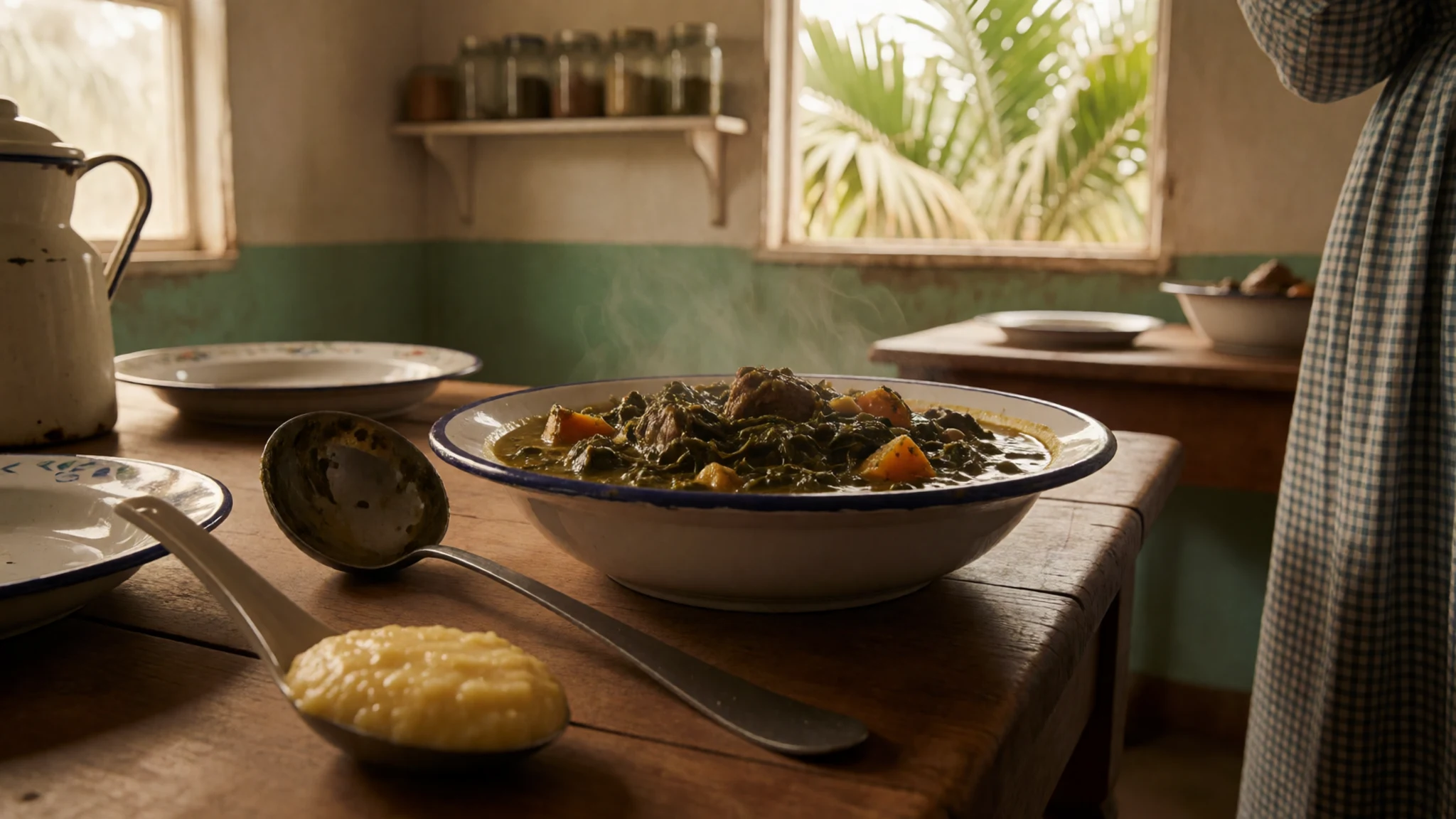
- Grilled fish or lobster — On the boat or at a beach barbecue on a day trip
Boat-trip lunches near Great Bird Island often feature fish or lobster grilled over coals and served with salad and rice. The catch depends on the season and the day, so ask what is fresh. - Johnny cakes — Roadside stalls and village bakeries
Small fried dough rounds, crisp outside and soft within, eaten warm with butter, cheese or fish. They are a common snack on the road and at the breakfast table, and are easy to share on a boat. - Antigua black pineapple — The Saturday market in St John's and roadside fruit stalls
A small local pineapple with notably sweet, low-acid flesh. Seasonal and grown on the island's farms, it is sold whole or cut at markets. Eaten chilled, it is a good answer to a hot day.
Plan it
Best time. December to April is the dry, sunnier season with steady breezes, and it is the best window for calm water and clear snorkelling. It is also the busiest and priciest period. June to November is hotter, wetter and humid, and it is the Atlantic hurricane season, when boat trips can be cancelled at short notice.
How long. 1
Getting there. V. C. Bird International Airport is the main airport on Antigua. From there, drive or take a taxi to a northeast-coast marina or boat pick-up point, then go by boat across the North Sound to Great Bird Island. Most visitors book a day trip that includes the crossing.
Budget. mid
Tips
- Book the boat trip ahead in the December to April season, and check the operator's current schedule on its official site
- Go early or late in the day, when fewer boats are at the landing and the birds are more active
- Bring drinking water, a hat and sun cream, because there is almost no shade and no shop on the island
- Carry some cash for tips and small purchases, as card readers on boats can be unreliable
- Check the weather and sea conditions with the operator, since wind and swell can change the plan
Etiquette
- Keep to the marked paths and do not disturb nesting birds or dig in the sand
- Take all rubbish back to the boat and avoid touching coral or standing on the reef
- Greet your boat crew politely and follow their guidance about landing and swimming
Nearby
Sources
- Wikidata Q5598777 (CC0)
- Wikipedia: Great Bird Island (Antigua and Barbuda) (CC BY-SA 4.0)
- Wikivoyage: Antigua and Barbuda (CC BY-SA 4.0)
- Red-billed Tropicbirds (Phaethon aethereus) — Mocolos (CC BY 3.0)
- Relief Map of Caribbean — Nzeemin (CC BY 3.0)


Wildlife
- Red-billed tropicbird (animal)
The red-billed tropicbird is a white seabird with a red bill, a black eye mask and tail streamers so long they trail behind it like ribbons. On Great Bird Island it nests on the cliffs and rocks, and many visitors say it is the bird they remember best. Ask your guide about the best season and hour. Watch from a distance, speak softly, keep clear of nests, and never feed it.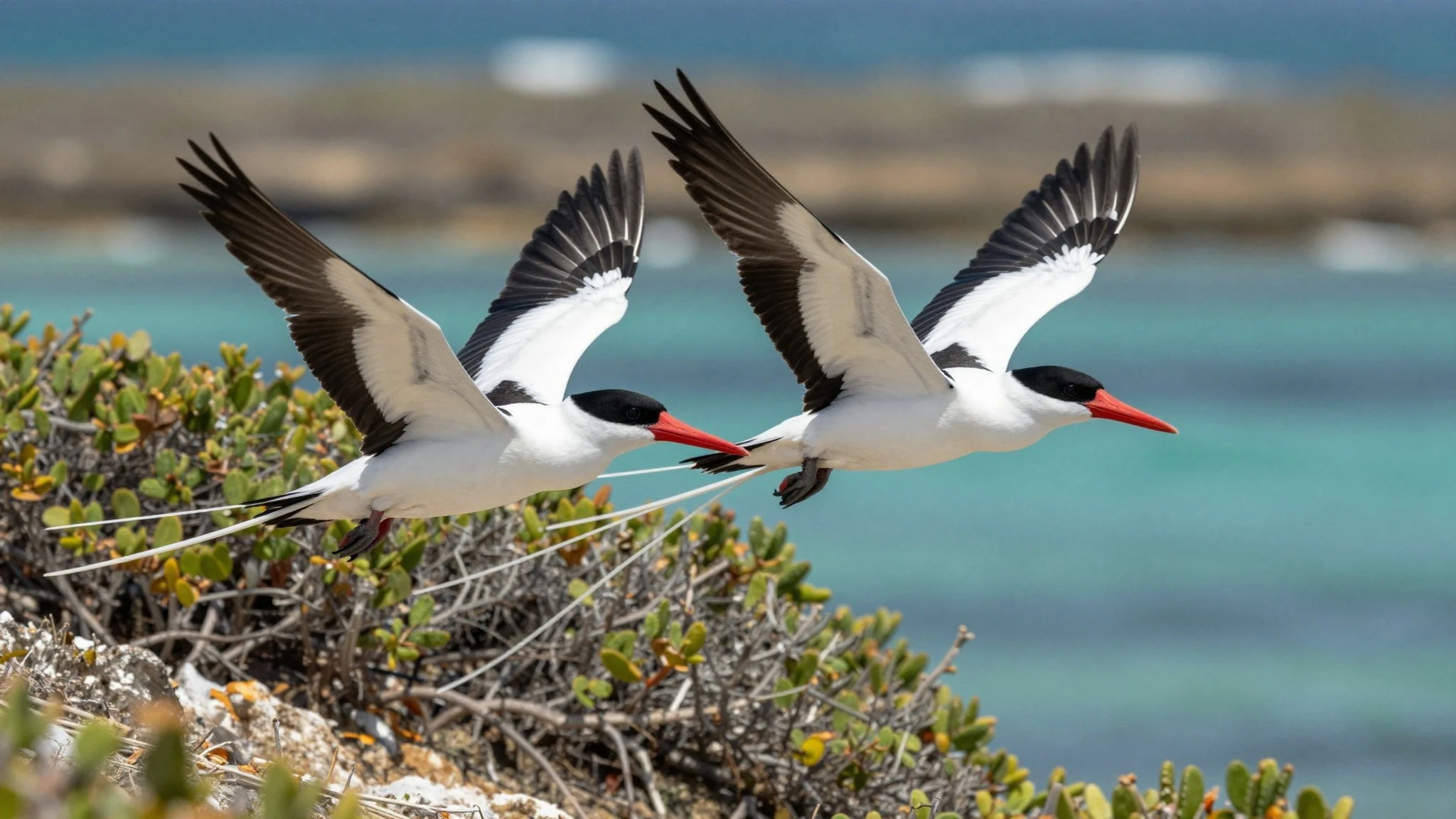
- Red-billed tropicbird (bird)
The red-billed tropicbird is a white seabird with a red bill, a black eye mask and tail streamers so long they trail behind it like ribbons. On Great Bird Island it nests on the cliffs and rocks, and many visitors say it is the bird they remember best. Ask your guide about the best season and hour. Watch from a distance, speak softly, keep clear of nests, and never feed it. - Antiguan racer (animal)
The Antiguan racer is a slender, grey-brown snake that is harmless to people and one of the rarest snakes anywhere. Great Bird Island was long its only home, though careful conservation has helped it settle on a few neighbouring islands too. Ask your guide about the best season and time of day to look. Keep a respectful distance, stay calm and quiet, never touch it, and never offer it food.