Half Moon Bay
Half Moon Bay, Antigua and Barbuda
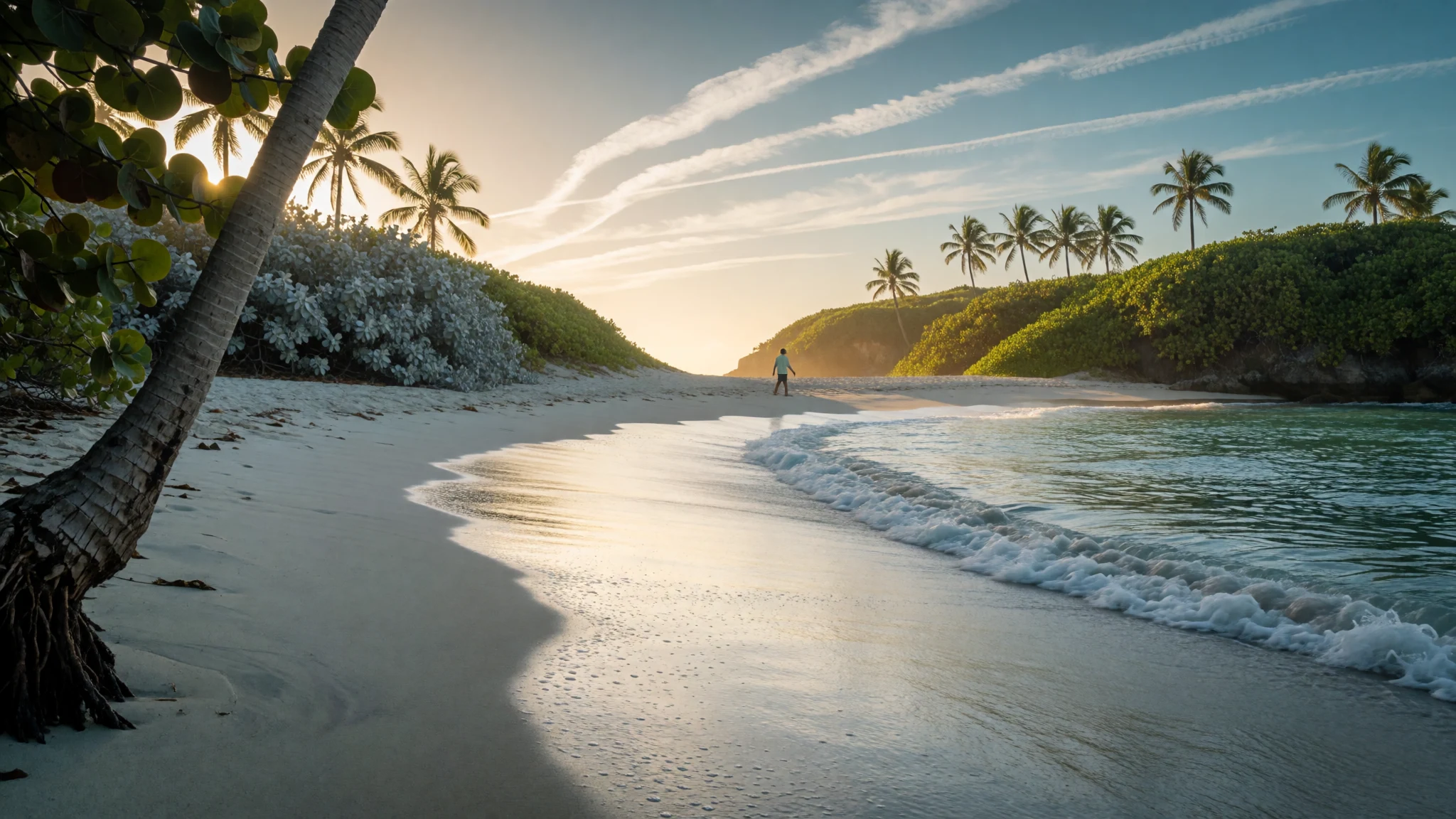
Half Moon Bay is Antigua's quiet south-east corner, where a curved beach, reef-sheltered bays and a slow pace make a restful Caribbean stay.
The place
Half Moon Bay sits on the south-east corner of Antigua, in the parish of Saint Philip, where the Atlantic-facing coast breaks into coves, points and low scrubby hills. On maps the settlement appears as Mill Reef–Half Moon Bay, and it covers a loosely defined stretch of shoreline rather than a village with a centre. Very few people live here year-round. Much of the land belongs to a private club, villas and a golf course, and large parts of the peninsula's tip are closed to the public. That shapes the visit. Half Moon Bay is a place for lying on sand, swimming and watching the swell, not for browsing shops or cafés. Neighbouring Nonsuch Bay is calmer, sheltered by reef, and Green Island and York Island lie just offshore. Inland the roads are quiet and the pace is unhurried, and the nearest proper town, St John's, is a long drive across the island. Antigua as a whole leans heavily on tourism, and the south-east is its quieter, more residential face. The heat is steady, the sun strong, and the trade winds are the main relief. Public transport out here is thin and the sights are spread apart, so visitors generally rely on a hire car or taxis. Cricket is the national passion, and a match on a village pitch is as typical an Antiguan scene as a beach.
Its story
The story of Half Moon Bay moves from small beginnings to later wealth. During the sugar era the south-east was not plantation heartland. Around 1770 the colonial authorities divided state-owned land nearby into small farm plots known as the Ten Acre Lands, and a fishing community lived on the shore of the bay itself. Next door, Nonsuch Bay gave boats shelter, though its low, awkward entrance made it tricky to enter, and the British built Fort Harman on Hungry Hill above Green Bay to watch the approach. The fort is long out of use. The twentieth century turned the coast towards leisure. In 1947 a private holiday and yacht club, the Mill Reef Club, was founded, and it took in Green Island too; a golf course followed in 1952. In the 1950s a resort opened at Half Moon Bay, among the first tourist properties on Antigua, and from 1971 new investors enlarged it and sold plots for holiday homes. Famous and wealthy guests came, but the enclosed, remote setting meant little of the money reached the rest of the south-east, and big parts of the headland stayed closed to ordinary islanders. In 1995 Hurricane Luis struck and wrecked the resort. That storm is a reminder that this coast lies in the hurricane belt, and that its building and rebuilding has always been tied to the weather.
What to see
- Half Moon Bay beach — South-east coast, Saint Philip
The bay itself is the main event: a sweep of sand facing the open Atlantic, with livelier water than the island's calmer coasts. Swim with care when the swell is up, bring shade and water, and expect few facilities. Go early, when the light is soft and the sand nearly empty.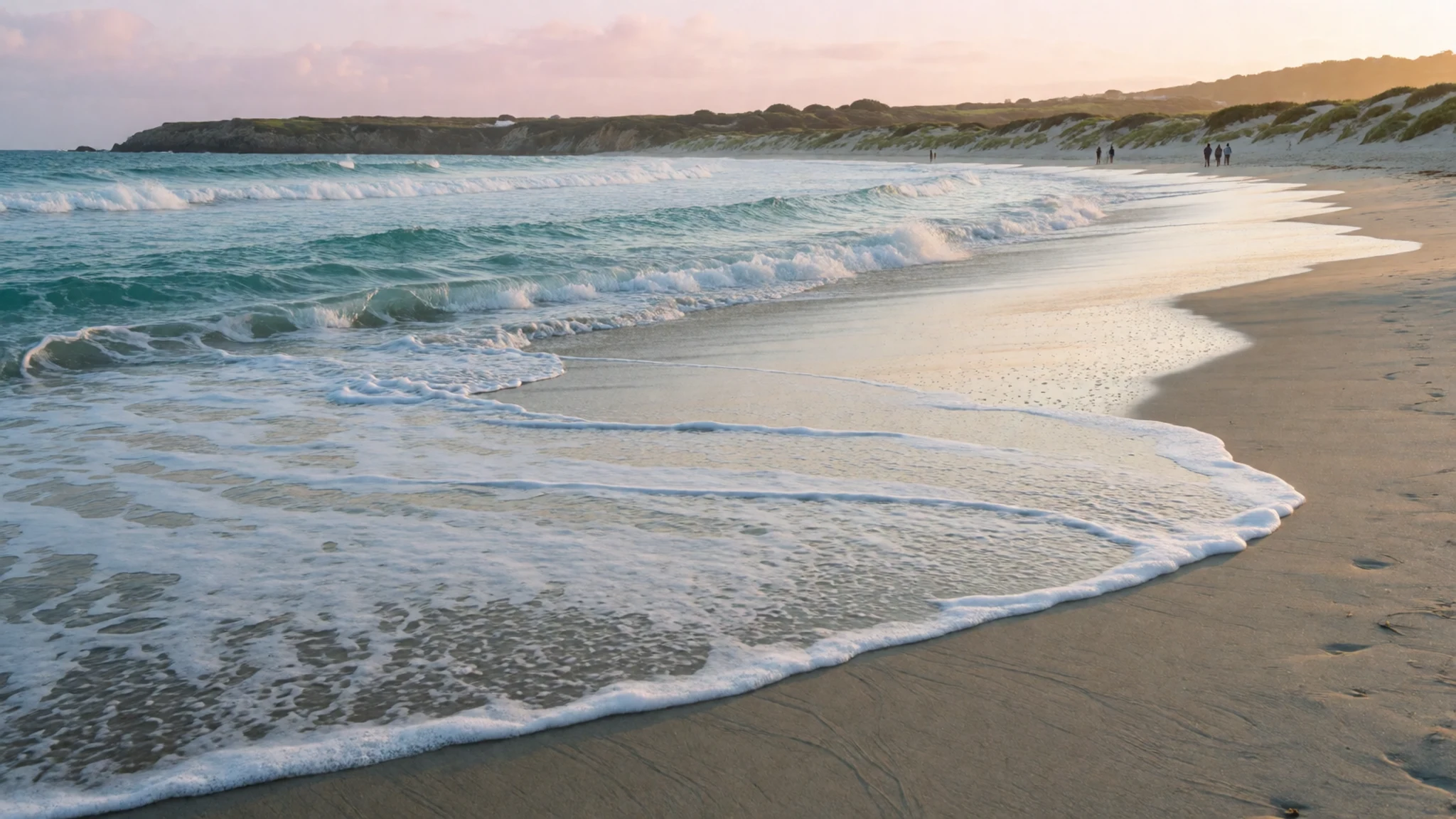
- Nonsuch Bay and Green Island — Nonsuch Bay, Saint Philip
Nonsuch Bay is the sheltered water beside Half Moon Bay, protected by reef and popular with sailors. Green Island lies offshore and belongs to the private club, so access depends on the arrangements of boat operators. Ask locally what is allowed before planning a trip.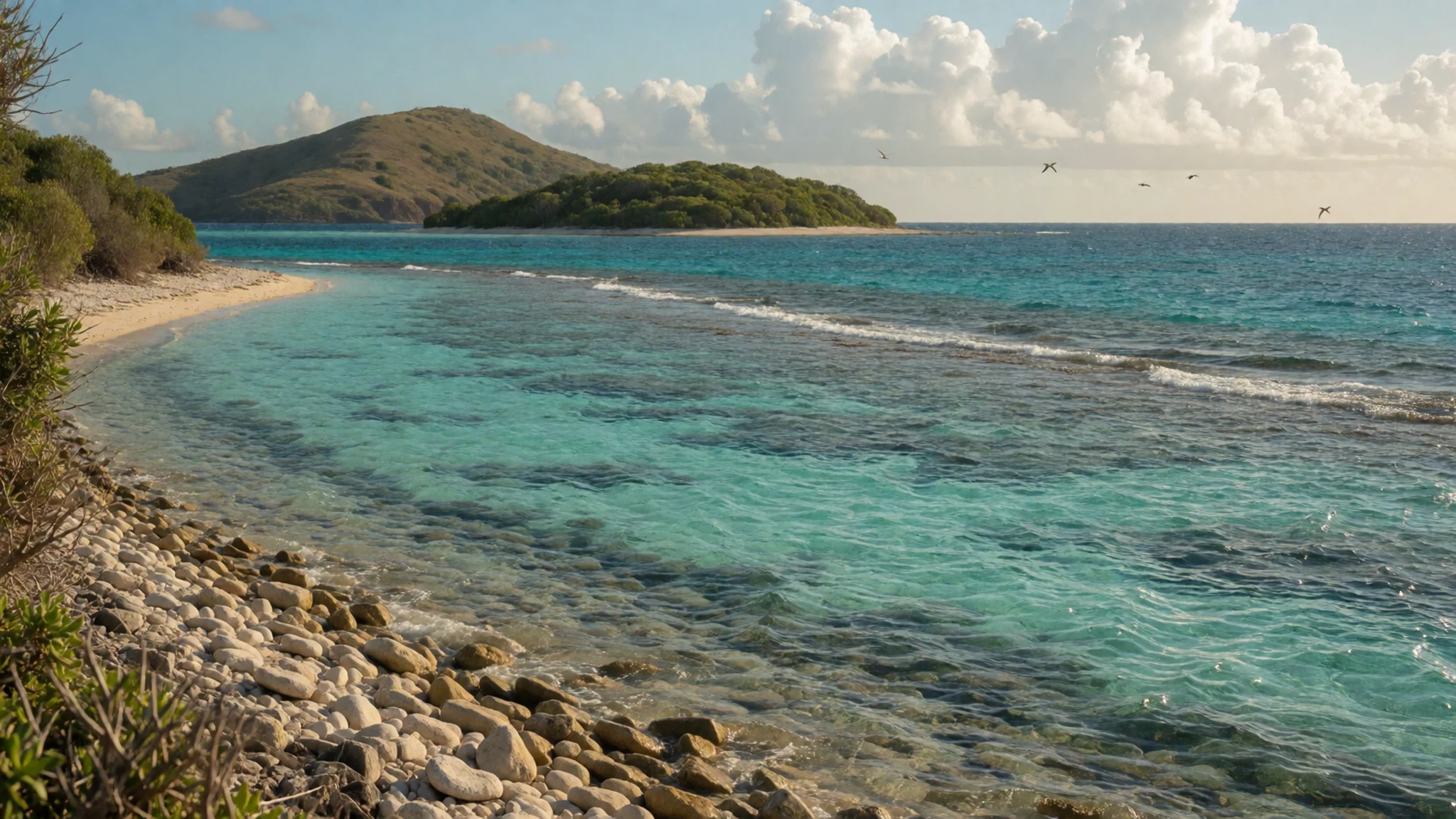
- Shirley Heights lookout — Near English Harbour
A hilltop viewpoint above English Harbour, reached by road from the south-east in under an hour. The outlook takes in the harbour, the coast and neighbouring islands on a clear day. It is popular at sunset, so expect company, and check locally for any organised events.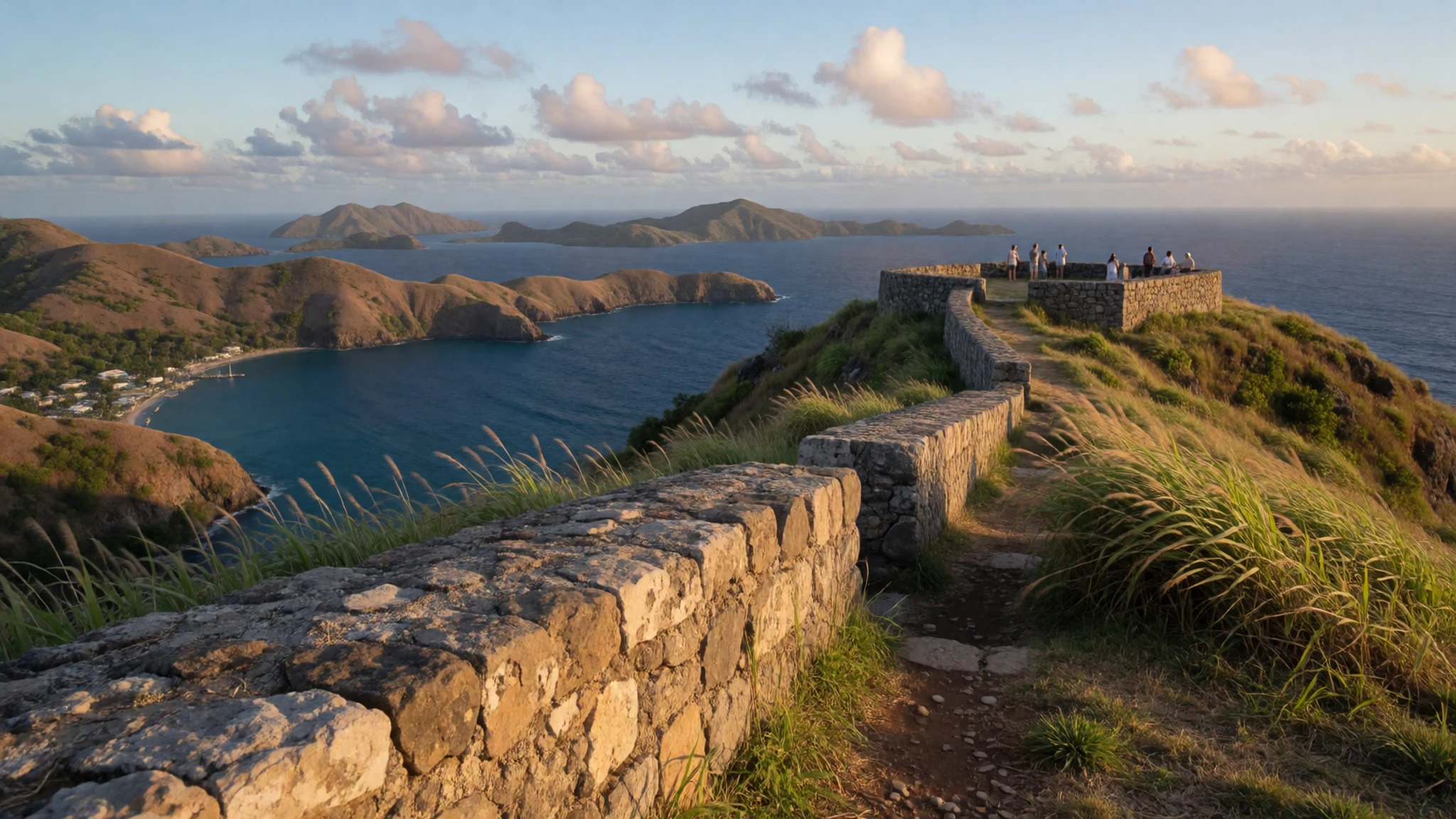
- Nelson's Dockyard — English Harbour
A restored British naval dockyard around English Harbour, and the island's only World Heritage Site, listed in 2016. Old stone storehouses and quays now sit among yachts. It makes a good half-day, with a museum and walking paths. Check the official site for opening arrangements before going.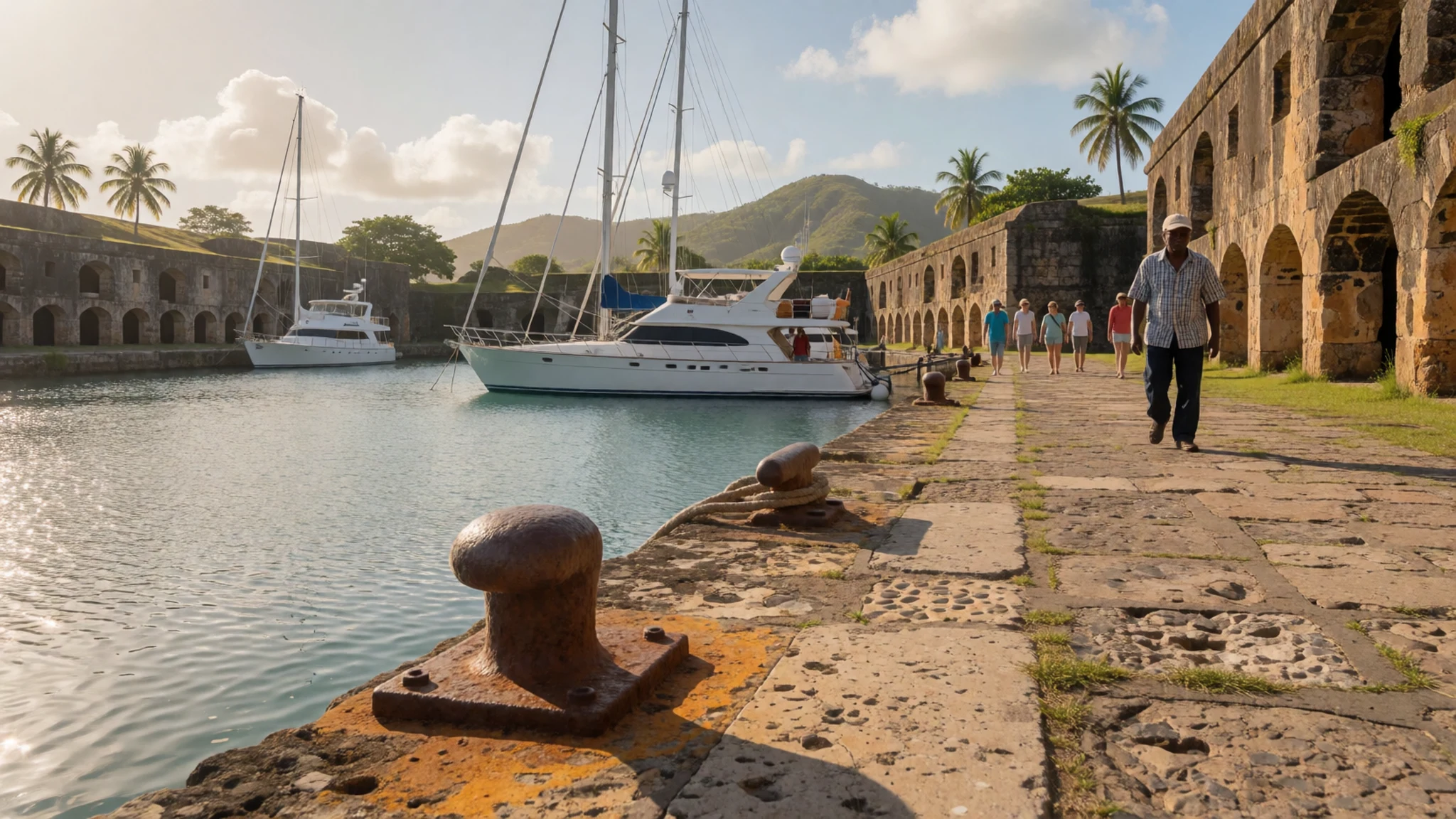
- Devil's Bridge — Indian Town Point, north-east coast
On the north-east shore, the Atlantic has carved a natural limestone arch and blowholes into the rocks. It is a national park, and the spray is loud and dramatic. Stay well back from wet edges, wear shoes with grip, and treat the sea here with respect.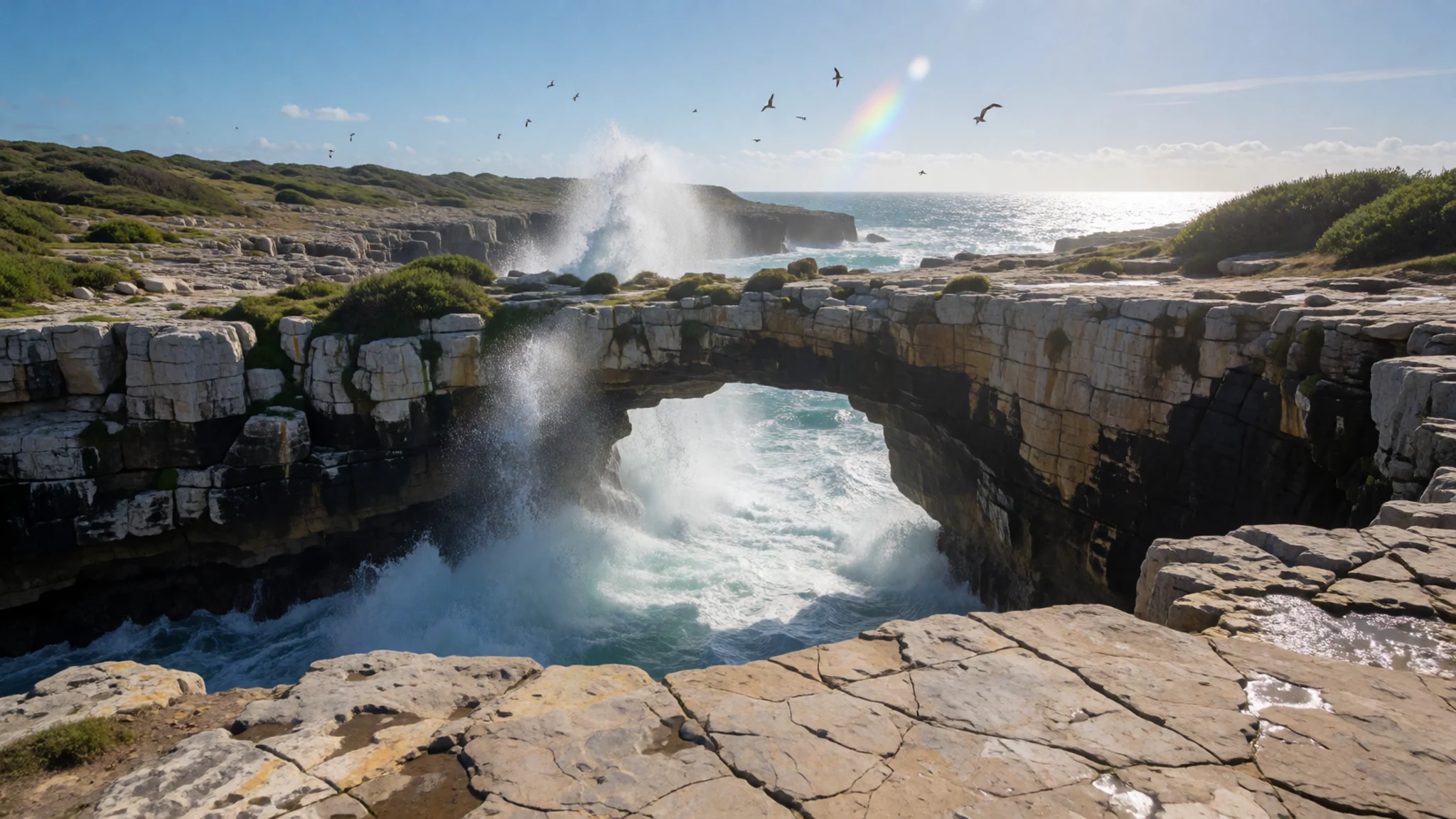
Culture
Half Moon Bay belongs to a country where good manners carry real weight. Locals are friendly and courteous, and that courtesy is returned when visitors begin with a greeting before asking for anything. A simple good morning, good afternoon, please and thank you opens more doors than any phrasebook. Life here follows an island rhythm: Saturdays bring roadside barbecues at busy junctions, sometimes with music from a speaker, and Sundays are for long family meals that show the island's cooking at its fullest. English is the everyday language, spoken with a Caribbean lilt, and the nation's history of British rule, plantation labour and emancipation runs beneath its festivals, food and speech. Cricket is far more than a pastime. Antigua and Barbuda has produced several players who count among the game's greats, and talk of the sport is an easy way into conversation with almost anyone, from taxi drivers to shopkeepers. Around Half Moon Bay the local community is small and the surrounding land largely private, so the character of the place comes from the wider island more than from the bay itself. Tourism funds a great deal of daily life here, and residents are used to visitors but appreciate those who show interest in more than the beach. Greet people before you ask a question or take a photograph, and keep out of private club and villa land unless you have been invited in.
What to wear
Half Moon Bay's traditional dress belongs to the wider Antiguan and Caribbean wardrobe. Women's festive wear has long drawn on madras-style checked cotton, made into headwraps, skirts and aprons, often worn at heritage events, national celebrations and in folk performances. Carnival is the other great showcase, with elaborate feathered and sequinned costumes built for the street parades. These are occasion clothes, not everyday ones. In daily life people wear what suits the heat: cotton and linen shirts, light dresses, shorts, sandals and caps, with smarter outfits for church on Sundays, where dressing up is still the custom. Around the south-east's resorts and villas the look is resort casual, with linen, swimwear and sun hats. Visitors should pack for strong sun and humidity: breathable cotton, a wide-brimmed hat, sunglasses, and a light layer for evening breezes and air-conditioned rooms. Reef-safe sunscreen protects both skin and the coral. Beachwear belongs on the beach, so carry a shirt or sarong for walking into towns, shops and restaurants, and cover shoulders and knees for church visits. Sandals are fine for sand, but sturdy shoes with grip suit rocky coastal paths such as those at Devil's Bridge, and a light waterproof is useful for passing showers, especially in the wetter months of the year.
What to eat
- Fungie and pepper pot — Local eateries and home-style cooking across the island
The national dish pairs fungie, a firm cornmeal pudding close to polenta, with pepper pot, a rich stew of greens and meat. It is filling, mild rather than fiery, and best eaten at a simple local eatery rather than a resort dining room.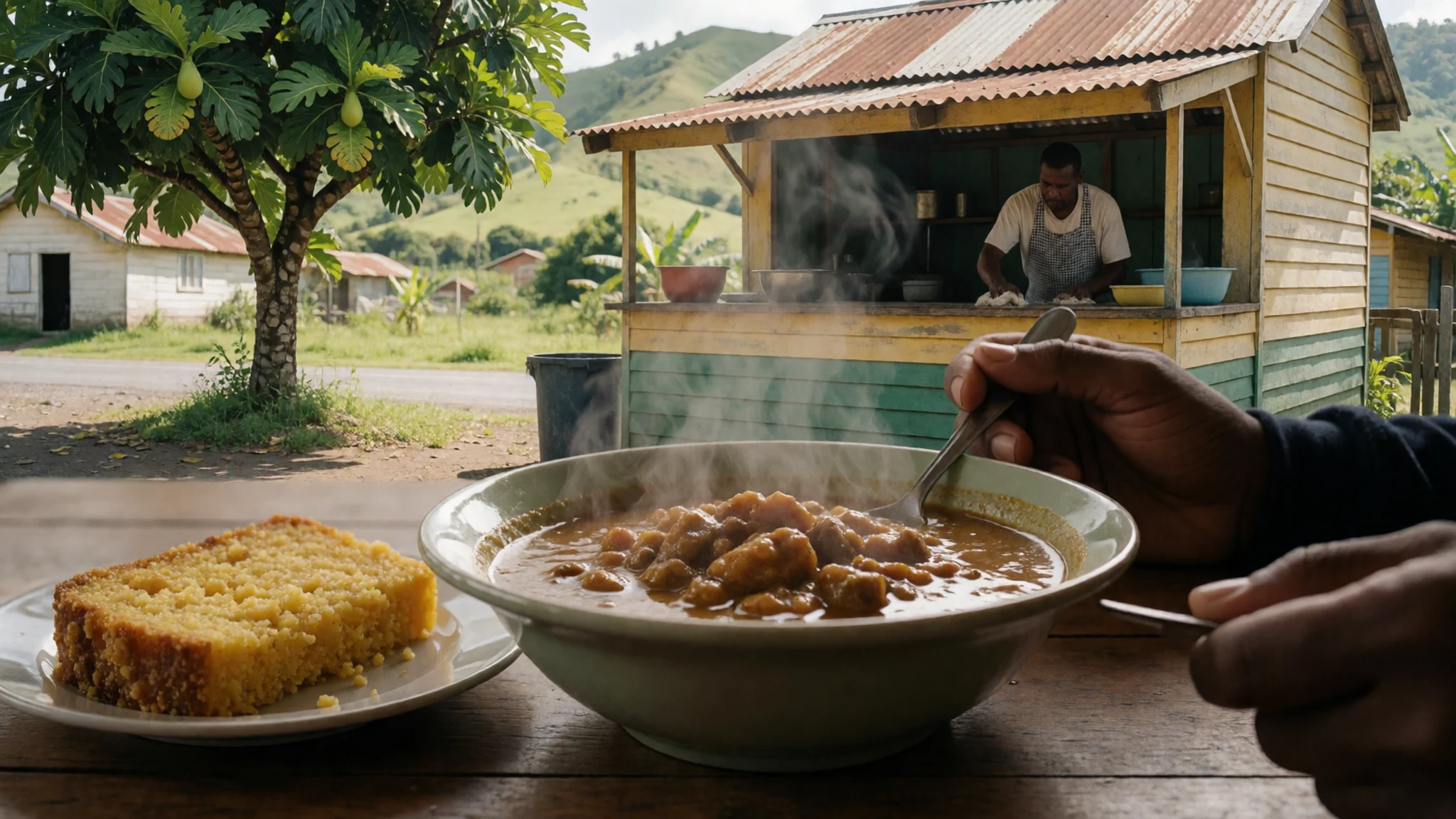
- Ducana and saltfish — Sunday breakfast tables and local cafés
Ducana is a steamed parcel of grated sweet potato, coconut and spice, traditionally served with stewed saltfish. The mix of sweet and salty is a classic Antiguan weekend breakfast, and it appears in homes and casual eateries on Sundays.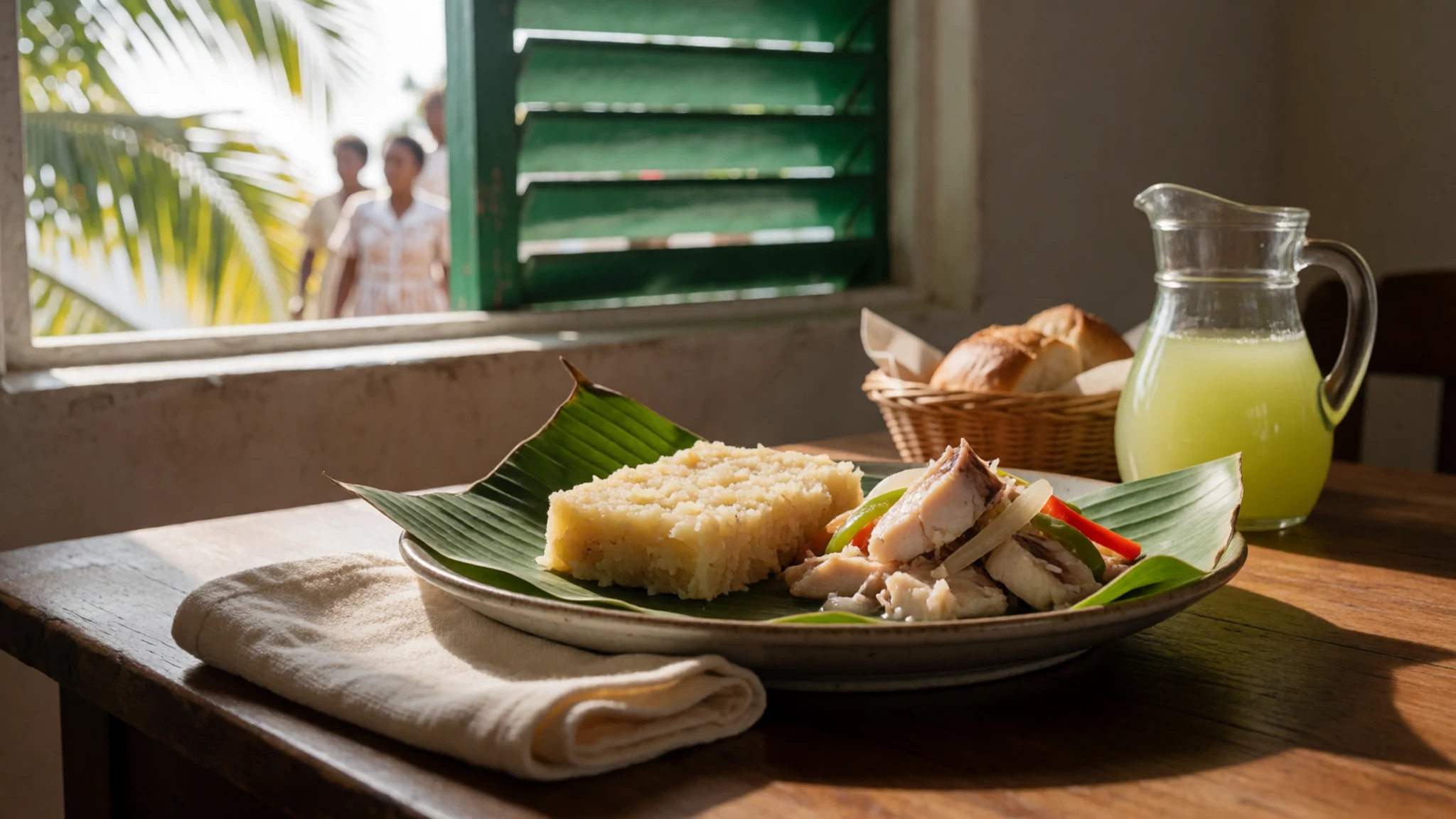
- Barbuda lobster — Seafood restaurants and beach grills
Lobster from neighbouring Barbuda is a local favourite, usually grilled and served with rice or salad. Availability follows the season and the catch, so ask what is fresh. Beachside grills near the coast are a natural place to look. - Saturday roadside barbecue — Road junctions across the island, on Saturdays
On Saturdays, cooks set up grills at busy crossroads and sell chicken, rice, dumplings and soup from the roadside, sometimes with music playing. It is cheap, social and one of the most local meals available. Bring cash and go before the pots run out. - Sugarcake and tamarind sweets — Bakeries, market stalls and corner shops
Sugarcake is a chewy coconut sweet, often tinted with ginger or colouring, sold alongside fudge, peanut brittle and tamarind stew. These are cheap treats for the road, found at bakeries and market stalls in St John's and in village shops. - Mauby and local rum — Bars, rum shops and market drink stalls
Mauby is a bittersweet drink made from tree bark, drunk cold and an acquired taste. Cool alternatives include tamarind juice, sea moss drinks and coconut water. Local rum and beer, such as Cavalier and Wadadli, are served in beach bars and rum shops.
Plan it
Best time. December to April, when it is drier and the trade winds keep the heat bearable; the hurricane season runs roughly June to November, with storms most likely late in it, so check forecasts and travel insurance if going then.
How long. 2–3
Getting there. Fly to V.C. Bird International Airport (ANU) on the north-east edge of St John's, then hire a car or take a pre-booked taxi across the island to the south-east coast; allow time, as the last stretch is on quiet local roads.
Budget. high
Tips
- Hire a car or arrange taxis in advance, as public transport out here is limited
- Carry water, shade and sunscreen, since the bay has few facilities
- Check access before heading to private club and resort land
- Keep cash for roadside food, small shops and local buses
- Check entry and visa rules for your passport with the official government source before booking
Etiquette
- Greet people before asking for help or directions
- Ask before photographing residents
- Cover up when walking away from the beach into towns and churches
Nearby
Sources
- Wikidata Q16218775 (CC0)
- Wikipedia, Mill Reef–Half Moon Bay (rev 1384389342) (CC BY-SA 4.0)
- Wikivoyage, Antigua and Barbuda (rev 5393513) (CC BY-SA 4.0)
- Unnamed Road, Antigua and Barbuda. Half Moon Bay, photo 01 (Андрей Бобровский) (CC BY 3.0)
- Half Moon Bay Antigua, photo 02 (Dario Item) (CC0 1.0)
- Unnamed Road, Antigua and Barbuda. Half Moon Bay, photo 03 (Андрей Бобровский) (CC BY 3.0)
- Unnamed Road, Antigua and Barbuda. Half Moon Bay, photo 04 (Андрей Бобровский) (CC BY 3.0)
- Unnamed Road, Antigua and Barbuda. Half Moon Bay, photo 05 (Андрей Бобровский) (CC BY 3.0)
- Unnamed Road, Antigua and Barbuda. Half Moon Bay, photo 06 (Андрей Бобровский) (CC BY 3.0)
- Unnamed Road, Antigua and Barbuda. Half Moon Bay, photo 07 (Андрей Бобровский) (CC BY 3.0)


