Seward
Seward, United States
Seward is a small fjord-side port where boats, glaciers and the old Iditarod Trail meet, three to four hours from Anchorage by road or rail.
The place
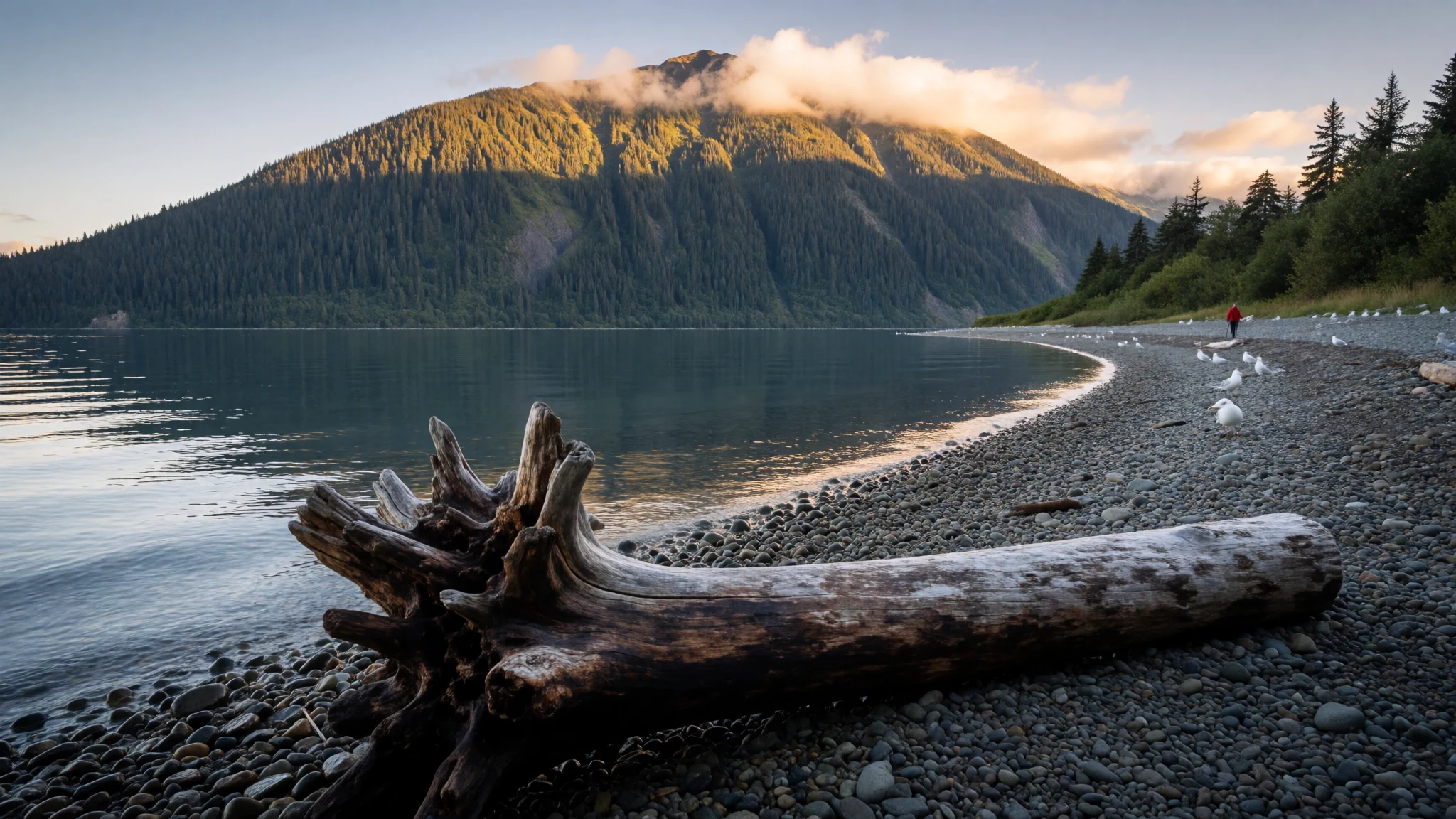
Seward is a small port town at the head of Resurrection Bay, a fjord that opens onto the Gulf of Alaska from the southern shore of the Kenai Peninsula. The population is 2,717, so the town feels intimate for most of the year, then fills out in summer with cruise passengers, anglers, kayakers and day-trippers from Anchorage, roughly 190 km away by road. The streets run between a working small-boat harbour and steep, forested mountains that rise almost from the edge of town, which gives the place a boxed-in, theatrical feel. Seward is the southern end of the Alaska Railroad, and the old Iditarod Trail, the winter route inland to Interior Alaska, begins here too, with a Mile 0 sign beside the water on the town's south side. The town also carries the Alutiiq name Qutalleq and the Dena'ina name Tl'ubugh, a reminder that Indigenous people knew this shore long before anyone built a port. Its English name honours William H. Seward, the US Secretary of State who arranged the purchase of Alaska from Russia in 1867. Most visitors treat Seward as a gateway to Kenai Fjords National Park, boarding boats from the harbour or driving out to Exit Glacier, but the town rewards a slower look: a local museum, a waterfront walk, a dive bar with dollar bills pinned to the ceiling and a mountain that the whole community races up each summer. Weather is the main uncertainty. Rain and low cloud are common, and a grey day can swallow the views entirely.
Its story
Seward's recorded history begins in 1793, when Alexander Baranov, working for the Shelikhov-Golikov company, set up a fur-trading post on Resurrection Bay. The post also built a three-masted ship, the Phoenix, under James Shields, an English shipwright in Russian service. The modern town dates from 1903, and its name honours William H. Seward, who as Secretary of State drove the 1867 purchase of Alaska. The railway and the harbour gave the place its purpose: goods and passengers came ashore here and headed north toward the Interior, and the Iditarod Trail started from the same shoreline. During the Second World War, Seward became a port for the military build-up in Alaska. Fort Raymond was built beside the Resurrection River to guard it, and an army airfield became Walseth Air Force Base; both facilities closed soon after the war ended. In 1964 the great Alaska earthquake shook much of the town and a local tsunami followed, wrecking large parts of the waterfront and erasing every trace of one radio station. Seward rebuilt and leaned further into the sea, fishing and tourism. Kenai Fjords National Park, which borders the town, was created in 1980 to safeguard ice that spills from the Harding Icefield. Exit Glacier, the part of the park reached by road, has become a measuring stick for climate change; in 2015 President Obama stood there to talk about its retreat.
What to see
- Alaska SeaLife Centre — Waterfront, south of downtown
On the waterfront, the Alaska SeaLife Centre combines an aquarium with a research and wildlife-rescue operation focused on the Gulf of Alaska. It is a dependable choice on a wet day, with sea birds, seals and fish to watch up close. Allow a couple of hours, and check the official website for current opening times and tickets. - Exit Glacier — Kenai Fjords National Park, north-west of town
Exit Glacier lies inside Kenai Fjords National Park and is the section that a car can reach. Paths lead to viewpoints close to the ice, and rangers lead walks in season. The glacier's retreat is easy to see on the ground. Guided ice hikes with crampons are offered; book through a licensed operator. - Seward Museum — Downtown
The Seward Museum is the town's local history museum, set downtown within easy walking distance of the harbour. It is a good first stop for the story behind the railway, the wartime years and the 1964 earthquake, which explains why the waterfront looks the way it does. Opening times vary, so check ahead. - Resurrection Bay by kayak and boat — Harbour and bay
The small-boat harbour is where Seward's wildlife cruises and fishing charters set off, and guided sea-kayak trips and gear rental run from town. On the water, glaciers, sea birds and marine mammals come into view. Mornings are usually calmer; wear warm layers, because the bay stays cold even in midsummer.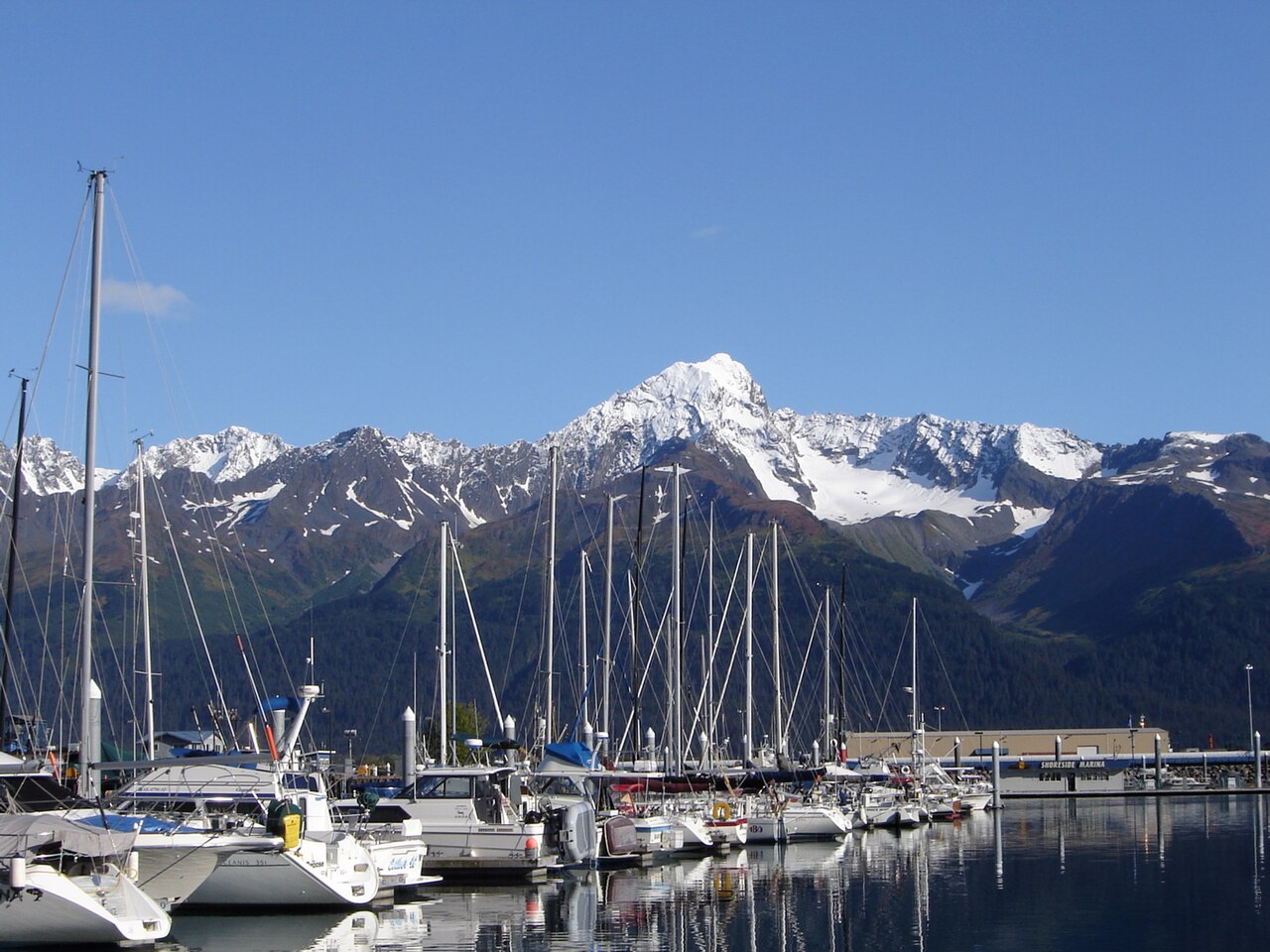
- Mount Marathon — Behind the town
Mount Marathon rises directly behind Seward and is the setting for the Fourth of July race, a short but brutal dash up and down the mountain over cliffs, waterfalls and loose, sharp rock. Spectating is far gentler than running, and crowds gather along the course. On other days, treat the slopes with respect.
Culture
Seward's culture is shaped by water, ice and weather. Alutiiq and Dena'ina people lived along this coast first, and the town's two older names, Qutalleq and Tl'ubugh, keep that history in view. Later layers arrived with Russian fur traders, railway builders, soldiers and fishing families, and the present character is practical, outdoorsy and friendly to strangers. Sled dogs are part of the identity: the Iditarod Trail begins here, and in summer a family-run kennel offers buggy rides where visitors can meet puppies and see racing gear up close. The Fourth of July is the big date, when runners climb Mount Marathon and the town turns out to cheer; it is a steep, rocky race with real danger, and locals treat it with respect. Evenings are low-key. People gather in pubs and taverns, and the Yukon Bar keeps up a tradition of dollar bills pinned to the ceiling by past visitors. Fishing talk is constant, and a quiet pride in the town's recovery after the 1964 earthquake colours how people speak about the place. Visitors are welcome, but summer crowds can strain a small town, so patience in queues and a thank-you to staff go a long way. Keep a respectful distance from wildlife and glacier ice, and follow ranger and boat-crew instructions without argument.
What to wear
Seward's traditional dress comes from the Alutiiq and Dena'ina peoples. Alutiiq clothing historically included hooded parkas sewn from bird skins or sea-mammal gut, made to shed water on the sea, while Dena'ina clothing is known for beadwork on hide and cloth, often in flowing floral patterns. Such garments are seen today mostly at dance gatherings, cultural events and in museum displays rather than on the street. What people actually wear in town is practical: fleece, waterproof shells, wool hats, jeans and, above all, rubber boots that locals wear on the docks and in the rain. Fishing crews add bib-style waterproof trousers, and on a summer evening a clean fleece and boots pass for smart. Visitors should dress in layers, since a calm morning can turn windy and cold once a boat leaves the harbour. Pack a proper rain jacket, waterproof trousers for any water trip, a hat, gloves, sunglasses and sunscreen for the glare off water and ice. Shoes need grip: trail shoes or light boots suit the Exit Glacier paths, while smooth soles are poor on wet docks. No dress code applies at museums, restaurants or churches.
What to eat
- Grilled salmon — A casual outdoor salmon bake outside town, or any harbourfront restaurant
Salmon is the dish most visitors come for, served grilled or baked with simple sides. A relaxed outdoor salmon bake suits a family lunch after a glacier walk, often with beer by the pitcher. Ask about the day's catch and how it is cooked. - Halibut and chips — Casual counters and takeaway windows near the small-boat harbour
Fried halibut with chips is the standard harbour lunch, crisp outside and flaky within. Eating it outdoors beside the boats is part of the appeal, weather permitting. Queues build at midday in summer, so go a little early or late. - Seafood plate with a bay view — Waterfront restaurants along Resurrection Bay
Several waterfront restaurants specialise in seafood, from fish and shellfish to chowder, with windows facing the bay. They suit a longer dinner after a day on the water. Summer evenings are busy, so reserve ahead where possible and check menus on the official listings. - Tacos and burritos — Casual cantinas and eateries in the downtown streets
Tacos and burritos are a popular, filling alternative when seafood fatigue sets in, especially after a hike or kayak trip. Local cantinas serve them quickly and generously. Expect a laid-out, informal setting and a mix of residents and visitors. - Local beer on tap — Downtown taverns and roadhouse-style pubs
Pubs and roadhouses pour a wide range of beers on tap, and a pint after a day outdoors is a local ritual. Sit at the bar, chat with the regulars and try a regional brew. Some taverns have live music in summer.
Plan it
Best time. Late May to early September, when the Alaska Railroad runs daily, boat trips operate and the long daylight allows full days outdoors; winters are dark, cold and quiet, with fewer services open. Rain and cloud are possible in any month.
How long. 2–3
Getting there. Fly into Anchorage, then drive the Seward Highway to Seward (about 2.5 hours, slower at peak summer weekends) or take the Alaska Railroad's daily summer Coastal Classic train, which runs alongside the highway and then climbs into the mountains. Once there, the harbour, museum and most restaurants are within walking distance of each other.
Budget. mid
Tips
- Book boat tours, train seats and rooms well ahead for June to August
- Allow extra time on the Seward Highway in peak summer; it can be slow and busy
- Exit Glacier is a short drive out of town, so arrange a lift, car or shuttle in advance
- Carry layers and a waterproof even if the morning looks clear
- Check the official city website for current events and local information
Etiquette
- Keep well back from wildlife and from the glacier's ice face
- Follow ranger and boat-crew instructions at all times
- Stay on marked trails and carry out all rubbish
Nearby
Sources
- Wikidata Q79919 (CC0)
- Wikipedia: Seward, Alaska (rev 1386559527) (CC BY-SA 4.0)
- Wikivoyage: Seward (rev 5417797) (CC BY-SA 4.0)
- Seward Alaska aerial view, U.S. Army Corps of Engineers, via Wikimedia Commons (Public domain)
- Seward Municipal Map, Fireop, via Wikimedia Commons (CC BY 4.0)
- Alaska - Seward - NARA - 23942503, War Department, via Wikimedia Commons (Public domain)
- Seward harbor, 1brownsfan, via Wikimedia Commons (Public domain)
- Spring Creek Entrance, Michael A. Haase, via Wikimedia Commons (Public domain)
- Alaska Railroad Passenger, Michael A. Haase, via Wikimedia Commons (Public domain)
- Obihiro Park, michaelh2001, via Wikimedia Commons (Public domain)
- Benny Benson Memorial, michaelh2001, via Wikimedia Commons (Public domain)


Wildlife
- Harbor seal (animal)
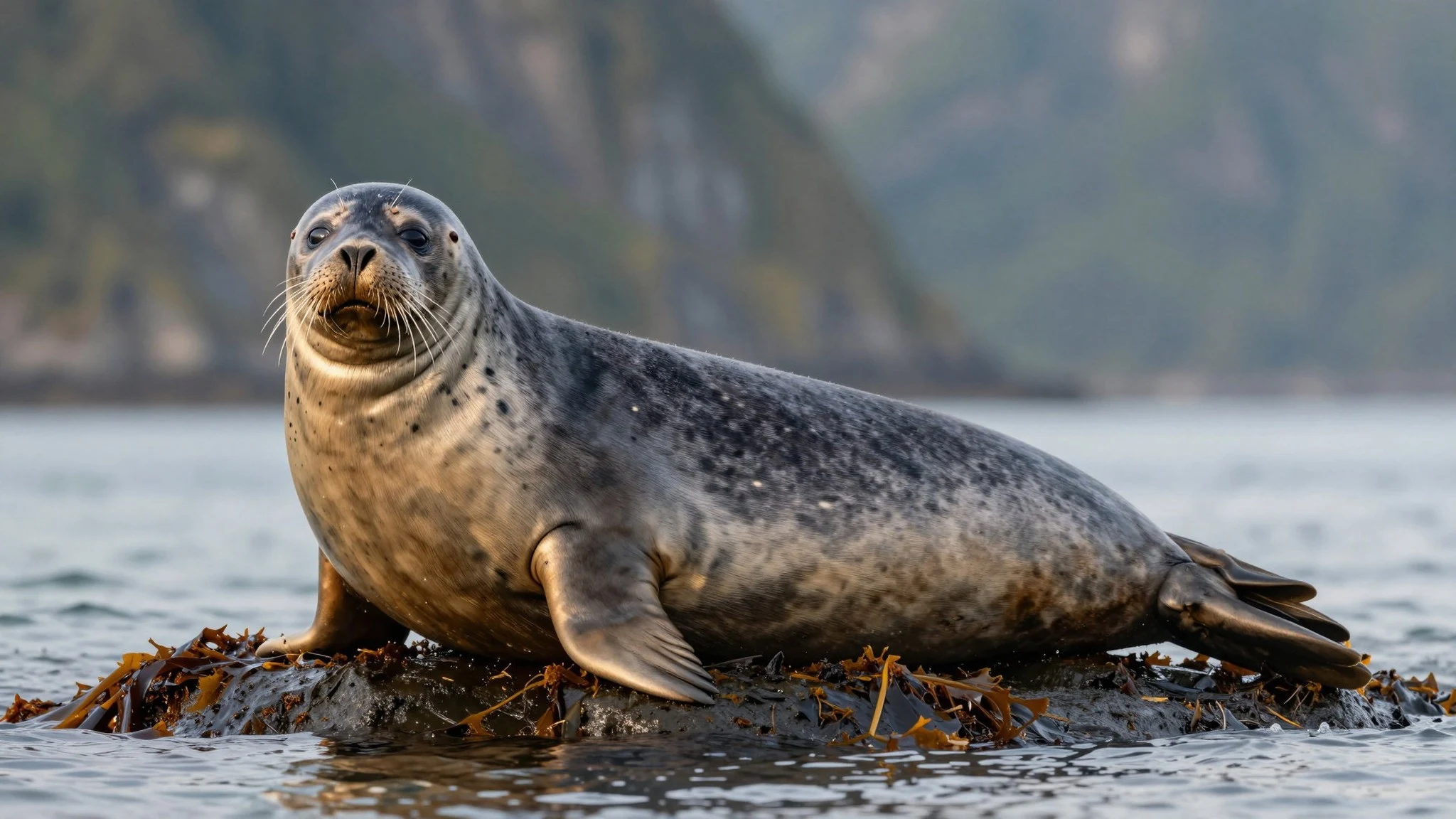
The harbour seal is a sleek, whiskery sea animal with flippers instead of legs, rather like a dog that has learnt to swim. Also called the common seal, it lives along cool coasts across the northern oceans. Around Seward it is a dependable sight even on a wet day, when seals, sea birds and fish can all be watched up close. Keep a respectful distance, speak softly, consider going with a local guide, and never offer the seals food.