Satchari National Park
Satchari National Park, Bangladesh
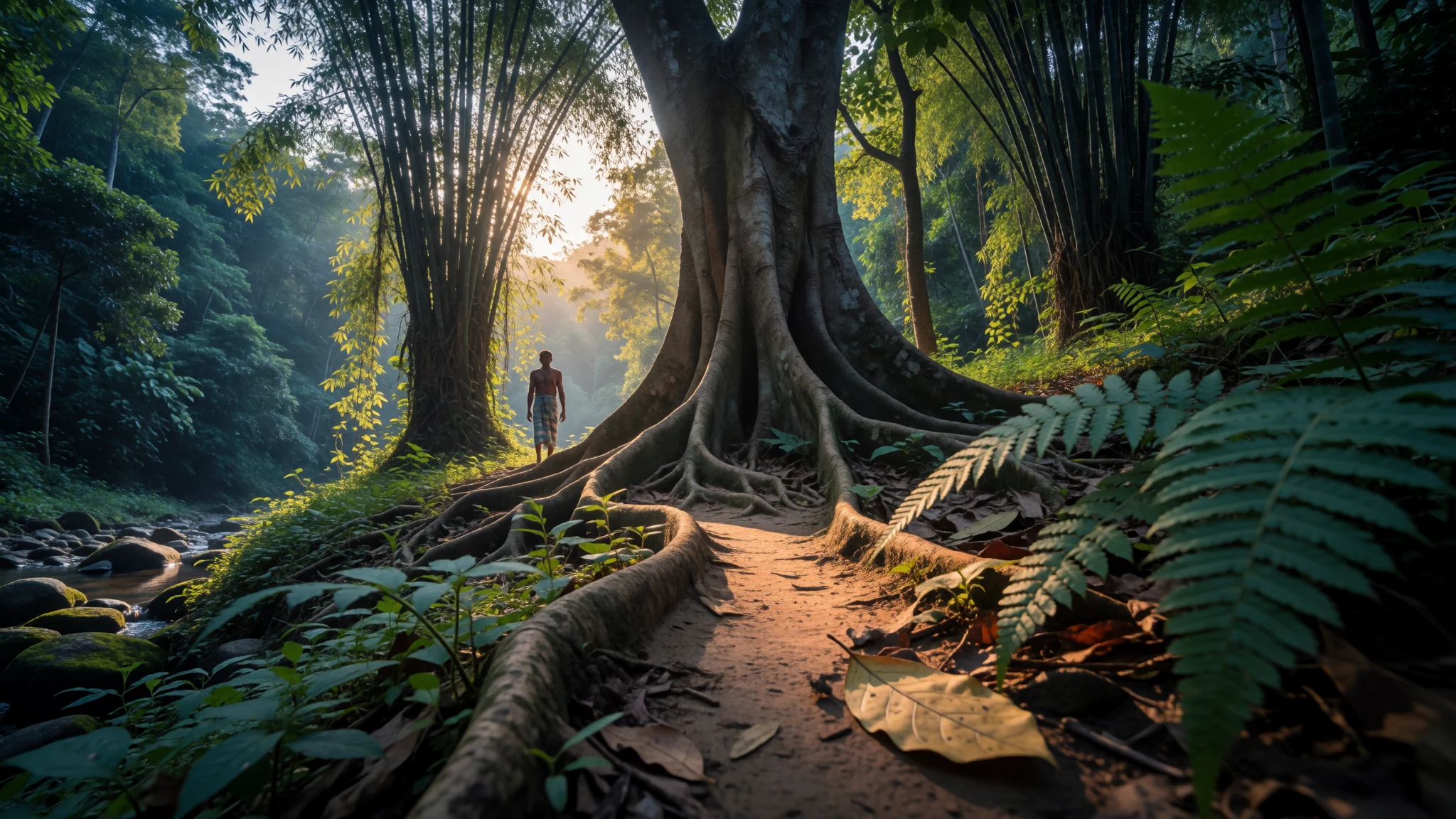
Satchari National Park is a small patch of Sylhet hill forest where birds, butterflies and monkeys can be found on short, quiet trails.
The place
Satchari National Park lies in Habiganj District, in the north-east of Bangladesh, in the Sylhet region of low forested hills and tea estates. The protected area is small, covering 243 hectares, so it is explored on foot and a single morning is enough to cover its main trails. The Bengali name (সাতছড়ি) means 'Seven Streams', after the watercourses that run through the forest. Those streams shape the visit: in the monsoon they swell and the paths turn to mud, while in the dry months they shrink to trickles between mossy banks. The vegetation is hill forest, with tall trees closing the canopy over narrow paths, patches of bamboo, and clearings where sunlight reaches the ground. Birds are the main draw for most visitors, along with butterflies and monkeys, and early morning is when the forest is loudest. The park was established in 2005 under the framework of the 1974 Wild Life Preservation Act. Facilities are modest: an entrance gate, a watch tower, marked trails and local guides. By Bangladeshi standards it is a calm place, though weekends and holidays bring day-trippers from Sylhet and Dhaka, and a noisy group can empty a trail of wildlife within minutes. Weekdays are the better bet for anyone hoping to see animals rather than people.
Its story
Satchari National Park exists because a piece of forest was set aside before it disappeared. North-eastern Bangladesh has seen hill forest cleared over generations for tea estates, farmland and settlement, and what remains is often scattered in small fragments. The 1974 Wild Life Preservation Act gave the country a legal basis for protecting such places, and in 2005 this forest in Habiganj District was formally declared a national park on 243 hectares of land. That is a modest area, which makes the park more of a refuge than a wilderness. Animals living here have little room to move beyond its edges, so how the surrounding land is managed matters as much as the boundary itself. Villages and tea gardens sit close by, and the people who live around the park have long used the wider landscape for firewood, grazing and farming. Balancing that use with protection is an ongoing question rather than a settled one. The name carries the older memory of the place: 'Seven Streams' refers to the seven watercourses said to flow through the forest, and the park's identity is tied to that water. Today its story is one of quiet recovery and careful watching, with birdwatchers, photographers and forest staff all contributing records of what still lives under the trees.
What to see
- The entrance gate and forest edge — Habiganj District
The gate of Satchari National Park is where visits begin, and where the tarmac gives way to forest. Staff here handle entry and can point out which trails are passable after rain. The first stretch beyond it is a good place to stand quietly and let birdsong sort itself out.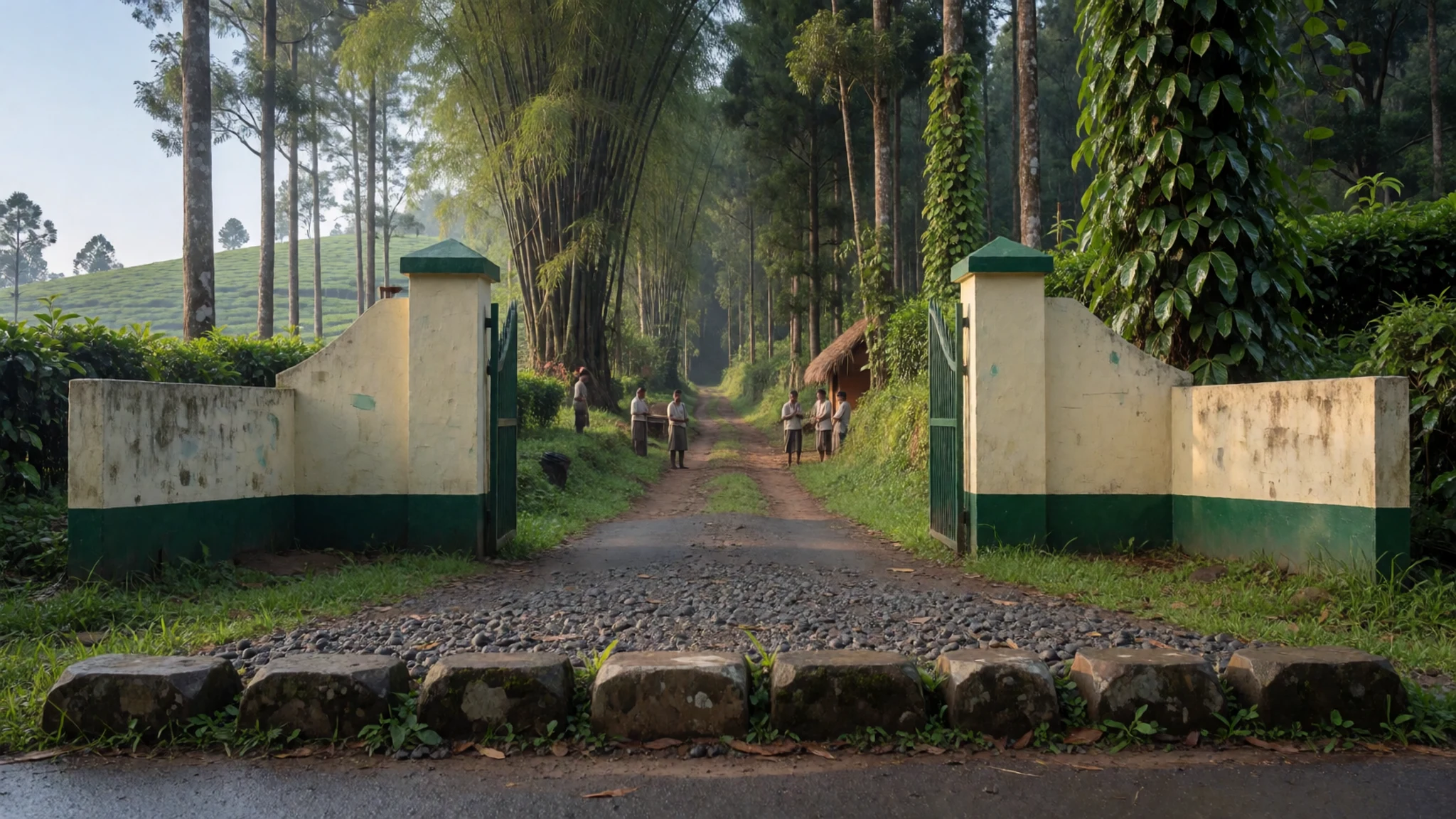
- The watch tower — Inside the park
A watch tower at Satchari National Park lifts visitors above the understorey and gives a view over the treetops. It suits birdwatching in the cool early hours, when the canopy is busy. Climb slowly and quietly, because the platform is small and sound carries across the forest.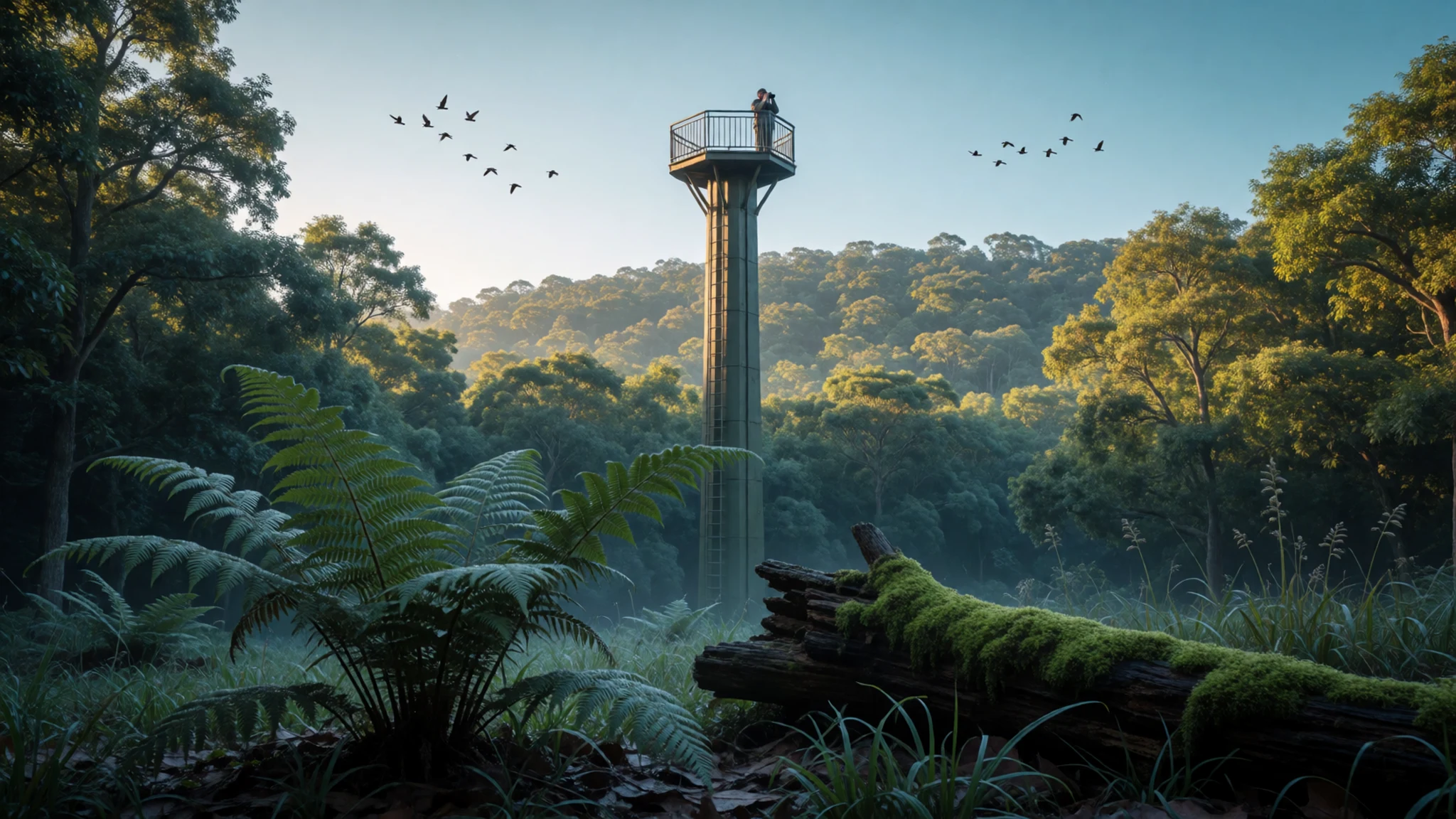
- The canvas tree — Main trail
One broad tree in Satchari National Park is photographed so often that it has become a landmark. Its wide trunk and spreading roots show how big the older forest trees can grow. It makes a useful meeting point for groups and a natural place to rest.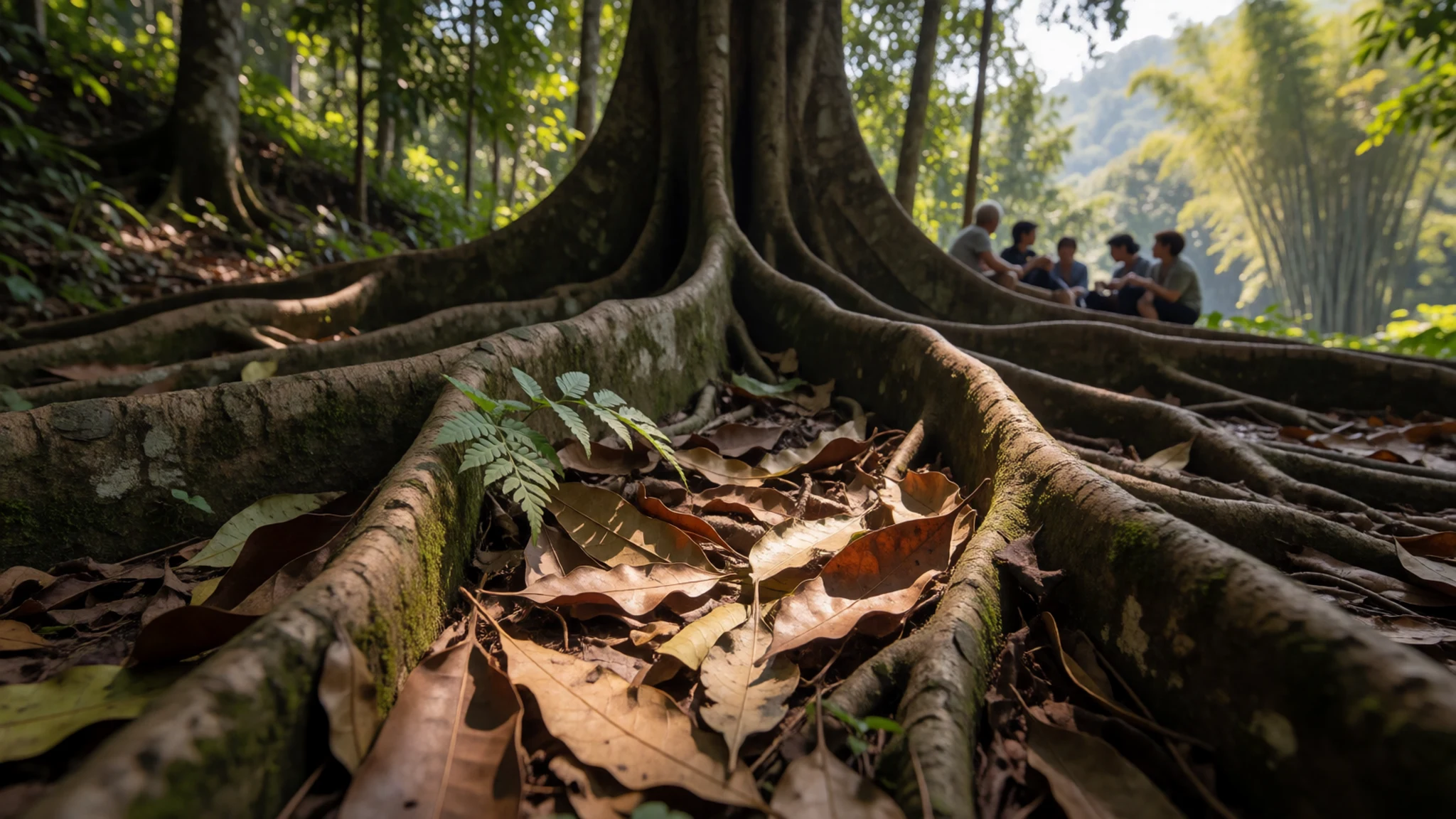
- Butterflies on the trail — Stream crossings and clearings
Satchari National Park has butterflies that gather along sunny stretches of path and damp streambanks, including the jewel nawab (Polyura delphis). Late morning, once the light warms the clearings, is the best time. Walk slowly, watch the ground near water, and avoid chasing them.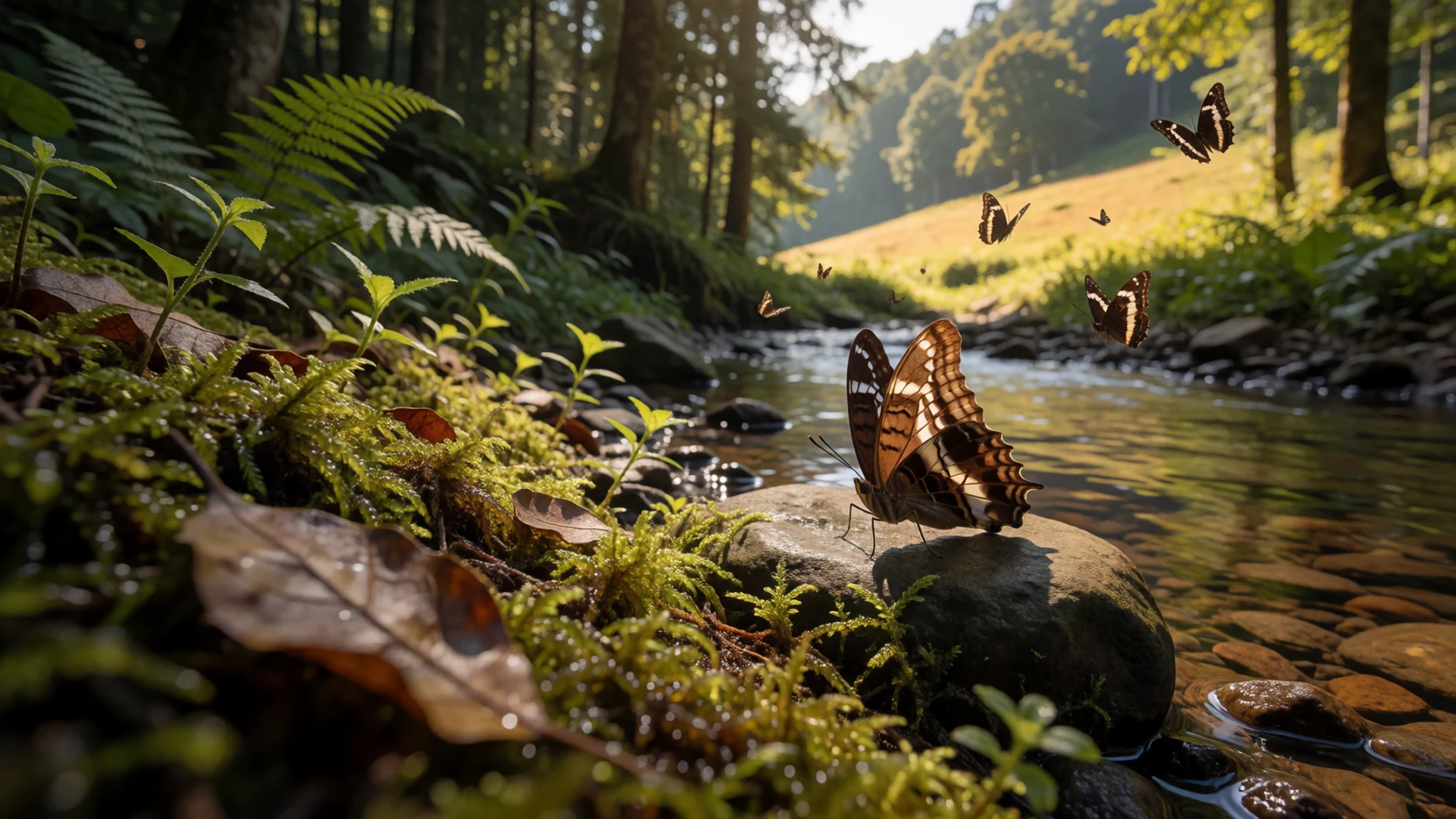
- Birds in the flowering trees — Treetops along the trails
Satchari National Park draws birdwatchers for species such as the chestnut-tailed starling, often seen feeding in flowering trees like the Indian coral tree when it blooms. Binoculars help enormously under the canopy. Dawn and the hour after it are the most rewarding times.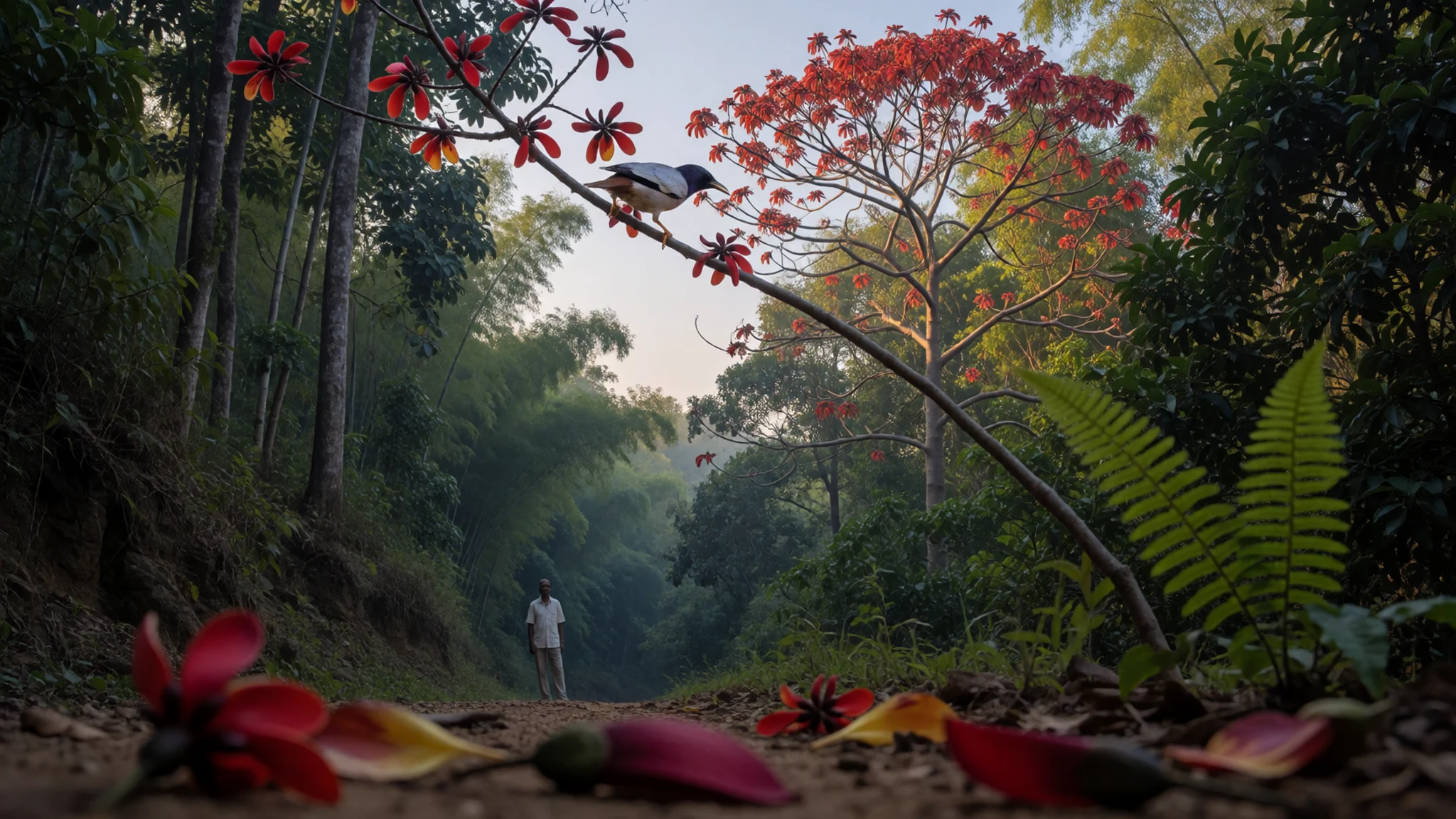
- Rhesus macaques — Forest edges and paths
Rhesus macaques are among the monkeys that visitors may meet in Satchari National Park, sometimes near the trail edges. They are curious and can be bold with food. Keep snacks sealed in a bag, watch from a distance, and never feed them.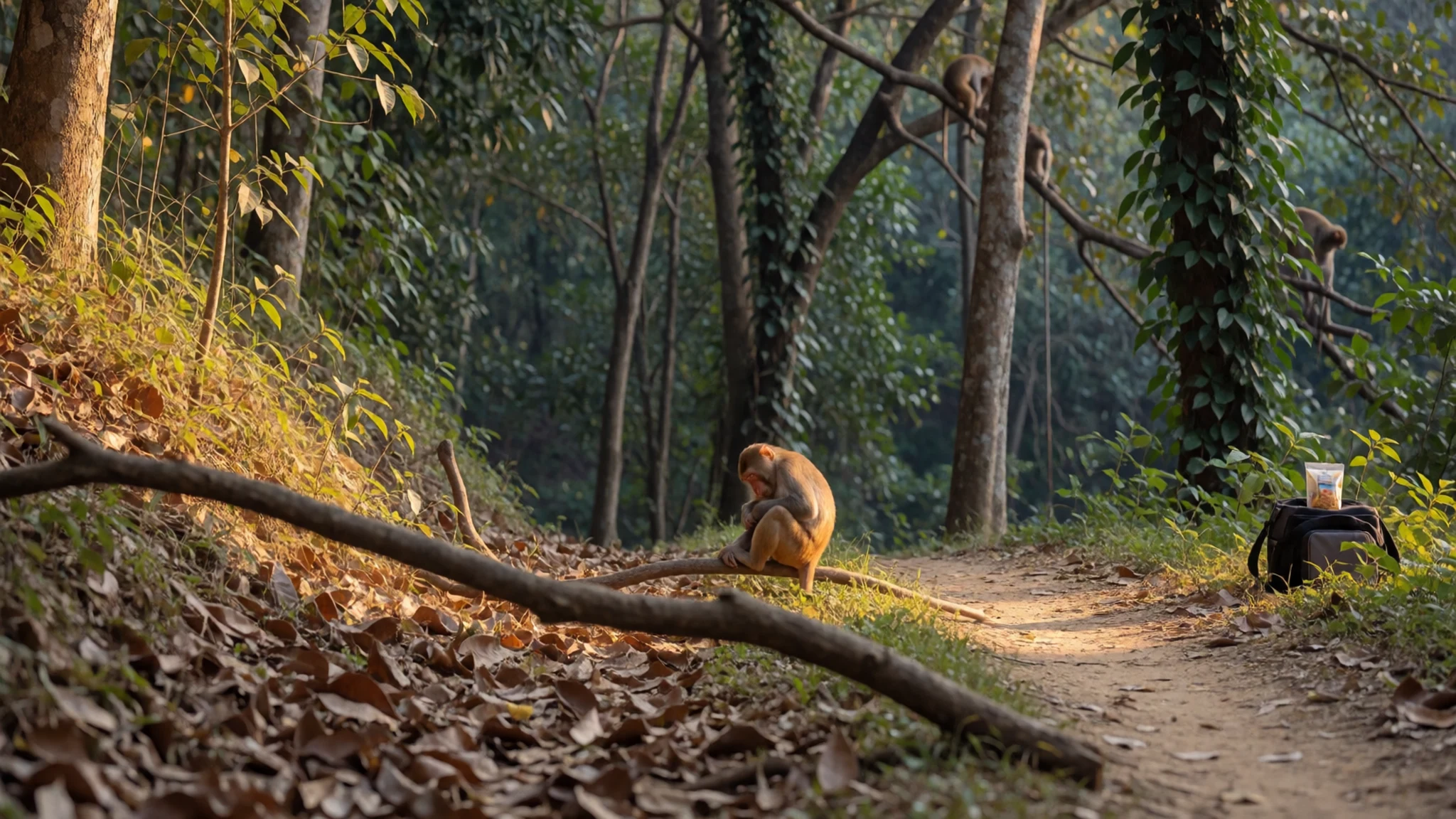
Culture
Satchari National Park sits in Sylhet, a region with its own dialect, cooking and strong habits of hospitality, and the culture around the park is shaped by the villages and tea communities that border it. Bangladesh is a Muslim-majority country, and Bengali is the everyday language, with Sylheti spoken widely locally. Several smaller ethnic communities also live in the hills and tea gardens of the north-east, each with its own festivals and customs. Visitors are often asked where they are from, and conversations that begin at a tea stall can last a while; it is polite to accept a cup of tea and chat. Day trips to the park are a popular weekend outing for families, which gives the entrance area a lively, social feel on holidays. The forest itself carries a quieter meaning, as a reminder of the greener landscape that once covered much of the region, and local guides tend to be proud of it. Bengali is a language of poetry and song, and the park's name, 'Seven Streams', is the kind of image that appears naturally in both. Birdwatchers and photographers are made welcome, but loud music and litter are not. Keep your voice low on the trails, carry out every wrapper, and ask before photographing local people or tea workers.
What to wear
Satchari National Park is in a part of Bangladesh where traditional dress follows the national pattern. Women commonly wear the sari, often in cotton or silk, and many wear salwar kameez in daily life. Men wear the lungi, a wrapped cloth, at home and in villages, and the panjabi, a long tunic, for prayers and festivals. The country's best-known textile is jamdani, a fine woven cotton with patterns worked into the cloth, worn mostly for weddings and celebrations. In towns such as Sylhet and Habiganj, everyday clothing is now mostly a mix of shalwar kameez, shirts and trousers, jeans among younger people, and the occasional cap or shawl against the cool of winter mornings. Modest dress is the norm in public. For the park, practical clothes matter more than style. Wear lightweight long trousers and long sleeves in muted greens or browns, which protect against insects, leeches in wet weather and scratching undergrowth, and do not startle wildlife. Closed shoes with good grip are essential, because trails are muddy after rain and streambanks are slippery. Bring a hat, a light rain jacket in the monsoon, and a warm layer for winter dawns. Women and men alike should keep shoulders and knees covered when visiting nearby villages or mosques, and travellers should carry a scarf in case it is needed.
What to eat
- Shatkora beef curry — Local rice-and-curry eateries in Habiganj and Sylhet
Shatkora is a tart citrus fruit from the Sylhet region, and its rind is cooked into a rich, sour-bitter beef curry. It is a local signature, served with plain rice at family-run eateries around Sylhet and Habiganj.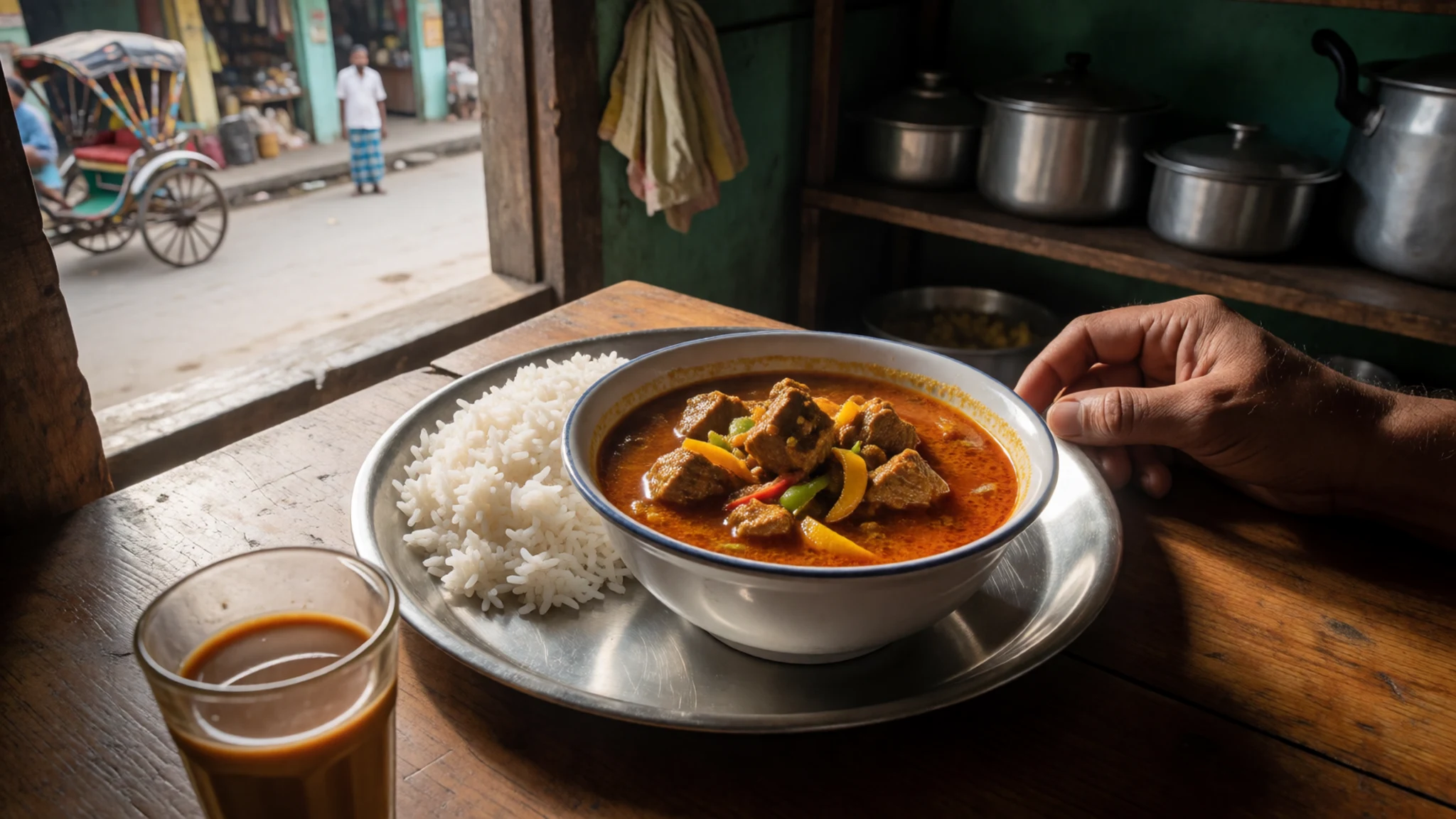
- Akhni — Restaurants and weekend feasts in Sylhet town
Akhni is a one-pot spiced rice dish with meat, closer to a pulao than a biryani, and strongly associated with Sylhet. It is hearty, fragrant and a good meal after a morning's walk in the forest.
- Seven-layer tea — Tea stalls and tea-garden roadsides near Sreemangal and Sylhet
This tea is poured in coloured layers that stay separate in the glass, each layer with a slightly different flavour. It comes from the tea country of the north-east, and is easy to find on the roads between the tea estates. - Bhorta with rice — Village eateries and roadside rice stalls
Bhortas are mashed vegetables or dried fish, seasoned with mustard oil, onion and green chilli. Eaten with rice, they make a cheap, simple lunch, and every village eatery has a few varieties on the counter. - Pitha — Local markets and winter fairs around Habiganj
Pitha are rice-flour cakes, steamed, fried or filled with coconut and jaggery, and they appear in the cooler months. Home cooks and market stalls make them, and the winter varieties are the most popular.
Plan it
Best time. November to March, when the weather is cooler and drier and the trails are firmer; the monsoon months bring heavy rain, mud and leeches, and the pre-monsoon months are hot and humid.
How long. 1–2
Getting there. Fly to Osman Ali International Airport at Sylhet or Hazrat Shahjalal International Airport at Dhaka, or take a train to Shaistaganj in Habiganj District. The last leg is by road, by car, bus or auto-rickshaw, to the park gate; ask locally for the current best route.
Budget. low
Tips
- Go on a weekday and arrive at dawn for the best chance of seeing birds and monkeys
- Check the official forest department information before travelling for entry rules and any seasonal closures
- Carry cash in small notes, as cards are rarely accepted near the park
- Bring drinking water, insect repellent and a rain layer
- Hire a local guide if you want help spotting wildlife
Etiquette
- Keep your voice low and stay on marked trails
- Never feed the monkeys or leave any litter in the forest
- Ask before photographing local people
Nearby
Sources
- Wikidata Q7425977 (CC0)
- Wikipedia: Satchari National Park (rev 1362904714) (CC BY-SA 4.0)
- Wikivoyage (CC BY-SA 4.0)
- Photo 01: Satchari National Park, Habiganj, Sylhet — Abdul Momin (CC BY-SA 4.0)
- Photo 02: Jewel nawab — Saiful786 (CC BY-SA 4.0)
- Photo 03: Chestnut-tailed starling — Touhid biplob (CC BY-SA 4.0)
- Photo 04: A Beautiful Bird in a Beautiful Place, from Watch Tower — Anwarul85 (CC BY-SA 4.0)
- Photo 05: A Brown Hawk-Cuckoo, nurtured by its foster babbler mother — Tanviralinbd (CC BY 4.0)
- Photo 06: A canvas Tree Canvof Saatchori National Park — Anwarul85 (CC BY-SA 4.0)
- Photo 07: A gate of Saatchori National Park — Anwarul85 (CC BY-SA 4.0)
- Photo 08: A Painful Retrieve of a Flower by a Rhesus Macaque — Mdkshots (CC BY 4.0)


Wildlife
- Rhesus macaque (animal)
The rhesus macaque is a brown or grey monkey with a long tail, and it lives across a wider stretch of the world than any other primate apart from people. In Satchari National Park you may meet it near the edges of the trails. Walk with a guide, keep a comfortable distance, and stay quiet so the troop carries on undisturbed. Never offer food, however sweetly it seems to beg, because wild monkeys should find their own meals.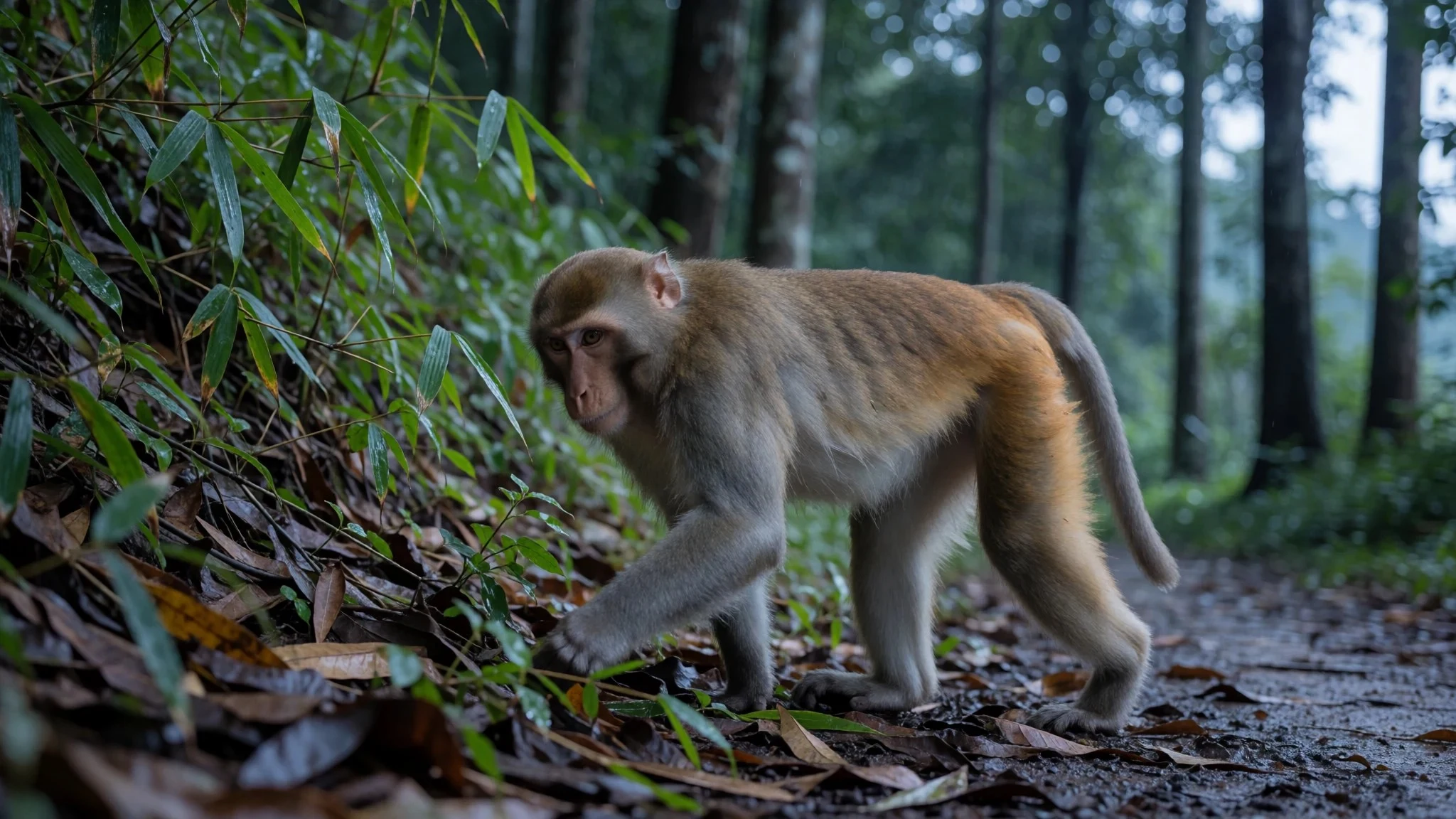
- Chestnut-tailed starling (animal)
Think of the chestnut-tailed starling as a woodland bird of the starling family, a grey-headed cousin of the myna. At Satchari National Park it is often spotted feeding among blossoms, notably in Indian coral trees while they flower. Bring binoculars rather than moving closer, stay still and quiet beneath the branches, and go with a local guide who knows where to look. Never scatter food to tempt it down.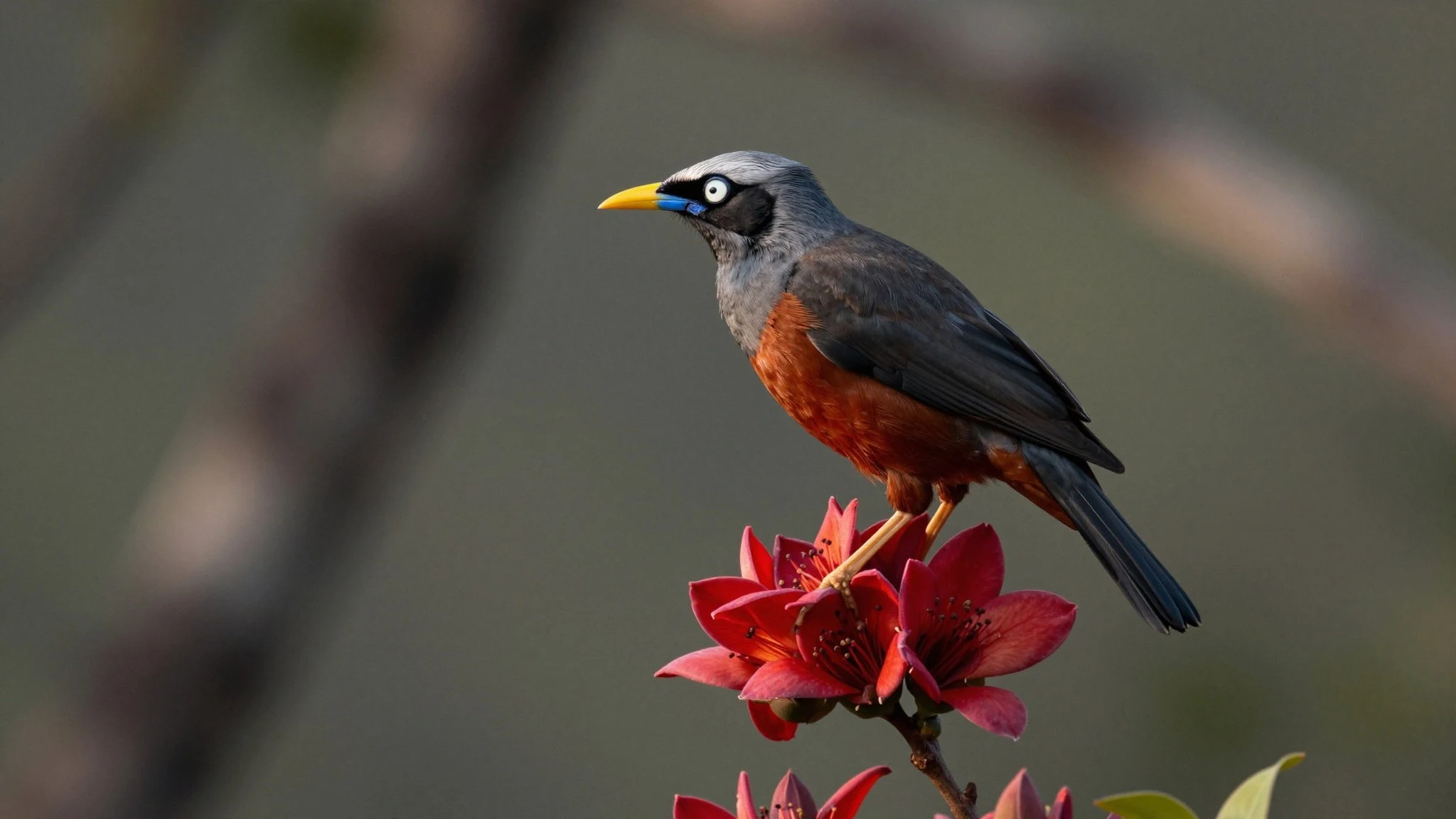
- Chestnut-tailed starling (bird)
Think of the chestnut-tailed starling as a woodland bird of the starling family, a grey-headed cousin of the myna. At Satchari National Park it is often spotted feeding among blossoms, notably in Indian coral trees while they flower. Bring binoculars rather than moving closer, stay still and quiet beneath the branches, and go with a local guide who knows where to look. Never scatter food to tempt it down.