Sanibel Island
Sanibel Island, United States
Sanibel Island is a low, shell-strewn Gulf barrier island where wildlife refuges, slow bike rides and quiet beaches matter more than nightlife.
The place
Sanibel Island lies off Florida's Gulf coast in Lee County, a long curved strip of sand that settled in the lee of Pine Island's harder coral-rock base. The whole island is a single city, with most of the buildings at the eastern end and the rest given over to mangrove, beach and low scrub. Refuges cover the larger part of the land, and the biggest is the J. N. "Ding" Darling National Wildlife Refuge on the bay side, so the skyline is sea grape and palm rather than towers. Local rules on development, adopted by residents after the city was formed, keep the buildings low and the pace slow. The Gulf beaches face south and west and are known for the shells that pile up along the tideline; the bay side is a maze of shallow creeks where herons, ibises and spoonbills feed at low tide. Cycling is the natural way to get about, because the island is flat and has long paths away from the main road. Hurricane Ian badly damaged the causeway to the mainland, and the storm still shapes daily life, so the state of roads, shops and places to stay is worth checking before any trip. Winter is the busy season, when visitors arrive from colder places; summer is hot, wet and much quieter. Sanibel suits people who like birds, shells and early starts, and it is a poor choice for anyone wanting nightlife or big-resort entertainment.
Its story
Sanibel Island and its northern neighbour Captiva were once a single strip of land, later divided by the sea. People arrived long before Europeans did. The Calusa, a seafaring nation of Southwest Florida, lived here for many centuries, and their power rested on canoe travel through channels and shallows and on the rich food of the estuary. Their influence reached across much of the coast. After Spanish ships appeared, that world came apart, and the island passed into a quiet period with few permanent residents. Later, fishermen from Cuba crossed the Gulf each season and set up temporary camps called ranchos along this shore, Sanibel among them. The island's name is uncertain. An old map labels a harbour Puerto de S. Nibel, which suggests a spelling that drifted from 'San Nibel'. Many locals prefer another explanation, a Spanish saint's name, Santa Ybel, which survives at Point Ybel, where the lighthouse stands. Nobody can say for sure who chose it. The modern island's character is more recent. A causeway replaced the ferry and opened Sanibel to cars, and residents then formed their own city and wrote a land-use plan to keep building in balance with the wetlands. That choice explains why the island feels closer to a nature reserve than a resort strip. Hurricane Ian then broke the causeway and reminded everyone how exposed a low barrier island is.
What to see
- J. N. "Ding" Darling National Wildlife Refuge — Bay side, central Sanibel
The refuge fills much of the island's bay side with mangrove, creeks and mudflats. A slow drive or cycle along its wildlife road is the easiest way in, and low tide is best for wading birds. Go early, bring insect repellent, and check the official site for current access.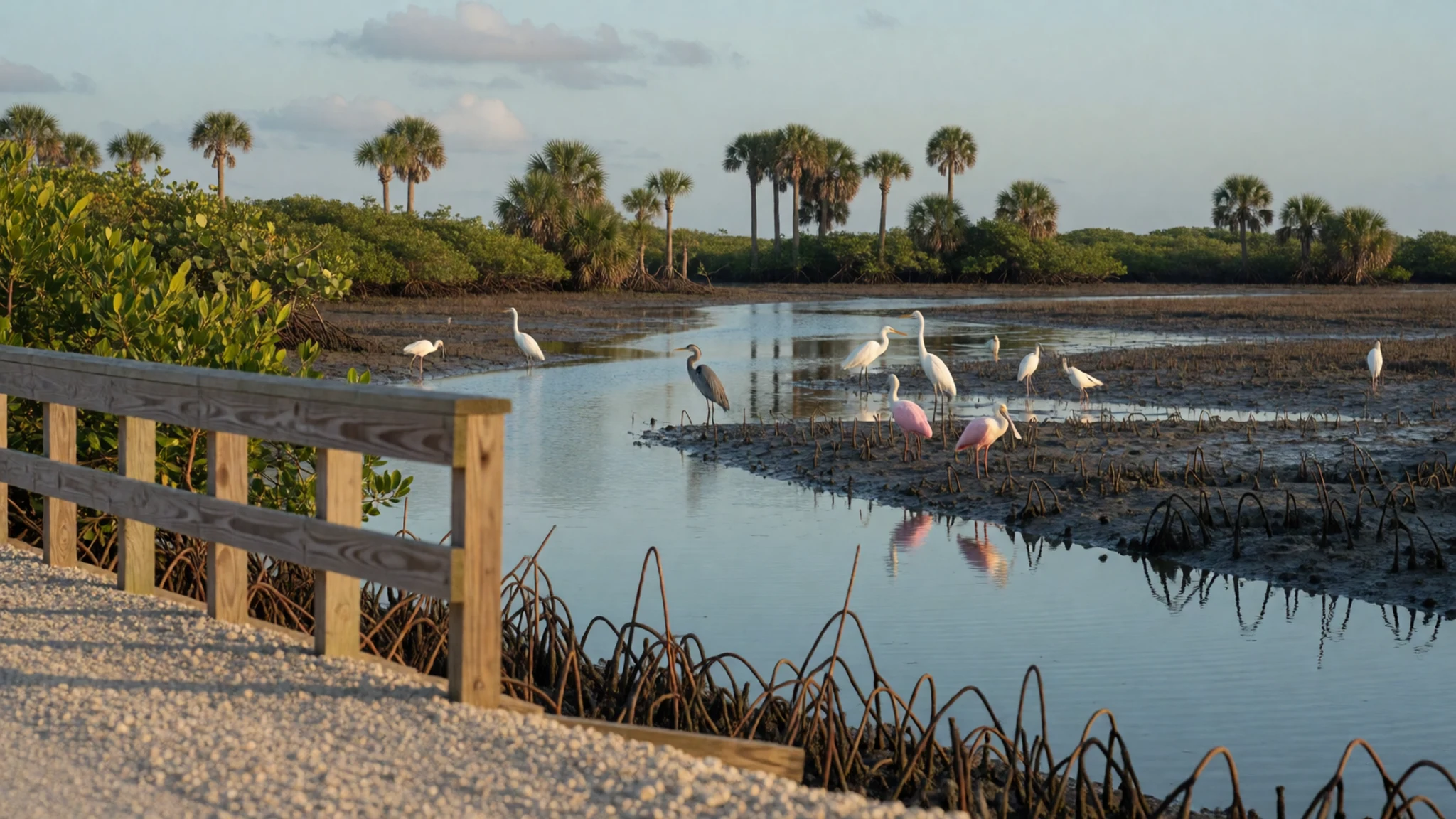
- Algiers Beach and the shell line — Gulf shore, central Sanibel
Sanibel is known for shells, and the Gulf beaches collect them along the tideline, especially after windy weather. Pen shells, sometimes crusted with oysters, turn up here. Walk the wrack line at low tide in the early morning, before other shellers arrive.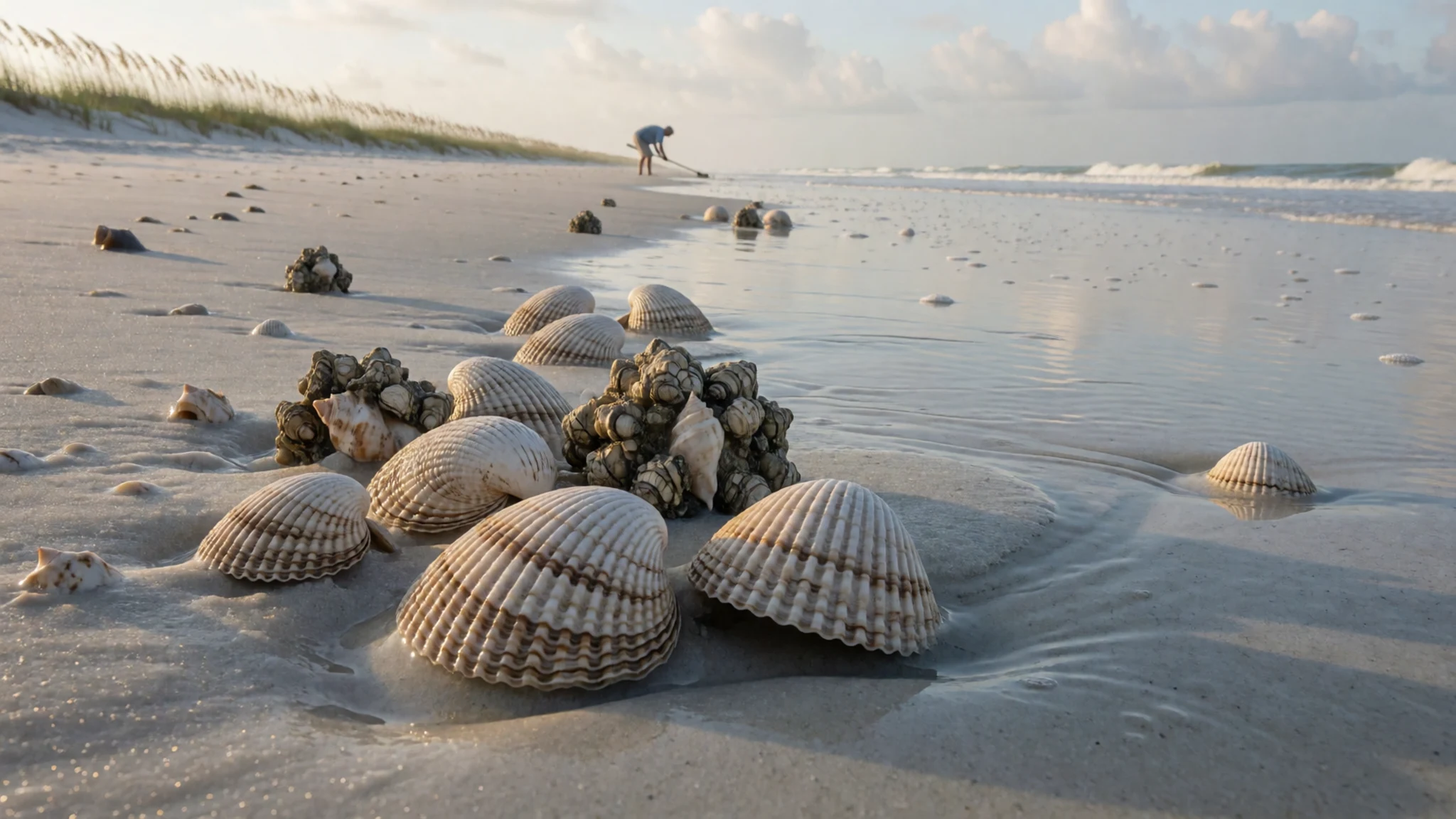
- Sanibel Lighthouse at Point Ybel — Eastern tip of the island
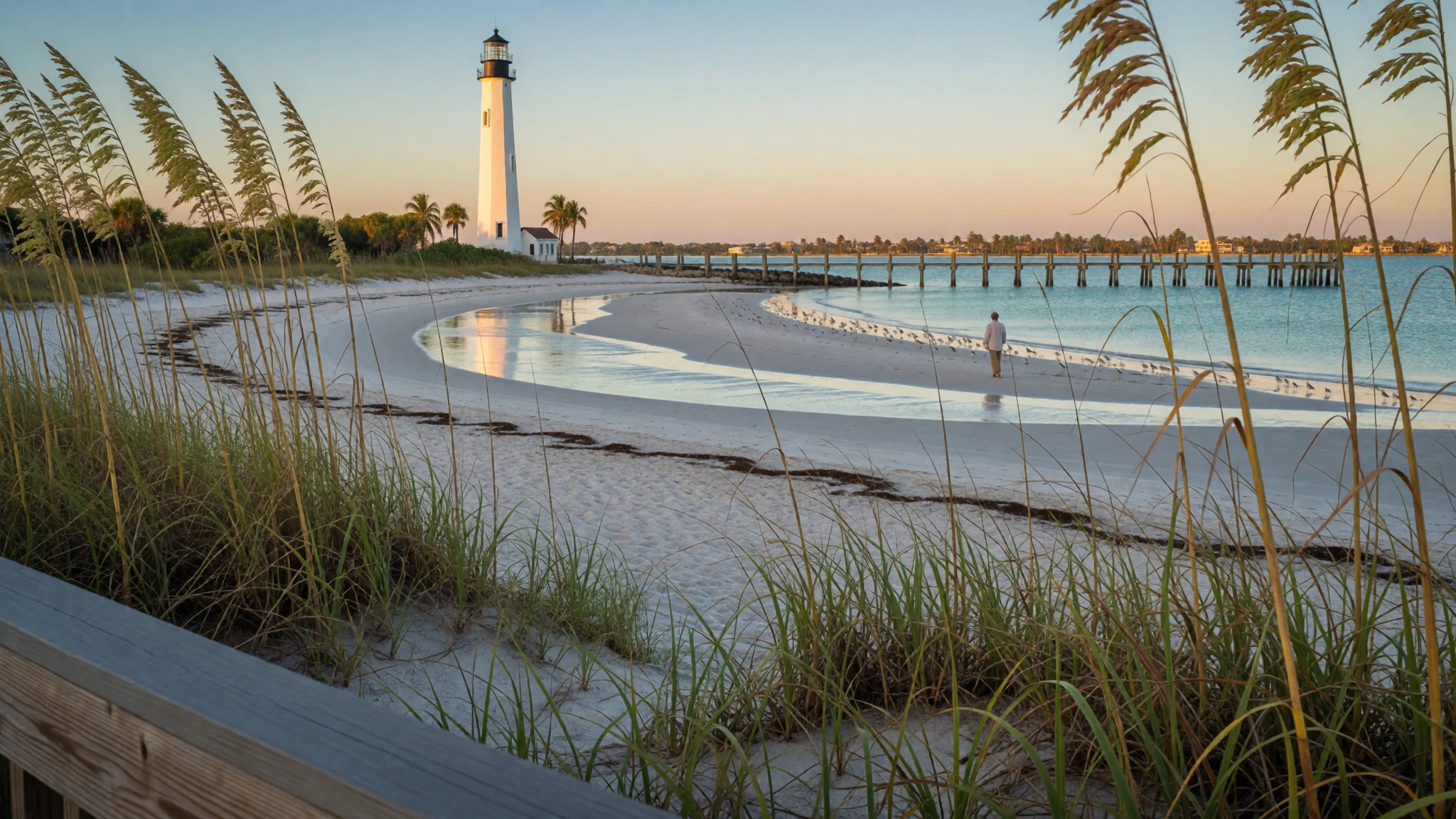
The lighthouse stands at the island's eastern tip, where the old name Ybel survives. The point has a beach, a fishing pier and views across to the mainland. It is a short, easy stop, and a good place for sunrise. Check locally on what has reopened since the storm.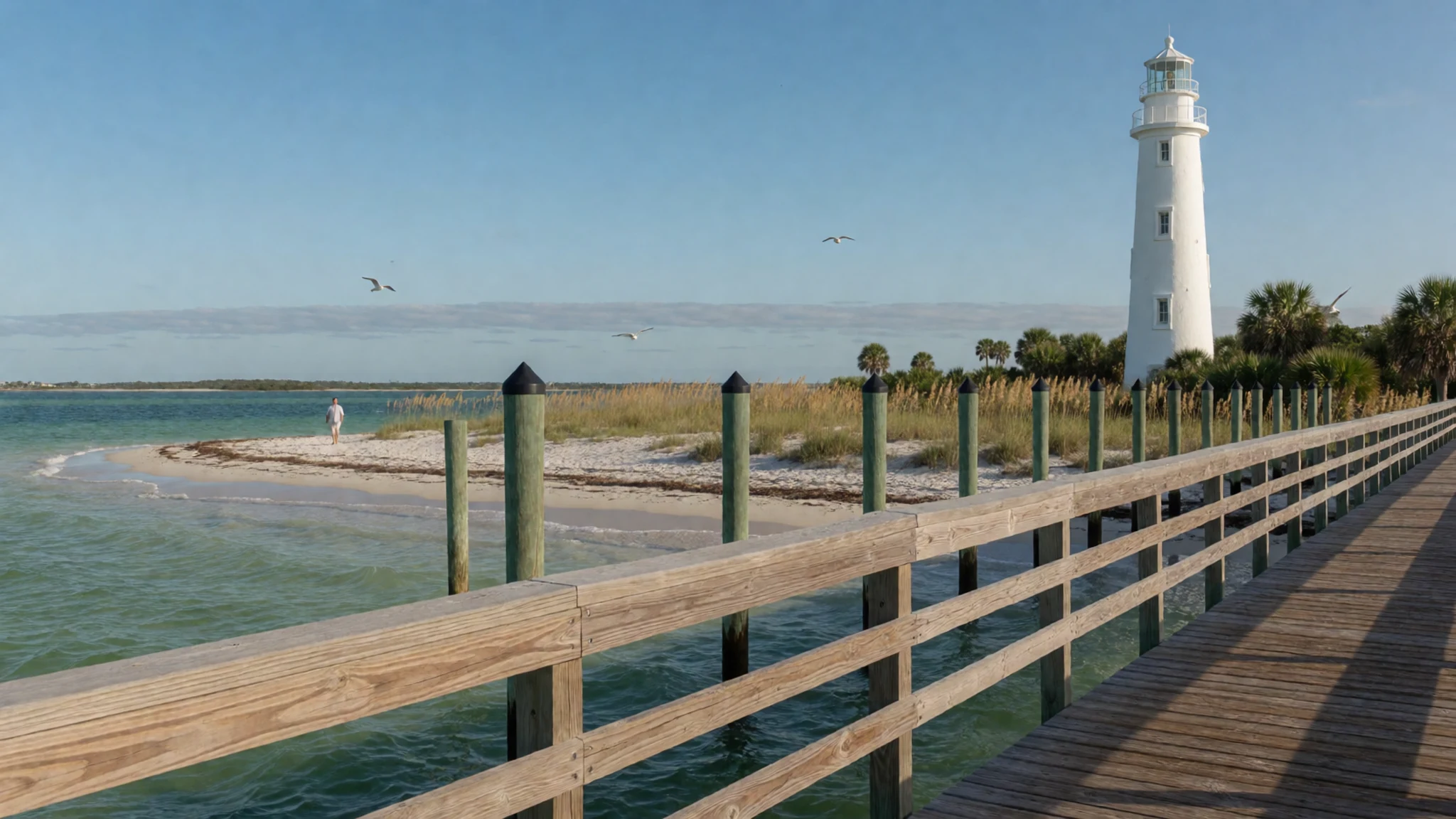
- The Sanibel Causeway — Between Sanibel and the mainland
The causeway is how nearly every visitor arrives, and it links the island to the mainland across open water. Hurricane Ian damaged it badly, which shows how much the island depends on this one road. Look at the water for dolphins and pelicans, and check the current state before travelling.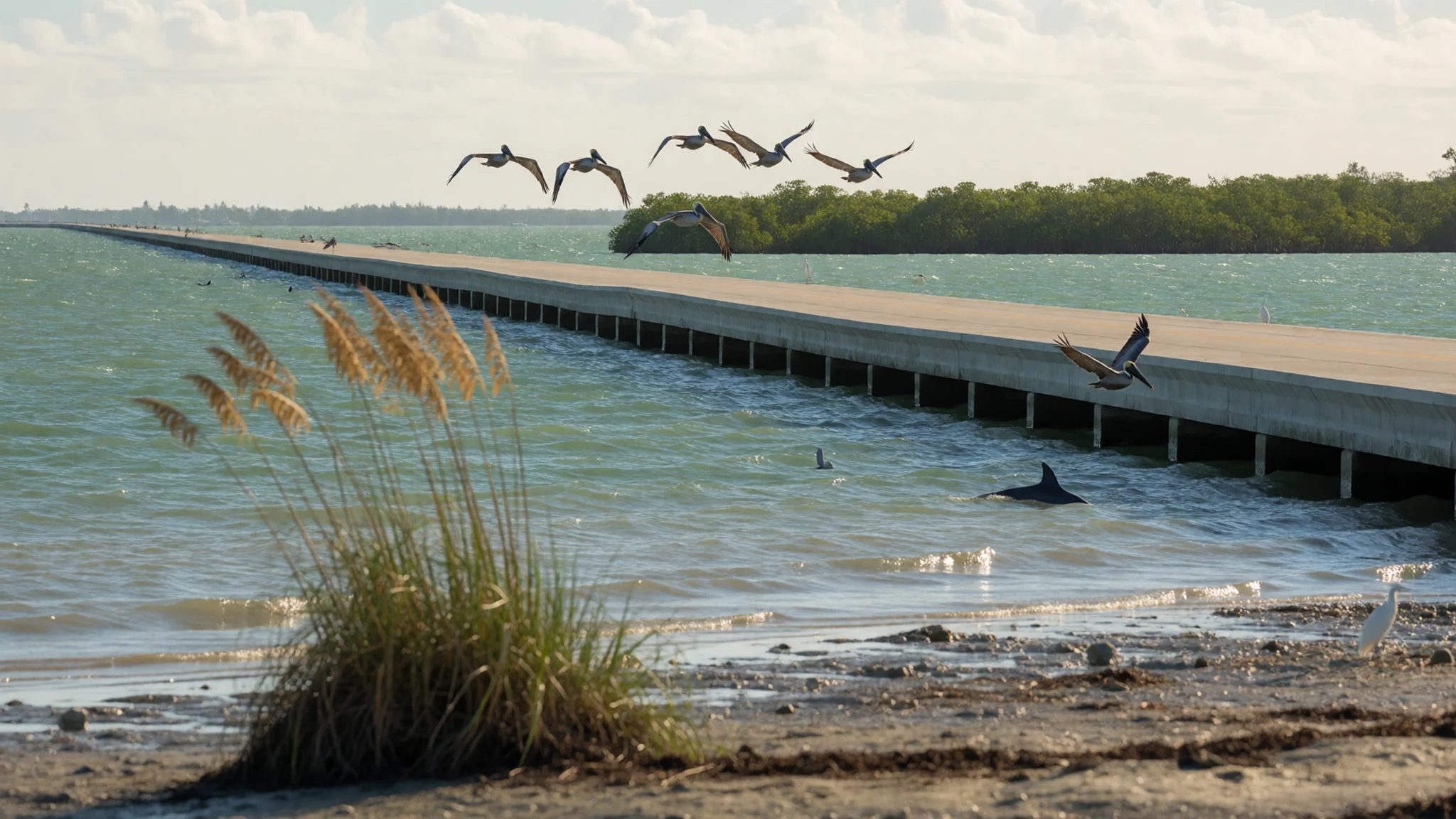
- Mangrove and fern wetlands — Interior and bay side
Away from the beaches, the island's interior holds brackish wetland where tall leather ferns grow beside mangroves. Boardwalks and short trails let walkers see this quieter landscape, and it is also where much of the wildlife lives. Mornings and evenings are cooler and busier with birds.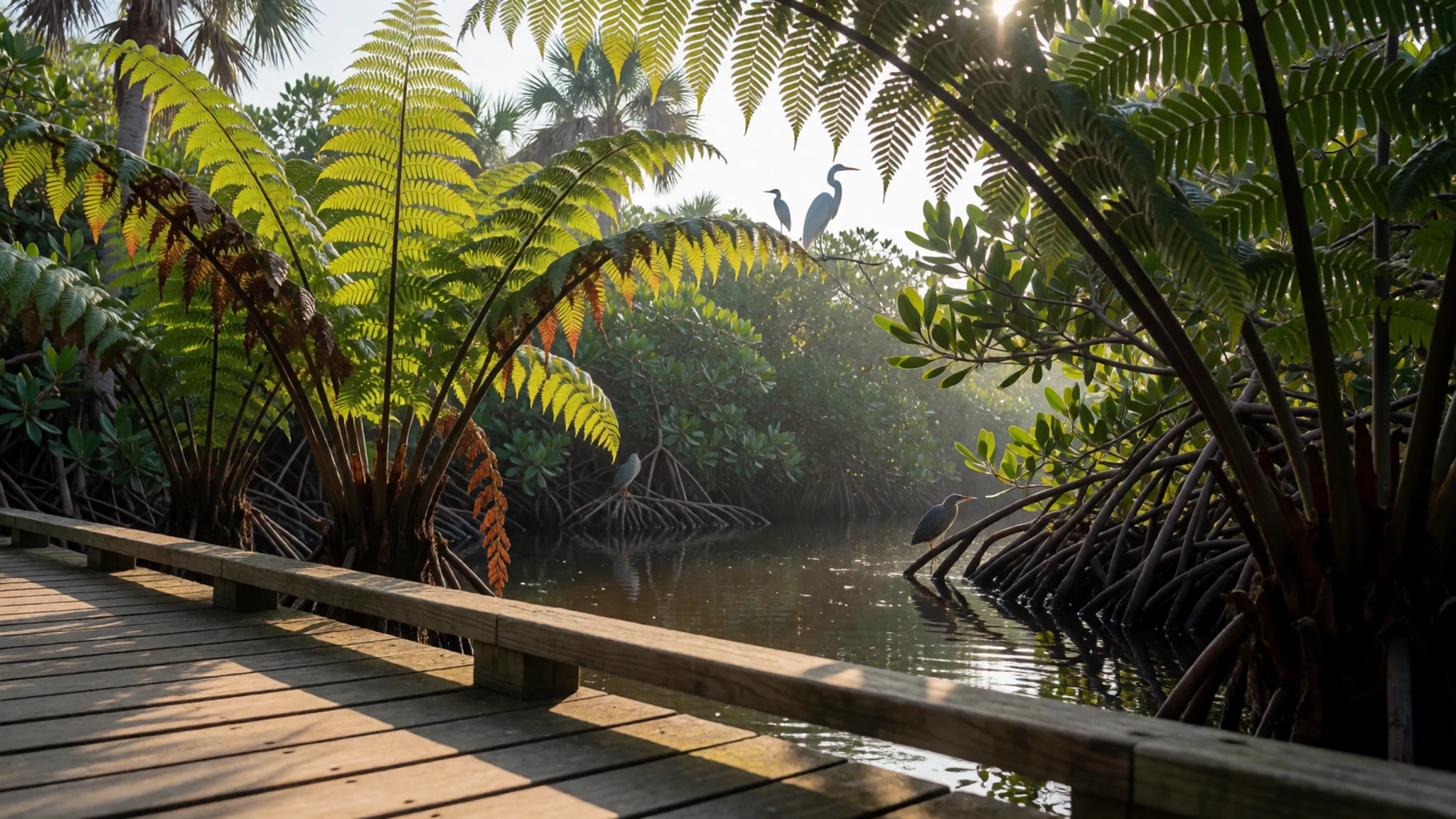
Culture
Sanibel Island's culture is built around a shared decision to keep the island quiet and green. Residents, many of them retired or seasonal, have long argued for limits on building, and the result is low rooflines, plenty of tree cover and a strong volunteer habit around birds, turtles and shells. Conversation tends to turn to the weather, the tides and what has washed up that morning. Shelling is the island's signature pastime, so common that bent-over beachcombers are part of the scenery, and locals joke about the 'Sanibel stoop'. Life here also follows the storm calendar: people speak of before and after Hurricane Ian, of rebuilding, and of which favourite places have reopened. Visitors are welcome, but the island depends on them behaving lightly. Manatees and dolphins use the shallow waters, and drivers of boats or jet skis are expected to slow down where these animals live, because fast hulls can injure a manatee. The seasons set the social mood too: winter brings crowds, events and booked-out tables, while summer brings heat, thunderstorms and sleepier streets. Weekday mornings are the quietest time for beaches and refuge drives, and a polite, unhurried manner goes down well with residents who chose the island for its calm. Slow right down for manatees and dolphins in the water, leave live shells where you find them, and keep to marked paths in the refuges.
What to wear
Sanibel has no regional costume, and little is firmly recorded about what the Calusa wore, so it would be wrong to guess. The island's dress is the story of the last century of Gulf-coast leisure: cotton, linen and quick-dry fabrics made for heat and sun. What people wear now is relaxed. Residents and long-stay visitors wear shorts, light shirts, sundresses, sun hats and sandals or boat shoes, with a fleece or light jacket for winter evenings. Cyclists add helmets and long-sleeved sun shirts, and anglers and birdwatchers favour pale, loose, long-sleeved clothing against sun and insects. Swimwear stays on the beach, and most restaurants and shops expect a cover-up and shoes. A visitor should pack light, breathable layers in cotton or linen, a wide-brimmed hat, sunglasses and plenty of reef-safe sunscreen, since the sun is strong even on cloudy days. Water shoes or sturdy sandals help on shelly sand, which can be sharp, while closed shoes suit refuge trails and boardwalks. Add insect repellent and long sleeves for dawn and dusk near the mangroves. In summer, carry a light rain jacket for sudden thunderstorms, and in winter a thin layer for cooler mornings, boat trips and air-conditioned rooms.
What to eat
- Gulf grouper sandwich — Casual seafood eateries along the island's main road
A fillet of local white fish, grilled or fried and served in a soft bun with salad and a sharp sauce. It is the everyday seafood lunch on the island. Ask what is freshly landed, as menus change with the catch.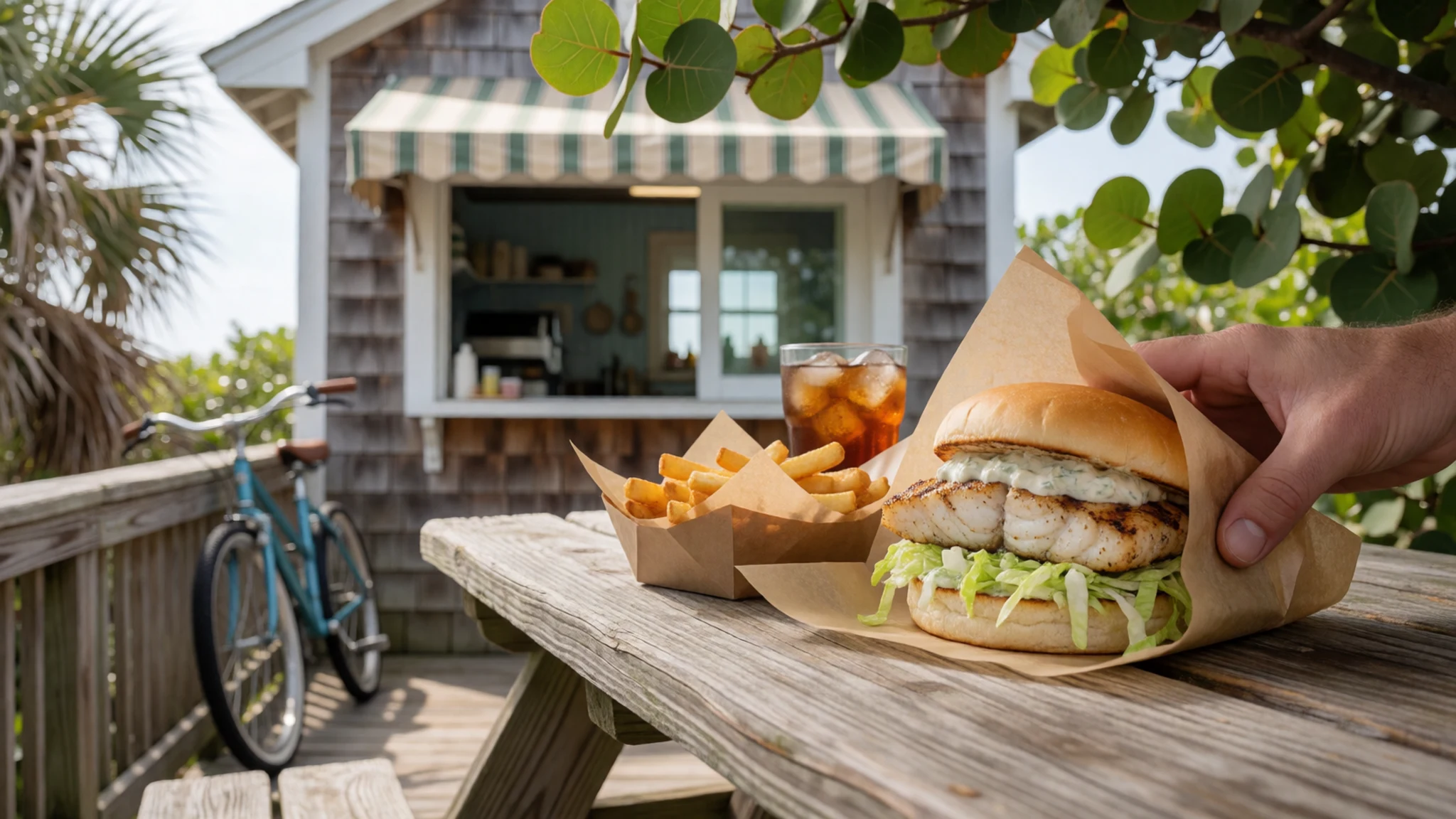
- Stone crab claws — Seafood restaurants and fish markets
Cold cracked claws served with a mustard-style dipping sauce, a Florida Gulf speciality eaten when in season. The meat is sweet and firm. Ask when the season runs, as availability varies, and expect it to be one of the pricier items.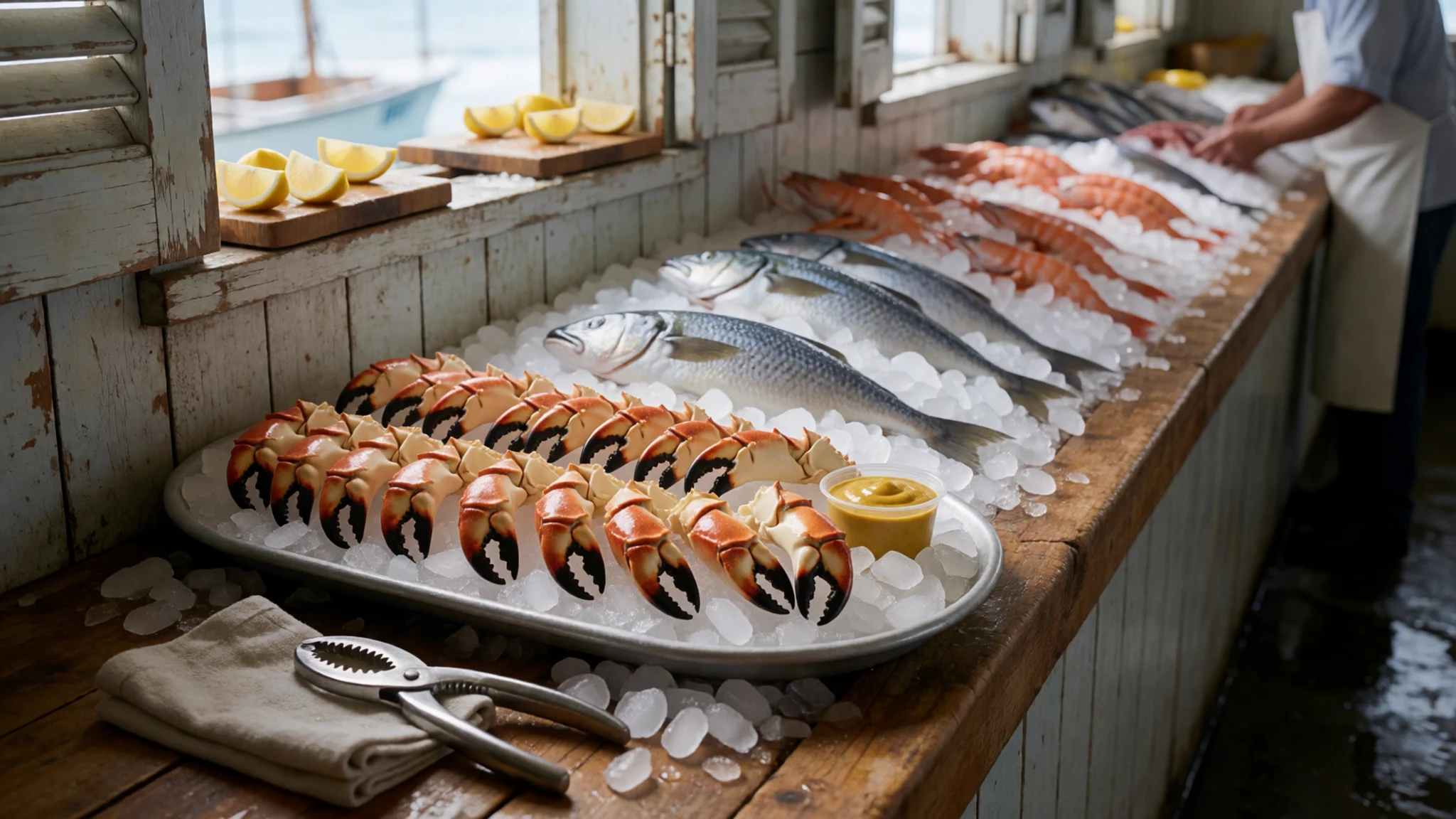
- Gulf shrimp — Waterside restaurants and bayside fish shacks
Sweet Gulf shrimp are boiled, grilled, fried or tossed into grits and pasta. Florida's peninsula gives cooks easy access to fresh seafood, and shrimp turn up in nearly every style, from peel-and-eat platters to tacos. - Key lime pie — Bakeries, dessert counters and most casual restaurants
A tart, creamy lime filling in a crumbly biscuit crust, chilled and served in a slice. Florida's citrus tradition runs through its sweets, and a cold slice is a welcome end to a hot beach day. - Fresh citrus and tropical fruit — Roadside fruit stands on the way in, and island breakfast cafés
Orange and grapefruit juice, plus mango, papaya and passion fruit, are Florida staples, often turned into sauces, marinades and desserts. Fruit stands on the mainland roads offer samples, and many restaurants squeeze juice to order.
Plan it
Best time. Late February to April brings warm, drier days and fewer storms, and the island is at its liveliest. November is also pleasant but sits at the tail of the hurricane season. Summer is hot, humid and thundery, and autumn carries the greatest storm risk, so check the forecast before booking.
How long. 2–4
Getting there. Fly to Southwest Florida International Airport at Fort Myers, then drive to the Sanibel Causeway and cross by road (the last leg takes under an hour). Orlando, Tampa and Miami are also options with a longer drive. Hurricane Ian damaged the causeway, so check current access before you travel.
Budget. high
Tips
- Book places to stay and tables well ahead for the winter and spring season, and check what has reopened after the storm
- Start shelling and refuge drives early, when beaches are quiet and wading birds are active
- Carry insect repellent, sunscreen and water, especially for mangrove trails
- Hire a bike for the flat paths, but expect busy roads at midday in season
- Check the official sites for refuge, beach and parking arrangements before you go
Etiquette
- Slow down for manatees and dolphins, and keep clear of them in the water
- Leave live shells and animals on the beach, and follow local shelling rules
- Stay on marked paths in the refuges and keep a respectful distance from birds
Nearby
Sources
- Wikidata Q42296925 (CC0)
- Wikipedia: Sanibel Island (rev 1384695960) (CC BY-SA 4.0)
- Wikivoyage: Florida (rev 5422348) (CC BY-SA 4.0)
- 1944 Sanibel Island hurricane track (Wikimedia Commons) (Public domain)
- Hurricane, Shmurricane, bring 'em on! — cogdogblog (Wikimedia Commons) (CC0 1.0)
- Giant leather fern, Sanibel Island — James St. John (Wikimedia Commons) (CC BY 2.5)
- Giant leather fern, Sanibel Island — James St. John (Wikimedia Commons) (CC BY 2.5)
- Atrina pen shell, Algiers Beach — James St. John (Wikimedia Commons) (CC BY 2.5)
- Atrina pen shell, Algiers Beach — James St. John (Wikimedia Commons) (CC BY 2.5)
- Atrina pen shell with encrusting oysters — James St. John (Wikimedia Commons) (CC BY 2.5)
- Atrina pen shell with encrusting oysters — James St. John (Wikimedia Commons) (CC BY 2.5)


Wildlife
- Manatee (animal)
The West Indian manatee is a big, gentle swimmer that grazes on underwater plants and feels its way along with its whiskers. Around Sanibel it favours the shallow waters, which it shares with dolphins, though the notes give no season or hour for seeing it. The Florida kind is listed as threatened, so give it room, watch quietly from a distance, and never feed it. If you are in a boat or on a jet ski, slow right down, because speeding hulls can hurt it.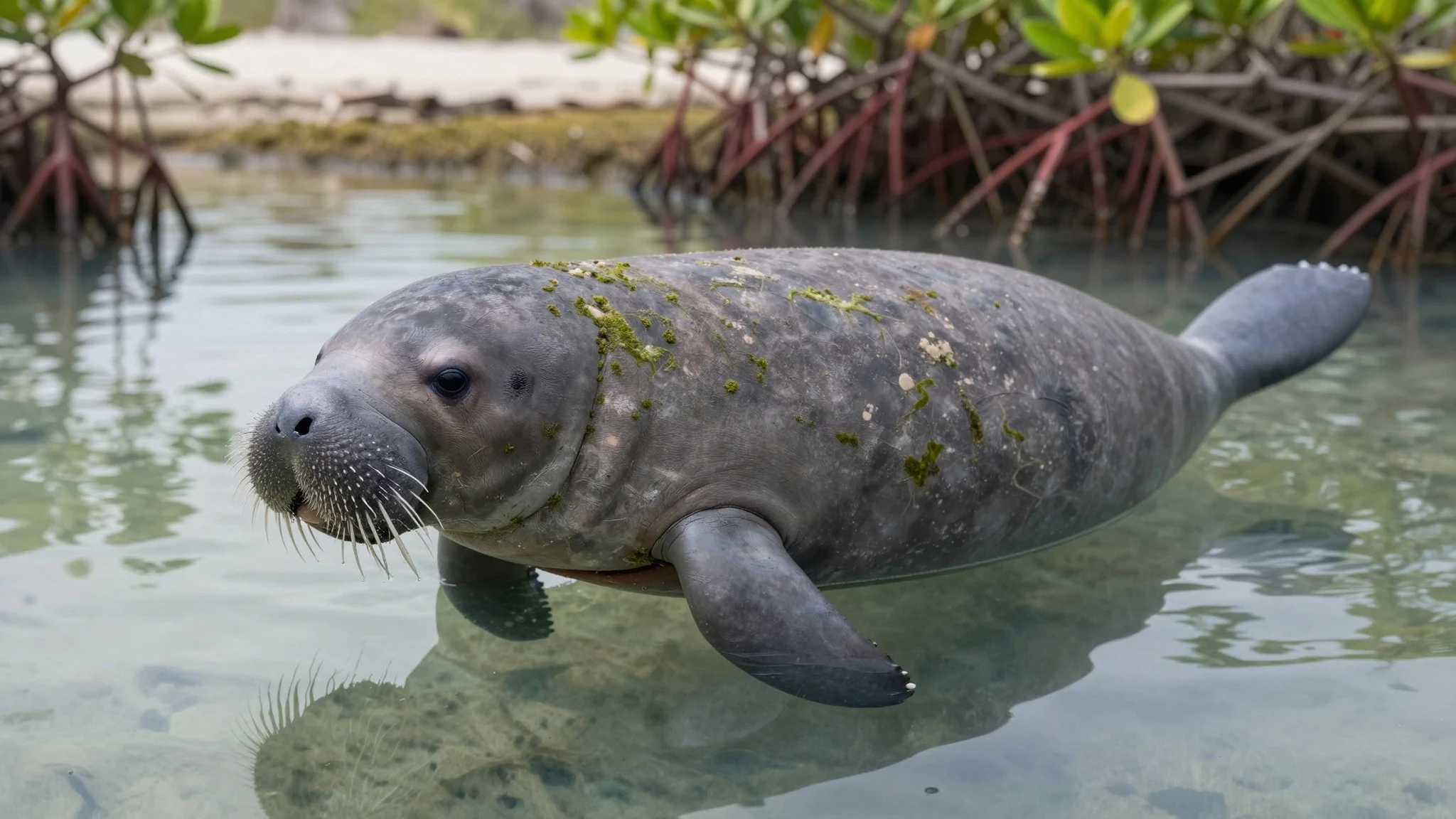
- Dolphin (animal)
The common bottlenose dolphin is the classic dolphin of the sea, and experts still debate whether it is really more than one species. Scan Sanibel's shallow waters, where dolphins share space with manatees. The notes name no best season or time of day, so check current conditions before you travel. Watch from a respectful distance, keep your voices low, and consider going with a local guide. Never feed a dolphin, and slow any boat down when they are near.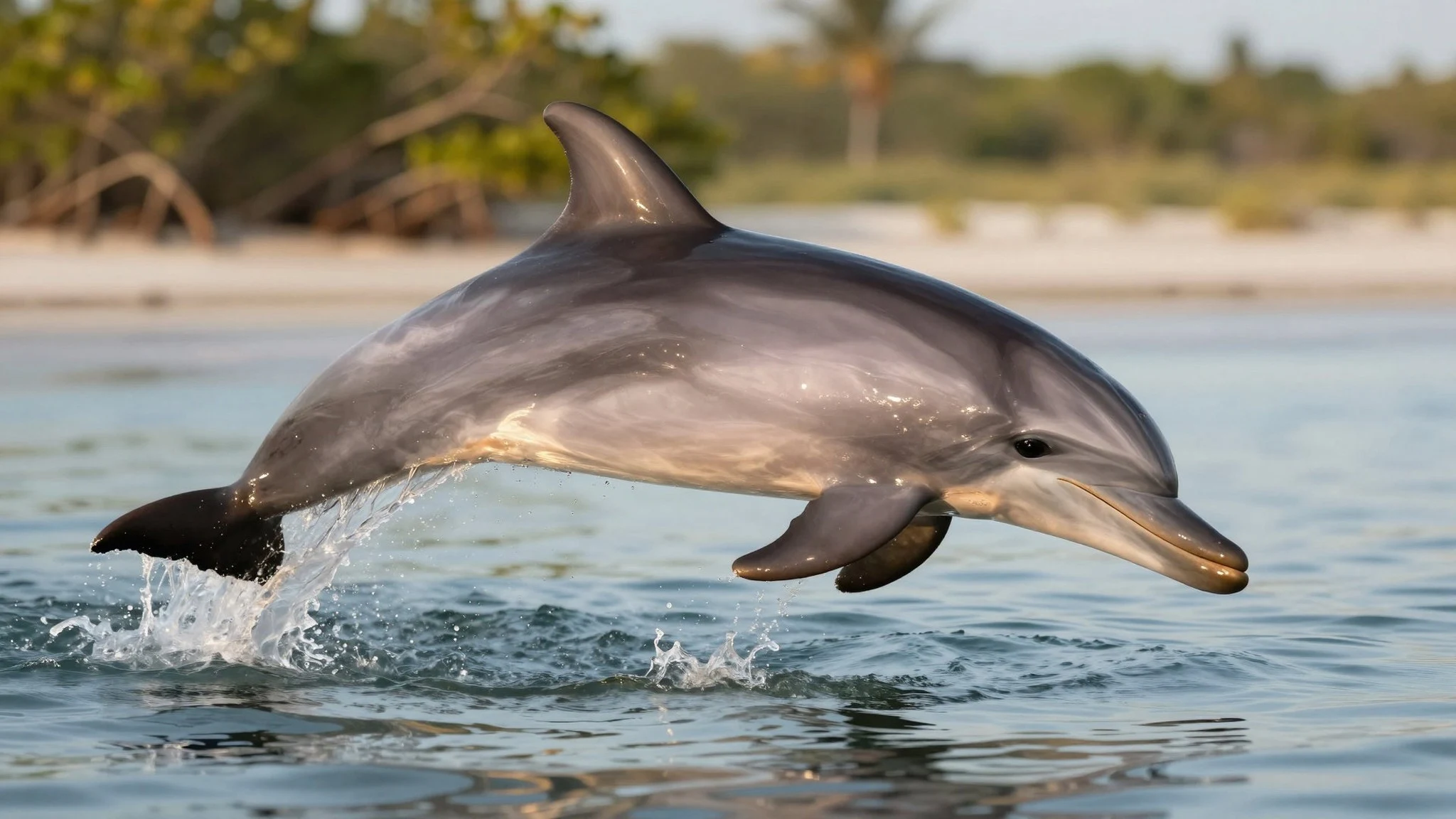
- Brown pelican (bird)
The brown pelican is a large bird with a throat pouch that dives into the water to feed. In breeding dress its head is white with a yellowish wash and its neck dark maroon-brown, while out of season the head and neck turn white. Look out over Sanibel's waters to find it, as the notes give no particular season or hour. Keep your distance, stay quiet so it can feed undisturbed, and never offer it food.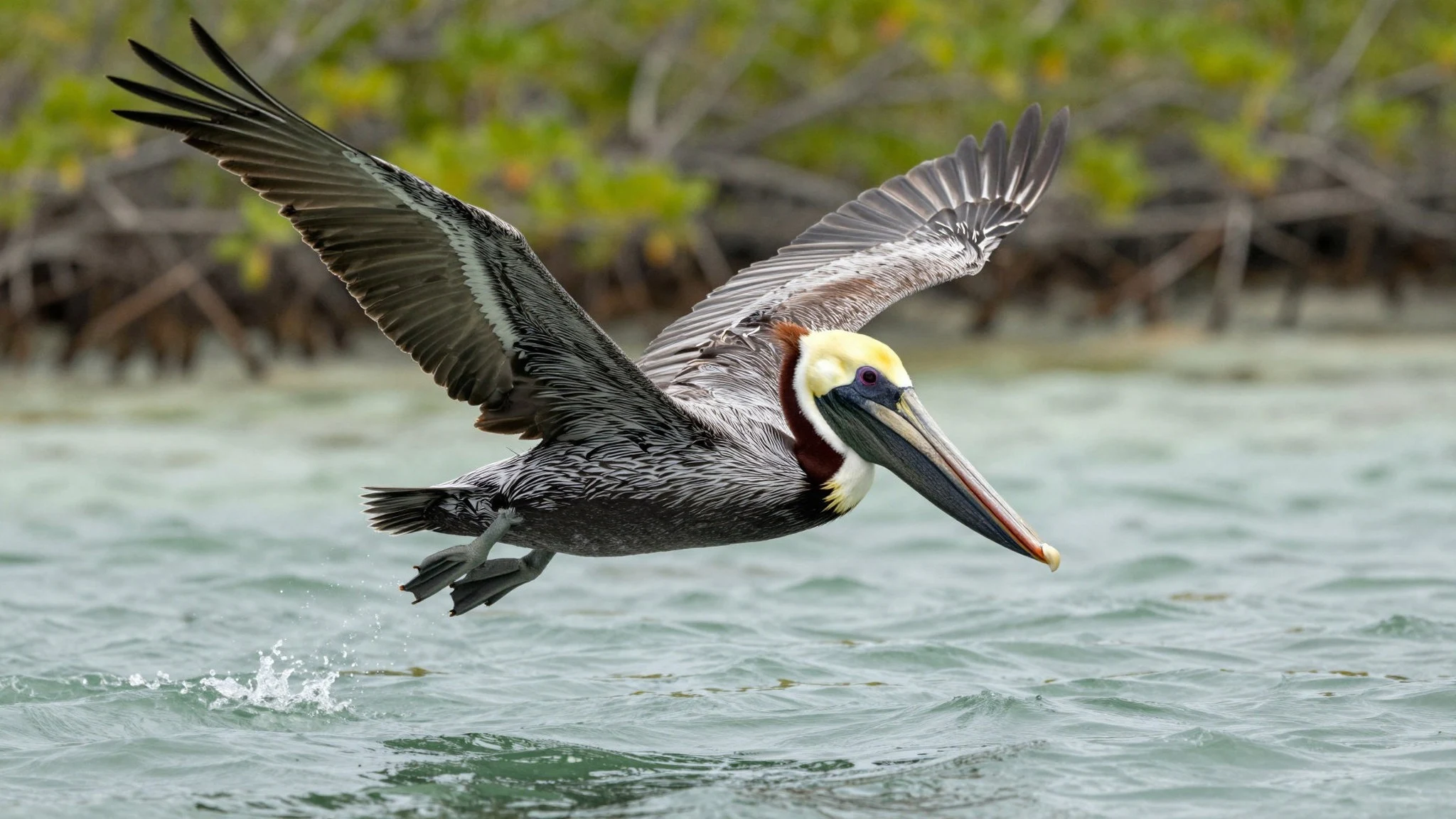
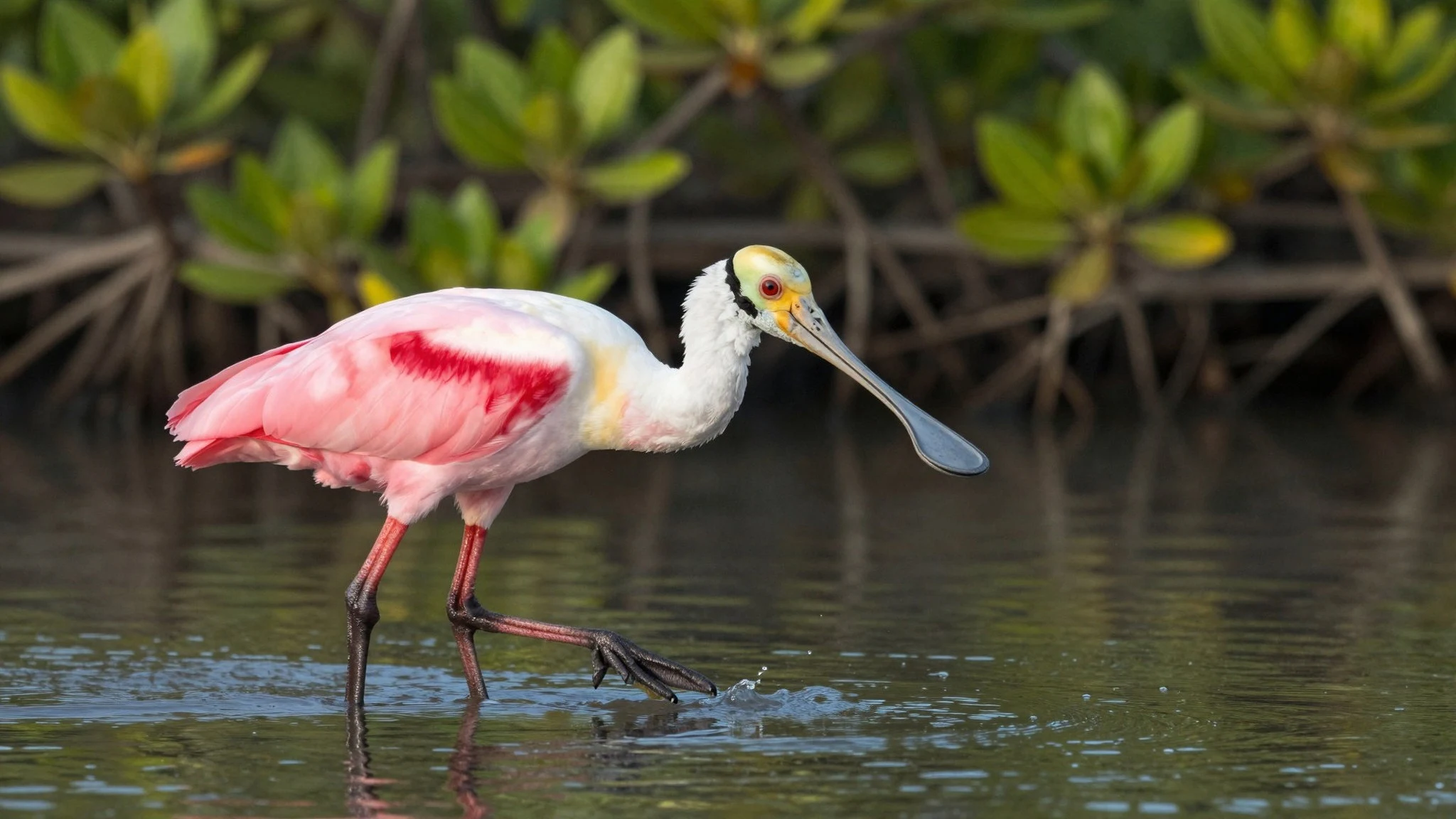
- Roseate spoonbill (bird)
The roseate spoonbill is a sociable pink wading bird, and it gets its colour from what it eats, rather like a flamingo. On Sanibel, head for the bay side, a maze of shallow creeks where spoonbills feed alongside herons and ibises at low tide. The notes give no season, so plan around the tide and take a local guide if you can. Stand back, stay still and quiet so the birds keep feeding, and never feed them yourself.