San Germán
San Germán, United States
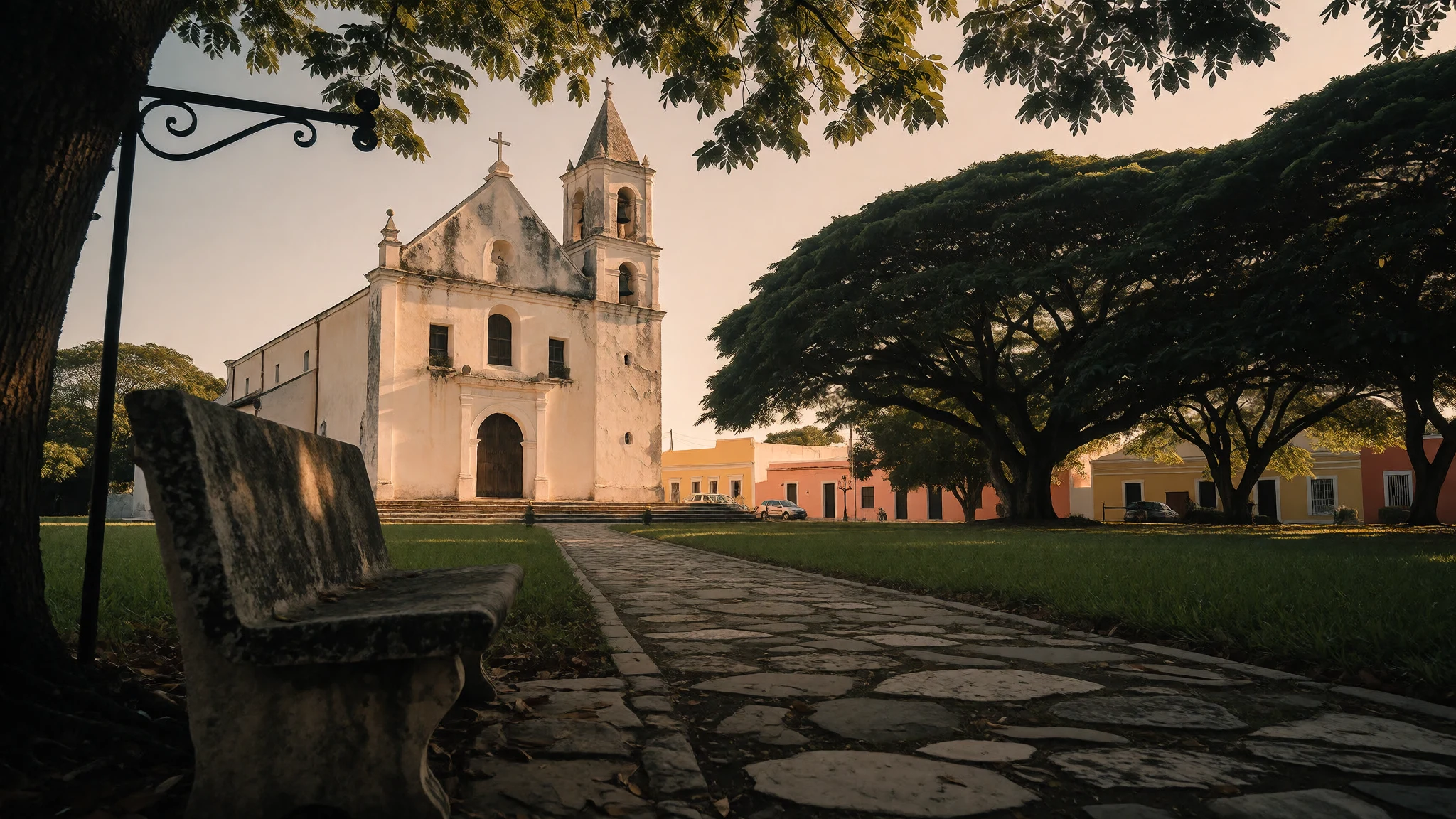
San Germán is a quiet colonial town in south-western Puerto Rico, with shaded plazas, early Spanish churches and a long history of basketball.
The place
San Germán sits in the Sabana Grande Valley in south-western Puerto Rico. It is a small town of 31,879 people, at 84 metres above sea level. The valley is bounded by the Cordillera Central to the north and by the Santa Marta Hills and the Lajas Valley to the south. Mayagüez lies to the north-west, Hormigueros and Cabo Rojo to the west, Sabana Grande to the east and Lajas to the south.
The municipality is far bigger than the town. Eighteen rural barrios surround San Germán Pueblo, the downtown that serves as the administrative centre. The higher ground includes Alto del Descanso at 770 m and Tetas de Cerro Gordo at 883 m. The historic core is protected as the San Germán Historic District, and the sources describe San Germán as the second oldest city on the island after San Juan.
The old town is built around two leafy plazas, Parque de Santo Domingo and Plaza Francisco Mariano Quiñones. Narrow, twisting streets run between Spanish colonial houses painted in pastel colours. Some have been carefully restored, while others are visibly crumbling, so the place feels lived-in rather than polished for visitors. A university campus, Inter-American University of Puerto Rico, adds a student presence.
This is a town to walk slowly, not a resort. The southern coast, with Cabo Rojo, Guánica and La Parguera, is a short drive away, and many travellers pair the two: history and shade in the morning, beaches after.
Its story
San Germán's history starts with a false start. An earlier settlement of the same name stood near present-day Añasco until a Taíno uprising destroyed it in February 1511. That same year Alonso Manso was named the island's first bishop, and the Spanish presence in the area was still tiny, with about 50 residents. A new town was founded in 1512 by Miguel Díaz at Guayanilla. It was named for Germaine of Foix, the second wife of King Ferdinand II, and also for Saint Germanus of Auxerre.
The coast was dangerous. French corsairs raided the town in 1528 and returned twice more in the following decades. A small fort was begun in 1540, but work stopped in 1546 as residents moved inland. In 1571 the Royal Audience of Santo Domingo ordered San Germán merged with Santa María de Guadianilla, since the attacks kept coming.
The merged city rose in 1573 on the Santa Marta hills beside the Guanajibo River, and that is the date given as its founding. Its official name was Nueva Villa de Salamanca, after the Spanish city, though the older name stayed in use. Outside San Juan it was among the larger settlements of the sixteenth century, alongside Coamo and Aguada.
For a long time its territory was enormous. Puerto Rico was once divided between San Juan and San Germán, and the western jurisdiction ran from the west coast to Arecibo in the north and Ponce in the south. Today's small town is what remains of that ambition, with its churches and plazas as the physical record.
What to see
- Iglesia Porta Coeli — Parque de Santo Domingo
Porta Coeli church in San Germán dates to 1606 and is counted among the earliest Spanish churches in the Americas. It stands above Parque de Santo Domingo and now houses a museum of religious paintings. Go early, when the plaza is quiet, and check the official municipal site for opening times.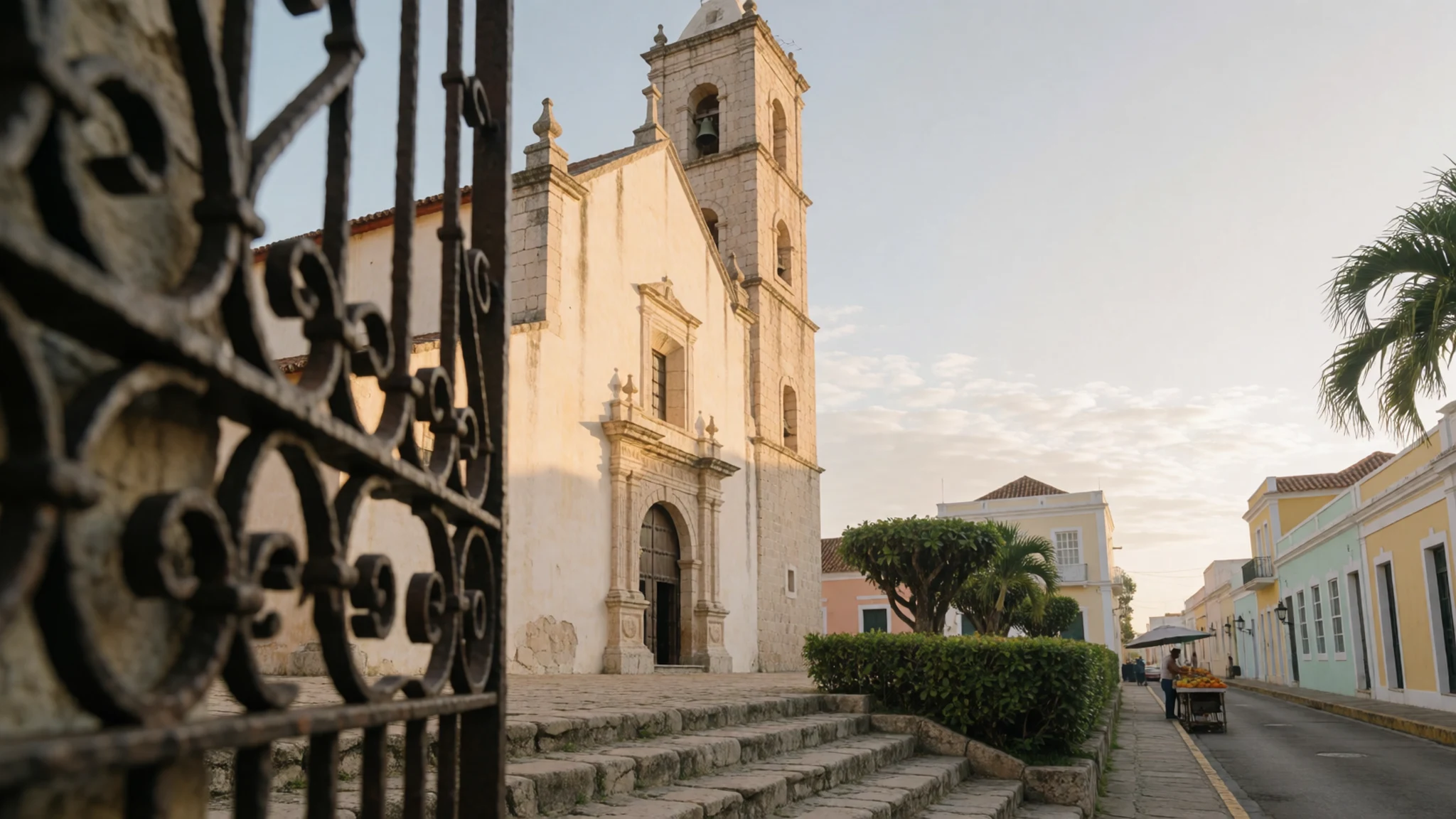
- San Germán de Auxerre — Between the two plazas
San Germán de Auxerre is the Spanish baroque parish church that straddles the two plazas. A chapel stood here from 1573, but most of the present building dates from 1737, when it was rebuilt after an earthquake. Sit on a plaza bench for the best view of the façade.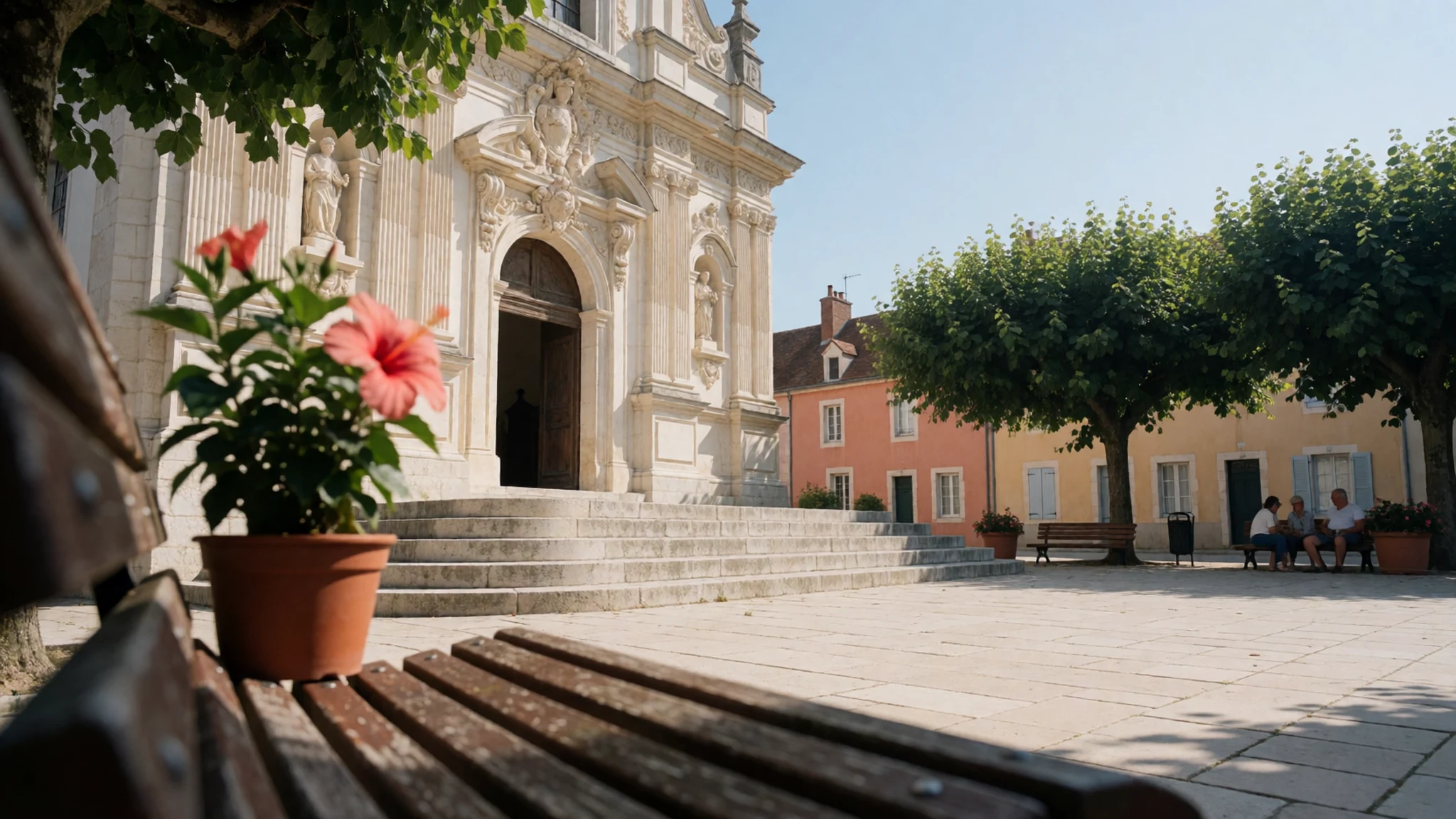
- Parque de Santo Domingo — San Germán Historic District
Parque de Santo Domingo is the shaded heart of the historic district, with benches, old trees and Porta Coeli at one end. Locals gather here in the evenings. It is the easiest place to take in the town's pastel colour scheme, and the historic district's plaque is nearby.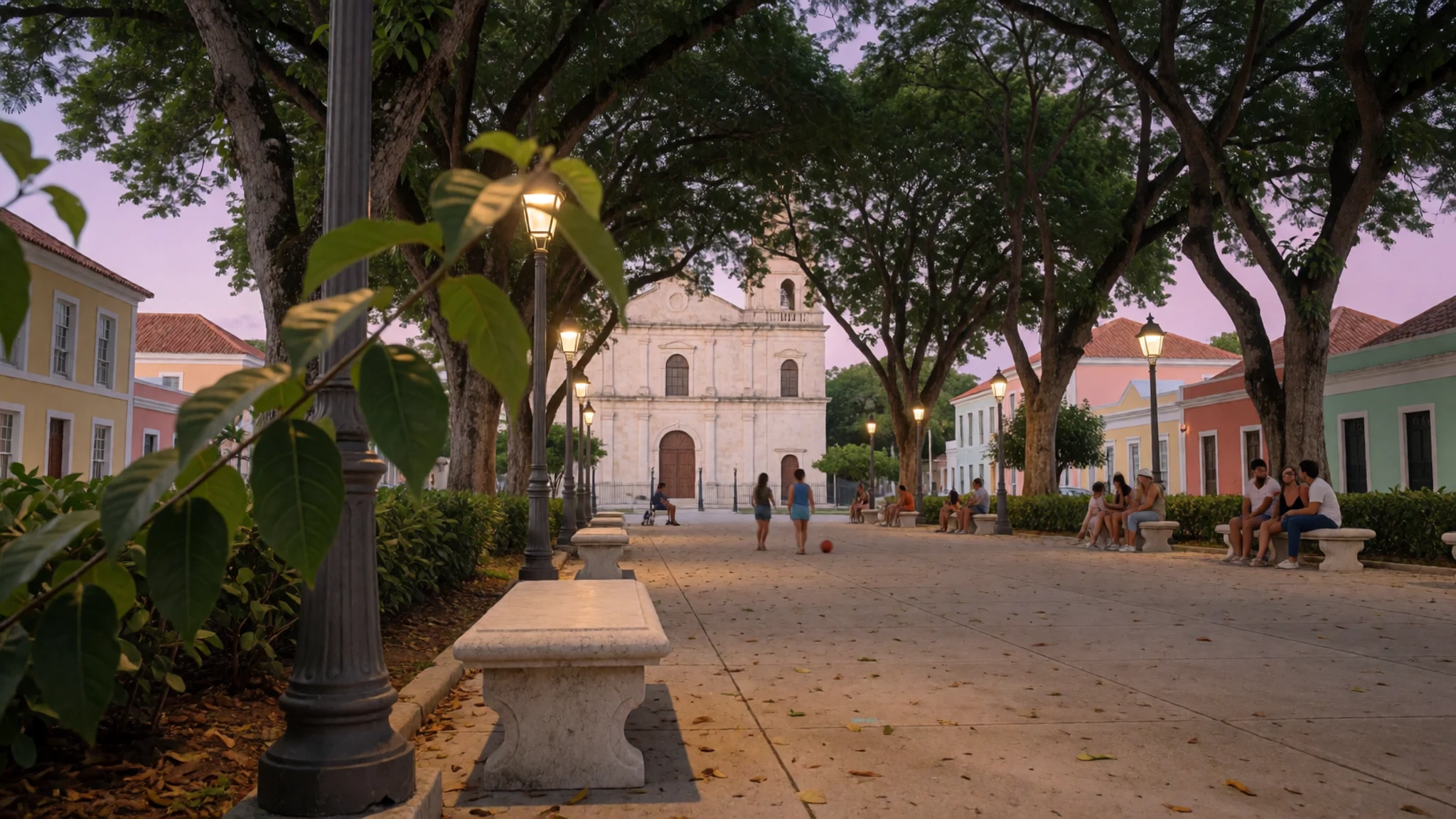
- Museo Farmacia La Botica — Parque de Santo Domingo
The pharmacy museum is housed in one of the city's oldest pharmacies on the edge of Parque de Santo Domingo. It shows how a Puerto Rican chemist's shop worked, with jars, fittings and records. It is small, so it suits a short stop between the churches. Check locally for opening days.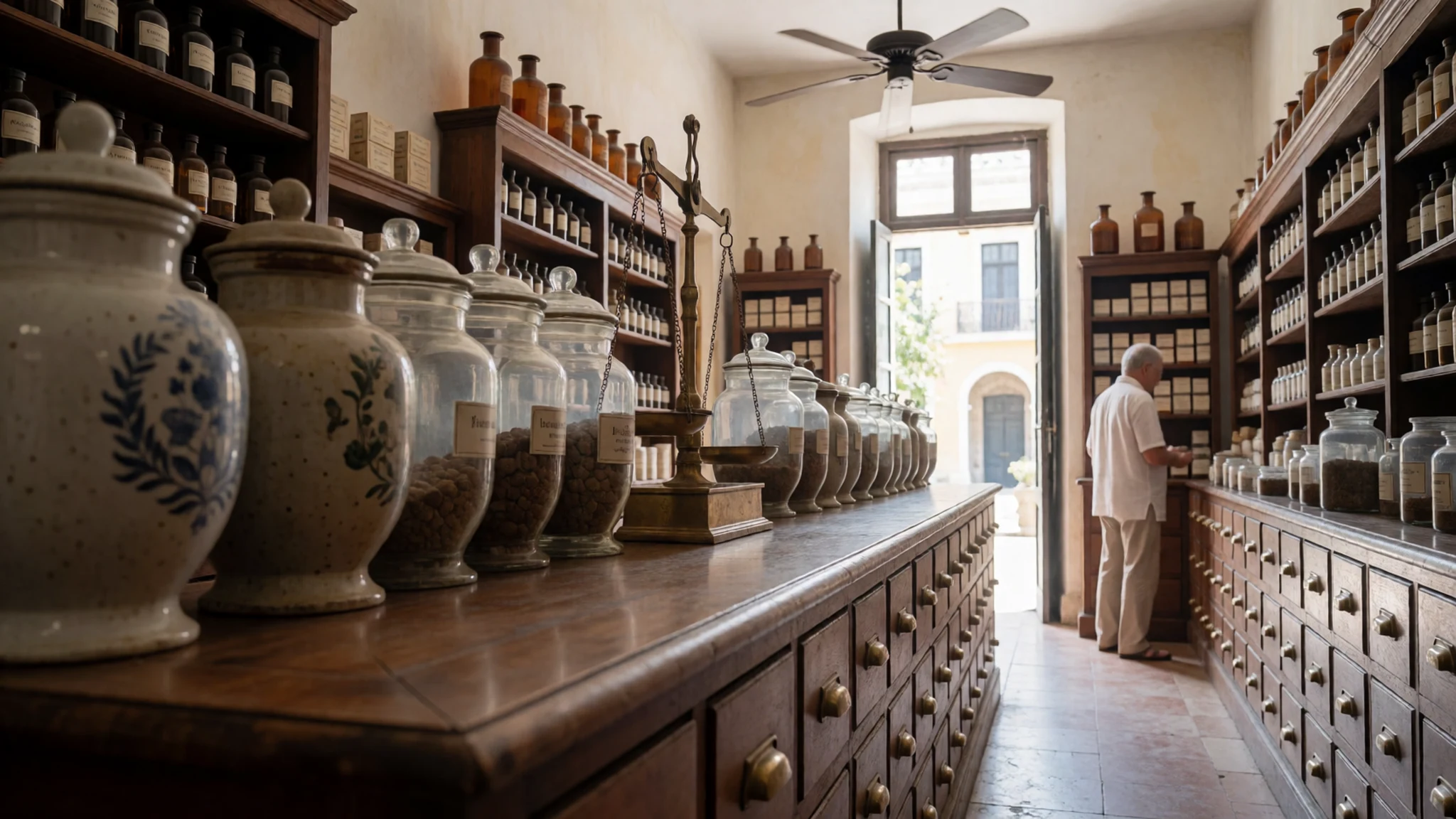
- Colonial streets of San Germán Pueblo — San Germán Pueblo
The streets around the plazas are the town's main sight. Spanish colonial houses line them, some freshly repaired and some abandoned and peeling. Wander the alleys, look for the Three Races and One Culture mural, and note the Russian Orthodox church of Saint John Climacus, the only one in Puerto Rico.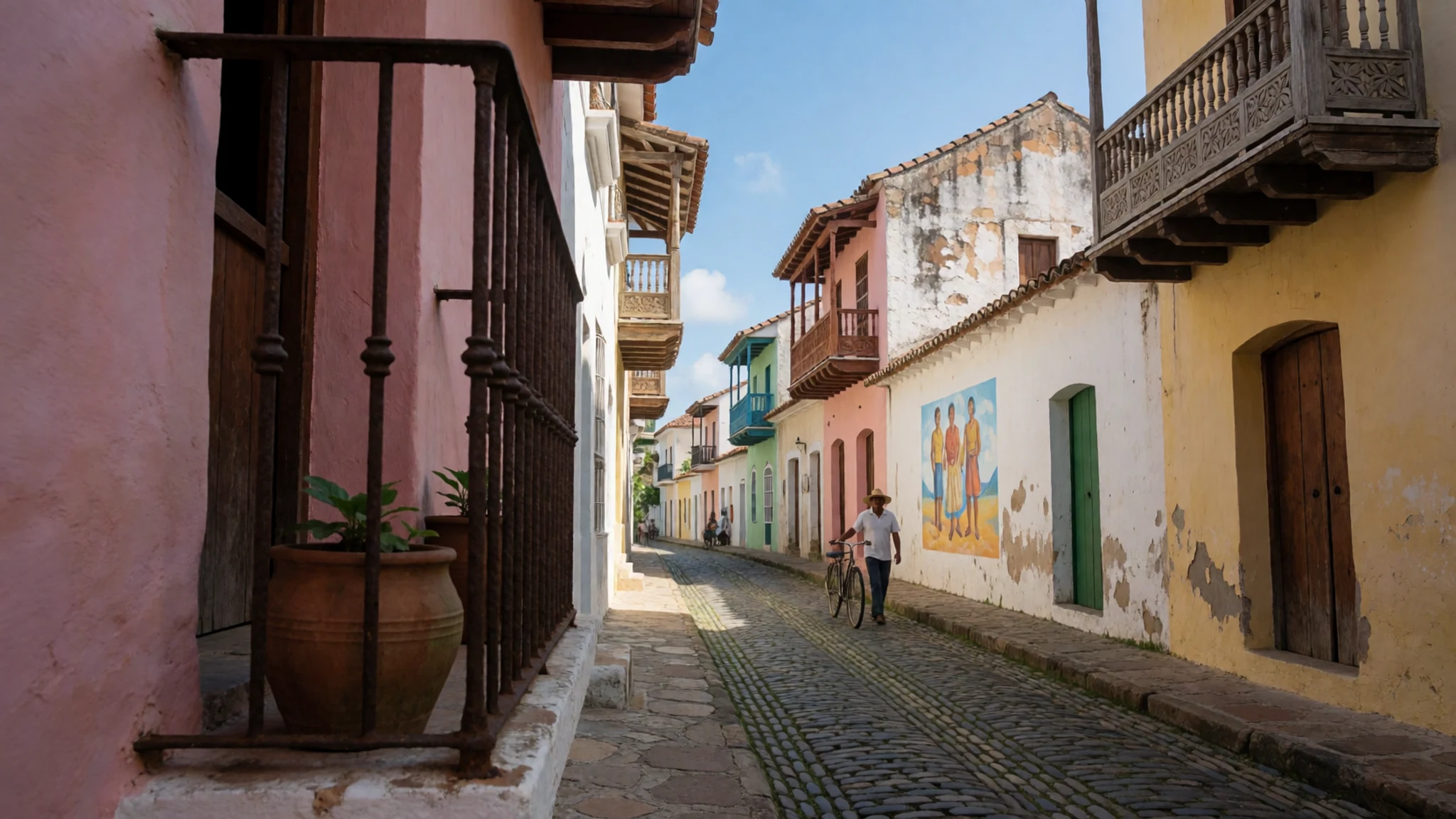
Culture
San Germán has a strong local identity built around the church calendar, music and sport. The patron saint festival, the Fiestas Patronales, falls in late July and early August, with processions, craft stalls, regional food and live music around the plazas. The year also includes the Festival de la Pana in July, the Anón Festival in September, and a Christmas festival and parade in early December. In the Rosario area, bordering Mayagüez, the Virgin of the Rosary has her own celebration.
Basketball is the other civic passion. The Atléticos de San Germán, nicknamed the Orange Monster, date back to the 1930s and are among Puerto Rico's oldest franchises. The town is known as the Cradle of Puerto Rican Basketball, and several of the island's best-known players came through its club. The professional league season usually runs from April to July, and a home game is a lively way to meet people.
Spanish is the everyday language, and visitors who open with a few words will be warmly received. Puerto Rico is part of the United States, so dollars and cards are standard, though small stalls prefer cash. Churches here are working parishes as well as monuments, and services take priority over sightseeing. Many colonial houses are private homes, so peering through doors and windows is not welcome.
When you step into Porta Coeli or San Germán de Auxerre, keep your voice low, dress modestly, and do not photograph worshippers during a service.
What to wear
San Germán has no single town costume. Its traditional dress belongs to the wider Puerto Rican countryside, the world of the jíbaro, or highland farmer. The classic outfit is a light cotton or linen shirt and trousers with a straw hat, the pava, and sometimes a machete at the belt. Women's festive dress is a full cotton skirt with a ruffled blouse, often trimmed with mundillo, the bobbin lace of the island. Today this clothing appears mostly at folk festivals, school performances and the patron saint celebrations.
Everyday wear is relaxed and tropical. Locals favour cotton shirts, guayaberas for formal occasions, light dresses, shorts and sandals, with a smart outfit for church on Sundays. Basketball season brings a lot of orange, the Atléticos colour, on shirts and caps. University students dress like students anywhere, in jeans, trainers and branded T-shirts.
For visitors, the main issues are heat, sun and church rules. Wear light, breathable cotton or linen and a hat, and carry sunscreen. Bring a shawl or a shirt with sleeves to cover shoulders before entering churches, and avoid very short shorts or beachwear in town. The old streets are uneven and the cobbles can be slippery after rain, so choose closed, grippy sandals or trainers. A light rain jacket is useful in the wet months.
What to eat
- Churrasco al carbón — Steakhouses and grill restaurants in the town centre
Charcoal-grilled steak is the dish San Germán is best known for across the island. The town's steakhouses serve it with rice, beans or fried plantain. Ask for it by name and expect a generous portion, especially at lunch.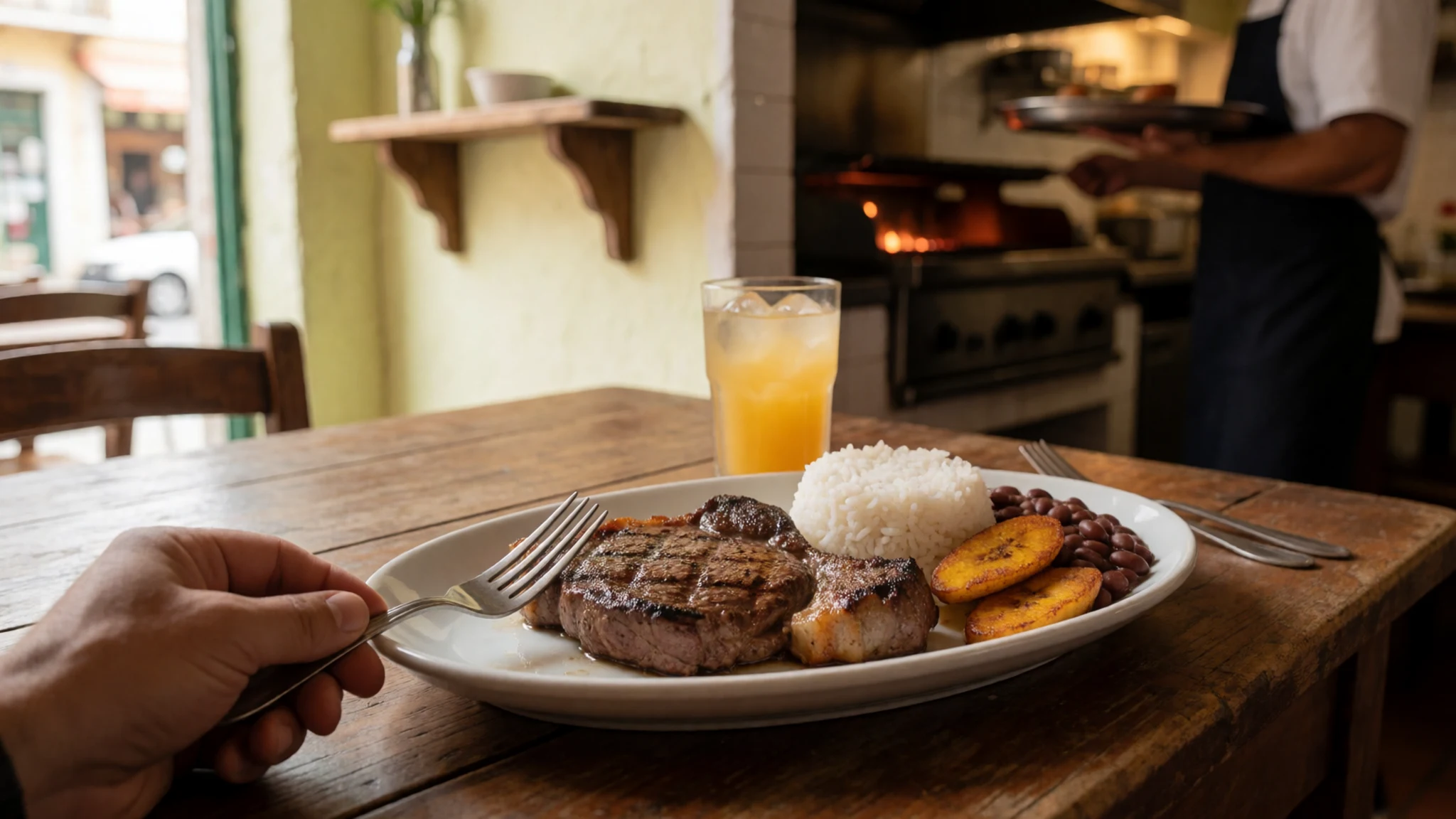
- Mofongo — Local restaurants and eateries around the plazas
Fried green plantain mashed with garlic and oil, shaped into a mound and often filled or topped with chicken, pork or seafood. It is heavy and filling, so one portion can feed two. It is a staple across Puerto Rico and easy to find here.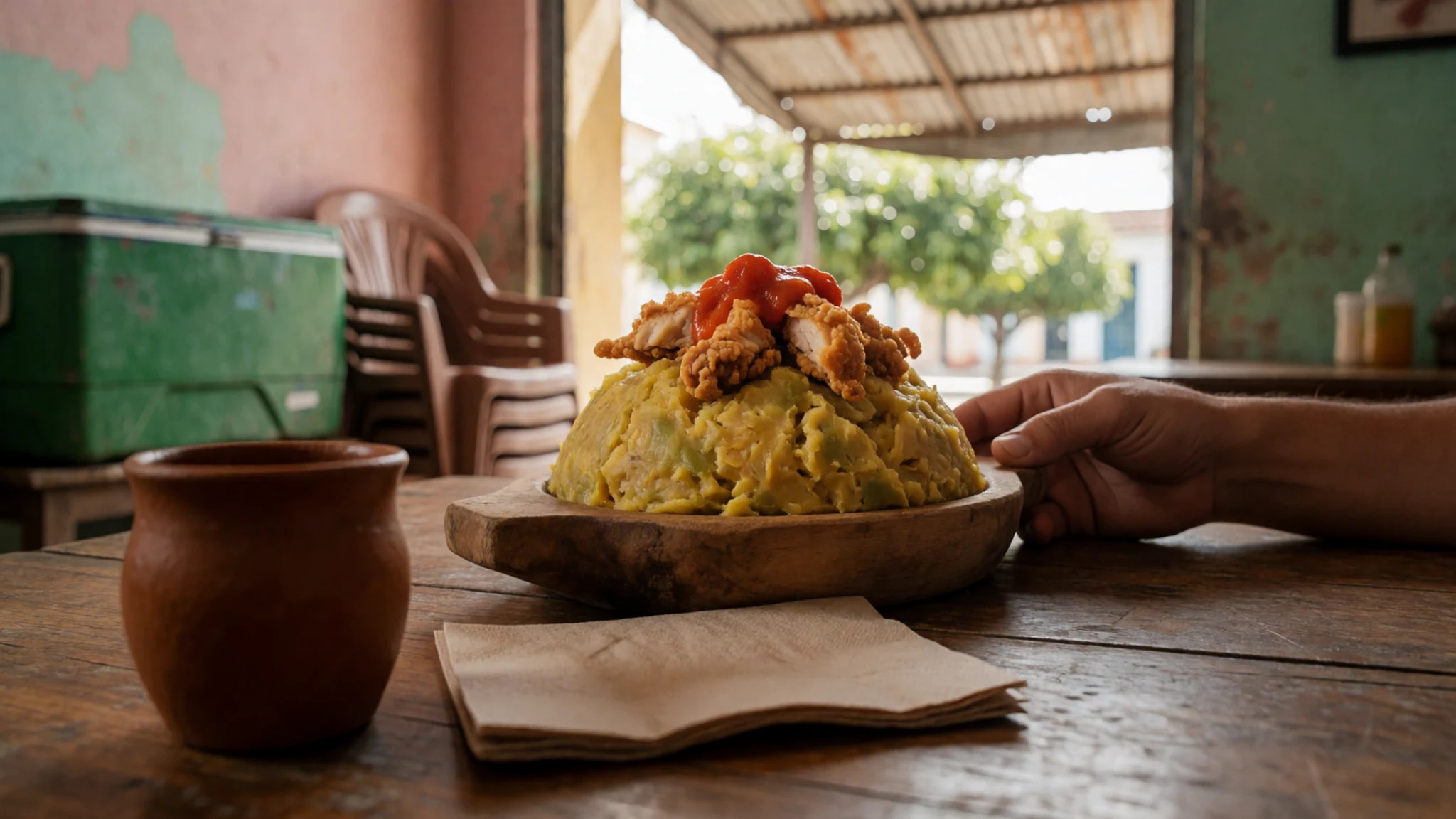
- Alcapurrias and other frituras — Roadside kiosks and snack counters near the centre
Fried snacks such as alcapurrias, made from a starchy dough around a meat filling, are sold hot. They are cheap, greasy and satisfying with a cold drink. Try one while walking between the churches. - Pana (breadfruit) — Festival stalls in July, and home-style eateries
The Festival de la Pana in July celebrates breadfruit, a starchy fruit boiled, fried or mashed as a side dish. If you are visiting at that time, stalls offer it in several forms, from chips to stews. - Anón — Roadside fruit stands and festival stalls in September
Anón, or sugar apple, is a sweet, custardy fruit with a knobbly green skin and black seeds, celebrated in September's Anón Festival. Eat the soft white flesh with a spoon and spit out the seeds. It is also made into juices and ice cream.
Plan it
Best time. December to April is the most comfortable stretch, with warm, drier weather and fewer storms. Late July and early August bring the patron saint festival but also heat. Hurricane season runs from June to November, so check forecasts if travelling then.
How long. 1–2
Getting there. Fly into Rafael Hernández Airport at Aguadilla or Mercedita Airport at Ponce, both within about an hour's drive, or into Luis Muñoz Marín International Airport at San Juan and drive south-west. There is no rail, so a hire car is the practical last leg, using the main highway along the south-west of the island. Check road conditions and signs on arrival.
Budget. mid
Tips
- Visit the churches and plazas early, before the midday heat
- Carry some cash for small stalls and kiosks, though cards are widely accepted
- Bring water and sun protection, because shade is limited away from the plazas
- Pair San Germán with the southern coast at Cabo Rojo, Guánica or La Parguera
- Check the municipal website at http://www.municipiodesangerman.com/ for festival dates and museum hours
Etiquette
- Dress modestly and keep quiet inside churches
- Do not photograph worshippers during services
- Ask before photographing people or private homes
Nearby
Sources
- Wikidata Q1598808 (CC0)
- Wikipedia: San Germán, Puerto Rico (rev 1378379536) (CC BY-SA 4.0)
- Wikivoyage: San Germán (rev 5355993) (CC BY-SA 4.0)
- Photo: Porta Coeli in San Germán, Jmoliver (CC BY 3.0)
- Photo: San Germán town square, Moebiusuibeom-en (CC BY-SA 4.0)
- Photo: La Botica, cavenaghi9 (CC BY-SA 2.0)
- Photo: Residential building in San Germán, cavenaghi9 (CC BY-SA 2.0)
- Photo: San Germán locator map, The Eloquent Peasant (CC BY-SA 4.0)
- Photo: San Germán Historic District, Jose Oquendo (CC BY 2.5)
- Photo: San Germán Auxerre, Mariena (CC BY-SA 2.0)
- Photo: Parque de Santo Domingo, Jpatokal (CC BY-SA 2.5)


