San Cristóbal Canyon
San Cristóbal Canyon, United States
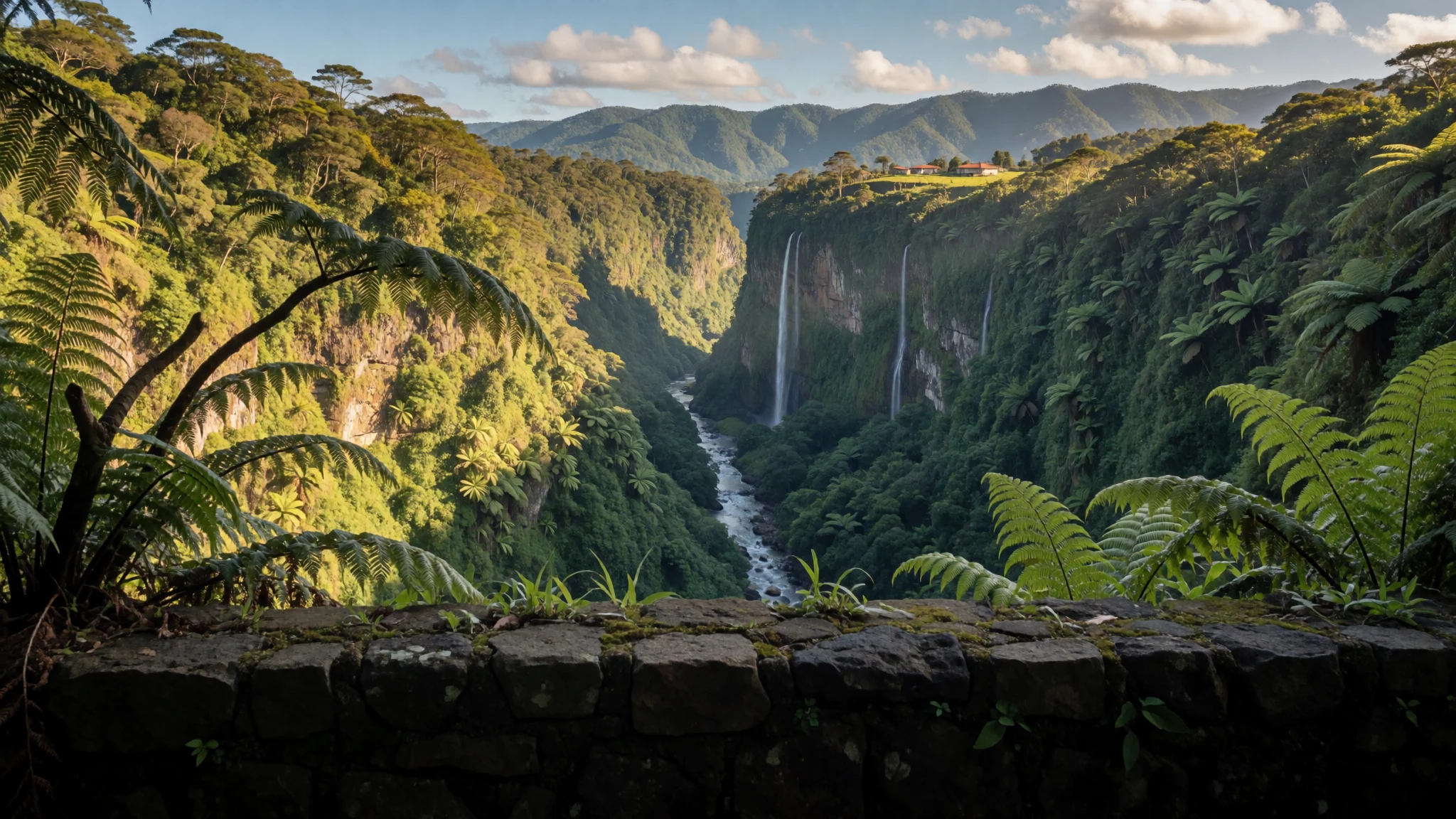
San Cristóbal Canyon is a forested gorge in Puerto Rico's central mountains, with waterfalls, a recovering ecosystem and views best taken from the rim.
The place
San Cristóbal Canyon (Cañón de San Cristóbal) sits in the central mountains of Puerto Rico, on the line between the municipalities of Barranquitas and Aibonito. The Usabón River cut it, and the same river now serves as the boundary between the two towns. The gorge runs for about 9 km between the Cordillera Central and the Sierra de Cayey, and at its deepest it drops about 228 m, which Wikipedia describes as the deepest land canyon on the island and in the West Indies. The Usabón is a tributary of the La Plata, and smaller rivers from Aibonito and Barranquitas feed it from either side. Next door lies Las Bocas Canyon, part of the same larger system in the La Plata basin. What strikes most visitors is how steep and green it is: forest clings to the walls, ferns and vines crowd the ledges, and waterfalls drop into the gorge. Hundreds of plant and animal species live here, and decades of protection have given the vegetation time to recover. It is a place for looking down into more than for strolling through. Views from the rim tell the story best, while the floor is rough, wet and slippery, and access is managed by the conservation body that looks after it. The climate is tropical, and the hills collect cloud and showers in a way the coast does not, so the weather can change within an hour.
Its story
San Cristóbal Canyon takes its name from Saint Christopher, the early Christian martyr who is patron saint of travellers. For most of its life the gorge was left alone by people. Its forest and river worked undisturbed until the 19th century, when farming on the surrounding mountains began to change how sediment moved down the Usabón. The bigger damage came later. Through much of the 20th century the canyon was used as a rubbish dump, and from 1954 it was an official landfill. That ended in 1974, but by then the ecology and the water flow had been badly and permanently altered. Protection arrived in stages. In 1978 the island's environment department, known by its Spanish initials DRNA, listed the canyon as one of 28 areas suited to protection under Law 150, a measure meant for places of high biological, ecological and geographical value. In 1980 the Planning Board added limits on housing near the rim. The land then passed to the Puerto Rico Conservation Trust, which took on the clean-up, restoration and long-term care. So the canyon seen today is a recovering place rather than an untouched one, a reminder that a gorge can be both a natural showpiece and a former tip. The forest has regrown on the walls and the waterfalls draw the crowds, but the story of the rubbish years explains why access is controlled and why everything brought in has to be carried out again.
What to see
- El Ancón Waterfall — Inside the canyon, Aibonito–Barranquitas boundary
El Ancón Waterfall is a prominent cascade in San Cristóbal Canyon, a white ribbon of water falling between forested walls into the gorge. Reaching its base means rough, wet ground, so a viewpoint is the easier way to appreciate it. The flow changes with the rains: fuller after heavy showers, but with more dangerous paths.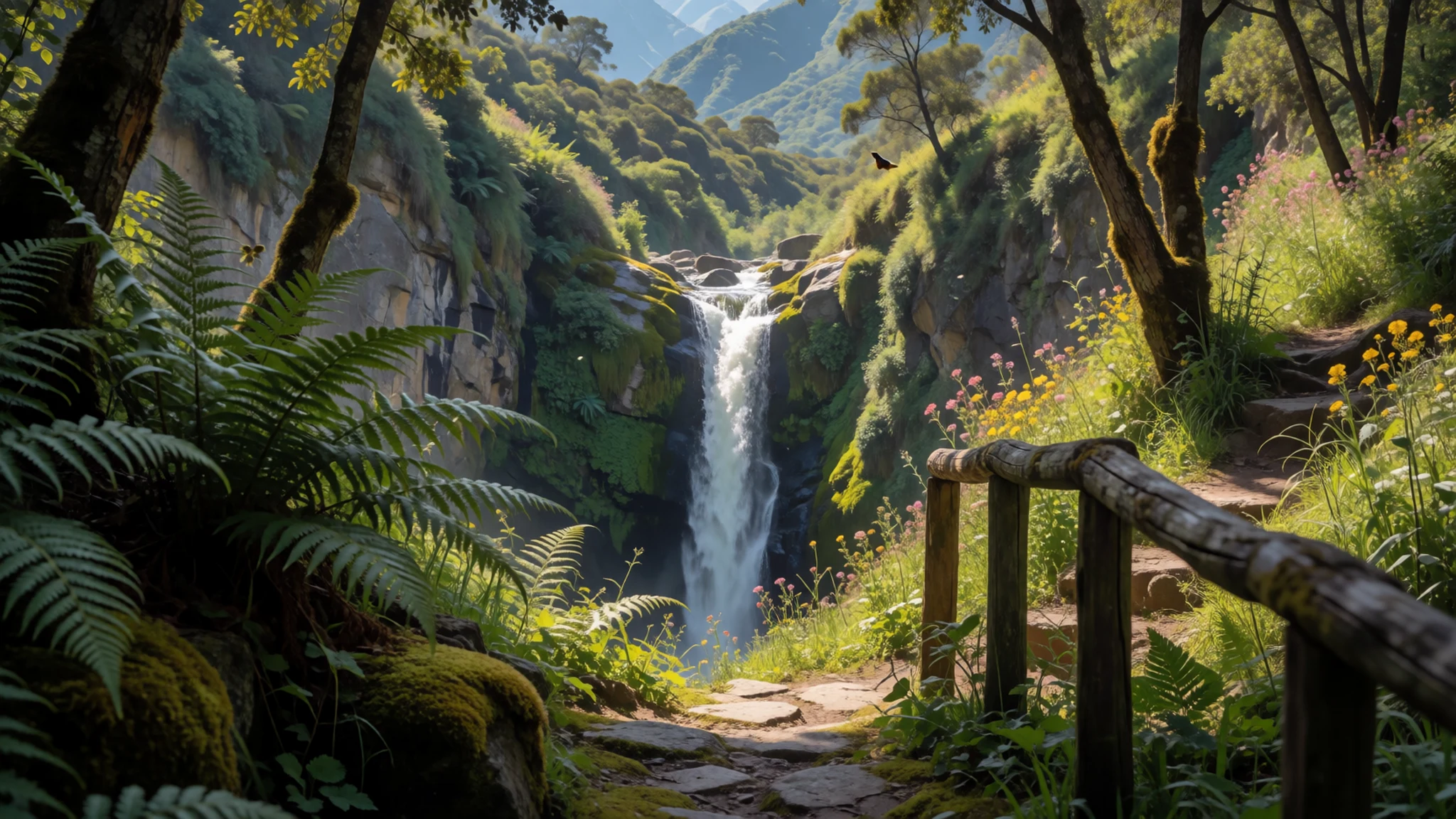
- The nature preserve entrance — Canyon edge, central Puerto Rico
The entrance to the San Cristóbal Canyon nature preserve is where the protected area begins and where the rules for visiting are set. It is worth reading any notices here and asking the conservation trust about current access before heading down, since conditions on the slopes and trails vary with the weather.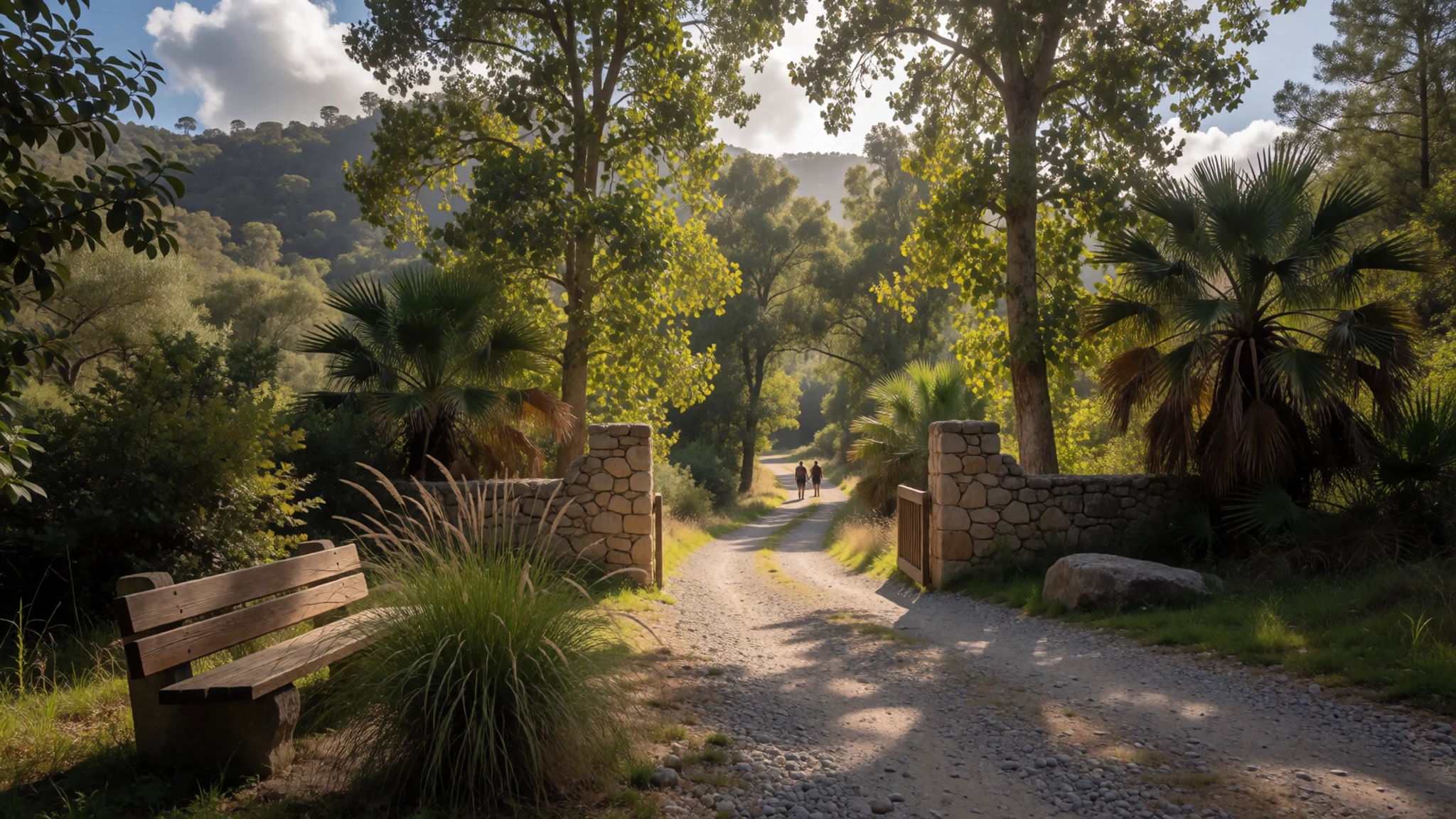
- Suñé lookout, Barranquitas — Barranquitas side of the rim
The Suñé lookout on the Barranquitas side gives a wide view along the gorge, with the green walls falling away to the Usabón River far below. It is the simplest way to grasp the canyon's scale without getting wet, and the view is clearest when cloud has lifted off the ridges.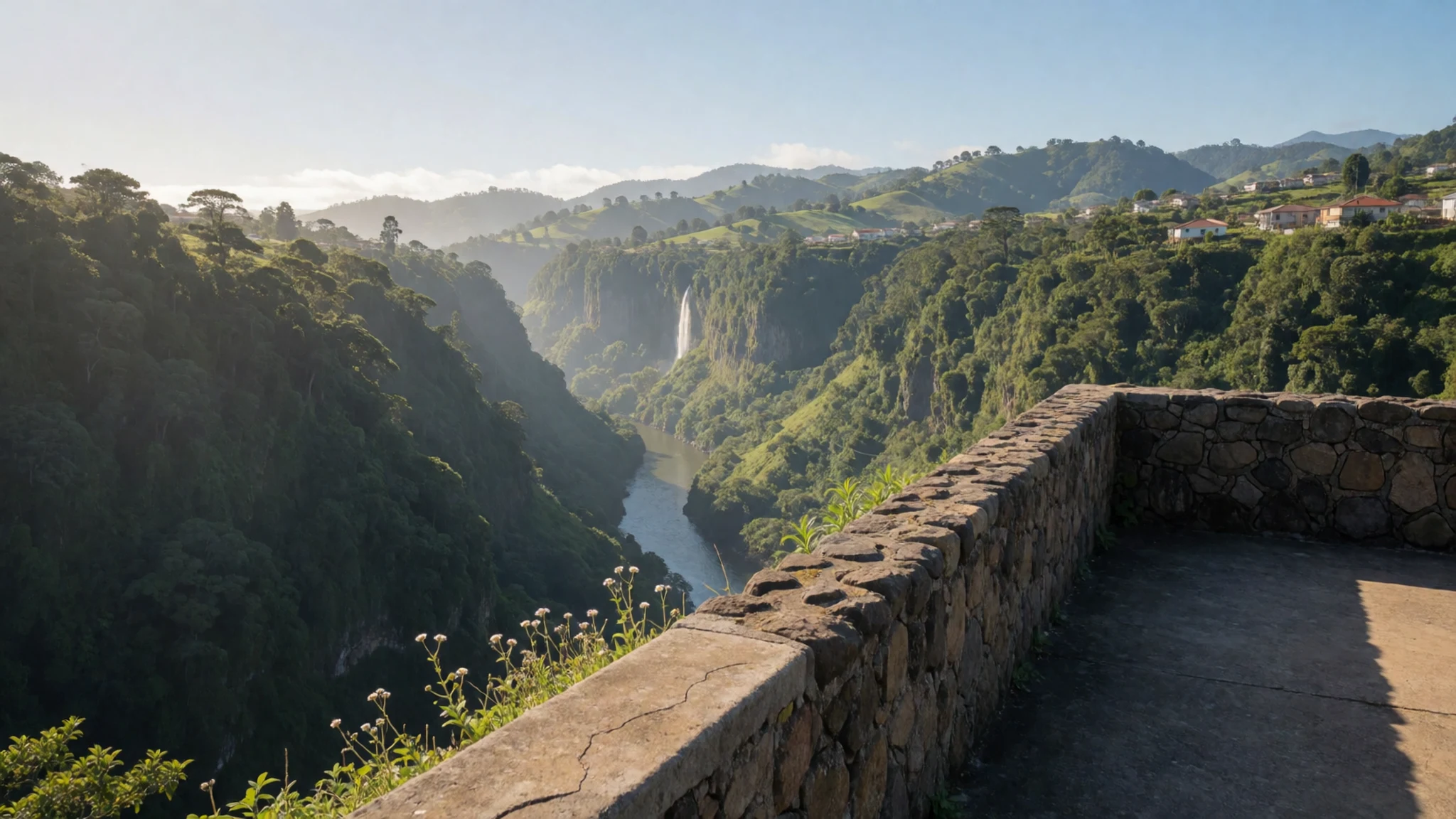
- The rim from the Aibonito side — Aibonito side of the rim
Seen from the Aibonito side, the canyon shows its layered forest and the folded ridges of the Cordillera Central beyond. Roadside pull-ins and viewpoints along the rim give photographers a steadier vantage than the slopes below. Drive slowly, since the mountain roads are narrow and often damp.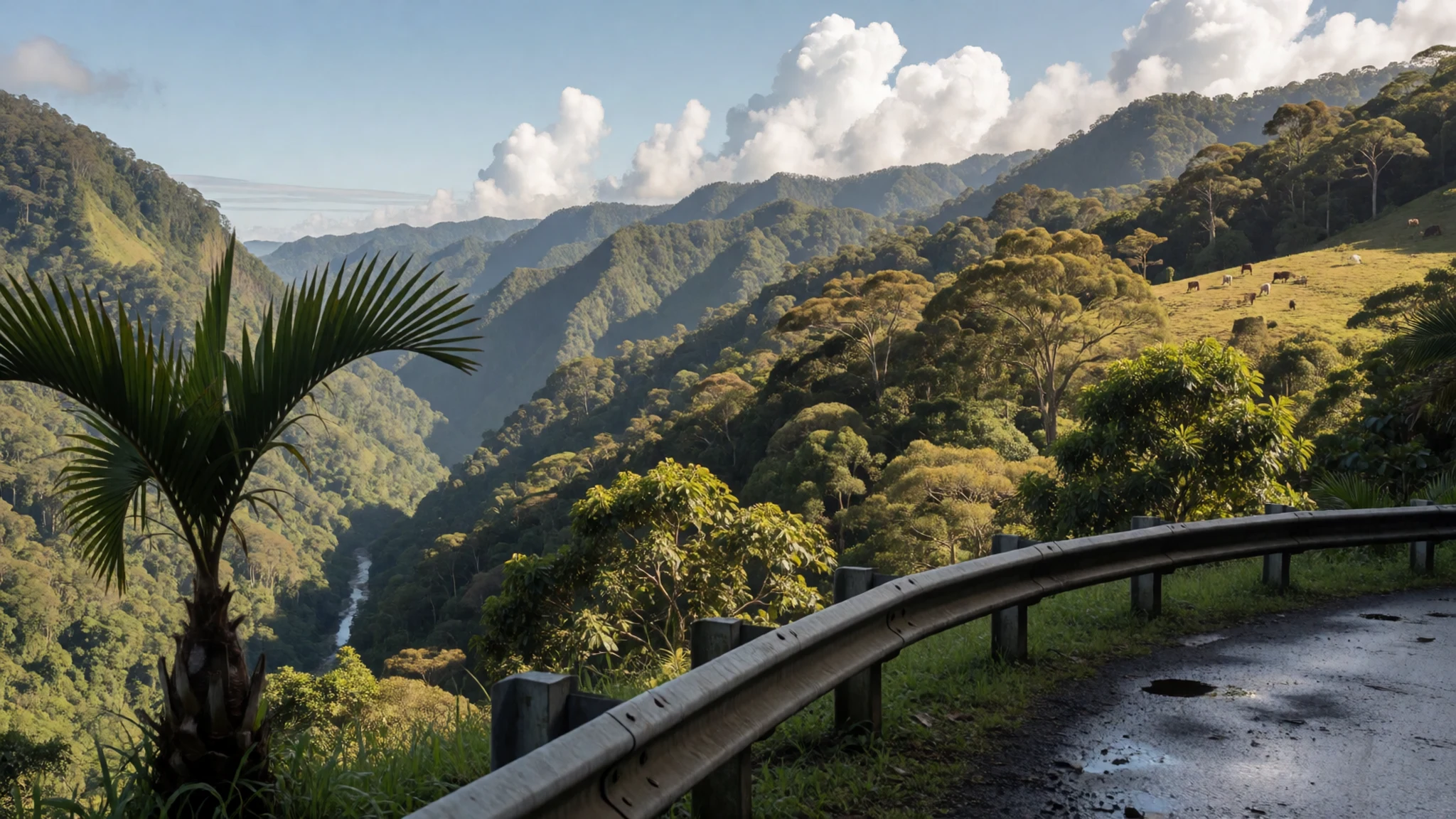
- Town plazas of Aibonito and Barranquitas — Aibonito and Barranquitas town centres
The two towns that share the canyon each have a central plaza, with a church, benches and cafés around it. They make a gentler end to a day of viewpoints, and a chance to see highland life: neighbours chatting, children playing and food stalls and kitchens close by.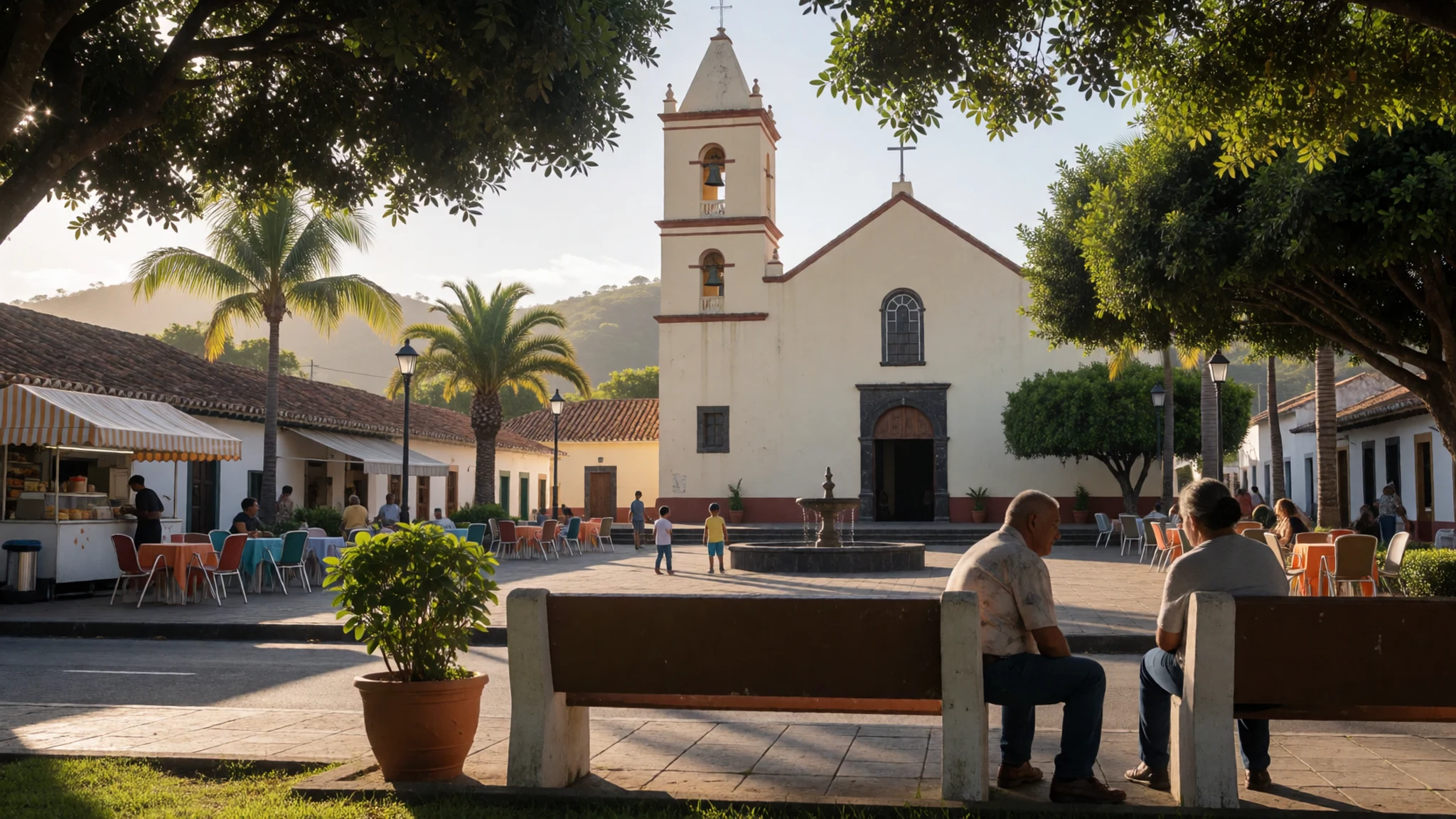
Culture
San Cristóbal Canyon sits between the highland towns of Barranquitas and Aibonito, where daily life runs on neighbourliness. Puerto Rican society is sociable: people stand closer when talking than many visitors from the UK or India may expect, neighbours chat outdoors in the evening, and a smile and a greeting go a long way. A single kiss on the cheek is a common greeting when a woman is involved, whether the other person is a man or another woman. Men do not usually greet other men this way unless they are relatives. The mountains have a rural heritage, the jíbaro tradition of highland farmers, with coffee growing, folk music and plain-spoken hospitality still part of local identity. The canyon's own history, as a dump turned protected area, makes local people and conservation staff sensitive about litter, so how visitors behave matters. Politics is the topic to leave alone. The island's relationship with the United States, whether statehood, commonwealth or independence, stirs strong feeling, and the three main parties are tied to those positions, so a casual comment can turn into a heated argument. Spanish is the everyday language. English is understood in places but not everywhere, and a few words of Spanish are noticed and appreciated. Carry out all your rubbish from the canyon and its viewpoints, and greet people you pass with a friendly "buenos días" or "buenas tardes".
What to wear
San Cristóbal Canyon lies in the Puerto Rican highlands, the home of the jíbaro, the mountain farmer whose dress became a national emblem. The classic outfit is a loose cotton shirt and trousers topped with a pava, a wide-brimmed hat of woven straw. Rural women's traditional dress used light cotton in long skirts with ruffles, often with a headscarf. Such clothes now appear mostly at festivals, in folk dance and on heritage days, alongside handmade bobbin lace known as mundillo. In daily life people wear what suits a warm, humid climate: shorts or light trousers, T-shirts, cotton shirts and sandals, with smarter linen or the guayabera, a pleated shirt worn untucked, for celebrations and church. Visitors should dress for the terrain and the weather rather than for the town. Wear closed shoes with real grip, since the trails and rocks are wet and slippery, and quick-drying clothes that cope with sudden showers. A light waterproof, a hat and insect repellent help, and a change of clothes for the drive back is sensible. Swimwear is for rivers and pools only where swimming is permitted. In town plazas and churches, covered shoulders and knees are a courteous choice, though the dress code is relaxed.
What to eat
- Mofongo — Family eateries around Aibonito and Barranquitas
Mofongo is fried green plantain mashed with garlic and often pork crackling, shaped into a mound and sometimes filled with meat or seafood. It is a heavy, satisfying plate, found in most family restaurants and eateries in the highland towns.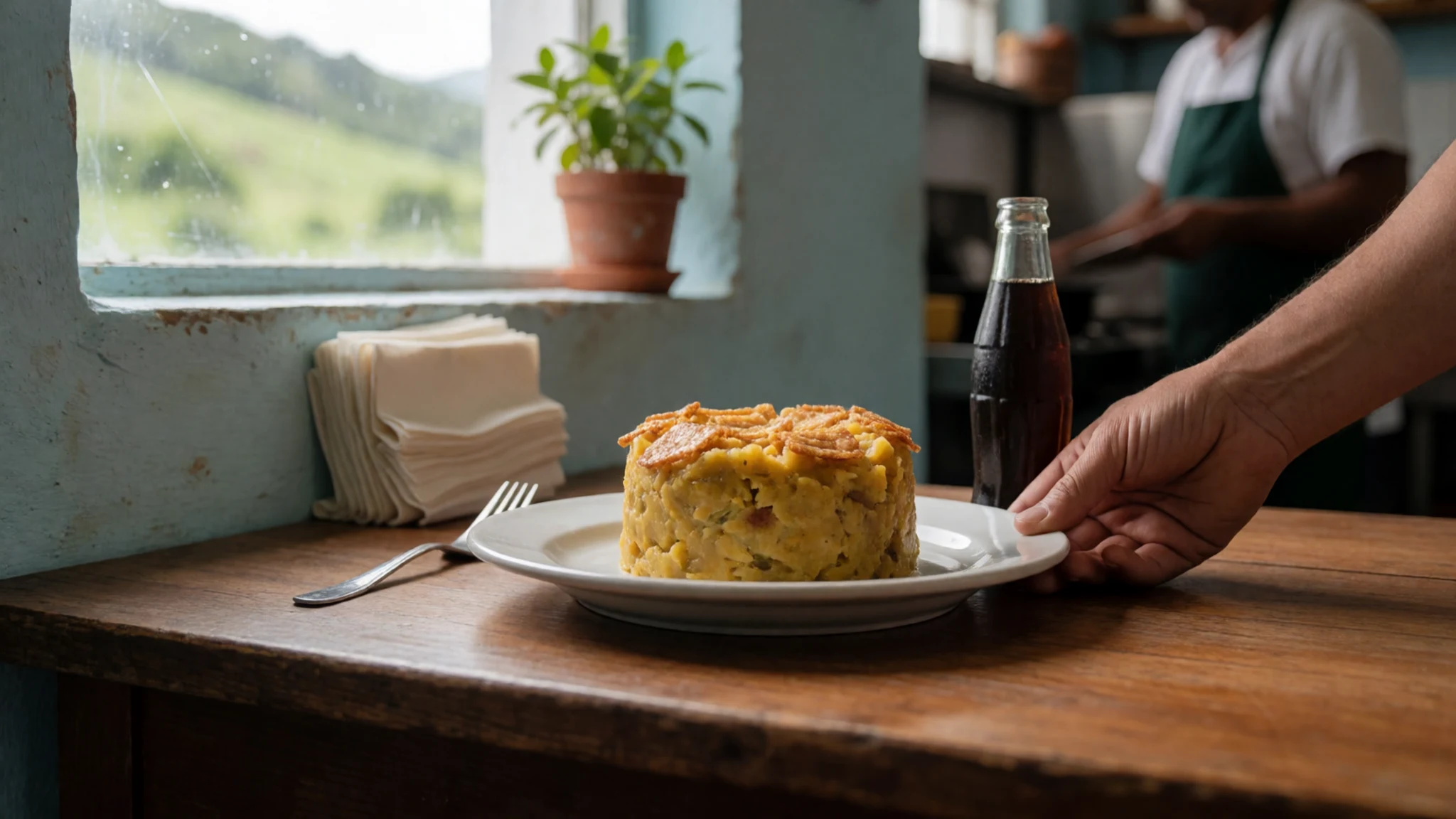
- Arroz y habichuelas — Any local restaurant serving daily set plates
Rice and stewed beans are the base of comida criolla, the island's home cooking. The beans are simmered with seasoning and sometimes pumpkin, and the plate usually comes alongside pork, chicken or plantain.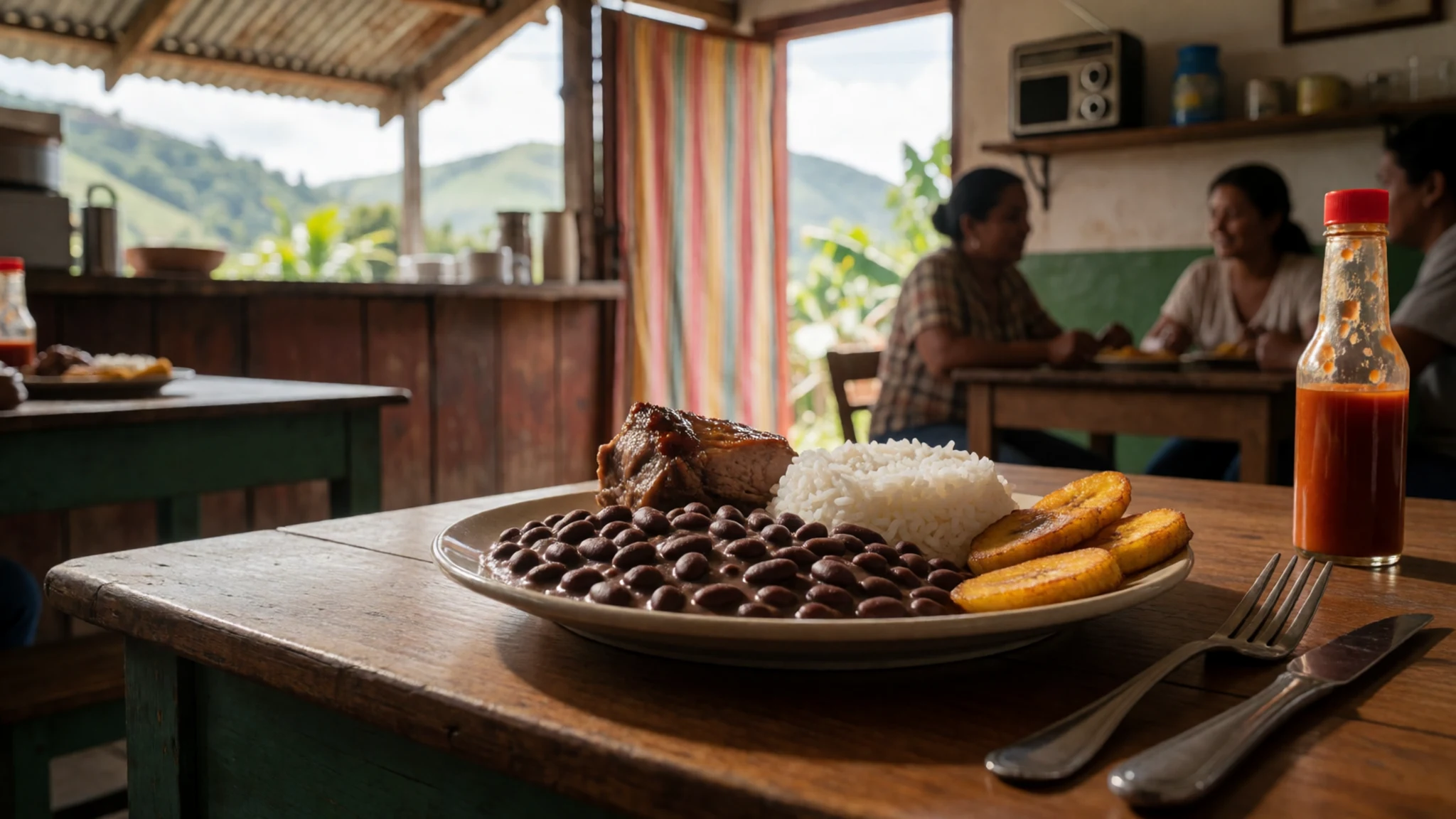
- Lechón asado — Roadside lechoneras in the central mountains
Roast pig, cooked slowly over coals until the skin is crisp and the meat tender, is the island's celebration dish. In the hills it is often sold by the portion from roadside spots known as lechoneras, usually at weekends. - Alcapurrias — Roadside kiosks and food stalls
Alcapurrias are fritters made from a dough of grated green banana and root vegetables, wrapped around a savoury meat filling and deep-fried. They are a street-food snack, eaten hot and best with a cold drink. - Tostones — Town-square restaurants and snack counters
Tostones are slices of green plantain fried twice, flattened in between, then salted. Crisp outside and soft within, they come as a side with meat or fish, or alone with a garlic dip.
Plan it
Best time. December to April is usually the drier, more comfortable stretch for views and trails. June to November is hurricane season, with heavier rain, higher rivers and a greater chance of closed or slippery paths.
How long. 1
Getting there. Fly to Luis Muñoz Marín International Airport in San Juan, then drive south into the central mountains towards Aibonito and Barranquitas. A hire car is the practical option, since public transport to the rim is limited. Travel from the US mainland needs no passport control, as Puerto Rico is part of the United States.
Budget. mid
Tips
- Check access and conditions with the Puerto Rico Conservation Trust before going, as there is no official website in our facts
- Go early in the day, as cloud and showers build in the hills
- Avoid the canyon floor after heavy rain, when rivers rise and rocks turn slippery
- Carry water, a rain layer and cash for roadside food stalls
- Allow extra time for narrow, winding mountain roads
Etiquette
- Take all rubbish out with you, since the canyon was once a landfill
- Stay on marked paths and keep to permitted areas
- Avoid debating island politics with strangers
Nearby
Sources
- Wikidata Q35382895 (CC0)
- Wikipedia: San Cristóbal Canyon (rev 1362146805) (CC BY-SA 4.0)
- Wikivoyage: Puerto Rico (rev 5415166) (CC BY-SA 4.0)
- Cañón de San Cristóbal, Aibonito-Barranquitas, Puerto Rico (2022), Yarfpr (CC BY-SA 4.0)
- Topographic location map of Puerto Rico, GrandEscogriffe (CC BY-SA 4.0)
- El Ancón Waterfall in San Cristóbal Canyon, Puerto Rico, FujiAppleSan (CC0 1.0)
- The Entrance to San Cristóbal Canyon Nature Preserve, FujiAppleSan (CC0 1.0)
- View of the San Cristóbal Canyon from the Suñé lookout, Ligocsicnarf89 (CC BY 4.0)


