Sakteng Wildlife Sanctuary
Sakteng Wildlife Sanctuary, Bhutan
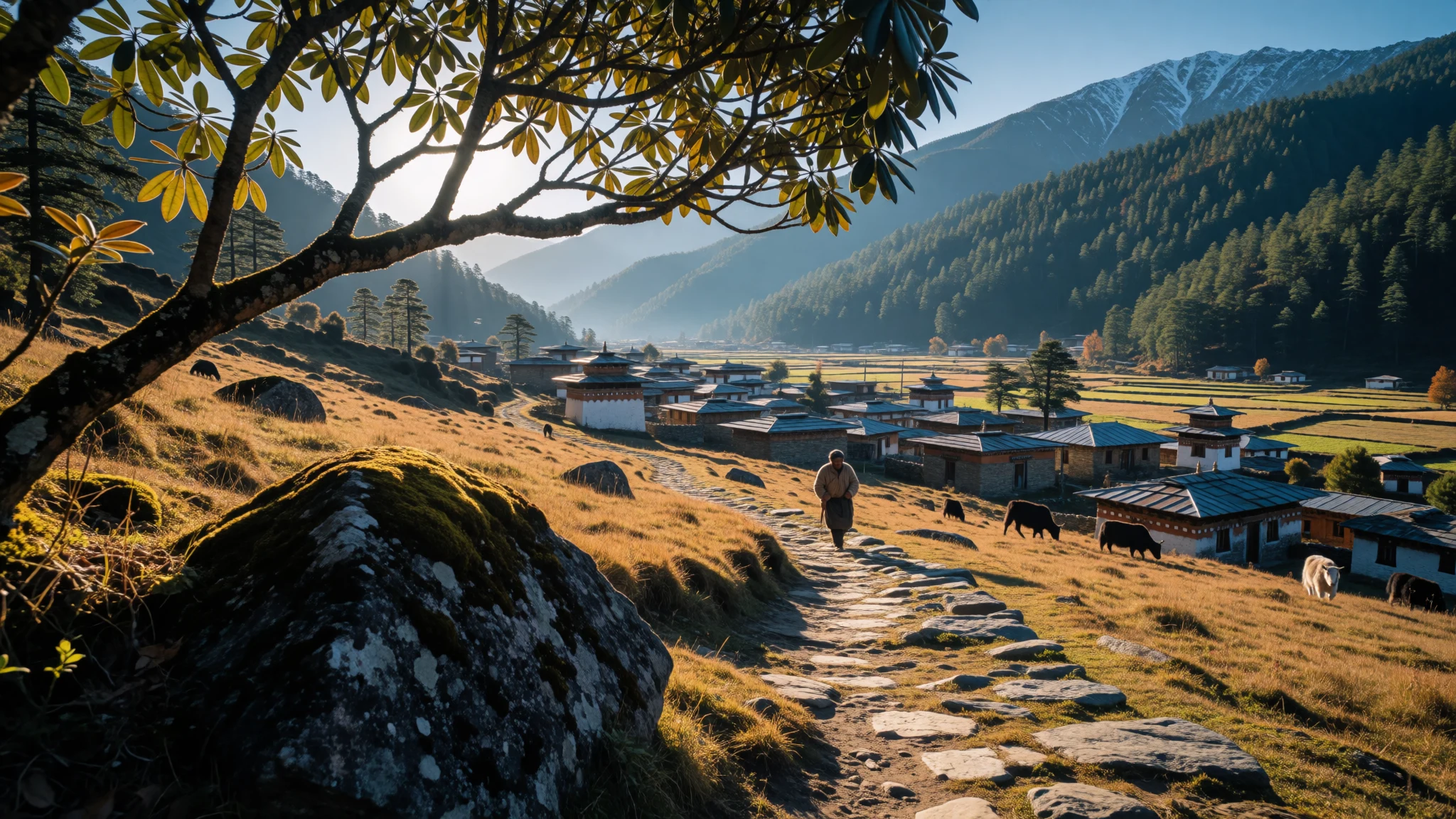
Sakteng Wildlife Sanctuary pairs rhododendron and conifer forest with Brokpa herding villages in far eastern Bhutan, reached on foot and far from crowds.
The place
Sakteng Wildlife Sanctuary lies in eastern Bhutan, mostly within the Merak and Sakteng gewogs (village blocks) of Trashigang District, with a small stretch crossing into Samdrup Jongkhar District. It was established in 2003 and is one of Bhutan's protected areas, and the country has put it forward on its tentative list for UNESCO recognition. The sanctuary is divided into three ranges: Merak, Sakteng and Joenkhar. Much of the ground is thick forest of mixed conifers and rhododendrons, cut by steep valleys and opening into yak pasture on the higher slopes. This is not a park of tarmac roads and visitor centres. Reaching it means long drives on winding roads and then walking, and the settlements are part of the experience, because the sanctuary is home to the Brokpa, a semi-nomadic herding people who move their animals between seasonal pastures. Wildlife is mostly shy and hard to spot, so visitors should expect forest, birdsong and tracks rather than safari-style sightings. The best-known resident is the yeti, called migoi locally, a legendary creature that guides discuss with a straight face and a good deal of humour. Weather turns quickly in the mountains: cold nights, sudden rain and low cloud that hides the views are all normal. Because the area is remote and permit rules apply, trips are usually arranged through a licensed Bhutanese tour operator. The reward is quiet: very few other travellers, working villages and forest that still feels lightly touched.
Its story
The story of Sakteng Wildlife Sanctuary is mostly the story of the Brokpa and their animals. The name Brokpa is usually explained as 'people of the high pastures', and the communities of Merak and Sakteng have long lived by herding yaks and sheep, shifting between higher summer grazing and lower ground in the colder months. Their way of life kept the surrounding forests largely intact, and when Bhutan formally set the sanctuary aside in 2003 it did so around people who were already there rather than emptying the land. That is why the place works as a living landscape and not a fenced-off wilderness. Managing it means balancing grazing, firewood, and the protection of forest and wildlife, and the compromise is still being worked out village by village. Roads, schooling and tourism are changing daily life here, as they are across the Himalaya, and Brokpa families now weigh herding against newer ways of earning a living. The yeti belongs to this story too. Local belief holds that a tall, hairy, man-like creature, the migoi, roams the forests, and some herders treat it as a real presence rather than a tale for outsiders. The legend has drawn curious travellers for years, though it is the villages, the pastures and the quiet forest that give the sanctuary its character.
What to see
- The three ranges — Eastern Bhutan
Sakteng Wildlife Sanctuary is split into the Merak, Sakteng and Joenkhar ranges, and the location map is a useful way to grasp how the protected area sits in Bhutan's far east. Study it before a trip: distances on the ground are far longer than they look, because trails climb and drop constantly.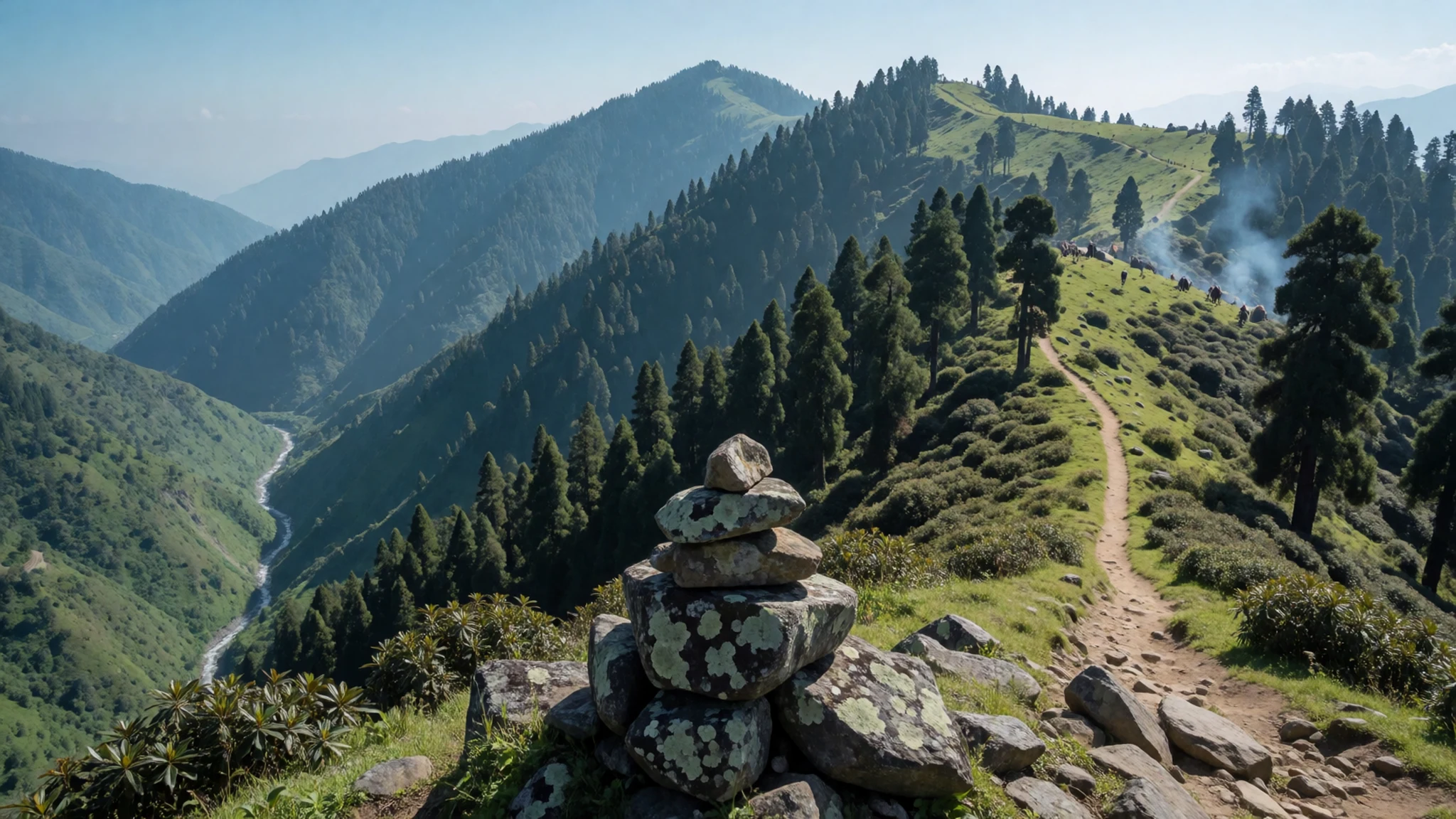
- Merak village — Merak Gewog, Trashigang District
Merak is one of the two main Brokpa settlements in the sanctuary, a cluster of stone-and-timber houses set on a steep slope among pasture and forest. Homestays are the usual way to stay. Spend time watching daily routines, from milking and weaving to butter-making, and talk with hosts if a guide can translate.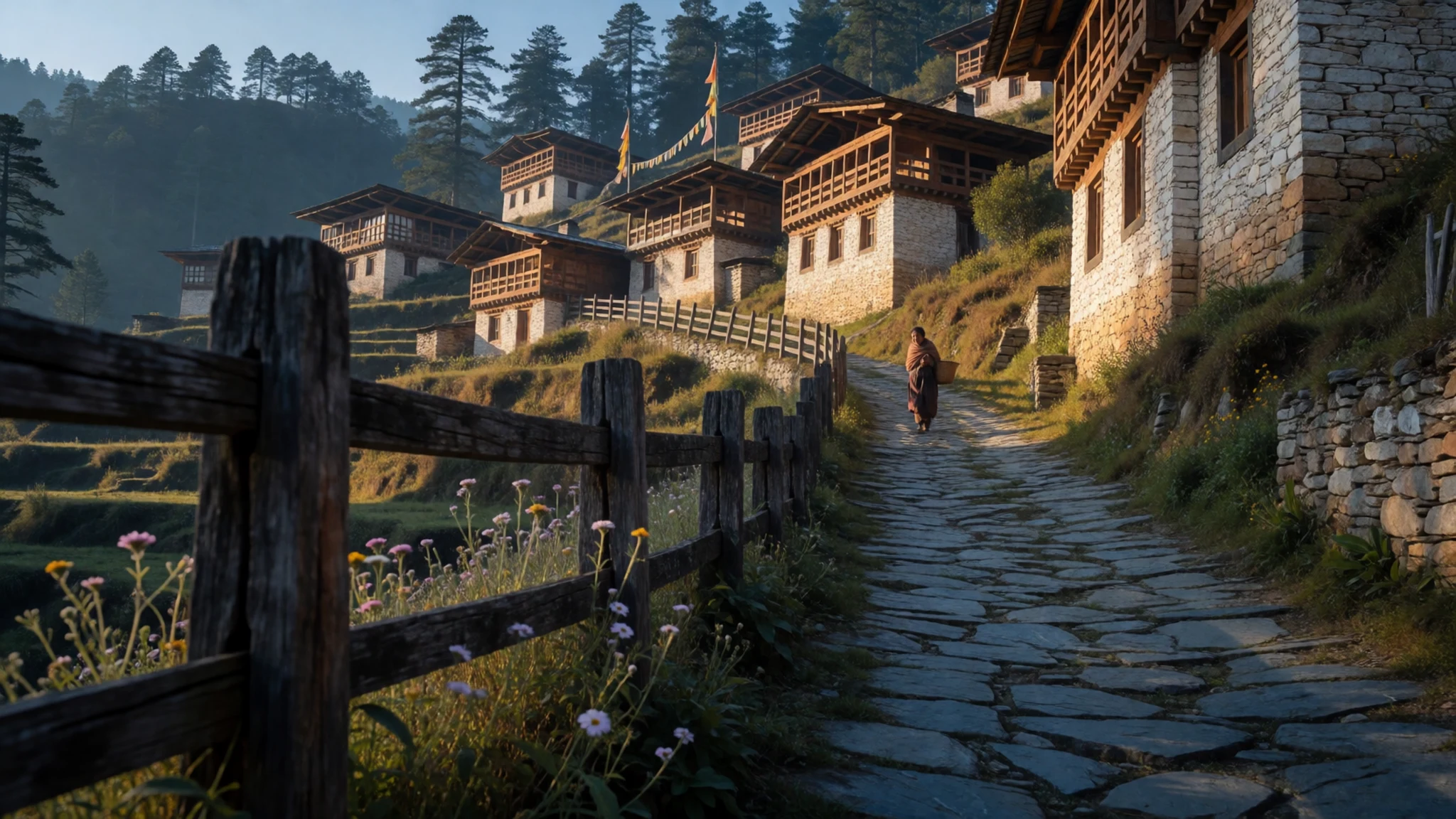
- Sakteng village — Sakteng Gewog, Trashigang District
Sakteng, the village that gives the sanctuary its name, sits in a broad valley with grazing land around it. Walking between houses, yak shelters and small prayer structures gives a sense of how closely herding and belief shape the year. Mornings are usually clear before cloud builds later in the day.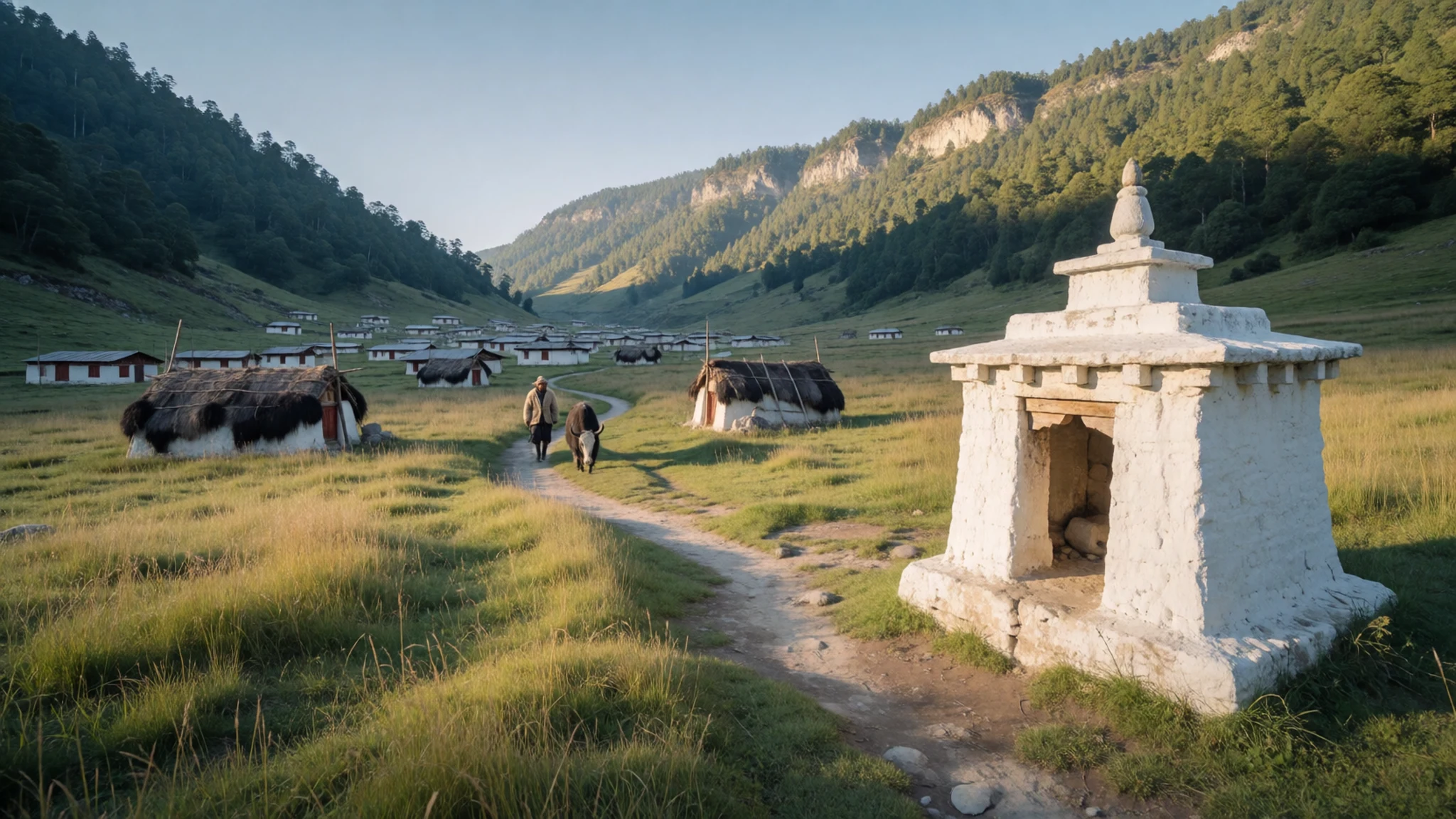
- Rhododendron and conifer forest — Across the Merak and Sakteng ranges
The forest trails are the heart of the sanctuary, running through mixed conifers with a thick rhododendron understorey. Spring is the season for flowers, while autumn brings sharper, clearer air. Move quietly and early: birds are easiest to see at dawn, and a local guide can point out droppings, scratch marks and other signs of animals.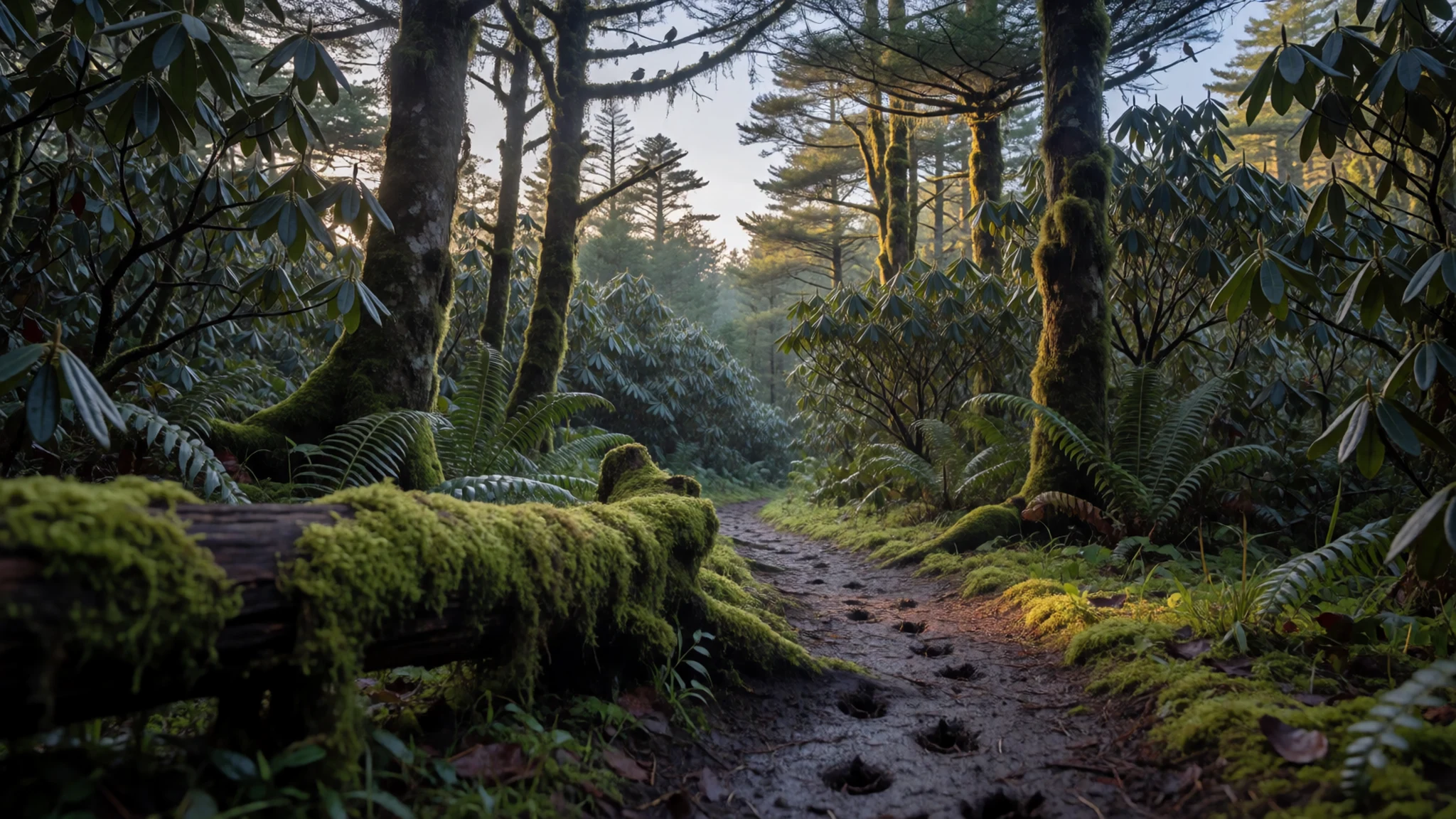
- Yak pastures and herders' camps — Upper slopes of the sanctuary
Higher up, the forest opens into pasture where Brokpa families graze yaks and sheep, often from temporary stone and wood shelters. A walk to a pasture shows the seasonal rhythm of the herding year. Camps are working places, so approach with a guide, keep dogs and voices calm, and never enter shelters uninvited.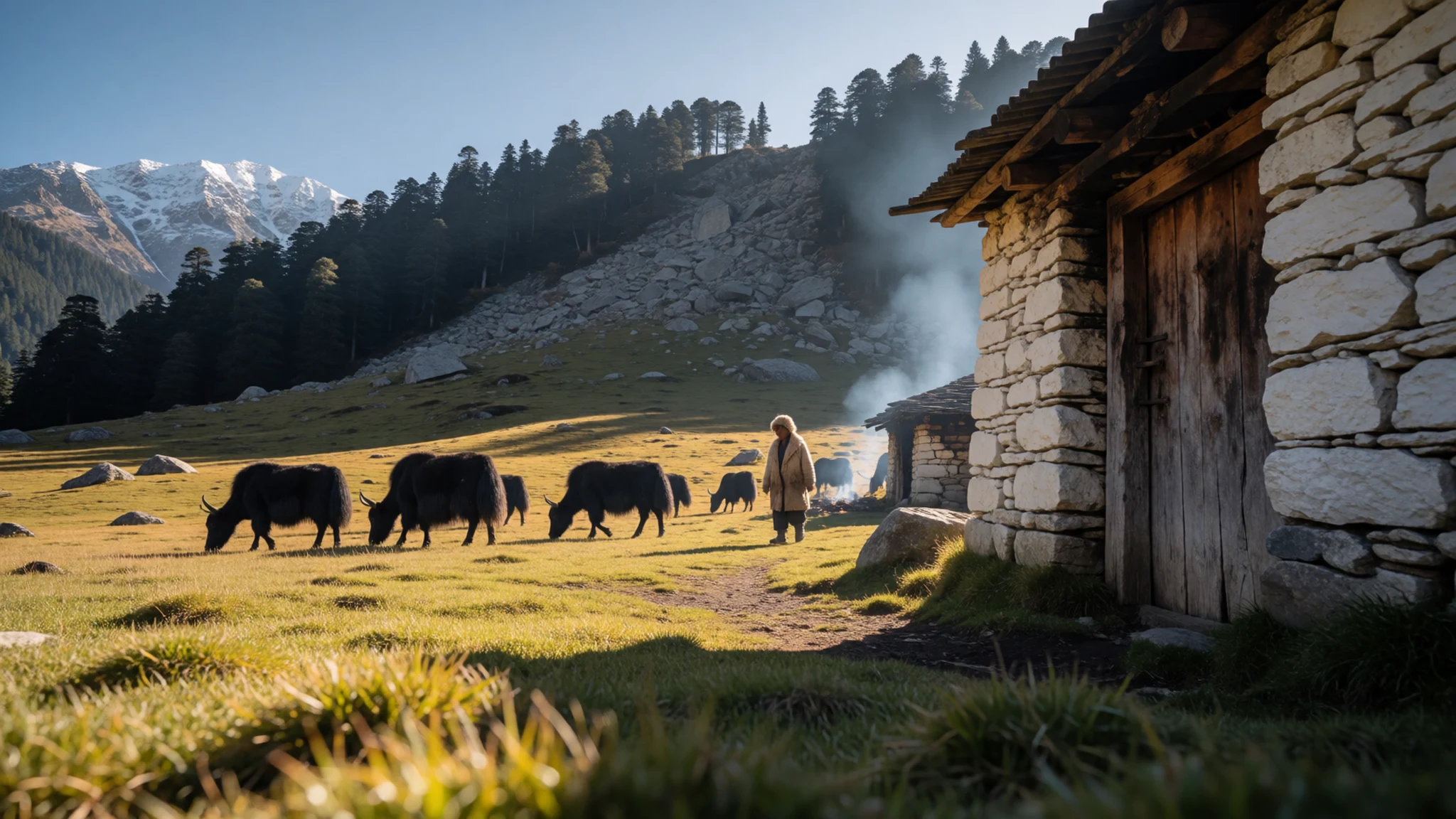
Culture
Sakteng Wildlife Sanctuary is one of the few places in Bhutan where a semi-nomadic culture is still the main way of life. The Brokpa speak their own language, distinct from the Dzongkha used nationally, and their year is organised around the movement of yaks and sheep between pastures. Religious life blends Buddhism with older beliefs in mountain spirits and protective deities, so small shrines, prayer flags, mani walls and chortens (stupa-like monuments) appear along trails and at village edges. Festivals bring communities together with masked and folk dances, songs and shared meals, and the dates are set locally, so it is worth asking a guide or operator rather than assuming. The Brokpa are known for their hospitality, and visitors staying in a homestay will usually be offered butter tea or a local drink on arrival. Handwork matters here: weaving from wool and yak hair, and the making of butter and cheese, are everyday skills passed between generations. The yeti, or migoi, sits alongside all this as part of the local imagination, spoken of with respect rather than as entertainment. Courtesy goes a long way in small communities where visitors are still unusual, and patience with slow schedules and basic facilities is part of the deal. Ask before photographing people, their homes or their animals, and always walk clockwise around prayer wheels, chortens and mani walls.
What to wear
In Sakteng Wildlife Sanctuary the Brokpa have a dress of their own, shaped by cold, wind and a life spent outdoors with animals. Traditional clothing is made from wool, sheepskin and yak hair, woven or sewn at home and worn in layers, with men in heavy coats or tunics and women in wrapped dresses with woven shawls and jewellery. The most recognisable piece is the Brokpa hat, a close-fitting cap of yak hair or felted wool with long pointed tails that also shed rain. It is worn daily by many people and always for festivals and ceremonies. Across the rest of Bhutan the national dress is the gho for men and the kira for women, and these are required at monasteries and official occasions. Day to day, many villagers now mix traditional pieces with fleeces, jackets, trousers and sturdy shoes bought in town. Visitors should dress for the mountains first: layers, a warm hat and gloves, a waterproof jacket and trousers, and broken-in walking boots with good grip for steep, muddy trails. Nights are cold even when days feel mild. Dress modestly in villages and at religious sites, with shoulders and knees covered, and carry a pair of light shoes or warm socks for indoors, where footwear is usually taken off.
What to eat
- Ema datshi — Homestay kitchens in Merak and Sakteng
Bhutan's everyday dish of chillies cooked in a soft cheese sauce, eaten with rice. Homestay kitchens in the sanctuary make it with local cheese and can adjust the heat if asked, though it is rarely mild.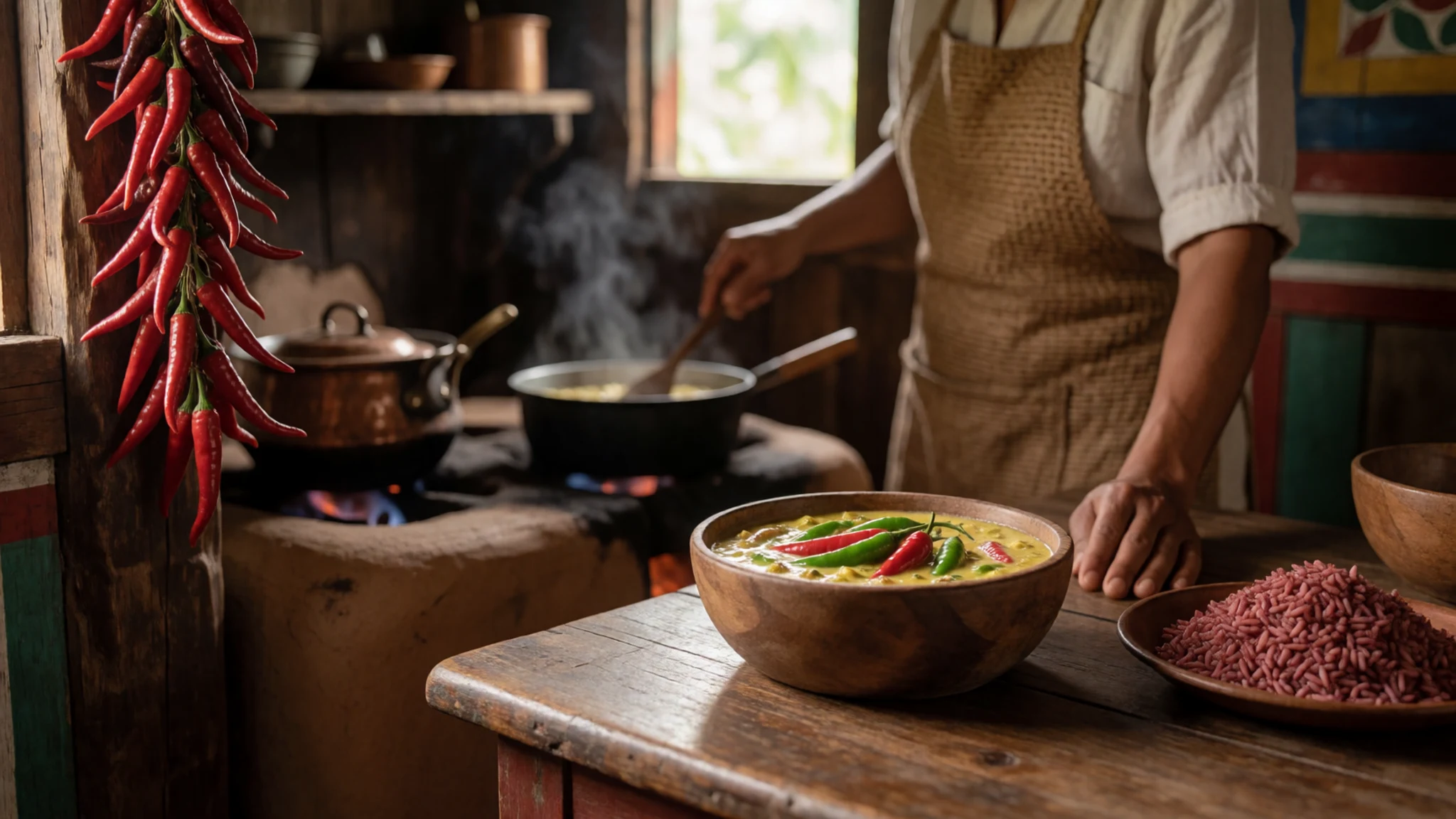
- Suja (butter tea) — Village homes and homestays on arrival
A salty, buttery tea churned with yak or cow butter, served hot and refilled often by hosts. It tastes closer to a thin soup than sweet tea, and it is welcome after a cold, wet day on the trail.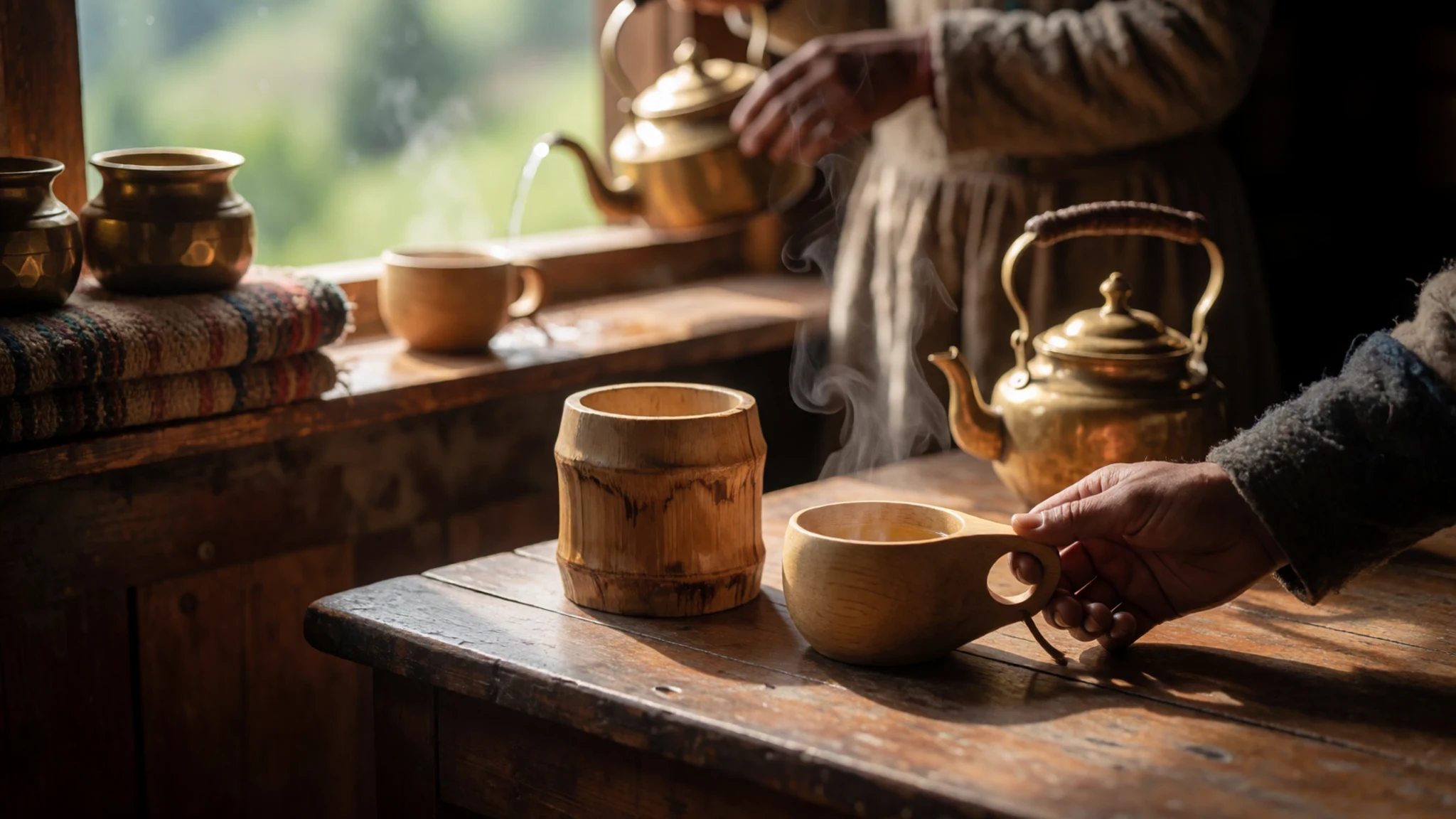
- Yak cheese and chhurpi — Pasture camps and village households
Brokpa herders turn milk into butter and hard cheese, and dried chhurpi is chewed slowly on the trail or added to soups. It keeps for a long time, which suits a life spent between distant pastures. - Red rice — Meals at homestays and camp kitchens
A nutty, slightly sticky rice grown in Bhutan's valleys, usually served with datshi dishes, vegetables and sometimes dried or fresh meat. It fills the plate at most meals on a trek. - Ara — Village homes, especially at festivals and celebrations
A home-distilled spirit made from grains such as maize or rice, offered to guests as a gesture of welcome. Strength varies from house to house, so take small sips and accept a refill only if wanted.
Plan it
Best time. March–April for rhododendron flowers and October–November for clearer skies and steadier trail conditions. Summer brings monsoon rain, cloud and leeches, and winter is cold with snow on higher ground.
How long. 4–6
Getting there. Fly to Paro, then travel east by road across Bhutan to Trashigang, or enter by road from India at Samdrup Jongkhar. A domestic airfield near Trashigang may be available, so ask an operator about current services. The last leg is by road and then on foot to Merak and Sakteng, arranged with a guide.
Budget. mid
Tips
- Book through a licensed Bhutanese operator well ahead, since permits and guides need to be arranged first
- Pack layers, rain gear and good boots; weather changes fast and nights are cold
- Carry cash from a larger town, as there are no banks or cash machines in the villages
- Allow spare days for road delays, landslides and weather
- Take purified or boiled water and any medicines, as help is far away
Etiquette
- Ask before photographing people, homes and animals
- Walk clockwise around prayer wheels, chortens and mani walls
- Accept hospitality politely and leave nothing behind but footprints
Nearby
Sources
- Wikidata Q4405530 (CC0)
- Wikipedia: Sakteng Wildlife Sanctuary (rev 1385953512) (CC BY-SA 4.0)
- Wikivoyage: Sakteng Wildlife Sanctuary (rev 3508038) (CC BY-SA 4.0)
- Sakteng protected area location map, User:NordNordWest; Bhutan Trust Fund, Government of Bhutan, via Wikimedia Commons (CC BY 3.0)
- Oriental Magpie Pica serica in Daejeon, Yoo Chung, via Wikimedia Commons (CC BY-SA 2.5)

