Sajama
Sajama, Bolivia
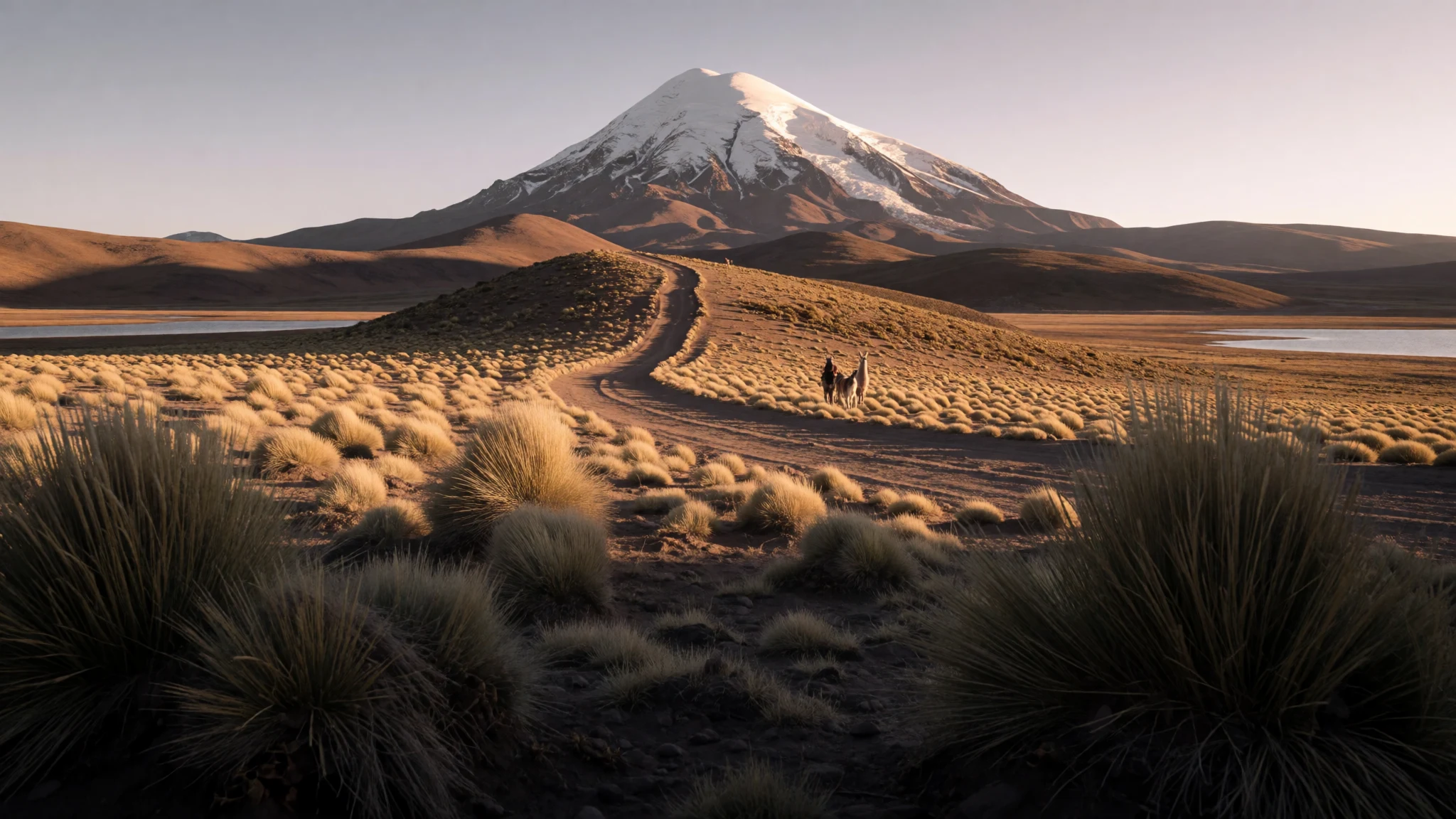
Sajama is a quiet Andean plateau beneath Bolivia's highest peak, made for slow walks, bird-watching lakes and steaming hot springs.
The place
Sajama National Park sits on the Bolivian Altiplano in the Oruro Department, pressed against the Chilean border, where it meets Lauca National Park on the far side. The park's elevation in the facts is 4775 m, so everything here happens in thin air, and the first day is mostly about moving slowly and drinking plenty of water. The landscape is open high plateau: pale grass, rolling hills, shallow lakes and, over all of it, the snow cone of Nevado Sajama, which at 6,542 m is the highest mountain in Bolivia. The park belongs to the Central Andean dry puna ecoregion, with ground running from about 4,200 m up to that summit. Aymara families live here and herd llamas and alpacas, and the park works as a base for small-scale ecotourism. Compared with the jeep circuits around Uyuni, Sajama is a place for walking: day hikes across the plain, guided climbs on the surrounding peaks, birds on the lagoons and soaks in hot pools. The silence is part of the appeal, since on a still day a walker can cover kilometres hearing little but their own boots. Nights are bitterly cold, the air is dry and the sun is fierce, so this suits people who enjoy stark scenery and are content with simple lodging. Sajama village, a small settlement with a church and basic guesthouses, is the usual base.
Its story
Sajama National Park owes its existence partly to a small tree. In the late 1930s the Bolivian state set this stretch of the Altiplano aside because the queñoa trees on its hillsides were being felled in large numbers, much of the wood burned into charcoal for the country's mines. The queñoa is a tough, shrubby tree that has adapted to thin air, hard frost and wind, and few trees grow at such heights. The reserve became the first park in Bolivia's national system, and it remains the senior member of that group. Over time the protected area came to mean more than its trees. It holds the volcano Sajama, whose snowy cone reaches 6,542 m, and the neighbouring Payachata volcanic group. That volcanic past explains the hot springs, geysers and mud pools on the western side of the park. Aymara communities have a long cultural presence on this land, visible in herding, village life and customs. Farming brings little income at this altitude, so many families have turned to guiding, lodging and cooking for visitors. Conservation writers argue that ecotourism only helps when local people are properly involved, hold secure rights to their land and are offered more than casual labour. On 1 July 2003 the park was added to the UNESCO World Heritage Tentative List, which is a proposal for future consideration rather than an inscription.
What to see
- Nevado Sajama — Centre of the park
Nevado Sajama is the reason most people come: a snow-covered volcanic cone of 6,542 m that dominates the plain from almost every angle. Most visitors simply look, photograph and walk toward it. Climbing the upper slopes needs proper equipment, acclimatisation and a qualified guide.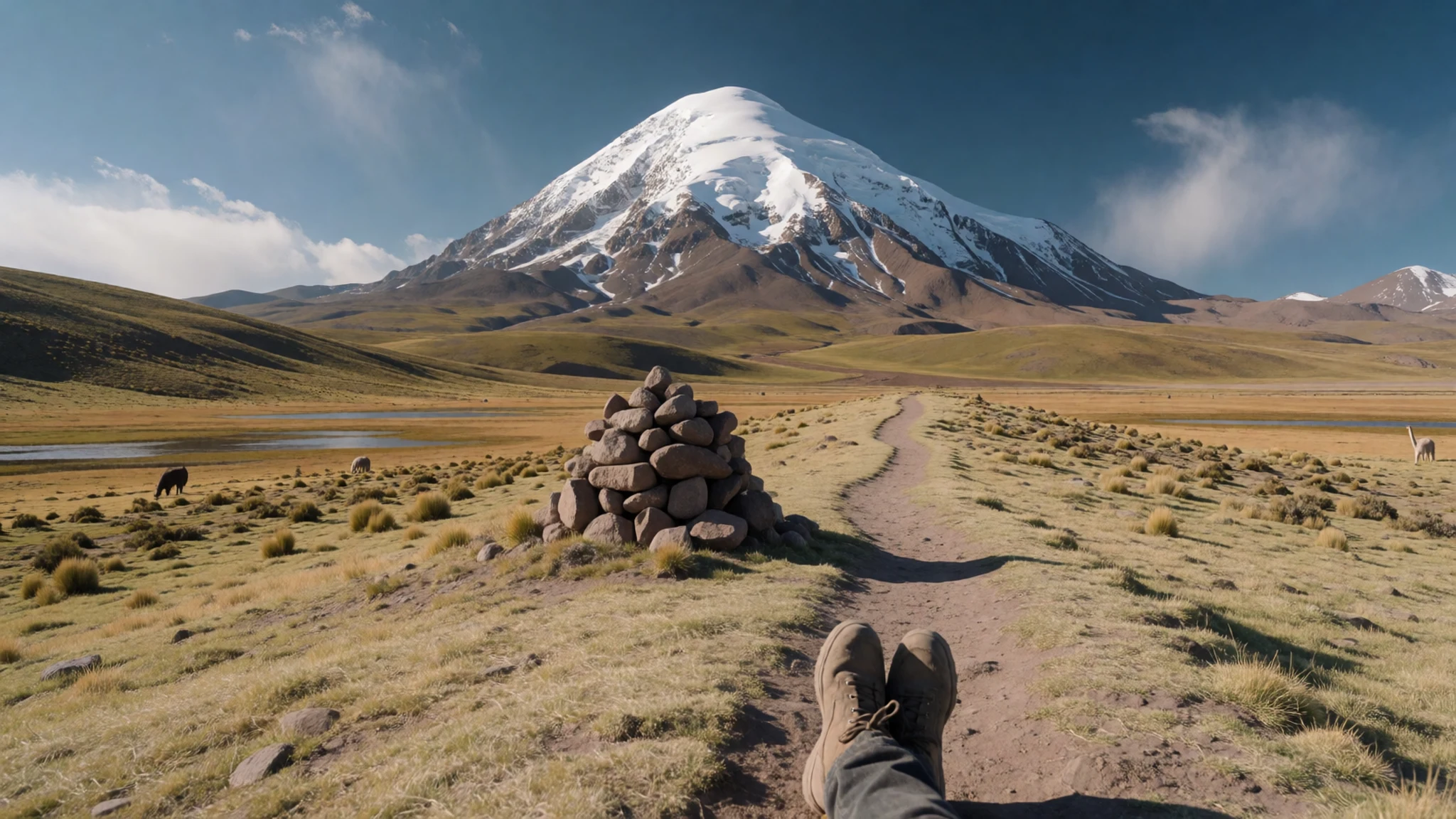
- Laguna Huayna Khota — North of Sajama village
Laguna Huayna Khota is a shallow lake that rewards patient watching. Birds recorded here include Andean avocets, Andean lapwings, horned coots, puna teal and yellow-billed pintails. Bring binoculars and a windproof layer, and arrive early, when the water is calmest and the light is soft.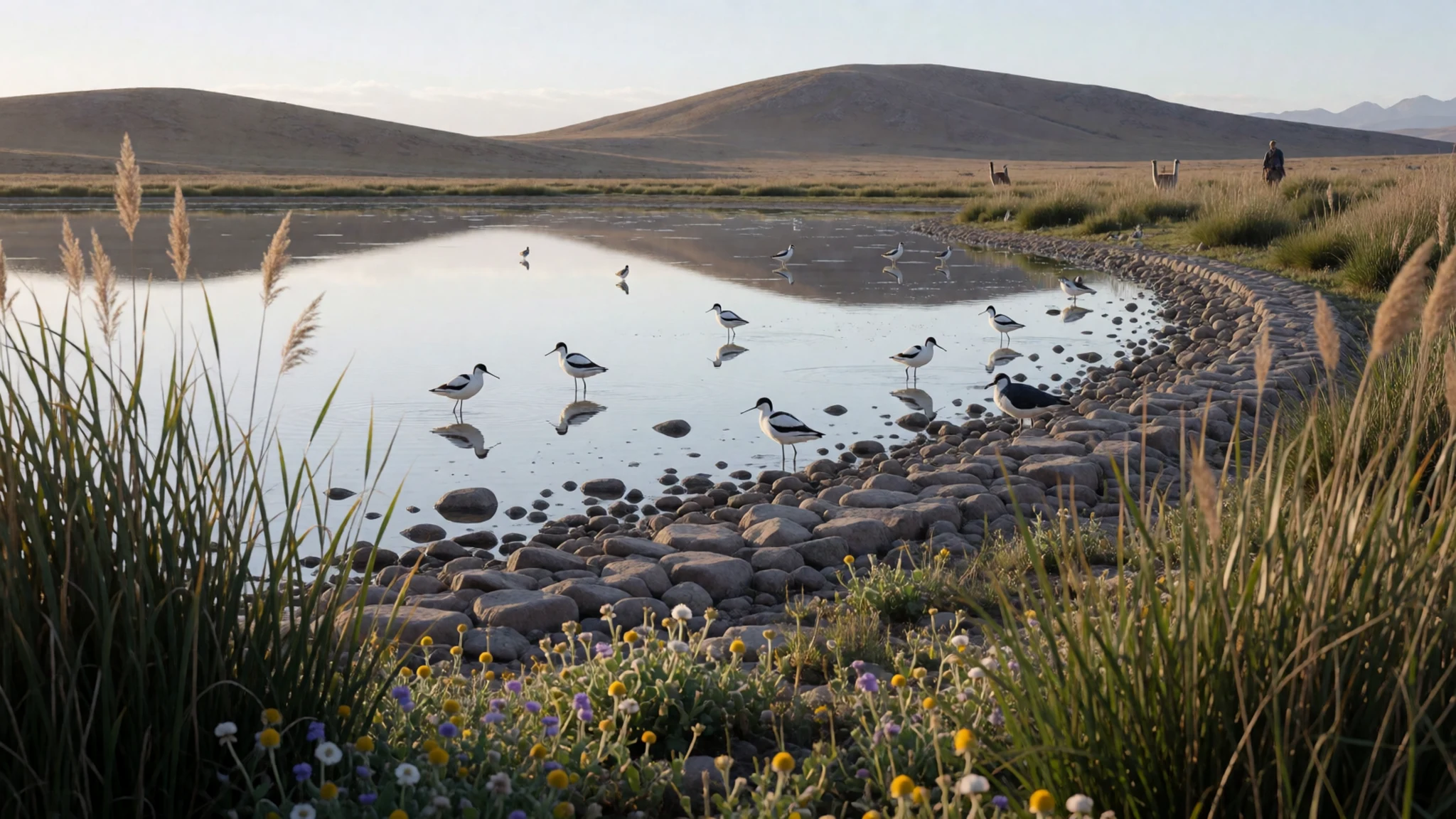
- Laguna Sora Pata — West of the village, on the Tres Lagunas route
Laguna Sora Pata is known for the horned coot, a protected duck that builds surprisingly large nests in the shallows. With the snowy peak behind the water it makes a classic composition. Keep a respectful distance from the nests and use a zoom lens instead of walking closer.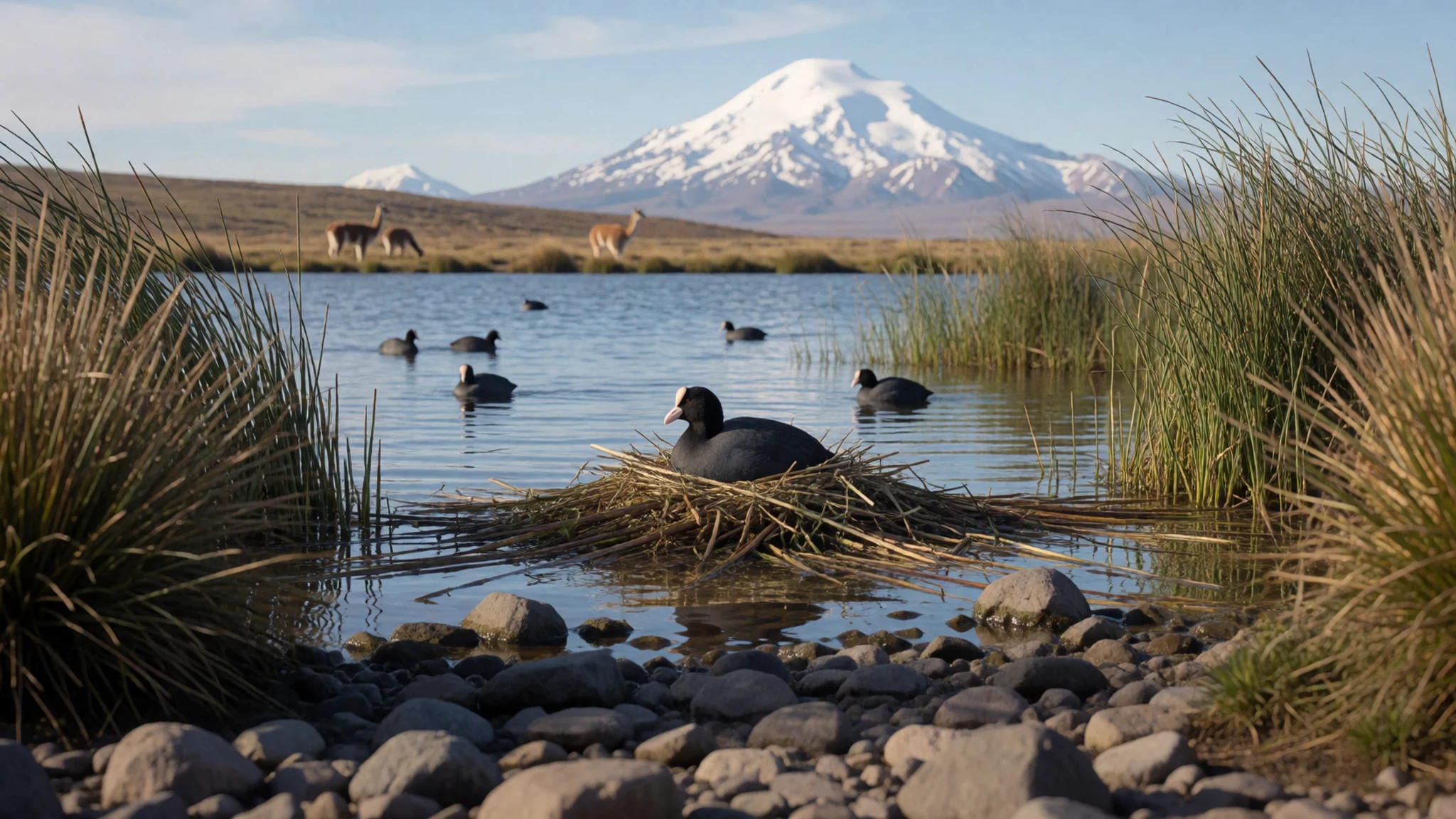
- Laguna Isla — South of Sajama village
Laguna Isla is a calm lake south of the village, where llamas graze at the edge with mountain ranges standing behind. It is an easy place for photography, and also for sitting quietly and watching the weather move across the plateau. Wind often rises in the afternoon, so go earlier.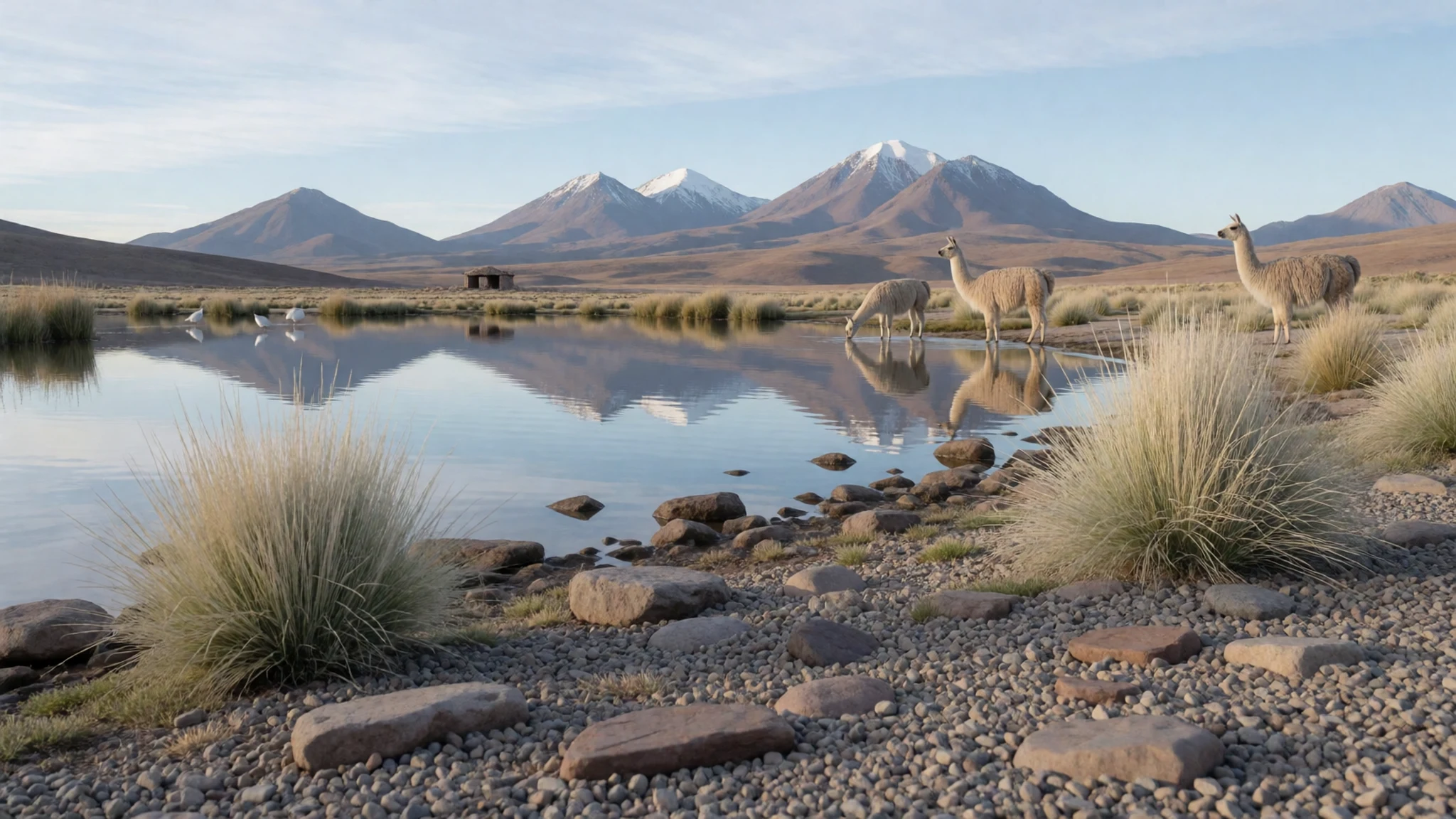
- Geyser and hot spring field — Western side of the park
The geyser and hot spring field in the west of the park mixes steaming vents, mud pools and warm streams. Some natural pools can be used for a free soak if the water is hot enough and there is room. Test the temperature carefully and stay on firm ground around vents.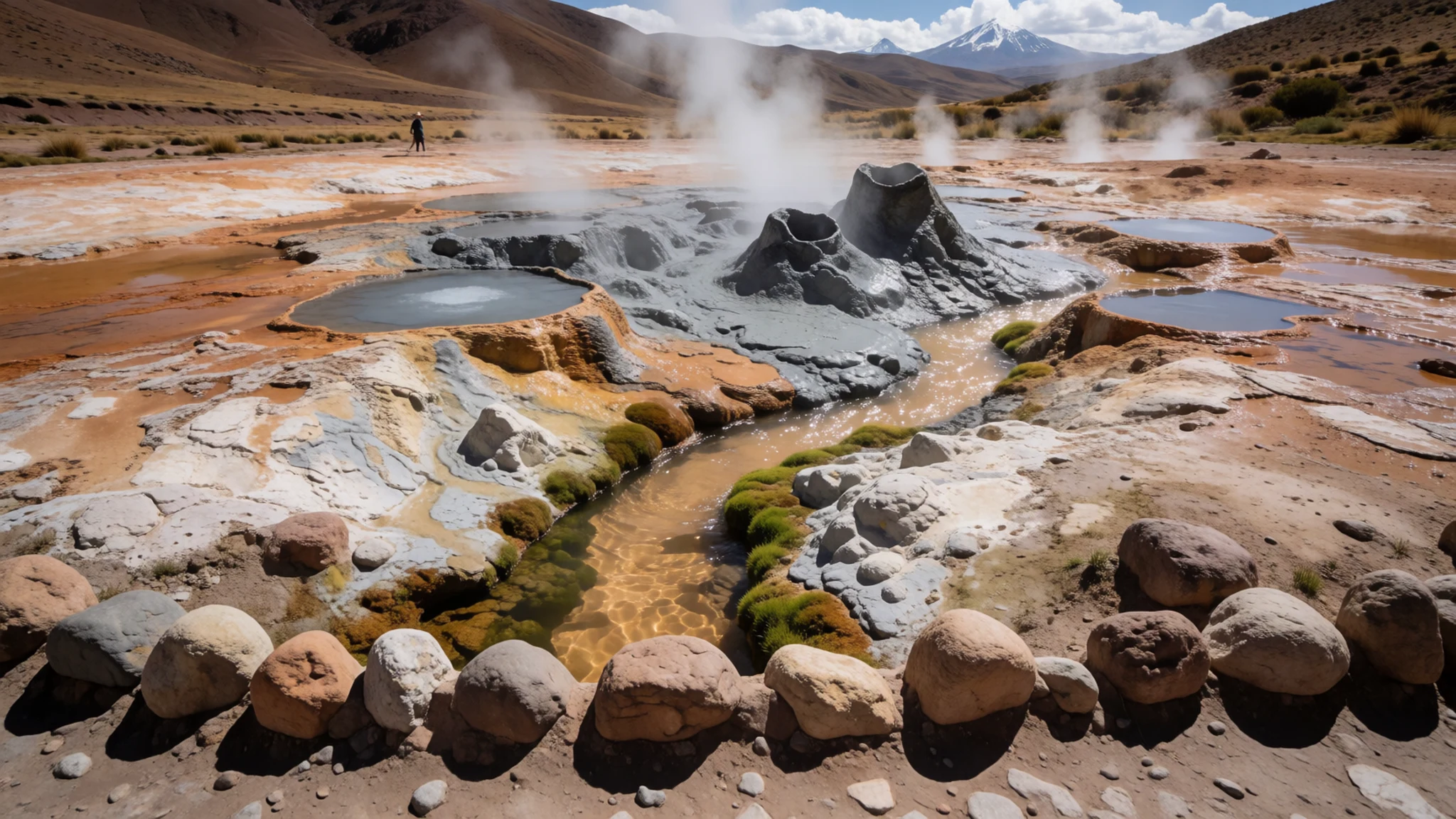
- Mt. Huisalla — East of Sajama village
Mt. Huisalla, at 5,053 m, is a medium-difficulty summit with wide views over Nevado Sajama, the village and the plain. It can be done as a long day walk, but the climb slows sharply with height. Set a turnaround time, carry water and shelter, and consider a guide.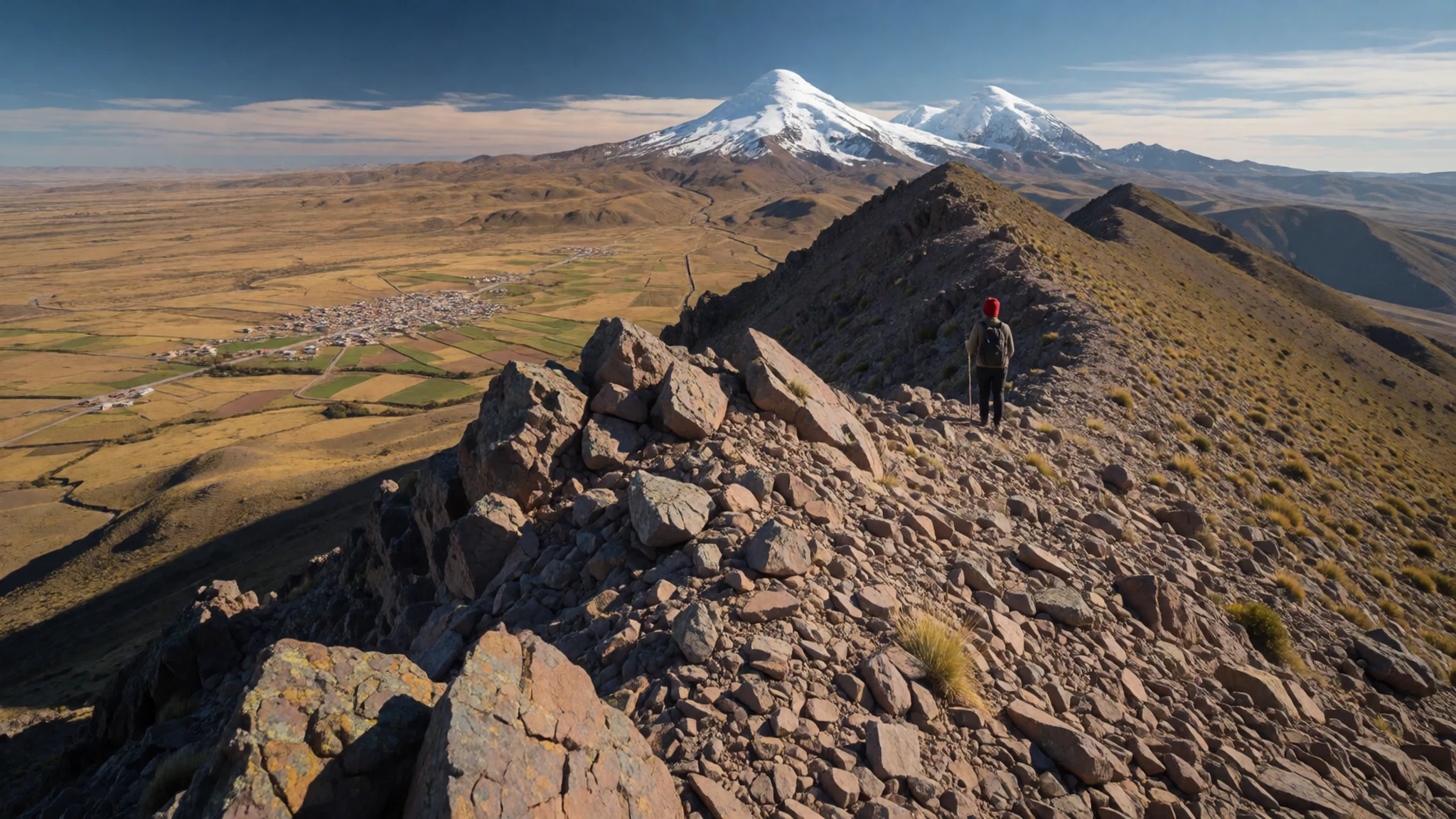
Culture
Sajama National Park lies in Aymara country, and the culture a visitor meets here is a living one rather than a display. Families in and around Sajama village keep llamas and alpacas, grow what the altitude allows and organise community life around shared land and seasonal work. The Aymara have a long history across the Andean highlands, and respect for the mountains runs through their outlook; peaks such as Sajama are treated as powerful presences, not just scenery. Many households also keep to Catholic practice, and the village church is a focal point for gatherings and festivals. Tourism now sits beside herding as a source of income, which means guesthouses, guides and cooks are often relatives or neighbours, and the money stays close to home. Conversation is usually unhurried and polite, and a greeting before any request goes a long way. Spanish is widely spoken, and Aymara is heard in daily life. Travellers who learn a few words, buy locally and hire local guides support the arrangement that conservation writers say works best, with villagers in charge of how the land is used. Visitors should also remember that pasture, lagoons and hot springs may sit on community land rather than empty wilderness. Ask before photographing people, their animals or their homes, and never cross fenced pasture or enter a herder's yard without permission.
What to wear
Around Sajama, traditional Aymara dress is built for wind, cold and sun. Women often wear the pollera, a full gathered skirt, usually layered over petticoats, with a woollen cardigan or shawl and a small bowler-style hat. Cloth woven from sheep, llama or alpaca wool is common, and the aguayo, a bright striped carrying cloth, is knotted across the back to hold children, produce or firewood. Men have traditionally worn ponchos and knitted chullo caps with ear flaps, and these are most visible at festivals and community events. Day to day, many people wear a blend: practical jackets, fleece, jeans or trousers and sturdy shoes, with the hat or shawl kept as a marker of identity. Everyday clothing is plain, warm and hard-wearing rather than decorative. A visitor should dress for a very cold, dry, high plateau. Pack thermal base layers, a fleece, a windproof and waterproof shell, a warm hat, gloves and thick socks, since nights fall below freezing from March. Sun protection matters just as much: sunglasses, a brimmed hat and high-factor sunscreen. Walking boots with good grip suit the rough ground. Modest clothing is appropriate in the village and church, and if you plan to use a hot spring, bring a swimsuit and a quick-dry towel.
What to eat
- Sopa de quinua — Guesthouse dining rooms in Sajama village
Quinoa soup is a warming staple of the Bolivian highlands, thickened with the grain and usually filled with potato and vegetables. It suits the thin cold air well and is often the first dish served at a simple supper.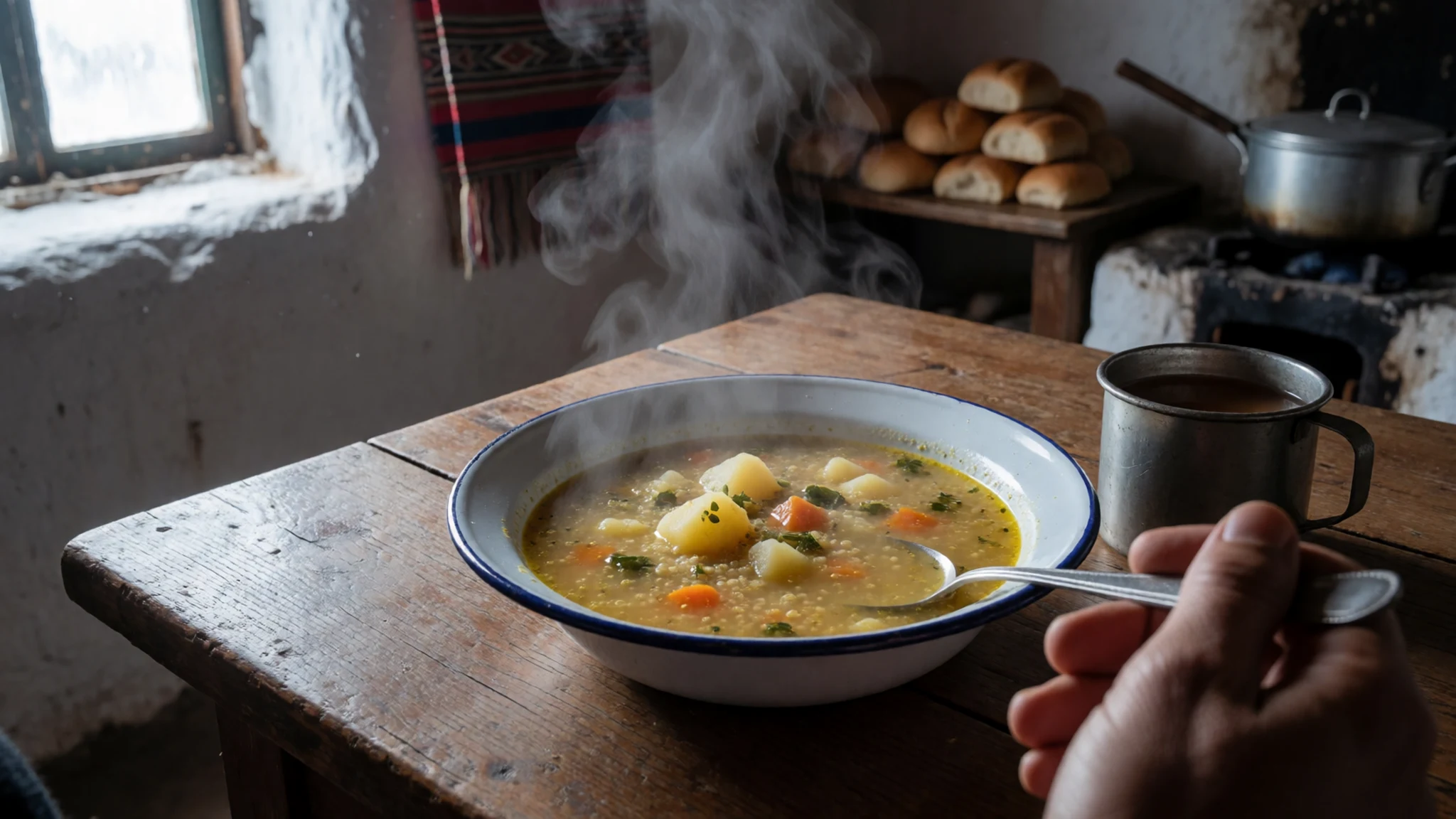
- Charque de llama — Family-run eateries and guesthouses around Sajama village
Charque is dried, salted llama meat, a traditional way of keeping protein through the cold season. It is chewy and savoury, served with potatoes or maize. Llama is lean, and the dish reflects the herding life of the Altiplano.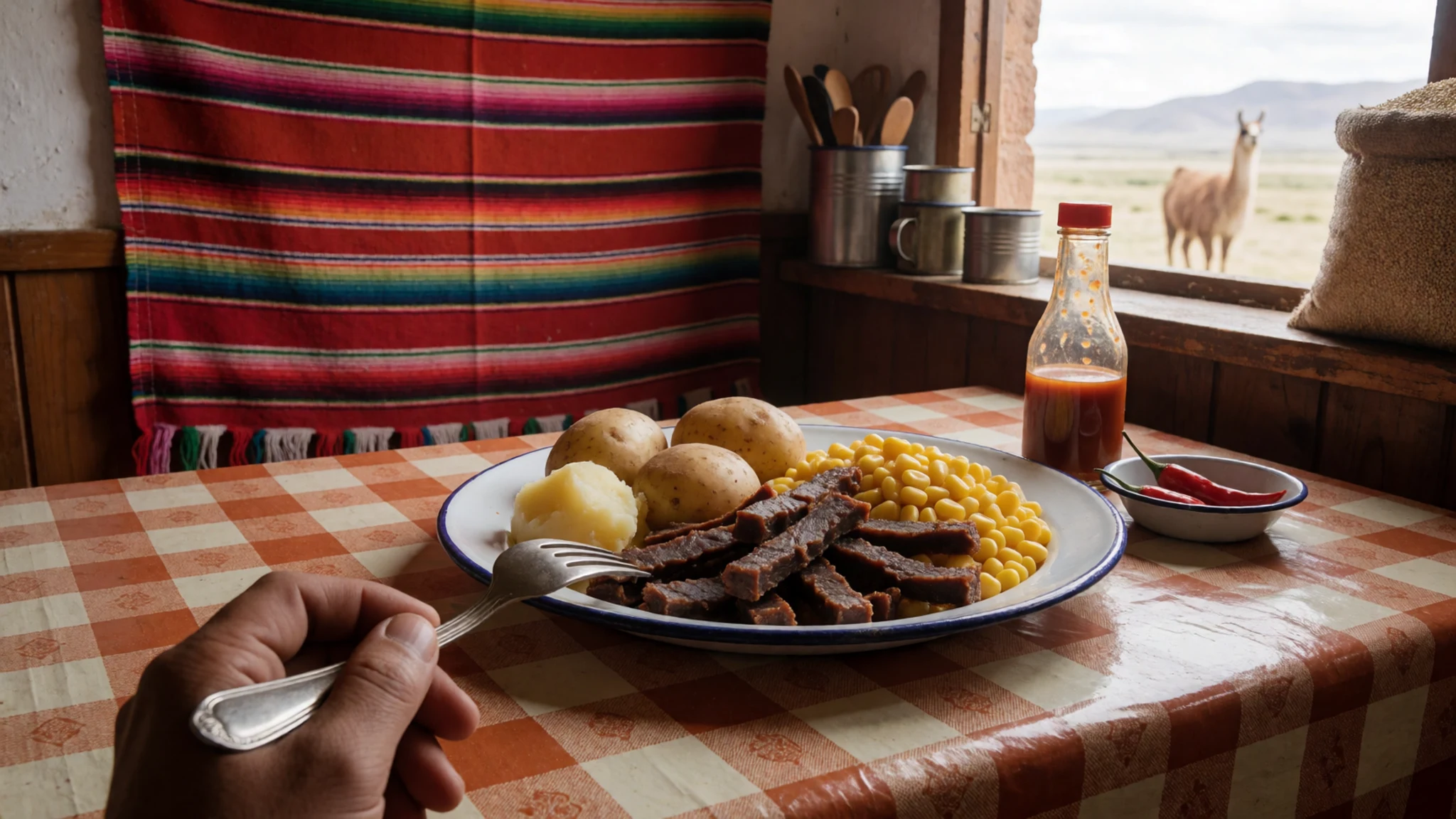
- Chuño and potatoes — Village kitchens and home-style lunch counters
Chuño is potato preserved by repeated freezing and drying, an Andean technique suited to the frost here. It turns up beside meat or in stews, with fresh potatoes of different colours. Its earthy taste is unusual at first. - Api — Morning stalls and small eateries in market towns on the way, such as Patacamaya
Api is a thick, hot drink made from purple maize, sweetened and spiced, often served at breakfast or on a cold afternoon. It is traditionally paired with fried pastries, and is a sociable way to warm up. - Mate de coca — Guesthouses and tea stops across the village
Mate de coca is a hot infusion of coca leaves, widely drunk in the Andes and often offered to travellers adjusting to altitude. It tastes herbal and slightly bitter. It is not a cure for altitude sickness, but many people find it settling.
Plan it
Best time. May to October is the dry season, with clearer skies for views and climbs. Nights are cold all year, and fall below freezing from March, so a warm sleeping bag matters even in the best months.
How long. 2–3
Getting there. Fly to La Paz, then take a bus or shared van to Patacamaya or Oruro. Vans (servis) run onward toward Tambo Quemado, the border town for Chile; ask to be dropped at the Sajama Junction, then take a local vehicle into the village or walk the 10 km. From Tambo Quemado the village is about 15 km away.
Budget. low
Tips
- Rest on the first day, because the park sits at about 4775 m and altitude headaches are common
- Carry cash in small notes, since cards are unlikely to work in the village
- Bring warm layers, sun protection and plenty of water, as the air is dry and the sun is strong
- Hire a local guide for peaks, and check transport times locally, as they change
- Camping is possible almost anywhere, but pitch away from pasture and expect freezing nights
Etiquette
- Ask before photographing people, animals or homes
- Take all rubbish with you and keep to existing tracks
- Use local guides, guesthouses and cooks so the money stays in the community
Nearby
Sources
- Wikidata Q1519747 (CC0)
- Wikipedia: Sajama National Park (rev 1383487449) (CC BY-SA 4.0)
- Wikivoyage: Sajama National Park (rev 5297820) (CC BY-SA 4.0)
- Camino al Sajama, Gabriela Villanueva (CC BY-SA 4.0)
- en el lago, Luis Fernando Troncoso Joffré (CC BY-SA 4.0)
- mas del lago, Luis Fernando Troncoso Joffré (CC BY-SA 4.0)
- al pie del Sajama, Luis Fernando Troncoso Joffré (CC BY-SA 4.0)
- Iglesia, Luis Fernando Troncoso Joffré (CC BY-SA 4.0)
- Atardecer (0677), Luis Fernando Troncoso Joffré (CC BY-SA 4.0)
- Atardecer (0696), Luis Fernando Troncoso Joffré (CC BY-SA 4.0)
- Atardecer (0703), Luis Fernando Troncoso Joffré (CC BY-SA 4.0)


Wildlife
- Andean avocet (animal)
The Andean avocet is a big, long-legged wading bird, a bit like an elegant stilt-walker at the water's edge. It is one of several birds recorded around Sajama, and it lives in the Andes all year round. The notes do not say which water to visit or what time of day suits it best, so ask your guide. Watch from a good distance with binoculars, move slowly, speak softly, and never feed it. - Horned coot (animal)
The horned coot is a protected water bird, duck-like and clever, that heaps up surprisingly big nests in shallow water, like a tiny island home. At Sajama, Laguna Sora Pata is the lake known for it. The notes give no season or time of day, so ask a local guide when to go. Keep well back, stay quiet so nesting birds are not disturbed, use binoculars rather than walking closer, and never feed it. - Andean avocet (bird)
The Andean avocet is a big, long-legged wading bird, a bit like an elegant stilt-walker at the water's edge. It is one of several birds recorded around Sajama, and it lives in the Andes all year round. The notes do not say which water to visit or what time of day suits it best, so ask your guide. Watch from a good distance with binoculars, move slowly, speak softly, and never feed it. - Horned coot (bird)
The horned coot is a protected water bird, duck-like and clever, that heaps up surprisingly big nests in shallow water, like a tiny island home. At Sajama, Laguna Sora Pata is the lake known for it. The notes give no season or time of day, so ask a local guide when to go. Keep well back, stay quiet so nesting birds are not disturbed, use binoculars rather than walking closer, and never feed it.