Copacabana
Copacabana, Bolivia
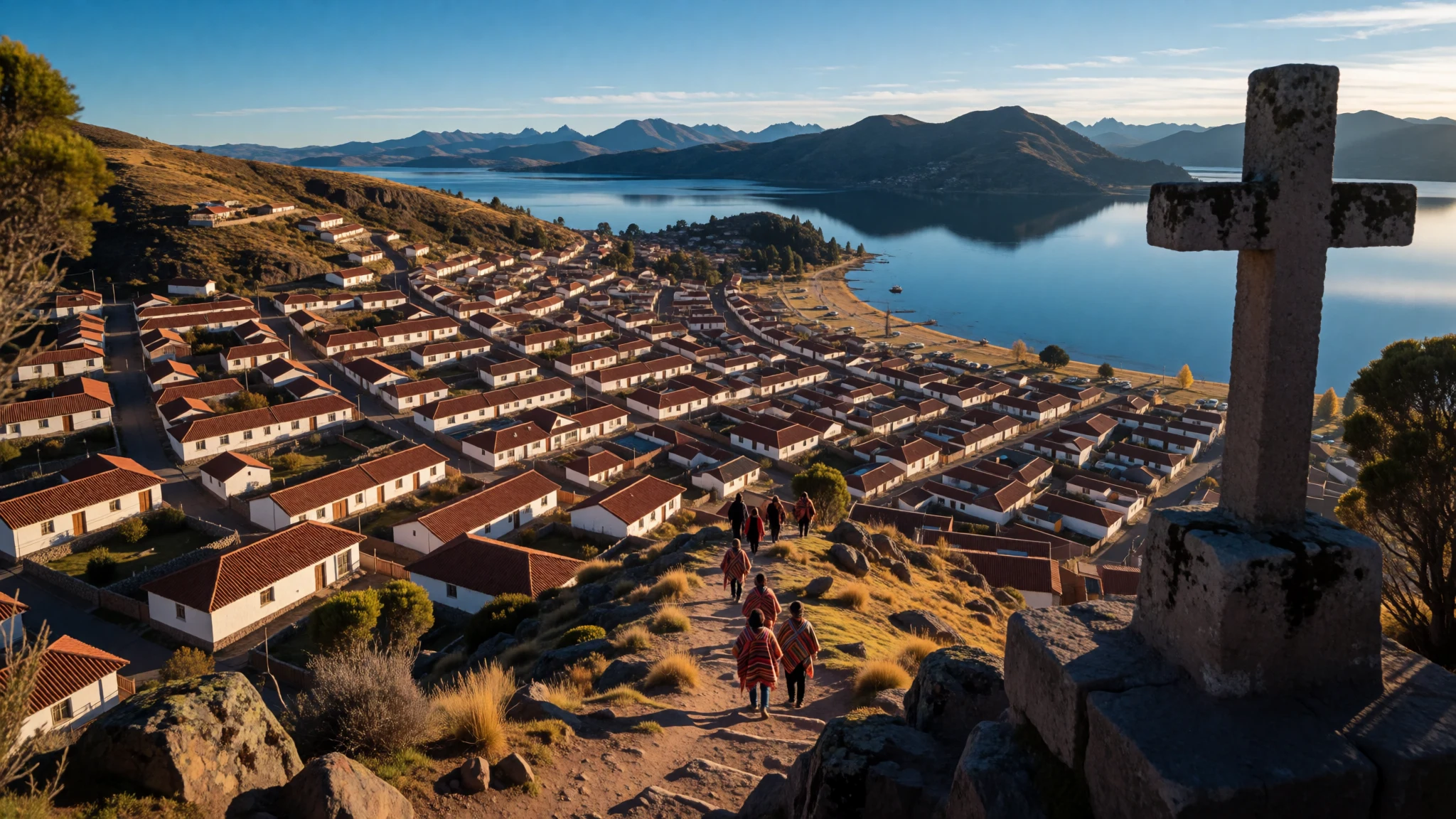
Copacabana is a pilgrimage town on Lake Titicaca's shore, with trout grilled on the beach, a Virgin who draws crowds, and boats to the Inca's sacred island.
The place
Copacabana sits on the southern shore of Lake Titicaca in Bolivia, at 3841 m above sea level, which explains the thin air, the fierce midday sun and the cold that arrives as soon as the light goes. The town fills a small bowl between two hills, with the lake along one side and steep streets climbing the other. It is small enough to cross on foot in minutes, yet it receives a steady flow of visitors: pilgrims who come for the Virgin, travellers on the route between La Paz and Peru, and day-trippers heading for Isla del Sol, the island the Inca held sacred, whose boats leave from the town's landing. The layout is easy to learn. A central square holds the civic life, and a broad avenue runs down from it to the water, lined with souvenir shops, guesthouses and eateries that mostly serve foreign visitors. One street to the north the mood changes: market stalls, grocers and the ordinary errands of local families. The name is older than the Spanish church. It comes from an Aymara phrase usually translated as a view of the lake, and it later travelled across the continent to christen a famous beach in Rio de Janeiro. Trout from the lake is the local staple on every menu. Expect a place that feels part pilgrimage town and part lakeside resort, noticeably quieter on weekdays outside festival periods, and chilly in the shade at any time of year.
Its story
The story of Copacabana begins before the Spanish, when the Aymara already treated this shore as holy. The Inca took over that reverence and used the town as the gateway to the island of Titicaca, where an ancient shrine and oracle drew worshippers from far away. Small shrines at Copacabana itself mixed Inca ceremony with older local practice. After the Spanish reached the lake, the old Andean worship was pushed aside and Dominican friars made the town the hub of their missions. Secular priests replaced them for a time, and the Augustinians were given charge in the late sixteenth century. The image at the heart of the cult has a very human origin. A grandson of the Inca ruler Manco Kapac, struck by the statues of the Virgin he had seen in churches at La Paz, decided to carve one of his own. Several attempts failed before he produced a figure good enough to be installed in Copacabana as the community's protectress. Miracles were soon credited to it, and its fame carried well beyond the lake. The church that houses it has had a rough history. During the wars of independence it lost most of its ornaments and gifts, and later political unrest brought more plundering. Even so, it remains a destination for devotees from Bolivia and neighbouring Peru, and the patron saint's feast in early August swells the town with worshippers in their thousands.
What to see
- Basilica of Our Lady of Copacabana — Town centre
The basilica is the reason the town exists as a pilgrimage centre. Its whitewashed walls and tiled domes show a Moorish influence, and the courtyard is often busy with worshippers, flower sellers and families waiting for a blessing. Go in the morning, when the light is soft and the crowds thinner.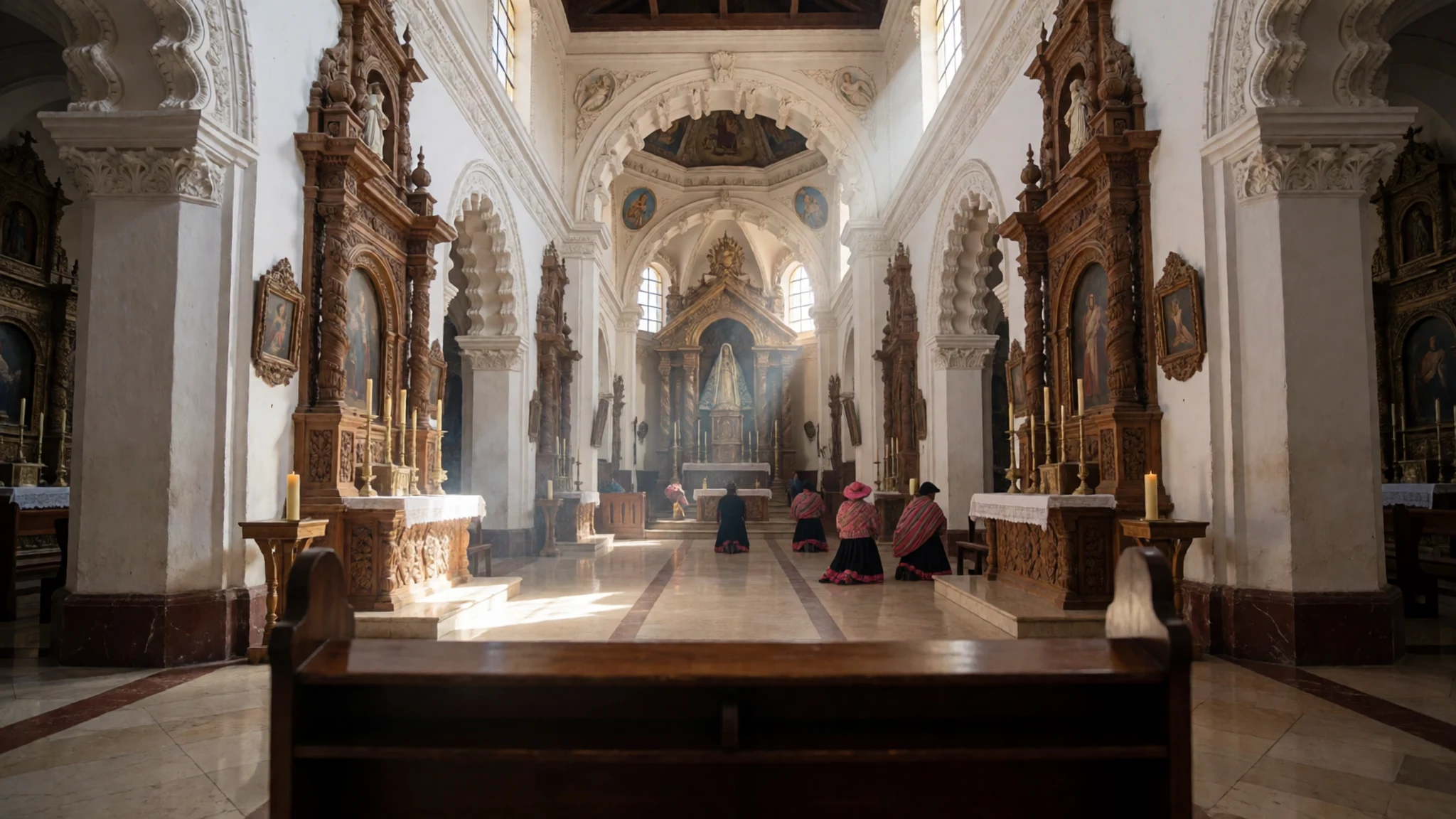
- Cerro El Calvario — North end of the beach
This hill rises at the northern end of the beach and carries a path of devotional stations to the summit. The climb is steady and breathless at this altitude, so go slowly and carry water. The reward is a wide view over the roofs, the bay and the fishing boats, best near sunset.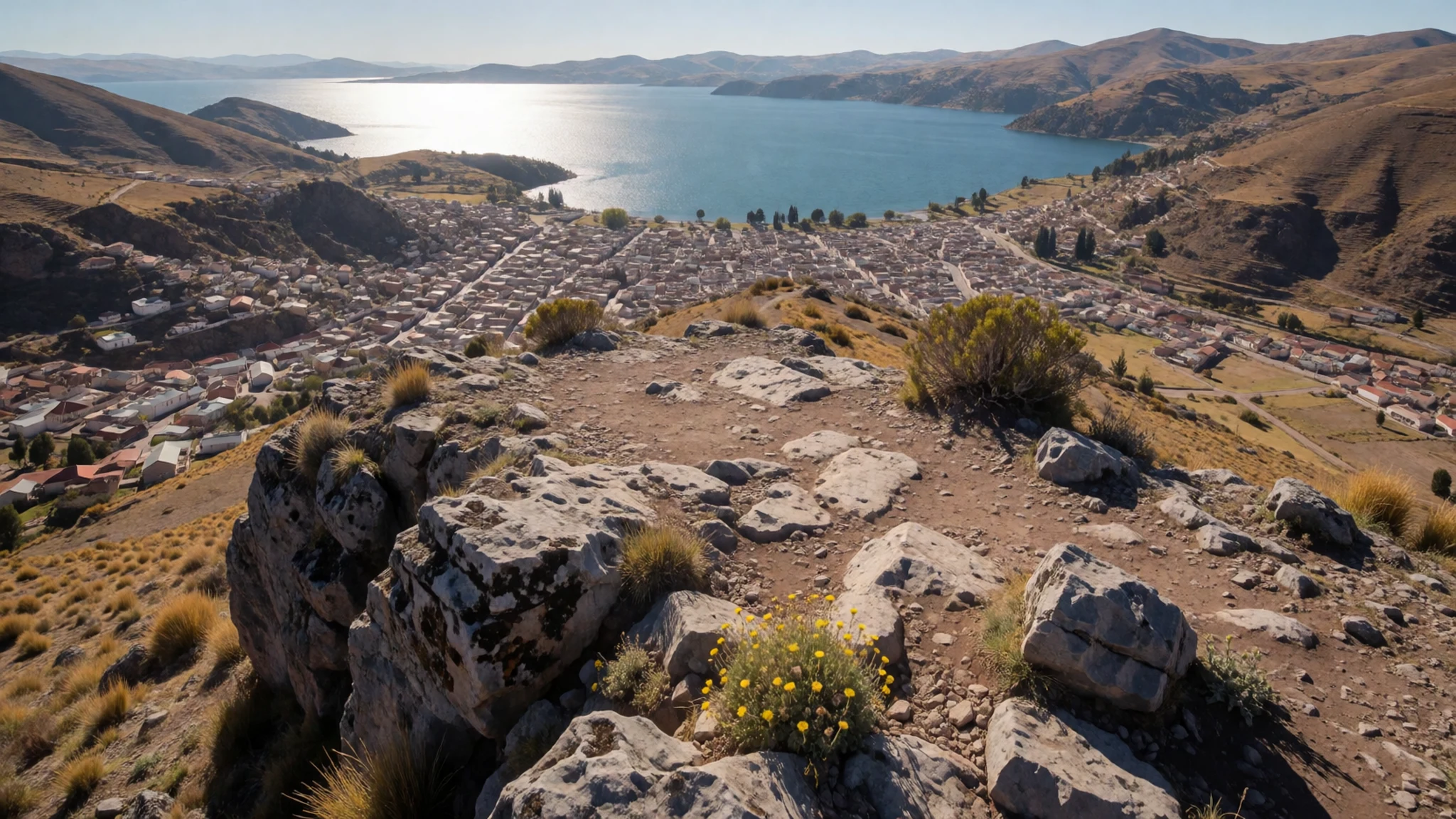
- Museo del Poncho — Town centre
A small museum devoted to Andean weaving, with ponchos, cloths and garments from highland communities, including pieces from men's traditional dress. It helps make sense of the patterns seen on the street and in the markets, and it is a calm indoor hour when the afternoon wind off the lake picks up.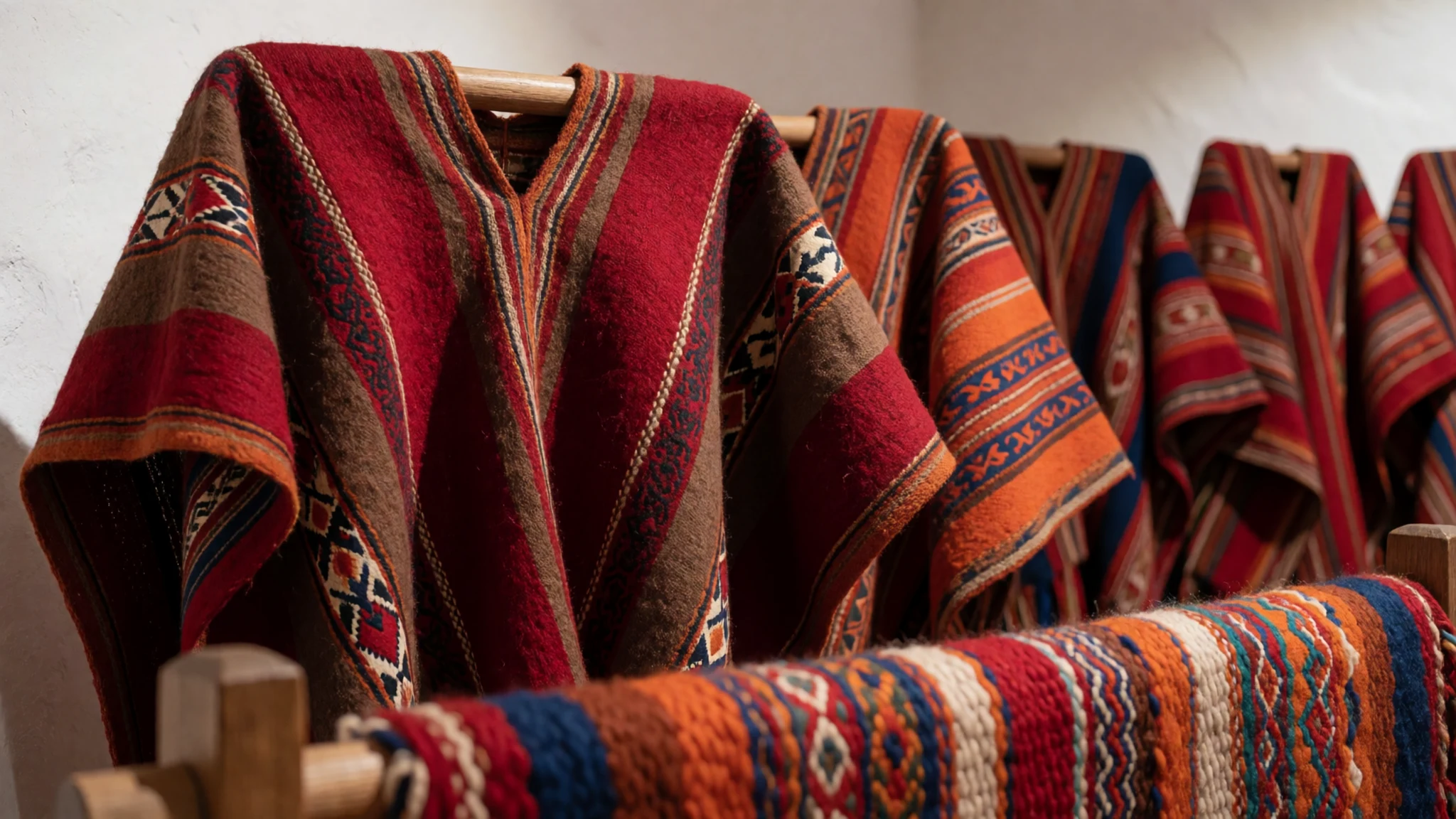
- The lakeshore and beach — Lakeside, below the main avenue
The waterfront is where the town breathes: pedal boats, trout stalls, sellers of snacks and, now and then, a boat made of totora reeds. Walk to the far end to find hills with old Inca ruins. It is cold for swimming, but fine for strolling and watching the light change.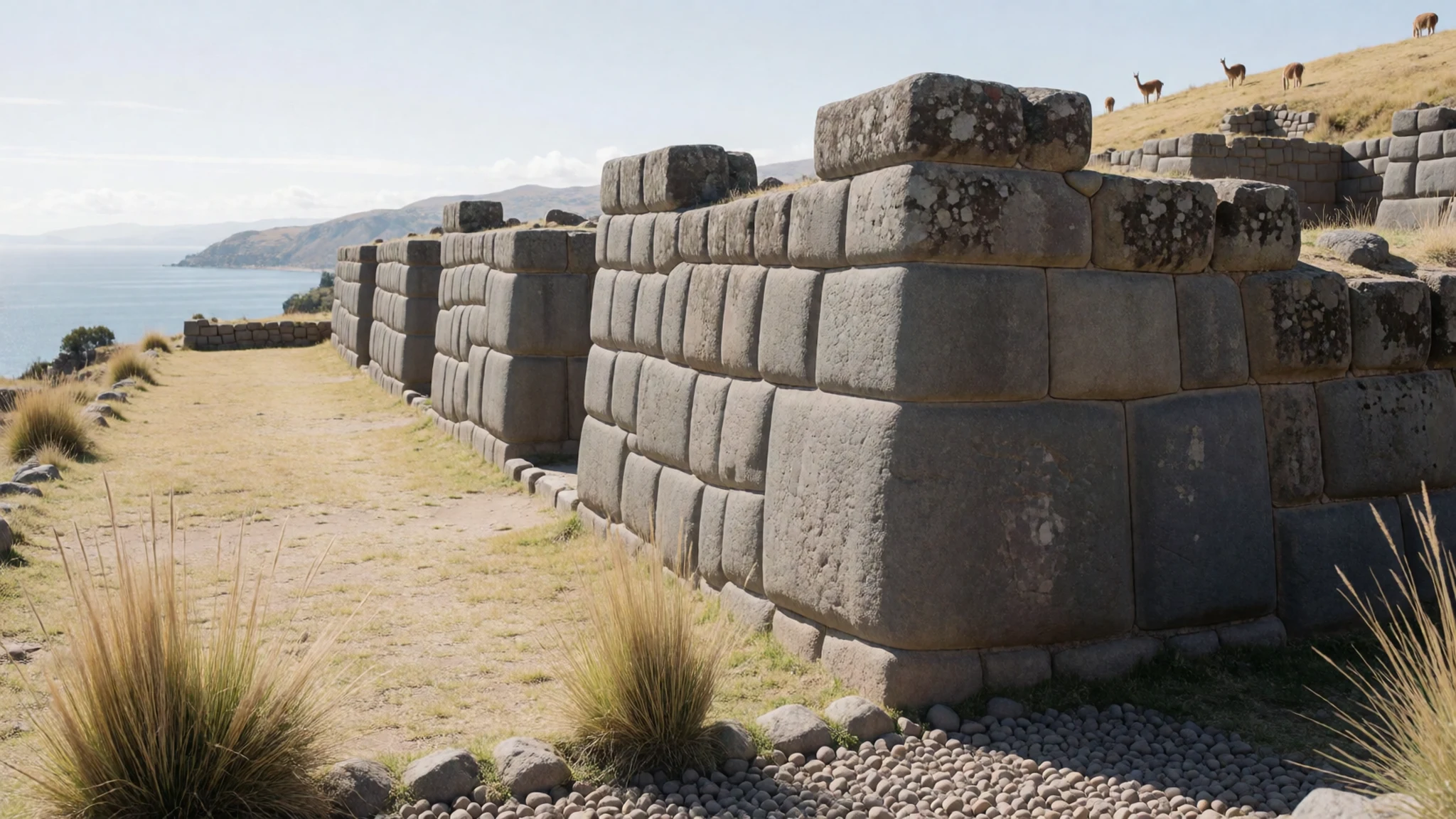
- Boat trip to Isla del Sol — Departure from the Copacabana landing
Boats to Isla del Sol leave from the Copacabana landing and cross the open lake to the island the Inca regarded as sacred. Ruins, terraced slopes and footpaths with lake views reward the trip. Check current schedules locally, set out early, and carry layers, sun protection and cash.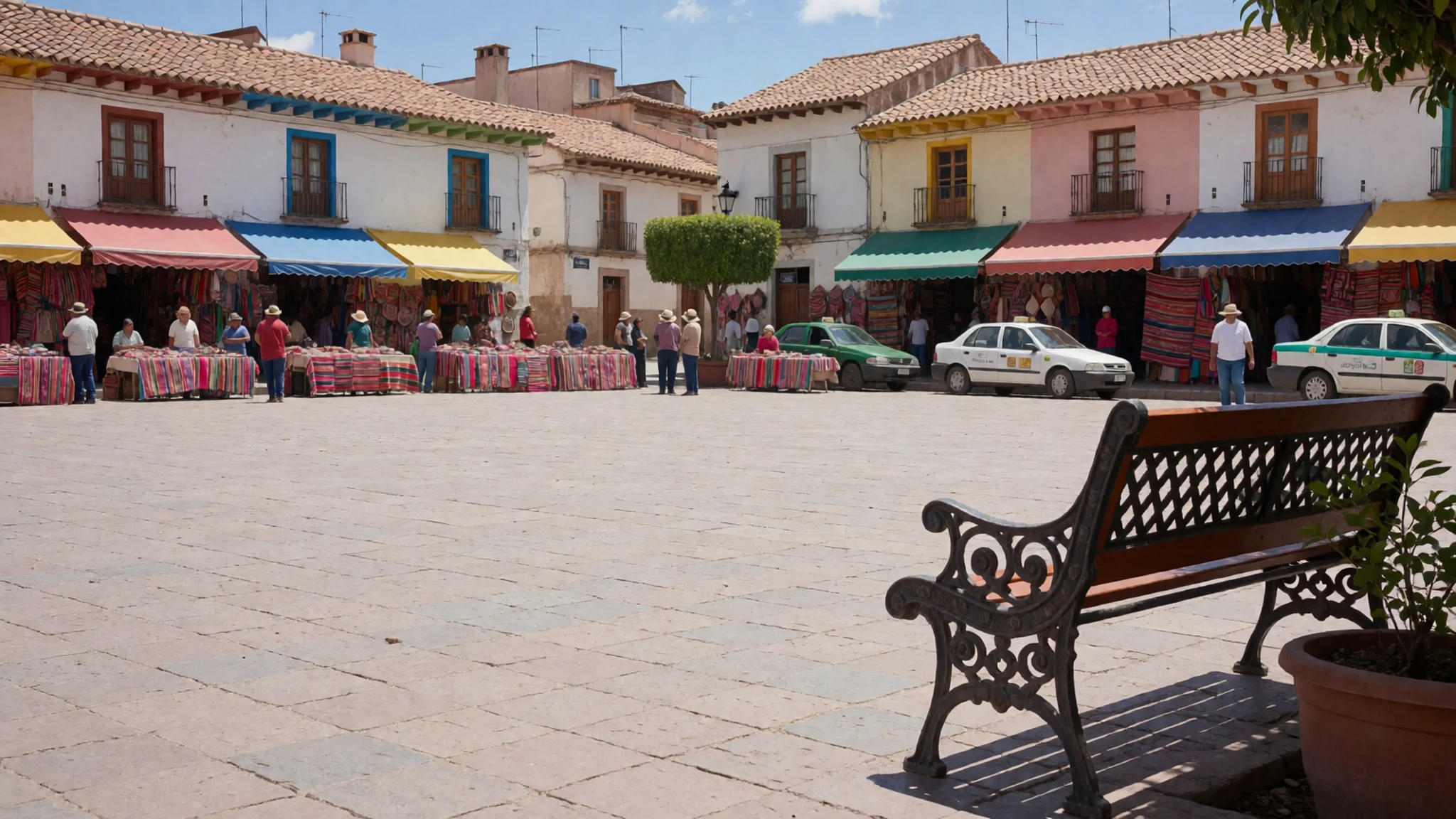
Culture
Copacabana is a town where Catholic devotion and Aymara tradition sit side by side without much fuss. The Virgin of Copacabana is the patron saint of Bolivia, and her feast in early August brings pilgrims, dancers, brass bands and plenty of food stalls. Lake and mountain still carry older meanings, and the island across the water was holy long before any church stood here. Many local families speak Aymara or Quechua as well as Spanish, and a few phrases in either are warmly received. A well-known local custom is the blessing of vehicles outside the basilica: owners decorate their cars and minibuses with flowers and ribbons, then wait for a priest to sprinkle holy water, sometimes with a little beer or confetti added. It is lively, slightly chaotic and entirely sincere, and it says a lot about how people here think of travel and risk. Daily life follows the lake: fishing, farming, and trading with the Peruvian side. Market days are social events as much as shopping trips. On the water, reed boats and the old crafts of totora weaving still belong to the Aymara lakeside communities, whether for use or for show. Visitors should dress modestly in the basilica, keep voices low during services and blessings, and always ask before photographing people, especially pilgrims and families at prayer.
What to wear
In Copacabana and the surrounding Aymara communities, women's traditional dress is built around the pollera, a full gathered skirt worn over several layers, with a blouse, a shawl and a small bowler hat set at an angle. Wool and alpaca are the main materials. Woven cloths known as aguayos carry babies, bundles of produce and shopping on the back, and their stripes and colours mark region and community. Men's older dress includes the poncho and the knitted chullo cap with ear flaps, both seen at festivals and on the islands. The Museo del Poncho in town shows how varied these weavings are. Day to day, most people wear practical modern clothes: jeans, fleeces, trainers and woollen jumpers, with traditional dress more common among older women, market traders and festival dancers. At festival time the costumes become spectacular, with embroidered jackets, sequinned skirts and masks. For visitors, the climate decides the wardrobe. Days can be bright and mild but nights are cold, and frost is possible in the drier months, so bring a warm layer, a windproof jacket, a hat and sun protection for the strong high-altitude light. Comfortable walking shoes suit the steep streets, the hill path and the island trails. Covered shoulders and knees are respectful in the basilica.
What to eat
- Trucha frita or a la plancha — Beachfront stalls and lakeside restaurants
Lake trout is the town's signature dish, served fried or grilled with rice, potatoes and a small salad. It appears on practically every menu. The long row of near-identical stalls along the beach is the classic place to eat it by the water.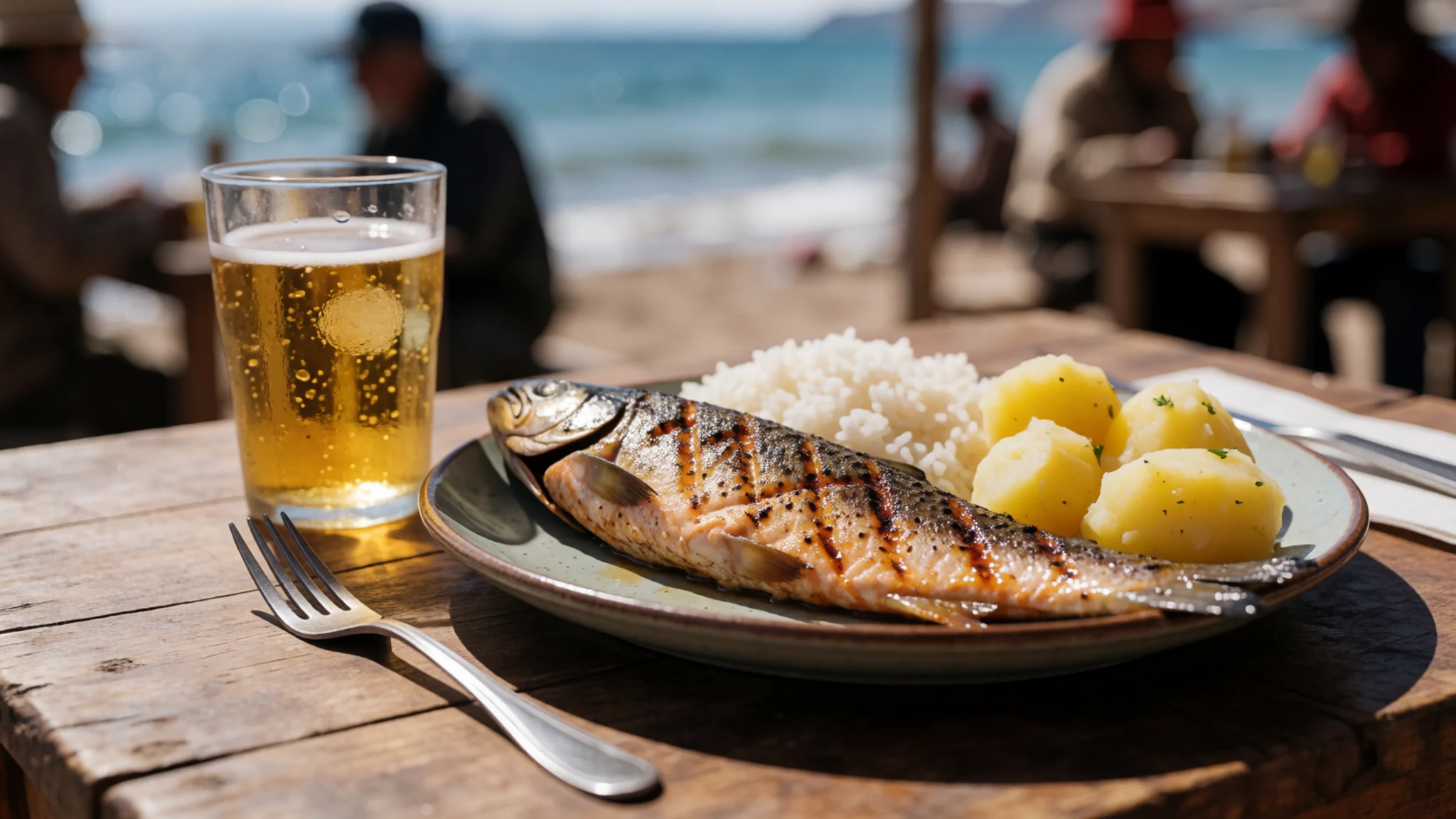
- Evening trout from market stalls — Stalls near the central market, evenings
For a cheaper, more local version, stalls near the central market sell trout with rice and potatoes in the evening. Plates are simple, the portions generous, and the company mostly local. Choose a busy stall with a quick turnover.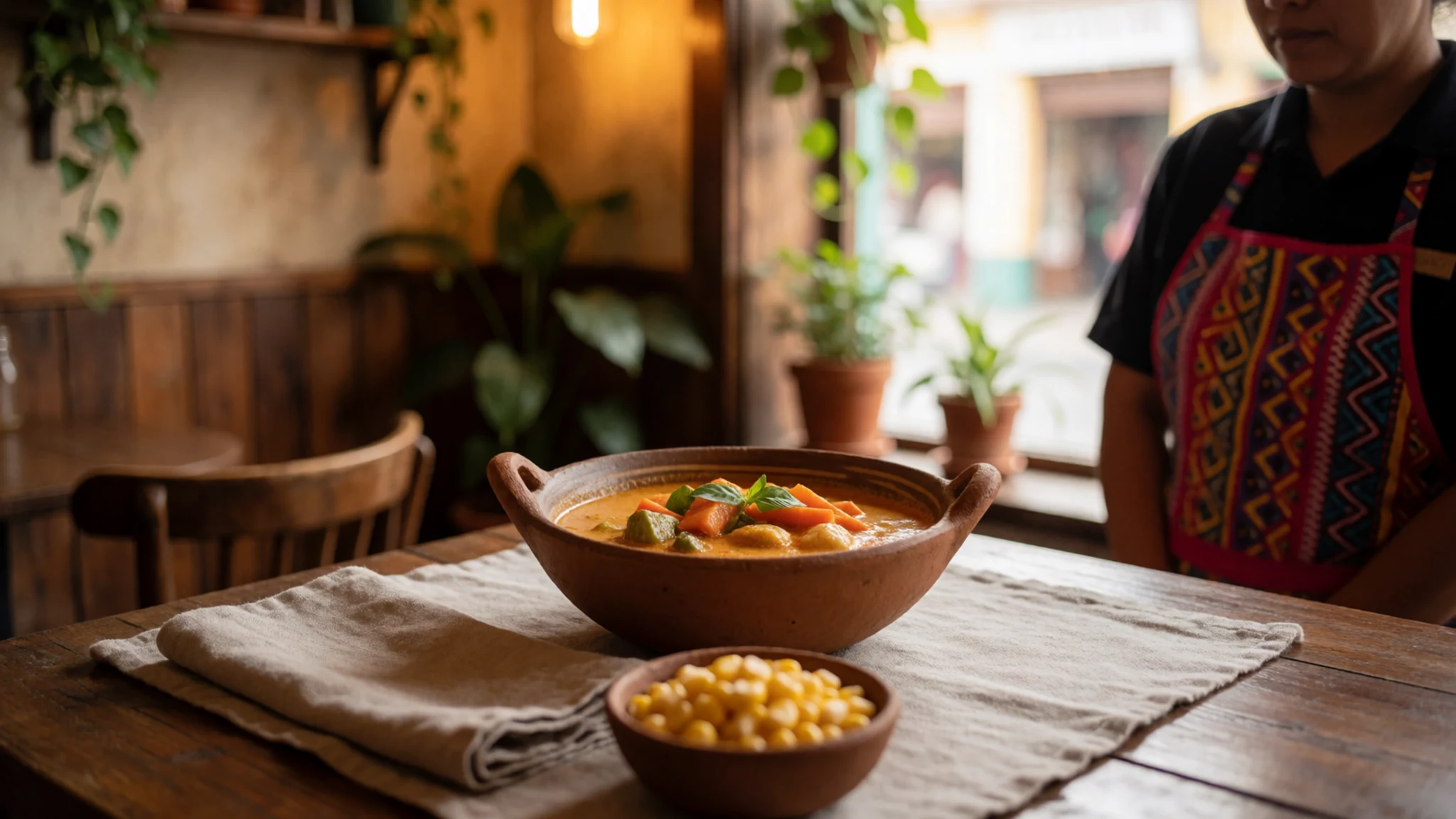
- Sopa de quinua — Market food counters and family-run eateries
A warming soup of quinoa, vegetables and sometimes meat, well suited to the cold mornings and evenings at this altitude. Quinoa is an old highland crop, and the soup is a good way to taste it in its home setting. - Api with a fried pastry — Morning market corners and street stalls
Api is a thick, sweet, spiced drink made from purple maize, usually served hot with a crisp fried pastry or doughnut. It is a typical Bolivian breakfast and a pleasant way to warm up before a morning on the lake. - Coffee, breakfast and sunset drinks — Cafes on the main avenue and terraces along the beach
A few cafes along the main avenue offer proper espresso, eggs, fruit and bread, and some mix Bolivian dishes with international ones. In the evening the beachside terraces fill up for beer or wine as the light drops over the lake.
Plan it
Best time. May to September is the drier season, with clearer skies and the best chance of good views, though nights are cold and frost is possible. Days stay mild all year because of the tropical latitude, so the cold is mainly an altitude matter. Early August brings the patron saint's festival, which is colourful but very crowded.
How long. 2–3
Getting there. The usual route is a bus from La Paz, about three and a half hours, with a short ferry hop across the Tiquina Strait where the bus is carried on a barge. Buses from Puno in Peru take a similar time, including a stop at the border just south of town.
Budget. low
Tips
- Give yourself a day to acclimatise before climbing El Calvario or heading to the island; drink plenty of water and go slowly
- Carry cash in small notes for markets, stalls, boats and ferries, as cards are not accepted everywhere
- Pack warm layers, a hat and sun cream, since the sun is strong by day and the evenings are cold
- Book accommodation well ahead if visiting around the early August festival
- Catch Isla del Sol boats in the morning and check current schedules with the operators
Etiquette
- Dress modestly and speak quietly inside the basilica, and step aside during services
- Ask before photographing people, especially in traditional dress or during a blessing
- Agree boat and taxi prices before setting off, and be polite when bargaining at markets
Nearby
Sources
- Wikidata Q114211 (CC0)
- Wikipedia: Copacabana, Bolivia (rev 1384314866) (CC BY-SA 4.0)
- Wikivoyage: Copacabana (rev 5400491) (CC BY-SA 4.0)
- Christopher Crouzet, Copacabana, Bolivia (photo) (CC BY 3.0)
- EEJCC, Copacabana, Bolivia at sunset (photo) (CC BY-SA 4.0)
- EEJCC, Calle en Copacabana, Bolivia (photo) (CC BY-SA 4.0)
- Adam Jones, Fiesta Day in Copacabana, Bolivia (photo) (CC BY-SA 2.0)
- Sasha India, Copacabana, Bolivia (photo) (CC BY 2.5)
- EEJCC, Hombre Aymara y Lago Titicaca (photo) (CC BY-SA 4.0)
- Henry.loayza, Basílica de Copacabana (photo) (CC BY 3.0)
- Ephraim George Squier, Shrine of Nuestra Señora de Copacabana (drawing) (Public domain)


