Robertsport
Robertsport, Liberia
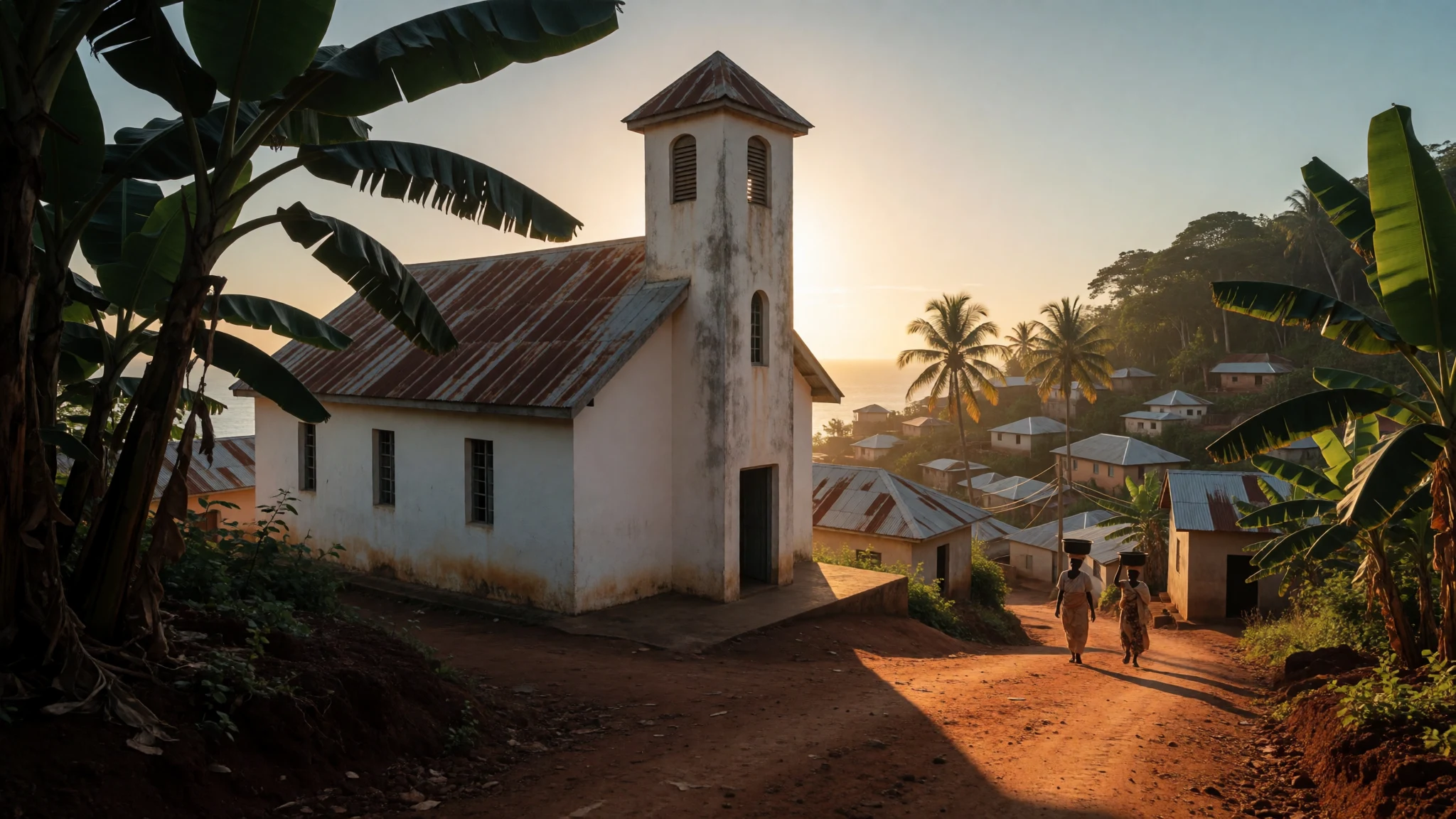
Robertsport is a western Liberian harbour town of hillside lanes on a spit between Lake Piso and an open Atlantic shore.
The place
Robertsport sits on Liberia's western coast, on the Cape Mount peninsula between brackish Lake Piso and the Atlantic, and the land rises into a low hillside of houses. The town is small enough to walk, with lanes that climb above the water and a shore that faces open ocean rather than a sheltered city harbour. People here fish, trade and keep churches busy; Mount Zion Baptist Church is one of the buildings that marks the town from the slope. Older pictures call the same place Roberts Port, Robert's Port or Robertsville, and a view of the port at Fanti Town shows how much of daily life has long been tied to boats.
The light is equatorial: hot, bright and humid, with a drier stretch of months and a wetter one when rain settles in for hours. The hillside keeps a breeze that the lower shore sometimes lacks. Sand, laterite and painted concrete are the textures underfoot. There is no large commercial waterfront; the working edge of town is a fishing port, a few lodges, and the road that links this corner of Liberia back towards Monrovia.
What Robertsport offers a traveller is scale. The ocean is immediate, the town is readable in an afternoon, and Grand Cape Mount around it is still lagoon, forest edge and scattered settlements. Evenings come quickly. Generators, church singing and the sound of the surf take turns after dark. Cash matters more than cards, and plans that depend on a strict timetable tend to slip, which is part of staying in a working coastal town rather than a resort strip.
Its story
Robertsport takes its name from Joseph Jenkins Roberts, the first president of the Liberian republic, and the town grew as a small port on the Cape Mount coast rather than as a capital. Grand Cape Mount runs its public business from here, so the port is also the county's administrative centre. Older charts of this coast mark Lake Piso and the Atlantic, a reminder that sailors were already treating this peninsula shore as a marked piece of the western African shore in the nineteenth century. Fanti Town, photographed from a government office above its port, points to fishing families — Fanti people from the Gold Coast among them — who worked these beaches alongside Vai, Gola and other local families.
Churches became part of that mix. Mount Zion Baptist Church still stands in town, one sign of how Protestant congregations, coastal trade and indigenous life share the same streets. The names Robertsville, Roberts Port and Robertsport overlap on old captions because outsiders spelled a living place however the map of the year allowed. None of those labels changed the work: nets, markets, boats and the road inland.
Recent decades have been harder. Liberia's civil wars emptied roads and scattered families across Grand Cape Mount, and Robertsport, like much of the country, spent years recovering institutions, houses and trust. What returned first was ordinary: fishing, school, Sunday service, a lodge for the occasional traveller. Surfers later found the Atlantic breaks and gave the town a new reason to appear in foreign plans. The story on the ground is a port renamed, charted, fished and rebuilt, now learning to host visitors while remaining a county town.
What to see
- Hillside above the town — the upper lanes of Robertsport
From the slope above Robertsport the town reads as roofs between greenery and the Atlantic, the view in the hillside photograph. Houses step down towards the water, and forest closes in behind the last compound. Morning is the kinder hour, before heat sits on the lane. Shoulders are narrow, so walkers keep to the edge and let vehicles pass.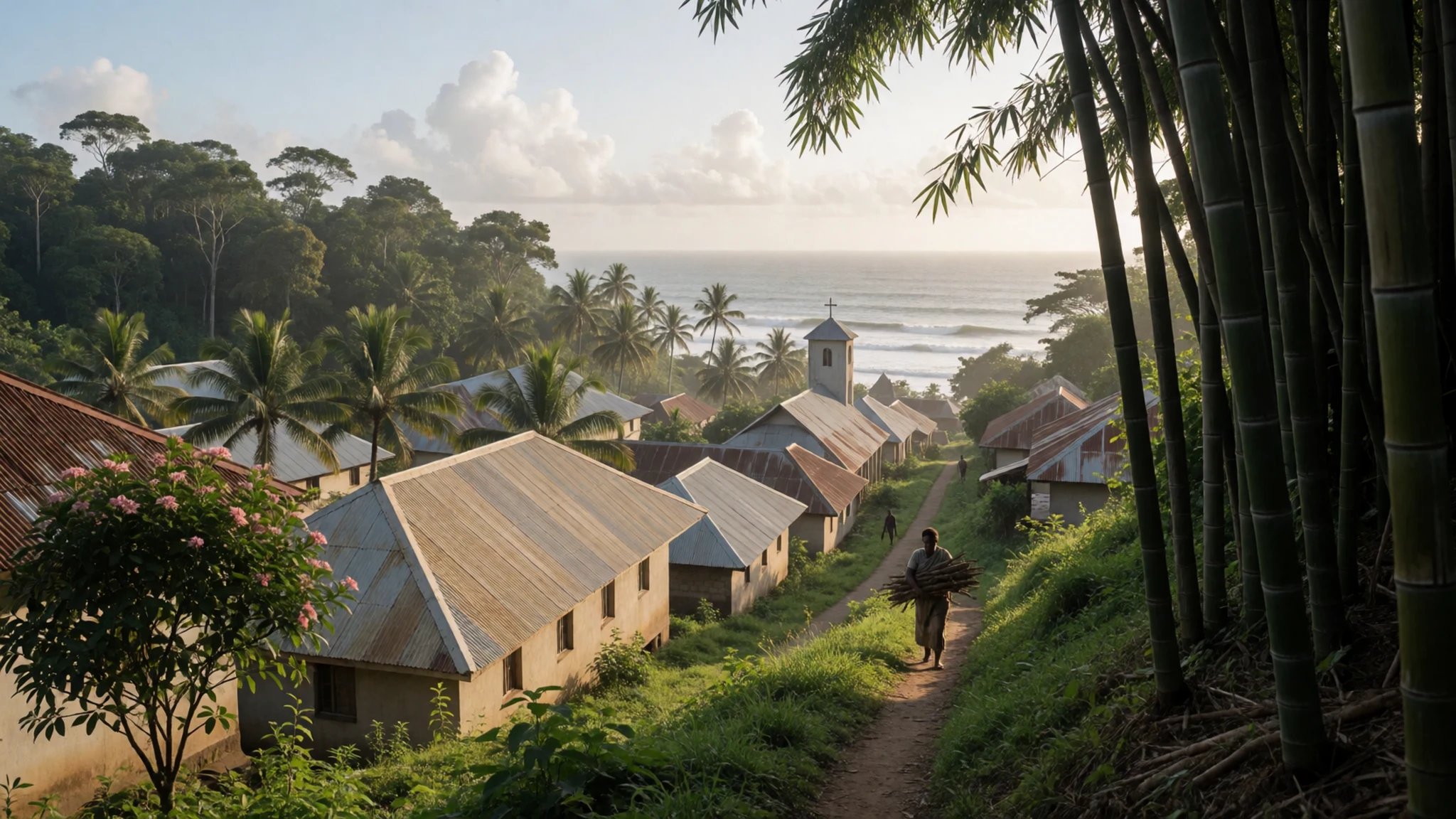
- Cape Mount River — Cape Mount River
Lake Piso is the lagoon that ties Robertsport to the older charts of this coast. The spit holds brackish Lake Piso beside the Atlantic, so that water has long been a landmark for sailors as well as residents. On the ground it is mangroves, boats and muddy banks rather than a promenade. A local boatman is the way off the bank; nobody should expect a marked channel.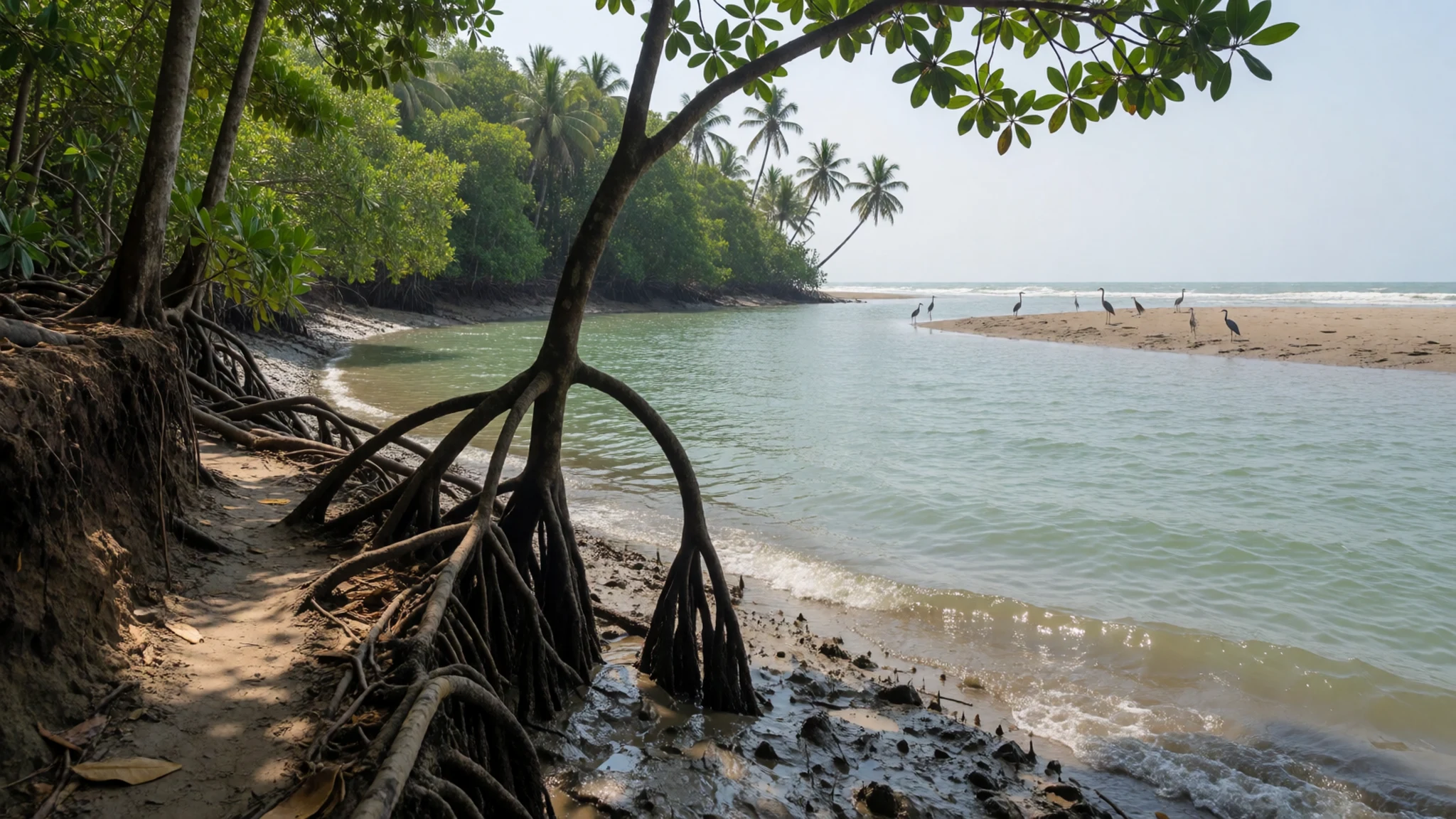
- Mount Zion Baptist Church — Robertsport town
Mount Zion Baptist Church is a Robertsport landmark in the staged photographs, a plain congregational building rather than a pilgrimage church. Sunday gathers the town as the market does not, with families in their better cloth and a quieter street around the service. Visitors who dress modestly and arrive before worship are usually welcome at the door. A steward should be asked before any photograph inside.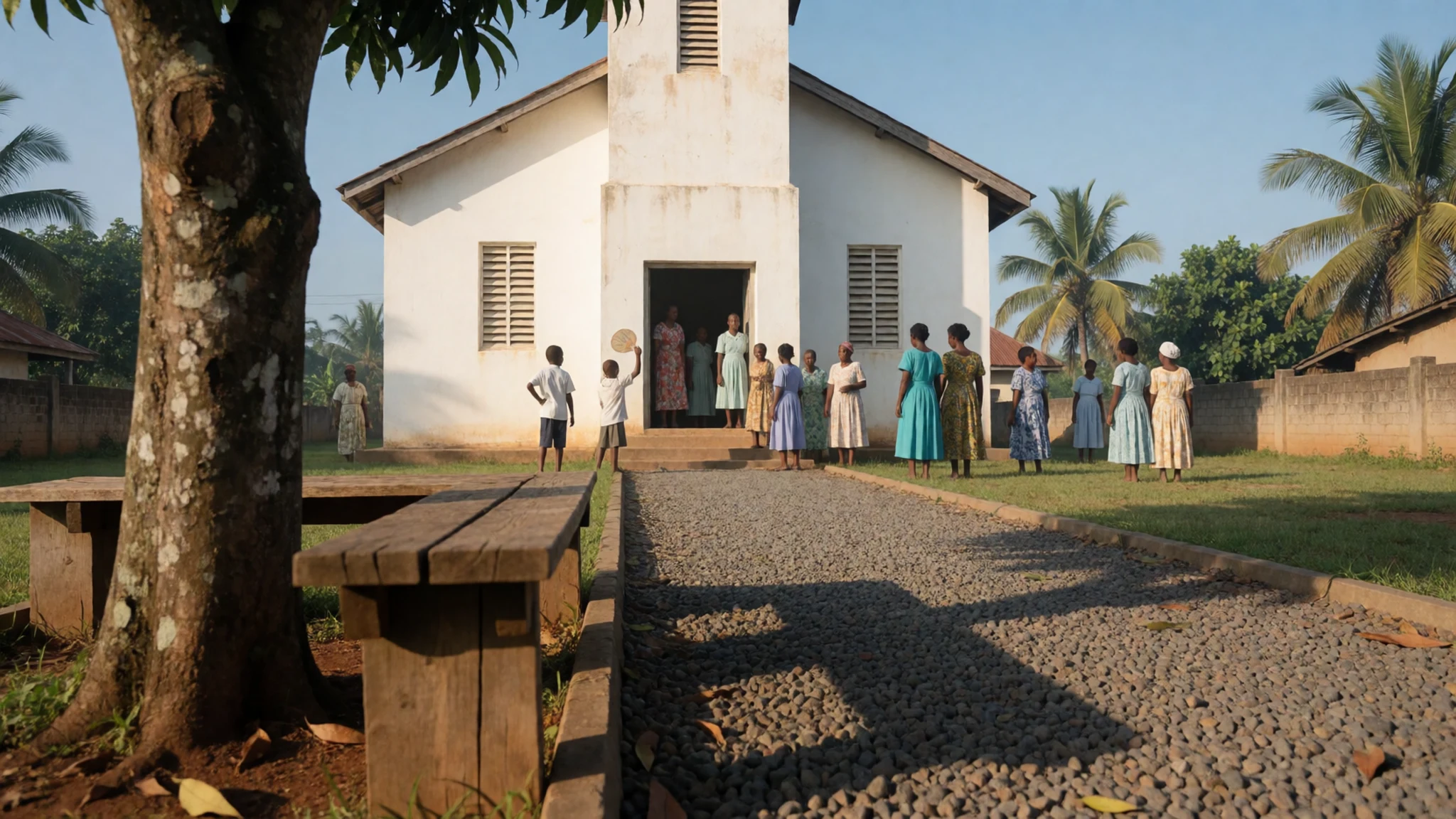
- Fanti Town port — Fanti Town
Fanti Town is the fishing port of Robertsport that old captions place at Robertsville, the name used on a government-office photograph of the harbour. Canoes, drying nets and the smell of the catch matter more here than any passenger quay. The community's name records Fanti fishermen who worked this coast beside local Vai and Gola families. There is no visitor pontoon and no scheduled ferry to wait for.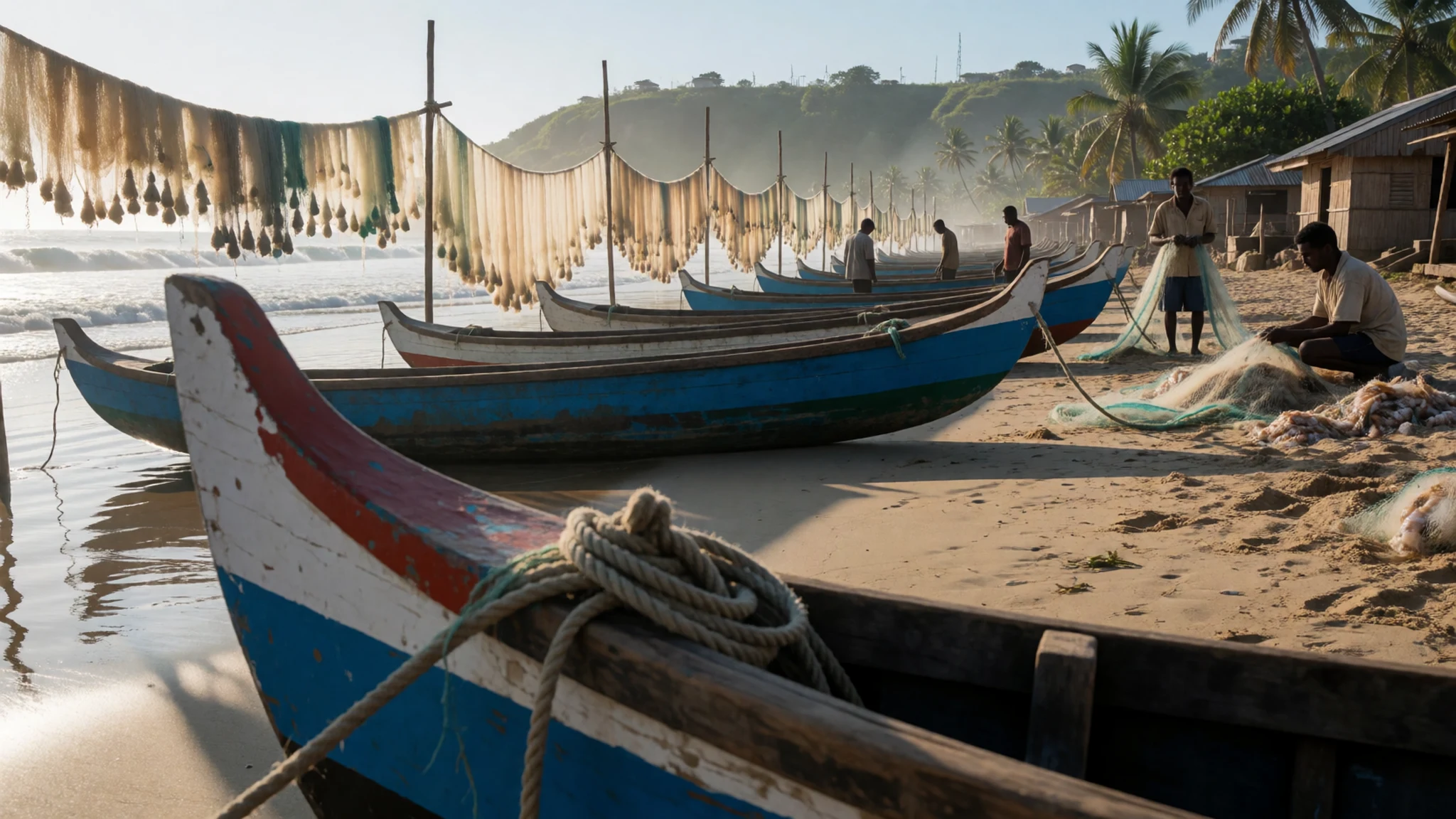
- Atlantic shore — the Atlantic beach
The Atlantic shore at Robertsport is a working beach and a surf coast, not a patrolled bay. Swells that travelling surfers plan around break off the points; on other days the same water is where fishing canoes launch. There is little shade and no lifeguard. Footwear that can get wet is more useful than city shoes, and the midday sun is strong enough to cut a visit short.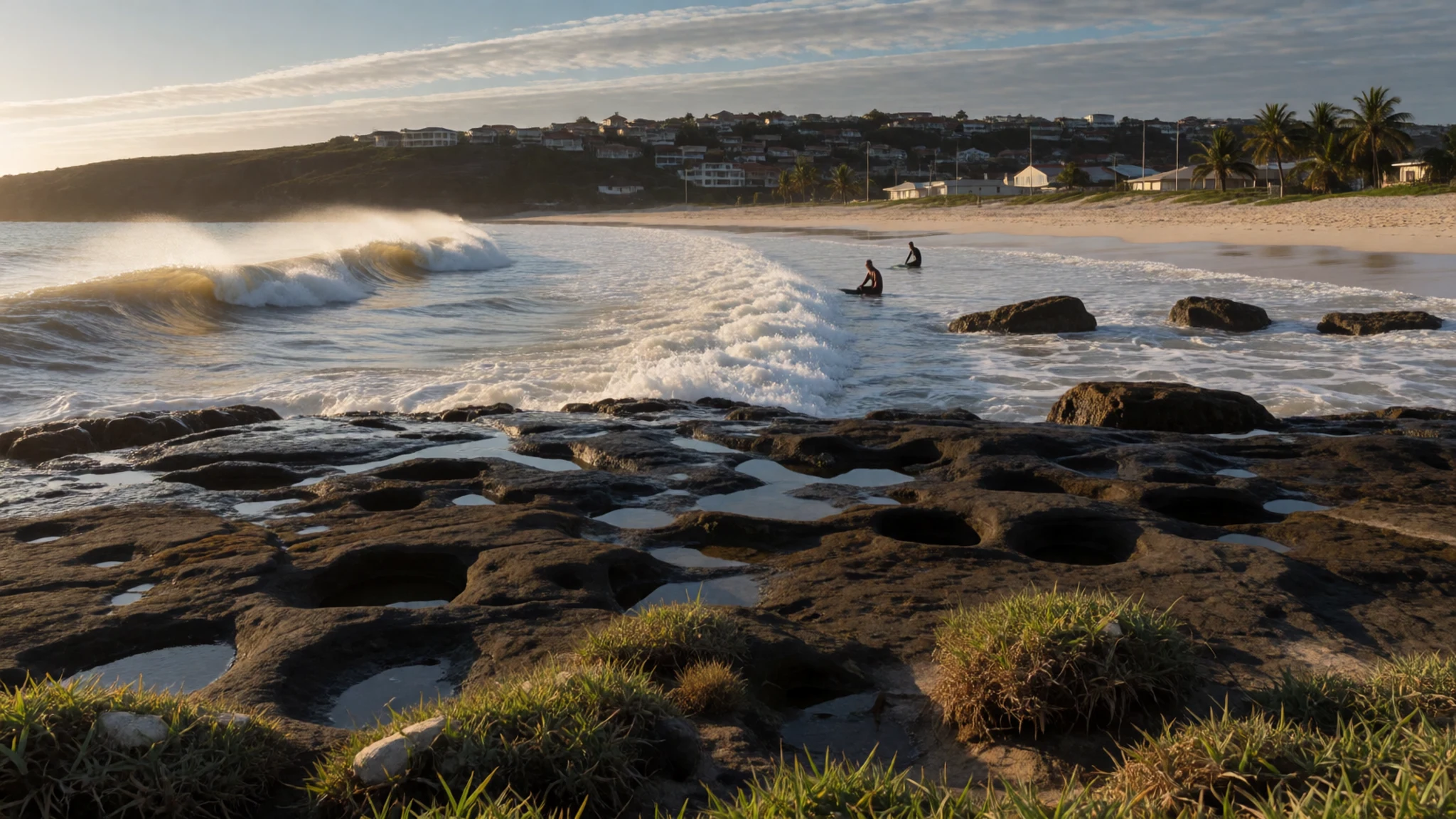
Culture
Robertsport's culture is coastal and mixed: Vai and Gola families, descendants of Fanti fishing people, and the Christian congregations that have shaped town life since the Liberian settlement era. English is the language of school and official business, while Vai and other local languages carry home, market and older ritual. Greetings are not optional small talk. A person who walks into a compound, a shop or a conversation without a hello reads as rude, even when the business is brief.
Sunday is the social hinge. Church clothes come out, visiting stretches through the afternoon, and a traveller who treats the morning as free time for loud beach plans will misread the town. Music, football shirts and West African printed cloth sit alongside country cloth woven in strips. Funereal and festive days pull relatives back from Monrovia, so a quiet street can fill without warning.
Fishing still organises the week more reliably than any office clock. Boats, weather and the market decide when money moves. In Robertsport, ask an adult before you photograph a person, a net pull or a church service, and accept a refusal without argument.
What to wear
Robertsport dresses for heat, church and work, not for a runway. Traditional formal dress centres on country cloth, cotton woven in narrow strips and sewn into gowns, shirts and wrappers. Women wear a lappa — a length of printed or woven cloth — with a matching top and, for formal hours, a head-tie. Men keep a country-cloth shirt or a simple Liberian suit for weddings, funerals and Sunday. Those clothes appear when the occasion demands them; they are not a daily uniform for hauling nets.
On an ordinary weekday the town wears what the rest of urban Liberia wears: T-shirts, football jerseys, jeans or trousers, sandals and flip-flops, with a wrapper still common for women in the market. Schoolchildren are in uniform. Printed wax cotton in bright colours is everyday finery, bought by the yard and tailored in town or in Monrovia. Visitors who arrive expecting only traditional dress will mostly see practical cotton and polyester coping with humidity.
A visitor should pack light, covering clothes and broken-in sandals. Swimwear belongs on the beach; a shirt or a wrap goes back on before the market, the church door or a family compound. Shoulders and knees covered are the safe guess for Sunday. A rain layer matters in the wet months, and pale, breathable cloth beats heavy black on the hillside at noon. Leave the drone and the costume jewellery at the lodge.
What to eat
- Palm butter and rice — cookshops in town
Palm butter is oil-palm fruit cooked into a rich sauce and eaten in Robertsport with rice. The colour is deep orange, and fish or meat often goes in the pot. Town cookshops, simple eateries with a daily pot, serve it when the market has the ingredients.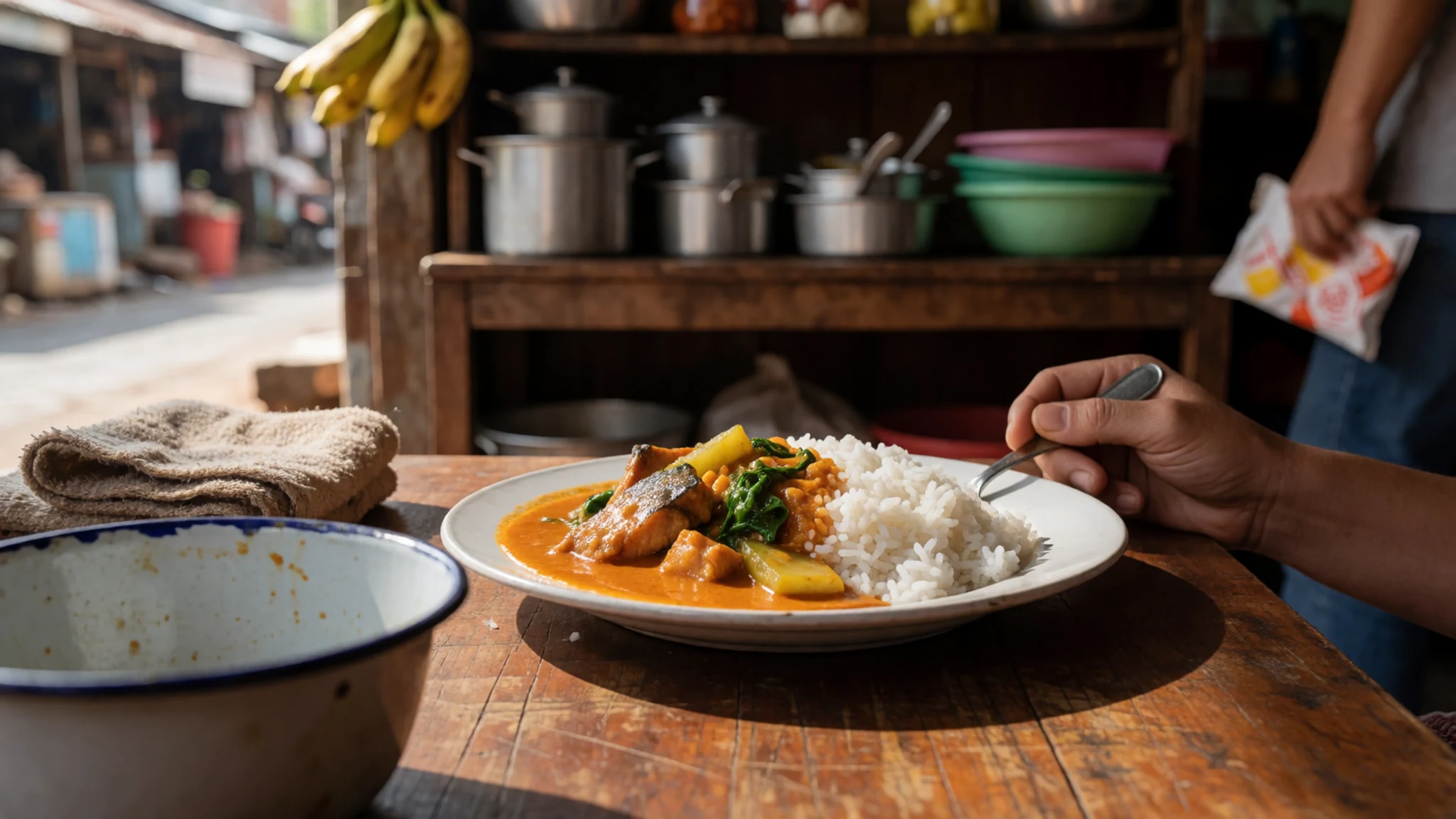
- Cassava-leaf stew — midday cookshops
Cassava leaf, pounded and simmered with palm oil, is a Robertsport staple beside rice. The leaf is bitter-green when fresh and softer after a long cook, usually with dried fish or a little meat. It shows up at midday cookshops more often than at breakfast.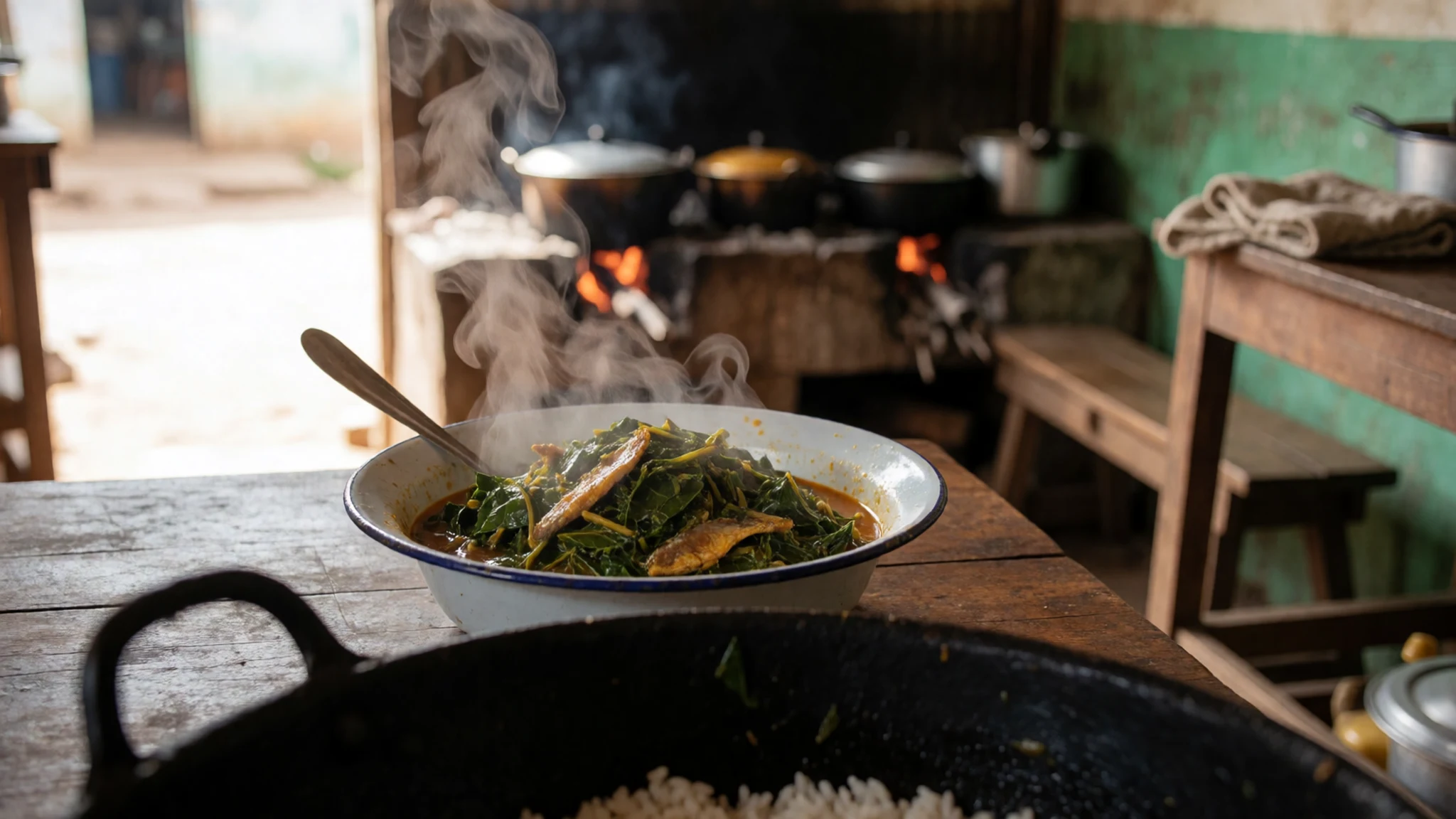
- Grilled fish — the beach and the Fanti Town landing
Grilled fish is the dish Robertsport can claim from its own shore. Whatever the canoe landed is scored and cooked over wood or charcoal, often with pepper and onion. Beach sellers and the landing at Fanti Town are the places to look, with bread or rice on the side. - Dumboy and soup — midday cookshops
Dumboy is cassava, boiled and pounded until it is a smooth, heavy swallow, eaten in Robertsport with a peppery soup. The hand, not a fork, is the usual tool: pinch, indent, scoop. Palm-nut, groundnut or light pepper soups all appear, depending on the cook. - Pepper soup — evening stalls and cookshops
Pepper soup in Robertsport is a hot, thin broth — fish or meat — taken as a meal or a restorative, not as a faint starter. Chilli, ginger and local pepper give it the bite. Evening stalls and cookshops ladle it when the day cools.
Plan it
Best time. The short dry season, January to March, makes the road to Robertsport and the beach easier to use; December and March are the hottest, August the wettest, and January and February the most comfortable. Storms are fewer than in the long wet season, when travel slows and the Atlantic is rougher for anyone not there to surf.
How long. three to four
Getting there. Robertsport is reached from Monrovia. Fly into Roberts International Airport, then continue west by bus, shared taxi or hired car through Grand Cape Mount. The last leg is a slow coastal road with rough patches and weak signage. There is no practical passenger rail or ferry. Confirm the road, and the return ride, before any flight day.
Budget. mid
Tips
- Carry cash for meals, rides and the market; do not rely on cards in Robertsport.
- Bring sealed drinking water from Monrovia and top it up only when the seal is intact.
- Ask which part of the beach is safe to swim before you enter the water.
- Reserve a lodge bed ahead for the drier months, when surf visitors fill the few rooms.
- Begin hill walks and boat arrangements early; heat and rain both shrink the afternoon.
- Settle the car fare in Monrovia before departure, and keep a copy of your passport apart from the original.
Etiquette
- Greet people in Robertsport before you ask a favour, a price or a photograph.
- Cover up away from the sand, and dress modestly if you step into a church.
- Do not launch a drone over the port, a church or a family compound.
- If someone declines a photograph, stop at once and do not bargain for a yes.
Nearby
Sources
- Wikidata (Robertsport) (CC0)
- Wikipedia: Robertsport (CC BY-SA 4.0)
- Wikivoyage: Robertsport (CC BY-SA 4.0)