Mount Wuteve
Mount Wuteve, Liberia
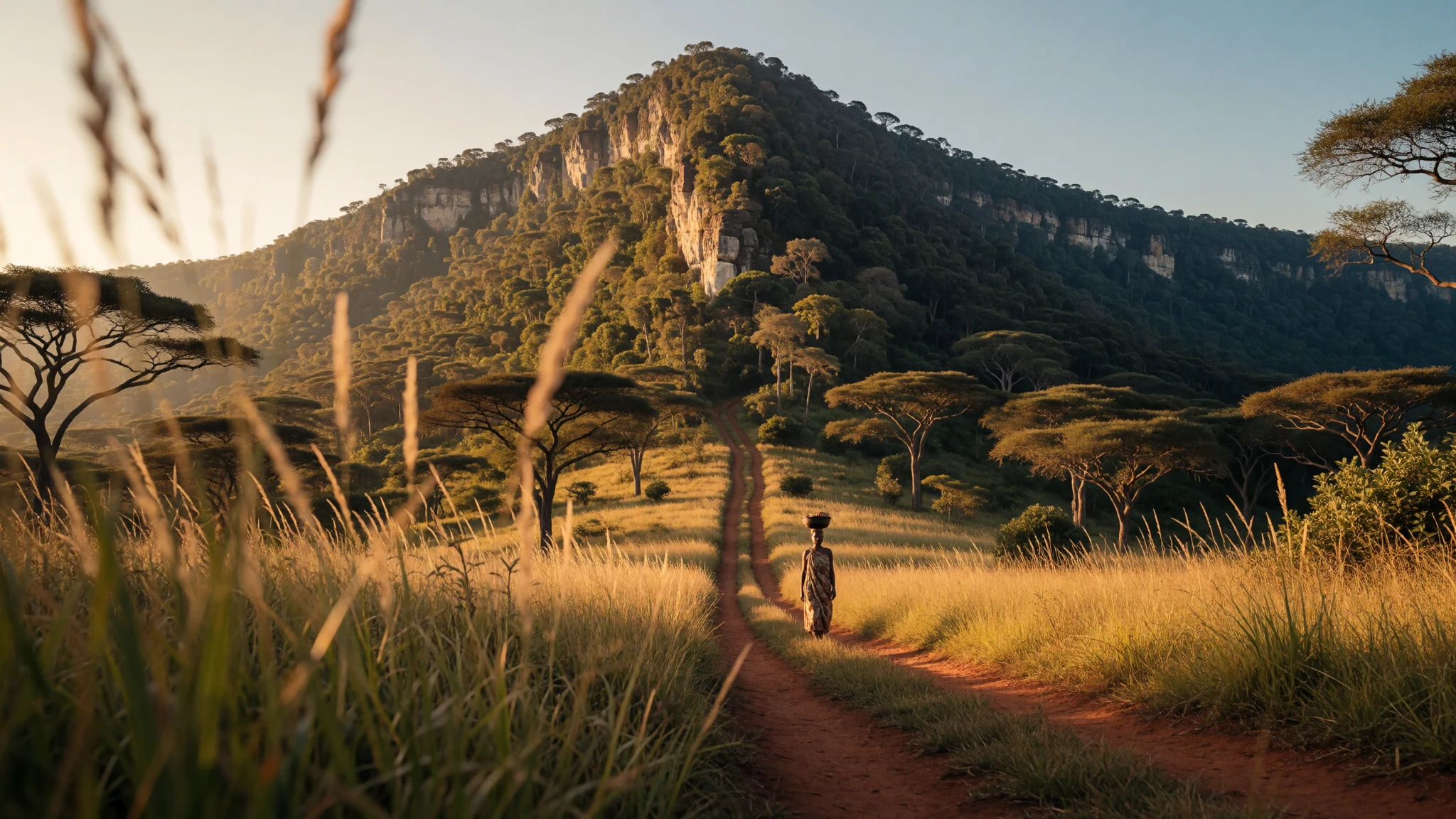
Mount Wuteve is Liberia's highest summit, a steep, forested ridge in the Guinea Highlands where chimpanzees and forest elephants are present.
The place
Mount Wuteve, also called Mount Wologizi, is the summit that marks Liberia's highest ground, at about 1,440 metres. It sits in the Guinea Highlands and is better thought of as a long ridge than a single peak, with companion summits and spurs reaching out on both sides. Radar surveys from space have revised its height upwards over the years, so older maps and books may quote a lower figure.
The slopes are steep and break into cliffs in places. Altitude changes the forest in stages. Low down the woodland is fairly open, with tall timber trees such as Lophira and Albizia. Higher up the trees shorten and the undergrowth thickens, and towards the top the canopy is a dense, stunted tangle of Parinari and Ouratea. Savanna woodland spreads across the foothills, so the mountain rises from a patchwork of grass and trees rather than from unbroken rainforest.
Wildlife is the main reason to care about the place. BirdLife International recognises the massif as an Important Bird Area, and forest elephants and western chimpanzees are present. Mount Wuteve is not a developed destination. The sources used for this reading describe no marked trails, visitor centre or lodging, so reaching the ridge means arranging local guidance and checking current conditions first. Heat and humidity are constant, and in the rains tracks turn to mud. It suits travellers curious about Liberia's interior rather than its beaches, and it is better treated as a small expedition than a day out.
Its story
Mount Wuteve stands in a country whose settled history goes back at least to the 12th century, according to anthropological research, and perhaps earlier. Little of that past is recorded on the mountain itself, so its story is best told through the Liberia around it.
From 1461 onwards, Portuguese, Dutch and British traders kept contacts and trading posts along the coast. The Portuguese named it the Costa da Pimenta, later translated as the Grain Coast, after the melegueta pepper grains traded there. The highlands inland, where Wuteve rises, lay inland of those landings.
In 1822 the American Colonization Society set Liberia up as a place of resettlement for people freed from slavery. The scheme drew wide support among white Americans, even while slavery in the United States kept expanding, and a growing number of Black Americans also chose to go. Echoes remain: the capital, Monrovia, takes its name from James Monroe, and the national flag looks very much like the American one.
The mountain's own recent chapter is scientific. Satellite radar mapping showed that Wuteve, also known as Wologizi, stands higher than the figure long quoted, and it is now treated as the country's high point. The massif is also designated an Important Bird Area. Read as a place, Wuteve is a reminder that Liberia has an interior of forest, ridge and savanna beyond the coast and its American ties.
What to see
- Wuteve summit and ridge — Guinea Highlands, north-west Liberia
The ridge itself is the main sight: a long, steep-sided crest with cliffs in places and a summit of about 1,440 metres. Views depend on cloud and haze, which are common in the wet months. There is no developed viewpoint described in the sources, so any approach needs a local guide and an honest look at current road and security conditions.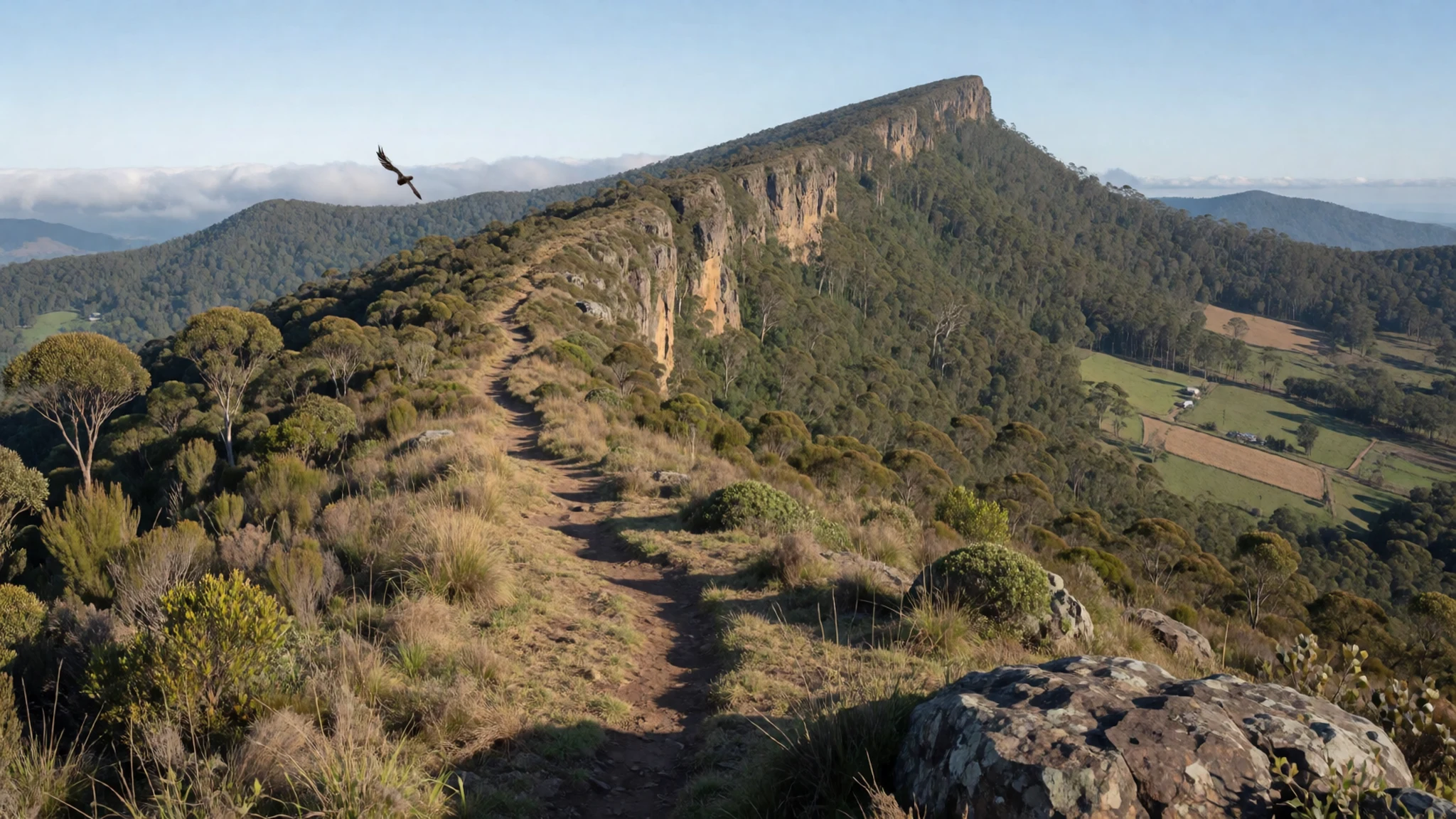
- The forest belt on the slopes — Slopes of the Wuteve massif
Walking up the slopes, if a route can be arranged, shows the forest changing with height. Open woodland with tall timber trees gives way to shorter, denser growth, and the highest ground carries stunted Parinari and Ouratea. Botanists will enjoy it; casual walkers should expect steep, slippery ground, heat and little in the way of signage.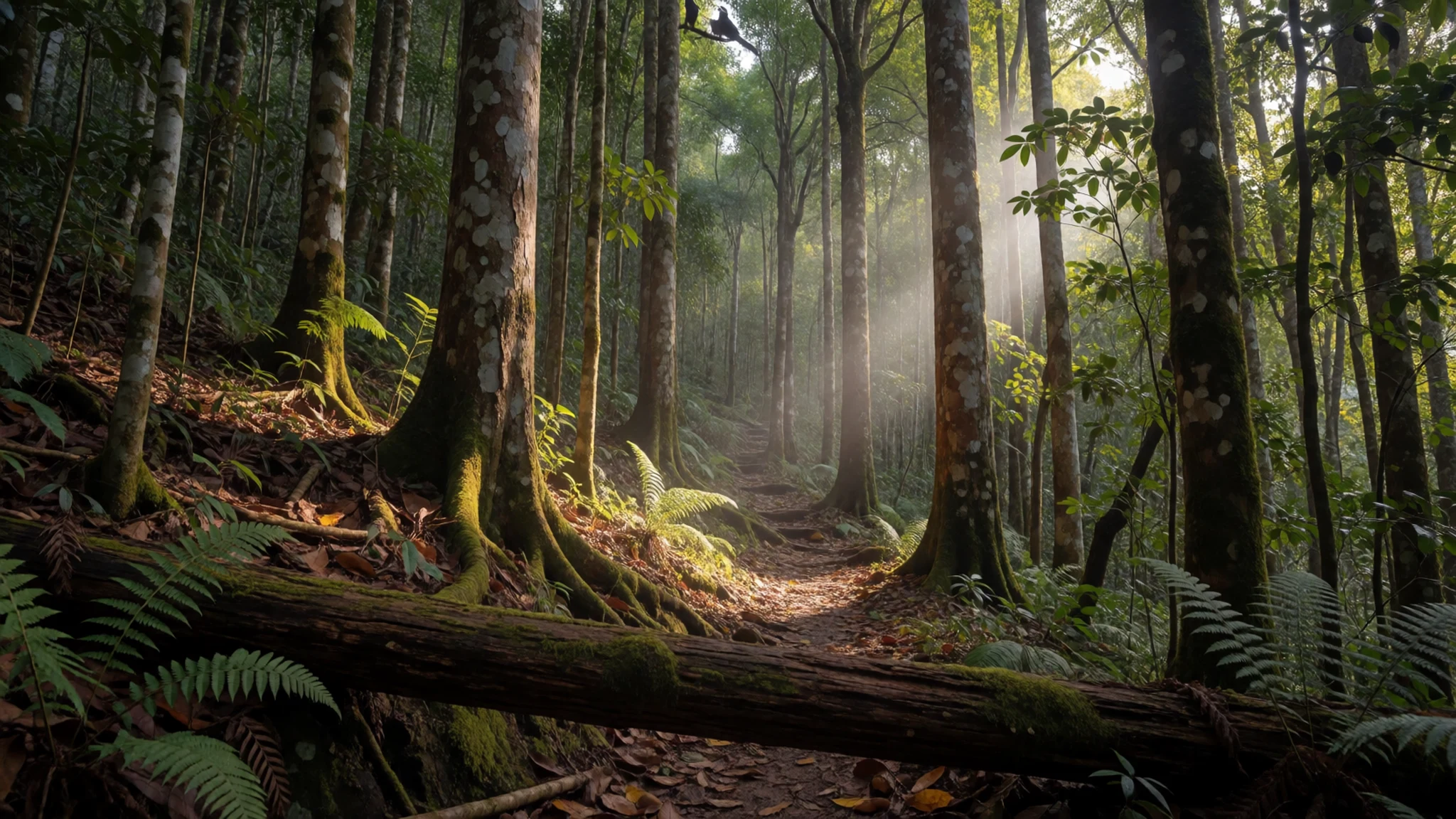
- Birds and wildlife of the massif — Wuteve massif
BirdLife International has designated the massif an Important Bird Area, which makes it a draw for serious birdwatchers. Forest elephants and western chimpanzees are also present, though sightings are never guaranteed. Go with a local guide who knows the ridge, and start at first light, when forest birds are most active and the air is cooler.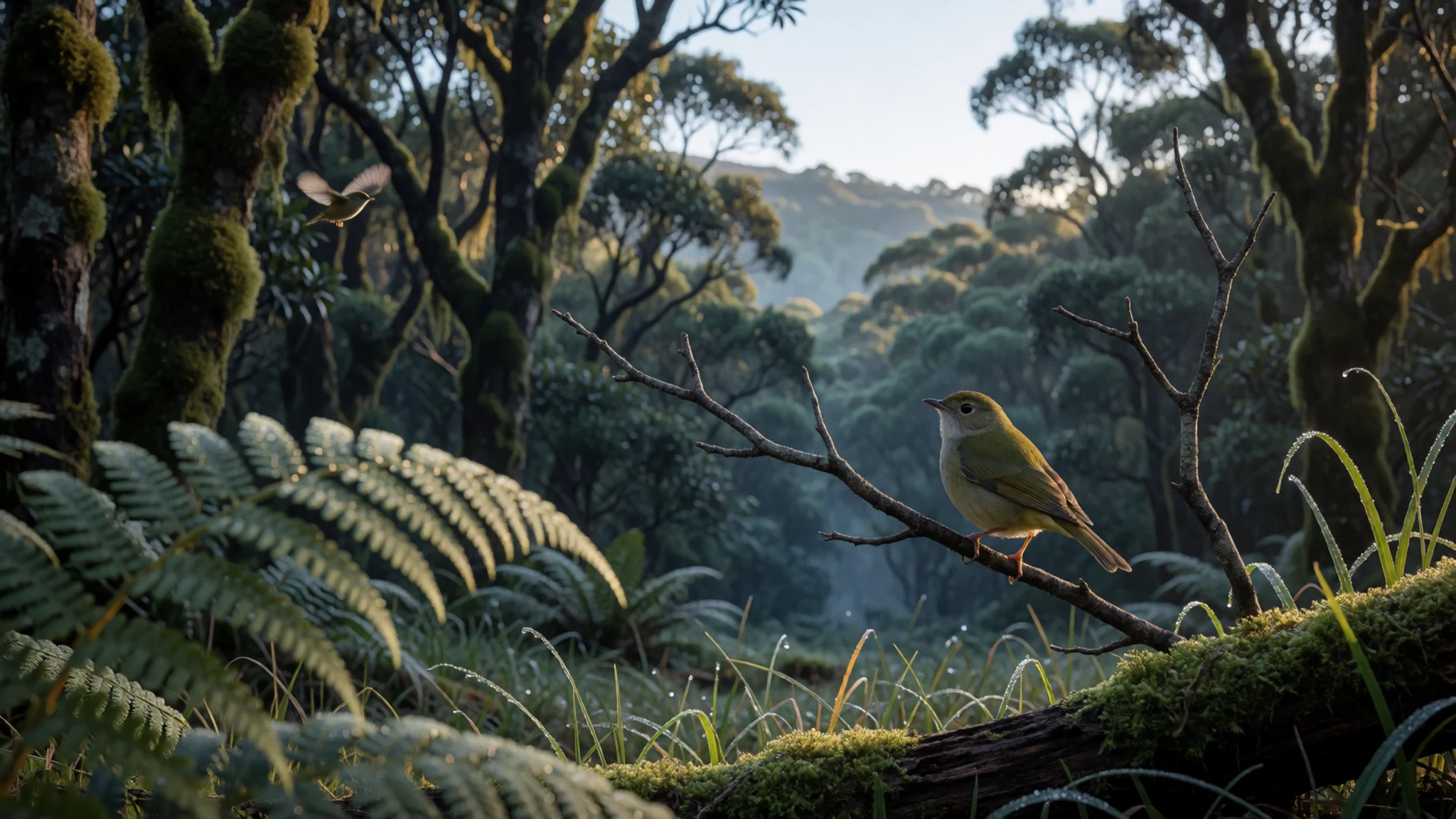
- Monrovia's beaches — Monrovia coast
Anyone heading for Mount Wuteve will probably pass through Monrovia, where the beaches make an easy spare day. ELWA beach, out towards the airport, has a marked swimming area and is busy with families at weekends. CE CE beach, across the bridge, is well set up with palm umbrellas, drinks and a protected swimming area. Thinkers beach has rougher waves, so keep to the near stretch.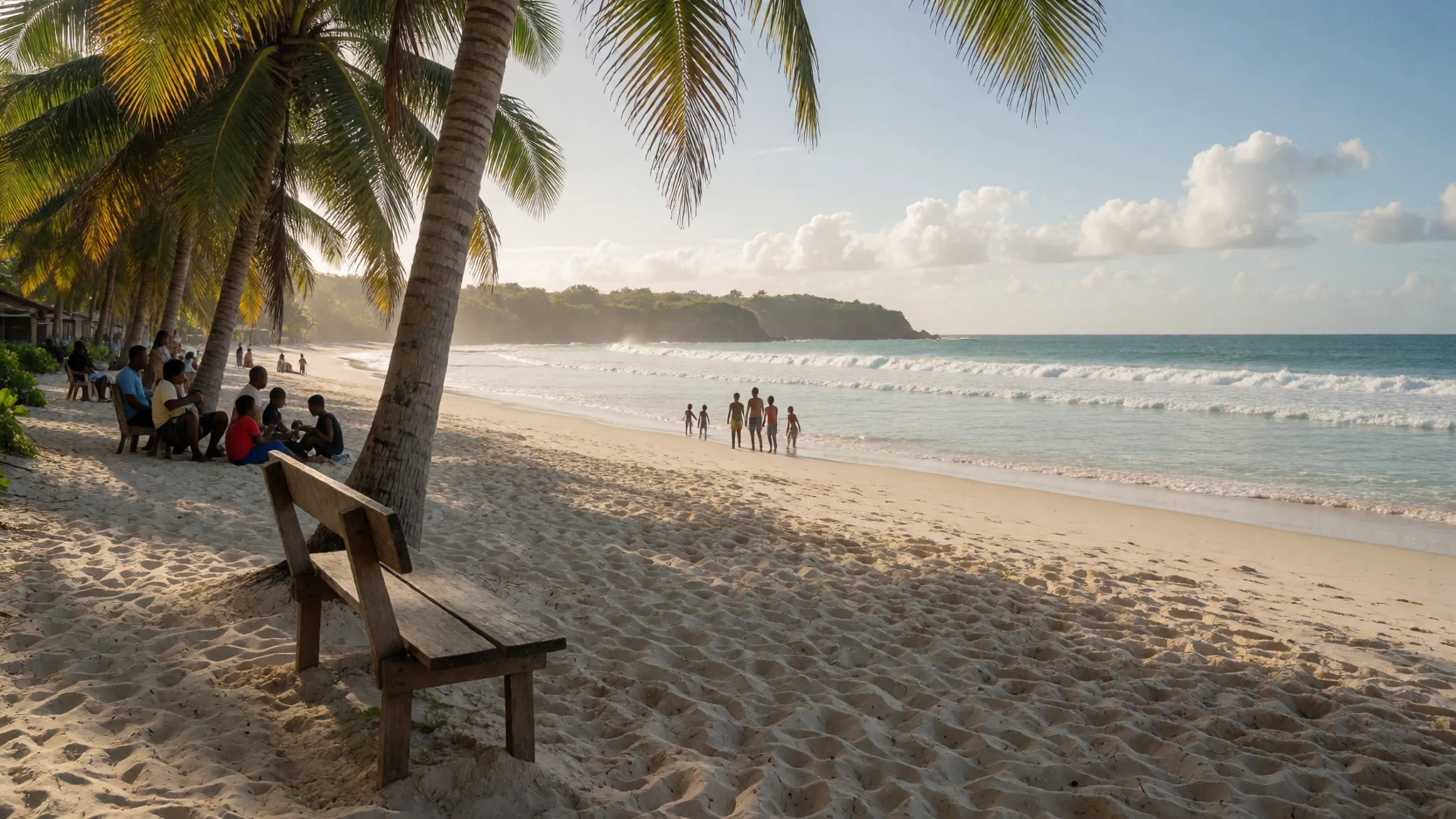
- Robertsport — Grand Cape Mount County, coast
Robertsport is a day-trip option from Monrovia, with good beaches and a taste of Liberia's past. Basic overnight options exist, including a tent camp started by South Africans, though availability changes, so ask locally. The tides here are strong, so swim only where local people say it is safe.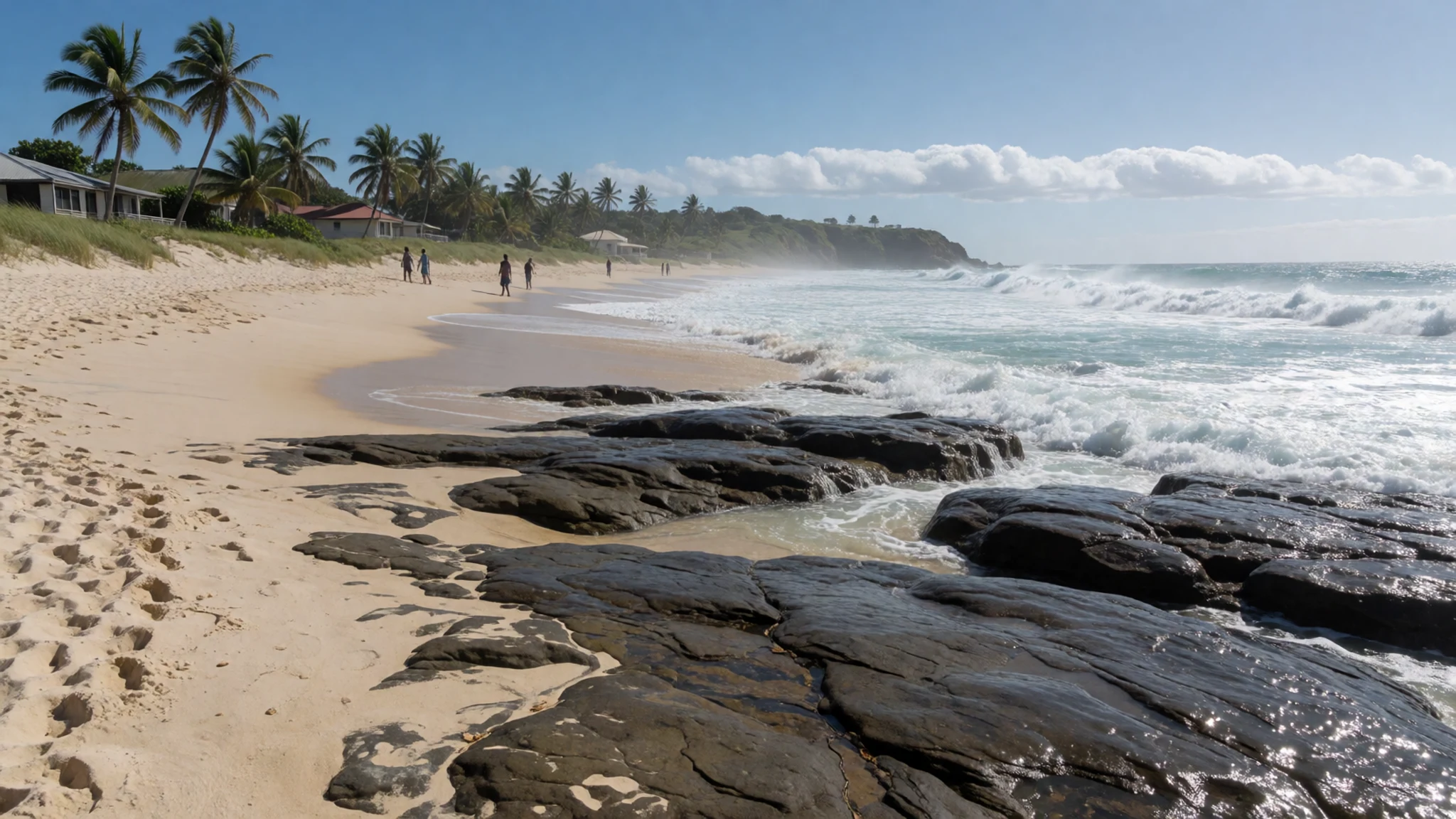
- Blo Degbo face rock — Paynesville, near Monrovia
Blo Degbo is a rock that resembles a human face, in Paynesville near Monrovia. It is not a developed tourist site, so ask locally whether the area is safe to visit before going, and consider taking a local companion. Treat it as a short curiosity rather than a destination in its own right.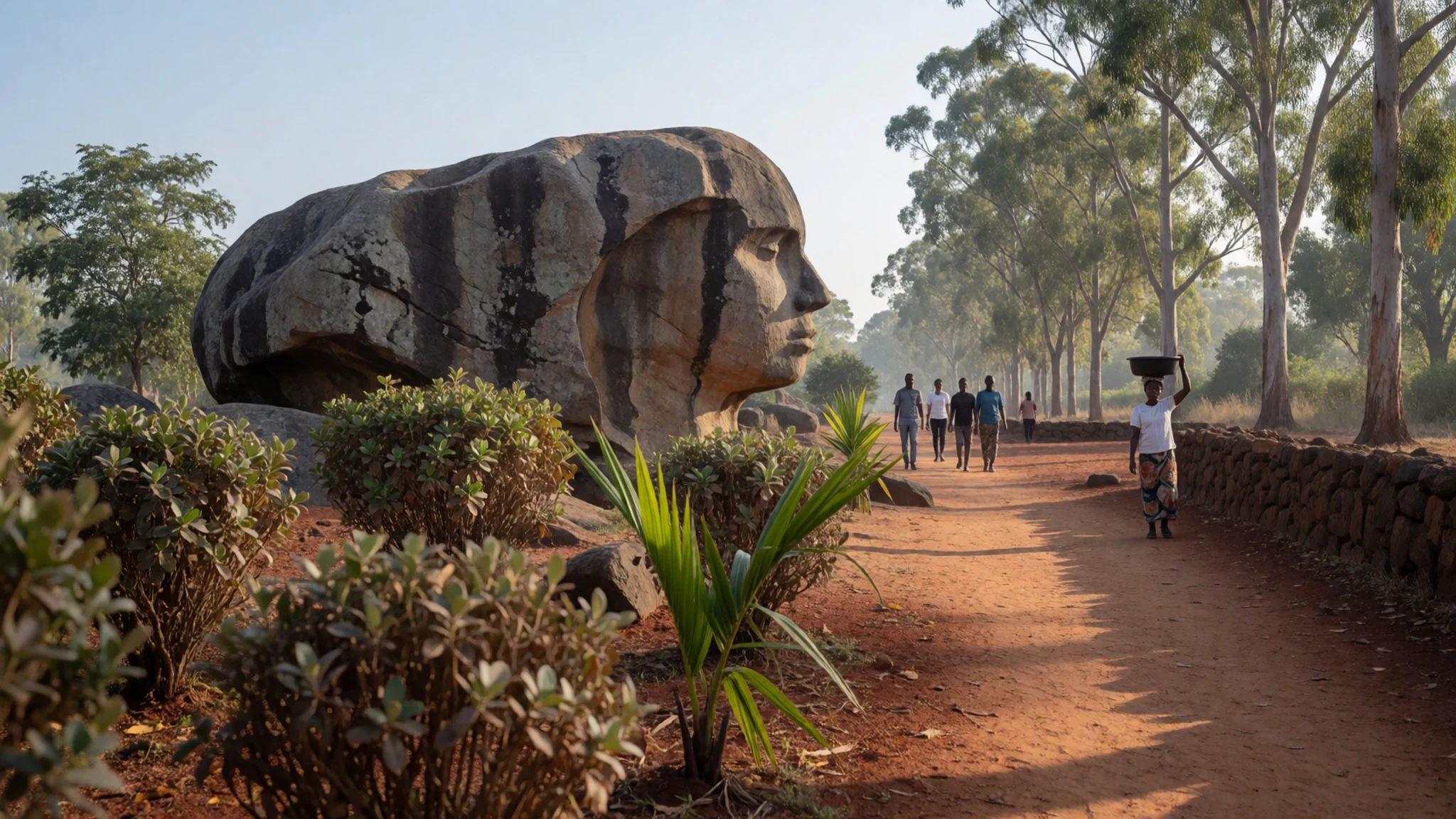
Culture
Mount Wuteve lies in a Liberia where greetings carry real weight. Locals expect to be acknowledged wherever a visitor goes, and passing someone without a word is read as rude. In villages near the mountain, a few minutes of greeting and introductions, ideally through a local guide, will smooth the way.
Conversation tends to be indirect. Liberians are sensitive to being addressed bluntly or summoned with a beckoning gesture, and personal or awkward subjects are best raised gently and with diplomacy. A flat 'no' can also sound harsh, so people often soften refusals, and visitors can do the same with phrases such as 'later' or 'tomorrow'.
News moves quickly by word of mouth, and people who know a visitor will often mention local security concerns, which is worth heeding. Judging everyone by the country's social and political difficulties would be a mistake; most people are welcoming.
Poverty is widespread, and visitors may be asked for money or gifts. Decide in advance how to respond, and be polite and consistent; paying a local guide fairly and hiring locally is a more direct contribution than handing out cash.
Greet people in each village you pass before asking for anything, and ask permission before photographing anyone.
What to wear
Mount Wuteve sits in inland highland country, where traditional dress varies between communities, so what follows is general rather than specific to the mountain. Two textiles are widely associated with Liberia. Country cloth is woven in narrow cotton strips on small looms, then sewn into robes, wraps and ceremonial garments. The lappa is a length of printed cotton, wrapped as a skirt or made up into a matching top and skirt, often with a head tie. Both appear at church, weddings, funerals and festivals.
Everyday dress is plainer. Jeans, T-shirts, football shirts and second-hand clothing are common in Monrovia and other towns, and people dress up smartly for church on Sundays. In farming villages, practical work clothes and sandals or rubber boots are normal, and many women still use a lappa as a handy wrap.
Visitors should let climate and terrain decide. Light, quick-drying long trousers and long sleeves protect against sun, insects and scratchy undergrowth, and a waterproof layer is needed in the rains. Footwear matters most: sturdy boots with good grip for steep, muddy slopes, and sandals for the coast. In villages and near churches or mosques, covered shoulders and knees are respectful. Swimwear belongs on the beach only.
What to eat
- Palm butter — Cookshops and market eateries in Monrovia and in towns
A thick, savoury stew built on palm fruit, usually spooned over rice with meat or fish. It is a staple Liberian meal, filling enough to be the main plate of the day, and portions tend to be generous.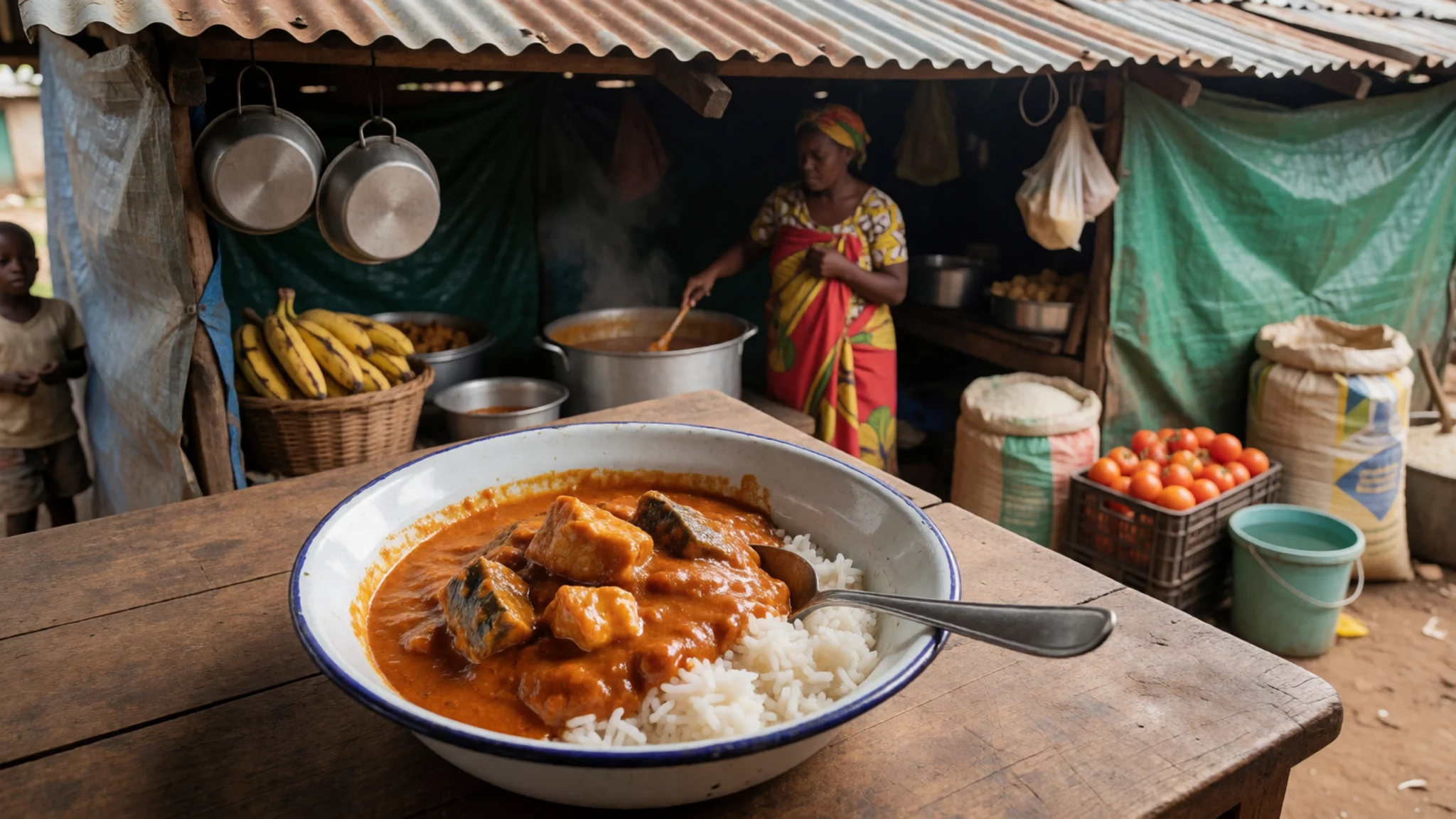
- Cassava leaf — Home-style eateries and market cookshops
Cassava leaves pounded and simmered into a dark green stew, typically with palm oil and meat or fish, and served over rice. The flavour is earthy and well seasoned, a good introduction to Liberian home cooking.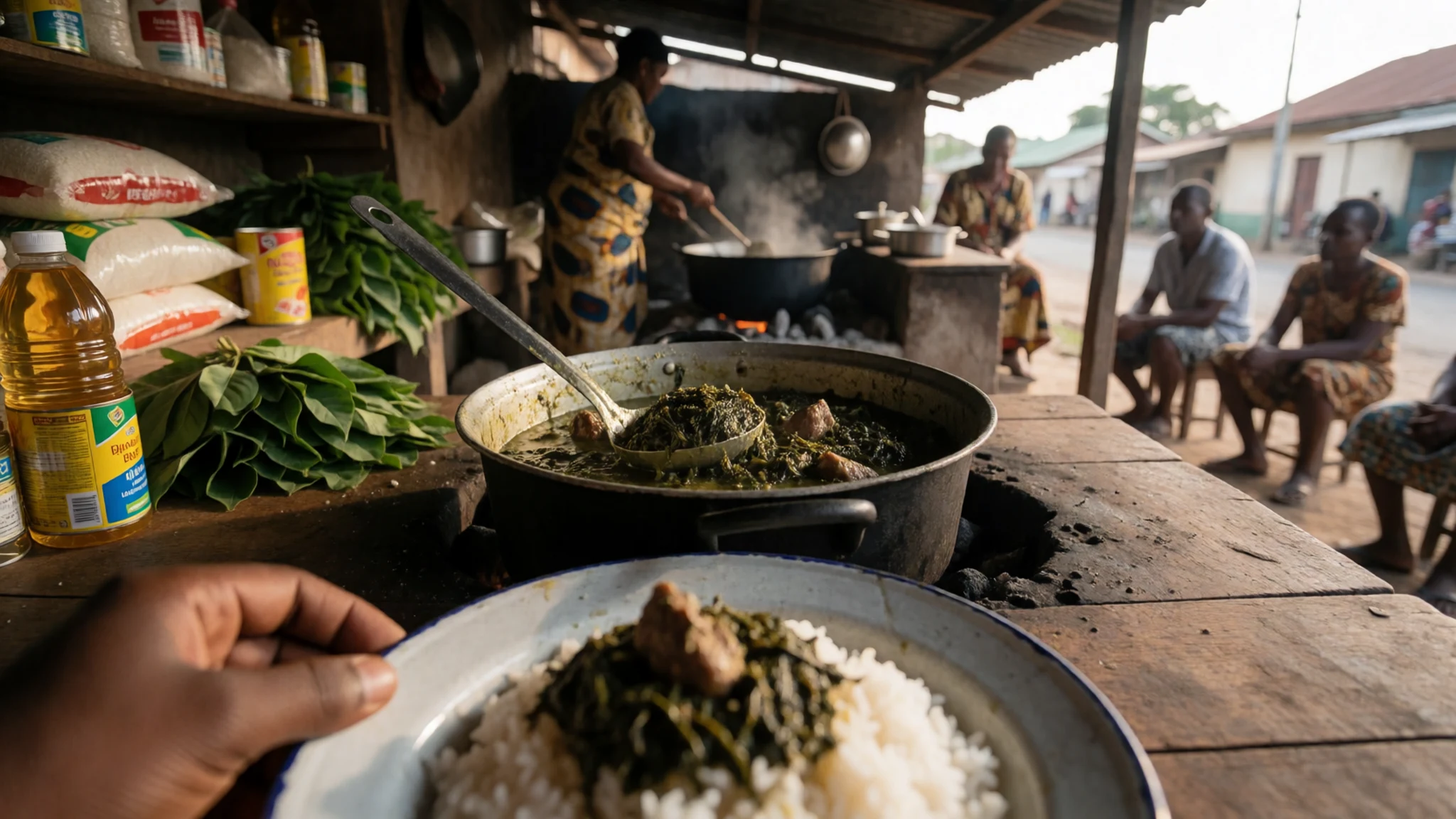
- Fufu and soup — Local cookshops and family-run eateries
Fufu is fermented cassava dough, shaped into a smooth ball and eaten by hand with goat soup or a fiery pepper soup. The soup carries the heat, so ask for it mild if chilli is a worry. - Jollof rice — Everyday eateries and at celebrations
Jollof rice is rice cooked in a spiced tomato base until every grain is coloured and flavoured, then served with chicken, fish or greens. It turns up at everyday eateries and at celebrations alike. - Street fruit and snacks — Street vendors throughout Monrovia
Street vendors sell bananas, mangoes and other fruit, with peanuts, roasted corn and crisp fried plantain chips for something salty. They are an easy way to eat on the move and need no cutlery. - Fresh morning bread — Bakery stalls and street sellers in Monrovia, early in the day
Fresh loaves sold early in the morning, with sweet, dense kinds and crumblier cornbread-style ones. Expect a bit of oil on the fingers. Buy them warm, and have one with tea or coffee for a simple Liberian breakfast.
Plan it
Best time. Roughly November to March, the drier months in this part of West Africa, when tracks and slopes are easier going; the rainy season brings mud, cloud and slippery climbs. Check current weather and road conditions locally before committing.
How long. 3–5
Getting there. Fly to Roberts International Airport near Monrovia. The last leg is an overland journey inland to the north on rural roads; the sources describe no scheduled public transport to the ridge, so arrange a vehicle and local guide in advance. UK citizens apply for a visa at the Liberian embassy in London; other nationalities should check the official Liberian e-visa site. A yellow fever vaccination certificate is required.
Budget. mid
Tips
- Hire a local guide and arrange the route before leaving Monrovia; the sources describe no marked trails or visitor services.
- Sort out the visa, a letter of invitation and the yellow fever certificate well ahead of travel.
- Carry cash, including US dollars; accommodation bills are often expected in cash and cards cannot be relied on.
- Drink bottled water only; bagged street water is not guaranteed to be safe.
- Avoid walking around at night, keep car doors locked and windows up in busy parts of Monrovia, and choose accommodation with guards.
Etiquette
- Greet people warmly wherever you go; ignoring someone is taken as rude.
- Soften refusals with 'later' or 'tomorrow' rather than a flat 'no'.
- Ask permission before photographing people.
Nearby
Sources
- Wikidata Q1950836 (CC0)
- Wikipedia: Mount Wuteve (rev 1369587162) (CC BY-SA 4.0)
- Wikivoyage: Liberia (rev 5430861) (CC BY-SA 4.0)
- Relief location map of Liberia, Uwe Dedering (CC BY 3.0)

Wildlife
- Forest elephant (animal)
The African forest elephant is the smallest of the three elephant species, a gentle giant of damp tropical forest with straight tusks that point towards the ground. On Mount Wuteve it lives in the forested massif alongside the chimpanzees. Watch with a guide, stay well back, keep very quiet and let it go about its day. Never feed it, and always leave it a clear path to walk away.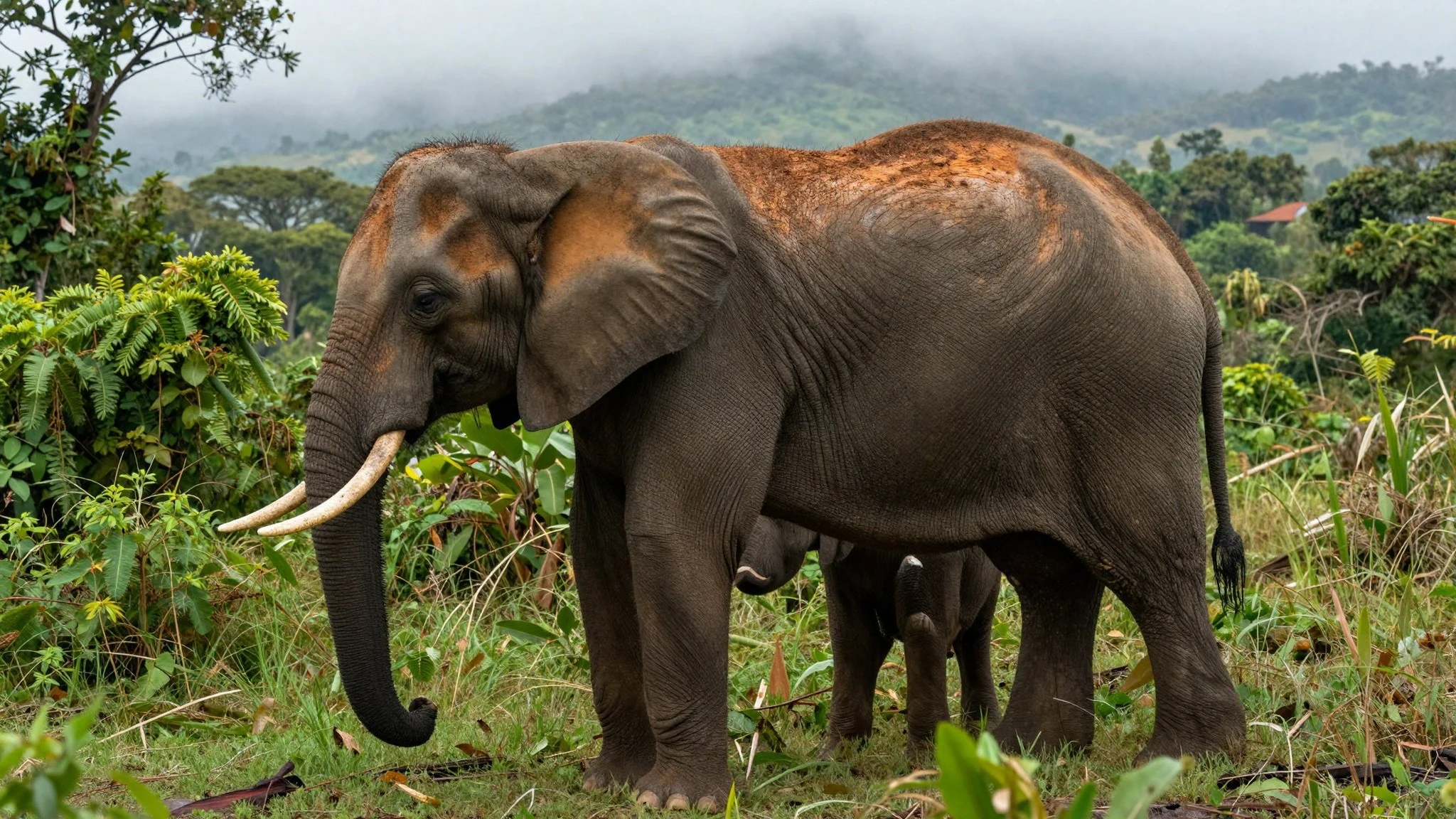
- Western chimpanzee (animal)
The western chimpanzee is a rare kind of chimpanzee from West Africa, and it is in grave danger of vanishing for ever. On Mount Wuteve it lives in the steep forest along the high ridge, so expect a patient walk. Go with a local guide, keep a respectful distance, speak softly and move calmly. Never offer food, however curious it seems; wild animals are best left to find their own meals.