Cape Palmas
Cape Palmas, Liberia
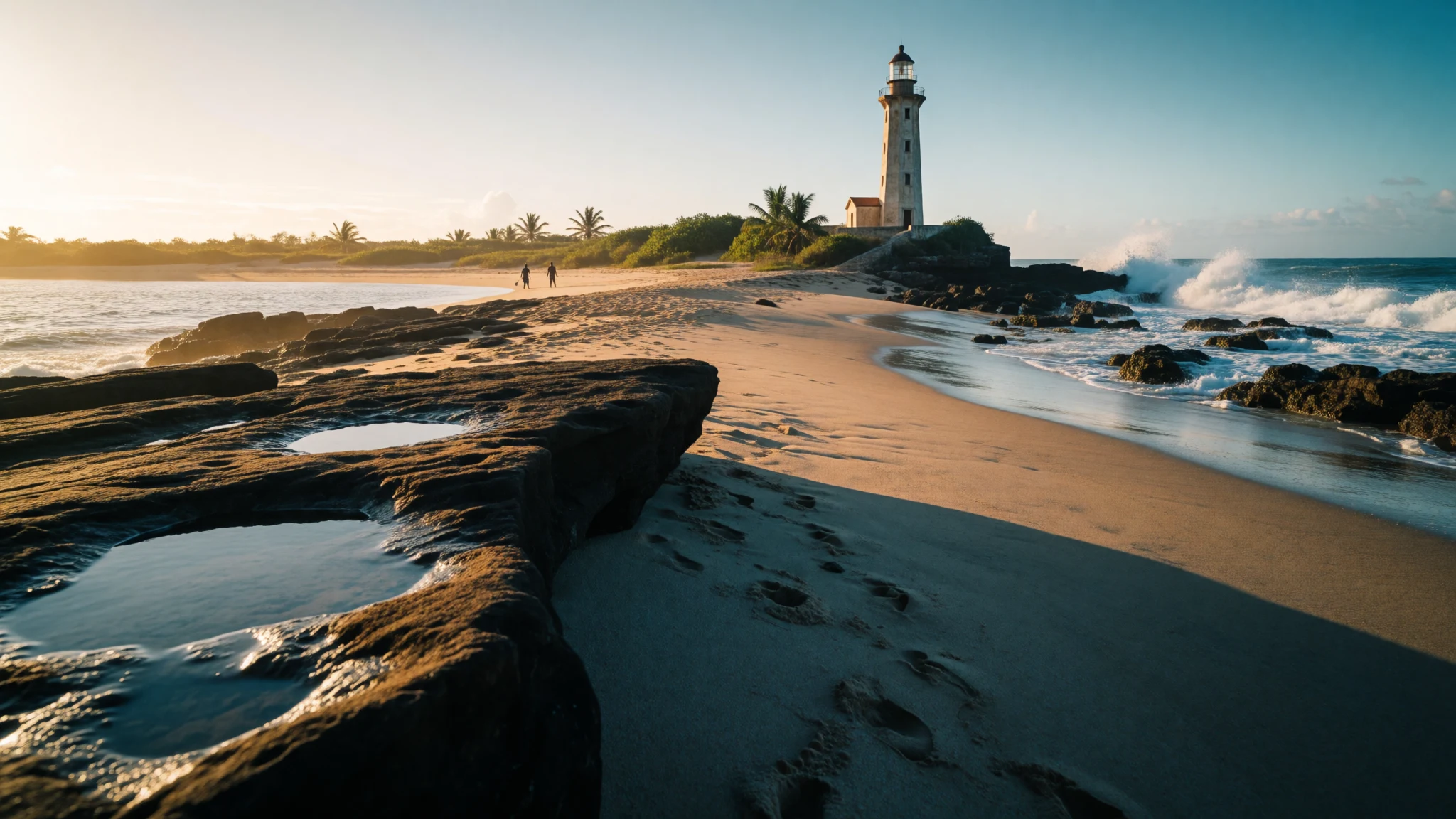
Cape Palmas is a quiet rocky headland at Liberia's southeastern corner, where settler history, river mouths and empty Atlantic shore meet.
The place
Cape Palmas is a headland at the far southeastern tip of Liberia, near the point where the northern half of Africa's western coastline turns towards the Gulf of Guinea. The International Hydrographic Organization treats the cape as the western limit of that gulf. The headland is a small rocky peninsula tied to the mainland by a narrow sandy isthmus, so the sea is close on either side. To the west, the Hoffman River reaches the Atlantic through an estuary. A short way east along the coast, the Cavalla River meets the sea and forms the border with Côte d'Ivoire. Russwurm Island lies just off the estuary, an oblong scrap of land joined to the peninsula by a breakwater and named after John Brown Russwurm, governor of the former Maryland in Africa. A lighthouse warns ships off the shoals that scatter these waters, which is why sailors have long approached the cape with care. From the sea, a clear landmark is the white hall of the Masonic lodge in the town of Harper, topped with a large golden orb. Harper is the town around the cape and the place where a visitor will stay or pass through. This is not a developed resort coast. It is a working Liberian town with fishing boats, stretches of long empty beach and the limited services of a region that sees few outside visitors. Heat and humidity are constant, and the rains are heavy for much of the year.
Its story
Cape Palmas owes its modern history to an American resettlement scheme. The Maryland State Colonization Society began as a branch of the American Colonization Society, which had already founded Liberia. Maryland's legislature voted money to carry free Black people and formerly enslaved people from the United States to Africa, and the society chose to build a separate settlement rather than join the existing one. It named the new colony Maryland in Africa and placed Cape Palmas at its centre. The colony was later raised to statehood, then declared itself independent, and finally signed an annexation treaty that made it part of the Republic of Liberia. For a short time, then, this small headland was the heart of a state of its own. The settlers arrived on a coast where people already lived, and that tension runs under the whole story even where older accounts pass over it quickly. Church and school life shaped the settlement. Elizabeth Mars Johnson Thomson, an American-born Episcopal missionary teacher, taught at Cape Palmas for most of her working life and died here. Older books and prints, including a lithograph of the cape from the sea and a photograph of a church in Harper, show a settlement of mission buildings and a busy anchorage. Those images are in the public domain and worth looking up before a trip, though visitors should not expect the scenes to match the town today.
What to see
- The rocky peninsula and sandy isthmus — Harper, Maryland County
The cape proper is a small rocky peninsula joined to the mainland by a narrow sandy neck. Walking out along it shows why the place suited a settlement and a navigation mark: water on both sides, surf on the rocks, and open horizon. Go at low sun, when the heat eases and fishing boats come in.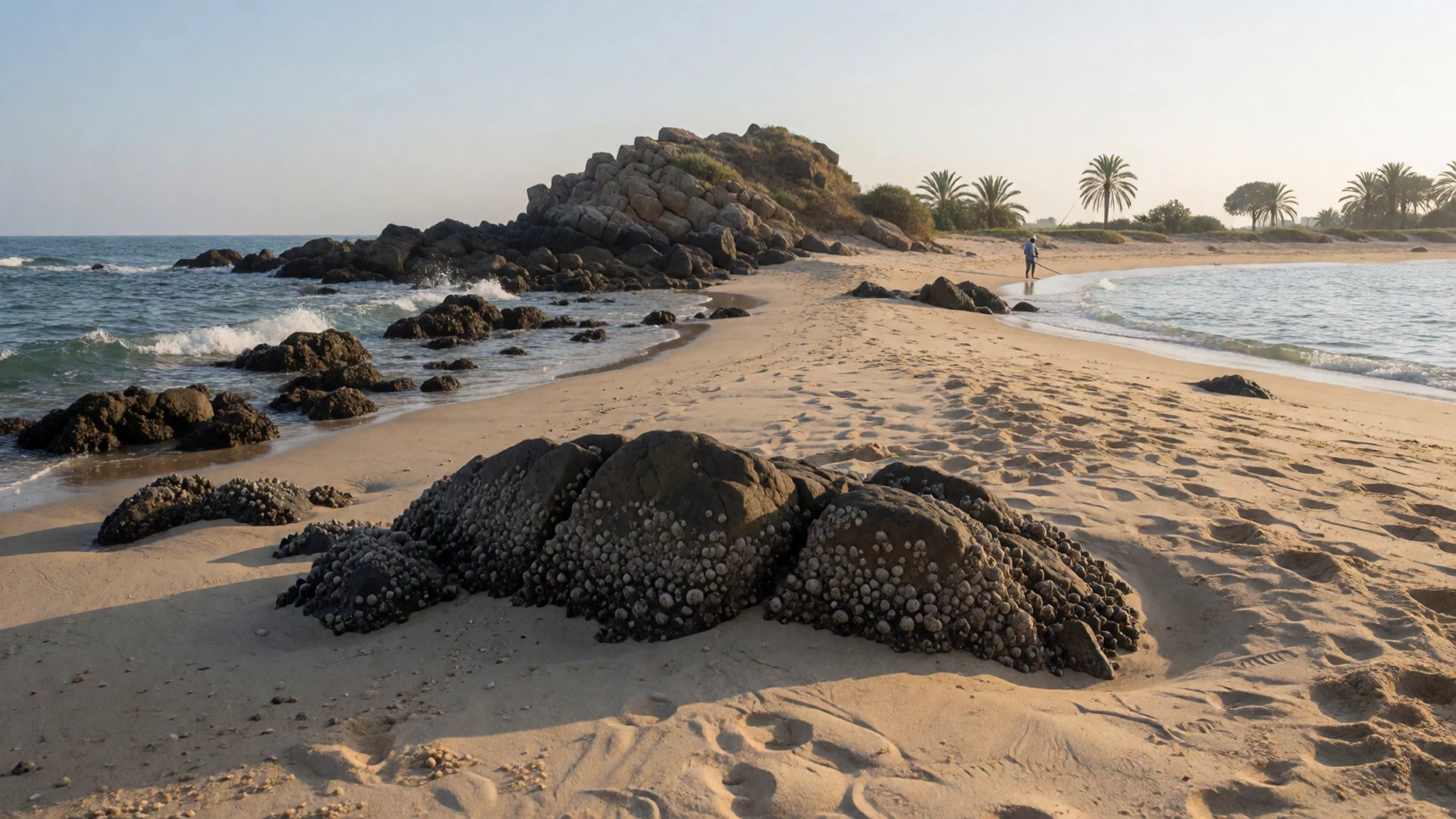
- Russwurm Island and the breakwater — Hoffman River estuary, Harper
Russwurm Island is a low oblong island just off the Hoffman estuary, linked to the peninsula by a breakwater. It carries the name of the colony's governor John Brown Russwurm. The breakwater gives a view back over the shoreline. Ask locally about access and conditions before heading out, as footing can be uneven.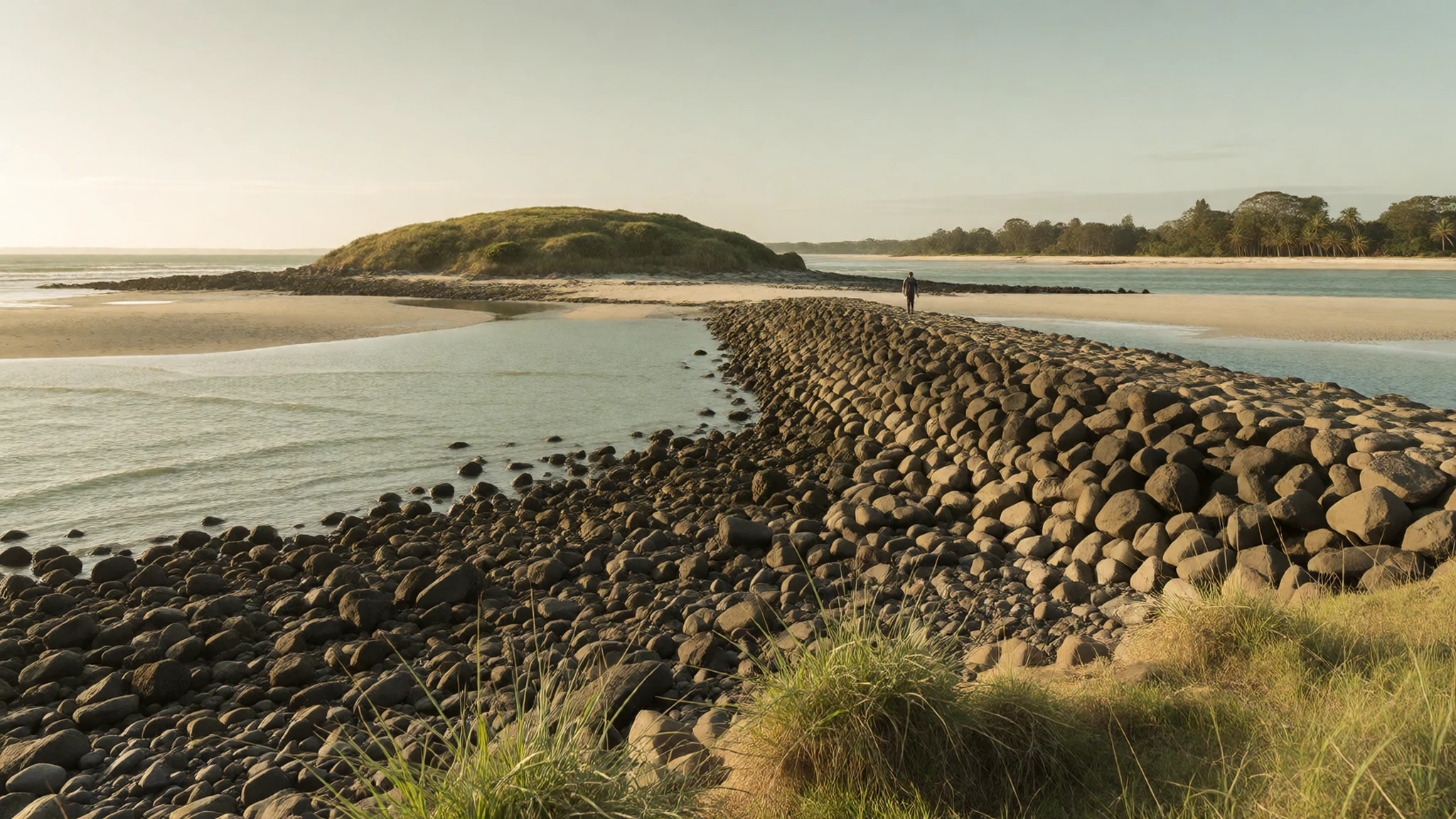
- The cape lighthouse — Cape Palmas headland
The lighthouse stands on the headland to warn ships about the shoals that lie across this stretch of sea. It is worth seeing as a working piece of coastal history and as a way to read the geography: a point where hazardous water meets a long, busy sea route. Check locally whether it can be approached.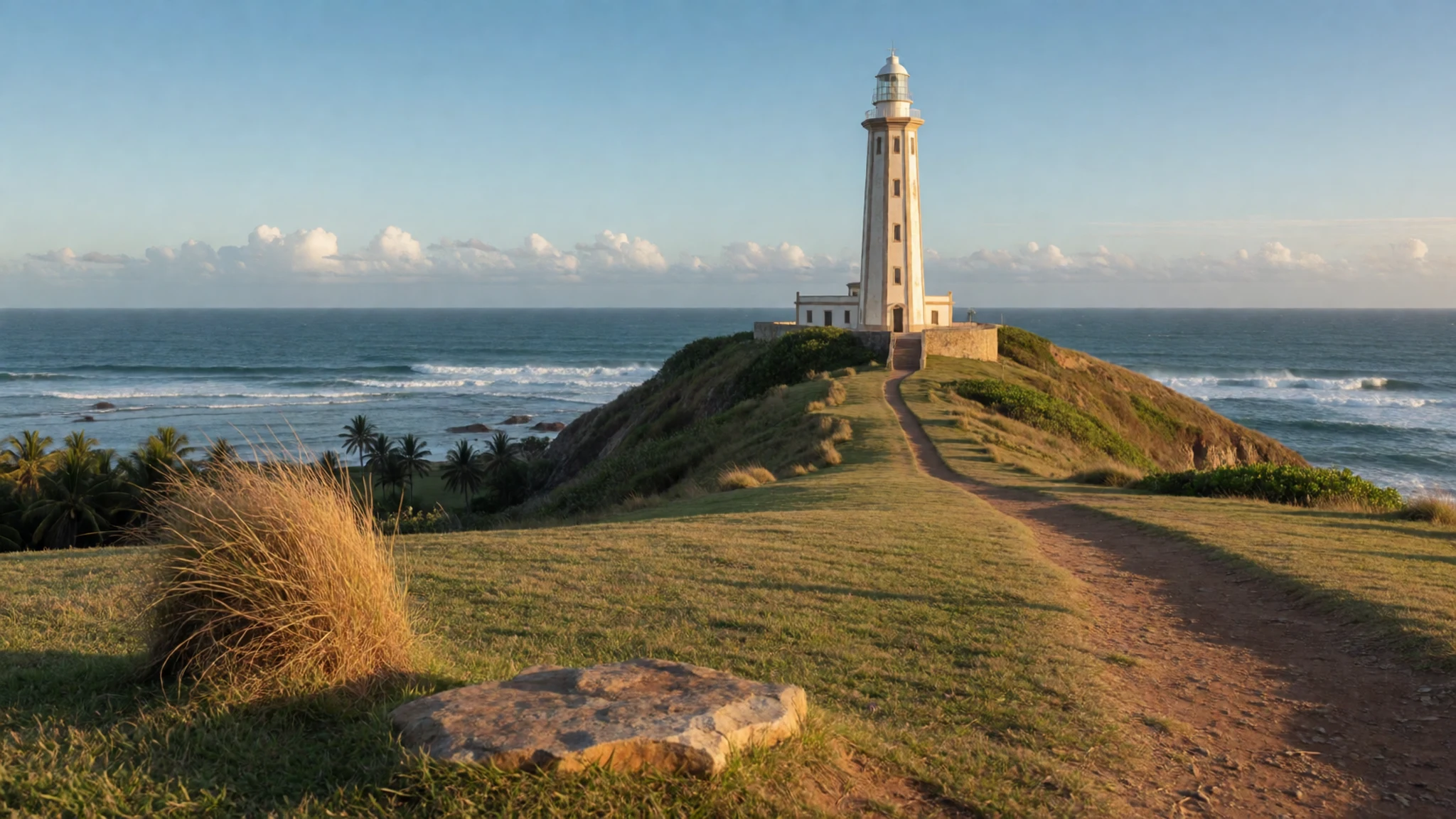
- The Masonic hall with the golden orb — Harper town centre
A white building crowned with a big golden orb is the clearest landmark in Harper when seen from the water. It is the Masonic lodge hall and a useful orientation point on foot too. Treat it as a building to admire from the street rather than a visitor attraction, and ask before photographing people nearby.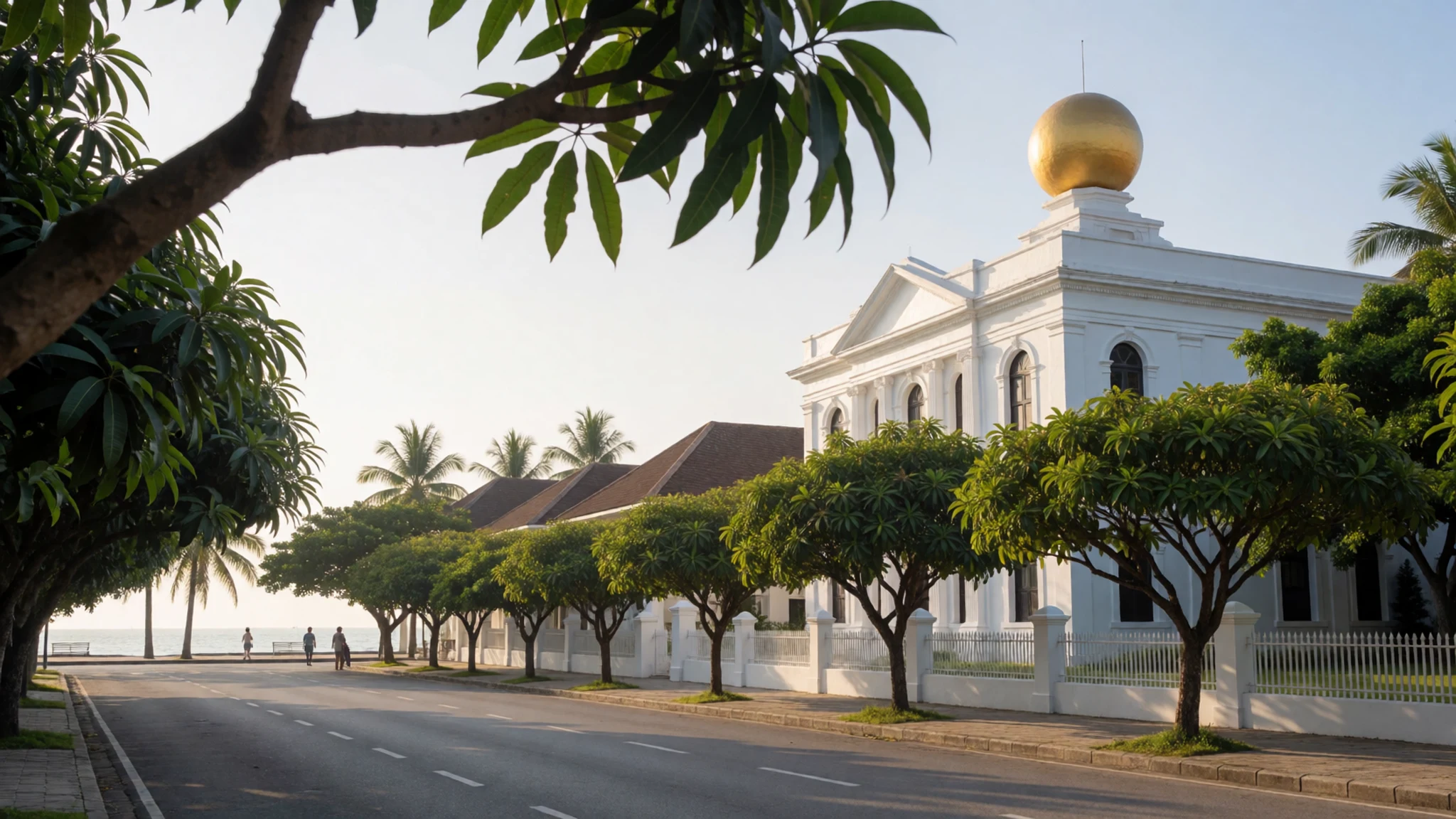
- The Hoffman River estuary — West of the peninsula, Harper
West of the peninsula, the Hoffman River widens into an estuary where fresh water mixes with the Atlantic. Fishing canoes work the edges, and the mouth is a good place to watch the tide and the birds. Beware of strong currents if tempted to swim, and take local advice on safe spots.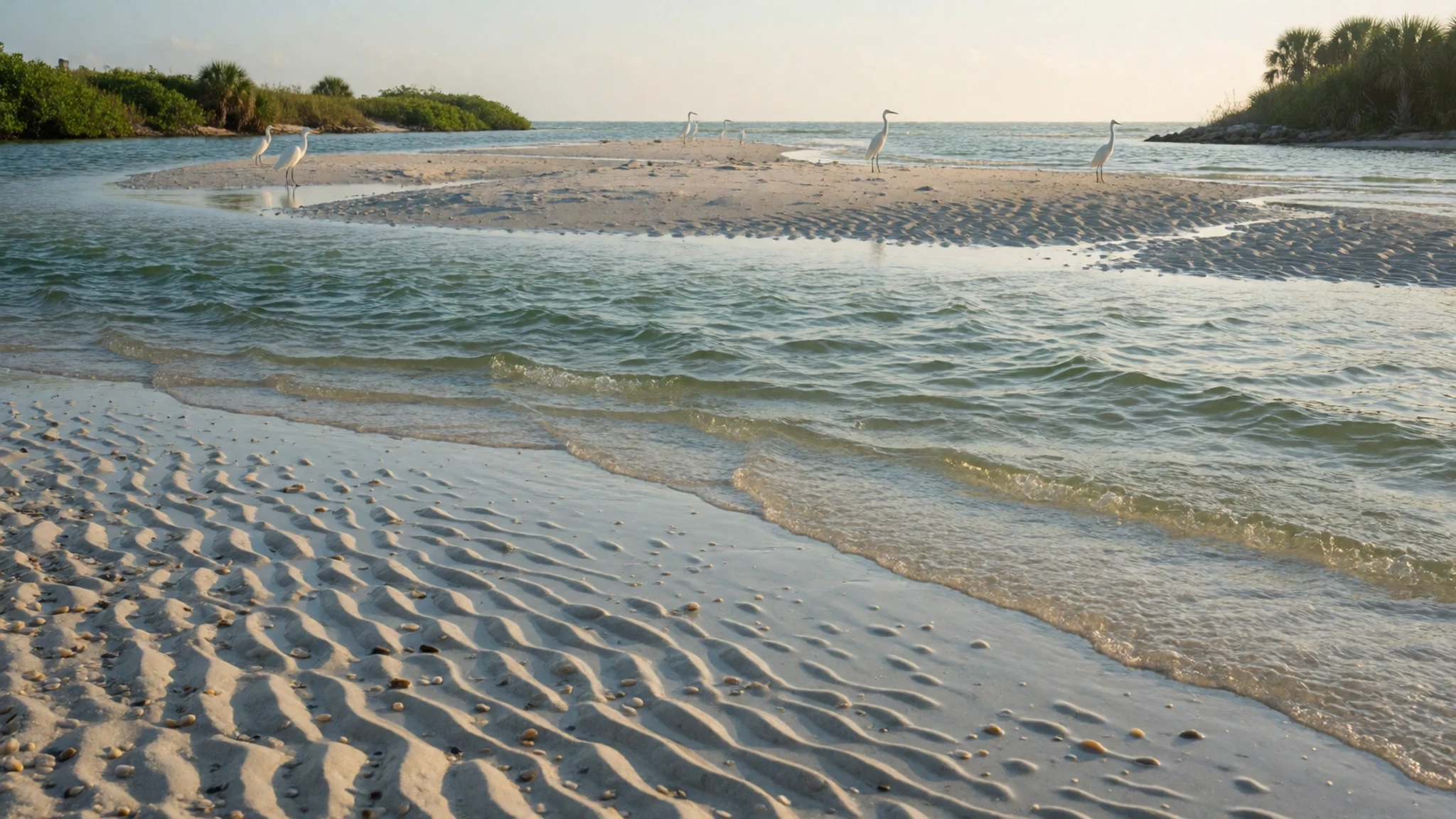
Culture
Cape Palmas sits in a part of Liberia where greetings carry real weight. People expect to be acknowledged wherever they go, and walking past without a word is likely to be taken as rude. Conversation is gentle and indirect: Liberians dislike being summoned bluntly, and a sensitive or personal subject is best approached with diplomacy and respect. Saying no outright to a request is also thought discourteous, so a polite refusal may be answered with repeated asking, which is usually good-natured persistence rather than hostility. News travels fast in a small town like Harper, and a friendly, approachable visitor will often be quietly warned about anything unsafe. The cape's history gives it a particular character. Church life is strong, a legacy of the Episcopal mission and settler community, and Sunday is a day when many people dress carefully and gather for services. Liberia has had social and political troubles, but it would be a mistake to assume the worst of people because of them. Openness is usually returned with warmth, sociable talk and an offer of help. Visitors who take a little time over introductions, listen more than they ask, and avoid hurrying people will find the place easy to settle into. Greet everyone you meet with a few friendly words before asking for anything, and ask before you photograph a person.
What to wear
Cape Palmas dress draws on both Liberian tradition and the settler past. Traditional clothing in Liberia includes country cloth, a strip-woven cotton made in narrow bands and sewn together, worn for ceremonies and important occasions. The lappa, a length of printed cotton wrapped as a skirt or tailored into matching tops and dresses, is an everyday and festive garment for women, often paired with a head tie. Men may wear a tailored shirt and trousers in the same bold prints for celebrations. The settler community brought formal Western clothes, and that influence is still visible in how people dress for church: suits, ties, dresses and hats on Sunday, pressed and clean despite the heat. Day to day, people in Harper wear light cotton shirts, T-shirts, skirts, trousers and sandals, and a good deal of secondhand clothing is sold in markets. Visitors should dress for heat, humidity and rain: loose cotton or quick-dry fabrics, a light waterproof, and a hat for the sun. Cover shoulders and knees around town and at church, keeping swimwear for the beach. Sandals suit the sand, but sturdy closed shoes help on rocks, breakwaters and muddy tracks. Dark, plain clothes hide red earth stains better than white.
What to eat
- Palm butter — Home-style eateries and cookshops in Harper
A thick, rich stew made from palm fruit, usually served over rice with fish, chicken or meat. It is one of the dishes Liberians name first when asked about home cooking. Expect a deep red-orange colour and a hearty, savoury flavour.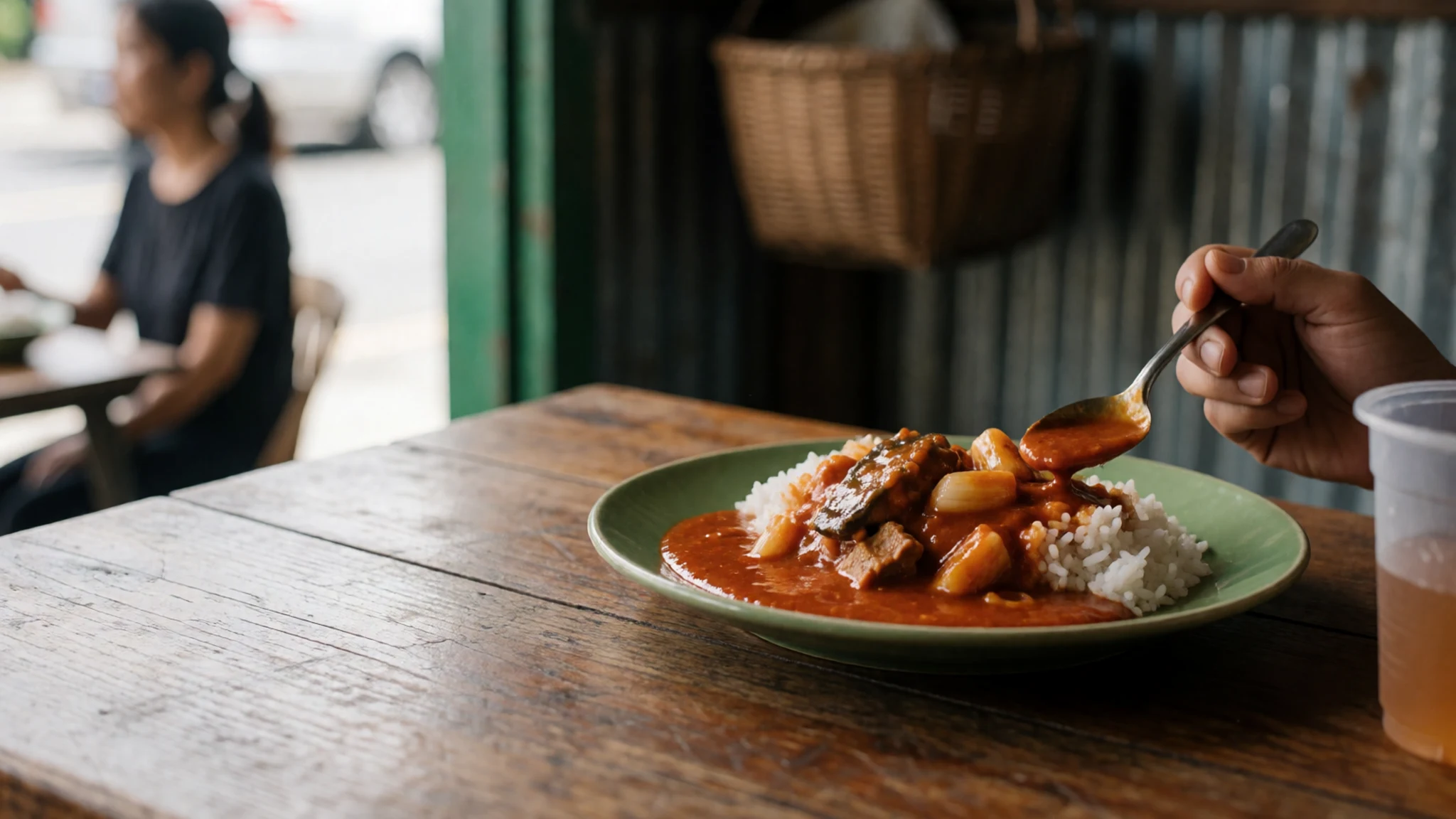
- Cassava leaf — Local cookshops and market-side eateries
Pounded cassava leaves cooked down into a green, savoury stew with meat or fish and often palm oil, then eaten with rice. Portions in Liberia are generous, so sharing a plate is perfectly reasonable.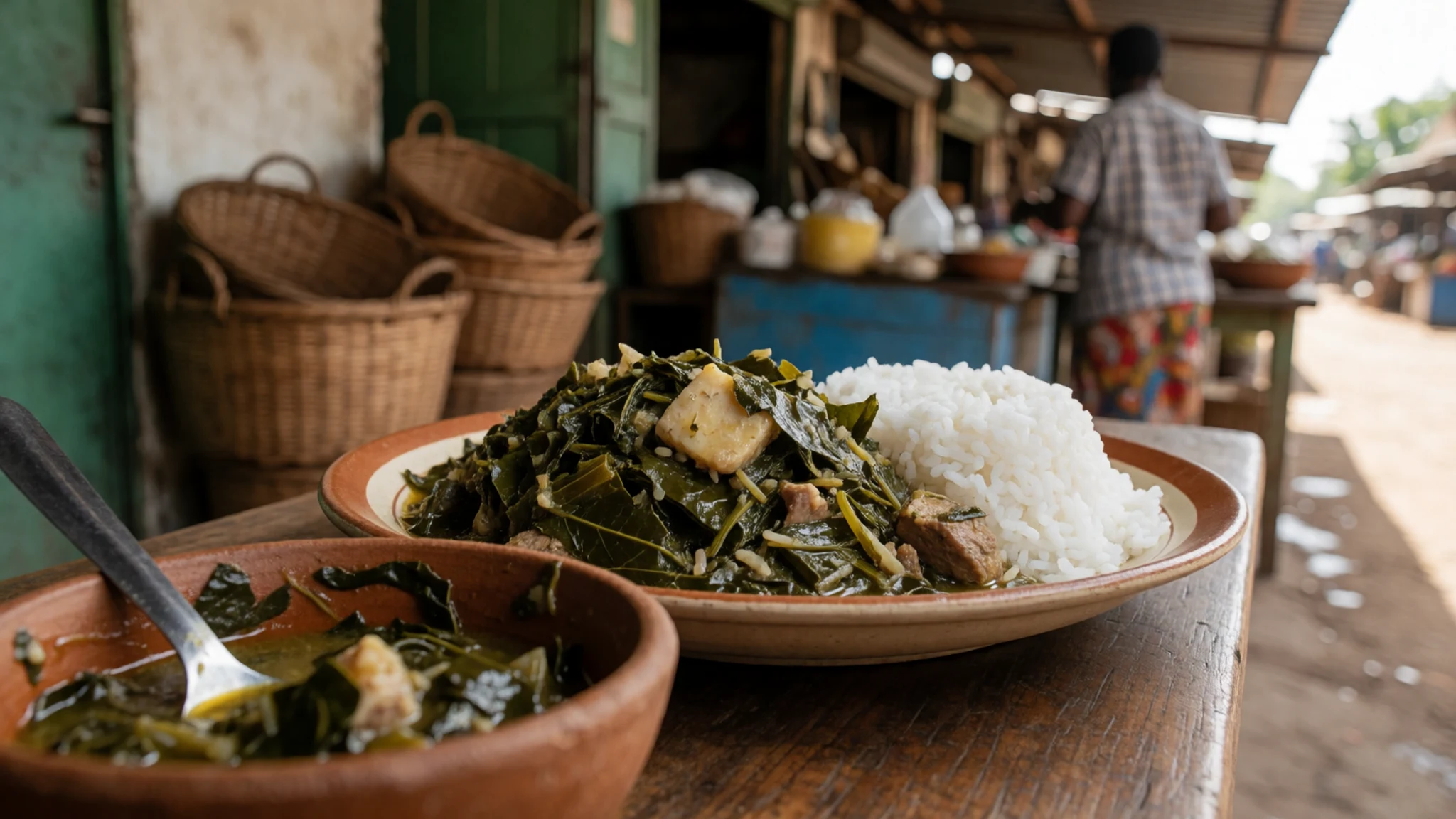
- Fufu with soup — Eateries near the market and along main streets
Fufu is a smooth, stretchy dough made from fermented cassava, eaten with the fingers by pinching off a piece and dipping it in soup. Goat soup and pepper soup are the common partners, and the pepper can be fierce. - Jollof rice — Cookshops, family gatherings and street-side stalls
Rice cooked in a tomato and pepper base with spices, often with chicken or fish alongside. Liberian cooks have their own way with it, and it turns up at celebrations as well as everyday meals. - Morning bread and street snacks — Street vendors and bakers around the market, early morning
Freshly baked bread is sold early in the day, some loaves like banana bread and others closer to cornbread, and a little oily. Vendors also sell roasted plantain, fried plantain chips, peanuts, bananas and mangoes.
Plan it
Best time. December to March is the usual choice, as it is the drier part of the year on this coast and roads and beaches are easier. The rains are heavy for much of the rest of the year, with high humidity throughout, so check current forecasts before booking.
How long. 2–3
Getting there. Fly to Monrovia's international airport, then continue to Harper and Cape Palmas by road or by an onward domestic flight if one is running. Journey times depend heavily on road and rain conditions, so check current options locally. Most visitors need a visa: many nationalities can apply for an e-VOA at evisaliberia.com, but a few must apply in person at a consulate, and a yellow fever vaccination certificate and a letter of invitation are needed.
Budget. mid
Tips
- Check visa rules early, as the process and the letter of invitation take time to arrange
- Carry cash, as cards are unreliable outside Monrovia
- Allow generous time for road travel, especially in the rains
- Carry drinking water and sun protection, and ask locally about swimming conditions and currents
Etiquette
- Greet people before asking questions or favours
- Ask before photographing people, churches or officials
- Decline requests politely and indirectly rather than with a flat no
Nearby
Sources
- Wikidata Q1034489 (CC0)
- Wikipedia: Cape Palmas (rev 1345515449) (CC BY-SA 4.0)
- Wikivoyage: Liberia (rev 5430861) (CC BY-SA 4.0)
- Photo 01: An etching of Cape Palmas (Wagner & C., Lith., Philadelphia) (Public domain)
- Photo 02: ROSSER (1869), Liberia, Cape Palmas (Public domain)
- Photo 03: Sinoe (Johann Büttikofer) (CC BY 3.0)
- Photo 04: Cape Palmas (Johann Büttikofer) (CC BY 3.0)
- Photo 05: Dr. Nachtigals Grab (Johann Büttikofer) (CC BY 3.0)
- Photo 06: Illustration from The story of the Lord's dealings with Mrs. Amanda Smith (Public domain)
- Photo 07: A.P.E. Church of Harper, Cape Palmas (William H. Heard) (Public domain)
- Photo 08: Admiralty Chart, Cape Palmas to Grand Lahou (UK Hydrographic Office) (Public domain)


