Sapo National Park
Sapo National Park, Liberia
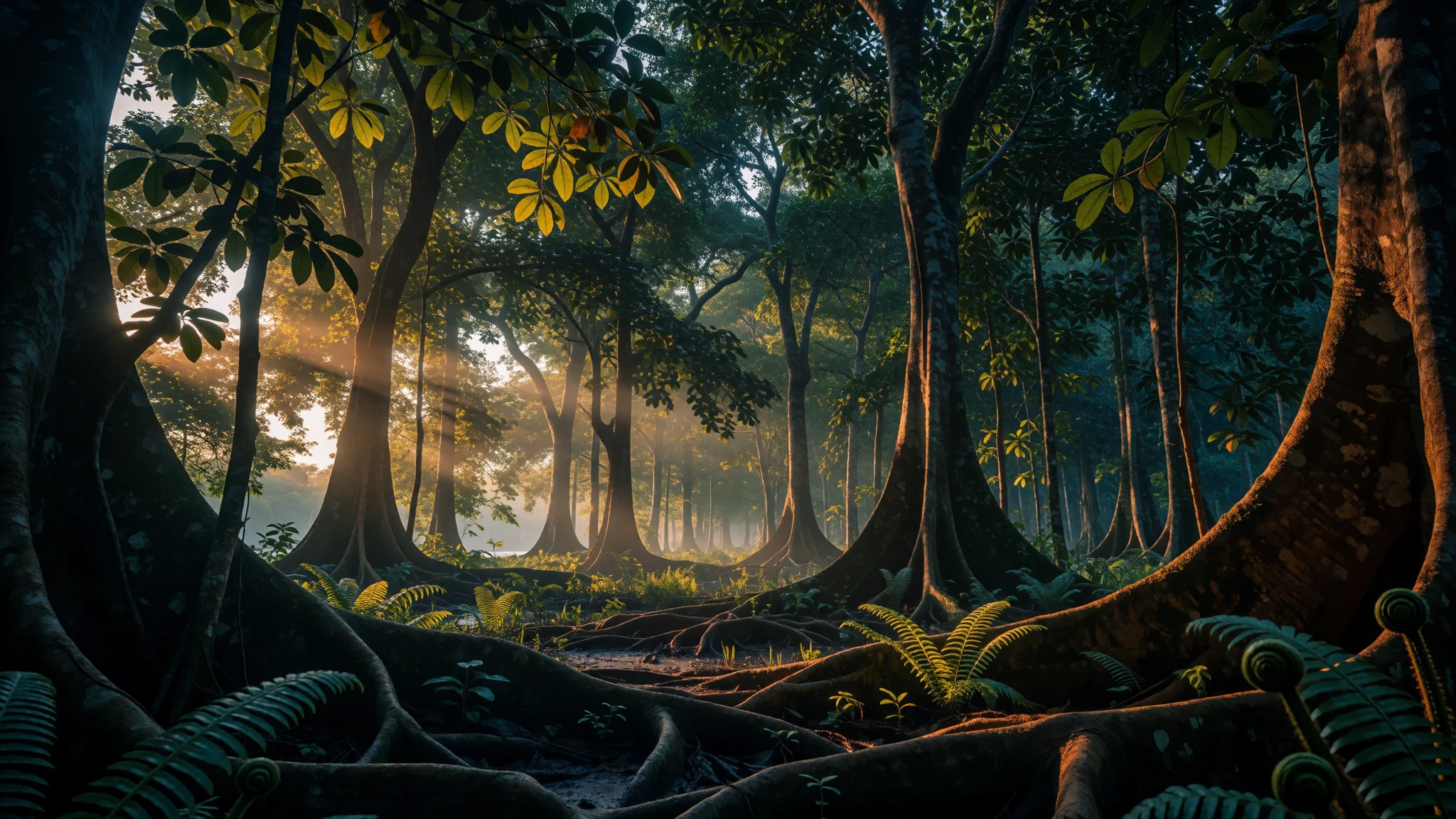
Sapo National Park is a remote rainforest escape where you track wildlife with rangers and sleep close to dense, marshy green.
The place
Sapo National Park sits in Sinoe County, in the south-west of Liberia, tucked between the Putu Mountains and the Sinoe River. It’s the country’s largest protected rainforest area, with flat, marshy ground in much of the park and only a few places where the land rises into ridges and small streams. The mix of lowland swampy patches, clearings, and river fringes shapes the wildlife you’ll hear and (sometimes) spot.
The park’s setting is Upper Guinean forest, part of a biodiversity-rich belt across West Africa. Conditions here are consistently humid and warm for much of the year: daytime temperatures tend to sit around the mid‑twenties, and the air stays sticky under the canopy. Seasonality matters, though. The dry season runs from November to April, and it’s when the hottest, driest conditions also tend to arrive—smaller streams can dry out and exposed sandy or rocky beds show where water used to move. Water levels in the larger rivers shrink too, and that can reveal sandbars and waterfalls.
During the wet season, May through October, the rainforest essentially switches gear, with the heaviest rain typically peaking in June through September and persistent high humidity. For visitors, that means planning is less about choosing between viewpoints and more about choosing between accessibility and comfort. You’re going into rainforest where there are no commercial facilities inside the park, no reliable mobile coverage, and no quick way to “just pop out” if weather turns.
Sapo is also tightly protected in day-to-day rules: agriculture, construction, fishing, hunting, human settlement, and logging aren’t allowed in the park.
Its story
Sapo National Park was formally designated in 1983, named after the local Sapo (or Sao) tribe. Before it became a national park, Liberia was building the institutions that would manage forests and wildlife, and Sapo was the one area that eventually became protected as a park. Once boundaries were set, management planning and early work involved multiple conservation partners.
Like many rainforest parks, Sapo’s story is complicated. Over the years, pressures have included illegal farming, hunting, logging, and mining—problems that tend to flare where livelihoods are strained and oversight is difficult. During the period of civil conflict in Liberia, the park was no exception: at one point it fell under rebel control, and infrastructure was damaged or destroyed. Some park staff were killed, others displaced, and wildlife management was disrupted.
Even when direct conflict recedes, a park’s long-term survival depends on ongoing protection and relationships with nearby communities. Sapo’s history reflects that tension: you can find moments of reduced poaching when local villagers become stakeholders in conservation, alongside periods when illegal extraction becomes harder to monitor.
Today, what visitors experience is the result of those decades of conservation work—an interior that’s still largely uninhabited forest, shaped by rivers, ridges, and seasonal water levels. The park is not a place for casual wandering; it’s a place where the ranger team and careful navigation are the difference between a memorable trek and a risky one.
What to see
- Primary Rain Forest Canopy — Interior rainforest
Sapo National Park’s primary canopy is made of tall hardwood trees with huge root structures that knit together high above. In the understory, the forest feels dense and dark, and sounds carry differently in humid air. Even without seeing wildlife, the “roominess” of the trees and the constant leaf movement give the place its atmosphere.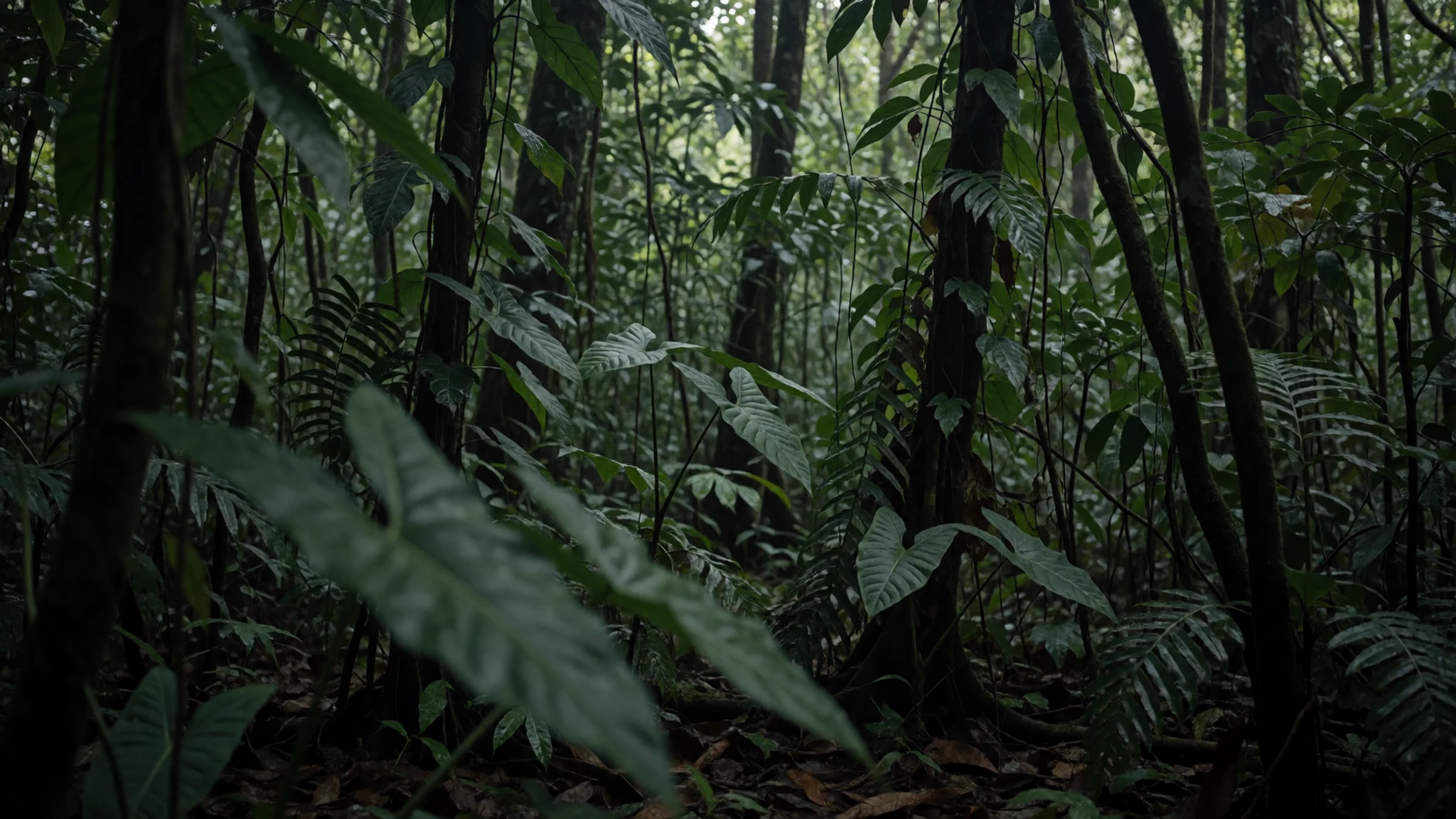
- Wildlife Salt Licks & Clearings — Deep-forest clearings
Look for natural muddy wallows and mineral-rich clearings where animals come to feed and drink around dawn and dusk. These spots act like predictable meeting points in an otherwise trackless forest. Expect a lot of waiting, ranger scanning, and an occasional burst of movement as elephants, pygmy hippos, and forest antelopes use the same paths.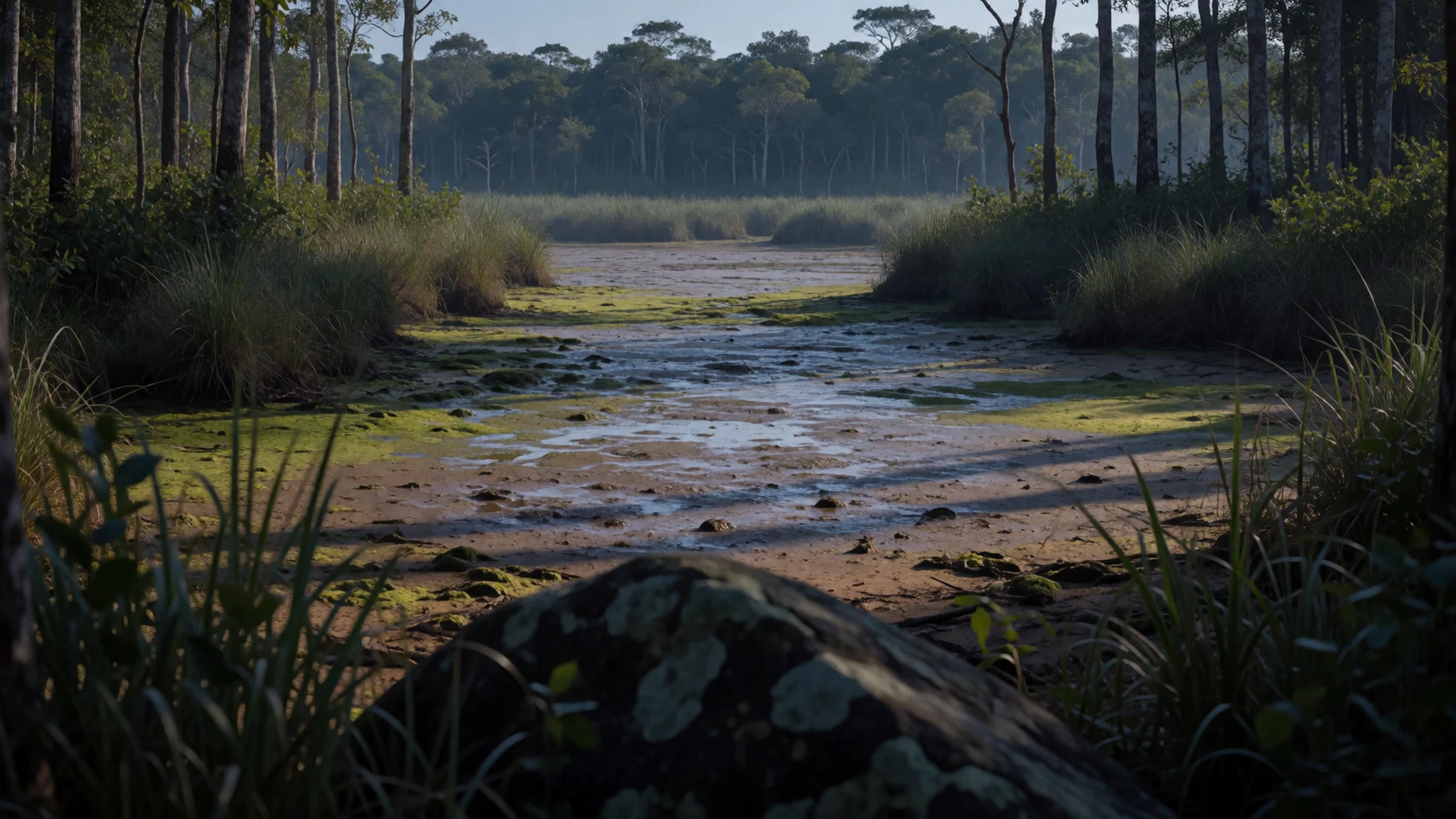
- Sinoe River — Western boundary
The Sinoe River runs along the western boundary of the park, wide and still enough for quiet canoe excursions. River edges can be productive for birds, especially at dawn when activity gathers and the air feels cooler. The gentler pace here contrasts with the thick interior: fewer obstacles, but still plenty of wildlife signs.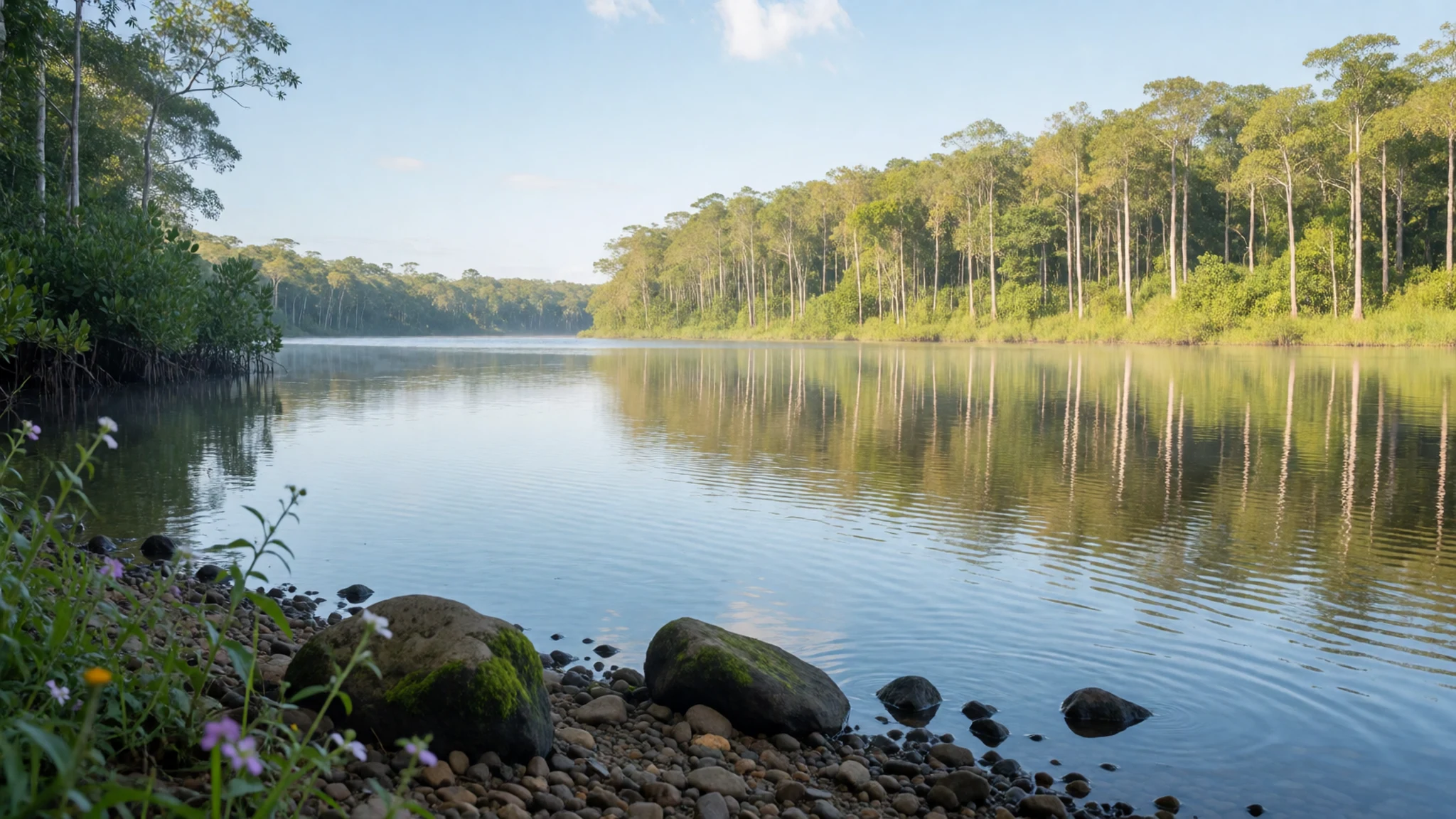
- Primate and wildlife tracking treks — Forest trails with ranger teams
Primate and wildlife tracking treks in Sapo are multi-day walking routes guided by FDA rangers, designed to find signs like dung and fresh tracks. Expect careful, slow movement as teams look for indications of nesting sites and recent activity rather than guaranteed sightings.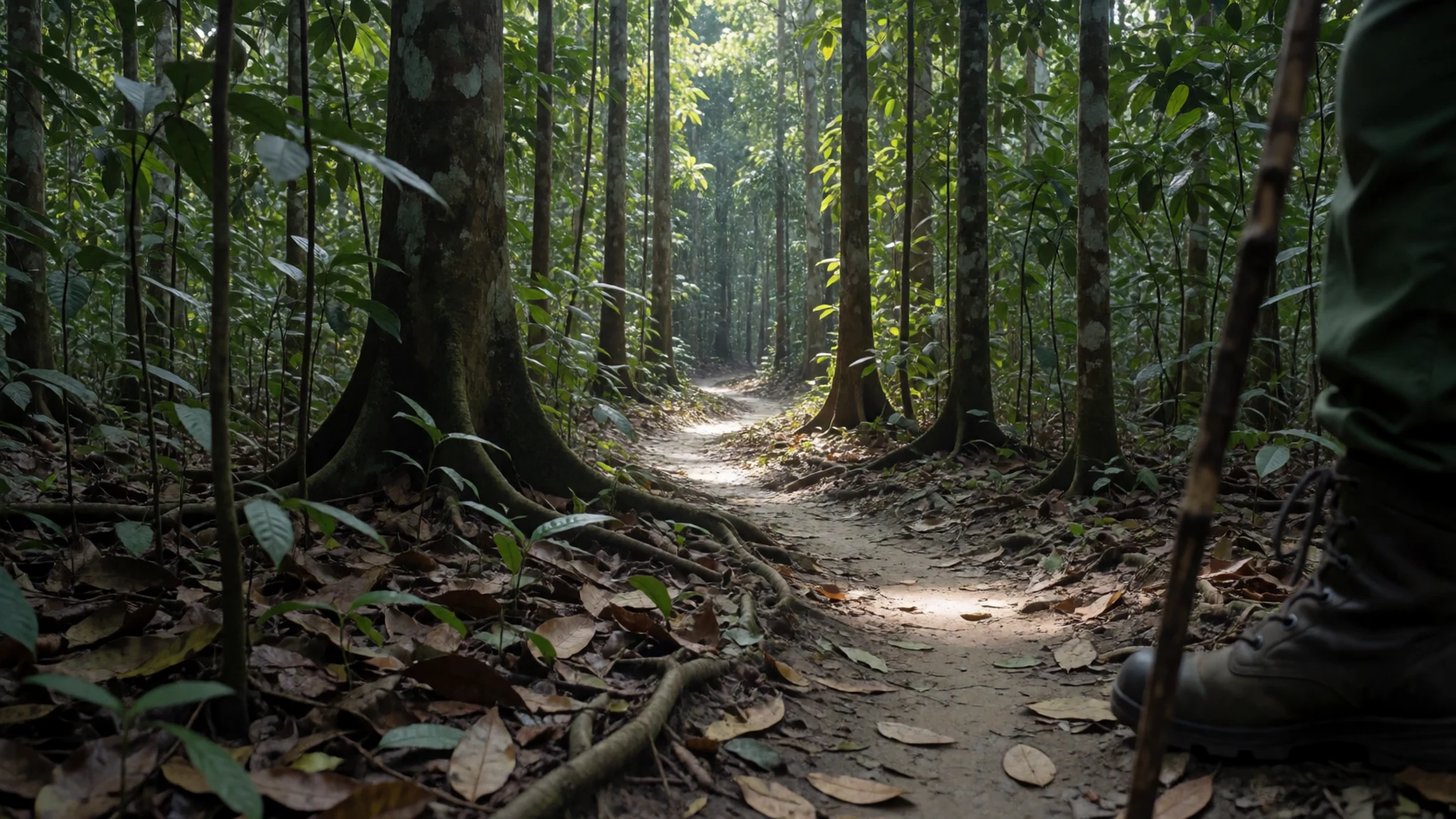
- Night walks around camp clearings — Camp clearings near riverside zones
Night walks in Sapo happen around camp clearings with ranger guidance, when nocturnal animals are more likely to move. You listen first, then watch for eye-shine in the dark. The species list is short, but the environment is busy.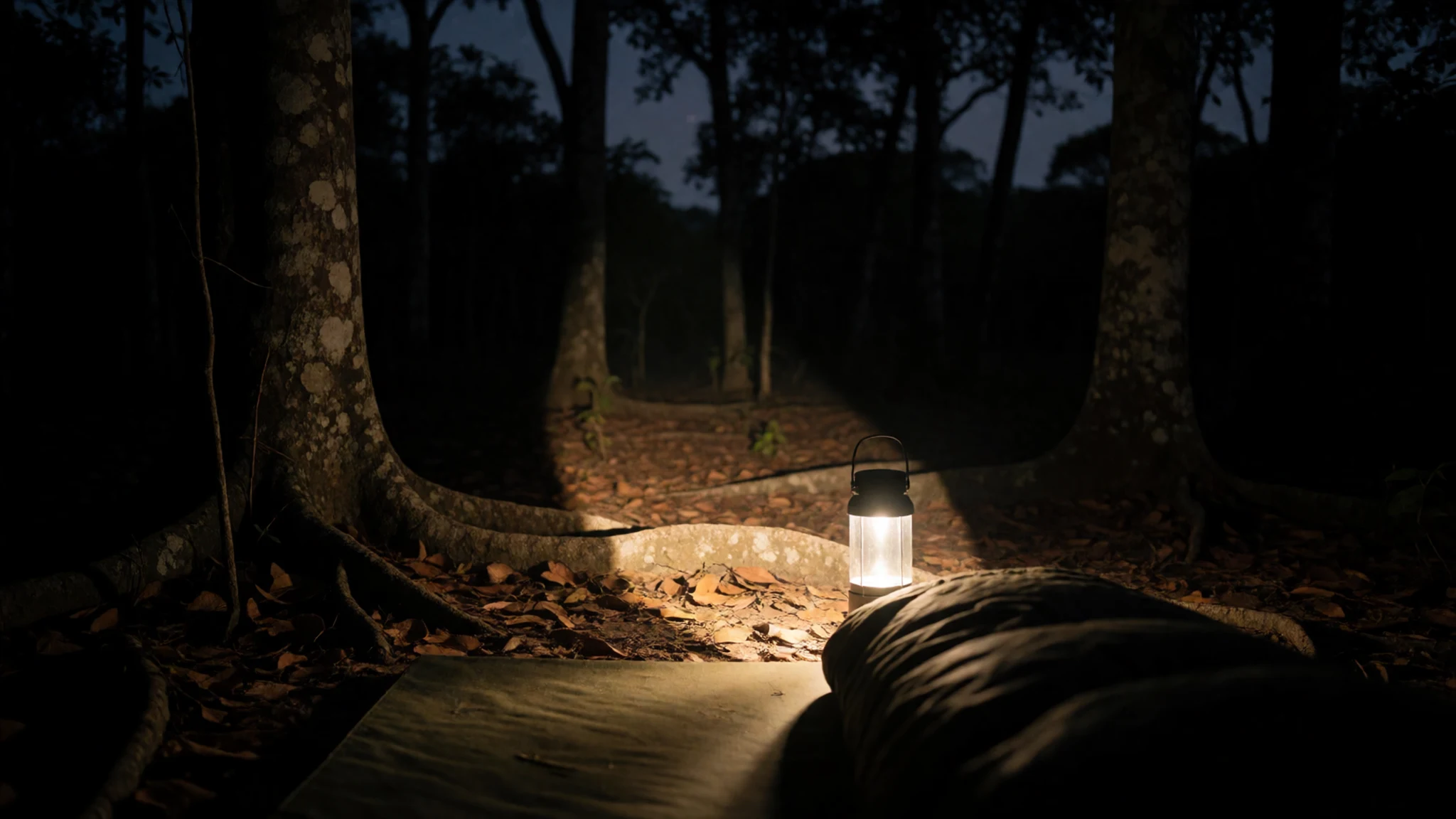
Culture
Sapo National Park is run with a conservation-first mindset, so etiquette is really about respecting a protected ecosystem and the people guiding you through it. Rangers and community trackers are central to what you do: they choose safe routes, decide when to push on versus wait, and help you interpret forest signs. Because the park is isolated, there’s also a “systems” feel—water treatment, insect protection, and basic medical readiness aren’t optional extras, they’re part of how you travel responsibly.
In practice, expect that the rainforest changes your schedule. When dry-season streams shrink, certain areas open up; in the wet season, everything becomes slippery and slower. That means you’ll often rely on the team’s judgement rather than your own sense of direction.
Photography and noise matter too. If you’re trying to observe mammals at salt licks or clearings, sudden movement and loud talking can send animals deeper into cover. Keep your group tight, follow ranger signals, and don’t wander off to “take a closer look”—the lack of landmarks in primary rainforest makes disorientation a real risk.
Visitor etiquette: keep to ranger-led routes, stay quiet during wildlife checks, and do not leave your group in the forest.
What to wear
Sapo National Park doesn’t have a single “tribal outfit” uniform, but rainforest travel has its own clothing logic, and it works the same whether you’re based in a city or arriving from the coast. Dress for heat, humidity, and muddy ground.
For traditional dress, you may notice Liberian and regional styles around towns near the park routes—typically woven textiles and loose, modest cuts that suit warm weather and can be layered. In and around the park journey, however, the practical priority is terrain protection rather than formal costume.
What visitors should wear: lightweight long sleeves and long trousers to reduce skin exposure under the canopy; breathable socks and water-resistant footwear with grip (the ground can be marshy and slippery); and a hat that handles rain. For evenings, bring something warmer because nights can feel cooler and damper after downpours, especially during the wetter months. Insect protection is essential: wear repellent and keep exposed skin to a minimum.
If you’re going deep into the forest, pack clothes you don’t mind getting muddy and consider a dry bag so your essentials stay usable after the day’s walk.
What to eat
- Field-packed meals and snacks — At your Monrovia packing point and on the expedition
Sapo National Park travel is self-sufficient for food. Bring all food, canned goods, and dried rice, plus portable cooking equipment like camp stoves and gas. The field team can help with campfire cooking, but your supplies do the heavy lifting.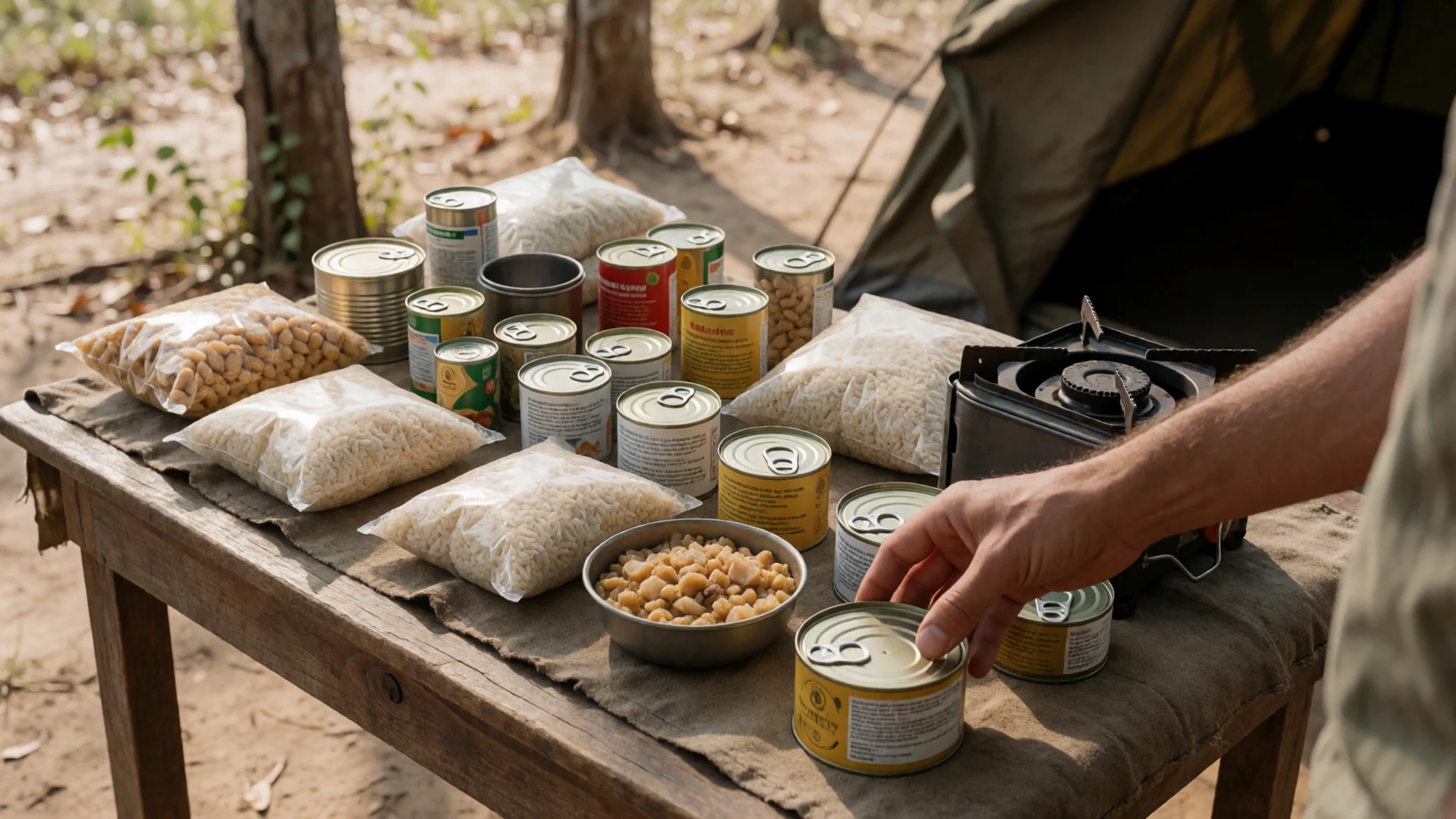
- Camp-cooked meals with ranger help — At the camp site during your trek
Rangers and community trackers can help set up campfire cooking and get meals under way, so you’re not always cooking alone. Still, treat this as logistics support rather than a food shop—carry extra provisions to cover the trek rhythm and unexpected delays.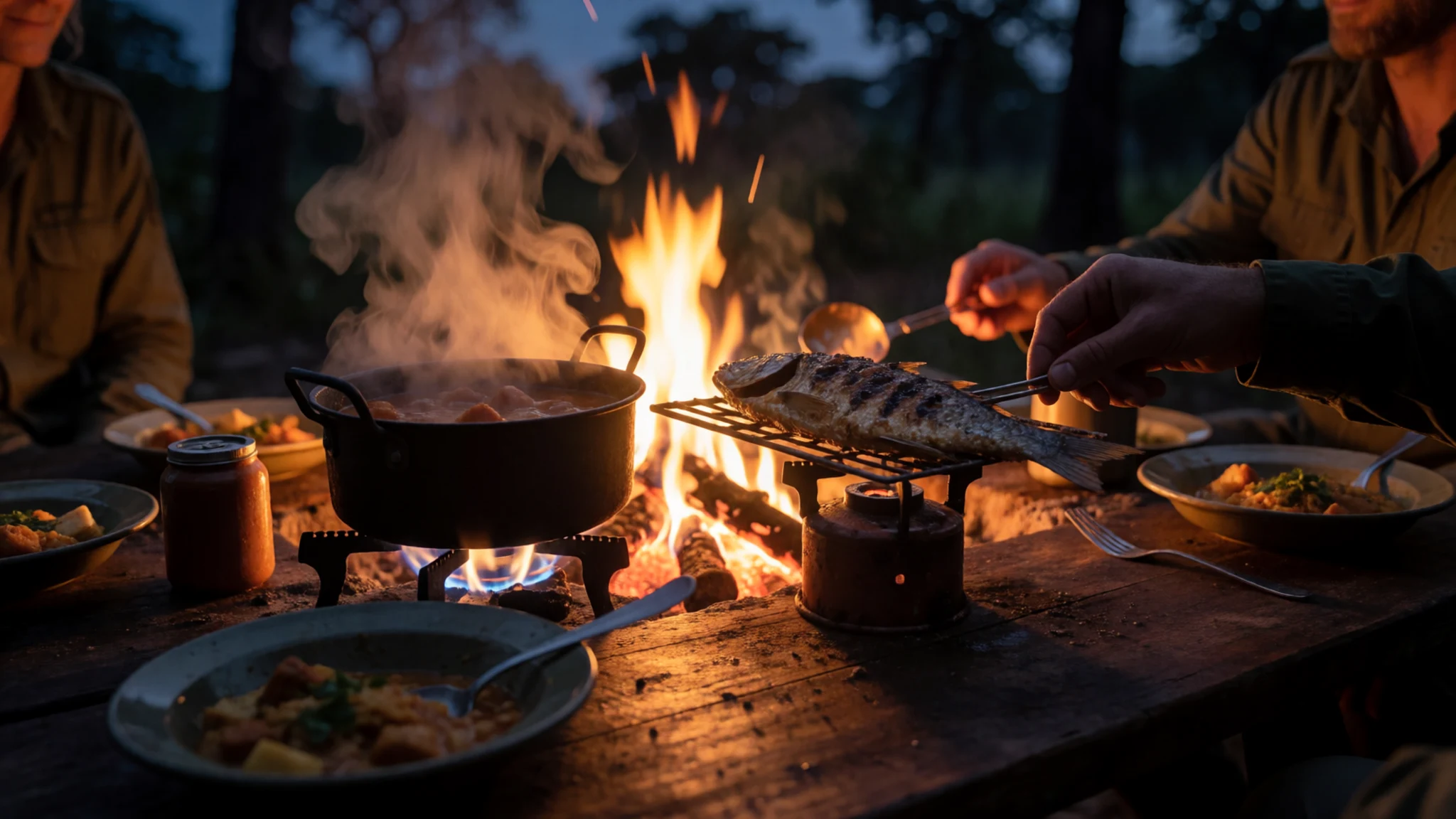
- Purified drinking water (boil, filter, or tablets) — Camp and during forest walks
There’s no safe, potable running water in the park, so every drink must be treated. Use purification tablets, high-volume gravity filters, or boiling water drawn from clear, flowing forest streams before drinking. - Electrolytes for heavy sweating — Daypacks on walking days
Under jungle canopy conditions, sweating can be intense. Bring hydration salts or electrolyte powder to help you feel steadier during long days and humid nights, especially when trekking through wet ground and dense cover.
Plan it
Best time. November–April for the dry season, when smaller streams may dry and some routes can open up; May–October is wetter and more slippery with consistently high humidity.
How long. 3–4
Getting there. Fly to Monrovia, then arrange private transport onward to Greenville (or via Juarzon). From Greenville, use road transfer inland by high-clearance 4WD; there are no scheduled commercial flights to Greenville and the airstrip there can be served only irregularly.
Budget. high
Tips
- Plan around access: road travel to the park area can take a full day range during the dry season and slows in heavy rain.
- Use high-clearance 4WD with recovery gear, spare tyres, and extra fuel; don’t treat the drive as a normal highway trip.
- If you’re considering an air approach to Greenville, confirm timing locally because bush flights are irregular.
- Bring a comprehensive wilderness first-aid kit and antimalarials, plus a satellite communications device for emergency contact.
- Start early on wildlife days and keep to ranger-led movement, especially in forest with few landmarks.
Etiquette
- Keep insect repellent and mosquito prophylaxis consistent—malaria is endemic throughout Liberia.
- Treat all water before drinking; never rely on “clear-looking” streams.
- Follow ranger instructions around animals and keep a safe distance; forest elephants can be unpredictable if startled.
Nearby
Sources
- Wikidata Q1969043 (CC0)
- Wikipedia (rev 1368794154) — Sapo National Park (CC BY-SA 4.0)
- Wikivoyage (rev 5404440) — Sapo National Park (CC BY-SA 4.0)
- Photo photos/01-zwergflusspferd-pygmy-hippopotamus-hexaprotodon-liberiensis.jpg (CC BY-SA 4.0)
- Photo photos/02-loxodontacyclotis.jpg (CC BY 2.5)

