Grebo-Krahn National Park
Grebo-Krahn National Park, Liberia
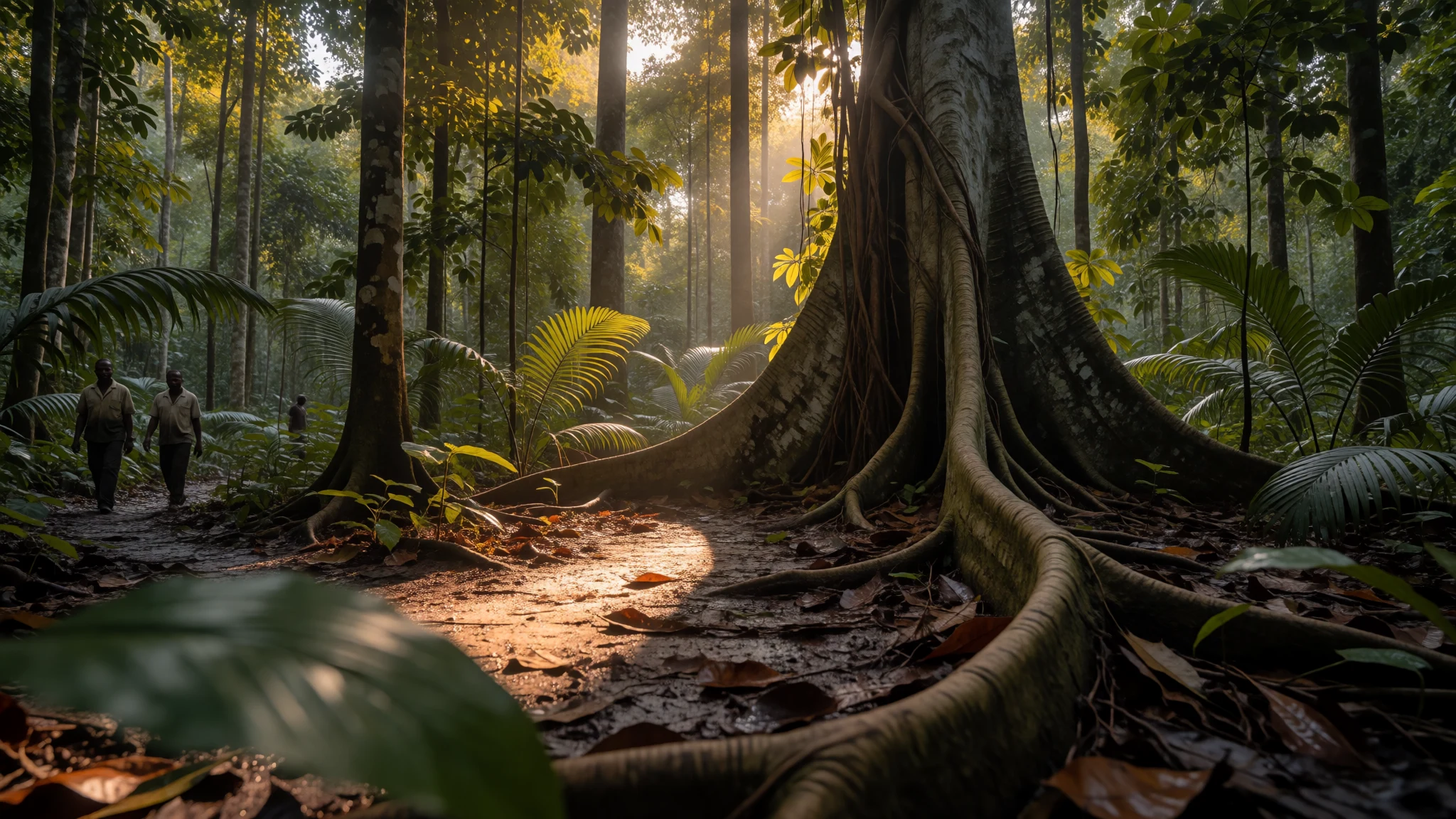
Grebo-Krahn National Park protects a block of Liberian rain forest in the south-east, where reaching the trees is part of the adventure.
The place
Grebo-Krahn National Park lies in south-eastern Liberia, across Grand Gedeh and River Gee counties, and is managed by the Forestry Development Authority. It protects a block of tropical rain forest that belongs to the wider Upper Guinea forest belt, a band of woodland along West Africa's southern edge that has been cleared heavily for farms, logging and mining in many other places. Inside the park the canopy is still unbroken in stretches, with buttressed trunks, tangled lianas and a shaded floor that stays damp even in the drier months.
The double name comes from the Grebo and Krahn peoples, whose communities live around the forest. Older maps and some local speakers still say Grebo National Forest or just Grebo Forest, so any of those names will be understood in the nearby towns.
This is not a park with a ticket office and a tarmac car park. Zwedru, the main town of Grand Gedeh County, is a common base, and the roads beyond it are red laterite that can turn to slurry in the rains. Facilities are minimal, which means a visit is arranged in advance through the Forestry Development Authority, with a local guide, food, water and a margin for delays.
What the forest gives back is quiet and scale. Wildlife is hard to spot under a closed canopy, and realistic expectations help: far more is heard than seen, such as hornbill wingbeats, monkey calls and the insect roar at dusk. Conservation groups value Upper Guinea forests for species found almost nowhere else, including pygmy hippos and several forest antelopes, but a short visit rarely produces more than tracks, droppings and glimpses of movement.
Its story
Grebo-Krahn National Park is a young name on an old forest. The woodland of south-eastern Liberia was home to farming and hunting communities long before it had any official status, and the Grebo and Krahn peoples, who gave the park its name, have long drawn food, medicine, building material and meaning from it.
Over the last century or so the wider Upper Guinea forest was cut into pieces by timber concessions, shifting cultivation, mining and road building. Liberia's civil wars then disrupted forest management, displaced people and left the state with little capacity to patrol its reserves. Much of what is known about the park's wildlife since then comes from surveys by conservation groups and the Forestry Development Authority rather than from long tourism records.
The change to national park status reflected a wish to keep one of the remaining forest blocks intact, and to give the Forestry Development Authority a clearer legal basis for protecting it. Plenty remains unsettled. Communities around the edge still need farmland and income, and the line between protection and livelihood is argued over village by village. Sound conservation here tends to depend on agreements with those neighbours, such as work as rangers and guides, and a say in how the forest is used.
For a visitor, that history explains the feel of the place: not a preserved showpiece but a working forest landscape, still being negotiated. Anyone wanting exact dates for the park's designation or its boundaries should check with the Forestry Development Authority, since the sources behind this reading do not give them.
What to see
- Forest trails at first light — Park interior
Early morning is when Grebo-Krahn National Park is most alive. On a guided trail at first light the air is cool, birds and primates call from the canopy, and fresh tracks are easiest to read on damp ground. Expect a slow pace, frequent stops to listen, and mud underfoot in any season.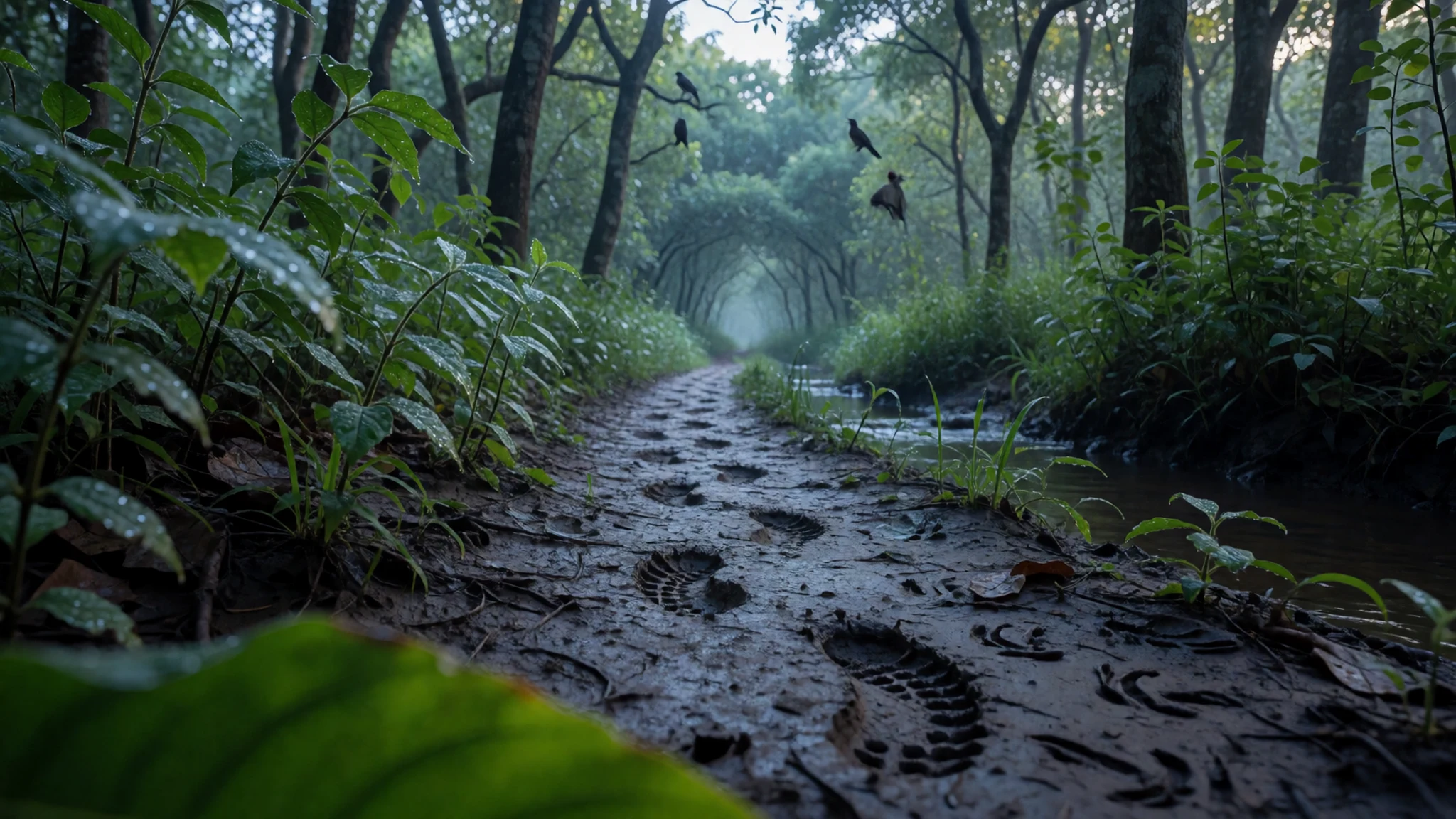
- Birds and primates by ear — Park interior
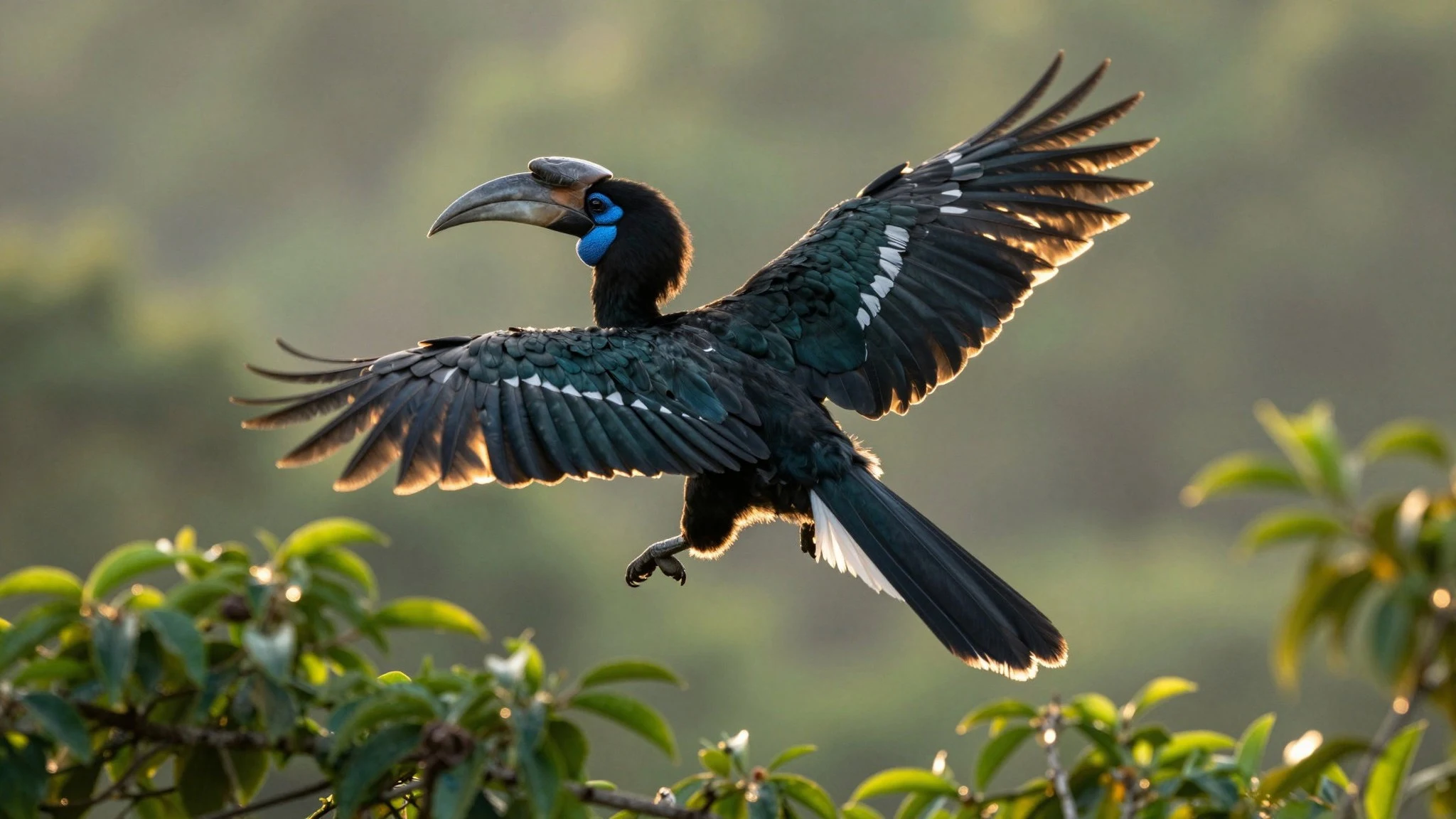
Dense forest rewards listening more than looking. Hornbills announce themselves with heavy wingbeats, monkeys with sharp alarm calls, and a good local guide can name many species by sound alone. Bring binoculars, but expect most sightings to be brief flashes of colour or movement high in the canopy.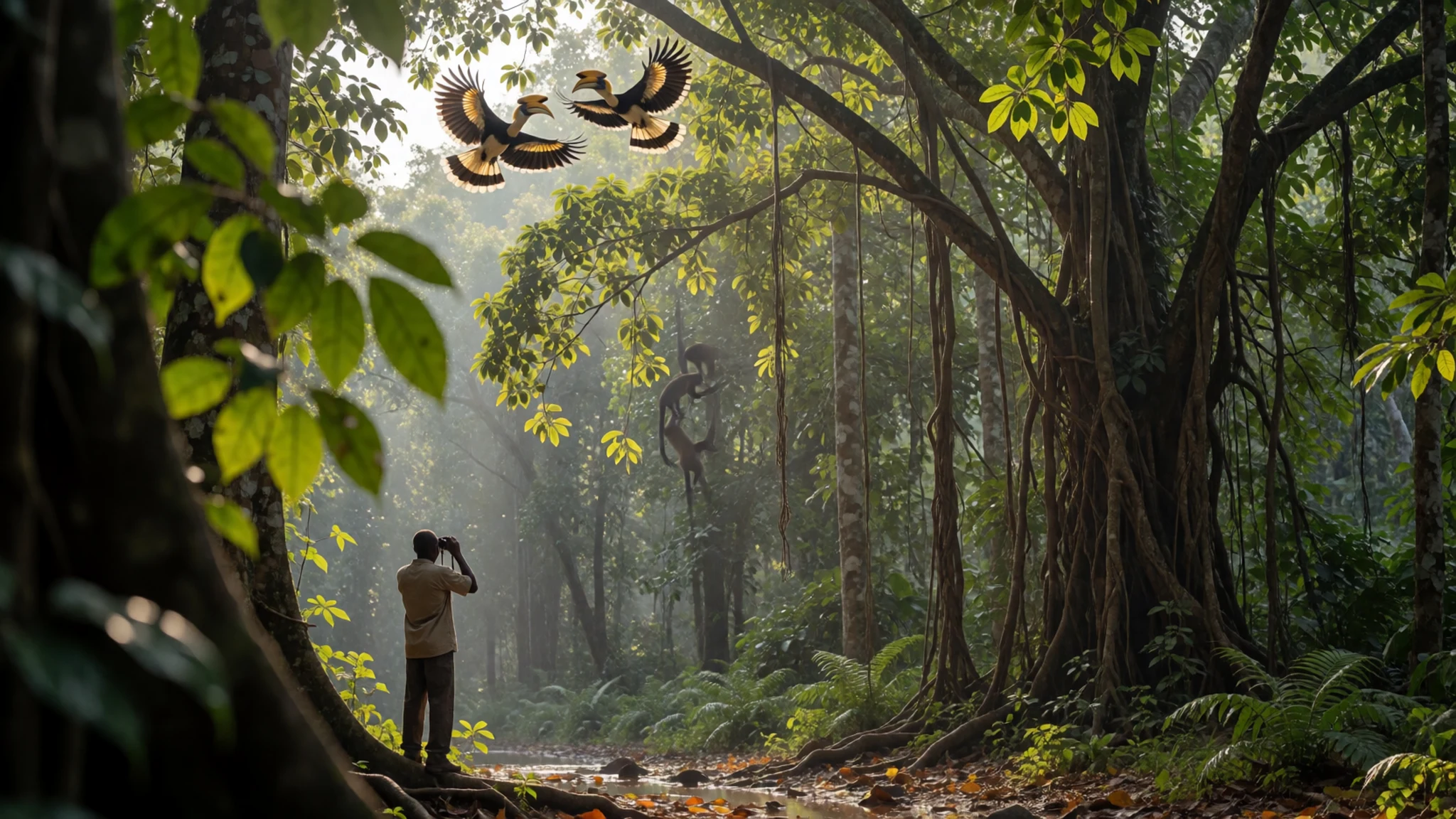
- Streams and wet hollows — Lower ground within the forest
Low, wet ground is where animal signs show best. Guides read the hoof prints of forest antelopes, wallow marks and the scattered fruit left by feeding animals. Pygmy hippos are shy and mostly active at night, so seeing their signs is a good outcome and seeing the animal itself would be luck.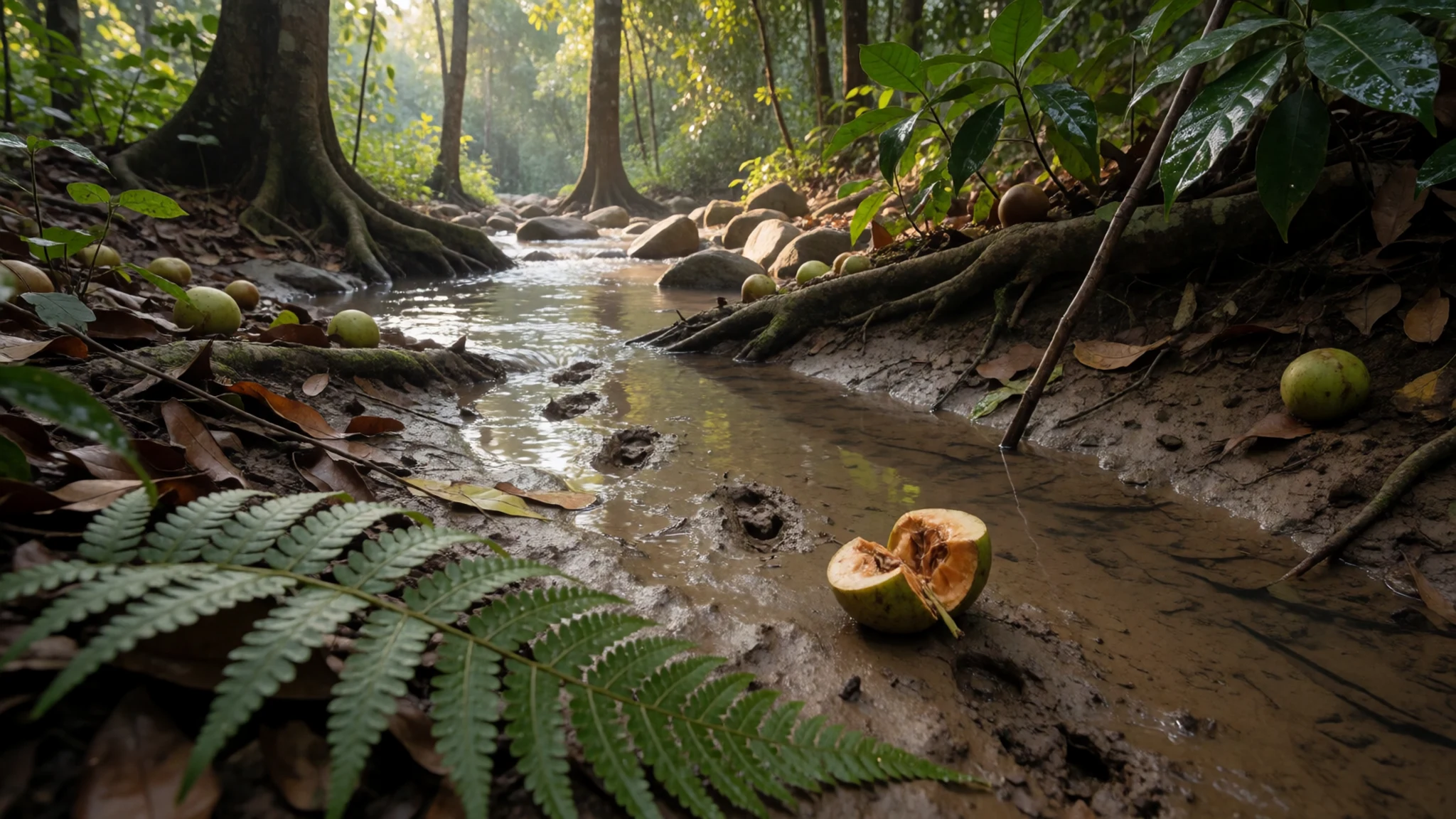
- Villages on the park edge — Communities around the park boundary
The Grebo and Krahn communities around the forest know its paths, plants and seasons better than any map. Visiting one, with a guide and an elder's permission, shows how farming, hunting and forest products fit together, and where a fair share of any visitor spending should land.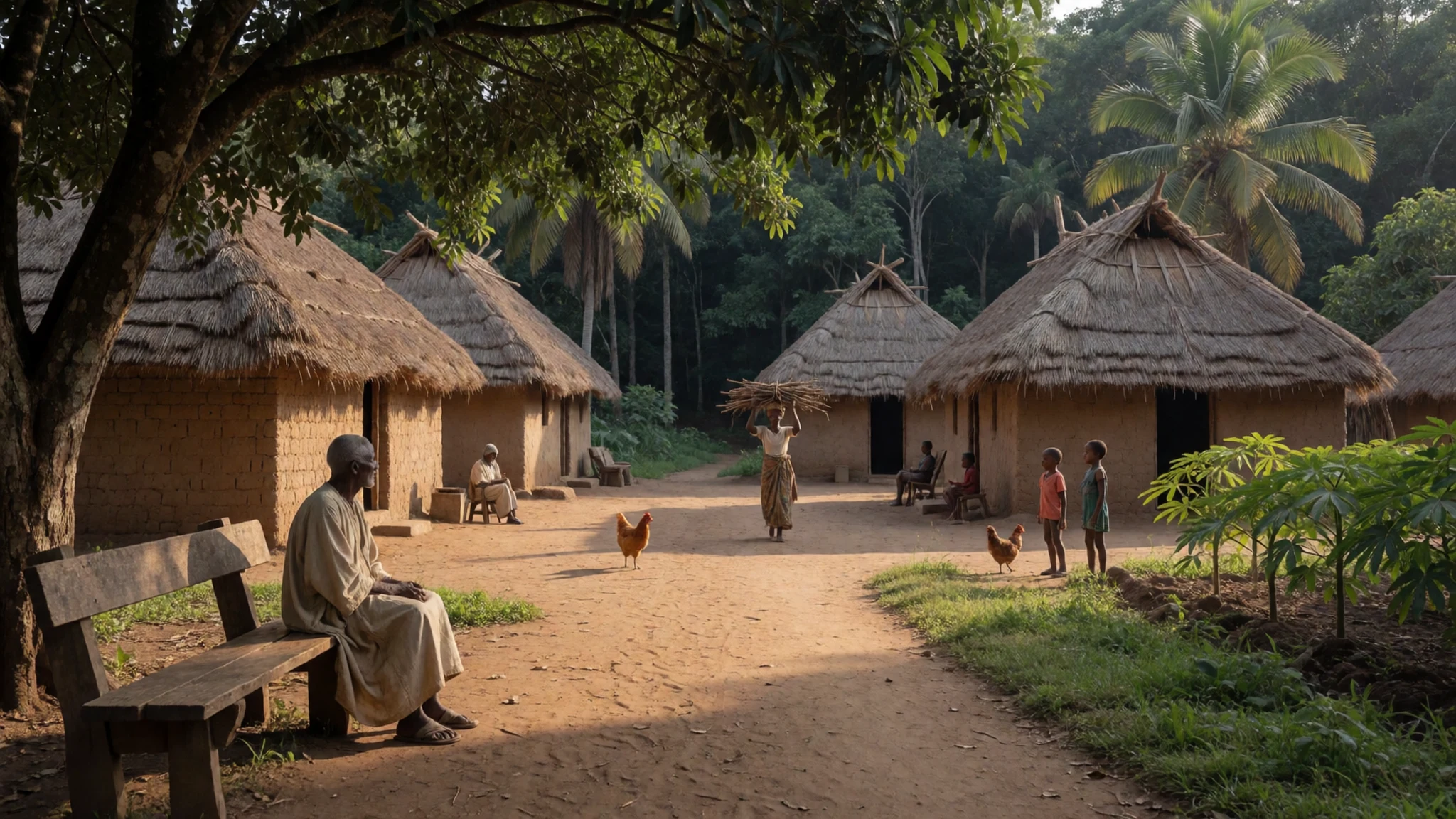
- Zwedru — Grand Gedeh County
The Grand Gedeh County town is the practical gateway, with markets for supplies, cookshops for a first Liberian meal and local people who can advise on guides and permissions. It is a working town rather than a sightseeing stop, but an afternoon in the market is a good way to adjust to the pace.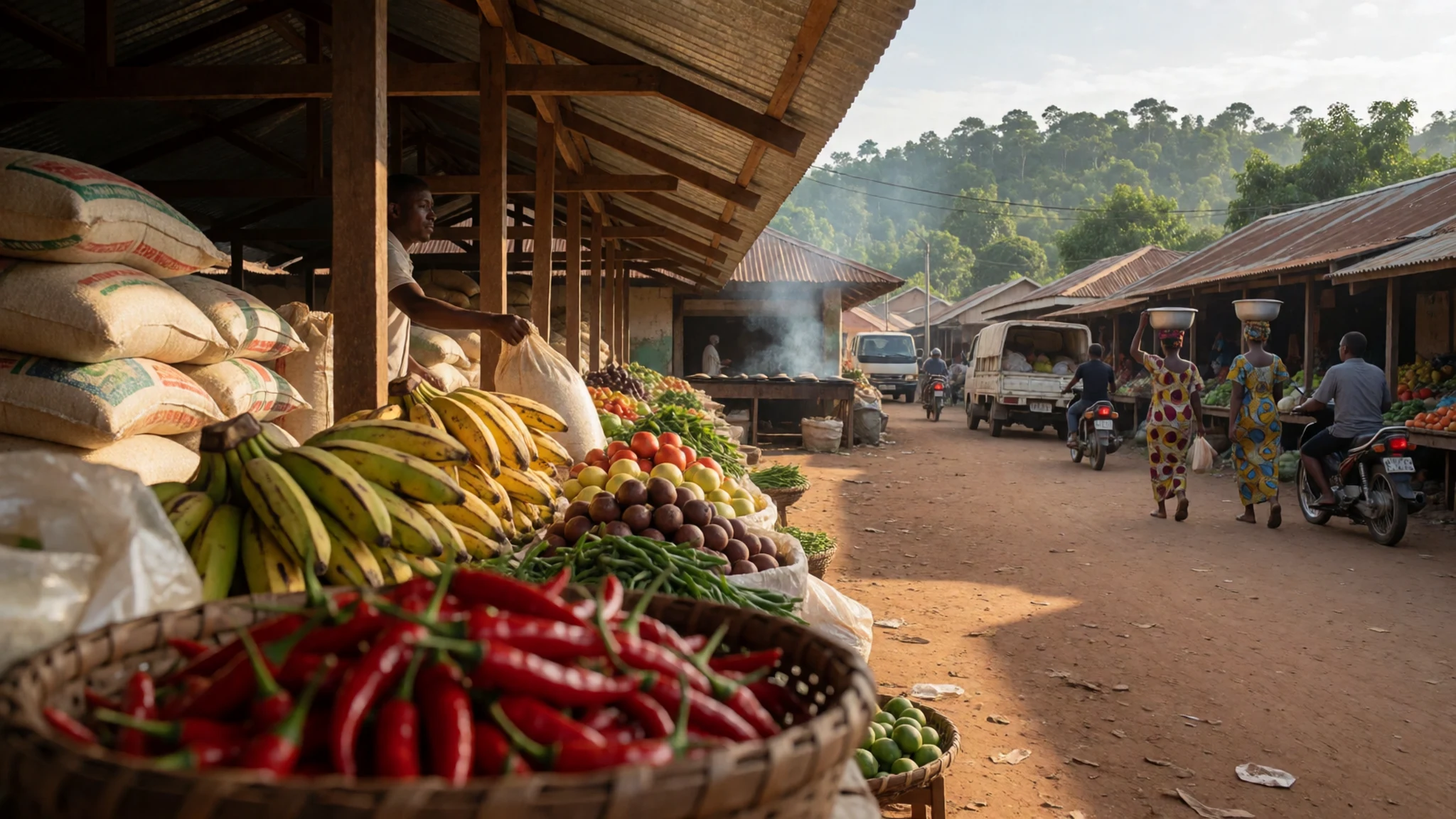
Culture
Grebo-Krahn National Park sits among communities where forest and daily life are closely tied. The Grebo and Krahn peoples speak languages of the Kru family, and many people also speak Liberian English, which is easy to follow once the rhythm is familiar but has its own idioms. Rice and cassava farming, small-scale hunting and gathering, and church on Sundays shape the week in many villages.
Forest knowledge is shared and, in places, guarded. Across Liberia, societies such as the Poro for men and the Sande for women hold parts of the woods as sacred or restricted, and a trail that looks open may carry a rule for outsiders. Guides know which ground is off limits, and following them is both safer and more respectful.
Greetings matter. A handshake that ends in a snap of the fingers is common in Liberia, and a proper greeting and a few questions about the day usually come before any business. Hunting for food remains part of rural life, and bushmeat is sold in some markets, which sits uneasily with protection; a visitor does better to listen than to lecture.
Ask the village elder or your guide before entering a community or photographing anyone, and greet people properly before you raise a camera.
What to wear
Around Grebo-Krahn National Park, traditional dress draws on cloth traditions shared across Liberia. Country cloth is strip-woven cotton, sewn into gowns, robes and wraps, and it appears at ceremonies, funerals and chiefly occasions rather than on ordinary days. Lappa, a length of printed cotton wrapped as a skirt and often matched with a top and head tie, is a standby for women from everyday wear to festivals, and tie-dyed and wax-printed fabrics are common for church and celebrations.
What people actually wear now is mostly practical: T-shirts, football shirts, jeans and plain shirts for men; lappa suits, dresses and head ties for women, especially on Sundays. Farmers favour rubber boots in the wet season, and secondhand clothing from overseas fills many market stalls.
A visitor should dress for heat, humidity and mud. Lightweight long sleeves and long trousers in quick-drying fabric protect against insects, thorns and sun, and a brimmed hat and light rain jacket are worth packing. Sturdy waterproof boots or high-grip shoes beat trainers on slick trails, and spare socks help. In villages, covered shoulders and knees show respect. Avoid camouflage or military-style patterns, which can attract unwelcome attention in the region.
What to eat
- Palm butter with rice — Cookshops and market eateries in Zwedru
A rich stew made from the pulp of palm fruit, cooked with fish or meat and chilli, and served over rice. It is a staple of Liberian kitchens and a good first order for anyone wanting to taste local cooking.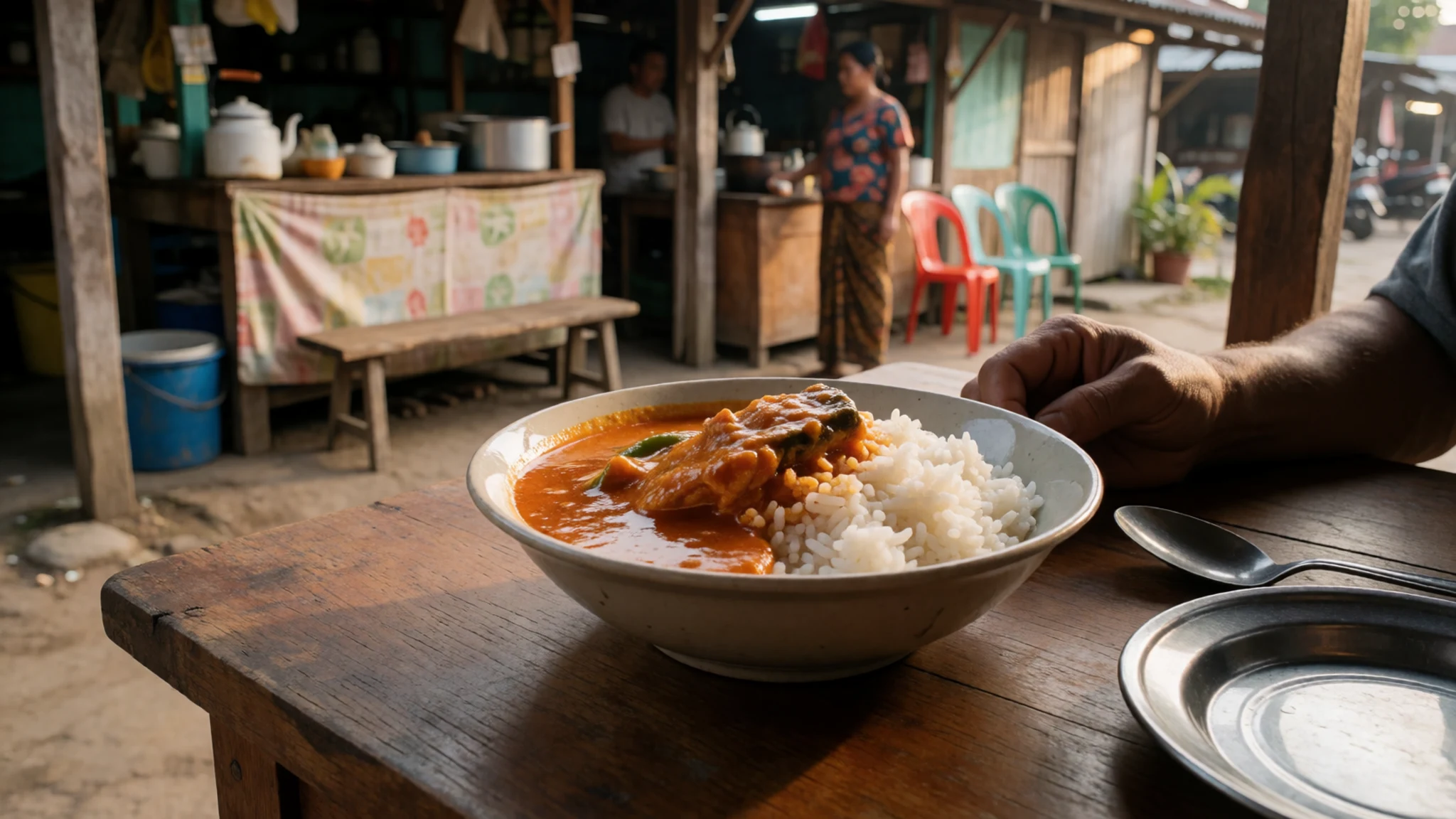
- Cassava leaf — Roadside eateries and village kitchens
Cassava leaves are pounded and simmered with palm oil, onion, chilli and fish or meat, then spooned over rice. The flavour is earthy and slightly bitter, and the dish is a regular in home cooking and simple roadside eateries.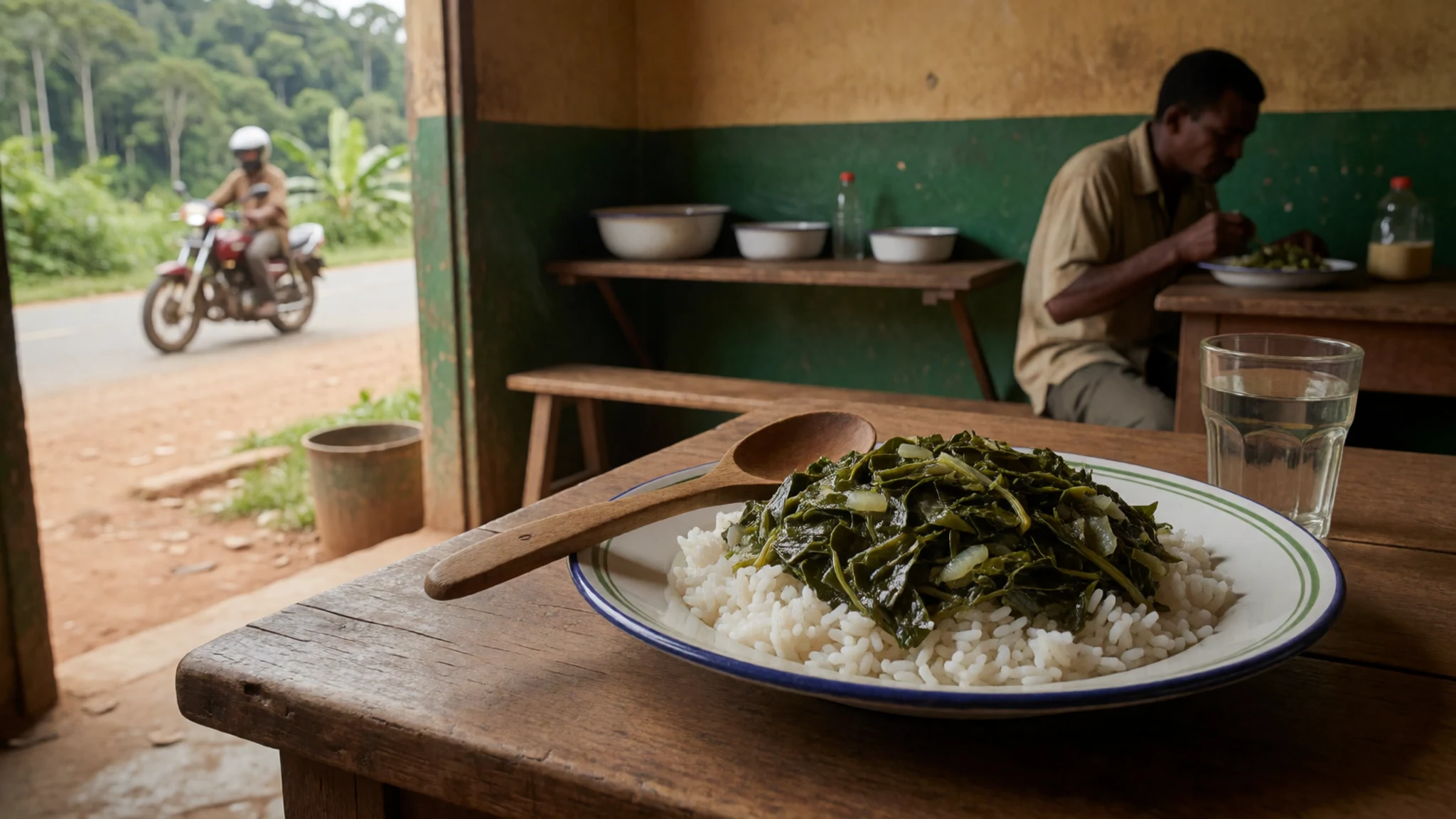
- Fufu or dumboy with soup — Market cookshops in Zwedru
Dough-like balls of pounded cassava, served with a hot soup or stew. The custom is to pinch off a piece, dip it and swallow it rather than chew. It is filling food, well suited to a day of walking. - Pepper soup — Evening stalls and village kitchens
A thin, fiery broth of fish or chicken, seasoned with chilli and local spices. It clears the head and is welcome on a damp evening. Ask for less pepper if unsure, since the heat is real. - Kala — Roadside sellers and the main market in Zwedru
A sweet, fried ball of mashed ripe banana or plantain and flour, golden outside and soft within. Sellers carry it in bowls along roads and through markets, and it makes a cheap snack for the trail.
Plan it
Best time. November to March is the drier stretch, when roads and trails are more manageable, though the forest stays humid. Heavy rains run roughly from May to October, when roads can become impassable and trails turn to mud.
How long. 3–5
Getting there. Fly into Roberts International Airport near Monrovia, then continue by road towards Zwedru in Grand Gedeh County; allow a long day or more, and longer in the rains. Check current road conditions and any domestic flights before travelling. The last leg to the forest is by four-wheel-drive vehicle and on foot with a guide arranged through the Forestry Development Authority.
Budget. mid
Tips
- Contact the Forestry Development Authority well before travelling to arrange access and a guide, and confirm details locally since arrangements can change
- Travel in the dry season and leave early; road journeys can take far longer than the distance suggests
- Carry cash in small notes, as cards and mobile signal can be unreliable outside the main towns
- Bring drinking water or a purifier, insect repellent and a first-aid kit, and ask a doctor about malaria precautions before departure
- Start walks at first light, before heat and humidity build
Etiquette
- Ask the village elder or your guide before entering a community or photographing people
- Follow your guide's instructions, including on ground that is restricted or sacred
- Do not buy or eat bushmeat, and take all litter out with you
Nearby
Sources
- Wikidata Q113468505 (CC0)
- Wikipedia: Grebo-Krahn National Park (rev 1362684304) (CC BY-SA 4.0)
- Wikivoyage: Liberia (CC BY-SA 4.0)
Wildlife
- Pygmy hippo (animal)
Picture a small, shy hippo that prefers forest and swamp, with Liberia as its main home. It is mostly active at night, so you are unlikely to meet it face to face; finding its signs is a good result, and a glimpse of the animal itself would be pure luck. Walk with a guide, keep your distance, stay quiet, and never offer it food.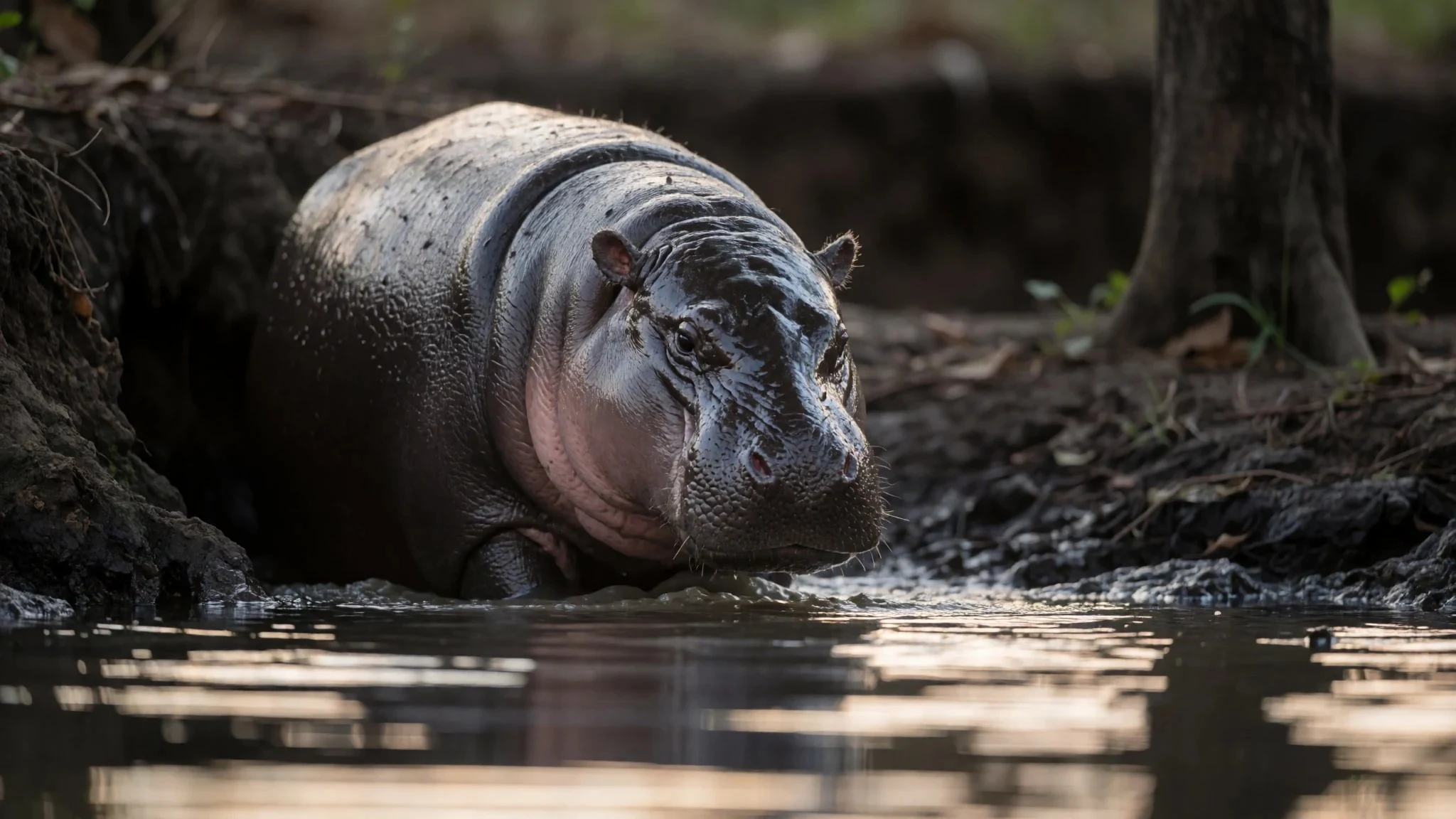
- Black-casqued hornbill (bird)
Remember this bird as the hornbill with the black helmet in its name. It lives across much of sub-Saharan Africa, including Liberia, and is fairly common, though it is near threatened and its numbers are falling. Listen first: its heavy wingbeats often give it away, and a good local guide can identify many forest species by ear. Keep your distance, stay quiet, follow your guide, and never feed wild birds.