Regina
Regina, Canada
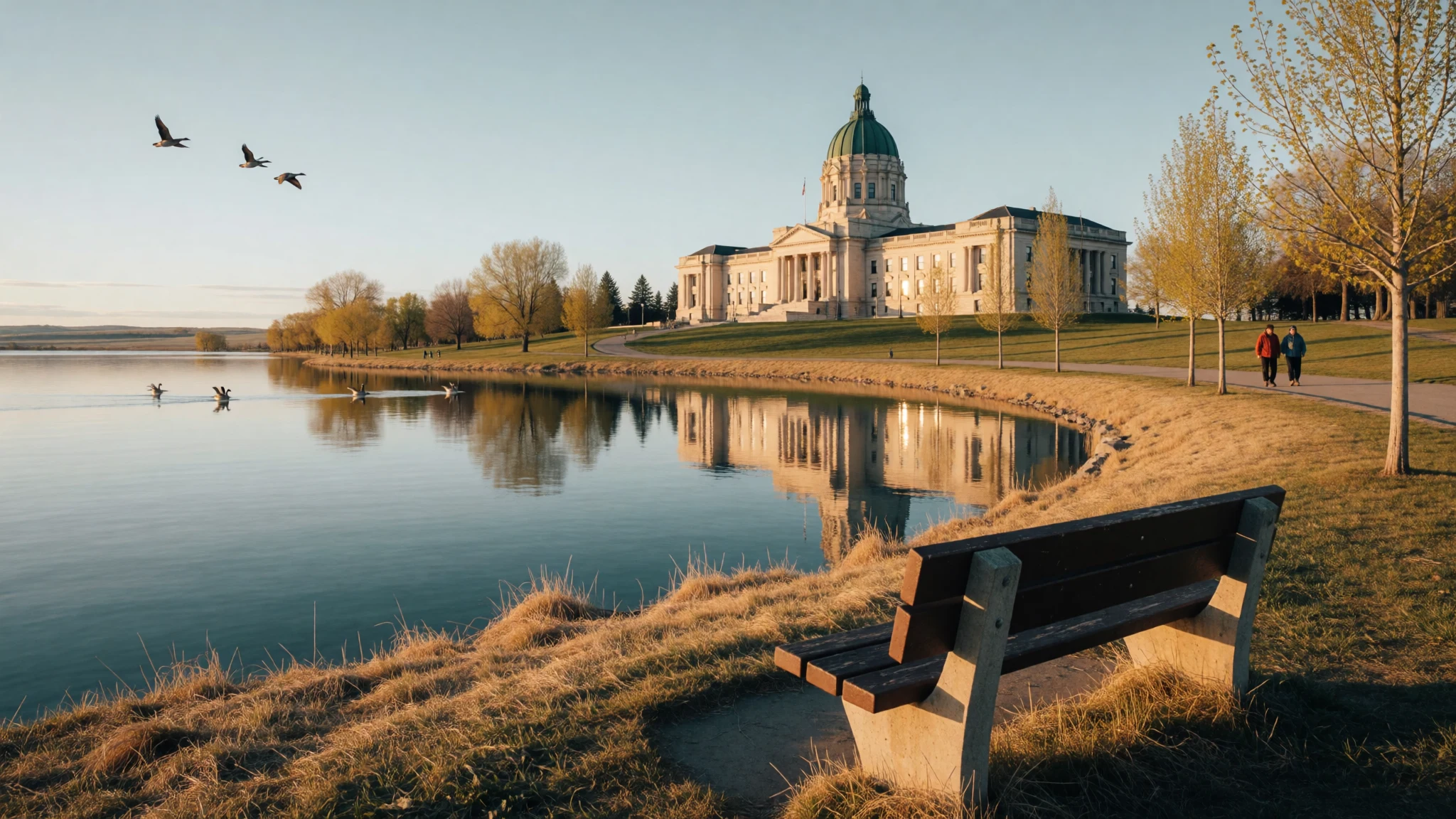
Regina is a calm prairie capital where wide skies, a landscaped lake and a Mountie training heritage make a friendly stop on a Canadian road trip.
The place
Regina is the capital of Saskatchewan, a province in the middle of the Canadian prairies. It is the second-largest city in the province, with a population of 226,404, and it works as the commercial centre for the south. The city sits at 577 m above sea level on ground so flat that the horizon seems to be doing most of the scenery. There are no hills, no coastline and no mountains in view, and that is exactly the point: the sky is enormous, sunsets run for an hour, and the weather arrives where you can see it coming.
The one real landscape feature is Wascana Creek, a trickle that early planners dammed to make a decorative lake just south of the downtown towers. Around that water grew a large park, and the provincial legislature stands on its shore. Walk from the office blocks to the lake in ten minutes and the city changes from grid streets to lawns, geese and joggers.
The main spine is Albert Street, which doubles as Highway 6 and runs south towards the American border. The Trans-Canada Highway passes the city too, so many visitors arrive by car, mid-journey between Winnipeg and Calgary. Regina is not a place of dramatic sights. Its appeal is scale, space, friendly people and a slower pace. Expect short queues, easy parking and some excellent skies. Winters are long and properly cold, and summers can be hot, so the season matters more here than in most cities.
Its story
Regina begins with a decision that was controversial even in its own day. In 1882 the lieutenant-governor of the North-West Territories, Edgar Dewdney, chose this spot as the territorial seat of government. Rivals such as Battleford, Troy and Fort Qu'Appelle had trees, rolling parkland and plentiful water, and many people expected one of them to become the capital of the plains. The chosen site had almost none of that, only open grassland and a thin creek.
The place already had a name. In Cree it was Oskana, 'buffalo bones', translated into English as Pile-of-Bones, after the bison remains that had collected near the water. The settlement was renamed Regina, Latin for 'queen', in honour of Queen Victoria. The suggestion came from her daughter Princess Louise, whose husband was then Governor General of Canada.
There was a catch that made the choice a national scandal. Dewdney owned land beside the route the Canadian Pacific Railway was expected to take, so he stood to profit from the capital landing there. Critics called it an obvious conflict of interest, and the argument followed him for years.
The railway did arrive, and the settlement grew around it. Regina went on to serve as the seat of government for a territory that included today's Saskatchewan and Alberta, and later became the capital of the province itself. The lake, the park and the legislature were all planned on a landscape that nature had left blank, which is why the city feels so deliberately designed.
What to see
- Wascana Centre and the lake — South of downtown
The park around Wascana Lake is the city's green heart, laid out by early planners who dammed the creek. Paths run past water, lawns and public buildings, and the Albert Street Bridge crosses it at 260 m. Come on a summer evening for the best light.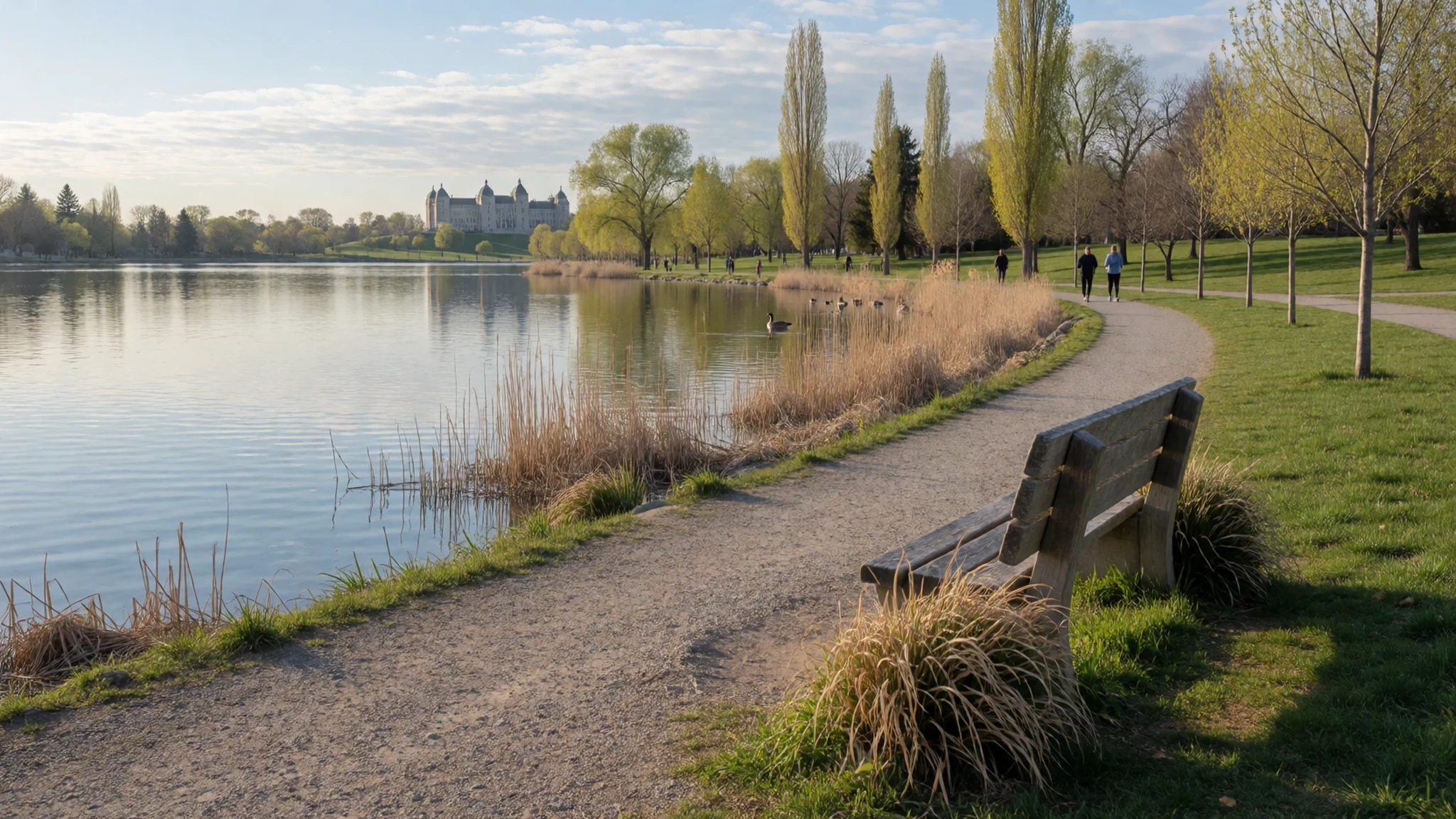
- Saskatchewan Legislative Building — Wascana Centre
The provincial legislature stands in its own grounds on the lake shore. Its dome and stonework make it the most recognisable building in the city. Walk the gardens freely, and check the official provincial website for tour times and any security rules.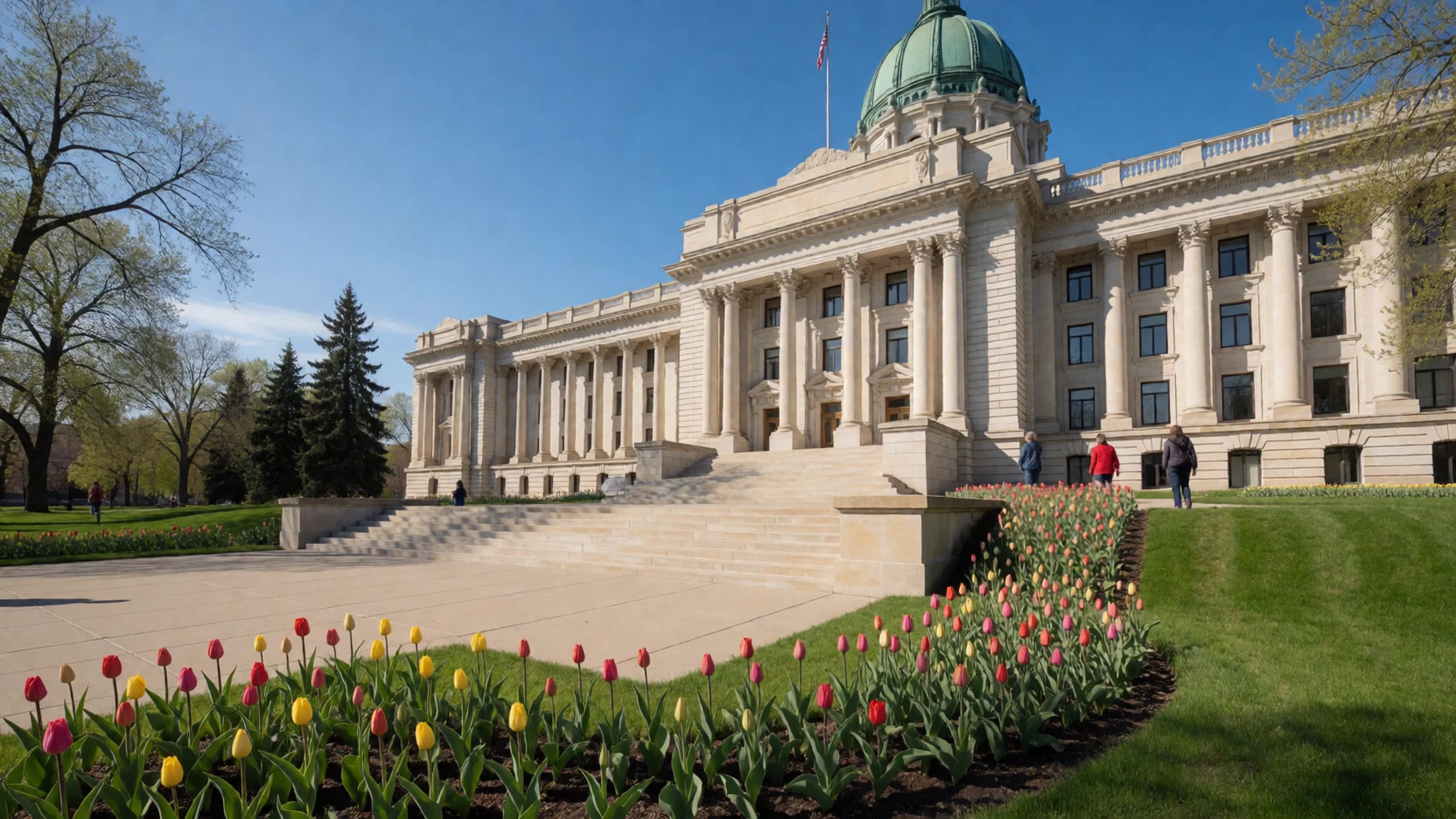
- Royal Saskatchewan Museum — Wascana Centre
This museum covers the natural history of the province, from dinosaurs to Indigenous history. A half-size robotic T. rex called Megamunch is a hit with children. It is a good wet-weather or deep-winter option, and an easy walk from the lake.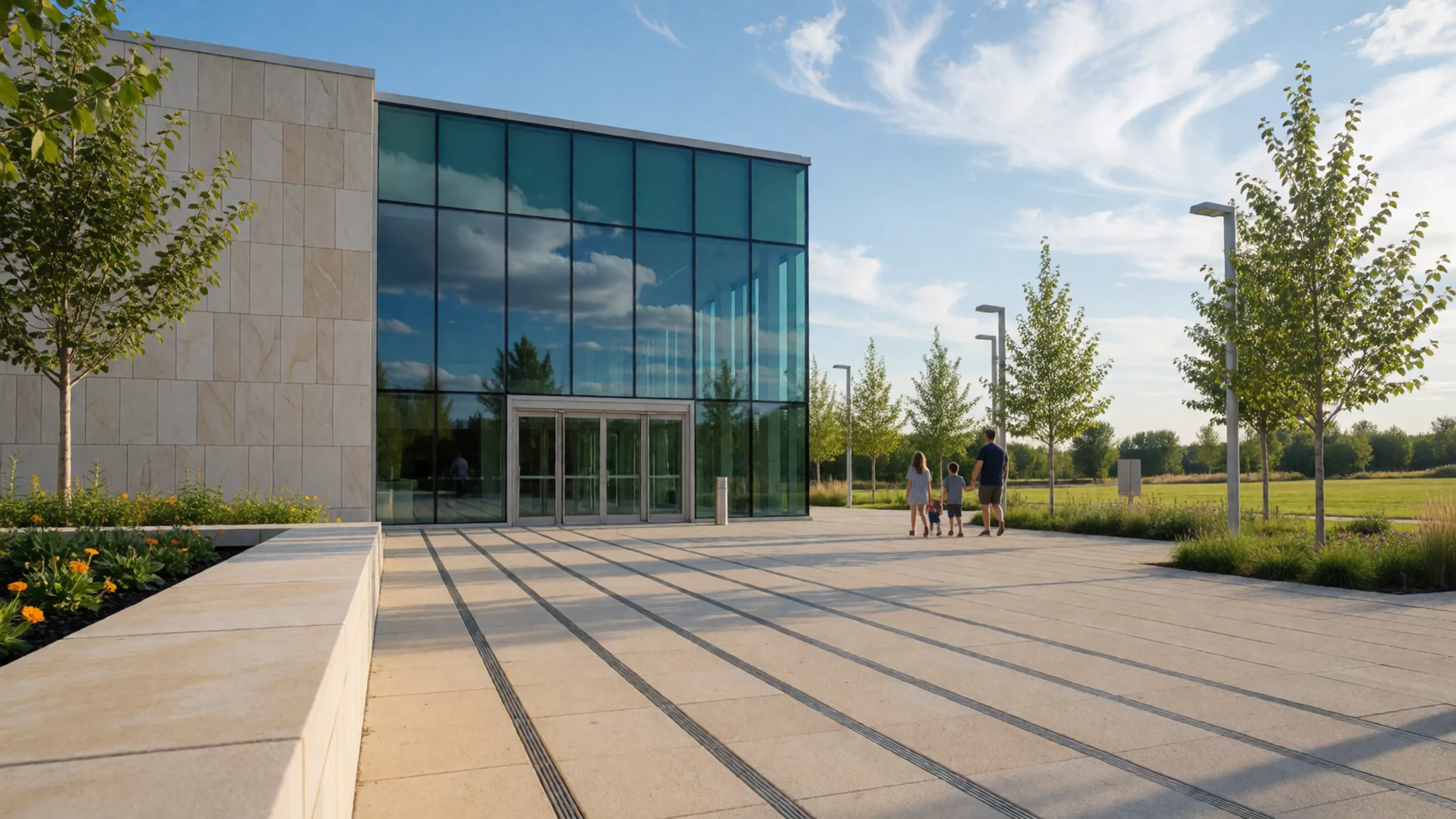
- RCMP Heritage Centre — West of downtown
Regina is where Canada's federal police force trains its recruits, and this museum tells that story. The building was designed by Arthur Erickson. Check the official site for opening times and for whether any parade or ceremony is on during your visit.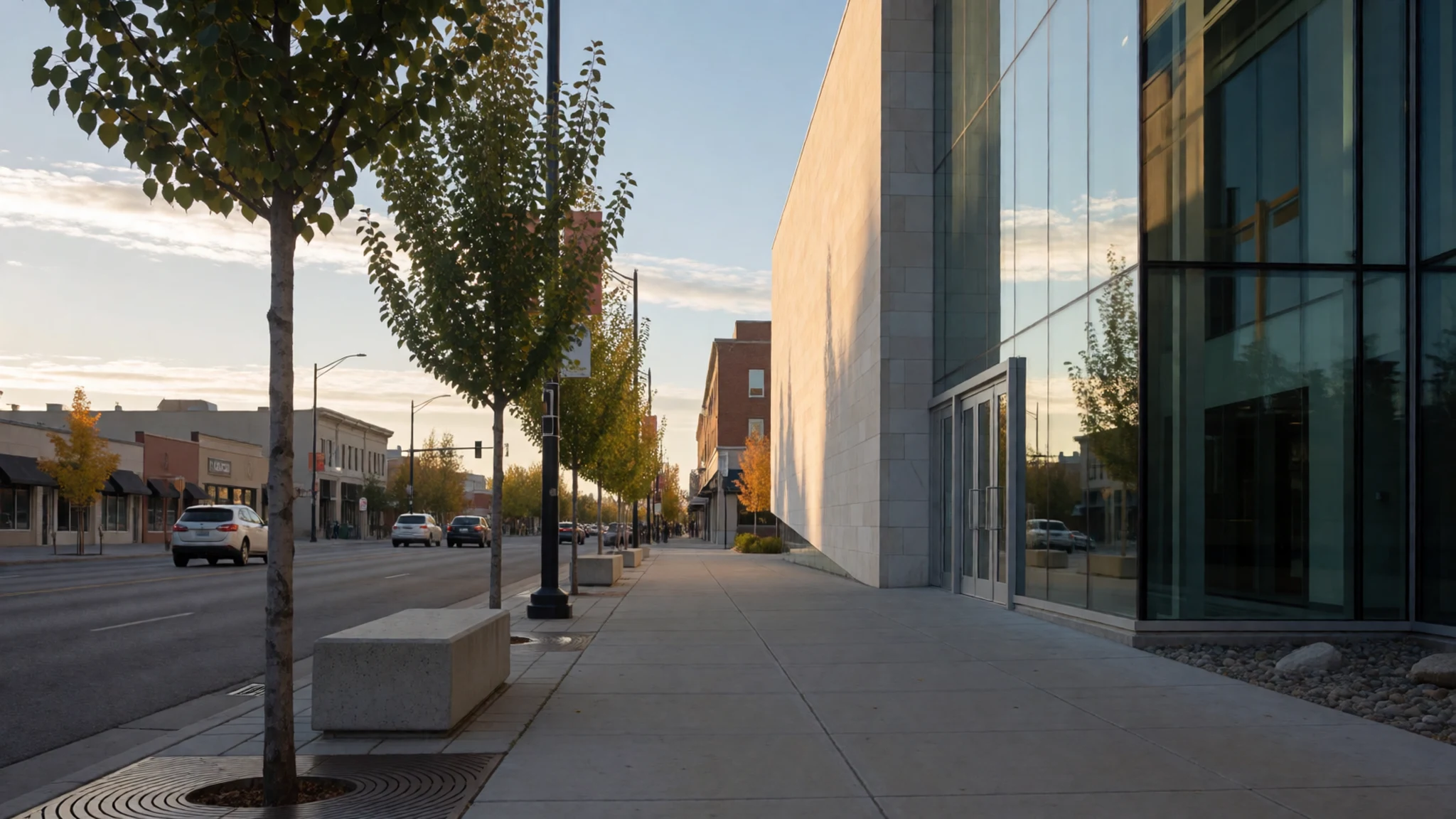
- MacKenzie Art Gallery — Albert Street, near the lake
The gallery shows touring exhibitions and local work, and has a shop and a theatre. It stands at the edge of the provincial government grounds, so it combines easily with a stroll to the legislature and the lake.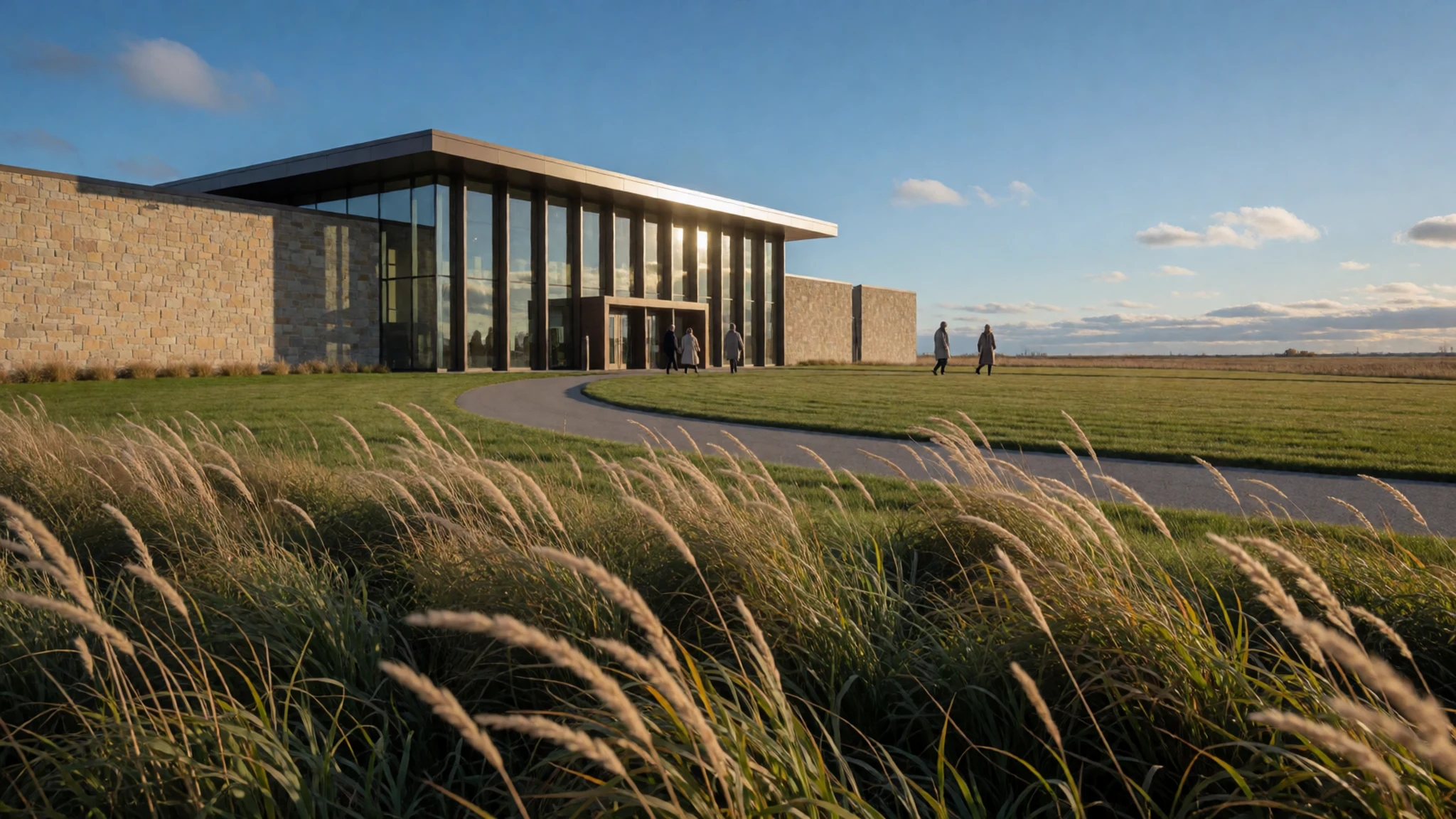
- Victoria Park cenotaph — Downtown
Victoria Park is a small downtown square with a war memorial at its centre. It is a quiet place for a coffee break, with office towers and older façades around it, and it shows how compact the city centre is.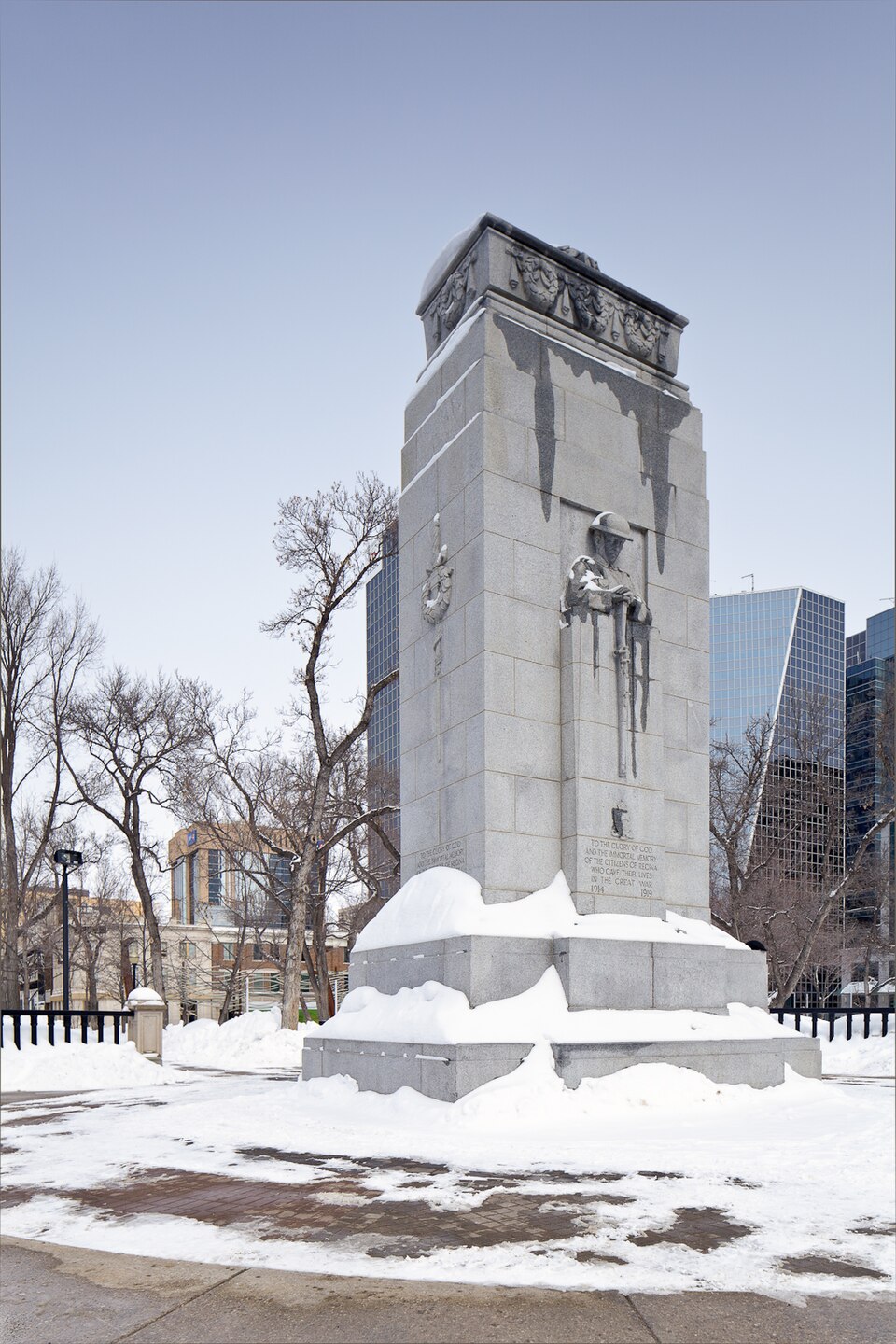
Culture
Regina has a lively arts life for a city of its size. The University of Regina has faculties of music, theatre and fine arts, and they feed a steady supply of concerts, plays and dance. The art scene has deeper roots too. In the 1950s a group of painters known as the Regina Five, based at Regina College, the university's predecessor, won national recognition and put the prairie city on the Canadian art map.
The MacKenzie Art Gallery began in cramped rooms at the old college campus and now occupies a large purpose-built home near the government grounds. Public art, festivals and small theatres fill out the calendar, and summer brings outdoor events by the lake.
The city's story also includes the First Nations whose land this is. The Cree name Oskana, meaning buffalo bones, still appears in local history and place names, and Indigenous history is part of the provincial museum's displays. Saskatchewan is a place where Indigenous, Métis and settler communities share a long and sometimes difficult history, and local people are generally happy to talk about it honestly.
Social life is easy and informal. People are friendly and chatty, queues are orderly, and small talk about the weather is a national sport, especially in winter. Sport matters here, with the local football team drawing loyal crowds in green. Bring curiosity and patience for slow, open conversations.
When visiting memorials, museums and Indigenous heritage displays, keep your voice low, follow any signs about photography, and ask before photographing people.
What to wear
Regina has no single traditional costume, because the city is young and its population has come from many places. Indigenous peoples of the plains, including Cree and Métis communities, have their own dress traditions. These include beadwork, quillwork, hide and wool clothing, and the Métis sash, a woven belt in bright wool. You will see these worn at powwows, ceremonies and cultural events rather than on ordinary streets.
Everyday dress is practical. Winter is long and severe, so locals wear heavy parkas, insulated boots, toques (woollen hats), scarves and mittens, often in dark colours. In summer, shorts, T-shirts, caps and sunglasses are normal. Football match days bring a sea of green team shirts. Office dress is casual, and smart-casual is enough for almost every restaurant.
For a visitor, the main rule is to dress for the season. In winter bring a proper down or synthetic coat, thermal layers, waterproof boots with grip, gloves and a hat that covers the ears. Skin can suffer in strong wind, so cover it. In summer pack light cotton, a sun hat, sunscreen and a thin jacket for cool evenings. Rain showers can blow in quickly, so a light waterproof is sensible.
There are no strict modesty rules. At memorials, ceremonies and Indigenous cultural events, dress neatly and respectfully. Comfortable walking shoes are enough for the flat paths around the lake.
What to eat
- Prairie beef and steak — Grills and steak houses downtown
Saskatchewan is cattle country, and beef is the obvious order in the city. Look for steak houses and grills downtown, where cuts are cooked simply and served with potatoes and seasonal vegetables. Portions are generous, so share if appetites are modest.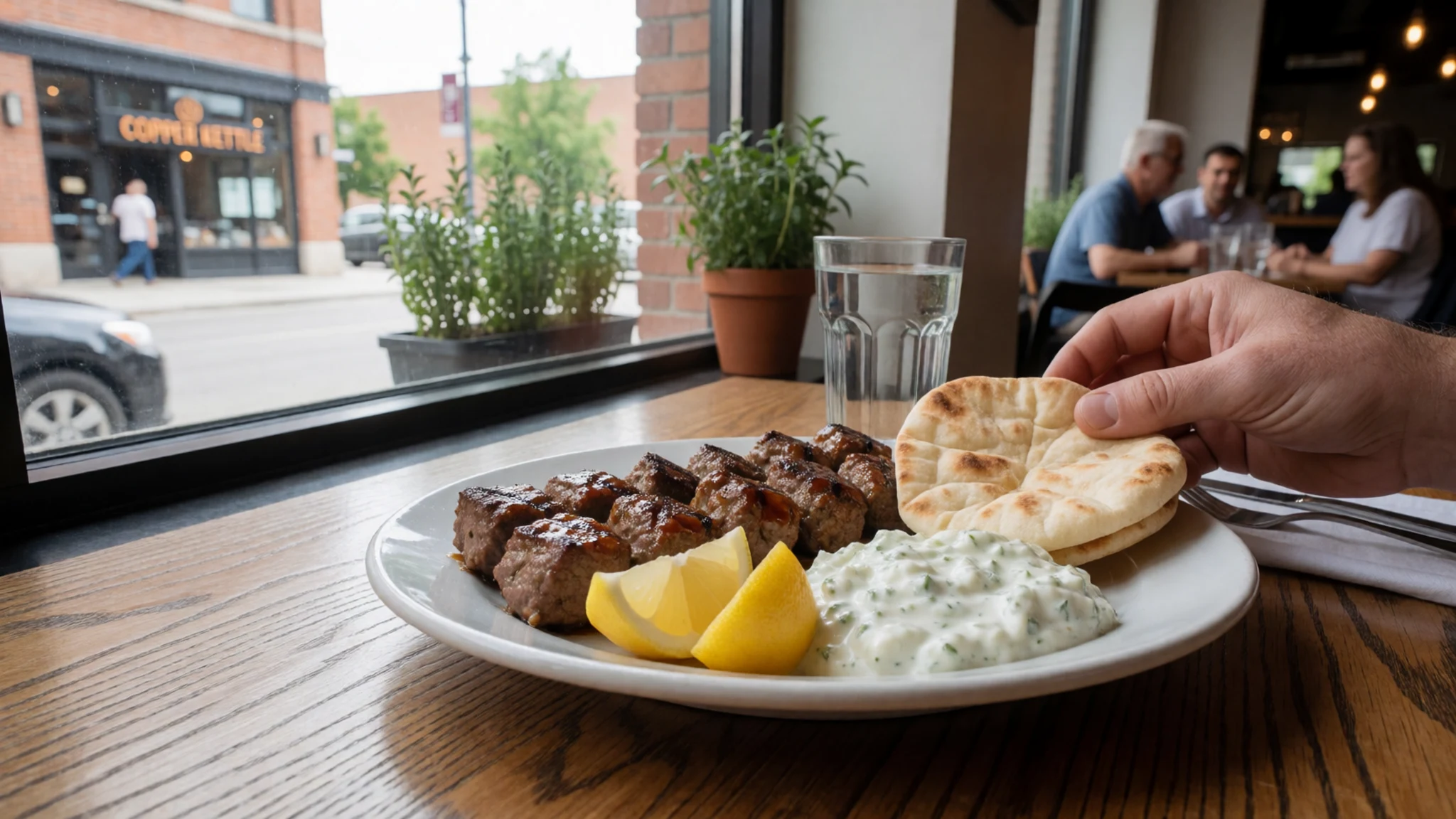
- Greek dishes — Downtown family restaurants
A long-standing downtown restaurant is known especially for Greek food. Expect souvlaki, salads with feta, lamb and lemon potatoes, all in large portions. It is a reliable option for a hearty lunch, and a good choice for groups sharing plates.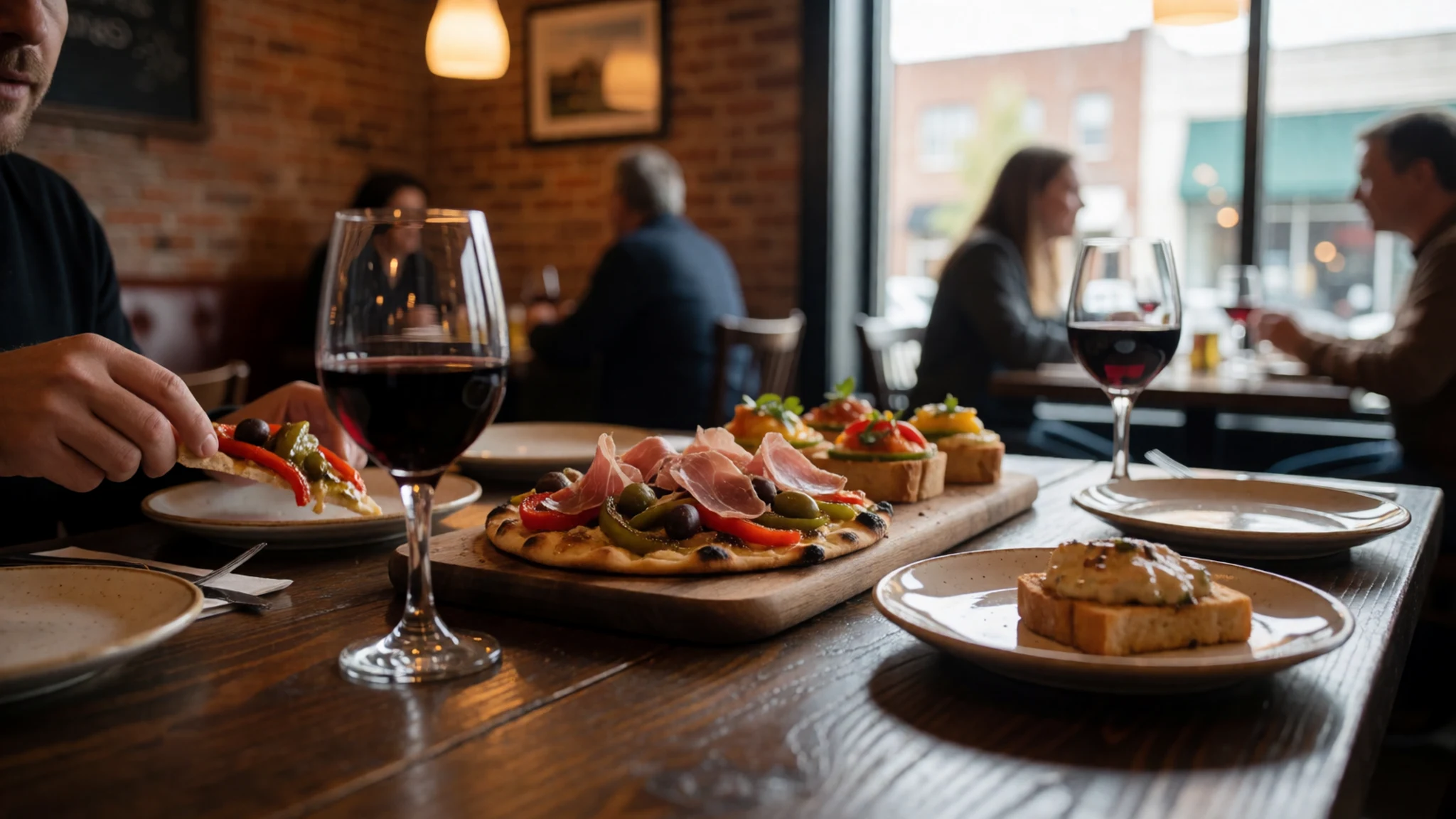
- Tapas and flatbreads — Tapas bars in the downtown core
Small plates are popular in the city, with tapas bars serving flatbreads, charcuterie and wine in relaxed rooms. They work well for lunch or a late dinner, and let you taste several things in one sitting without committing to a large main course. - Pasta — Pasta houses across the city
Italian-style pasta houses are a family favourite, with big bowls of spaghetti, lasagne and baked pasta at moderate prices. They suit groups and children, and they are a comforting choice on a cold winter evening when you need something filling. - Wild rice and pickerel — Restaurants serving regional Saskatchewan food
Pickerel, a freshwater fish from the province's lakes, is a prairie speciality, often pan-fried or served in a light batter. Wild rice appears as a side or in soups. Ask at local restaurants when it is in season.
Plan it
Best time. June to September for warm, long days and outdoor events by the lake. July and August can be hot. Winter is long and very cold, so visit then only if you are ready for it.
How long. 1–2
Getting there. Regina International Airport has direct flights from Calgary, Edmonton, Winnipeg, Toronto and Vancouver, and a bus route links it to downtown on weekdays. By road, the Trans-Canada Highway passes through the city, about 5 hours from Winnipeg and 7 hours from Calgary.
Budget. mid
Tips
- Hire a car if you plan to see the wider prairies, as distances are long
- Check the official city site, https://regina.ca/, for events and transport
- Carry layers even in summer, as evenings can turn cool
- Check opening hours for museums and the legislature before you go
Etiquette
- Ask before photographing people, especially at cultural events
- Keep to marked paths in the park and respect memorials
- Queue patiently and greet staff politely
Nearby
Sources
- Wikidata Q2123 (CC0)
- Wikipedia: Regina, Saskatchewan (rev 1383298422) (CC BY-SA 4.0)
- Wikivoyage: Regina (rev 5415656) (CC BY-SA 4.0)
- Photo 01 Regina downtown, 28thegreat (CC BY-SA 4.0)
- Photo 02 Regina, Quintin Soloviev (CC BY 4.0)
- Photo 03 Victoria Park cenotaph, Tintaggon (CC BY 3.0)
- Photo 04 Legislative Assembly, Haydn Blackey (CC BY-SA 2.0)
- Photo 05 Prince Edward Building, Drm310 (CC BY 3.0)
- Photo 06 Royal Saskatchewan Museum, Muhsatteb (CC BY-SA 4.0)
- Photo 07 RCMP Heritage Centre, Drm310 (CC BY 3.0)
- Photo 08 Wascana Lake, Masalai (CC BY 3.0)


