Redwood National Park
Redwood National Park, United States
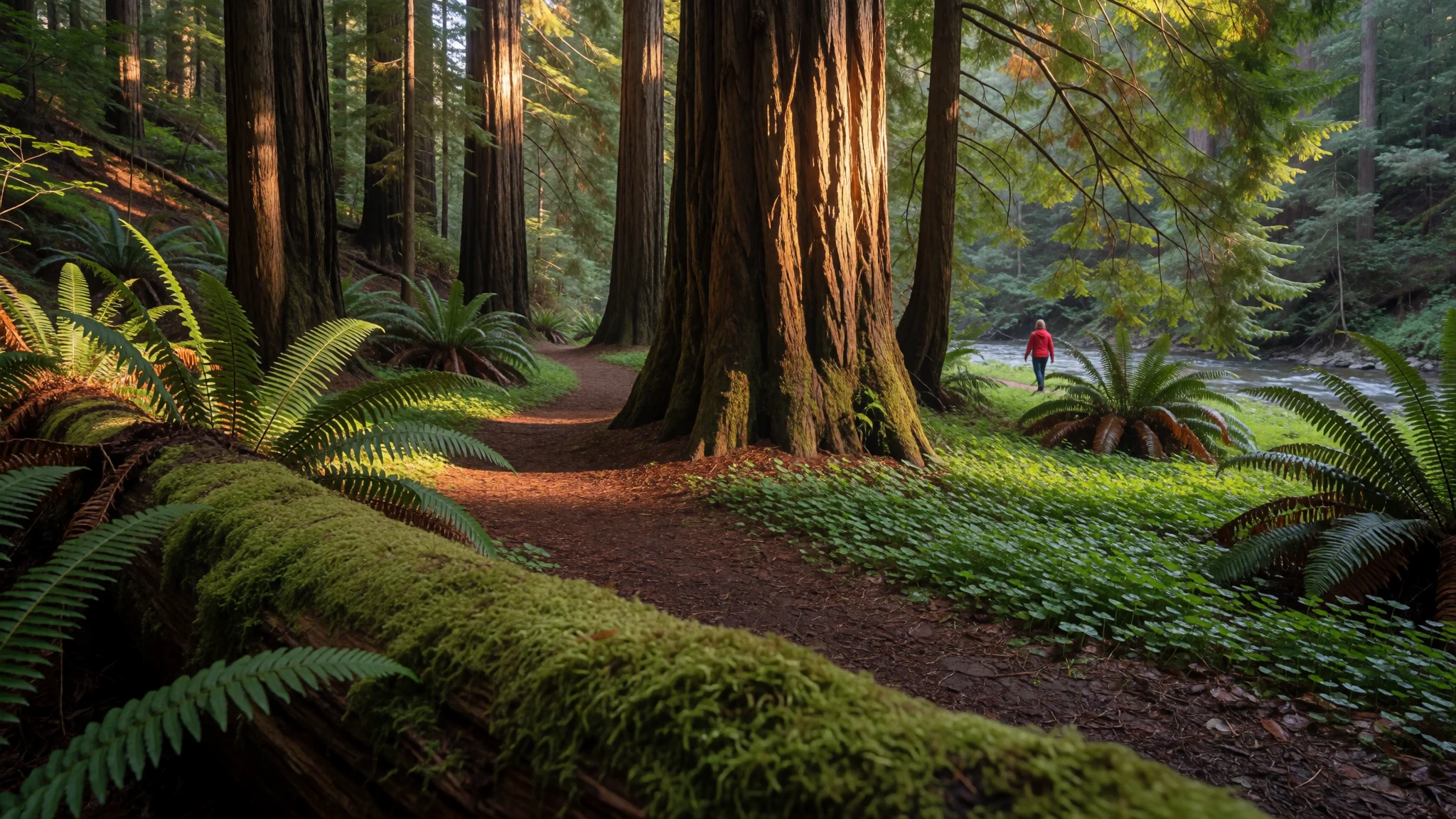
Redwood National Park holds some of the last old-growth coast redwoods, standing in cool fog beside a wild northern California shoreline.
The place
Redwood National Park is one piece of a joined-up group of protected areas on the northern California coast, managed together as Redwood National and State Parks. One national park and three state parks sit side by side: Redwood itself, Del Norte Coast Redwoods, Jedediah Smith Redwoods and Prairie Creek Redwoods. Between them they cover about 560 square kilometres across Del Norte and Humboldt counties and protect roughly 45 percent of the old-growth coast redwood forest that remains. The parks date from 1968 and are also a UNESCO World Heritage property.
The coast redwood is an endangered species, counted among the tallest and most massive trees on Earth, and it grows only in a narrow belt of damp, mild air near the sea. Fog matters as much as rain here. The trees take moisture from it through the dry months, which is why healthy forest survives even where rainfall is lower.
The setting is more varied than a single forest walk suggests. About 60 kilometres of coastline belong to the parks, along with grassy prairies, rivers that carry Chinook salmon, and canopy where the northern spotted owl lives. Steller's sea lions use the shore. The land is also seismically active and prone to tsunamis, which shapes how the coast is managed.
The main coastal highway runs through the parks, and smaller scenic roads branch off to individual groves, trailheads and beaches. Distances between sights are real, so a car is the practical way to move around. Crescent City to the north and the Humboldt Bay towns to the south are the usual bases for supplies and a bed.
Its story
Redwood National Park sits on land that has been home to people for thousands of years. The Yurok, Tolowa, Karuk, Chilula and Wiyot nations all have historical ties to this stretch of coast, and historians describe northwestern California as having an unusually dense mix of distinct native nations, with well over thirty living in the wider region. The Yurok, Chilula and Tolowa were the groups most closely tied to the land that is now parkland. Yurok villages were numerous along the river and shore, while the Chilula lived beside Redwood Creek, in close company with the big trees, and moved up into the open Bald Hills in summer.
That way of life was upended after about 1850. The Gold Rush brought miners and settlers, and a timber industry followed that supplied lumber to the whole West Coast. Native communities suffered badly in this period. For decades, loggers cut the redwood forest in large clear-fell blocks, and the original cover, which ran along far more of the California coast than survives, shrank steadily.
Conservation arrived in earnest in the 1920s, when the Save the Redwoods League helped establish Prairie Creek, Del Norte Coast and Jedediah Smith as state parks, along with others. The national park followed in 1968, and today the state and federal areas are run as one. What visitors walk through is therefore both a surviving forest and a landscape recovering from heavy logging, with Native nations still present and part of its story.
What to see
- Big Tree Wayside Walk — Prairie Creek Redwoods State Park
Big Tree Wayside Walk, in the Prairie Creek area, is a very short stroll from the road and suits anyone pressed for time. The path reaches several huge trunks within minutes, so the scale of the forest becomes clear quickly. Many visitors come back later for a longer trail once they have seen this.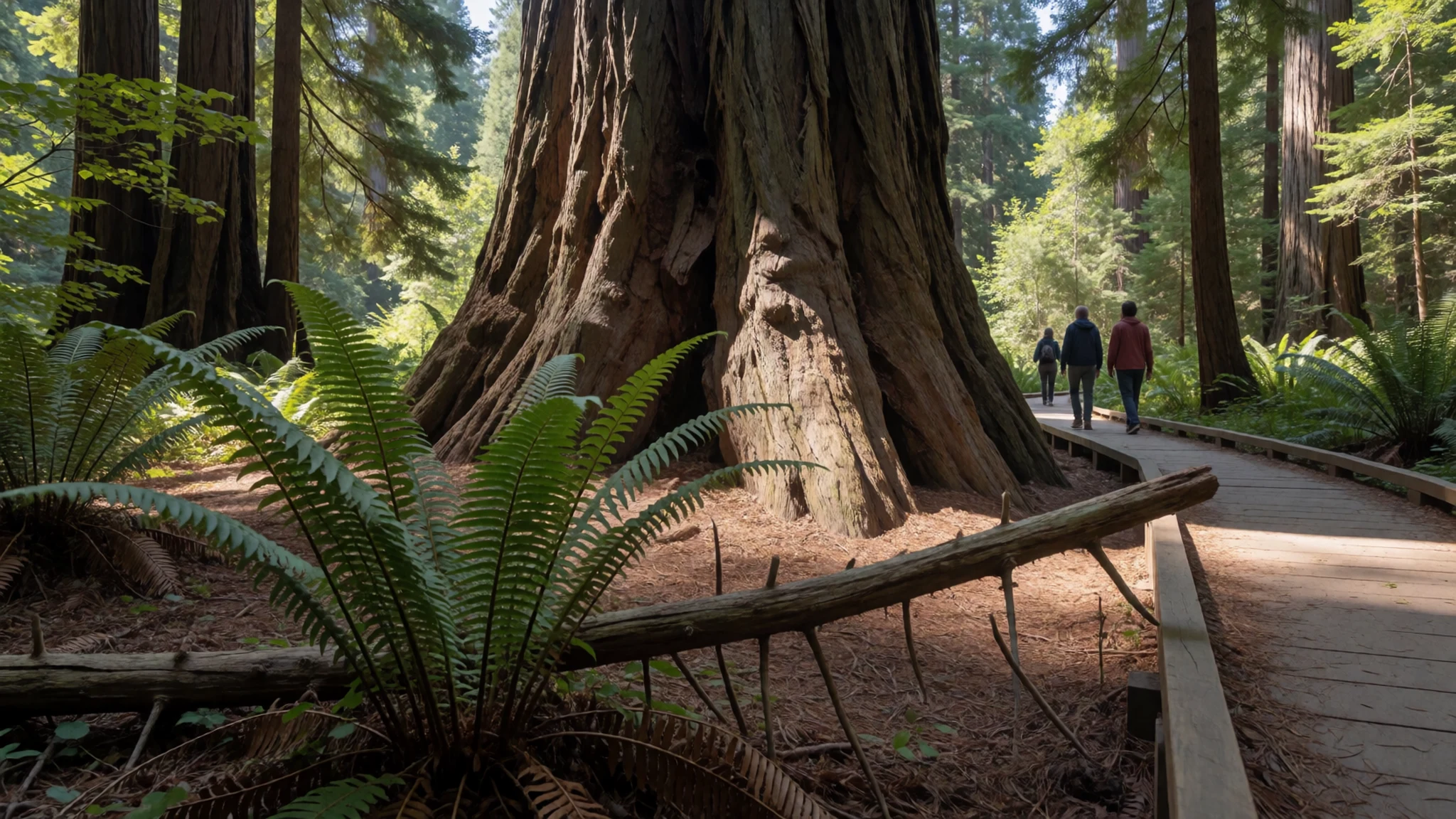
- Lady Bird Johnson Grove — Southern end of the parks
Lady Bird Johnson Grove, in the southern part of the parks, is a well-known loop through old-growth redwoods on an easy path. Parking needs thought, because the access road is poorly suited to RVs and trailers. Go early or late in the day for quieter conditions, and expect mist between the trunks.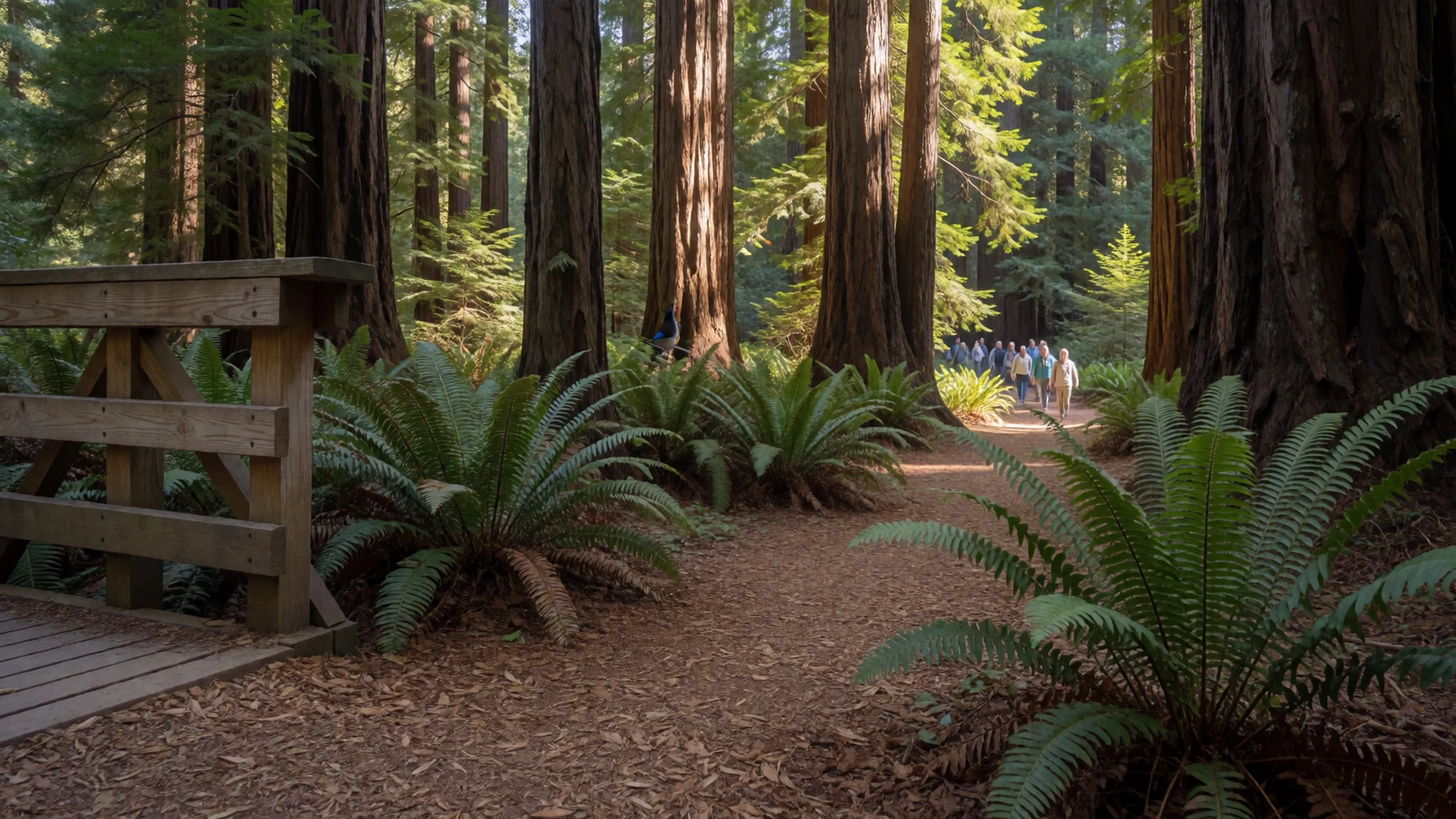
- James Irvine Trail and Fern Canyon — Prairie Creek Redwoods State Park
The James Irvine Trail leads through redwood and spruce forest to the coast and back via Fern Canyon, one of the longer hikes in the parks. Fern Canyon itself is a narrow gorge with walls draped in ferns and a stream along the floor. Wear footwear that can get wet.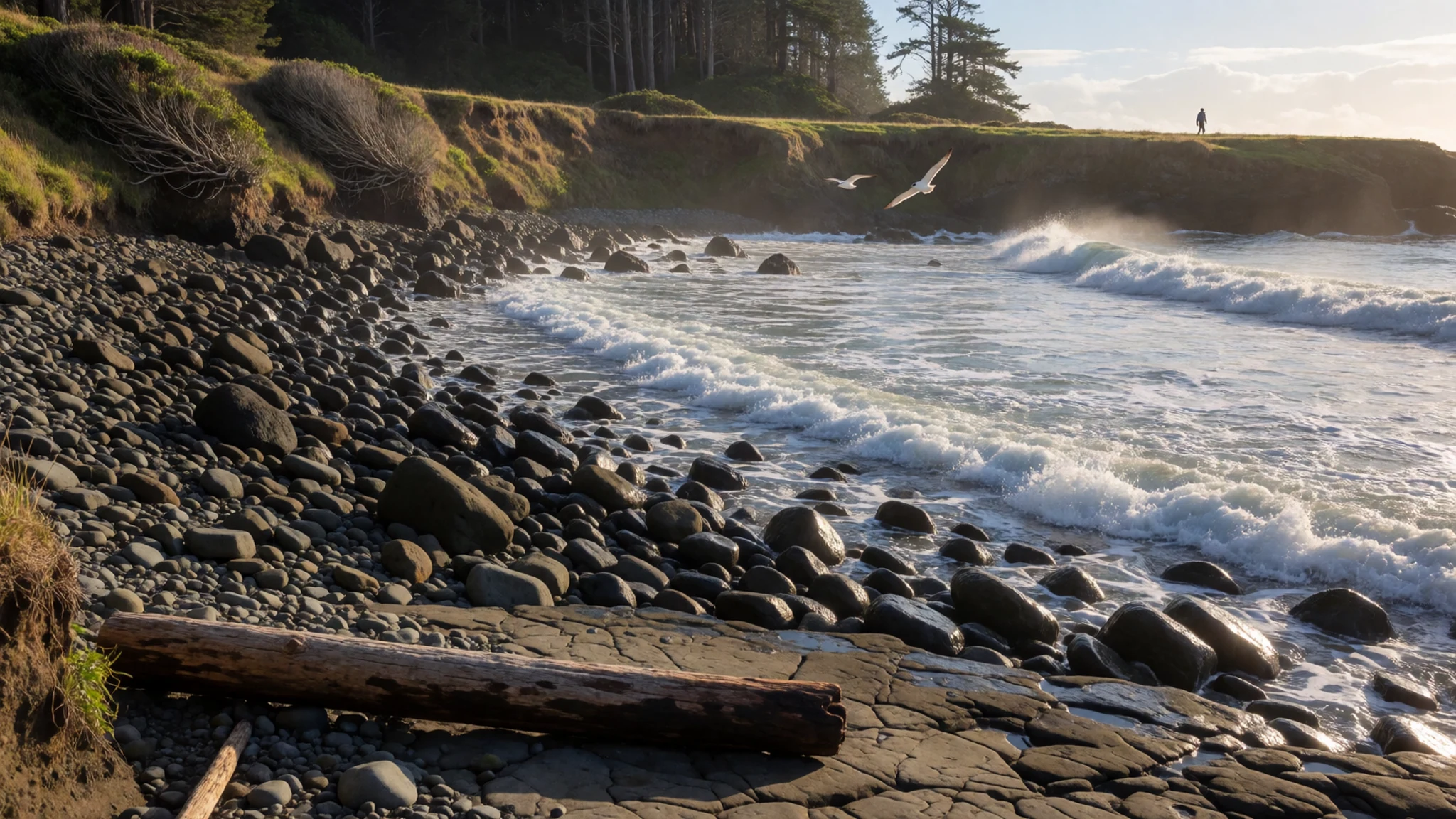
- Simpson-Reed Trail — Jedediah Smith Redwoods State Park
The parks offer various easy walks through old-growth redwoods in the northern areas. These paths are often level and well suited to families and visitors with limited mobility. The same area has other groves nearby, so it combines well with a slow drive along the river.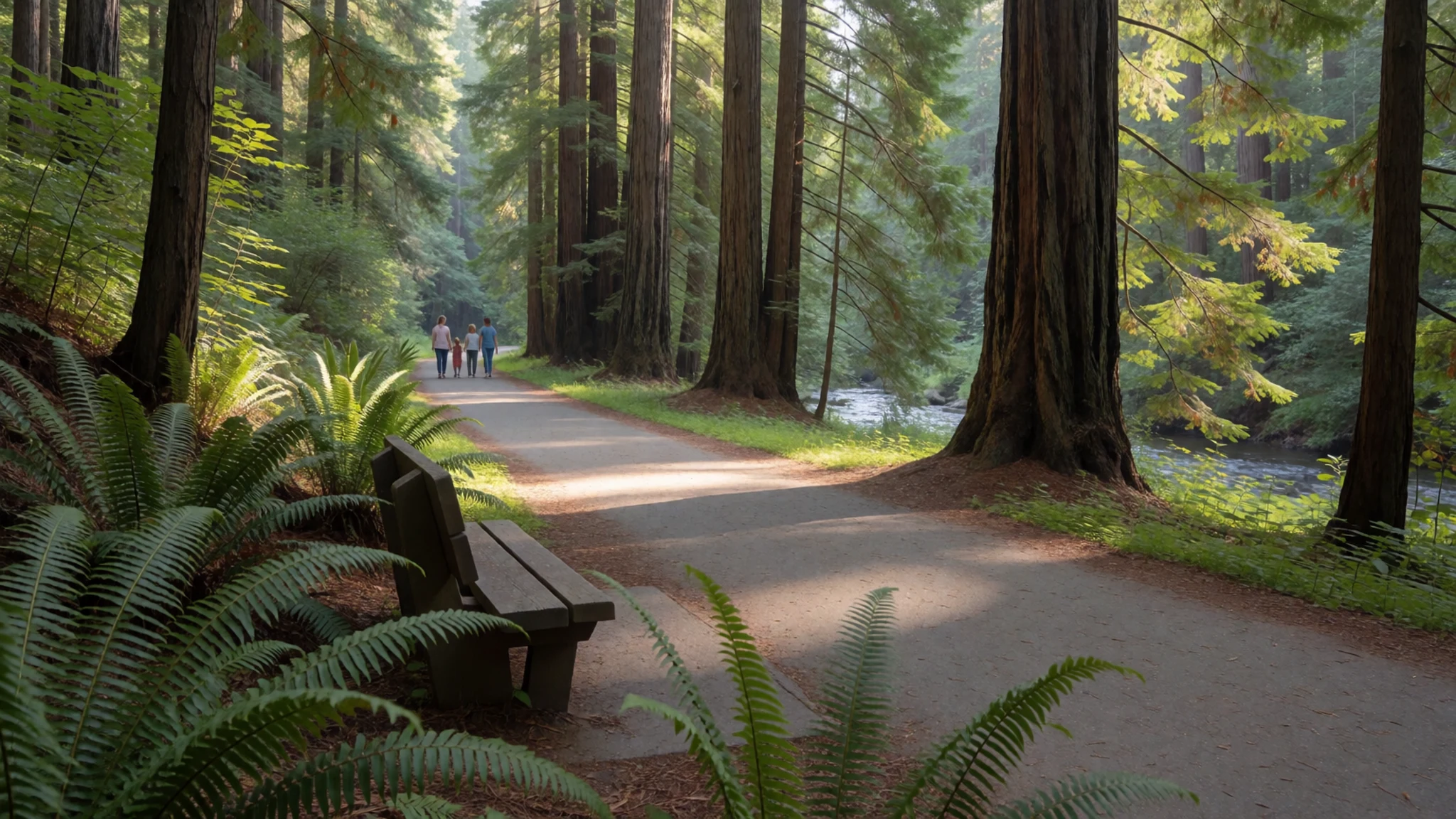
- Prairie Creek and Foothill Trail loop — Prairie Creek Redwoods State Park
Trails in the southern part of the parks follow creeks beneath very tall trees, providing a good choice for families and mixed-ability groups. The water and the light through the canopy give it a different feel from the open groves beside the road.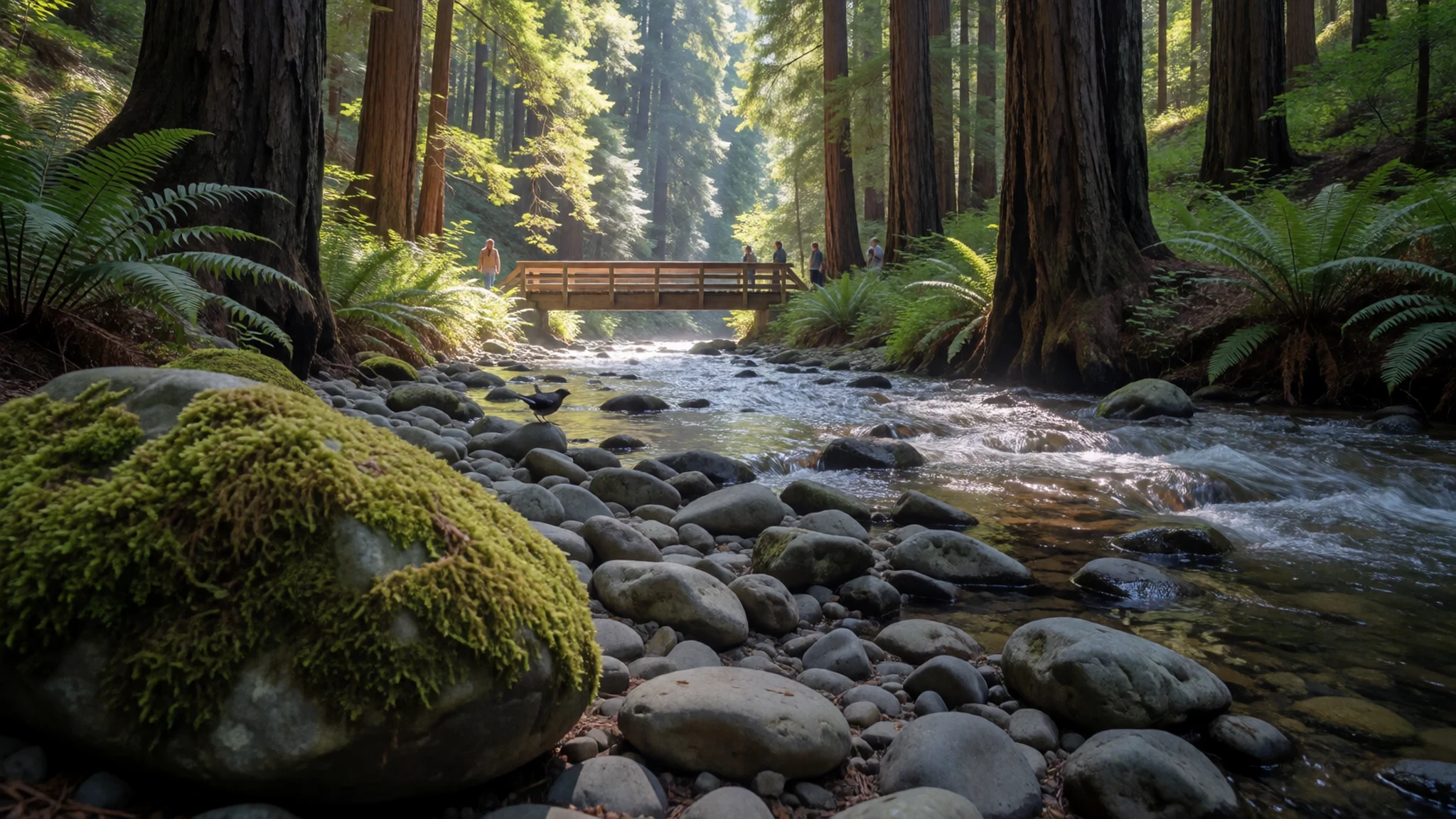
- Klamath River Radar Station — Klamath River area, northern coast
The northern coast offers quiet spots for reflection away from the forest trails, providing a change of pace for visitors. These areas allow visitors to appreciate the scale of the coastline and the history of the region. Check the official site for access and any seasonal closures.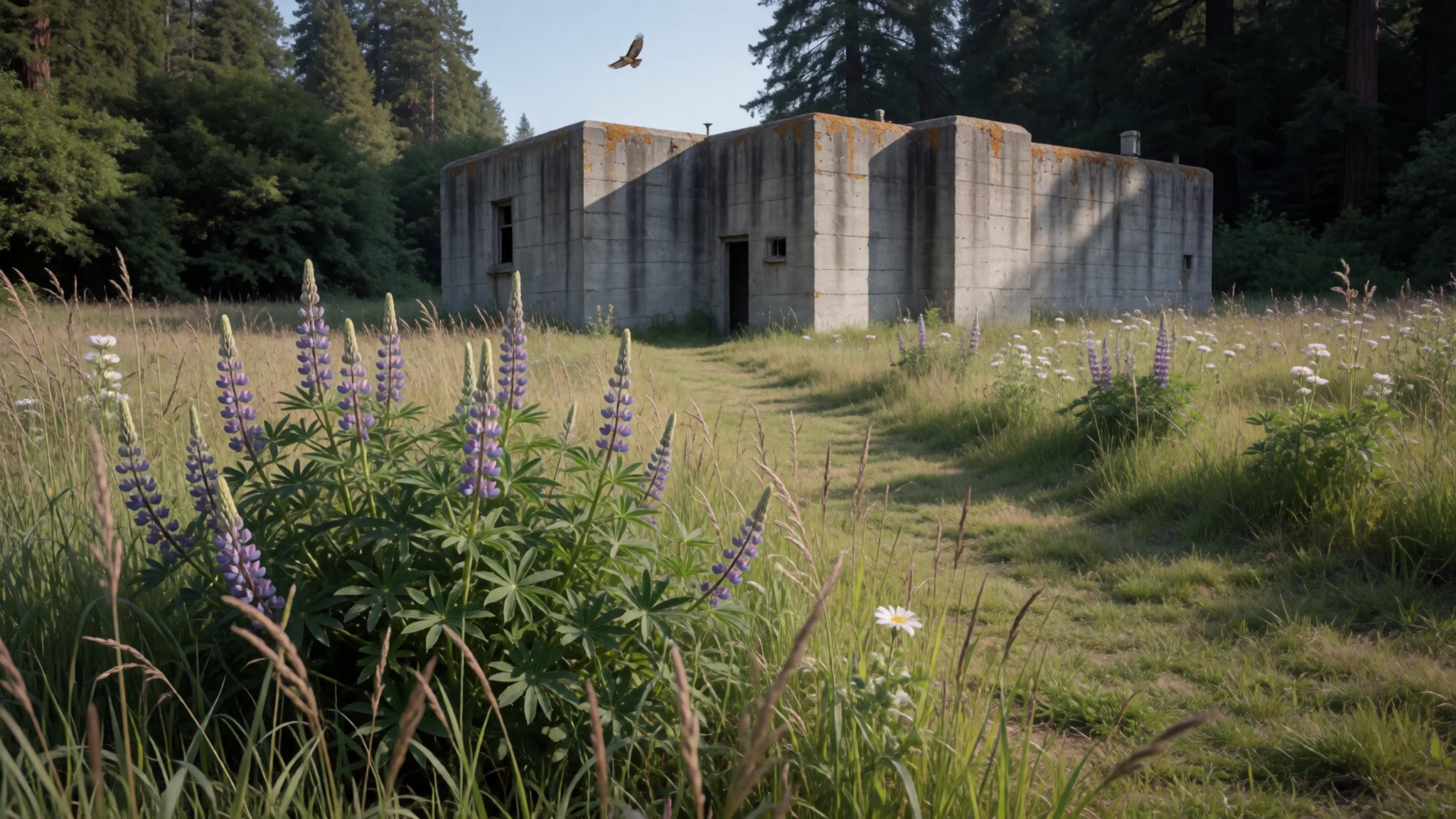
Culture
Redwood National Park lies in the homelands of the Yurok, Tolowa, Karuk, Chilula and Wiyot, and the Native presence here is living, not only historical. The Yurok are tied to the Klamath River and the coast, and the Tolowa to the northern shore. Reconstructed plankhouses, the traditional Yurok wooden dwellings, show how people built from the same redwood the forest is known for. Ceremonies, basket weaving, canoe making and fishing remain part of community life, and tribes continue to work with the parks on how land and culture are cared for.
The forest also carries a more recent culture of conservation. The Save the Redwoods League, formed in the early twentieth century, raised money and pressure to protect groves that would otherwise have been logged. Local life in the surrounding counties still reflects the timber past, in small towns, logging history and a strong outdoor tradition of camping, fishing and walking.
Visitors will find the atmosphere quiet. Many people come to walk in near silence, and the trees seem to invite it. Interpretation at visitor centres and ranger programmes is the best way to learn about Native history, and the parks' official site lists events when they are open to the public.
On the trails, stay on marked paths so roots and undergrowth are not trampled, and keep your voice low so that others and the wildlife can enjoy the quiet.
What to wear
Redwood National Park sits in the traditional territory of the Yurok, Tolowa, Karuk and neighbouring nations, whose regalia is made from local materials. Woven caps of spruce root and other plant fibres, deerskin skirts and capes, strings of dentalium shell and pieces of abalone shell are central to dress for ceremonies such as the Brush Dance and Jump Dance. Everyday traditional clothing was made from hides and woven fibre, while regalia is now worn mainly at dances, community gatherings and cultural events.
What people actually wear in the surrounding towns is practical outdoor clothing: fleeces, waterproof jackets, jeans, work boots and rubber boots. The coast is cool all year and often damp, so style gives way to warmth and dryness.
Visitors should dress in layers, with a waterproof shell even in the dry months, because fog and drizzle are common and the shade of the forest is cool. Sturdy trainers or walking shoes with good grip suit most trails, since paths can be muddy and roots slippery. For Fern Canyon, shoes that can get wet are sensible. A warm hat and a light scarf help on the beach. There are no modesty rules to follow on the trails, but ceremonial regalia should never be touched or photographed without permission.
What to eat
- Dungeness crab — Harbour seafood counters, Crescent City
Dungeness crab is a local seafood favourite in the cooler months, cracked and eaten with melted butter and bread. It is sold fresh around Crescent City's harbour, and seafood counters and dockside shops in the coastal towns often have it cooked to order.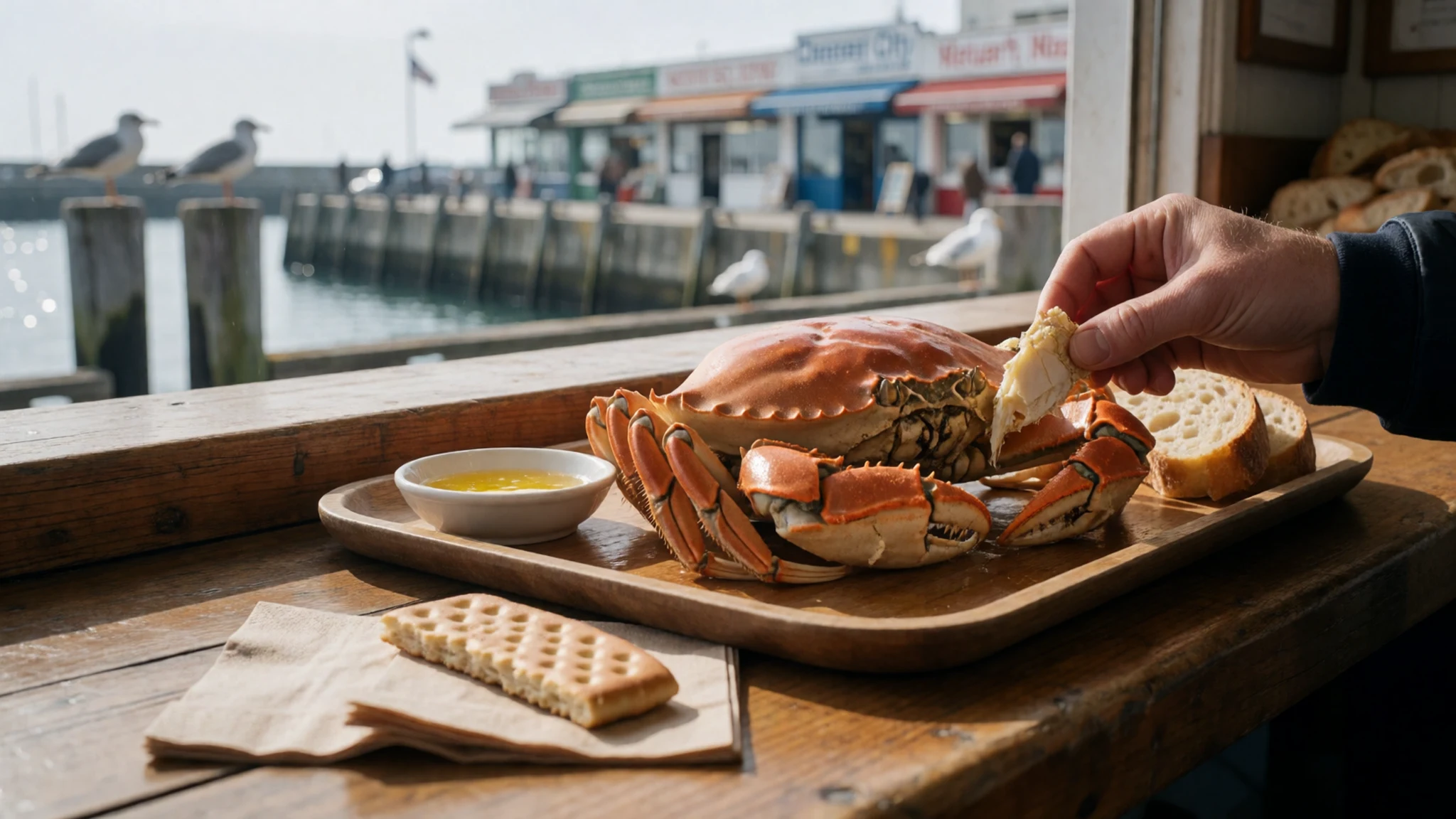
- Smoked salmon — Fish markets and delis in coastal towns
Smoked salmon, often from wild fish, is a regional staple that reflects the long importance of salmon to the Native nations here. It is sold in vacuum packs that travel well, and makes a good picnic filling with crackers and cheese.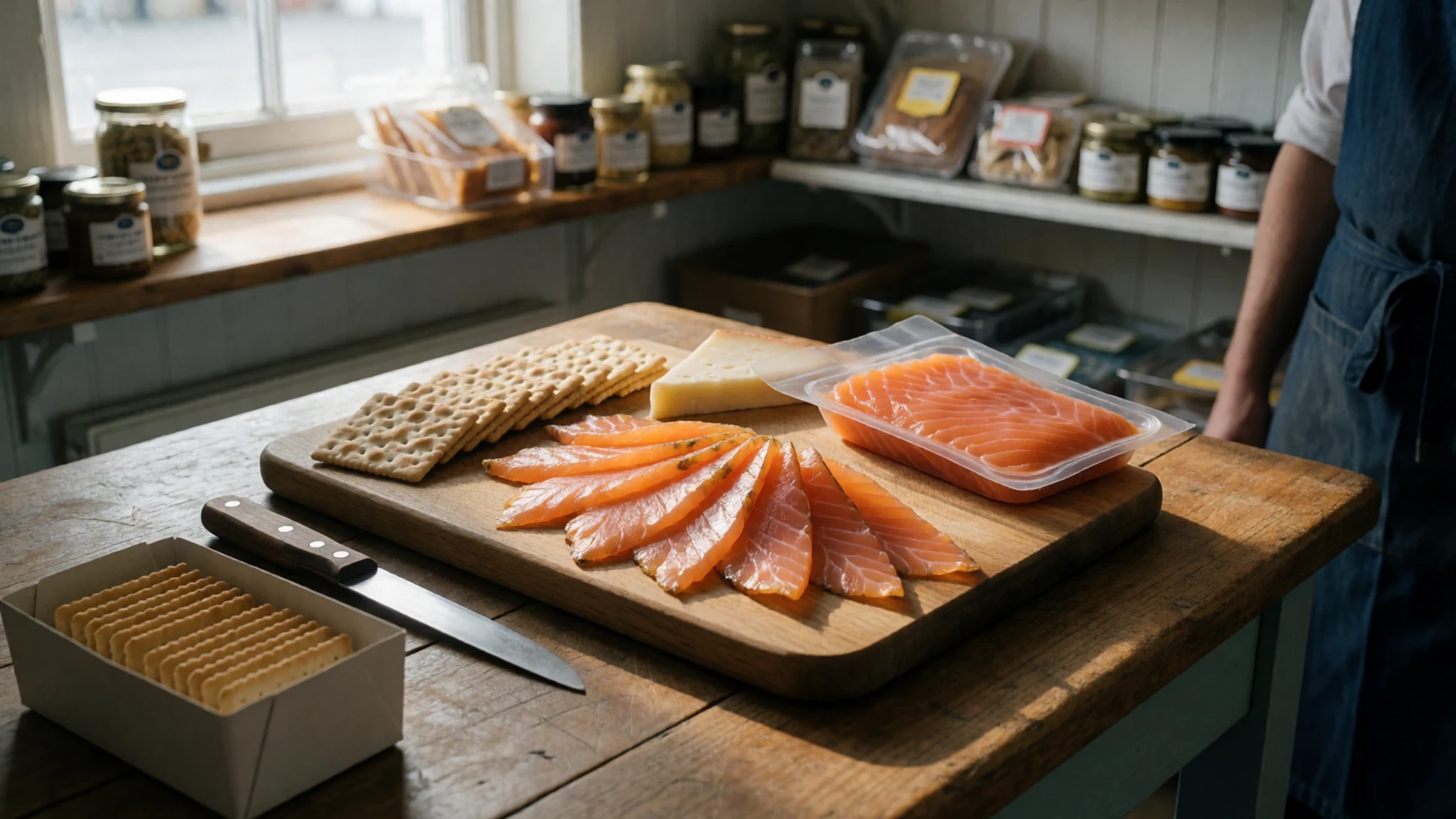
- Humboldt Bay oysters — Oyster bars around Humboldt Bay
Oysters from Humboldt Bay are served raw on the half shell or grilled with butter and garlic. They are cultivated in the bay, and eateries in Arcata and the nearby coast usually list them. Order them after a damp day's walking. - Clam chowder — Seafood eateries in Crescent City and Trinidad
Clam chowder is a thick, creamy soup with potatoes and clams, usually served in a bread bowl or a mug. It suits the fog and cool air of the coast and appears on the menus of most seafood eateries in the nearby towns. - Picnic supplies — Grocery shops and bakeries in gateway towns
There are no restaurants or food vendors inside the parks, so a picnic is the norm. Stock up on bread, fruit, cheese, local honey and baked goods in the gateway towns before heading into the forest, and carry out all rubbish.
Plan it
Best time. June to September, when July and August are the hottest and driest months. Rain is heavy through the rest of the year and peaks in December, so waterproofs are needed outside summer. Temperatures along the coast stay mild all year.
How long. 2–3
Getting there. Arcata-Eureka Airport, south of the parks in McKinleyville, has limited flights from San Francisco and Denver. Del Norte County Regional Airport in Crescent City is smaller, so check current schedules. From either, hire a car and drive on the main coastal highway. From the northeast, an inland highway reaches the parks. Side roads such as the Newton B. Drury Scenic Parkway, Coastal Drive and Bald Hills Road lead to the groves.
Budget. mid
Tips
- Bring all your own food and water, since there are no food vendors inside the parks
- Pack a waterproof jacket and warm layers even in July and August, because fog is common
- Check the official site, https://nps.gov/redw, for road conditions, permits and closures before driving to remote groves
- Avoid taking RVs or trailers to Lady Bird Johnson Grove, as the access road is poorly suited to them
- Learn the tsunami evacuation signs near the coast, since the region is seismically active
Etiquette
- Stay on marked trails to protect roots and undergrowth
- Keep noise low in the groves and on the beaches
- Do not touch or photograph Native ceremonial items without permission
Nearby
Sources
- Wikidata Q63863168 (CC0)
- Wikipedia: Redwood National and State Parks (rev 1380071847) (CC BY-SA 4.0)
- Wikivoyage: Redwood National Park (rev 5415642) (CC BY-SA 4.0)
- Photo: Redwood National Park, fog in the forest (Michael Schweppe) (CC BY-SA 2.0)
- Photo: Toni Whipple, 1982 (Public domain)
- Photo: Yurok plankhouse (NPS) (Public domain)
- Photo: Redwood National Park map 2020 (NPS) (Public domain)
- Photo: Fern Canyon panorama (WolfmanSF) (CC BY 3.0)
- Photo: Northern Spotted Owl (USDA Forest Service) (Public domain)
- Photo: Horseback riders entering Redwood National Park (SusanLesch) (CC0 1.0)
- Photo: Stout Grove panorama (Ray Bouknight) (CC BY 2.5)


Wildlife
- Steller's sea lion (animal)
The Steller sea lion is the biggest of the eared seals, a true heavyweight of the sea, named after the naturalist Georg Steller, who described it long ago. In Redwood National Park it uses the shore, so the coastline is where to look for it. Its kind is near-threatened, so watch with care: keep a generous distance, stay quiet and calm, think about going with a local guide, and never offer it any food.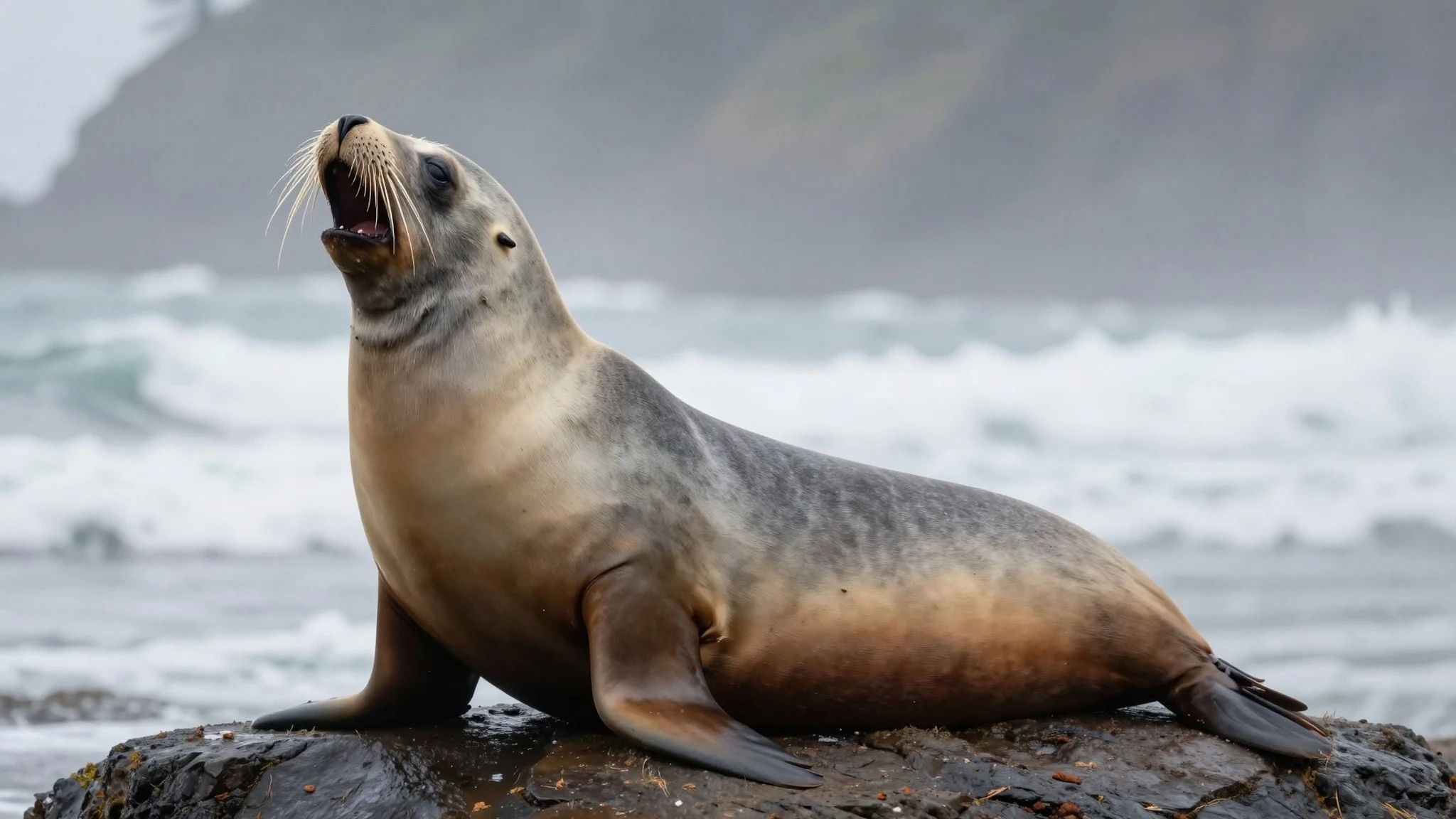
- Northern spotted owl (animal)
Picture a dark brown owl of middling size, living up among the tall branches: that is the northern spotted owl. Within Redwood National Park it makes its home in the canopy of the forest. Its numbers keep falling, as its woodland is lost and the barred owl crowds it out, so it deserves respect. Stay at a distance, keep your voice low, go with a guide where possible, and never feed it.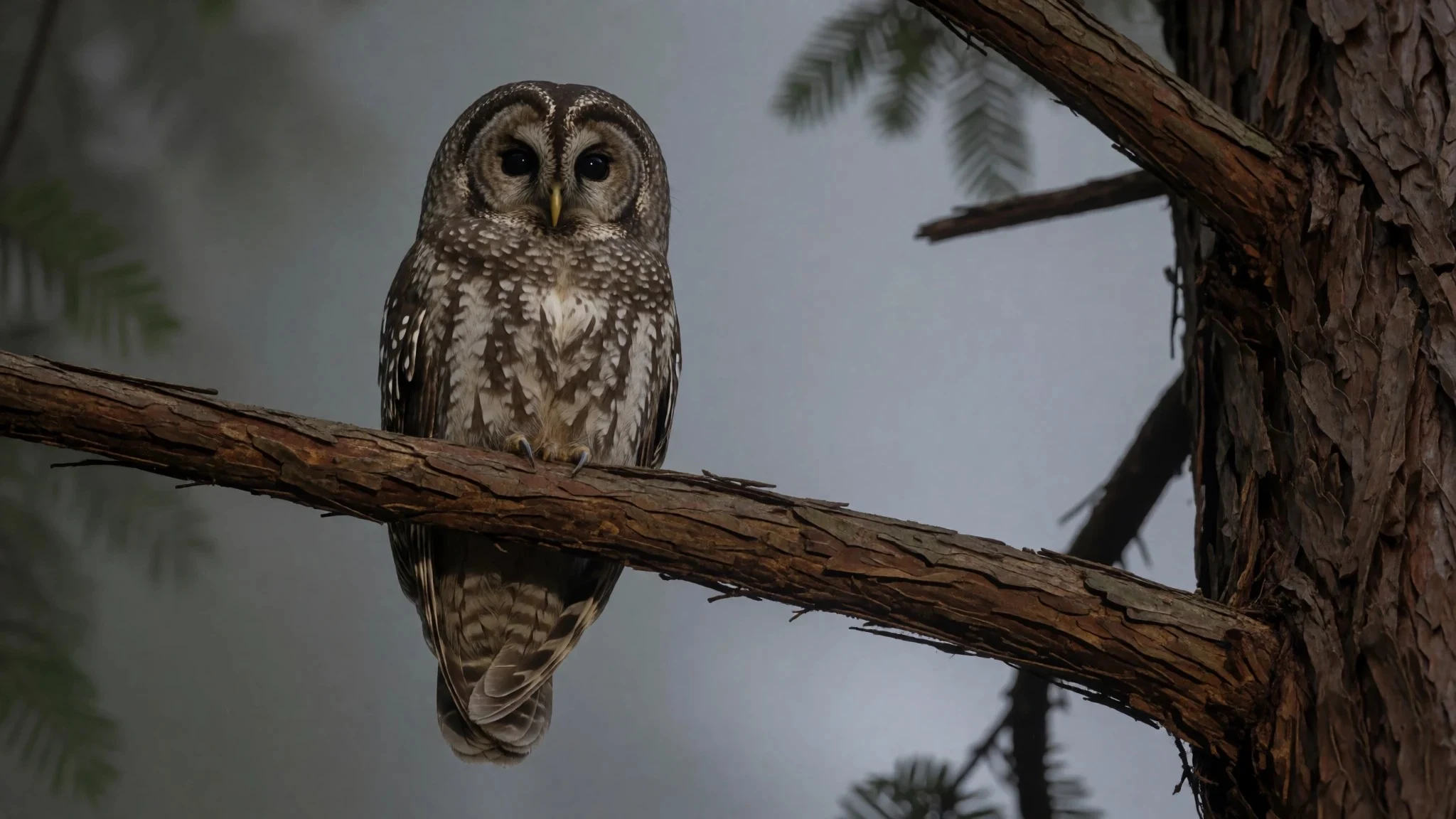
- Northern spotted owl (bird)
Picture a dark brown owl of middling size, living up among the tall branches: that is the northern spotted owl. Within Redwood National Park it makes its home in the canopy of the forest. Its numbers keep falling, as its woodland is lost and the barred owl crowds it out, so it deserves respect. Stay at a distance, keep your voice low, go with a guide where possible, and never feed it.