Ratargul Swamp Forest
Ratargul Swamp Forest, Bangladesh
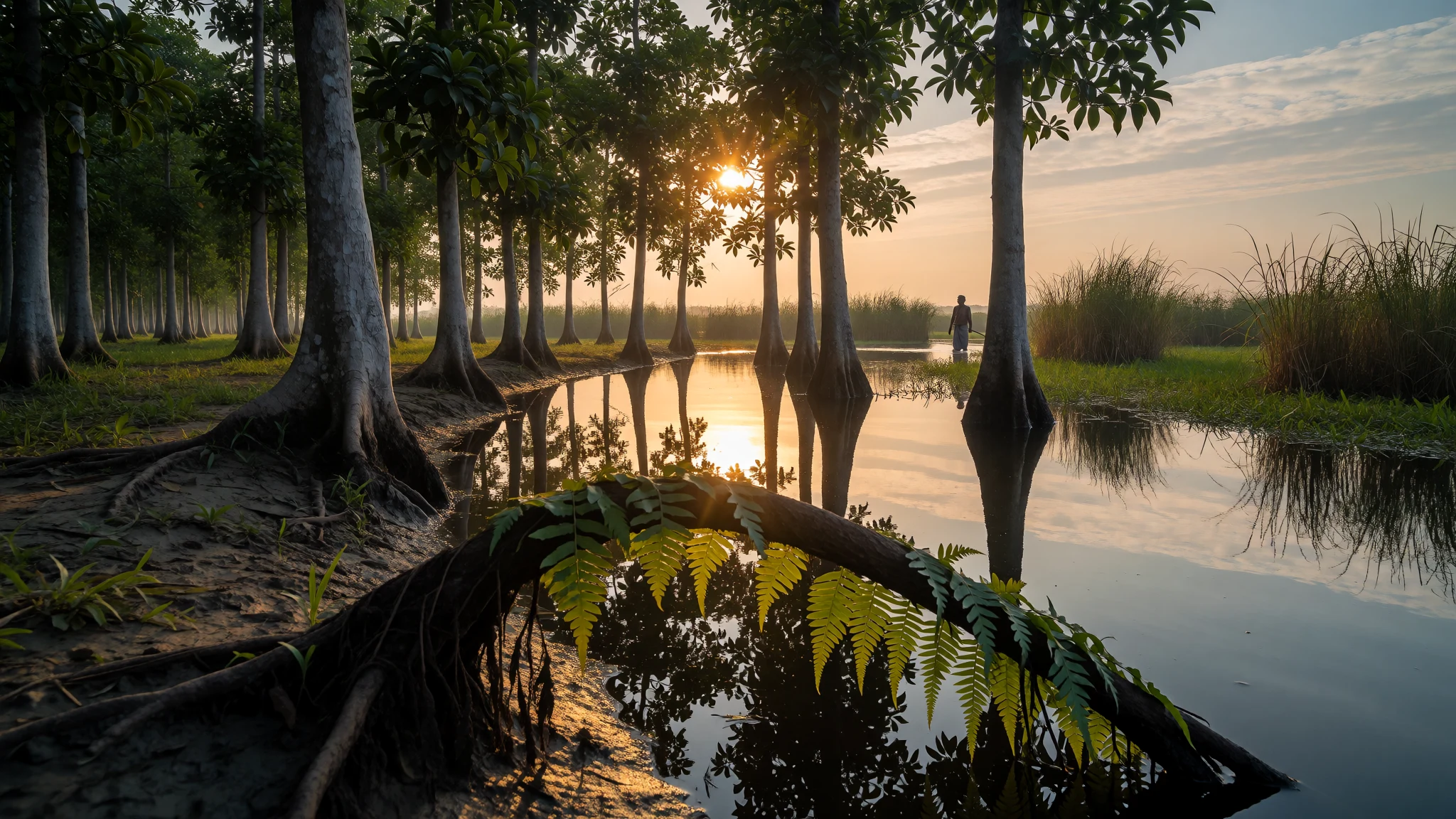
Ratargul Swamp Forest lets you drift by boat between trees rooted in water, in a flooded forest of north-eastern Bangladesh.
The place
Ratargul Swamp Forest lies in Gowainghat, in the Sylhet region of north-eastern Bangladesh, about 26 kilometres from the city of Sylhet. It is a freshwater swamp forest, fed by the Gowain River through a channel called Chengir Khal. The protected wetland covers roughly 1,346 hectares, and a smaller core of about 204 hectares was declared an animal sanctuary in 2015.
The most common tree is the koroch (Dalbergia reniformis), which tolerates long spells with its roots underwater. The look of the place depends entirely on the season. In the wet months, from about May to early October, river water spills into the forest and the trunks stand in a deep flood, with the water 6 to 9 metres deep at its height. For the rest of the year the level drops to about 3 metres, and more ground and branch structure shows.
There is no road through the trees. Visitors reach the forest from Gowainghat and hire a local engine boat, called a traller, to cross the river and slip into the flooded channels. To the south of the forest lie two haors, Shimul Bil and Neoa Bil, which are broad seasonal wetlands of the kind that define this part of Bangladesh. The forest is sometimes nicknamed the Sundarbans of Sylhet, though it is far smaller and entirely freshwater.
Its story
Ratargul Swamp Forest was for years described as Bangladesh's single swamp forest, and a rarity among freshwater swamp forests anywhere. That claim has since softened. Surveys later turned up other swamp forests in the country, including Jugirkandi Mayabon, Bujir Bon and Lokkhi Baor, so Ratargul is better understood as a well-known member of a small group than a lone survivor.
Its fame is recent and largely a matter of photographs. Images of boats threading between half-drowned trees spread online, and Ratargul turned from a local fishing and farming landscape into a weekend destination for people from Sylhet and Dhaka. The attention brought income to boatmen in Gowainghat, and also pressure on a fragile place: litter, engine noise and crowds on busy days.
The forest department manages the wider wetland, and the declaration of the 2015 sanctuary was an attempt to set aside a core where wildlife could be left alone. The rhythm of the water remains the real governor of life here. Each year the river rises, the forest floods, fish move in among the trunks, and for months the trees seem to grow straight out of a lake. When the water falls, the ground reappears and the forest changes character again.
What to see
- Boat trip through the flooded channels — Gowainghat, Sylhet
The main event is a slow ride in a hired engine boat from the Gowain River into the forest. In the wet season the boat passes right among the trunks, with branches overhead. Ask the boatman to cut the engine in quiet stretches so birdsong carries.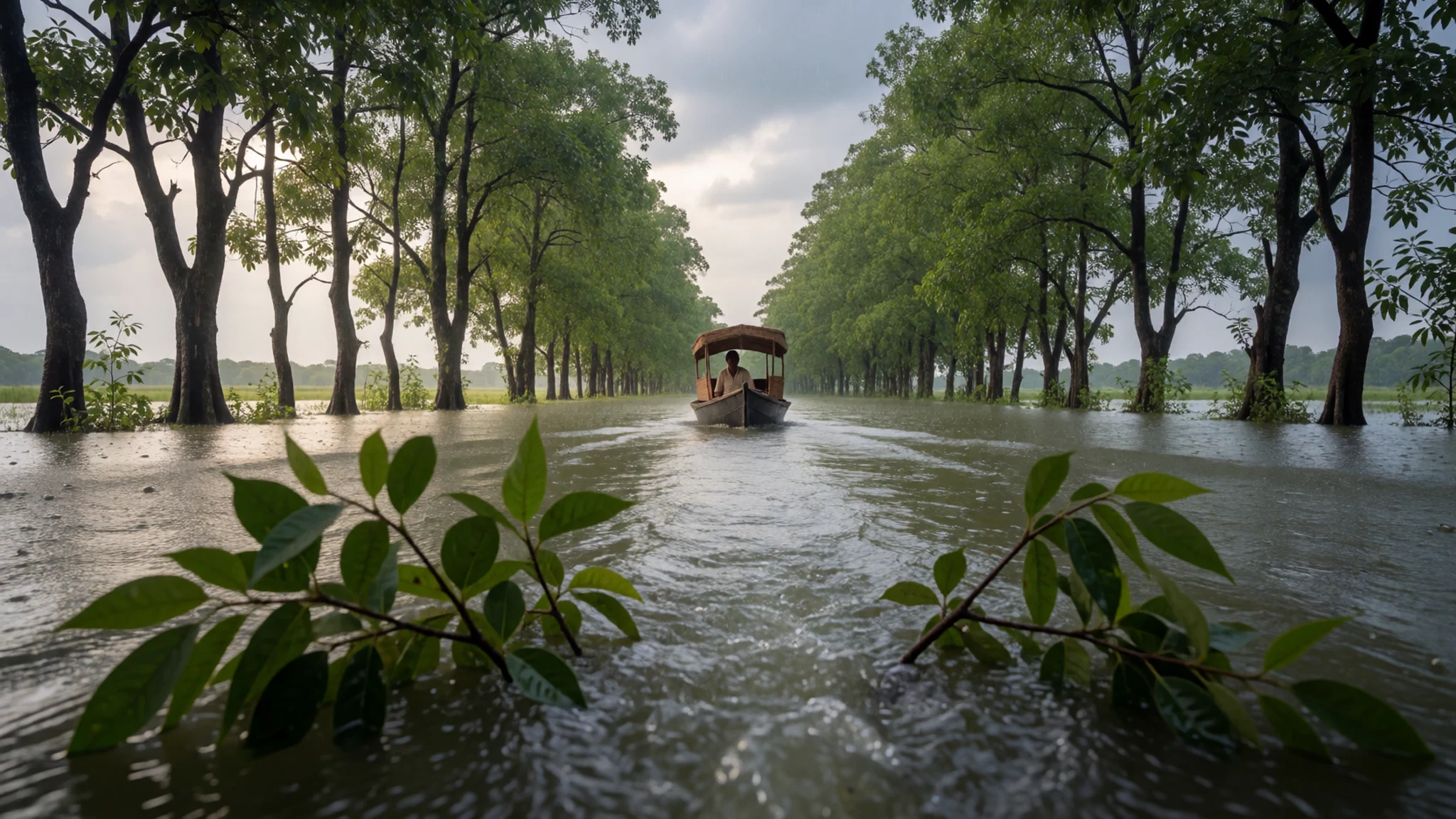
- The watchtower — Inside the forest, Fatehpur Union
A wooden watchtower gives a view over the canopy and the water below, useful for grasping how far the forest runs. It is best early, before groups arrive, and the structure is modest, so go up a few at a time.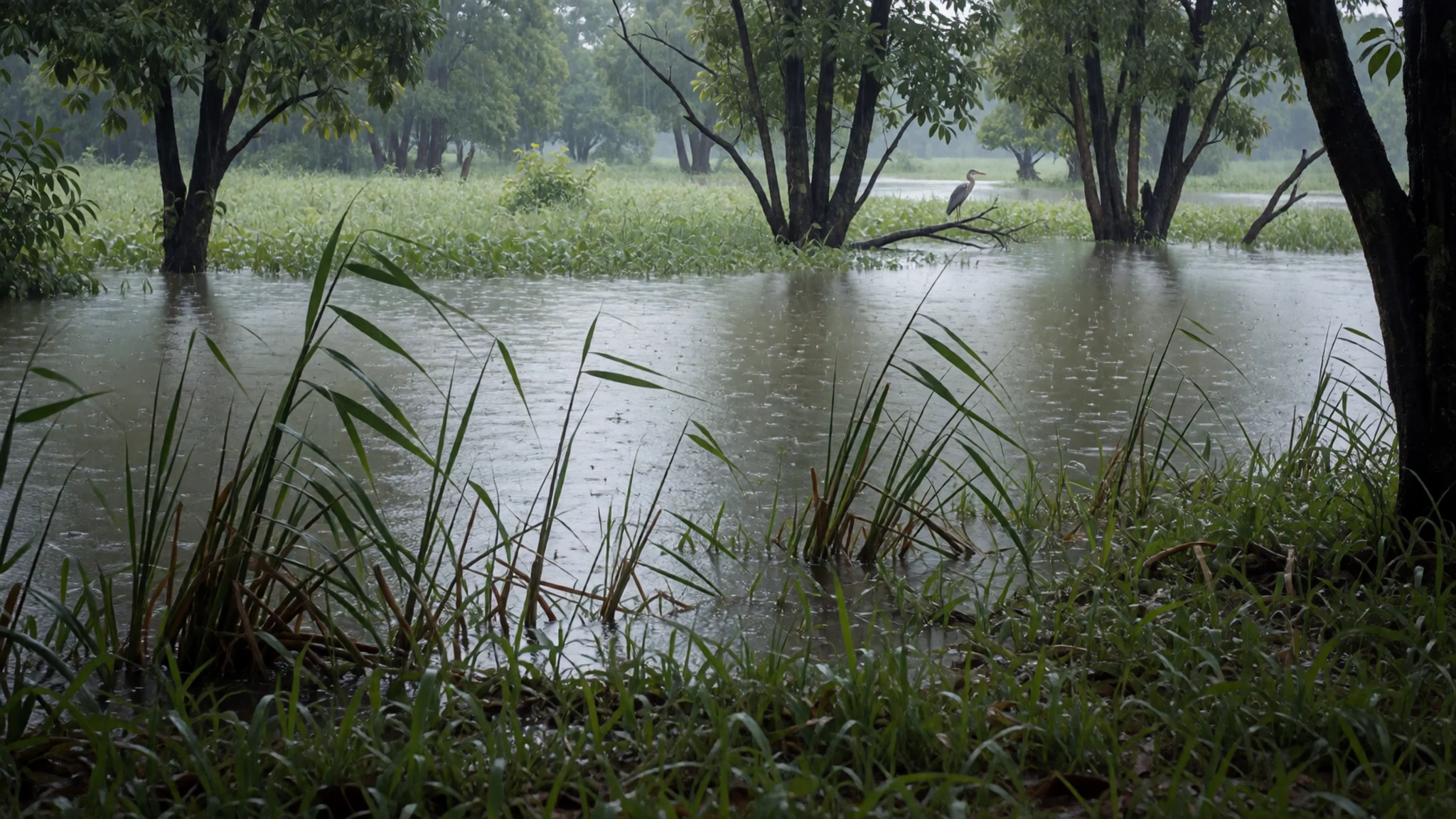
- The Gowain River crossing — Gowainghat
Before the trees begin, the boat crosses the Shari-Goyain River, where local children and fishermen travel in small boats. It is worth watching ordinary river life here, a counterpoint to the quiet of the forest itself.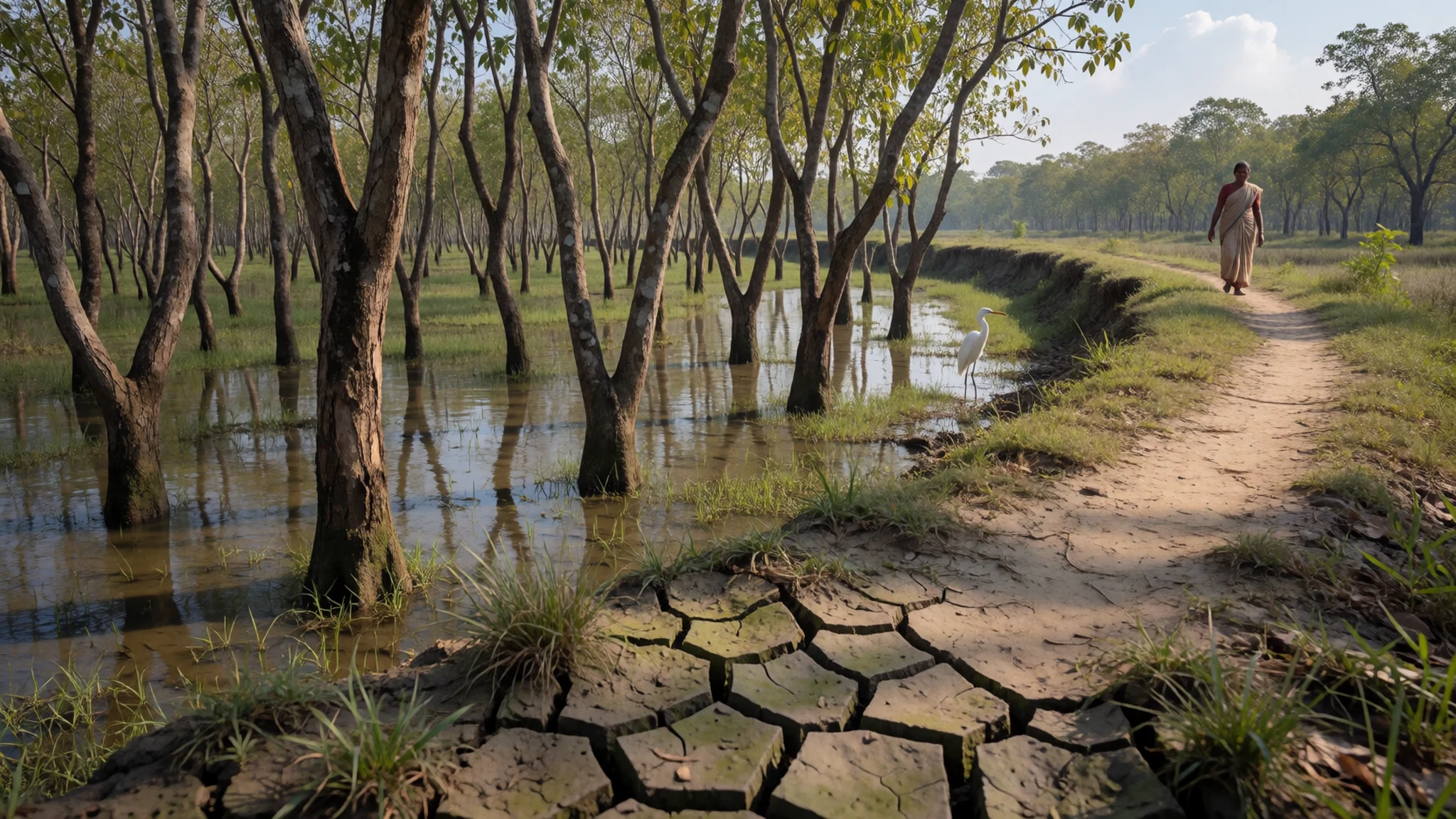
- Dry-season walks and shallows — Ratargul, Gowainghat
When the water drops, parts of the forest become shallower and the tree structure is easier to see. Boats still run on the main channels, and the light is clearer. Expect more mud and less of the drowned-forest look.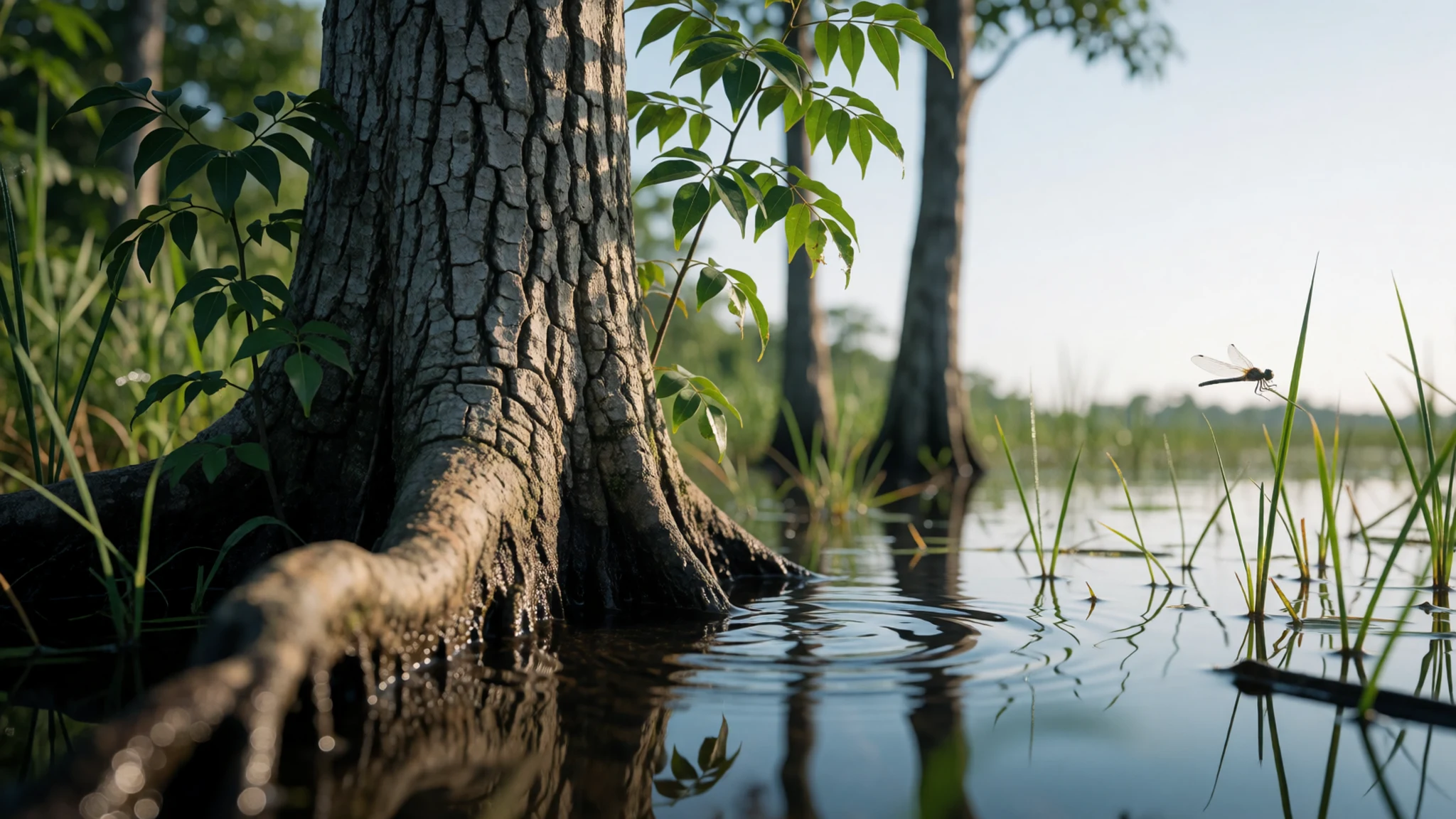
- Dusk on the water — Return channel to the landing
Late afternoon brings softer light and fewer boats. The return leg towards the landing, with the canopy darkening, is often the most atmospheric part of the visit. Allow time to be back before it is fully dark.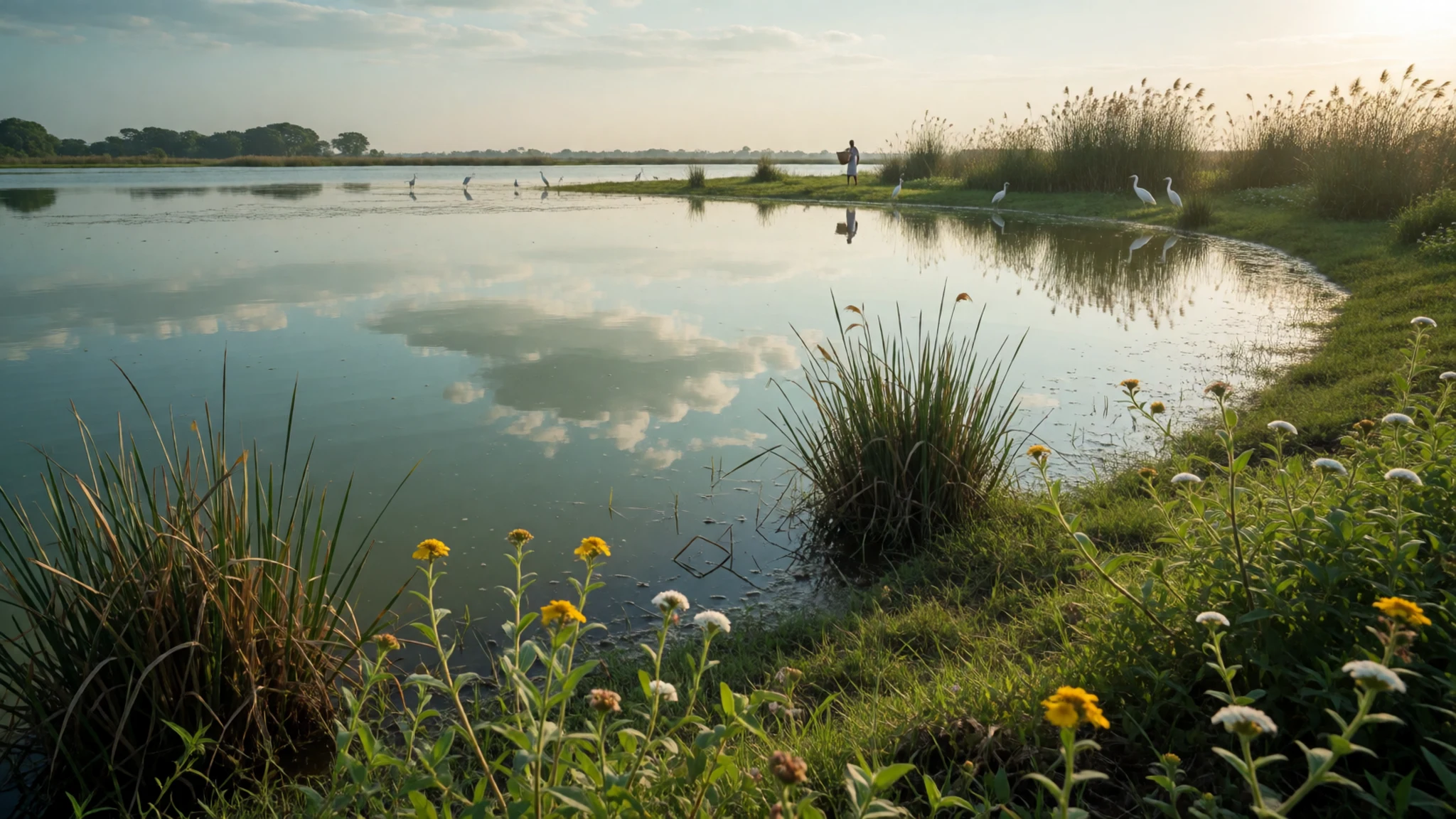
Culture
Ratargul Swamp Forest sits in the Sylhet region, where Bengali is the common language and daily life follows the rivers and wetlands. The villages around Gowainghat live by fishing, farming and, increasingly, boat hire, so the forest is both a workplace and an attraction. Many boatmen know the channels by heart and can point out birds, fish and the shapes of the koroch trees.
The seasonal flood shapes local rhythms. In the wet months, travel by water is normal, and houses and paths adapt to rising rivers. This is common across the haor country of north-eastern Bangladesh, where land and water trade places through the year.
Visitors are a mixed crowd, with families and student groups from Sylhet and Dhaka especially busy at weekends and on holidays. Local people are generally friendly and curious, and a polite greeting goes a long way. The area is largely Muslim, and modest, relaxed manners are the norm. The forest is a protected wetland, so the local expectation is that visitors treat it with care, and that boats stay in the channels rather than pushing through young growth.
Carry your rubbish out with you, keep voices and boat engines low, and ask before photographing local people, especially women and children.
What to wear
Ratargul Swamp Forest is in a part of Bangladesh where traditional dress is the sari for women and the lungi and panjabi for men. Saris are commonly cotton for everyday wear, with silk and finer weaves for weddings and festivals, and the lungi, a wrapped cloth worn around the waist, is the usual everyday garment for men in villages. Men wear the panjabi, a long loose shirt, for prayers and celebrations.
In daily life around Gowainghat and Sylhet, many women wear salwar kameez or saris, often with a scarf, while men wear shirts with trousers or lungis. Younger people in towns wear jeans and t-shirts. Boatmen and farmers dress for work, in light cotton and often barefoot or in sandals.
For a visit, dress for heat, humidity and water. Light, quick-drying cotton or synthetic clothes that cover shoulders and knees suit both the climate and local modesty norms. Wear shoes with good grip for wet boat landings and wooden steps, and carry a light rain jacket or poncho during the wet season. A hat and insect repellent help, and a waterproof bag protects phones and cameras. In the cooler months, bring a light layer for early mornings on the water.
What to eat
- Sylheti shatkora beef curry — Eateries in Sylhet city
Shatkora is a citrus fruit with a tart, bitter rind, cooked with beef in a rich, spiced curry that is a signature of Sylhet. Look for it in family-run eateries in Sylhet city.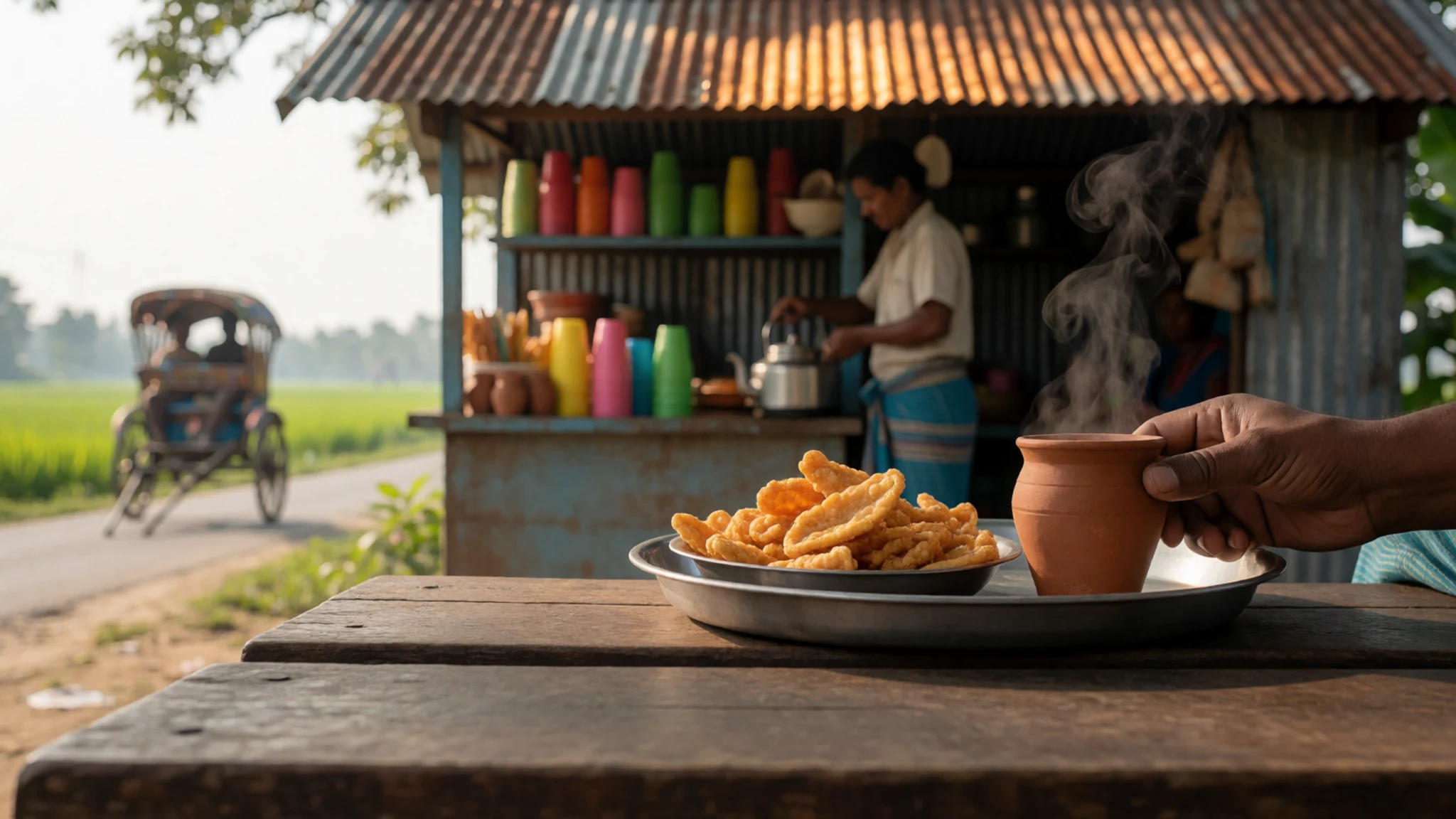
- Freshwater fish curry — Village eateries near Gowainghat
River and haor fish are cooked in mustard oil with onion, chilli and turmeric, and served with rice. Boat landings and village eateries near Gowainghat often have fish of the day, so ask what was caught that morning.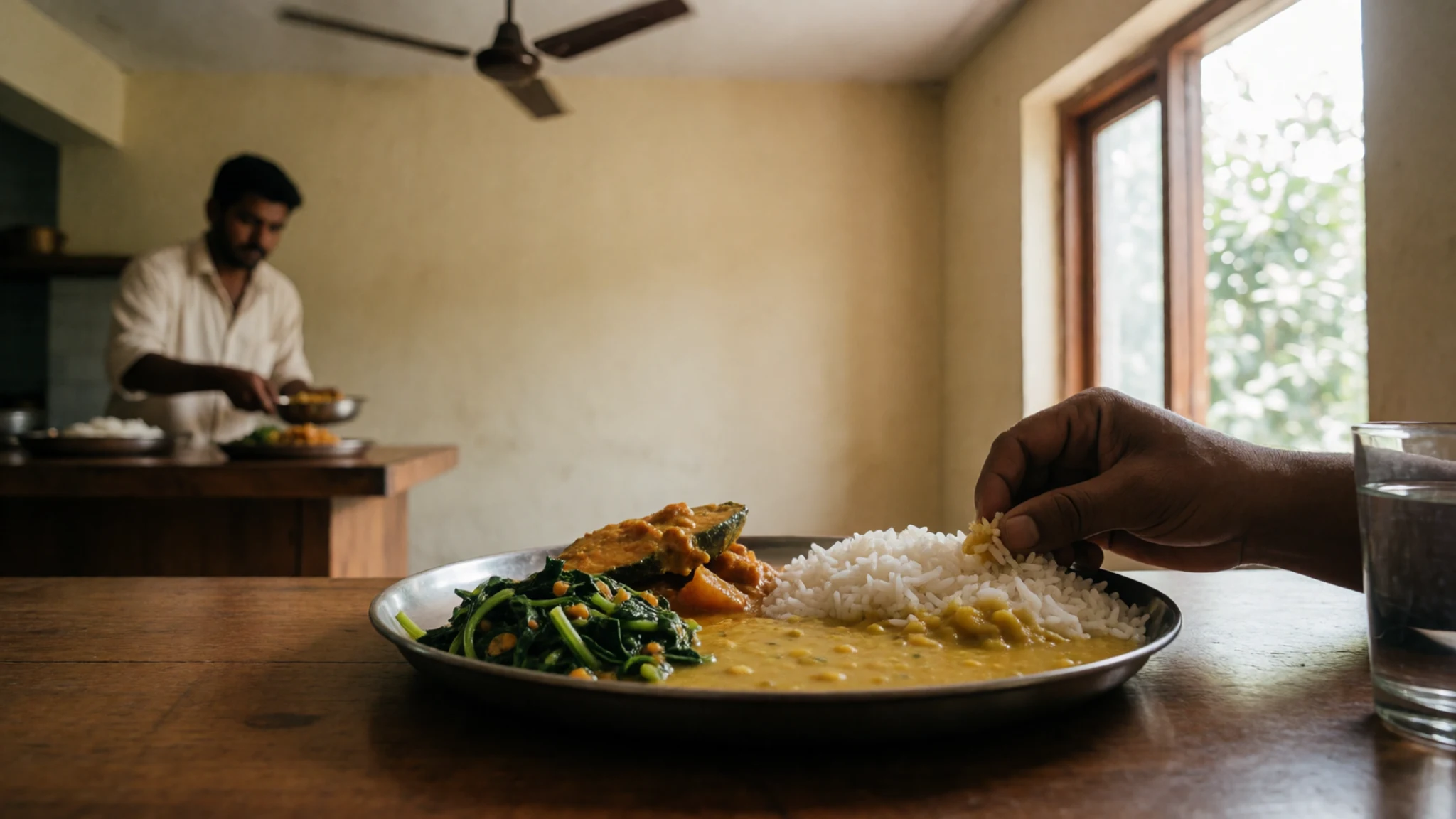
- Seven-colour tea — Tea stalls in Sylhet city and along the road
Sylhet is tea country, and the layered seven-colour tea, with bands of different hues in one glass, is a local showpiece. It is worth trying at a tea stall, though the flavour is milder than the look suggests. - Bhuna khichuri — Local eateries in Sylhet and Gowainghat
Rice and lentils are cooked together with spices and ghee until thick and fragrant, often served with beef or egg. It is a favourite on rainy days, when a warm, filling plate suits the weather. - Pitha — Village stalls and markets in winter
Pitha are rice-flour cakes, steamed, fried or filled with sweet coconut and jaggery. They are especially common in the cooler months, and village stalls and home kitchens often offer them as a seasonal treat.
Plan it
Best time. October to February is the most comfortable time, with the water lower and the weather cooler and drier; January is the coolest month. The wet season from May to early October is when the forest floods and looks most dramatic, but rain is heavy, July especially, and the heat is humid.
How long. 1–2
Getting there. Fly to Osmani International Airport (ZYL) at Sylhet, or take a train or bus from Dhaka. From Sylhet city, travel about 26 kilometres to Gowainghat by road, then hire a local engine boat to reach the forest.
Budget. low
Tips
- Go early on weekdays to avoid crowds, which build at weekends and holidays
- Agree the boat fare and trip length before you set off
- Carry cash, as cards are unlikely to work at the landing
- Bring drinking water, sun protection and insect repellent
- Check the official forest department guidance for current access rules and any sanctuary restrictions
Etiquette
- Take all rubbish away with you
- Keep engines and voices low near wildlife
- Ask before photographing local people
Nearby
Sources
- Wikidata Q7295485 (CC0)
- Wikipedia: Ratargul Swamp Forest (rev 1352046967) (CC BY-SA 4.0)
- Wikivoyage: Sylhet Division (rev 5270840) (CC BY-SA 4.0)
- Photo 01, Tawkir.ahmad (CC BY-SA 4.0)
- Photo 02, Mar11 (CC BY-SA 4.0)
- Photo 03, Ahnaf Tahmid Manan (CC BY-SA 4.0)
- Photo 04, Anandarony (CC BY-SA 4.0)
- Photo 05, Abdulmominbd (CC BY-SA 4.0)
- Photo 06, Abdulmominbd (CC BY-SA 4.0)
- Photo 07, Nadia Islam Nitul (CC BY-SA 4.0)
- Photo 08, RadioactivePratik (CC BY-SA 4.0)


