Punakha Dzong
Punakha Dzong, Bhutan
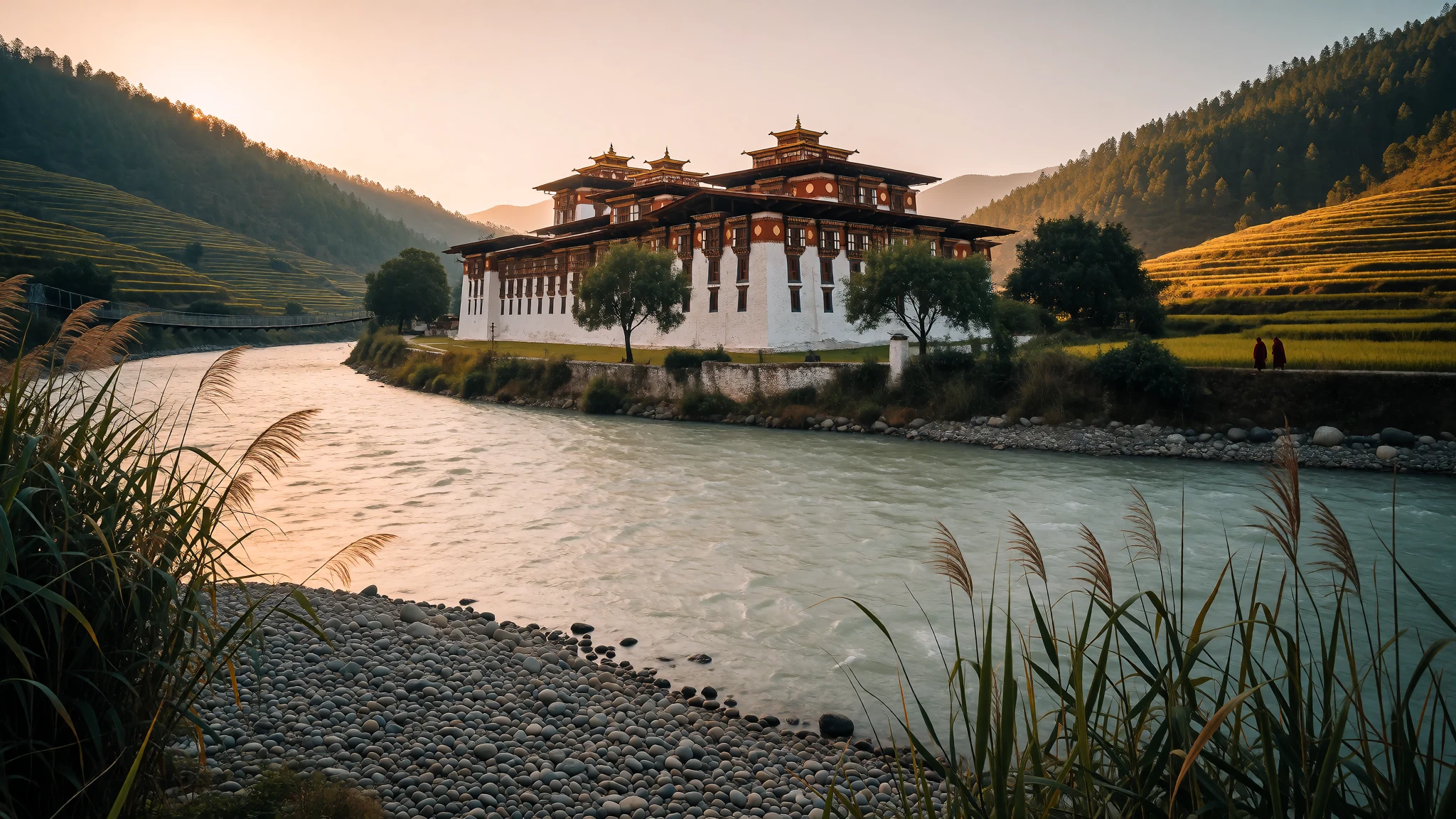
Punakha Dzong is a working fortress-monastery at a river meeting, where Bhutan's kings are crowned and monks still chant daily.
The place
Punakha Dzong sits at about 1,200 metres, on the tongue of land where two rivers join in the Punakha valley. The Pho Chhu, the male river, comes down from glaciers; the Mo Chhu, the female river, rises in the northern hills. Below the dzong they merge into one broad river, which carries on south under another name. The setting is much of the appeal: whitewashed walls rise straight from the water, topped with deep red bands, gilded roofs and a tall central tower called the utse.
The dzong's full name, Pungthang Dewa Chhenbi Phodrang, means the palace of great happiness. It is still two things at once. Part of it is the administrative centre of Punakha district, with officials crossing the courtyards in formal dress. Part of it is a monastery, home to a monastic community and to relics of the southern Drukpa Kagyu tradition, including the remains of its founder, Ngawang Namgyal, and of the treasure-revealer Pema Lingpa.
The valley is lower and warmer than Thimphu, so rice terraces, orange groves and jacaranda-like blossom in spring soften the scene. Khuruthang, the busy town where shared taxis end, lies a few kilometres to the south, while the old suspension bridge and a scatter of village guesthouses sit closer to the fortress. Punakha Dzong has been put forward on Bhutan's provisional register for possible UNESCO World Heritage recognition, but that is a separate step from formal acceptance onto the World Heritage List. Expect a tidy, quiet site rather than a tourist circus, though tour groups gather at mid-morning.
Its story
Punakha Dzong was begun in 1637 and finished in 1638, ordered by Ngawang Namgyal, the Zhabdrung, who unified Bhutan. Its architect was Zowe Palep. A well-loved story says the Zhabdrung sent him to sleep beside a small shrine holding a Buddha statue, called Dzong Chug. There Palep dreamed a complete palace for Guru Rinpoche, and he is said to have built it from memory, with no drawn plans, on the very spot.
The site was practical as well as sacred. Two rivers guard three sides, and the fortress held the new state together. In 1639 a chapel was added to hold weapons taken from Tibetan forces beaten nearby. The Zhabdrung also settled a monastic body of 600 monks, brought from Cheri monastery above Thimphu, and he lived here until his death.
Later rulers kept building. The spire crowning the utse went up in 1676 under the abbot Gyaltsen Tenzin Rabgye, and further additions followed in the middle of the eighteenth century during the reign of Sherab Wangchuk. For centuries the dzong was the seat of government, until the capital moved to Thimphu in 1955. It has also hosted the coronation of every Bhutanese king since 1907, which is why a place so remote feels so central to the national story. Its role has shifted from capital to ceremonial and spiritual heart, but the courtyards still run to the rhythm of both.
What to see
- Punakha Dzong courtyards and utse — Punakha, at the river confluence
Visitors usually enter over a wooden bridge and climb steep steps into the first courtyard. Look for the carved timber windows, the painted galleries and the central tower. Inside, the assembly hall and temples hold gilded statues. Interior access can be restricted by day, so ask your guide.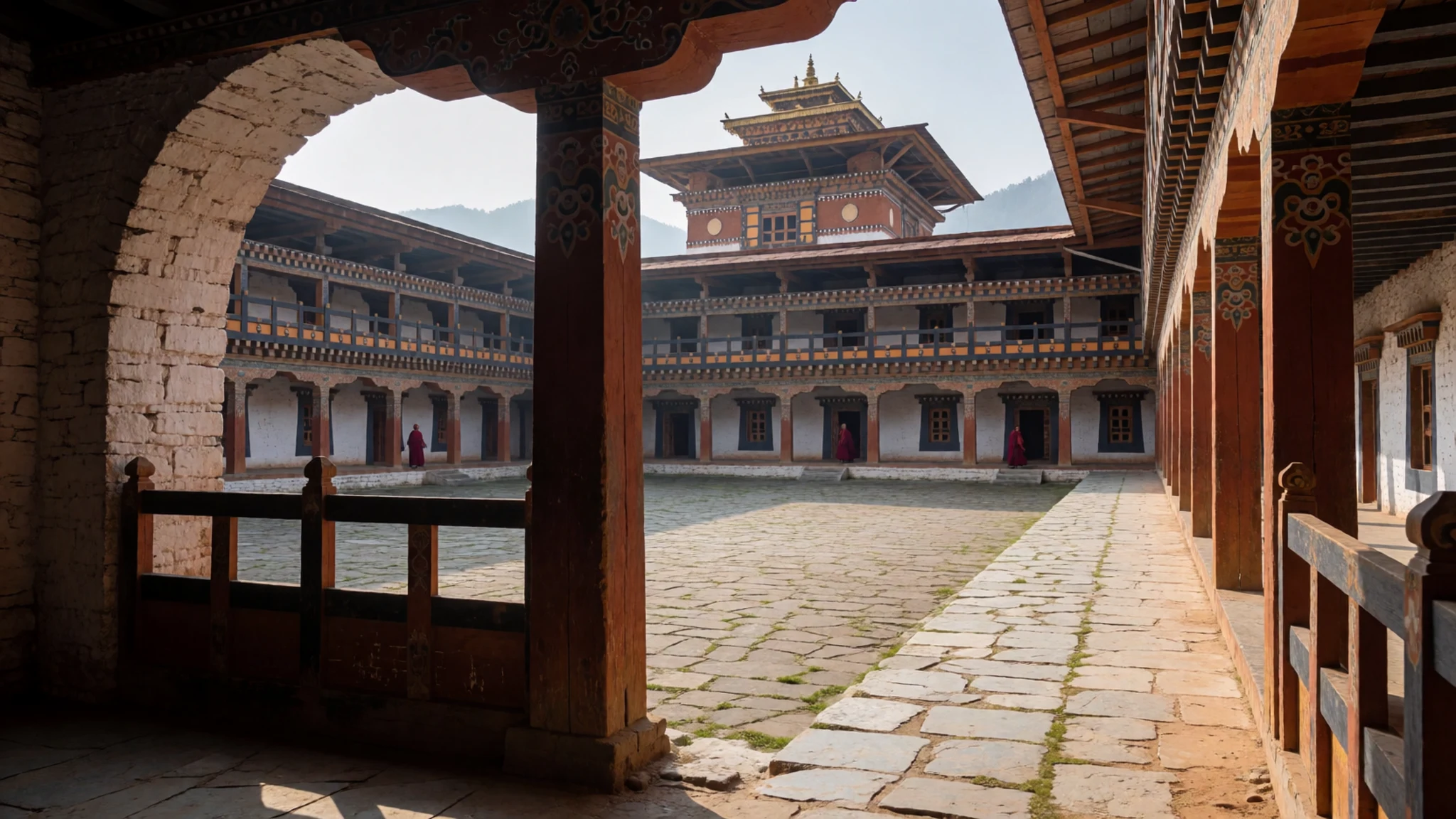
- The confluence viewpoint — Riverbank below the dzong
The best sense of the dzong's shape comes from the river banks, where the white walls reflect in the water and the two rivers visibly differ in colour. Late afternoon light turns the roofs gold. It is an easy, flat stroll with space to sit and watch.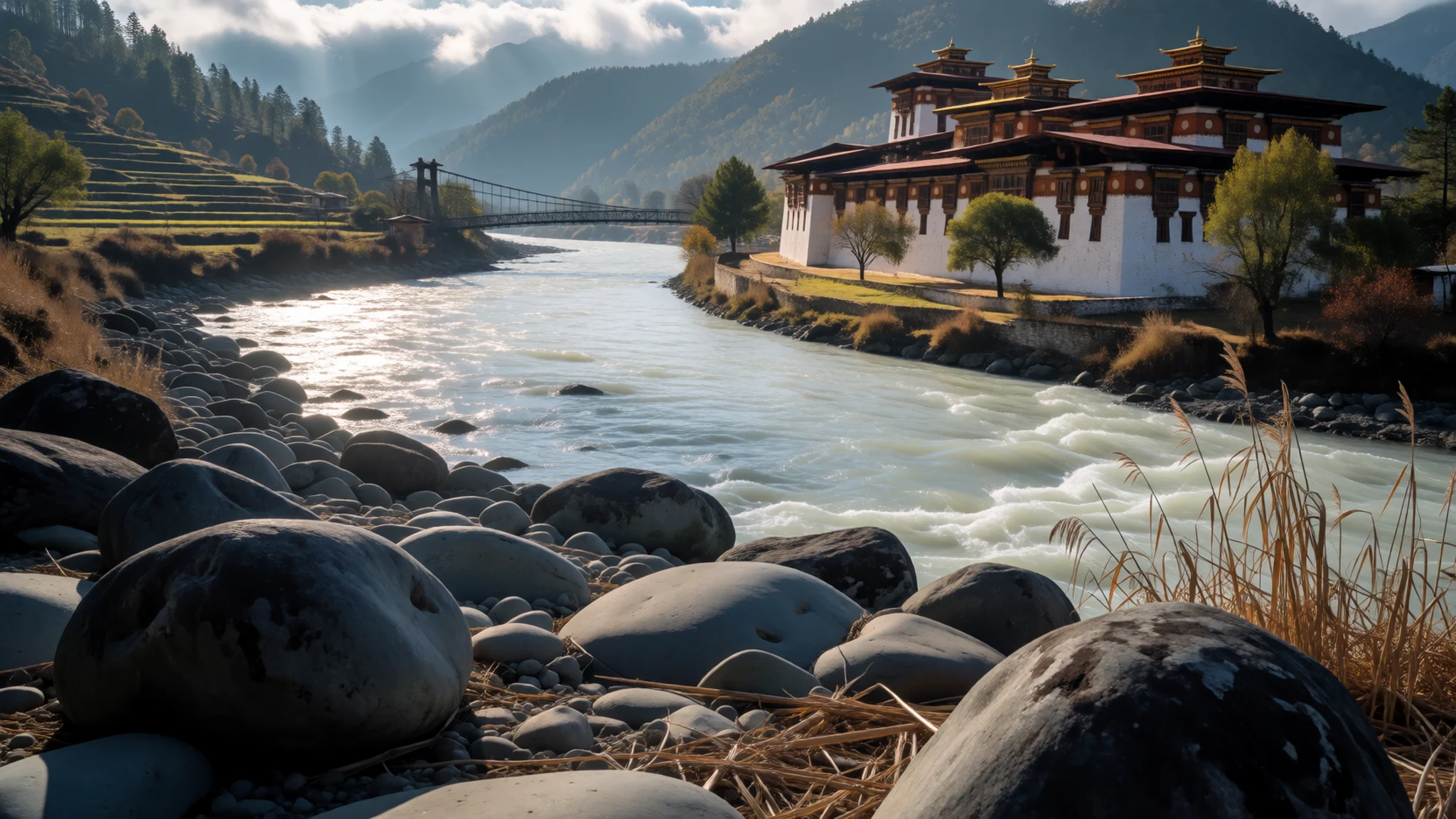
- Punakha Suspension Bridge — North of the dzong
A long pedestrian bridge strung high above the river, swaying gently underfoot and hung with prayer flags. It gives a fine view back towards the dzong and the valley. Go early or late for quiet; mid-morning brings groups. Those nervous of heights can watch from the bank.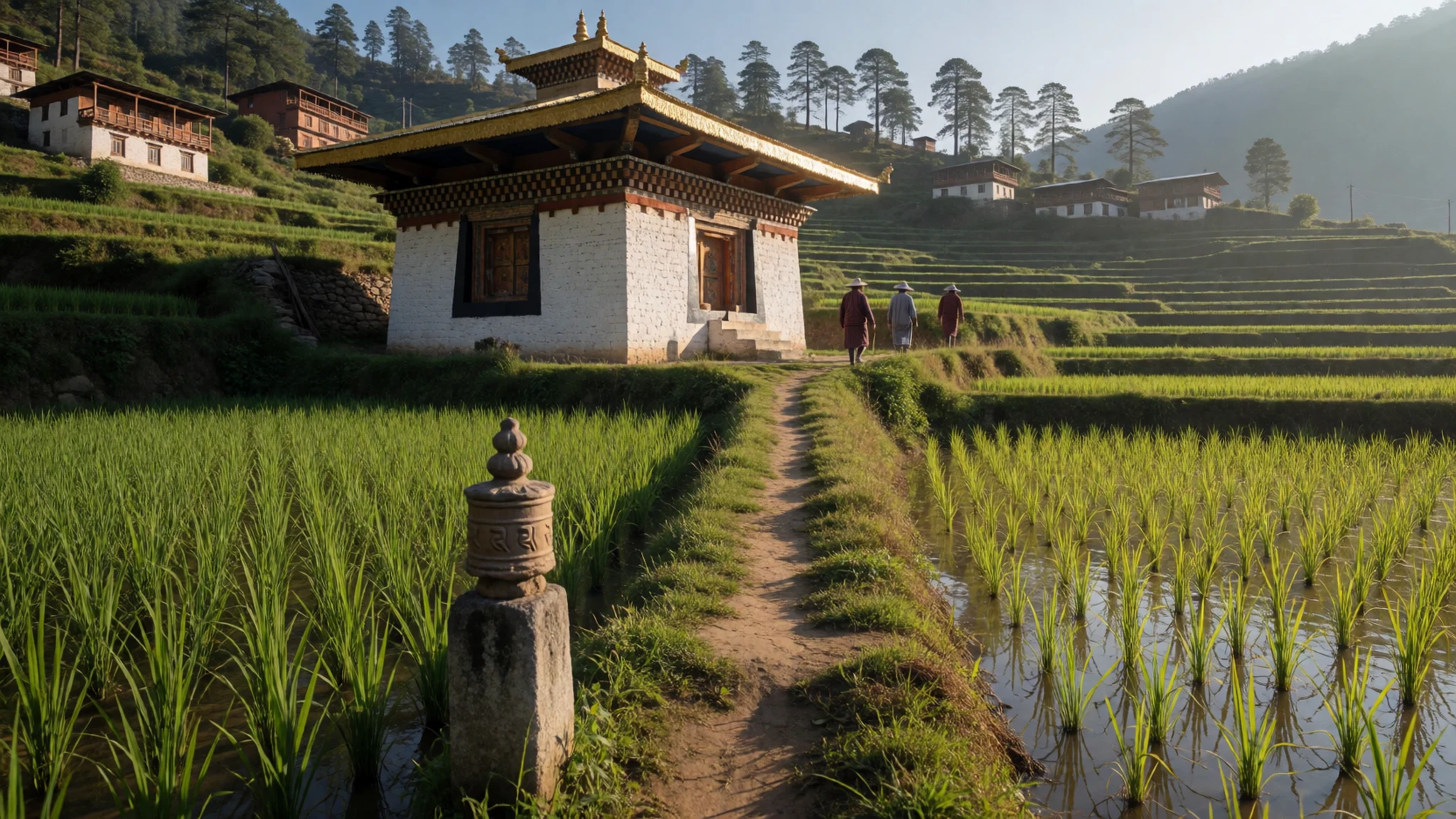
- Chimi Lhakhang — Southern Punakha valley
A small temple on a hillock reached by a walk of about half an hour through paddy fields from the road. It is linked with the saint Drukpa Kunley and is popular with couples hoping for children. Early morning is the quietest, and the village lane is pleasant in itself.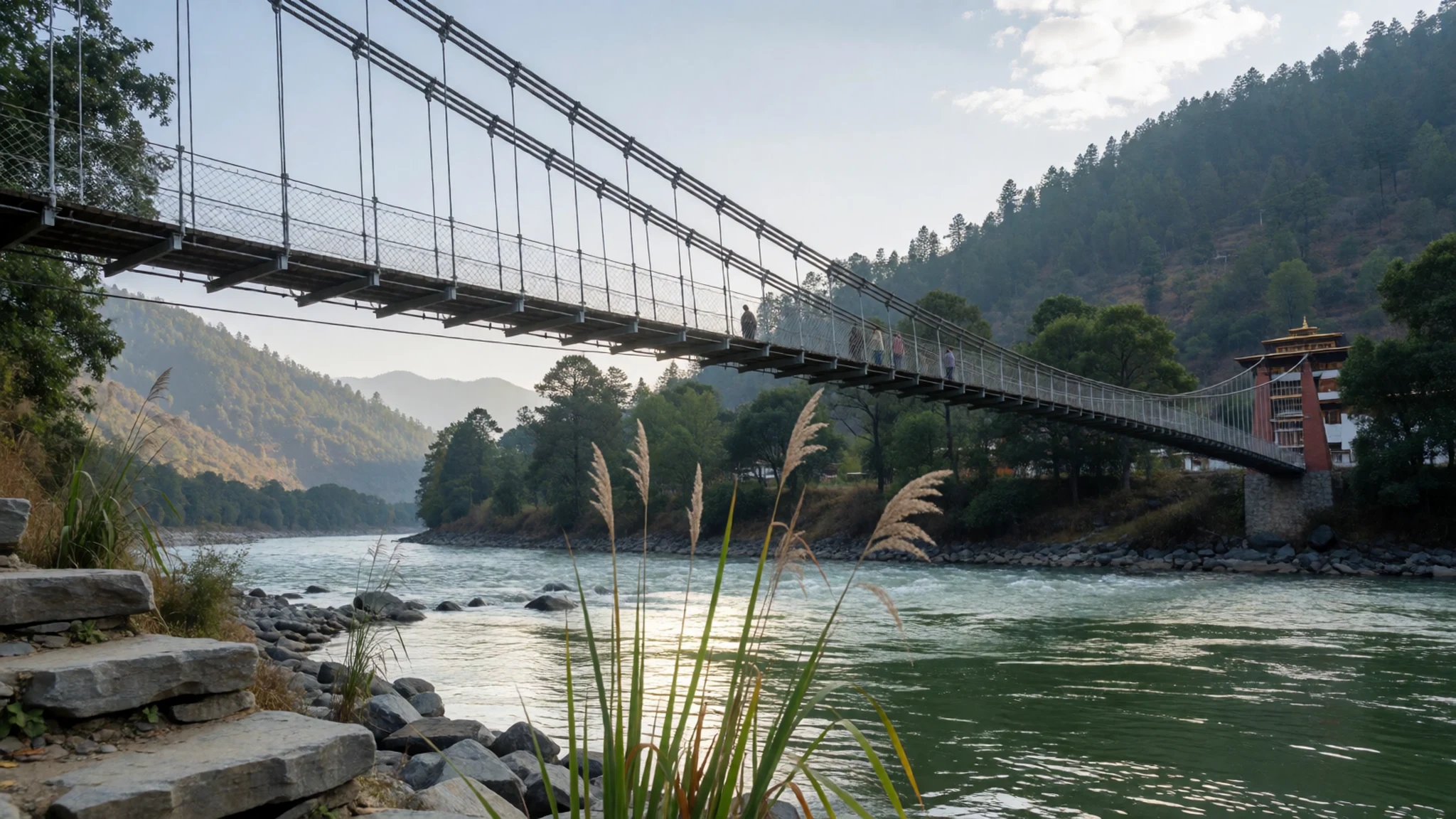
- Guru Rinpoche caves at Geon Tsephu — Above the highway at Mitesgang
A small temple and sacred caves are reached by a rough road or a long walk up from the highway. Tradition says Guru Rinpoche visited after retreat in Nepal and here fully saw the form of Amitayus, the Buddha of Long Life. It suits pilgrims and keen walkers.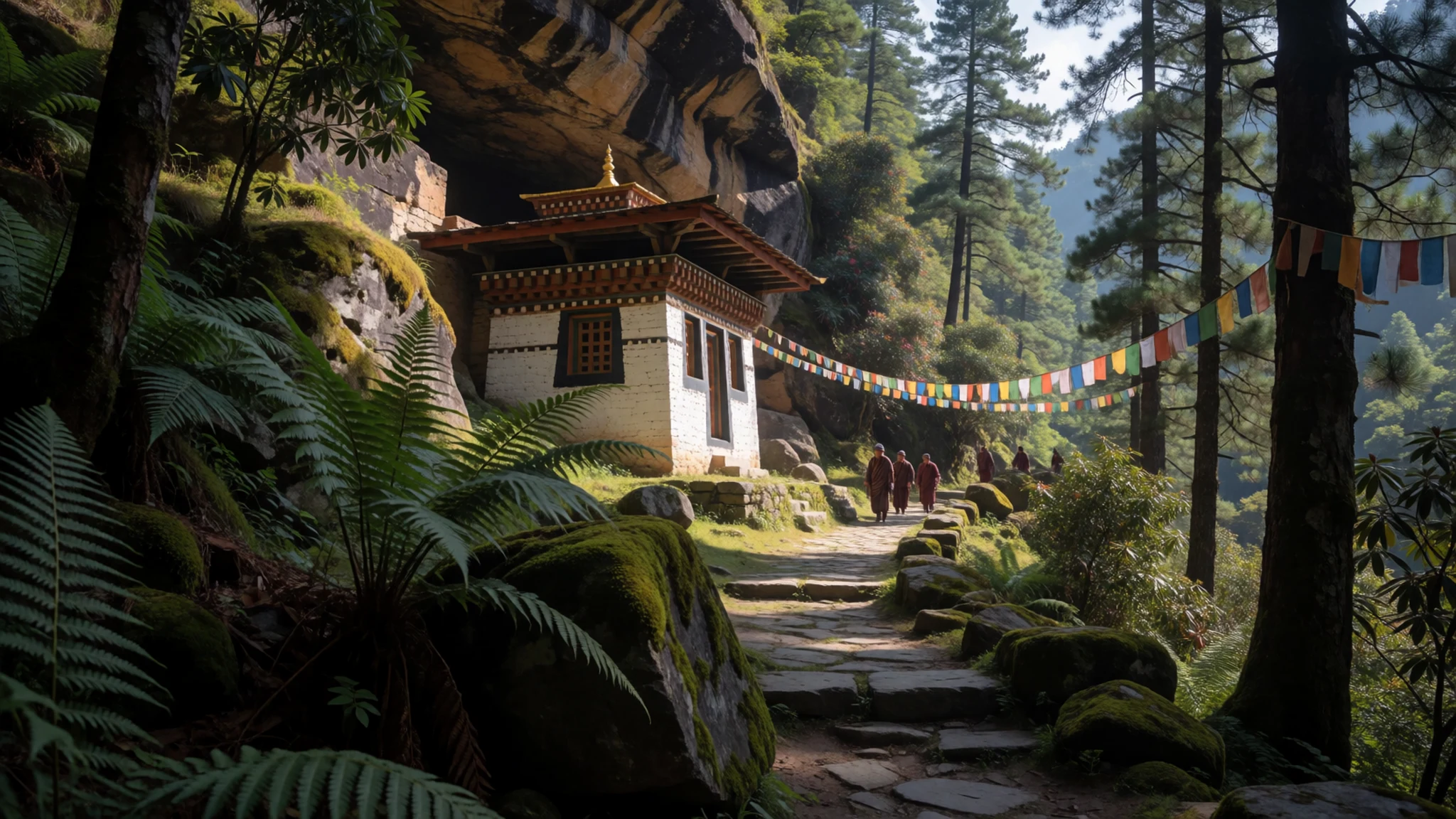
Culture
Punakha Dzong is a living religious site, and Drukpa Kagyu Buddhism shapes everything inside it. Monks live and study in the buildings, ceremonies mark the calendar, and officials and worshippers share the courtyards. Walls and galleries carry painted guardian figures, wheels of life and scenes from the saints' lives, so the architecture doubles as teaching.
The great annual event is the Punakha Dromche and Tshechu, a five-day festival that begins on the ninth day of the first Bhutanese month, usually falling in February or March. Villagers come from across the district in their best clothes. Masked dancers perform in the main courtyard, and the dzong's self-arisen image of Avalokiteshvara is shown to the public. One highlight is a staged retelling of the 1639 Tibetan defeat, designed by the Zhabdrung himself, in which a relic is symbolically cast into the Mo Chhu. On the last day an image of the Zhabdrung is displayed, followed by a dance by 136 warriors in costume.
Bhutanese people treat the dzong as both government building and holy place, and the tone is calm and formal. Prayer wheels are turned clockwise, and a walk around sacred buildings keeps them on the right. Butter lamps, offerings and quiet murmured prayers are part of the daily scene. Visitors who watch first and copy what locals do will rarely go wrong. Photography rules inside temples are strict, and guides will say where it is allowed. Remove your hat and shoes before entering any temple hall, keep your voice low, and never photograph inside a shrine unless a monk or guide has said you may.
What to wear
Bhutan's national dress is worn daily by many people and is required in dzongs and government offices. Men wear the gho, a knee-length robe tied at the waist with a belt called a kera, with long socks and shoes. Women wear the kira, an ankle-length wrapped dress fastened with brooches, with a short jacket, the toego, over a silk blouse. Textiles are woven from cotton, wool and silk; the finest kira from the east are patterned in complex hand-woven designs and can take months to make.
At Punakha Dzong, officials wear the gho with a scarf, called a kabney for men and a rachu for women, draped over the shoulder. Men's kabney colours show rank; ordinary citizens wear white. Monks wear maroon robes. Festival days bring brighter silks and heavy jewellery, with families dressed in their best.
Outside formal settings, many younger people in Punakha wear jeans, jackets and trainers, though the gho and kira remain common in town and at work. A visitor needs no national dress, but should dress with modesty for the dzong: long trousers or a long skirt, shoulders covered, and no shorts or sleeveless tops. Shoes are removed at temple doors, so slip-ons are practical. The valley is warm, sometimes hot, from late spring, so pack light, breathable layers, a sunhat and a fleece for cool mornings and evenings. Comfortable shoes help on the steep wooden stairs and stone courtyards, and a light rain jacket is wise during the monsoon months.
What to eat
- Ema datshi — Any local restaurant in Khuruthang or near the bridge
Bhutan's national dish: green or red chillies simmered with local cheese into a rich, fiery stew, eaten with red rice. Heat levels vary, so ask for it milder. It appears at almost every restaurant and farmhouse meal in the valley.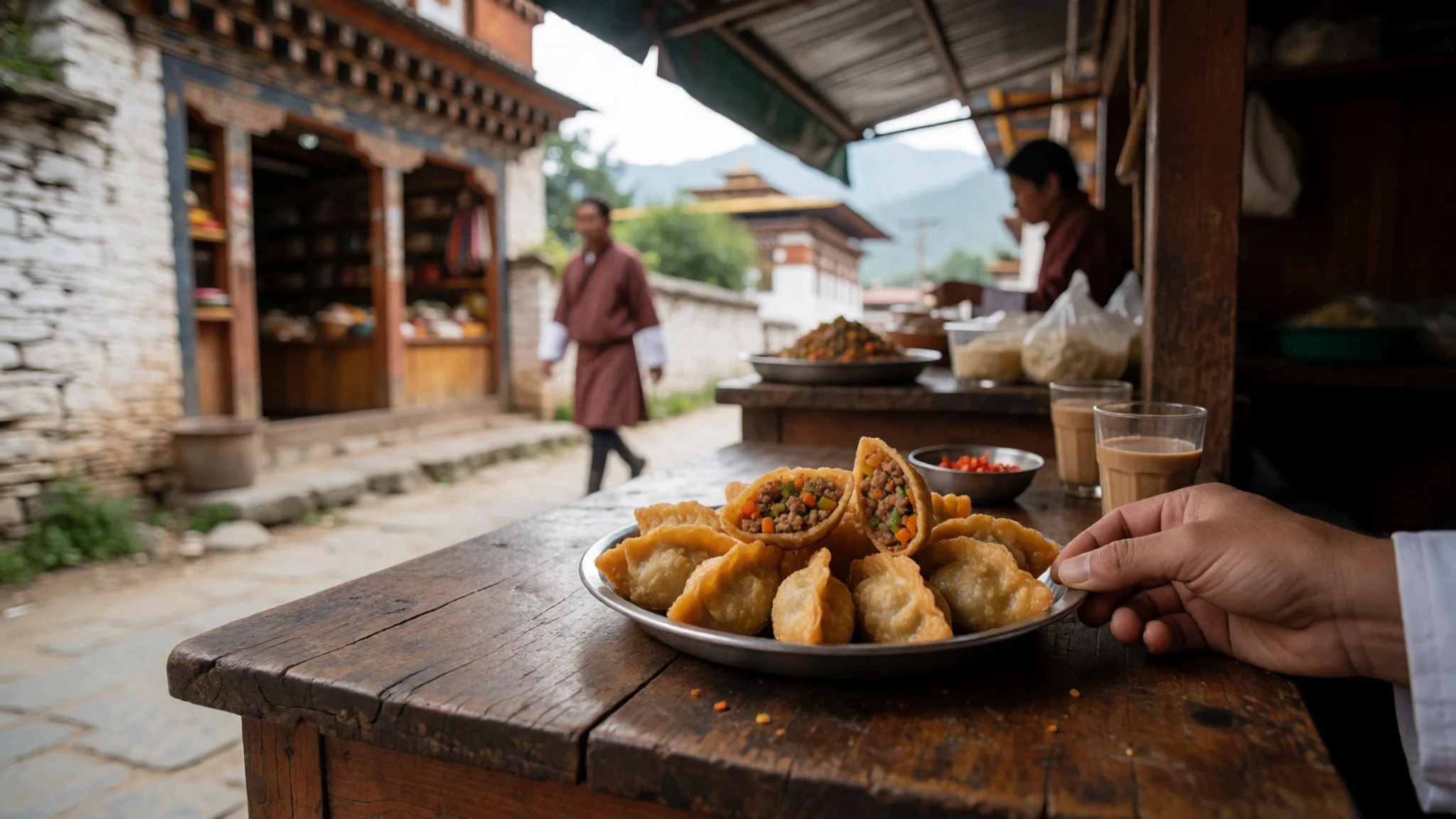
- Red rice — Restaurants and farmhouse stays in the valley
A nutty, slightly chewy rice grown in the valley's terraced paddies and served with nearly every meal. It soaks up chilli and cheese sauces well and is more filling than white rice. Look for it on set lunch plates.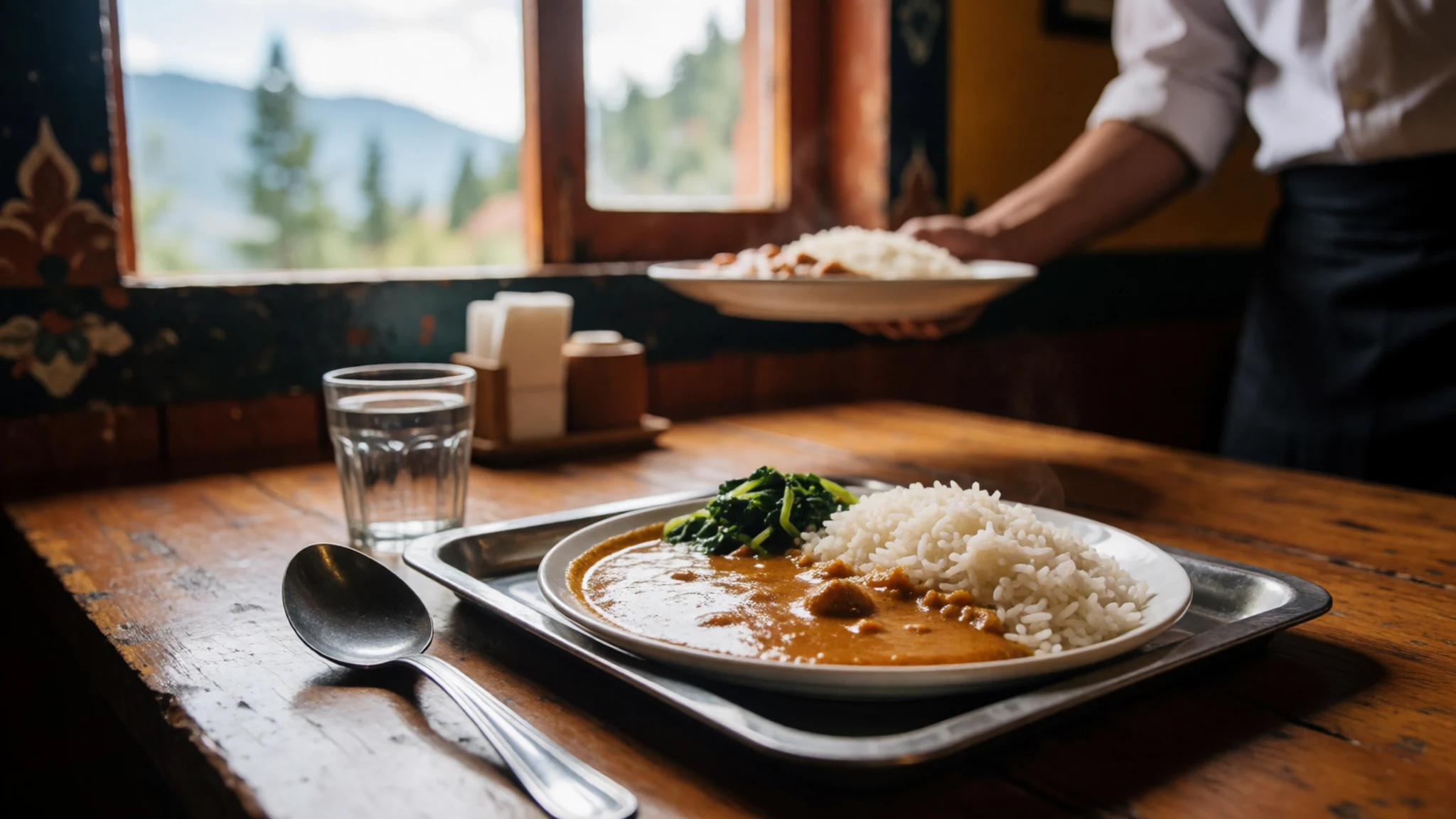
- Momos — Small eateries in Khuruthang town and near the suspension bridge
Steamed dumplings filled with minced meat, cabbage or cheese, served with a sharp chilli sauce. They make an easy snack or light lunch. Vegetarian versions are widely available, and menus often list them beside noodles and soup. - Phaksha paa — Local restaurants serving traditional Bhutanese set meals
Pork cooked with dried chillies and sometimes radish or greens, producing a rich, spicy dish with a deep savoury flavour. It is hearty and best eaten with plenty of rice. Vegetarians can choose other stews. - Suja — Farmhouses, homestays and temple-side tea stalls
Butter tea, made by churning tea leaves with butter and salt. It is savoury and warming, an acquired taste for many visitors. Hosts often keep refilling the cup, so sip slowly if you do not want more.
Plan it
Best time. March–April for warm days and spring blossom, and October–November for clear skies; the festival falls in February–March by the Bhutanese calendar. Summer monsoon brings rain and leeches.
How long. 1–2
Getting there. Fly into Paro, the only international airport, then drive to Thimphu and on over Dochula Pass to Punakha, about one and a half to two hours. Shared taxis from Thimphu bus station end at Khuruthang, about 5 km from the dzong; take a local taxi for the last leg.
Budget. mid
Tips
- Arrive early in the morning for quieter courtyards and softer light
- Check opening times and visitor access with your guide or tour operator before going
- Carry small cash for tea stalls and village shops, as card use is limited
- Wear shoes that slip off easily and carry a sunhat and water
Etiquette
- Dress modestly in long sleeves and long trousers or skirt, and remove hats and shoes at temple doors
- Walk clockwise around sacred buildings and do not photograph inside shrines without permission
- Keep your voice low and do not touch statues or offerings
Nearby
Sources
- Wikidata Q4383728 (CC0)
- Wikipedia: Punakha Dzong (rev 1367128900) (CC BY-SA 4.0)
- Wikivoyage: Punakha (rev 5165185) (CC BY-SA 4.0)
- Punakha Dzong, Bhutan — Bernard Gagnon (CC BY-SA 4.0)
- Punakha Dzong, Bhutan — Technopilgrim (CC BY 3.0)
- Durbar of Ugyen Wangchuck — John Claude White (Public domain)
- Punakha, Bhutan — RadioFreeBarton (CC BY 2.5)
- Punakha Dzong — Wanhoff (CC BY-SA 2.0)
- Punakha Dzong interior — Leon petrosyan (CC BY-SA 4.0)
- Punakha dzong at the confluence — sprklg (CC BY-SA 2.0)
- Spiritual Leader of Bhutan walking to the festival — Mandy (CC BY 2.5)


