Phobjikha Valley
Phobjikha Valley, Bhutan
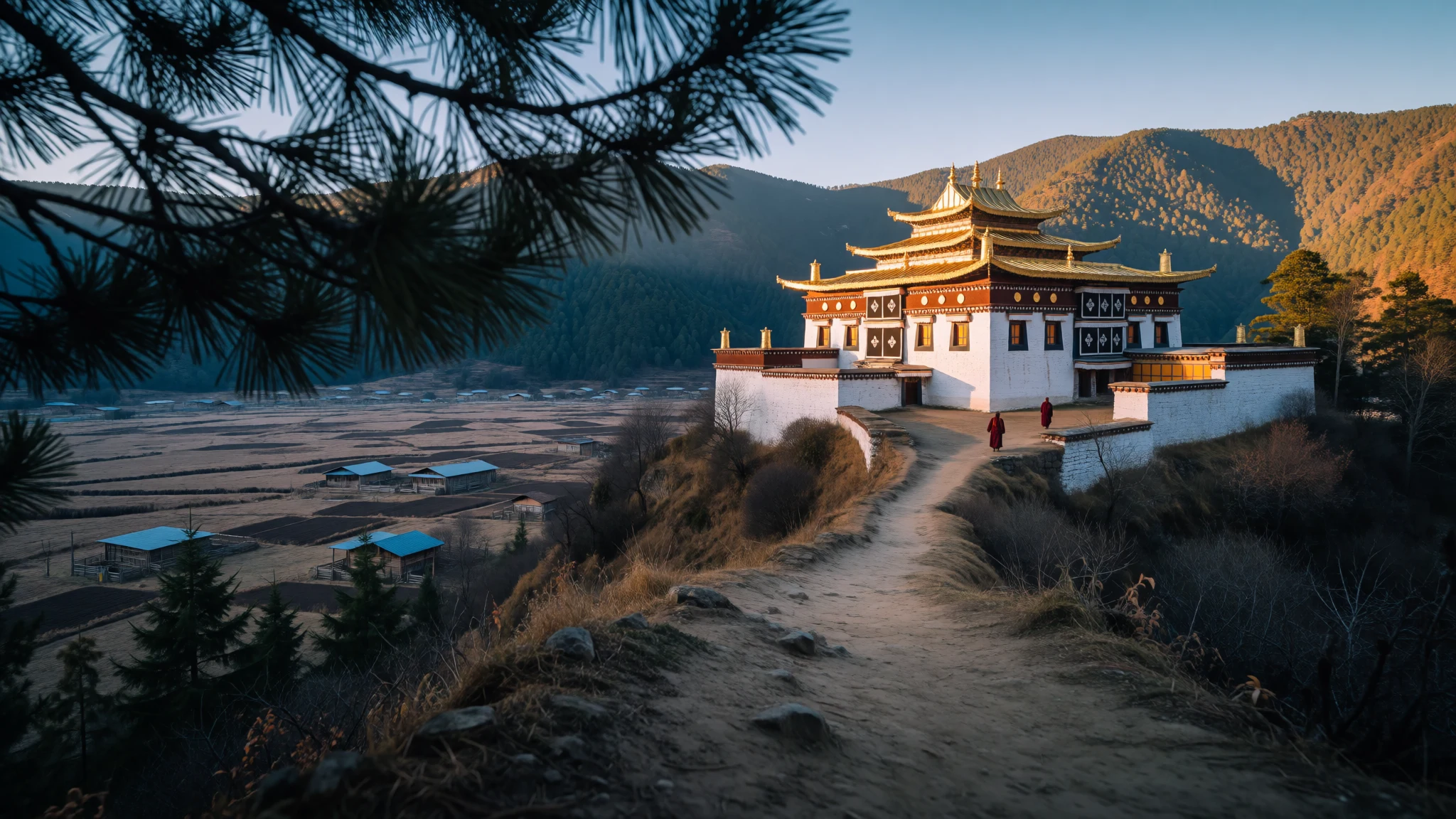
Phobjikha Valley is a high Bhutanese marsh where black-necked cranes winter among potato fields and a ridge-top monastery.
The place
Phobjikha Valley sits high in central Bhutan, a broad glacial bowl whose flat floor is given over to marsh, potato fields and scattered farmhouses rather than a town. The surrounding ridges rise in forest, and the light across the wetland changes quickly when cloud spills over the hills. In the colder months black-necked cranes settle on the wet ground to feed and roost, using the open middle of the valley through winter. When the birds are absent the same land reads as farmland: long rows of potatoes, grazing, and footpaths linking hamlets. Gangtey, the settlement on the ridge, looks down the length of the valley; Phobjikha proper spreads across the floor. Power lines were laid as underground cables so the open sky the cranes use would stay clear of wires. There is no city bustle here. Days are paced by weather, farm work and, in season, the movement of the birds. Mornings can be frosty even when the afternoon turns mild, and the tracks turn muddy after rain. Houses sit apart rather than in a dense street, and the wind across the marsh carries the sound of the place farther than any traffic. Visitors who come only for a viewpoint miss the point of Phobjikha Valley: it is a working wetland, farmed at the edges and left wet in the middle, with the monastery watching from the ridge. Winter shows the birds; the rest of the year shows the farming calendar that makes room for them.
Its story
Phobjikha Valley's story is shared by a monastery and a bird. Gangteng Gonpa stands on the ridge above the marsh, a Nyingma house tied to the treasure-revealer tradition of Pema Lingpa, and its presence is why the valley is also called Gangtey. Monks, lay families and the farming year have shared this bowl for generations, with potatoes and other crops on the drier ground and the wet centre left largely open. The black-necked cranes arrive from the high plateau to the north as winter sets in, use the marsh as a feeding and roosting ground, and leave again when spring advances. Their return became a local festival moment: people gather to mark the birds' arrival, and the valley's identity outside Bhutan is now bound up with that migration. Conservation followed the same logic as the farming compromise. The wetland was kept suitable for the cranes, and when electricity was brought to the valley it was carried in underground cables so that lines would not cut across the flight space. Phobjikha Valley is therefore not a reserve emptied of people. It is a lived-in valley whose households, monastery and winter birds have had to be planned together. The Black-necked Crane Festival grew from that welcome, a public marking of the season rather than a performance staged only for outsiders. That is the story a visitor is walking into: a religious centre on the hill, fields below, and a seasonal guest that the landscape has been quietly rearranged to keep.
What to see
- Gangteng Monastery — Gangtey ridge, Wangdue Phodrang
Gangteng Monastery, also called Gangteng Gonpa, occupies the ridge above Phobjikha Valley, with white walls and a gilded roof turned toward the marsh. It belongs to the Nyingma school and the Pema Lingpa lineage, which is why the valley is still widely called Gangtey. Courtyards, a temple hall and the slope under the walls are what visitors walk. From the approach the bowl lies open: fields, wetland and forest.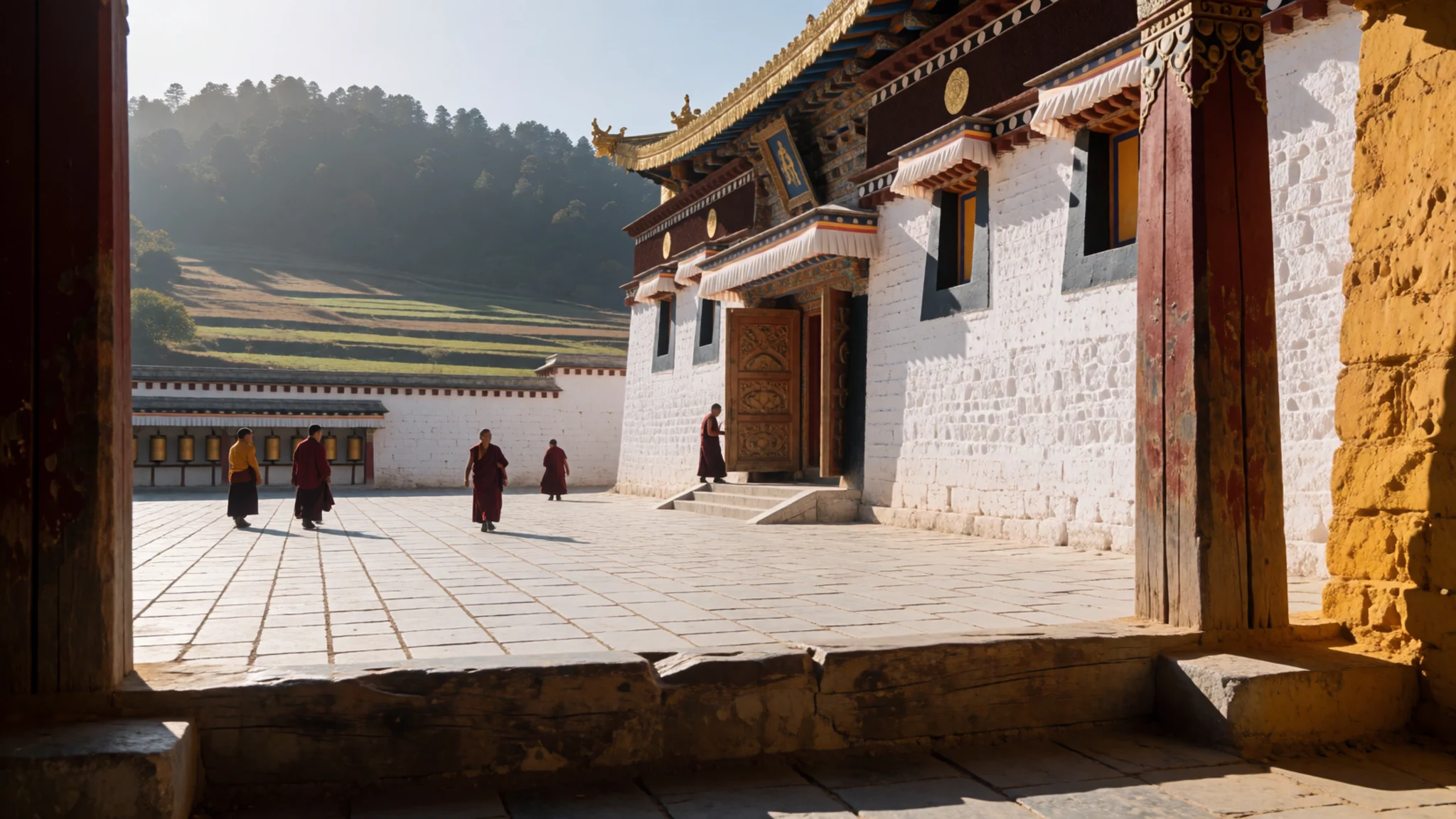
- The crane marsh — Valley floor, Phobjikha
The marsh in Phobjikha Valley is the winter ground of the black-necked crane, a tall migratory bird that feeds across the wetland and roosts on wetter patches. The birds stay through the cold months and leave as the farming year gets going. Because people still look after this habitat, watching is done from the edge rather than by walking onto the roost.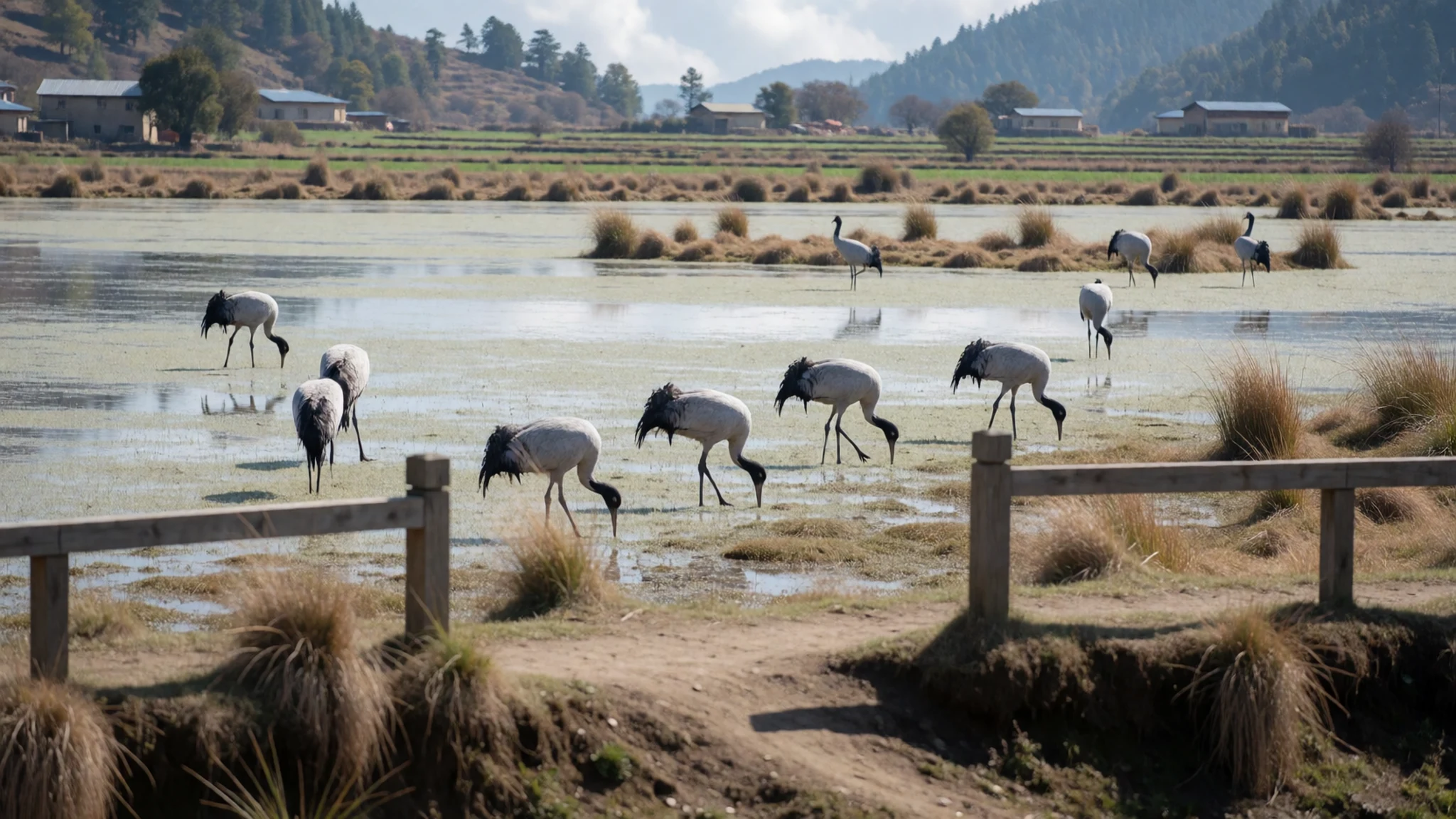
- Potato fields — Valley floor, Phobjikha
Potato fields cover much of the drier floor of Phobjikha Valley and are the crop a visitor notices first outside crane season. Rows run across the open ground between the marsh and the hamlets, and in summer the plants turn the bowl green. Potatoes also shape the local cooking, so the fields are not scenery beside the wetland but the farm economy that sits next to it.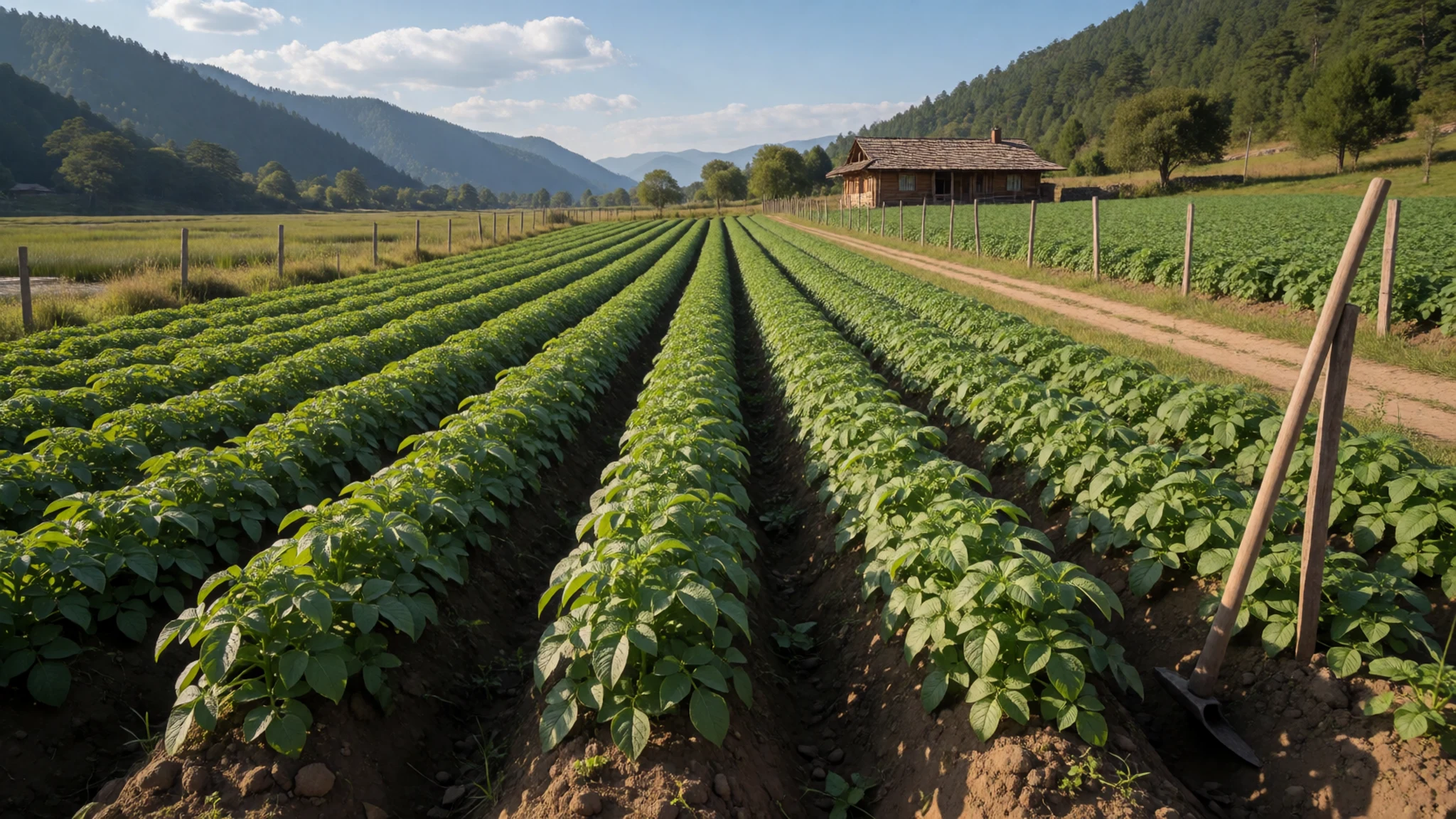
- Valley viewpoints — Gangtey ridge, Wangdue Phodrang
Viewpoints along the rim of Phobjikha Valley show the full shape of the bowl: a flat wetland centre, fields around it, and forest climbing the sides. The long look from the Gangtey side is the look most people stop for, especially when morning mist is lifting off the marsh. A short walk off the ridge road is enough.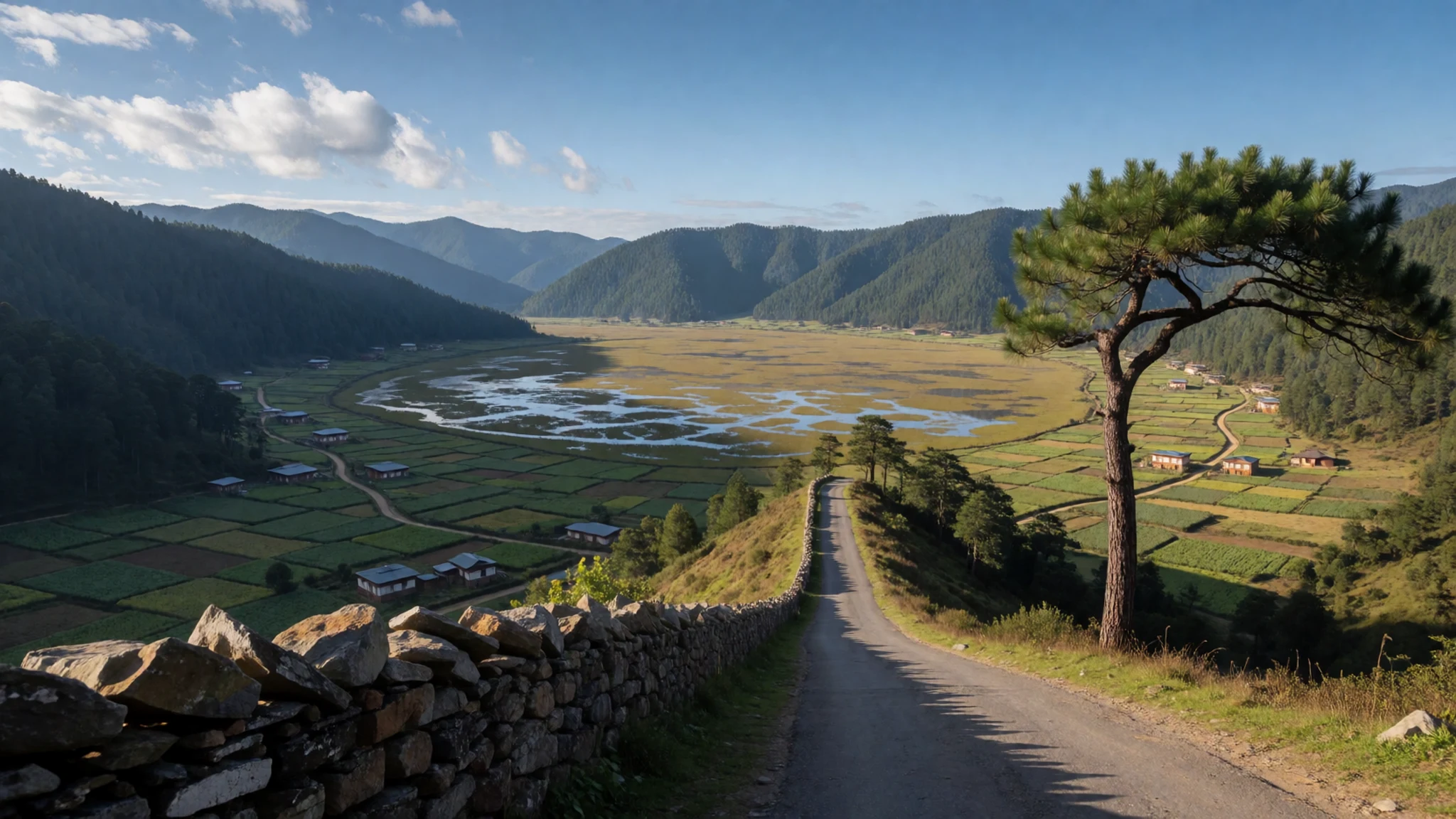
- Black-necked Crane Visitor Centre — Gangtey, Phobjikha Valley
The Black-necked Crane Visitor Centre in Phobjikha Valley explains the migration, the marsh and the work of keeping the winter habitat intact. Displays cover the birds' year and the valley's role in it, which helps before going out to look for them in person. It is the right first stop in crane season, when staff and exhibits set the distance and the behaviour that protect the roost.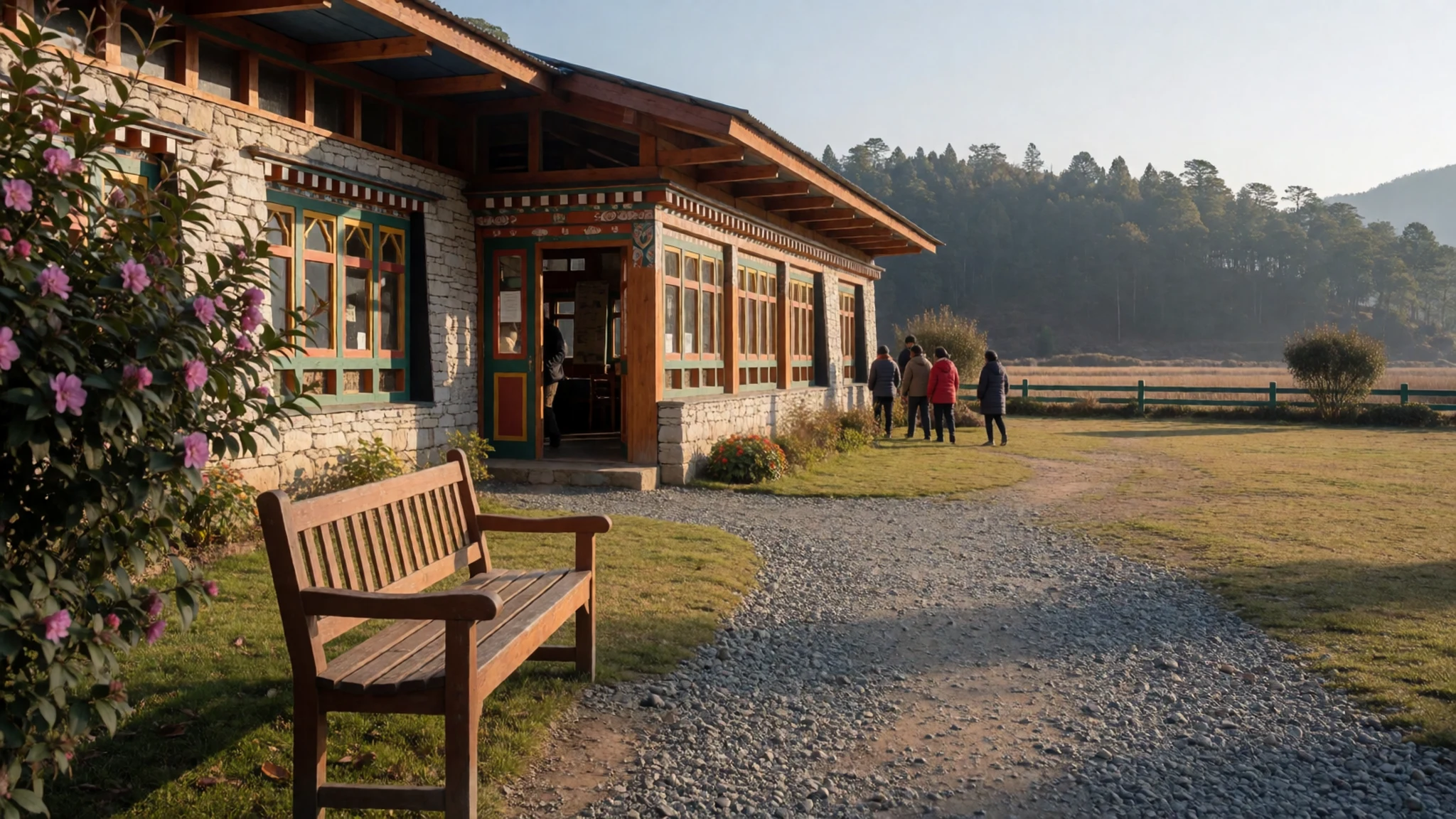
- Gangtey Nature Trail — Gangtey ridge to the valley floor
A nature trail leaves the ridge at Gangtey and descends toward the floor of Phobjikha Valley, passing forest, farm edges and views back across the marsh. It is a direct way to feel the height difference between monastery and wetland without a long expedition. The path can be muddy, and the weather on the ridge is often colder and windier than it looks from below.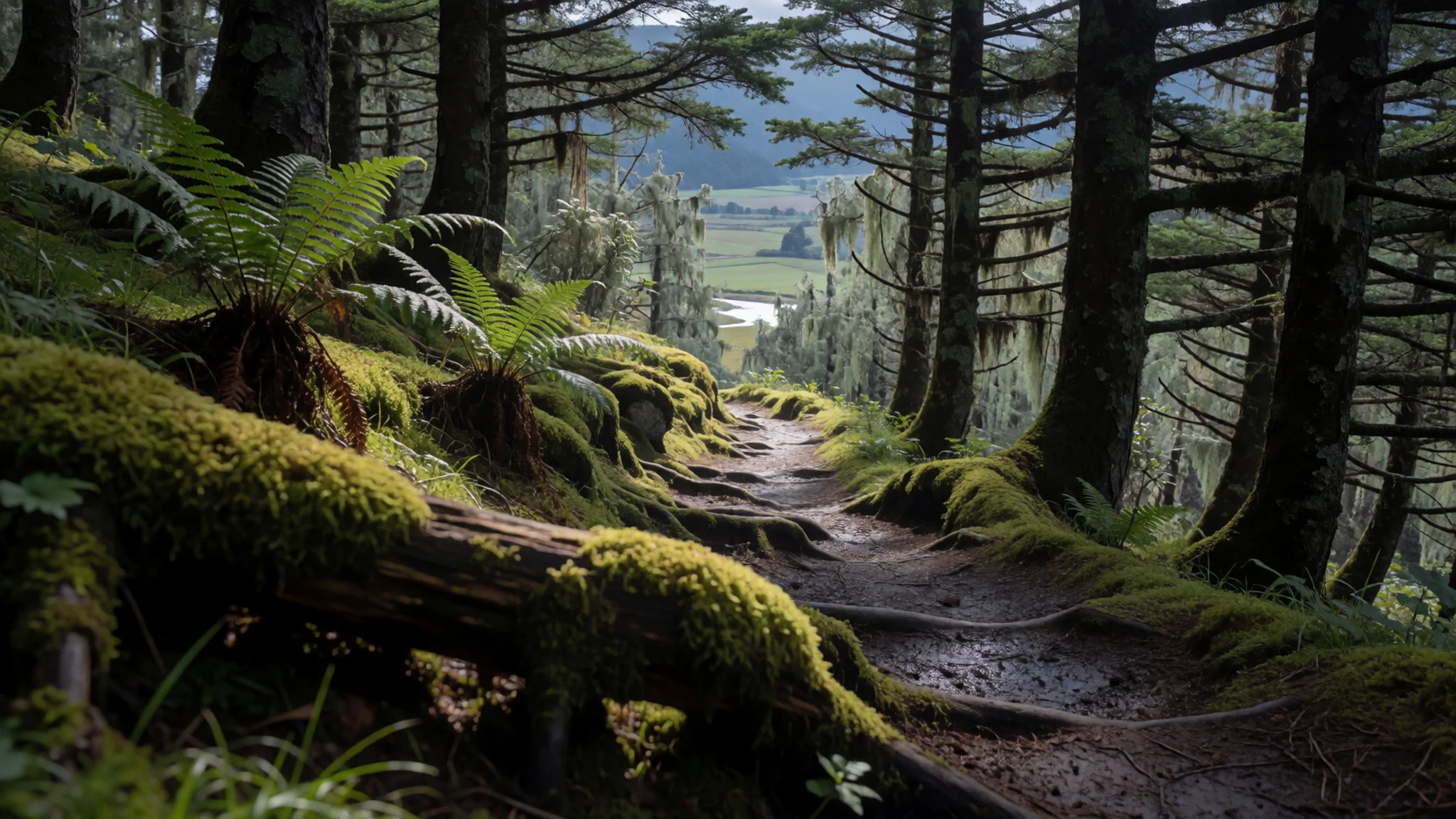
Culture
Phobjikha Valley is a Bhutanese Buddhist farming community, not a resort built around a viewpoint. Daily life follows the monastery on the ridge as much as the fields on the floor. Households mark the calendar with religious observances, and Gangteng Gonpa remains the spiritual centre of the valley people call Gangtey. The Black-necked Crane Festival, held when the birds return, is both a local celebration and the moment the valley presents itself to visitors: dances, gatherings and a public welcome for a wild seasonal neighbour. Respect for the cranes is part of that culture, not an add-on. People farm around the wet ground, tell the migration as a point of pride, and accept limits on how the valley is lit and wired so the birds can keep coming. Visitors are guests in a small place where everyone notices conduct. Dress at the monastery is modest, voices stay low, and shoes come off at the threshold. When you visit Phobjikha Valley, watch the cranes only from a distance and do not enter the roost.
What to wear
Phobjikha Valley follows Bhutanese dress more closely than many travellers expect. The traditional garment for men is the gho, a knee-length robe tied at the waist with a kera belt so that the skirt forms a pocket, worn with knee-high socks and leather or cloth shoes. Women wear the kira, a wrapped dress of woven cloth held by a belt and pinned at the shoulders over a wonju blouse, often with a short jacket, the toego. Textiles matter: wool and silk, and patterned weaves such as mathra checks and the more elaborate kushuthara, appear on festival days and at the monastery. In ordinary weather people in the valley also wear the gho and kira for school, office and formal visits, with jumpers, down jackets and scarves added once winter settles on the marsh. Trainers and waterproof boots show up on the farm tracks. A visitor does well to mirror that practicality: shoulders and knees covered for Gangteng Monastery, shoes that slip off at the door, and layers for frost in the morning and mud by afternoon. Bright ceremony dress is for festivals; on the trail, quiet colours and a warm coat fit Phobjikha Valley better than light city clothes.
What to eat
- Ema datshi — Farmhouse kitchens and small eateries in Gangtey
Ema datshi is the chilli-and-cheese stew found at almost every Bhutanese table, and in Phobjikha Valley it arrives as hot as the household likes it. The cheese is usually local, the chillies plentiful, and the dish is eaten with rice. Heat is the normal setting rather than a performance.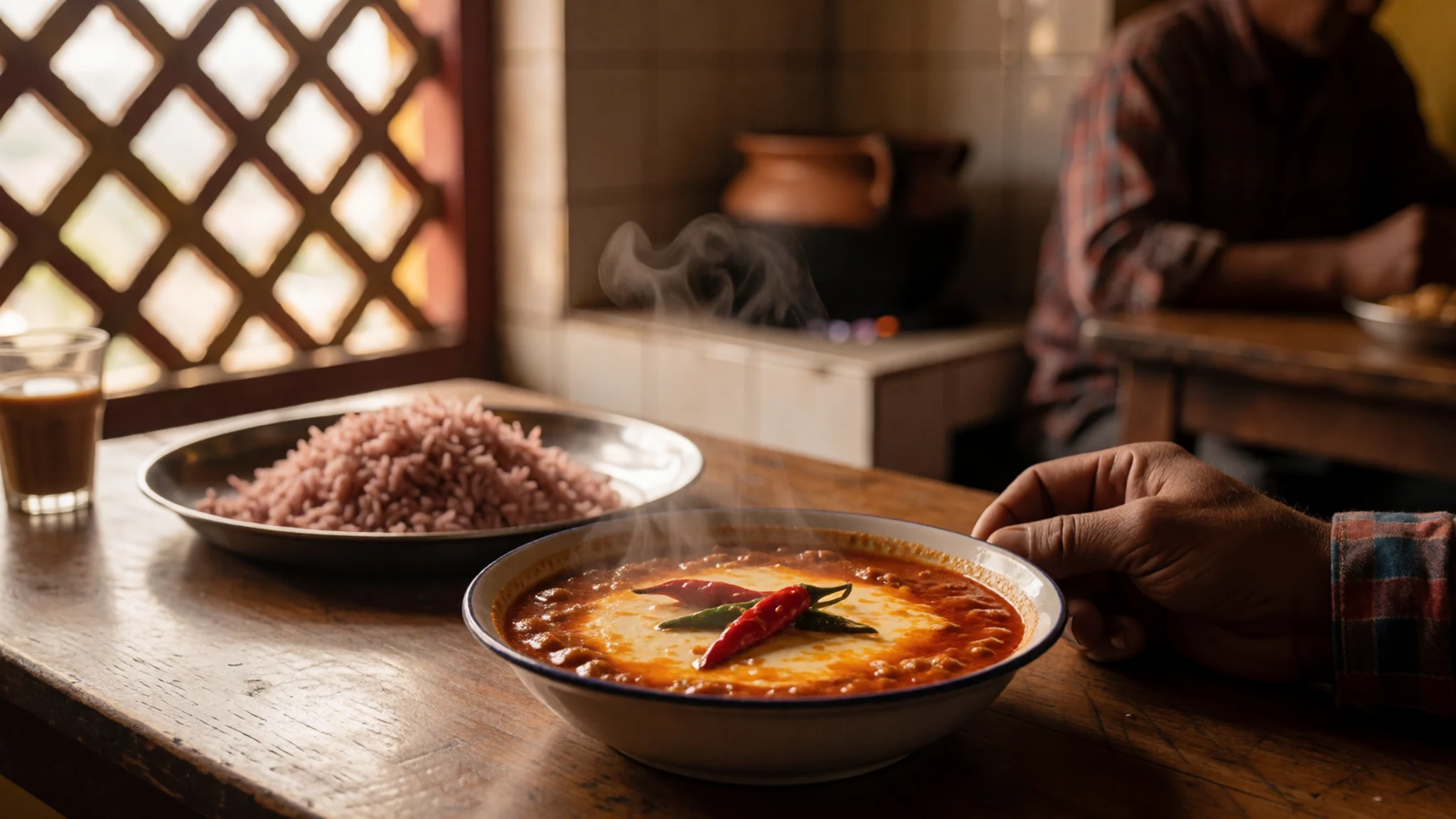
- Kewa datshi — Home kitchens and guesthouse meals in the valley
Kewa datshi cooks the valley's potatoes with cheese and chilli, so Phobjikha Valley tastes of its own fields. It is milder in shape than a plain ema datshi only because potato bulk sits under the spice, and it is everyday food rather than a festival dish.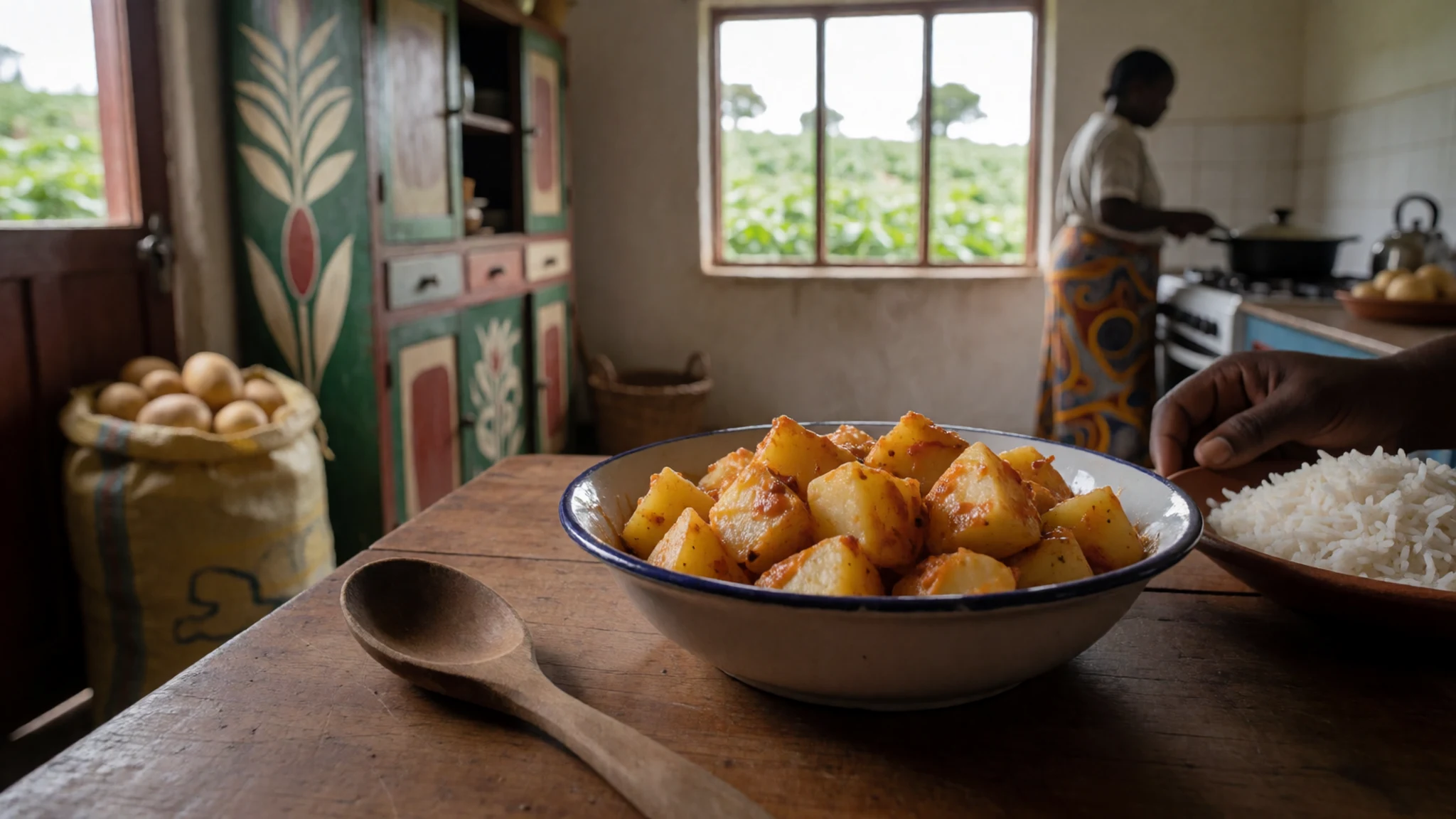
- Red rice — Any local eatery serving a set meal
Red rice is the staple grain beside cheese stews in Phobjikha Valley, nutty and slightly firm, served in a generous mound. It is Bhutanese red rice rather than an imported white rice, and it is what makes the cheese dishes into a full meal. - Puta — Farm kitchens around Gangtey
Puta is a buckwheat noodle served in Phobjikha Valley as a warming meal, often with a chilli relish on the side. The grain stands up to the cold better than a delicate soup, and the noodles are everyday food in farm kitchens rather than a banquet dish. - Momos — Small eateries and guesthouses in Gangtey
Momos in Phobjikha Valley are the same steamed dumplings found across Bhutan, filled with minced meat or cheese and eaten with a chilli dip. They are the easy meal when a full rice sitting is too much, and guesthouses and small eateries turn them out for lunch. - Suja — Homes and Gangteng Monastery
Suja, butter tea, is churned with tea, salt and butter and poured often in Phobjikha Valley, especially on cold mornings. The taste is savoury, not sweet, and a cup is hospitality as much as a drink. It is worth accepting when a home or the monastery offers it.
Plan it
Best time. Phobjikha Valley rewards a visit in spring, when paths are drier and days milder, and from late autumn through winter, when black-necked cranes are on the marsh and the Black-necked Crane Festival marks their return. Summer brings monsoon cloud and rain, and winter nights are sharply cold.
How long. 2–3
Getting there. Fly into Paro, the gateway airport for most international arrivals, then continue by road through Thimphu and Wangdue Phodrang. The last leg leaves the main east-west highway and climbs into Phobjikha Valley, ending at the valley floor and the Gangtey ridge. Licensed Bhutanese operators arrange the route and the permits. Check current entry rules before booking, since they change.
Budget. high
Tips
- Arrange the stay before travelling in crane season; beds in the valley are limited.
- Carry cash for small shops and offerings; card payment is uncommon.
- Begin outdoor time early, when the marsh is quiet and the frost has not yet turned to mud.
- Pack layers, a warm coat and shoes that cope with wet ground.
- Confirm permits and the route with the operator before setting out; rules change.
Etiquette
- Watch cranes from a distance and never feed them or walk into the roost.
- Remove shoes at the monastery threshold and keep voices low inside.
- Walk clockwise around chortens, mani walls and other religious structures.
- Ask before photographing people, and skip flash inside temple rooms.
Nearby
Sources
- Wikidata (CC0)
- Wikipedia: Phobjikha Valley (CC BY-SA 4.0)
- Wikivoyage (CC BY-SA 4.0)
Wildlife
- Black-necked crane (animal)
Think of the black-necked crane as a pale grey bird wearing a black scarf and a small red cap. It is honoured in Buddhist tradition, and Bhutan holds a festival in its name. In Phobjikha it spends the colder months on the wet, open ground in the middle of the valley, feeding and resting. Watch from a good distance with a guide, speak softly, move slowly, and never feed it, because wild cranes should stay wild. - Black-necked crane (bird)
Think of the black-necked crane as a pale grey bird wearing a black scarf and a small red cap. It is honoured in Buddhist tradition, and Bhutan holds a festival in its name. In Phobjikha it spends the colder months on the wet, open ground in the middle of the valley, feeding and resting. Watch from a good distance with a guide, speak softly, move slowly, and never feed it, because wild cranes should stay wild.