Percé Rock
Percé Rock, Canada
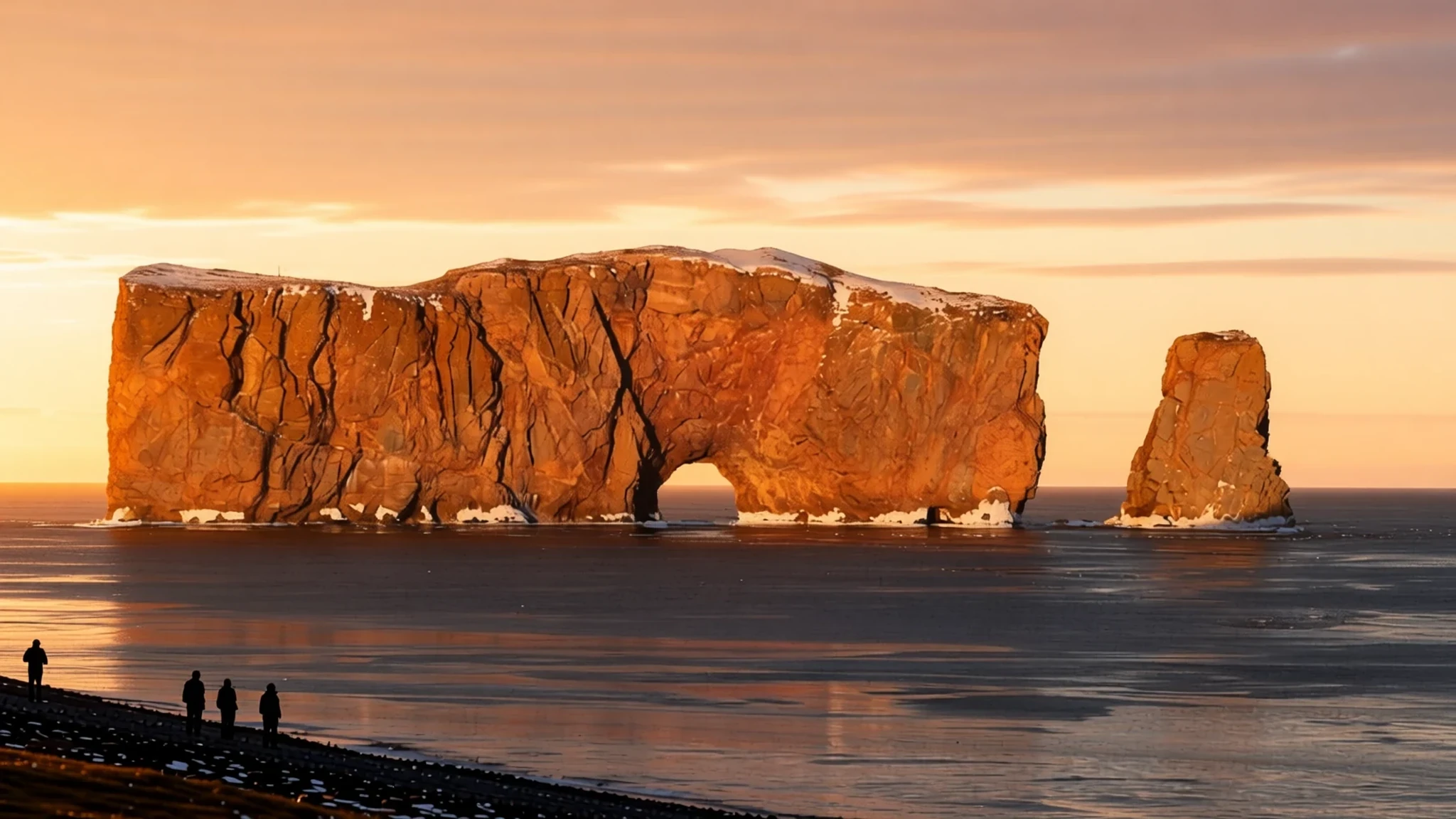
Percé Rock rises from the Gulf of St Lawrence as a pierced wall of stone beside a Gaspé fishing village.
The place
Percé Rock stands in the sea just off the village of Percé, at the eastern end of Quebec's Gaspé Peninsula, where the coast turns from the Baie des Chaleurs toward the Gulf of St Lawrence. The rock is a freestanding wall of layered limestone, sheer on the seaward face and pierced by the opening that gives the place its name. At low water a band of sand and shingle links the cliff path to the foot of the rock; at high water the same ground is sea, and the wall stands alone. Behind it, red cliffs and the green shoulder of Mont Sainte-Anne close the village in, while Île Bonaventure sits offshore as another dark mass, lower and broader, crowded in summer with nesting seabirds.
The village itself is small and strung along a curve of waterfront: wooden houses, a church spire, boats at the quay, and a boardwalk facing the rock. French is the language of the street, the menus and the harbour radio. The economy still turns on the water — fishing boats, whale and seabird trips, and the short season when the road around the peninsula fills with visitors. Fog can erase the rock and then hand it back when the light breaks.
The arch frames a slice of sea, gannets pass between the island and the cliff, and the quay smells of salt and diesel. The rock is watched from the beach, the cliff path and a boat deck when the sea allows.
Its story
Percé Rock takes its name from the French for pierced, and the opening in the stone is the whole plot of the place. Long before charts marked it, the coast was Mi'kmaq country, and the rock sat in a seascape of fishing, travel and story rather than in a scenic lookout. European crews came for cod, working the Gulf in open boats and drying fish on the beaches of the peninsula. The village grew as a summer station for that fishery: a church, a quay, sheds, and families who stayed when the boats left. The rock was the landmark that told them where they were — visible far out, and dangerous close in, with reefs and a tide that covers the sand without much warning.
Stone falls away. The wall people see now is not the wall of earlier centuries; sections have collapsed and left a separated pillar in the surf, while the opening that still frames the sea is a surviving arch about fifteen metres high at the seaward southern end. Painters and writers began stopping when travel around the peninsula became practical, and the rock turned from a seamark into the subject of the place. Postcards, boardwalks and boat circles followed.
Île Bonaventure carries the other half of the story. Families farmed and fished there, then left as the island was given over to birds. Northern gannets now hold the cliffs in a dense summer colony, and the old paths are a park trail rather than a lane between houses. Percé's life sits between a French-speaking fishing village that still keeps its boats and a view that draws people in to look.
What to see
- Percé Rock — off the village beach
Percé Rock is the freestanding limestone wall in the sea off the village beach, pierced by an opening near its outer end. From the shore the arch frames open water. From a boat on a calm day the same hole shows the thickness of the stone. Fog turns the strata grey; a low sun warms them. The sand and the deck are the right vantage.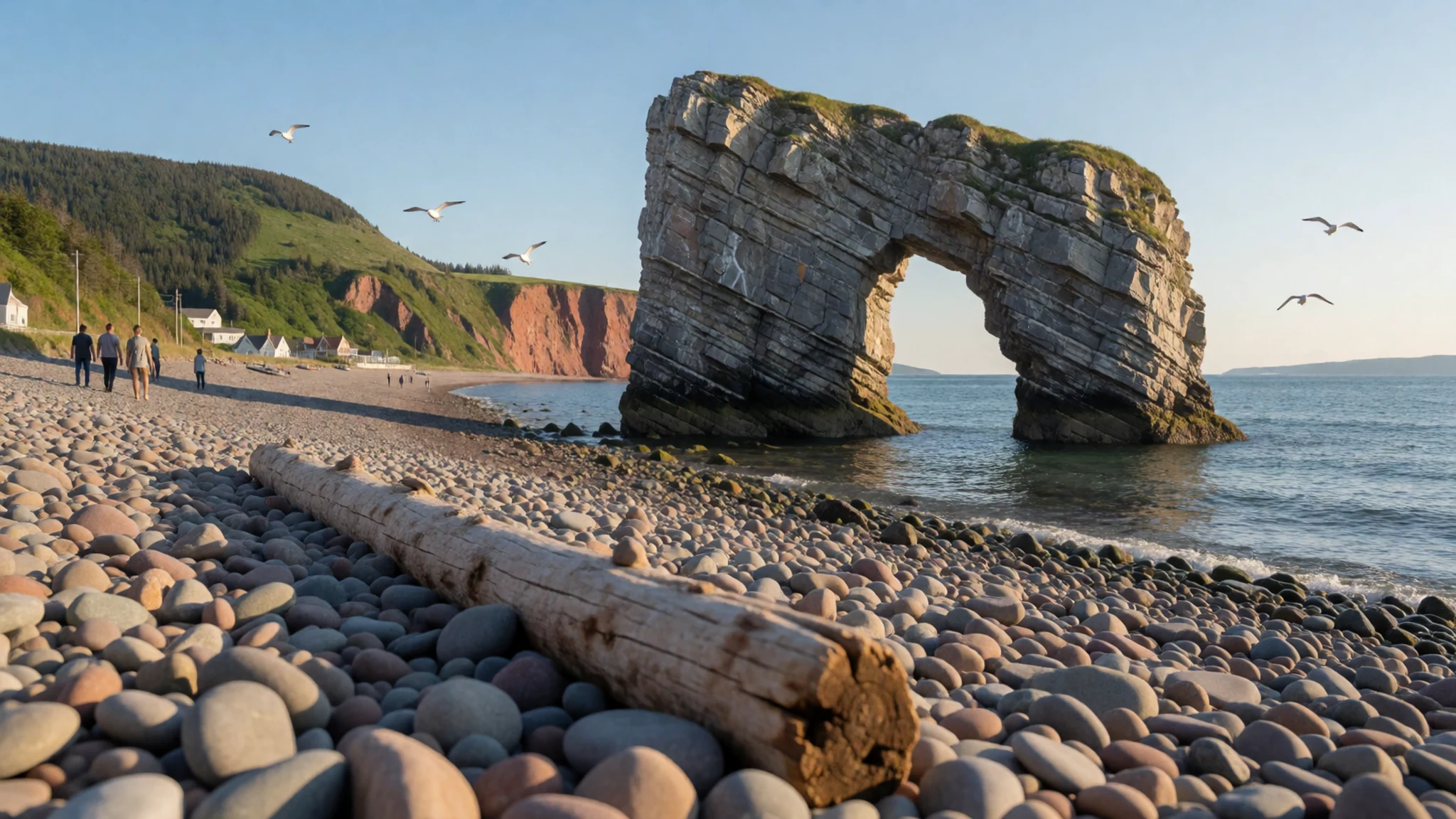
- The tidal bar — the village beach
At low tide a bar of sand and shingle runs from the village beach to the foot of Percé Rock, close under the arch. The Gulf takes that bar back as the tide turns, and the return narrows faster than it looks from dry ground. Reading the tide, and leaving while the bar is still wide, matters more than how far the arch seems.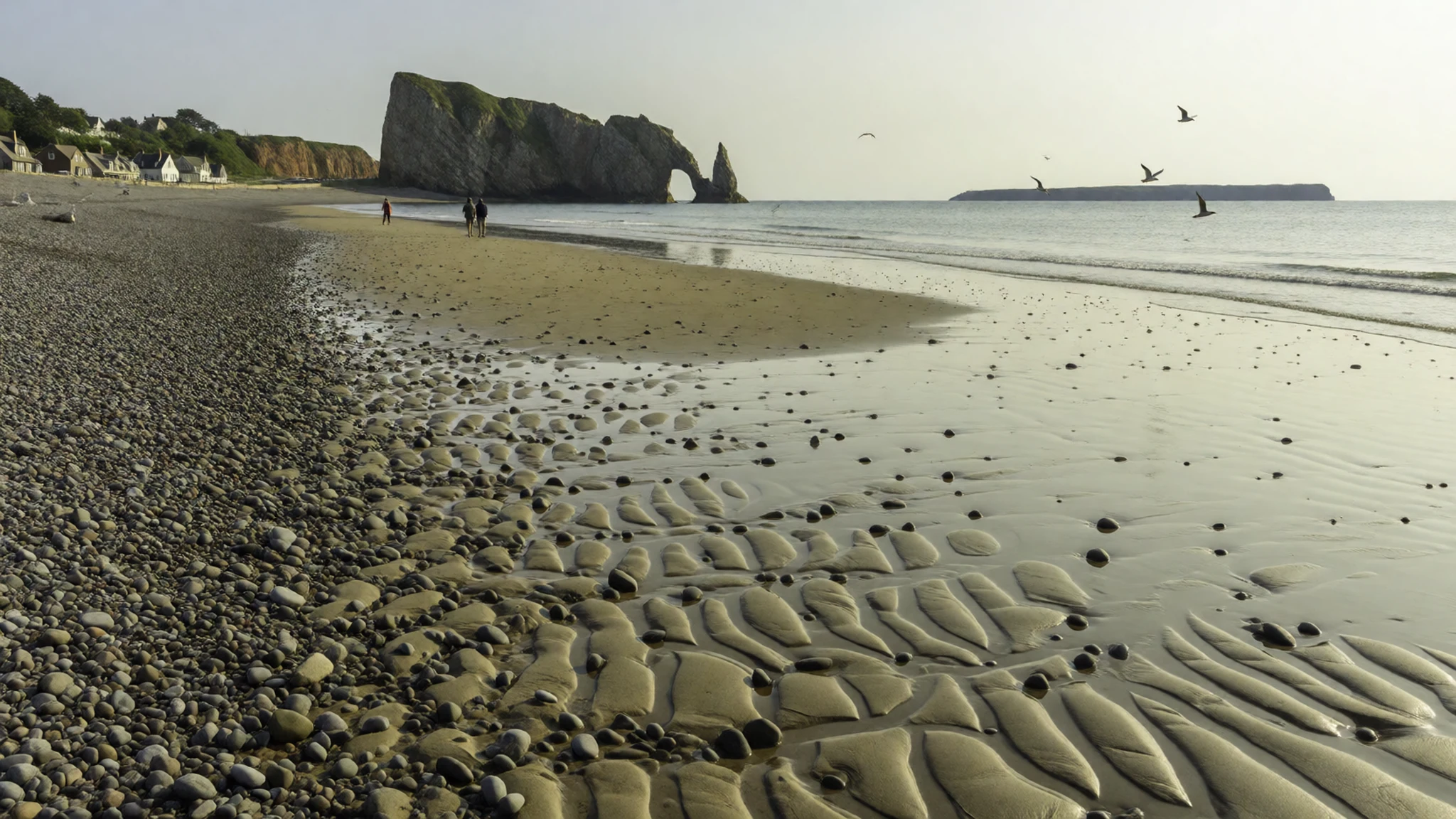
- Île Bonaventure — offshore, by boat from the quay
Île Bonaventure lies offshore from Percé Rock and is reached by boat from the village quay. Northern gannets cover the cliffs in a dense summer colony, and puffins and other seabirds use the same shore. Trails cross former fields from the years when families farmed and fished on the island. The boat ride is short, the paths are clear, and the cliff edge belongs to the birds.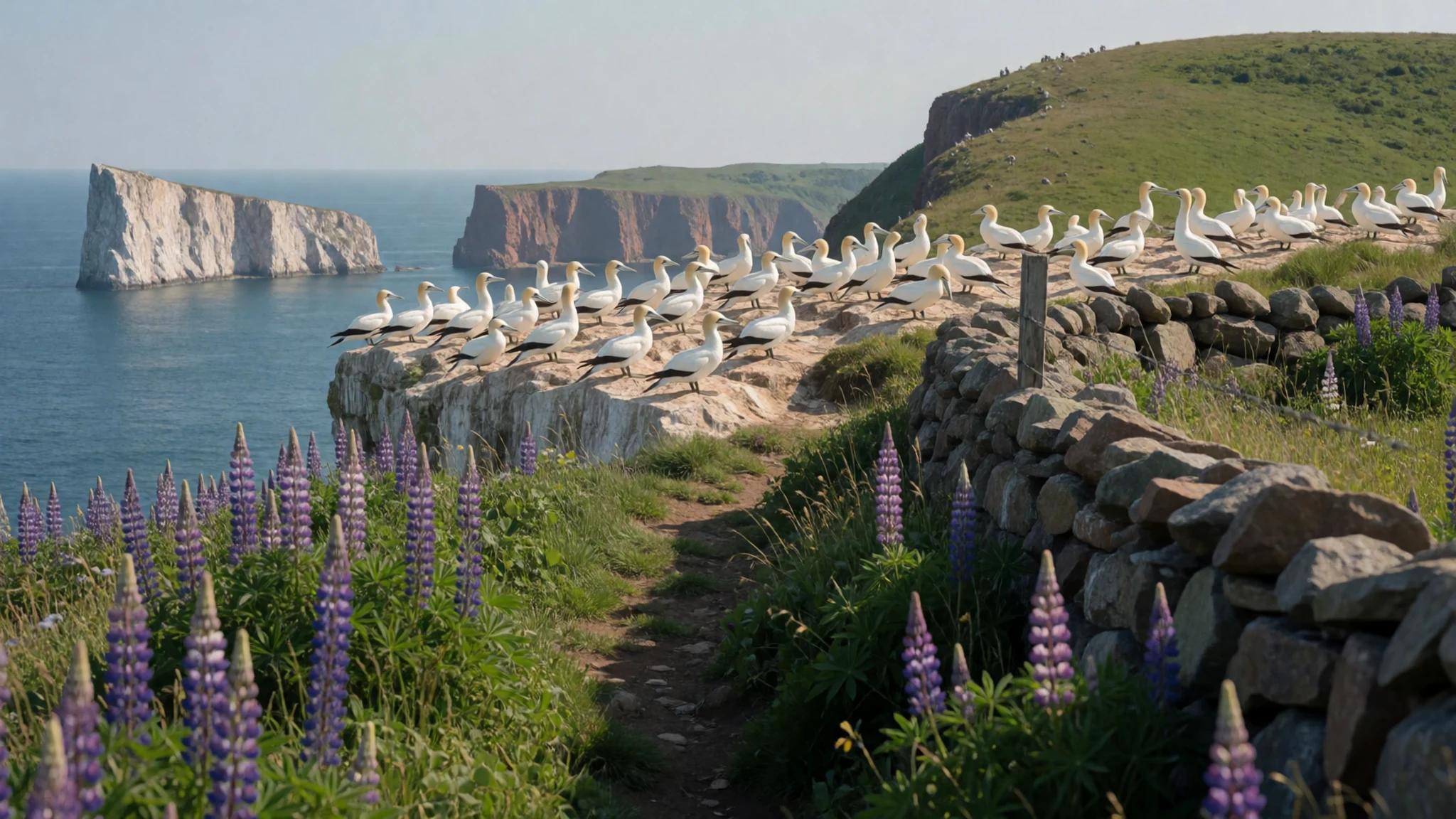
- Mont Sainte-Anne — the headland behind the village
Mont Sainte-Anne rises directly behind Percé, and its paths look down on the rock, the village and Île Bonaventure together. From above, the arch's place on the beach and the bend of the coast into the Gulf are easy to read. Trees break the wind on some stretches and leave it raw on others.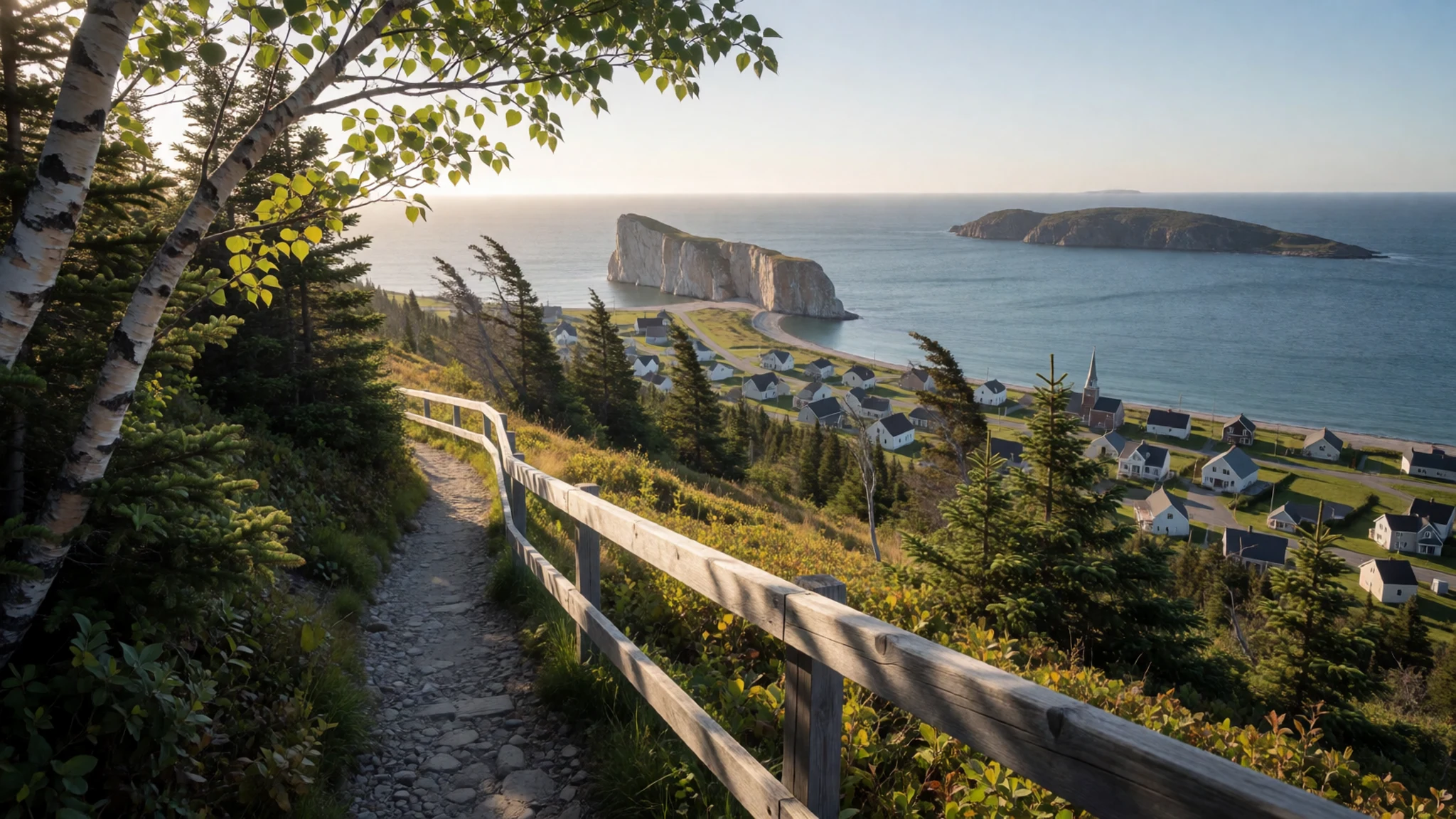
- The Percé waterfront — the quay and boardwalk
The village of Percé lines a curved quay and a boardwalk aimed straight at the rock. Wooden houses, a church, and the desks where boat seats are sold all face the same view. In summer the front is busy with visitors, gulls and the smell of a working harbour; in the quieter months many doors are shut and the rock has the bay to itself.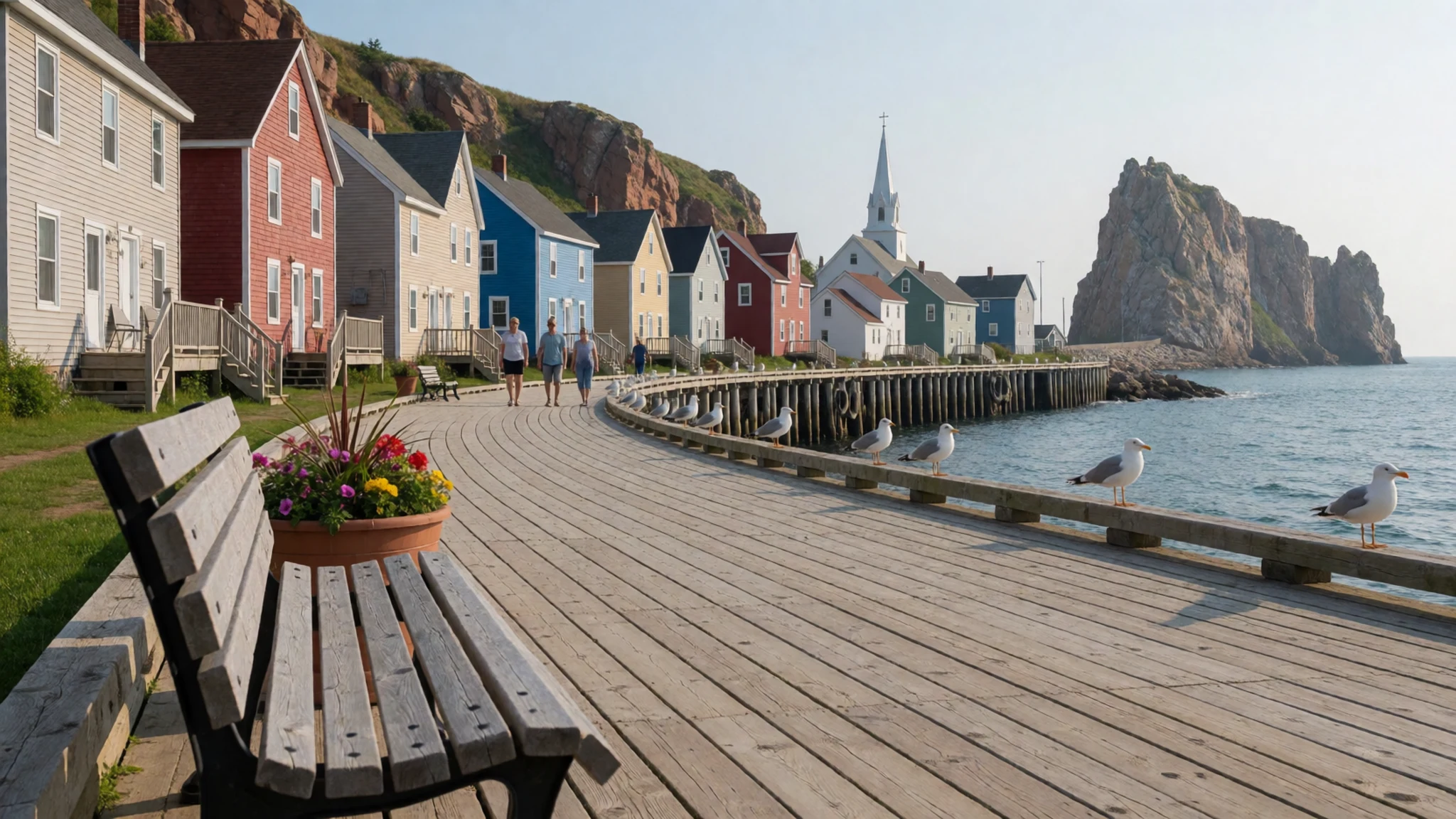
Culture
Percé is a French-speaking village on a coast that still measures the year by fish, weather and the tourist months. Quebec manners apply, with a Gaspé directness: people greet, talk about the wind, and expect visitors to try French before switching. Conversations in shops turn quickly to the wind, the boats and whether the tide will uncover the sand. Bonjour on entering a shop or a boat office is ordinary politeness, not a performance. The Mi'kmaq history of the peninsula is older than the village, and it surfaces in place names and in the wider regional story even when the street itself feels wholly French Canadian. Summer brings a small arts season — galleries, outdoor music, theatre — layered on a working quay. The church in the village still anchors the look of the place, and a Sunday morning is often the quiet hour on the front. The rock is local identity as much as scenery: people correct outsiders gently if they treat it as a playground. Waste, drones and wandering off marked ground on Île Bonaventure are the frictions locals notice first. Leave nesting birds undisturbed, stay on signed paths, and do not climb Percé Rock.
What to wear
Percé's traditional working dress belongs to the fishery. Boat crews and shore workers wore wool, cotton, oilskin and rubber: knitted sweaters, tuques, sou'westers, and boots that stood in cold brine. The ceinture fléchée, Quebec's finger-woven arrow sash, shows up in wool at winter festivals rather than on the boats. Mi'kmaq clothing on this coast was hide, fur and later traded cloth, cut for wind off the Gulf; it is a heritage to acknowledge, not a costume for visitors.
On the street now Percé dresses like any cool maritime town in Canada. Summer means jeans or walking trousers, fleece, a light wool layer and a waterproof shell, because fog can drop the temperature inside an afternoon. Fishers at work still wear bibs, boots and layers that have already met the weather.
A visitor does well to start with the feet. Closed shoes with grip beat sandals on wet shingle, slick boardwalks and island paths. A windproof hood earns its place even in high summer. The beach has no strict dress code, though a church visit calls for covered shoulders. Near nesting birds, plain layers are enough, and a warm hat belongs in the bag.
What to eat
- Lobster — waterfront eateries and harbour-side counters
Lobster is the dish the Percé summer is organised around. Boiled or grilled, it comes with butter, potato and a plain salad; cold, it turns up in a roll for the boardwalk. Waterfront eateries and harbour-side counters are the place to look, with chalkboards following what the boats landed.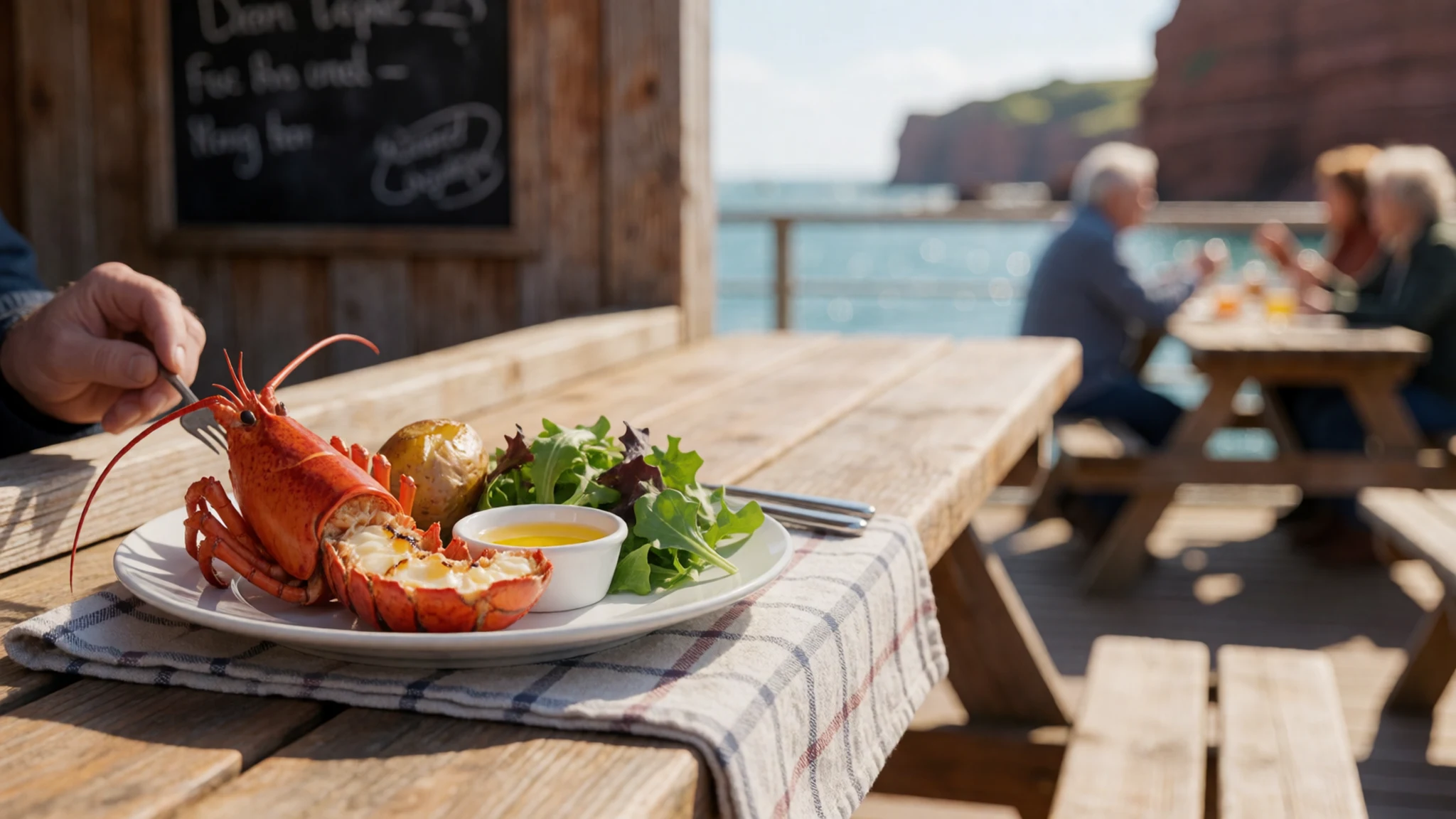
- Chaudrée — village eateries along the waterfront
Chaudrée, the seafood chowder of the Percé quay, is milk or cream, potato and whatever the boats brought — lobster, cod, scallop or clam. It is the sensible bowl on a foggy noon. Village eateries along the waterfront serve it. Kitchens vary the mix; the flavour stays of this coast.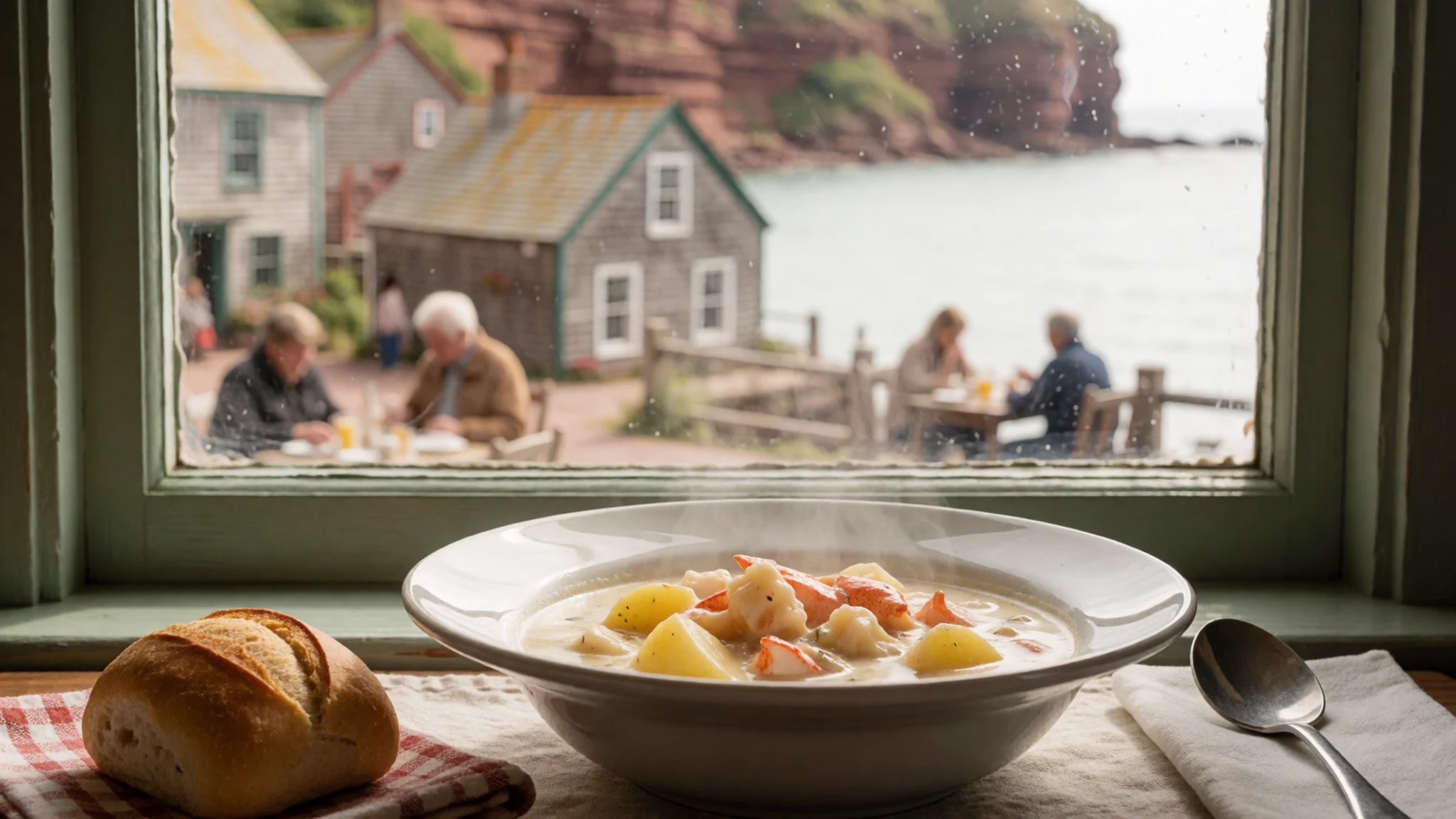
- Morue — waterfront eateries and small kitchens on the village streets
Morue, Atlantic cod, is the fish Percé's older stations were built on, and kitchens in the village still cook it. Fried fillets, butter-baked pieces and salt cod mashed with potato are the usual forms, plainer than lobster. Waterfront eateries and small kitchens on the village streets both serve it. - Snow crab — quay-side eateries and takeaway counters
Snow crab from the Gulf is a Percé staple when the boards list it: sweet, a little fibrous, served cracked and chilled or warmed with garlic butter. Quay-side eateries and takeaway counters offer it through the warm months, in a roll or as a plate of legs. - Poutine — snack bars and casual eateries on the village streets
Poutine is the everyday Quebec plate, and Percé serves it without ceremony. Fries, fresh cheese curds and hot gravy are the base, sometimes with peas or chicken added. It is the hot, unfussy meal between a boat trip and a windy walk along the quay.
Plan it
Best time. July and August are the reliable months at Percé for boats, the tidal bar and long daylight. June and September are quieter and more changeable, with colder water and a higher chance of fog. Outside late May to mid-October the rock remains, but boat landings and the walk across the bar are a poor bet.
How long. 2–3
Getting there. Most people reach Percé by road, driving the Gaspé Peninsula from Quebec City or from the south shore of the St Lawrence, with the village street as the last leg. The nearest airport is at Gaspé, and the same coastal road finishes the journey. Percé has no passenger rail station. Once in the village, the quay, the beach and the cliff paths are all on foot.
Budget. mid
Tips
- Read a local tide table before walking out to Percé Rock, and start back while the bar is still wide.
- In July and August, reserve the Île Bonaventure boat before arriving.
- Carry a waterproof layer all day; fog and wind change the light and the temperature quickly.
- Expect French first on signs, menus and boat briefings, and have a few phrases ready.
- Carry some cash for small counters; cards are usual at boat offices and larger eateries.
Etiquette
- Say bonjour when you enter a shop, a gallery or a boat office.
- Do not climb Percé Rock, and do not stand under overhangs.
- On Île Bonaventure, stay on the marked paths and keep well back from nesting gannets.
Nearby
Sources
- Wikidata (CC0)
- Wikipedia (CC BY-SA 4.0)
- Wikivoyage (CC BY-SA 4.0)
Wildlife
- Northern gannet (animal)
Think of the northern gannet as the giant of the North Atlantic's seabirds: snowy white, long-necked, with slim wings dipped in dark at the edges and a pale blue-grey beak. In summer, huge numbers crowd onto the cliffs at Percé Rock to nest, and the old paths there are now a park trail. Young birds start out grey-brown and slowly turn whiter. Keep to the trail, stay well back and quiet, think about taking a guide, and never feed them.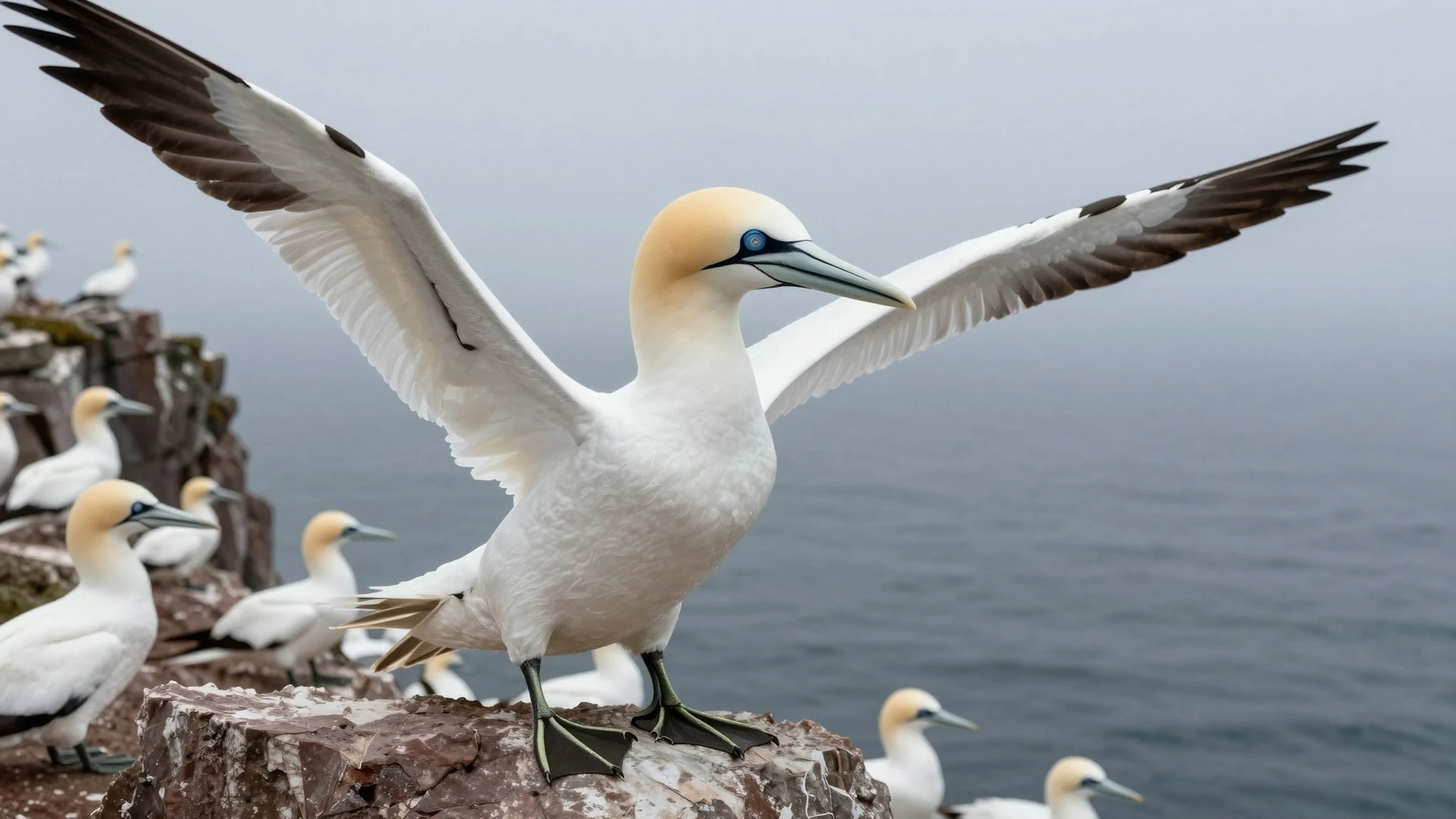
- Atlantic puffin (animal)
The Atlantic puffin is an upright little seabird, a member of the auk family, that dives beneath the waves and uses its wings to swim after small fish, crabs and tiny sea creatures. At Percé Rock, puffins use the same shore as the gannets and other seabirds. A guide can show you where to look. Watch from a comfortable distance, speak softly, and never feed them, so they stay wild and undisturbed.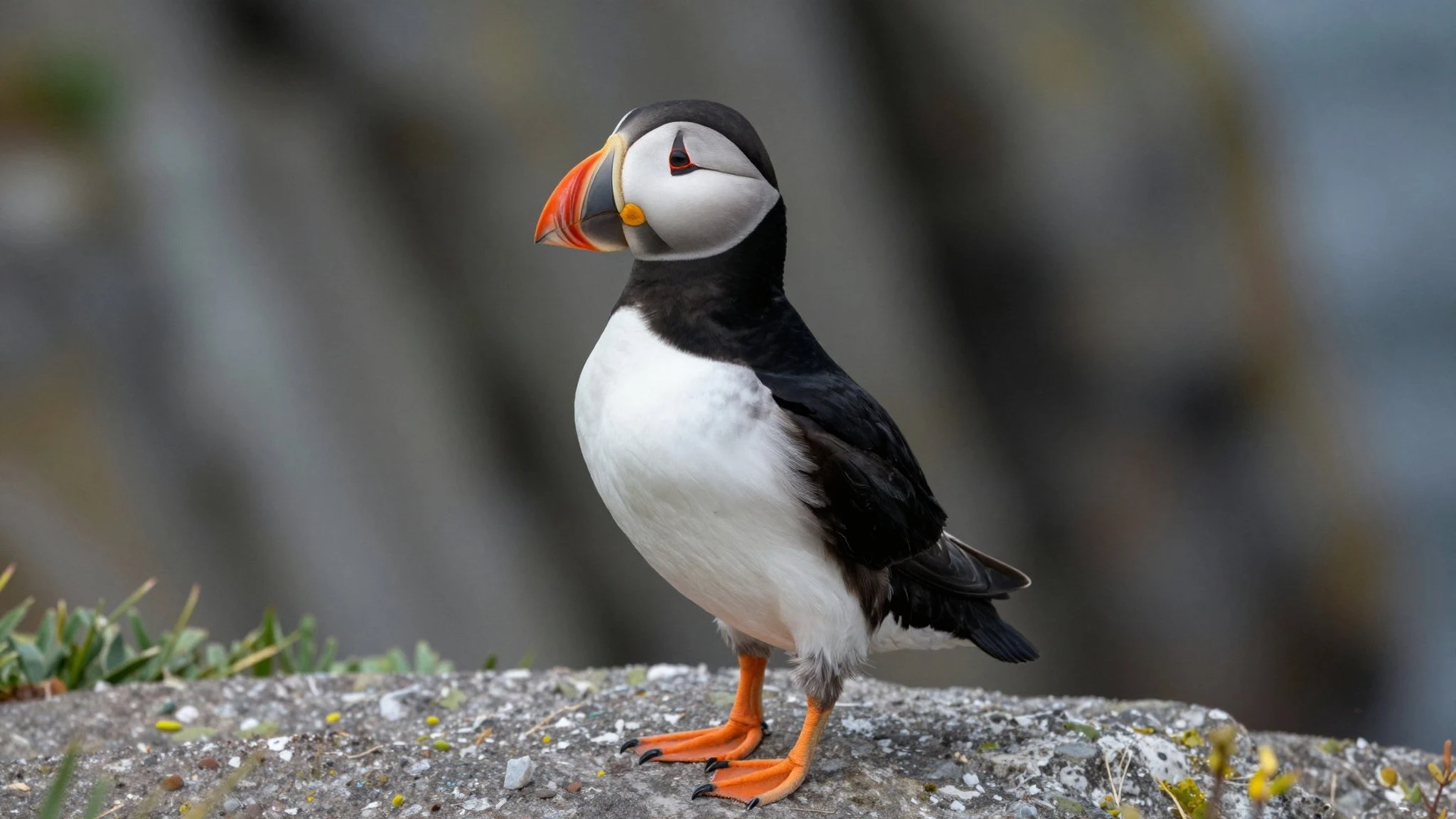
- Northern gannet (bird)
Think of the northern gannet as the giant of the North Atlantic's seabirds: snowy white, long-necked, with slim wings dipped in dark at the edges and a pale blue-grey beak. In summer, huge numbers crowd onto the cliffs at Percé Rock to nest, and the old paths there are now a park trail. Young birds start out grey-brown and slowly turn whiter. Keep to the trail, stay well back and quiet, think about taking a guide, and never feed them. - Atlantic puffin (bird)
The Atlantic puffin is an upright little seabird, a member of the auk family, that dives beneath the waves and uses its wings to swim after small fish, crabs and tiny sea creatures. At Percé Rock, puffins use the same shore as the gannets and other seabirds. A guide can show you where to look. Watch from a comfortable distance, speak softly, and never feed them, so they stay wild and undisturbed.