Pemaquid Point
Pemaquid Point, United States
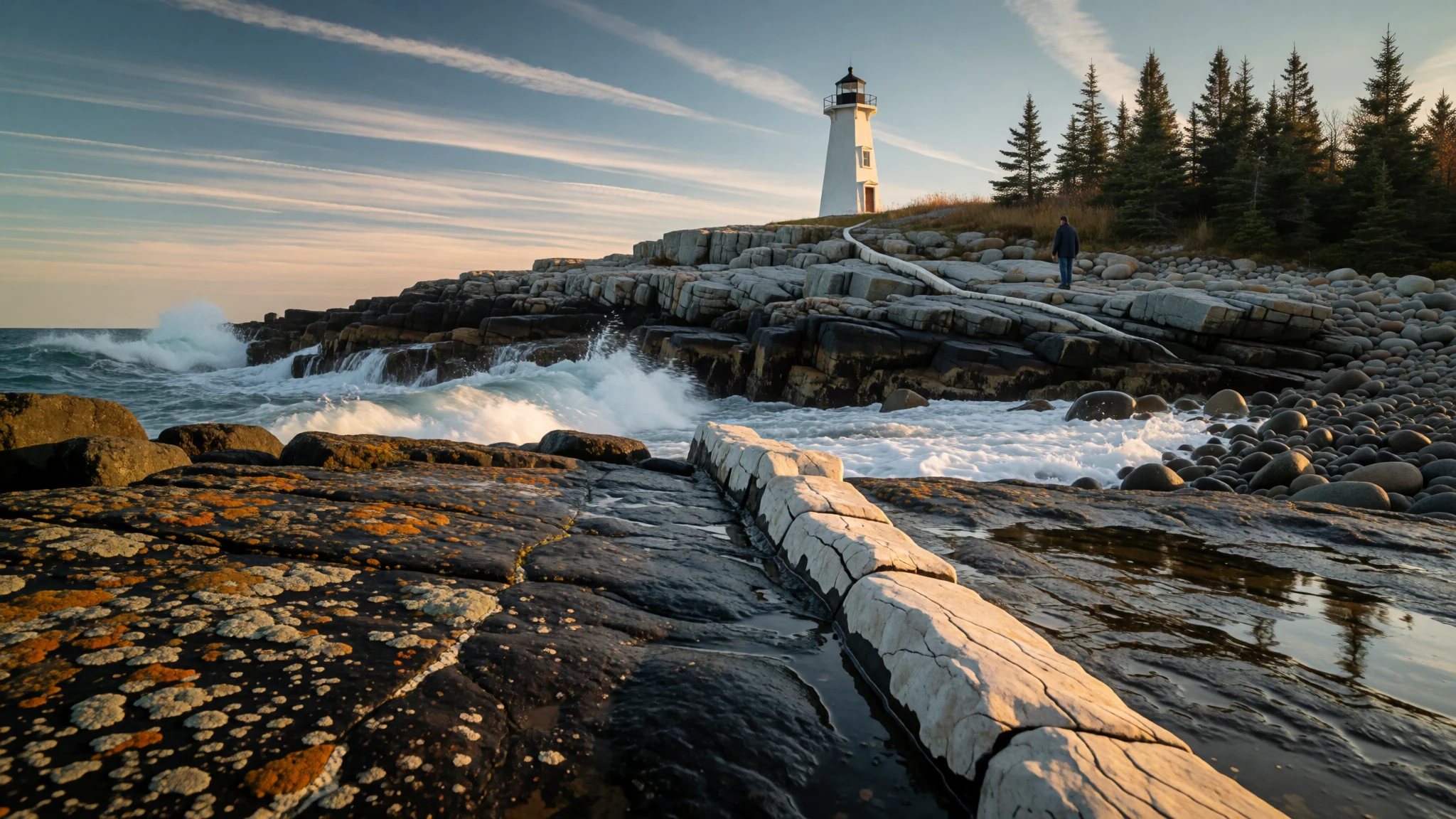
Pemaquid Point is a Maine lighthouse on folded grey rock, where Atlantic swell breaks over ledges that visitors can walk across.
The place
Pemaquid Point sits at the tip of the Pemaquid peninsula in Bristol, Lincoln County, on the mid-coast of Maine, where the land runs out into the open Atlantic. The white lighthouse stands on a low headland, and below it the bedrock slopes to the water in broad, tilted shelves. The rock is the real draw. It began as sediment on an ancient sea floor, was buried and cooked underground until it became gneiss, then was cut through by pale bands of harder igneous rock that cooled slowly. Heat and pressure twisted the layers into folds and swirls, and centuries of waves have ground the surface smooth. On a calm day the grey ledges are pleasant to sit on and full of tidepools. When a storm swell arrives, the same shelves turn wet and dangerous, and spray reaches well up the slope. The setting is compact. A small park surrounds the light, with a car park, the old keeper's house, a bell house near the shore and short paths along the rocks. It is not a wilderness. On summer weekends it fills with families, photographers and picnickers, and parking can be tight. Fog is common on this coast and can swallow the tower completely, so a single-afternoon visit carries some risk of seeing very little. Lobster boats work the water offshore, and the smell of salt, kelp and spruce is constant. The point suits slow time: an hour on the rocks, a climb up the tower in season, and a long lunch nearby.
Its story
Pemaquid Point Light dates to 1827, when President John Quincy Adams commissioned a lighthouse for this headland and the first tower went up the same year. It did not last. The builders had mixed their mortar with salt water, and the walls began to crumble within a few years. A replacement followed in 1835 under a contract that demanded fresh water, and the keeper at the time, Isaac Dunham, reported back that the rule was kept and the work went smoothly. That second tower is the one standing today. The earliest light came from candle-lit lamps behind a parabolic reflector, which carried only a short way out to sea. In 1856 the station received a fourth-order Fresnel lens, the glass design that gathers lamplight into a far stronger beam, and the keeper's house was added in 1857. Among the men who kept the light was Marcus Hanna, who held both the Medal of Honor, earned in the Civil War, and the Gold Lifesaving Medal, awarded for a rescue at Cape Elizabeth. The station was automated in 1934, which ended the keeper's daily routine. Today the Coast Guard owns the tower, a lighthouse foundation licenses it, and a local friends' group runs it with volunteer docents. Upkeep depends on visitor donations. The light also appears on Maine's state quarter, chosen by public vote. In January 2024 a storm largely destroyed the bell house, a structure from the 19th century, and it was rebuilt within eight months. The sea here still sets the terms.
What to see
- The lighthouse tower — Pemaquid Point park, Bristol
Pemaquid Point Light is a white tower on the headland, with the keeper's house attached beside it. Docents open it for visits in the warmer months, and the climb gives a view along the ledges and out over the water. Check the official site or the friends' group before travelling, as opening depends on season and weather.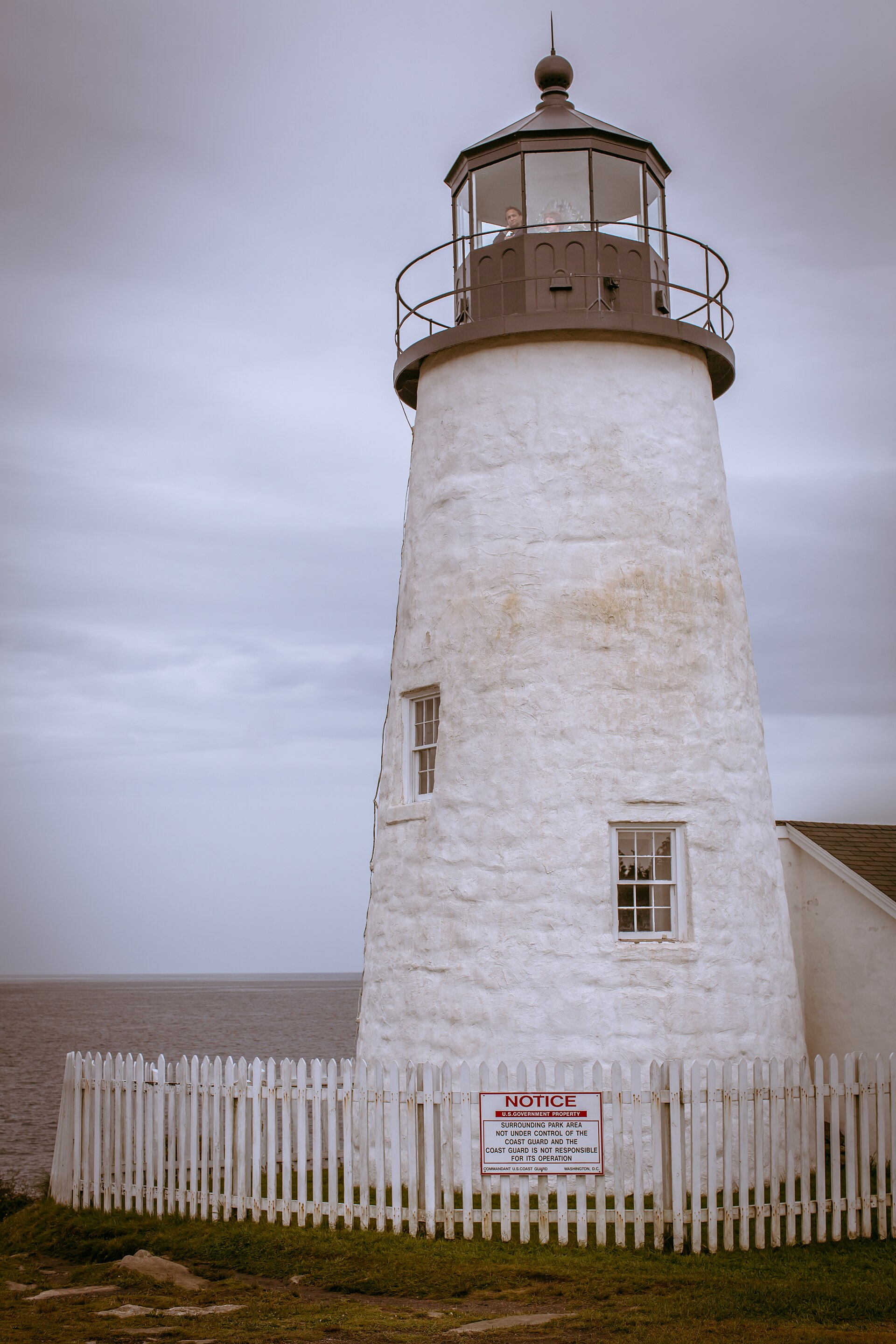
- The rock ledges — Shoreline below the lighthouse
The grey gneiss below the lighthouse is the main attraction, with pale igneous bands running through it in sharp lines and swirls. Walk slowly on the dry upper shelves and look at the folds up close. Wet, dark rock near the waterline is slippery, and waves can arrive higher than expected.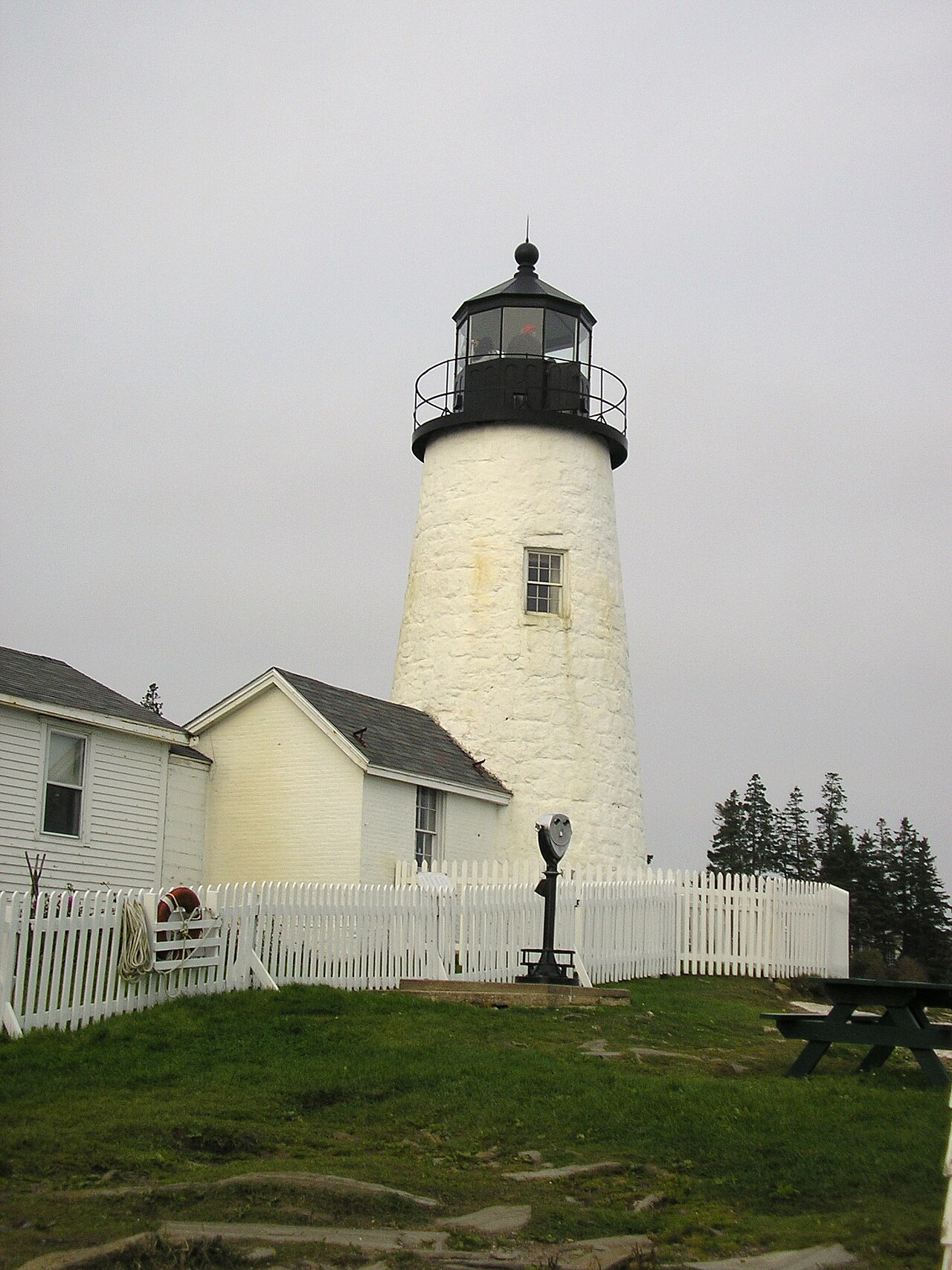
- The bell house — Shore side of the point
A small bell house stands closer to the water than the tower, and it took the full force of the January 2024 storm. Its rebuilding makes it a good place to see how exposed the point is. Photographers often use it as a foreground against the sea and the lighthouse behind.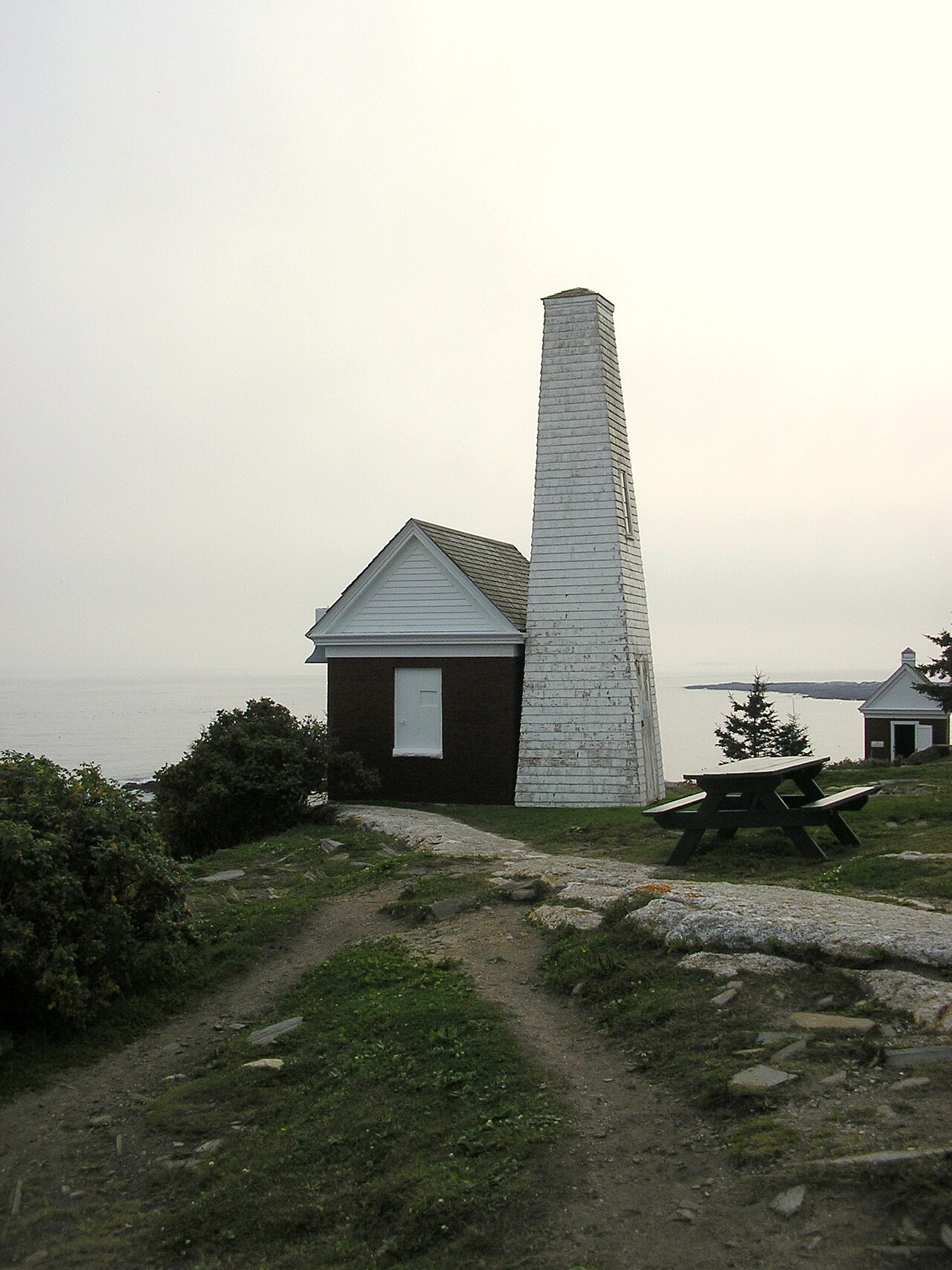
- The stacked-stone cairns — Rocks near the lighthouse
Visitors build small towers of balanced pebbles in the gaps between the rocks near the lighthouse, sometimes called fairy castles. They are temporary, since tides, wind and the next visitor change them constantly. Looking at them is fine, but taking stones from the shore or building on fragile spots is best avoided.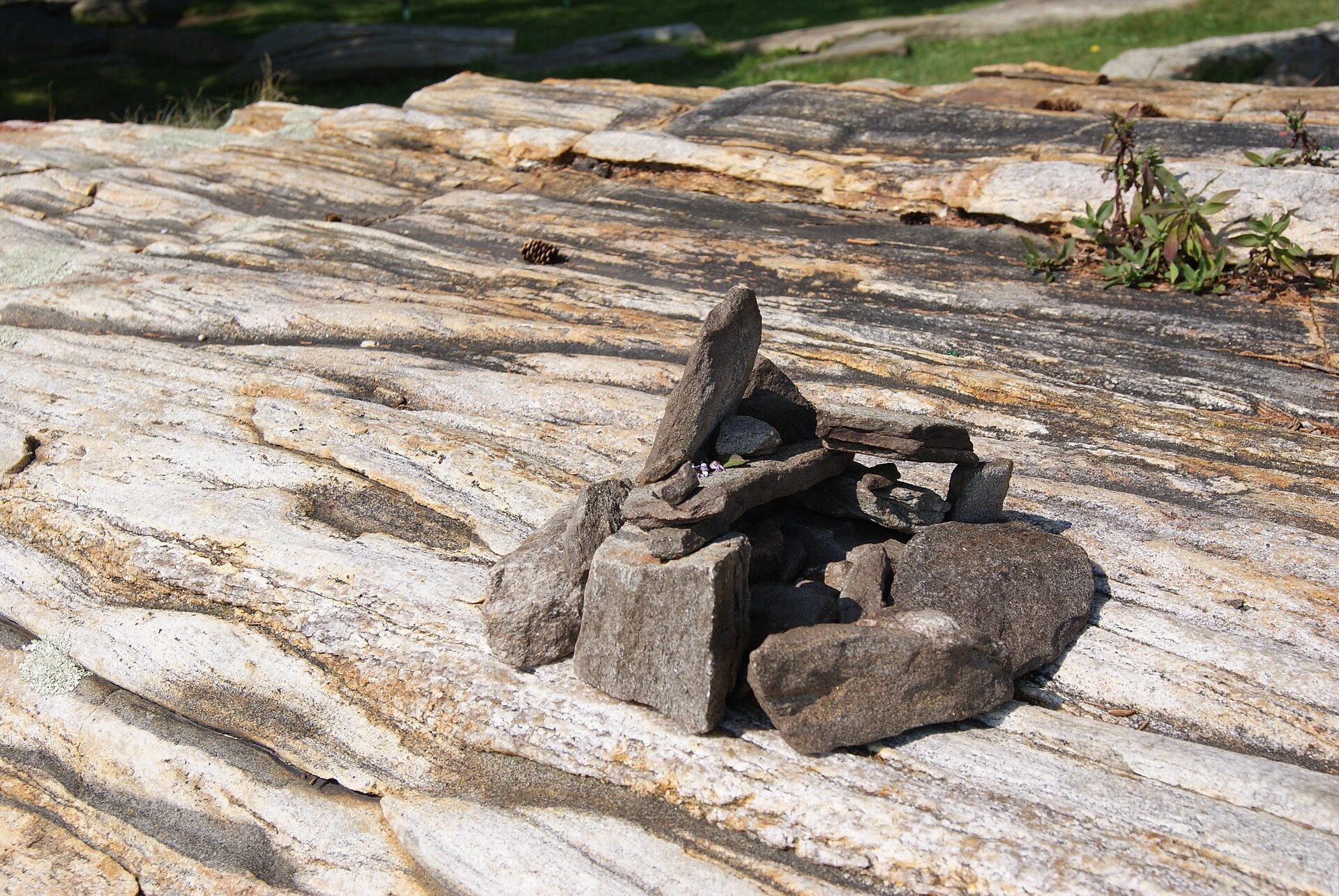
- The keeper's house — Beside the lighthouse
The keeper's house, added in 1857, stands beside the tower and now holds exhibits about the station's past. It is a quiet stop for the story of the lens, the keepers and the lighthouse's survival. Hours vary through the season, so confirm with the official site before relying on it.
Culture
Pemaquid Point belongs to a working coast, and its culture is shaped by the sea more than by any show for visitors. Lobster boats leave the nearby harbours early, and the traps stacked on wharves and in yards are the livelihood of whole families. Conversation in local shops tends to be friendly but unhurried, with weather and tides as the first topic. The lighthouse reflects another strand of local life, which is volunteering. A friends' group of local members staffs the tower in season, tells its history and raises the money to keep it standing, so a donation at the door is how the building survives rather than a formality. Summer residents and seasonal visitors have long been part of the area too, which is why small galleries and craft stalls appear along the peninsula roads. People in Maine can seem reserved with strangers at first and become warm once a chat begins. The coast also has a habit of leaving things as found. Visitors build small stacked-stone cairns among the rocks, and these come and go with the tide and the next storm. Keep well back from the dark, wet rock near the waterline, because waves at Pemaquid Point can run higher than they look, and follow any posted barriers.
What to wear
Pemaquid Point has no formal costume, but the working clothes of the Maine coast are a tradition of their own. Fishers have long worn oilskin or waxed-cotton jackets and bib trousers against spray, thick wool jumpers and socks for cold mornings, and heavy rubber boots on wet decks. Knitted caps and wool shirts follow the same logic of warmth that survives getting damp. Today people on the peninsula mostly wear practical casual clothes: fleece, jeans, waterproof shells, baseball caps and sturdy boots or trainers. In summer, shorts and sandals are common in town, though less sensible on the rocks. Lobstermen and boat crews still wear rubber boots and waterproof bibs on the job, so those items are everyday gear rather than costume. Visitors should dress in layers, because the point is exposed and the wind off the water can feel cold even on a bright day. Bring a windproof or waterproof jacket, a hat and sunglasses, and sun protection for the open headland. Footwear matters most. Wear shoes with real grip, such as trail shoes or walking sandals with straps, since the polished ledges are slippery when damp and uneven throughout. No special modesty norms apply at the lighthouse, and ordinary casual clothing is fine for the tower, the park and nearby eateries.
What to eat
- Steamed lobster — Lobster pounds and harbour-side eateries on the Pemaquid peninsula
Lobster is the signature meal on this coast, usually boiled or steamed whole and served with melted butter and a bib. Eating it is hands-on and slow. Look for a lobster pound or a wharf-side eatery in a working harbour near the point. - Lobster roll — Roadside seafood shacks and small harbour-front counters
A soft toasted bun packed with picked lobster meat, dressed either with mayonnaise or with warm butter, depending on the cook. It is simpler and quicker than a whole lobster. Roadside shacks and small seafood counters are the usual places to find one. - Steamed clams — Clam shacks and seafood eateries along the coast roads
Soft-shell clams are steamed in a pot and served with broth and butter, to be dipped, pulled from their shells and eaten by hand. They are an easy way to taste the local flats. Casual clam shacks and seafood eateries near the water serve them. - Clam or fish chowder — Local diners and harbour-side eateries
New England chowder is a thick, creamy soup with potato and onion, built around clams or white fish. A bowl on a foggy day suits the climate here. Most diners and harbour eateries in the area keep a pot going through the season. - Wild blueberry pie — Village bakeries and seasonal farm stands
Maine is known for small wild blueberries, and in late summer they turn up in pies, muffins and jams. A slice of pie after a windy walk on the rocks is a good reward. Seasonal farm stands and village bakeries are the places to look. - Whoopie pie — Country stores and bakeries in nearby villages
Two soft, round chocolate cakes sandwiched with sweet white cream, a New England sweet that is a cross between a biscuit and a small cake. It travels well, so it works as a picnic item. Country stores and local bakeries usually stock them.
Plan it
Best time. June to October. The tower is staffed by docents from mid-May to mid-October, summer is warmest, and September and early October are usually calmer and less crowded. Fog can roll in at any time of year, and winter storms make the rocks hazardous.
How long. 1
Getting there. Portland International Jetport is the usual gateway for flights, and the Amtrak Downeaster train reaches Brunswick. From either, hire a car and drive along US Route 1 and local roads to the end of the Pemaquid peninsula in Bristol. Regular public transport to the point is limited, so a car is the practical choice.
Budget. mid
Tips
- Go early or late in the day on summer weekends, when the car park and the ledges are busiest
- Check the official site of the lighthouse friends' group before travelling, as tower opening depends on season and weather
- Bring a windproof layer and shoes with good grip, even on a sunny day
- Allow for fog by keeping the plan flexible, and pair the point with other stops along the peninsula
- Carry a card and a little cash for donations and small roadside stalls
Etiquette
- Stay behind posted barriers and well back from wet rock near the water
- Leave the rocks and tidepools as you found them and take your litter with you
- Give the volunteer docents a donation, since upkeep is paid for by visitors
Nearby
Sources
- Wikidata Q2068455 (CC0)
- Wikipedia: Pemaquid Point Light (rev 1372633151) (CC BY-SA 4.0)
- Wikivoyage: Lincoln County (Maine) (rev 3746700) (CC BY-SA 4.0)
- Pemaquid Point Light Station, Bristol, Maine, USA 2012 — WestportWiki (CC BY 3.0)
- Pemaquid Point Light Station Sign, Bristol, Maine, USA 2012 — WestportWiki (CC BY 3.0)
- Preston-pemaquid-lighthouse — Maekern at English Wikipedia (Public domain)
- Preston-pemaquid-bellhouse — User:Maekern (Public domain)
- Maine quarter, reverse side, 2003 — Unknown author (Public domain)
- Pemaquid Point Lighthouse, Maine — Tiger635 (CC BY 3.0)
- Admiralty Chart No 2490, Penmaquid Point to Fletchers Neck — United Kingdom Hydrographic Office (Public domain)
- Fairy castle, Pemaquid Point Lighthouse, Bristol, Maine — Jacklee (CC BY 3.0)


