Paro Dzong
Paro Dzong, Bhutan
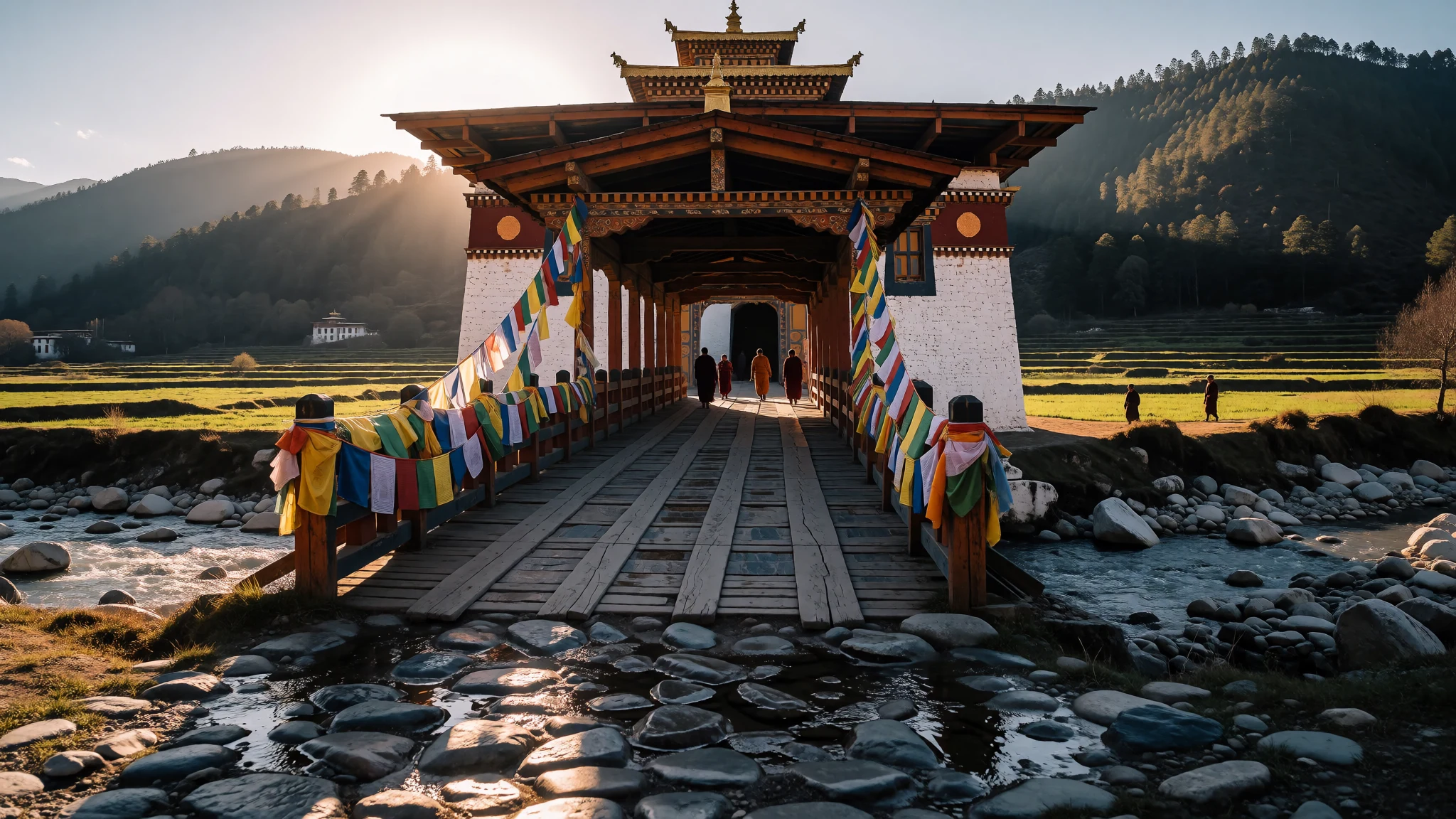
Paro Dzong is a working monastery and government office in one whitewashed fortress above a river, reached by a covered wooden bridge.
The place
Paro Dzong, formally Rinpung Dzong, stands above the Paro Chu river in western Bhutan, a fortress-monastery of the Drukpa Kagyu tradition. A dzong does two jobs at once, and this one houses the district's monastic body alongside the offices that run Paro's local administration. Monks in maroon robes and civil servants in formal national dress cross the same courtyards on the same morning, which says a good deal about how religion and government have been woven together in Bhutan. The building is on Bhutan's tentative list for UNESCO inscription, and its records give a founding date of 1645.
The walls are whitewashed and lean slightly inward as they rise, pierced by small windows and crowned with a red band and a gilded roofline. A covered wooden cantilever bridge crosses the river to the gate, and walking over it is the usual way in. Behind and around the dzong the valley opens out wide and green, with farmland, rice terraces in season and temples scattered up the slopes. Paro is the gentlest part of Bhutan's popular western circuit, which also takes in Punakha and Jakar.
The town itself is mixed. The main street keeps its traditional wooden frontages, while the bazaar behind it is mostly plain concrete and has little charm of its own. Paro also has the country's only international airport, so many visitors land here first. That makes the dzong busy at festival time and much quieter on a cold weekday morning, when the courtyards belong mostly to the people who work there.
Its story
The story of Paro Dzong starts with a rock rather than a building. Tradition says that Guru Rinpoche named the cliff face below the site Ringpung in the 8th century, and the fortress that later rose above it took the name.
In the 15th century the people of Paro gave the crag of Hungrel to a lama, Drung Drung Gyal, who built a small temple on it and then a five-storey fortress called Hungrel Dzong. His descendants, the Lords of Hungrel, kept it until the 17th century, when they presented it to Zhabdrung Ngawang Namgyal. He was the religious leader who united Bhutan under one government and headed the Drukpa school, so the gift acknowledged his authority in both spheres.
In 1644 the Zhabdrung had the old fortress taken down and laid the foundations of a new one. It was consecrated in 1646 and became the monastic and administrative centre of western Bhutan, known from then on as Rinpung Dzong.
Fire later struck, during the time of the 23rd Penlop, Dawa Penjor, shortly before the first king, Ugyen Wangchuck, was enthroned. Nearly everything sacred inside was lost. The great Thongdrel, a huge religious textile about 20 metres wide, came through unharmed. Devotees believe that seeing it earns spiritual merit and may help towards liberation.
The dzong has had a second life on screen too: several scenes of the 1993 film Little Buddha were shot within its walls.
What to see
- Rinpung Dzong — Paro town
The fortress-monastery itself is the reason to come. Visitors cross the covered cantilever bridge, climb the stone approach and walk through the courtyards, where the carved wood, painted beams and whitewash are best seen in morning light. Some areas are reserved for monks and officials, so follow the signs.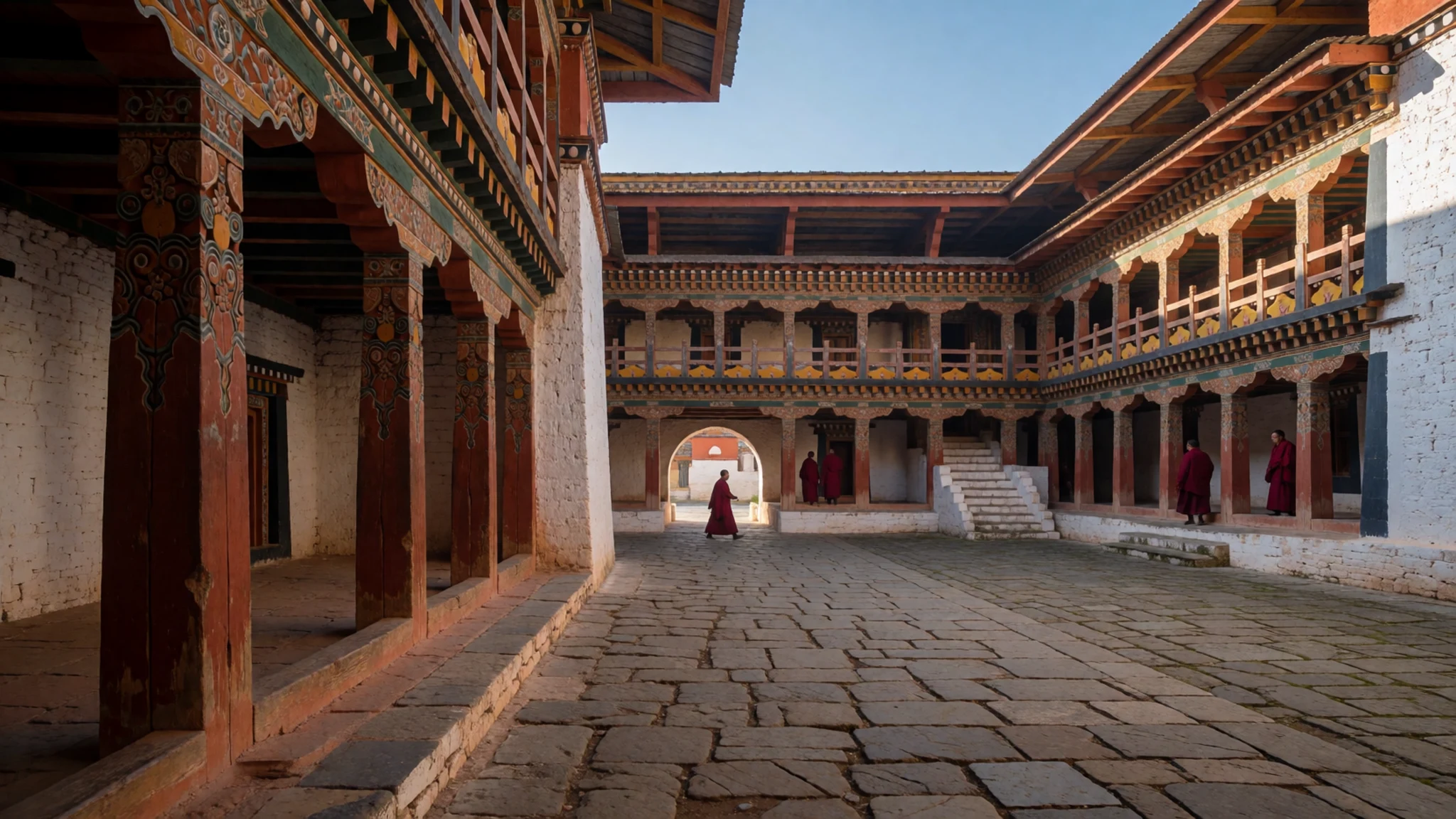
- National Museum of Bhutan — Above Paro town
The museum occupies a former watch tower above the dzong, a historic building in its own right. Inside are artefacts from Bhutan's past and displays on the country's plants and animals. It is a useful first stop to put the dzongs, festivals and monastic life into context.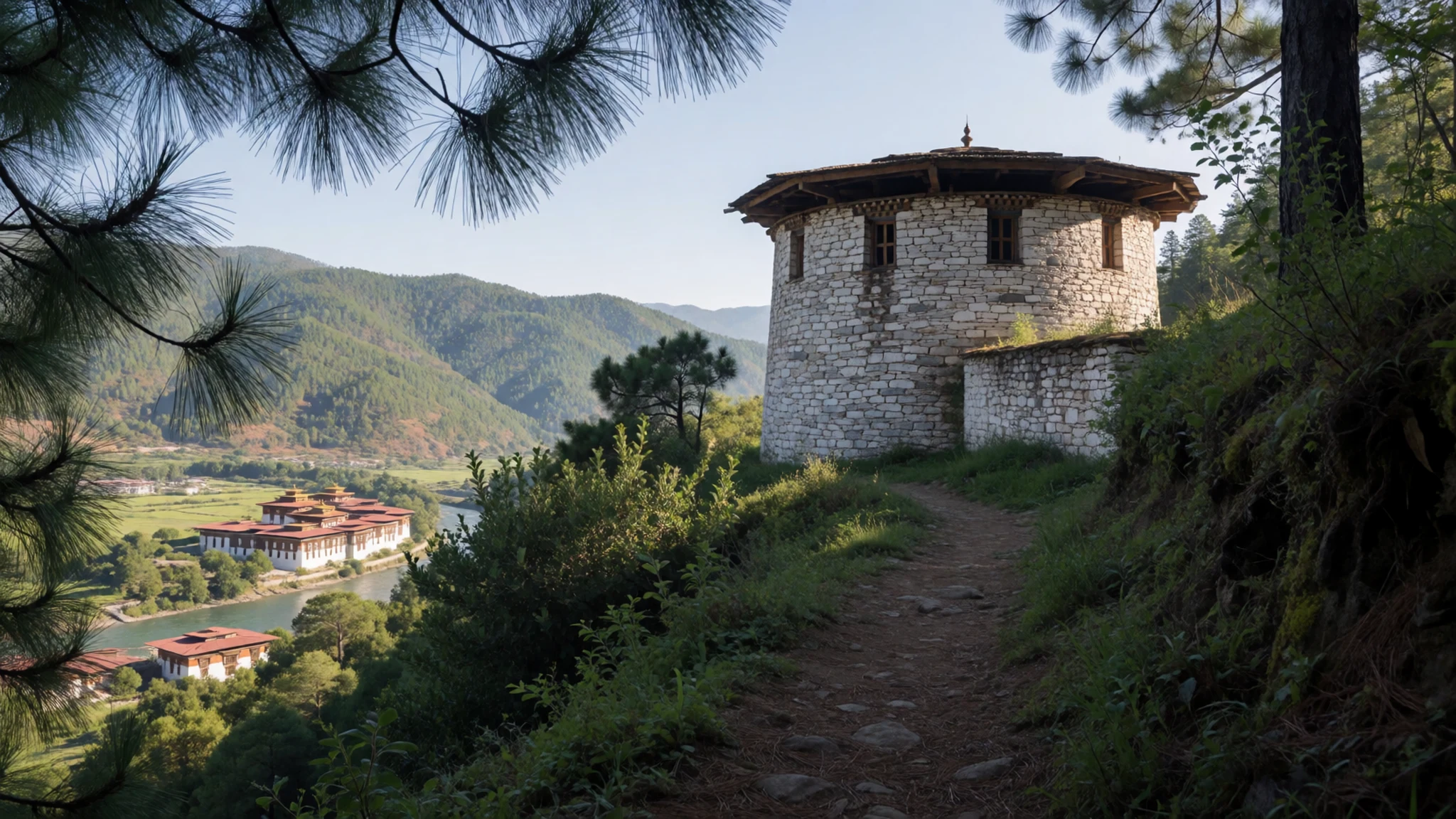
- Taktsang Monastery — North-west of Paro
Taktsang, the Tiger's Nest, clings to a sheer cliff high above the valley and is the image most people have of Bhutan. The path climbs through forest and takes a long half-day return, with a cafeteria partway up. Start early, wear proper shoes and leave time to rest.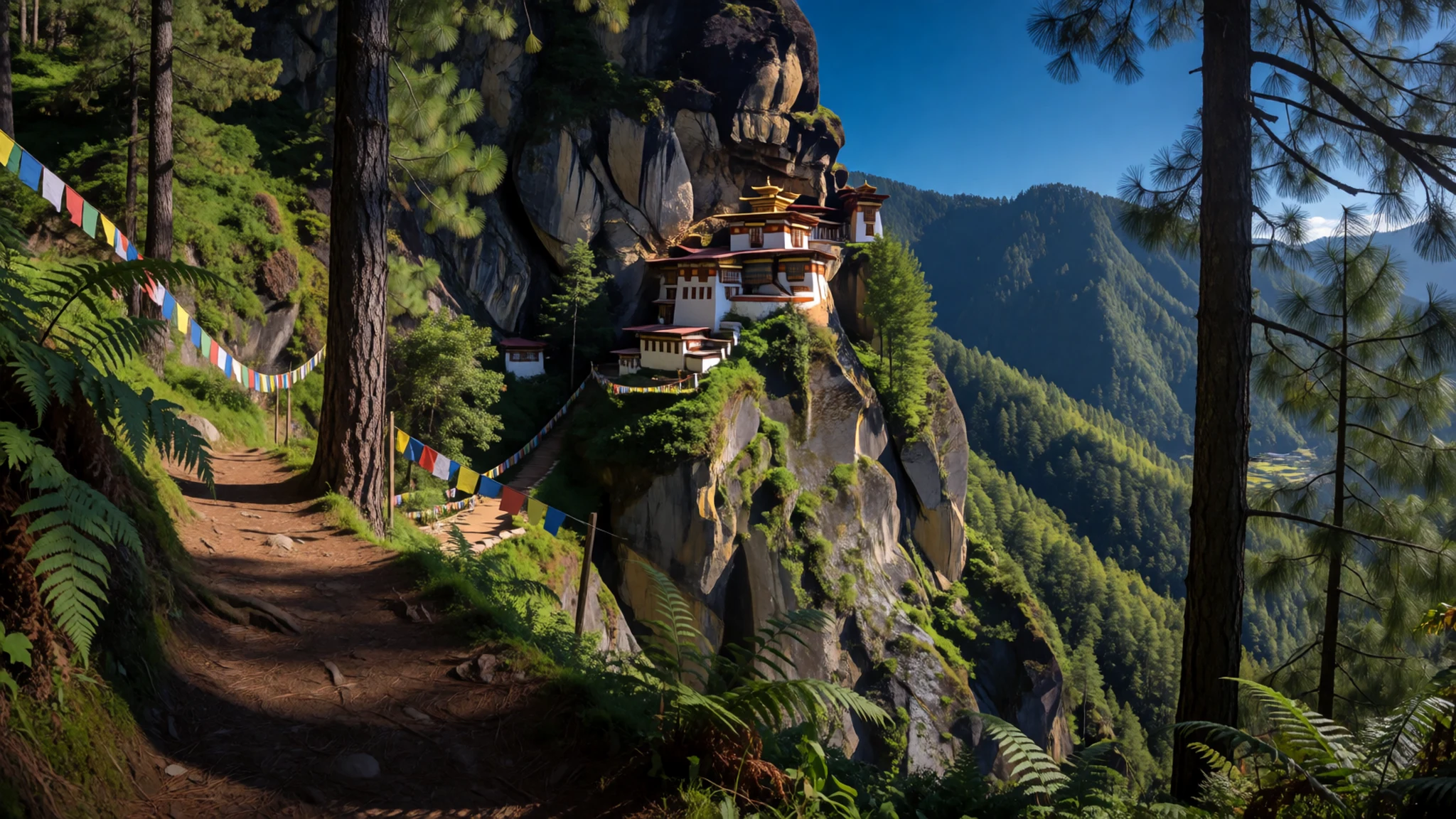
- Drukgyel Dzong — North of Paro
This fortress was built to mark a victory over invading Tibetan forces. Today it stands in ruins, worn down by weather and by a fire in the 1950s. The broken walls and the mountain backdrop make it a quiet, atmospheric stop compared with the crowded Paro sights.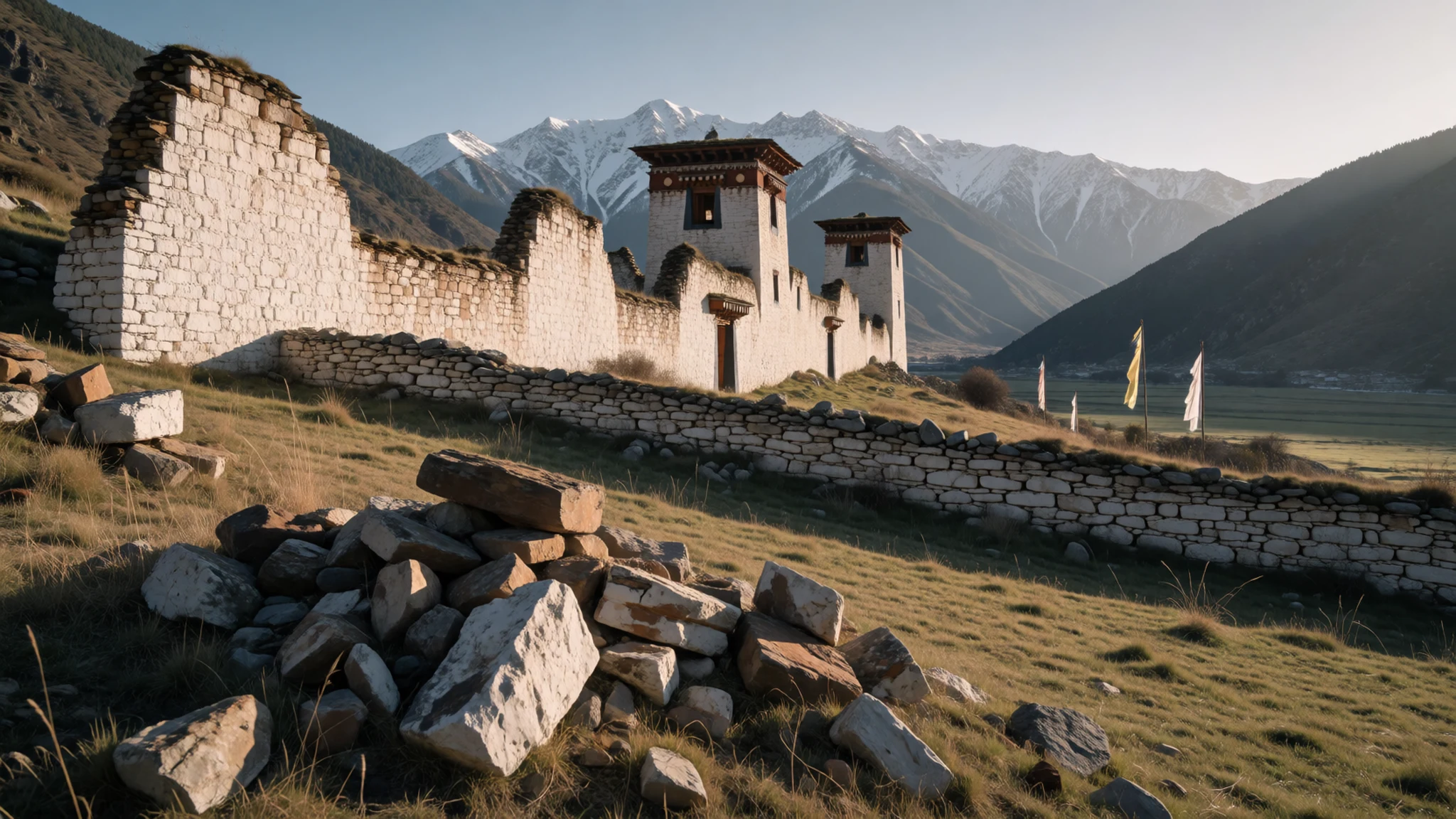
- Kichu Lhakhang — Paro valley
Kichu Lhakhang is counted among the temples said to have been raised miraculously in a single night by the Tibetan king Songtsen Gampo. It is small and calm, and worth a visit for the sense of how old the Buddhist landscape of the Paro valley is.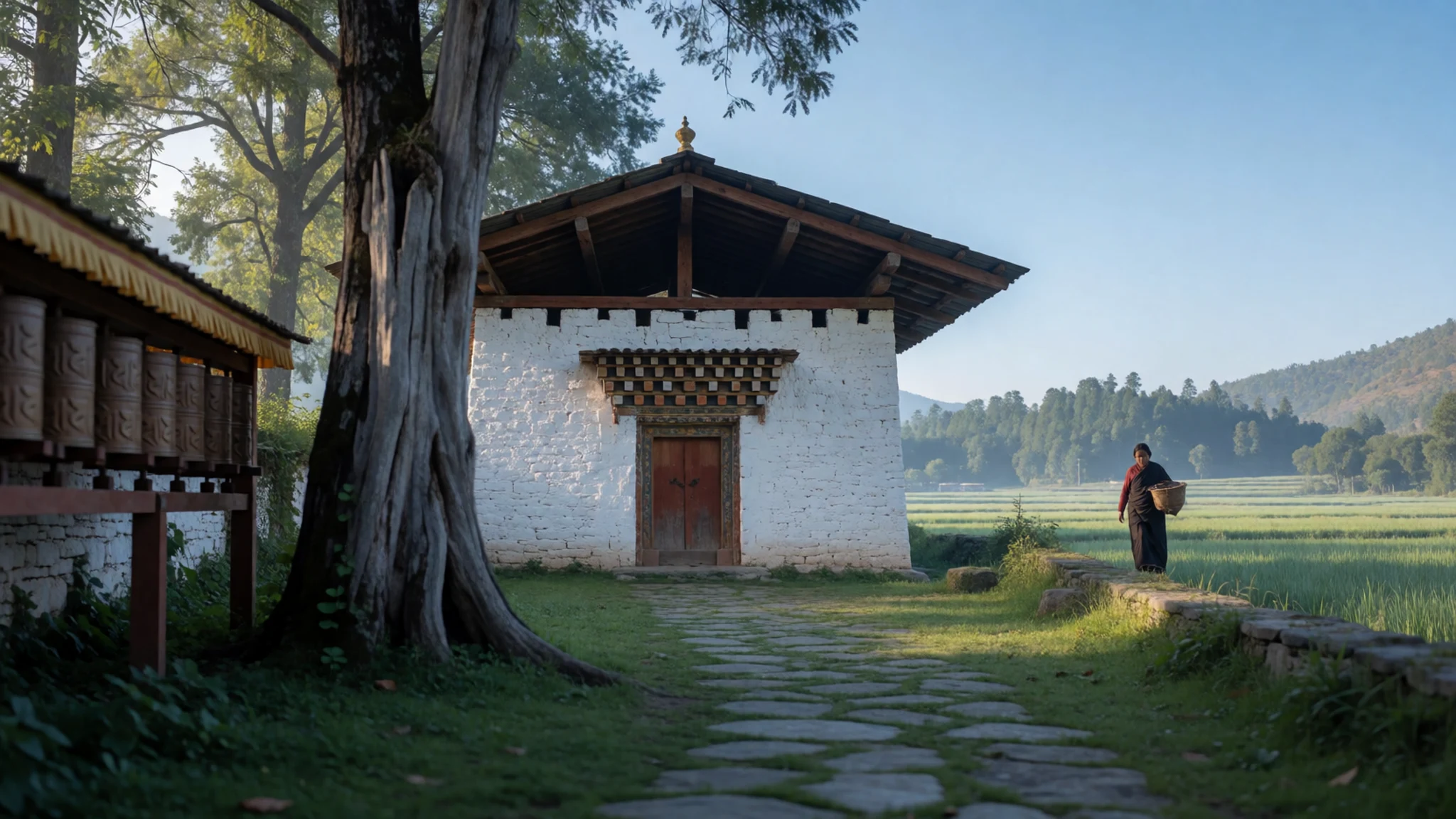
Culture
Paro Dzong is a place where Buddhism and daily government sit side by side, and that shapes how it feels. Bhutan follows the Drukpa Kagyu school, and the dzong serves as both a monastery and the district's administrative centre. Monks study and pray in the same complex where officials handle paperwork, and local people come to attend rituals, make offerings and sort out civil business.
The annual Paro Tshechu, a religious festival normally held around March or April, is the main public occasion. Masked dancers perform in the courtyard, and families dress up and travel in from the surrounding villages. Dates follow the lunar calendar, so they should be checked each year. Devotion centres on the Thongdrel, the huge sacred textile that survived the fire, and on small offerings of butter lamps, incense and prayer-wheel turns.
A few habits are worth learning before arriving. Visitors walk clockwise around temples, stupas and prayer wheels, keep their voices low in the courtyards, and avoid pointing feet at altars or sacred images. Monks are often happy to talk, but are working, so conversations should be brief and polite. Photography rules vary by room and by day.
Take off your hat and shoes where asked, dress modestly with shoulders and knees covered, and never photograph inside a temple room or monks at prayer unless you have been clearly told it is allowed.
What to wear
The traditional dress of Paro, as across Bhutan, is the gho for men and the kira for women. The gho is a knee-length robe tied at the waist with a belt, worn with long socks. The kira is an ankle-length wrapped dress, usually worn with a short jacket called a toego and a woven jacket underneath. Fabrics include cotton, wool and silk, and the finest are hand-woven in bold stripes, checks and brocade patterns that vary by region and family. Men wear a sash called a kabney over the shoulder when visiting a dzong, and its colour shows rank. Women wear a narrower shawl called a rachu.
This dress is not costume. People wear it daily to work, to school and to government offices, and everyone expects it for temple visits and festivals. Outside those settings, younger Parorians often wear jeans, T-shirts, fleeces and trainers, and the bazaar has a mix of the two.
Visitors should dress to suit the weather and the setting. Paro sits in a mountain valley, so layers matter: a warm jacket for mornings and evenings, a rain shell in the monsoon, and a hat and sunscreen for strong daytime light. At the dzong and temples, wear long trousers or a long skirt and tops that cover the shoulders and upper arms. Sturdy, broken-in shoes or boots are needed for the climb to Taktsang and for uneven stone paths. Shoes come off at temple doors, so slip-ons are practical.
What to eat
- Momo — Small eateries on Paro's main street
These filled dumplings come steamed or fried, stuffed with pork, beef, cabbage or cheese, and served with a fiery chilli sauce. They are an easy first order in Paro and a popular afternoon snack with locals and visitors alike.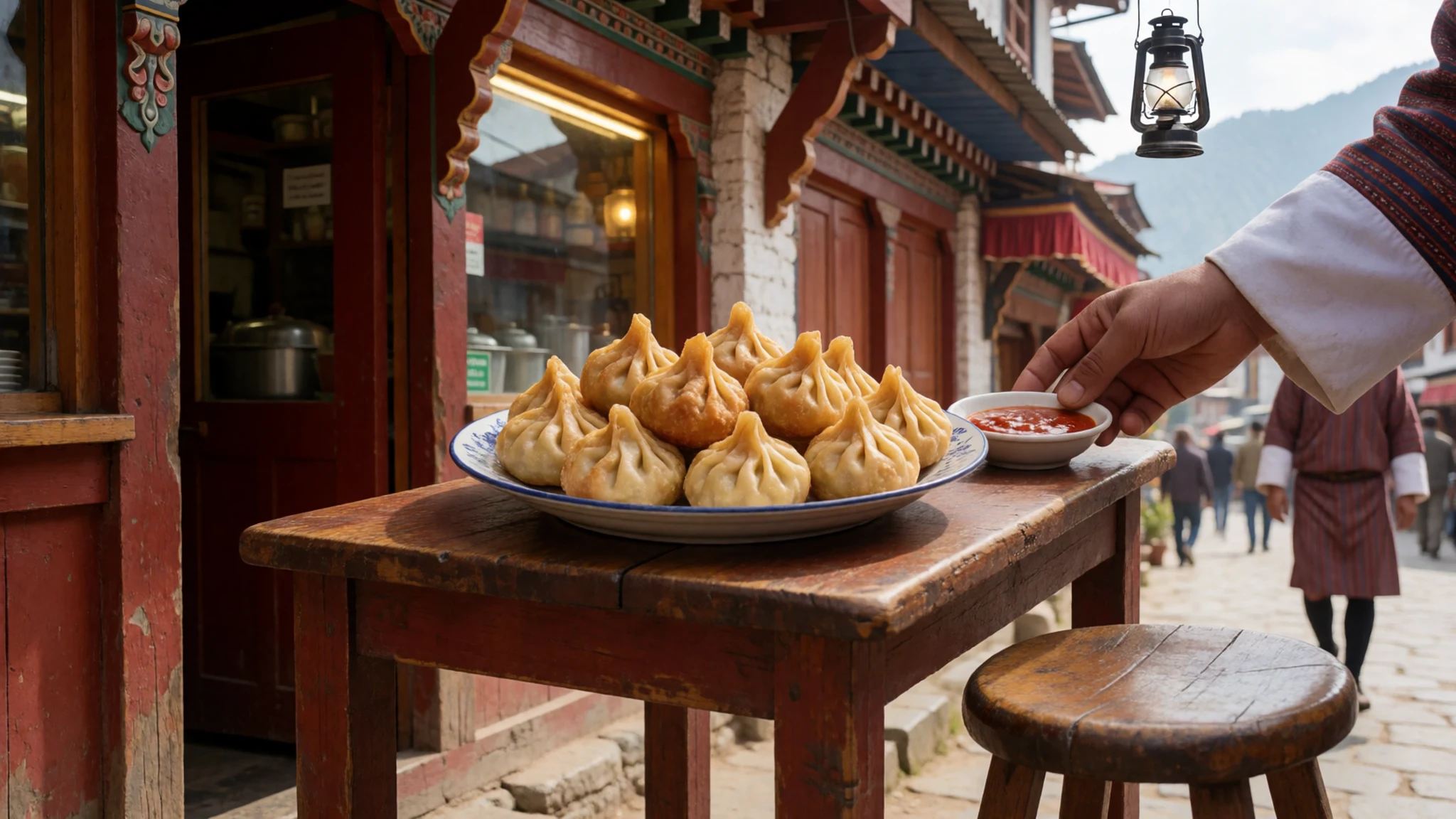
- Ema datshi — Family-run restaurants in the main bazaar
Bhutan's national dish is a stew of chillies and local cheese, eaten in large quantities with rice. It can be very hot, so ask for a milder version if unsure. Many Bhutanese meals are built around it and a side of vegetables.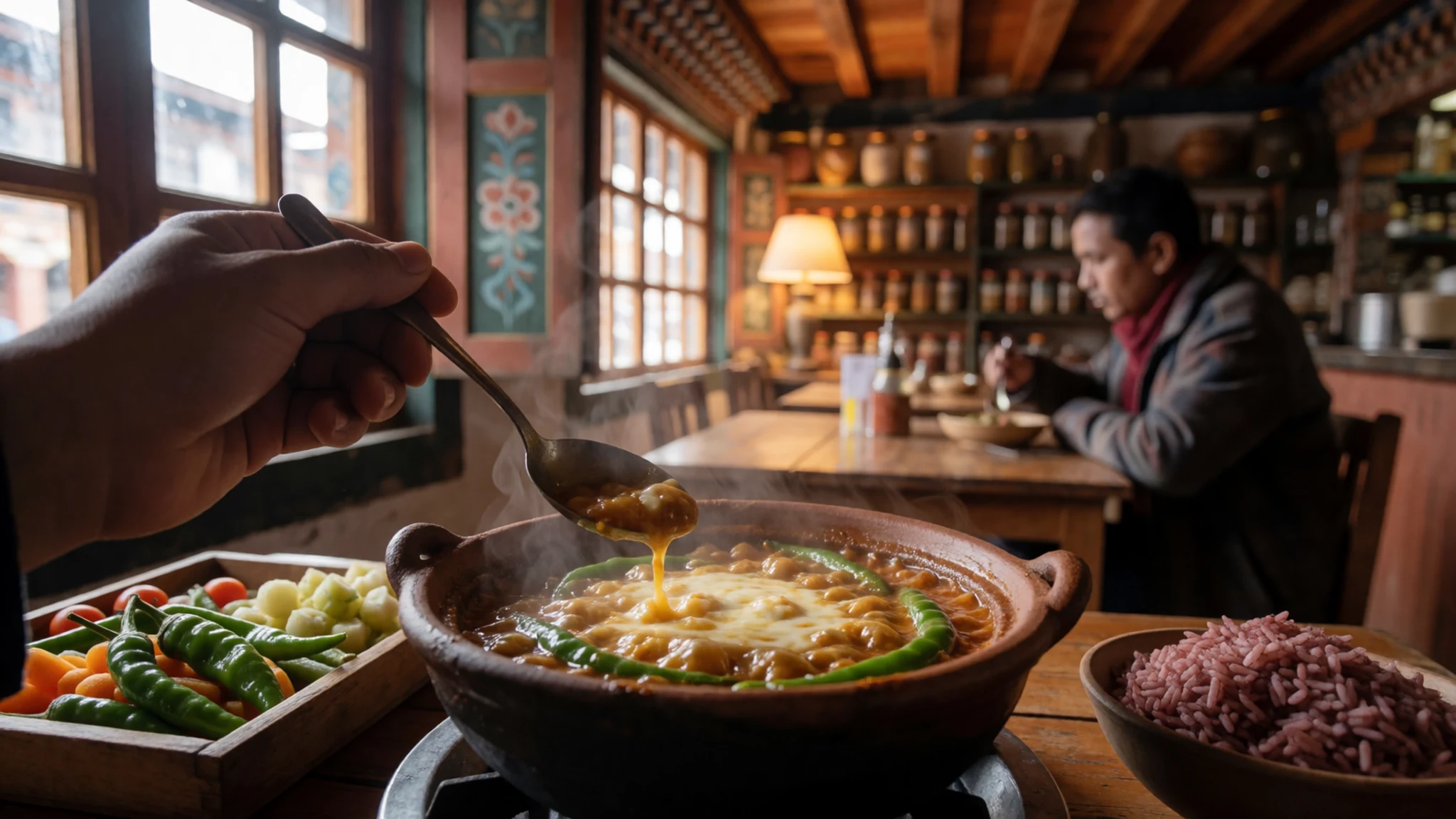
- Red rice — Any traditional Bhutanese restaurant or home-style lunch
A nutty, slightly chewy rice grown in the valleys of western Bhutan, red rice is the standard accompaniment to stews and curries. It stays soft without turning sticky, and it suits the strong flavours of chilli and cheese. - Suja (butter tea) — Homes, farmhouses and festival stalls
Suja is salted butter tea, served hot and often refilled before the cup is empty. It is an acquired taste for many visitors, but welcome after a cold morning at altitude, and it is offered widely in homes and at festivals. - Coffee and bakery items — Cafés and bakeries in the town centre
Paro has a few cafés serving espresso-style coffee, pastries and desserts, a useful break after temple visits. They suit travellers who want something familiar between Bhutanese meals, and many use organic ingredients.
Plan it
Best time. March–April for spring weather and, usually, the Paro Tshechu festival; October–November for clear autumn skies and good mountain views. Winters are cold, and the summer monsoon brings heavy rain and cloud, which can hide the peaks.
How long. 2–3
Getting there. Paro Airport is Bhutan's only international airport, served by Druk Air and Bhutan Airlines from cities including Delhi, Kolkata, Kathmandu, Dhaka and Bangkok. From the airport, Paro town and the dzong are a short drive away. From Thimphu, shared or reserved taxis make the trip in under an hour or so.
Budget. high
Tips
- Book flights and the Taktsang walk early in the day, as the path is busiest mid-morning
- Check the Paro Tshechu dates well ahead, as they follow the lunar calendar and rooms fill quickly
- Rules on visas and daily visitor fees for Bhutan change, so check the official government tourism site before booking
- Carry cash for small shops and rural stops, and bring a refillable bottle, warm layers and a rain jacket
- Allow a rest day after arriving if coming from sea level, as the valley is high
Etiquette
- Walk clockwise around temples, stupas and prayer wheels
- Remove shoes and hats where asked, and do not photograph inside temple rooms
- Dress modestly, with shoulders and knees covered
Nearby
Sources
- Wikidata Q59330112 (CC0)
- Wikipedia: Rinpung Dzong (rev 1367129448) (CC BY-SA 4.0)
- Wikivoyage: Paro (rev 5431552) (CC BY-SA 4.0)
- Photo: Rinpung Dzong, Paro (Christopher Fynn) (CC BY 3.0)
- Photo: Rinpung Dzong, Bhutan 01 (Bernard Gagnon) (CC BY-SA 4.0)
- Photo: View of Paro from Tenchen Gonpa (Doctor 17) (CC BY-SA 4.0)
- Photo: Rinpung Dzong, Bhutan 17 (Bernard Gagnon) (CC BY-SA 1.0)
- Photo: Rinpung Dzong in Paro (Rudolph.A.furtado) (CC0 1.0)
- Photo: Paro-jong (J. Claude White) (Public domain)
- Photo: Bhutan (Christopher Michel) (CC BY 2.5)
- Photo: The dzong at Paro (Keithuk) (CC BY-SA 1.0)


