Pakse
Pakse, Laos
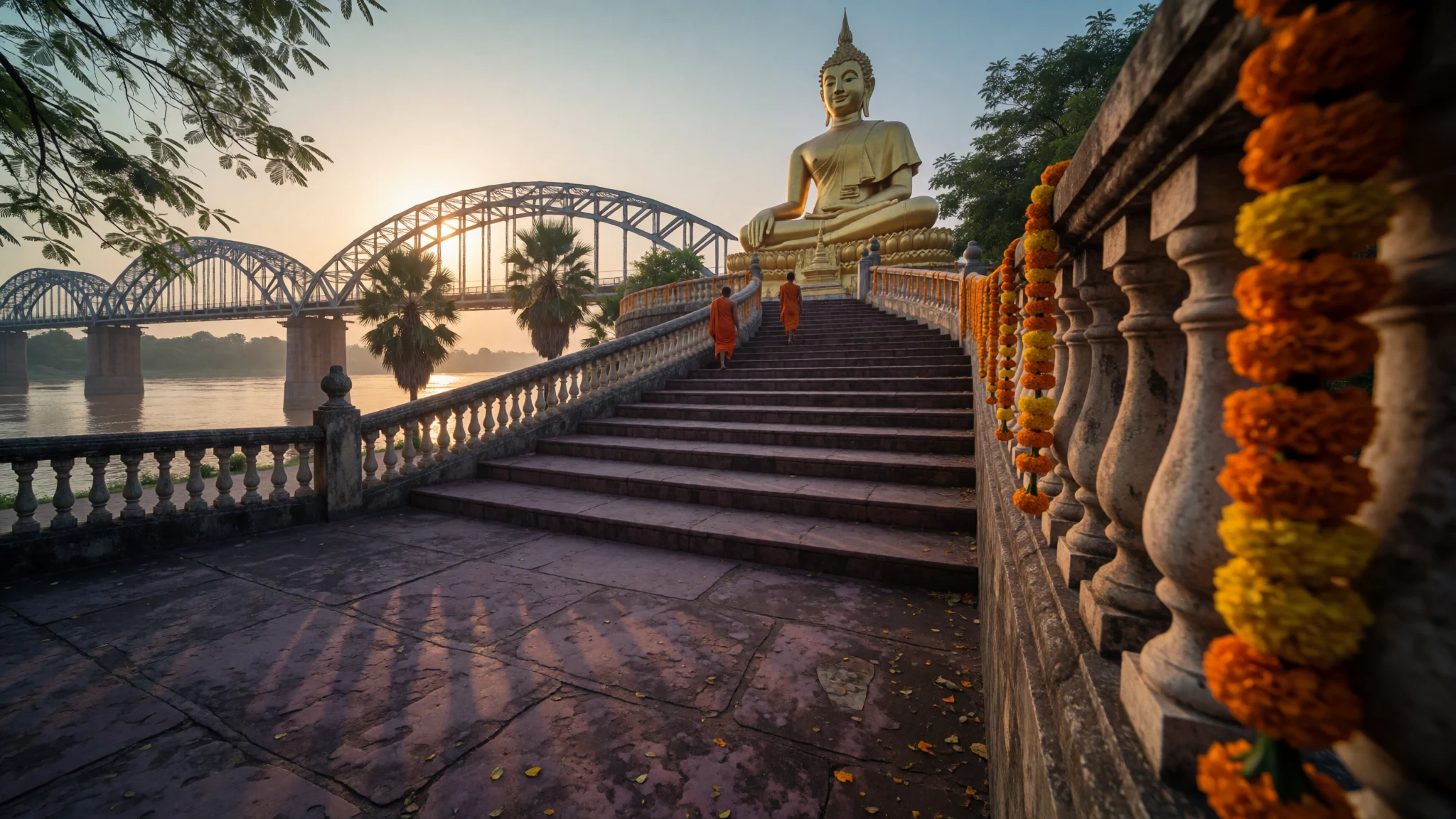
Pakse is a relaxed Mekong river town in southern Laos, useful as a base for waterfalls, coffee country, Khmer ruins and river islands.
The place
Pakse sits where the Xe Don runs into the Mekong, and the name says as much: in Lao it means roughly 'mouth of the river'. It is the main city of Champasak province in southern Laos, home to about 120,000 people, and the largest town in the south. That makes it a crossroads more than a destination. Buses, motorbikes and minibuses fan out from here towards the Bolaven Plateau, the temple ruins at Wat Phou and the islands of Si Phan Don, so most travellers pass through for a night or three.
The centre is flat and low-rise, laid out by the French in the early twentieth century, with a few colonial-era buildings and a riverside road where much of the evening life happens. Construction is visible everywhere; new roads, shops and a special economic zone linked with Japan are reshaping the edges. The city is not polished, and it does not try to be.
Climate shapes any visit. Rain falls on most days from April to October, and the dry season runs from November to March, though March and April bring the worst heat. Mornings are the best hours for walking, markets and temples; afternoons suit a long lunch, a café or a nap under a fan.
Pakse rewards slow wandering rather than ticking off sights. A morning at the market, a climb to a hilltop Buddha, and a beer by the water at dusk fill a day comfortably, and then the countryside beckons.
Its story
Pakse is a young city by Mekong standards. The French set up an administrative outpost here in 1905, at a junction where two rivers already drew boats and traders. The deeper history of the region lies to the south, where the Khmer-era temple of Wat Phou shows that this stretch of the Mekong was settled and sacred long before any colonial official arrived.
During the French colonial era, Pakse was the capital of the Lao Kingdom of Champasak, a status that ended in 1946 when the Kingdom of Laos was established and the southern kingdom integrated into the new nation.
The Franco-Thai War then cost the area part of its territory. France gave Thailand the section of Champasak province that lay on the far side of the Mekong, along with Preah Vihear, which had belonged to the protectorate of Cambodia. The river that had run through the heart of the province was now a dividing line.
Since then Pakse has grown into the south's main transport hub. Its population rose by about a third between 2005 and 2020, and the Japan-linked economic zone is part of a wider wave of building. Much of that change is recent, which is why the city feels more like a working regional centre than a preserved old town, with temples and a few colonial-era streets as its older layers.
What to see
- Wat Luang — Central Pakse, near the river
Wat Luang is the biggest temple in Pakse and home to a monastic school, so novices in orange robes are a normal sight in the grounds. Early morning is the time to come, when monks collect alms along the nearby streets, a quieter echo of the ritual Luang Prabang is known for. Dress covers shoulders and knees.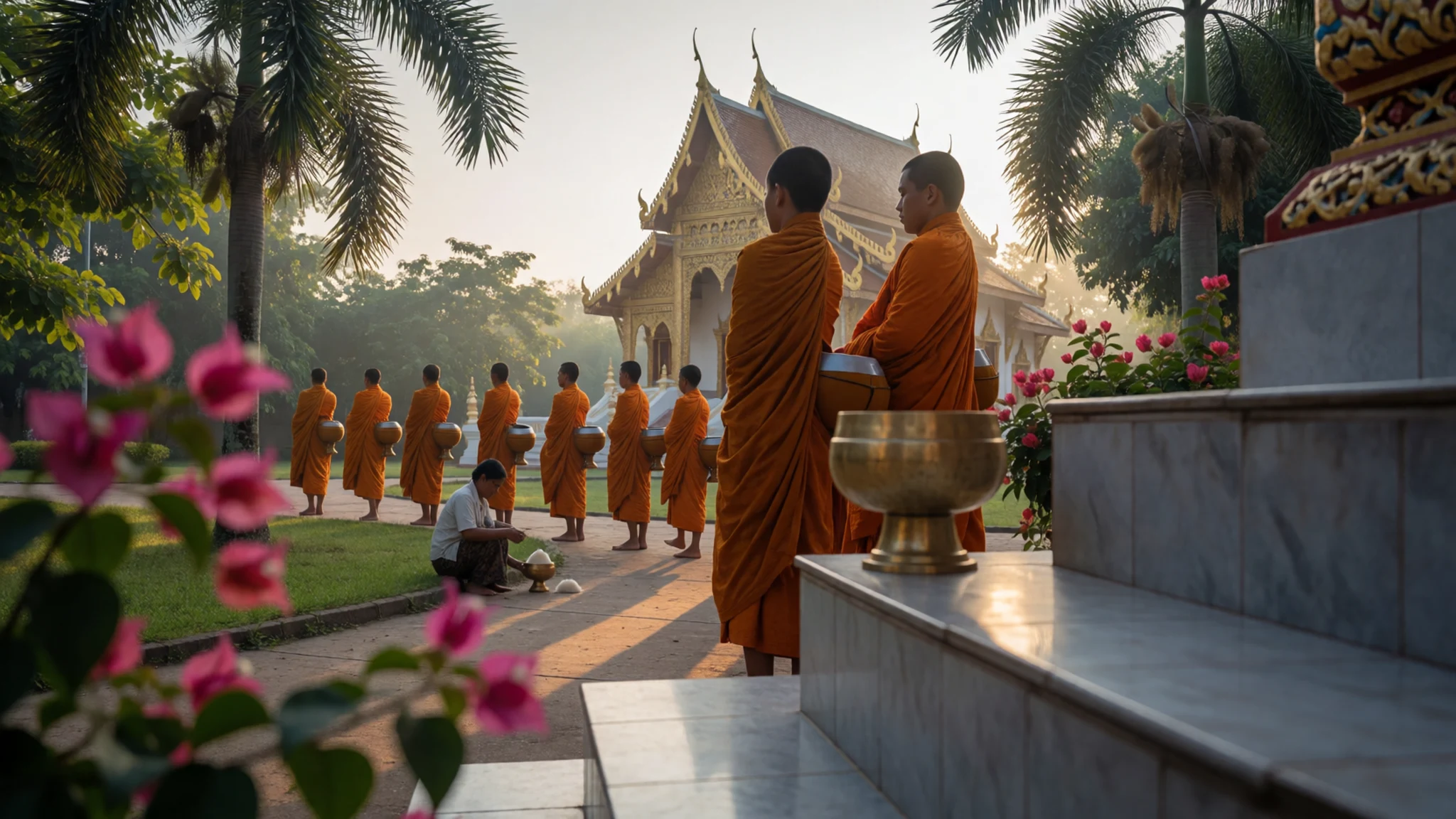
- Wat Phabad — Central Pakse
Wat Phabad takes its name from a footprint that local belief holds to be the Buddha's, and it is counted among the older temples in Pakse. It makes a gentler stop than the market district: a place to walk slowly, look at the shrines and watch daily temple routine. Remove shoes before entering any hall.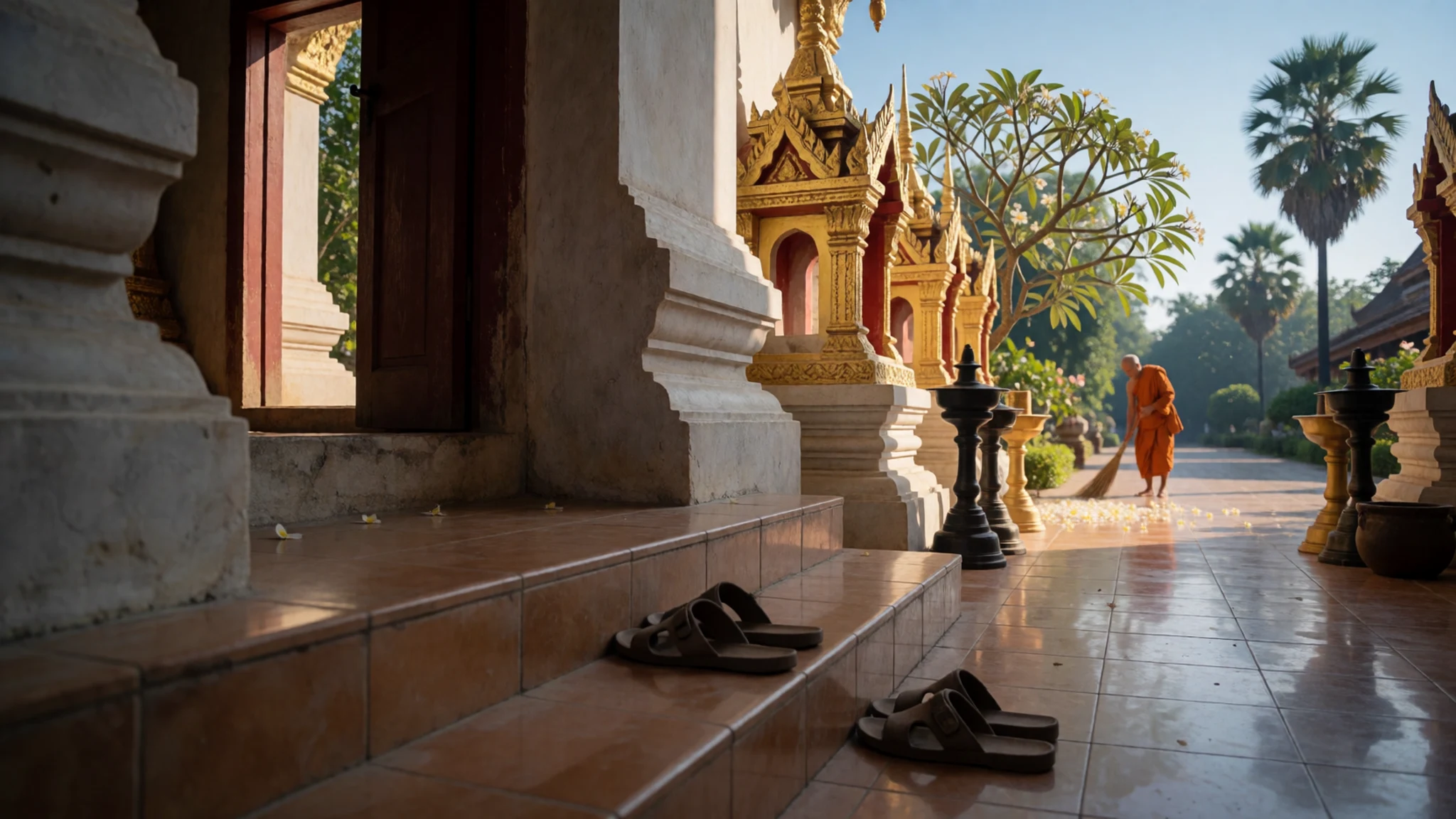
- Big Buddha (Wat Phou Salao) — Hillside beside the Japanese bridge
The golden Buddha complex at Wat Phou Salao stands beside the Japanese bridge, put up in 2011, with rows of seated golden Buddha figures in the grounds. About 300 steps lead to the top, where the Mekong and the city spread out below. Go early or late, as March and April are the hottest months and the climb is a sweaty one.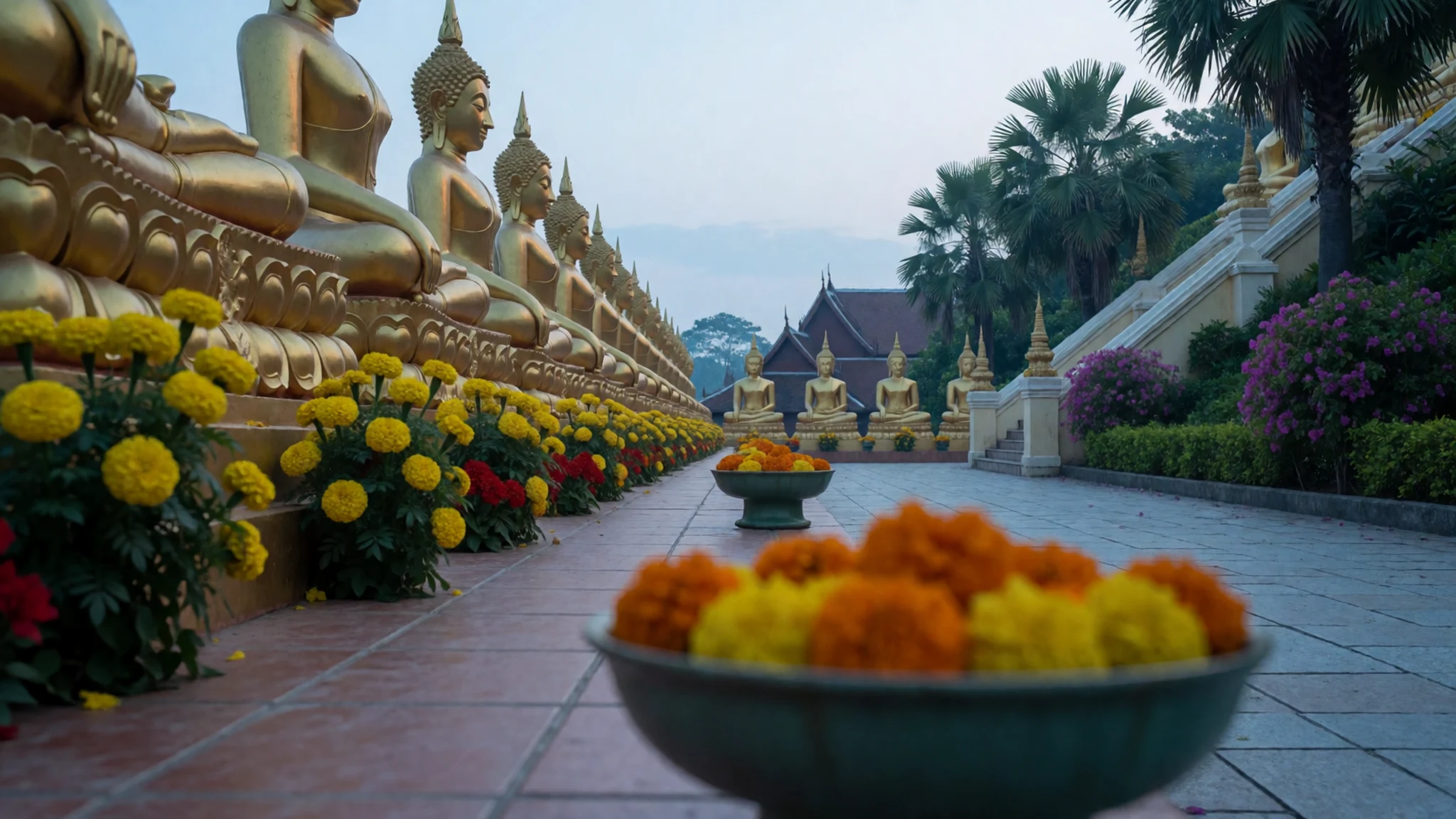
- Dao Heuang Market — Central Pakse
Dao Heuang Market is where Pakse feeds itself, a crowded set of stalls where the smells arrive well before the sights. Wander for produce, snacks and sticky rice, and eat something small at a stall rather than a full meal. Mornings are liveliest and coolest. Cash in small notes is the norm.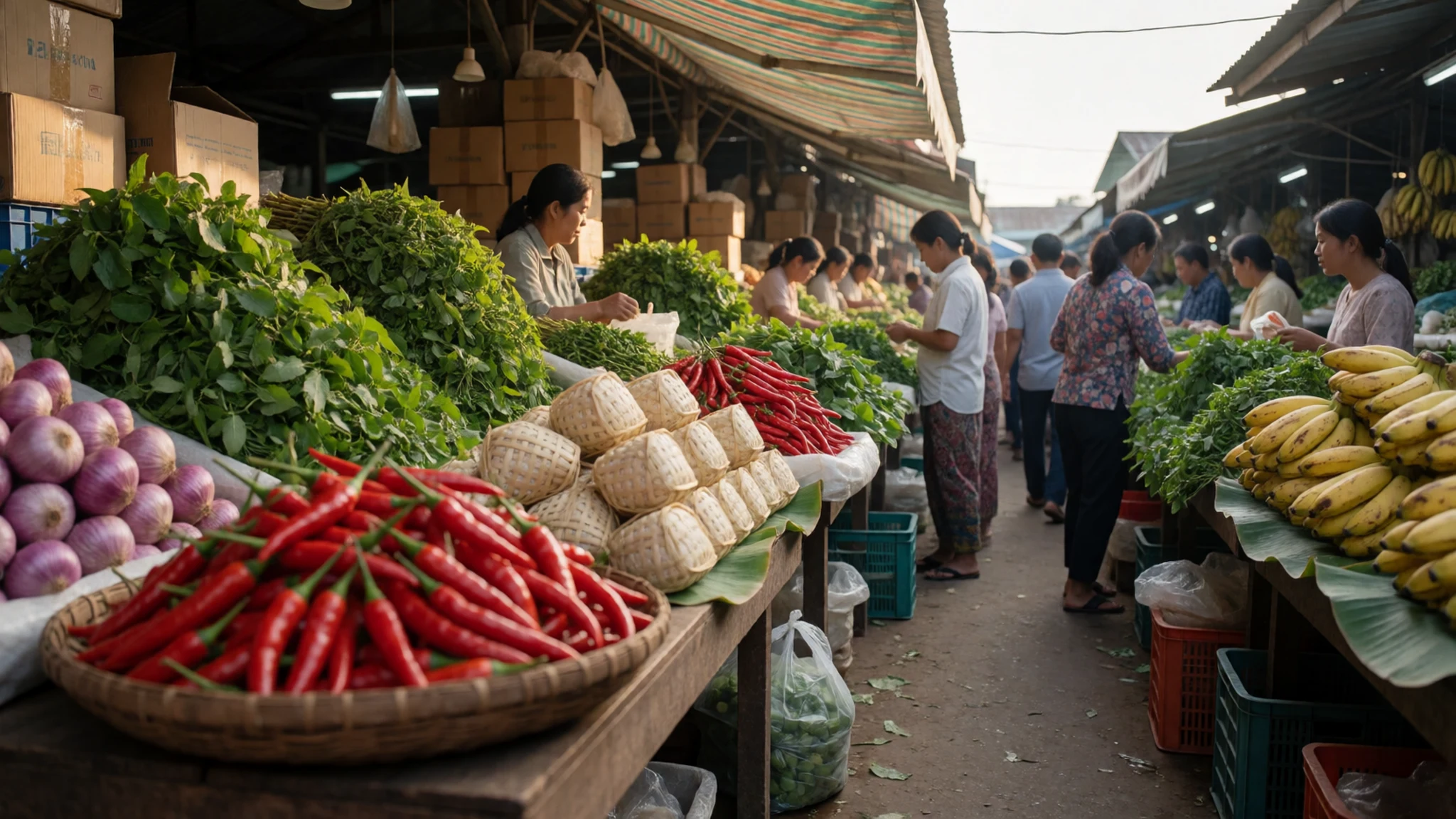
- Champasak Historical Heritage Museum — Central Pakse
The Champasak Historical Heritage Museum is a sensible first stop for making sense of the province before heading out to Wat Phou or the plateau. Expect displays on local archaeology and regional history. Opening hours and entry rules change, so check current details locally or with the provincial tourism office before going.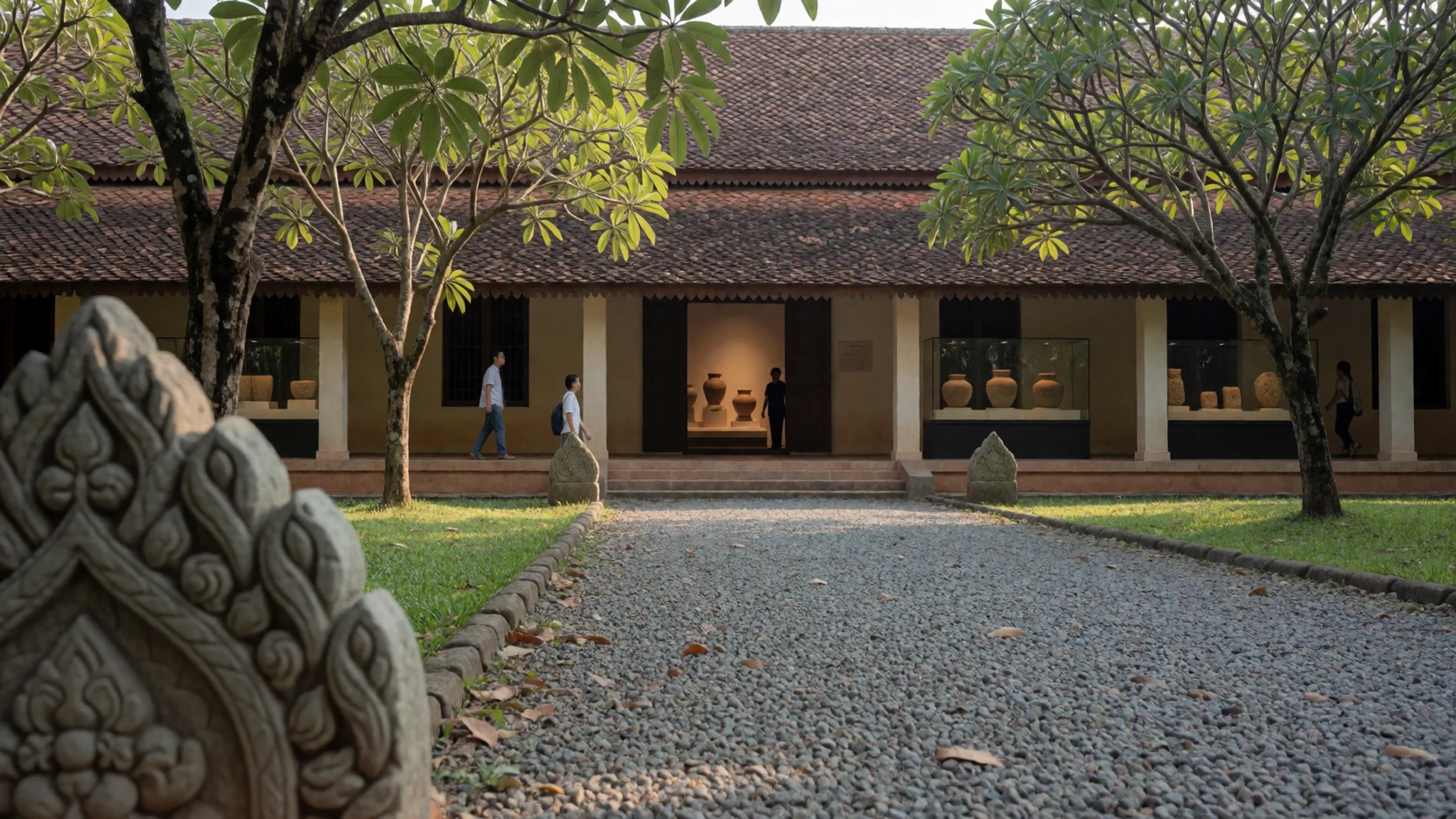
- Mekong riverfront at sunset — Riverside road, south of the French bridge
The Mekong riverfront is where Pakse slows down at dusk. Walk south along the water past the bridge locals call the French bridge and a temple, and informal drinking spots appear one after another, facing a wide, brown river and an orange sky. Mosquitoes arrive at the same hour as the sunset, so bring repellent.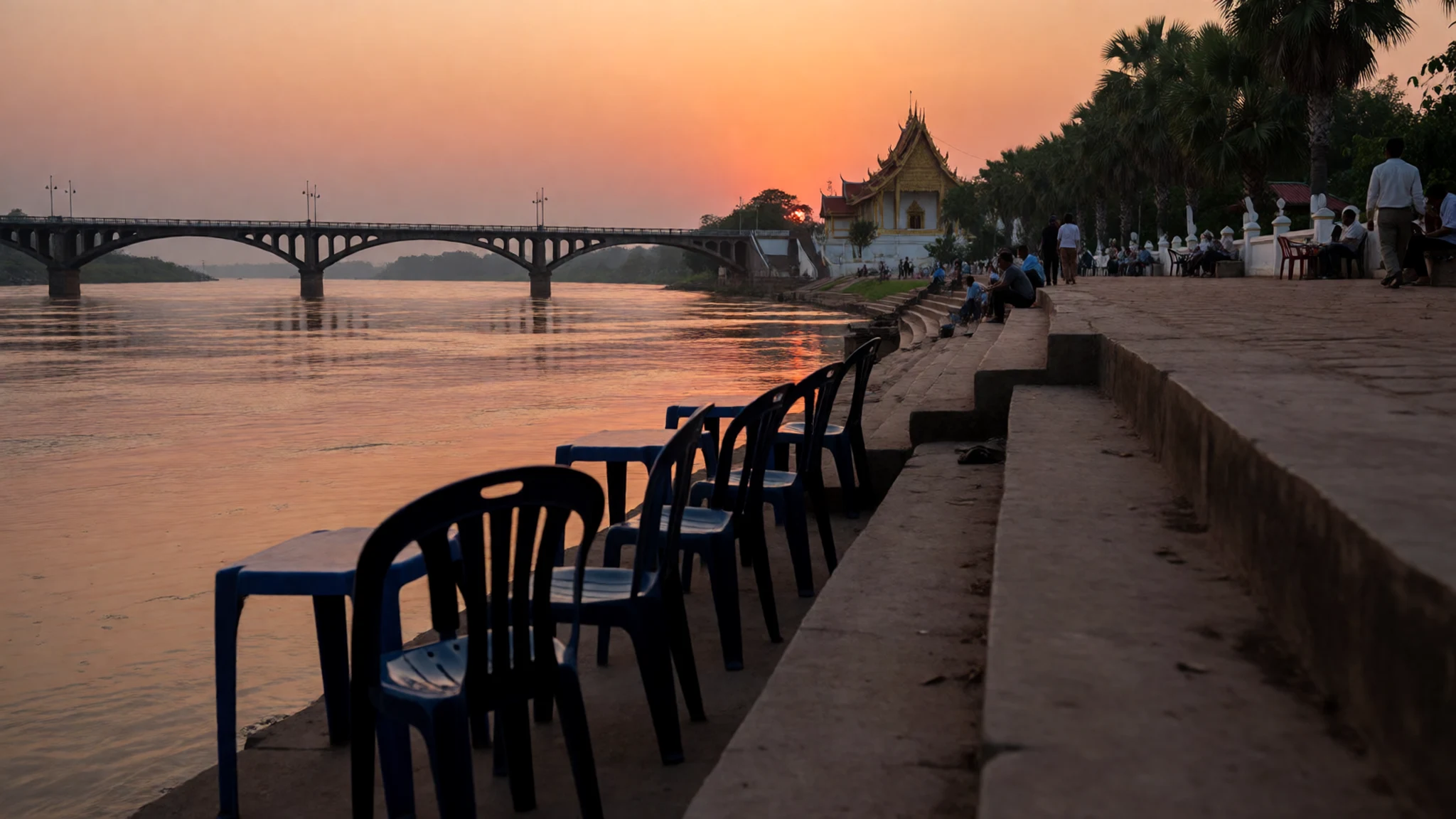
Culture
Pakse is a mainly Buddhist city, and temple life sets the rhythm of many mornings. Wat Luang, built in 1935, is the biggest temple in town and runs a school for monks, while the Chinese temple Wat Sopsé shows that other communities have settled along the river too.
Monks collect alms at dawn, walking in silence while lay people kneel and place food in their bowls. It is a devotional act and not a performance, even when visitors gather to watch. Lao social manners are soft-spoken: raised voices and visible anger are poor form, a smile smooths most awkwardness, and the head is treated as the most respected part of the body and the feet as the lowest. The traditional greeting is the nop, with palms pressed together at chest height and a slight bow, and returning it is always welcome.
Festivals follow the Buddhist calendar, and their dates move from year to year, so it is worth asking locally if timing matters. Temple fairs, merit-making and processions bring families out in their best clothes, and the whole city can feel quieter or busier than usual depending on the day.
At the Wat Luang alms round, keep a respectful distance, skip the flash and never step in front of the monks, and women should avoid touching a monk or his robe.
What to wear
Pakse's traditional dress is the Lao sinh, a tube skirt woven from silk or cotton and worn wrapped at the waist, with a band of patterned weaving at the hem. Women wear it with a fitted blouse, and often a shawl draped over one shoulder, for weddings, temple festivals and formal occasions. Weaving in southern Laos favours geometric patterns and natural dyes, though details vary by village and ethnic group. Men's ceremonial dress is simpler, usually a pressed shirt with trousers or a wrapped cloth, sometimes with a sash.
Day to day, people in Pakse dress for the heat: T-shirts, light trousers, and shorts for men, with knee-length skirts or jeans for women. Many schoolgirls and office workers wear the sinh as a uniform, so the skirt is seen every day and not only on festival days. Motorbike riders cover up against sun and dust.
Visitors should pack light cotton or linen that covers shoulders and knees, both for the heat and for temples. A scarf or sarong doubles as a cover-up. Wear sandals or shoes that slip off easily, plus sturdy footwear for waterfall trails on the Bolaven Plateau, where rock and mud get slippery in the wet season. A hat and a light rain jacket suit the months from April to October.
What to eat
- Lao noodle soup — Morning noodle shops near the main streets
Large bowls of broth and noodles arrive with a plate of leaves, herbs and salad to tear in as you eat. It is a standard breakfast in Pakse, and the busy morning noodle shops near the main streets are good places to try it.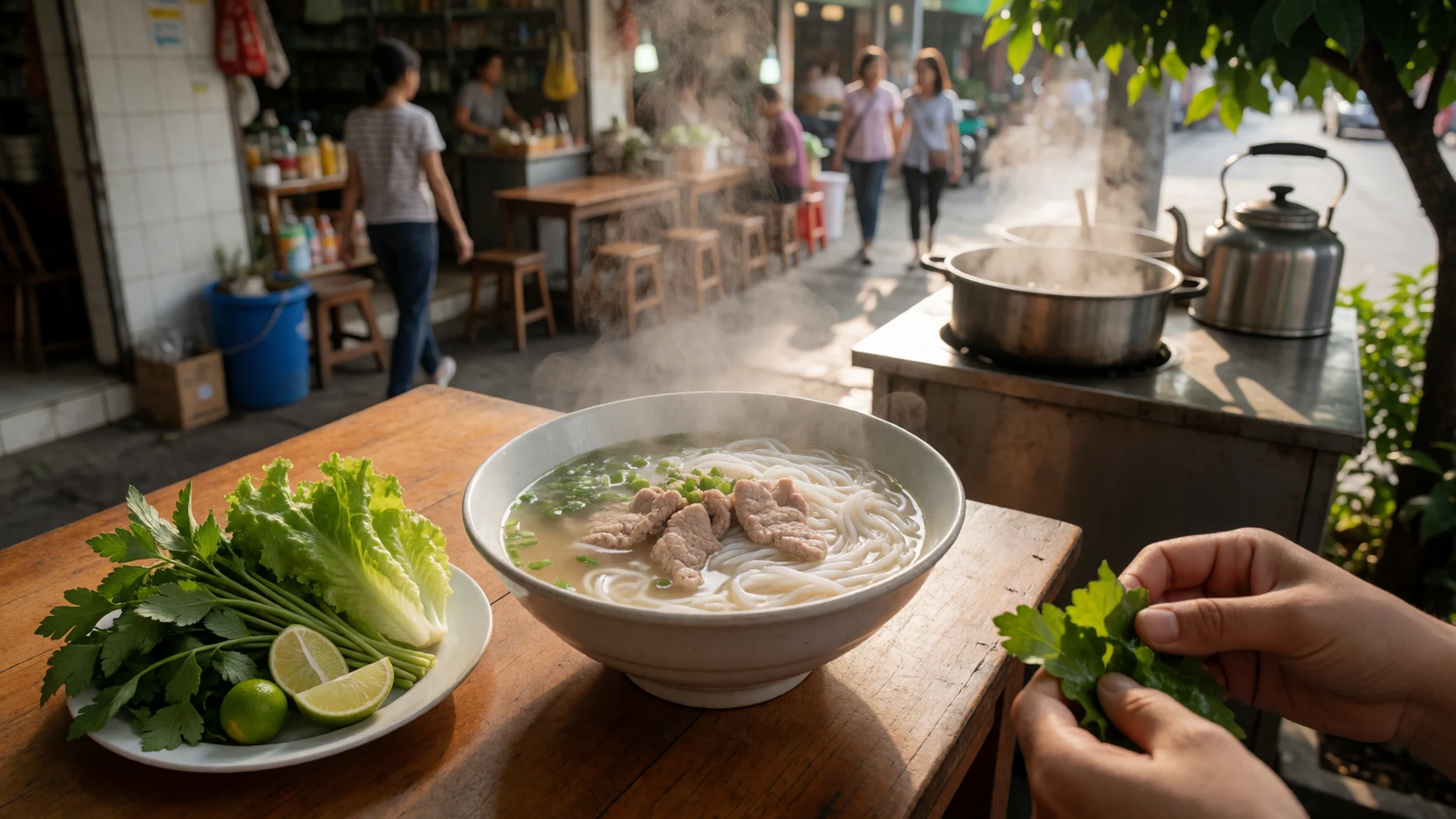
- Pho — Popular pho shops in the central streets
Pho, the Vietnamese noodle soup, has a loyal following in Pakse, where Vietnamese cooking sits comfortably beside Lao. Expect clear, fragrant broth, rice noodles, and a side plate of herbs, lime and chilli to adjust it. Several popular pho shops cluster in the central streets, busiest at breakfast.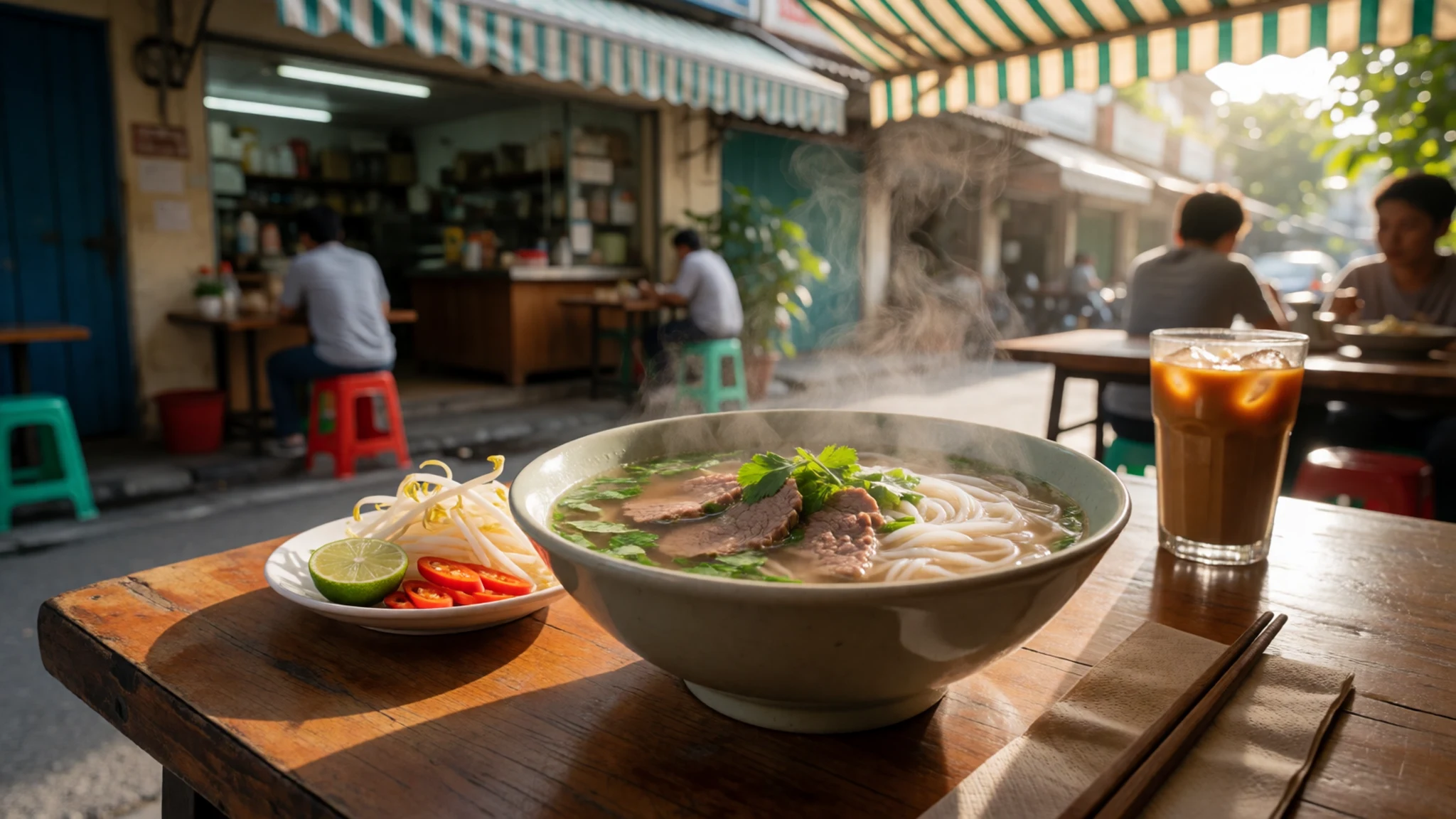
- Sin daat — Sin daat restaurants around the town centre
Sin daat is Lao barbecue cooked at the table: a domed metal grill for meat on top, with broth around the rim for vegetables and noodles. It suits groups and long evenings. Look for sin daat restaurants around the centre, where diners cook their own meal. - Larb and sticky rice — Food stalls at Dao Heuang Market
Sticky rice, grilled meats and larb are staples at the stalls of Dao Heuang Market. Larb is a minced meat or fish salad sharpened with lime, herbs and toasted rice powder, eaten with a ball of sticky rice rolled by hand. Go in the morning, when stalls are busy. - Beerlao by the river — Open-air bars along the Mekong riverfront, south of the French bridge
Beerlao is the local lager, and a bottle at sunset on the Mekong is the usual way to end the day in Pakse. Walk south along the river past the temple and open-air bars appear one after another, facing the water. Ice in the glass is normal here. - Bolaven coffee — Cafés on the main streets
Coffee from the Bolaven Plateau, the farming country east of Pakse, appears in cafés across town as hot Lao-style coffee with condensed milk, iced versions or a plain black cup. Start a morning in one of the cafés on the main streets before a walk or a motorbike day.
Plan it
Best time. November to February, in the dry season, when rain is rare and days are warm but manageable. March and April are the hottest months, and rain falls on most days from April to October, though the wet season also fills the waterfalls on the plateau.
How long. 2–3
Getting there. Pakse has its own airport, so check current flights. A common alternative is Ubon Ratchathani (UBP) in Thailand, reached by air or train from Bangkok, then a bus to the Chong Mek border crossing and on to Pakse; check current visa rules and bus times. Pakse has two bus stations, one for services north and one for the south.
Budget. low
Tips
- Use Pakse as a base for day trips to Wat Phou, the Bolaven Plateau waterfalls and Si Phan Don, and arrange transport a day ahead through your guesthouse.
- Do temples, markets and the Big Buddha climb early, before the heat builds.
- Carry cash in small notes for markets, street food and riverside bars.
- Bring insect repellent for river evenings and a light rain jacket from April to October.
- Drink bottled or filtered water and carry a refillable bottle on day trips.
Etiquette
- Cover shoulders and knees, and remove shoes before entering temple halls.
- Ask before photographing monks or people at close range.
- Do not touch anyone's head or point your feet at people or Buddha images.
Nearby
Sources
- Wikidata Q383622 (CC0)
- Wikipedia: Pakse (rev 1380196425) (CC BY-SA 4.0)
- Wikivoyage: Pakse (rev 5414374) (CC BY-SA 4.0)
- Champasak Palace — Adam Carr of English Wikipedia (Public domain)
- Golden Buddha statues at Wat Phou Salao — Basile Morin (CC BY-SA 4.0)
- Sunset over Mekong in Pakse (2024-11-09) — Alexkom000 (CC BY 4.0)
- Mekong in Pakse 1 — Alexkom000 (CC BY 4.0)
- Mekong in Pakse 2 — Alexkom000 (CC BY 4.0)
- Pakse — Alexkom000 (CC BY 4.0)
- Sunset over Mekong in Pakse 1 (2024-11-11) — Alexkom000 (CC BY 4.0)
- Sunset over Mekong in Pakse 2 (2024-11-11) — Alexkom000 (CC BY 4.0)


