Painted Hills
Painted Hills, United States
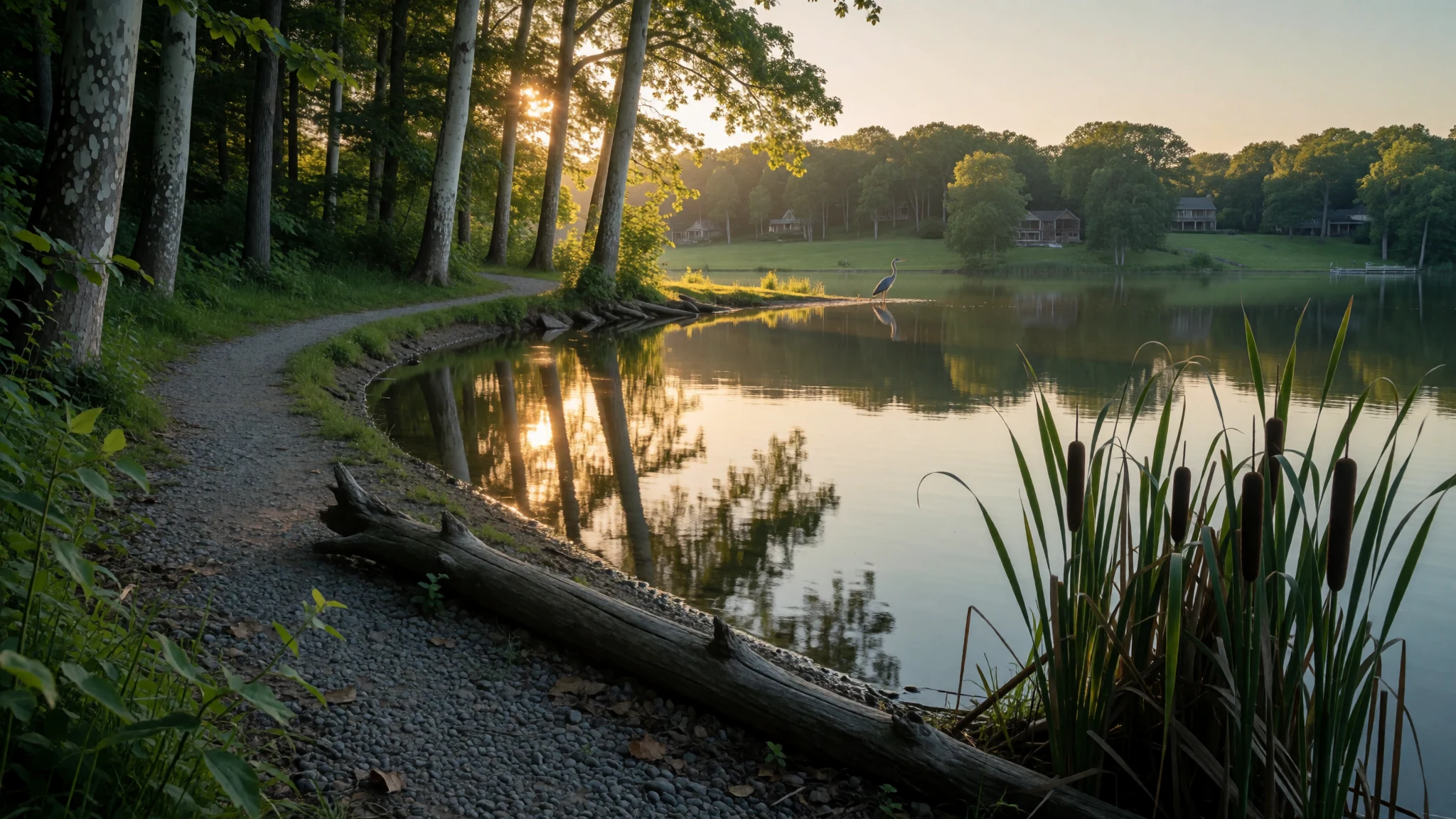
Painted Hills is a quiet lakeside community in Indiana, best as a slow, low-cost stop on a wider Midwest drive.
The place
Painted Hills is a small lakeside community in Jackson Township, Morgan County, Indiana, and it should be said at once that it is not the striped Oregon badlands that share its name. Here the colour comes from tree-lined water rather than rock. The census counted 766 residents in 2020, so this is a place of houses, docks and quiet roads rather than headline sights. It sits on the shores of Lake Holiday and Lake Nebo, south-east of Martinsville, the county seat, with Morgantown a similar distance in the opposite direction along the state road that marks its north-eastern edge. Federal maps label the lakes Painted Hills Lake and Little Nebo Lake, so names can differ between signs and screens. Both were built on Camp Creek, which runs south to Indian Creek and, further on, the White River. Only a small share of the community's area is water; the rest is gently rolling, wooded land at the edge of the farmland that covers most of Indiana. As a destination it suits a slow afternoon more than a trip: a drive through, a look at the shoreline from public roads, then lunch in a nearby town. Most of what draws visitors to this part of the state lies elsewhere, in the state parks and in Indianapolis, and Painted Hills works best as a calm pause on that route. Anyone hoping for a landmark should adjust their expectations; anyone curious about everyday lake-country life in the American Midwest will find it here.
Its story
Painted Hills has a short documented history, and the honest version of its story is about water and people rather than dates. The community grew around two man-made lakes on Camp Creek, a stream that wanders south to Indian Creek and then reaches the White River. Impounding a creek like this is a familiar Midwestern move: it turns a modest, farm-edged valley into shoreline, and shoreline attracts houses. Indiana's countryside is mostly open farmland, and lake communities give rural ground a second use, often as weekend retreats first and, in many such places, as permanent homes later. The census numbers hint at a steady shift of that kind. The count was 677 in 2010 and 766 in 2020, a gradual rise rather than a boom. The name is a small puzzle. Nothing in the sources used for this reading explains why it was chosen, so it is better left unexplained than guessed at. What can be said is that Painted Hills is a census-designated place, meaning the Census Bureau draws a boundary around it for counting, while it is not a town with its own government. That helps explain why published local information is thin: day-to-day matters sit with the township and county. Anyone wanting deeper history is better served by county records and local libraries in Martinsville than by guidebooks.
What to see
- Lake Holiday — Painted Hills community, south-east of Martinsville
Lake Holiday is one of the two lakes that give Painted Hills its character. The shoreline is mostly residential, so much of the viewing is from roads and any public access points. Go for the reflections, herons and quiet water, and treat it as a gentle stop rather than an outing. - Lake Nebo and Little Nebo Lake — Painted Hills community
Lake Nebo is the second lake, shown on federal maps as Little Nebo Lake. Like its neighbour, it was built on Camp Creek and is ringed by homes and trees. Autumn is the kinder season for a look, when the tree colour doubles in the water and the summer crowds of boaters have thinned. - Martinsville — Morgan County seat, north-west of Painted Hills
Martinsville is the Morgan County seat and the practical base for this area, a short drive north-west along the state road. It offers the nearest range of shops, fuel and family-style eateries, plus the county records for anyone chasing local history. Treat it as the town where an afternoon at the lakes begins or ends. - Morgantown — South-east of Painted Hills
Morgantown lies in the opposite direction from Martinsville along the same state road, and makes a quieter small-town stop. It suits a drive through rolling Indiana farmland and woodland, with the sort of main street where the pace is slow. Check ahead if a particular shop or eatery matters, as small-town opening patterns vary. - Brown County State Park — Brown County, south-east of Morgan County
Brown County State Park is one of the state parks listed by Wikivoyage for Indiana and the natural outing most often paired with this area. Hills, woodland and trails give the walking that Painted Hills itself cannot. Autumn colour draws visitors, so expect traffic then. Check the official Indiana parks site for entry details.
Culture
Painted Hills belongs to the Hoosier Midwest, a culture of small towns, farmland, church suppers, high-school sport and weekends on the water. Residents of a lake community like this one tend to value calm, privacy and a tidy shoreline, and conversation is usually friendly but unhurried. English is the everyday language across most of Indiana. Pennsylvania Dutch, a German-related dialect, is spoken in the Amish areas of the state, though those regions lie elsewhere. Local life revolves around the seasons: boating, fishing and cookouts in summer, and quieter months once the weather turns cold. The wider state is proud of its county and state fairs, where animals, crafts, music and food are the draw, and a visit in early August to the Indiana State Fair in Indianapolis is the nearest way to meet that tradition. In rural Indiana it is normal to nod or wave at passing neighbours on small roads, and to say hello when entering a shop. Tipping in restaurants and bars is expected in the United States, and cash or cards are both widely accepted in towns nearby. Because the shoreline here is mostly private homes and docks, treat every lakeside lot as private property and stay on public roads and signed access points unless a resident invites you onto their land.
What to wear
Painted Hills has no regional costume of its own, and Indiana as a whole is better known for work clothing than for ceremonial dress. The nearest thing to a traditional style belongs to the Amish communities in other parts of the state, where plain dress is worn daily: dark, solid-coloured cotton and wool, with bonnets and caps for women and brimmed straw or felt hats for men, fastened with hooks rather than buttons or decorative trim. These communities do not live in Painted Hills, and visitors should not expect to see the dress here. What residents wear now is practical and casual: jeans, T-shirts, hooded sweatshirts, ball caps with a team or farm-supply logo, work boots in the country and sandals or boat shoes by the water. Sports shirts, especially in the colours of the state's university teams, are common on match days. Visitors should dress for the weather and the terrain. Summer is warm and humid, so light cotton, a sun hat and sunscreen suit, while spring and autumn call for layers and a waterproof jacket. Winter needs a proper coat, hat and gloves. Closed shoes with grip help on damp lakeside paths, and anyone going on the water should wear a life jacket. Dress is relaxed everywhere locally, including churches and restaurants.
What to eat
- Corn casserole — Family-style diners in Martinsville and Morgantown
Corn casserole is a baked, creamy side dish that Wikivoyage flags as an odd Midwestern speciality. It is sweet, soft and filling, and turns up at family tables and potlucks. Look for it on the side-dish list at a family-style diner in the towns around Painted Hills. - Breaded pork tenderloin sandwich — Roadside diners and small-town eateries along the state road
A pork loin pounded thin, breaded, fried and served in a bun that is much too small for it. This is a classic Indiana order. It is usually eaten with pickles and mustard, and is easy to find at roadside eateries and small-town diners across the state. - Sugar cream pie — Diners, bakeries and church or community bake sales
Sugar cream pie is a plain custard-style pie made from cream, sugar and a little flour or cornflour in a pastry case, sometimes called Hoosier pie. It is rich and very sweet, best with black coffee, and appears on dessert boards at traditional diners and church bake sales. - Popcorn — Farm stands, county fairs and the Indiana State Fair in Indianapolis
Indiana takes popcorn seriously enough to hold a festival for it in early September in Valparaiso, in the north of the state. Closer to Painted Hills, fresh-popped bags and flavoured tubs are easy to find at farm stands, fairs and gas-station counters. - Local craft beer — Pubs and taprooms in Martinsville, Bloomington and Indianapolis
Indiana has a lively craft-beer scene, and Wikivoyage names Upland, from Bloomington, as a popular label found across the state. Pubs in nearby towns usually pour a few Indiana beers alongside national brands. Drinking prices are generally modest outside the larger cities.
Plan it
Best time. April–May and September–October. Spring brings fresh green around the lakes and milder days, while autumn offers tree colour and comfortable walking. Summer is warm and humid, good for lake activities but busier on the water, and winters are cold. Indiana also has a fairly frequent tornado season in spring and summer, so check the forecast.
How long. 1
Getting there. Fly to Indianapolis International Airport (IND), the state's main airport, then hire a car and drive south-west towards Martinsville and on to the lakes. Public transport to the community is limited, so a car is the practical choice. Check current road works on the interstate between Indianapolis and Martinsville before setting out.
Budget. low
Tips
- Hire a car; the lakes, Martinsville and Morgantown are all small-town driving distances apart
- Combine Painted Hills with a state park such as Brown County, as there is little to fill a whole day on the spot
- Check the Visit Indiana official website for events, parks and seasonal information before you go
- Carry water, sunscreen and insect repellent in summer, and check the weather for storms
- Carry a card and some cash, as small local eateries and stalls vary in what they accept
Etiquette
- Treat lakeside land and docks as private property and keep to public roads and signed access points
- Keep noise down in residential streets, especially in the evening
- Wave back to neighbours on rural roads and slow down for pedestrians and cyclists
Nearby
Sources
- Wikidata Q6057303 (CC0)
- Wikipedia: Painted Hills, Indiana (rev 1373593202) (CC BY-SA 4.0)
- Wikivoyage: Indiana (rev 5308377) (CC BY-SA 4.0)
Wildlife
- Great blue heron (animal)
Picture a big bird of the heron family that likes to wade at the water's edge: that is the great blue heron. It favours the shores of open water and wetlands, so look beside the calmer water in Painted Hills, where reflections add to the scene. No particular season or hour is promised, so go unhurried. Keep a respectful distance, stay quiet, and consider a local guide to help you spot one. Never feed it.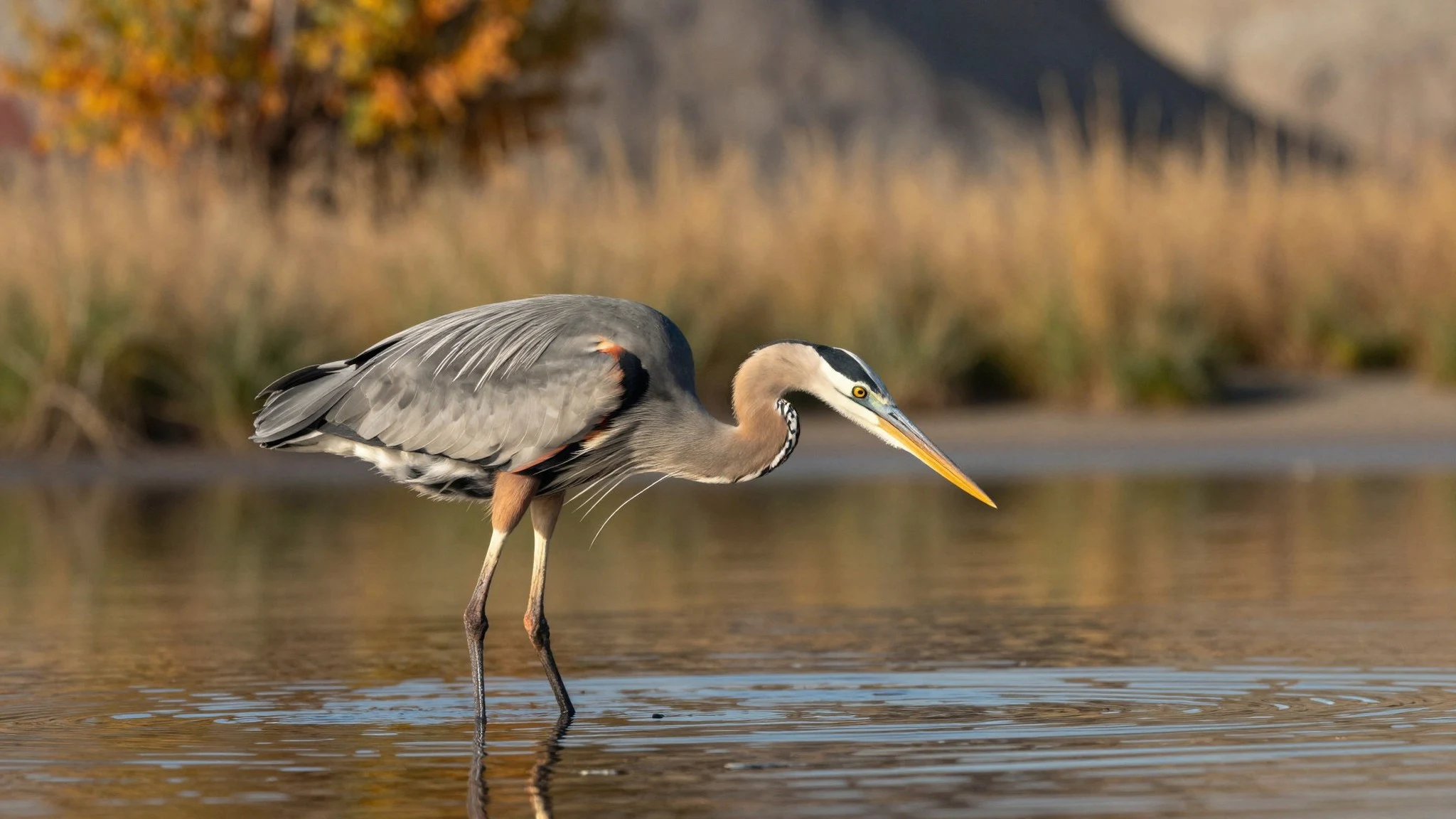
- Great blue heron (bird)
Picture a big bird of the heron family that likes to wade at the water's edge: that is the great blue heron. It favours the shores of open water and wetlands, so look beside the calmer water in Painted Hills, where reflections add to the scene. No particular season or hour is promised, so go unhurried. Keep a respectful distance, stay quiet, and consider a local guide to help you spot one. Never feed it.