Padre Island
Padre Island, United States
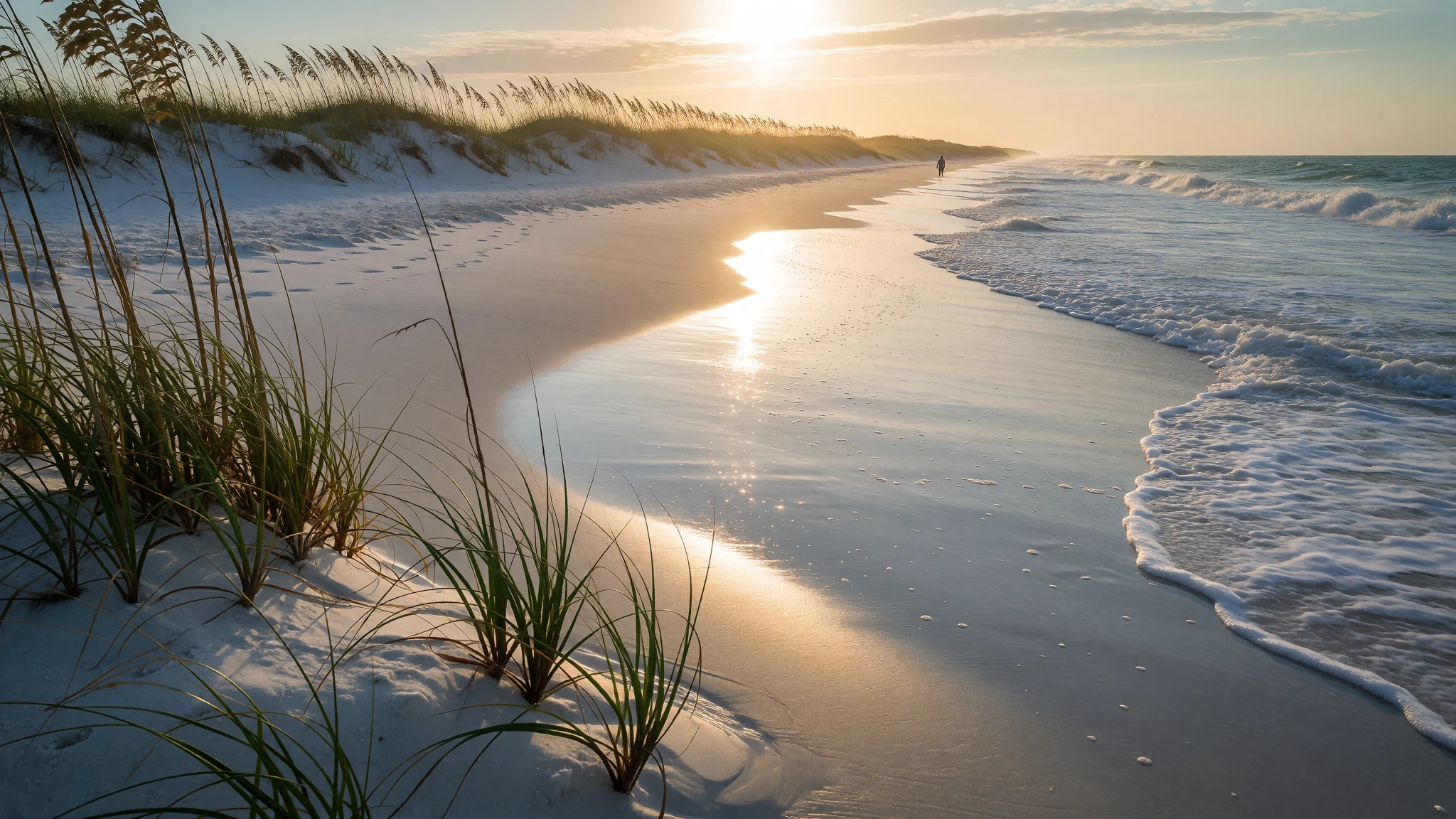
Padre Island National Seashore offers a long, wild Gulf beach with dunes, birds and quiet, a world away from the resort strip at the island's southern tip.
The place
Padre Island National Seashore sits on the Gulf coast of South Texas, on the northern part of a long barrier island that has been left largely undeveloped. It was established in 1962 and is run by the National Park Service. Its character is the opposite of South Padre Island, the resort town at the southern tip, which is known for beach holidays and student crowds. Here the appeal is distance and emptiness: a very long strip of Gulf beach backed by foredunes, grassland and freshwater ponds, with the shallow Laguna Madre on the landward side, a lagoon between island and mainland that windsurfers favour. Most of the park is primitive. Camping is possible but comforts are few, and much of the beach can only be driven on in a four-wheel-drive vehicle. The island is low and flat, barely above sea level, so the sky does most of the work. Sand is always on the move. Southeasterly winds from the Gulf pile it into dunes, some of which creep inland and smother plants, while roots and vines pin down other patches. Hurricanes now and then rearrange everything, flattening dunes and cutting channels across the island. The seashore spreads over parts of three counties, Kleberg, Kenedy and Willacy, with Kenedy holding the largest share. Visitors come for birds, shells, fishing, quiet and dark night skies rather than for facilities, and the experience rewards those who arrive prepared.
Its story
Padre Island National Seashore protects a landscape that is geologically very young. Dating of shells suggests the island began forming only a few thousand years ago, when sand collected in long bars off the Texas coast, in a basin that is stable and slowly filling. It belongs to a natural system of barrier bars that stretches well beyond the park boundary. Because nothing solid holds it in place, the island has never really settled. Wind builds dunes, plants anchor some of them, storms flatten the lot, and the cycle begins again. Walkers on the beach today are standing on ground that is, in geological terms, brand new. People have passed through since the earliest Native American communities, but lasting development stayed away until roughly the last century, which is striking for a coastline so close to a city like Corpus Christi. Over the centuries the island was claimed under four flags: Spain, Mexico, the Republic of Texas and finally the United States. None of those governments turned it into a settlement. In 1962 the northern end was set aside as a national seashore, and it is now managed by the National Park Service as a protected area. The southern end went a different way and became the resort town of South Padre Island, so the same sandbar now holds two very different ideas of a beach holiday. The seashore is the version in which the island is left to behave like an island, shifting, rebuilding and occasionally being reshaped by a hurricane.
What to see
- Malaquite visitor area — Near the park entrance, northern end of the island
The Malaquite Visitor Center is the practical starting point for Padre Island National Seashore. Rangers can explain current beach conditions, tides and camping availability, which matter here because reservations are not taken for campgrounds. It is worth stopping before driving onto the sand, and it gives a feel for the park's wildlife and shifting geology.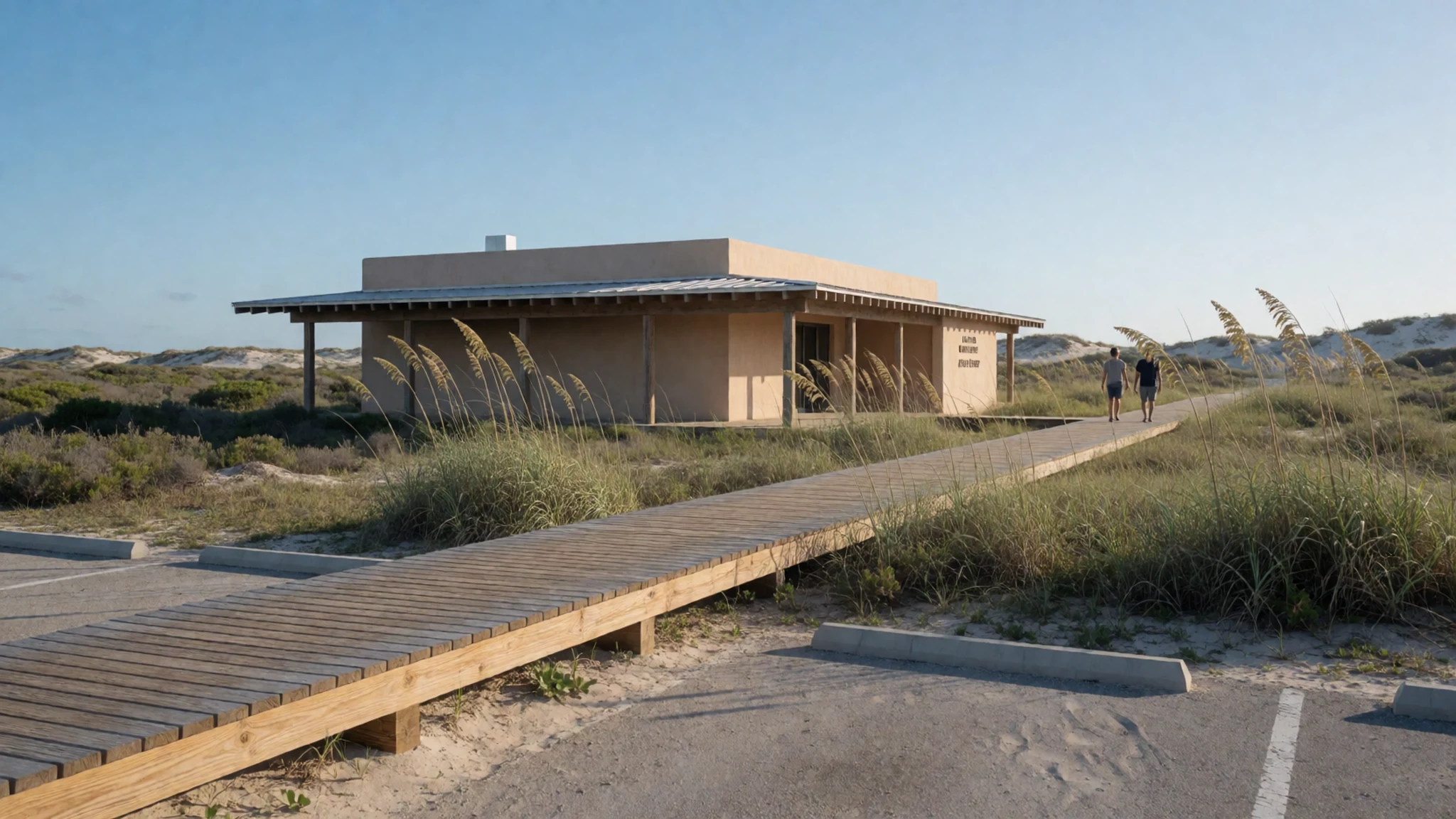
- The Gulf beach — Gulf shore of the seashore
The Gulf beach is the main event: a long, broad strip of sand facing open water, with shells along the tideline and hardly any buildings. Much of it is drivable only in four-wheel-drive, so many visitors walk away from the entrance area to find space. Sun, wind and surf are the soundtrack.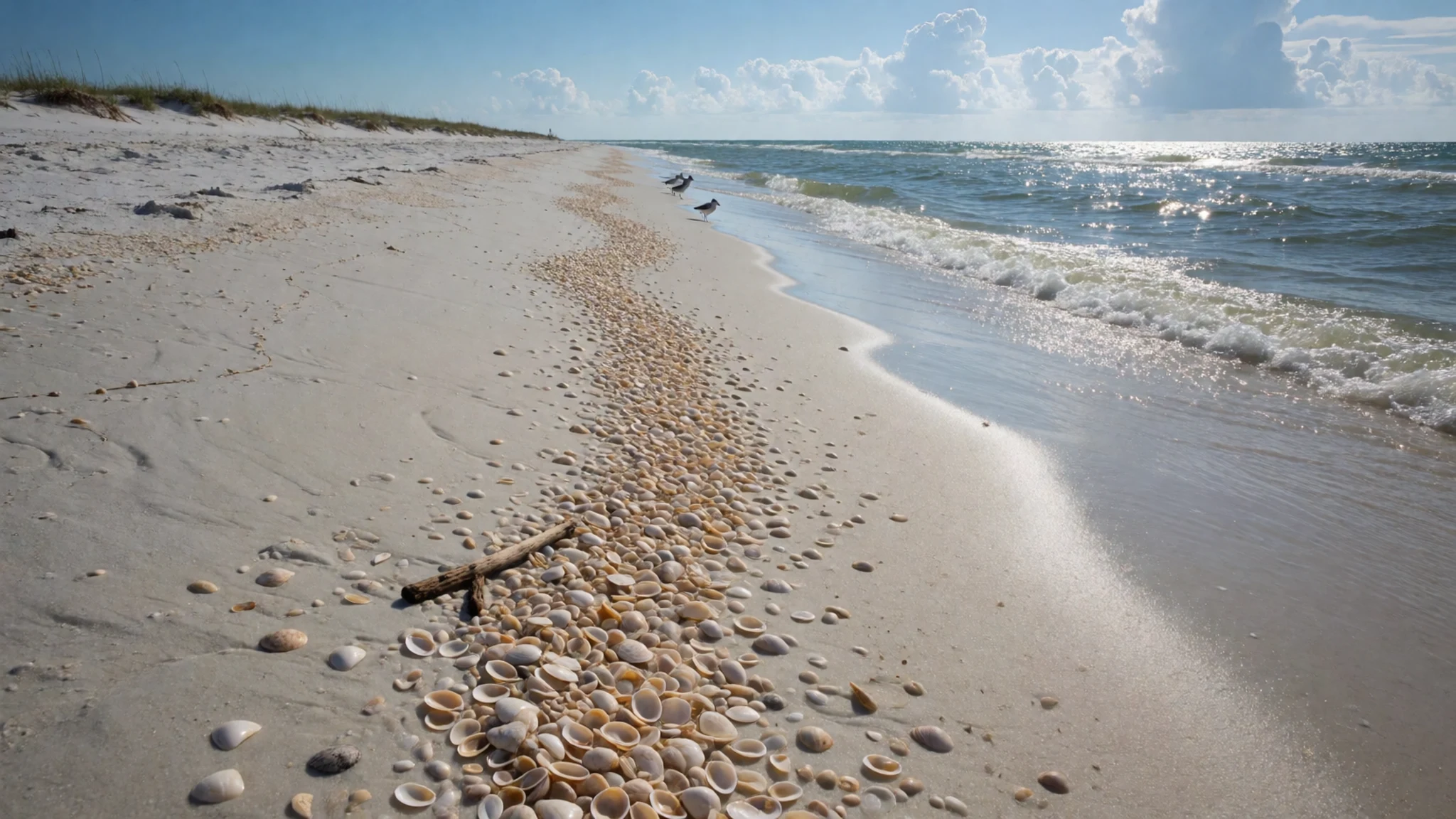
- Foredunes and interior dunes — Behind the Gulf beach
Behind the beach, wind-built foredunes rise above the sand, and further inland active dunes drift across the flats while grasses and vines bind others in place. The scene changes from year to year. Walking among the dunes shows clearly how a barrier island is built, buried and rebuilt by wind and storms.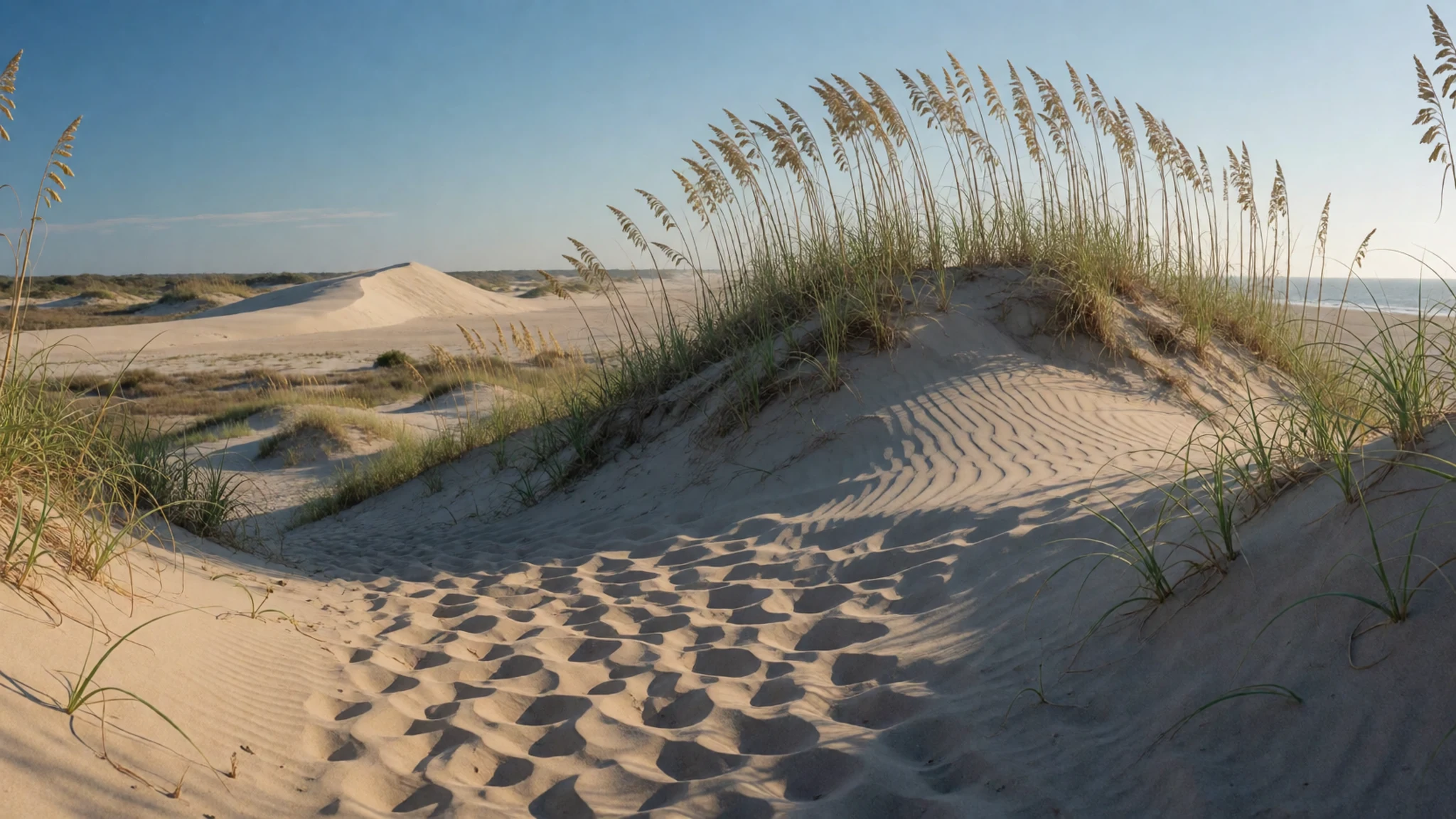
- Laguna Madre — West coast of the island
On the landward side of the island, the shallow Laguna Madre separates the barrier island from the Texas mainland. Water circulates only slowly in and out of it, and the flat, open surface makes it a well-known windsurfing spot. It also suits quiet paddling, birdwatching and fishing, with a calmer feel than the Gulf side.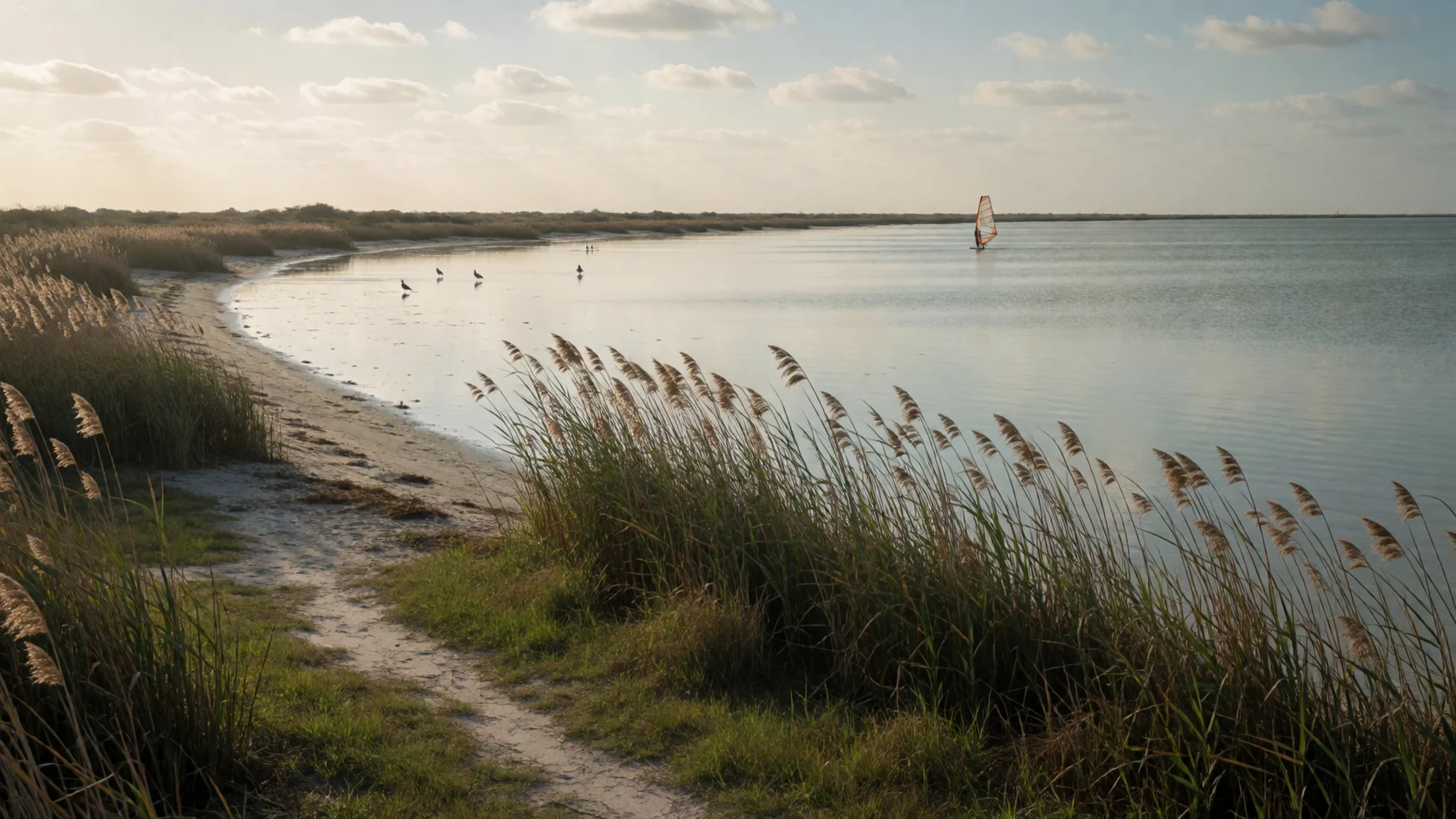
- Grasslands and freshwater ponds — Interior of the island
The interior of the island is a surprise for first-time visitors: open grassland, low dunes and small freshwater ponds that draw birds and other wildlife. It is a gentler, greener counterpoint to the beach. Early morning and late afternoon are best for spotting animals and for avoiding the worst of the heat.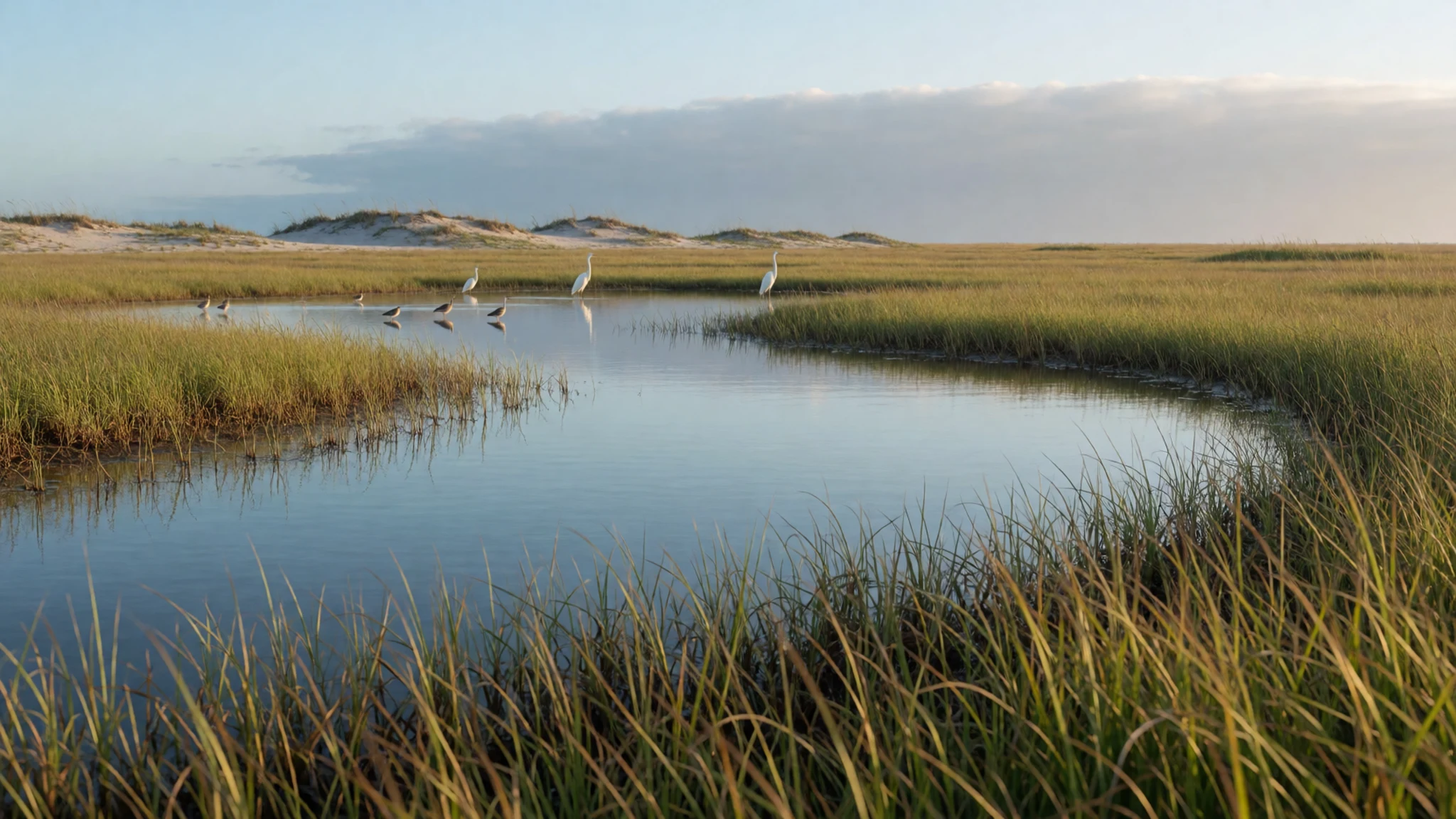
Culture
Padre Island National Seashore has no single local culture of its own, since the island was never settled in a lasting way. What shapes it is the wider culture of the South Texas coast. Spanish and Mexican heritage runs through place names, music, food and family life in nearby Corpus Christi and the Rio Grande valley, and the island itself was once claimed by Spain, Mexico, the Republic of Texas and the United States. Day to day, the beach is a working playground for local families. People drive out for fishing, camping, kite flying, beachcombing and weekend barbecues, and a good deal of the social life happens around trucks, coolers and folding chairs. Fishing is a serious pastime, with surf casting a familiar sight along the shore. The park's own culture is one of conservation: staff and volunteers monitor wildlife, clear litter and remind visitors that the island is a protected place rather than a free-for-all. Hurricane season is part of local life too, and residents are matter-of-fact about storm warnings and evacuations. Visitors will find people friendly and relaxed, usually happy to share advice on tides, bait or the best stretch of sand. Conversation tends to start with the weather, and the pace is unhurried. Take all rubbish away with you, stay off the dunes and their fragile grasses, and keep a respectful distance from nesting birds, turtles and any other wildlife on the beach.
What to wear
Padre Island has no traditional dress of its own, but the South Texas coast has a strong Tejano and Mexican-American clothing heritage. Ranch wear is part of it: cowboy boots, felt or straw hats and denim, and for celebrations the embroidered charro suit and the pleated cotton guayabera shirt. Woollen serape blankets and embroidered cotton blouses still appear at festivals and family events, though they are occasion dress rather than daily wear. On the beach today, people dress for sun and sand: shorts, loose cotton T-shirts, long-sleeved sun shirts, baseball caps, wide-brimmed hats and sandals or flip-flops. Fishing families favour quick-drying fabrics and old shirts that can take salt and fish scales. Evenings in Corpus Christi are casual, with jeans and a clean shirt fitting nearly everywhere. A visitor should plan around heat, glare and wind. Light, breathable long sleeves and a hat protect better than sunscreen alone, and sunglasses are essential on bright sand. Bring a windproof layer for cooler months, when Gulf breezes can feel sharp after sunset. There are no dress codes or modesty rules beyond ordinary public decency. For footwear, sandals suit walking on the beach, but sturdy closed shoes help on hot sand, around shells and across the rougher tracks. Insect repellent is more useful than any outfit in calm, warm weather.
What to eat
- Gulf shrimp — Seafood shacks and dockside eateries around Corpus Christi
Shrimp from the Gulf of Mexico is served fried, grilled or boiled with spice across the Texas coast. It is a staple of casual seafood eateries and dockside shacks, usually with fries, slaw or rice and a squeeze of lemon.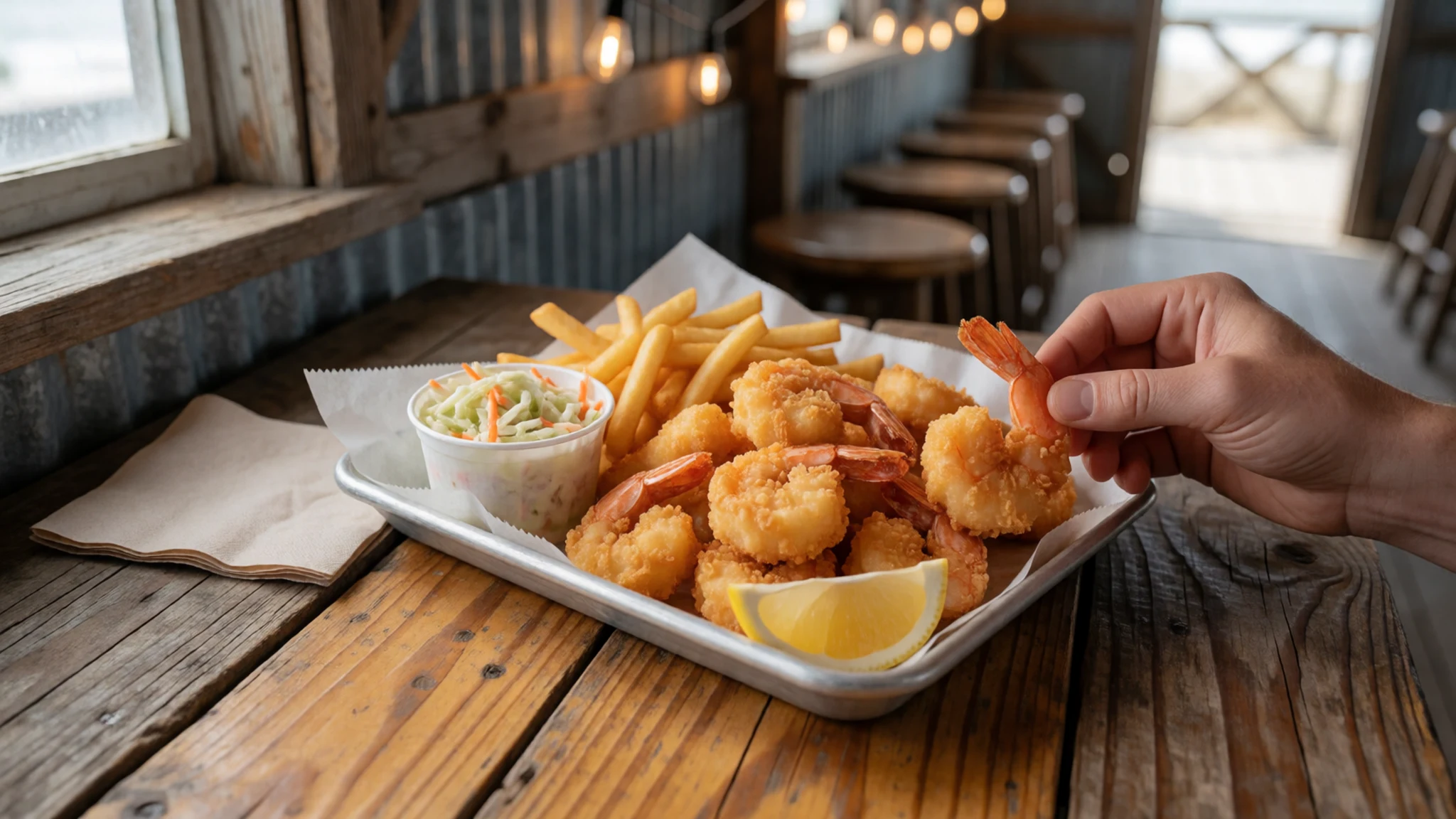
- Fried or grilled redfish — Seafood restaurants along the Corpus Christi waterfront
Redfish and other Gulf catch turn up grilled, blackened or fried in family-run seafood restaurants. Fresh fish is the point, so ask what came in that day. It is simple, filling food after a day on the sand.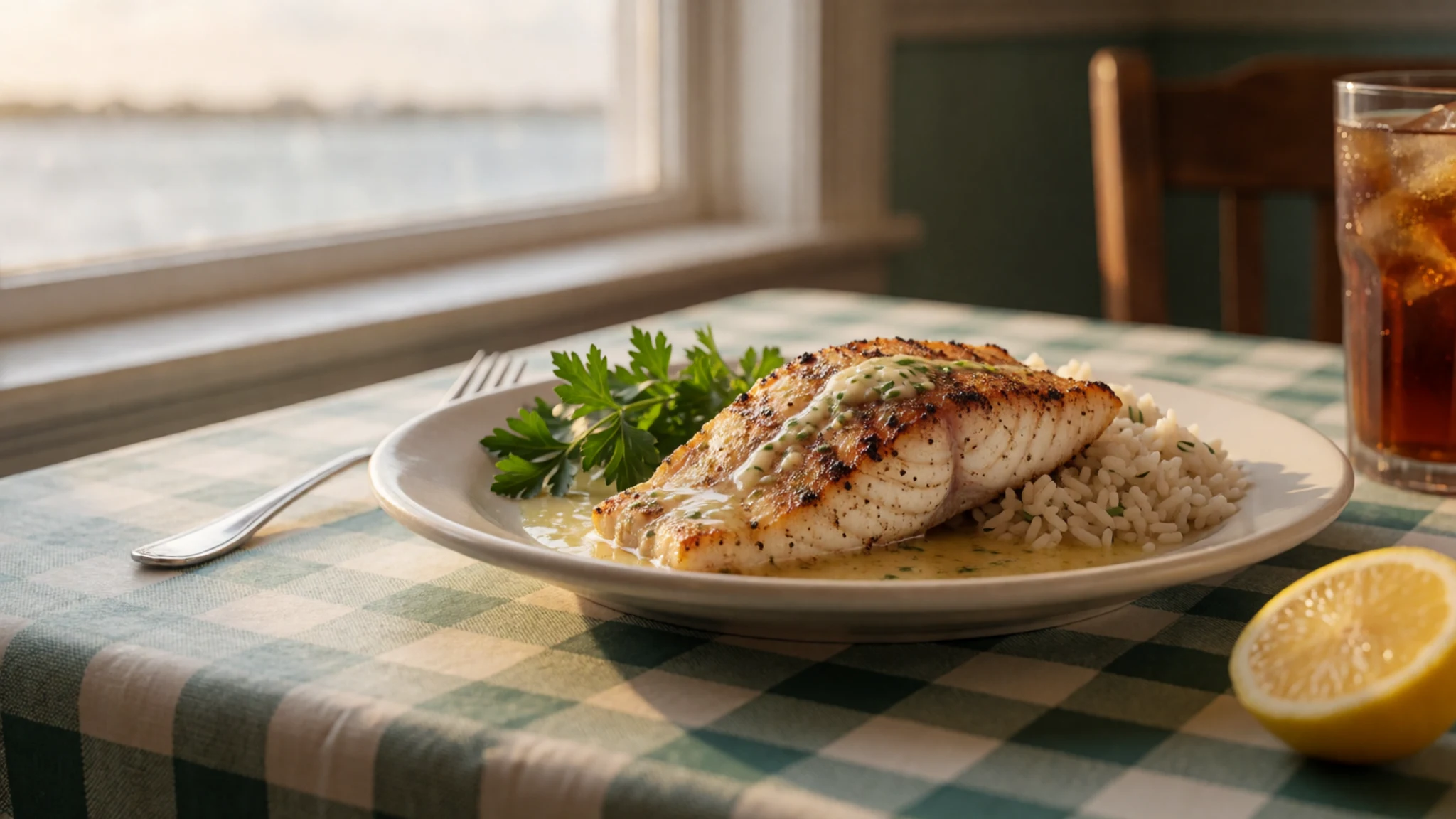
- Breakfast tacos — Morning taquerías and neighbourhood bakeries in Corpus Christi
Soft flour tortillas folded round scrambled egg with potato, bean, bacon or chorizo are a South Texas morning habit. They are cheap, portable and ideal fuel before driving out to the seashore for the day. - Fish tacos — Taquerías and beach-side takeaway stands near the causeway
Grilled or battered white fish in a warm tortilla, topped with cabbage, salsa and a sharp lime wedge, is a common beach lunch. Many taquerías offer them alongside shrimp and beef versions. - Tex-Mex fajitas and enchiladas — Family Tex-Mex restaurants across Corpus Christi
Sizzling grilled meat with tortillas, beans and rice, or cheese enchiladas under chilli sauce, define Tex-Mex cooking. Portions are generous, so share if the day has been light on activity.
Plan it
Best time. March–April and October–November, when the Texas Gulf coast is warm rather than punishing. Summer is hot, humid and bright with little shade, and hurricane season runs through late summer and autumn, so check forecasts and park alerts.
How long. 1–2
Getting there. Fly to Corpus Christi, the nearest airport, then drive across the John F. Kennedy Memorial Causeway to Padre Island and follow the park road south to the seashore entrance. A car is essential, and four-wheel-drive is needed for most of the beach.
Budget. low
Tips
- Camping is first come, first served with no reservations, so phone the Malaquite Visitor Center for availability and find the number on the official site, https://www.nps.gov/pais/index.htm
- Carry plenty of water, food, fuel and sun protection, as the park is largely primitive and shade is scarce
- Check tides and beach closures before driving on the sand, since unusually high tides can shut it
- Keep a spare tyre, shovel and tow strap if taking a four-wheel-drive vehicle onto the beach
- Bring insect repellent and a windproof layer for evenings
Etiquette
- Take all rubbish away and leave shells, driftwood and wildlife where they lie
- Stay off the dunes and their grasses to protect the fragile island surface
- Keep well back from nesting birds, turtles and other wildlife
Nearby
Sources
- Wikidata Q461190 (CC0)
- Wikipedia: Padre Island National Seashore (rev 1362890860) (CC BY-SA 4.0)
- Wikivoyage: Padre Island National Seashore (rev 5394750) (CC BY-SA 4.0)
- Photo: Padre Island National Seashore - sand dunes (Unknown author) (Public domain)
- Photo: beach, Padre Island National Seashore (William L. Farr) (CC BY-SA 4.0)
- Photo: Relief map of Texas (Nzeemin) (CC BY 3.0)
- Photo: Relief location map of the USA (Uwe Dedering) (CC BY 3.0)
- Photo: dunes, Padre Island National Seashore (William L. Farr) (CC BY-SA 4.0)
- Photo: grassland, Padre Island National Seashore (William L. Farr) (CC BY-SA 4.0)
- Photo: interior island dunes, Padre Island National Seashore (William L. Farr) (CC BY-SA 4.0)
- Photo: freshwater pond, Padre Island National Seashore (William L. Farr) (CC BY-SA 4.0)


Wildlife
- Kemp's ridley sea turtle (animal)
The Kemp's ridley is the smallest sea turtle in the world and the rarest, so seeing one is a real treasure. It lives mainly around the Gulf of Mexico, which makes Padre Island's shores a hopeful place to look. It is endangered, so give it plenty of room: stay well back from any turtle on the sand, keep clear of the dunes, whose delicate grasses are easily harmed, and carry all your litter away with you.