Okanagan Lake
Okanagan Lake, Canada
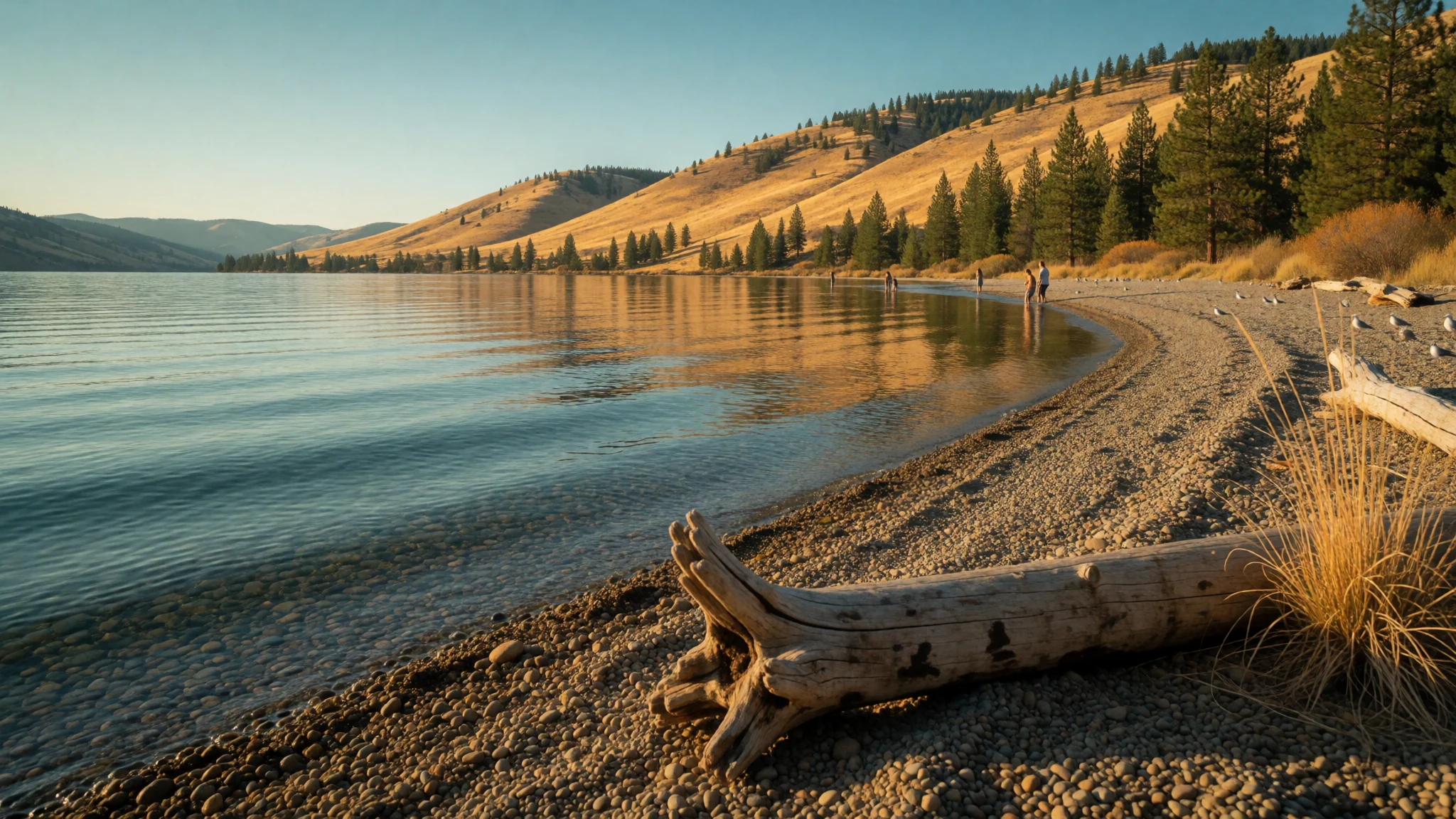
Okanagan Lake is a warm, dry-summer lake strung with orchards, vineyards and beaches, best for slow days on and beside the water.
The place
Okanagan Lake fills a long, narrow trough in the Okanagan Valley of British Columbia, Canada, at an elevation of 342 m. It runs for about 135 km from north to south yet is only a few kilometres across, with a surface area of roughly 348 sq km, so it reads more like a broad river between dry, rounded hills than a lake with a distant far shore. The Syilx people, whose language gives the lake the name kɬúsx̌nítkw, have lived along it for countless generations. Today the shoreline holds a string of towns and small cities: Vernon towards the head, Kelowna in the middle, Peachland on the western bank and Penticton at the southern end. Between them lie orchards, vineyards, public beaches and long stretches of steep, scrubby slope that drop straight into the water. The climate is the draw. The valley sits in the rain shadow of mountains to the west, so summers are dry and hot, the water is warm enough for proper swimming, and the vegetation looks more like sagebrush country than the rainforest many people expect of British Columbia. That dryness has a cost: wildfire smoke can settle over the lake in late summer, and in some years it blots out the views for days. Winters are cooler, quieter and cheaper, with far fewer visitors. Boats of every size cross the water in season, and a floating bridge links the two sides at Kelowna. This is a place for water, fruit and slow driving rather than for ticking off monuments.
Its story
Okanagan Lake has been home ground to the Syilx people for countless generations, and their relationship with it predates every map. Along the shore they fished, gathered roots and berries and hunted in the hills, moving with the seasons between the valley floor and higher pastures. Their stories include a lake creature that newcomers later turned into Ogopogo, a name that now appears on souvenirs more often than in any old telling. European traders and then settlers reached the region in the nineteenth century, bringing diseases that cut deeply into Indigenous communities, and colonial authorities set aside land for farming and ranching. Because the valley's roads were rough and the lake was long, paddle steamers became the working link between the northern and southern ends, carrying passengers, fruit and freight. Old photographs show sternwheelers, including one carrying a royal party, pushing up the water. Railways and later highways ended that trade. Irrigation then turned the dry benches above the shore into orchards, and apples, cherries and peaches became the valley's identity, followed in recent decades by vineyards. The lake is now crossed by a floating bridge and ringed by holiday homes, so its story is partly about who gets to live and play on this water today. Syilx communities remain present as neighbours, landholders and hosts.
What to see
- Peachland waterfront — Peachland, west shore
Peachland, on the western bank, has a pebbly town beach with a promenade, easy swimming and shallow water that warms by midsummer. It is smaller and quieter than the big city waterfronts, and the main road stays close to the lake. Stay for the evening, when low light turns the eastern hills gold.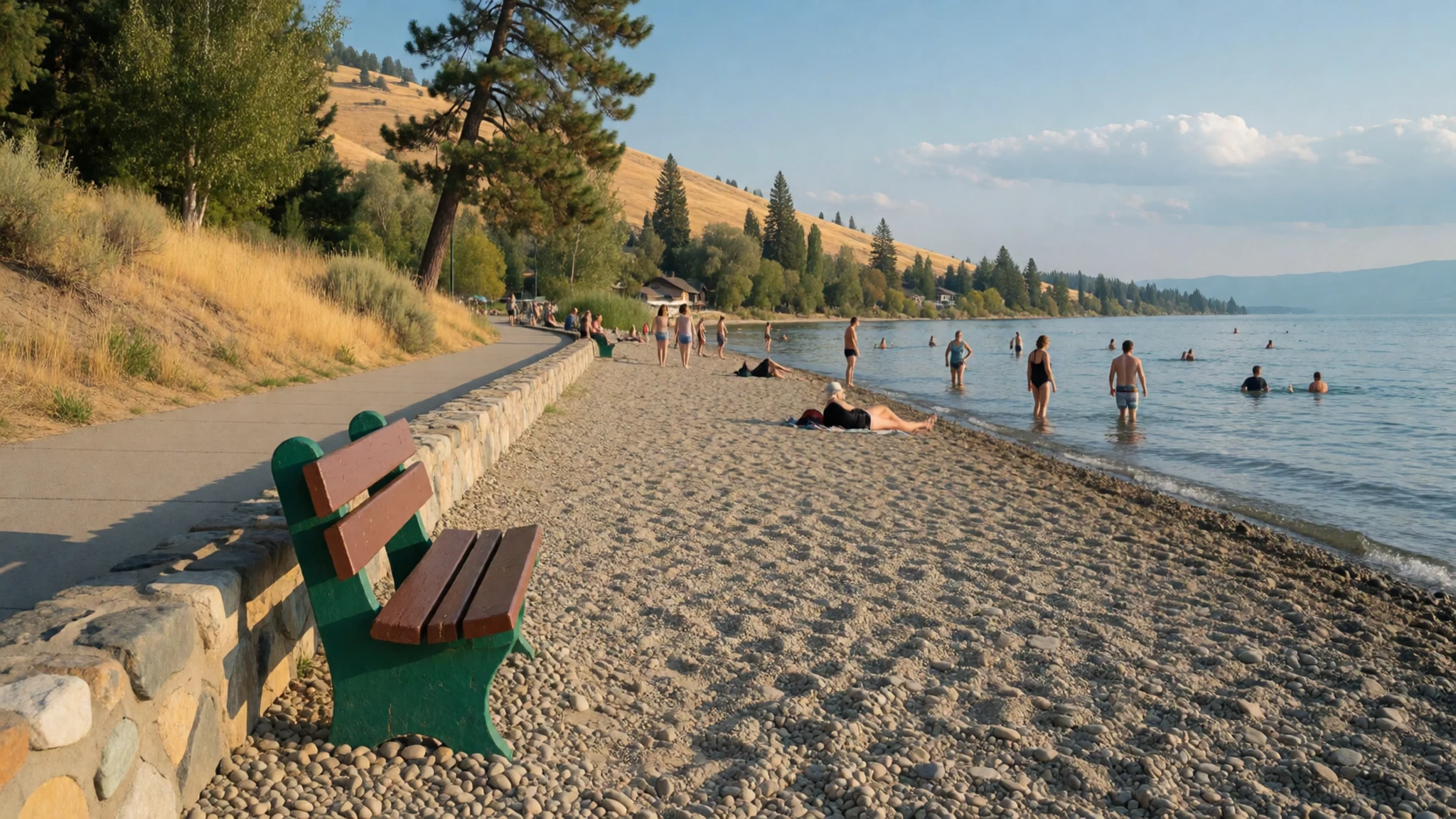
- Kelowna lakefront — Kelowna, mid-lake
Kelowna has the busiest stretch of shore, with parks, a boardwalk, marinas and views to the floating bridge across the water. Early morning is calmer for walking before the heat and the crowds build. It makes a practical base for wine, beaches and orchards, though summer traffic and room prices climb.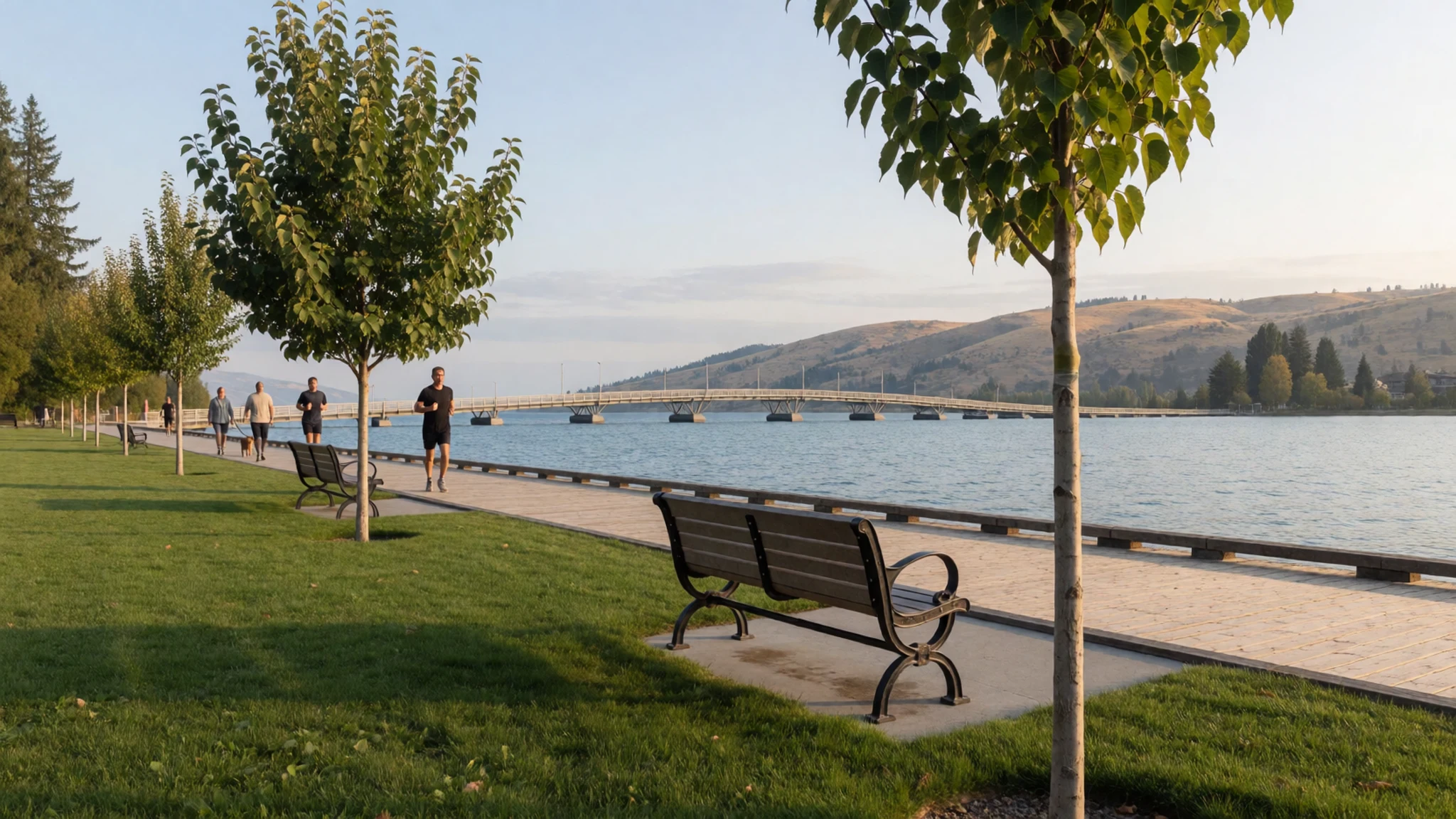
- Penticton and the old steamer — Penticton, south end
Penticton sits between Okanagan Lake and a neighbouring lake to the south, so it has beaches on both sides. A preserved sternwheeler, the SS Sicamous, is kept near the shore as a reminder of the steamer era; check the official site for opening arrangements before planning around it.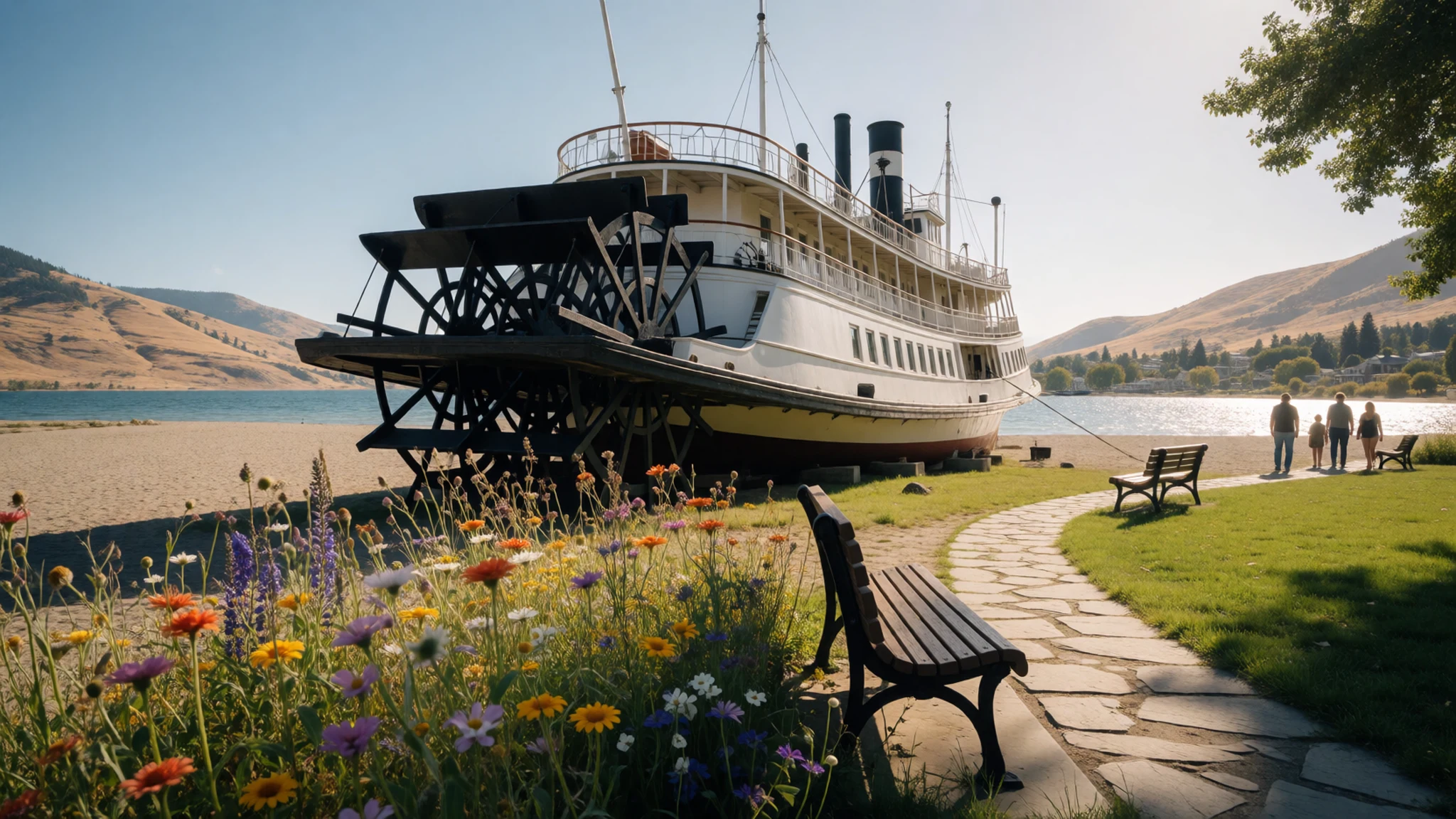
- The western shore drive — West shore near Trepanier
The road along the western side climbs above the lake and gives long views down a ribbon of water between dry hills. It is a pleasant half-day drive with swimming stops, and the light is best in the morning. Pull over only at signed viewpoints, as the verges are narrow.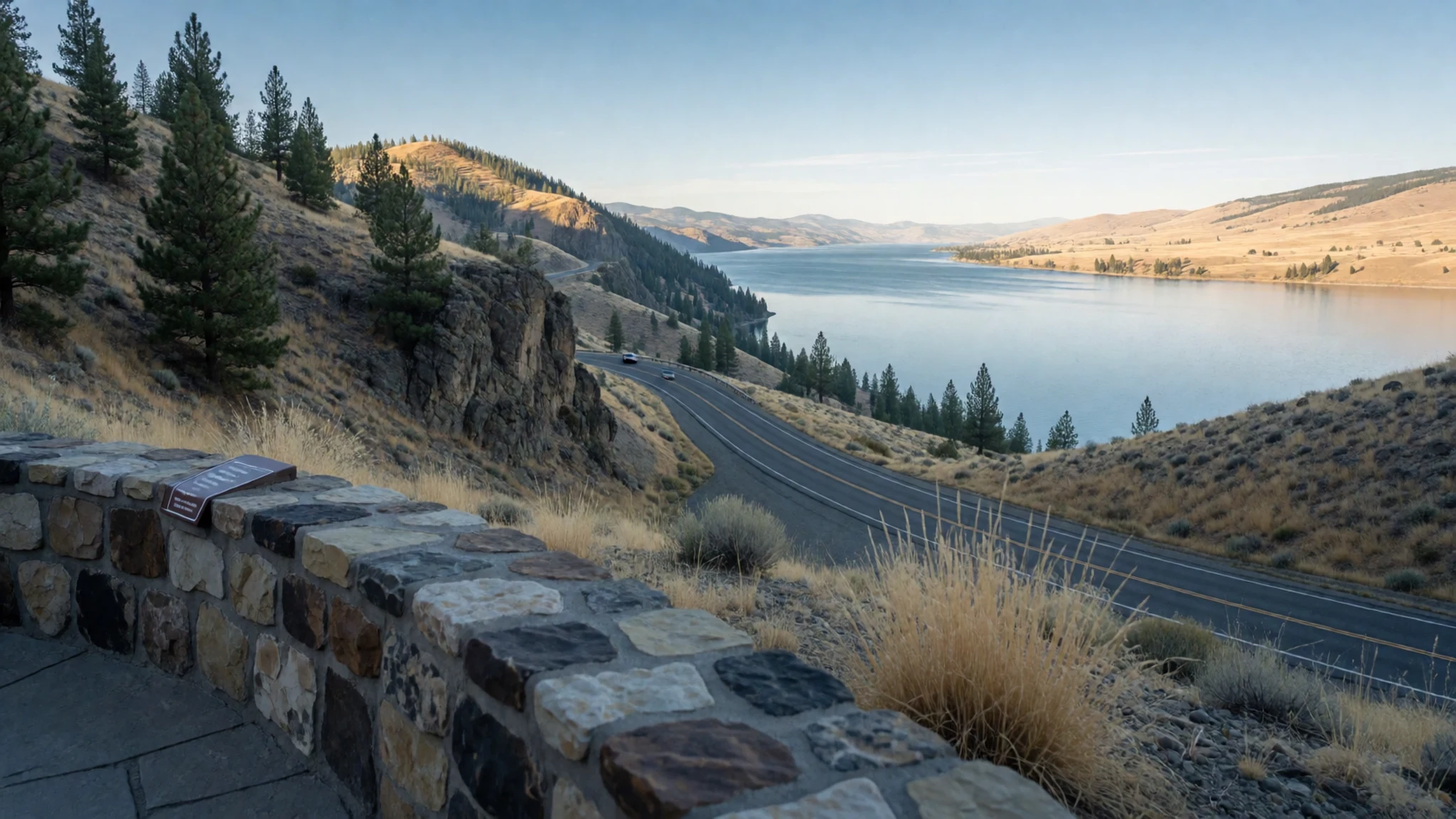
- Orchards and winery slopes — Hillsides around Kelowna
The benches above the lake are planted with fruit trees and vines, and many farms sell from roadside stands or open tasting rooms. Spring brings blossom, summer brings cherries and peaches, and autumn brings apples and grapes. Many wineries want bookings, so check their own websites first.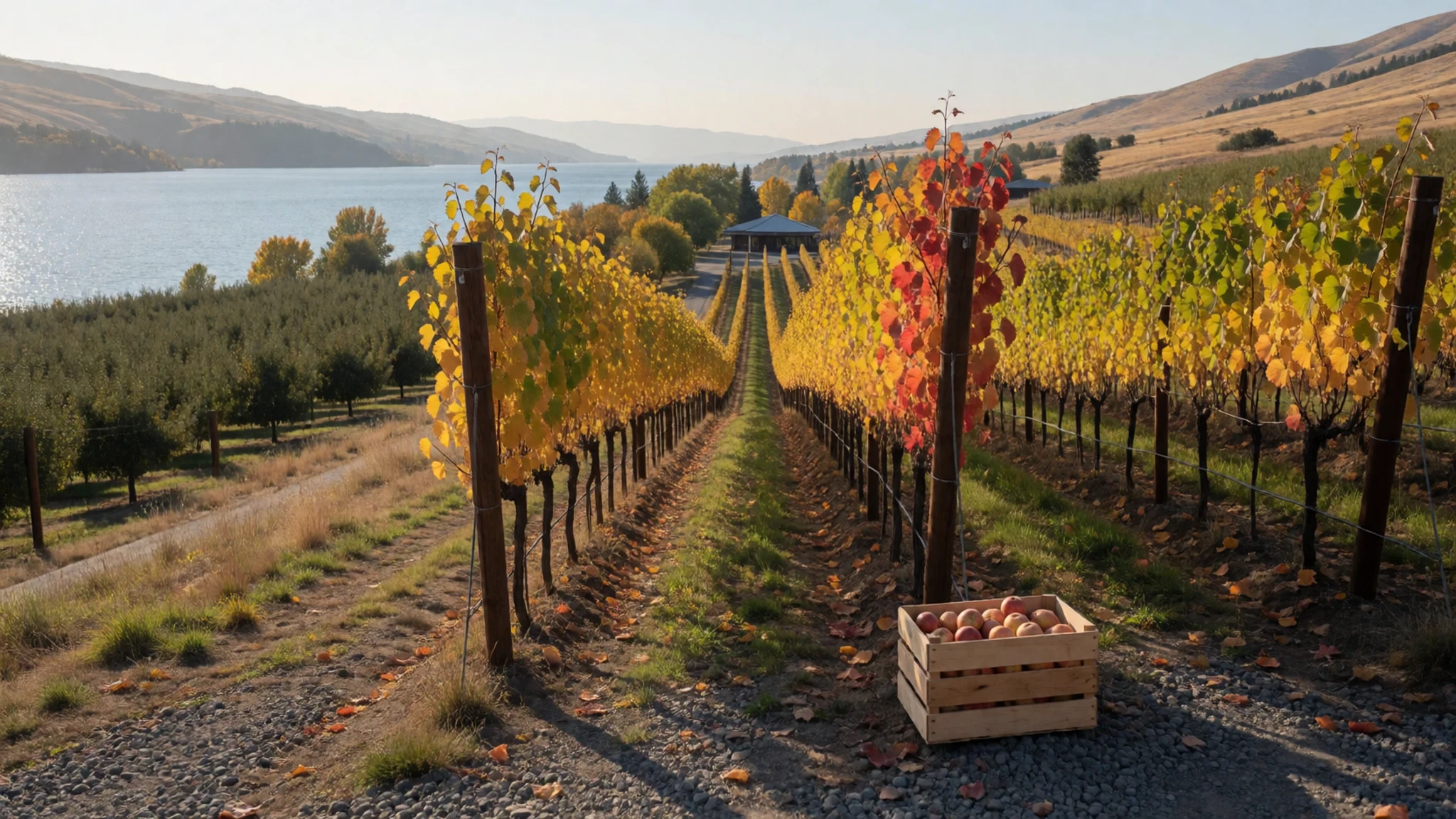
- Syilx cultural experiences — Westside, near Kelowna
Syilx communities around the lake run cultural centres, galleries, guided programmes and some wineries. These are the most direct way to hear the valley's history from the people whose territory it is. Programmes change by season, so look at the official sites of the communities before travelling.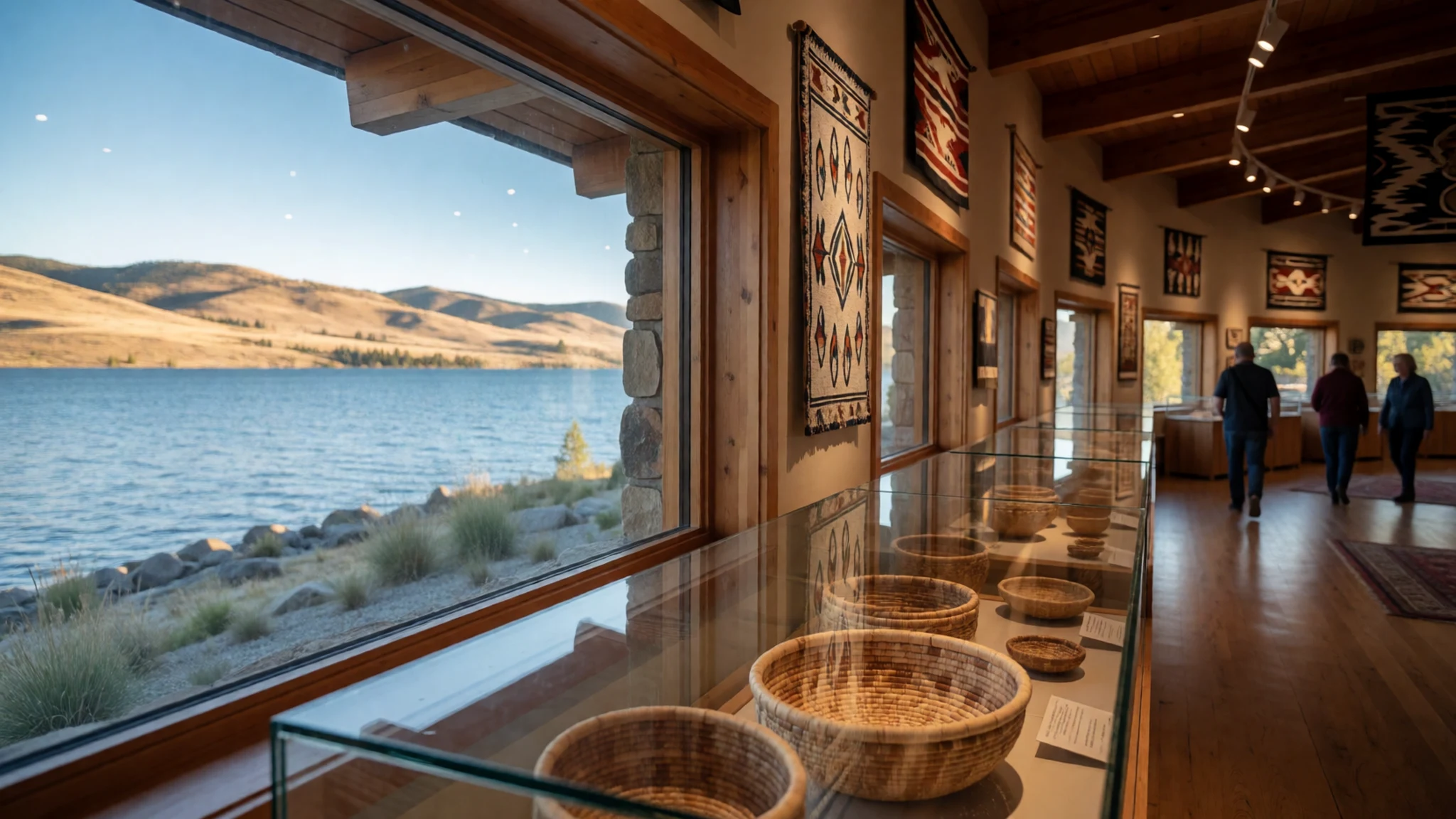
Culture
Okanagan Lake lies in the traditional territory of the Syilx (Okanagan) people, and that shapes how locals talk about the place. Several Syilx communities run cultural centres, galleries, guided programmes and vineyards around the valley, and these are the best way to learn history from the people who carry it. The respectful words today are Indigenous or First Nations, rather than older labels that many people now find offensive. Beyond that, lake culture is outdoorsy and unhurried. Summer means beach days, boats, paddleboards, farm stands and long evenings on patios with local wine or craft beer. The valley has a strong orchard tradition, and seasonal workers from several countries help bring in each harvest, which gives the small towns a mixed, practical character. Wildfire is part of local life too: residents have lived through serious fire seasons and take restrictions seriously, so a campfire ban is treated as a rule rather than a suggestion. Canadians queue politely, tip in restaurants and bars, and expect visitors to leave beaches as they found them. Respect posted fire bans and private-land signs, take your litter with you, and ask before photographing people or cultural events.
What to wear
Okanagan Lake is in Syilx country, where traditional clothing was made from tanned deer and elk hide, often fringed and decorated with beadwork and shell. Baskets and hats were woven from roots and bark. Today that heritage appears mainly as regalia at ceremonies, powwows and graduations, along with beaded jewellery, ribbon skirts and moccasins worn with pride at community events. Everyday dress around the lake is casual and built for sun: shorts, T-shirts, sandals, sunglasses, caps and swimwear that often stays on under a loose shirt between the beach and a patio lunch. Winery tasting rooms are relaxed, so neat casual wear is enough, and few places expect anything smarter. Winters call for proper layers, boots and a warm hat. A visitor should pack for a dry, strong sun: a wide-brimmed hat, sunscreen, light long sleeves for the middle of the day and water shoes for pebbly beaches. Closed, grippy shoes suit the dry hillside trails, where loose gravel is common and snakes are possible, so stay on marked paths. Evenings cool quickly even in summer, so bring a light jumper. Visitors to Indigenous cultural events should dress modestly and follow the hosts' lead.
What to eat
- Peaches and cherries — Roadside fruit stands along the lakeshore roads
Summer fruit is the valley's signature, and the sweetest way to eat it is straight from a farm gate stand, still warm from the sun. Cherries come first, then peaches and apricots, with apples later. Prices are honest at stands, and many take cards.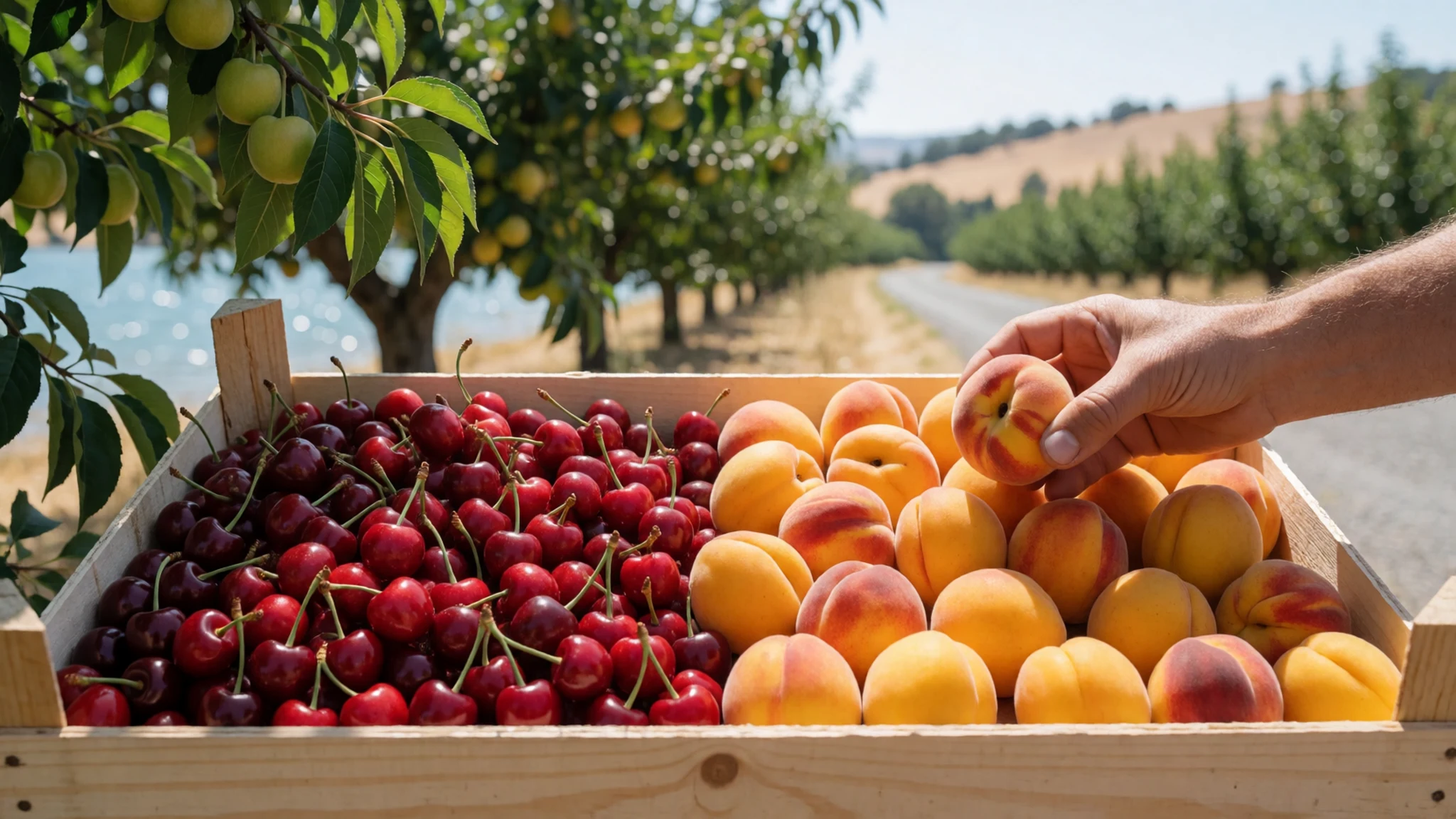
- Okanagan wine — Tasting rooms on the hillsides around Kelowna and Penticton
The warm, dry slopes above the lake grow grapes for whites, rosés and reds, and tasting rooms are part of most itineraries. Many ask for a booking in high season. Share the driving, because the roads between estates are winding and hilly.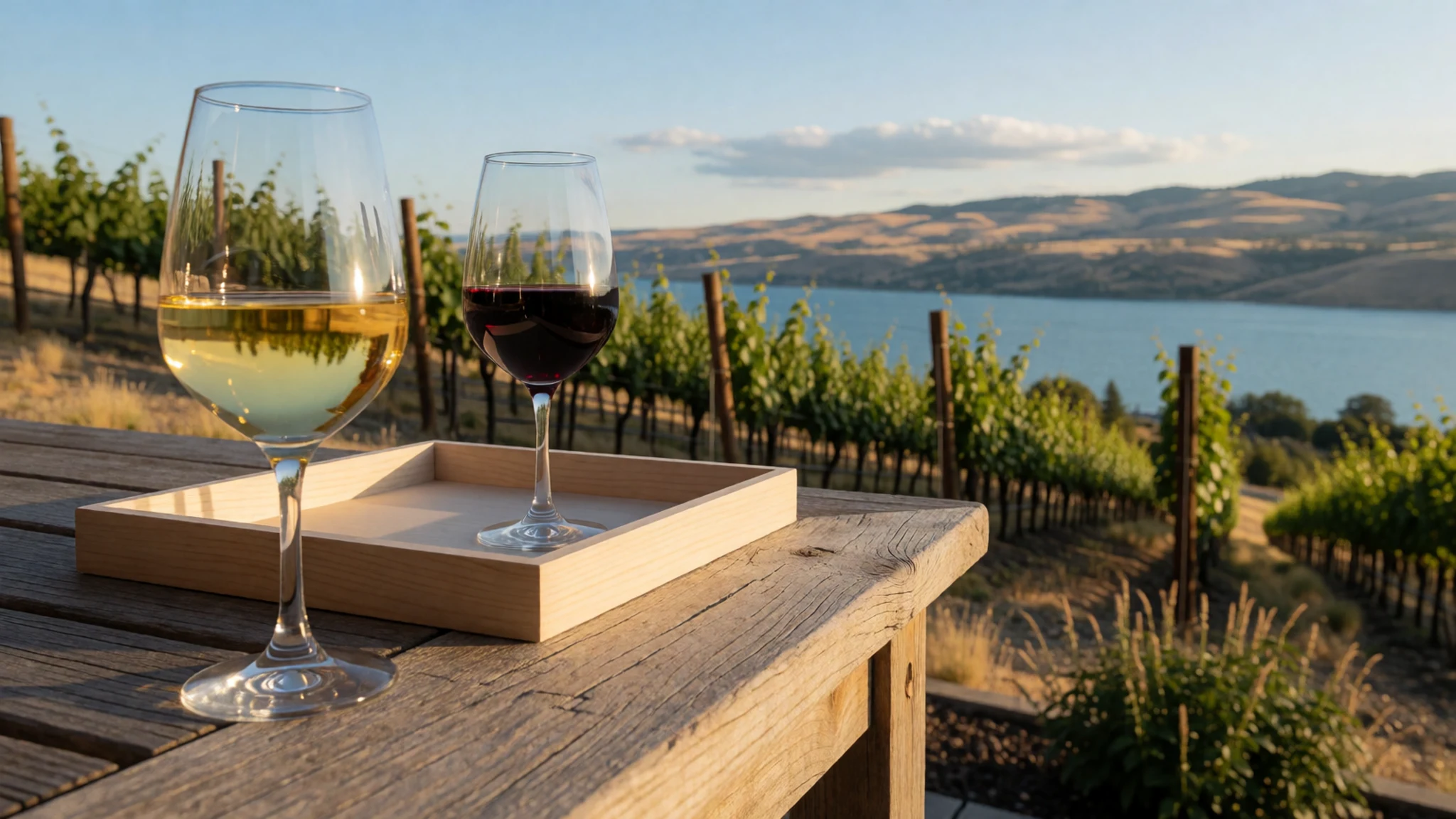
- Smoked and grilled salmon — Lakefront restaurants and delis in Kelowna and Penticton
Salmon is one of British Columbia's culinary anchors, and it turns up lakeside as fillets on the grill, smoked on a board or folded into chowder. Ask whether the fish is wild or farmed, as menus often say so. - Craft beer — Taprooms in Kelowna, Penticton and Vernon
The valley's breweries pour pale ales, lagers and fruit-flavoured sours made with local hops and produce. Taprooms are casual, often with outdoor tables and food trucks, and tasting trays make a good cool-down after a hot afternoon at the beach. - Nanaimo bar — Bakeries and cafés in lakeside towns
This no-bake Canadian slice has a crumbly coconut base, a custard layer and a hard chocolate top. It comes from Vancouver Island but sits in almost every bakery case in British Columbia. It is very sweet, so one square is plenty with a coffee. - Apple pastries and cider — Orchard shops and farm cafés around the valley
Orchard shops turn the autumn crop into pies, turnovers, fresh juice and dry or sweet cider. The best are made on the farm, so look for a small bakery counter beside the packing shed rather than a roadside sign alone.
Plan it
Best time. July and August for the warmest swimming, with June and September a calmer choice with milder days and fewer people; late August can bring wildfire smoke, so check conditions. Spring blossom and autumn harvest are good for orchards and wine, though the water is cold.
How long. 3–4
Getting there. Kelowna International Airport is the nearest main gateway, with connecting flights from larger Canadian airports. Many visitors fly into Vancouver International Airport (YVR) and then take a connecting flight to Kelowna or drive east over the mountains to the valley. Once there, a car is the practical way to follow the lakeshore roads.
Budget. mid
Tips
- Book lakeside rooms well ahead for July and August, when prices and traffic rise
- Check wildfire and air-quality updates before and during a late-summer trip
- Reserve winery tastings in advance and arrange a designated driver
- Carry water, sunscreen and a hat, as shade is scarce on the hillside trails
- Start beach days and walks early, as the middle of the day is hot
Etiquette
- Obey fire bans and posted signs; a cigarette or campfire in dry country can be dangerous
- Take litter away and keep to marked paths on slopes and private farmland
- Ask before photographing people, and learn from Syilx hosts at cultural sites
Nearby
Sources
- Wikidata Q525072 (CC0)
- Wikipedia: Okanagan Lake (CC BY-SA 4.0)
- Wikivoyage: British Columbia (CC BY-SA 4.0)
- Photo: Beach within Peachland, British Columbia (erwlas) (CC BY 2.5)
- Photo: Physical location map of British Columbia (Carport) (CC BY 3.0)
- Photo: S.S. Okanagan, HRH Duke of Connaught on board (G. H. E. Hudson) (Public domain)
- Photo: Aberdeen sternwheeler on Okanagan Lake (Public domain)
- Photo: Sunset at Maude Roxby Wetlands (Accuruss) (CC BY 3.0)
- Photo: Swimmers in Peachland (Accuruss) (CC BY 3.0)
- Photo: Okanagan Lake from near Trepanier (AndrewEnns) (CC BY 3.0)
- Photo: 2018 Mount Okanagan and Mount Eneas Forest Fires (Extemporalist) (CC0 1.0)


