Nohur
Nohur, Turkmenistan
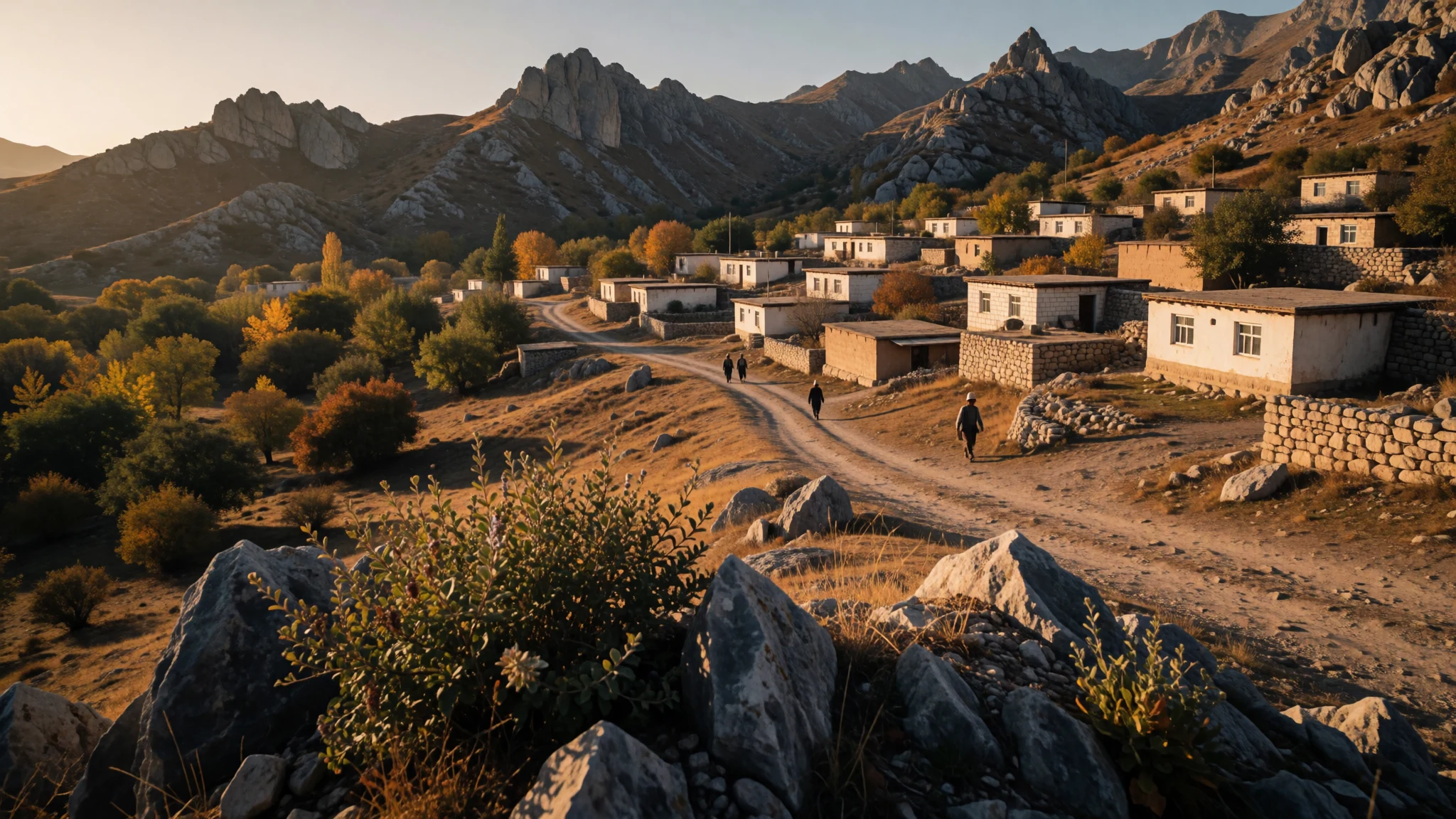
Nohur is a green foothill village in Turkmenistan where Persian legend, ram's-horn gravestones and waterfall canyons sit within an easy walk of each other.
The place
Nohur is a village in Bäherden District, Ahal Province, Turkmenistan, and the seat of its own rural council, which makes it the administrative centre for a cluster of smaller settlements around it, Kone-Gummez among them. Just over 6,000 people live here. The setting explains a great deal. Ahal Province falls into three bands from south to north, mountains, foothills and plains, and Nohur sits where the ground is folded and wooded rather than flat and sandy. Photographs from March and April show open woodland, small ponds and narrow gorges holding tiny lakes, which surprises anyone who pictures Turkmenistan as pure desert. The climate is continental: hot summers, cold winters, low humidity and thin, low-pressure air, so the landscape looks its most generous in spring. The village is best known for sacred ground tied to the Persian legend of the Peri, above all the Gyz-bibi cave shrine, and for a graveyard whose headstones carry ram's horns. Trekkers use Nohur as a base, and the Çandybil Tourist Centre stands roughly halfway between Nohur and Garawul. Getting here takes planning. Ashgabat International Airport is the main entry point to the province, and Turkmenistan's entry and travel-permit rules are strict, so check your government's travel advice and arrange paperwork well before leaving home.
Its story
Nohur's story is told mostly through legend and landscape rather than monuments. The Persian tale of the Peri, winged spirit-women in older Iranian storytelling, is attached to the Gyz-bibi cave above the village, which is dedicated to a figure called Kyz Bibi. Versions of the tale differ from teller to teller, and a local guide will give a fuller account than any printed summary. The villagers have a second origin story. Residents are reputedly descended from soldiers of Alexander the Great's army, who are said to have settled in these hills. It is tradition rather than documented history, and it is repeated with pride. Around the village, the wider province holds far older evidence of settled life. Archaeological sites such as Altyn Depe, Nisa and Ulug Depe belong to the Bronze Age, Parthian and Seljuk worlds, and show that the Kopetdag foothills were farmed, fortified and traded across for thousands of years. Nohur's own corner stayed more remote, a mountain-edge community living by herding and orchard and garden farming. Its ram's-horn gravestones, found in the cemetery just below the cave shrine, are the clearest physical trace of that herding past, a custom said to be peculiar to this place. Soviet-era rule brought the Russian spelling Nokhur, which still appears in older maps and photograph captions.
What to see
- Ram's-horn cemetery — Nohur village
The graveyard at Nohur is the village's signature sight: headstones topped or decorated with ram's horns, a custom said to be peculiar to this place. It rewards slow walking in soft morning light. Stay on the paths, keep voices low, and ask a local before photographing close up.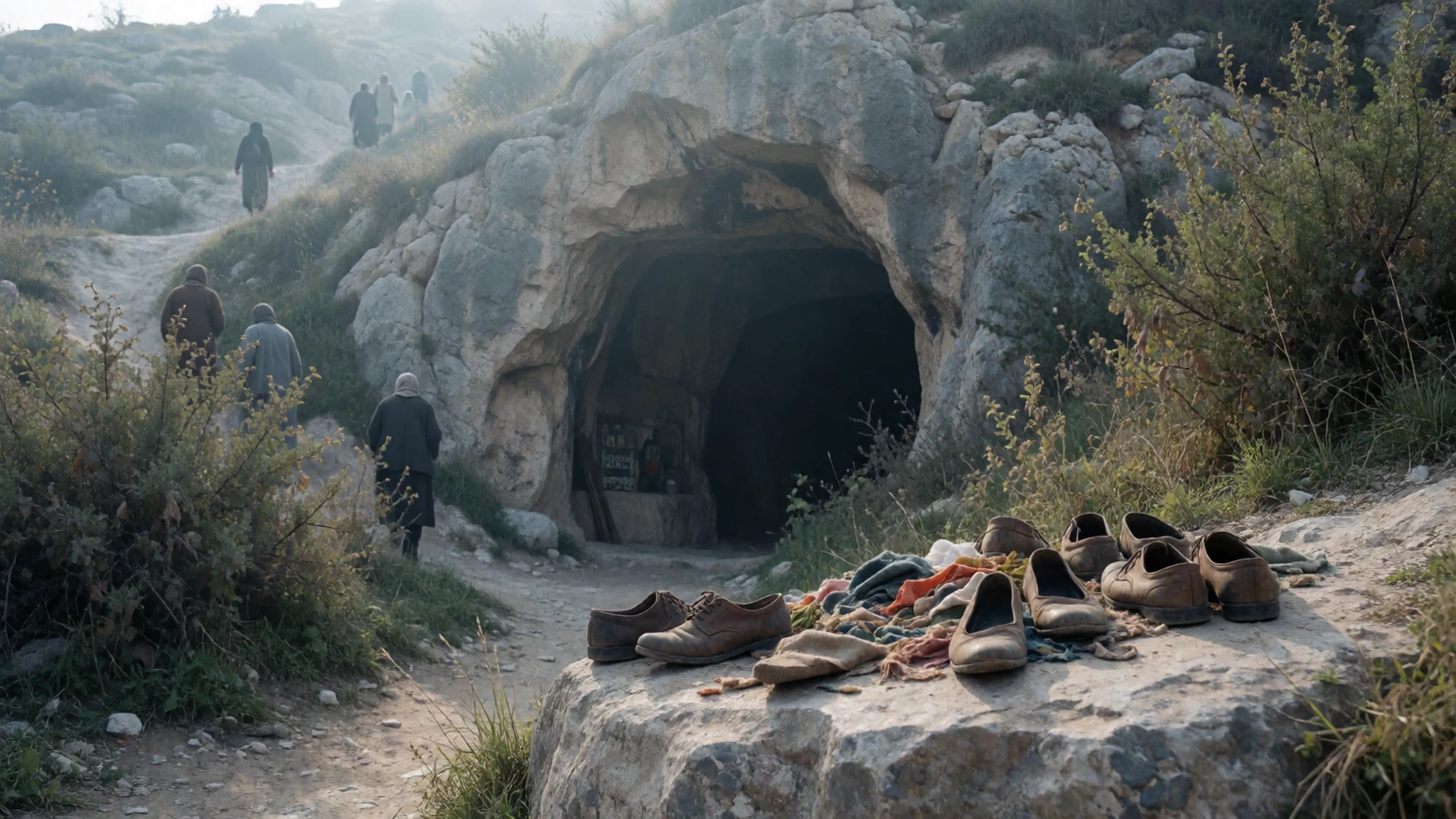
- Gyz-bibi cave shrine — Just beyond the cemetery, Nohur
A short way beyond the cemetery lies the cave shrine dedicated to Kyz Bibi, linked to the Persian legend of the Peri. It is an active place of local devotion rather than a museum, so go quietly, dress modestly and let a guide explain the stories and the proper way to approach.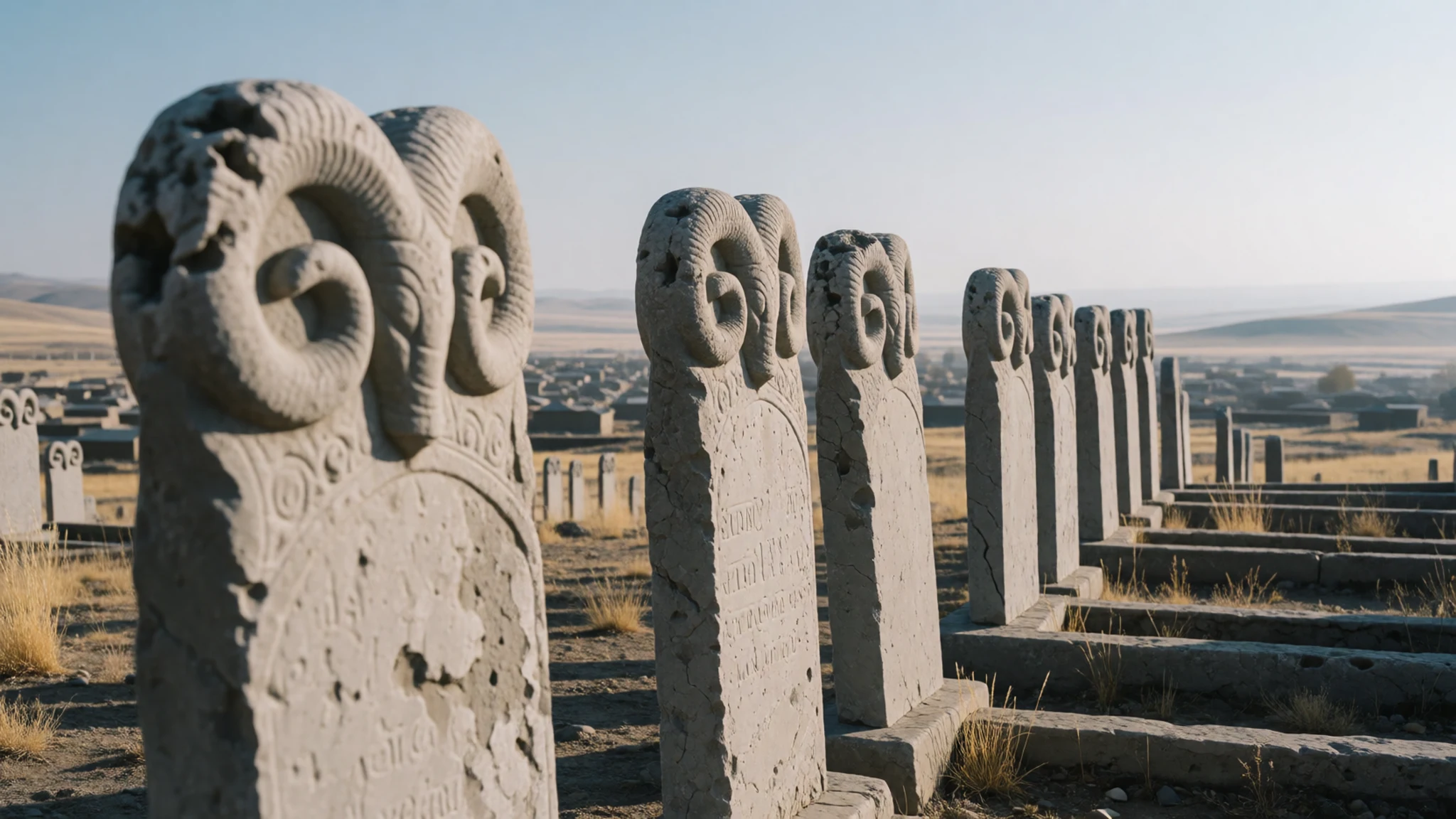
- Khur-Khuri Waterfall — Gorge near the Çandybil Tourist Centre
About 5 km (3.1 mi) from the Çandybil Tourist Centre, this waterfall drops into a tree-filled gorge. Spring is the time to come, when meltwater and rain keep the flow strong and the woodland is fresh. Paths can be wet and rocky, so sturdy footwear matters more than a camera.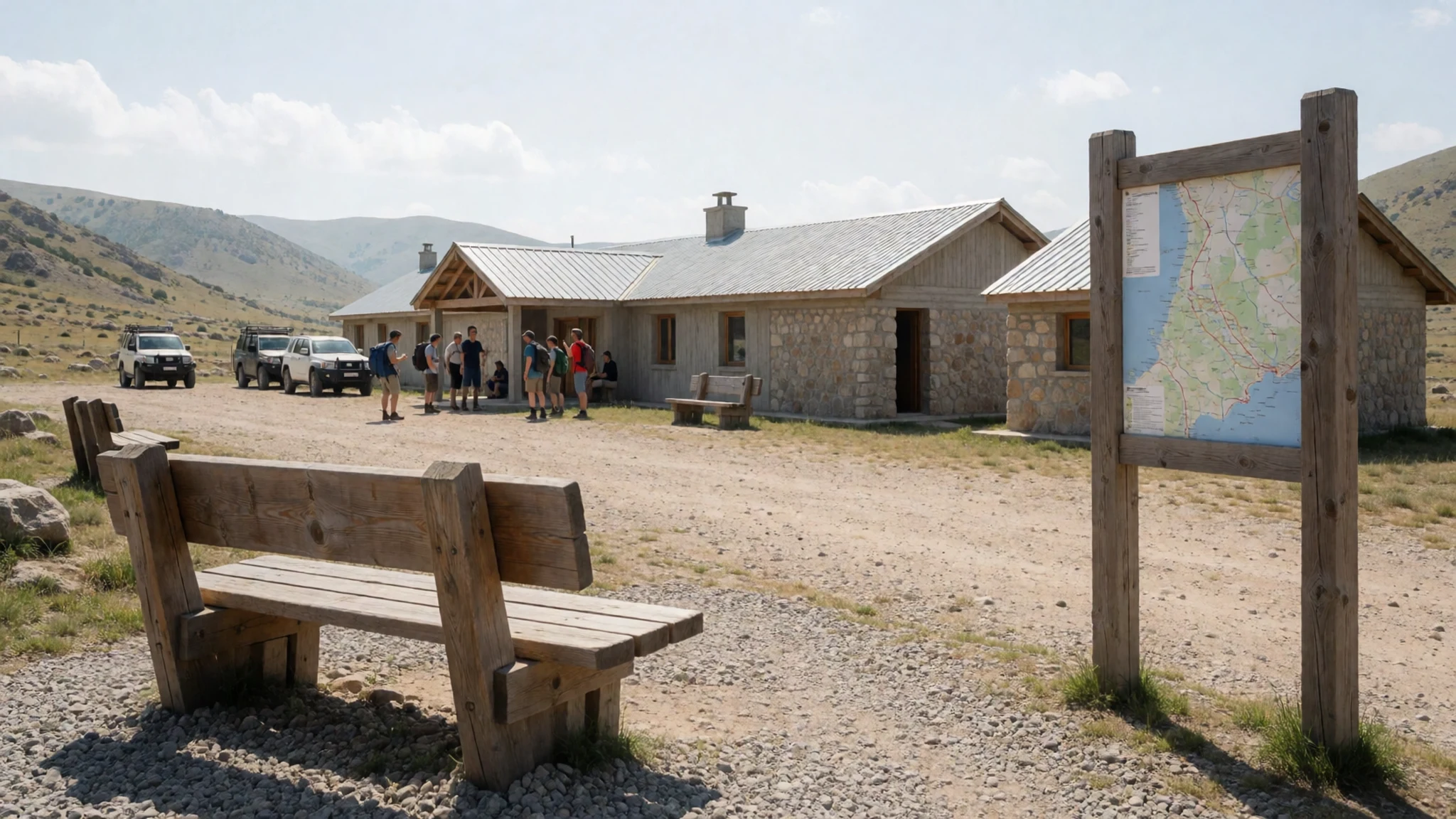
- Ai Dere Canyon — Canyon east of the Çandybil Tourist Centre
Some 7 km (4.3 mi) from the Çandybil Tourist Centre, Ai Dere Canyon is a popular walk with a string of small waterfalls and plunge pools. The stream along its floor is a tributary of the Sumbar River. Expect to cross water and scramble a little; allow a relaxed half day.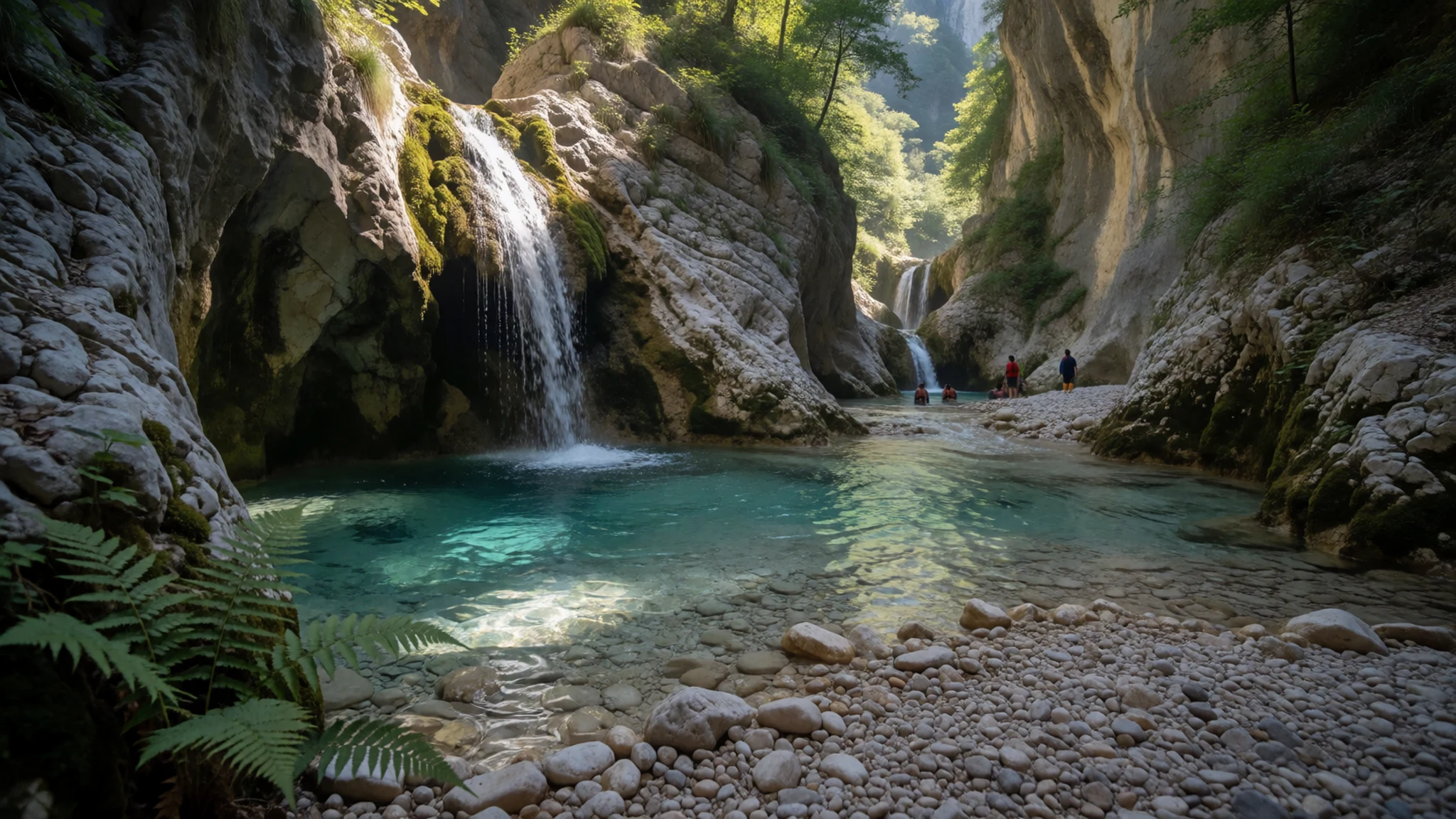
- Kone-Gummez and the open woodland — Kone-Gummez village, Nohur area
The neighbouring village of Kone-Gummez looks out over open woodland and rolling hills, and its Central Mosque is a plain, working building at the heart of village life. It is a good place for a viewpoint walk and a glimpse of everyday rural Turkmenistan, with permission and a guide.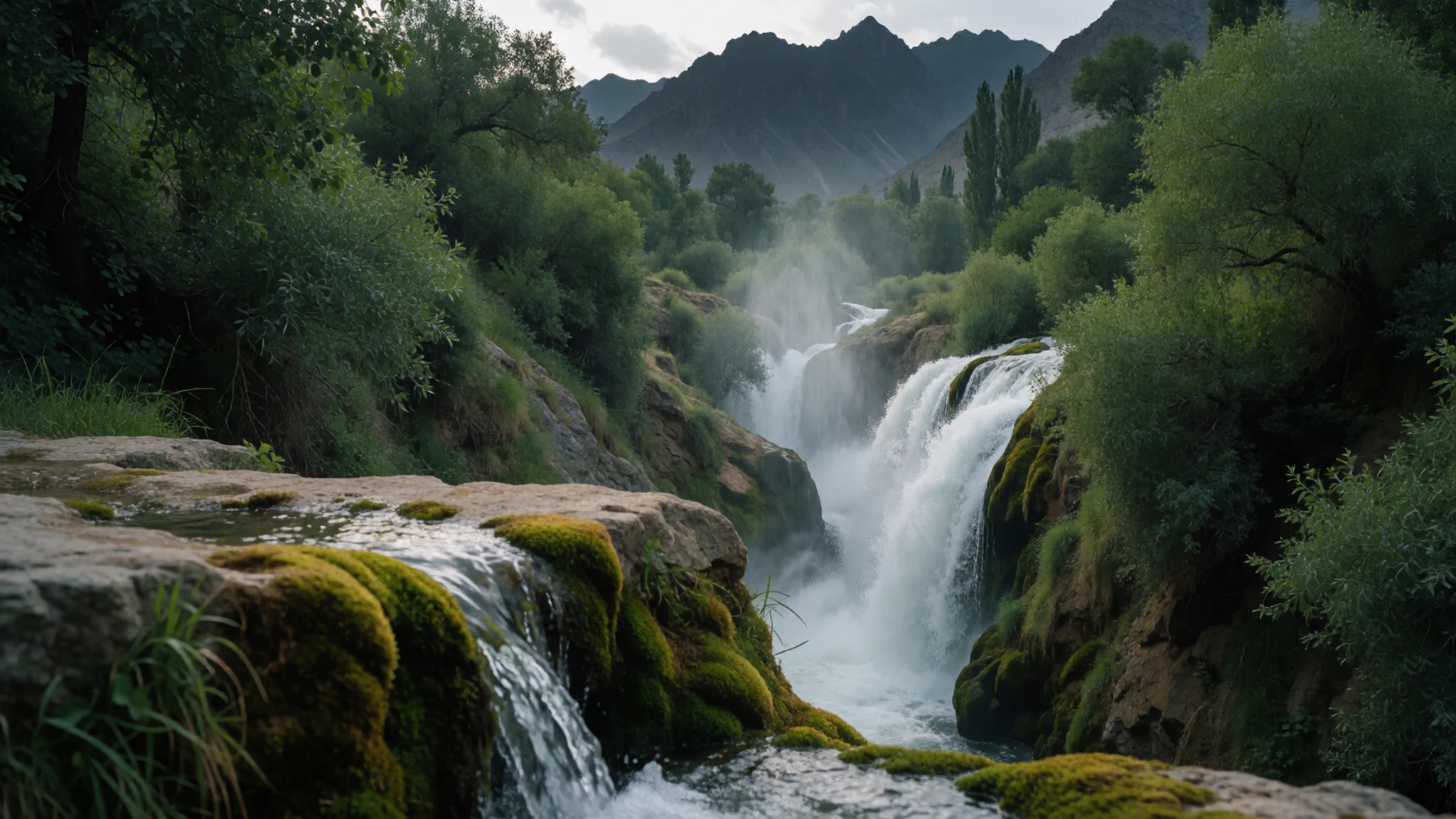
Culture
Nohur is a Muslim village in a country where hospitality towards guests is a matter of pride, and daily life turns on family, the mosque and the farming year. The Central Mosque in neighbouring Kone-Gummez is a modest, working building, not a monument. The sacred side of the area is older and more mixed than a single faith. The Gyz-bibi cave is tied to the Persian legend of the Peri, and the ram's-horn headstones in the cemetery belong to a local custom whose meaning residents explain in different ways, so it is best heard from them rather than assumed. Villagers also say they descend from Alexander the Great's soldiers, a claim offered as tradition, not proven history. Tea and bread are offered readily to visitors, and turning them down flatly can sting, so accept at least a sip and a bite. Conversations tend to begin with family and health before anything else, and patience is repaid. Turkmenistan also restricts photography of officials, uniformed staff and some infrastructure, so ask before pointing a camera at anything official. At the cemetery and the cave shrine, dress modestly, keep your voice low, and ask your guide before photographing graves, worshippers or anyone at prayer.
What to wear
Traditional Turkmen dress is still the reference point in Nohur, especially for weddings and holidays. Women wear long, straight dresses in bright silk or cotton, often embroidered at the yoke and cuffs, with a headscarf or a tall embroidered cap beneath it. Men's festive dress includes a long striped robe and the big shaggy sheepskin hat known as the telpek. Carpets are the country's best-known textile, with Tekke and Sarik designs among the named styles, and their reds echo through the clothing. Day to day, villagers dress practically: long sleeves and loose trousers or modest dresses, cardigans and padded jackets in the cold months, headscarves for many women, and sturdy shoes for farm and hill tracks. Younger people in towns mix in jeans and trainers. A visitor should dress for the mountains and for conservative company. Pack lightweight long trousers or a long skirt, tops covering shoulders and upper arms, and a scarf for women to cover hair at the mosque or shrine. Footwear should be proper walking shoes or boots with grip, since waterfall trails are wet and rocky. Add a warm layer for cool mornings and spring evenings, a sun hat for the exposed hillsides, and a light waterproof for spring showers.
What to eat
- Plov (palaw) — Village family homes and festive gatherings
Rice cooked with lamb or beef, carrots and onion in one big pot, the dish served to guests and at celebrations. Expect it at family tables and wedding feasts; ask your guide to arrange a meal in a village home.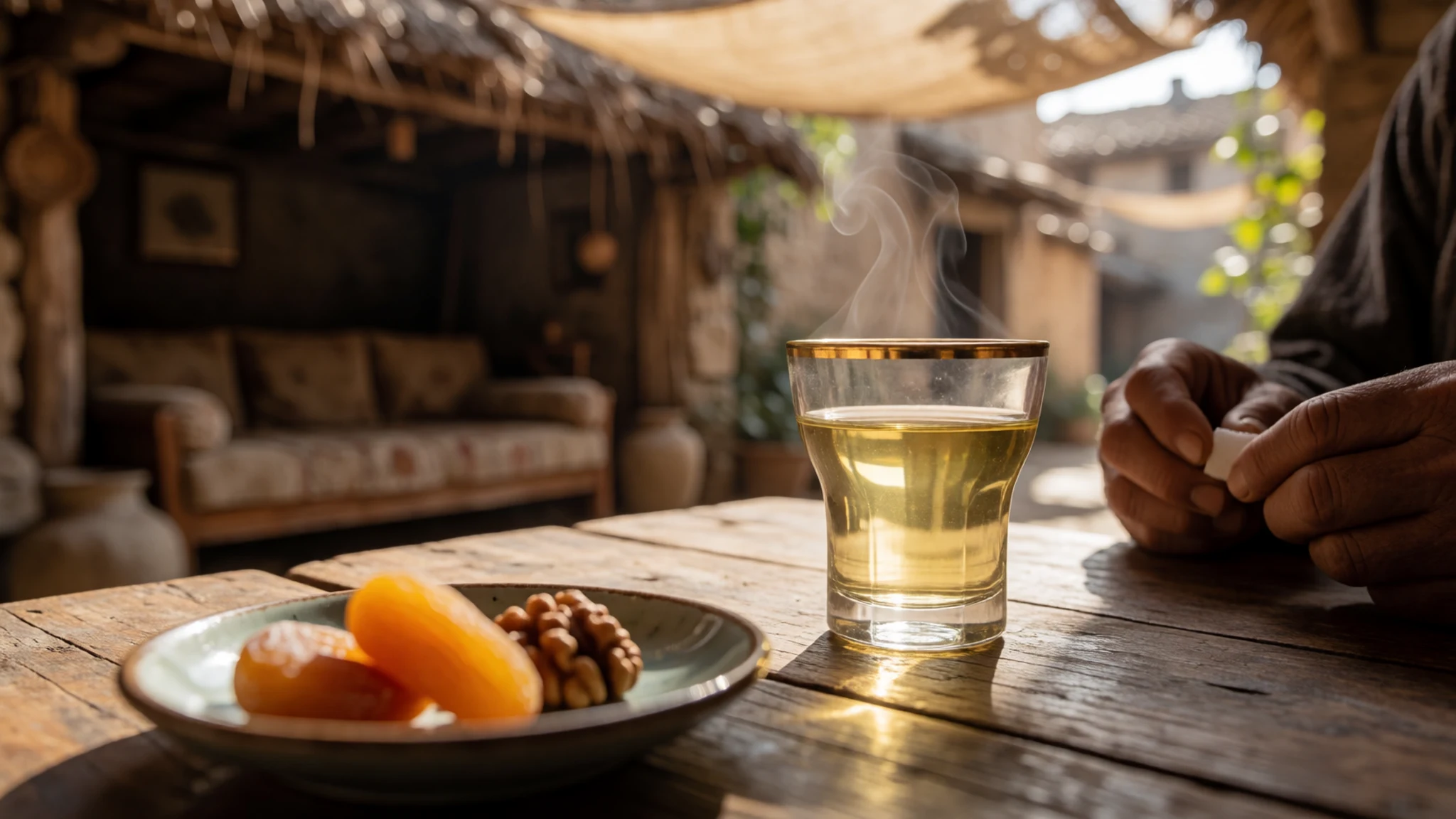
- Fresh tandoor bread (çörek) — Village bakeries and home clay ovens
Round, flat loaves baked against the wall of a clay oven and eaten still warm. It accompanies every meal and is often the first thing offered to a visitor, torn by hand and shared around the table.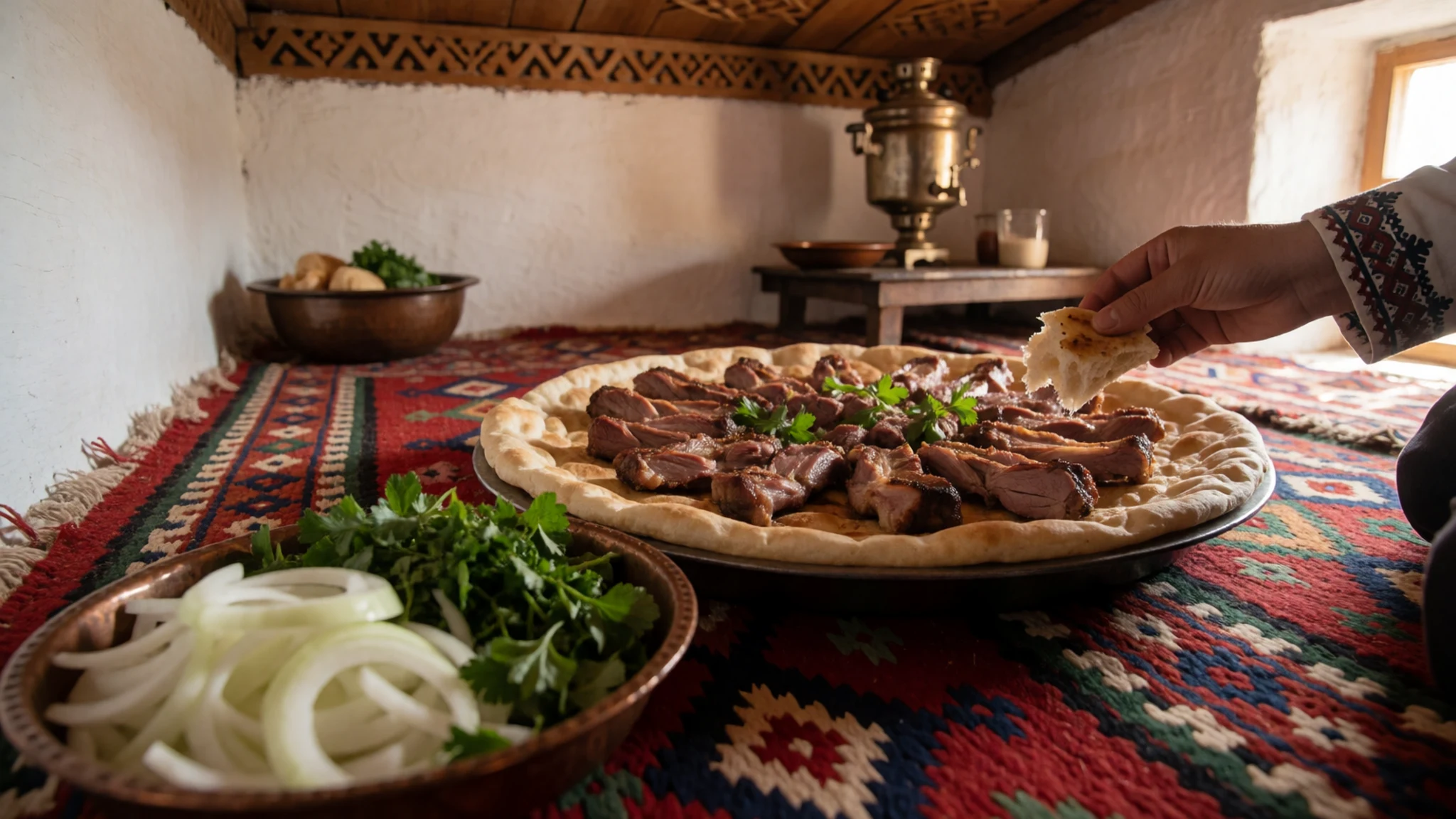
- Gutap — Roadside food stalls and home kitchens
A thin flatbread folded around a filling of minced meat, pumpkin, spinach or herbs, then fried or griddled. It is an everyday snack across Turkmenistan and works well as a packed lunch for a walk to the waterfalls. - Chorba — Family homes and simple village eateries
A hearty meat and vegetable soup, usually made with lamb, potato, carrot and herbs. It suits the cool evenings and cold months in the foothills and is the kind of meal a host serves after a long day outdoors. - Ichlekli — Village homes and bakeries in the Nohur area
A large, round pie filled with minced meat and onion, baked until the pastry is golden. Cut into wedges, it is a staple at gatherings, and often shared with tea after a hike. - Green tea (gök çaý) — Any village home, tea stall or roadside eatery
Poured in small bowls and offered at the start and end of nearly every visit. It is drunk hot and unsweetened or with sugar on the side, and accepting a cup is the easiest way to show respect to a host.
Plan it
Best time. April–May, when the foothills are green, the streams and waterfalls are running and days are mild; September–October is a second good window for walking. Summers are hot and dry, and winters are cold, with low humidity throughout.
How long. 2–3
Getting there. Fly to Ashgabat International Airport (ASB), the main entry point for Ahal Province, then continue by road to Nohur with a driver or guide; allow most of a day for the last leg, and arrange entry paperwork and permits well in advance.
Budget. mid
Tips
- Arrange entry paperwork, permits and a local guide before you travel, as independent travel is tightly controlled
- Start walks early to avoid heat and to have the trails and waterfalls to yourself
- Carry cash in small notes and your own water, as cards and shops are scarce in the village
- Wear grippy shoes for the wet, rocky canyon trails
- Check the official government travel advice for Turkmenistan before booking
Etiquette
- Dress modestly and cover shoulders and knees, especially at the mosque and the cave shrine
- Ask before photographing people, graves, officials or official buildings
- Accept tea or bread when offered, and remove shoes when entering a home
Nearby
Sources
- Wikidata Q7047857 (CC0)
- Wikipedia: Nohur (rev 1376935504) (CC BY-SA 4.0)
- Wikivoyage: Ahal Province (rev 5047409) (CC BY-SA 4.0)
- Photo: Nokhur village (2), Hans Birger Nilsen (CC BY-SA 2.0)
- Photo: Rams-horn headstone, Nohur cemetery, Allan Mustard (CC BY-SA 4.0)
- Photo: A view from Kone-Gummez village over Hohur-Garawul area, Djemshid Khadjiyev (CC BY 3.0)
- Photo: A small pond in Nohur area, Djemshid Khadjiyev (CC BY 3.0)
- Photo: A tiny lake in gorge, Djemshid (CC BY 3.0)
- Photo: A typical open woodland in Nohur area, Djemshid Khadjiyev (CC BY 3.0)
- Photo: Central Mosque in Kone-Gummez village, Djemshid Khadjiyev (CC BY 3.0)
- Photo: Nokhur Cemetery (1), Hans Birger Nilsen (CC BY-SA 2.0)


