Kow-Ata
Kow-Ata, Turkmenistan
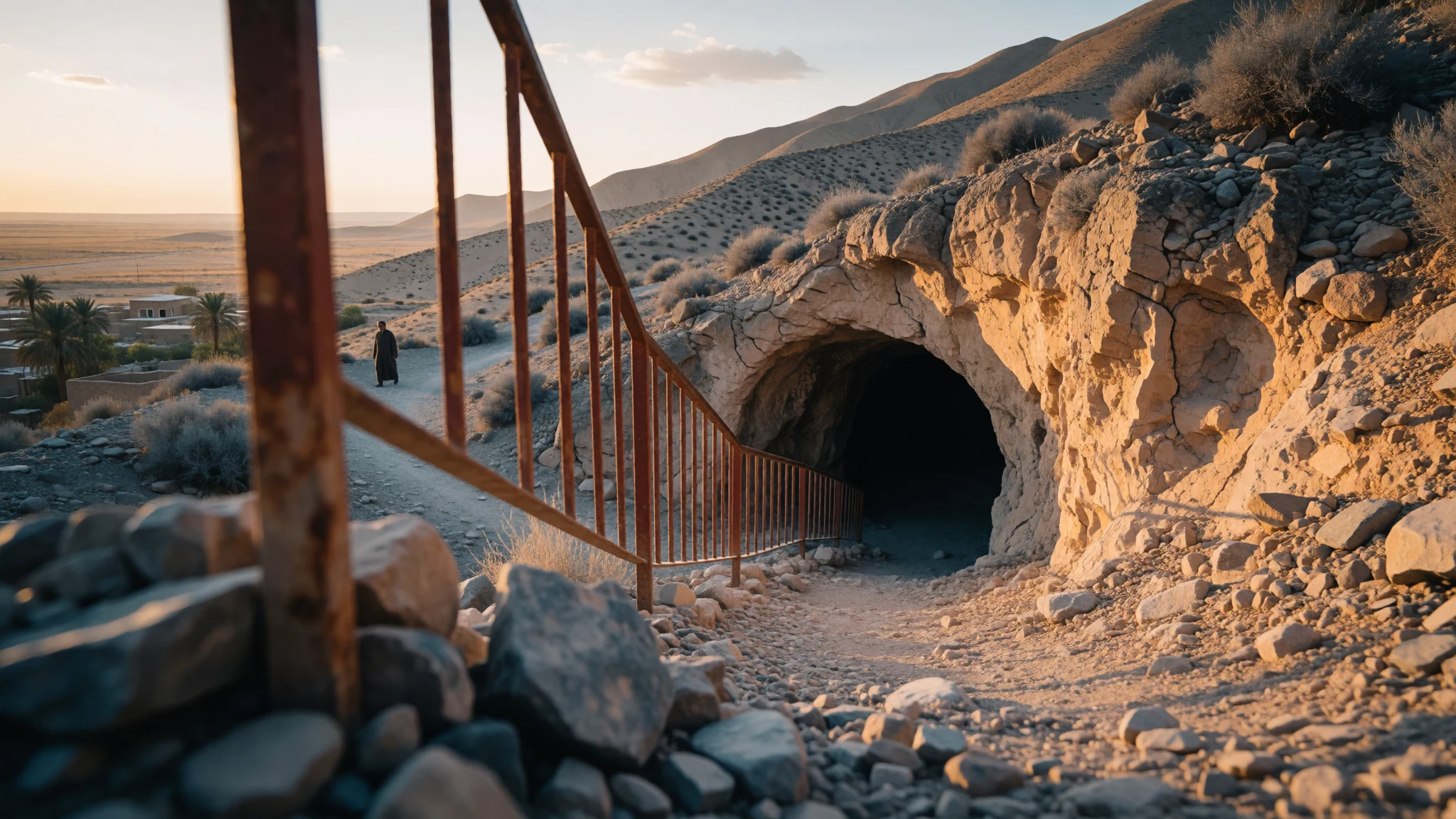
Kow-Ata is a swimmable lake hidden in a cave beneath the Kopet Dag, where sulfurous water, a long staircase and desert heat make a memorable contrast.
The place
Kow-Ata (Köw Ata) is a cave lake in the foothills of the Kopet Dag, close to the town of Bäherden in southern Turkmenistan. Outside, the land is dry and stony, with desert plain spreading north from the mountains. Inside, a pool of dark mineral water lies in a chamber that daylight never reaches. The cave is about 250 m long and has five openings, and its width changes a good deal from one section to the next. The water surface lies roughly 55 m below the third entrance, so reaching it means a long descent by stairway. The lake itself is narrow and elongated. Its average depth is about 10 m and its deepest point about 15 m, which is ample for swimming but not something to treat casually. The water smells strongly of sulfur, and where it drains out of the cave it feeds a sulfur-rich spring. The stairs and the cave are lit by electric lamps, with changing cubicles and a viewing platform built in along the route. Swimming is allowed, which sets Kow-Ata apart from many cave lakes, and the place works as a weekend spa for families from Ashgabat. Balneotherapy, the medical use of mineral water, is practised here, and plenty of people come for that rather than for the scenery. Bäherden is a modest town on the road and rail line from the capital, so the lake is realistically a day trip rather than a base.
Its story
Kow-Ata entered the written record in 1856, when archaeologists first documented the cave. For a long time it seems to have been a local curiosity, until in 1896 the regional press covered it. That report noted that officials at the Bäherden railway station had arranged a wooden staircase so that people could reach the water safely, and the coverage did its work: visitors from Ashgabat began arriving in numbers. The pattern of a short journey from the capital to a cool, strange pool in the hills was therefore set well over a century ago, and it has hardly changed. The next big shift came in the 1960s, when a road was built to the cave, electricity was brought in, and places to stay went up in the surrounding area. The cave moved from an adventure for the curious to an organised outing. Today a long illuminated staircase leads down, and swimmers use cubicles and a platform provided partway along. The sulfurous water, which points to a source that has passed through mineral-rich rock, has long been associated with healing, and balneotherapy continues. The sources available for this reading say little about older legend, so the story here is mostly one of documentation, publicity and infrastructure. It is a reminder that many popular natural sites owe their fame as much to a railway station official and a newspaper article as to the rock itself.
What to see
- The cave staircase — Cave approach, near Bäherden
The long, winding staircase is how Kow-Ata is entered, and it is part of the experience. Lamps light the route down through the rock, and the air cools steadily as daylight fades behind. The descent is easy and the climb back is tiring, so most people pace themselves and pause on the landings.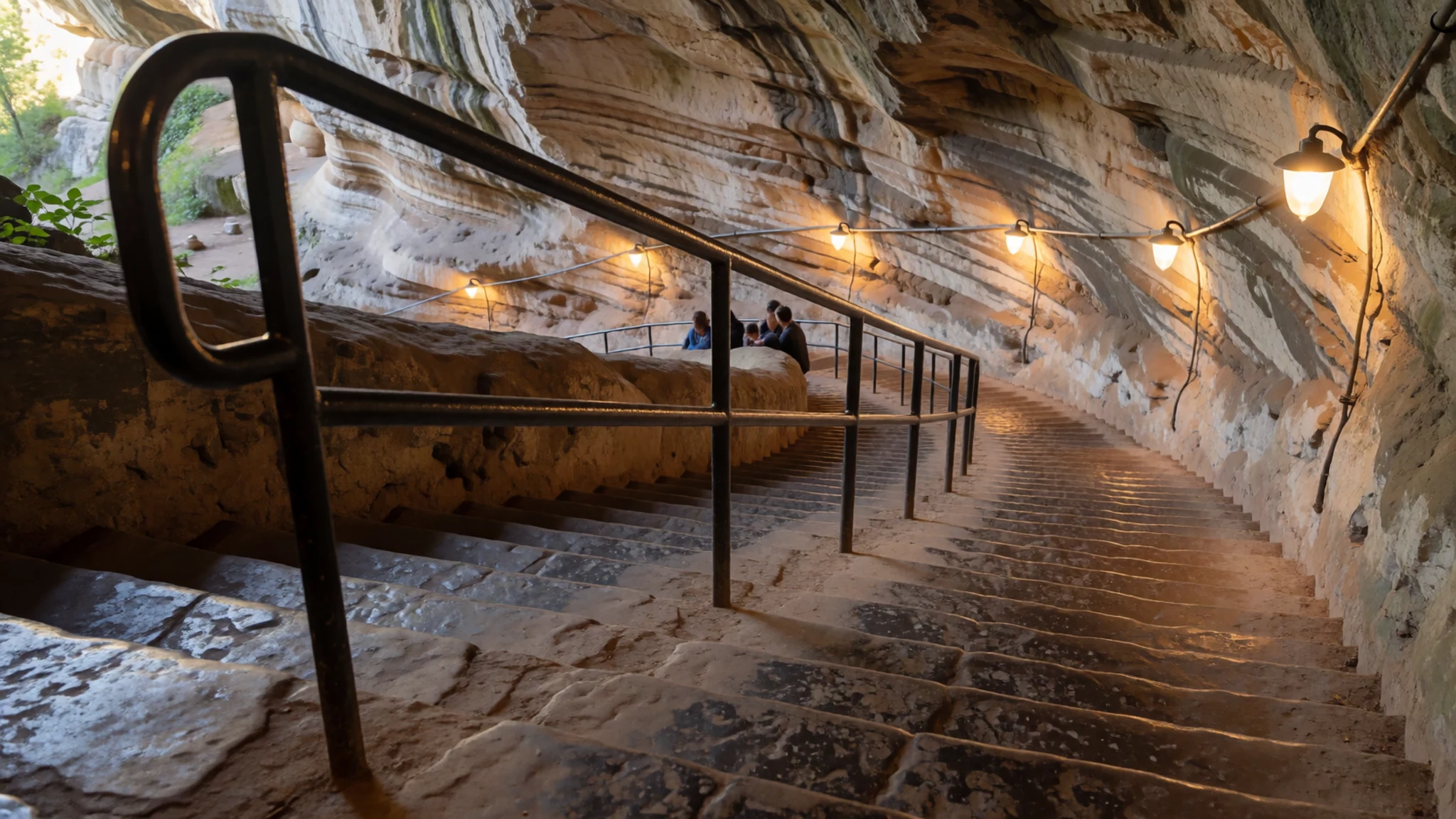
- The cave chambers — Inside the cave
The cave is about 250 m long, with five openings. Some daylight comes in near the entrances, but none reaches the lake. Width varies from narrow passages to broad halls, and the walls are damp and uneven. Take care on wet steps and look up at the openings to see how water has shaped the rock.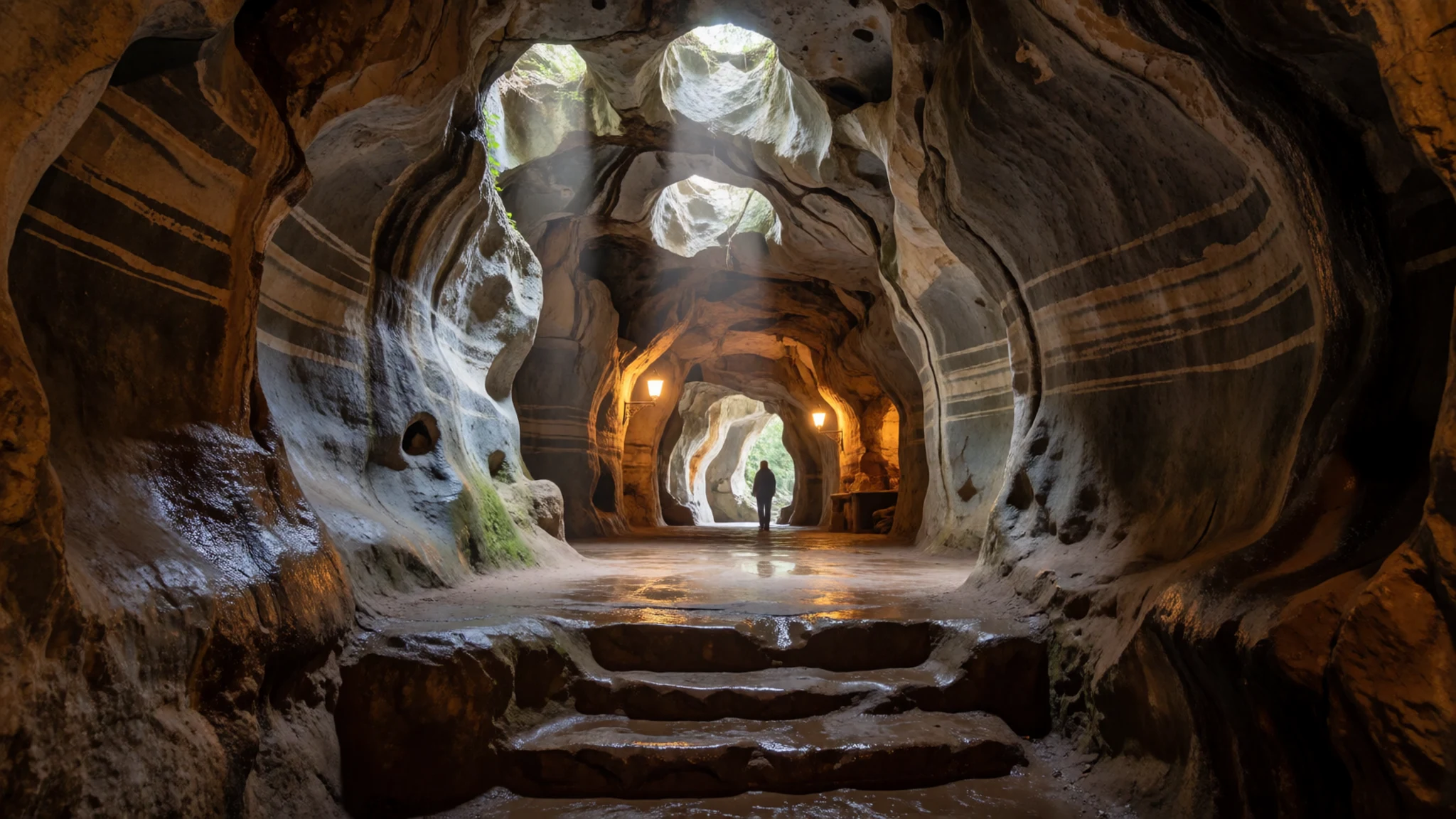
- The underground lake — Floor of the cave
The pool is long and narrow, with its surface well below the entrances, and the water looks dark and still under the lamps. Swimming is permitted, and families come for exactly that. Only a tape marks how far to go, so stay within it and keep children close; the deepest part is about 15 m.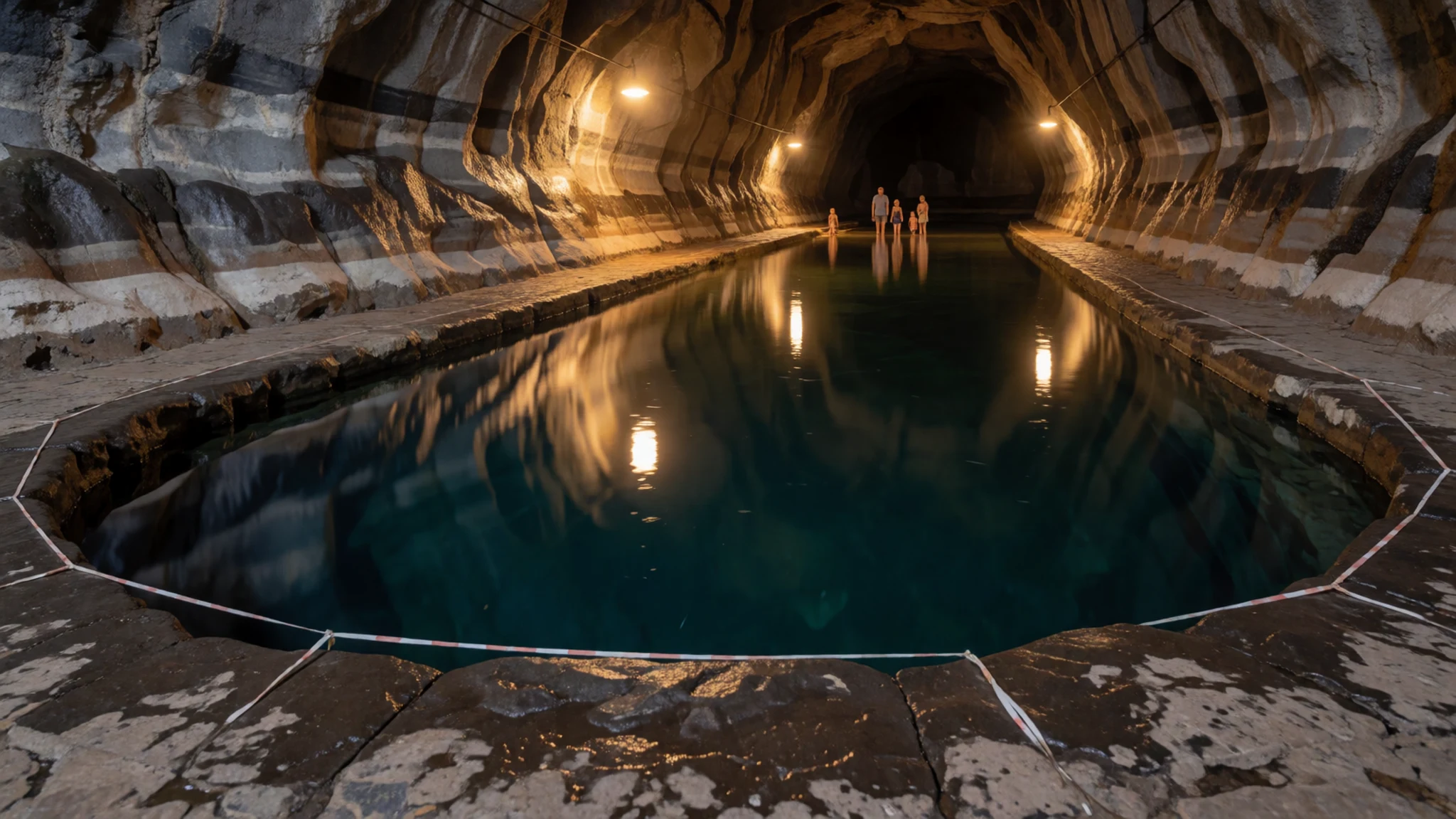
- Changing cubicles and viewing platform — Lower end of the stairway
Changing cubicles and an observation platform sit near the lower end of the stair route, before the water. The platform is a good place to look over the lake without getting wet, and to watch how local families manage the swim. Bring a towel and a dry bag for belongings.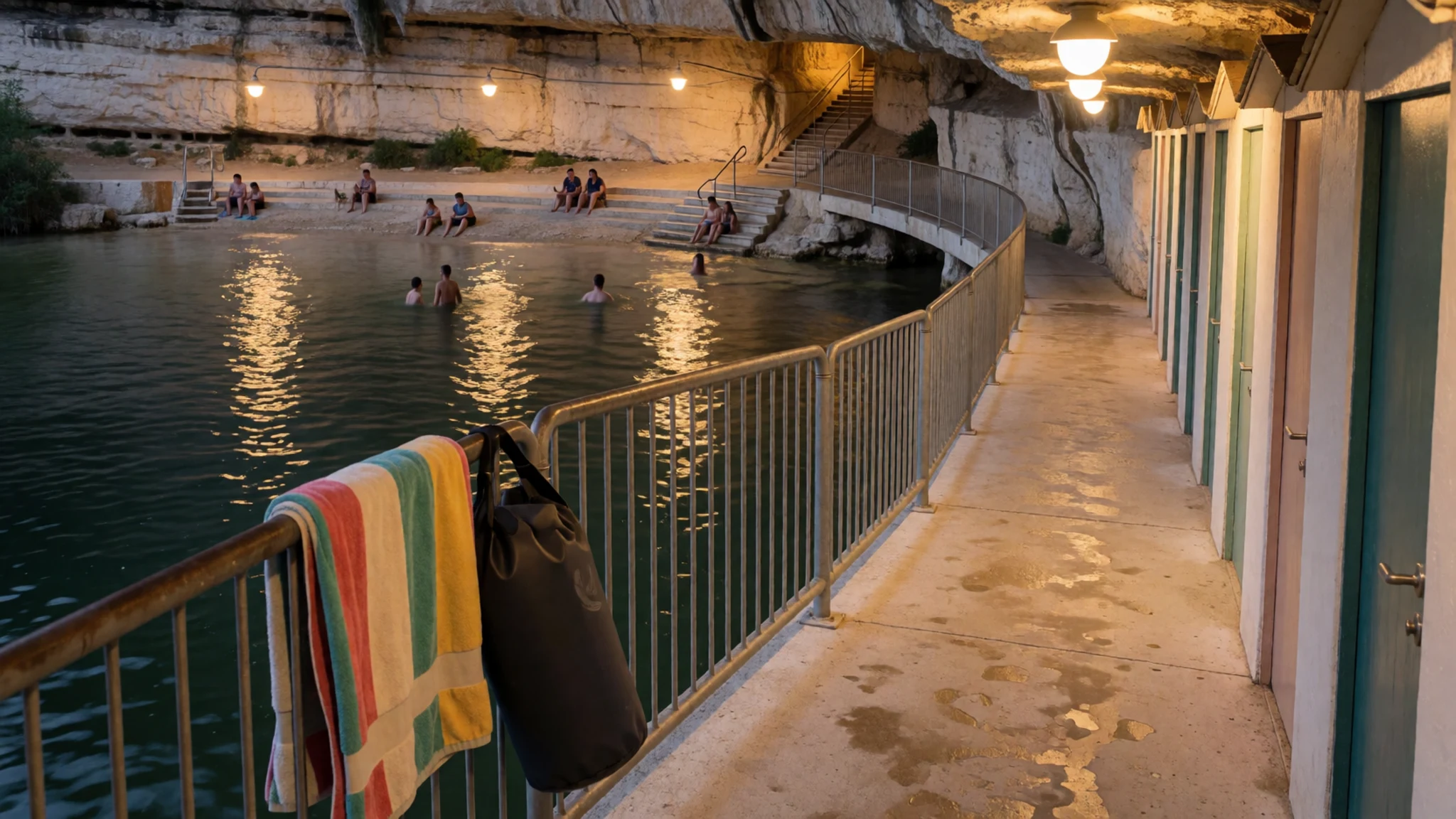
- The sulfur spring — Cave outflow
Water leaving Kow-Ata runs out into a sulfur-rich spring, and the smell is hard to miss. Many people treat the mineral water as a remedy, and balneotherapy is practised here. Visitors not used to the smell should expect it to linger on clothes and hair, so pack a spare set.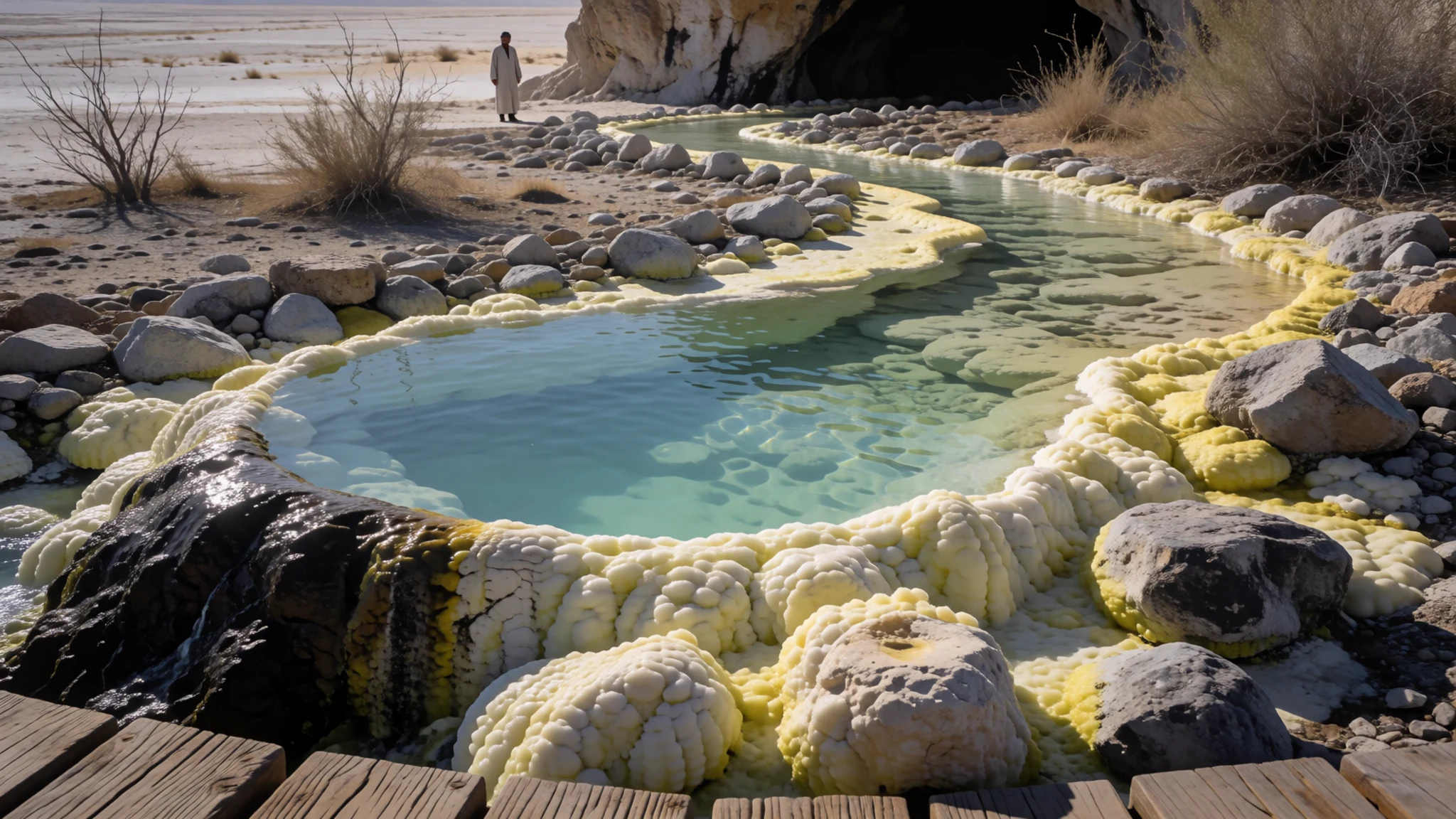
- Bäherden and the Kopet Dag foothills — Bäherden
Outside the cave, the foothills of the Kopet Dag rise behind Bäherden, and the contrast with the cool interior is sharp. A short walk around the entrance gives views over the dry plain, and the town has bazaar stalls and tea houses for a meal before heading back towards Ashgabat.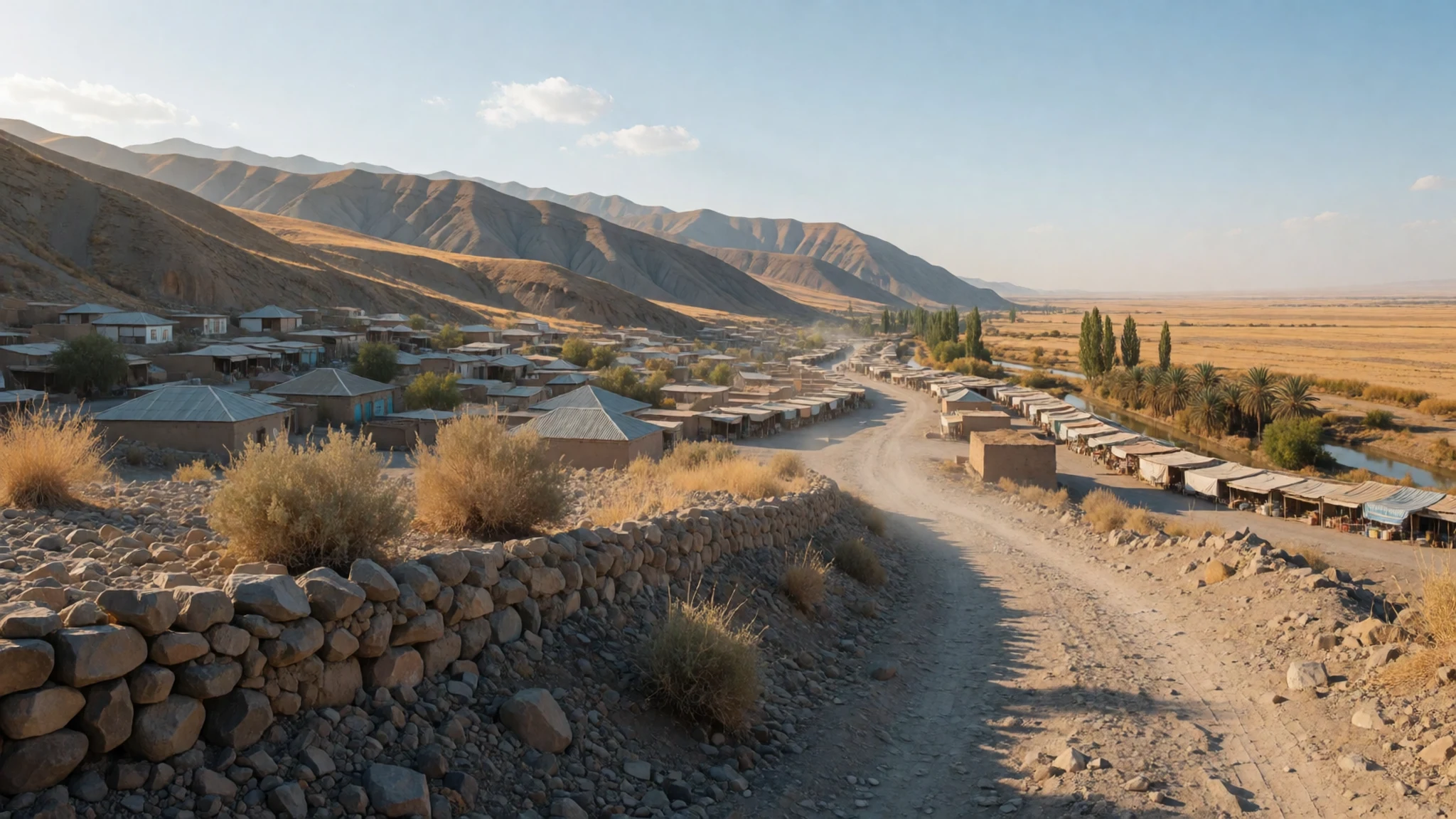
Culture
Kow-Ata is a place where leisure and healing overlap, and Turkmen habits shape how it is used. Weekend visits from Ashgabat tend to be family affairs: groups arrive together, swim in turns, and often finish with a shared meal and tea. Turkmenistan is a Muslim-majority country with a strong tradition of hospitality, so a greeting and a few words in Turkmen or Russian go a long way, and an offer of tea is usually meant warmly. Faith in mineral water as medicine is long-standing, and the sulfur spring is treated seriously rather than as a novelty. Balneotherapy is still practised, so some of the people at the lake are there on advice rather than for fun, and a quieter manner is appreciated around them. The site is also tied to the story of Ashgabat's day trippers, who have been coming since the railway era, and many families have their own habits about when to visit and what to bring. Visitors will notice that dress is modest away from the water, and that people generally change in the cubicles instead of at the water's edge. The cave is a shared space with narrow stairs and a lot of foot traffic, so patience on the steps is part of good manners. Ask before photographing swimmers or families, and keep inside the tape line that marks the edge of the swimming area.
What to wear
Kow-Ata sits in Turkmenistan, where traditional dress is distinctive and still worn on festive occasions. Women's long, straight dresses are cut from silk or cotton in deep reds and other rich colours, with embroidery at the collar and cuffs, and are worn with silver jewellery and elaborate headdresses. Men's formal dress includes a striped silk robe known as a chyrpy and the tall, shaggy sheepskin hat called a telpek. Handwoven wool carpets and ikat silks are the best-known textiles. Today, traditional dress appears mostly at weddings, national holidays and folk performances, though many women wear long, bright dresses in daily life while younger people favour shirts, jeans and trainers. At the lake itself, families wear swimwear and light cover-ups, and the cubicles are used for changing. A visitor should pack for a hot desert plain outside and a cooler, damp cave inside: a light, long-sleeved shirt and long trousers or skirt for the town and the walk, swimwear and a quick-dry towel for the water, a sun hat, and a thin layer for the cave. Footwear matters more than anything: wear sandals or shoes with good grip, since the stairs and the platform are wet, and bring water shoes if the floor looks slippery. Cover shoulders and knees away from the water, as local norms are modest.
What to eat
- Plov (palaw) — Tea houses and bazaar eateries in Bäherden and Ashgabat
Rice cooked with lamb, carrot and onion in a heavy pot, plov is the dish served at celebrations and everyday family meals alike. It is rich and filling, and usually eaten with tea. Look for it at tea houses and at eateries beside the bazaar.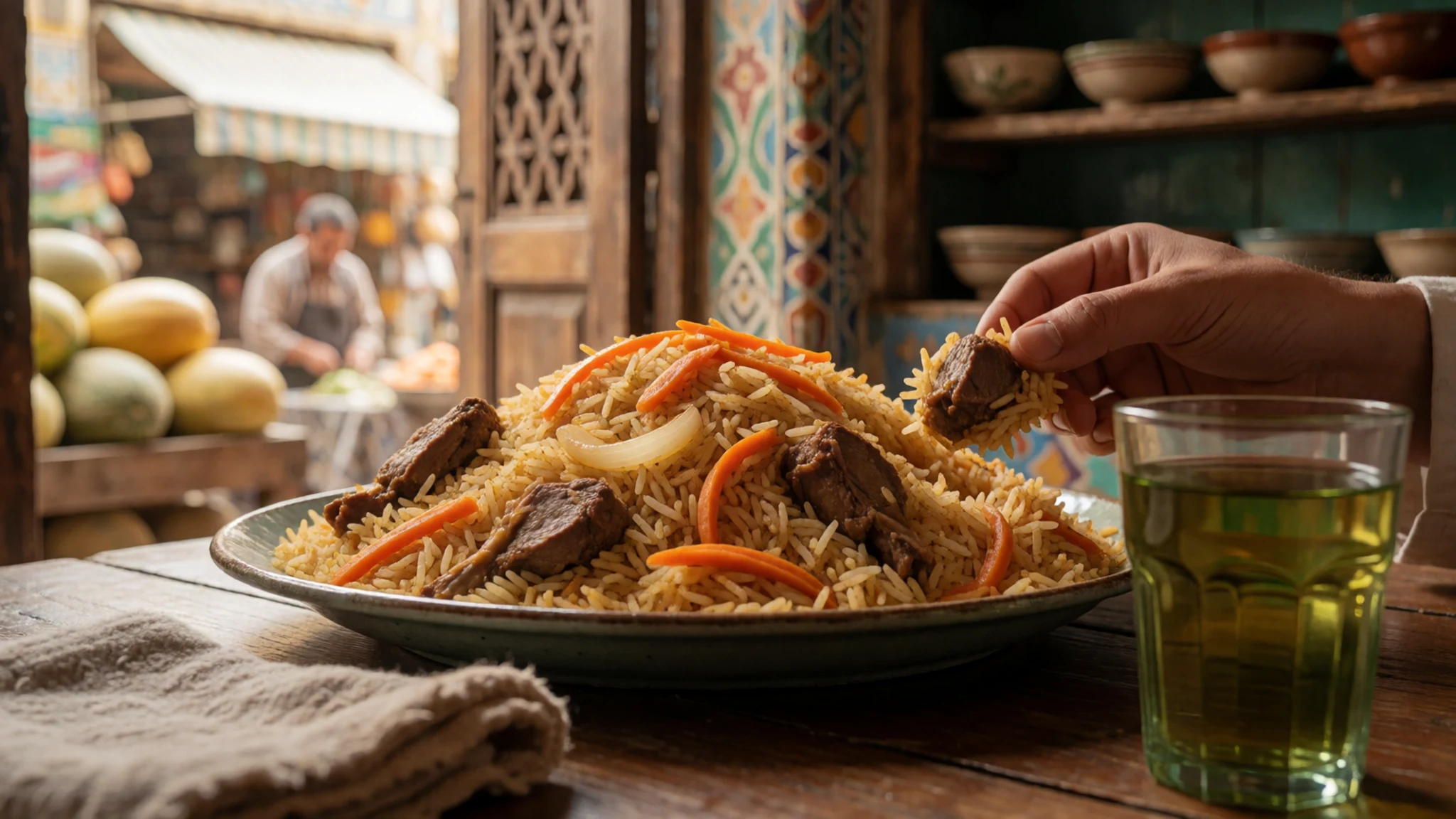
- Chorba — Roadside eateries between Ashgabat and Bäherden
A thick lamb and vegetable soup, chorba is simple, warming and often served with fresh bread. It suits a cooler day after the climb back up from the cave, and it is a common order at roadside stops.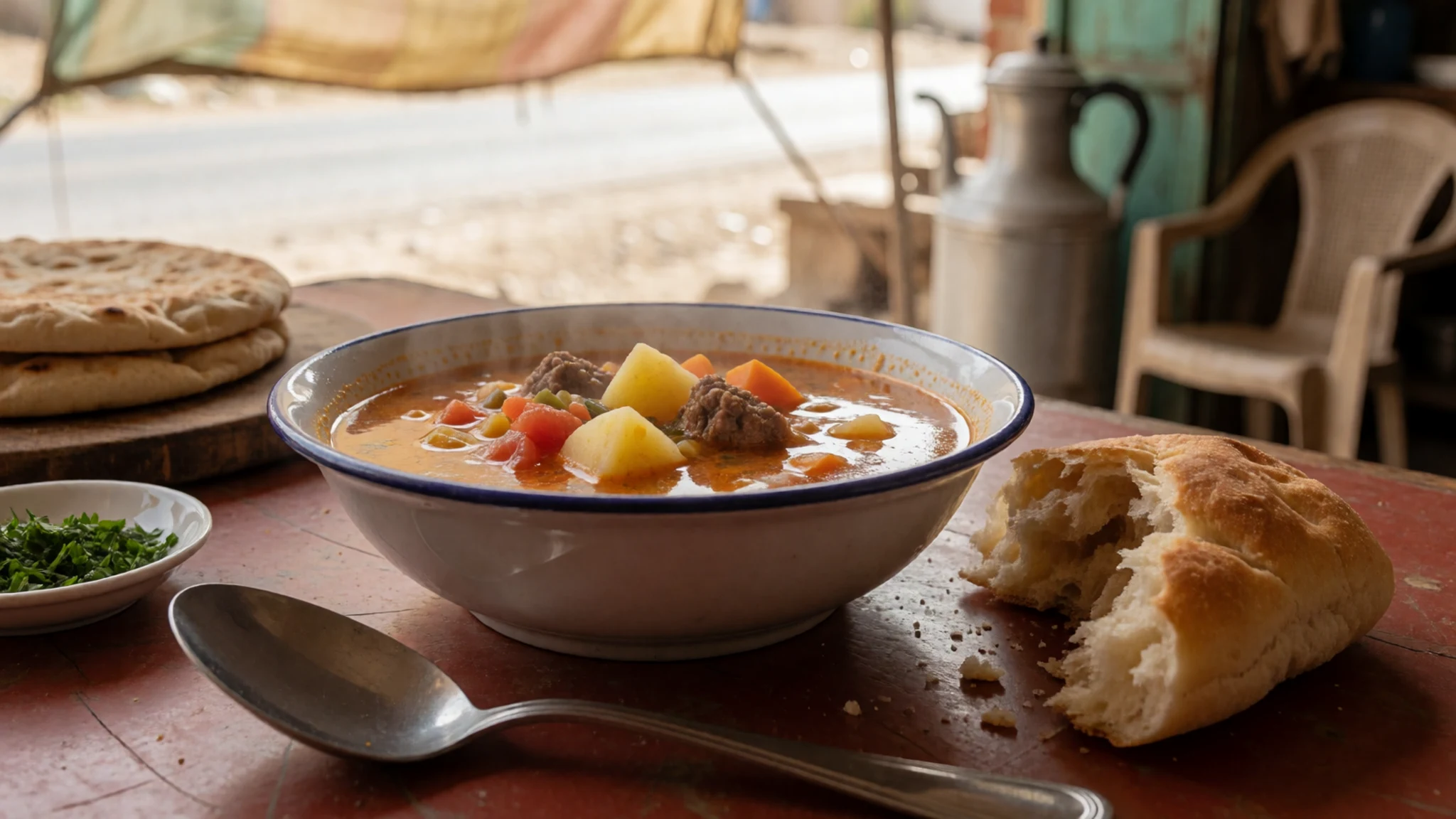
- Ichlekli — Bakery stalls and bazaar counters in Bäherden
A large, flat, stuffed pie, usually filled with minced meat and onion and baked until the crust is crisp. It is easy to share and travels well, so it makes a practical picnic food for a day at the lake. - Gutap — Bazaar stalls and small snack counters in town
Thin folded pastries filled with spinach, herbs, pumpkin or minced meat, then fried or baked on a griddle. They are light enough to eat before swimming and are often sold hot, wrapped in paper, for a quick snack. - Shashlik — Roadside grills on the way to the cave
Cubes of lamb grilled over charcoal, served with onions and flatbread. It is a standard road-trip meal in the region, easy to find near busy sites, and best eaten hot from the grill.
Plan it
Best time. March–April and October–November, when the desert plain is mild enough for the walk to and from the cave; summers on the plain are very hot, so go early if visiting then, and winters can be cold in the foothills.
How long. 1
Getting there. Fly to Ashgabat, then continue by road or rail towards Bäherden; the last leg to the cave is by taxi or organised transfer. Check current visa and permit rules for Turkmenistan with the official government source before travelling, as they change.
Budget. mid
Tips
- Go on a weekday if possible, because the lake is a popular weekend outing for families from Ashgabat
- Carry cash for small purchases and snacks, and check payment options before leaving the capital
- Wear water shoes or sandals with grip, since the steps and platform are wet
- Bring water and a spare set of clothes, as the sulfur smell lingers
- Stay inside the tape line in the lake; there are no other safety features
Etiquette
- Keep within the tape that marks the swimming limit and keep children close
- Ask before photographing swimmers or families
- Dress modestly away from the water
Nearby
Sources
- Wikidata Q4225325 (CC0)
- Wikipedia — Kow Ata (rev 1366040303) (CC BY-SA 4.0)
- Wikivoyage — Kow Ata (CC BY-SA 4.0)
- Photo 01 — Peretz Partensky, via Wikimedia Commons (CC BY-SA 2.0)
- Photo 02 — Relief map of Turkmenistan (NordNordWest, derivative work Виктор_В), via Wikimedia Commons (CC BY 3.0)
- Photo 03 — flydime, Kow Ata Underground Lake, via Wikimedia Commons (CC BY 3.0)


