Gonur Depe
Gonur Depe, Turkmenistan
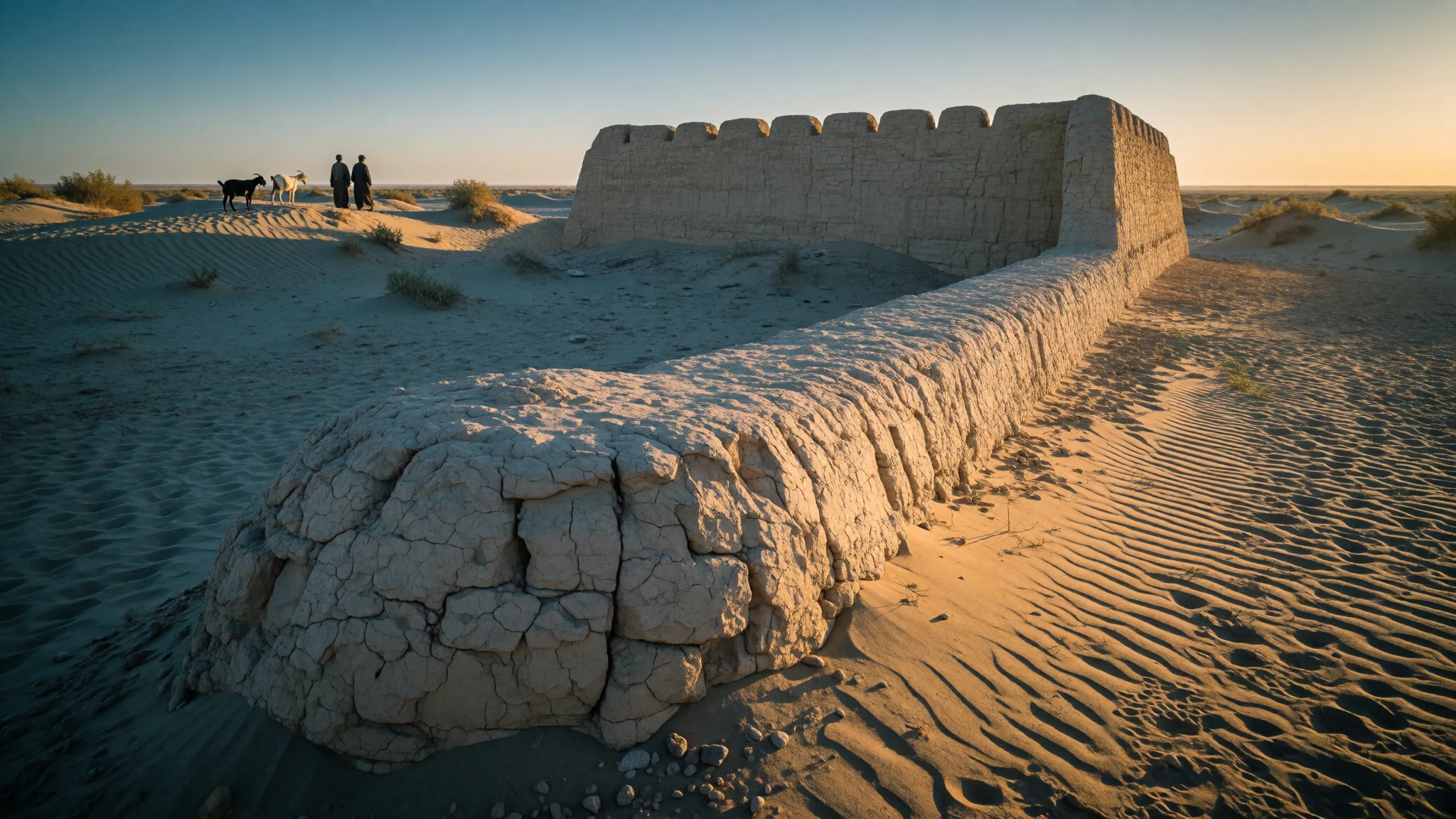
Gonur Depe is a Bronze Age desert town in Turkmenistan, a quiet maze of mud-brick walls from a civilisation few people have heard of.
The place
Gonur Depe is a Bronze Age settlement in the desert of eastern Turkmenistan, about 60 km north of the modern city of Mary. Archaeologists date its occupation from roughly 2400 to 1600 BCE, which places it in the same era as the early cities of Mesopotamia and the Indus valley. It is usually described as the main centre of the Bactria–Margiana Archaeological Complex, the name scholars give to a cluster of oasis towns across Central Asia. The surrounding land was once a green delta of the Murgab river, called Margush in old Iranian texts and Margiana by the Greeks. Farming villages had appeared there by the seventh millennium BC, and the wider oasis region eventually held more than 70 oases and 150 settlements over about 3000 km². What survives today is a sprawl of low, eroded mud-brick walls rather than standing monuments. The plan is still legible: a rectangular enclosure with thick defensive walls and semicircular bastions, with rooms, courtyards, a palace complex and temples inside. Wind and sand have flattened much of it, and the walls and the ground are nearly the same pale brown, so the layout reads best from a mound. Facilities are minimal and the site feels like a dig that visitors are allowed to walk through. Its interest lies in what it shows about a sophisticated society that grew up away from the great river valleys usually credited with the first cities.
Its story
Gonur Depe's story begins before the town itself. Scholars think the Oxus-river culture of Bactria and Margiana grew out of earlier farming communities on the northern slopes of the Kopet-Dag mountains, where Anau was already occupied around 6500 BCE. A changing climate may have pushed some of those people towards the Murgab delta, where river water could keep fields alive at the edge of the desert. Gonur grew there as a fortified town with a palace, temples with fire altars and a large cemetery. Its excavator, the Russian archaeologist Victor Sarianidi, worked at the site from 1970 onwards. He argued that it was a birthplace of Zoroastrianism and that its priests prepared a ritual drink from poppy, hemp and ephedra. Those are his interpretations, and not every specialist shares them. Contact with the steppe is another open question. Between about 1800 and 1500 BCE, herding groups of the Andronovo culture camped around the site, and their distinctive pottery turned up in the ruins. One scholar reads this as proof that horses were known at Gonur, while Sarianidi rejected a steppe link. The layout of the fortified towns, a walled rectangle or circle holding homes, workshops and shrines, reminds some researchers of much later regional forts. The end was probably geographical rather than violent. The Murgab shifted course to the west, the water went with it, and the town was abandoned to the sand.
What to see
- The walled core — Central enclosure, Gonur Depe
The main enclosure at Gonur Depe is a rectangle of thick mud-brick walls with semicircular bastions, worn low by wind. Following the wall lines and doorways gives a clear sense of how the town was organised. The higher ground near the excavated rooms offers the best overview of the whole plan.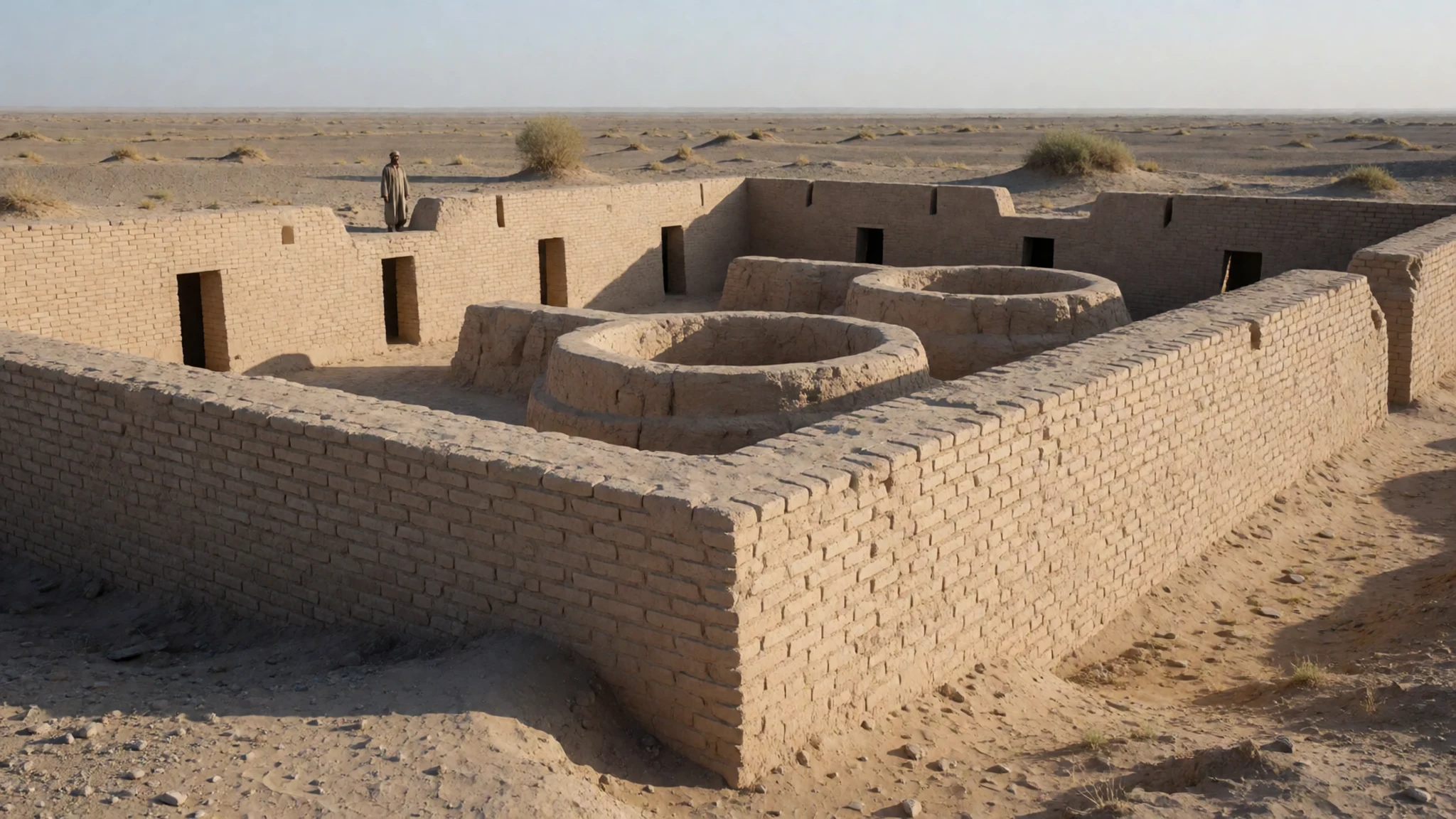
- Palace and temple quarter — Inside the walls
Inside the enclosure, excavators found a palace complex and temples with fire altars, which Victor Sarianidi linked to early Zoroastrian ritual. Whatever one makes of that reading, this is the part of the site that rewards slow looking: courtyards, thresholds and hearths can still be traced in the brickwork.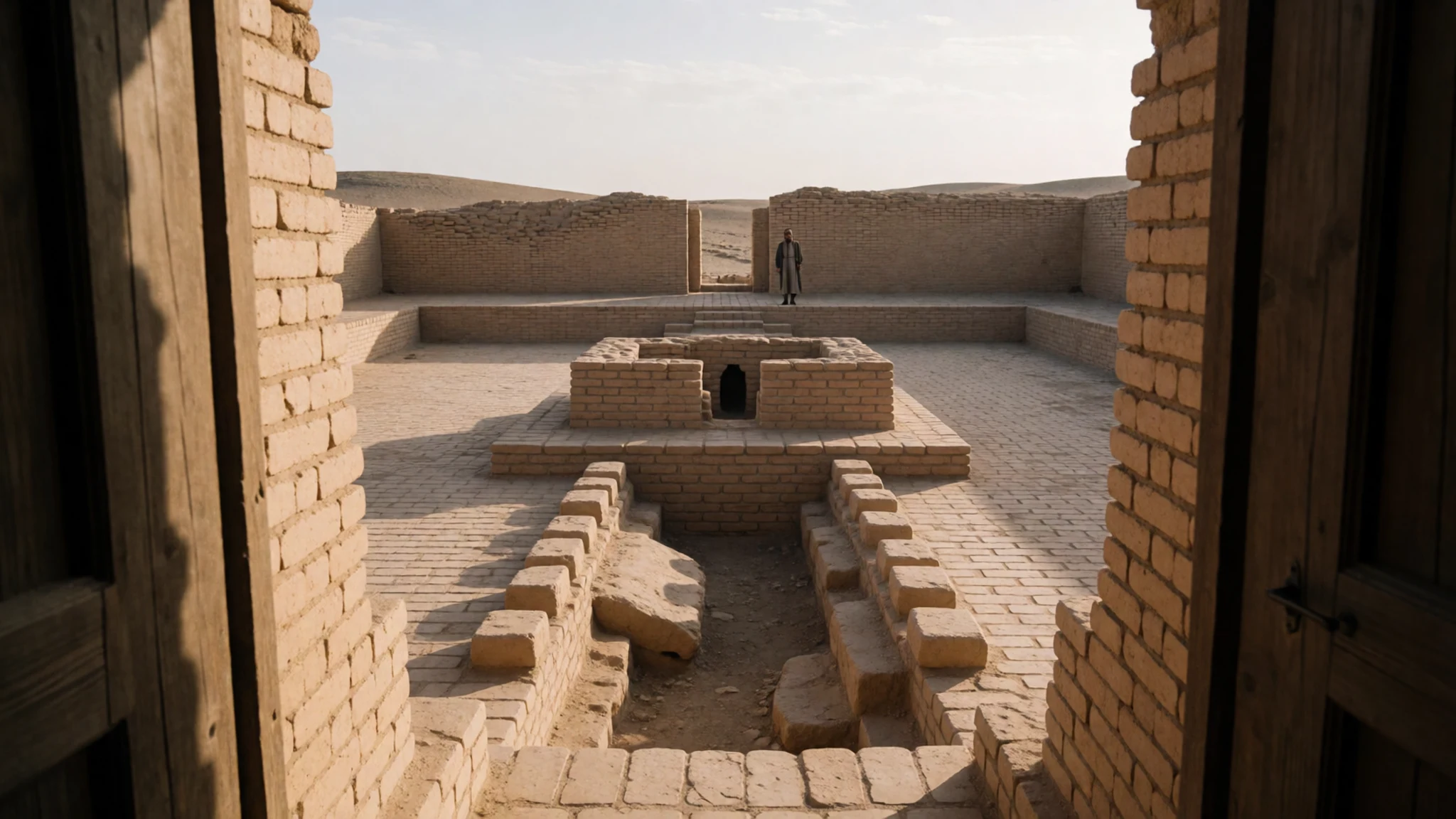
- The necropolis — Cemetery area, Gonur Depe
A cemetery area holds the Bronze Age graves, including the burial of a sacrificial foal that the excavators date to about 2400 BC. It shows how animals figured in ritual here, and the horse question is one scholars still argue over. Ask the guide what is open to view, as excavated areas change.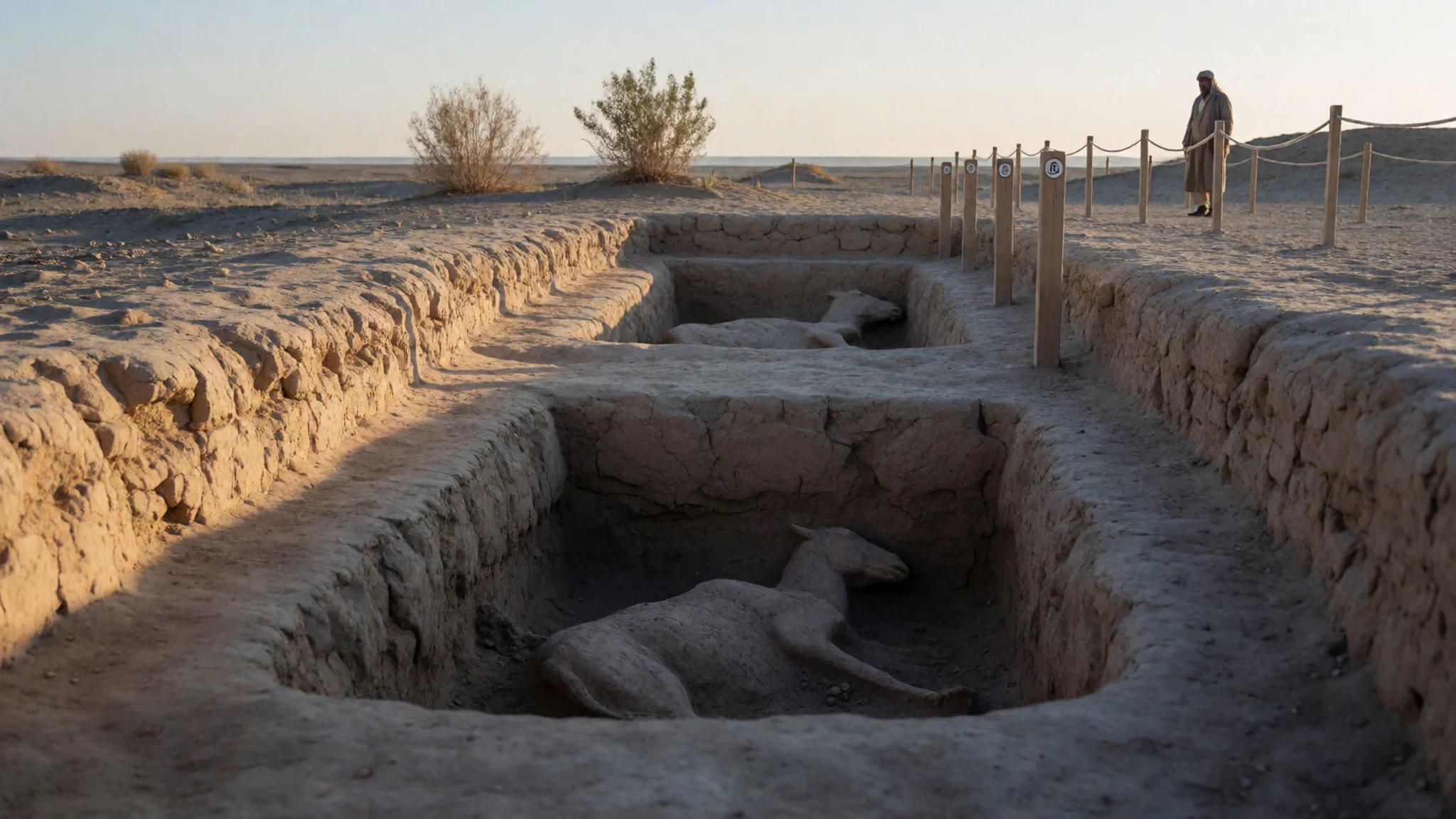
- The delta horizon — Mounds around the site
From any mound the setting explains the site: flat, dry ground running to the horizon where the Murgab once spread into a delta. The old landscape is subtle, so this is a place for standing still a few minutes. Early light is kindest, when long shadows pick out the wall lines.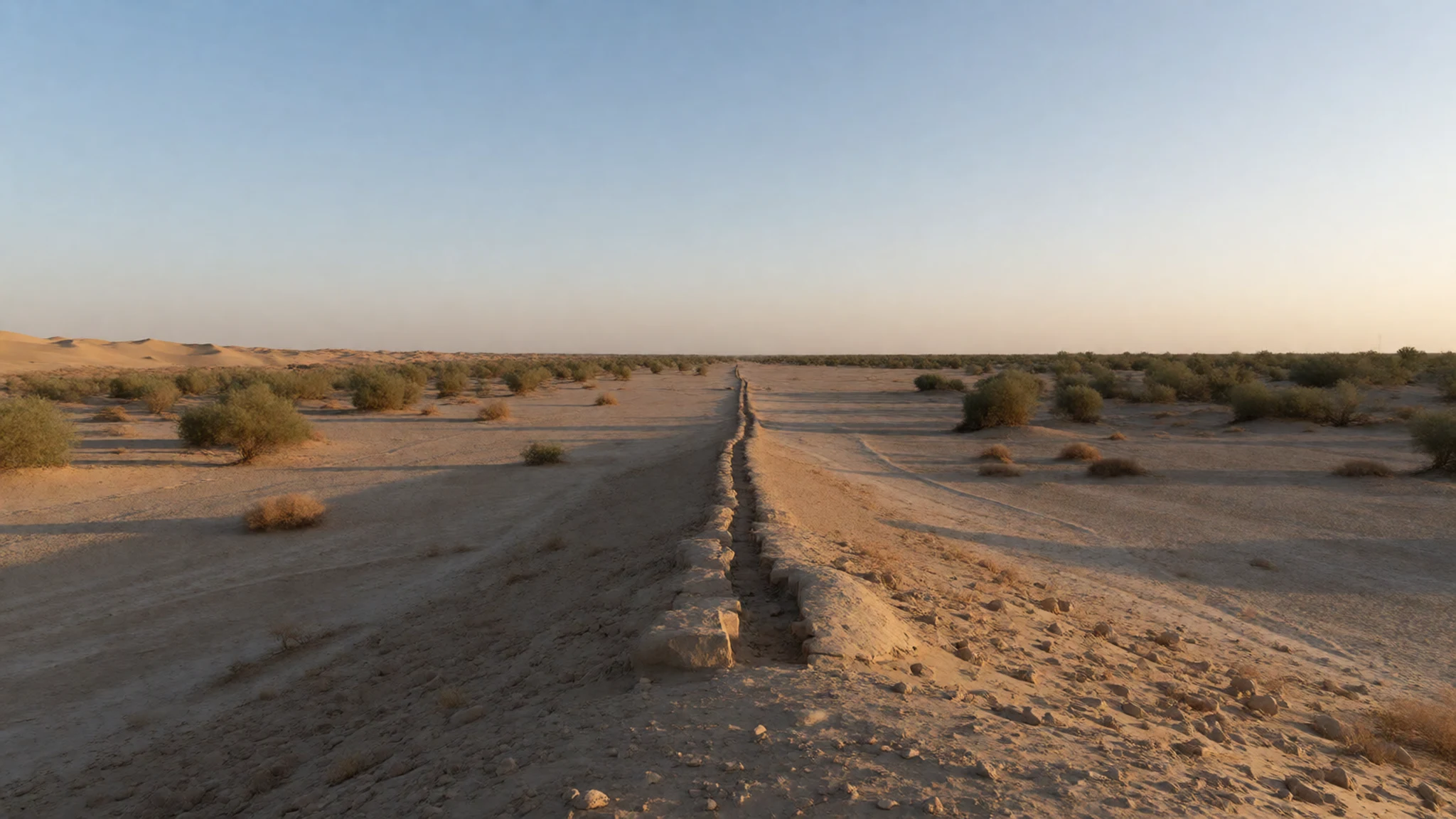
- Ancient Merv — Near Mary
Ancient Merv lies close to Mary and holds the walls and gates of later periods, long after Gonur Depe was abandoned. Seeing both on one trip gives a longer view of how people have settled this oasis. An early twentieth-century painting by L. Bure shows one of the Merv gates.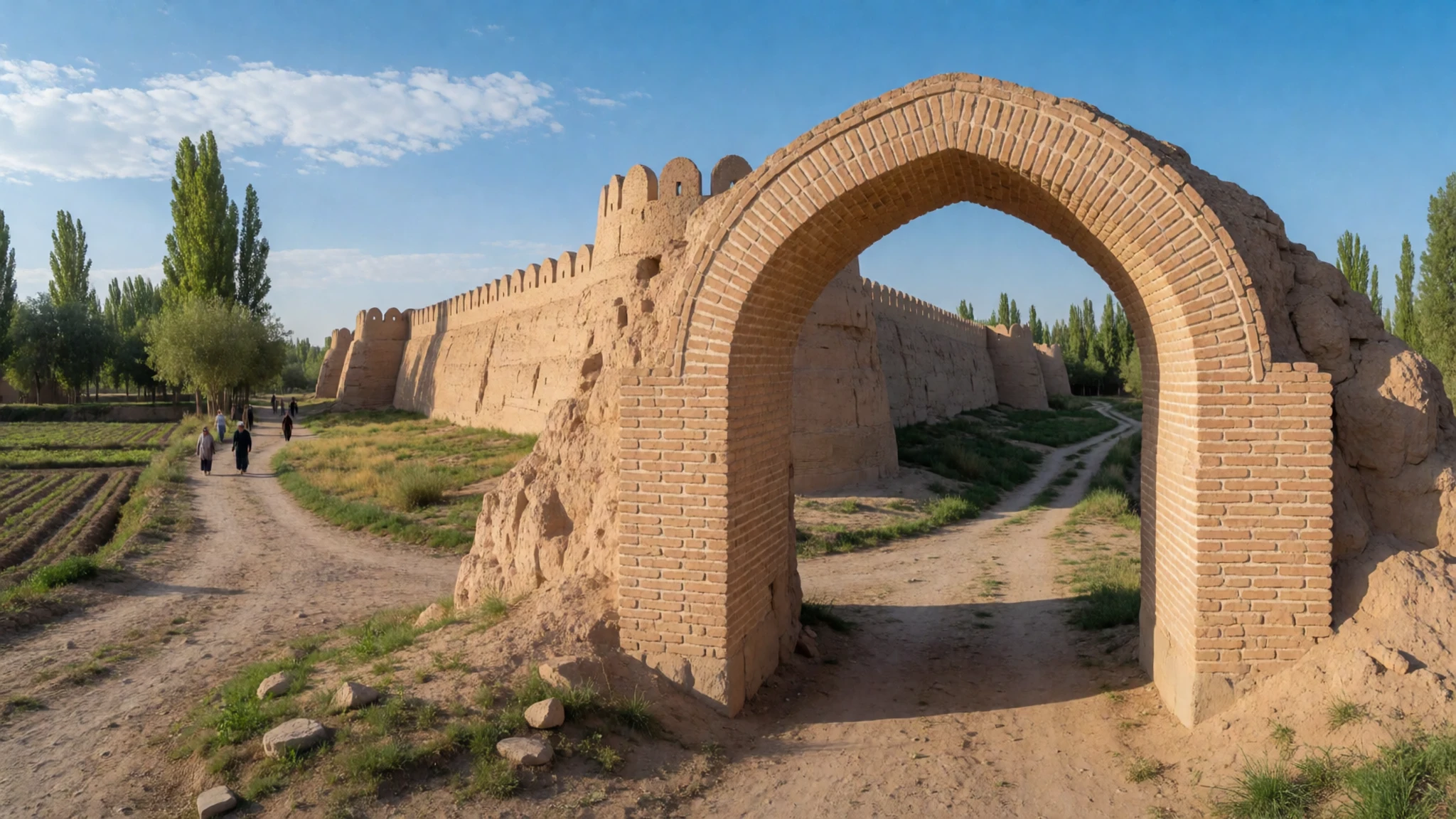
Culture
Gonur Depe belongs to a culture that left no readable writing, so everything known about its people comes from bricks, graves and objects. That silence shapes the visit. Much of what guides say is interpretation: fire altars suggest ritual, bronze tools suggest craft and trade, and the cemetery suggests beliefs about death in which animals mattered. The BMAC network linked oasis towns to the Iranian plateau, the steppe and the Indus region, and finds from the site are often discussed as evidence of that long-distance exchange. The living culture around the site is Turkmen. Turkmenistan is a largely Muslim country with a strong tradition of hospitality, tea offered to guests, carpets as the great domestic art, and respect for elders. Mary, the base for most visitors, is an oasis city where the Soviet-era layout and older bazaar life sit side by side. Local people tend to be curious about foreign visitors, and a few words of Russian or Turkmen go a long way. Arrangements are usually made through a driver and guide, and the guide is also the person who knows which parts of the excavation are currently accessible. Visitors should keep their expectations quiet and patient: this is archaeology in its raw state, not a heritage park. Stay on the paths your guide points out, do not climb on walls or pick up pottery fragments, and ask before photographing people or any official building in Mary.
What to wear
Traditional Turkmen dress is among the most recognisable in Central Asia. Women wear long, straight dresses, often in silk or cotton in deep reds and other rich colours, with embroidered yokes and heavy silver jewellery that is part of a family's wealth. Men wear a long robe over a shirt and the telpek, a tall, shaggy sheepskin hat. These clothes are brought out for weddings, festivals and national occasions, and the country's famous carpets share the same colour sense. Day to day, people in Mary dress much as in other post-Soviet cities: trousers or skirts, shirts and jackets for men, and dresses with a headscarf for many women, sometimes in the traditional cut. Modest, tidy clothing is the norm in towns. At Gonur Depe, comfort and protection matter more than style. The last stretch of road is a rough desert track and the site has almost no shade, so wear closed, sturdy shoes with good grip, loose long-sleeved cotton layers, a wide-brimmed hat and sunglasses. A light scarf is useful against dust and sun. Spring and autumn mornings can be cool, so bring a warm layer that can be shed. In Mary and when meeting local people, cover shoulders and knees, and keep swimwear and very short clothing for private places.
What to eat
- Plov (palaw) — Everyday eateries and bazaar canteens in Mary
Rice cooked with chunks of mutton or beef, carrot and onion, and the standard dish for a guest or a celebration. Portions are generous and the flavour is savoury rather than spicy. Order it as a sit-down lunch before or after the desert trip.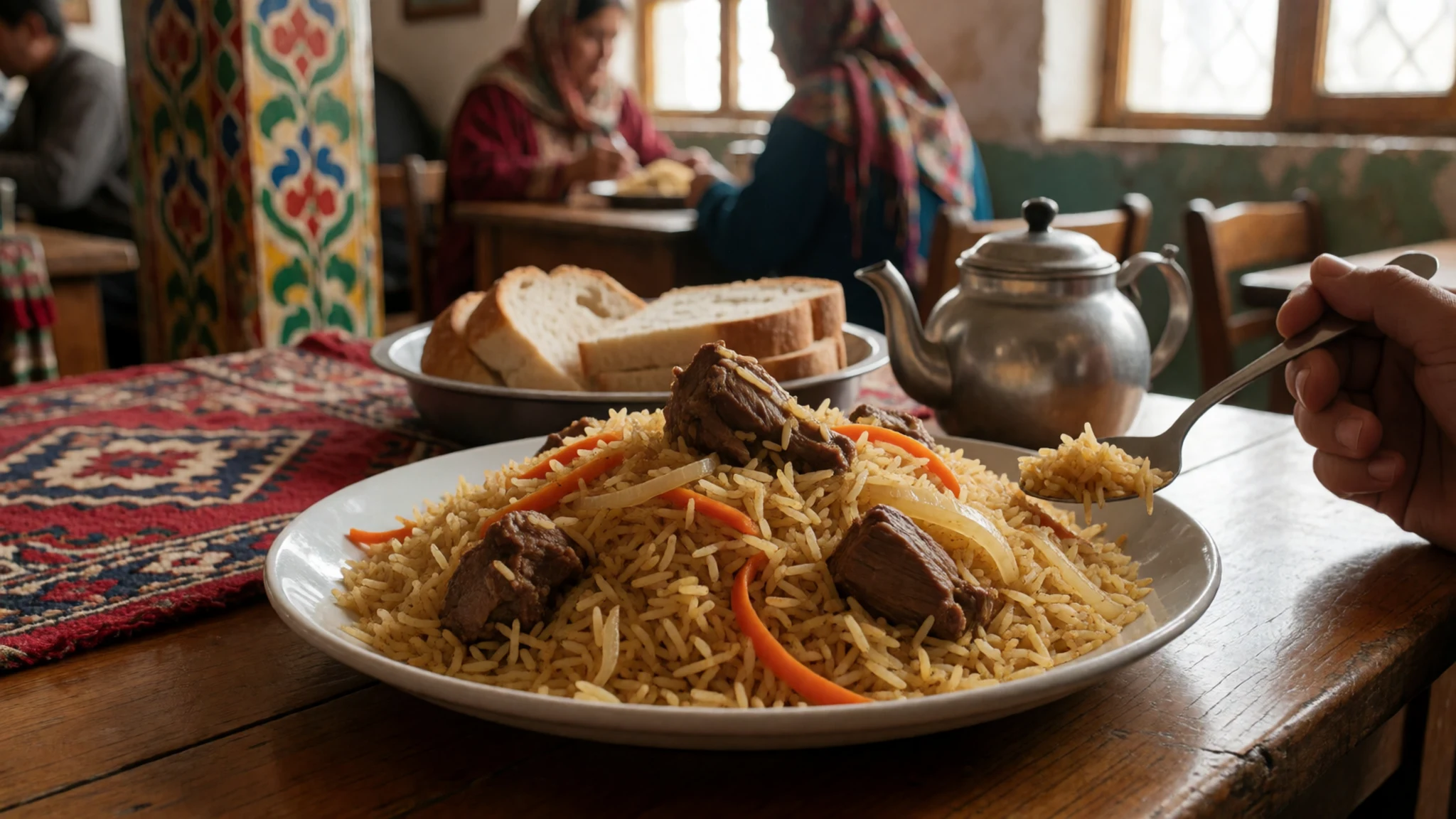
- Chorba — Local eateries in Mary
A thick lamb soup with potato, carrot and herbs, served hot with bread. It is plain, filling and well suited to a cool morning or evening. Many families make it at home, so simple eateries often offer a version.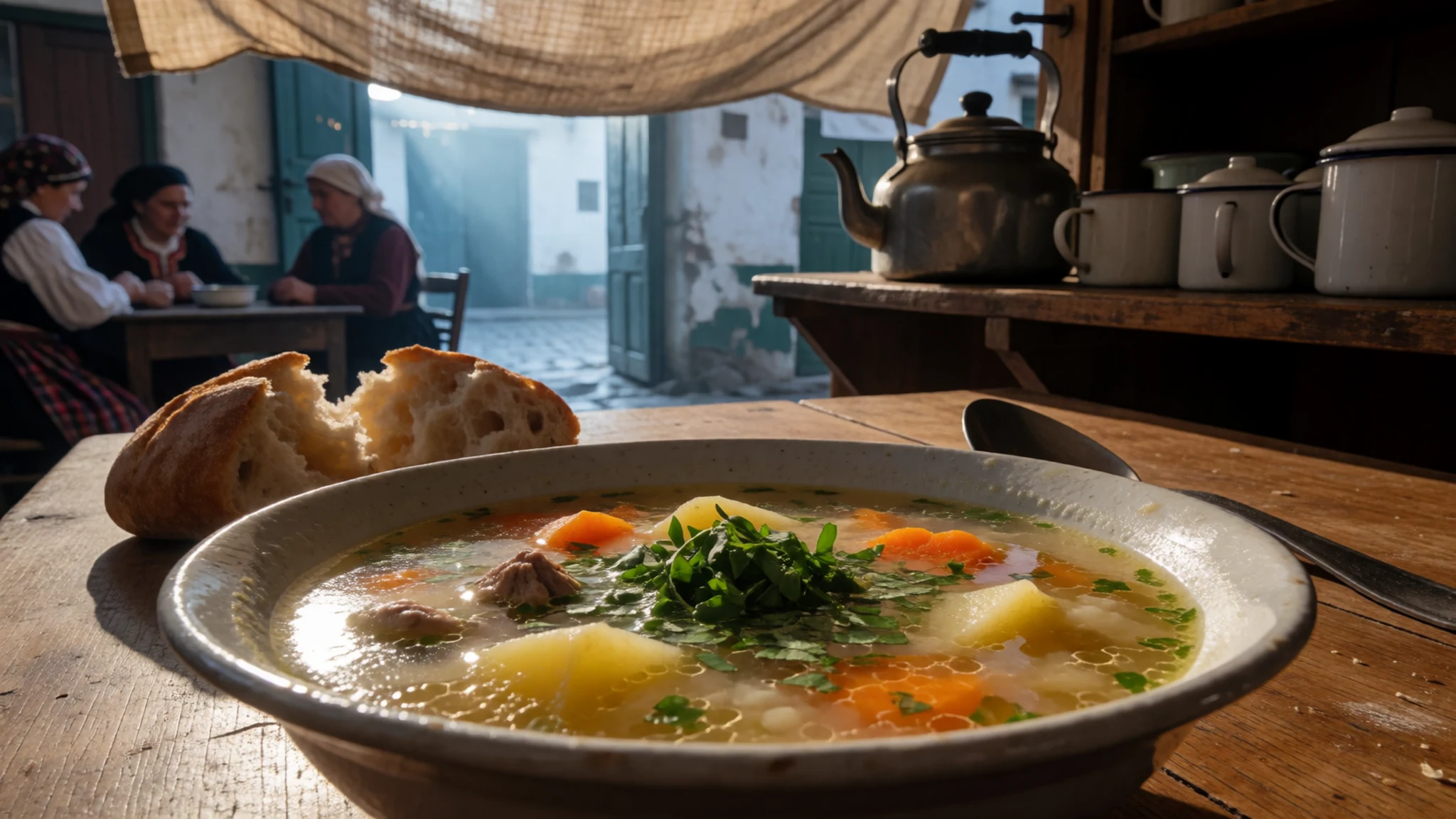
- Manty — Family-run eateries and the central bazaar in Mary
Steamed dumplings stuffed with minced meat and onion, often with a spoon of yoghurt on the side. They are a common home dish across Central Asia and make a good heavy meal after a tiring day on the road. - Ichlekli — Bakery stalls and market corners in Mary
A large round pie filled with minced meat and onion, baked until the pastry turns golden. It is cut into wedges and eaten warm, which makes it a convenient takeaway before a long drive. - Tamdyr bread (chörek) — Bakers and the morning bazaar in Mary
Round bread baked against the wall of a clay oven, crisp outside and soft within. It is eaten with every meal, and it travels well, so a loaf bought fresh is a sensible thing to take along.
Plan it
Best time. Spring (March–April) and autumn (October–November), when desert heat is bearable and a day on open ground is comfortable. Summer is very hot and shadeless, and the rough track makes it harder; winter mornings can be cold.
How long. 1–2
Getting there. Base yourself in Mary, which has the nearest accommodation. Gonur Depe is about 60 km to the north and needs a 4WD with a driver, arranged in Mary. The road follows the Kara Kum Channel for part of the way, and the last 20 km is a very rough desert track. Allow about two hours' driving each way and about two hours at the site.
Budget. mid
Tips
- Arrange car, driver and guide in Mary and confirm the plan the day before
- Bring all your own water and food, as nothing is sold at the site
- Start early to avoid heat and get the best light on the walls
- Expect an exhausting day and carry sun protection, a hat and a scarf for dust
- Check entry rules and any permit requirements for Turkmenistan well ahead of travel
Etiquette
- Stay on the paths your guide indicates and do not climb on walls
- Leave pottery fragments and other finds where they lie
- Ask before photographing people in Mary
Nearby
Sources
- Wikidata Q3110595 (CC0)
- Wikipedia: Gonur Depe (CC BY-SA 4.0)
- Wikivoyage: Gonur Depe (CC BY-SA 4.0)
- Photo: Gonur ruins (David Stanley) (CC BY 2.5)
- Photo: Relief map of Turkmenistan (CC BY 3.0)
- Photo: West Asia non political with water system (CC BY 3.0)
- Photo: BMAC bronze tools (CC BY-SA 4.0)
- Photo: L. Bure, Gate in the ancient Merv (Public domain)
- Photo: BMAC bronze tools (cropped) (CC BY-SA 4.0)
- Photo: Convergence of the Middle Asian, North Asian and Prehistoric Chinese Interaction Spheres (CC BY-SA 4.0)
- Photo: Gonur Depe banner (John Pavelka) (CC BY 2.5)


