Awaza
Awaza, Turkmenistan
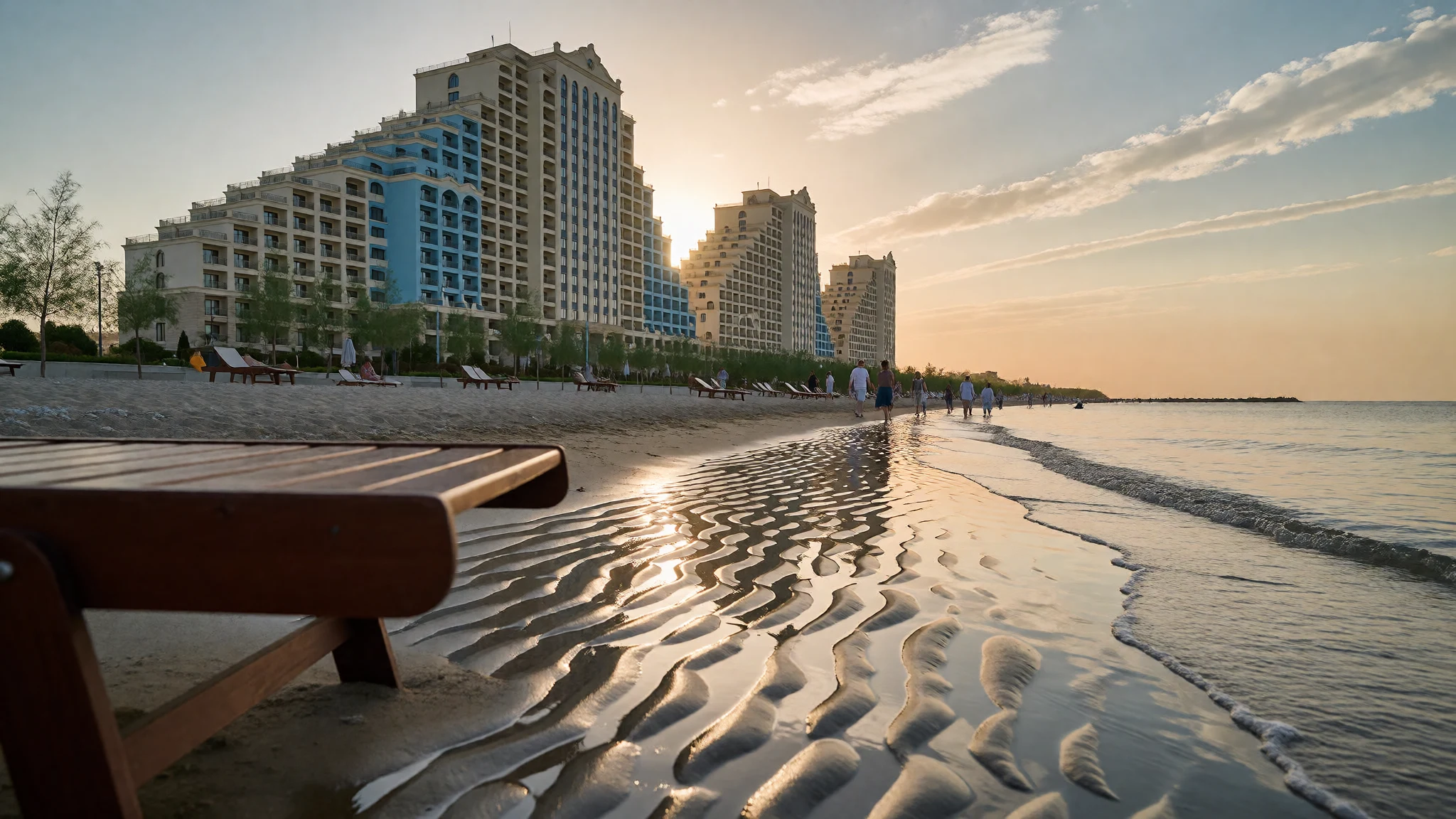
Awaza is a purpose-built Caspian resort of sand, calm water and ambitious architecture, best for travellers curious about modern Turkmenistan.
The place
Awaza sits on the eastern shore of the Caspian Sea, about 12 km west of the centre of Türkmenbaşy, and the name covers two things: a purpose-built tourist zone and a borough of the city. The borough also takes in the local airport and a small residential area, so it is a planned district rather than a town that grew by itself. The idea came from the president of the time, who wanted a resort boom in the manner of Dubai, and the result is a strip of large modern buildings between an artificial canal and the sea. The pitch is simple: hot dry summers, sandy beaches, clear water, and spa and wellness facilities. Most guests are Turkmen families and groups on domestic holidays, which ties the place tightly to the summer calendar. Foreign reporting has been blunt that accommodation is often under-used and that the main attraction is the sheer scale of it. That is useful honesty for planning. Awaza is not a place of old lanes and bazaars; it is a coastal stage set with a real beach, a gentle sea and a great deal of space. Outside summer it can feel empty, and some facilities may be closed. The wider Balkan Province is desert and oil country with only pockets of farmland, so the watered gardens of the resort stand out sharply against the dry land behind.
Its story
Awaza has a short history, and nearly all of it is planning. Before the project it was a small village on a quiet stretch of the Caspian coast. The tourist zone was officially presented in the summer of its launch year, covering 5,000 hectares, and construction began soon afterwards. A couple of years later a ceremony marked the opening of new buildings along the shoreline. The president who commissioned it hoped to copy the development boom of Dubai, and officials even floated the label of a Turkmen Las Vegas. Some years on, the area was made a borough of Türkmenbaşy, headed by a mayor appointed by the president, with its own airport and a small residential quarter. Beyond holidays, Awaza works as a conference site, notably for the annual Turkmenistan Gas Conference, a reminder that the region's wealth comes from petroleum. More recently it hosted a United Nations conference on landlocked developing countries, which put the resort in front of an international audience. Visitor numbers are modest: the Anadolu Agency reported about 150,000 guests a year. Seen as a story, Awaza is less about ancient layers than about a government's wish to turn a remote sea coast into a showcase, and about how far a showcase can fill itself with ordinary holidaymakers.
What to see
- The beach — Caspian shoreline
Awaza's beach is the reason to come: sandy, gently shelving and backed by resort buildings rather than dunes. The Caspian here is clear and calm in summer. Mornings and late afternoons are kinder than midday, when heat and glare are fierce and shade is scarce on the open sand.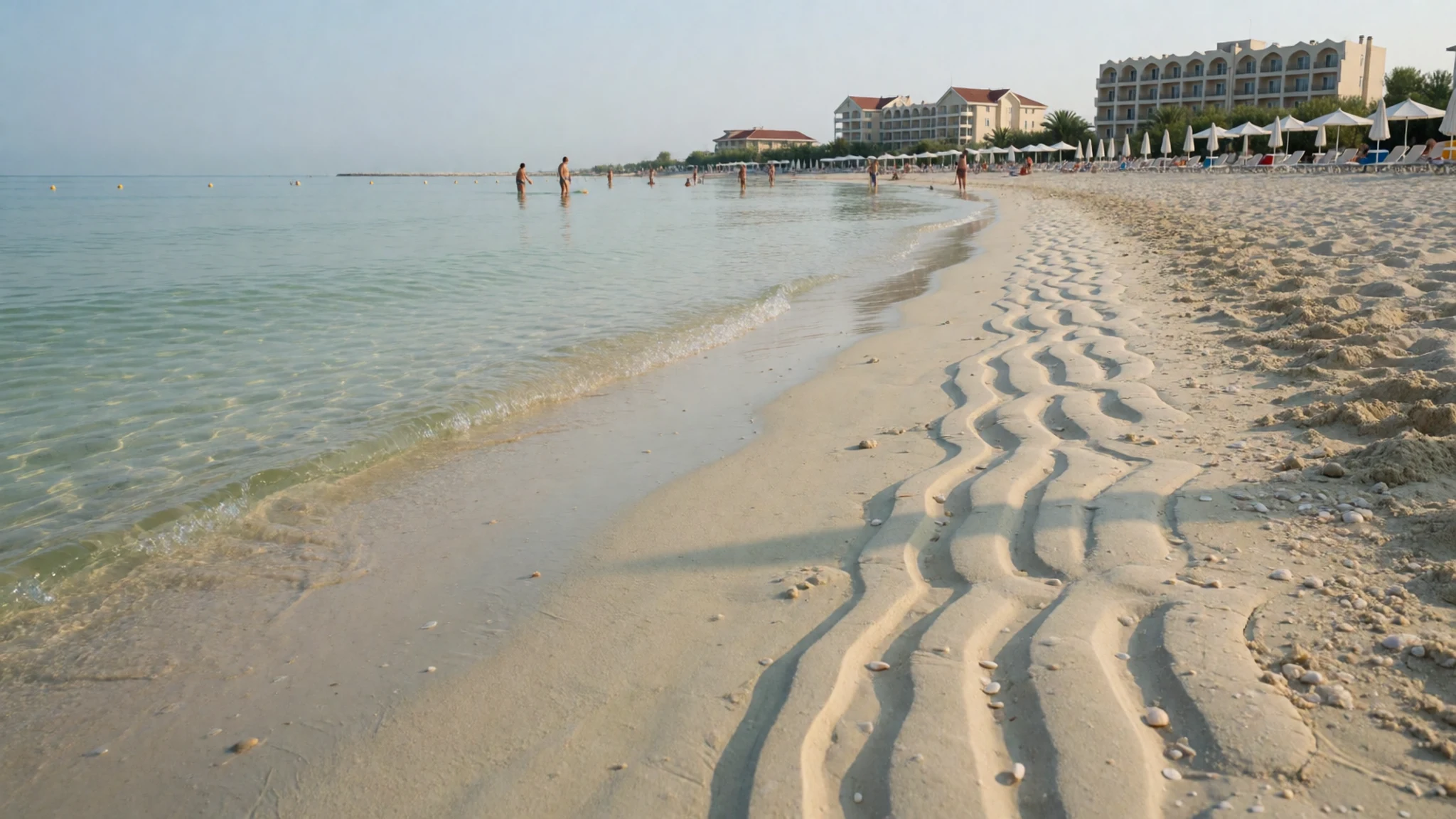
- The resort skyline — Awaza tourist zone
The towers and terraced blocks of the tourist zone are the sight itself, built in bold shapes and bright colours along the water. Walking or driving the strip gives a feel for the ambition behind the project. It is best at sunset, when the façades catch warm light and the heat eases.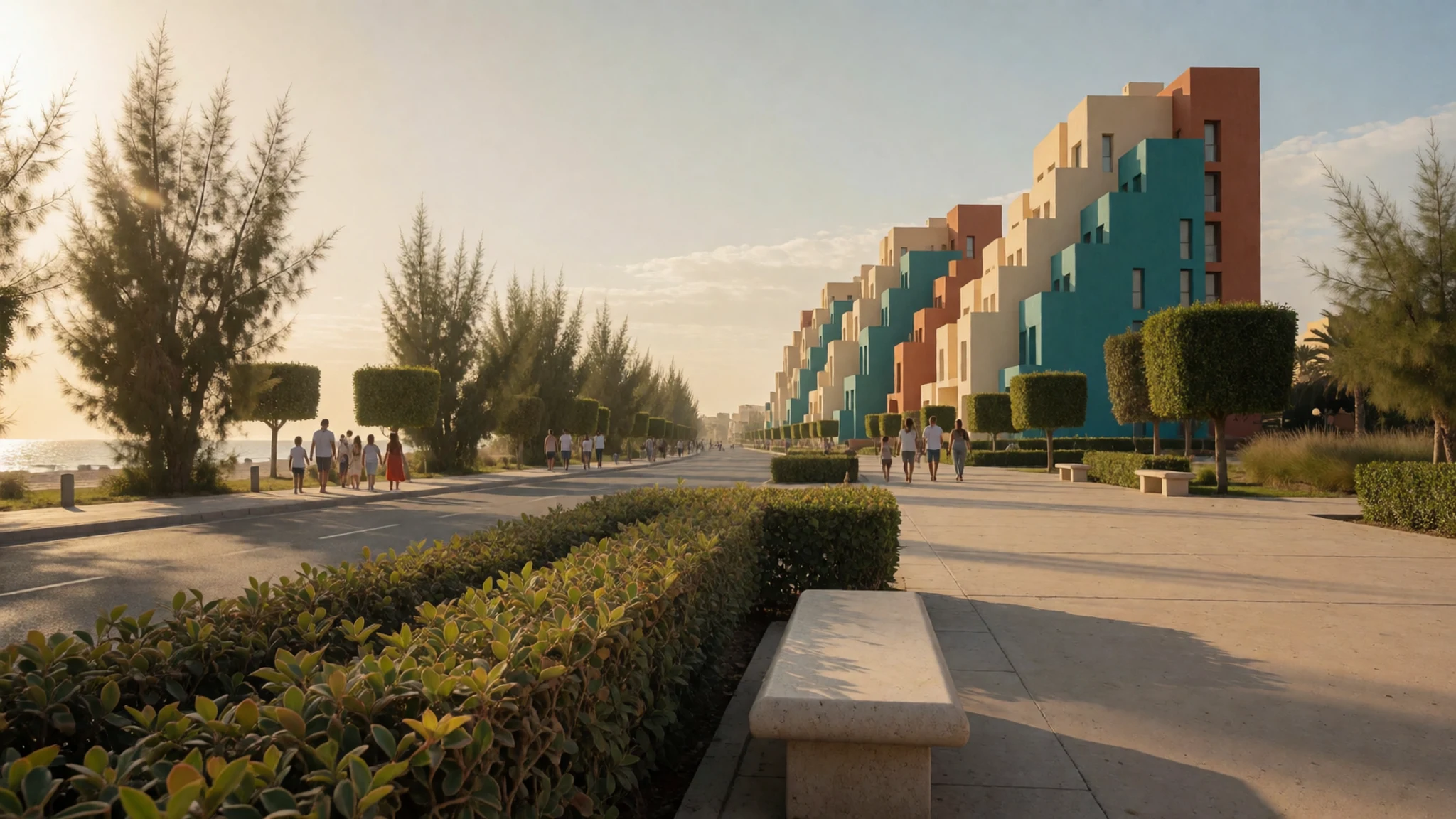
- The canal and river — Between the sea and the resort blocks
An artificial canal separates the seafront buildings from the land behind, and a small river runs through the district. Footpaths and bridges along the water give quieter views than the beach and a chance to see the gardens, which depend on constant watering in this dry landscape.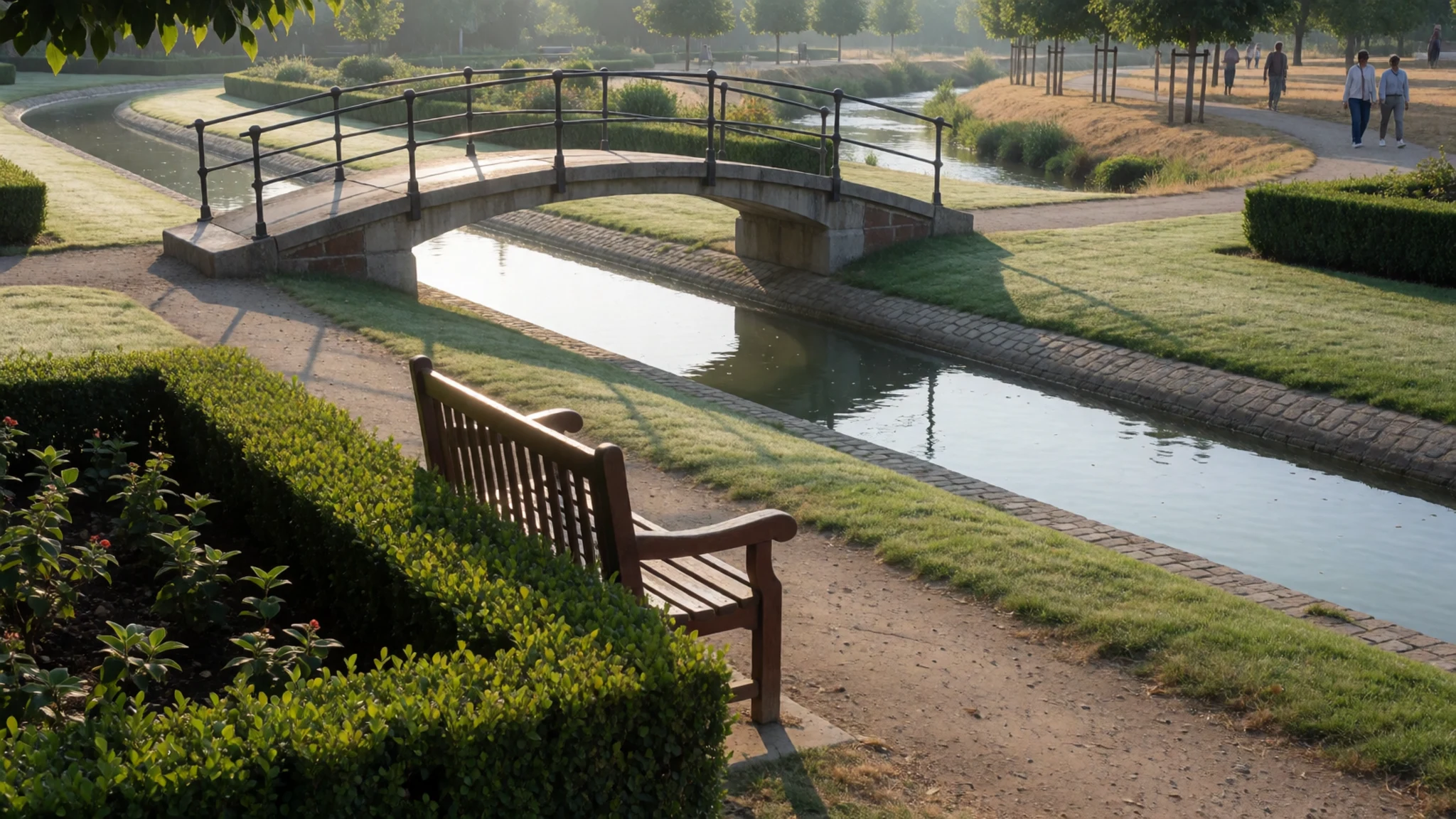
- Serdar, the first resort building — Awaza tourist zone
Serdar was the first lodging built in the tourist zone, and it shows the earlier, more modest style before the larger complexes arrived. Looking at it beside the newer blocks makes the pace of construction easy to read. Guests and visitors should ask before photographing the interiors.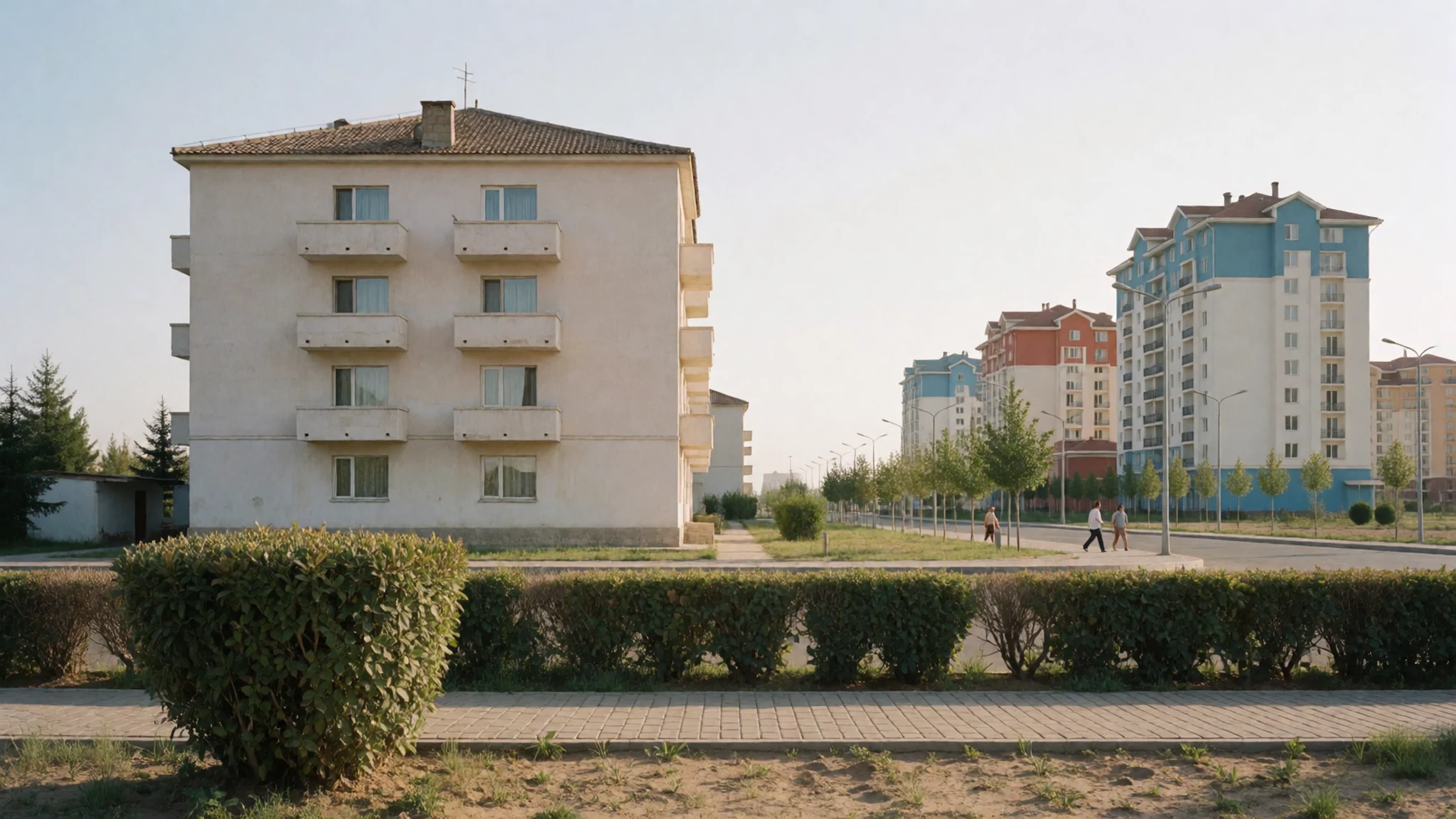
- Boats and the marina front — Waterfront
Yachts and pleasure boats are part of the resort's holiday image, with short trips offered along the coast in season. Operators change from year to year, so ask at your lodging or the official site rather than relying on a fixed schedule. Sea conditions can turn breezy in the afternoon.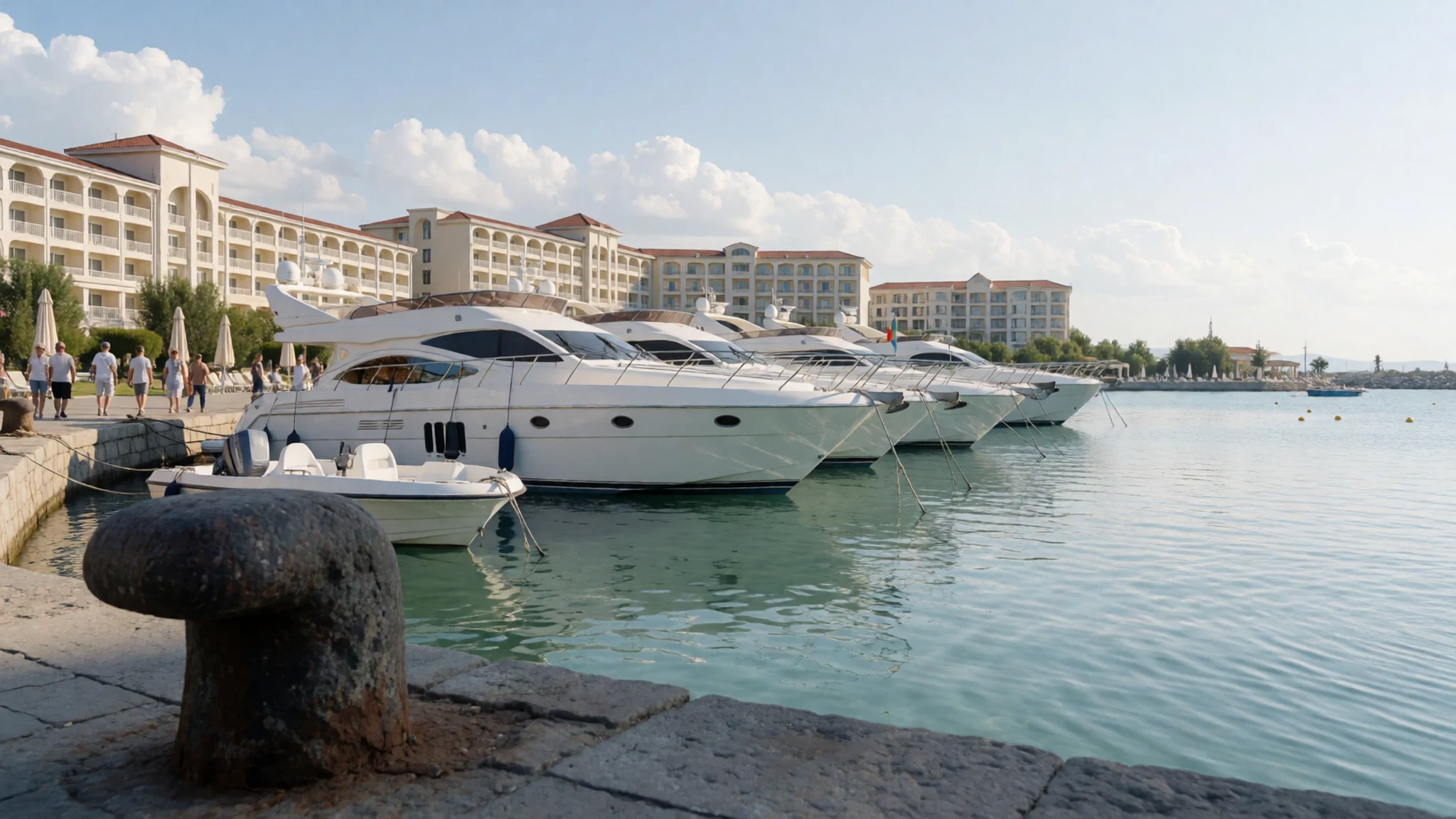
Culture
Awaza is a resort, but it sits inside a country with firm social habits, and the culture a visitor meets here is mostly Turkmen hospitality at holiday pace. Families dominate in summer, and the atmosphere is relaxed, orderly and courteous rather than rowdy. Tea is the usual welcome, served green and often with sweets, and a refusal is best made politely and with a hand on the heart. Bread is treated with respect, and food is shared from common plates at gatherings. Turkmenistan is a majority Muslim country with a strong tradition of carpet weaving, horse breeding and oral poetry, though little of that is on show on the beachfront. The wider region shows its character better in Türkmenbaşy, where an ordinary bazaar and everyday streets give context to the resort. The state is visible here too: the area is carefully managed, public spaces are tidy, and official buildings and uniformed staff are common. Visitors should expect rules to be applied firmly and should follow local guidance on restricted areas. Plan conversations around family, travel and food rather than politics. Ask permission before photographing people, and never photograph officials, security staff or government buildings.
What to wear
At Awaza, beachwear is the everyday dress of the season, but Turkmen traditional clothing is worth knowing about because it appears at celebrations and in shop displays. Women's dress is a long, straight robe-like gown, often in silk or fine cotton in deep reds and greens, with embroidery at the yoke and heavy silver jewellery, sometimes with a tall headdress for weddings. Men traditionally wear a long striped robe and the telpek, a tall shaggy sheepskin hat, the best-known emblem of Turkmen identity. Carpets and ikat-style silks carry the same patterns. Today most people wear modern clothes: light cotton, shorts and swimwear on the sand, and smart casual wear for evenings, with older women often in bright dresses and headscarves. Visitors should dress for strong sun and a dry, hot climate: breathable fabrics, a wide-brimmed hat, sunglasses and high-factor sun cream. Beachwear belongs on the beach and by the pool; away from it, cover shoulders and knees, especially in Türkmenbaşy town, at a mosque or in a bazaar. Carry a light scarf or shawl, and wear sandals that cope with hot sand and a pair of closed shoes for walking on dusty ground.
What to eat
- Plov (palaw) — Resort restaurants and family eateries in Türkmenbaşy
Rice cooked with lamb or beef, carrots and onion, the dish served at weddings and family gatherings across Turkmenistan. Order it as a main course; portions are generous and the flavour is savoury rather than spicy. It suits a long lunch before an afternoon rest from the heat.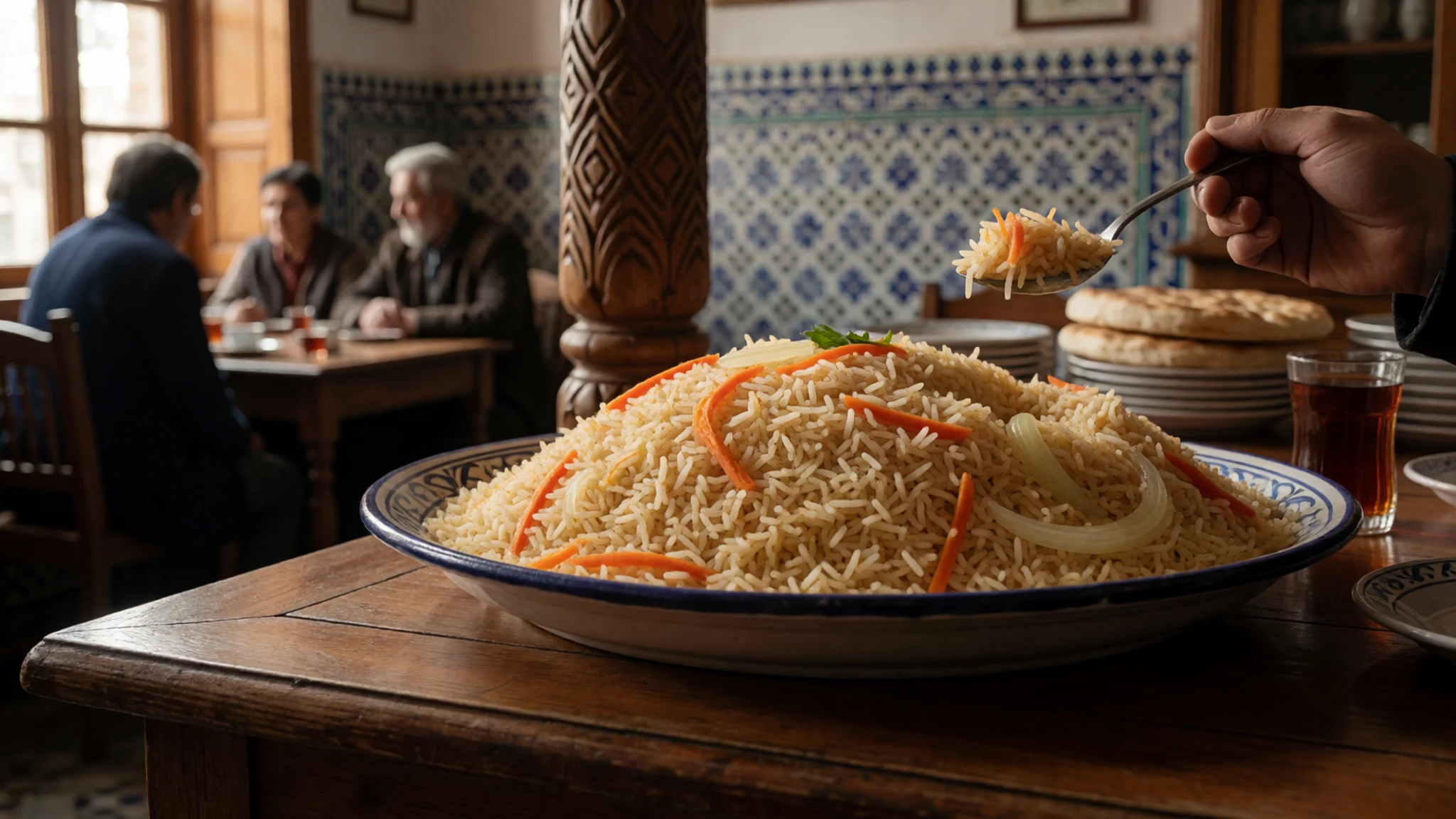
- Grilled Caspian fish — Sea-facing restaurants on the Awaza strip
Fish from the Caspian, usually grilled or fried whole and served with bread, onions and salad. It is a natural choice on the coast. Ask how it was cooked and where it came from, and expect the simplest preparations to be the most reliable.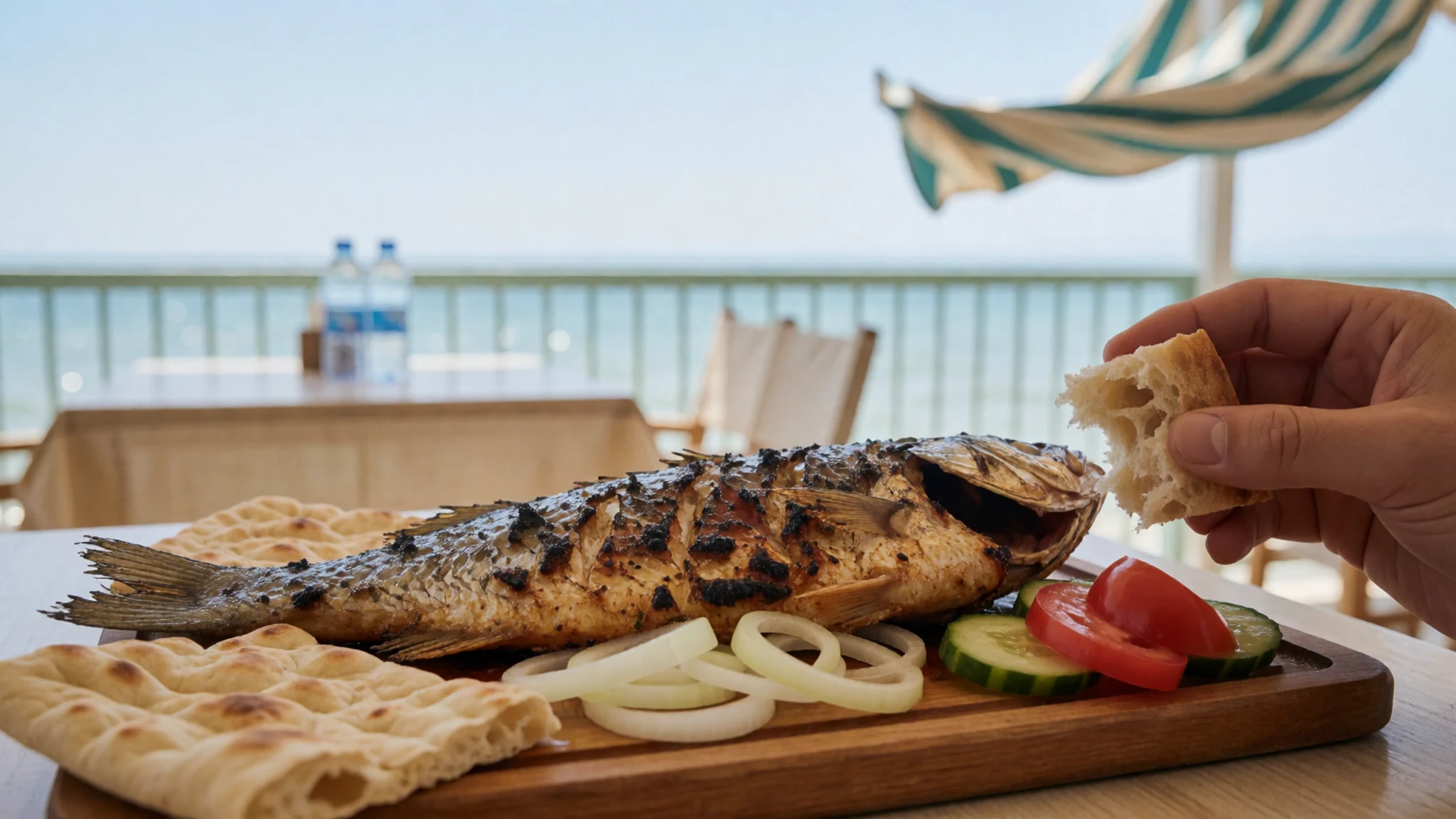
- Manty — Local eateries in Türkmenbaşy town
Steamed dumplings filled with chopped meat and onion, often with pumpkin in some versions, served with yoghurt or a plain sauce. They are filling and mild, a useful comfort dish after a day on the sand and good for families. - Gutap — The town bazaar and bakery stalls
A thin, folded flatbread stuffed with herbs, spinach, pumpkin or minced meat and cooked on a hot plate. It is a good snack to carry to the beach and is easy to find vegetarian. Eat it warm, when the pastry is crisp. - Chal — Bazaar stalls in Türkmenbaşy
A sour, slightly fizzy drink of fermented camel milk, popular in western Turkmenistan and prized as a refreshing summer drink. The taste is sharp and salty, so try a small glass first. It is sold chilled by sellers who know their regular customers.
Plan it
Best time. May–June and September–October, when the heat is easier on the beach; July and August are hot and dry and mark the busy domestic summer season, while winter is quiet and many facilities may be closed.
How long. 2–3
Getting there. Fly to Turkmenbashi International Airport (KRW), which lies inside the Awaza district, from Ashgabat or Daşoguz, or on international routes from Istanbul, Moscow and Minsk. Other routes are the Trans-Caspian Railway to Turkmenbashi or the ferry from Baku, then a short road transfer of about 12 km to the resort strip.
Budget. mid
Tips
- Check current entry and visa requirements with the official Turkmen sources before booking anything.
- Book accommodation ahead for July and August, when domestic families fill the resort, and confirm that facilities are open in other months.
- Visit the beach early or late, and carry water, a hat and sun protection.
- Bring enough cash and a backup, as card acceptance can vary; check the official site at http://www.avaza.gov.tm/ for current information.
- Ask your lodging about sea conditions and boat trips rather than relying on a fixed timetable.
Etiquette
- Ask before photographing people, officials, and government or security buildings.
- Keep beachwear for the beach and pool, and cover up in town and at religious sites.
- Accept tea and food offered by hosts politely, and share from common plates.
Nearby
Sources
- Wikidata Q791657 (CC0)
- Wikipedia: Awaza (rev 1380435303) (CC BY-SA 4.0)
- Wikivoyage: Balkan Province (rev 5376101) (CC BY-SA 4.0)
- Avaza hotels, Bjørn Christian Tørrissen (CC BY-SA 4.0)
- Hotels in Awaza, Turkmenistan, Bayram A (CC BY-SA 4.0)
- Serdar hotel, Joseph Lang (CC BY 3.0)
- Turkmenistan Yacht, Kalpak Travel (CC BY-SA 4.0)
- Turkmenistan hotel in Awaza, Kalpak Travel (CC BY-SA 4.0)
- Awaza Hotels - Turkmenistan, Bayram A (CC BY-SA 4.0)
- Avaza beach, AltynAsyr (CC BY 3.0)
- Avaza river, AltynAsyr (CC BY 3.0)


