Köneürgenç
Köneürgenç, Turkmenistan
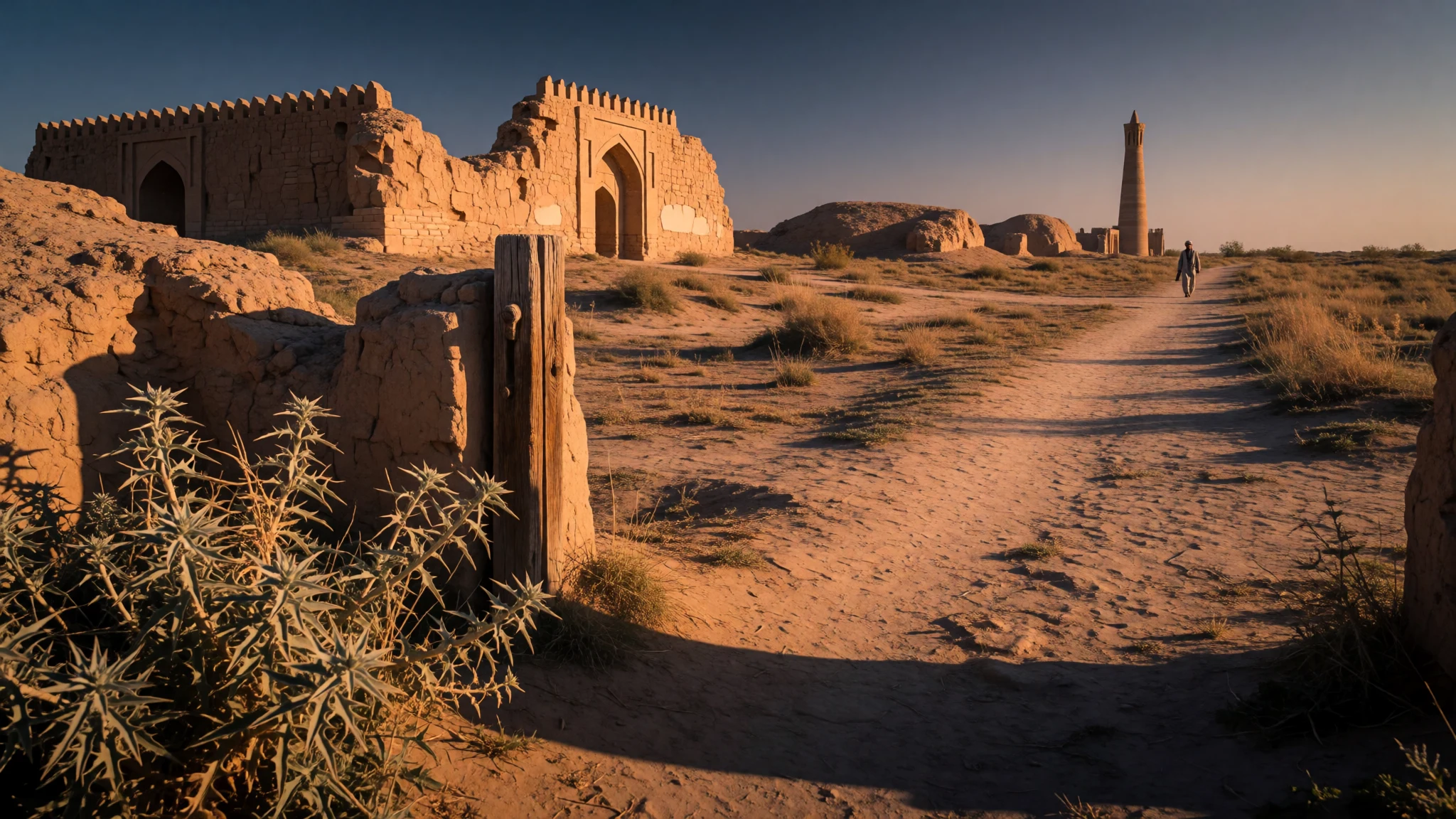
Köneürgenç is a UNESCO-listed ruined city of Khwarazm, where minarets and mausolea sit in a quiet, lived-in landscape.
The place
Köneürgenç (Konye-Urgench, also called Old Urgench) sits in north Turkmenistan, just south of the Uzbekistan border. The modern city is small by most standards—its population is listed at 37,176—yet the ground beneath it feels huge, because this is where an older capital of Khwarazm once stood.
What makes Köneürgenç special isn’t a single landmark; it’s the way the ruins cluster. Mausolea, madrasa structures and a tall minaret punctuate a broad archaeological area, and many of the buildings were built as tombs. That gives the site a particular mood: the stones aren’t arranged like a museum display, they feel woven into a landscape that people still visit for prayer.
Climate shapes the trip too. The area has a cold desert pattern: summers run long and hot, while winters are short but cold. Rain is scarce, and most of it arrives from winter into early spring, with only light showers through the warmer months. Temperatures are mild in April, climb into the hottest stretch from June to August, and cool quickly from September onward; the most comfortable windows tend to be April–May and October–November, when the days feel steadier and the cold nights aren’t as intense.
Logistically, plan for a slower, more “on the ground” journey than typical city breaks. Many travellers end up basing themselves in Dashoguz and doing Köneürgenç as a day trip, because the immediate area doesn’t offer the kind of comfortable accommodation people expect elsewhere. In exchange, Köneürgenç rewards patience: this is history you walk through, not history you simply photograph from a viewpoint.
Its story
Köneürgenç’s story starts with layers of settlement. Archaeological work at Kyrkmolla Hill suggests the area had strong structures long before the medieval period, and later records tie the region to the Khwarazmian world. Over time, the town rose to prominence as a capital city, functioning as a trading hub on major overland routes that linked the south to the north and the west to the east. That trade mattered: it helped foster scholarship and culture, the kind of “civilisation momentum” you can still feel in the way the buildings were designed and decorated.
The city also has a recurring theme of destruction and change. Different waves of conquest reshaped the region, and eventually the surrounding area experienced major upheavals connected to Mongol campaigns. After those shocks, the environment around the settlement became marshy, changing the conditions for daily life.
One of the strangest chapters for travellers today is what happened later: residents eventually shifted focus to a newer settlement in what is now modern Urgench (across the border), and Köneürgenç remained comparatively undisturbed. That stillness is why the ruins survive in such a dense concentration.
When people visit now, they’re stepping into a place that’s both archaeological and spiritual. Many remaining buildings are tombs or mausolea, and pilgrims still come to pray. So the “ancient city” doesn’t feel fully abandoned; it feels paused. The past is present in the architecture, but the site is also part of current routines—quiet, respectful, and taken seriously by those who know what they’re coming for.
What to see
- Sultan Tekesh Mausoleum
Sultan Tekesh Mausoleum is a standout domed structure within the Konye-Urgench ruins. The stonework and proportions read clearly even at a distance, and up close you’ll see details that make the building feel both monumental and intimate—like a single focal point inside a wider field of history.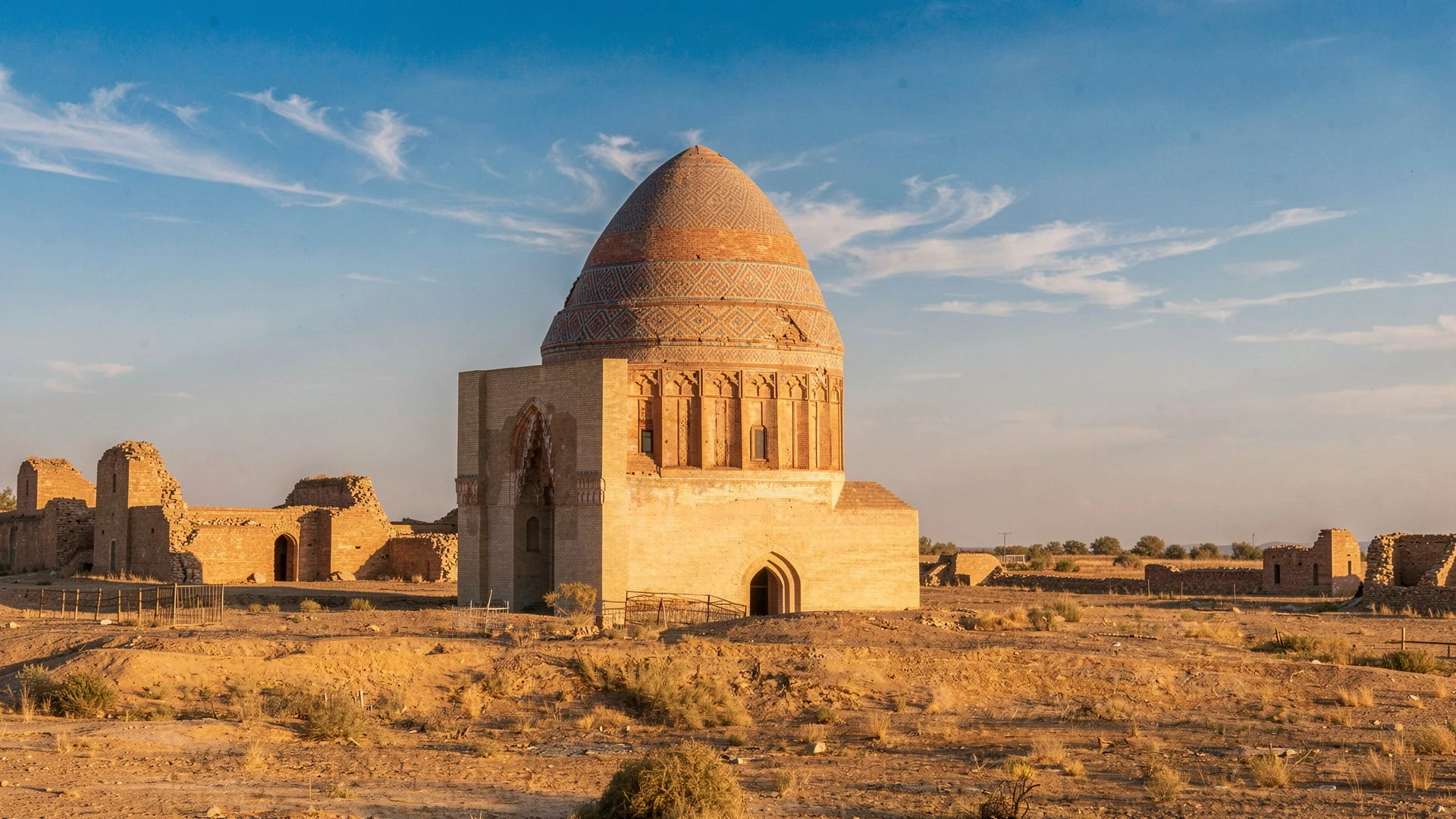
- Turabek Khanum Mausoleum (dome mosaics)
Turabek Khanum Mausoleum is known for its decorative dome surfaces. Walking around it, the mosaics stand out against pale walls and rubble, giving you that rare “still-bright” feeling in a ruin field. If the light is right, the patterning becomes the main story of the view.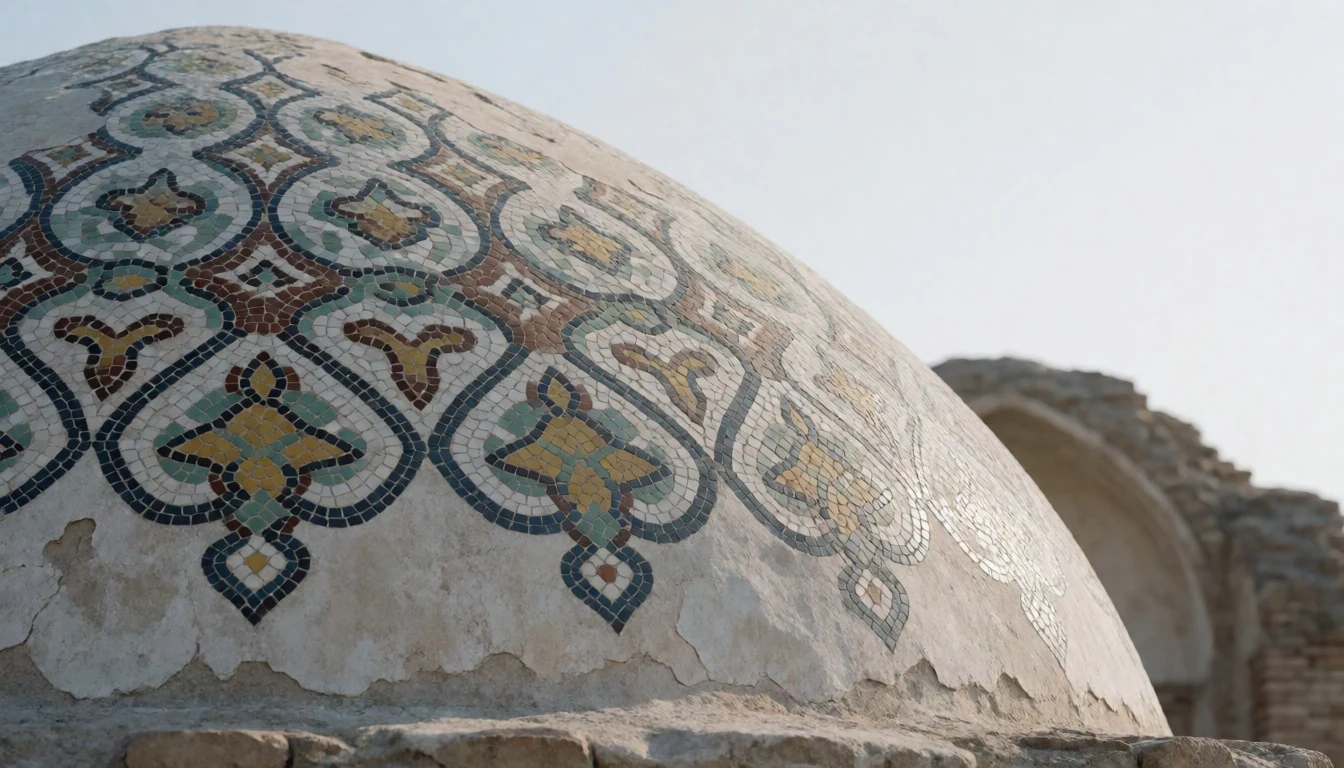
- Kutlug Timur Minaret
Kutlug Timur Minaret rises as a vertical marker amid the low ruins. It helps you orient yourself when you’re weaving between mausolea and courtyards, and it’s also a good subject for late-day photography when the angle softens the contrast between domes, walls and open sky.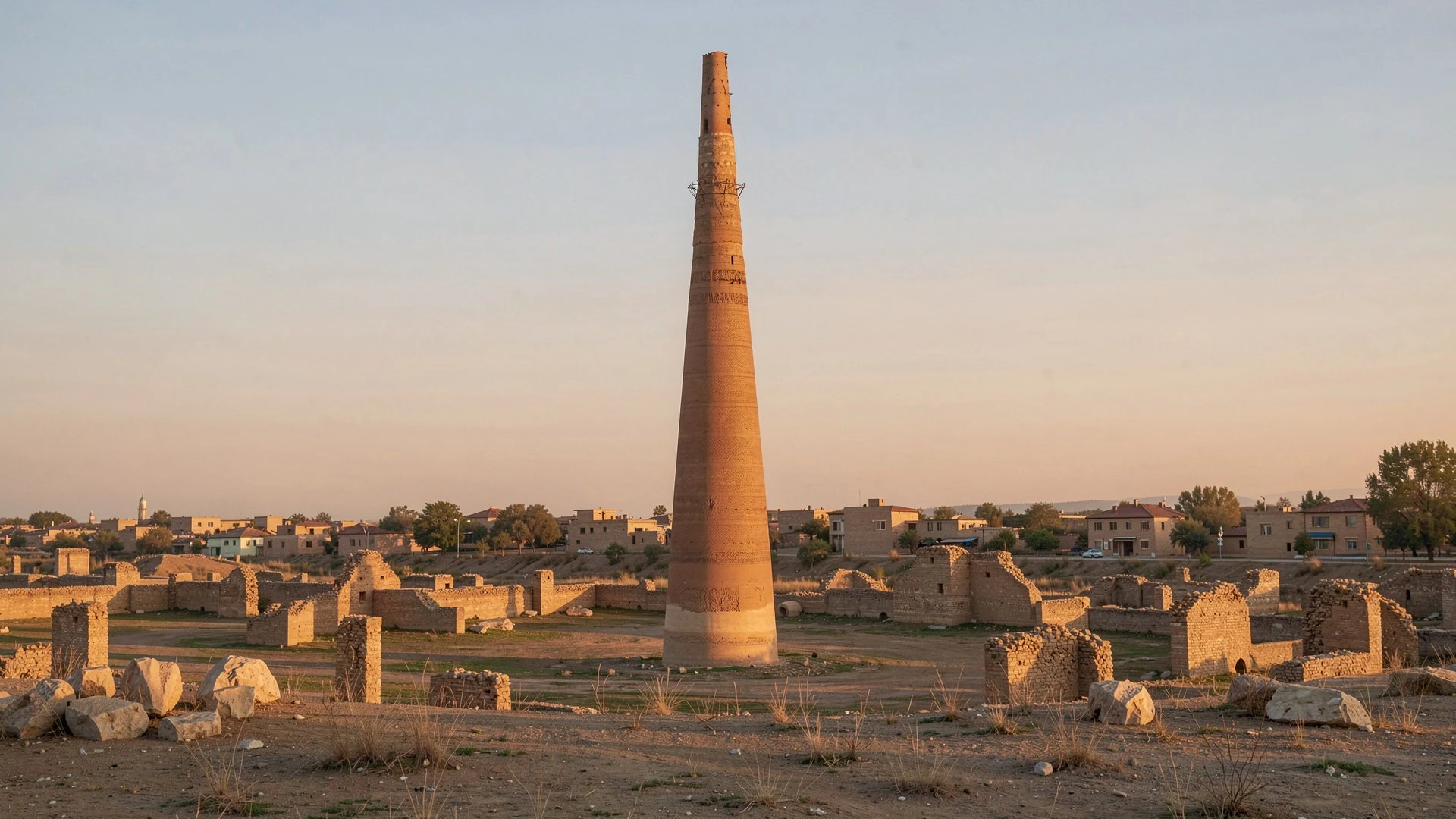
- Mausoleum of Fakhr ad-Din Razi
The Mausoleum of Fakhr ad-Din Razi points to the scholarly side of Khwarazm’s heritage, linking architecture to intellectual life. It’s one of the smaller stops compared with the biggest domes, but it’s valuable for understanding how the site’s spiritual and educational roles overlapped in daily practice.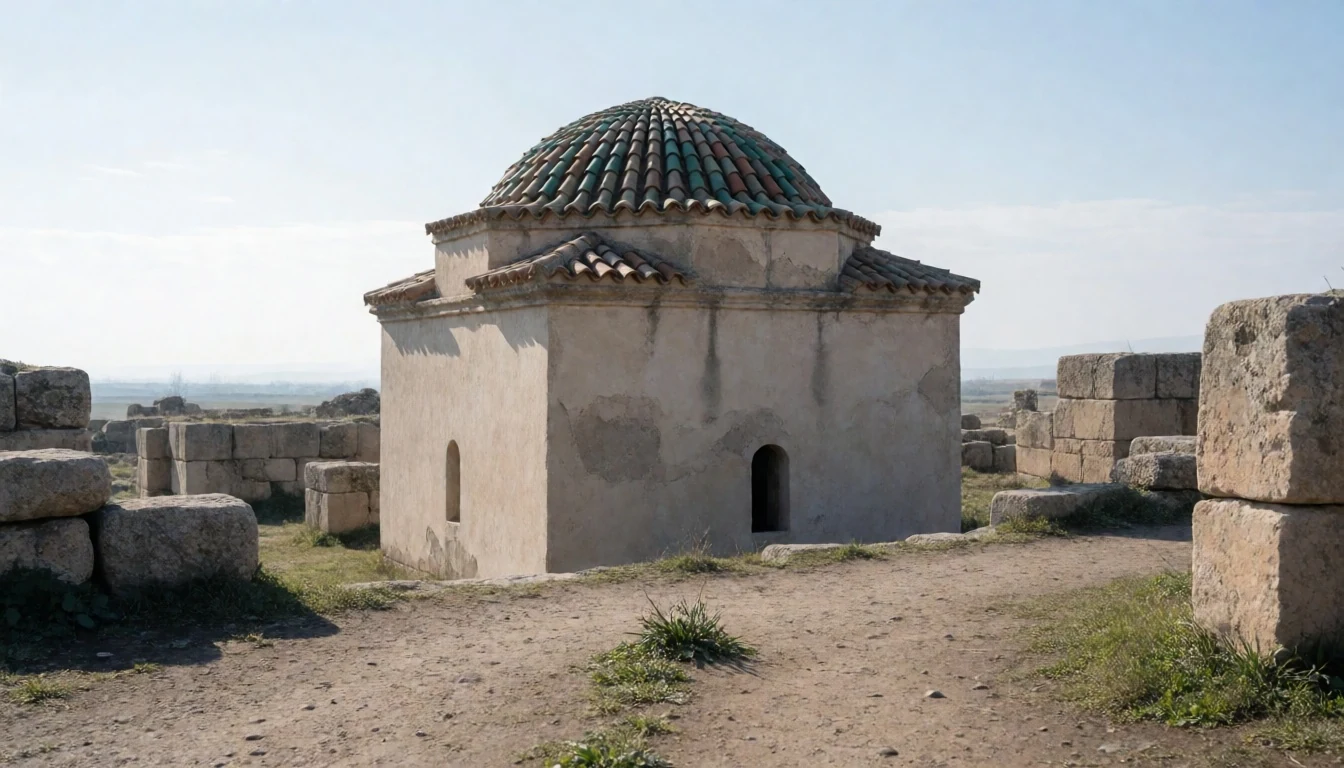
- Minaret of Mamum
Kutlug Timur Minaret rises as a vertical marker amid the low ruins. It helps you orient yourself when you’re weaving between mausolea and courtyards, and it’s also a good subject for late-day photography when the angle softens the contrast between domes, walls and open sky.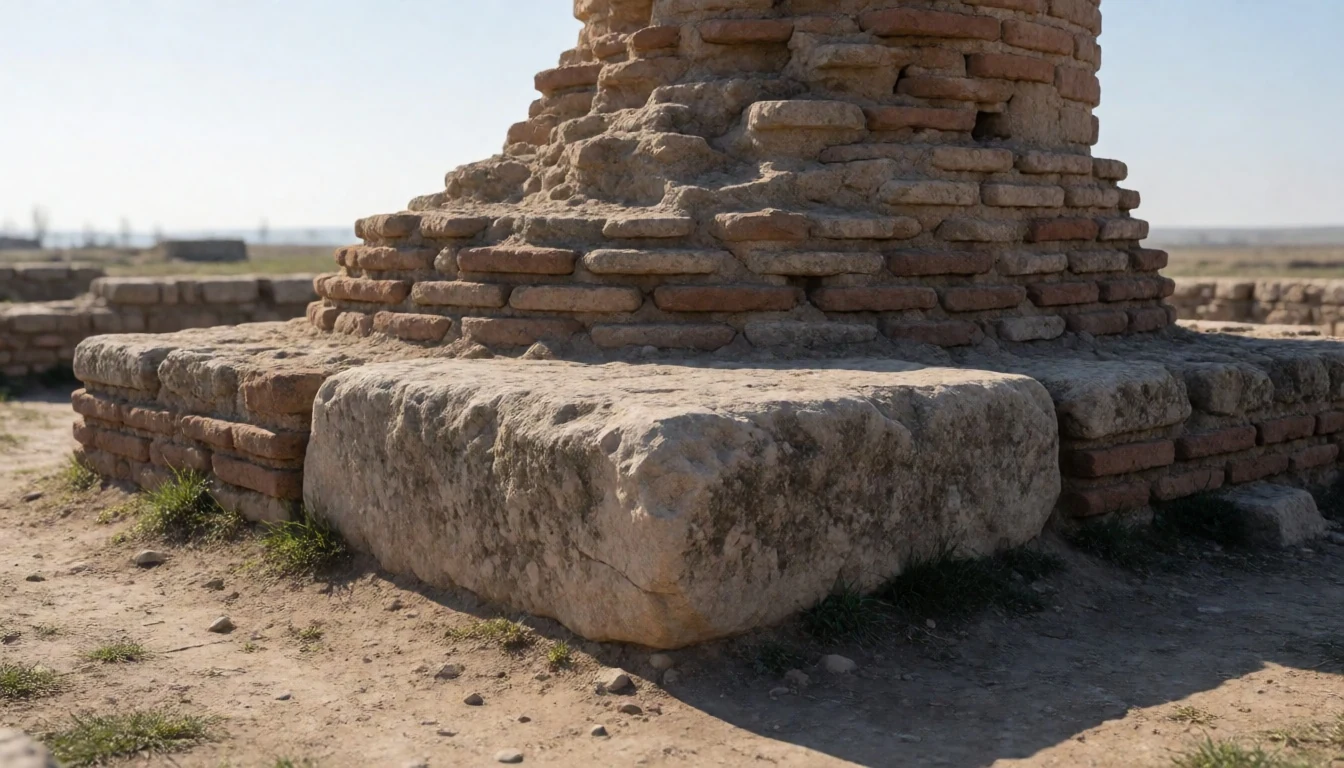
Culture
Köneürgenç feels like a “graveyard city” in both literal and figurative ways. Because many of the buildings were made as tombs and mausolea, the site has remained culturally active rather than becoming purely archaeological. After major historical disruptions, people buried their dead within the same broader area, and even today the layout carries that sense of permanence.
That’s why behaviour matters here. There are paved paths for a reason: staying on them helps protect fragile remains and keeps visitors from walking through areas that still feel like sacred ground. The atmosphere can shift when pilgrims are present—many visitors come to pray, especially since tomb-like structures are focal points.
A practical way to travel respectfully is to lower the noise level as you approach mausolea and domes, particularly if you see someone praying. If photographs are tempting, remember that the human context is part of the scene; focusing on architecture is fine, but intrusive filming or crowding over someone’s moment is not.
This isn’t a place where rushing gives good results. The ruins reward slow circling: pause, read the ground, and let the quiet settle in before moving on.
Visitor etiquette: keep to paved paths and speak softly in and around tombs so that praying visitors aren’t disturbed.
What to wear
At Köneürgenç, clothing is about comfort and respect more than style. Turkmen and Uzbek influences are visible around the mausolea areas, and visitors will often be in the same spaces as people who come to pray. That means modesty helps: choose clothing that covers shoulders and keeps knees covered, especially when entering tomb areas or standing close to shrine spaces.
For textiles, you’ll see traditional styles worn more commonly by locals than by tourists. In Turkmen settings, long dresses and tailored garments with decorative patterns are typical, while headscarves can appear in everyday contexts. Even if many visitors wear modern clothes most of the time, the traditional “covered” look is a useful benchmark.
For what to wear now, think desert-dry practicality: daytime heat in summer can be intense, and nights can feel cooler when temperatures drop. Bring a light layer for wind and shade, plus a hat and sunglasses.
Footwear matters because the ground can be uneven across the ruin landscape—good grip shoes or trainers are the safe choice. Avoid anything too delicate or slippery, and carry a small bag for water. If visiting in colder months, add warm socks and a jacket; winters are short but cold.
What to eat
- Cafe meals in the town — Konye Urgench / town cafés
For an easy sit-down bite, look for a small café in town. It’s a straightforward option when the day’s sightseeing leaves everyone hungry, and it works well as a reset point before heading back toward Dashoguz or the border routes.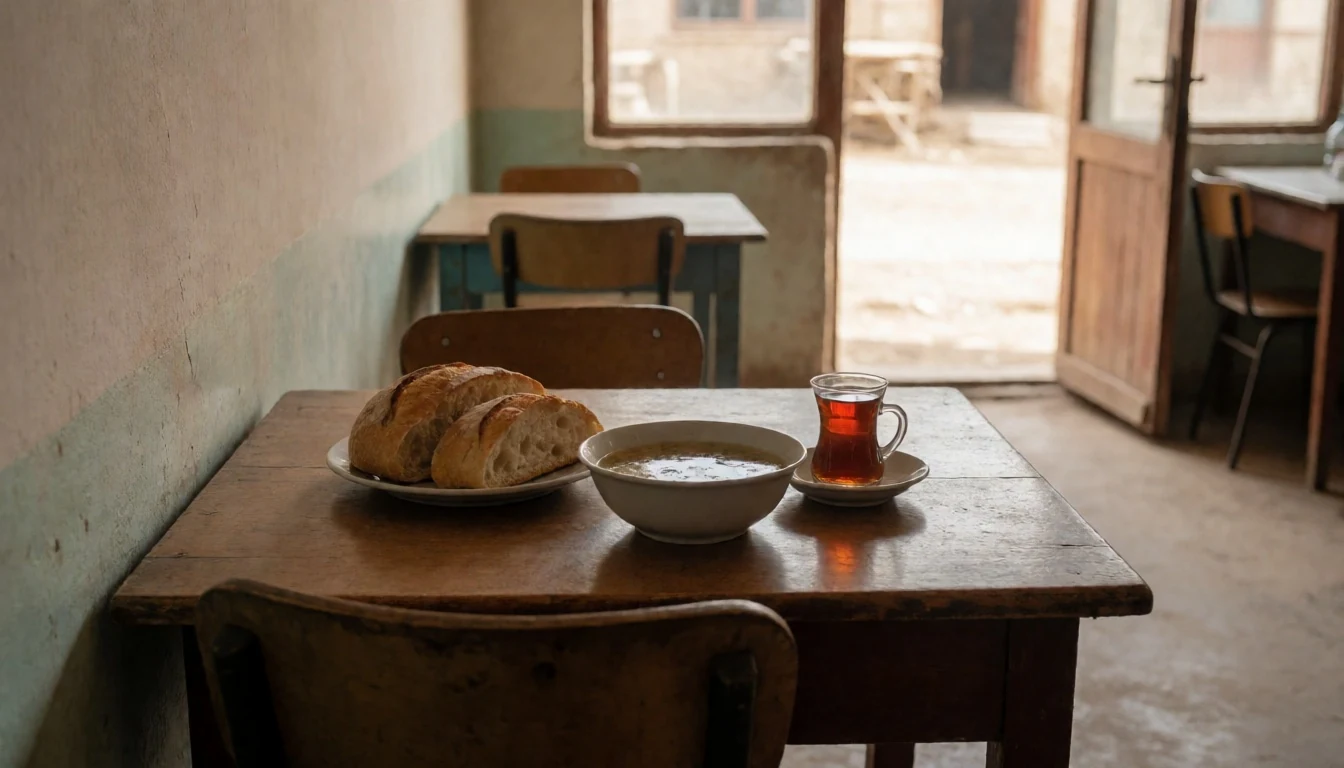
Plan it
Best time. March–April and October–November for calmer temperatures; the listed climate means summers are long and hot and winters are cold.
How long. 2–3
Getting there. The nearest airport connection is Ashgabat (for flights to Dashoguz), then the last leg is arranging transport to Köneürgenç—there are frequent buses and marshrutkas between Dashoguz and the area.
Budget. mid
Tips
- Do mausolea-heavy walks when the light is softer rather than mid-afternoon.
- Consider staying overnight in Dashoguz, since comfortable hotels in Köneürgenç are limited.
- Expect a rural approach road with farm traffic if travelling by car.
- Carry water and keep some cash on hand for small purchases and local transport.
Etiquette
- Use the paved paths and don’t wander onto fragile ground around graves.
- Keep noise low and be mindful if someone is praying inside a tomb area.
- Dress modestly when approaching mausolea or shrine spaces.
Nearby
Sources
- Wikidata Q48472 (CC0)
- Wikipedia: Konye-Urgench (rev 1381046045) (CC BY-SA 4.0)
- Wikivoyage: Konye Urgench (rev 5421193) (CC BY-SA 4.0)
- Photo 01: KonyeUrgenchMausoleum.jpg (CC BY 3.0)
- Photo 04: Kutlug_Timur_minaret.JPG (CC BY 3.0)
- Photo 07: Mosaic_Turabek.JPG (CC BY 3.0)


