Nijhum Dwip
Nijhum Dwip, Bangladesh
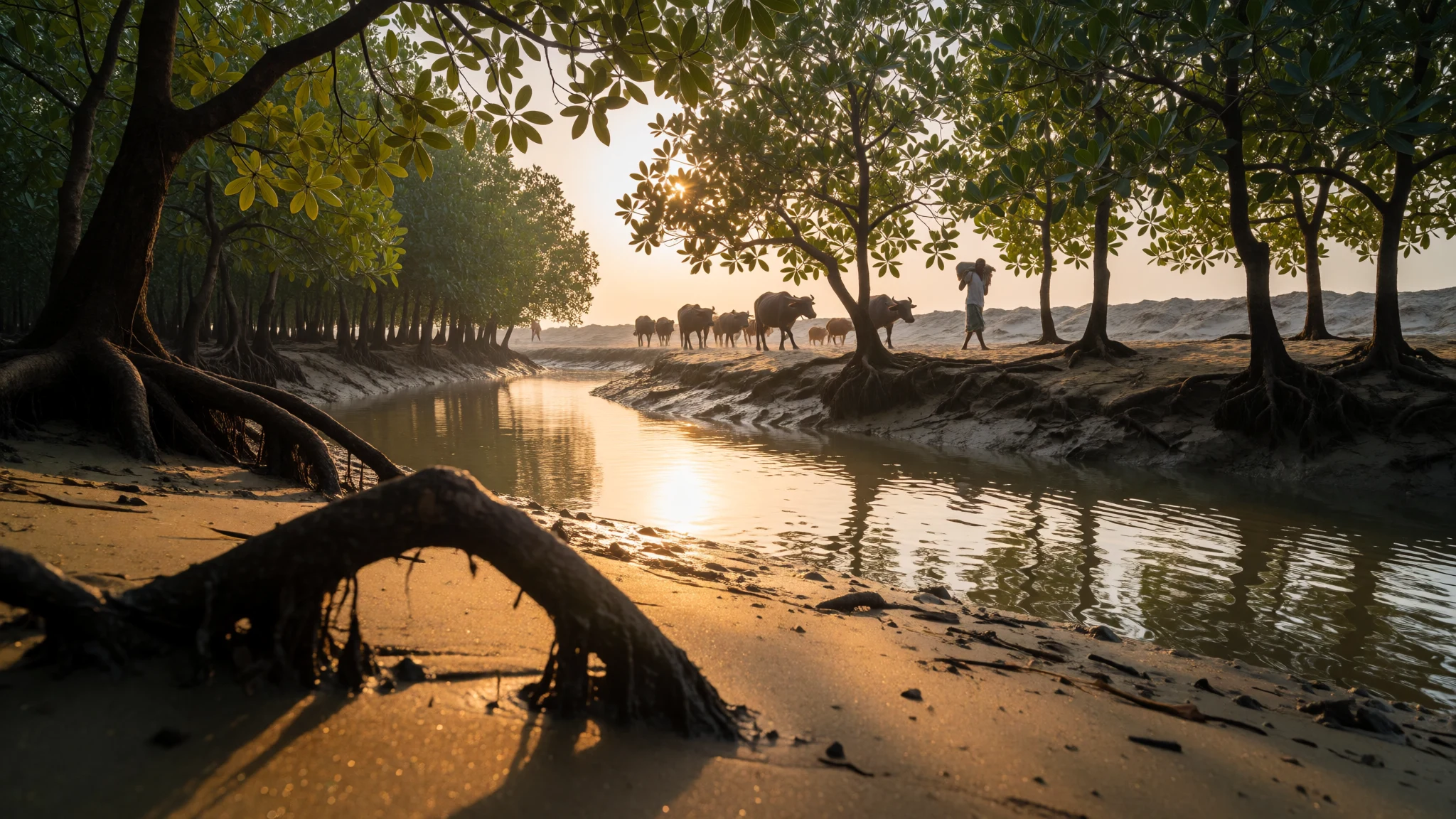
Nijhum Dwip is a quiet silt island of mangrove, deer and buffalo, reached by boat and best for slow winter days.
The place
Nijhum Dwip, whose name means 'Silent Island' in Bengali (নিঝুম দ্বীপ), lies in the Bay of Bengal off the Noakhali coast and is administered as part of Hatiya upazila. It is a low, flat island of sand, silt and mangrove, built from sediment carried down by the Meghna estuary. Nothing rises above treetop height, and the horizon is mostly water, mud flats and sky. The northern side is covered by a planted forest in which keora trees dominate, with gewa, bain, babul and several other species mixed in. The woodland shelters spotted deer, wild boar and rhesus macaques, while buffalo herds wander the clearings and sandy tracks. Several thousand people live here, most of them farming or fishing. Fishermen from elsewhere also use the sunny, breezy ground to dry their catch, sometimes raising straw huts for the season. In winter, migratory birds gather on the flats in large flocks. The island has also been called Char Osmani, Baluar Char and Golden Island. A char is a river-made sandbank, and the word explains a lot: this is young ground, shaped and reshaped by tides. Anyone going should expect a simple, quiet stay rather than a resort. Roads are few, accommodation is limited, and the crossing by boat over open, silty water is part of the experience. Most visitors are Bangladeshis who come in the cooler months.
Its story
Nijhum Dwip is a young island, and its story begins with mud. In the middle of the twentieth century a cluster of sandbanks rose in the shallow estuary south of Noakhali, among them Ballar Char, Kamlar Char, Char Osman and Char Muri. Fishermen noticed them first and called the new land Baular Char, meaning a sandy alluvial bank, a name that later softened into Ballar Char. Settlers followed, drawn by fertile silt and fishing grounds. The Forest Department then began a long afforestation programme on the northern side, planting mangrove species that now form a dense, deep forest. In the mid-1970s a government minister, Amirul Islam Kalam, gave the island its present name after seeing how isolated and gentle it was. At the turn of the century the government declared a national park covering the forest of the wider Jahajmara range, including the forest land on this island, to protect its wildlife. The Wikipedia article notes that the declaration has been applied only loosely in practice, which is worth remembering when judging how protected the place feels on the ground. Several charities and development organisations have worked here, supporting a community that lives mostly from cultivation and fishing. Because the south coast opens directly onto the wide bay, whales have occasionally been reported offshore, a reminder of how close this quiet island sits to deep water.
What to see
- The keora forest — Northern Nijhum Dwip
The planted forest on the northern side of Nijhum Dwip is the island's main draw. Keora trees dominate, with gewa, bain and other mangrove species in the mix. Paths and tracks run through it, and spotted deer are sometimes seen at the edges. Go early or late, when the light is softer and animals are more active.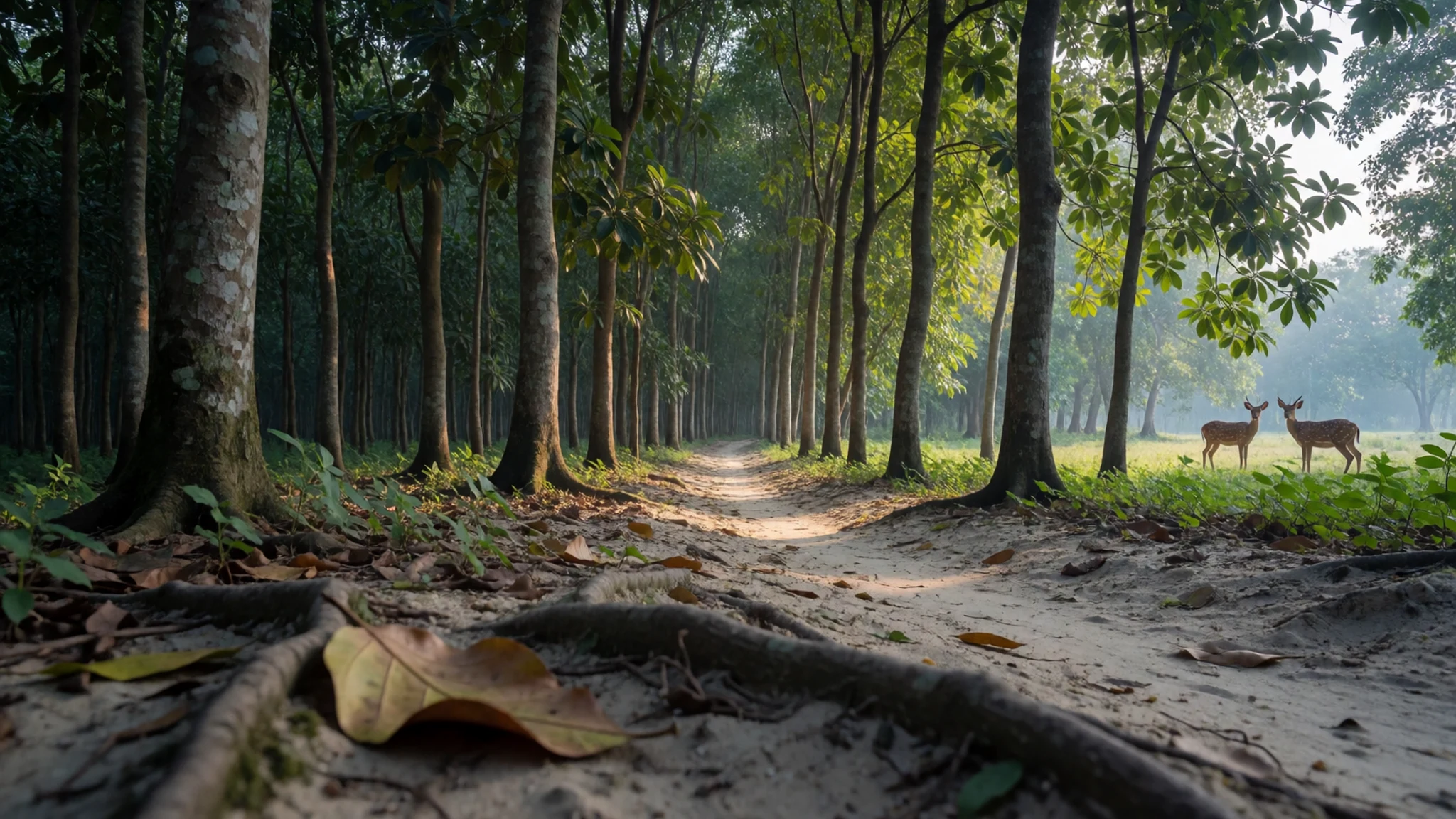
- Chowdhury Khal — Interior of the island
This tidal creek on Nijhum Dwip is a pleasant place to see how water shapes the island. The route to it passes village land and mangrove edges, and the creek changes character with the tide. Ask a local guide about timing, since mud and water levels decide how far you can comfortably walk.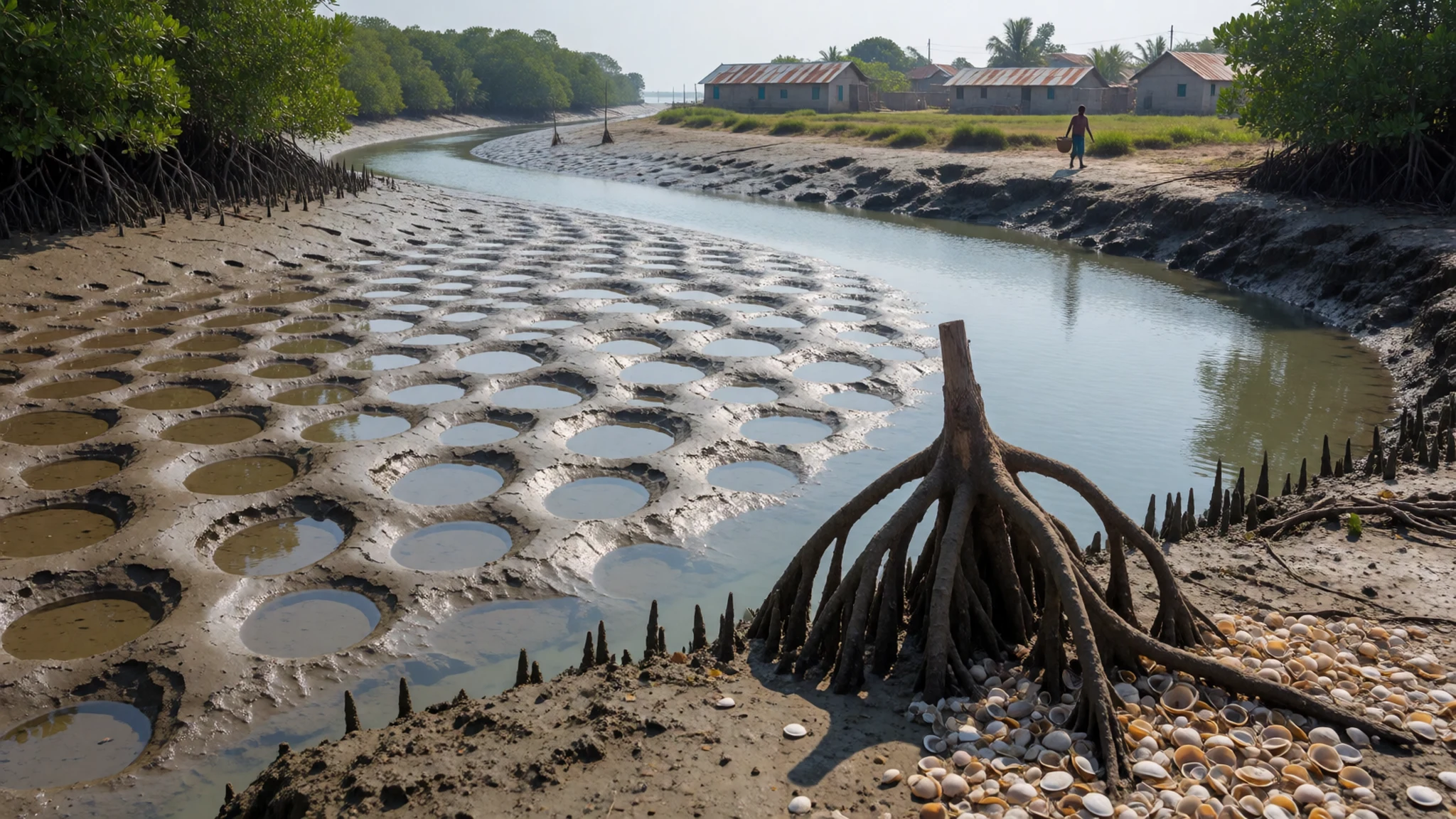
- The buffalo herds — Grazing land across the island
Buffalo are part of daily life on Nijhum Dwip, and herds move slowly across grazing land, tracks and shallow water. They are working and farm animals rather than a show, so watch from a distance. Late afternoon, when the herds head home, gives the most atmospheric views.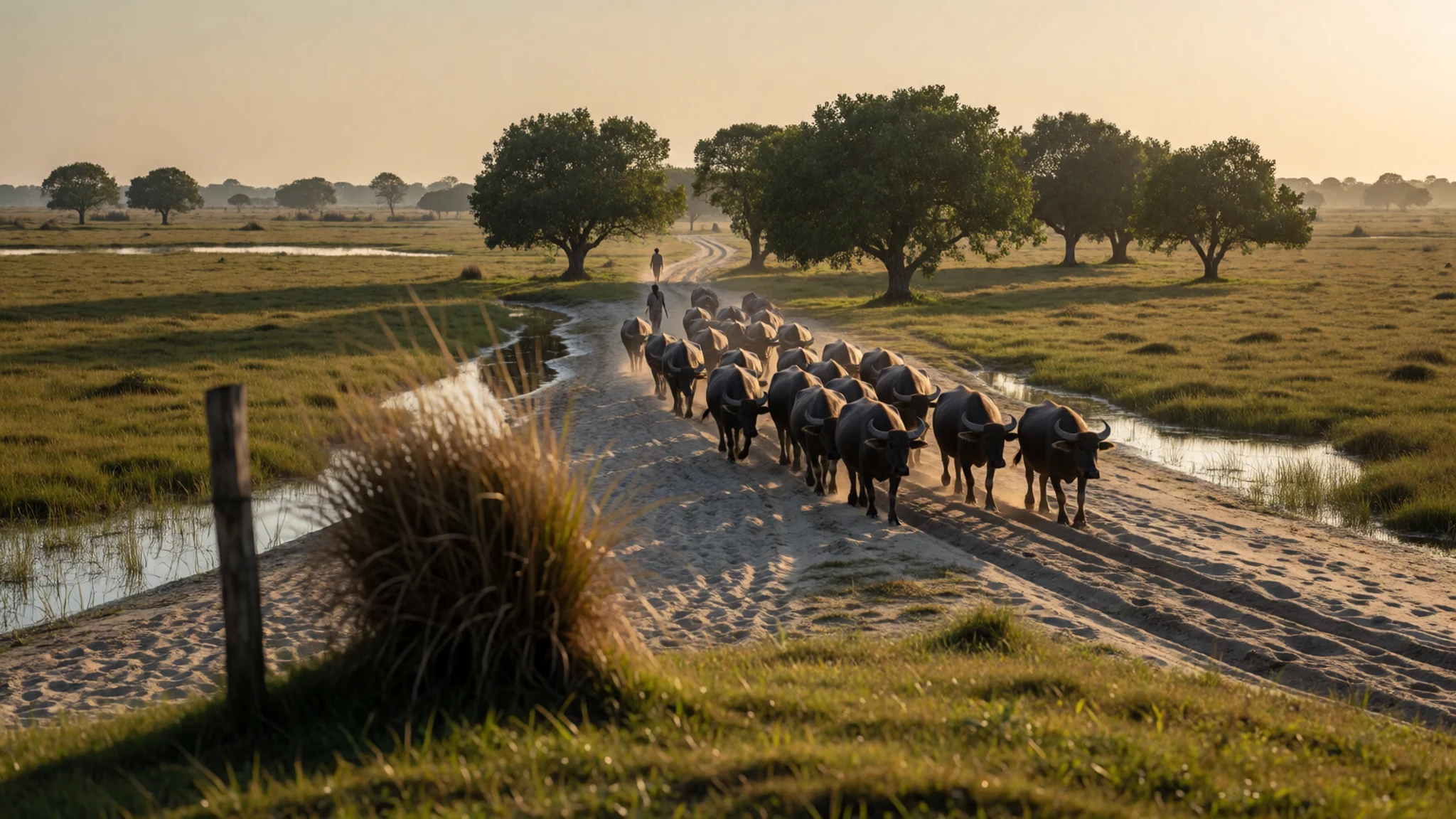
- Boat building on the shore — Shoreline near the fishing landings
Along the shoreline of Nijhum Dwip, wooden fishing boats are built and repaired by hand, and half-finished hulls often sit on the sand. It is a good place to see skills that sustain the island's economy. Keep out of the way, ask before photographing, and let the workers set the pace.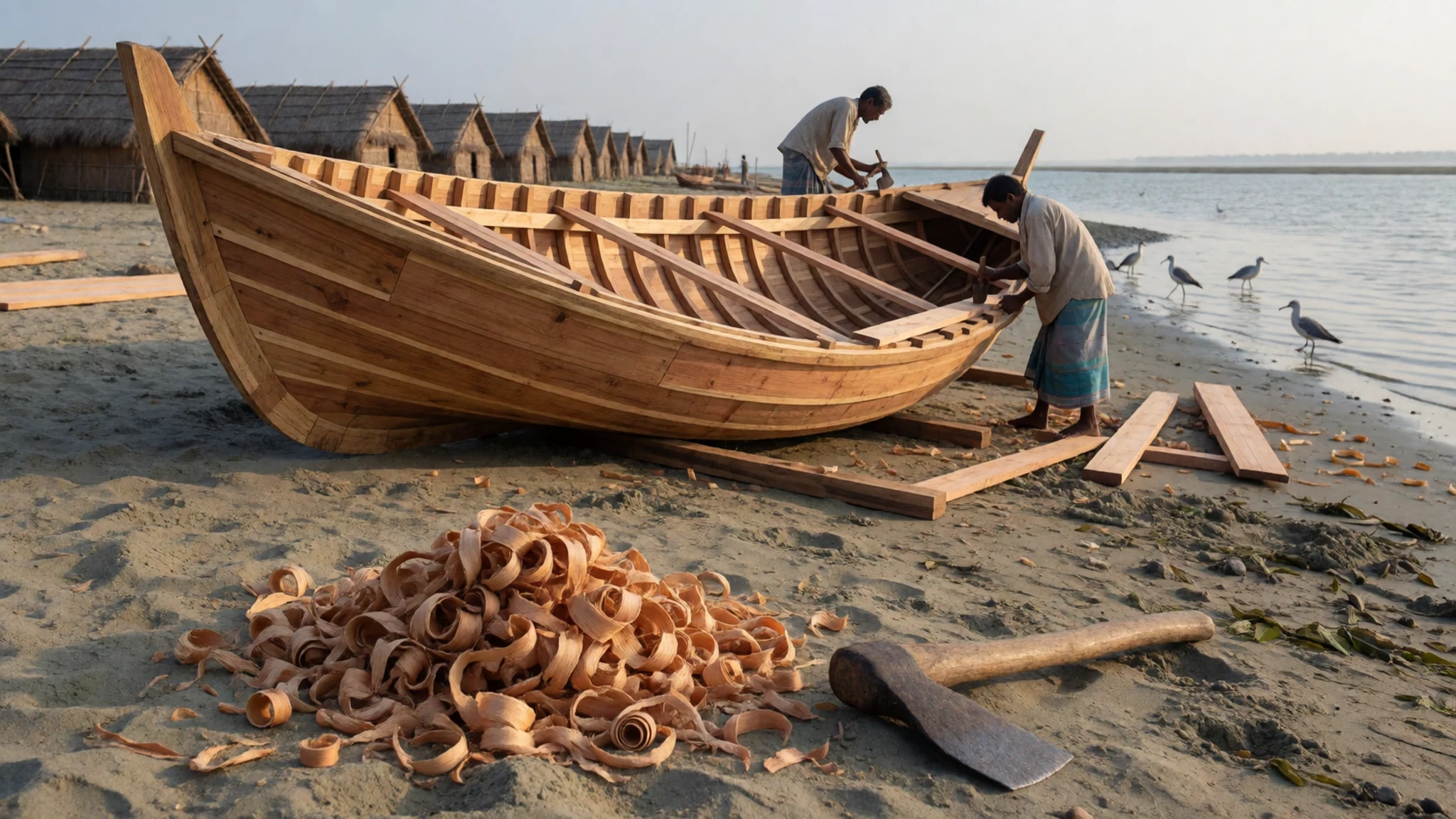
- Sunset on the flats — Beaches on the island's open side
The south and west of Nijhum Dwip face open water, so evenings here are long and wide. As the tide drops, wet sand mirrors the sky and fishing boats turn into dark silhouettes. In winter, flocks of migratory birds add movement. Bring a torch for the walk back.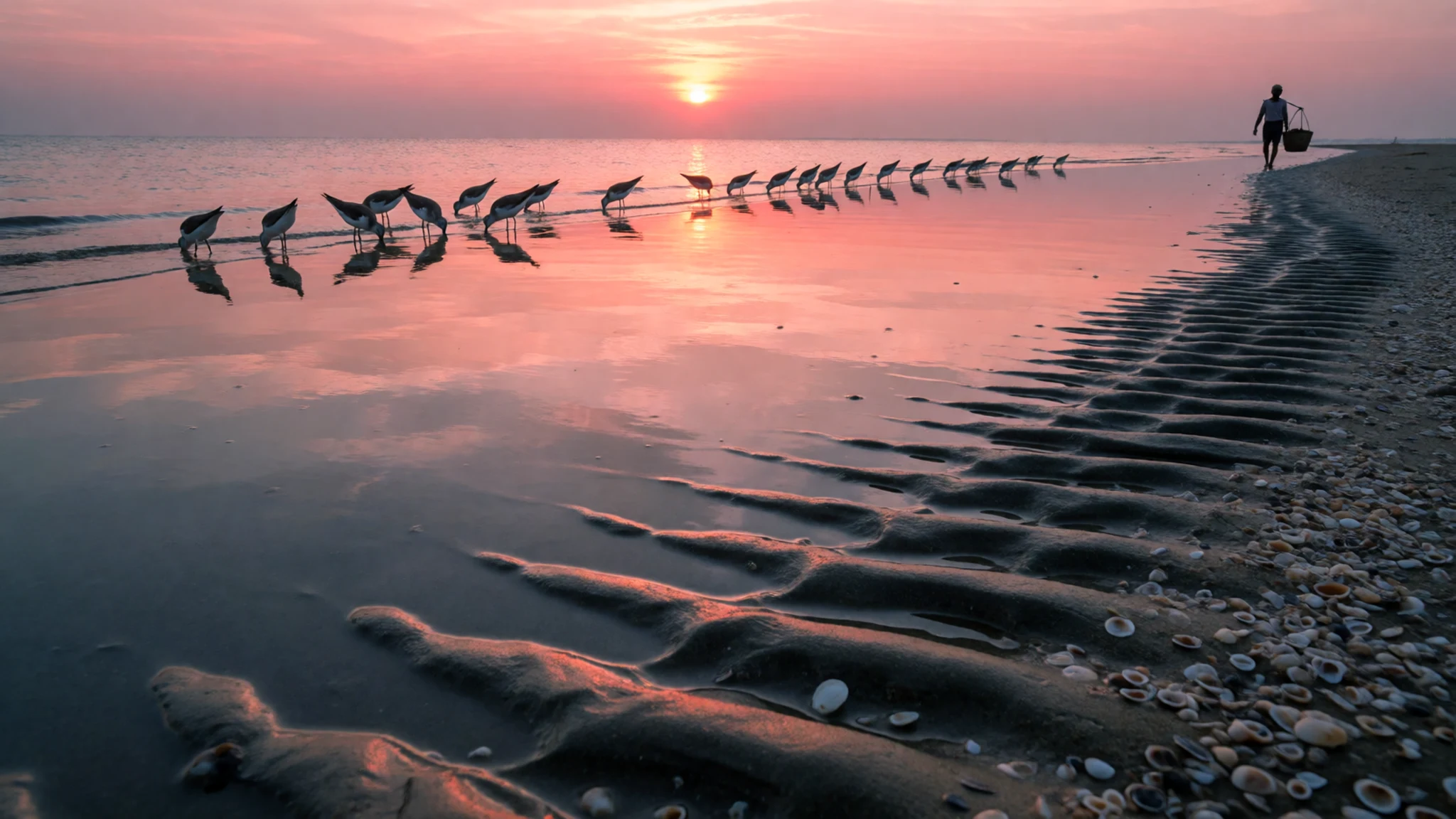
Culture
Nijhum Dwip is a working island, and its culture is that of rural coastal Bangladesh: Bengali is the everyday language, daily rhythms follow the tides and the fishing seasons, and life is organised around boats, fields and animals. The community is young by the standards of the mainland, since the land itself is recent, so there are no old monuments or grand festivals to visit. What you meet instead is hospitality, practical skill and an easy pace. Villagers farm the silt, graze buffalo, and sell fish at small landing points. Fishermen who come from other areas dry their catch on the sand and sometimes live in straw huts for weeks at a time, so the shore is a workplace as much as a view. Tea stalls serve as the social centre in the evenings, and conversation with visitors is usually friendly and curious. The name 'Silent Island' fits the mood more than the soundscape, which is full of wind, birds and boat engines. Tourism here is small and mostly domestic, which means the local economy has not been reshaped around outsiders. Respect for that arrangement goes a long way. Ask permission before photographing people, particularly women and fishermen at work, and keep clear of the fish-drying racks, which are someone's livelihood.
What to wear
Nijhum Dwip follows the dress of rural Bangladesh. Traditionally, women wear the sari, usually in cotton or lighter synthetic blends, often draped with the end over the shoulder, while men wear the lungi, a wrapped cotton cloth, along with a loose shirt or panjabi for formal moments. A gamchha, the thin cotton towel-scarf, is used by many men as a head cover, sweat cloth and bath towel. Cotton weaving is a long tradition in Bangladesh, and the finest examples, such as jamdani, are for weddings and special days rather than daily island work. Today, people on the island mix these garments with shalwar kameez, cotton shirts, trousers and rubber sandals, and fishermen wear whatever tolerates salt and mud. Visitors should dress for heat, humidity and soft, wet ground. Light, loose cotton in modest cuts, with covered shoulders and knees, suits village life and avoids attention. Bring a wide-brimmed hat, a thin rain jacket and sandals that can be washed, plus a spare pair of socks for forest walks. Swimwear is not the local norm, so if you paddle, wear shorts and a loose top. A scarf is useful for sun, dust and boat spray, and is worn by many local women as well.
What to eat
- Fresh fried sea fish — Small eateries near the fishing landings
Fish landed at Nijhum Dwip is usually fried with turmeric and salt or cooked in a simple onion-and-chilli curry. It is eaten with rice. Look for small eateries near the landing points, and choose places where the catch is clearly fresh.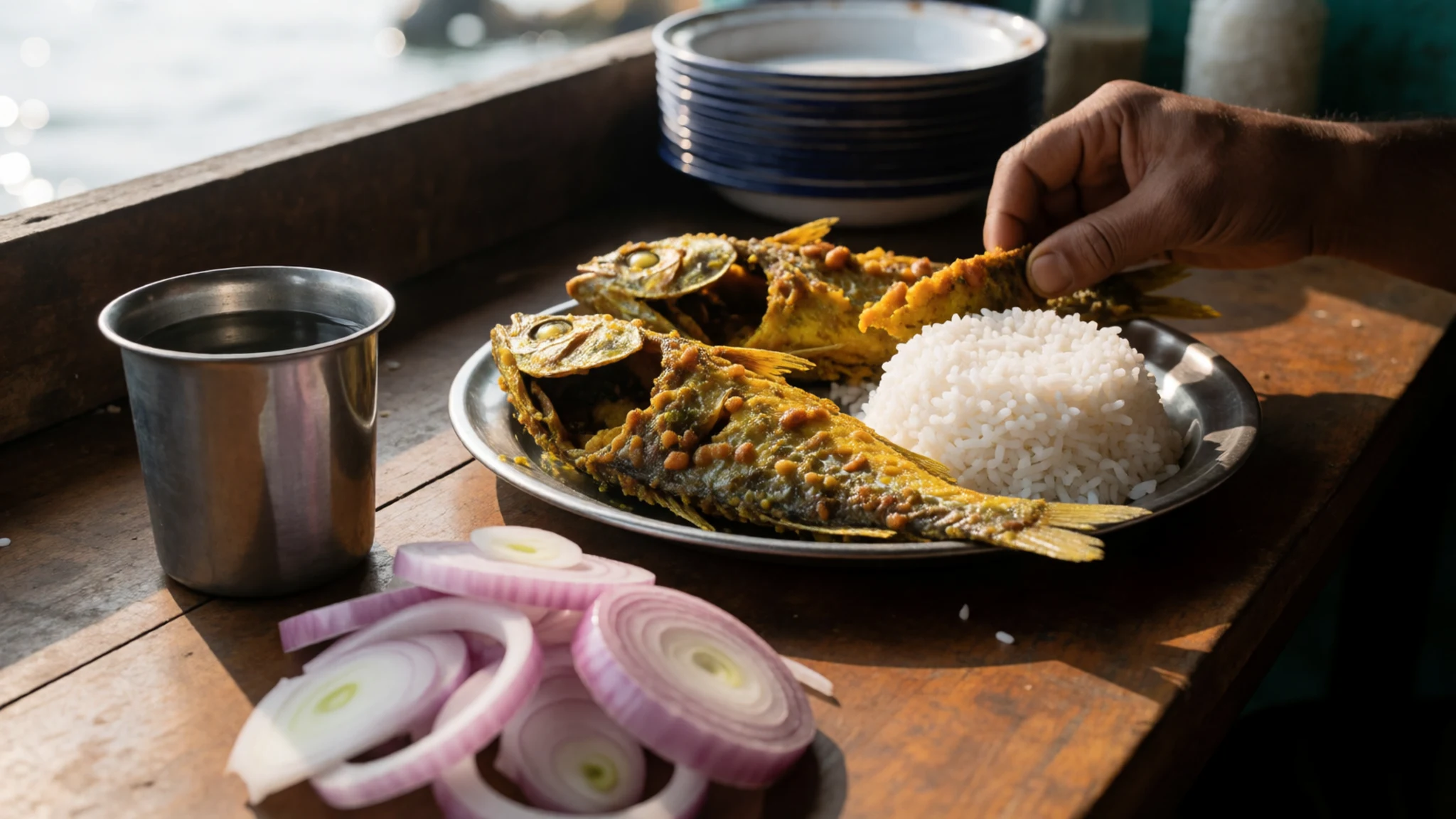
- Ilish (hilsa) with rice — Village eateries and tea-and-rice stalls
Hilsa is the fish most associated with Bengali cooking, usually steamed or curried in mustard. Availability depends on season and catch, so ask what is in. Expect a lot of fine bones, which locals eat around with practised ease.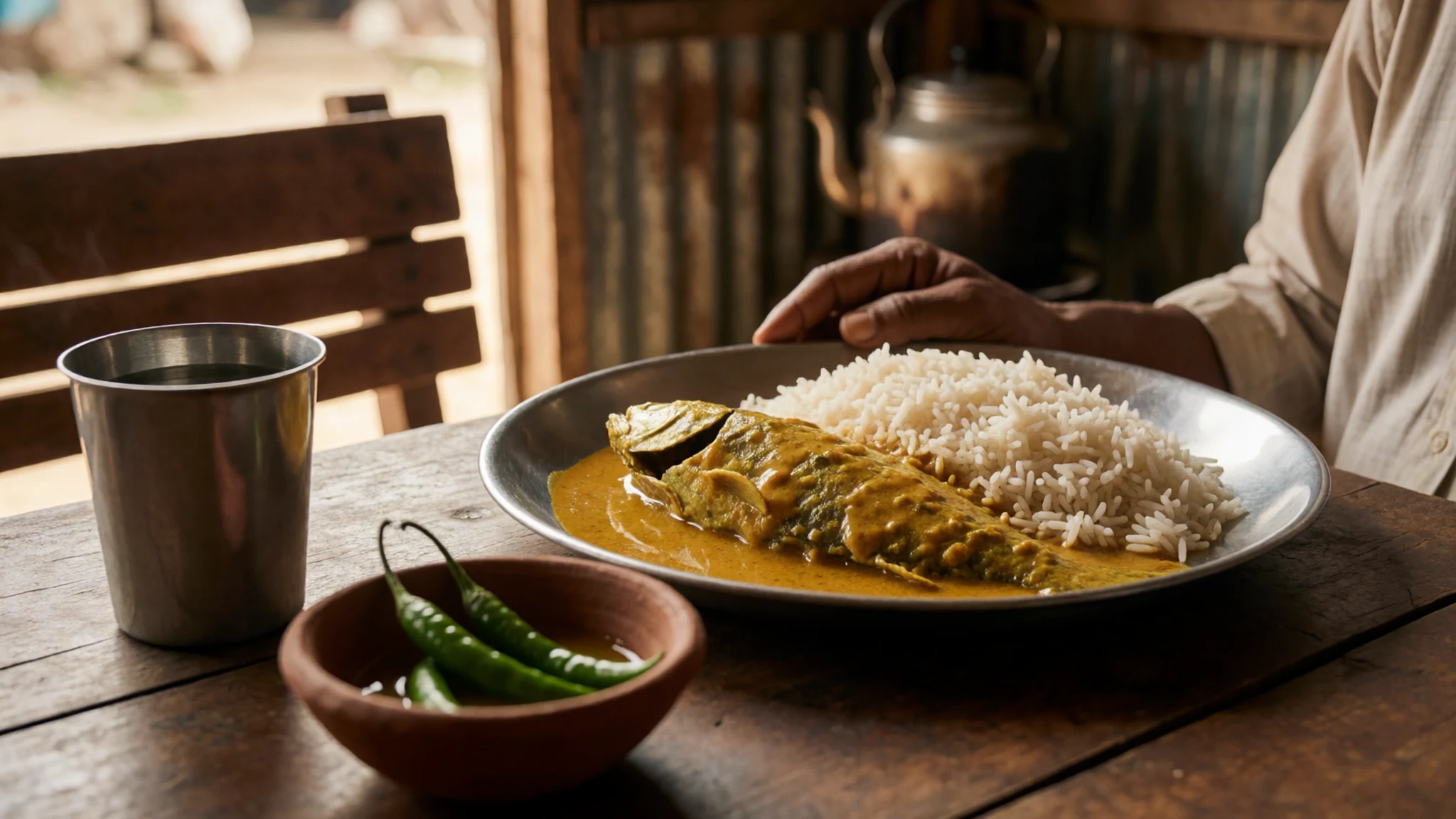
- Shutki (dried fish) — Home kitchens and village eateries; drying areas on the shore
Dried fish is made on the island's sunny sand, and appears in strong-smelling, spicy bhorta or curry. It is an acquired taste, and a good lesson in how local fishing and cooking are connected. Try a small portion first. - Rice, dal and bhorta — Rice-and-curry stalls near the jetty
The everyday meal is plain rice with lentils and a mash called bhorta, made from vegetables, fish or dried fish with chilli and mustard oil. It is simple, filling and usually what a local eatery has ready. - Buffalo curd (doi) — Village shops and market stalls
With so many buffalo on the island and across the region, thick, sweet curd is a sensible treat after a hot walk. It is usually sold in small earthen pots. Ask whether it is made locally. - Tea and biscuits — Tea stalls near the jetty and village crossroads
Sweet milky tea at a roadside stall is the island's standard way to rest, meet people and wait for a boat. Biscuits or fried snacks usually come with it.
Plan it
Best time. November to February, when the weather is cooler and drier and migratory birds arrive on the flats; the monsoon brings rain, rougher water and harder boat crossings.
How long. 2–3
Getting there. There is no regular direct passenger service, so plan the route ahead. From Dhaka, take a launch from Sadarghat terminal to Tomuddin, then a local motorboat to the island. From Chittagong, take a boat to Hatiya and then a local motorboat to Nijhum Dwip. Check current schedules with operators, as silt and weather affect crossings.
Budget. low
Tips
- Ask the Forest Department in advance if you want to use the forest rest house; permission is needed.
- The District Parishad guest house needs permission from Hatiya's thana administration (TNO), so arrange it before travelling.
- Accommodation is very limited, so book early and keep plans flexible.
- Carry cash, drinking water, a torch and insect repellent, as shops and power are limited.
- Eat where the food is freshly cooked and busy, and be careful with water and raw items.
Etiquette
- Ask before photographing people, especially women and fishermen at work.
- Do not feed or chase deer, macaques or buffalo, and keep to forest paths.
- Take all rubbish away with you, as waste collection on the island is minimal.
Nearby
Sources
- Wikidata Q3350292 (CC0)
- Wikipedia: Nijhum Dwip (rev 1376932649) (CC BY-SA 4.0)
- Wikivoyage: Nijhum Dwip (rev 5394757) (CC BY-SA 4.0)
- Photo: Nijhum Dwip — Md Saiful Islam Khan (Aopu) (CC BY-SA 4.0)
- Photo: Nijhum Dwip (09) — Md Saiful Islam Khan (Aopu) (CC BY-SA 4.0)
- Photo: Buffalo Herd in Nijhum Dwip — Emonkhan (CC BY-SA 4.0)
- Photo: On the way to 'Chowdhury Khal' Nijhum Dwip — Emonkhan (CC BY-SA 4.0)
- Photo: A fishing boat at Nijhum Dwip — Salim Khandoker (CC BY-SA 4.0)
- Photo: Amazing sunset of Nijhum Dwip — Arman333 (CC BY 3.0)
- Photo: Building a fishing boat at Nijhum Dwip (1) — Salim Khandoker (CC BY-SA 4.0)
- Photo: Building a fishing boat at Nijhum Dwip (2) — Salim Khandoker (CC BY-SA 4.0)


Wildlife
- Spotted deer (animal)
The chital is the spotted deer, a golden-brown deer whose coat looks as if it has been scattered with white confetti. On Nijhum Dwip it shelters in the woodland, and your guide will know the best moments to look for it. Only the males carry antlers, which branch into three points. Watch from a respectful distance, keep your voice low and your movements slow, and never offer food, so the deer stay wild and wary.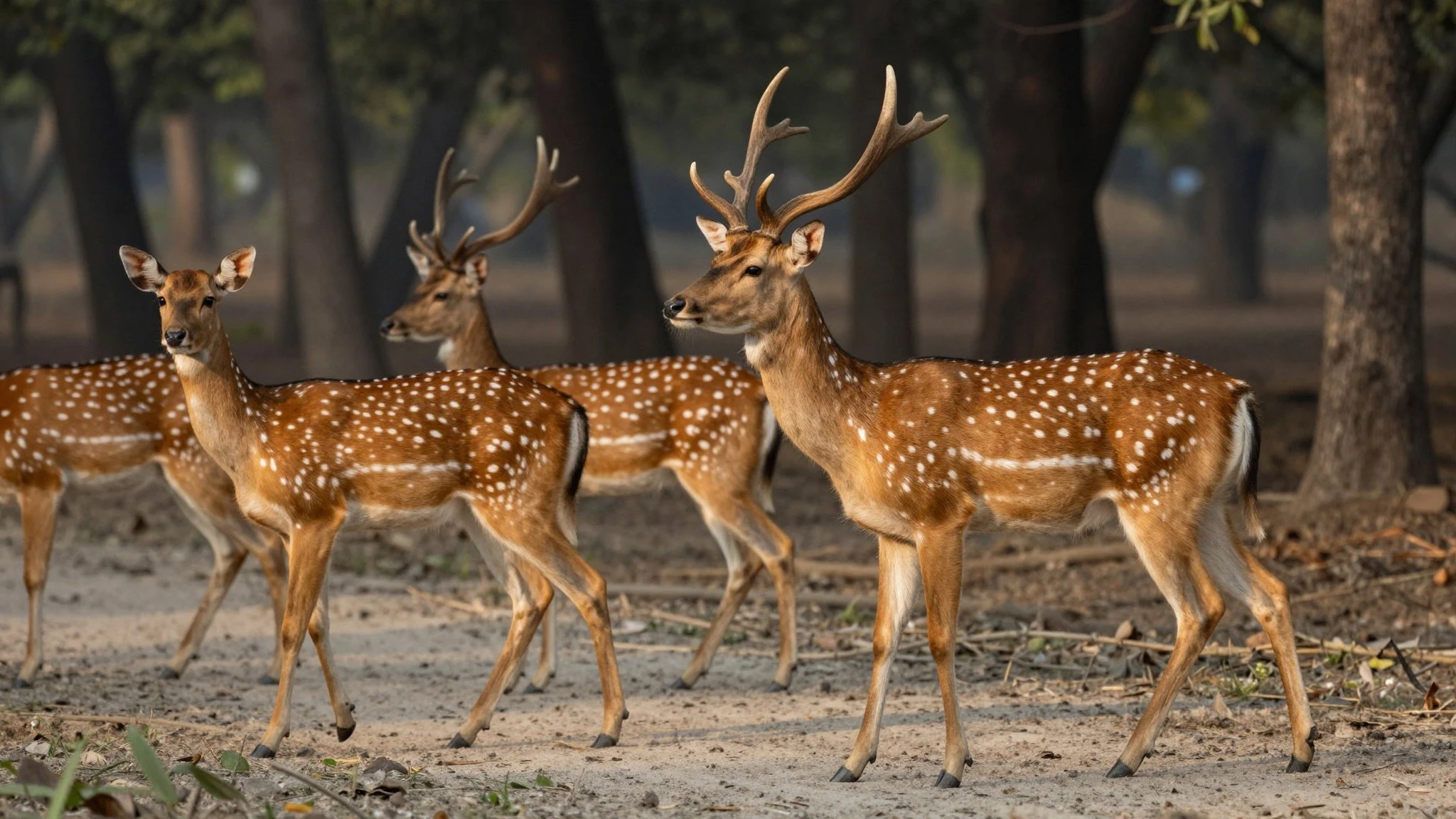
- Rhesus macaque (animal)
The rhesus macaque is a brown-grey monkey, the clever, quick-fingered kind that seems to watch you as closely as you watch it. On Nijhum Dwip it lives in the woodland, and your guide can tell you where troops are likely to be found. Keep a calm distance and speak softly, and hold your bags close. Never feed these monkeys, however sweetly they ask: food teaches them to approach people, and that is bad for them and for visitors.