Niagara-on-the-Lake
Niagara-on-the-Lake, Canada
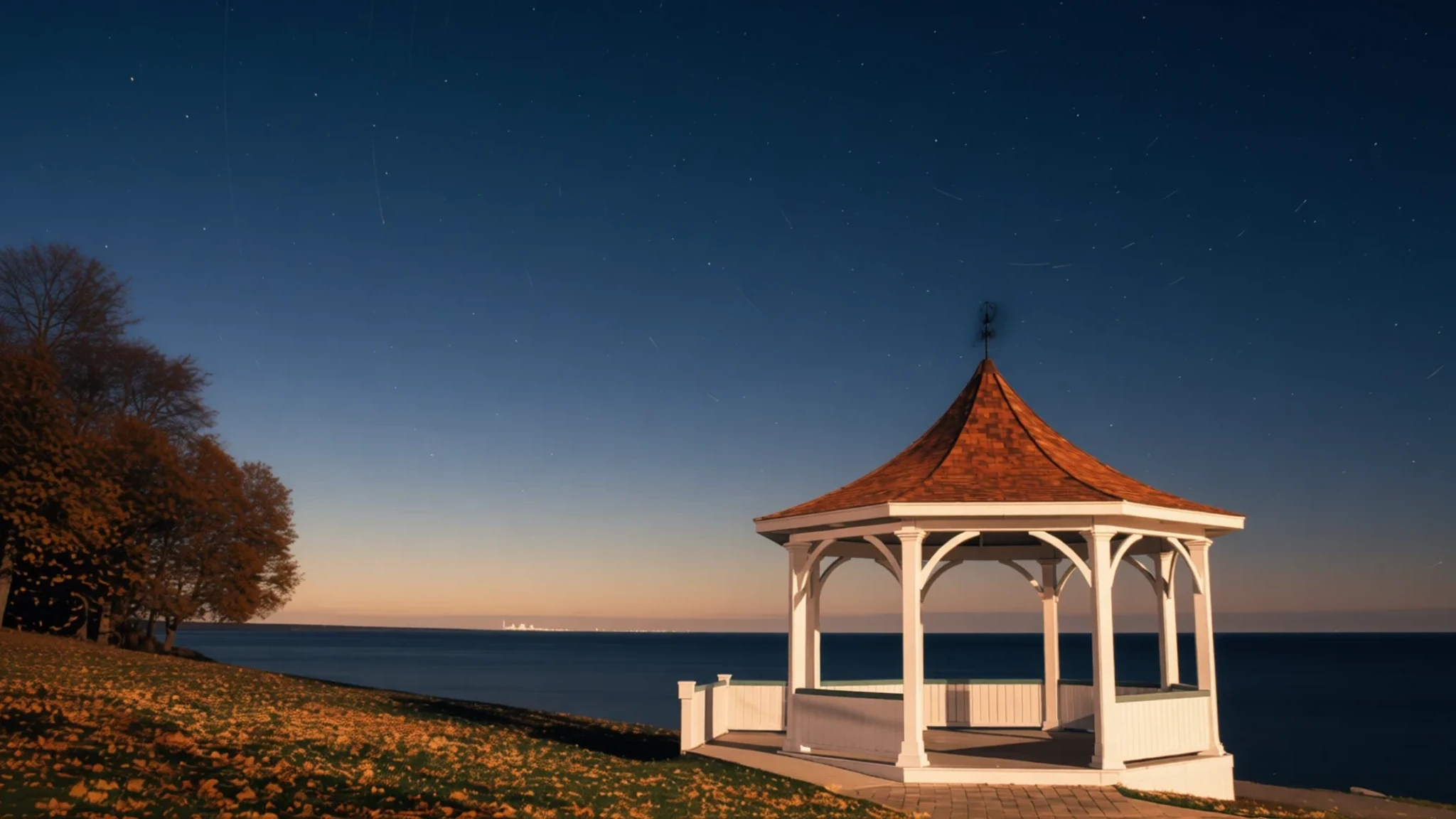
Niagara-on-the-Lake is a small lakeside town of old streets, Shaw Festival stages, forts and vineyard country.
The place
Niagara-on-the-Lake sits in southern Ontario where the Niagara River finishes its short run from the escarpment and opens into Lake Ontario. The town is low, leafy and compact: a grid of wide streets, clapboard and brick houses set behind gardens, and a main street that still reads as an old commercial row rather than a modern strip. Lake light is part of the weather. On a clear day the water at the river mouth is a hard blue; when the wind comes off the lake, even a warm afternoon turns sharp in the shade. The surrounding Niagara Peninsula is orchard and vineyard country, so the edge of town gives way quickly to rows of vines, peach trees and farm lanes rather than suburbs. Fort Mississauga occupies the grassy point where river and lake meet, a low brick work with a stone tower, and the riverbank path looks across to New York State, close enough that the far shore is ordinary scenery, not a distant idea. Queen Street is the public face — shops, theatres, cafés and houses that people still live in — while the side streets stay residential and quiet by mid-evening. Summers are warm and often humid, with weekend crowds drawn by theatre and wine; winters are cold, the harbour stiff with wind, and many gardens reduced to twigs until daffodil season returns.
Its story
Niagara-on-the-Lake grew up at a river mouth that Indigenous nations of the lower Great Lakes, among them the Neutral people of the peninsula, had used long before a British town was laid out. After the American Revolution, Loyalists crossed to this shore and the settlement, for a time called Newark, served as a seat of government for Upper Canada until the capital shifted inland, farther from a hostile bank of the river. War with the United States then broke the young town. Much of it was burned by a retreating American army. McFarland House, built in 1800, survived that destruction, so today's streets are a rebuilding. Fort Mississauga, the low work on the lake point, belongs to that same effort to hold the river entrance. Orchards followed the garrison. The lake takes the edge off the cold, so tender fruit will grow, and grapes eventually joined the peaches. Wineries learned to leave fruit hanging into the freeze for icewine. Later still, a festival of Bernard Shaw's plays turned the old court house and other halls into a summer-and-beyond theatre season, so the town's story is now told by soldiers' earthworks, farm lanes and a stage door on the same afternoon. Residents live inside that mix all year, not only when the audiences arrive.
What to see
- Queen Street — town centre
Niagara-on-the-Lake's Queen Street is the public spine: shops, theatres, cafés and private houses with deep front gardens. The McDougal-Harrison House is one of the older residences on the row, a sign that people live here as well as sell to visitors. Summer weekends slow to a shuffle. Early mornings and winter weekdays leave the brick pavements nearly empty, and the side streets turn residential within a few minutes.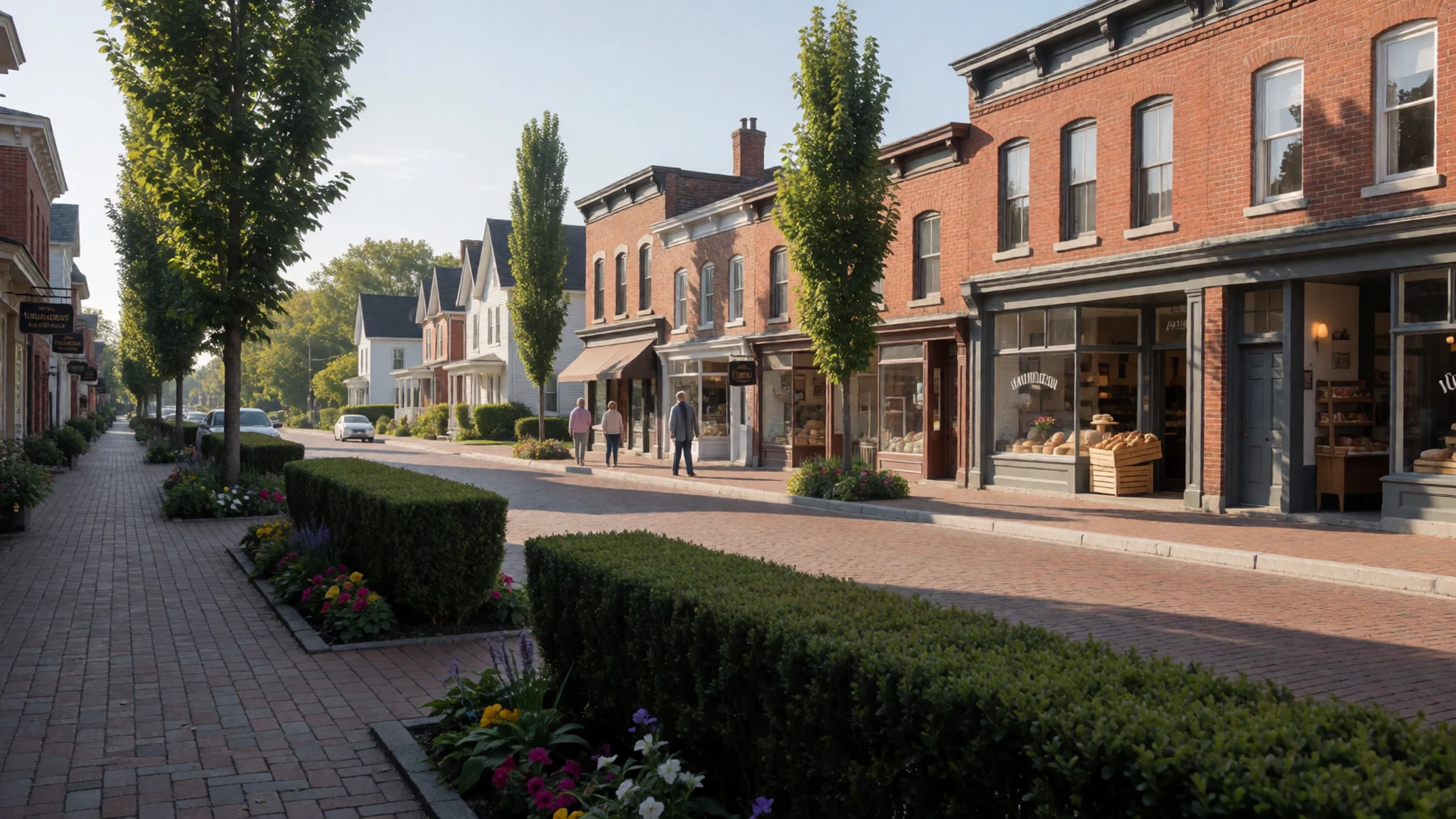
- Court House — Queen Street
The Court House in Niagara-on-the-Lake is an old civic building that now serves as a theatre for the Shaw Festival. The facade still reads as a courthouse: formal, symmetrical, set to face the main street. In the warm months the life inside is rehearsal, matinee and evening show. Out of festival season the building quiets, and the street returns to shops and neighbours.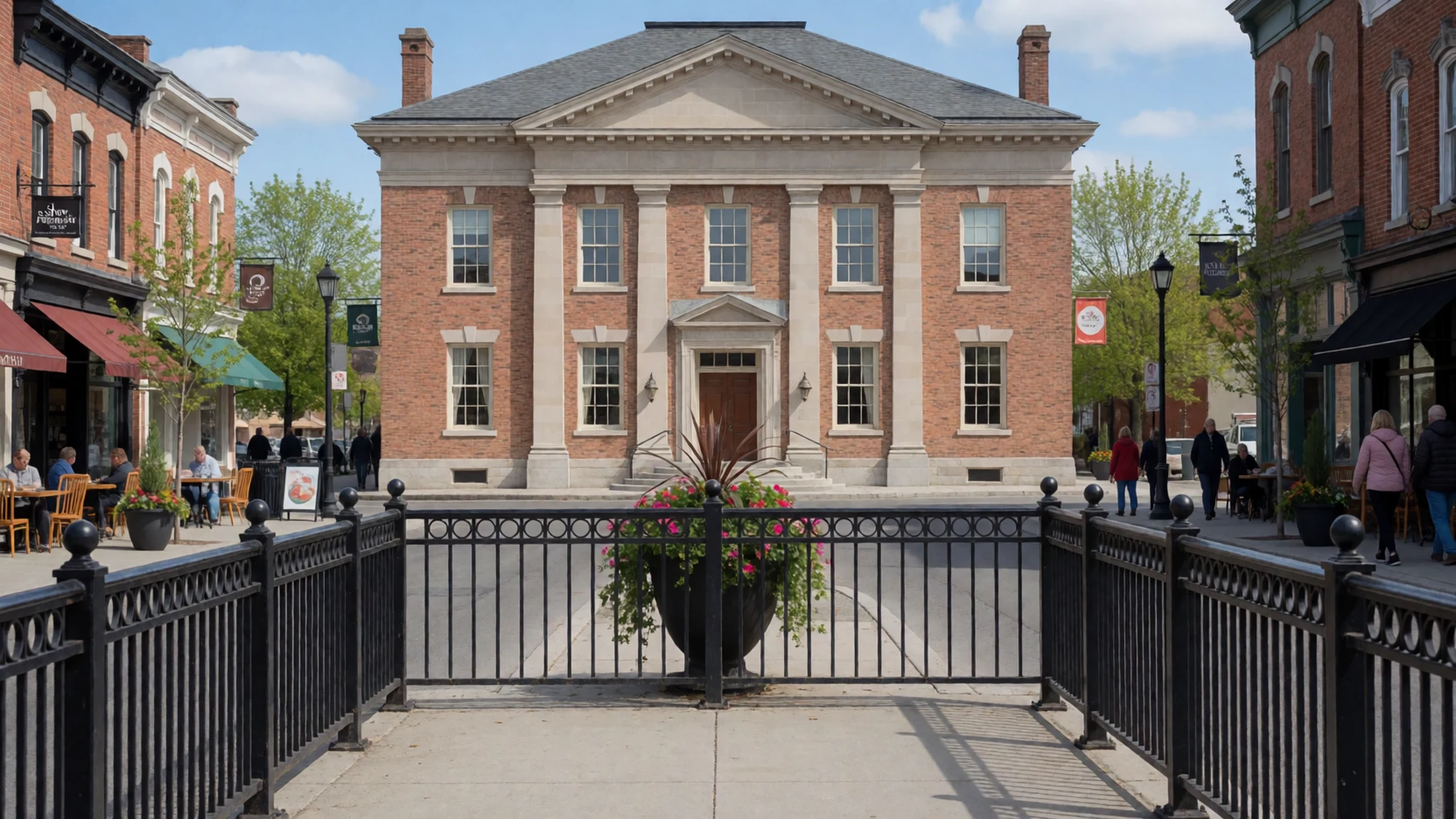
- St Mark's Church — town centre
St Mark's Church in Niagara-on-the-Lake is a parish church set back from the street, with a graveyard that holds names from the town's Loyalist and military years. It is still a working church, so a visit sits beside services rather than replacing them. The churchyard is a pocket of quiet in the centre: mature trees, old headstones, and less foot traffic than Queen Street.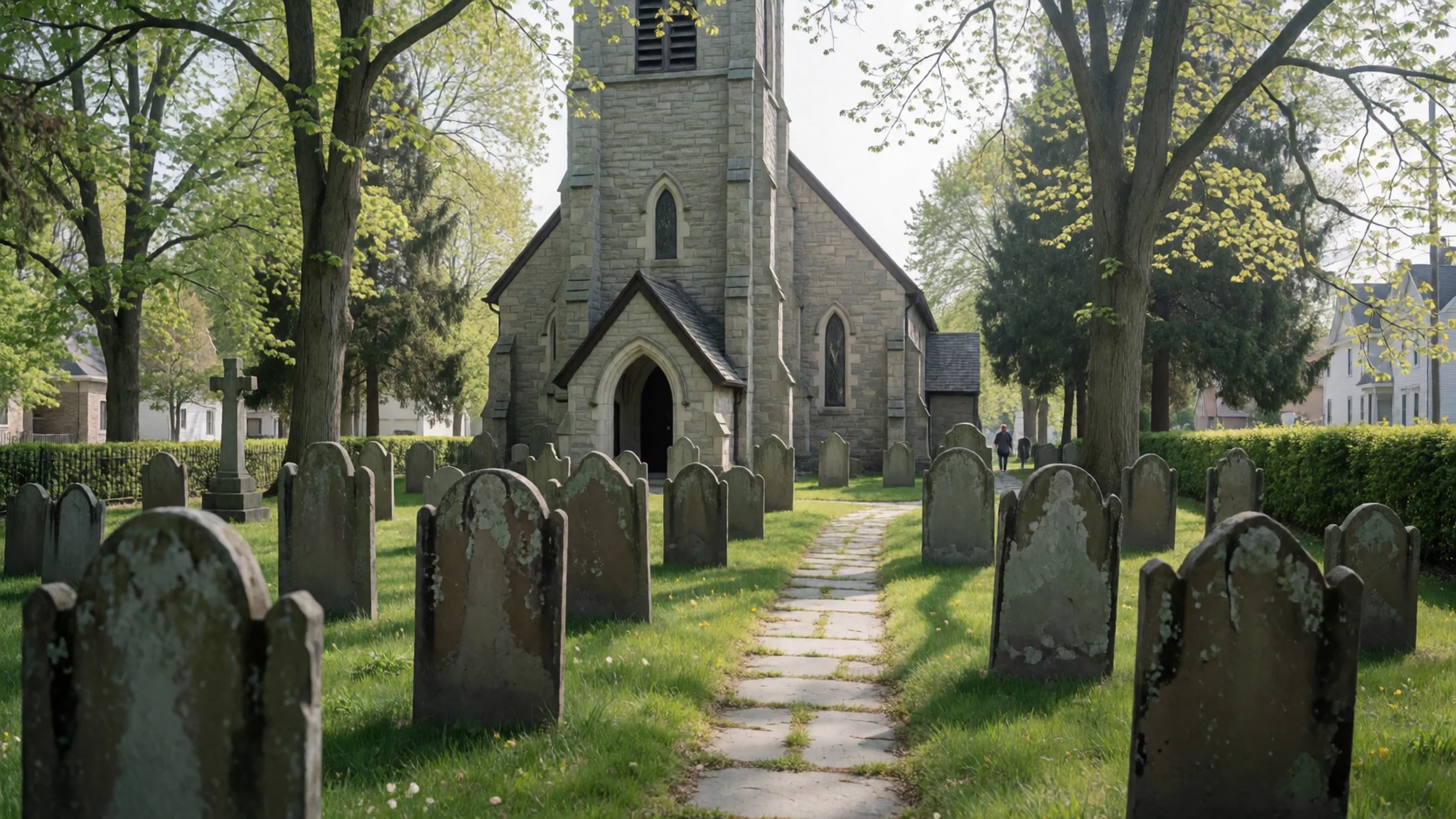
- McFarland House — Niagara Parkway
McFarland House, on the Niagara Parkway in Niagara-on-the-Lake, was built in 1800 and survived the burning that a retreating American army brought to many other Niagara buildings. It is a wooden house of the early town, opened at times as a historic house in a garden. In daffodil season the lawn turns yellow under the trees. The official site confirms whether the house is open.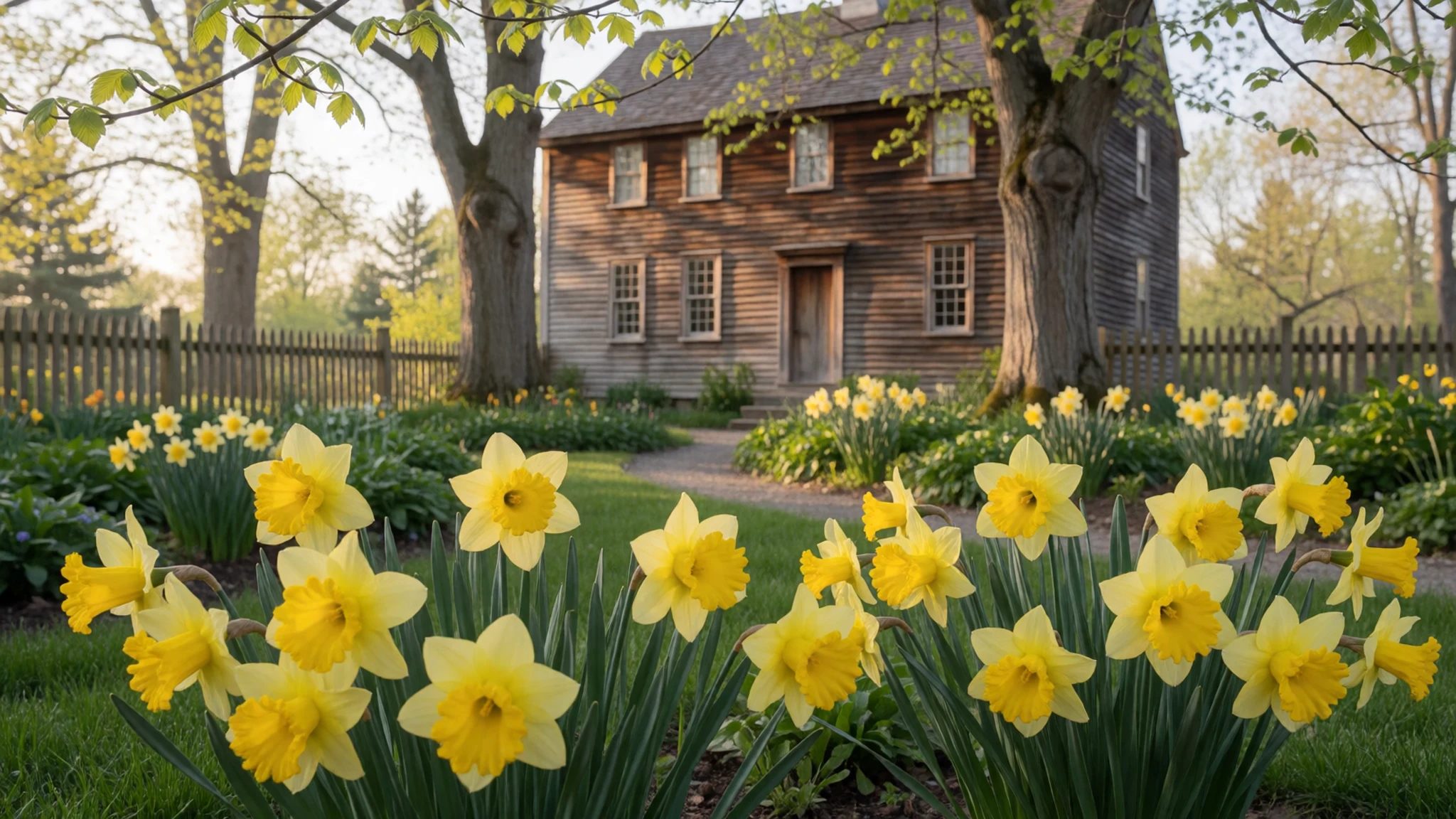
- Fort Mississauga — river mouth
Fort Mississauga stands in Niagara-on-the-Lake on the point where the Niagara River enters Lake Ontario, a low earthwork with a stone tower at its centre. Raised after the burning of the town, it watched the river mouth and is now a national historic site in open parkland. From the ramparts the New York shore is close and ordinary, and golfers still play on the grass around the works.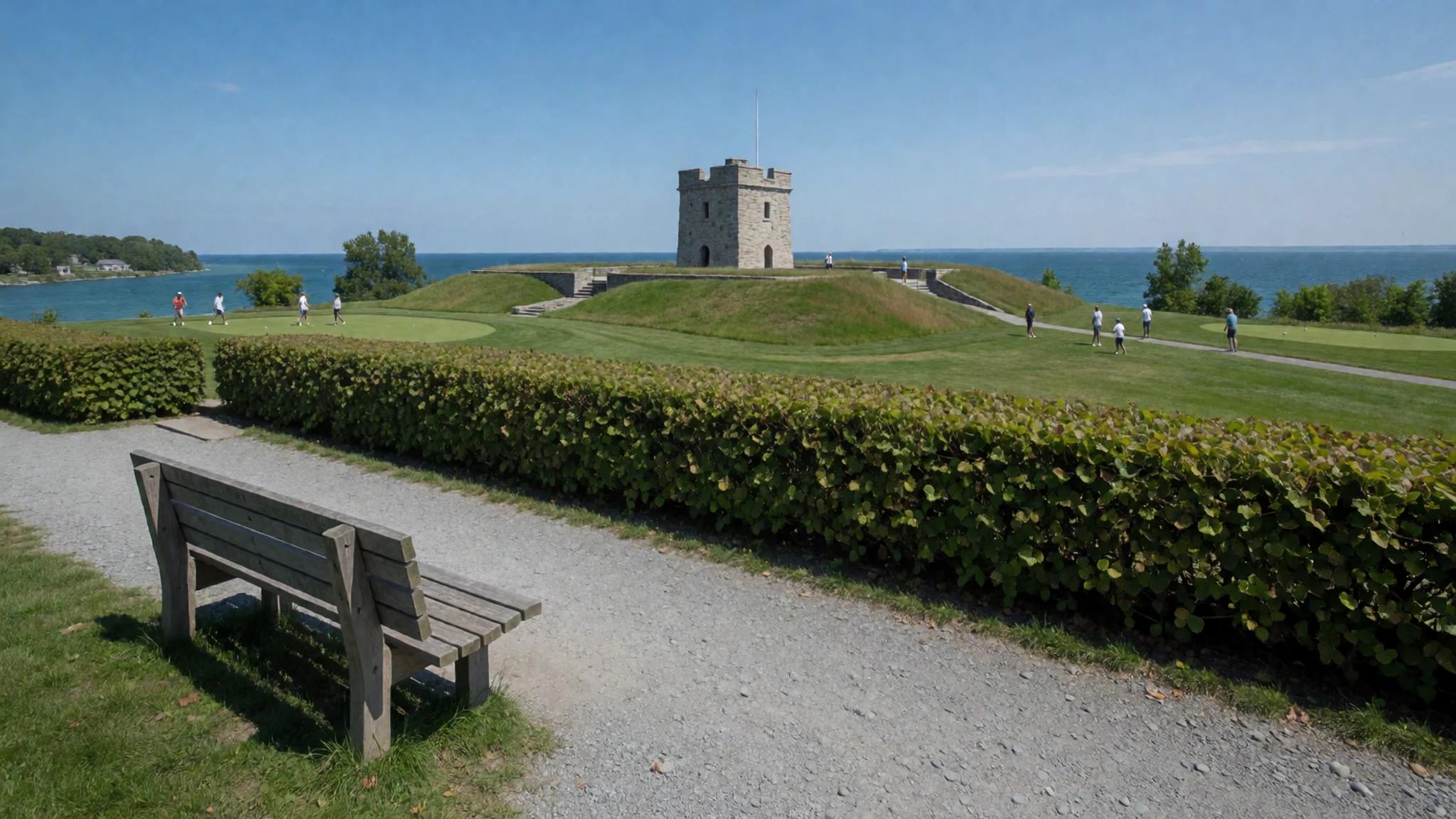
- Queen's Royal Park — river mouth
Niagara-on-the-Lake's river mouth is a green edge: a park, a small harbour, and a view straight at the American bank. People sit, start a walk toward Fort Mississauga, or watch the light move on the water. Shade is scarce when the sun is high, and wind off Lake Ontario can turn a summer bench cold.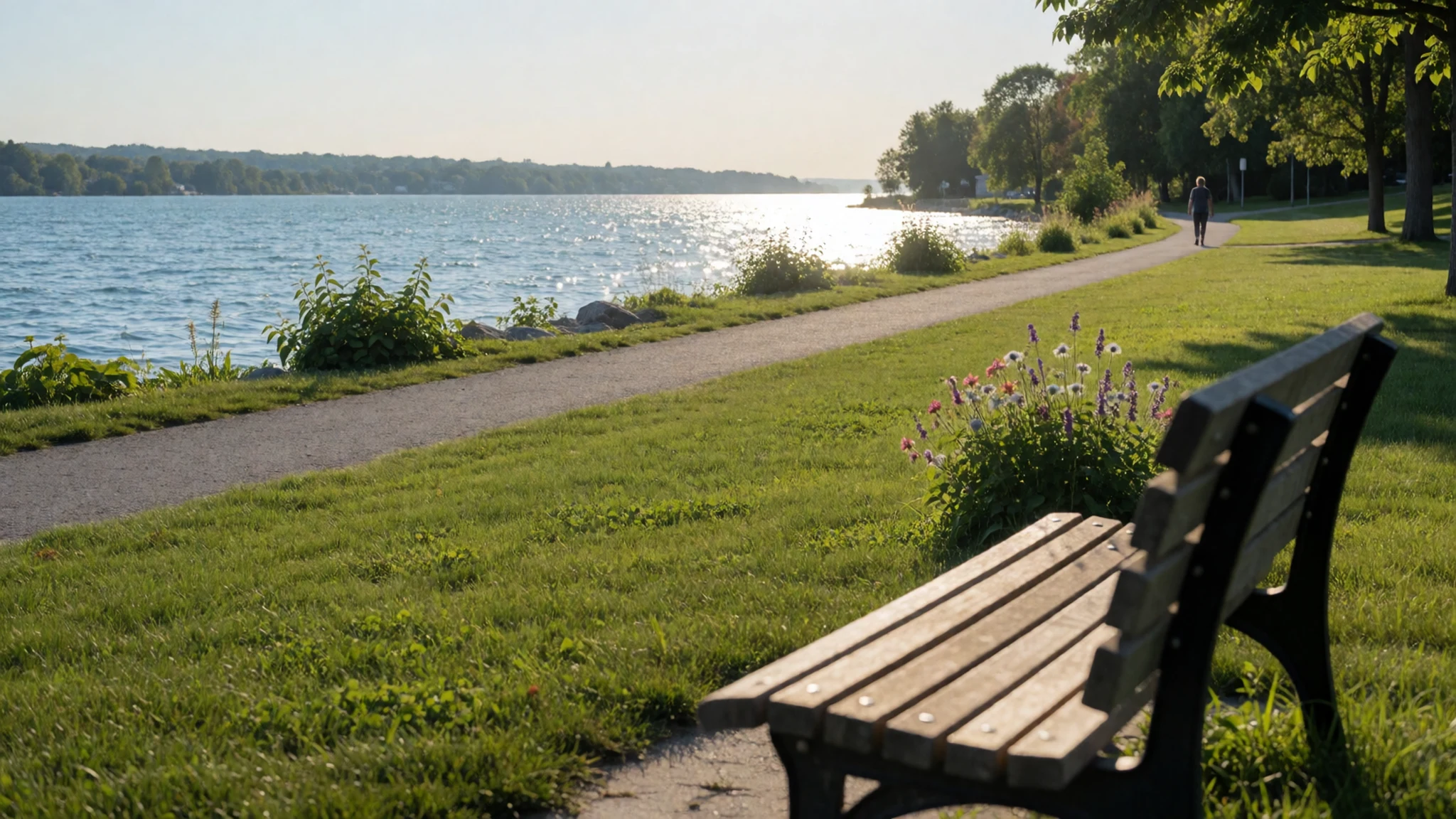
Culture
Niagara-on-the-Lake's public culture is a braid of garrison town, parish town, orchard country and summer theatre. The Shaw Festival, devoted to Bernard Shaw and to plays from his period and after, occupies several halls and spills into the street: visitors in evening clothes, actors sometimes still half in costume, and a season that runs through the warm months into the edge of winter. Between performances the town behaves like any small Ontario high street, with the difference that many of the pretty houses are private homes and the parish church is still used for worship. Wine is the other daily ritual. Tasting rooms treat a flight of local bottles as a social hour, and icewine — made from grapes left hanging until they freeze — is the bottle people carry home. Gardens matter as much as stages. Spring bulbs, especially daffodils, draw an early crowd, and through summer the residential streets are as looked-at as the shops. None of this is anonymous city life. Staff and neighbours notice how visitors treat the place. Ask before you photograph actors or people in historical dress, stay out of private gardens, and keep to the paths in vineyards rather than stepping in among the vines.
What to wear
Niagara-on-the-Lake dresses in layers of history that rarely appear all at once. The traditional clothes on show are not everyday wear: at the forts, interpreters use early colonial and military dress of the British garrison — wool coats, linen shirts, leather boots, and the red of a soldier's coat — and the Shaw Festival's costume shops put Edwardian and later stage clothes on the street at opening time. Local textile tradition is practical rather than ceremonial. Settlers spun and wove wool and linen for a cold lakeshore, and Indigenous people of the peninsula worked hides and plant fibres long before that; neither wardrobe is what the town wears to the shops now. Contemporary dress is wine-country casual. In warm weather that means light shirts, dresses, sandals and a sweater for the lake wind; on theatre evenings people smarten up without reaching for formal gowns, though some do. A visitor should copy the layers, not the costumes. Comfortable shoes matter on brick pavements, grass ramparts and gravel at farm gates. Summers need sun protection and a layer against air-conditioned halls; spring and autumn need a real jacket; winter needs a coat, hat and boots if the visit is for icewine rather than a quick look at the lights. For a church service, covered shoulders and a quiet pair of shoes are enough. There is no strict modesty code on the street.
What to eat
- Icewine — tasting rooms in town and along the Niagara Parkway
Icewine is the sweet wine of Niagara-on-the-Lake: grapes left hanging until a hard freeze, then pressed. Tasting rooms in town and along the Niagara Parkway pour a small glass beside drier local whites and reds. Many visitors buy a bottle to carry home.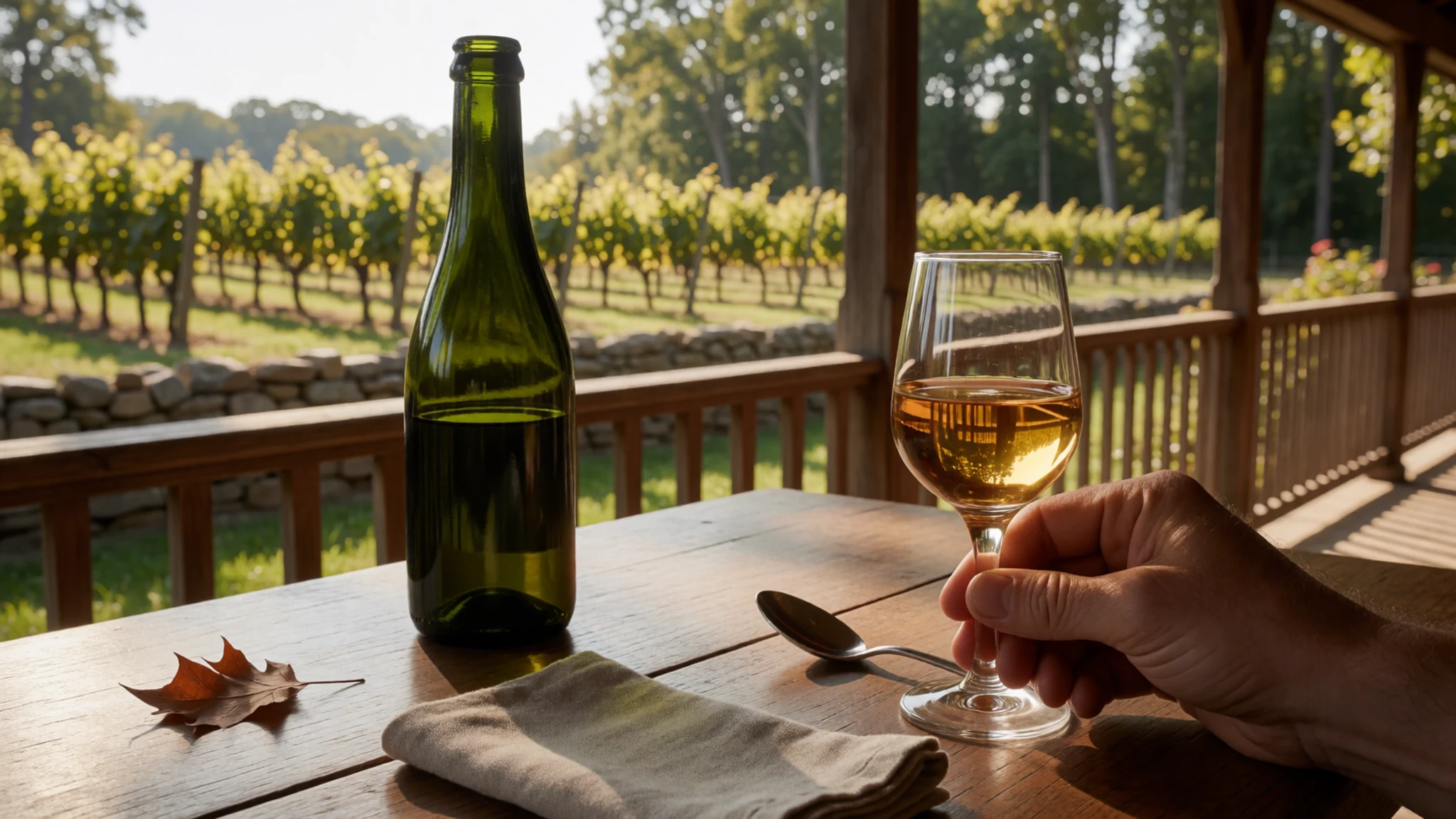
- Lake perch — casual eateries near the harbour
Lake perch, a mild fish from Lake Ontario, turns up fried in Niagara-on-the-Lake, usually with potatoes. Casual eateries near the harbour and on the main streets serve it when local boats have been out. It is an ordinary plate, not a luxury one. Warmer months are the likelier time.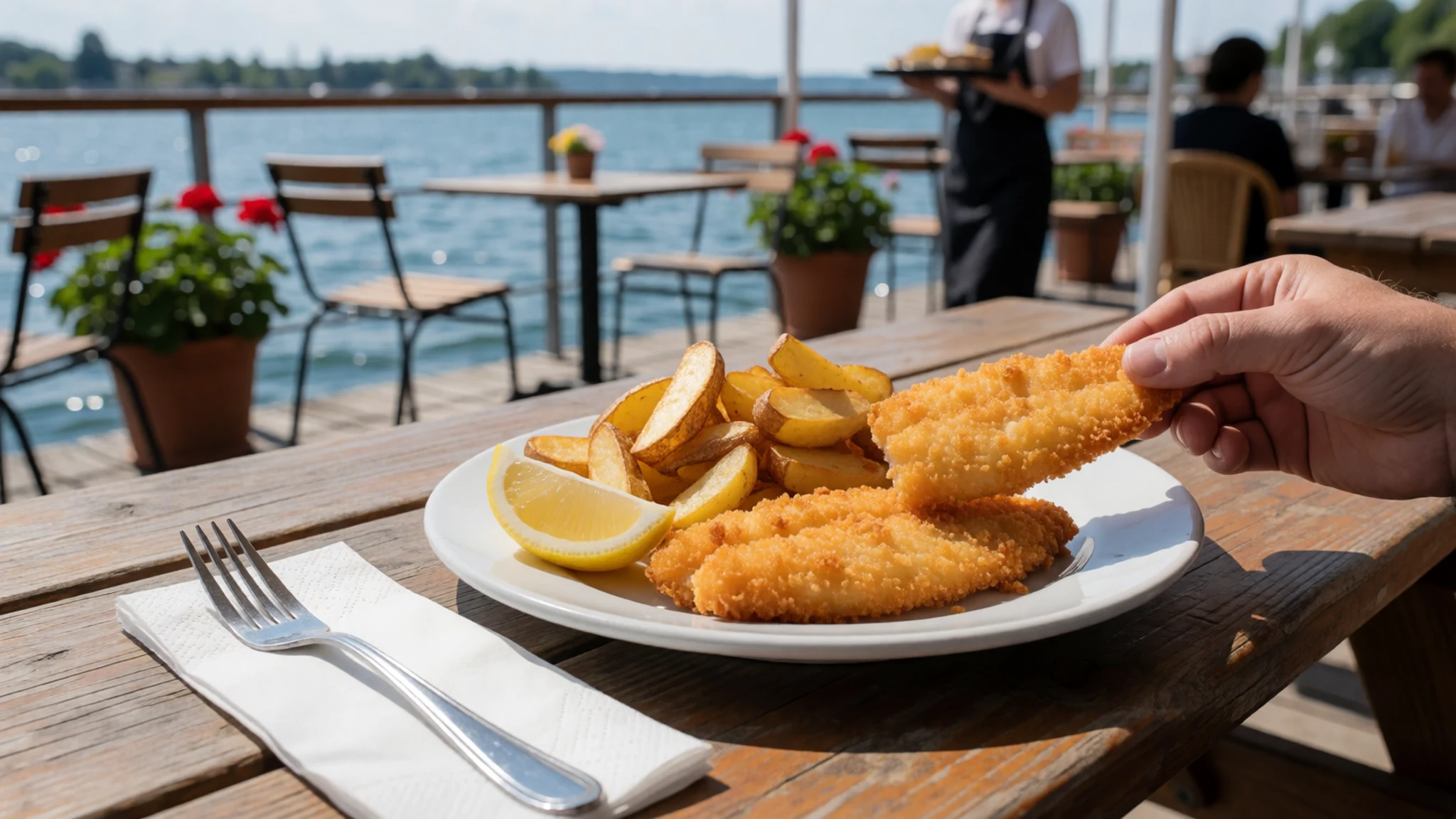
- Peninsula peaches — farm stands on the Niagara Parkway
Niagara Peninsula peaches define a few weeks in Niagara-on-the-Lake. Farm stands along the Niagara Parkway and grocers in town sell them when the orchards are picking, and bakeries turn the same fruit into pie, jam and cake. Outside those weeks a peach dessert is often from storage. - Butter tart — bakeries on Queen Street
A butter tart in Niagara-on-the-Lake is the small sweet pastry of English-speaking Canada: a shell filled with butter, sugar and egg, sometimes raisin or pecan. Bakeries on Queen Street sell them singly or by the box. One tart is enough of a test before a box, because shops differ. - Wine-country board — deli counters and tasting rooms in town
A wine-country board in Niagara-on-the-Lake is local cheese, cured meat, bread and peninsula fruit, set beside a glass rather than served as dinner. Deli counters in town and tables at tasting rooms build them around Ontario cheddar and whatever the farms are selling. Portions are often richer than they look. - Strawberries — farm stands on the Niagara Parkway
Strawberries follow the first warm weeks in Niagara-on-the-Lake, sold from the same Parkway farm stands that later fill with peaches. Town bakeries turn them into shortcake and jam while the crop lasts. They are soft, so they are a same-day fruit, not a souvenir for the week.
Plan it
Best time. In Niagara-on-the-Lake, May and June bring gardens and mild days, and September and October bring the grape harvest and autumn colour. July and August are warm, humid and crowded, while winter is cold and quiet apart from icewine season.
How long. 2–3
Getting there. Fly into Toronto Pearson or Buffalo Niagara International, then continue by road; Niagara-on-the-Lake has no passenger rail station, so the last leg is by car, bus or taxi along the Queen Elizabeth Way and the Niagara River.
Budget. mid
Tips
- Book Shaw Festival tickets well ahead for summer weekends, and check the official festival site for the current season.
- The centre is walkable; a car or bicycle helps for the Niagara Parkway, forts and farm stands.
- Come early on summer weekends if a quiet Queen Street matters; by late morning the pavements fill.
- Carry a bank card and a little cash; some farm stands still prefer cash.
- The wind off the lake makes the day colder than a sheltered forecast suggests, so bring a layer.
- Winter visits for icewine need a car and warm clothing; many gardens and some smaller rooms are shut.
Etiquette
- Treat houses and front gardens off the shops as private, even when they look like a set.
- Ask before photographing actors or anyone in historical costume.
- Stay on marked paths at the forts and do not walk into vineyard rows or pick fruit.
- Lower your voice in St Mark's and the churchyard, and skip sightseeing during a service.
Nearby
Sources
- Wikidata (CC0)
- Wikipedia (CC BY-SA 4.0)
- Wikivoyage (CC BY-SA 4.0)
- 01-niagara-on-the-lake.jpg (CC BY 3.0)
- 02-canada-southern-ontario-location-map-2.png (CC BY 3.0)
- 03-court-house-n-o-t-l.jpg — Yoho2001, Toronto (CC BY-SA 2.5)
- 04-st-marks-church-niagara-on-the-lake.jpg (CC BY 3.0)
- 05-mcfarland-house-daffodil-season.jpg (CC BY-SA 4.0)
- 06-niagara-lodge-2-building.jpg (CC BY 3.0)
- 07-mcdougal-harrison-house.jpg (CC BY-SA 4.0)
- 08-fort-mississauga-national-historic-site-of-canada-niagara-on.jpg (CC BY-SA 4.0)