Negril
Negril, Jamaica
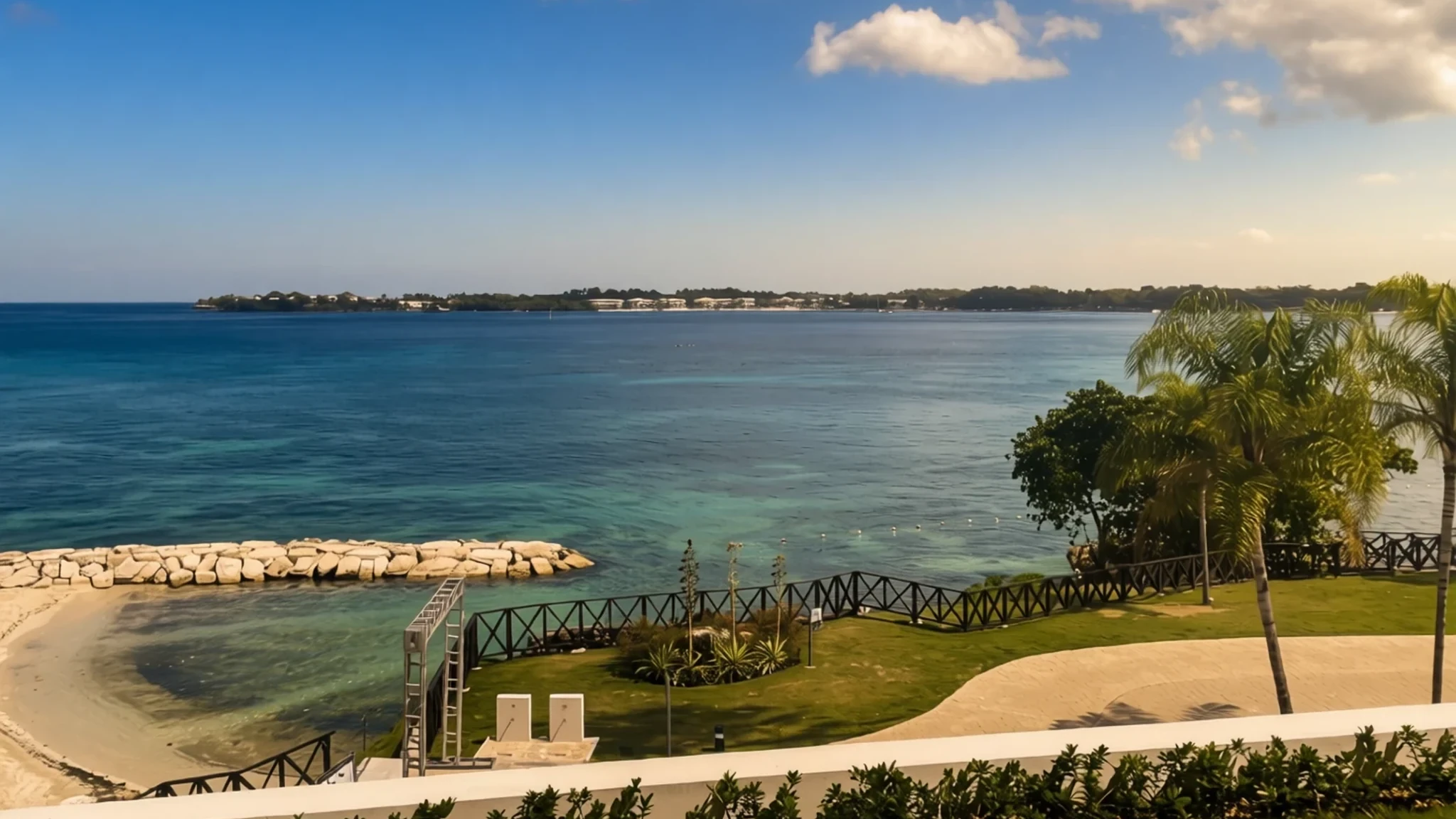
Negril pairs a long shallow beach with cliffside sunsets on Jamaica's western tip, for unhurried days in the water.
The place
Negril sits on the western tip of Jamaica, where a long pale beach runs north towards Bloody Bay and a low limestone coast turns into cliffs along the West End. The town is small and strung out rather than stacked: cottages, bars, and dive shops follow the sand, then the road bends and the land drops to the sea. Two landscapes share one name. On the beach side the water is shallow and clear for a long way out, with fishing boats pulled up on the sand and snorkellers drifting over seagrass and reef patches. On the West End the rock is honeycombed and the swimming is from ladders and platforms, with the open Caribbean below the cliffs. Between them sits a low town centre of shops, a craft market, and the road that ties the two shores together. Trade winds keep the heat moving for much of the year, and the light in the late afternoon goes gold then pink over the water, which is why people time their day around the sunset rather than around museums. Negril has no old walled quarter and little formal sightseeing; the place itself is the point — the water, the reef, the cliff road, and the easy mix of Jamaican life and visitors who stay long enough to learn the rhythm of the beach. Evenings are louder than mornings. Sound systems, beach bars, and cliff restaurants fill after dark, while the early hours belong to fishers, joggers, and the glass-calm shallows before the breeze picks up. It is a coast town that grew around pleasure without quite losing the working boats, and a visitor who walks the whole shore sees both.
Its story
Negril's story is a shift from a quiet western fishing shore to a widely known Jamaican beach town, told without a grand capital or a royal court. For a long time the coast was a working edge of the island: boats, a thin settlement, and a bay whose name, Bloody Bay, still carries old stories that do not agree with one another. Some local tellings speak of a fight in the age of privateers; others of whales taken in the shallows. The two versions are both still told, so the name is better heard as a memory the coast kept than as a settled history. What is clearer is the later change in character. Negril stayed small and out of the way while Jamaica's bigger ports and capitals drew trade and government. Travellers who wanted a simple shore, rather than a city, began to stay, and huts and guest houses grew up along the sand and then along the cliffs. That arrival brought a loose, long-stay culture — music, diving, and sunsets treated as the evening programme — which the resort strips later built on without fully replacing. The West End kept a different mood from the beach: cliff bars, ladders into deep water, and a road that feels more like a string of lookouts than a promenade. The beach side kept the boats and the long walk. Today the two halves still explain the town. Negril did not preserve a medieval core; it preserved a shoreline habit, then scaled it up. The fishing boats along the sand are the older layer, still working beside the bars. To read the place as only a resort is to miss the order of events: the sea was a livelihood here before it was a holiday.
What to see
- Seven Mile Beach — Long Bay
Negril's long beach, often called Seven Mile Beach, is the sandy half of town: pale shore, shallow clear water, and boats resting on the sand. The walk is the sight. Mornings belong to fishers and swimmers; by late afternoon the beach fills and the sky over the water takes over. Seagrass and reef patches lie a short swim out.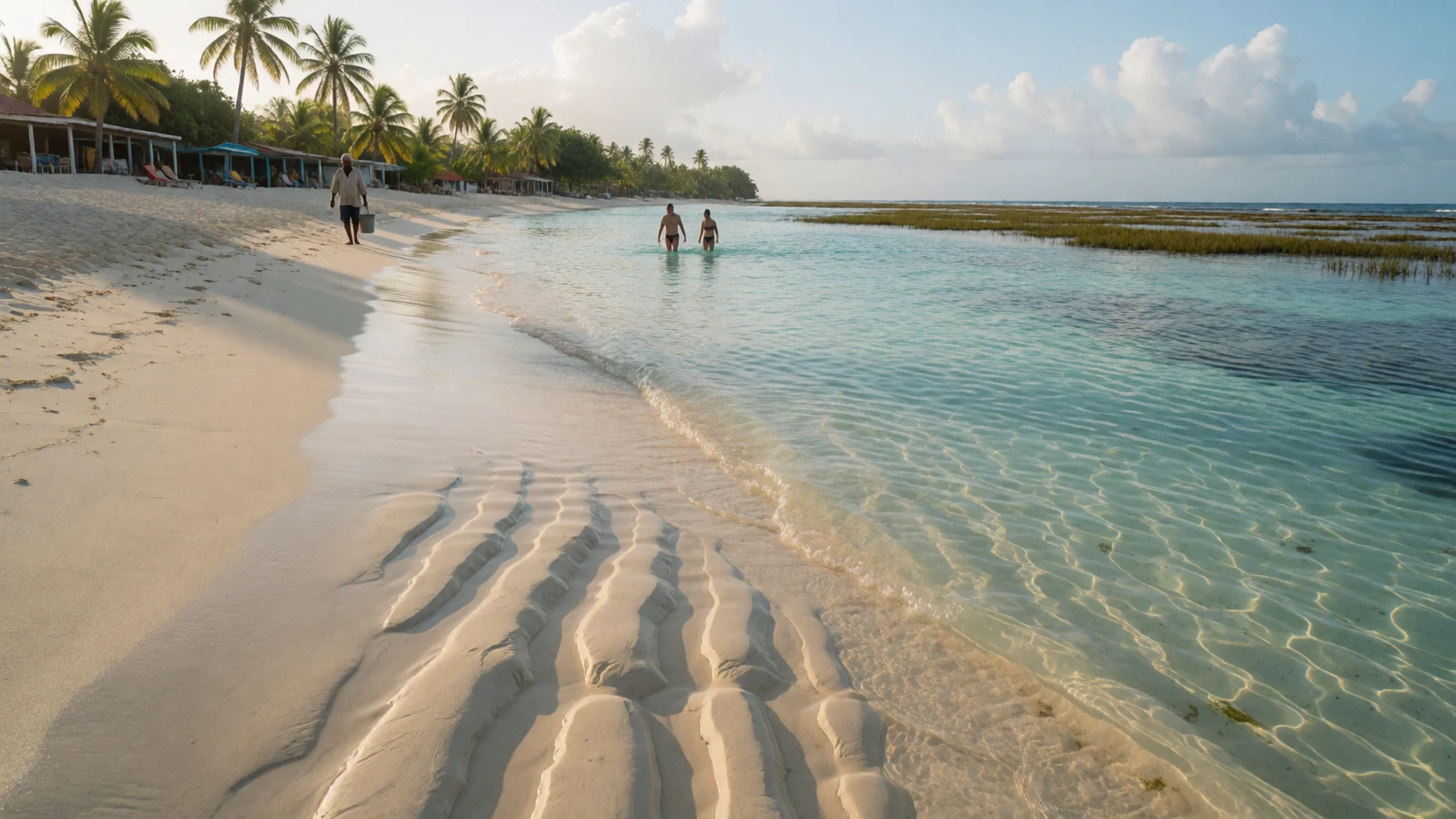
- Bloody Bay — Bloody Bay
Bloody Bay is the northern reach of Negril's beach, broader and usually calmer than the sand nearer the centre. The name survives in two folk versions, a privateer-era fight or whales in the shallows, and neither is settled. What meets a visitor now is resort shore and open water, a long swim when the southern beach feels crowded.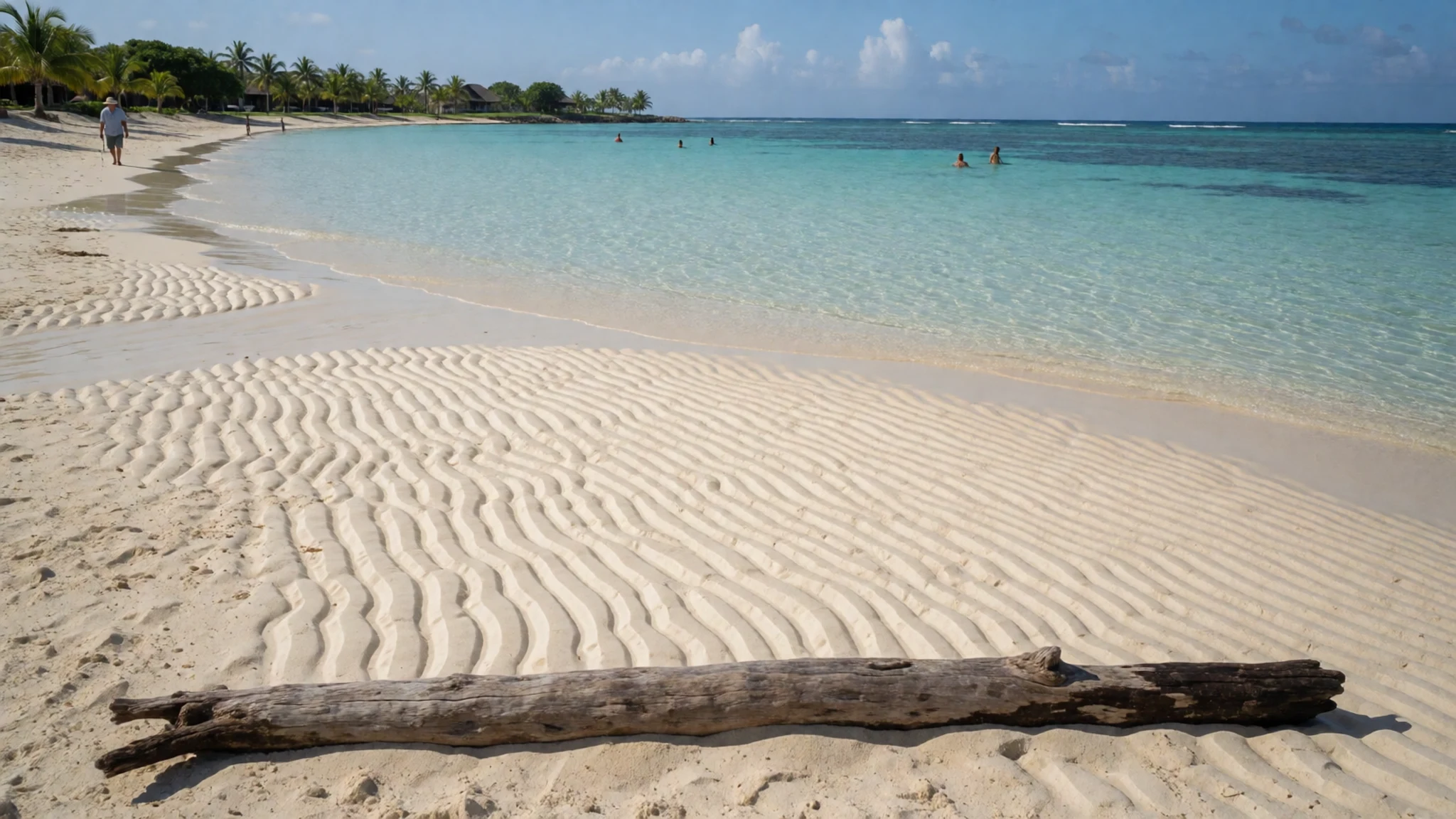
- West End cliffs — West End
Negril's West End is the cliff half of the coast, where the road rides a low limestone edge and the sea is reached by ladders rather than a sandy walk. Bars face the drop, and late afternoon is organised around the sunset. Cliff jumping at spots such as Rick's is a local spectacle as much as a sport, into water deeper than the beach.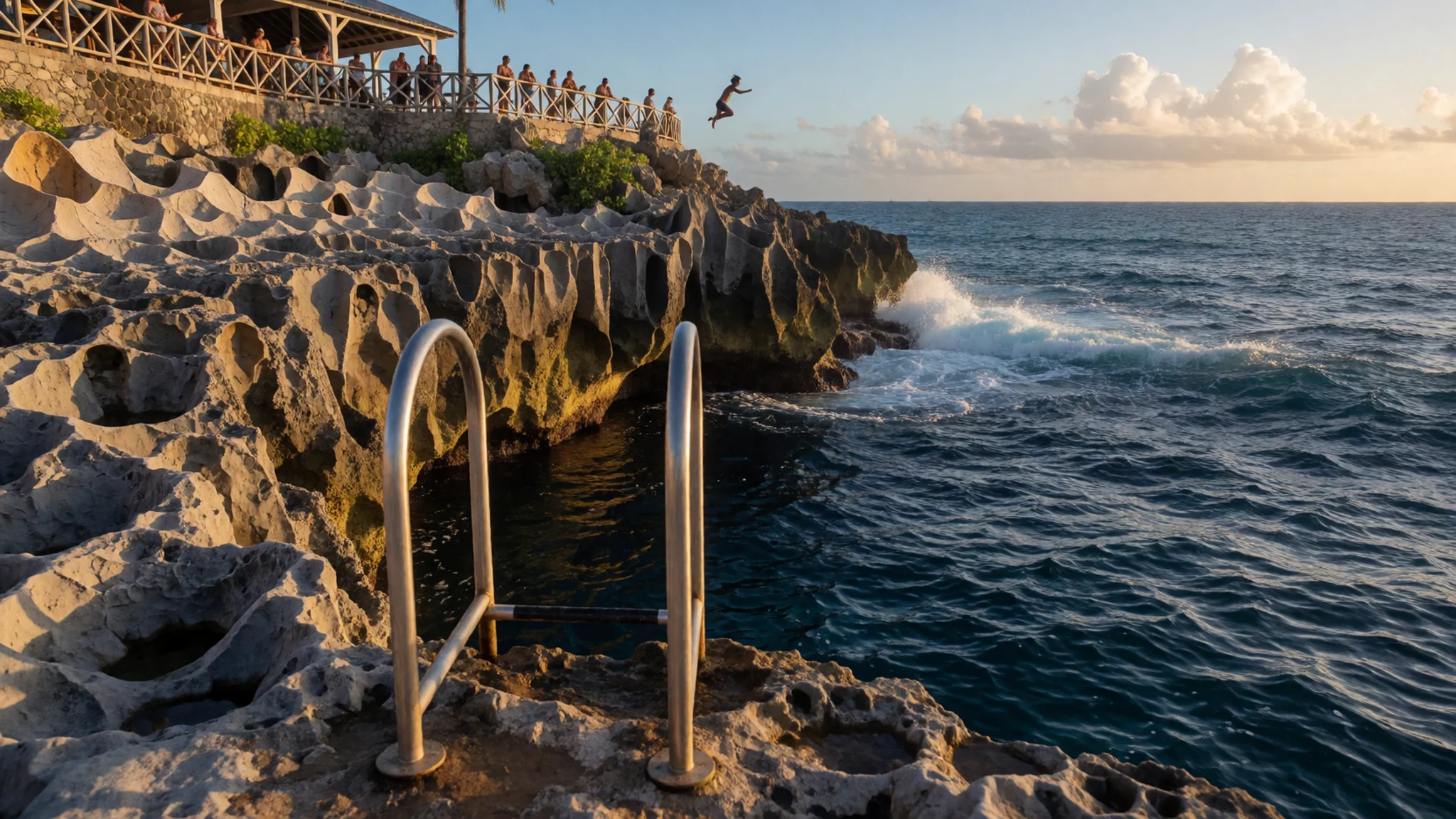
- Negril Lighthouse — West End
The Negril Lighthouse stands on the West End cliffs, a white tower above the point where the coast turns. It is a working mark for boats as much as a lookout, and the ground around it is open, windy, and short on shade. The view takes in the cliff line and the open sea, and sunset traffic on the same road often passes the gate.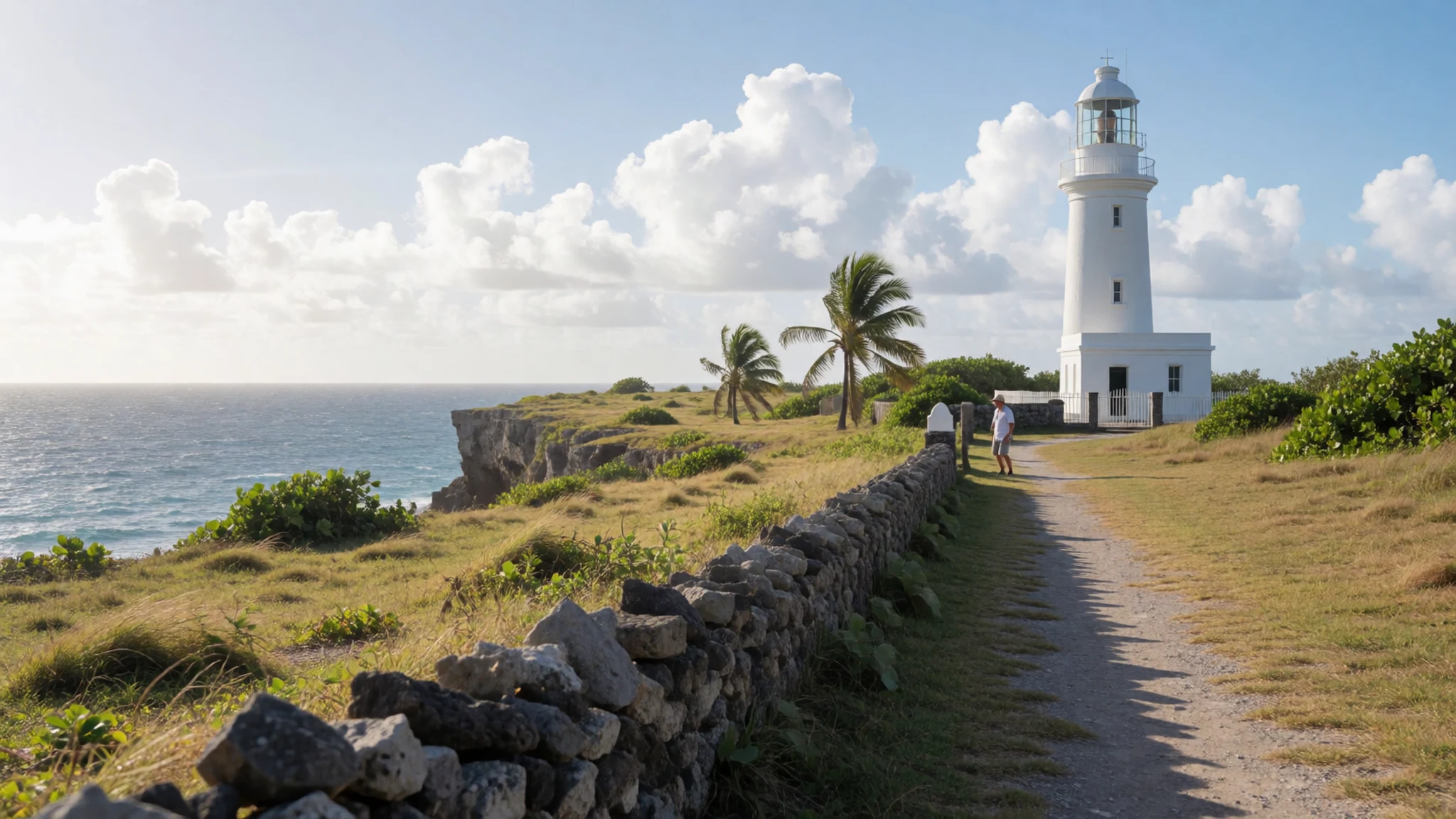
- Town centre — town centre
Negril's town centre is the practical hinge between the beach and the West End: shops, a craft market, small supermarkets, and the road everyone ends up on. It is not a historic square. People come for crafts, fruit, and a meal off the beach; the interest is the trade, not the architecture. Daylight suits it; after dark the centre thins and the shore takes over.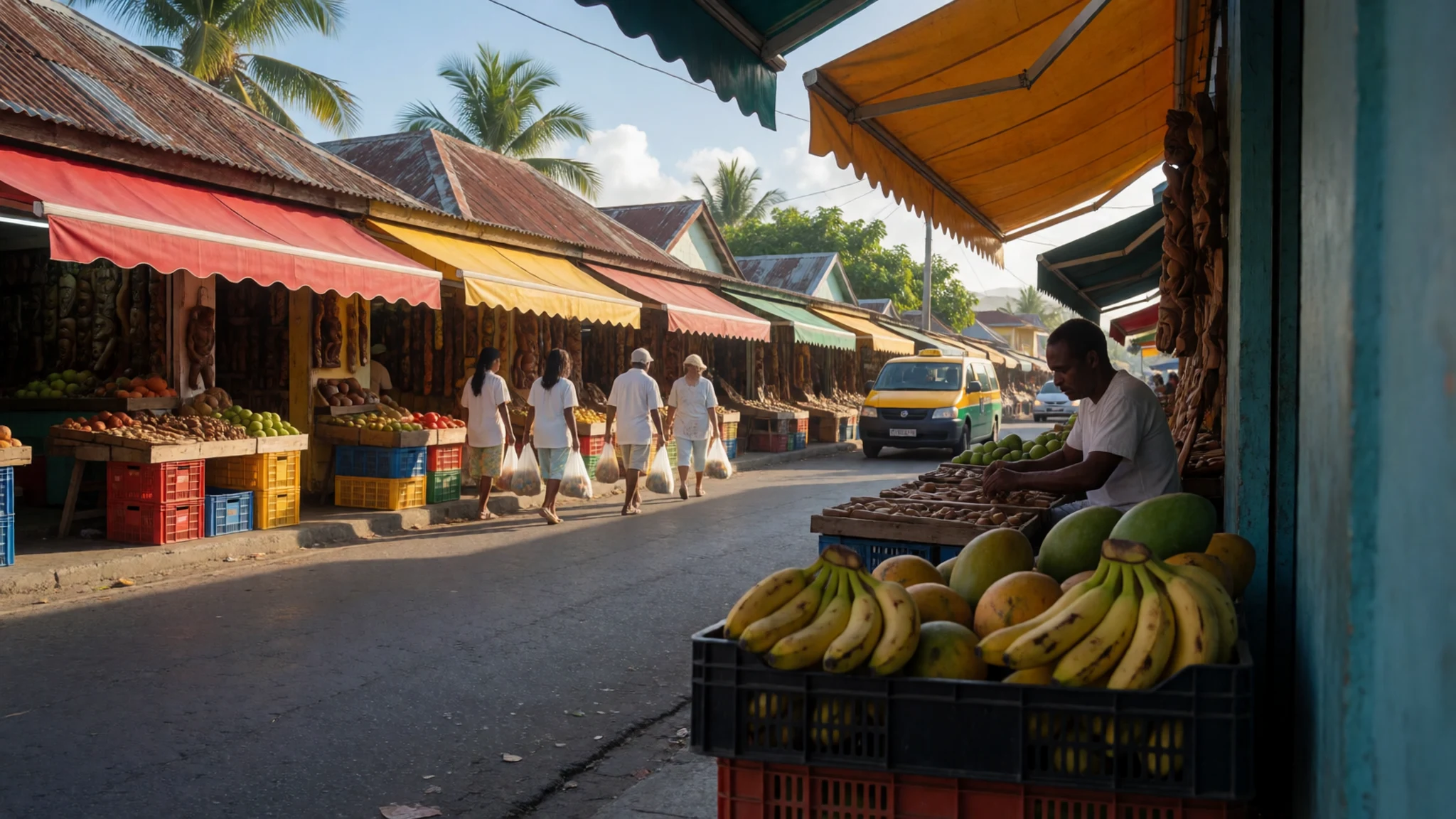
Culture
Negril's culture is Jamaican beach life with the volume up: reggae and dancehall from open bars, a sunset that works as a daily gathering, and a town used to visitors who stay for weeks. The long-stay mood still shows in greetings and in a loose day — morning water, afternoon shade, evening music — that regulars keep without writing it down. Jamaican English and Patwa sit side by side, and a conversation often moves between them. Music is not background here; a speaker on the sand is how the evening is announced, and people dance where they stand. Craft stalls sell woodwork, bead jewellery, and printed cloth, and bargaining is part of the talk. On the West End, cliff jumping is pastime and performance together, watched from the bars, though the drop has killed and badly hurt even regular divers. Sundays keep a churchgoing quiet behind the strip even while the beach stays open. Food, music, and the water are how people host; a visit that only uses the resort gate misses the town. Ask before you photograph people at work or mid-leap, and leave fishing boats and ladders alone unless someone invites you on.
What to wear
Negril's dress has two registers, the Jamaica-wide traditional cloth and the beach clothes people actually live in. Formal and folk dress centres on the quadrille and on bandana cloth — the red, white, and sometimes blue plaid cotton once associated with country dances — worn as a headtie, a skirt, or a shirt for festivals, national celebrations, and stage performance rather than for a Tuesday on the sand. Day to day, Negril wears much less: swimwear to and from the water, loose cotton shorts, T-shirts, linen shirts, cover-ups, and sandals or bare feet on the beach. Staff at restaurants may be in simple uniforms; everyone else dresses for heat and salt. Evenings on the West End smarten up only a little — a shirt over swimwear, a sundress — because the point is still the terrace and the breeze, not a dining room with a code. A visitor should copy that: swimwear on the beach, a cover-up and sandals or water shoes when walking into a shop or a restaurant, and light, breathable cloth that can take sun and a sudden shower. The cliff paths and wet ladders need shoes with a grip, not smooth soles. Shoulders and knees are easy on the sand; a church visit or a Sunday invitation calls for covering up.
What to eat
- Ackee and saltfish — breakfast counters in the town centre and along the beach road
Ackee and saltfish is the breakfast Negril returns to: salt cod sautéed with yellow ackee, often beside boiled dumplings or roast breadfruit. Cookshops along the beach road and in the town centre serve it, and it holds up better than a sweet pastry before hours in the water.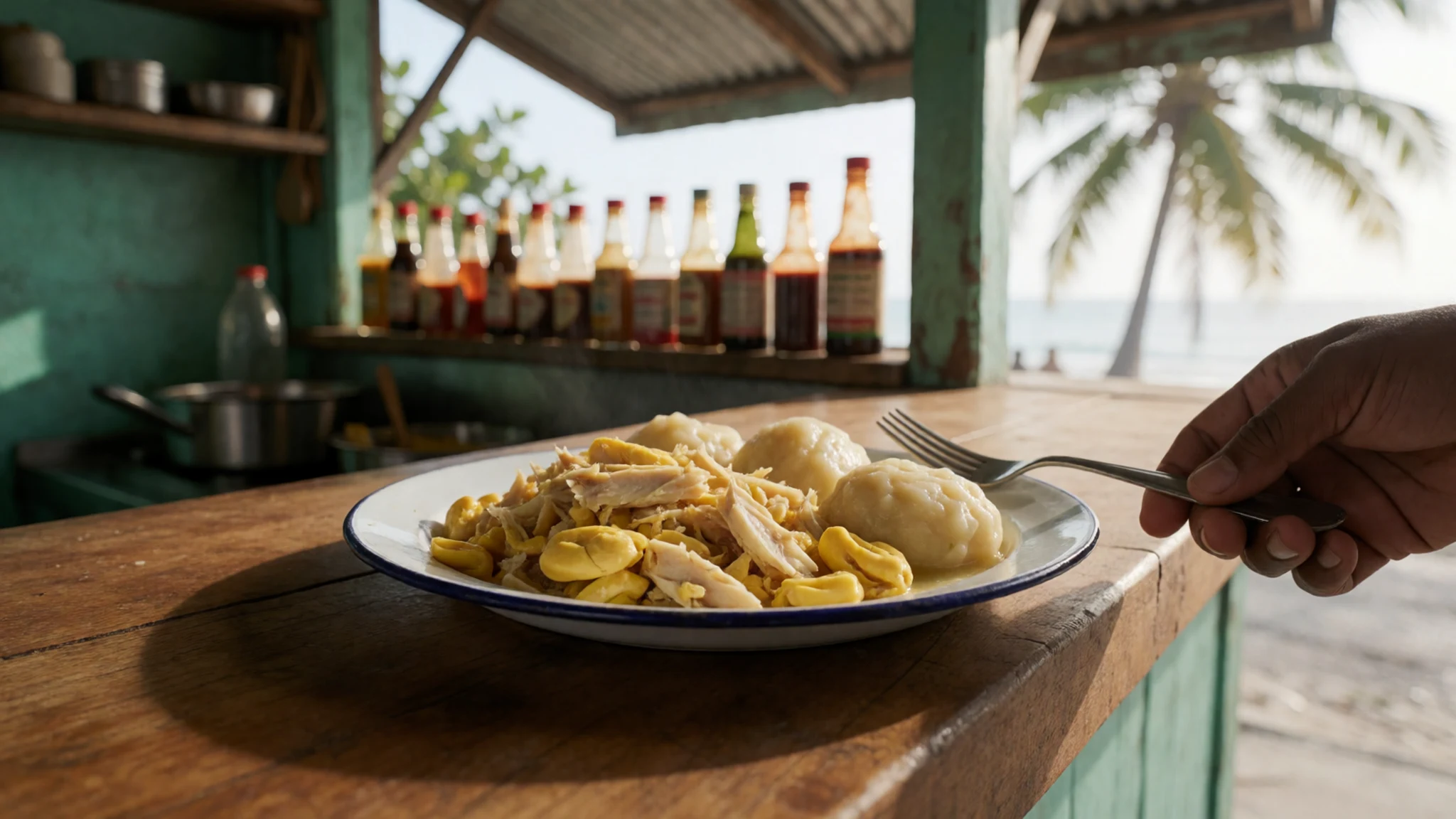
- Jerk chicken — roadside jerk pans on the beach road and towards the West End
Jerk chicken in Negril comes off roadside pans, rubbed with pimento, scotch bonnet, and thyme, then finished over wood smoke. The meat is chopped and eaten with festival or hard-dough bread, on a plastic chair under a tree. Follow the smoke along the beach road and towards the West End.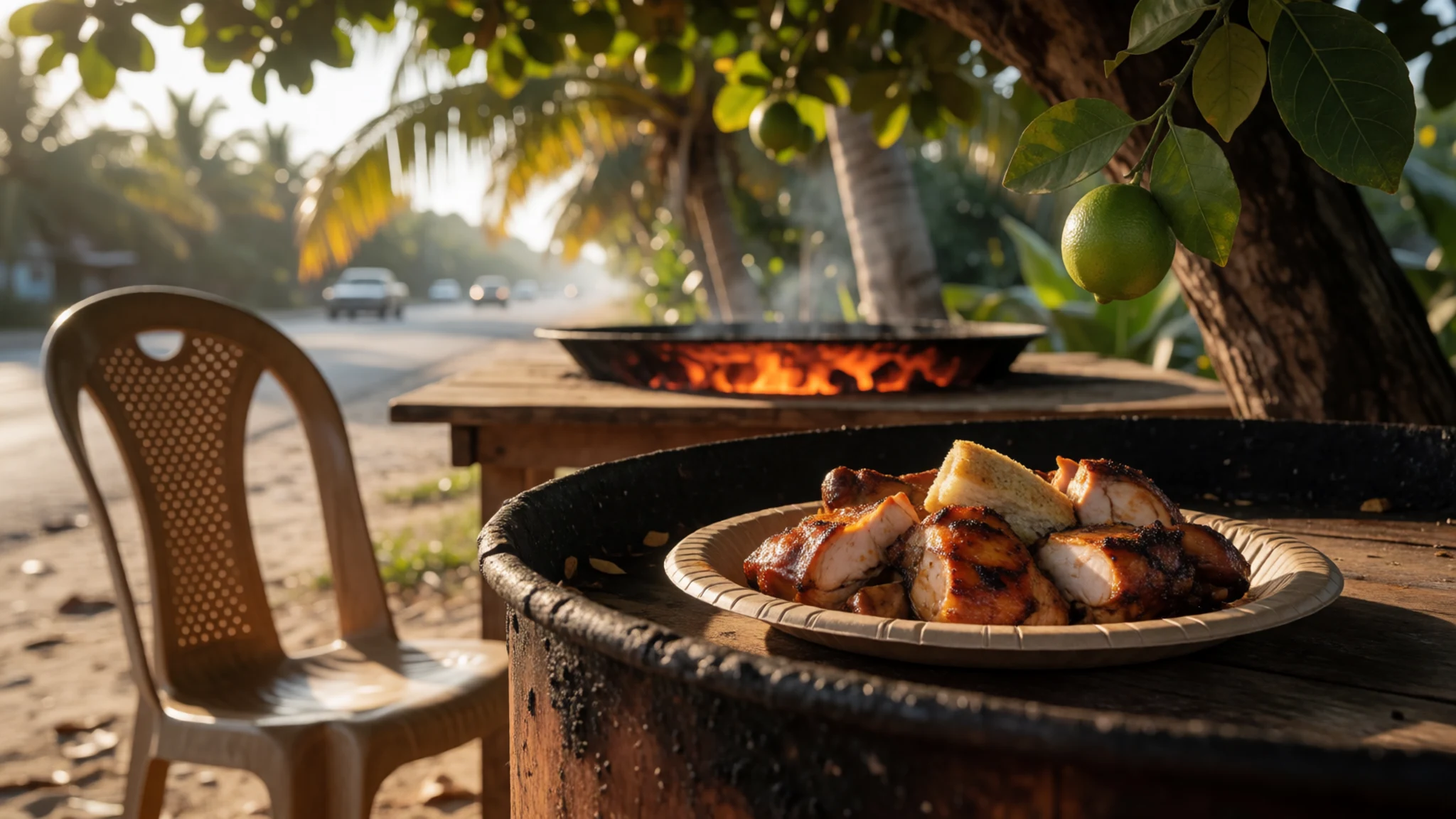
- Escovitch fish — beach cookshops near the fishing boats
Escovitch fish is Negril's beach lunch: a whole snapper or parrotfish fried crisp and covered with a hot pickle of onion, carrot, scotch bonnet, and vinegar. Beach cookshops near the boats sell it with festival. The point is fish that landed recently, not a freezer. - Festival — beach cookshops serving fried fish
Festival is the fried dumpling that arrives with fish and jerk across Negril: a slightly sweet cornmeal dough, puffed in hot oil until golden. It is the starch that turns a spicy plate into a meal, not a pudding. Beach cookshops send it out beside escovitch without being asked. - Curry goat — town-centre cookshops
Curry goat is Negril's sit-down lunch in town cookshops: goat on the bone with turmeric, allspice, scotch bonnet, and thyme, served over rice and peas. Heavier than a beach snack, it suits the middle of the day. Town-centre boards list it more often than the cliff terraces.
Plan it
Best time. Negril's drier months run from December to April, and those are the more settled beach days. May to November is wetter, and from June through November tropical storms are a real possibility. The sea stays swimmable year round.
How long. 3–4
Getting there. Sangster International Airport in Montego Bay is the usual air gateway, with the last leg west along the coast road by car, shared taxi, or a pre-booked transfer. Kingston is the other international airport and means a full road crossing of the island. Negril has no rail station. Check the operator for times rather than trusting a fixed timetable.
Budget. mid
Tips
- Book rooms and any airport transfer ahead for December to April, when the beach is busiest.
- Carry cash for cookshops, jerk pans, and craft stalls; card readers are patchy away from larger resorts.
- Swim and snorkel in the morning, before the sun sits high and the beach bars turn their speakers up.
- Do not stand on coral or touch the reef; the clear water makes it look closer than it is.
- Keep an eye on storm forecasts from June through November, and know your guest house's plan.
- Drink bottled or filtered water, and go easy on ice if you are unsure of the source.
Etiquette
- Ask before photographing fishers, vendors, or anyone jumping from the cliffs.
- Greet people before you start bargaining, and treat a no as a no.
- Wear a cover-up and shoes off the sand, especially in shops and at church.
- Do not climb into a fishing boat or onto a ladder that has not been offered.
Nearby
Sources
- Wikidata (CC0)
- Wikipedia: Negril (CC BY-SA 4.0)
- Wikivoyage: Negril (CC BY-SA 4.0)