Treasure Beach
Treasure Beach, Jamaica
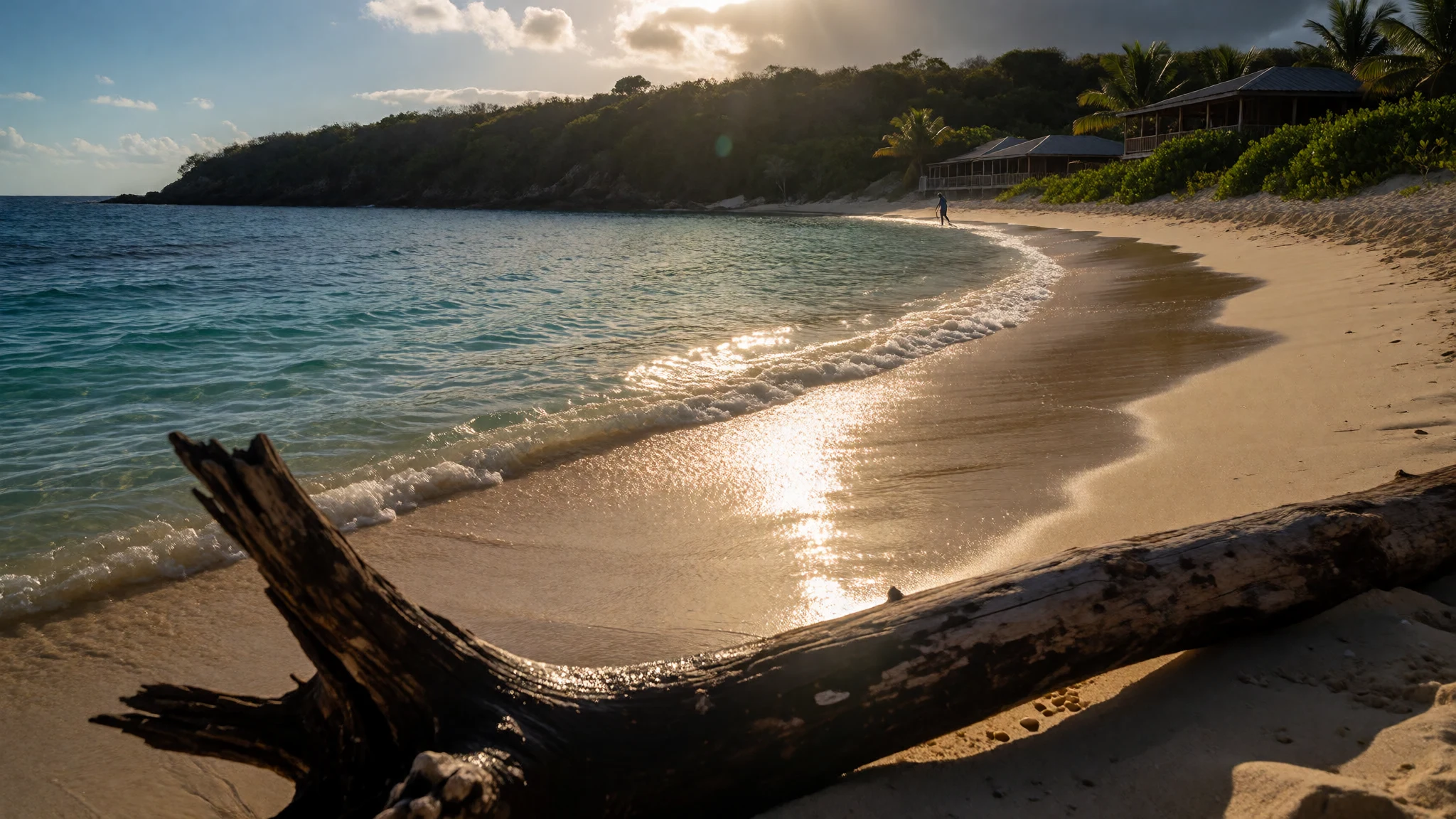
Treasure Beach is a string of quiet Jamaican fishing coves where small guesthouses, public beaches and community-run tourism stand in for resort crowds.
The place
Treasure Beach is not one beach but a run of five coves on Jamaica's south coast, in the parish of St Elizabeth. Each has its own settlement: Fort Charles, Billy's Bay, Frenchman's Bay, Calabash Bay and Great Bay, which is also called Pedro Bay. The villages sit close together, split by headlands, scrub and small fields, and people tend to identify with their own bay before the whole strip.
The area calls itself a home of community tourism. There are no all-inclusive resorts, because limits on building density rule out large hotels. Accommodation means guesthouses, villas and small hotels, and every beach is public. Evenings are quiet, with a few beach bars and restaurants and little else.
It is also out on a limb. The coast lies away from the main tourist areas, and it is reached by minor roads that leave the main highway at Black River or Santa Cruz. Heavy rain can damage them. They have been rehabilitated and are better than they were, and careful drivers usually get through. Hurricane Beryl struck the villages in July and did serious damage, so rebuilding is part of the picture. It is worth asking locally what is open before planning around one particular guesthouse or beach bar.
The sand is darker than the postcard white of other coasts, the sea can carry a swell, and the light is big and dry. That suits people who want to read, swim, walk the shore and watch boats come in. It will disappoint anyone who wants nightlife or organised entertainment.
Its story
Treasure Beach took its name from a hotel before it was a name for anywhere else. Early in the twentieth century a Canadian, Ernest George Hamilton Dicker, was invited to the area by the Senior family. He built and opened The Treasure Beach Hotel, and the label stuck so firmly that it spread outwards from the building to the whole coast.
That is why the area has a slightly odd double identity. The name on the map is a tourist-era invention, while the five settlements it covers are older and keep their own names: Fort Charles, Billy's Bay, Frenchman's Bay, Calabash Bay and Great Bay. The sources used for this reading say little about life in those villages before the hotel arrived, so it is safer to treat the earlier history as local knowledge worth asking about rather than as settled fact.
What the record does show is a coast that stayed apart. Distance from the main resort areas, rough minor roads and strict limits on the size of buildings all worked against large developments. Small guesthouses and locally owned businesses filled the gap, and over time that arrangement became the area's calling card as community tourism.
The most recent chapter is Hurricane Beryl, which struck the villages in July and damaged homes, businesses and shoreline. Recovery has been uneven, and visitors who come now are arriving in a place that is still repairing itself, which is a good reason to stay locally, eat locally and spend locally.
What to see
- Great Bay (Pedro Bay) — Eastern end of the strip
Great Bay is the cove most often photographed, a broad arc of greyish sand with fishing boats drawn up on the shore. The water is usually clear enough for a swim, though swell can build. Go early or late, when the light softens and the beach is mostly local.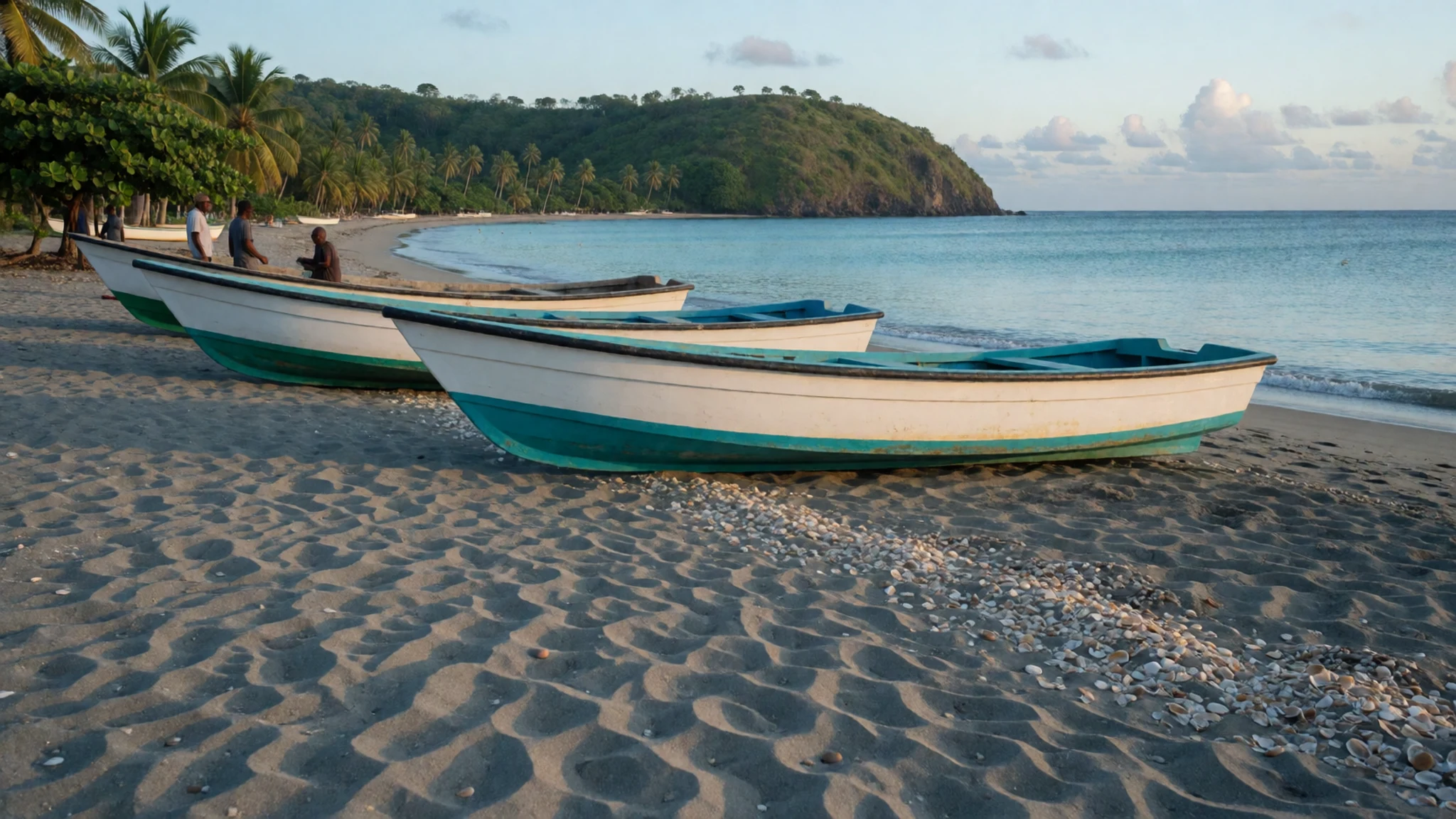
- Calabash Bay — Central Treasure Beach
Calabash Bay is the easiest base for a few slow days, with guesthouses, beach bars and a working fishing landing within walking distance of each other. Watching the boats come in with the catch is an unhurried way to spend a morning, and it is where most of the evening meals begin.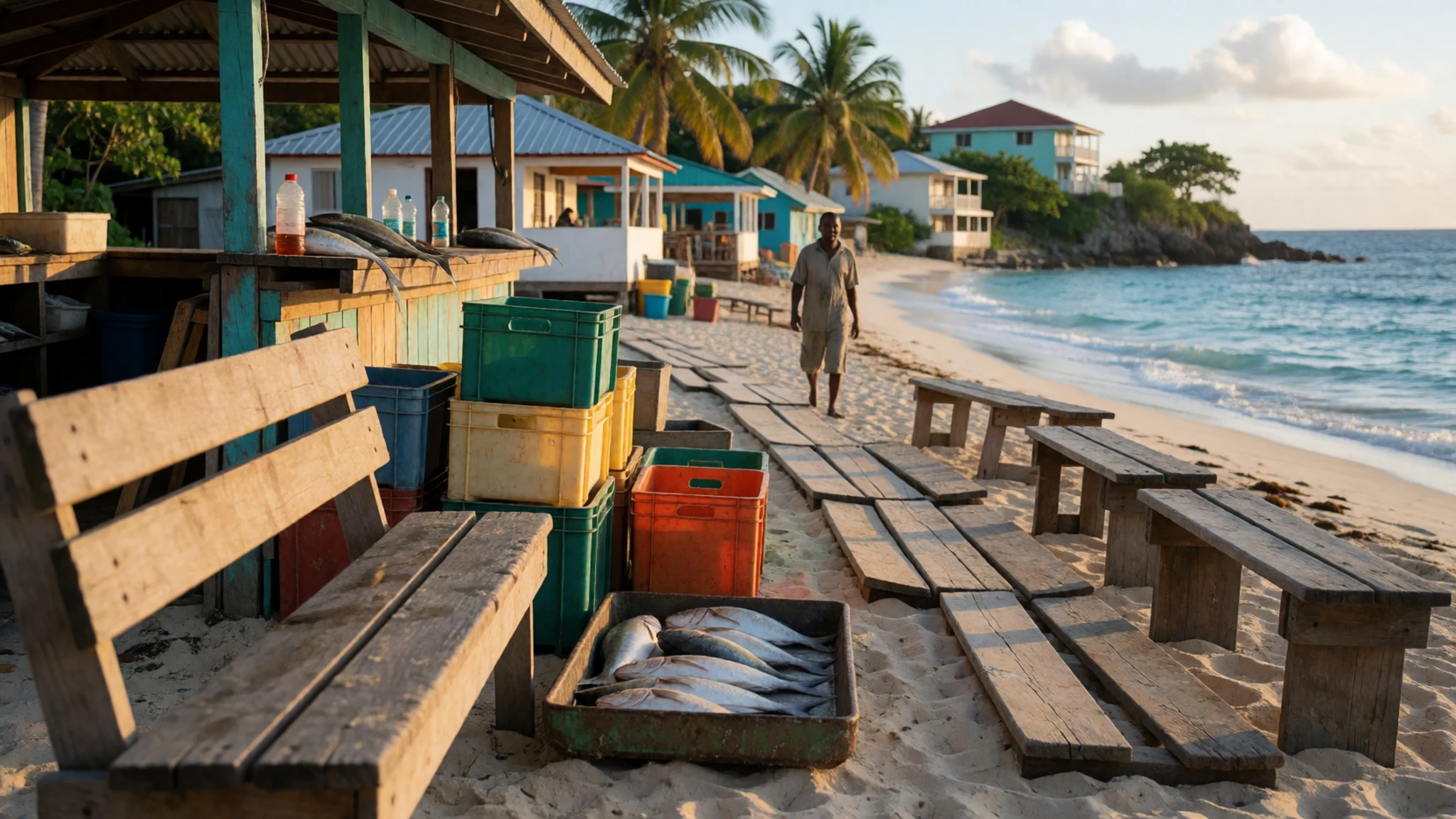
- Fort Charles and Billy's Bay — Western end of the strip
The western bays are quieter and more residential, with smaller beaches, rocky stretches and fewer places to eat. They suit walkers and swimmers who want space. Wear sandals you can wade in, and ask a local before swimming where the shore is rocky or the current looks strong.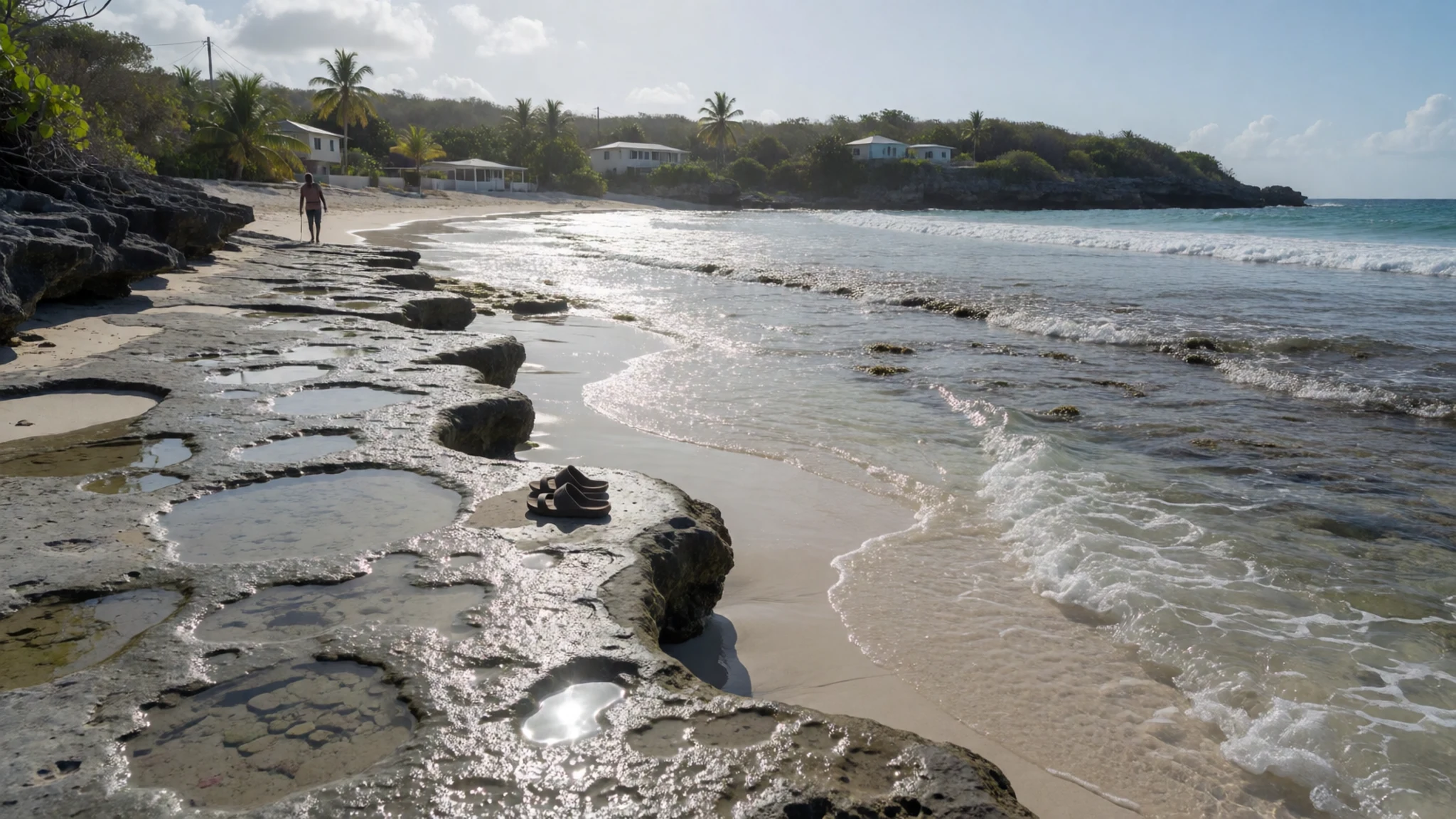
- Black River boat trip — Black River, along the coast road
Black River is the nearest sizeable town and the usual route in from the west. Boat trips on the river and its wetlands are a common day out for spotting birds and other wildlife. Operators vary, so check recent reviews and book through the guesthouse where possible.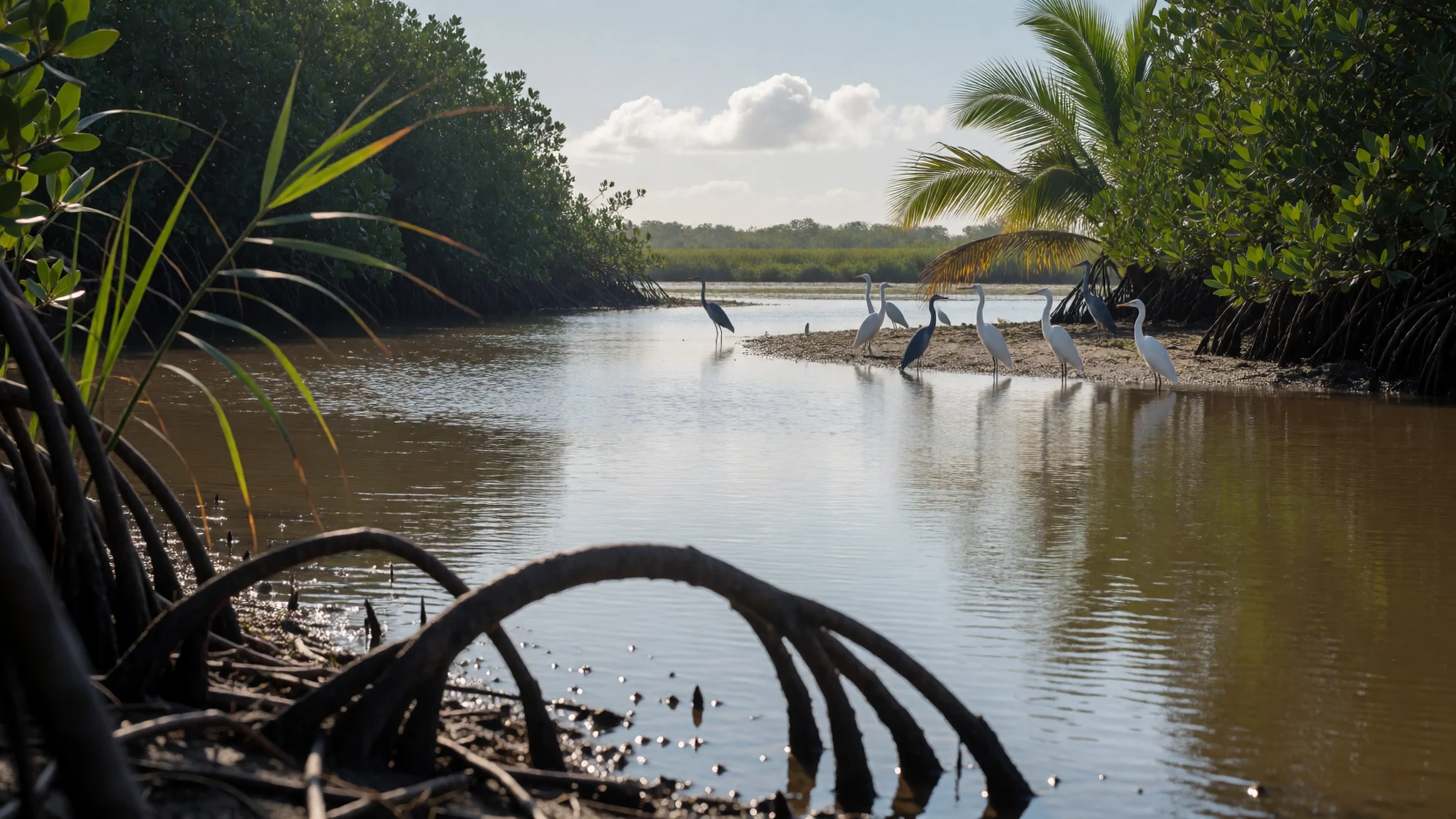
- Pelican Bar — Offshore sandbar near Parottee
Pelican Bar is a small driftwood bar built on a shallow sandbar out in the sea, reached by a short boat ride from the nearby fishing community of Parottee. It is a playful half-day trip rather than a serious sight. Calm weather matters, so confirm sea conditions that morning.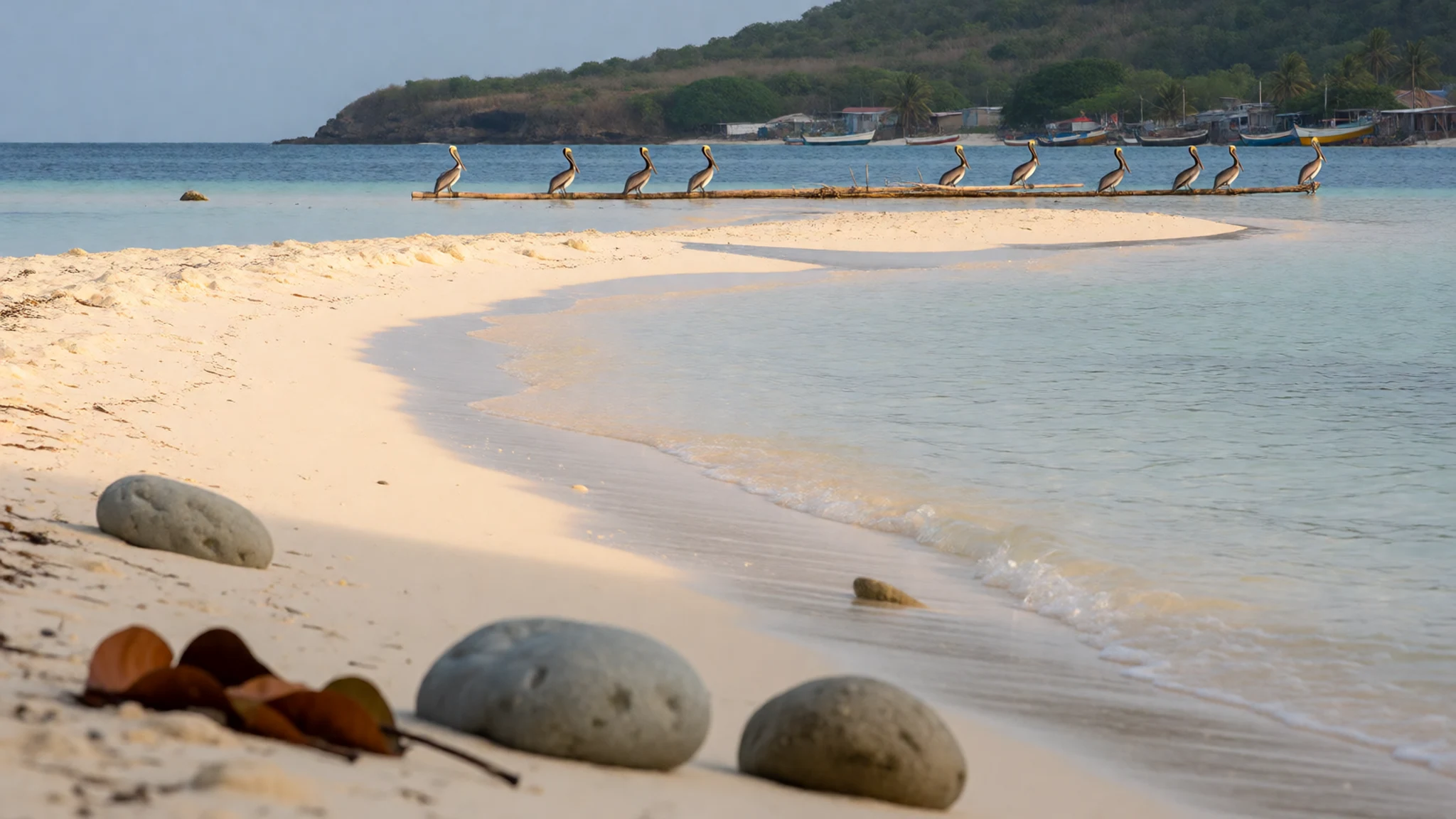
Culture
Treasure Beach is a fishing and farming community first and a tourist stop second, and the rhythm of the place shows it. Boats go out early, catches are sold on the shore, and many of the guesthouses, drivers and cooks are from the same few villages. That closeness is the point of community tourism: the money mostly stays in the neighbourhood, and visitors are expected to behave like guests rather than customers.
Speech here moves between standard English and Jamaican Patois, often within one sentence. Listening for a while before joining in is a courtesy, and visitors who try a greeting in Patois usually get a warm response. Music is everywhere, from reggae and dancehall on beach-bar speakers to hymns drifting from churches, and Sunday is a day when many residents are at services and the pace drops further.
People are generally relaxed and talkative, and conversation is part of every transaction, whether it is buying fish, hiring a boat or asking directions. Rushing it comes across as rude. Pushy sales, by contrast, are rare compared with larger resort areas, and a polite no is accepted.
After the damage of Hurricane Beryl, many residents are also rebuilding homes and livelihoods, so curiosity should be tempered with sensitivity. Greet people before asking for anything, and ask before photographing fishers, their boats or their catch.
What to wear
Treasure Beach has no single local costume, but Jamaica's national dress draws on bandana cloth, a checked cotton often called madras, which is also a familiar fabric in India. The traditional outfit pairs a full, bandana-print skirt with a white blouse and a matching head tie, and it appears at Independence celebrations, folk dance performances, school events and cultural festivals rather than in daily life.
Everyday dress along this coast is practical and casual. Fishers wear old T-shirts, shorts, caps or wide-brimmed hats, and rubber boots or bare feet on the landing. Women and men in the villages generally wear light cotton, sundresses, shorts and sandals. For church on Sunday, people dress smartly, with ironed shirts, dresses and often hats, and the contrast with the beach is noticeable.
Visitors should pack for heat, strong sun and sea. Light cotton or linen, a hat, sunglasses and a long-sleeved cover-up for the middle of the day all help. Swimwear belongs on the beach, so carry a shirt or wrap for walking through the villages, eating at a restaurant or going to shops. If visiting a church service, cover shoulders and knees. Sandals with a grip or water shoes are useful on the rockier shoreline, and a pair of closed shoes is worth having for the rougher minor roads.
What to eat
- Fried fish with bammy — Beach shacks and fishing landings
Whole fried snapper or similar local catch, served with bammy, a flat cassava bread that is often fried or steamed. It is simple, filling and usually bought near the shore where the boats land, so ask what came in that day.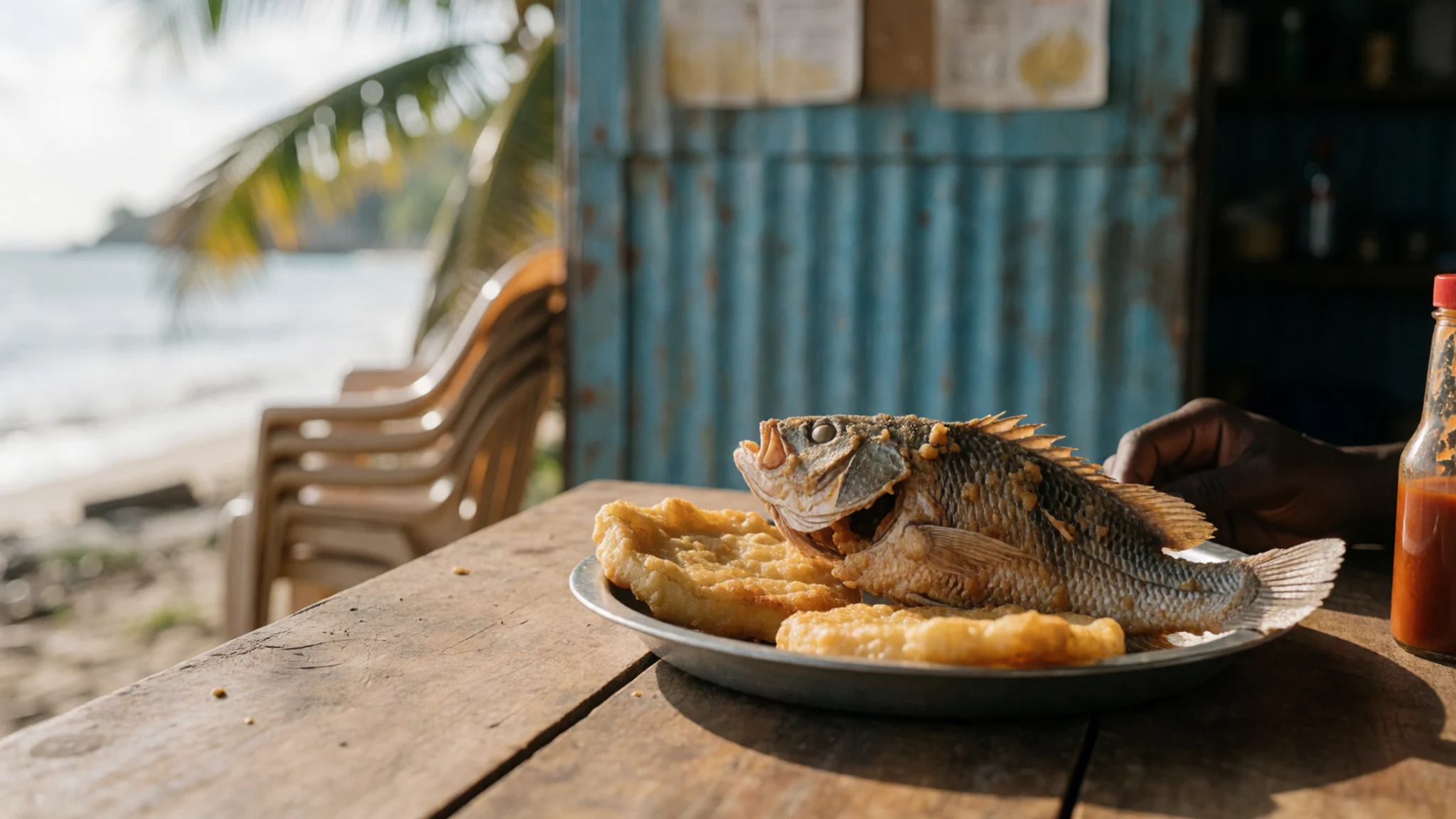
- Escovitch fish — Beach restaurants and roadside stalls
Fried fish topped with a sharp, spiced pickle of onions, carrots and hot peppers. The vinegar cuts the richness of the fish, and it is served warm or at room temperature. Ask about the heat before ordering, since scotch bonnet peppers vary.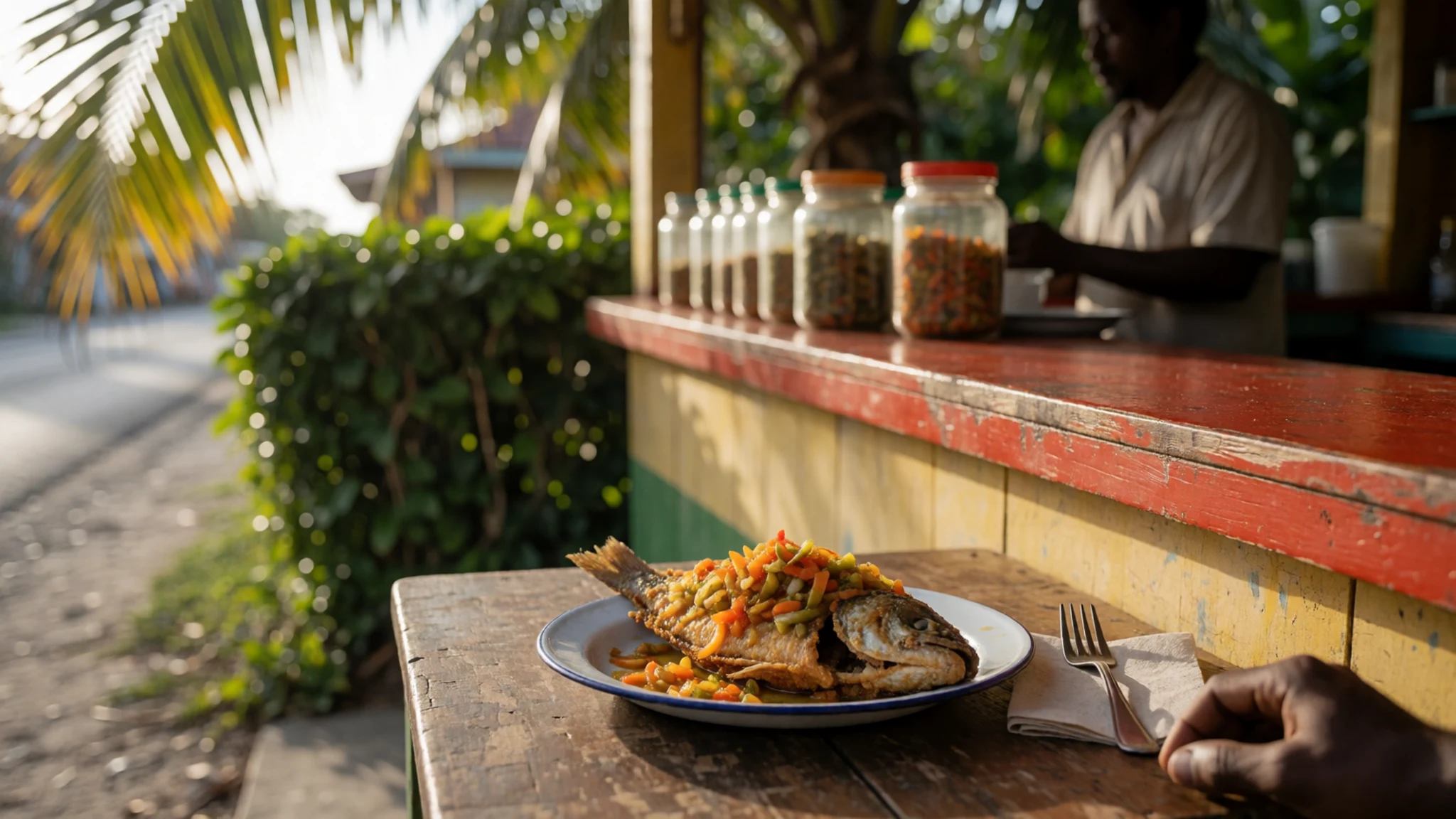
- Jerk chicken or pork — Roadside jerk pits and village cookshops
Meat marinated in pepper, pimento and herbs, then cooked slowly over wood smoke. Look for smoking drums at the roadside and expect a hot, aromatic result, usually chopped and served with festival, a lightly sweet fried dumpling. - Pepper shrimp — Roadside stalls at Middle Quarters, on the road to Black River
Small shrimp boiled in a peppery stock and sold in bags by vendors who work the roadside. They are eaten with the fingers, shells and all, and are very hot. It is an easy snack to pick up on the drive in or out. - Ackee and saltfish — Guesthouse breakfasts and village cookshops
Ackee is a soft, savoury fruit that is cooked with salted cod, onions, tomatoes and peppers, and eaten with boiled banana, dumpling or breadfruit. It makes a hearty breakfast, and it is best eaten where a local cook has prepared it.
Plan it
Best time. December to April is the drier, sunnier part of the year and the most comfortable for beach days. Hurricane season runs through the summer and autumn, and heavy rain can damage the minor roads, so check forecasts and road conditions if travelling then.
How long. 3–5
Getting there. Fly into Sangster International Airport at Montego Bay or Norman Manley International Airport at Kingston, then continue by road. The last leg is on minor roads from the main highway at Black River or Santa Cruz, so arrange a transfer with your guesthouse or a trusted driver.
Budget. mid
Tips
- Arrange your airport transfer in advance, as public transport to the coast is limited
- Carry some cash, since small cookshops, stalls and boat operators may not take cards
- Ask your guesthouse what has reopened after Hurricane Beryl before planning around a specific bar or restaurant
- Use sun protection and carry water, as shade is limited on the beaches
- Check road conditions after heavy rain before driving in or out
Etiquette
- Greet people before asking for anything, as conversation is part of every exchange
- Ask before photographing people, boats or catches
- Keep swimwear to the beach and cover up in the villages and at church
Nearby
Sources
- Wikidata Q16901945 (CC0)
- Wikipedia — Treasure Beach (rev 1379251595) (CC BY-SA 4.0)
- Wikivoyage — Cornwall County (rev 4663311) (CC BY-SA 4.0)
- Great Bay Beach, Treasure Beach Jamaica — Ikaros1975, via Wikimedia Commons (CC BY 3.0)
- Drone shot over Treasure Beach Jamaica — Treasurebeachjamaica, via Wikimedia Commons (CC BY-SA 4.0)

