Luminous Lagoon
Luminous Lagoon, Jamaica
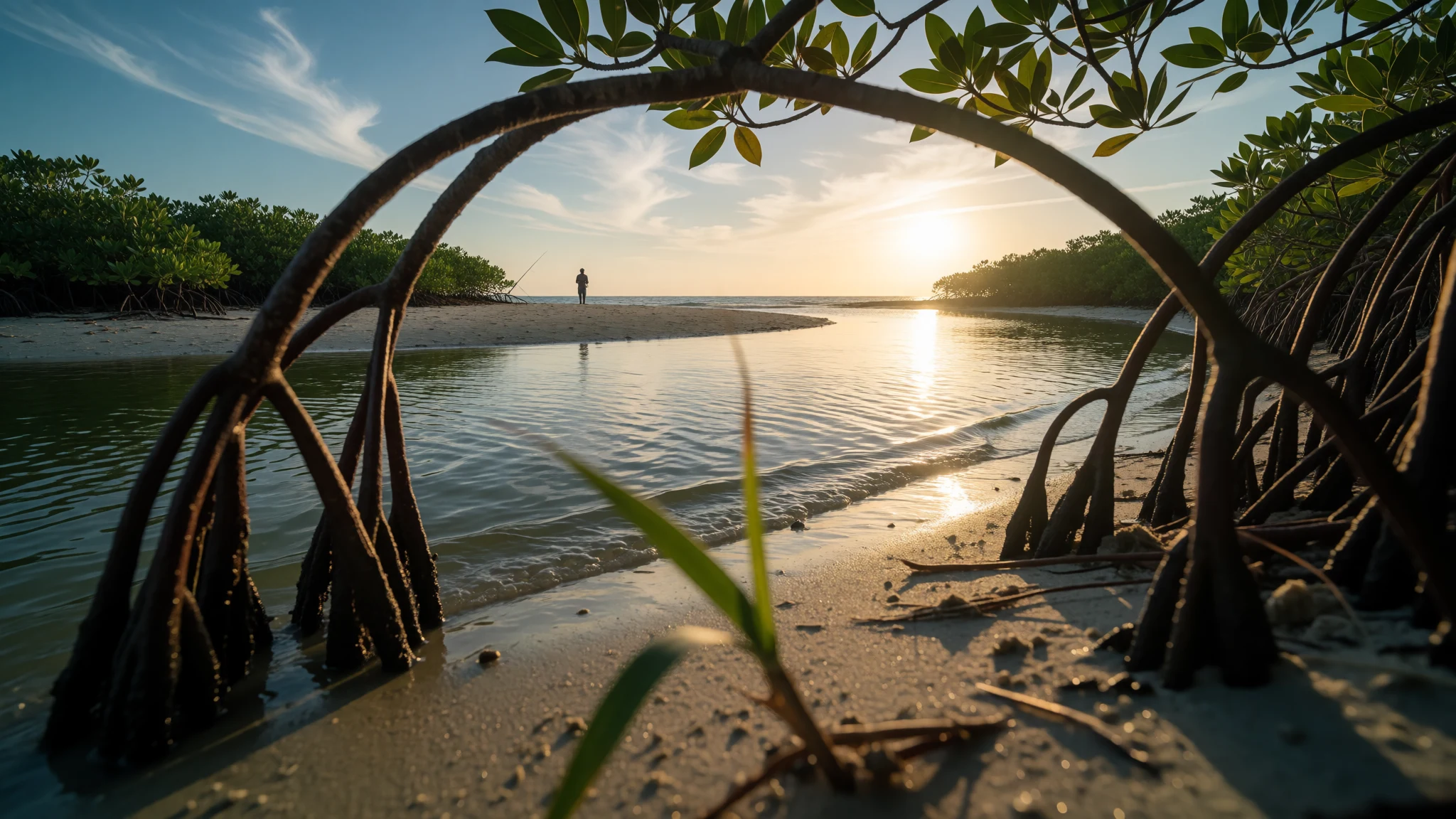
Luminous Lagoon, near Falmouth in Jamaica, lights up blue-green around every paddle stroke and swimmer after dark, on a calm boat trip.
The place
Luminous Lagoon, also labelled Glistening Waters, lies beside the town of Falmouth on Jamaica's north coast, in the parish of Trelawny. It is a shallow, brackish lagoon edged with mangroves, where river water drains in and meets the Caribbean Sea through a channel. That mix of fresh and salt water suits the microscopic organisms that make the place known: when the surface is disturbed, they give off a cool blue-green light. A hand trailed over the side leaves a glowing wake, and fish darting underneath look like sparks.
By day there is little to see. The lagoon is a calm, murky stretch of water with low green shores, a few jetties and small boats. Visits happen after dark, usually on short boat trips from the Falmouth side, and the result depends on how dark the night is. A bright moon or glare from the shore dims the effect, while a moonless night shows it best. Tour sources say the glow appears all year whatever the weather, though that is an operators' claim rather than a measured survey, so it is sensible to treat the strength of the display as variable.
Falmouth makes a practical base. It is a small working town with Georgian-era buildings, and the airport and beach resorts of Montego Bay are within a drive along the coast. The north coast stays warm and humid all year, so evenings on the water are comfortable. Crowds are modest compared with the big beach resorts, though tour boats cluster on clear weekend nights and in the winter high season, and on days when cruise ships are in port.
Its story
The story of Luminous Lagoon, or Glistening Waters, is part chemistry and part the history of the coast around Falmouth. The light comes from dinoflagellates, single-celled plankton that flash when the water around them is shaken by a paddle, a fish or a swimmer. The flash is a chemical reaction inside the cell, thought to startle small predators. Mangrove roots feed the lagoon with nutrients, and the narrow link to the sea keeps the water warm and sheltered, so the plankton can build up in large numbers.
Falmouth itself grew as a port for the sugar estates of Trelawny, and its grid of streets and stone buildings reflects that economy, which rested on the forced labour of enslaved Africans. Today the town is known for its restored Georgian streetscape and for the cruise ships that dock nearby, which send many visitors on to the lagoon.
Tour operators have turned the glow into a steady night-time business, and that brings pressure. Engine wash, sun lotion and insect repellent in the water, and lights on the shore can all harm the plankton or hide their glow. Careful operators run quiet boats, keep lights off, and ask swimmers to rinse off lotions first. Whether the lagoon keeps shining depends on the surrounding mangroves staying healthy and on the water staying clean, which is as much a local planning matter as a natural one.
What to see
- Night boat trip on the lagoon — Falmouth, Trelawny
Boats leave from jetties on the Falmouth side after dark and drift across the still, dark water. A trailed hand or paddle lights up a blue-green wake, and some operators offer a swim. The glow is faint rather than neon, so allow a few minutes for eyes to adjust and keep phone screens away.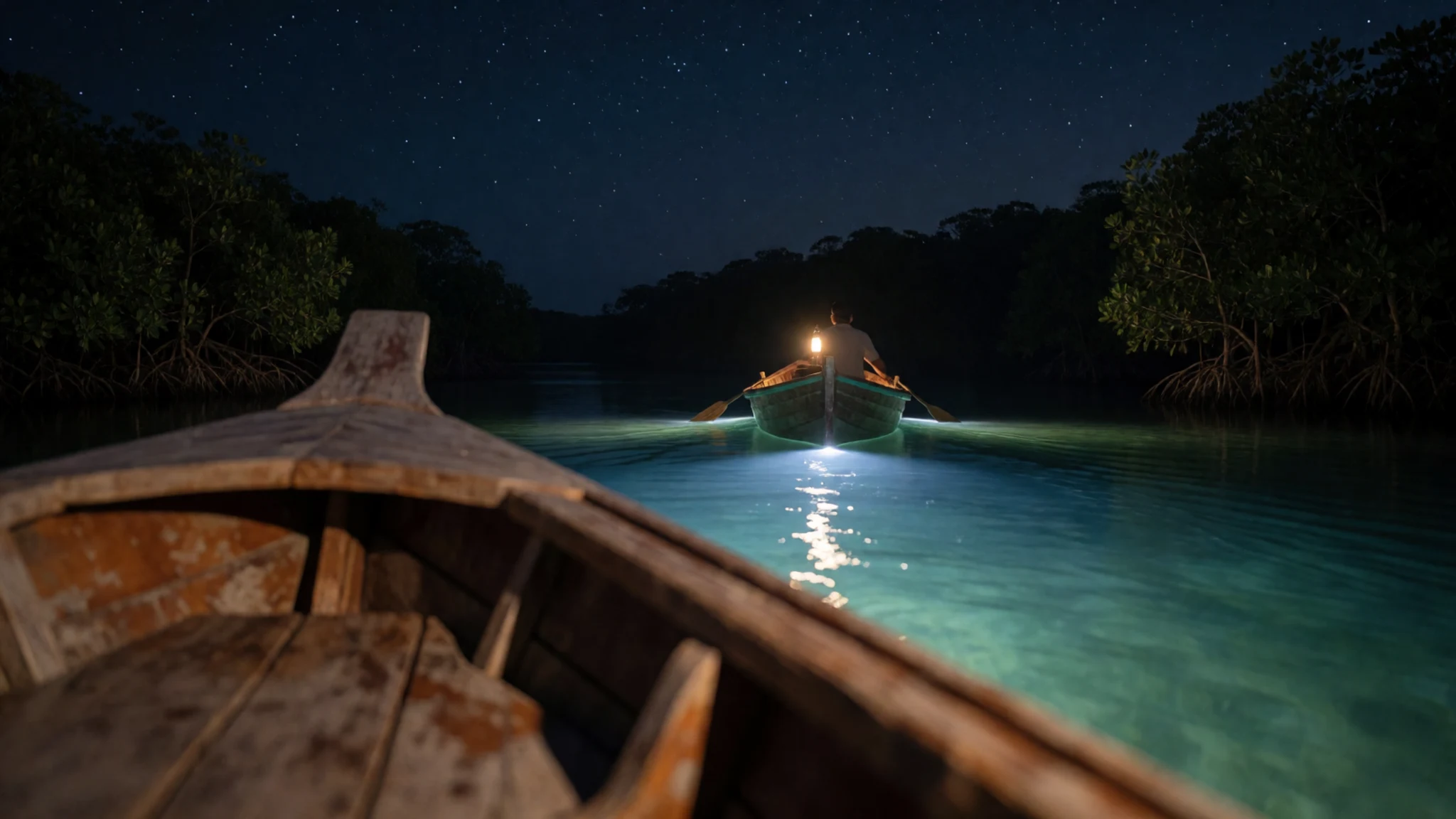
- Falmouth Historic District — Falmouth town centre
Falmouth's centre rewards a slow walk past town squares, churches, parks and rows of Georgian-era buildings dating from its life as a sugar port. Go in the morning, before the heat and before cruise passengers arrive, and read the plaques with the town's links to slavery in mind.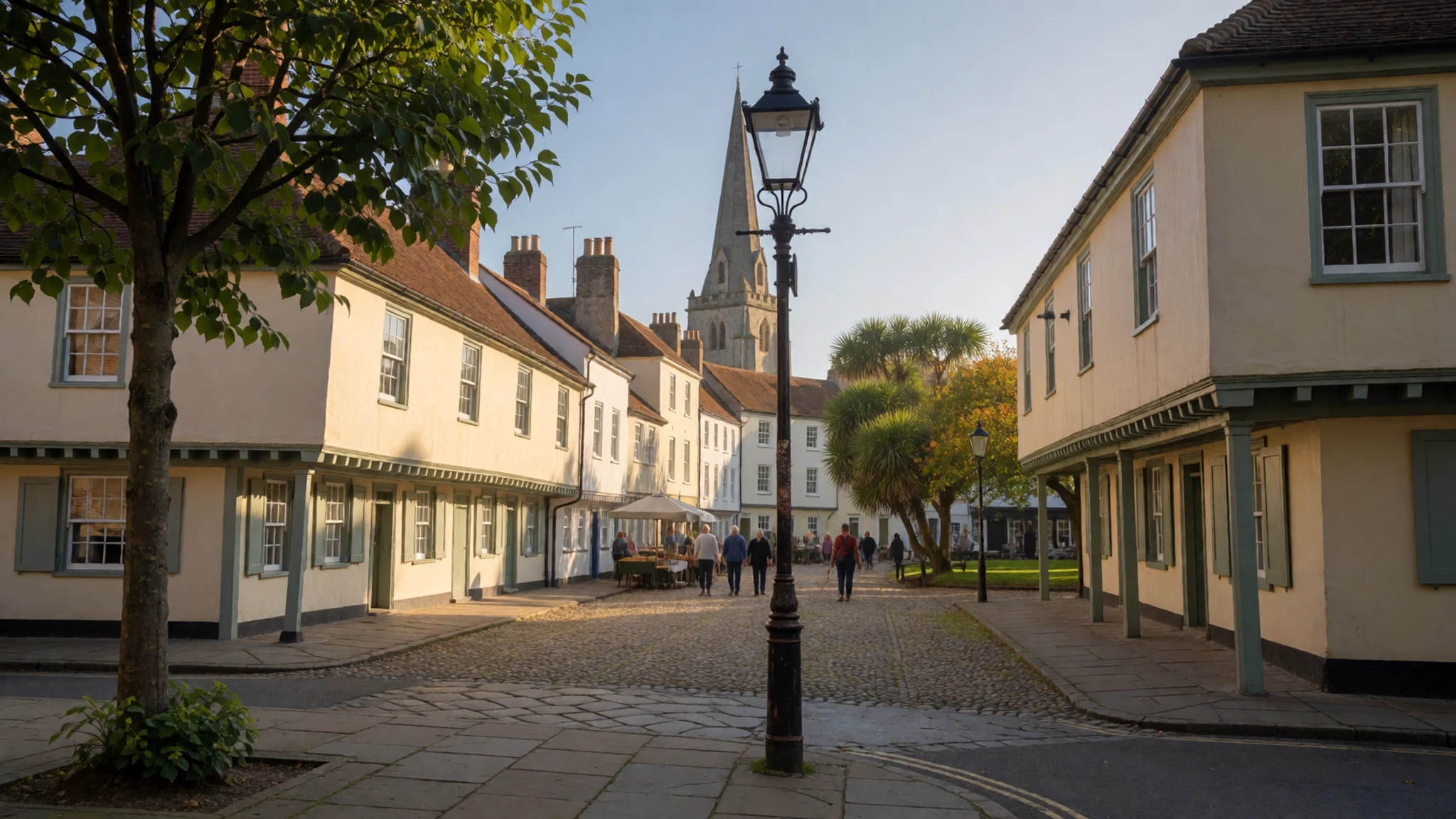
- Rockland Bird Sanctuary — Near Montego Bay, St James
Near Montego Bay, Rockland Bird Sanctuary is a small, garden-like site where several local species, including hummingbirds, are commonly seen. Early morning is the better time for birdlife. Opening arrangements change, so check a current local listing before making the journey from Falmouth.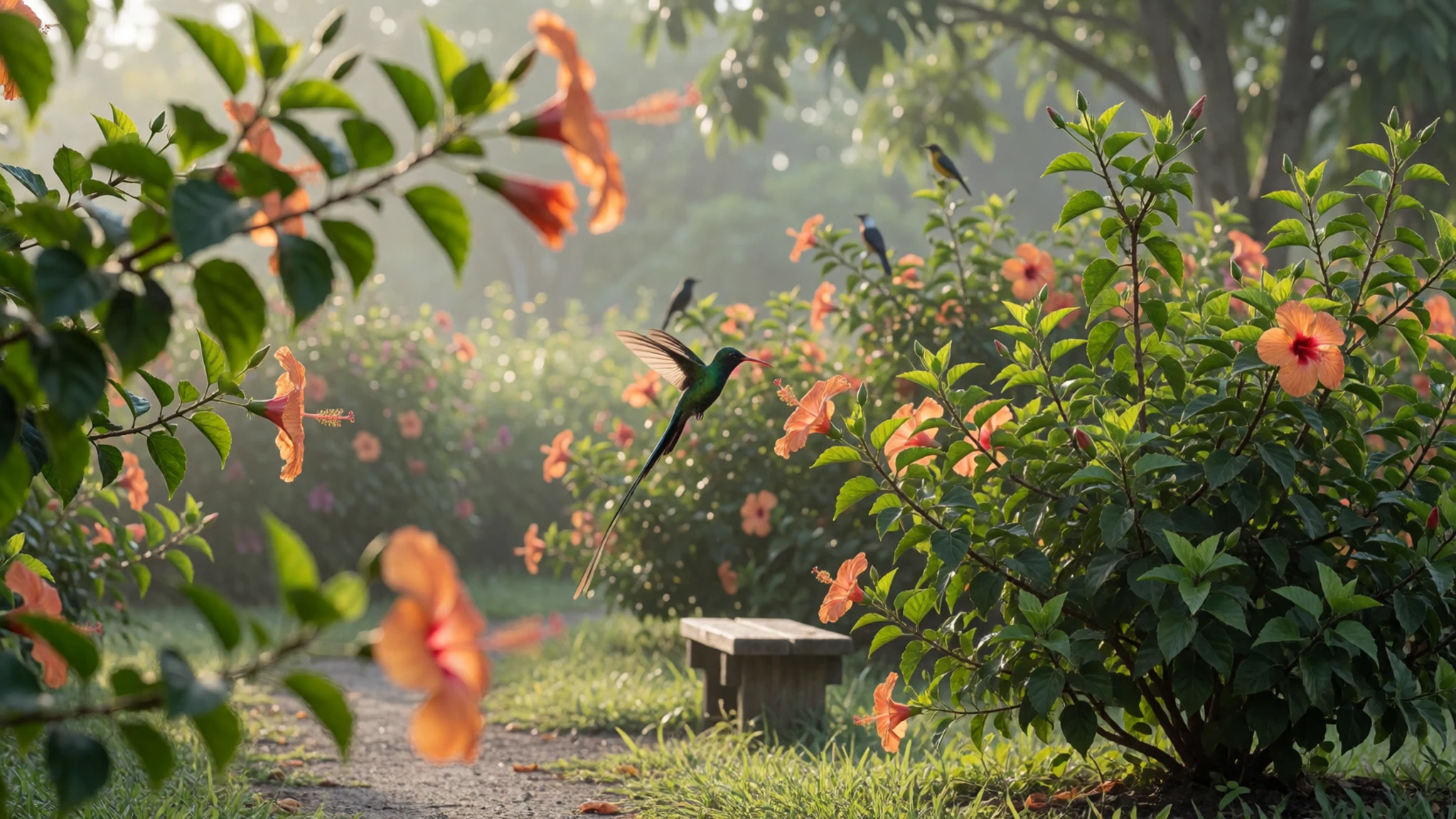
- Negril beaches — Negril, west coast
Negril's beach runs along a sandbar between the Negril River in the south and Rutland Point in the north. The sea is calm and sunsets are a draw. Water sports are easy to arrange. Sections near the resorts are busy; the ends are quieter. It is a long day trip from Falmouth.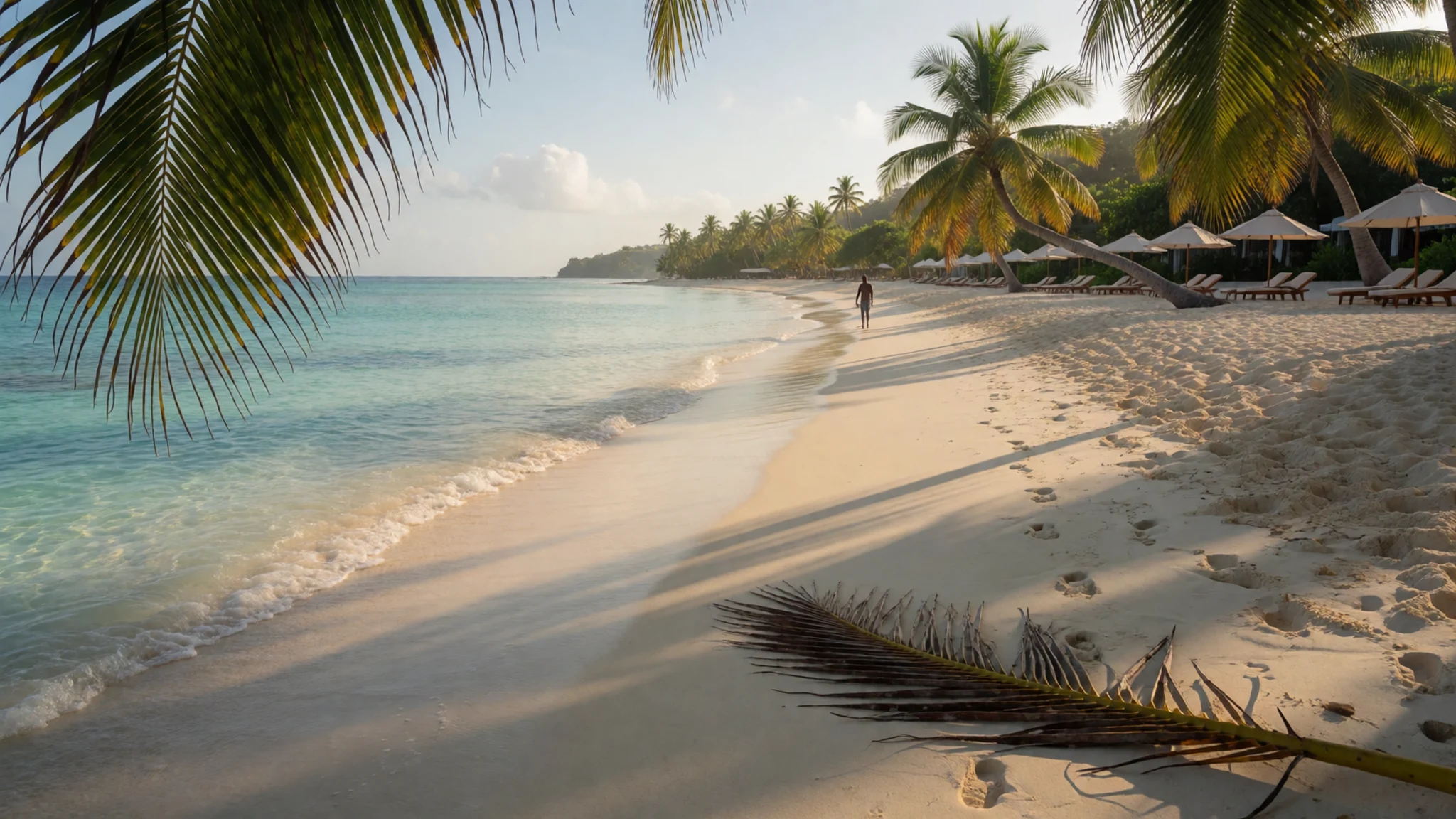
- Montego Bay beaches and water sports — Montego Bay, St James
Montego Bay has public and resort beaches, plus snorkelling, boat tours and other water activities. It sits close to the airport, so it suits a first or last day. Weekends and cruise days are busy, and some beaches charge entry, so ask locally before heading out.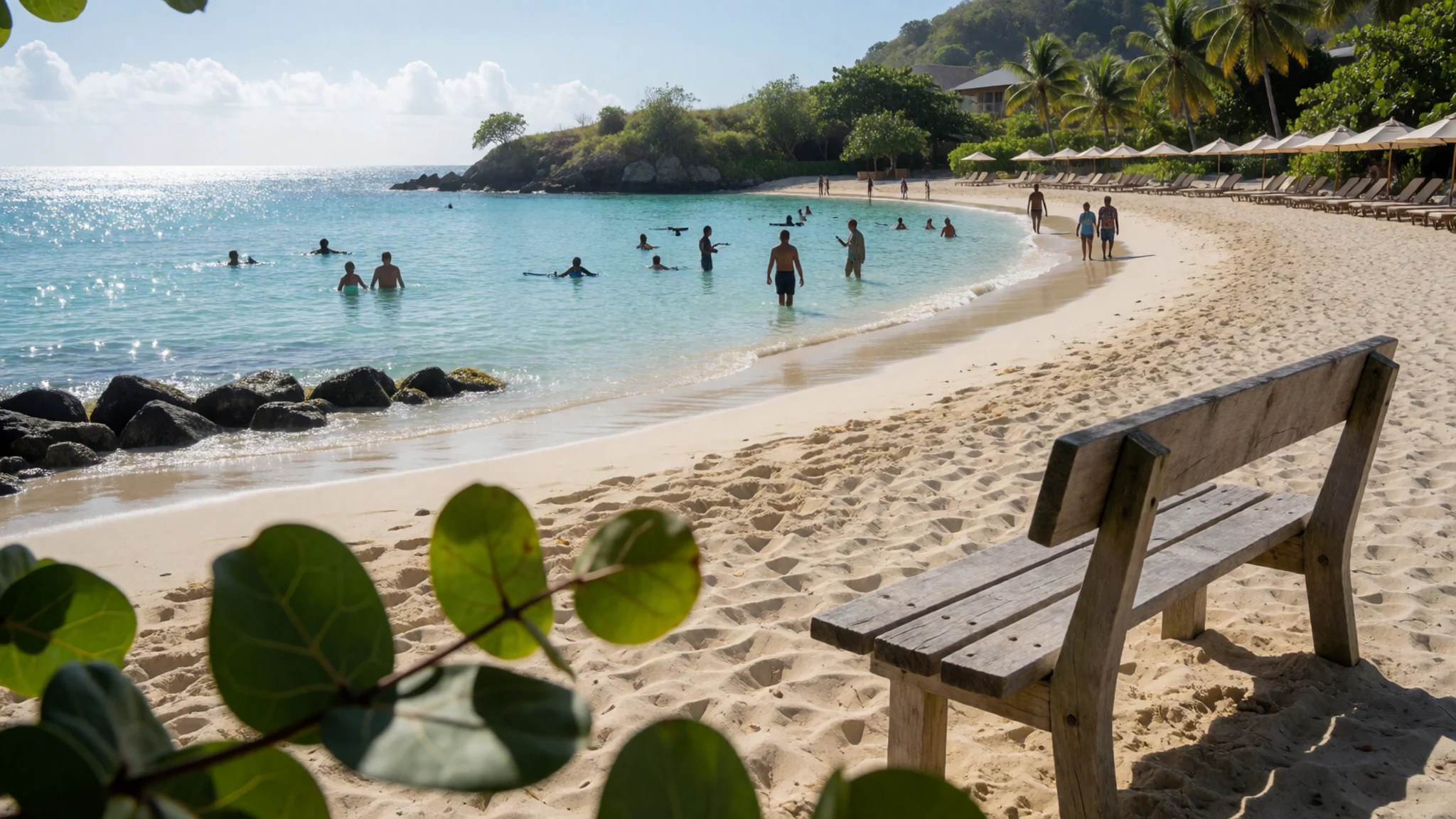
Culture
Luminous Lagoon lies in Trelawny, a parish where church, music and the sea shape daily life. Visitors will hear English and Jamaican Patois, often within one conversation. Reggae and dancehall drift from shops, buses and boats, and Sunday is still church day for many families, with smart clothes and long, joyful singing. Rastafari, with its red, gold and green colours and its plant-based Ital cooking, has influenced the island's music, speech and style.
Falmouth's streets carry the history of sugar wealth and of the enslaved people whose labour produced it, and local guides increasingly tell that story plainly. Boat captains, fishers and guides along the lagoon earn their living from the water, so a night trip is their work, not a theme-park ride.
Manners start with a greeting. A 'good evening' on stepping into a shop, taxi or boat is expected before any request. Sellers around beaches and cruise areas can be persistent; a smiling 'no, thank you' is understood. Tipping guides and boat crews is customary when the service was good.
Greet people before asking for anything, and ask permission before photographing vendors, fishers or children.
What to wear
Traditional Jamaican dress centres on the bandana or madras: cotton cloth in bright plaid, made into full skirts, ruffled blouses, aprons and head-wraps. It is worn mostly on stage and at national events such as Independence celebrations, folk festivals and school heritage days, and it turns up in craft stalls around Falmouth. Rastafari dress adds knitted tams in red, gold and green, and natural fibres.
Everyday clothing in Trelawny is light and practical: cotton T-shirts, shorts, sundresses, sandals and trainers, with football shirts and caps common. For church, funerals and official business people dress up, with pressed shirts, dresses below the knee and polished shoes. Swimwear belongs on beaches and boats, not in town streets.
Visitors should pack for heat and humidity: loose cotton or linen, a sun hat, sunglasses and sandals. For a night on the lagoon, wear swimwear under a quick-dry layer and bring a towel, water shoes and a light cover-up against the breeze. Cover shoulders and knees in Falmouth's churches and town centre, and keep sun lotion and insect repellent off your skin before entering the water, because they harm the plankton.
What to eat
- Jerk chicken or pork — Roadside jerk centres and smoky drum grills along the north coast road
Meat rubbed with pimento (allspice), scotch bonnet pepper and thyme, then slow-smoked over pimento wood. The result is spicy, smoky and slightly sweet. It is usually chopped to order and eaten with the hands.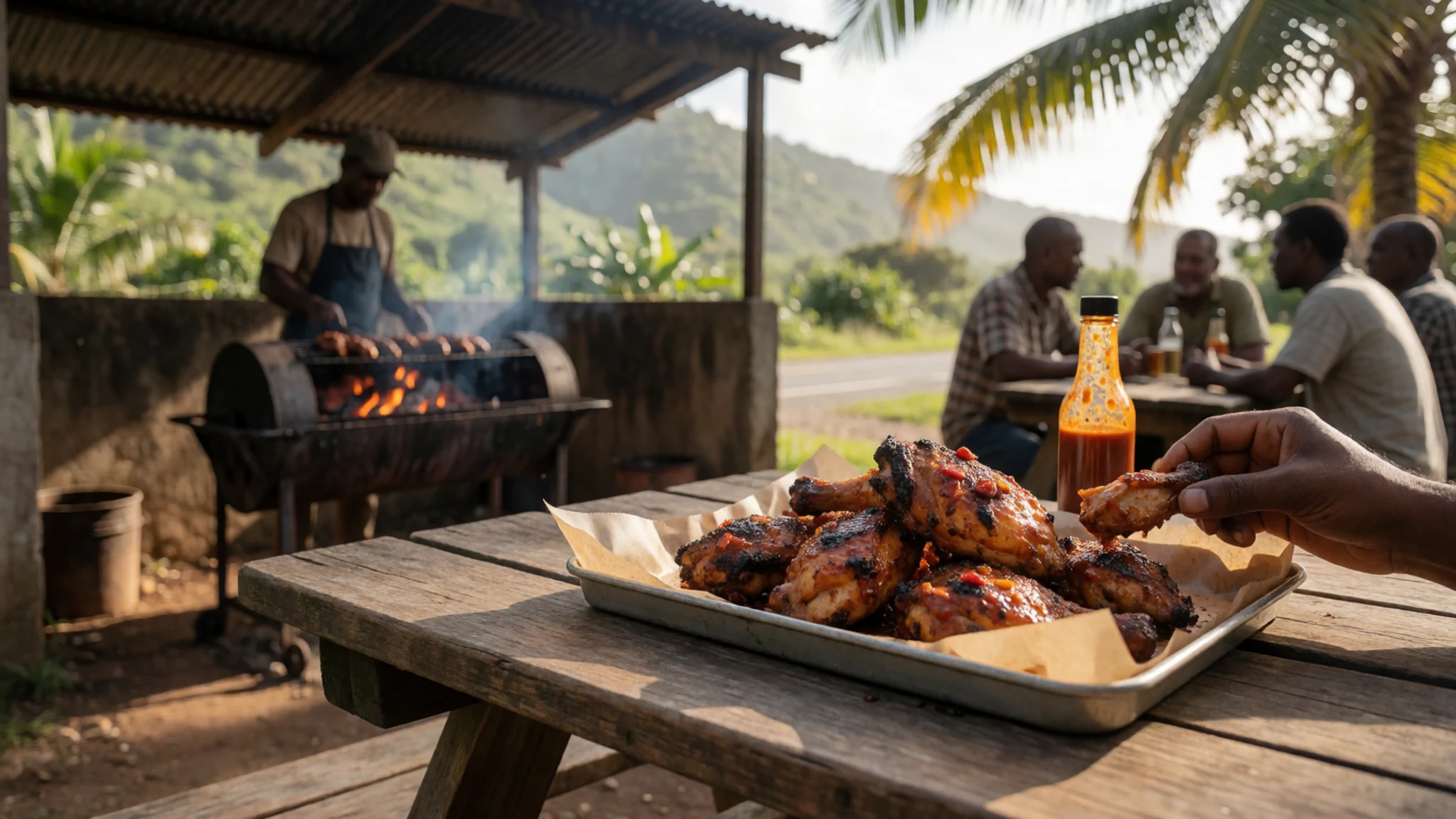
- Ackee and saltfish — Local cookshops and breakfast eateries in Falmouth
A classic Jamaican breakfast: soft, buttery ackee fruit cooked with salted cod, onion, tomato and pepper. It is often served with fried dumplings, boiled green banana or breadfruit. Cooked properly, it tastes mild and savoury.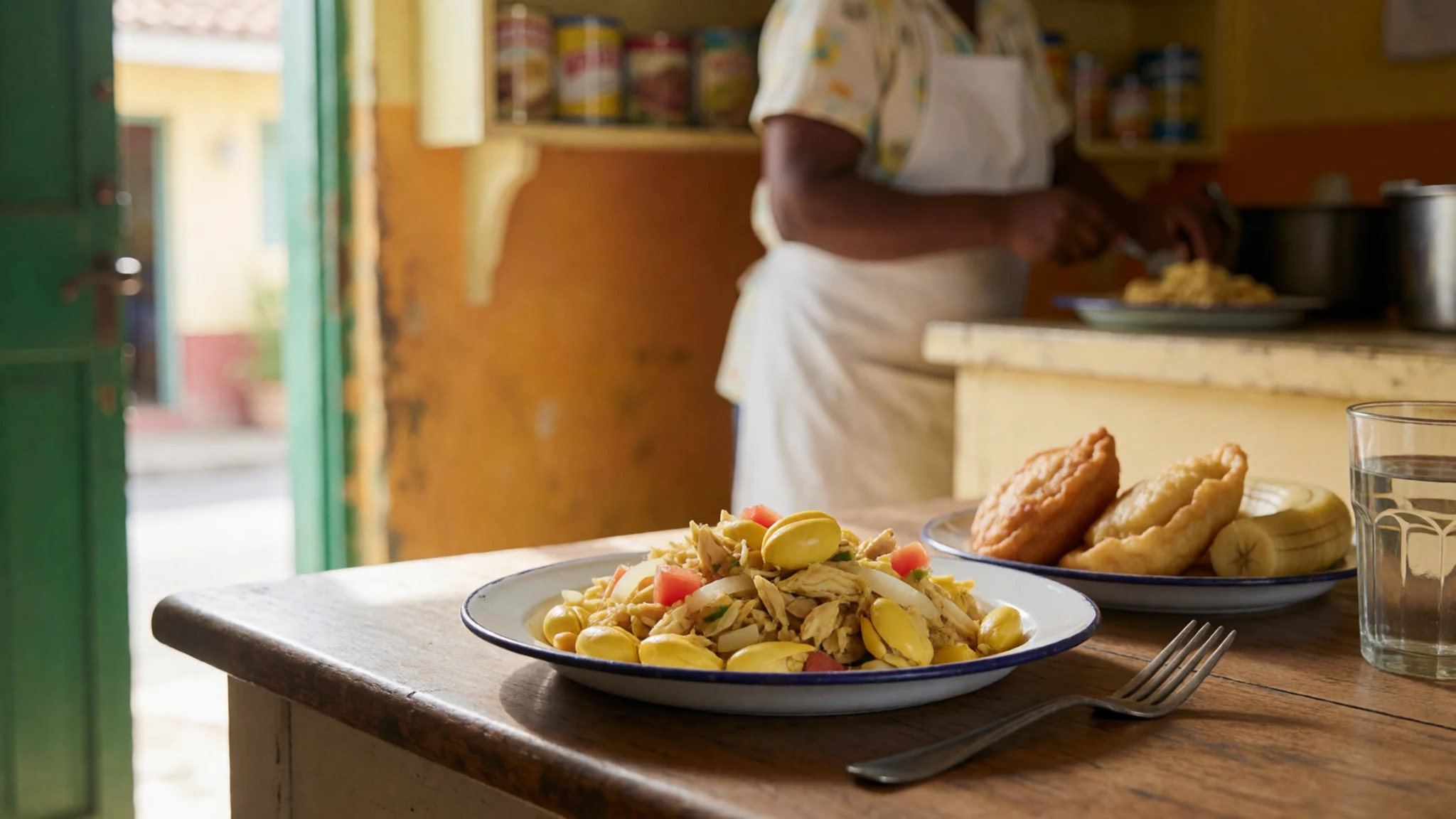
- Escovitch fish with bammy — Fishing beaches and seafood shacks by the water
Whole fried fish topped with a sharp pickle of onion, carrot and peppers in vinegar. Bammy, a flat cassava bread, is the usual partner, soaked and fried or steamed to soak up the sauce. - Festival — Jerk stands and roadside grills
A long, slightly sweet fried dumpling of cornmeal and flour. Crisp outside and soft within, it is the standard side with jerk and fried fish, and balances the heat of the pepper. - Curried goat with rice and peas — Local cookshops, especially at Sunday lunch
Goat slow-cooked in a Jamaican-style curry with thyme, pimento and scotch bonnet, served beside rice cooked with kidney beans and coconut milk. The meat comes on the bone, so eat slowly and expect a rich, deep sauce.
Plan it
Best time. December to April, when the weather is drier and a little cooler. June to November is wetter and falls in hurricane season, so boats can be cancelled. For the strongest glow, choose nights around the new moon and avoid a bright full moon.
How long. 1–2
Getting there. Fly to Sangster International Airport in Montego Bay, then take a taxi or arranged transfer along the north coast road to Falmouth. The last leg is a short boat trip from the lagoon jetties on a booked tour.
Budget. mid
Tips
- Book the night trip ahead and check the operator's own website for departure times and conditions
- Pick a dark, moonless night and let your eyes adjust for a few minutes without torch or phone light
- Rinse off sun lotion and insect repellent before swimming, or ask the operator whether swimming is allowed
- Carry some cash for tips, snacks and small purchases in Falmouth
- Expect crowds on cruise-ship days and winter weekends; a weekday evening is calmer
Etiquette
- Follow the boat crew's instructions on swimming and keep lights and screens off on the water
- Greet people before asking for anything
- Ask before photographing people
Nearby
Sources
- Wikidata Q124746861 (CC0)
- Wikipedia (Cornwall County, Jamaica) (CC BY-SA 4.0)
- Wikivoyage (rev 4663311) (CC BY-SA 4.0)