Jamaica
Jamaica, None
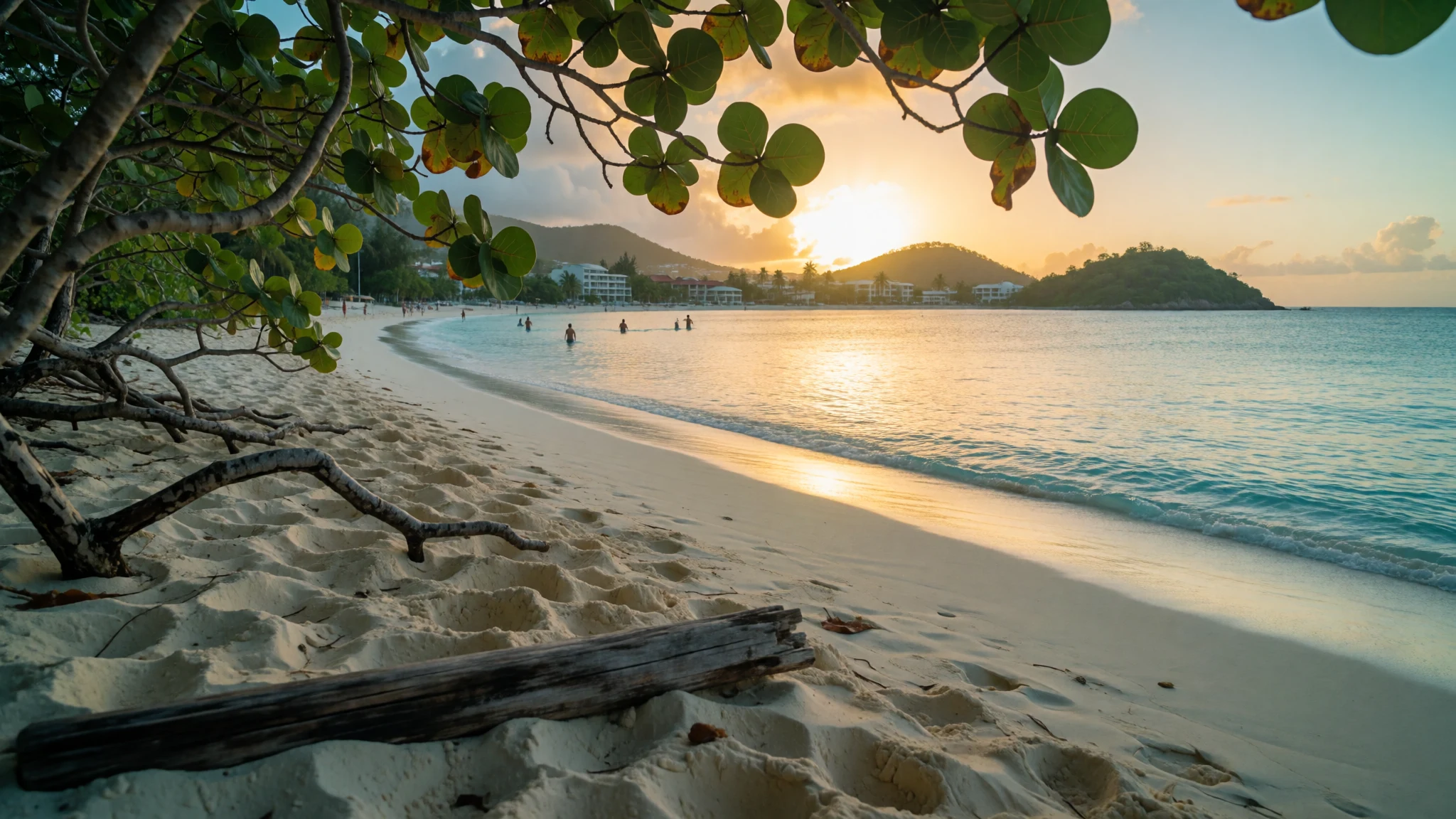
Jamaica pairs reef-fringed beaches with mountain coffee country, a reggae lineage heard worldwide, and food built around ackee and saltfish.
The place
Jamaica sits in the Caribbean Sea as an island state and a Commonwealth realm, with its capital, Kingston, spread along a harbour on the south coast. Cuba is the neighbour to the north, Hispaniola to the east, and the Cayman Islands lie off to the northwest. Mountains run the length of the interior; towns and farms hold to the coastal plains and to the basin around Kingston. Some 2.7 million people live here. English is the language of law and school, and Jamaican Patois is the language of the street, the minibus and the yard.
A short drive splits the island into different days. Beaches line the north and the west, where Montego Bay, Ocho Rios and Negril take most of the resort trade. Kingston is busier and hotter through the afternoon: government, the port, and the studios that carried reggae off the island. North of the city the Blue Mountains climb into afternoon cloud, coffee on the slopes and cooler nights. The country covers 10,991 square kilometres (4,244 square miles). Among the Greater Antilles it ranks third in size, behind Cuba and Hispaniola.
The modern state dates its independence to 1962. Most Jamaicans trace their families to Africans brought for the sugar estates, after indigenous communities had been shattered by Spanish conquest and disease. Taíno words remain on parishes and rivers. In gardens at the foot of the hills, the red-billed streamertail, a local hummingbird, is a common flash of green.
The resort week and the parish road run side by side. Waterfalls and sunset cliffs collect crowds; lowland heat and humidity last most of the year; the high slopes cool off after dark. Neither Jamaica cancels the other.
Its story
Jamaica's human story starts late. Nothing dug from the ground shows people here until about 500 CE. Potters later called the Redware people arrived around 600 CE. The Taíno followed around 800 CE, most likely from South America, farming and fishing in villages led by caciques. At their height they may have numbered about 60,000 people in around 200 villages, and the south coast, including the Old Harbour area, was the most settled stretch.
In 1494, on a second Atlantic voyage, Christopher Columbus sighted Jamaica and took it for Spain, the earliest European record of the island. The likely landing was Dry Harbour, now Discovery Bay. He named St Ann's Bay Saint Gloria. In 1503 a wreck held him and his crew on the coast for a year. In 1509 Juan de Esquivel founded Sevilla, Spain's first town on the island, a kilometre and a half west of St Ann's Bay. It was abandoned around 1524 as an unhealthy site. The capital moved to today's Spanish Town. Spain called the island Santiago.
England seized Jamaica in 1655 and kept the name. Sugar pulled the island deep into the British West Indies. The estates ran on Africans carried across the Atlantic and on their descendants. Emancipation came in 1838. Many freed people took small provision grounds rather than remain on the plantations, and hillside farms and market towns still follow that turn. Independence in 1962 ended British rule as a government. Spanish Town's grid, the parish churches and the great houses stayed in place, over older Taíno names.
What to see
- Dunn's River Falls — Ocho Rios
Dunn's River Falls drops to the sea at Ocho Rios, on Jamaica's north coast, a cascade of about 180 metres (600 feet). Visitors climb the wet rock in a linked line while a guide sets the pace. The stone is slick, so shoes with a grip matter. Tour coaches pack the lower terrace by the middle of the day, and the climb is calmer early.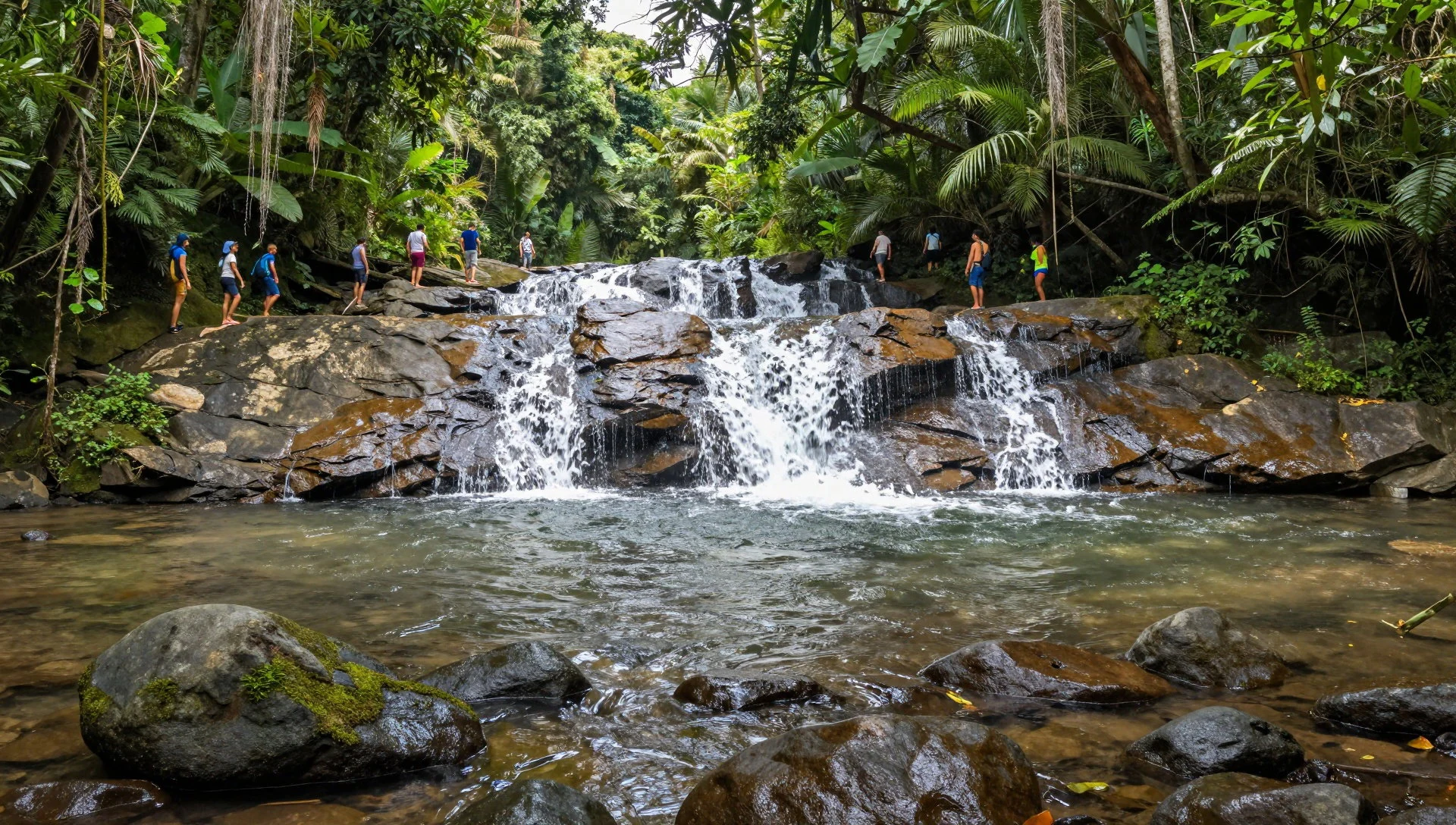
- Doctor's Cave Beach — Montego Bay
Doctor's Cave Beach is a public arc of pale sand in Montego Bay, on Jamaica's north coast. The bottom stays sandy as the water deepens, so swimming is the reason to come. Late morning brings resort guests and people from town, and the umbrellas stand close together. Arriving earlier in the day leaves more open sand along the same bay.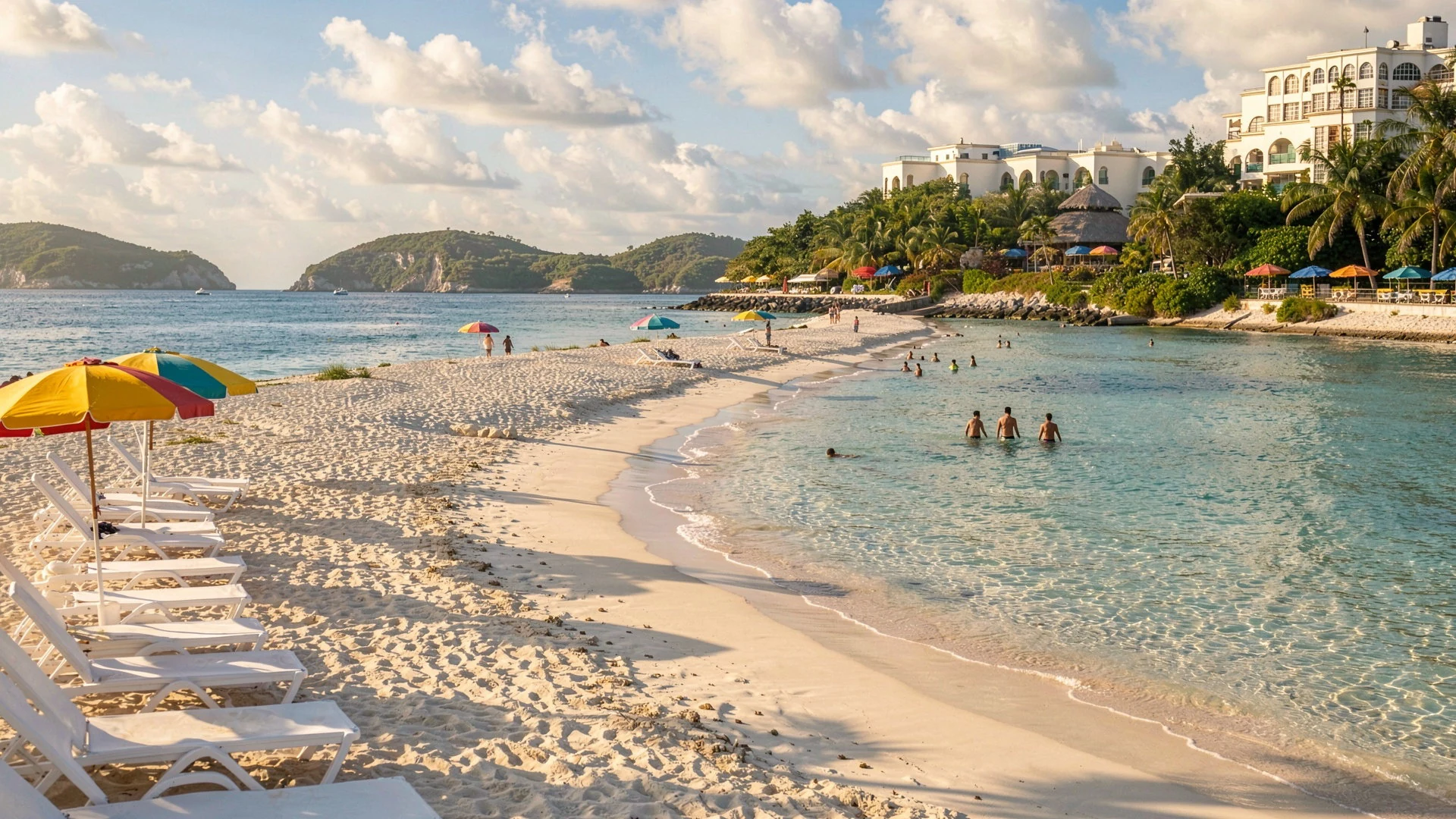
- Blue Mountains — North of Kingston
The Blue Mountains begin just north of Kingston and form Jamaica's cool, often clouded interior. Coffee farms step up the slopes, and the drive from the city trades coastal heat for damp forest air. Hiking is the draw; the road is narrow, so the range suits a full day. Clearer views toward the capital tend to come in the morning, before cloud settles.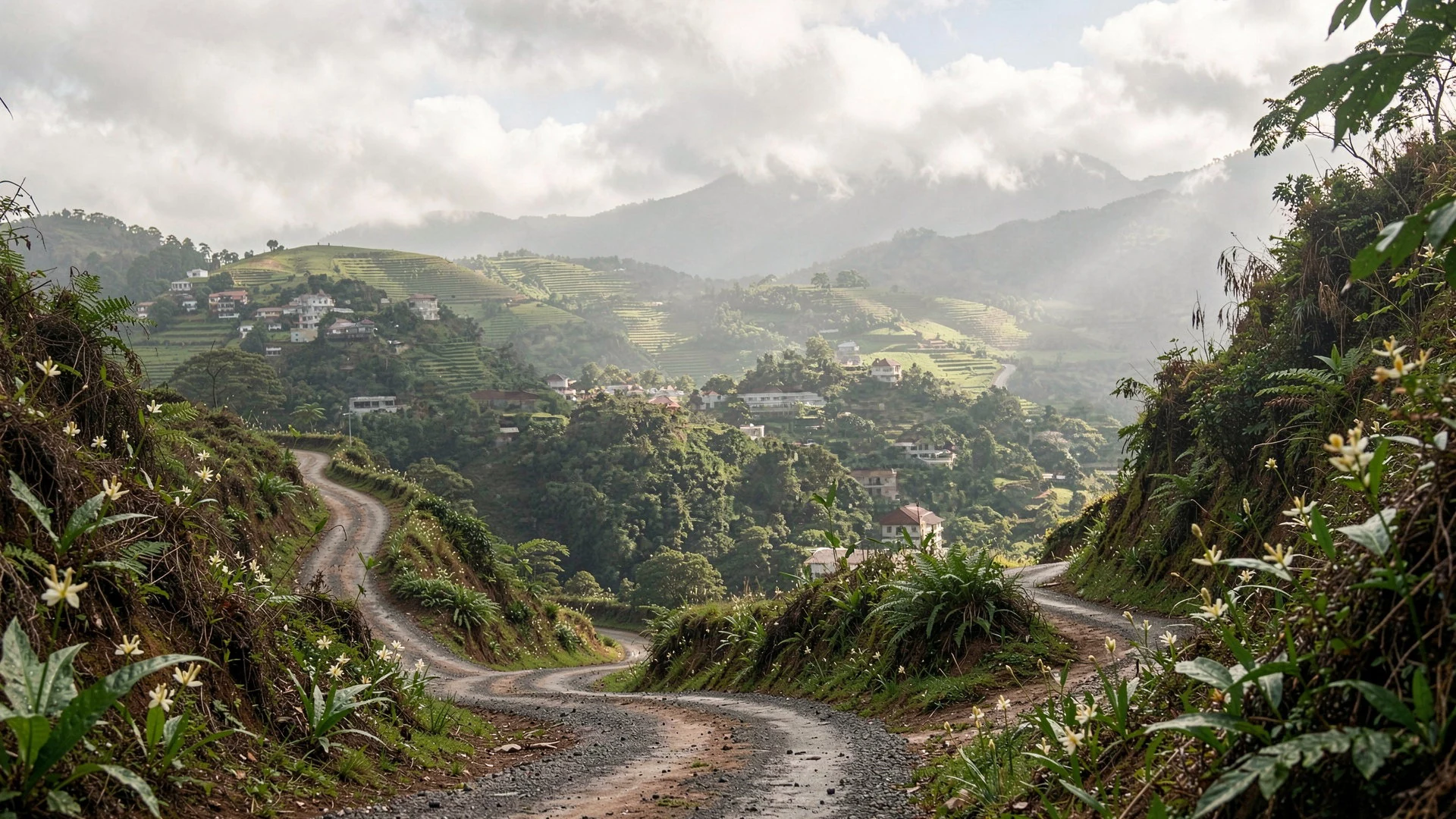
- Nine Mile — St Ann
Nine Mile, in the hills of St Ann, is the village where Bob Marley was born and is buried. The road climbs off Jamaica's north-coast highway into small-farm country, which is much of the visit's point. The house and the mausoleum are the focus, and the lane crowds when several minibuses arrive together. A weekday morning is quieter than a weekend convoy.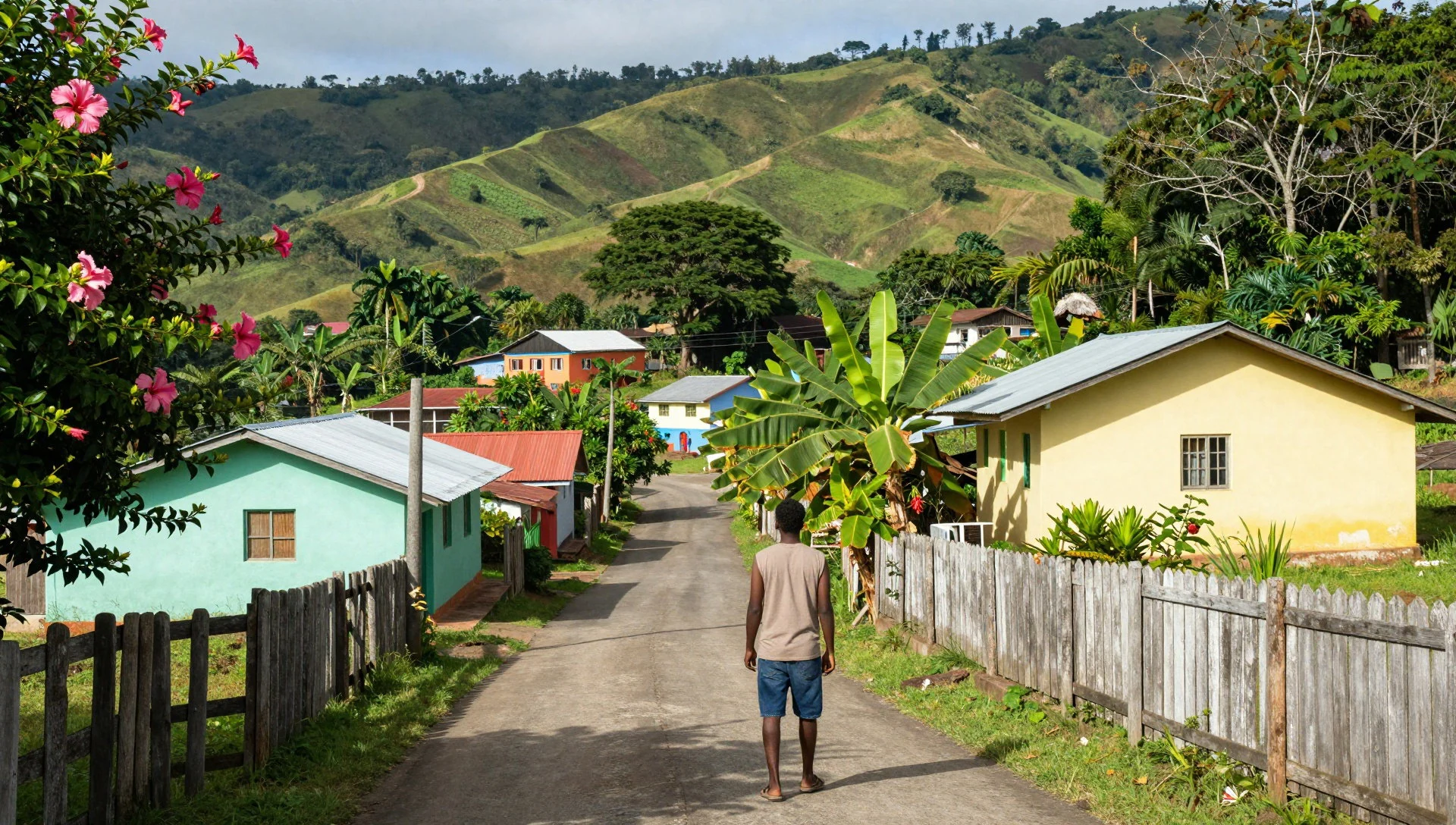
- Negril beach — Negril, west coast
Negril's western beach, known as the seven-mile beach, is Jamaica's sunset shore: a long run of sand ending in cliffs where divers leave the rock late in the day. Swimming and walking the sand fill the hours. Bars and small resorts line the water, so the beach feels social. The cliff jump is optional; the sand at dusk is the steady pleasure.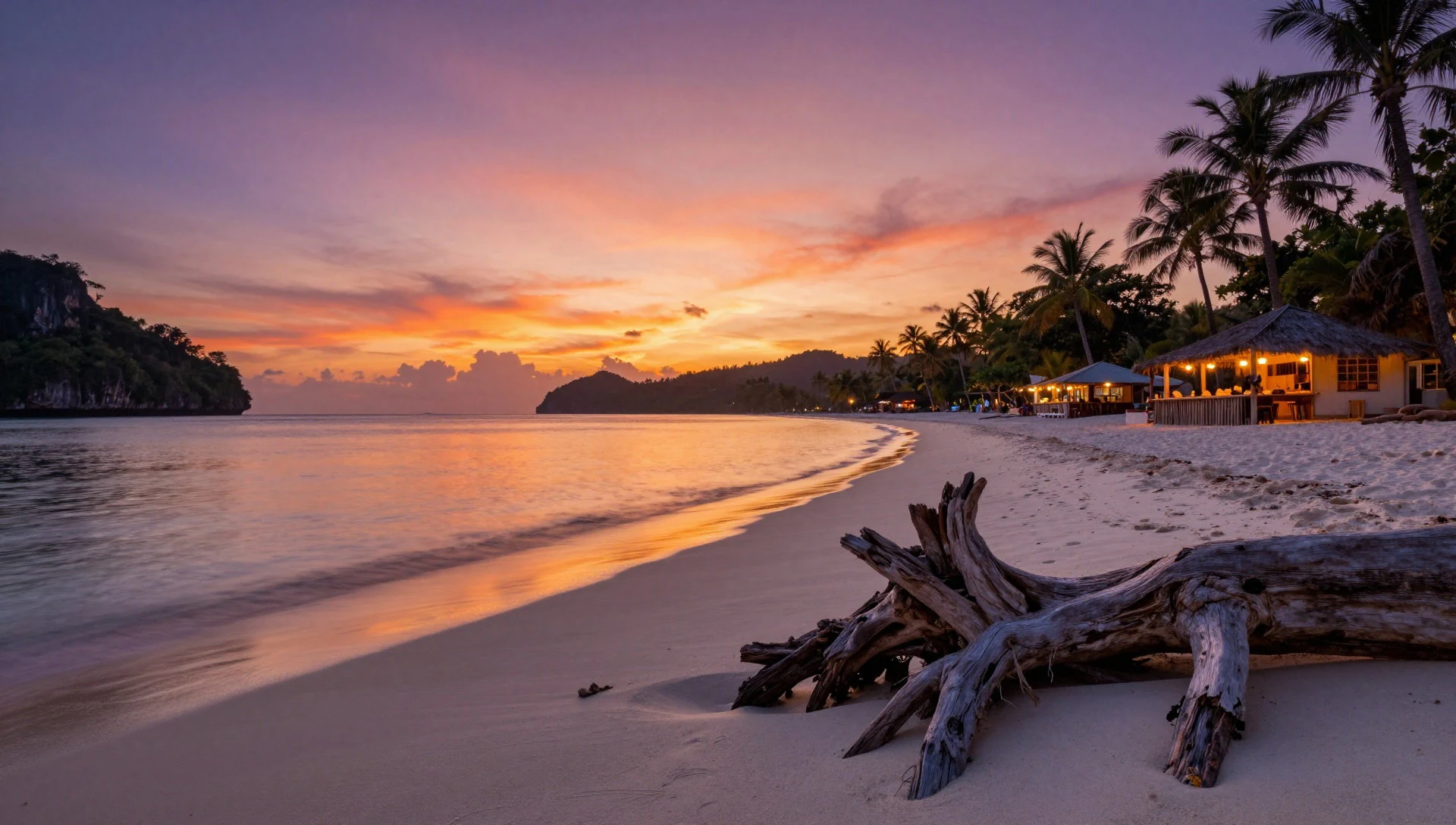
- Devon House — Kingston
Devon House sits in Kingston, Jamaica's capital, a former great house turned into a shaded courtyard that people from the city use. Lawns and a veranda offer a break from New Kingston traffic, and an ice-cream counter is the modern draw. The building belongs to the merchant years of the late colonial city, far from the north-coast beaches. The garden is the visit; the rooms are a short look.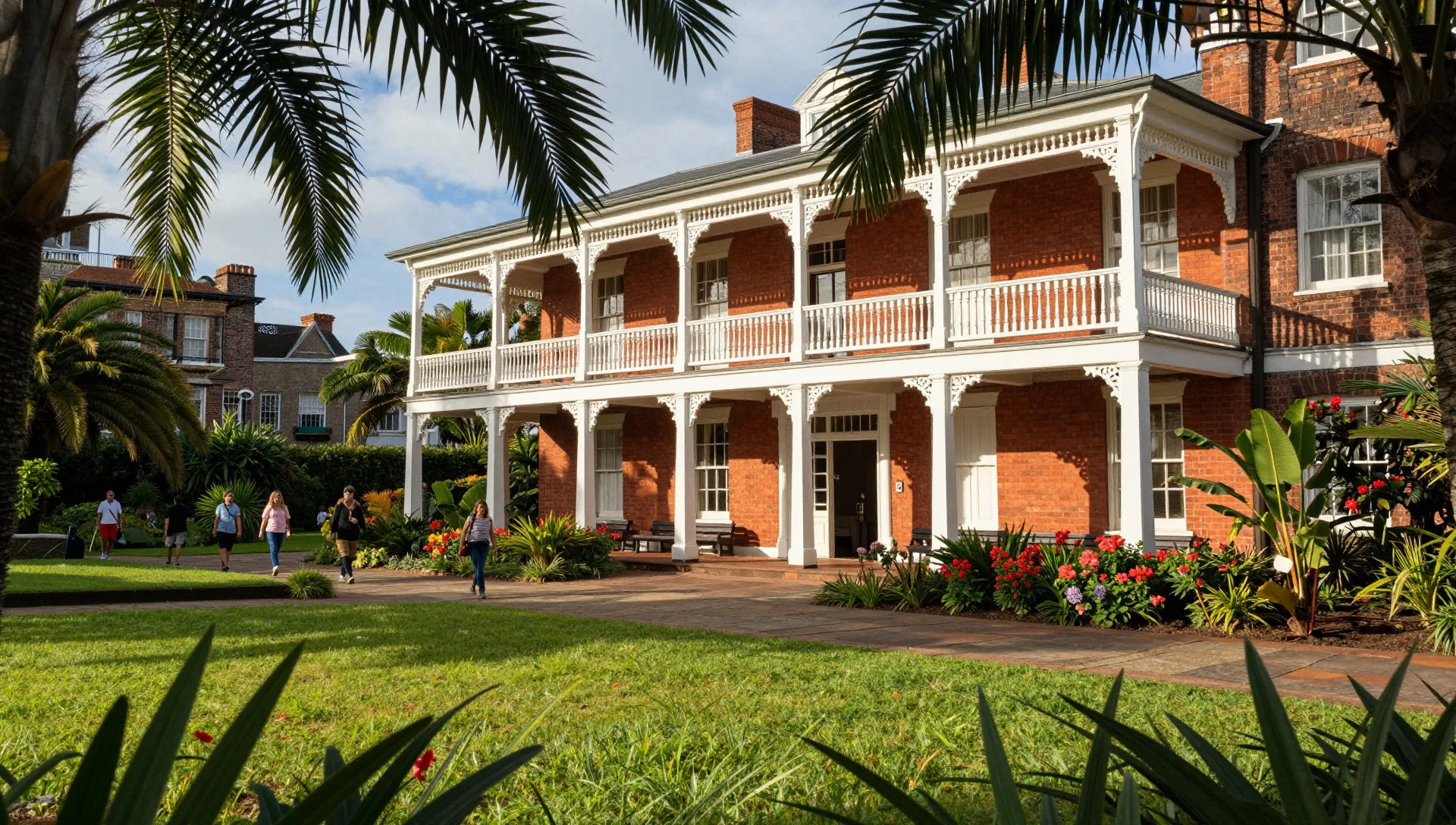
Culture
Jamaica's culture travels further than the island. Reggae, ska, mento, rocksteady, dub, dancehall and ragga were worked out in Kingston studios and then borrowed abroad: punk and two-tone took from ska and reggae, and later styles from jungle to reggaeton kept the same weight of bass. Bob Marley and the Wailers carried reggae to audiences abroad through the 1960s and 1970s, and he is still the Jamaican musician most visitors can name. The dance itself is older than any tourist show. A neighbourhood session means a selector, a wall of speakers and a crowd that treats the street as the room.
Writers have long set stories here. H. G. de Lisser, a journalist and novelist, used the country as the ground of his fiction. Marcus Garvey, a national hero, stands for black political self-organisation, and his arguments moved through the diaspora long before the records did. A visitor hears the culture before seeing a stage. Standard English and Patois share a single conversation, and a clumsy imitation of Patois comes across as mockery.
Sunday church, a Saturday dance and a weekday beach can all belong to one week.
Ask before you photograph people in Jamaica, especially in markets, at church and around Rastafari gatherings, and never touch someone's hair.
What to wear
Jamaica's traditional dress centres on bandana, a red-and-white Madras cotton that became the national cloth. For galas, quadrille and folk dance, women wear it as a full skirt with a white blouse and a matching head-tie. Men wear the Kariba, a light suit with a square open jacket, at weddings and state occasions when a wool suit is too heavy. Jonkonnu masks and Rastafari colours — red, gold and green, in a tam or a robe — belong to festival and faith, not to the working week.
On an ordinary day people wear hot-weather clothes. Kingston and the parish towns run on T-shirts, light shirts, jeans or shorts, and sandals or trainers. Offices move to cotton shirts, simple dresses and pressed trousers; a jacket is for a formal meeting and comes off afterwards. Dancehall dress is the exception people actually choose for a night out: fitted, bright and logo-heavy. Swimwear stays on the beach.
Visitors are comfortable in cotton or linen, with a hat at noon and a light layer in the mountains. Covered shoulders and knees are expected at church. Beachwear belongs on the sand, with ordinary clothes for town. Grippy shoes help on wet falls and trails; sandals are enough in town.
What to eat
- Ackee and saltfish — Breakfast cookshops and resort breakfast buffets
Ackee and saltfish is Jamaica's national dish. The fruit is boiled until it looks like soft curds, then cooked with salted cod, onion, tomato and Scotch bonnet. The result is savoury and slightly nutty, and cookshops serve it as breakfast, as do resort breakfast buffets.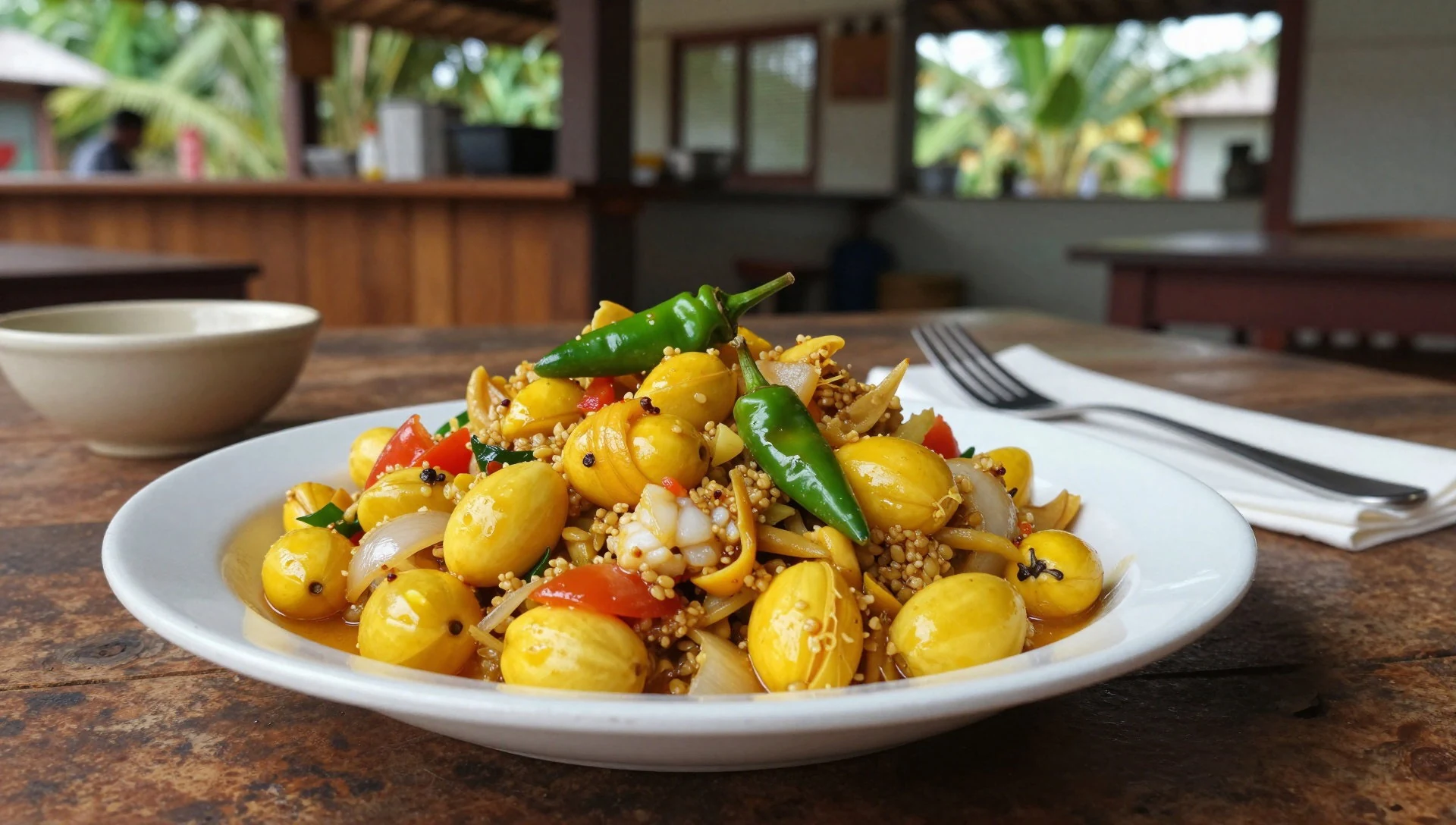
- Rice and peas — Sunday cookshops and family eateries
Rice and peas is rice cooked with red kidney beans, coconut milk, thyme and Scotch bonnet. The name says peas; the pulse is a bean. It comes beside chicken, fish or stew, not usually alone. Sunday cookshops and family eateries put it at the centre of the meal.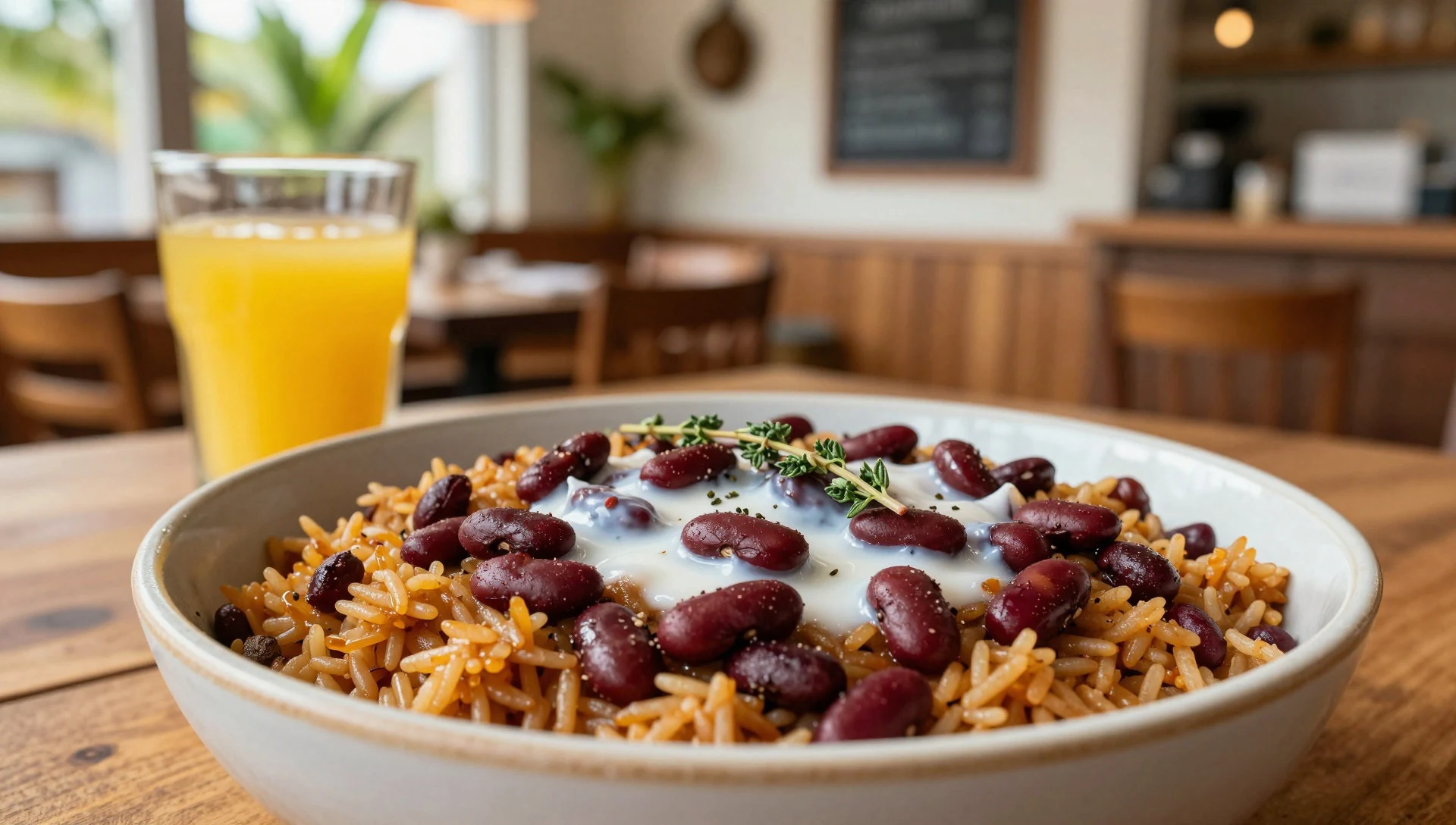
- Patty — Bakeries and market takeaway counters
A patty is a flaky, seasoned pocket, kin to an empanada, filled with spiced beef, chicken, callaloo or saltfish. Jamaicans eat it on the move as an ordinary meal. Bakeries sell them warm, and so do takeaway counters in markets and along main roads. - Jerk chicken — Roadside jerk pans, including Boston Bay
Jerk chicken is chicken rubbed with Scotch bonnet, pimento (allspice), thyme, scallion and a little sugar, then smoked over pimento wood. It tastes hot, sweet and smoky together. The place to eat it is a roadside jerk pan, including those on the east coast around Boston Bay. - Curry goat — Weekend cookshops in market towns
Curry goat is goat stewed with Jamaican curry powder, potato and Scotch bonnet until the meat softens in a thick sauce. It is a weekend and celebration dish. Cookshops serve it with rice and peas, especially on Sundays, and a market-town eatery is the place to ask. - Escovitch fish — North-coast cookshops and beach stalls
Escovitch fish is fried snapper or another firm fish, topped with pickled onion, carrot, Scotch bonnet and vinegar. It is eaten hot or cold. North-coast cookshops and beach stalls serve it, often with festival, a sweet fried dumpling, or with bammy.
Plan it
Best time. Jamaica's drier stretch runs from December to April and is the easier beach season. Rain peaks in October, with May and September also wet, and the later year is hurricane season, so check a forecast before a mountain day. The coast stays hot; the Blue Mountains are cooler.
How long. 6–8
Getting there. Fly into Norman Manley International Airport (KIN) at Kingston or Donald Sangster International Airport (MBJ) at Montego Bay. The last leg is by road: a short transfer into Kingston, or a coastal drive from Montego Bay toward Ocho Rios and Negril.
Budget. mid
Tips
- Start Dunn's River Falls and Doctor's Cave early; coaches fill both by late morning.
- Carry cash for cookshops, markets and route taxis, which often do not take cards.
- Confirm passport and visa rules at https://www.gov.jm/ before travel; they differ by nationality.
- Agree a taxi fare before the car moves, and arrange the evening ride in advance.
Etiquette
- Greet someone before you ask for directions or a photo.
- Do not touch people's hair, and do not mimic Patois.
- Cover shoulders and knees in churches, and keep swimwear off the street.
Nearby
Sources
- Wikidata Q766 (CC0)
- Wikipedia (rev 1383334793) (CC BY-SA 4.0)
- Wikivoyage (rev 5401901) (CC BY-SA 4.0)
- Satellite image of Jamaica in November 2001, Jacques Descloitres, MODIS Land Rapid Response Team, NASA/GSFC (Public domain)
- Statue of Cristobal Columbus, St Ann's Bay, CaptJayRuffins (CC BY-SA 4.0)
- Destruction of the Roehampton Estate, Adolphe Duperly (Public domain)
- Harbour Street, Kingston, James Hakewill (Public domain)
- Marcus Garvey, George Grantham Bain Collection (Public domain)
- Doctor's Cave Beach Club, Montego Bay, en:User:Op. Deo (Public domain)
- Start of the Blue Mountains just north of Kingston, User: (WT-shared) Bz3rk (CC BY 3.0)
- Red-billed streamertail, Charles J. Sharp (CC BY-SA 4.0)


