Cockpit Country
Cockpit Country, Jamaica
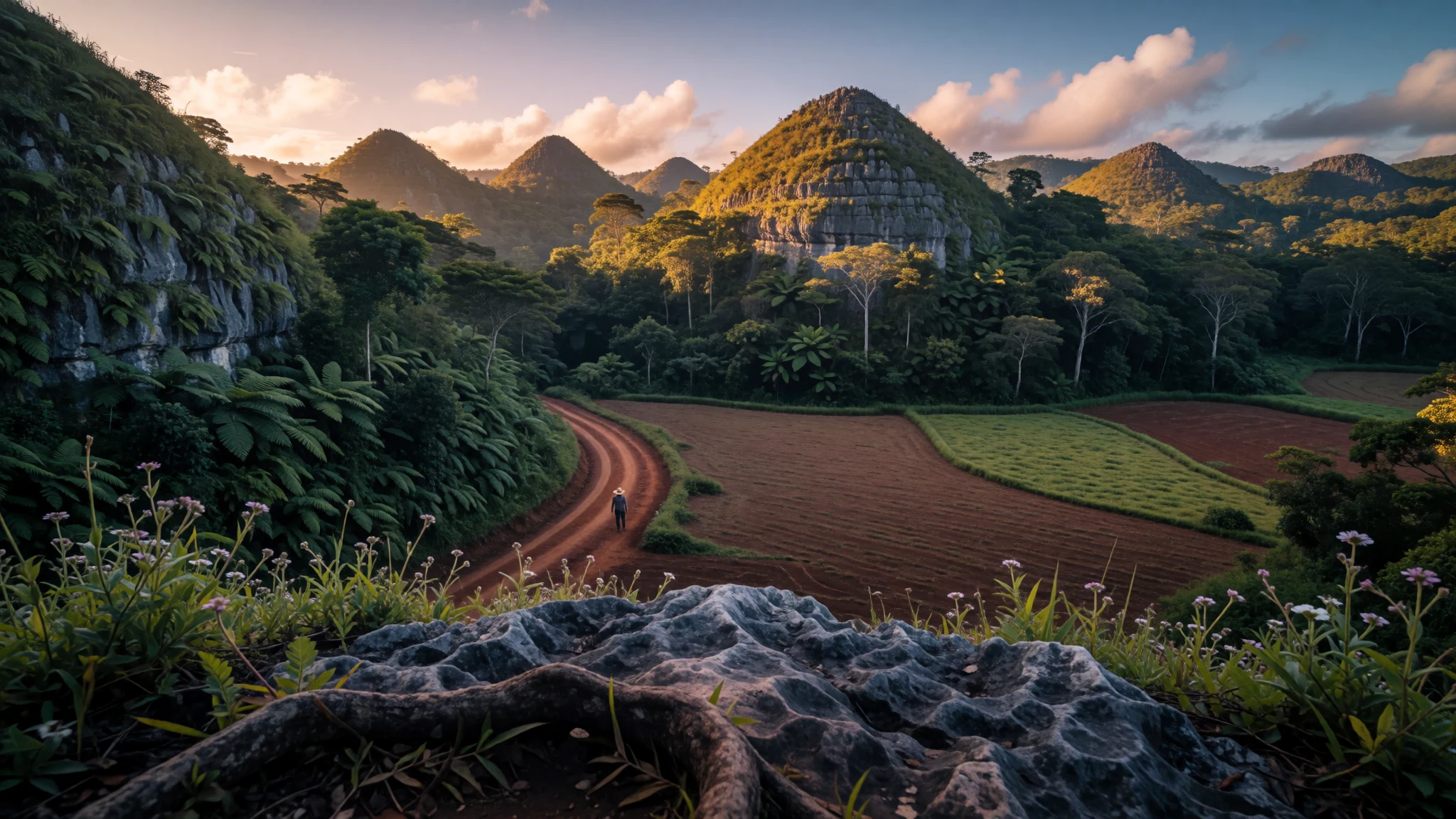
Cockpit Country is Jamaica's rugged limestone interior, where deep forested hollows sheltered Maroon communities and now reward slow, guided walking.
The place
Cockpit Country is a rough, forested limestone region in west-central Jamaica, spread across Trelawny and parts of Saint Elizabeth, Saint James, Saint Ann, Manchester and the northern tip of Clarendon. Its character comes from the ground itself. Conical hills and ridges stand between steep-sided hollows, some as deep as 120 metres, and the whole landscape is cloaked in damp montane forest. Water did the carving. Rain dissolves the limestone, leaving sinkholes, shallow caves and enclosed basins. Where the ridges between sinkholes have worn away, flat valley floors have formed, covered in dark red terra rosa soil that farmers value. Around the hamlet of Quick Step the cave-like cockpits are packed at about 15 per km. Roads are few. On the north side a long fault-line ridge called the Escarpment runs from Flagstaff through Windsor to Campbells. In the east, Barbecue Bottom Road runs north–south down one side of a deep valley and serves as the sole drivable path across Cockpit Country. Two old trails further west, the Troy Trail and the Quick Step Trail, are seldom used and hard to find. That isolation is the point of the place. It has kept the forest largely intact, it hid communities of freedom seekers for generations, and it means a visit works best with a local guide and a plan rather than a map and optimism. Tourist infrastructure is thin, which suits quiet walking and birdwatching but not drop-in sightseeing.
Its story
Cockpit Country became a refuge for people escaping slavery in Jamaica, and its history is largely the history of the Maroons. In the late seventeenth century two Leeward Maroon communities grew up on its edges: Cudjoe's Town, also called Trelawny Town, in the south of Saint James, and Accompong Town, just to its south on the Westmoreland–Saint Elizabeth border. Both fought the colonial authorities in the First Maroon War, which ended with a peace treaty in 1740. The treaty had a cost for others, because the Leeward Maroons then helped colonial forces hunt runaways who fled into the same hills. Those runaways remembered it, and they sided with Trelawny Town when the Second Maroon War came. After the Trelawny Maroons were deported in 1796, Accompong struggled to police the forest, and new runaway settlements took hold. The militia built a barracks at the old Trelawny Town site and renamed it Maroon Town. In the early nineteenth century a man called Cuffee founded a community in the interior and resisted both the militia and Accompong. A later group from Trelawny Parish settled at a place named Me-no-Sen-You-no-Come, a name that says plenty, and also held out. During the Baptist War of 1831–2 more people escaped into the cockpits and found freedom there. In the southwest, the district called the Land of Look Behind is said to owe its name to Spanish riders who carried a second man facing backwards, watching for ambush.
What to see
- Barbecue Bottom Road — Eastern Cockpit Country
The only drivable route across Cockpit Country runs north–south along the flank of a deep, fault-formed valley in the east. It is the easiest way to grasp the scale of the terrain: forested ridges, sudden drops into hollows and very little else. Conditions vary with rain, so ask locally before driving it, or hire a driver.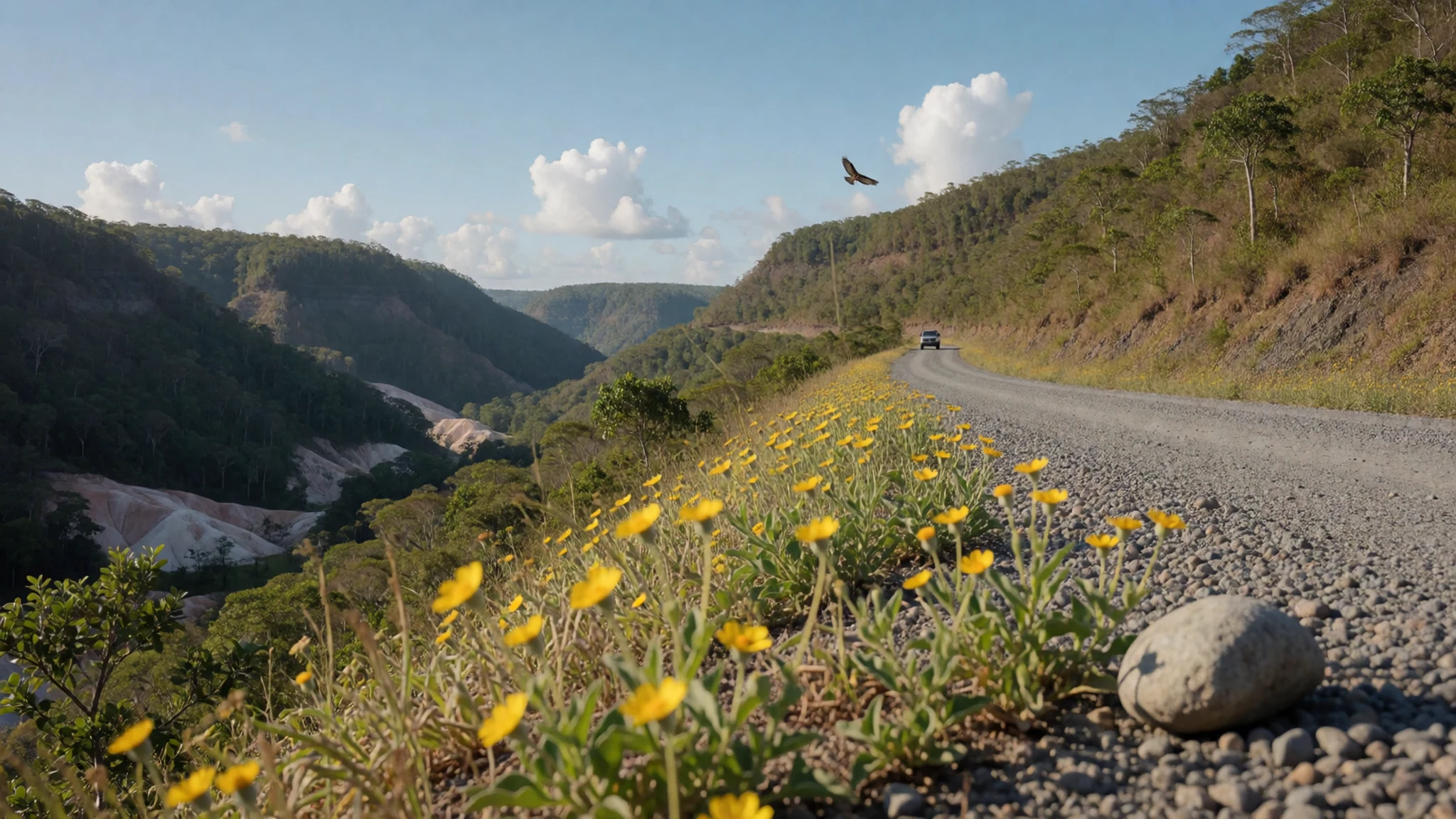
- Quick Step and the Land of Look Behind — Southwest Cockpit Country
Quick Step is a hamlet at the end of the road into the interior, and the centre of the shallow caves locals call cockpits. Marta Tick Cave and Minocal's Glory Hole are named caves in the region. Ecotourism has been proposed here, so facilities are limited; arrange a local guide before setting out.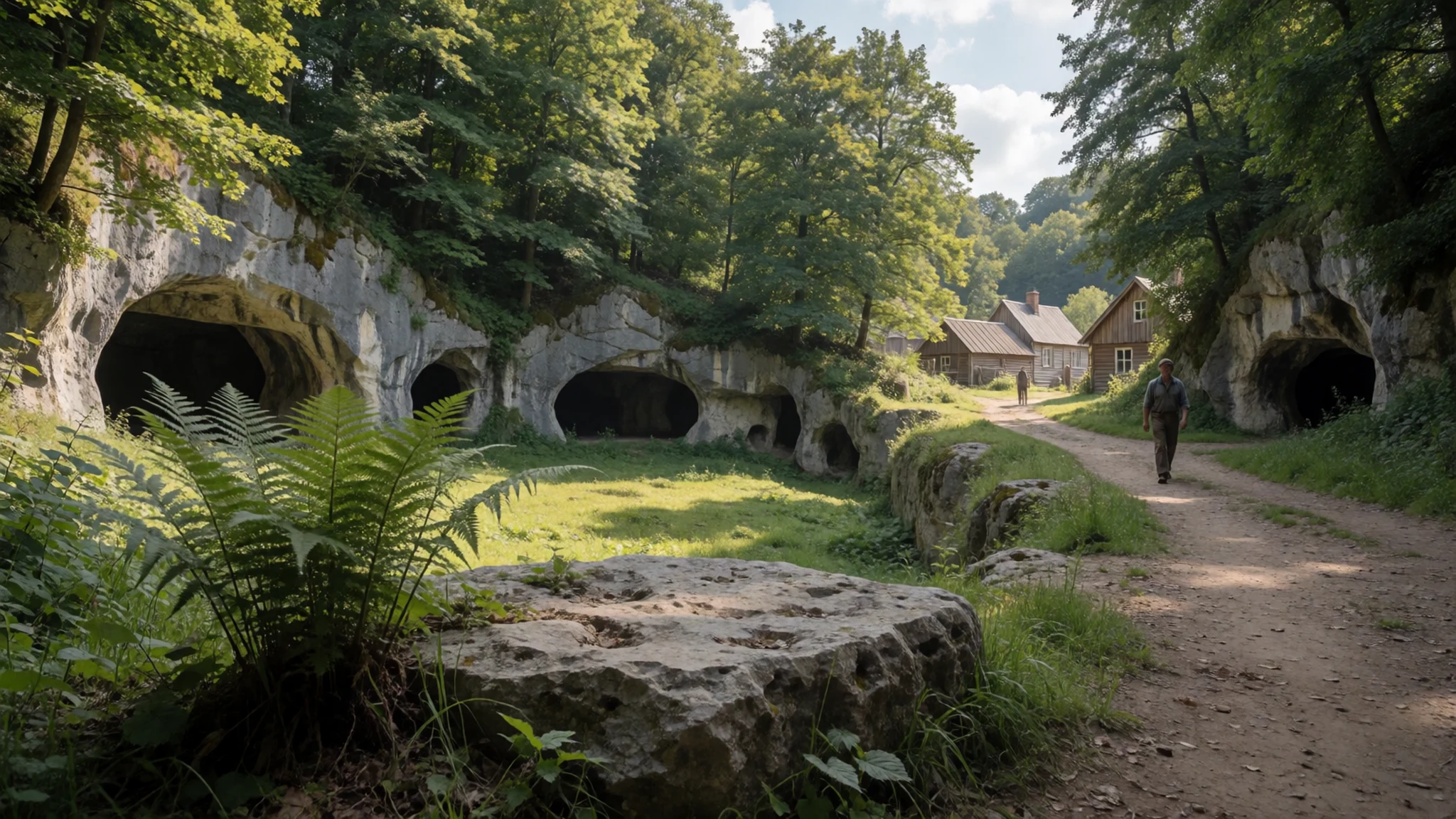
- Accompong Town — Saint Elizabeth, southern edge
Accompong is one of the two Leeward Maroon communities that shaped the region's history, and it still has its own leadership and traditions. Visiting is best arranged through the community or a guide who works with it, rather than by turning up unannounced. Ask what is open to visitors and when.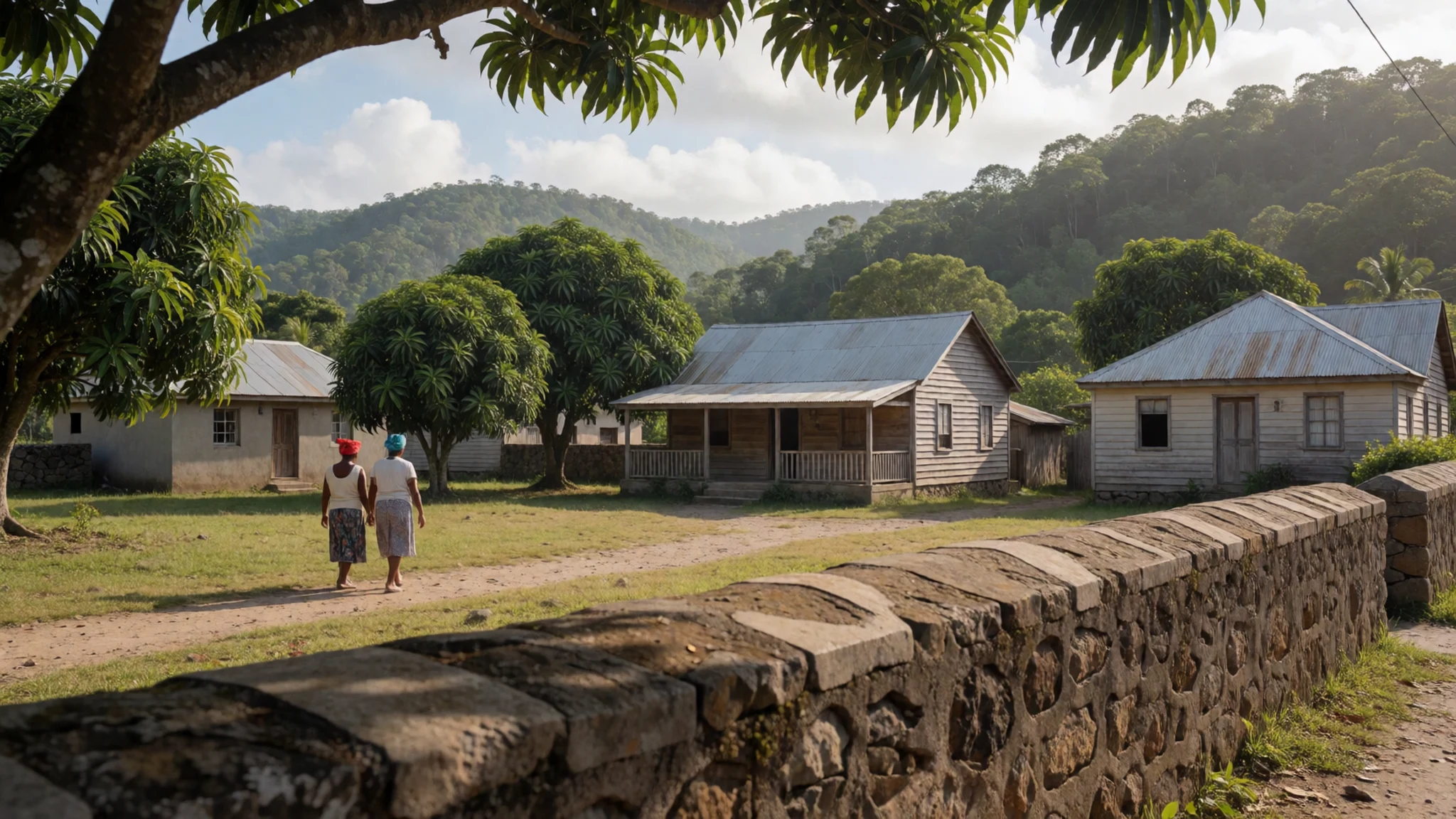
- Forest birds and Rockland Bird Sanctuary — Cockpit forest and near Montego Bay
The forest holds birds such as the ring-tailed pigeon, photographed here in Cockpit Country. For a gentler introduction, the Rockland Bird Sanctuary near Montego Bay is set up for watching a good variety of species. Go early, bring binoculars, and check access arrangements before travelling.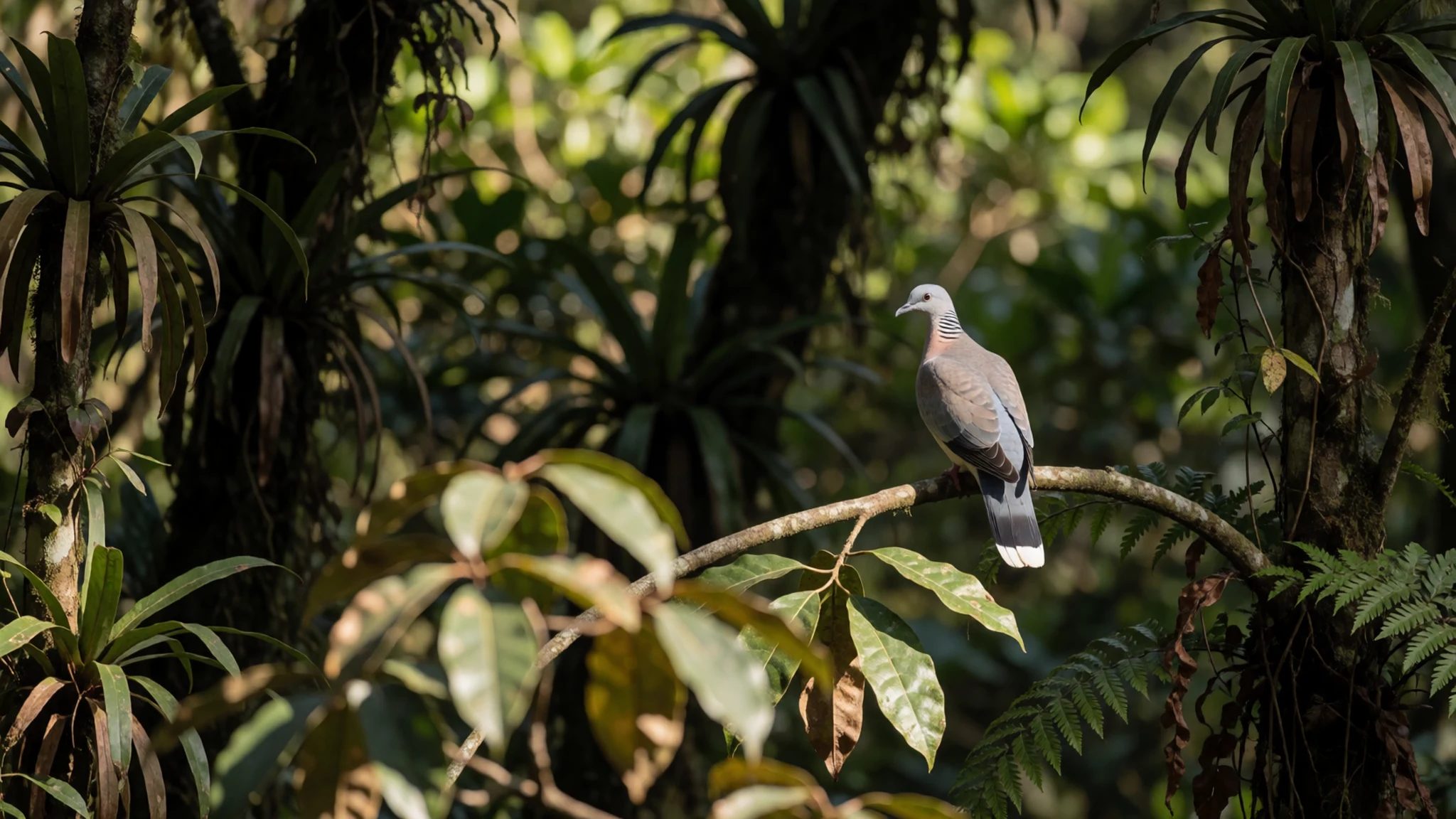
- Falmouth and the Glistening Waters — Trelawny coast, north of the cockpits
Falmouth, on the Trelawny coast, has a historic district of town squares, churches, parks and old houses that is good for a slow walk. Nearby, the Glistening Waters lagoon glows at night when disturbed, caused by micro-organisms. Book a boat trip after dark and check the operator's current arrangements.
Culture
Cockpit Country's culture is Maroon culture, an inheritance from people who won their autonomy by holding difficult ground. Accompong Town is the community most visitors hear about, and it keeps its own leadership and traditions, which is worth remembering before arriving as a tourist. Maroon heritage is carried in oral history, drumming and song, herbal knowledge and farming on the productive basin soils. Many Jamaicans link jerk cooking to Maroon ingenuity, though the story is told in several versions. The region's past is also a story of resistance and betrayal on all sides: the treaty of 1740 turned Leeward Maroons against other runaways, and later settlements such as Cuffee's and Me-no-Sen-You-no-Come held out against both militia and Maroons. Guides who grew up nearby often tell this history with pride and some sharpness, and it rewards listening rather than interrupting. Church life, especially Baptist, runs deep in the surrounding parishes, and Sunday mornings are for services. English is the language of tours, while Jamaican Patois is what people speak among themselves; a friendly greeting and a willingness to listen go a long way. Ask your guide or the community before photographing people or entering any site that is not clearly open to visitors, and treat historic places as the memorials and burial grounds they may be.
What to wear
Jamaican traditional dress draws on bandana, a printed cotton cloth in madras-style checks, made into full skirts, aprons, shirts and head-ties. It is worn for festivals, folk performances and national occasions rather than every day, and head-ties remain a mark of older women's Sunday best in many parishes. Maroon communities also gather for commemorations where heritage dress and drumming are part of the occasion, so dates and customs are worth asking about locally. Day to day, people around Cockpit Country wear what suits heat and farm work: cotton T-shirts, shorts or light trousers, sports shirts, rubber boots in wet fields, and neat, pressed clothes for church. Visitors should dress for rough, humid walking. Lightweight long trousers and a long-sleeved shirt protect against scratchy undergrowth, insects and sun. Sturdy closed shoes with real grip matter most, because limestone is sharp and slippery after rain. Carry a light rain jacket, a hat and a spare dry shirt. In villages and when visiting communities, covered shoulders and knees are respectful. Keep swimwear for the beaches and boat trips on the coast, and bring a change of clothes for Sundays if attending a service.
What to eat
- Jerk pork or chicken — Roadside jerk centres and pits in market towns across Trelawny and Saint James
Meat rubbed with a spicy mix of pepper and pimento, then cooked slowly over wood smoke. Many Jamaicans link the method to Maroon cooks. It arrives chopped, with bread or festival. Expect real heat, and ask for the pepper sauce on the side.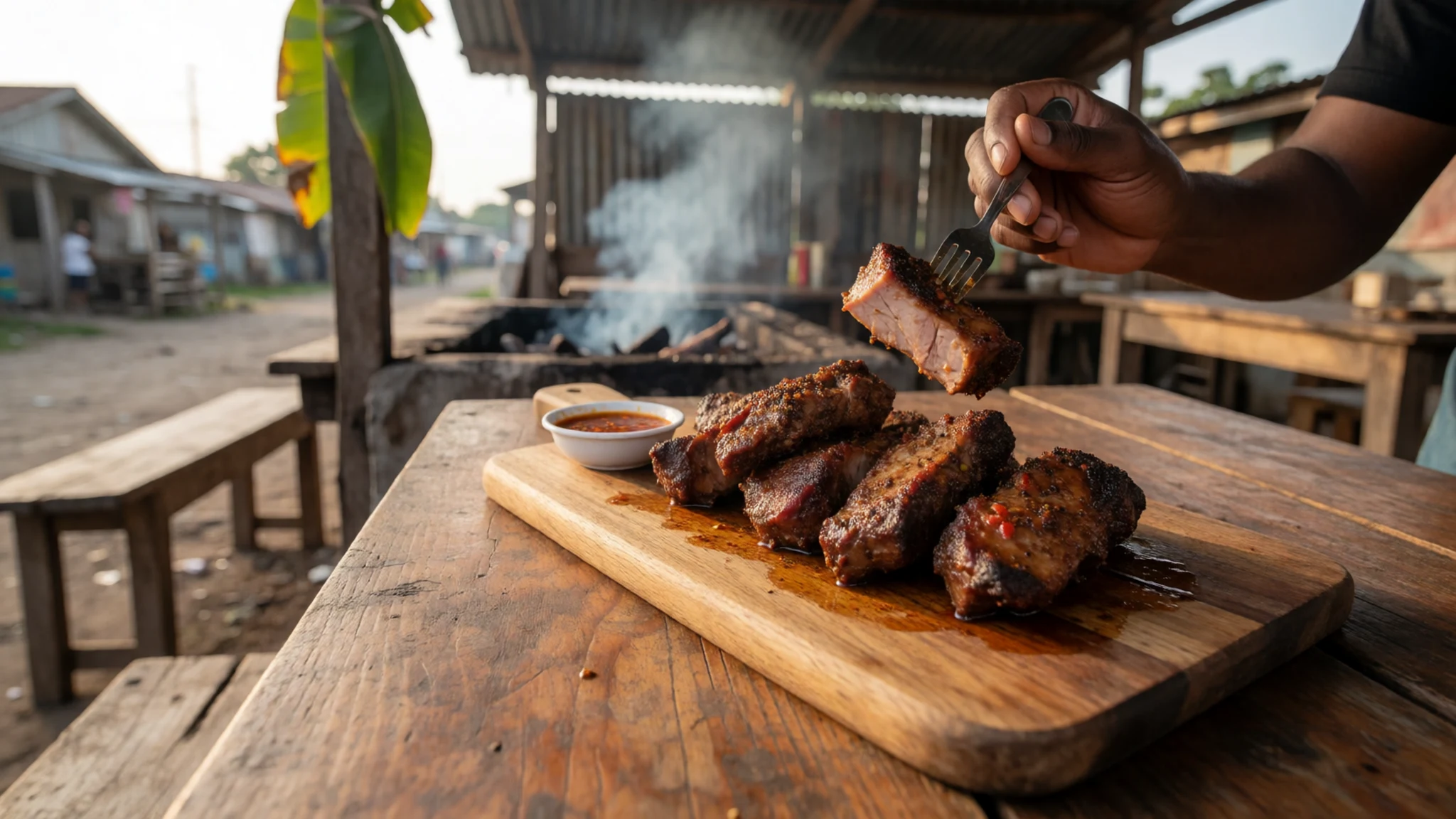
- Ackee and saltfish — Breakfast counters and home-style eateries in towns such as Falmouth
Ackee is a soft, yellow fruit scrambled with salted cod, onion, tomato and thyme. It is Jamaica's usual celebration breakfast, served with boiled green banana, dumplings or fried plantain. Order it from busy places that cook it fresh, since the fruit must be properly prepared.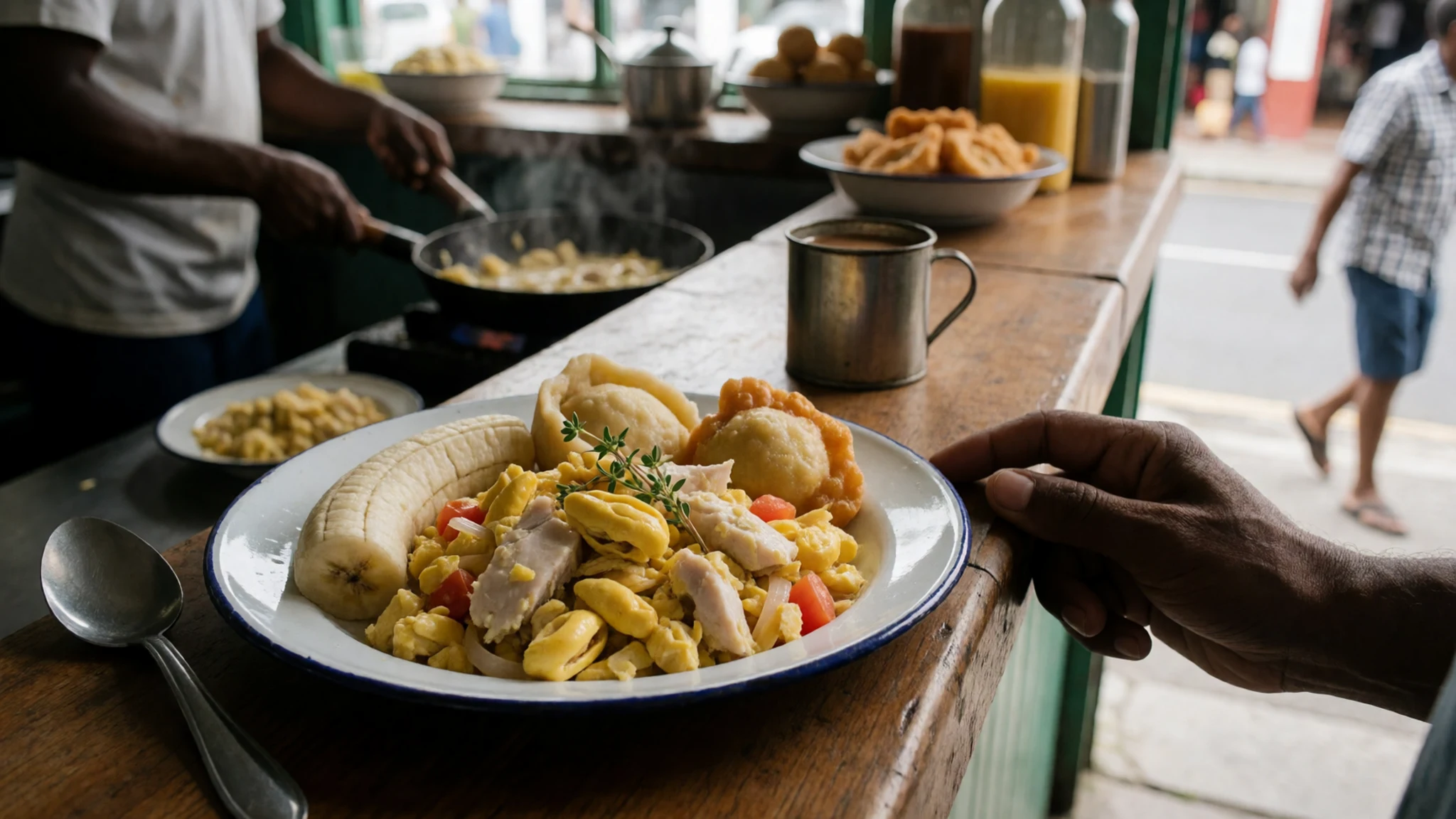
- Bammy — Roadside stalls and fish stops along the north coast
A flat round cake of grated cassava, pressed, baked or fried, with a mild, slightly sweet taste. It is usually eaten with escovitch fish or as a side. Cassava is an old staple of the island, and bammy is best bought warm. - Escovitch fish — Beach-side fish shacks and coastal eateries near Falmouth and Montego Bay
Whole fried fish topped with a sharp pickle of vinegar, onions, carrots and scotch bonnet pepper. It is served hot or at room temperature, often with bammy or festival. Pick the bones carefully, and treat the pepper garnish with respect. - Rice and peas with stew — Home-style kitchens and Sunday lunch eateries in villages around the cockpits
Rice cooked in coconut milk with red kidney beans, thyme and pimento, served beside stewed chicken or oxtail. This is the standard Sunday meal across Jamaica, filling and mildly spiced. Village kitchens usually have it on Sundays and make plenty.
Plan it
Best time. December to April is the drier season in Jamaica, which makes forest tracks and limestone easier underfoot and trips less likely to be cut short. June to November brings more rain and the Atlantic hurricane season, so trails turn muddy and plans can change quickly. The interior is humid whatever the month, so start walks early.
How long. 2–3
Getting there. Fly to Sangster International Airport at Montego Bay, then continue by road towards Falmouth and Trelawny, or south towards Accompong Town. The last leg is on small, sometimes rough roads; hire a driver or guide who knows the area, as public transport into the interior is limited.
Budget. mid
Tips
- Arrange a local guide before you go, since the old trails are seldom used and hard to find
- Start walks at first light to avoid heat and afternoon showers
- Carry cash, drinking water and a charged phone, as services and signal are patchy in the interior
- Ask locally about road conditions on Barbecue Bottom Road after rain
- Book night boat trips on the Glistening Waters ahead and check the operator's current arrangements
Etiquette
- Ask before photographing people or visiting Maroon community sites
- Pay guides and community hosts fairly and listen to their account of the history
- Take all litter out and keep to marked paths in the forest
Nearby
Sources
- Wikidata Q2981292 (CC0)
- Wikipedia: Cockpit Country (rev 1378956192) (CC BY-SA 4.0)
- Wikivoyage (rev 4663311) (CC BY-SA 4.0)
- Photo: Cockpit Country Jamiaca, Fabian Tompsett (CC BY 3.0)
- Photo: General map of Cockpit Country, Joachim Greiner (CC BY-SA 1.0)
- Photo: Bauxite Jamaica 1984, Paul Morris (CC BY-SA 2.0)
- Photo: Location of the Cockpit Country in W. Jamaica, De Geo (CC0 1.0)
- Photo: Shape of the Cockpit Country in inner Jamaica, DieBuche / Lozère (CC BY 3.0)
- Photo: Ring-tailed Pigeon in Cockpit Country, Ron Knight (CC BY 2.5)


Wildlife
- Ring-tailed pigeon (animal)
The Caribbean pigeon, also known as the ring-tailed pigeon, is a woodland bird, a wild cousin of the pigeons you meet in town squares. It lives in the forest of Cockpit Country, where one has been photographed among the trees. A local guide is your best help in finding it, and in knowing the right time to look. Keep a respectful distance, stay quiet so it is not startled, and never offer it food.
- Ring-tailed pigeon (bird)
The ring-tailed pigeon is a bird that belongs to the pigeon family and is found nowhere in the world except Jamaica, which makes it a real treasure to spot. Look for it in the forest of Cockpit Country. Go with a guide who knows the woods, and ask about the best season and hour. Watch from afar, keep your voice low and your movements slow, and never feed it.