Blue and John Crow Mountains
Blue and John Crow Mountains, Jamaica
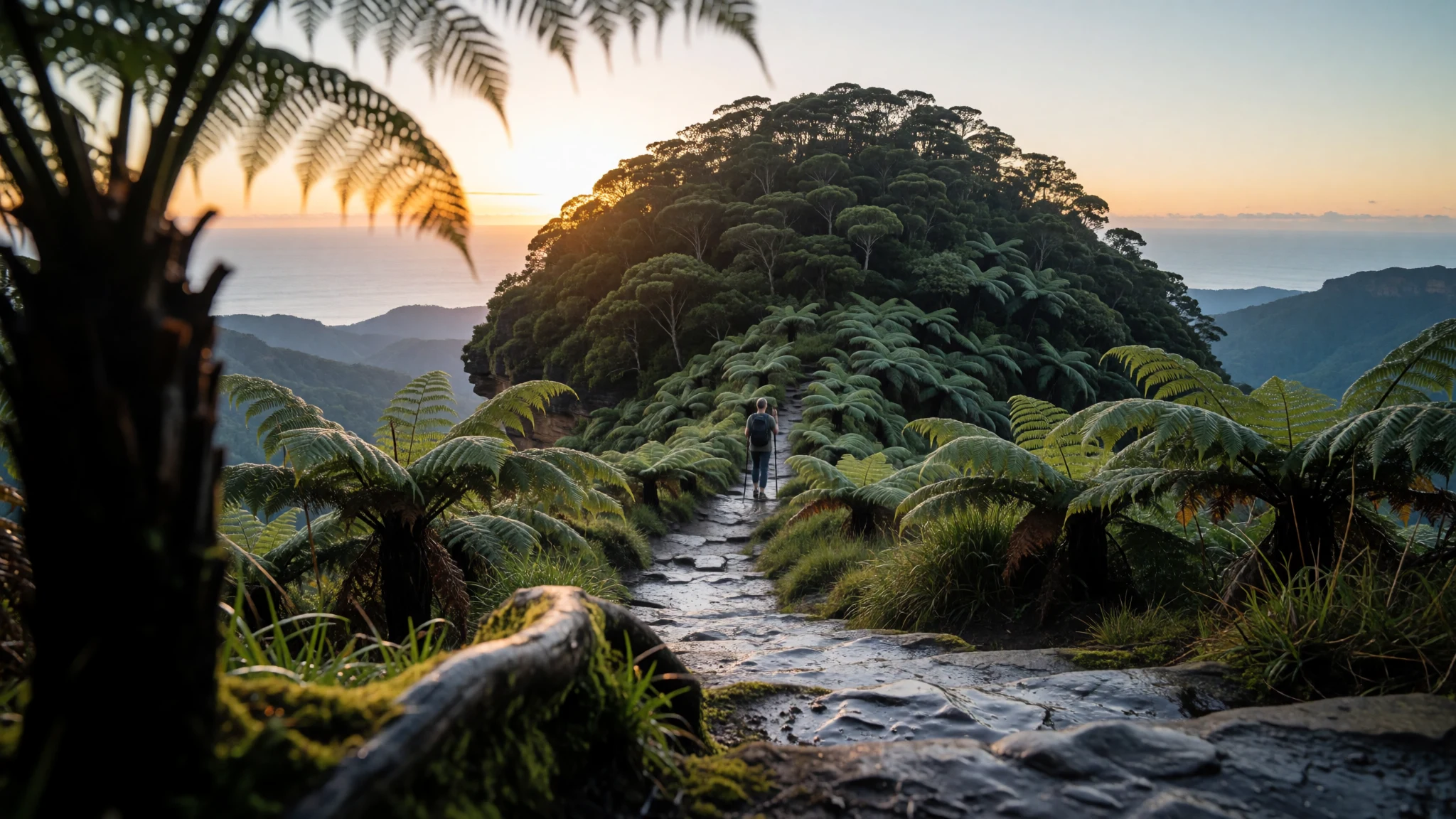
Blue and John Crow Mountains shelter Maroon history and rare wildlife in cool, misty forest above Jamaica's eastern coast.
The place
Blue and John Crow Mountains National Park sits in eastern Jamaica, a block of steep forested ridges rising behind the Portland coast. It covers 495.2 km², about 4.5% of the island's land, which is a substantial share for such a small country. The name joins two things: the Blue Mountains, the range running through the park, and the John crow, the local name for the turkey vulture that circles over the ridges on rising air. The two halves feel quite different. The Blue Mountains are high, wet and often wrapped in cloud, with tree ferns, mossy trunks and paths that turn to mud after rain. The John Crow side is more rugged and far less visited, with sharp limestone country, dense forest and very few trails. Nobody lives deep inside, and that is much of the point, because the park is valued for wildlife with little room elsewhere. It shelters the giant swallowtail, the largest butterfly in the Western Hemisphere and one of only two places where it is known to survive. It also holds the endangered Jamaican blackbird, the Jamaican boa and the Jamaican hutia, a stocky tree-climbing rodent. Founded in 1993, the park gained World Heritage status in 2015 for both natural and cultural value. Visitors should expect cool air at altitude, cloud by afternoon, patchy phone signal and a real sense of effort in getting anywhere.
Its story
Blue and John Crow Mountains has served as a refuge for centuries. When Jamaica was a plantation colony, people who escaped slavery fled into the rugged east and built Maroon settlements in the forest, where steep ground, thick cover and knowledge of hidden paths made them hard to pursue. The Windward Maroons held these mountains, and their leader Nanny, now one of Jamaica's national heroes, is remembered above all. Treaties with the colonial authorities eventually recognised Maroon communities and their land, and settlements such as Moore Town and Charles Town endure on the park's edge. Their trails, camps and ways of reading the forest are a big reason the park counts as a cultural landscape as well as a natural one. The lower slopes tell a second story. Farmers cleared forest for coffee, food crops and timber, and the famous Blue Mountain coffee still grows on the surrounding hillsides. Protection came later: the park was established in 1993, partly to safeguard the water catchments that serve communities below and the species found almost nowhere else. In 2015 it was inscribed on the World Heritage list under mixed criteria, recognising nature and Maroon heritage together. Management today falls to government agencies working with a conservation trust and local people, and the pressures are real: illegal cutting, farming creeping up to the forest edge, and fire in dry spells.
What to see
- Blue Mountain Peak trail — Blue Mountains, St Andrew and Portland border
The path to Blue Mountain Peak climbs through cloud forest and stunted, wind-bent woodland to the park's best-known summit. Walkers usually set off in the dark to reach the top for sunrise, when the Caribbean can show on clear mornings. Expect cold wind, slippery steps and cloud that may hide everything; a local guide is sensible.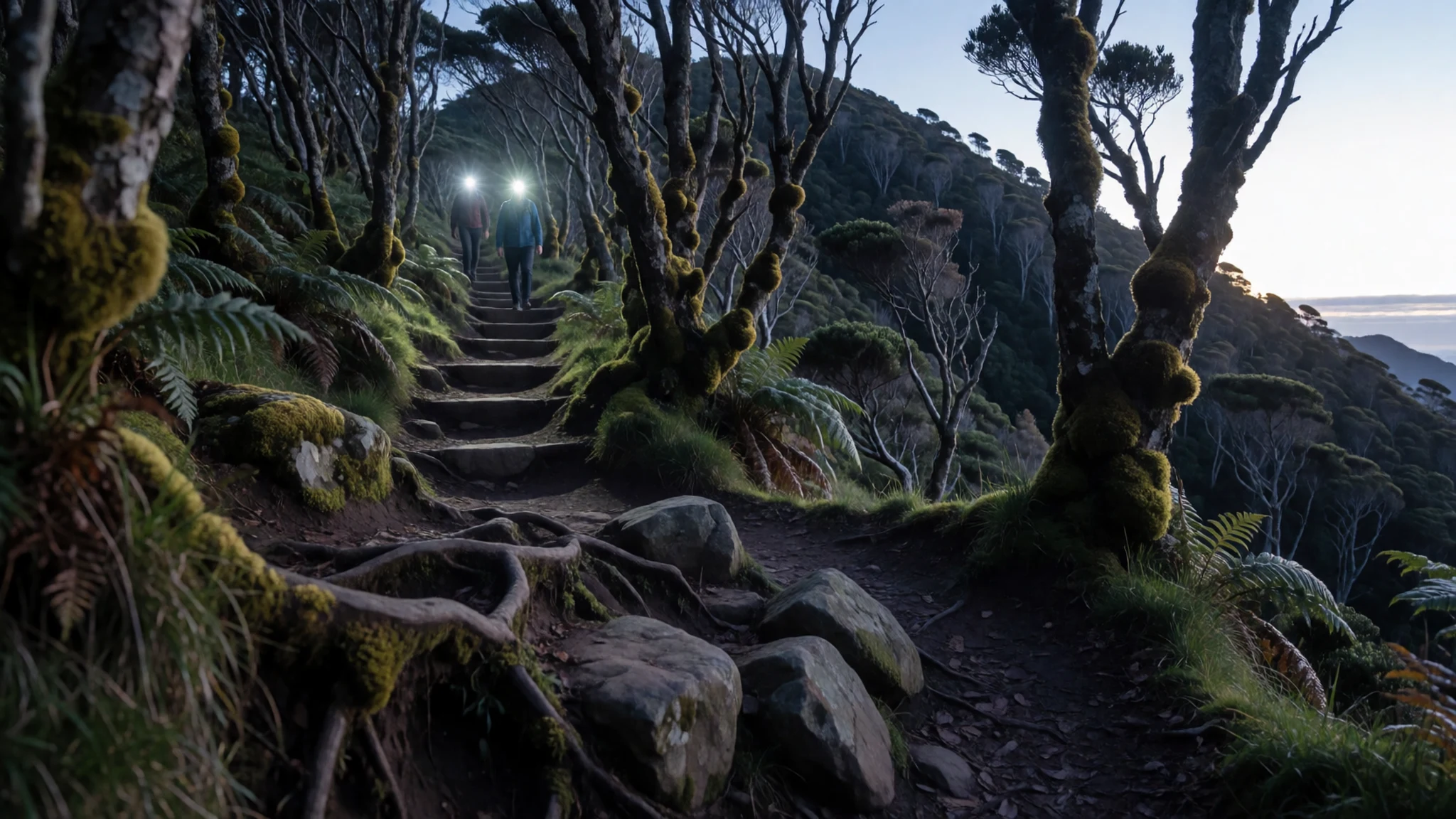
- Millbank ranger station — Millbank, Portland
The ranger station at Millbank, on the Portland side, is a practical starting point for lower forest walks, with staff who know current trail conditions. This is the wetter, quieter flank, with fern-filled gullies, birdsong and river crossings. Ask about guides and conditions before heading up, as routes change after heavy rain.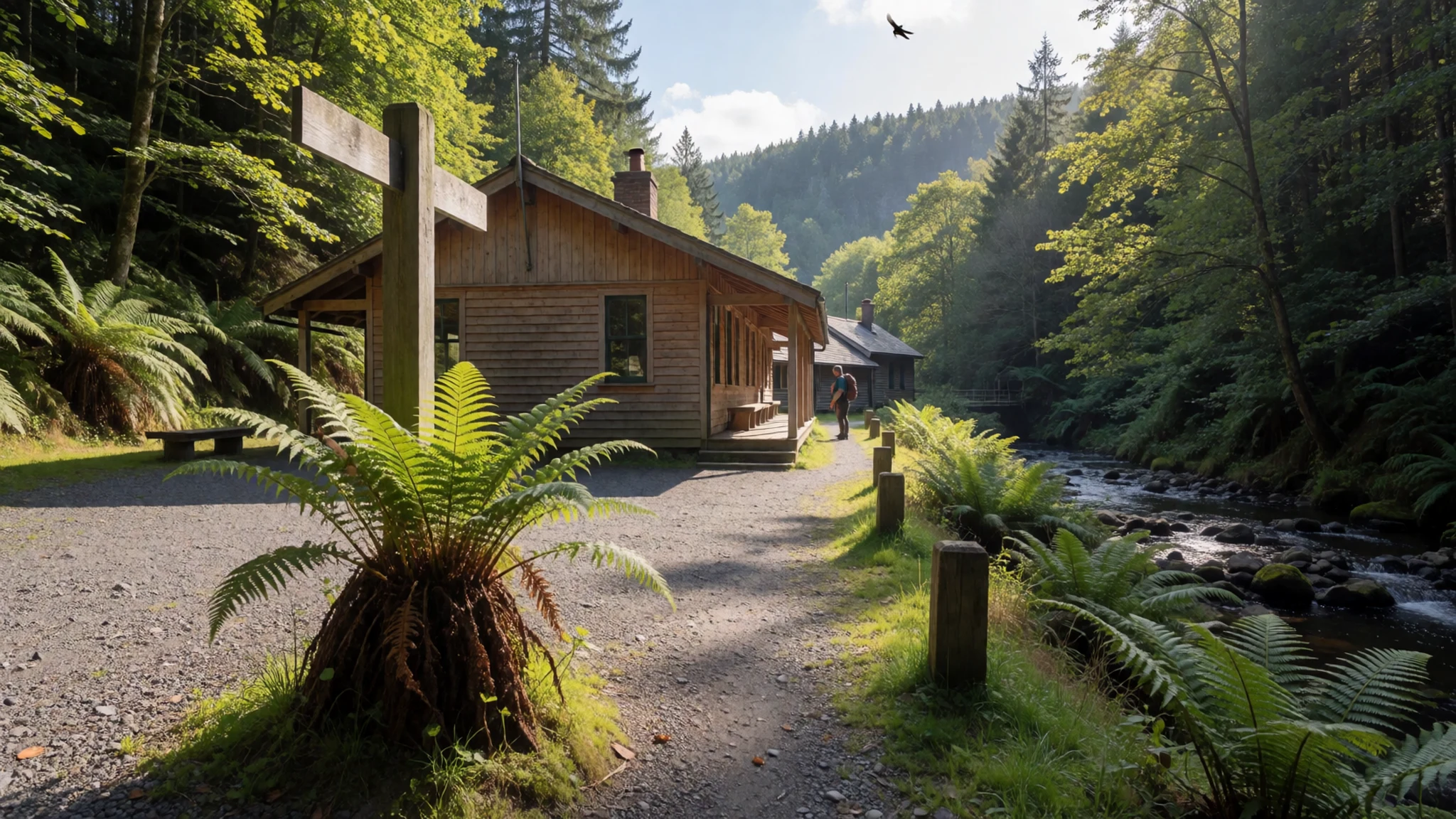
- Hollywell National Park — Western Blue Mountains, St Andrew
Hollywell, on the western edge of the range, offers gentler forest walks among tree ferns and pines, with viewpoints over ridge after ridge of blue-green hills. It suits a half-day outing, a picnic and slow birdwatching, and it is noticeably cooler than Kingston. Mist usually builds by afternoon, so go early.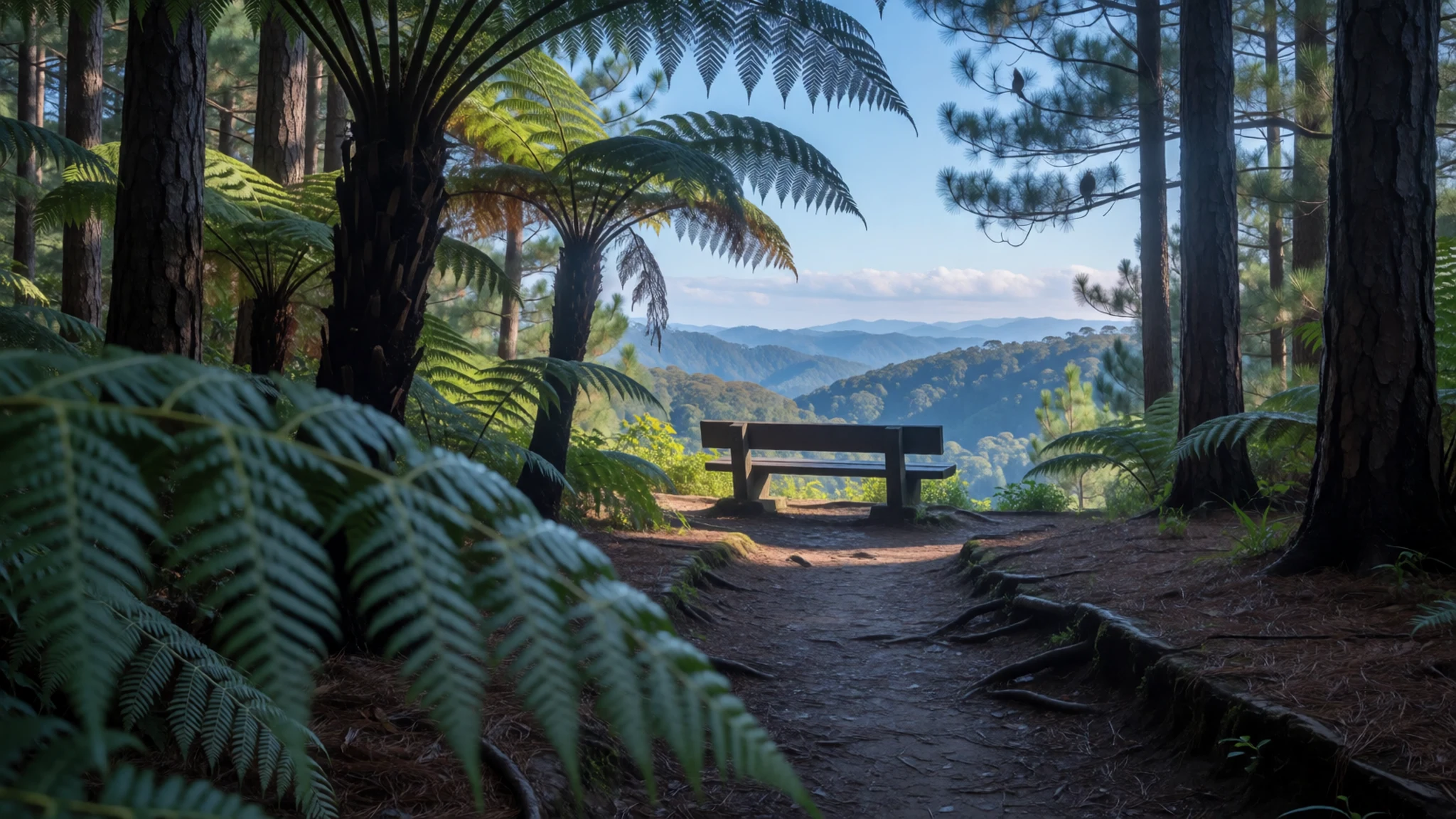
- John Crow Mountains forest — Eastern Portland
The John Crow Mountains are rough limestone country, with sharp rock, sinkholes and dense forest that few visitors ever see. Trails are scarce and difficult to follow, so this is for experienced walkers going with a guide. Birds and butterflies reward the effort, but conditions are tough and rescue is far away.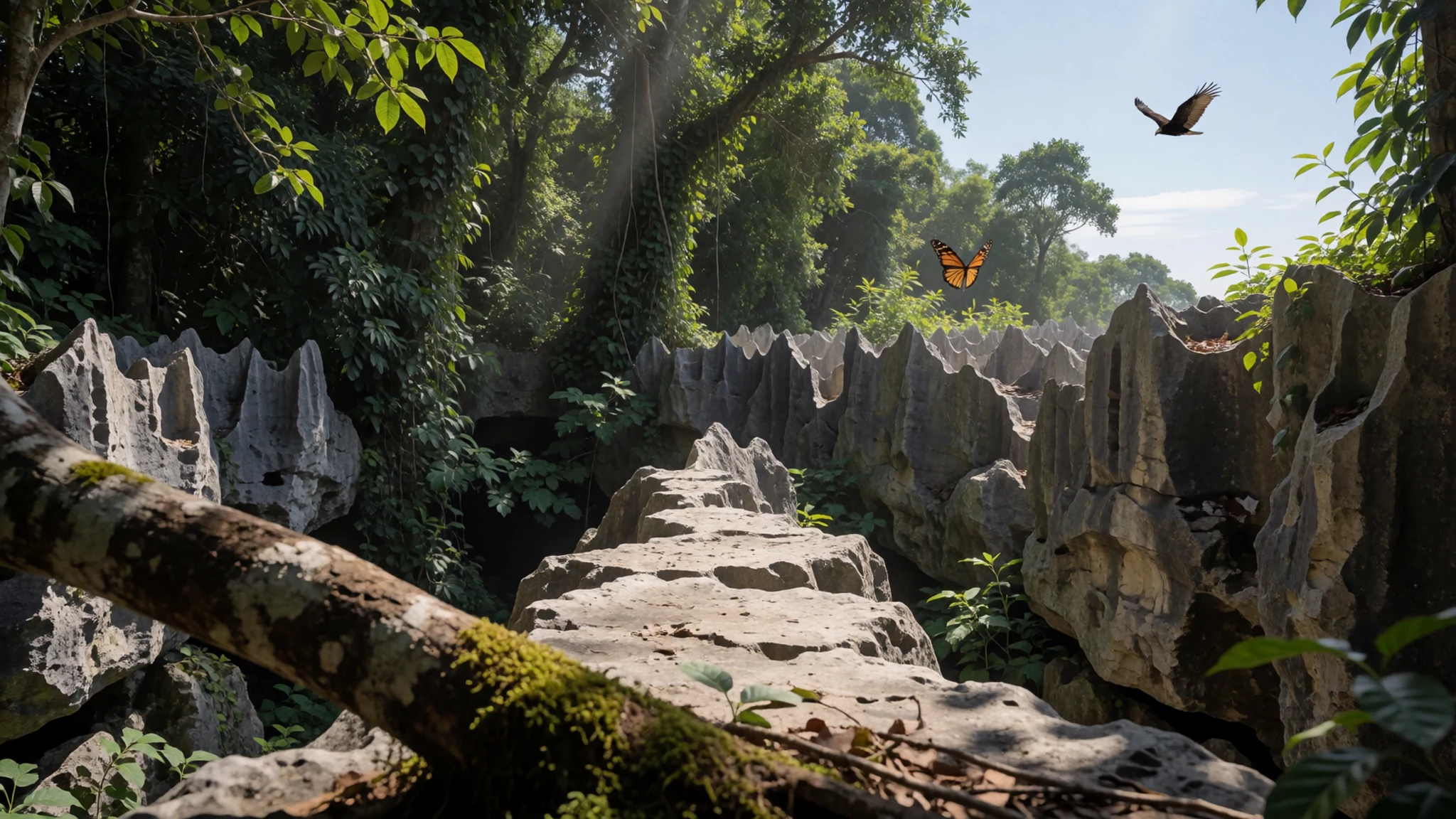
- Moore Town — Portland parish
Moore Town is a Maroon community on the northern foothills, tied to the Windward Maroons and to Nanny. It is a place to learn history from people who carry it, not to tick off a sight. Ask locally about a guided visit and expect conversation, stories and a quiet pace.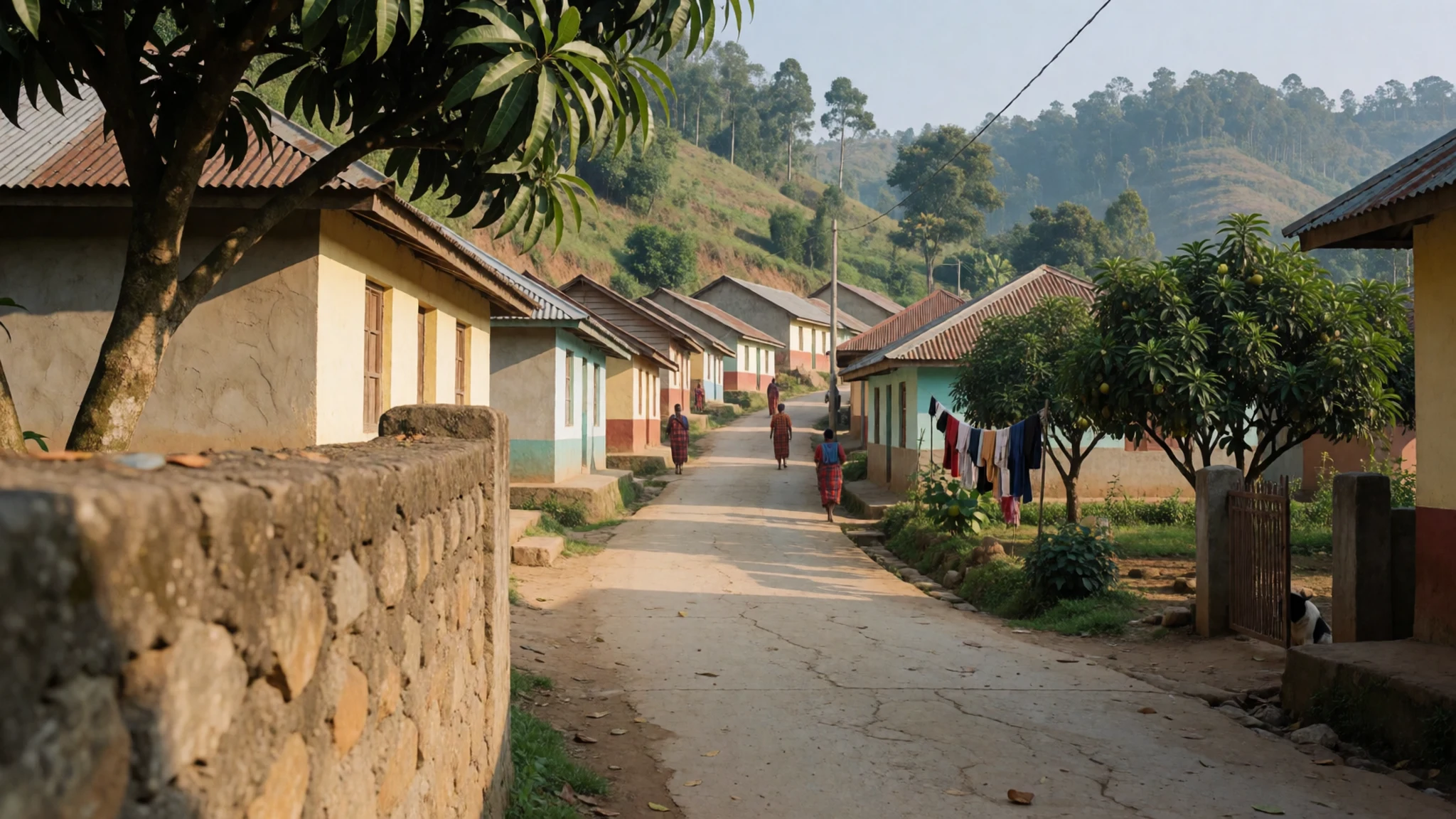
Culture
Blue and John Crow Mountains carries living culture as well as scenery. The Maroon communities on its fringes keep traditions that blend African roots with Jamaican experience: the abeng, a horn once used to signal across the hills; drumming and dance in the Kromanti tradition; herbal knowledge; and oral histories of Nanny and the struggles in the forest. Much of this is private or ceremonial, and some is shared with outsiders only through community-led tours or at festivals. Elsewhere in the hills, small farming settlements grow coffee, yam, bananas and vegetables, and church on Sunday, with hymns drifting across the valleys, is central to village life. Music is never far away, from roots reggae out of passing minibuses to choirs in wooden chapels. Rastafari belief and imagery are part of the wider Jamaican scene, and you may meet farmers and guides who live by its food rules. Courtesy matters on paths, where a greeting is expected before any question, and guides are usually from nearby villages whose income depends on considerate visitors. Greet people before asking anything, and ask permission before photographing residents, ceremonies or Maroon sites.
What to wear
Traditional dress around Blue and John Crow Mountains follows Jamaican country style. Cotton is the base cloth, and bright madras-type plaid, often called bandana, is the textile most linked with older rural dress: wide skirts and wrapped head ties for women, worn with white cotton blouses, and simple shirts with a kerchief for men. These come out for festivals, church occasions and cultural shows. Maroon ceremonies have their own dress, often white or brightly coloured cloth and head wraps, worn for events rather than every day. Day to day, people dress for wet, hilly work: T-shirts, jeans or work trousers, wellington boots for muddy farm paths, and a cap or knitted tam against the morning chill. Rain jackets and umbrellas are common. For visitors, weather and terrain matter more than any dress code. Wear layers: a warm fleece and windproof shell for pre-dawn summit walks, then light quick-drying shirts lower down. Sturdy walking shoes with good grip are essential, as trails are slippery, and sandals are a poor idea. Long trousers guard against scratches and insects, and a hat and sun cream help in clear spells. In villages and churches, keep shoulders and knees covered.
What to eat
- Blue Mountain coffee — Farm stops and cafés on the lower slopes
Coffee from the surrounding hillsides is the local pride, smooth and mild, served black or with milk. Try a cup at a roadside stall or small farm stop on the way up, and ask whether the beans were grown nearby.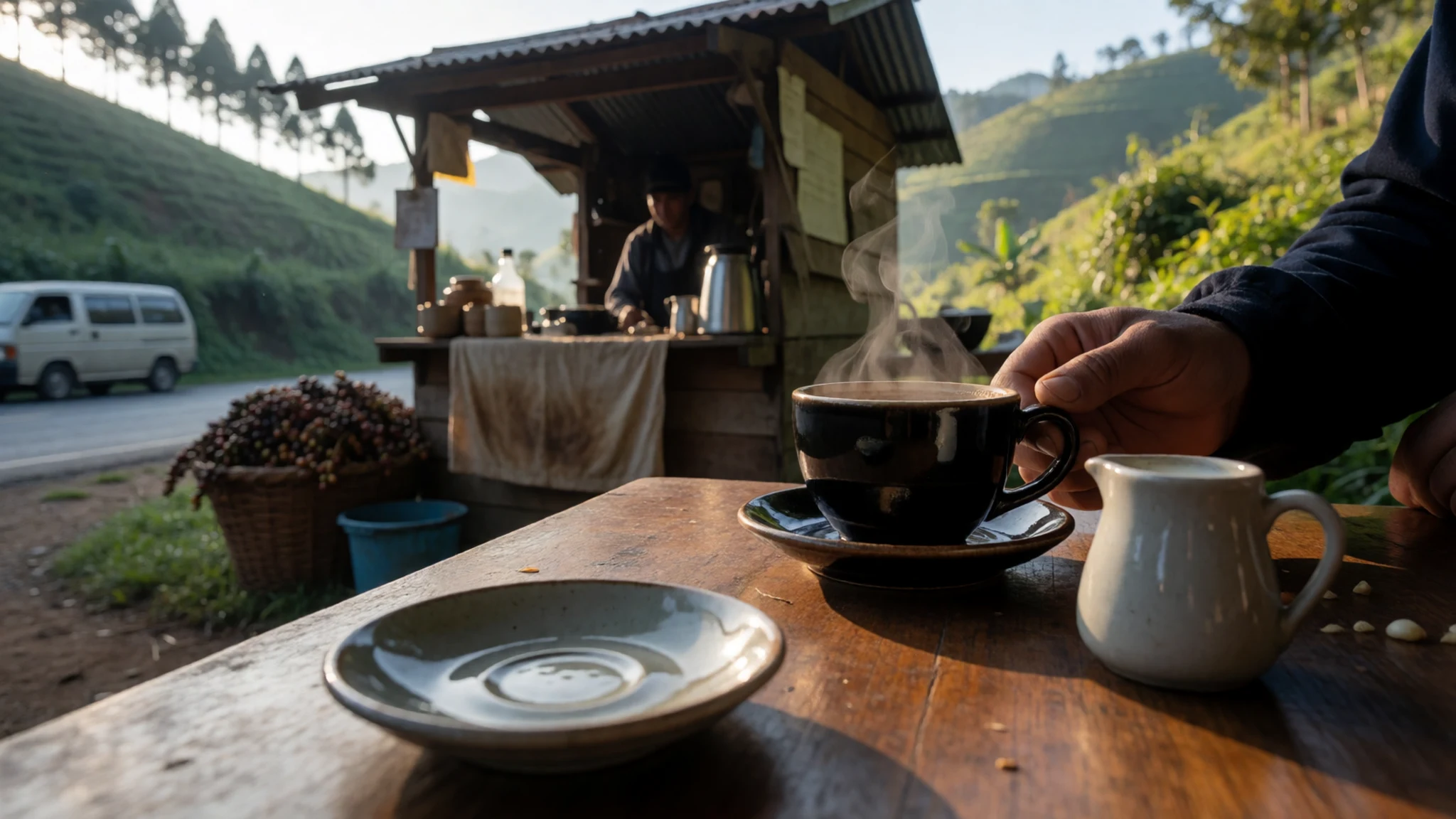
- Ackee and saltfish — Any local eatery at breakfast time
Jamaica's national breakfast pairs soft, buttery ackee fruit with salted cod, onions and peppers, usually with fried dumplings or boiled green banana. It makes a solid meal before a long walk.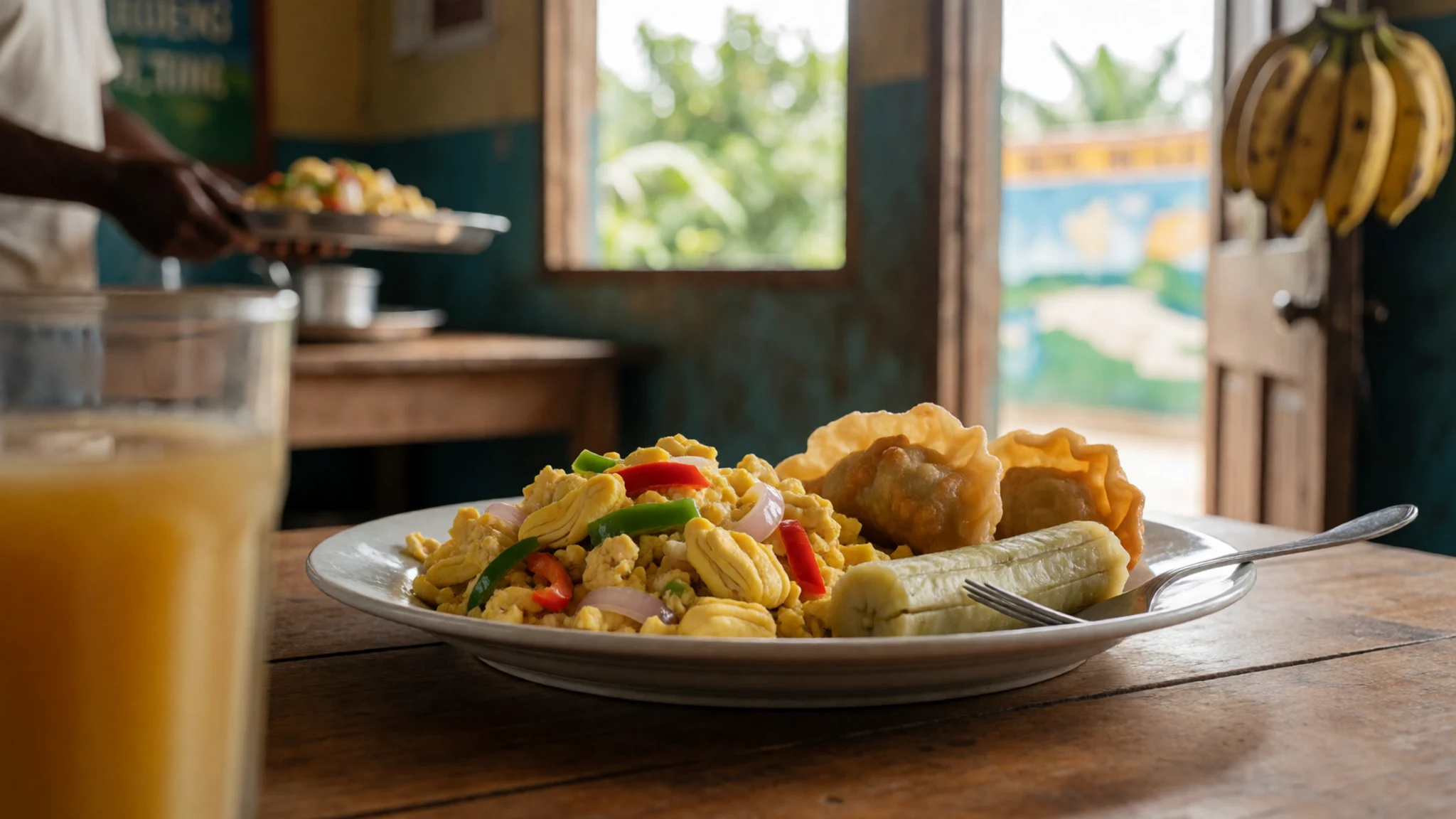
- Jerk chicken or pork — Roadside jerk stands along the Portland coast
Meat marinated in pimento (allspice) and fiery scotch bonnet pepper, then cooked slowly over smoky wood. The Portland coast is known for jerk, served from roadside stands with hard-dough bread or festival. - Bammy and festival — Fish and jerk stalls, and village shops
Bammy is a flat cassava bread, fried or steamed, often eaten with fish. Festival is a slightly sweet, elongated fried dumpling. Both soak up sauce well and make good trail food. - Escovitch fish — Coastal fishing communities in Portland
Fried fish topped with a sharp, spicy pickle of onions, carrot and peppers in vinegar. It is lively, tangy and filling, and best eaten with bammy or fried plantain.
Plan it
Best time. December to March is usually the drier and cooler stretch, giving the best chance of clear views from the ridges; showers can still come at any time. Late-year months are often wetter and hurricane season runs through much of the second half of the year, so check forecasts before booking.
How long. 2–3
Getting there. Fly to Norman Manley International Airport in Kingston, then take a taxi or arranged transfer up through the hills to the western side of the range; for the Portland side, the road from Kingston or from the north coast brings you to Millbank and nearby villages. Roads are narrow, winding and slow after rain.
Budget. mid
Tips
- Check the park's official site, blueandjohncrowmountains.org, for access, guides and trail conditions before you go
- Book a local guide for summit and John Crow walks, and arrange it ahead rather than on the day
- Start before dawn for summit sunrises and clearer air, since cloud tends to build later
- Carry water, a rain layer and a warm top, because temperatures drop sharply at altitude
- Bring cash for small villages and stalls, where card machines are rare
Etiquette
- Greet people you meet on paths and in villages before asking questions
- Ask before photographing residents, ceremonies or Maroon sites
- Take all litter out and stay on marked trails to protect the forest
Nearby
Sources
- Wikidata Q4930049 (CC0)
- Wikipedia: Blue and John Crow Mountains National Park (rev 1362702151) (CC BY-SA 4.0)
- Blue Mountains, Jamaica (Wolmadrian) (Public domain)
- Blue Mountain / John Crow Mountain Ranger Station (Michael L. Dorn) (CC BY-SA 2.0)
- JM Blue Mountain Peak 1010 (102) (Diego Tirira) (CC BY-SA 2.0)
- JM Blue Mountain Peak 1010 (104) (Diego Tirira) (CC BY-SA 2.0)
- JM Blue Mountain Peak 1010 (12) (Diego Tirira) (CC BY-SA 2.0)
- JM Blue Mountain Peak 1010 (13) (Diego Tirira) (CC BY-SA 2.0)
- JM Blue Mountain Peak 1010 (14) (Diego Tirira) (CC BY-SA 2.0)
- JM Blue Mountain Peak 1010 (15) (Diego Tirira) (CC BY-SA 2.0)
- Wikivoyage (CC BY-SA 4.0)


Wildlife
- Giant swallowtail (animal)
The Homerus swallowtail is the biggest butterfly in the western half of the world, so large you might mistake it for a small bird. It is found only in Jamaica, and these mountains are one of just two places where it still survives, so every sighting is precious. Watch quietly from a respectful distance, go with a local guide, and never chase, handle or collect it. It is protected by law.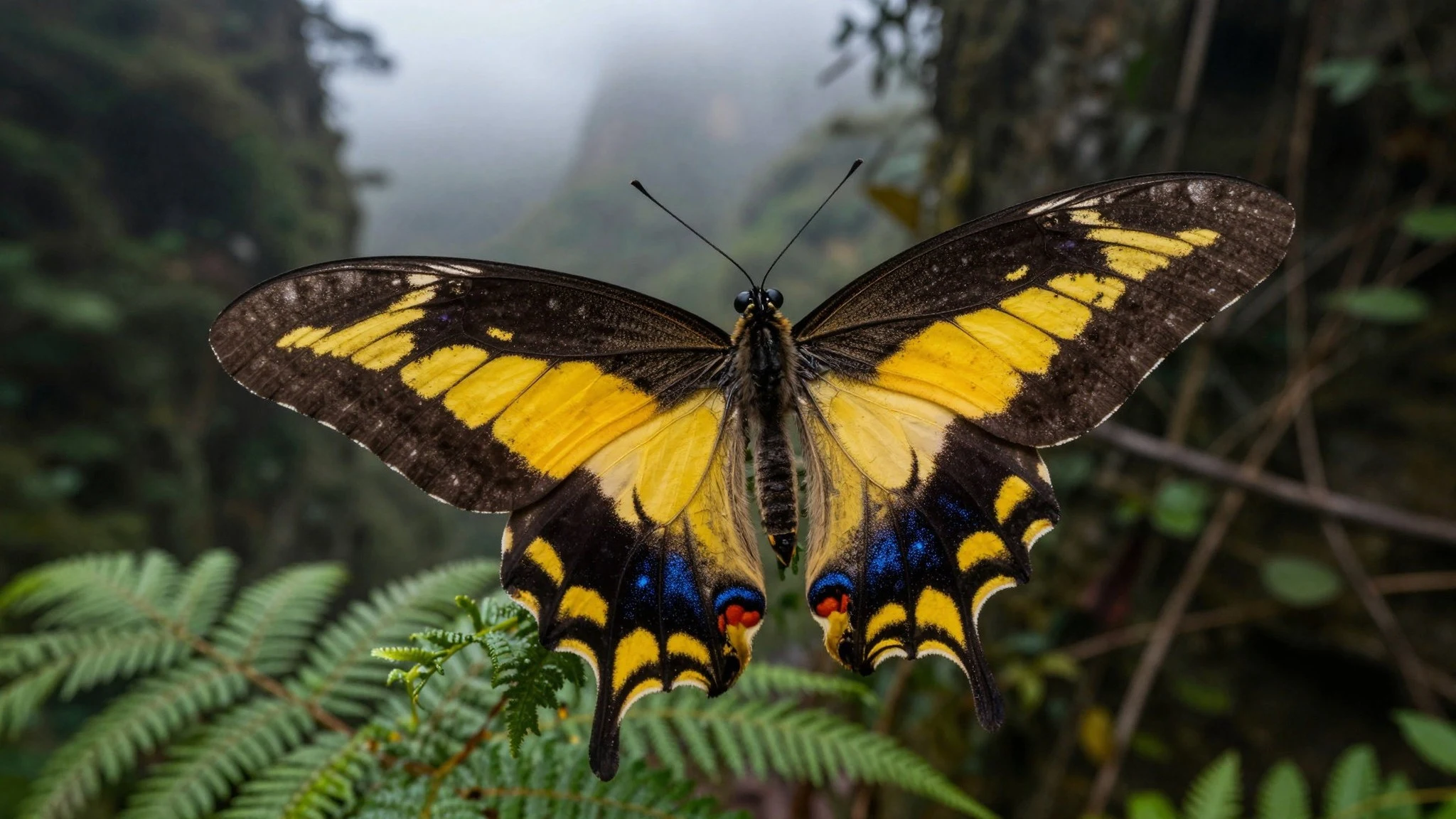
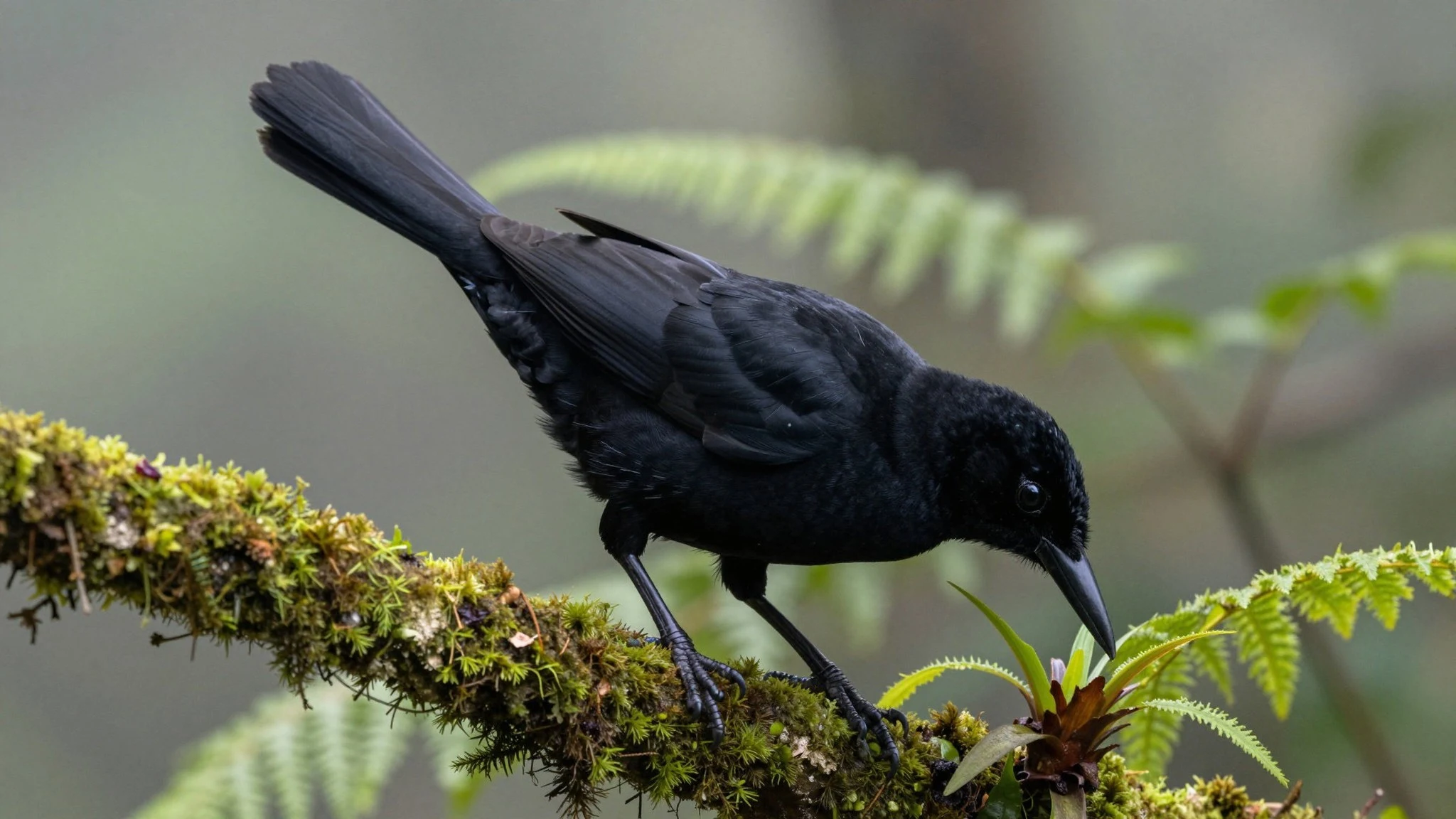
- Jamaican blackbird (bird)
The Jamaican blackbird is a rare, endangered bird found nowhere else on Earth, and it has no close relatives among the other blackbirds. In Jamaica it lives in only a few places, and the Blue and John Crow Mountains are one of them. Seeing one takes patience, so go with a guide, stay still and quiet, keep well back, and never feed it or try to coax it closer.