Nantucket
Nantucket, United States
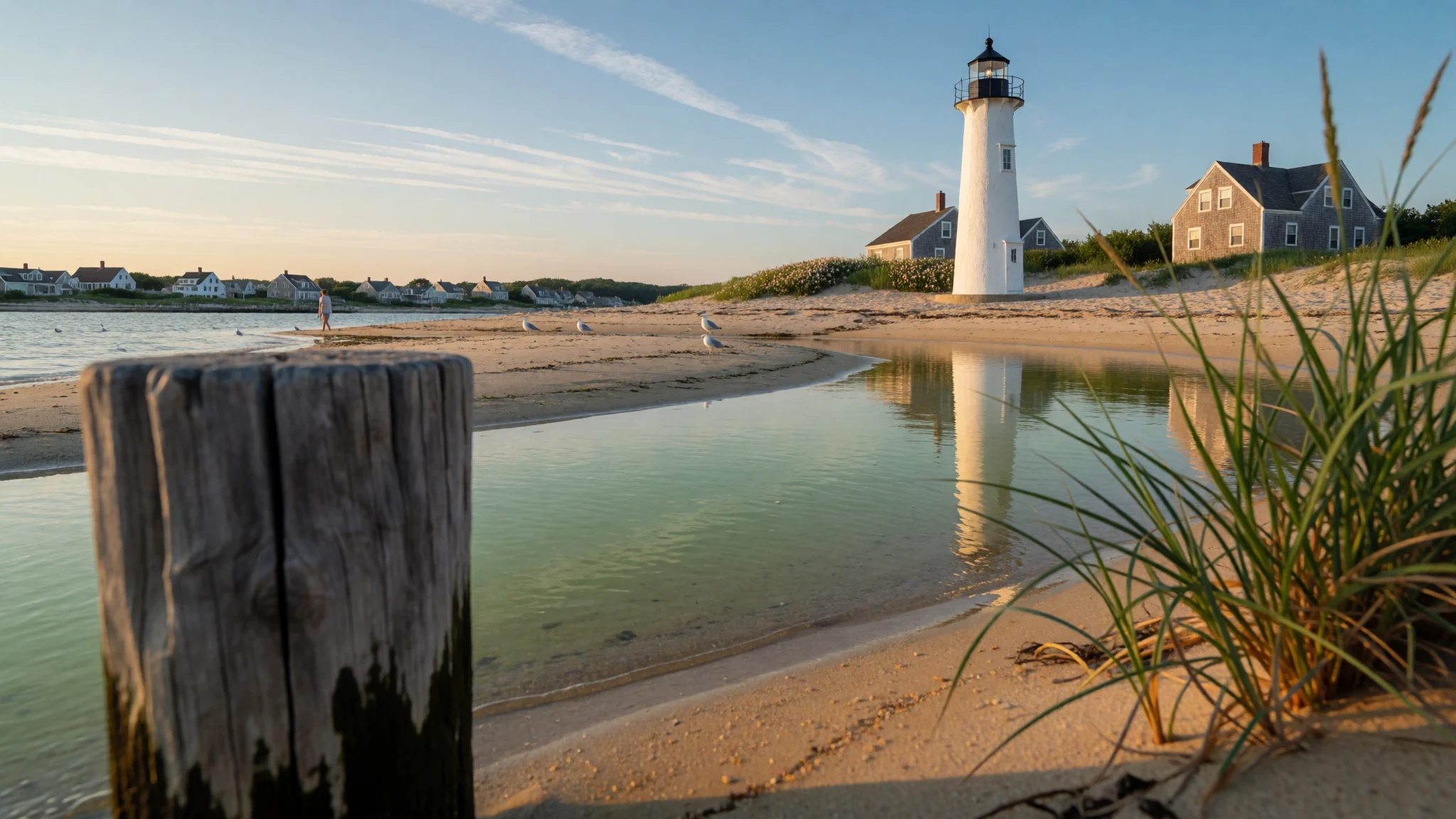
Nantucket is a low, fog-prone island of grey-shingled streets, lighthouses and whaling history, best enjoyed outside the crush of high summer.
The place
Nantucket is an island off Massachusetts, about 48 km south of Cape Cod, and it is a town and a county at once. Its year-round population is 14,255, yet in summer the figure climbs to around 80,000, and that swing explains most of the island's mood. Winter is quiet, grey and a little austere; July and August are busy and expensive. The land is flat and sandy, with higher points reaching up to 31 m at Saul's Hill, so sky and weather do much of the scenery. Sea fog is frequent enough to have earned the island its nickname, the Little Grey Lady of the Sea, after the way it looks from a ship. Nantucket Town sits around the harbour, with cobbled lanes, weathered shingle and the merchants' houses left over from the whaling age. The whole island was made a National Historic Landmark District in 1966, which goes a long way towards explaining why so much of the old townscape survives. Water dominates the county's map: roughly 85% of its total area is sea. Away from town there are moorland paths, dunes, long beaches and several lighthouses. Nantucket Sound lies between the island, Martha's Vineyard and Cape Cod, and the ferries cross it. Visitors should expect a place that is polished, costly and strongly shaped by the seasons.
Its story
Nantucket takes its name from a Wampanoag word, recorded in many spellings by early English writers. Its exact meaning is uncertain; suggestions include 'far away island' and a phrase about thin, sandy soil that tempts no one. The word belongs to Wampanoag stories about how Nantucket and Martha's Vineyard came into being, and the Wampanoag were the island's people long before any European ship arrived. English settlement in the region began on neighbouring Martha's Vineyard under the merchant Thomas Mayhew. In 1641 he obtained a group of islands, Nantucket among them, as a proprietary colony from two English noblemen. Mayhew then brought families to the area and made agreements with the Wampanoag on Nantucket. Those treaties are credited with keeping the islands out of King Philip's War, the bitter conflict that engulfed much of southern New England. Later centuries turned Nantucket into a sea-going community, and the Whaling Museum is the clearest place to follow that chapter. The island's story is not only a maritime one. The African Meeting House and the Seneca Boston-Florence Higginbotham House, run together as the Museum of African American History, record the lives of Black islanders. Modern Nantucket, with its summer residents and historic-district rules, grew out of all these layers.
What to see
- Brant Point Light — Harbour entrance, Nantucket Town
Brant Point Light stands a short walk from the centre of Nantucket Town. The first structure here dates from 1746, though the tower you see today is a later replacement. It is a good spot to watch ferries and small boats slide into the harbour, especially in the soft light of late afternoon.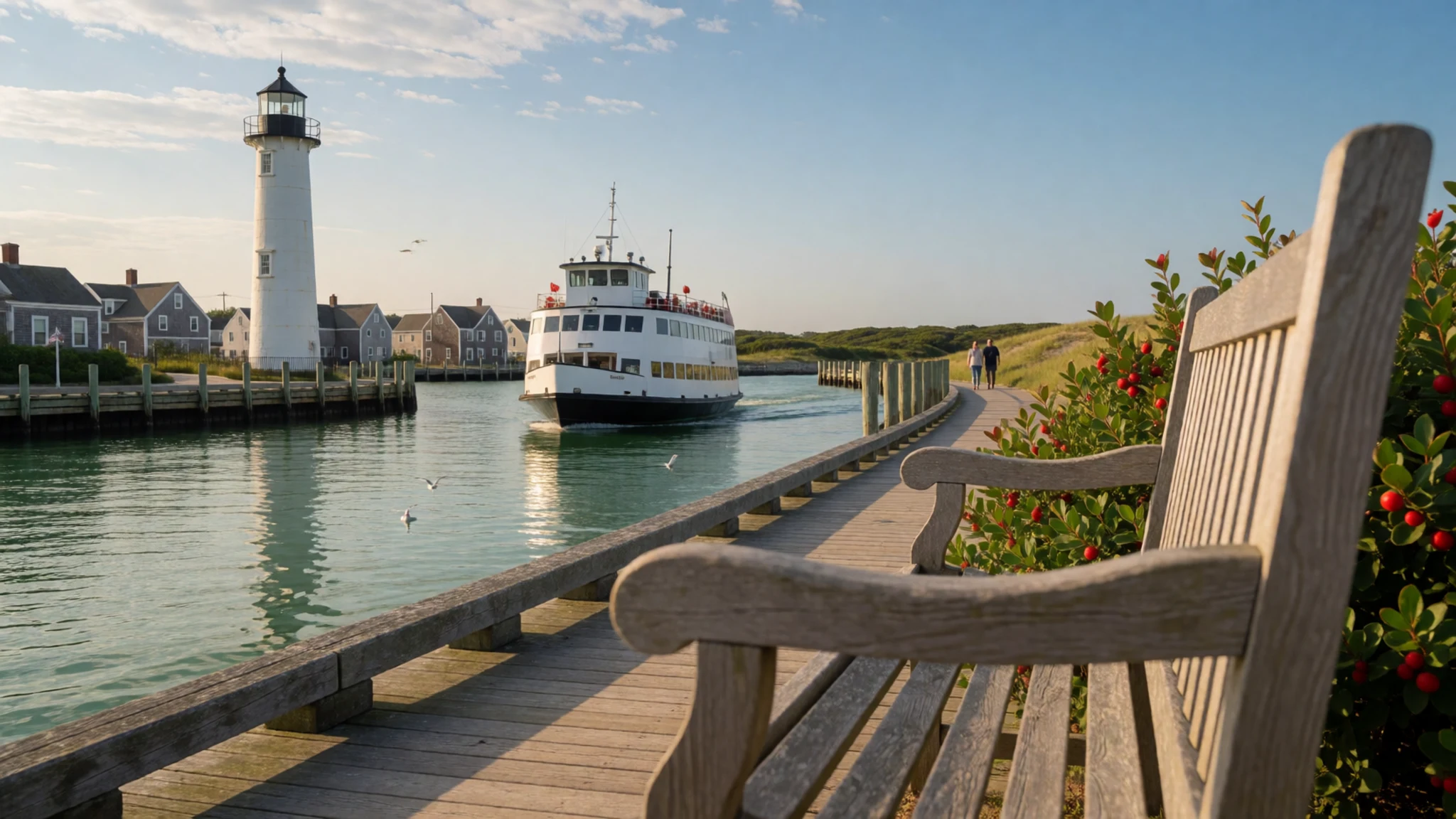
- Great Point Light — Northern tip of the island
Great Point Light marks the northern tip of the island, set above the beaches on a thin spit of sand. Reaching it means a long walk or an arranged ride over soft ground. The reward is open sea on both sides, seabirds and a real sense of the island's edge.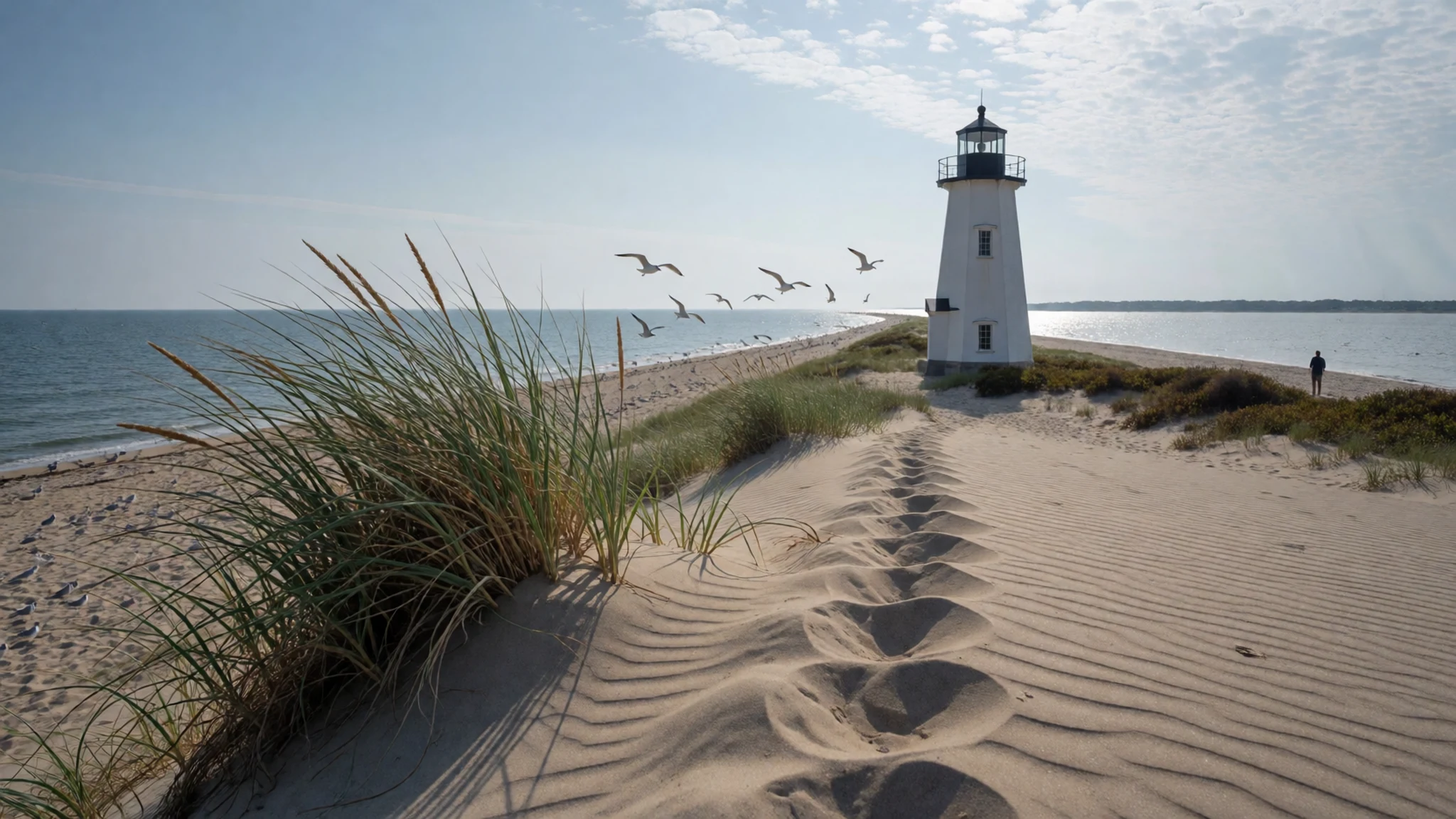
- Nantucket Whaling Museum — Near the waterfront, Nantucket Town
The Whaling Museum is the best single place to understand how Nantucket made its living and its fortunes. Exhibits cover the whaling trade and the people tied to it. Admission is charged, so check the official museum site for current prices and opening times before planning a visit.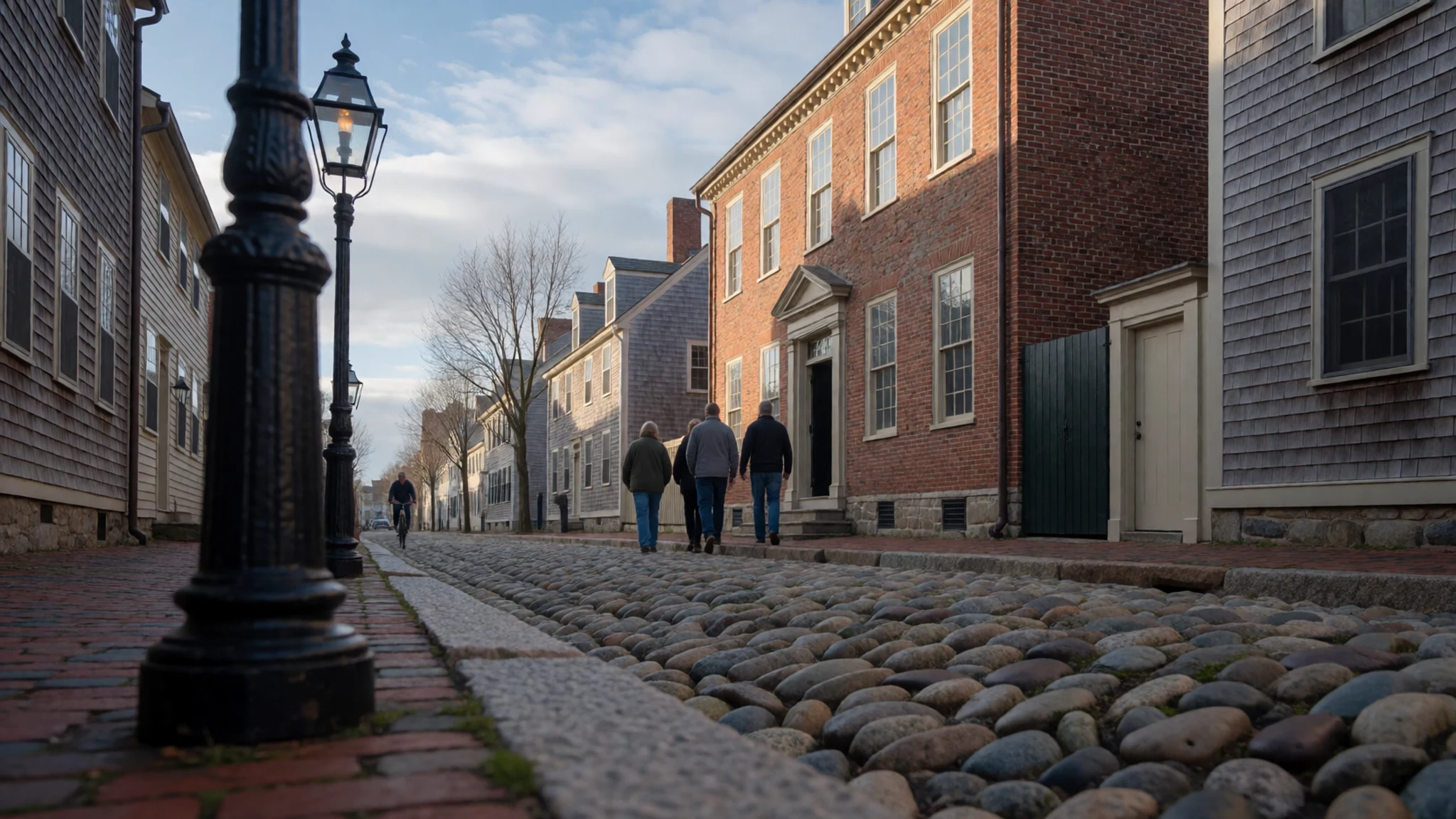
- Museum of African American History — Nantucket Town
This museum is spread over two historic sites: the African Meeting House and the Seneca Boston-Florence Higginbotham House. Together they tell the story of Black life on the island, a thread often missing from the usual picture of sea captains and shingled mansions. Check the museum's own site for opening arrangements.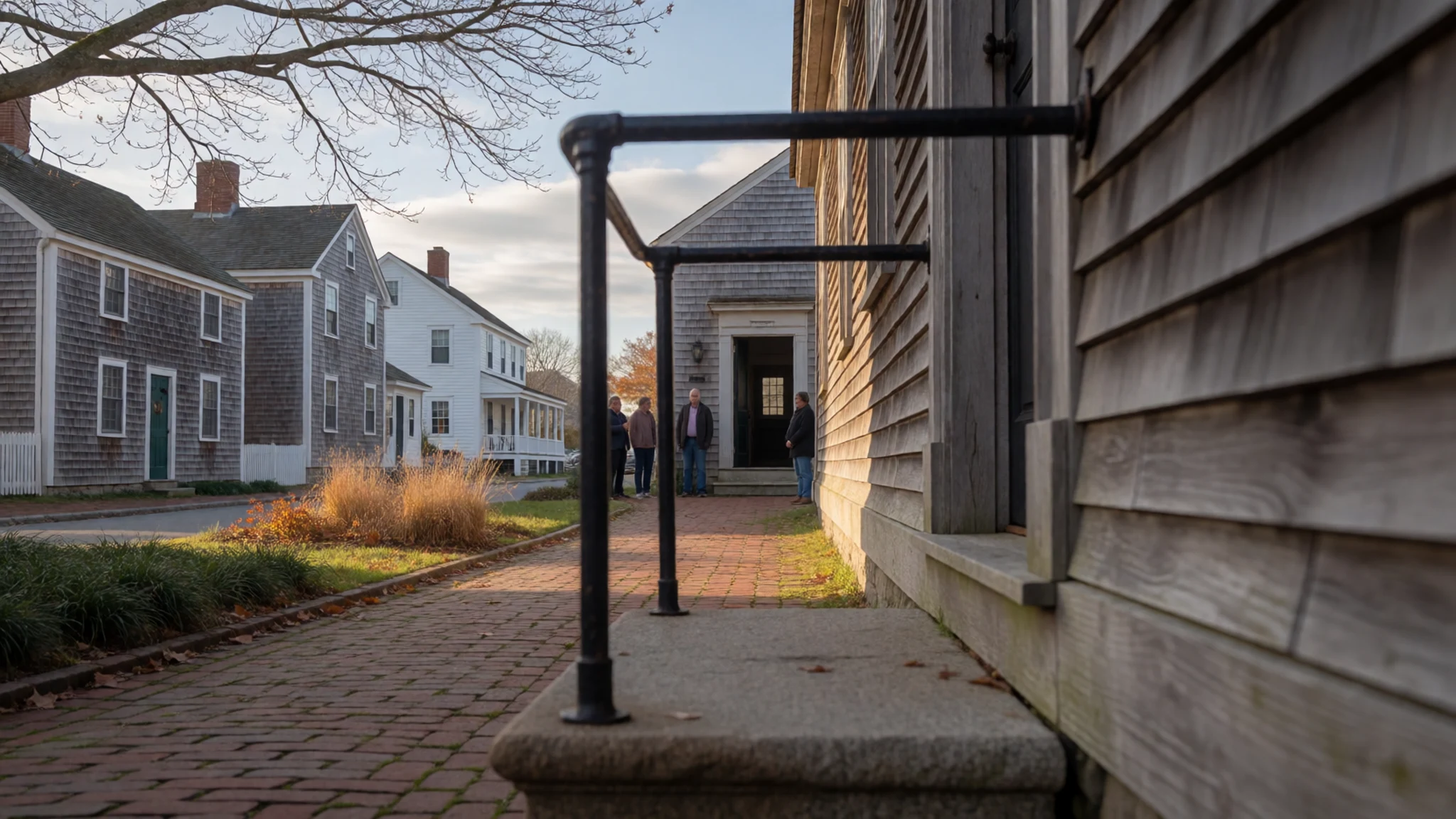
- Old Windmill — Outskirts of Nantucket Town
The Old Windmill was built in 1746 from salvaged timber and still stands on its original site. It is a modest, creaking, wind-battered structure rather than a grand monument, and that is part of its charm. A visit pairs well with a wander through the older streets nearby.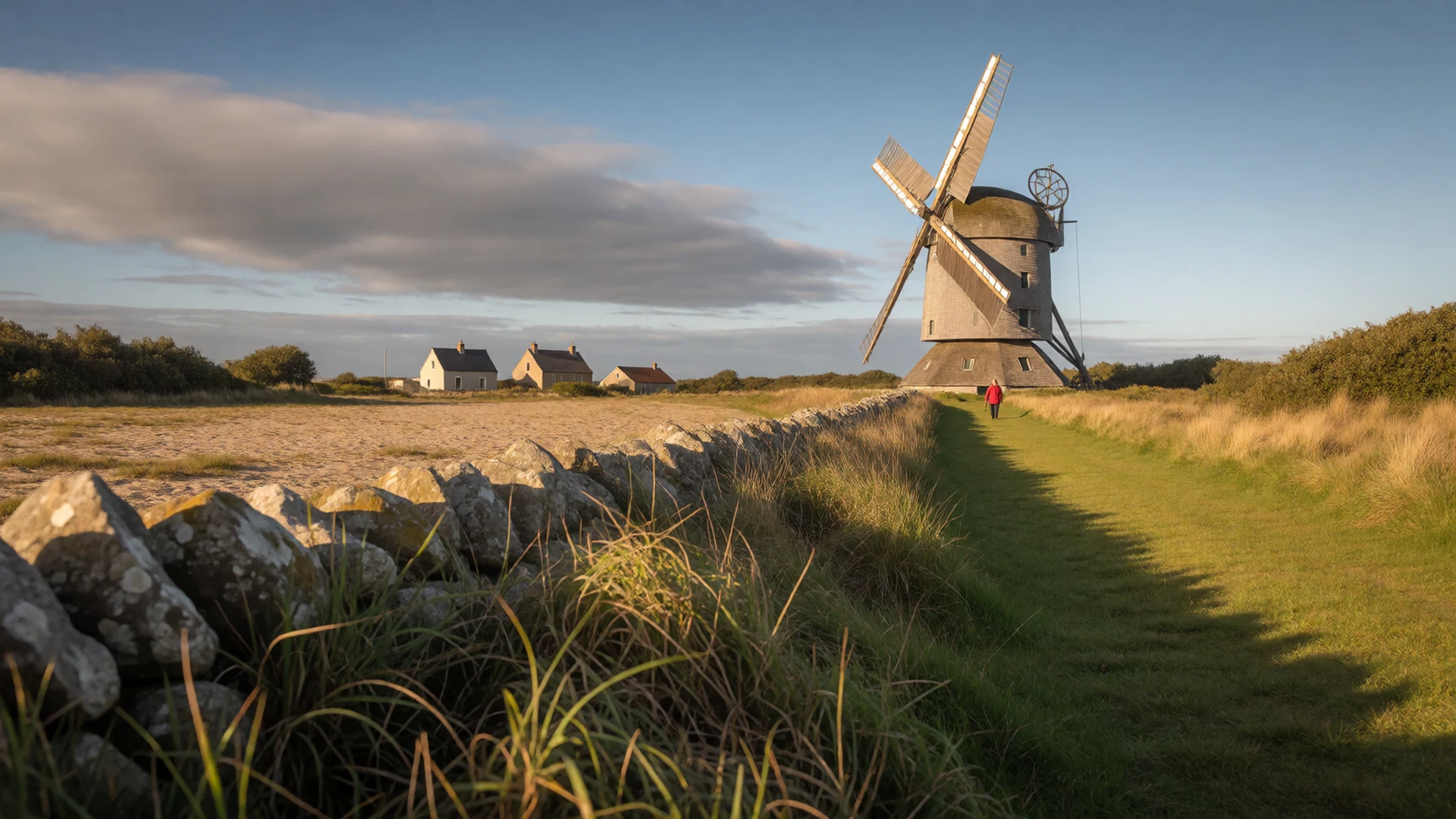
Culture
Nantucket's cultural life rests on three things: the sea, the island's long memory and a summer population that arrives with money and leaves in autumn. The Maria Mitchell Association and the Whaling Museum anchor the museum scene, while small galleries fill the town in season. Artists began settling and painting here in the early twentieth century, drawn by dunes, moorland, harbour light and the island's changeable weather. Frank Swift Chase and Theodore Robinson are among the painters linked to the island. Tony Sarg, an illustrator and puppeteer, moved here in 1922 and in 1937 floated an inflatable creature across the harbour in a playful 'sea monster' hoax, a story still told with relish. Theatre also has a home on the island, with productions staged in a former church building. Beneath the polish lies a strong sense of heritage. Wampanoag history, whaling-era wealth and Black islanders' history all sit within a few streets of one another, and local pride is tied to preservation: the historic district's rules shape what can be built and how old houses look. Residents, many of whom live here all year, value calm in the quiet months. In town, keep voices low on residential lanes and ask before photographing people's homes or gardens, since many of the most photogenic houses are private.
What to wear
Nantucket has no single traditional costume in the way many places do. The island's first people, the Wampanoag, had their own clothing, made from hides, fibres and shells and worn today mainly for ceremonies and cultural events rather than daily life. The look most associated with the modern island is a New England yacht-club one: cotton trousers in faded reds, striped knitwear, canvas shoes and navy blazers. Locals mostly dress for weather and work. Waterproof jackets, fleeces, boots and sturdy jeans are common, especially outside summer, when winds are strong and days are often overcast. In July and August the town turns smarter, with linen shirts, sundresses and tidy shorts at dinner. Visitors should dress in layers, because the ocean moderates temperatures but the wind off the water can feel cold even on a sunny day. Bring a windproof or waterproof shell in every season. Comfortable flat shoes are essential for cobbles and uneven brick pavements, while sandals or sturdy trainers suit beach walks and the soft sand tracks near the lighthouses. Sun hat, sunglasses and sun protection matter in summer, since shade is scarce on the beaches. No religious dress code applies, though a light cover-up is sensible for churches and for entering restaurants straight from the beach.
What to eat
- Lobster and fresh seafood — Take-out seafood counters near the Town Pier
Lobster, chowder and fried or steamed shellfish are the island's natural order. Take-out seafood counters near the Town Pier are popular, so call ahead for an evening meal in season. Waterfront restaurants with decks suit longer, slower dinners.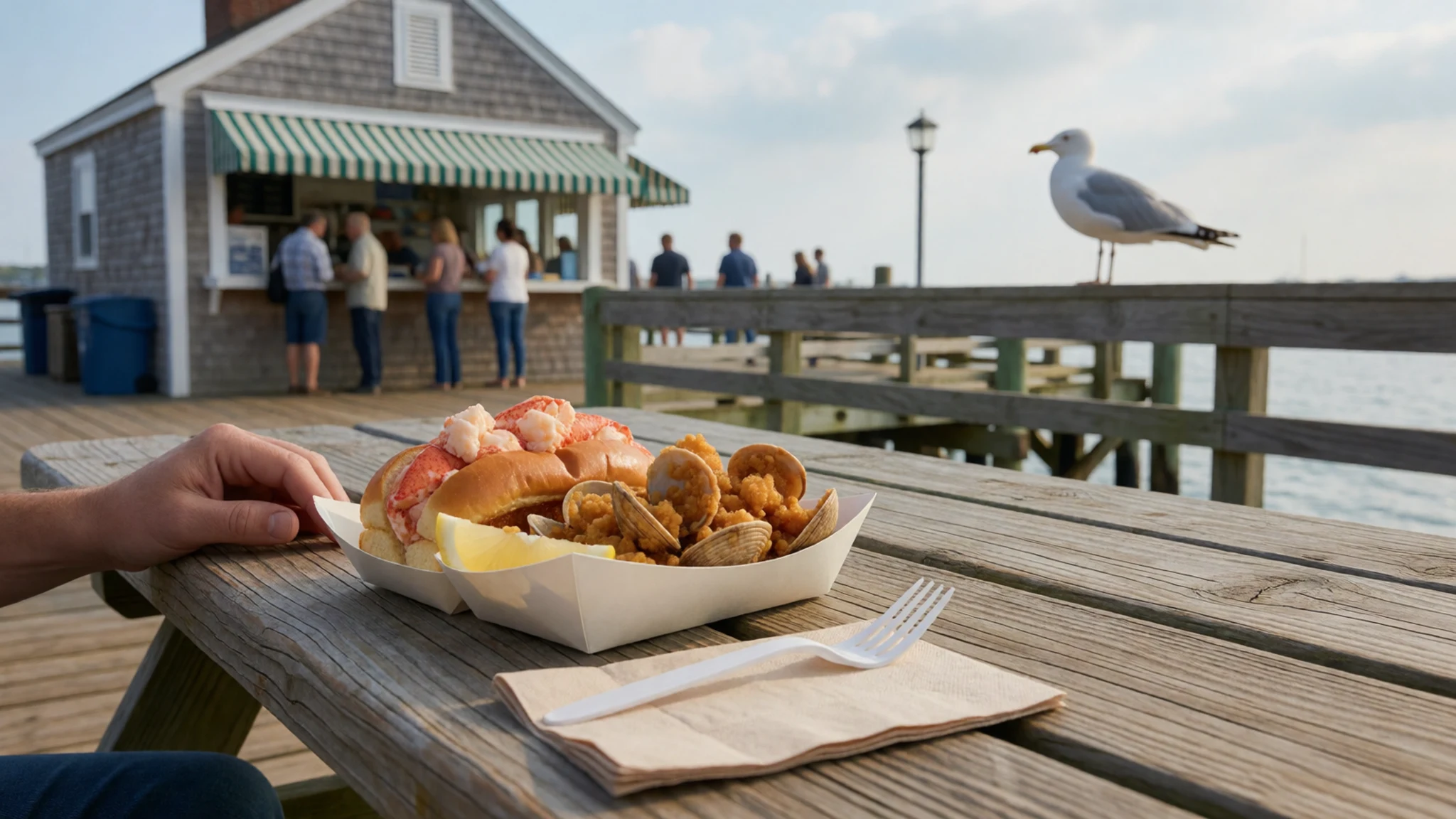
- Doughnuts — Breakfast cafés and bakeries around Nantucket Town
A traditional island breakfast is a warm, freshly fried doughnut with coffee, usually from a no-frills café or bakery that opens early. Arrive before the morning rush, as favourite counters can fill up quickly in summer.
- Ice cream — Parlours and cafés in the town centre
Ice cream is a daily ritual in summer, eaten walking along the harbour front or sitting on a bench after the beach. Several small parlours and cafés in town scoop local favourites, and queues form on warm evenings. - Sandwiches and picnic food — Sandwich shops around Nantucket Town
Sandwich shops and delicatessens make hearty lunches to carry to the beach or the lighthouse walks. Prices on the island run higher than on the mainland, so a packed lunch is a practical way to keep costs down. - Pizza by the slice — Broad Street, near the ferry wharf
Slices of pizza are a cheap, filling and quick option near the ferry wharf, handy for hungry arrivals or a late-evening snack before the last boat. Expect simple toppings, paper plates and benches with a harbour view.
Plan it
Best time. July and August for beach weather: July and August highs average about 27.9 °C, but the island is crowded and costly then. Late spring and early autumn are calmer. January highs hover near 13 °C, with many cloudy days; rain falls fairly evenly across the months.
How long. 2–3
Getting there. Nantucket is reached by ferry or by air from the mainland. The usual route is a ferry across Nantucket Sound from Cape Cod, and the island also has its own airport with regional flights. Check the operators' official sites for schedules, as services thin out in winter. For island information, see http://www.nantucket-ma.gov/.
Budget. high
Tips
- Book ferries and accommodation well ahead for July and August, and expect high prices in peak season
- Visit the lighthouses and old town early in the morning, before day-trippers arrive
- Carry a windproof layer even on sunny days, as the sea breeze can be cold
- Check museum websites for current admission and opening times before you go
- Pack a picnic and water, since beaches and moorland have few facilities
Etiquette
- Keep to marked paths and dune boardwalks, which protect fragile vegetation
- Ask before photographing people or private houses and gardens
- Keep noise down on residential streets, especially in the evening
Nearby
Sources
- Wikidata Q49149 (CC0)
- Wikipedia: Nantucket (rev 1385730181) (CC BY-SA 4.0)
- Wikivoyage: Nantucket (rev 5412254) (CC BY-SA 4.0)
- Photo: Nantucket-08-2004.jpg (CC BY-SA 2.5)
- Photo: Usa_edcp_relief_location_map.png (CC BY 3.0)
- Photo: The town of Sherburne in the island of Nantucket (NYPL) (Public domain)
- Photo: Sum04-118.jpg (CC BY-SA 2.5)
- Photo: Nantucket_NASA_2002.jpg (Public domain)
- Photo: Nantucket_Town_&_County_Building.jpg (CC BY-SA 4.0)
- Photo: CoffinSchoolNantucket.JPG (CC BY-SA 4.0)
- Photo: Robinson_Nantucket.jpg (Public domain)


