Nam Ngum Reservoir
Nam Ngum Reservoir, Laos
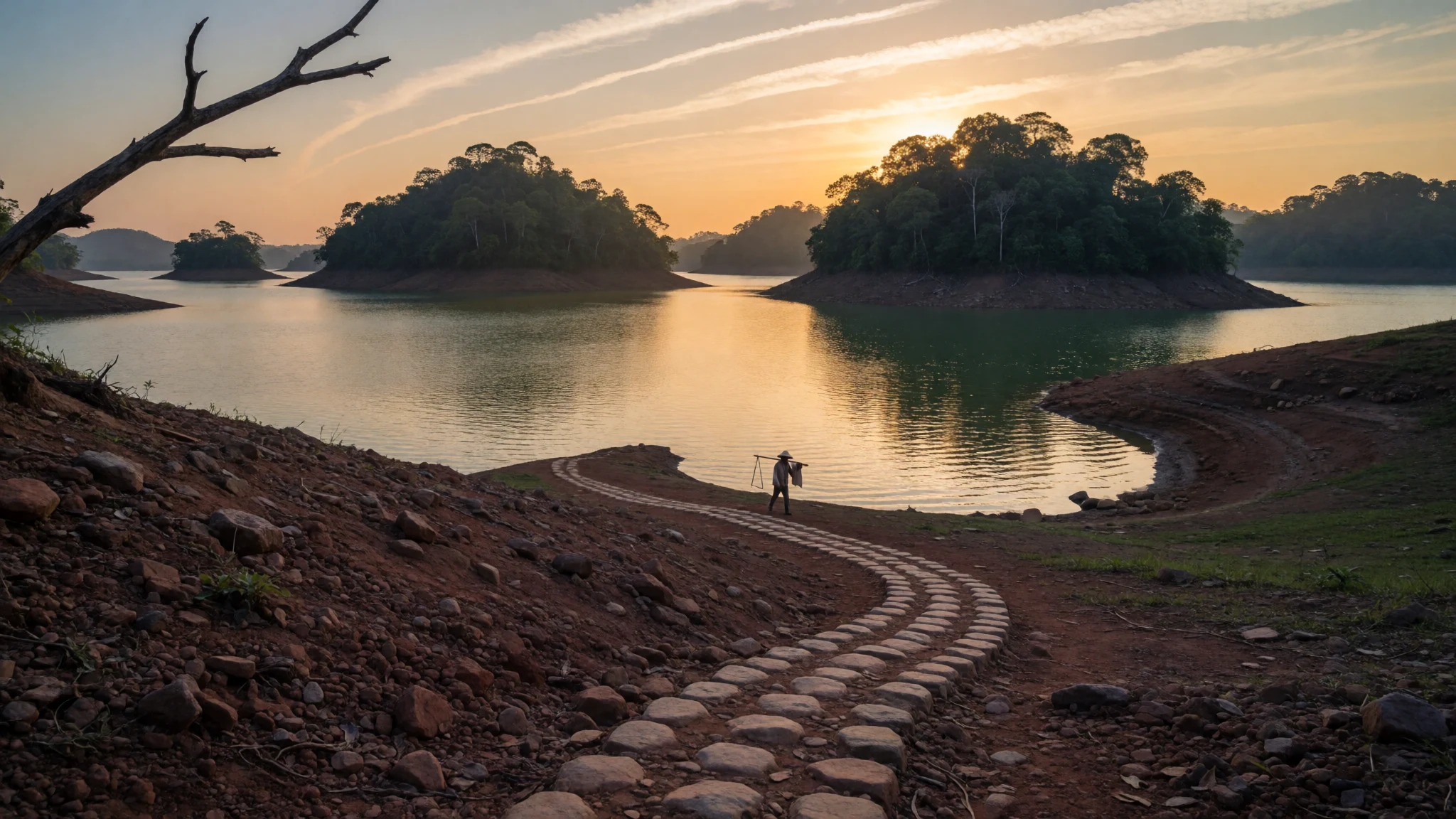
Nam Ngum Reservoir is a calm, island-dotted lake north of Vientiane, where Lao weekend life plays out on boats, floating restaurants and fish-farm jetties.
The place
Nam Ngum Reservoir is the artificial lake formed behind the Nam Ngum Dam, on the river of the same name in northern Vientiane Province. The river is a major tributary of the Mekong, rising in the mountains of Xiangkhoang and running south for 354 km before it meets the big river at Vientiane. The reservoir is its widest, slowest stretch: a sheet of green-brown water broken by wooded islands that were hilltops before the flooding. Around the shore, low hills close in, and the villages are small, strung along red-earth roads. The main landing for boats is Tha Ngon, a modest port of jetties, moored longtails and shaded eateries. Away from the landing the lake is quiet, with fishing boats, cage farms and the occasional cruise boat leaving a wake. It works as a day trip from Vientiane, and weekends bring Lao families and groups of friends for lunch on the water. Foreign visitors are fewer, so the place feels local rather than staged. Facilities range from basic guesthouses to the Dansavanh Nam Ngum Resort, which sits on the lake. Heat is the main variable: the hot season is glaring and still, while the cooler months give clear light and a breeze over the water. Mist can sit on the islands early in the day. The lake is also a working power source, so water levels shift with the seasons and the dam's needs, changing how the shoreline looks from one visit to the next. Nam Ngum is best taken slowly: a boat, a long lunch, an hour on a jetty.
Its story
Nam Ngum Reservoir exists because of a decision to turn a river into electricity. The Nam Ngum itself is old and ordinary in the best way: it gathers in the highlands of Xiangkhoang, drops through Vientiane Province and joins the Mekong at the Lao capital, 354 km after it began. Its basin supports about one million people. Between 1968 and 1971 the Nam Ngum Dam, also called Nam Ngum 1, was built across the valley, and the water backed up over farmland, forest and tracks. Villages had to move to higher ground, and hilltops stayed above the surface as islands. The dam became a source of power that Laos could sell across the border, an arrangement that has shaped the country's development ever since. Other hydropower schemes on the river have since been built or planned, and since 2002 a basin development programme has run alongside, with international partners helping on watershed care and water management. About a third of the basin is still forested. For a visitor the story is visible rather than told: the islands are the old hills, the fishing jetties are the new livelihoods, and the dam itself is a working piece of infrastructure rather than a monument. Locals mostly talk about the lake as a place to eat fish and rest, not as history.
What to see
- Tha Ngon landing — Tha Ngon, east shore of the lake
Tha Ngon is the lake's busiest port and the sensible place to start. Wooden jetties, longtail boats and open-sided eateries crowd the water's edge, and boatmen quote prices for trips around the islands. Arrive early on a weekday for a quieter scene, and agree the route and duration before boarding.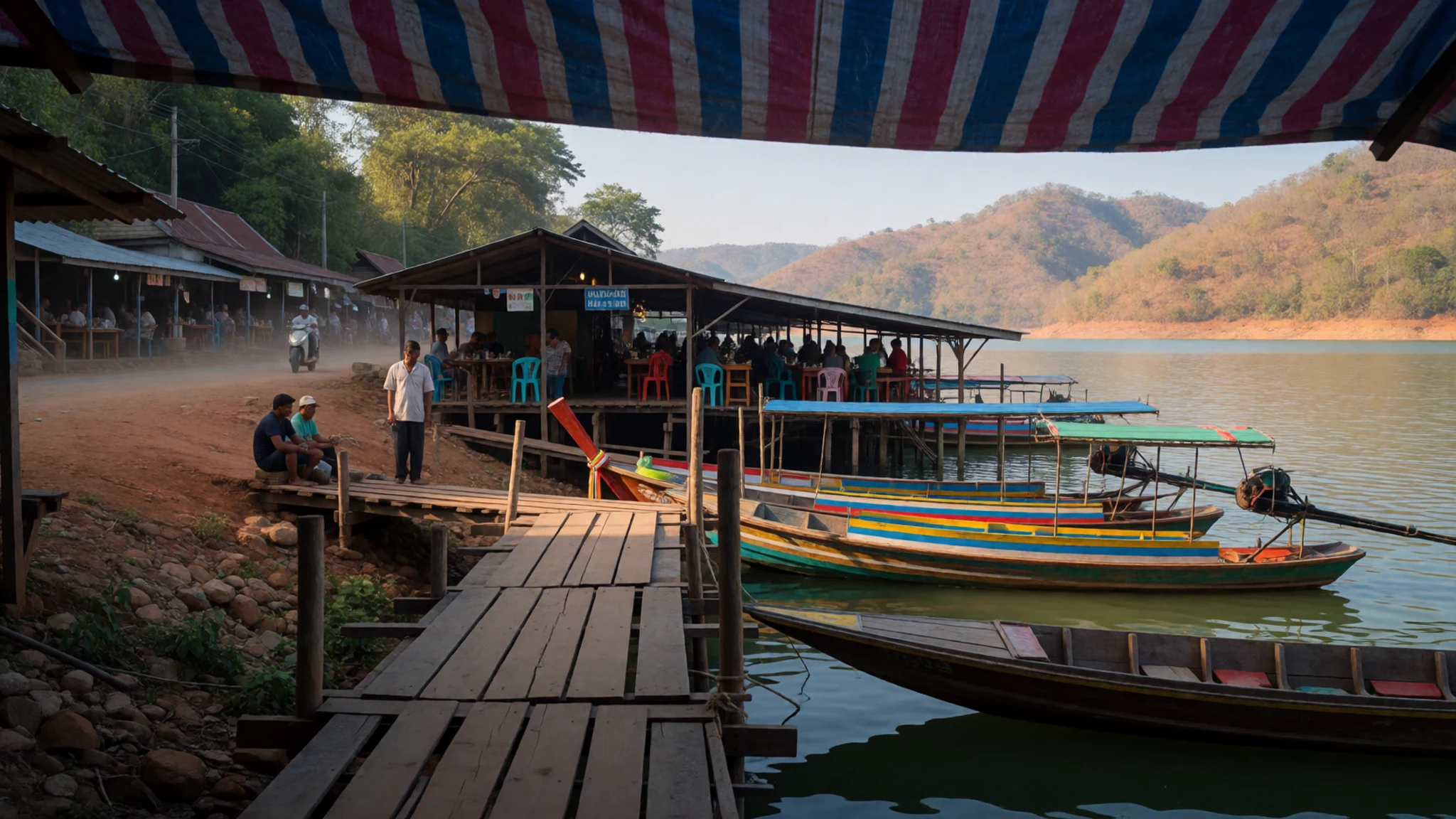
- A boat among the islands — Open water around the islands
The best way to understand the reservoir is from the water. A slow cruise threads between wooded islands that were once hilltops, past fishing boats and cage farms. Covered cruise boats carry groups, while smaller longtails go faster and closer to the shore. Bring a hat, because shade is limited.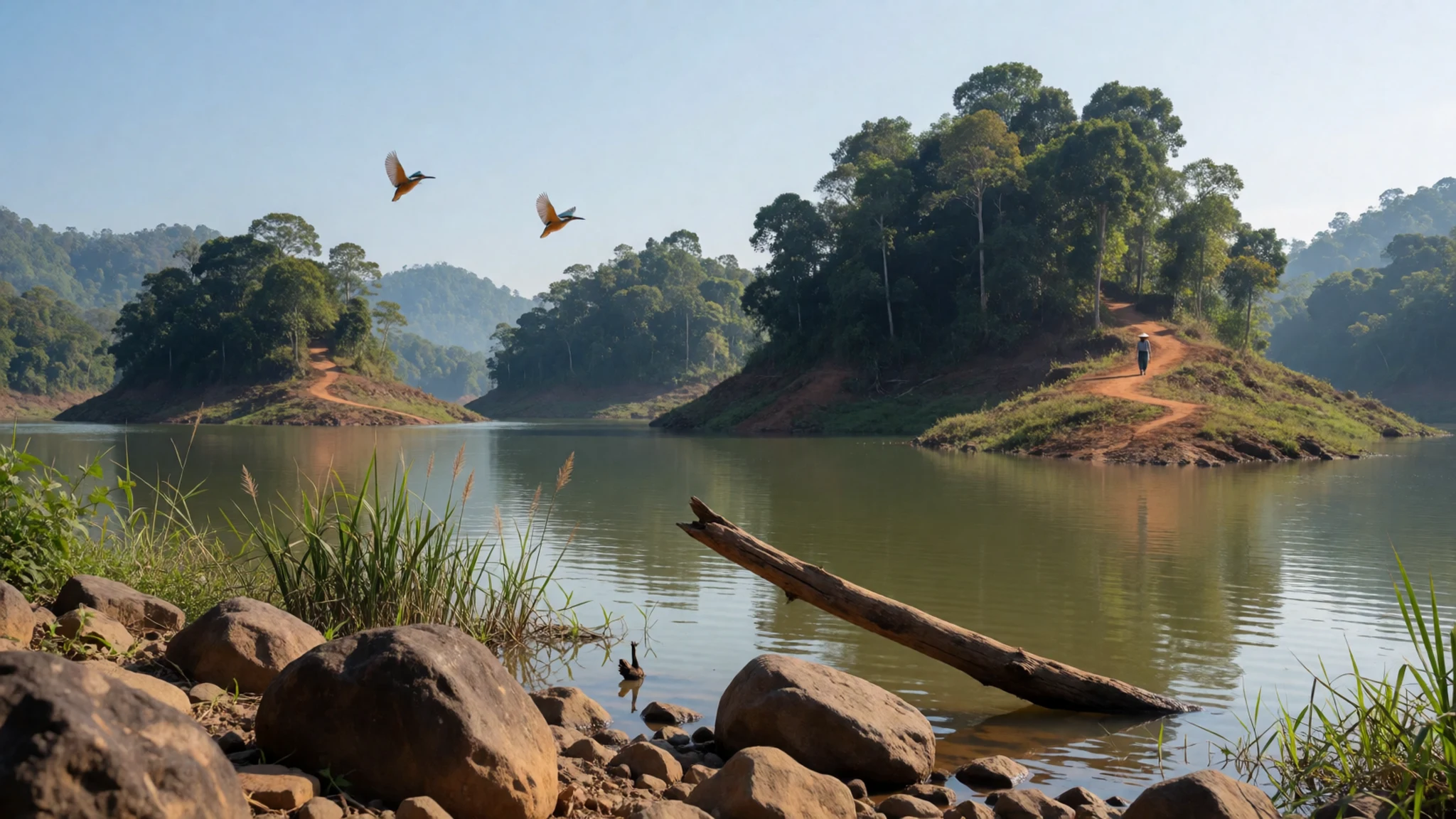
- Where the Nam Lik meets the Nam Ngum — Upper reaches of the Nam Ngum
At the confluence, the Nam Lik runs into the Nam Ngum, and the two rivers can carry visibly different shades of water side by side for a stretch. It is a quiet spot for photographs and for seeing how the reservoir is fed. Access is usually by boat or local guidance.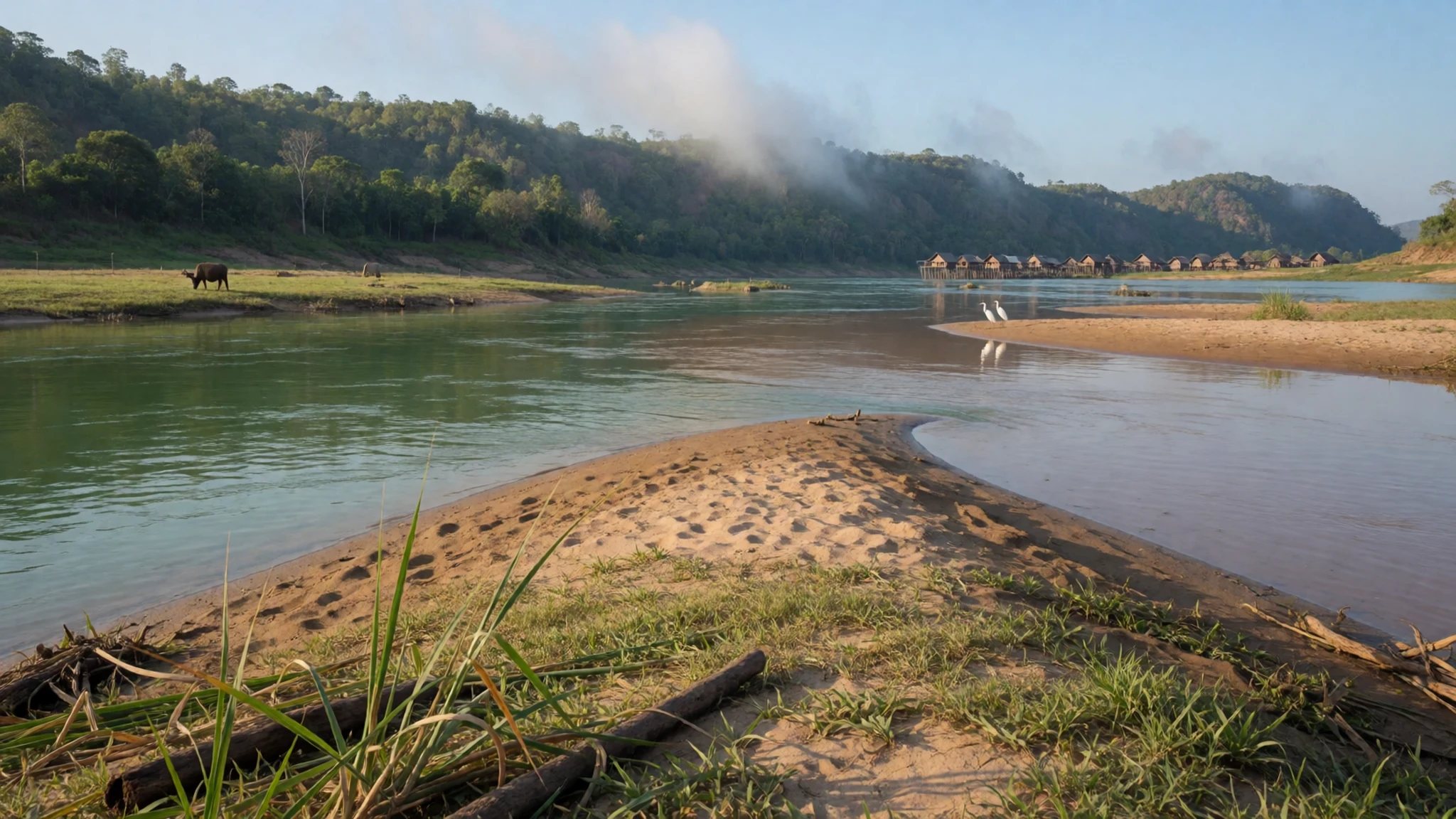
- Fish-farm jetties and lakeside villages — Shoreline villages around Tha Ngon
Along the shore, floating cages and small jetties show how the lake supports local livelihoods. Villages here are modest, with stilt houses, drying nets and children swimming from the bank. Visitors are welcome to look, but this is working life, so keep a respectful distance and ask before walking onto private jetties.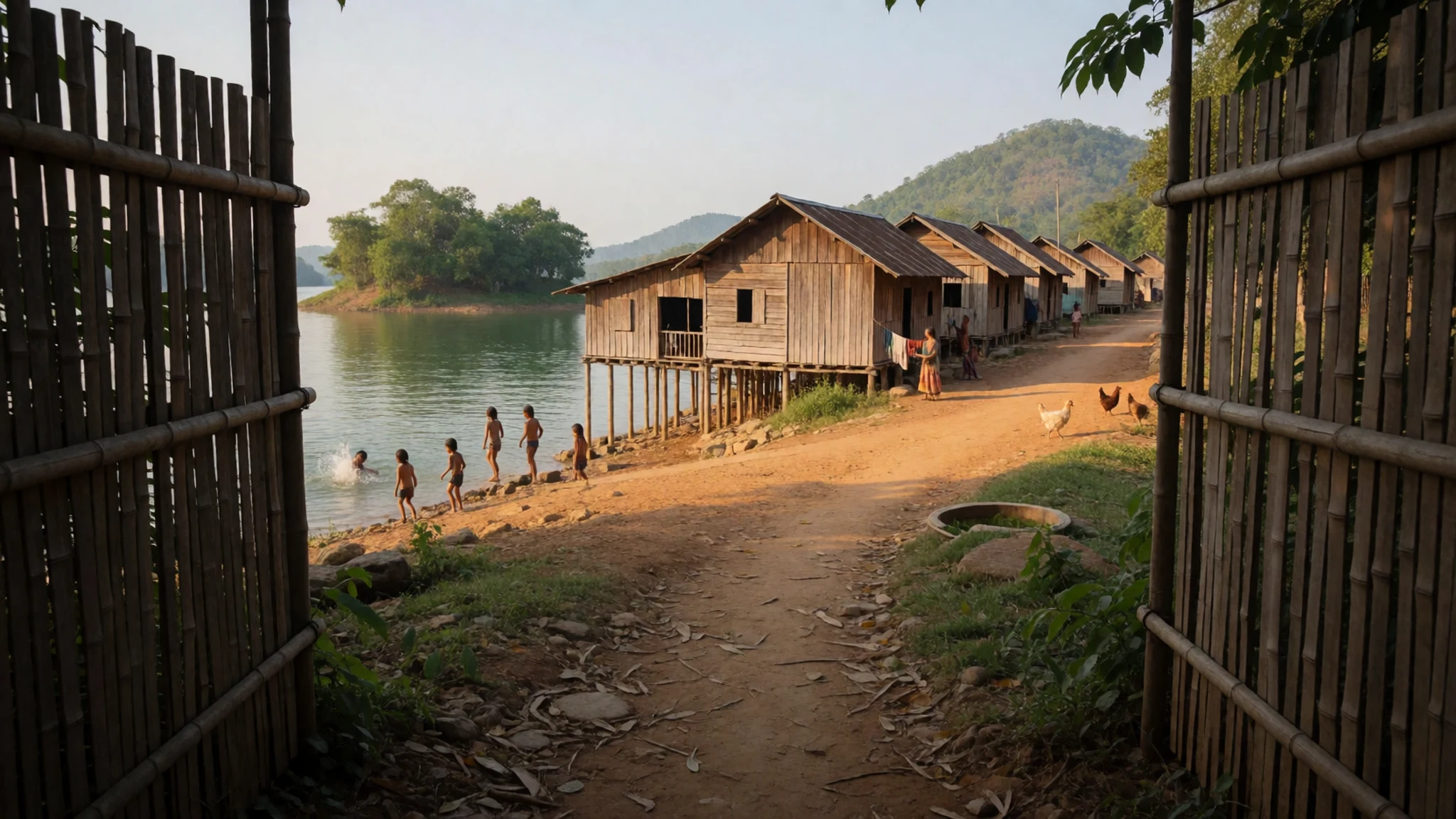
- Dansavanh Nam Ngum Resort — Lake shore, Vientiane Province
This lakeside resort is the main developed tourist base on the reservoir, with rooms, restaurants and views over the water. It suits an overnight stay when a day trip feels rushed, and sunset over the lake is the main reason to linger. Check the official channels for current services and rates.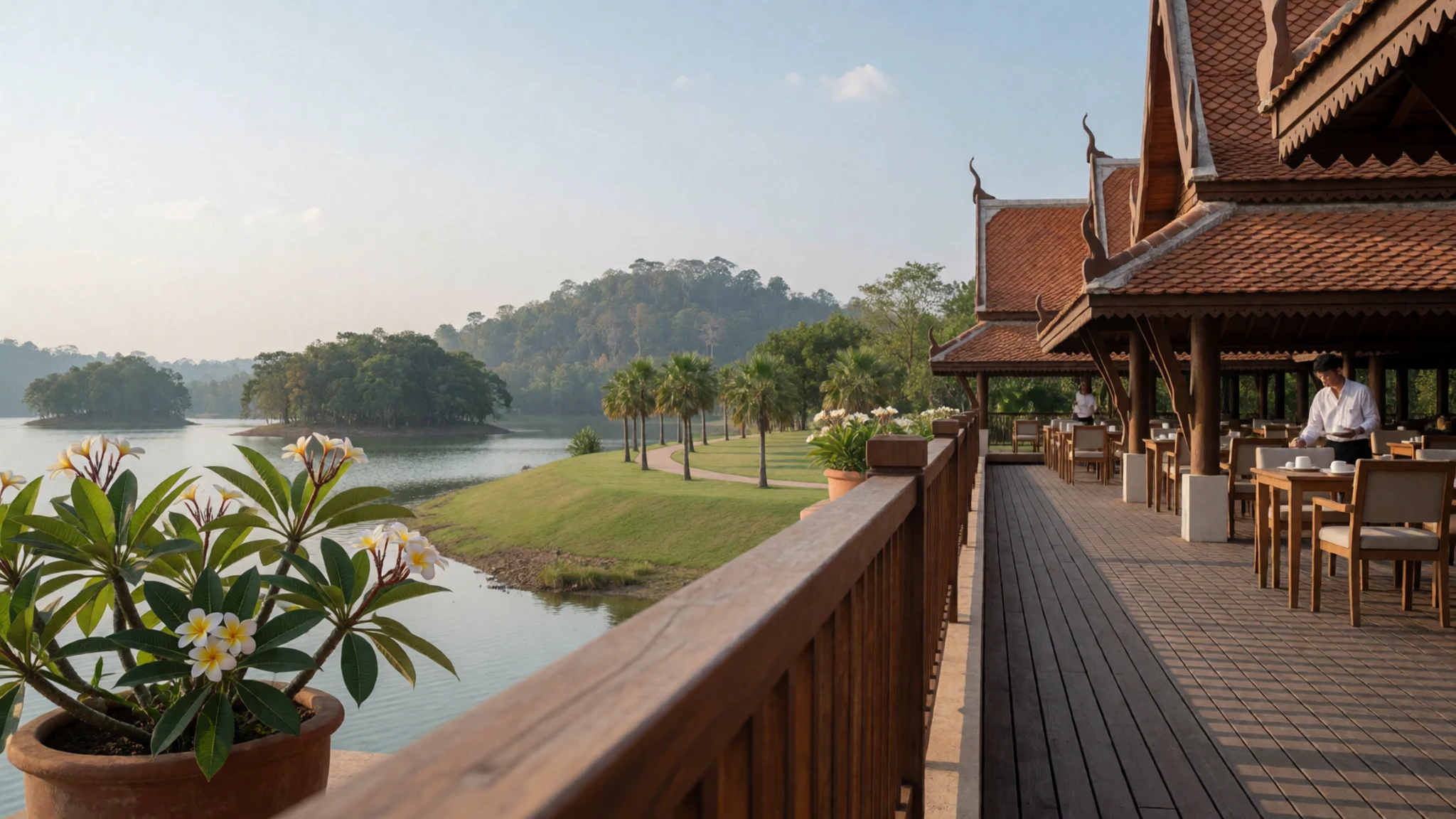
- Vang Vieng, further along the river — North of the reservoir by road
Vang Vieng is another tourism destination along the Nam Ngum, set among limestone hills. It makes a natural extension for travellers who want river activities and scenery after the calm of the reservoir. Plan it as a separate leg by road rather than squeezing it into a lake day trip.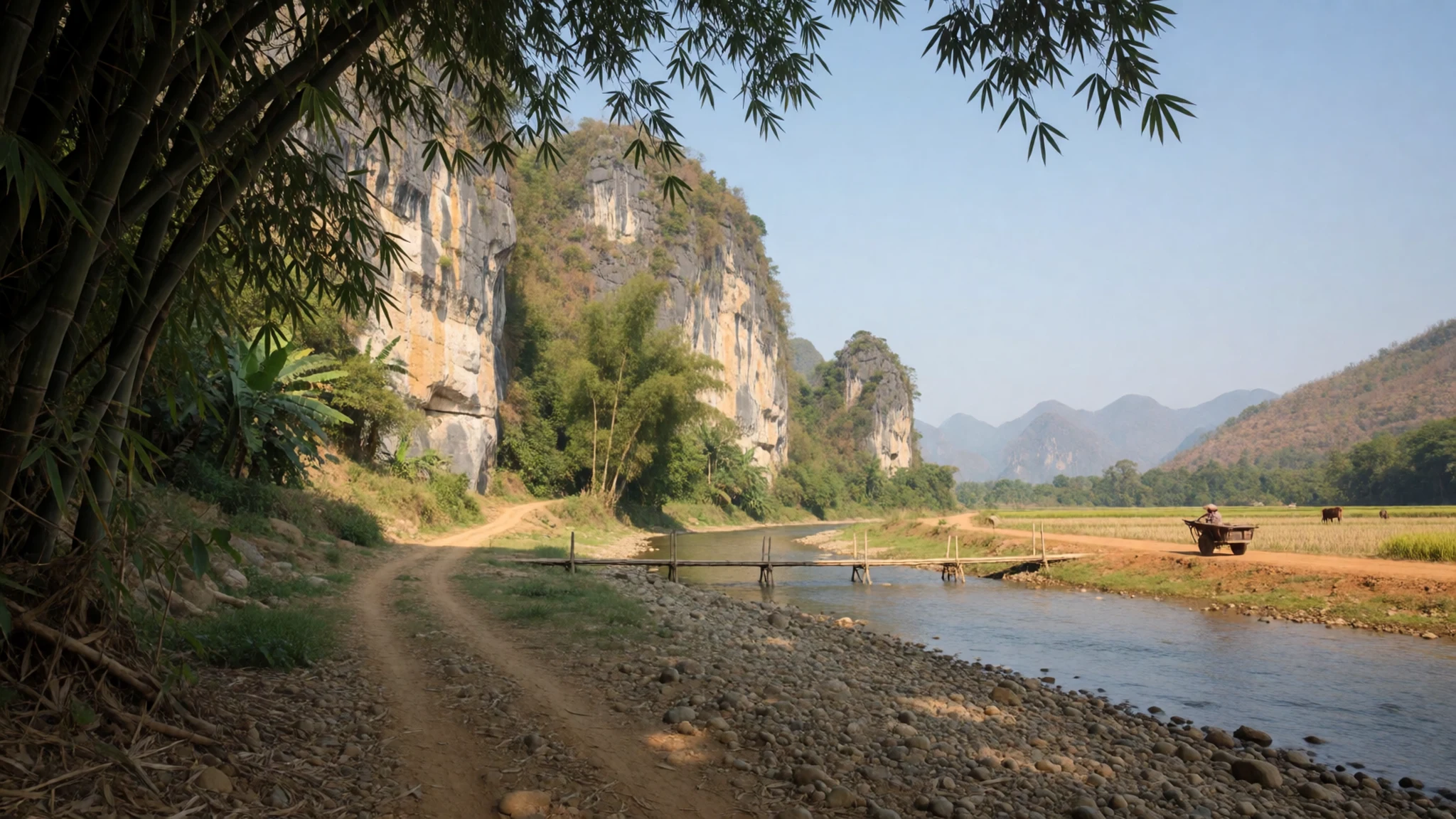
Culture
Nam Ngum Reservoir sits in lowland Lao country, where daily life follows Theravada Buddhist habits and a strong sense of community. Villages around the lake keep a small temple, and mornings may begin with monks collecting alms. Many people also honour local spirits alongside Buddhism, so you may see small offerings of flowers, rice or incense at a tree, a jetty or a boat. Family occasions are marked with the baci, a ceremony in which cotton strings are tied around the wrist to wish someone good fortune; a string offered to a guest is a kindness and is usually worn for a few days. Meals are shared, with sticky rice rolled in the fingers and dishes placed in the middle of the table. The lake itself is a weekend gathering place, so eating together on a floating platform, with music and Beerlao, is the local idea of a good day out. Pace is unhurried: service can be slow, plans shift, and a smile does more than impatience. Fishing and farming still shape the calendar, and the water levels matter to people in a direct way. Politeness is quiet and indirect, and raising your voice or showing anger is considered poor manners. Dress modestly and remove your shoes before entering any lakeside temple or private home, and ask before photographing people, especially monks and children.
What to wear
Nam Ngum Reservoir is a rural lakeside area where traditional Lao dress is seen at ceremonies and practical clothing fills the rest of the week. The traditional garment for women is the sinh, a tubular wrapped skirt woven from silk or cotton, often with patterned borders in supplementary weft, worn with a fitted blouse and sometimes a shoulder cloth called a pha biang. Men's formal dress includes a wrapped cloth or loose trousers with a collarless jacket. These textiles appear at weddings, temple festivals and national occasions, and many families still weave at home. Day to day, people around the lake wear light cotton shirts, T-shirts, trousers or sarong-style wraps, with rubber sandals or boots for boats and farmwork. Fishermen favour long sleeves and wide hats against the sun. Younger Lao visiting from Vientiane dress much as they would in any Southeast Asian town, in jeans, shorts and printed tops. Visitors should pack for heat and sun: breathable cotton or linen, a brimmed hat, sunglasses and sunscreen. Shoes that slip off easily suit jetties and temples, and grippy sandals help on wet boat decks. Shoulders and knees should be covered when visiting a temple or village, and swimwear is best kept for the water or the resort. A light rain jacket is useful in the wet season, and a thin layer helps on cool mornings between November and February.
What to eat
- Grilled lake fish with sticky rice — Open-sided eateries and floating platforms at Tha Ngon
Fish from the reservoir is grilled whole over charcoal, often stuffed with lemongrass and herbs and salted on the skin. It arrives with a basket of sticky rice and a spicy dipping sauce. This is the signature meal at the lake.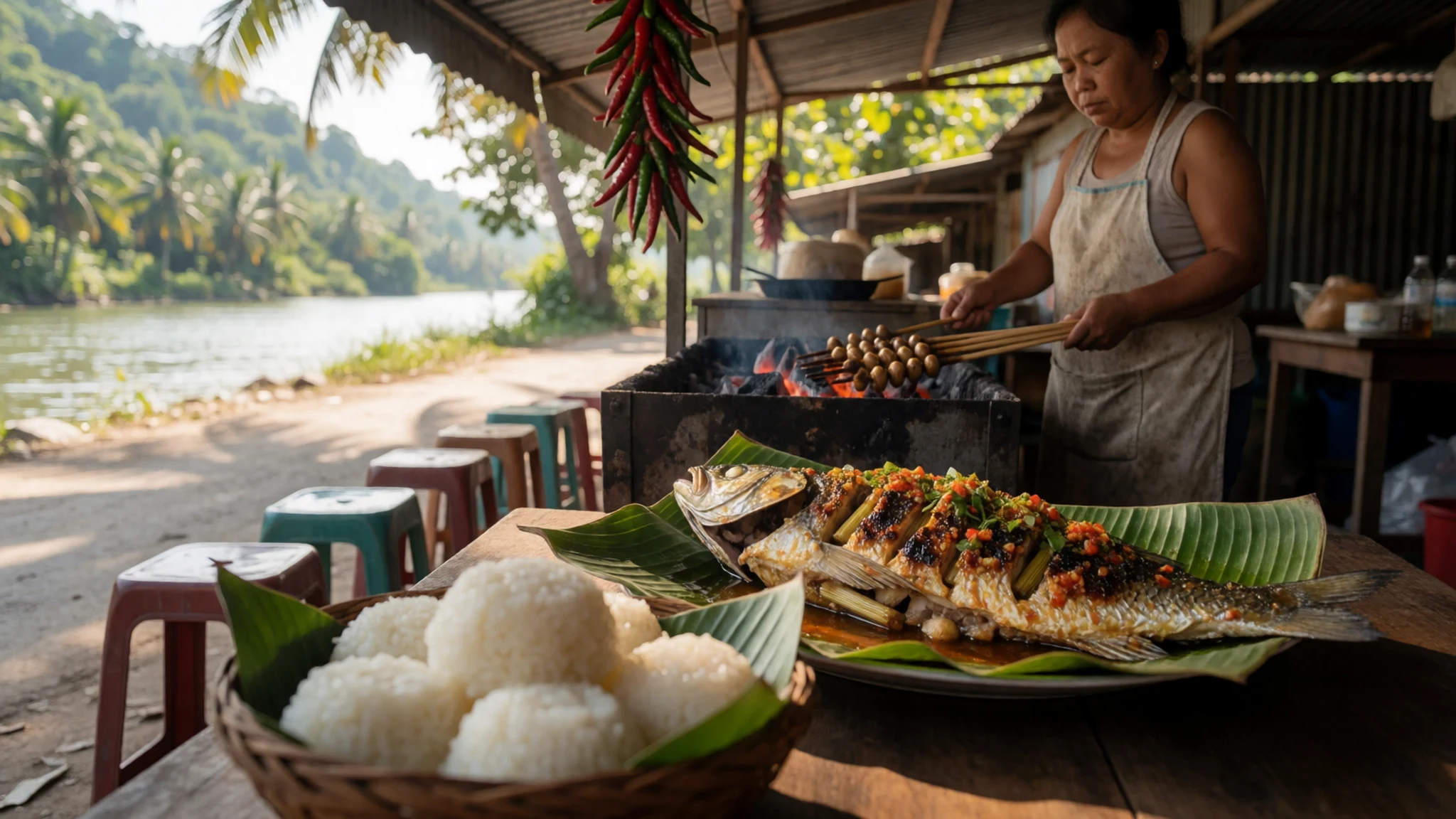
- Larb — Lakeside restaurants and roadside eateries
Larb is a minced meat or fish salad, tossed with lime, fish sauce, chilli, toasted ground rice and plenty of fresh herbs. It is eaten with sticky rice and raw vegetables, and is a staple of Lao celebrations and lunches.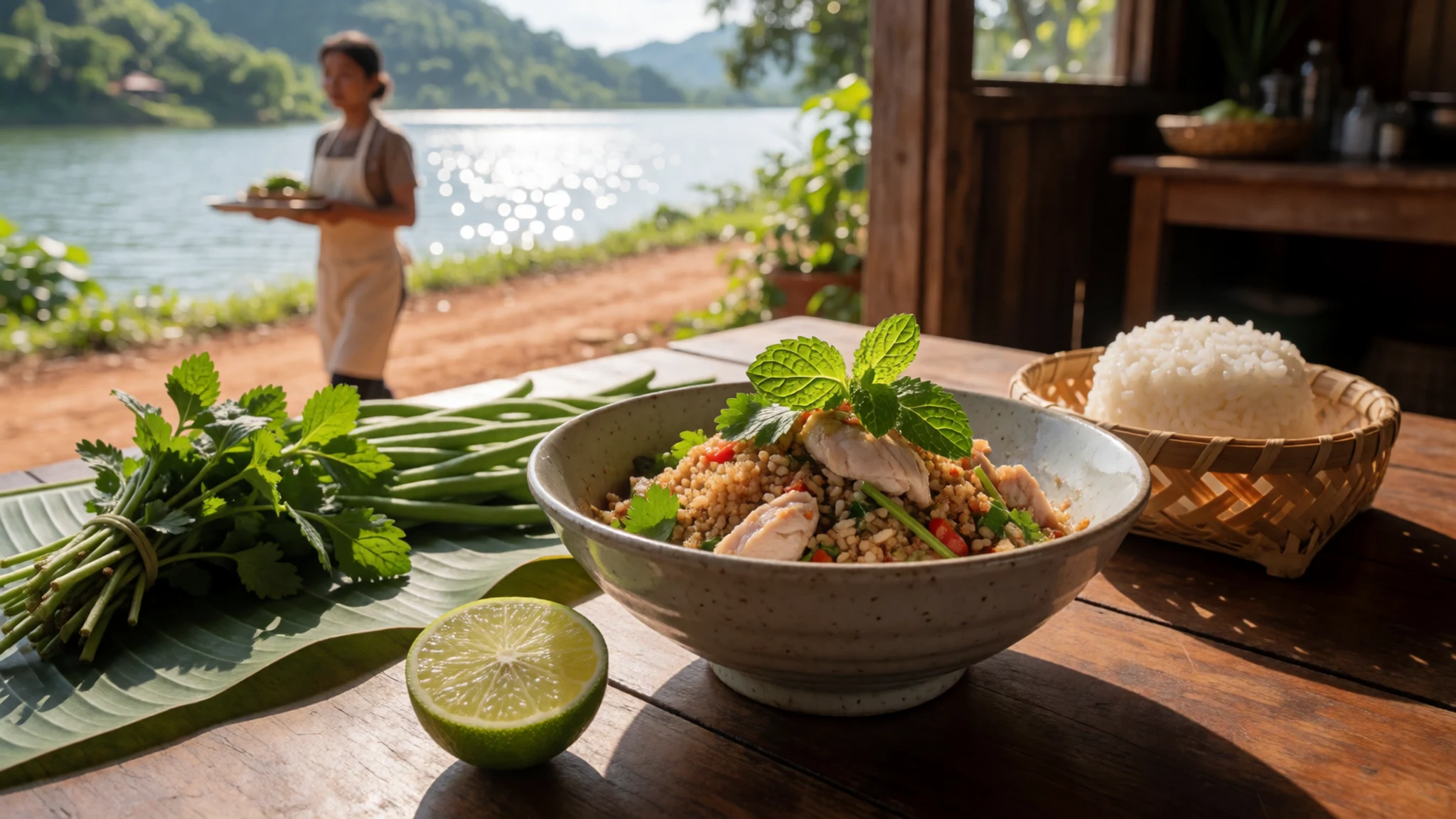
- Tam mak hoong — Stalls and small eateries along the shore road
Lao papaya salad is pounded in a mortar with chilli, lime, garlic and fermented fish sauce. It tends to be sharper, saltier and funkier than the Thai version, so ask for less chilli if you are unsure. - Tom pa, Lao fish soup — Family-run eateries in lake villages
A clear, herb-scented soup made with fresh fish, lemongrass, galangal and dill, sometimes with greens added at the end. It is light, sour and comforting, and a good counterweight to grilled and fried dishes. - Fried river fish and herbs — Market stalls and jetty-side kitchens
Small lake fish are fried until crisp and served with chilli paste, raw leaves and vegetables. Pick the fish up whole, dip it, and wrap it in a leaf. It is a casual, communal snack that suits beer.
Plan it
Best time. November to February is the most comfortable stretch, with cooler, drier weather and clearer skies for boat trips. March to May is hot and hazy, and the rainy season from roughly May to October brings downpours, higher water and muddy roads, though the landscape is greener.
How long. 1–2
Getting there. Fly to Wattay International Airport in Vientiane, then continue north by road to Tha Ngon on the lake, using a hired car, taxi or arranged van. Check current road conditions and transport options locally before setting out.
Budget. low
Tips
- Go on a weekday if possible, since weekends bring crowds of local day-trippers
- Start early to avoid the midday heat and glare on the water
- Carry cash in small notes, as many lakeside eateries and boatmen do not take cards
- Agree the boat route, duration and price before you board
- Bring sun protection and drinking water, as shade on boats is limited
Etiquette
- Remove your shoes before entering temples or homes
- Ask before photographing people and avoid pointing cameras at monks
- Dress modestly away from the resort, covering shoulders and knees in villages
Nearby
Sources
- Wikidata Q666581 (CC0)
- Wikipedia, Nam Ngum River (rev 1358366523) (CC BY-SA 4.0)
- Chaoborus, Confluent de la Nam Lik dans la Nam Ngum, via Wikimedia Commons (CC BY 3.0)
- Chaoborus, Boat on Nam Ngum Lake, via Wikimedia Commons (CC BY 3.0)
- Udom PINTUWONG, Tha Ngon, Laos (1), via Wikimedia Commons (CC BY 3.0)
- Udom PINTUWONG, Tha Ngon, Laos (19), via Wikimedia Commons (CC BY 3.0)
- Udom PINTUWONG, Tha Ngon, Laos (20), via Wikimedia Commons (CC BY 3.0)
- Udom PINTUWONG, Tha Ngon, Laos (21), via Wikimedia Commons (CC BY 3.0)
- Udom PINTUWONG, Tha Ngon, Laos (22), via Wikimedia Commons (CC BY 3.0)
- Udom PINTUWONG, Tha Ngon, Laos (3), via Wikimedia Commons (CC BY 3.0)
- Wikivoyage (CC BY-SA 4.0)


