Mystic
Mystic, United States
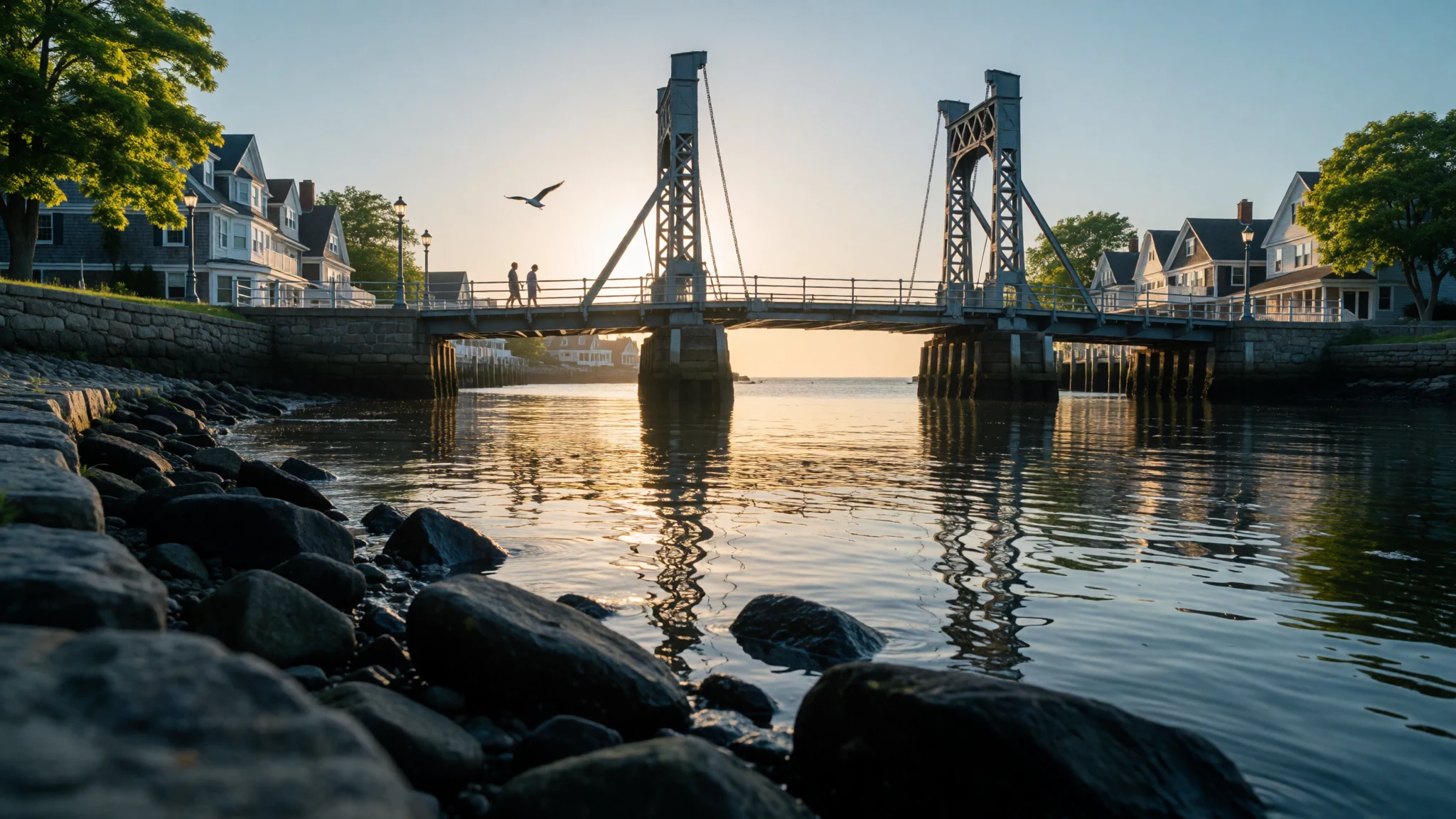
Mystic is a small Connecticut river village where tall ships, tidal water and a lifting bridge make maritime history easy to walk through.
The place
Mystic is a village in southeastern Connecticut, divided between the towns of Groton and Stonington and recorded by the census as a place rather than a municipality. About 4,300 people lived there at the 2020 census. It stands on both banks of a tidal estuary, around 3 m above sea level, where the Mystic River opens out towards Fishers Island Sound. The name comes from a Pequot word for a large river whose water is whipped into waves by tide or wind, and on a breezy afternoon the description still fits.
The village is small enough to cover on foot. A bascule bridge carries the main road over the river in the middle of town, and boats pass beneath it or wait for the span to lift. Mason's Island, called Chippachaug in the Pequot language, closes off the southern end of the estuary. Underneath it all lies hard, banded crystalline rock, the same kind of bedrock that runs along much of this coast.
Mystic is, frankly, a tourist village, and it behaves like one in summer, with crowded streets and full car parks. The draws are a large maritime museum, an aquarium, galleries and shops downtown, marinas, old sea captains' houses and traditional boats offering day sails. Many visitors arrive for a day or a weekend from New York, Boston or Providence, and a calmer village appears once the day-trippers leave in the evening.
Its story
Mystic's recorded history begins with the Pequot people, who held a wide stretch of southeastern Connecticut before the 17th century, with territory running between the Pawcatuck and Connecticut rivers. To the northwest the Iroquois confederacy controlled the trade routes towards the Dutch, but the Pequots lived far enough away to stay out of immediate danger.
That balance broke during the Pequot War of 1636 to 1638. In May 1637 the English captains John Underhill and John Mason, with Narragansett and Mohegan allies, attacked the Pequot settlement at Mystic, an event remembered as the Mystic massacre. The Treaty of Hartford, signed in 1638, formally closed the war, and with it the Pequot hold on the area was finished. It is painful history, and worth keeping in mind while walking through a village now known for pleasure boats.
English settlement followed. From the 1640s the colony rewarded war veterans with land grants, and John Winthrop the Younger received property across the south-east. Robert Burrows and George Denison also took up land in the Mystic River valley. Growth was slow at first.
The sea then shaped the village. Starting in 1784, shipyards along the river launched more than 600 vessels over 135 years. That shipbuilding past is what the local museums now interpret, and it is why the whaling ship Charles W. Morgan and other sailing vessels are preserved here.
What to see
- Mystic Seaport Museum — Riverside, south of the village centre
Mystic Seaport Museum is a living-history museum built around a restored port that has served as a film location, including for Amistad. It is described as the largest maritime museum in the United States. Preserved vessels include the whaling ship Charles W. Morgan. Check the official site for tickets and opening times. - Steamboat Sabino — Mystic Seaport waterfront
Sabino is a wooden, coal-fired steamboat that carries passengers along the Mystic River from the Seaport. It is promoted as the oldest vessel of its kind still in operation, and the slow trip gives a good view of boatyards, moored yachts and the bridge. Sailings depend on season and weather, so check with the museum. - Mystic Aquarium and Institute for Exploration — North of the village centre
Mystic Aquarium and Institute for Exploration combines indoor galleries with outdoor habitats, covering reptiles, amphibians and many water species. Beluga whales, penguins and sea lions are the best-known residents, which makes it an easy choice for families on a wet day. Check the official site for tickets and timings, particularly in school holidays. - Mystic River Bascule Bridge — Downtown Mystic
The Mystic River Bascule Bridge, completed in 1922, crosses the river in the middle of the village and is the natural place to start a walk. Stand nearby and, when a tall-masted boat approaches, the road span lifts to let it through. Shops, cafes and the waterfront lie within a few minutes' walk.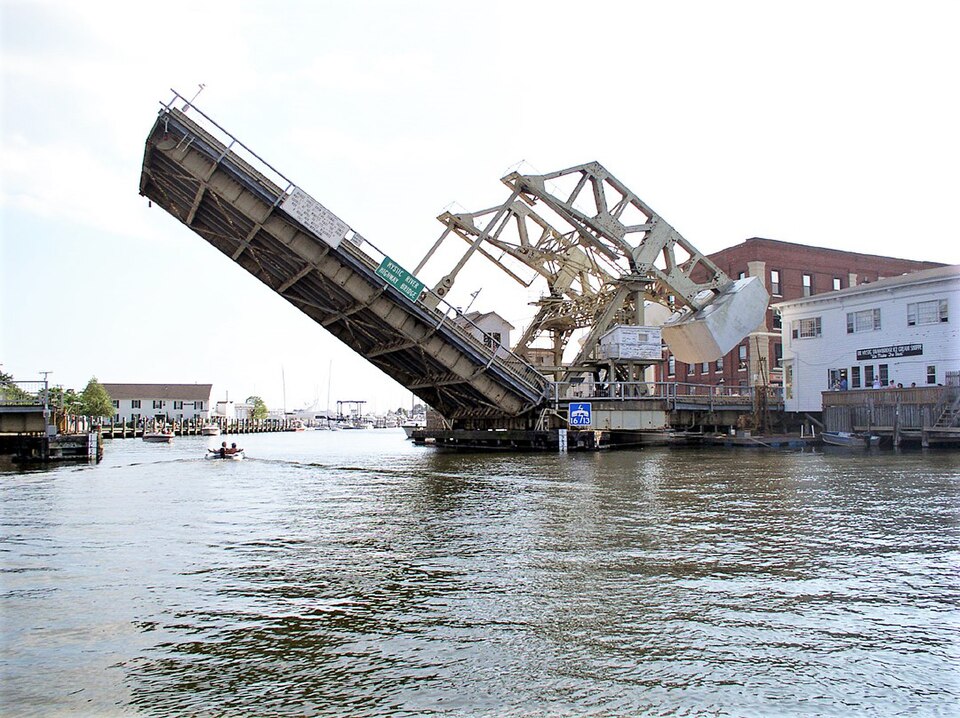
- Denison Pequotsepos Nature Center — Inland from the village centre
Denison Pequotsepos Nature Center is a natural history museum with live animal exhibits explaining Connecticut's local habitats, and it is open year round. The grounds include Coogan Farm, where old stone walls and a pavilion sit among the trails. It is a calm alternative to the busier waterfront, and it works well with children.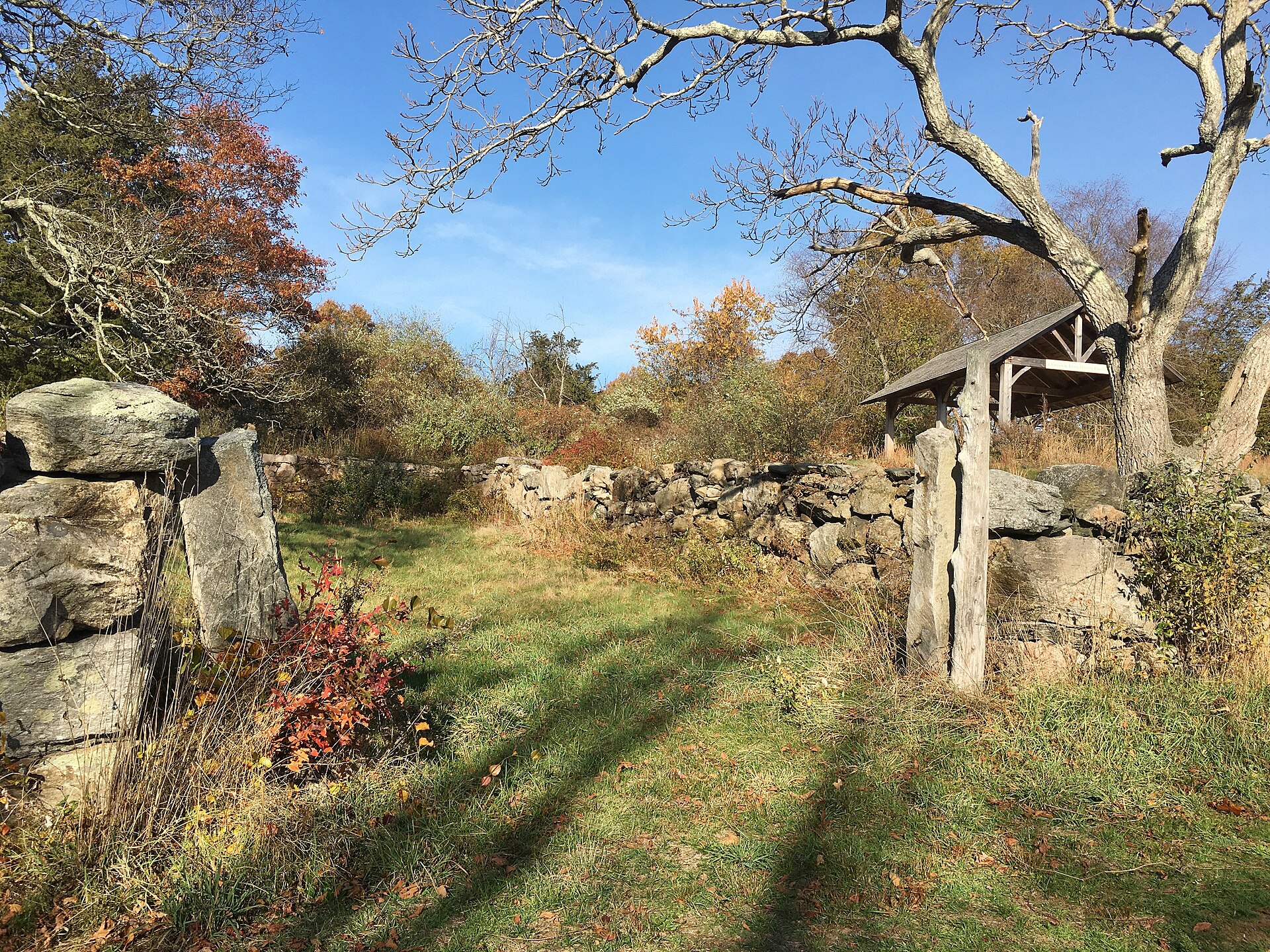
Culture
Mystic's culture is maritime first. For well over a century the village built ships, and that work left behind captains' houses, boatyards and a habit of checking the tide and weather before making plans. Today the heritage is kept alive by the Seaport museum, by traditional boats offering day sails, and by the galleries and small shops that fill the downtown streets.
The older layer belongs to the Pequot, whose word for the river became the village's name and whose history here includes the violence of 1637. That story sits beneath the sailing-ship romance, and it is worth seeking out how local museums and nature centres present it.
Daily life is that of a small New England village that lives largely on visitors. Summer weekends are lively, with boat traffic, queues for tables and a crowded main street, while the shoulder months are noticeably calmer. Locals tend to be friendly but busy, and a polite, unhurried manner goes a long way. Popular culture adds its own thread: a pizzeria on West Main Street draws fans of the 1988 film that borrowed the village's name.
On historic ships and inside museum buildings, follow the staff's instructions, keep to the marked routes and do not touch rigging or exhibits unless you are invited to.
What to wear
Mystic has no single regional costume, so its traditional dress comes in layers of history. The Pequot and neighbouring peoples historically made clothing from tanned animal hides and plant fibres, adjusted to the seasons, and Native regalia today is worn at ceremonies and gatherings rather than as everyday clothing. English settlers and later seafarers wore wool and linen, and sailors' working clothes were hard-wearing canvas and wool. Costumed interpreters at the Seaport often wear period versions of these.
In the village now, people dress for the water: sweaters or fleeces, windproof jackets, jeans or shorts, and boat shoes or trainers. Smart-casual is about as dressy as it gets, even in the better restaurants, and nobody will mind a salt-stained jacket.
For a visitor, layers are the answer, because breezes off the sound cool the evenings even in summer. Bring a windproof or waterproof jacket, a sun hat and sunscreen, and flat, non-slip soles for ship decks, wet jetties and long walks around museum grounds. There is no modesty code at the sights, though swimwear belongs on the beach or the boat rather than in shops and restaurants. In winter, add a warm coat, hat and gloves, since the waterfront is exposed.
What to eat
- Lobster in the rough — Casual waterside lobster shacks, best in summer
Lobster served simply, with little more than butter, lemon and a table to crack it on, is the classic Mystic summer meal. Eating it outdoors by the water is half the point, and a car helps because the best-known shacks lie outside the centre. - New England clam chowder — Seafood restaurants and cafes near the river
A creamy chowder of clams, potato and onion is standard at seafood restaurants around the harbour. It is filling rather than delicate, and a bowl with crackers makes a sensible lunch before an afternoon on the river or at the Seaport. - Mystic Pizza slice — West Main Street, downtown
The pizzeria on West Main Street became famous through the 1988 film of the same name. Fans come for the connection, and the pizza itself is a straightforward American-style pie, good for a quick, casual meal near the bridge.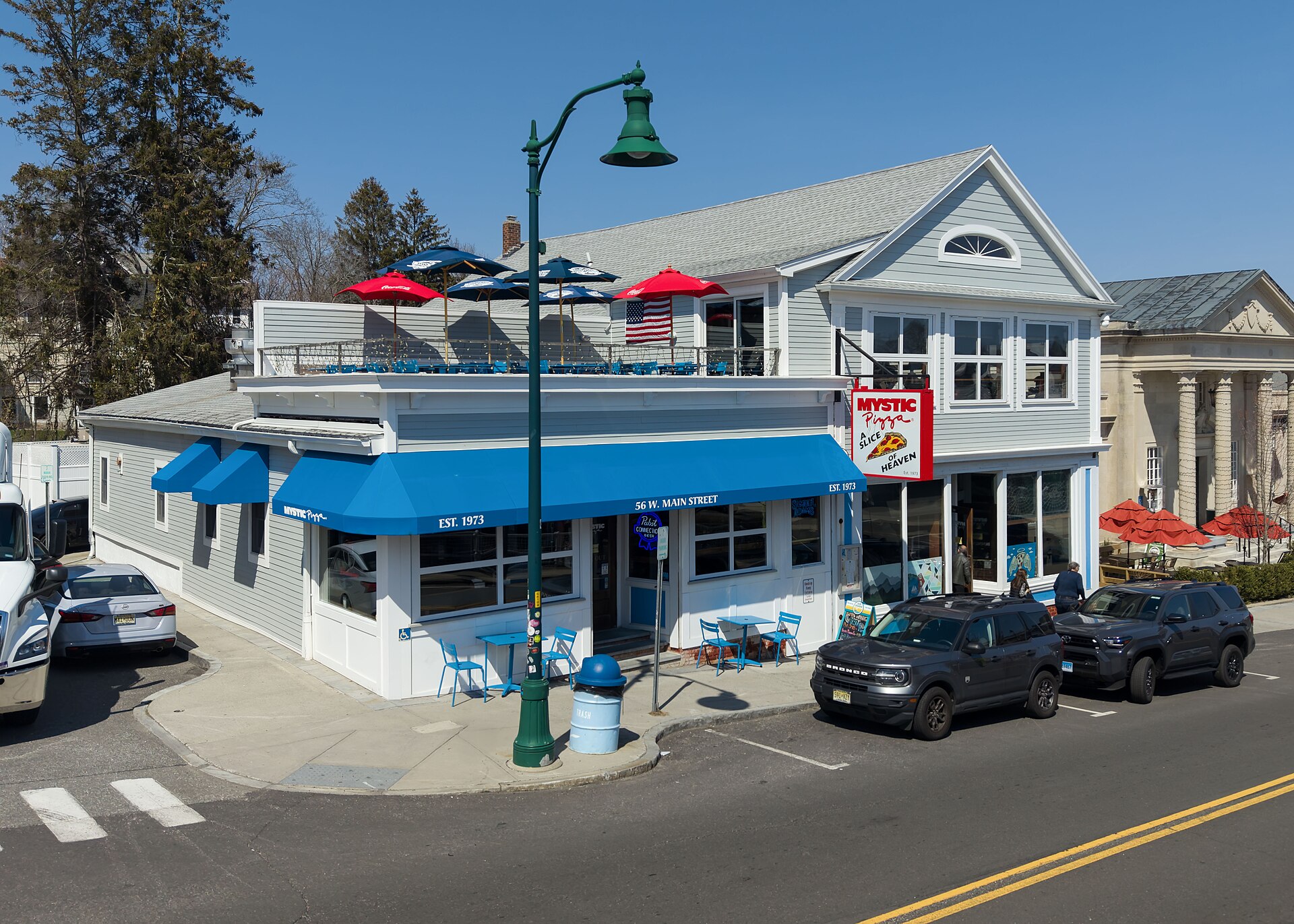
- Italian pasta — Italian bistros in downtown Mystic and along Route 1
Several Italian bistros in the village serve pasta made from imported ingredients alongside American dishes, with wine lists that reward a little browsing. They suit a slower evening meal once the museums close and the day-trippers have gone home. - Roadside breakfast — Route 27, on the approach to Mystic
A small, shack-like eatery on Route 27 on the way into the village has a loyal following for its breakfasts. Expect plain, generous plates of eggs and pancakes, and expect a wait at weekends. - Fresh and hard cider — B.F. Clyde's Cider Mill, a short drive north of the village
A working cider mill north of the village presses apple cider and also sells a range of alcoholic ciders. Visiting suits autumn best, when apples are in season, and the old machinery on show is part of the appeal.
Plan it
Best time. Late May to September is the main season for boat trips, the Seaport and the aquarium, though July and August bring the biggest crowds. September and October are calmer, with cooler days for walking, while winter is quiet and seasonal sailings, such as the schooner cruises that run roughly May to mid-October, stop.
How long. 1–2
Getting there. Amtrak stops at Mystic station on Route 1, with services along the Connecticut coast to New York and on to Providence and Boston. By car, take Interstate 95 to exit 30. The larger airports are T.F. Green (PVD) at Warwick, Rhode Island, and Bradley International (BDL) near Windsor Locks, with the smaller Westerly Airport nearby.
Budget. mid
Tips
- Check mystic.org and each attraction's own website for current opening times, tickets and sailings.
- Arrive early on summer weekends, when parking and the main street fill up.
- Boat cruises can be cancelled in bad weather, so keep a backup plan such as the aquarium or nature centre.
- A car helps for the lobster shacks, the cider mill and the nature centre, which lie outside the walkable centre.
Etiquette
- Ask staff before boarding or touching anything on a historic ship.
- Keep to marked trails at the nature centre and leave wildlife undisturbed.
- Treat the Pequot history of the area with respect rather than as a backdrop.
Nearby
Sources
- Wikidata Q585623 (CC0)
- Wikipedia: Mystic, Connecticut (rev 1378587483) (CC BY-SA 4.0)
- Wikivoyage: Mystic (rev 5431237) (CC BY-SA 4.0)
- Photo: U.S. Route 1 in Mystic, Connecticut (Juliancolton) (Public domain)
- Photo: Mystic, Connecticut aerial view (Quintin Soloviev) (CC BY 4.0)
- Photo: View of Mystic River & Mystic Bridge, Conn. 1879 (Bailey, O. H.; Hazen, J. C.) (Public domain)
- Photo: Coogan Farm (Stone Walls and Pavilion), Mystic, CT (Msact) (CC BY-SA 4.0)
- Photo: Glacial Erratic on Stonington Road, Mystic, CT (Msact) (CC BY-SA 4.0)
- Photo: Mystic River Bridge (Rhvanwinkle) (CC BY 3.0)
- Photo: Mystic station platforms, May 2011 (Pi.1415926535) (CC BY 3.0)
- Photo: Mystic Pizza restaurant (Quintin Soloviev) (CC BY 4.0)


Wildlife
- Beluga whale (animal)
The beluga is a pale whale from cold northern seas, nicknamed the sea canary because of its high, tuneful calls. In Mystic it is among the best-loved residents, which makes it a happy choice for families when the weather turns rainy. The notes give no season or time of day, so ask on arrival about the best hours. Keep your voice low, stay behind any barriers, follow your guide's advice, and never try to feed or touch the animals.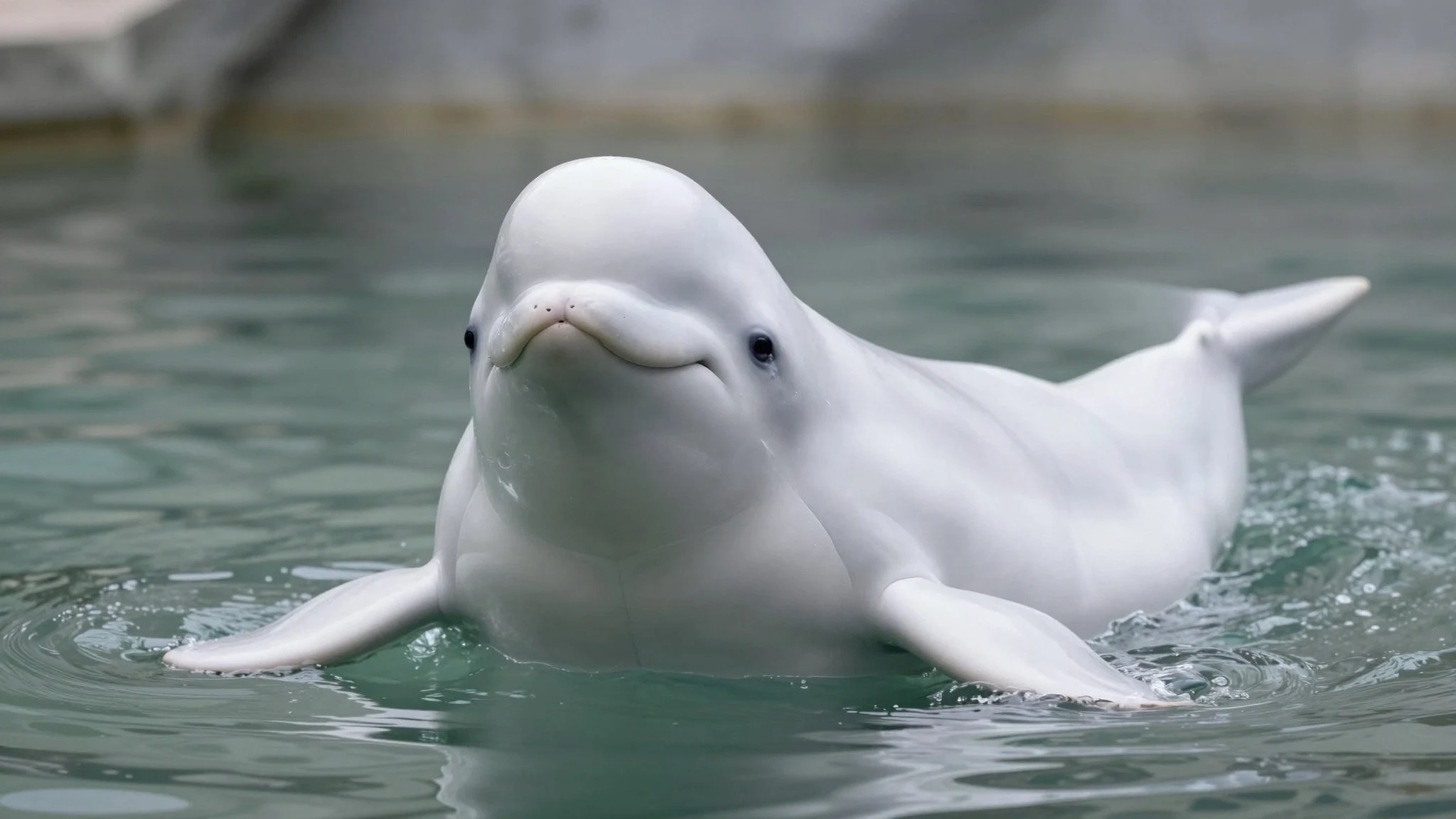
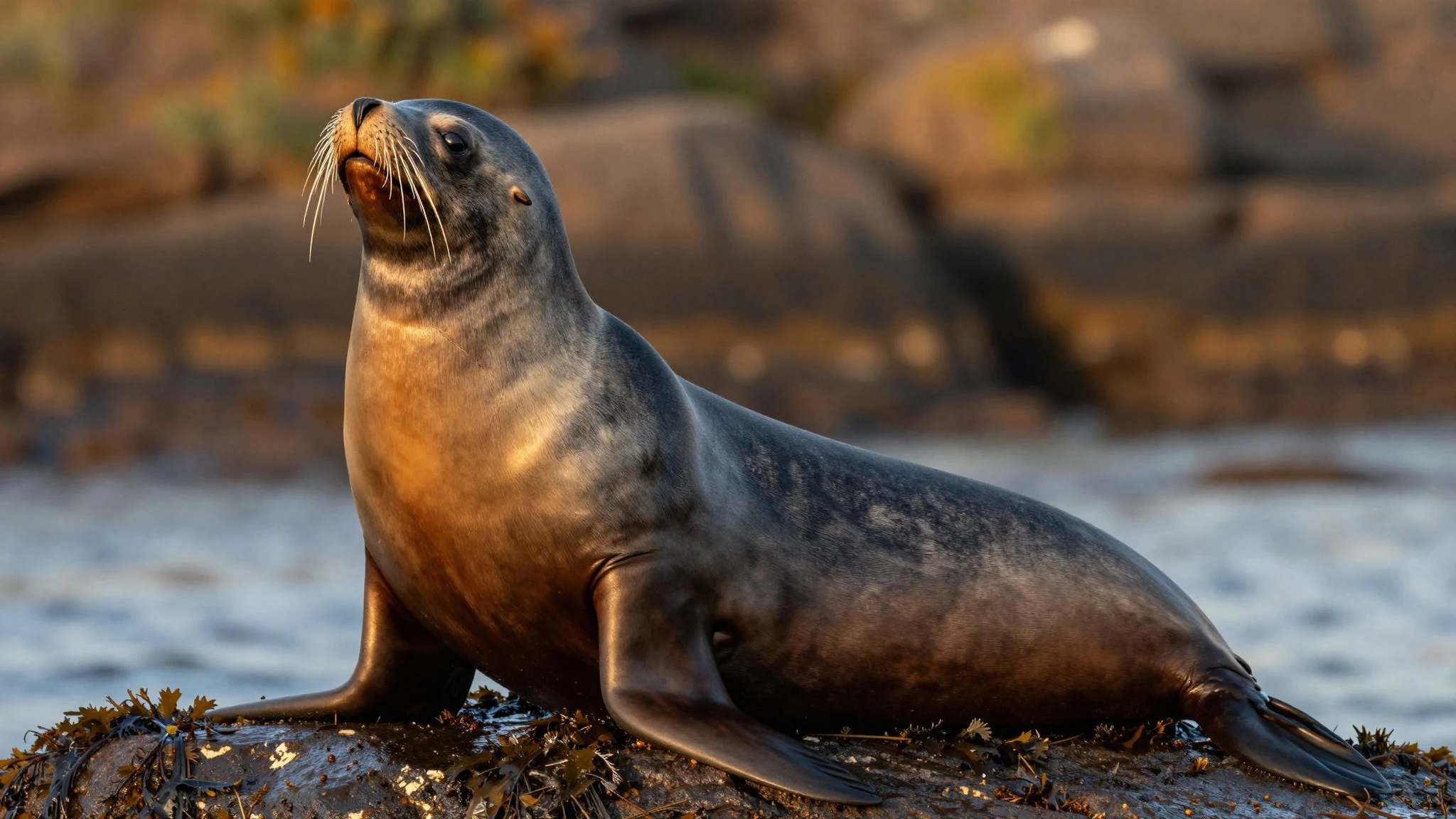
- Sea lion (animal)
The California sea lion is a seal with tiny ears, and the males are bigger than the females, with thick necks. In Mystic it is counted among the best-known residents, so families sheltering from the rain often choose to visit. Out in the wild these animals rest on beaches, marinas and wharves, and eat fish and squid. The notes do not say when to see them here. Watch quietly from a distance, listen to your guide, and never feed them.