Muang Tam
Muang Tam, Thailand
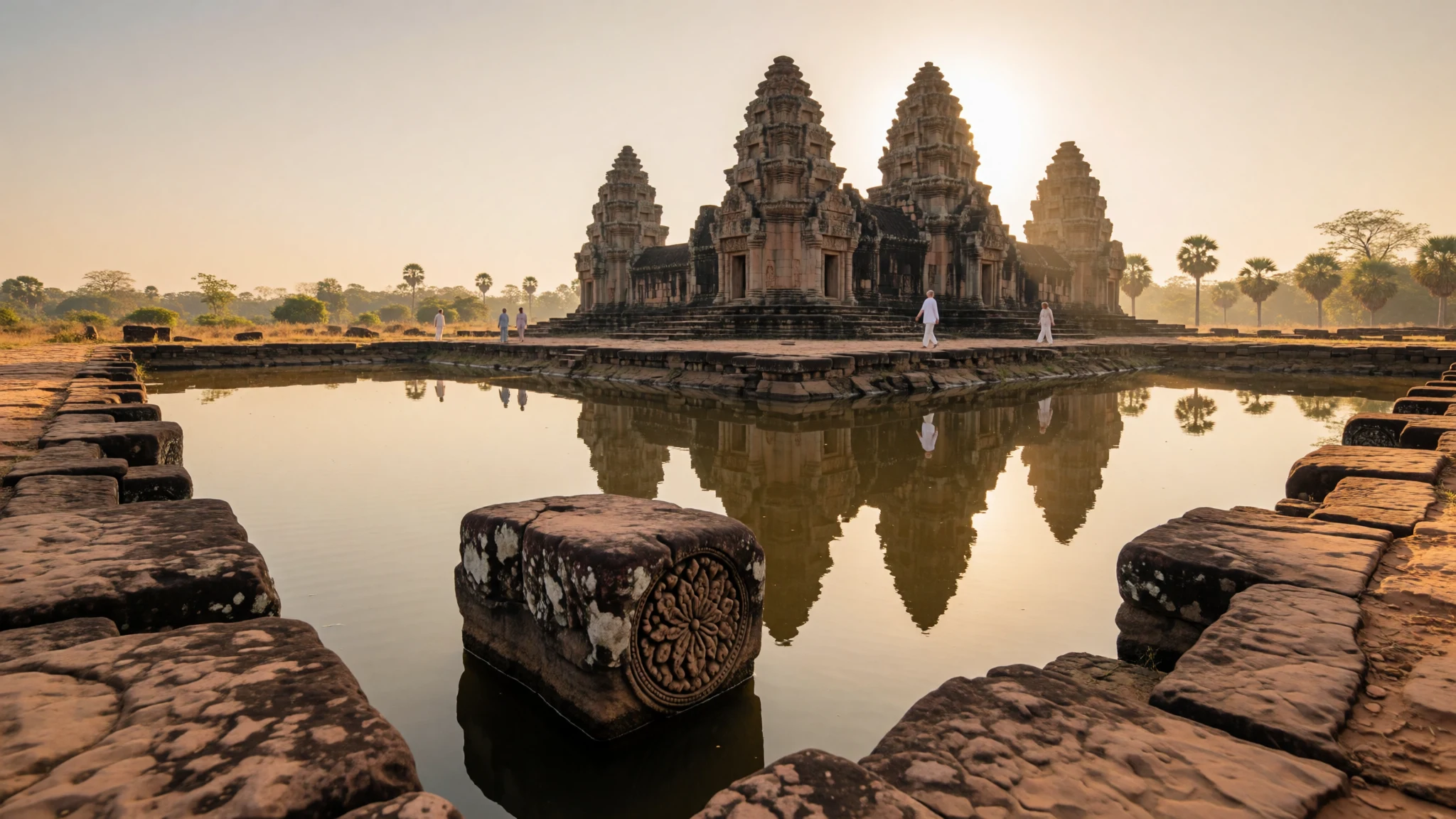
Muang Tam is a quiet Khmer Hindu temple in Thailand's Isaan region, with formal ponds and carved lintels, best paired with nearby Phanom Rung.
The place
Prasat Muang Tam is a Khmer Hindu temple in Prakhon Chai District, Buriram Province, in the north-east of Thailand known as Isaan. The Thai name means roughly 'lowland castle', and the label suits it. The temple spreads across flat farmland, a short drive south of the hilltop sanctuary at Phanom Rung, and where that site climbs, this one extends sideways.
The layout is a set of nested rectangles facing east, as Hindu temples traditionally do. At the middle stands the sanctuary, ringed by an inner wall. Beyond that wall lies a band of ponds, and beyond the ponds runs an outer wall with gateways. The ponds are what set Muang Tam apart from most temples of its type, since the water is arranged as formal basins between the enclosures rather than as a simple moat.
The sanctuary itself is also unusual. It sits at ground level instead of on a raised terrace, and its towers are set out in two rows rather than stacked towards a single peak. Every tower has been rebuilt except the central one, which remains a low ruin of stone blocks.
The grounds are open and mostly shadeless, so the heat is the main thing to plan around. Crowds are usually thin compared with the better-known Khmer sites, though tour groups on a Phanom Rung circuit can arrive together. A slow circuit of the walls and ponds takes an hour or two, longer for anyone who stops to study the carved lintels above the doorways.
Its story
Prasat Muang Tam was built as a Hindu sanctuary in the Khmer period, when the empire's influence ran across what is now north-eastern Thailand. Shiva was the principal deity, though Vishnu was also worshipped here, a pairing that was not unusual in Khmer religious life.
The buildings show two architectural styles overlapping, Khleang and Baphuon. That mixture places the main phases of construction at the close of the tenth century and the start of the eleventh, but not much more precisely. The best dating clue is the carving of the lintels, where kala, the fierce faces that guard thresholds, are especially prominent. Because those carvings borrow from both styles, they refuse to give a neat date.
Several lintels on the outer gateways were never finished, a small reminder that building programmes of this scale ran out of time, money or purpose. A modest reservoir, probably contemporary with the temple, lay to the east. A larger one was dug later to the north, in the direction of Phanom Rung, and the two together hint at how closely temples and water management were tied in this farming landscape.
After the Khmer period the temple eventually fell out of active use. In recent times conservators have raised most of the towers again from the stones that lay around them, and the site now works as an archaeological park. Reading Muang Tam alongside its hilltop neighbour helps, because the two were part of one religious and political world, and each shows a different way of arranging sacred space.
What to see
- The central sanctuary — Centre of the temple complex
The central sanctuary sits at ground level, not on a raised platform, and its towers are laid out in rows. Most have been reassembled, while the central tower is still a ruin. It is the logical first stop, and the contrast between rebuilt and fallen stone shows how much restoration work was needed.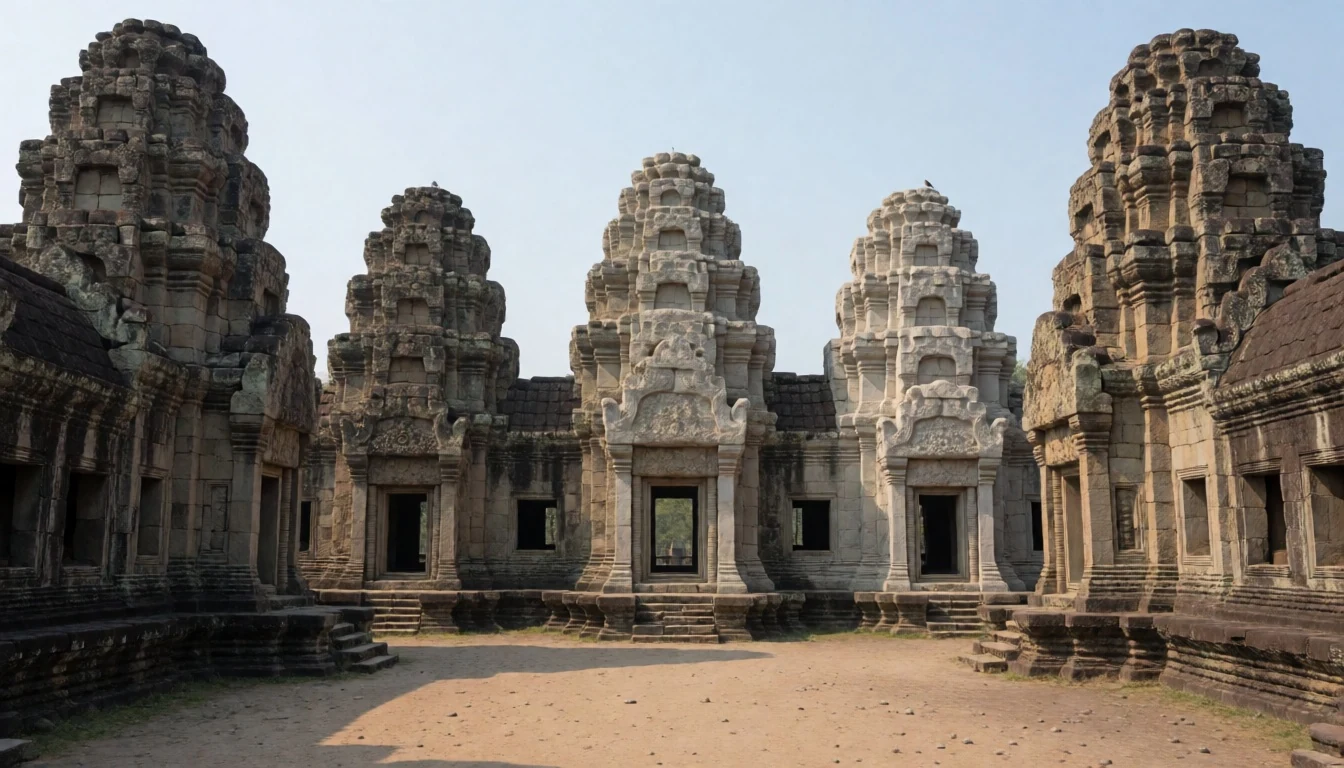
- The ponds between the walls — Between the inner and outer enclosures
A band of ponds runs between the inner and outer enclosures, an arrangement that is unusual for a Khmer temple. Walking the paths beside them gives the best sense of the original design. The water level changes with the season, so the look differs between wet and dry months.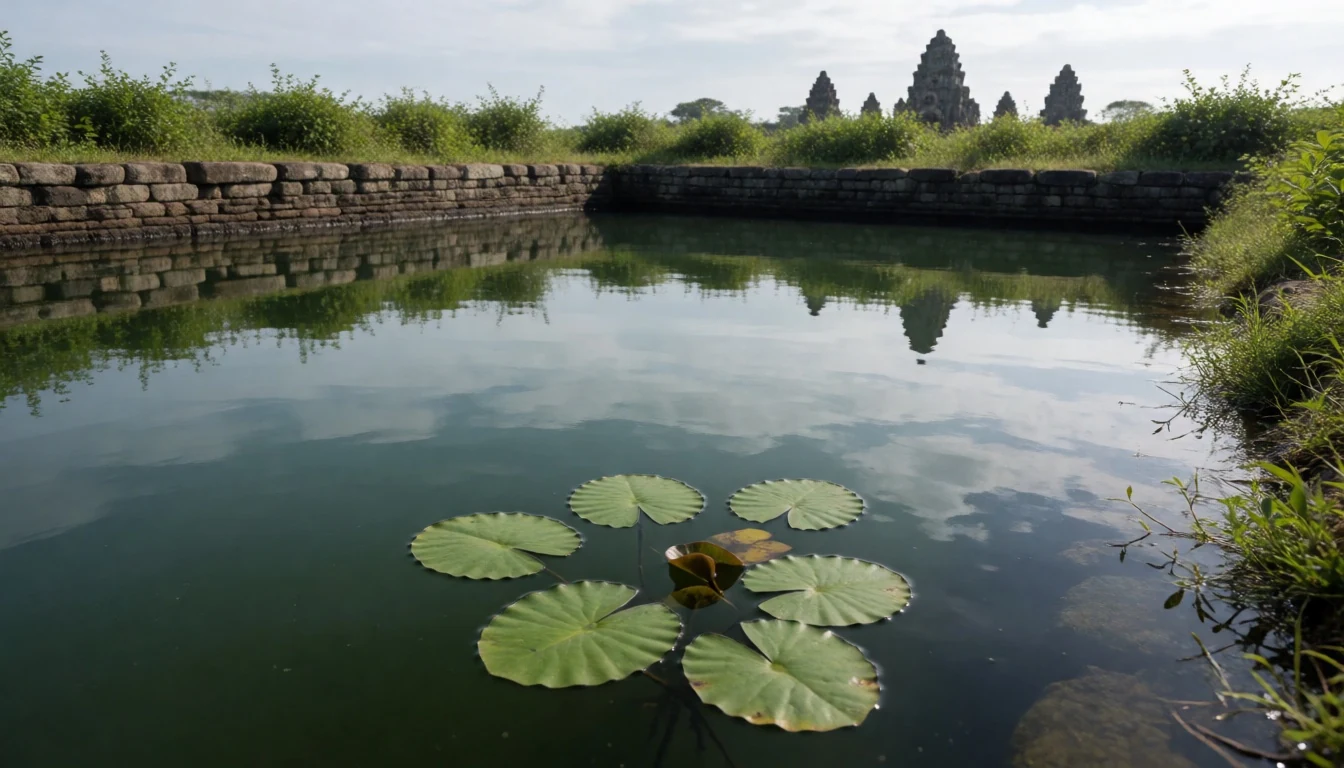
- Kala lintels — Doorways of the sanctuary and gateways
The carved lintels above doorways are the site's fine detail, and kala faces dominate them. Scholars lean on these carvings to date the temple, though the blend of Khleang and Baphuon features keeps the answer loose. Go close, but only look; the sandstone is fragile and weathered.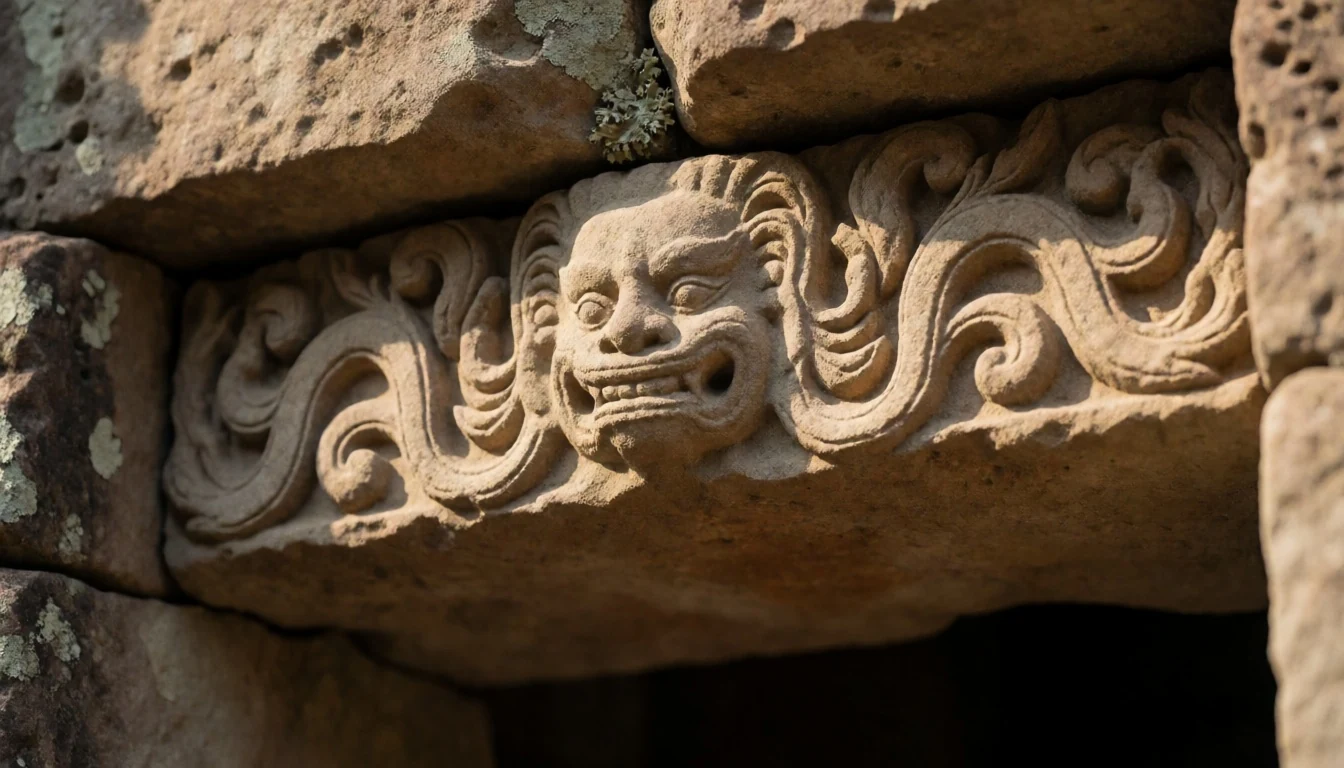
- The outer gateways — Outer enclosure wall
The gateways in the outer wall include lintels that were left unfinished, so the carving stops partway through the design. They offer a rare view of the stonework before the final touches. The approach from the east is the way the builders intended visitors to enter.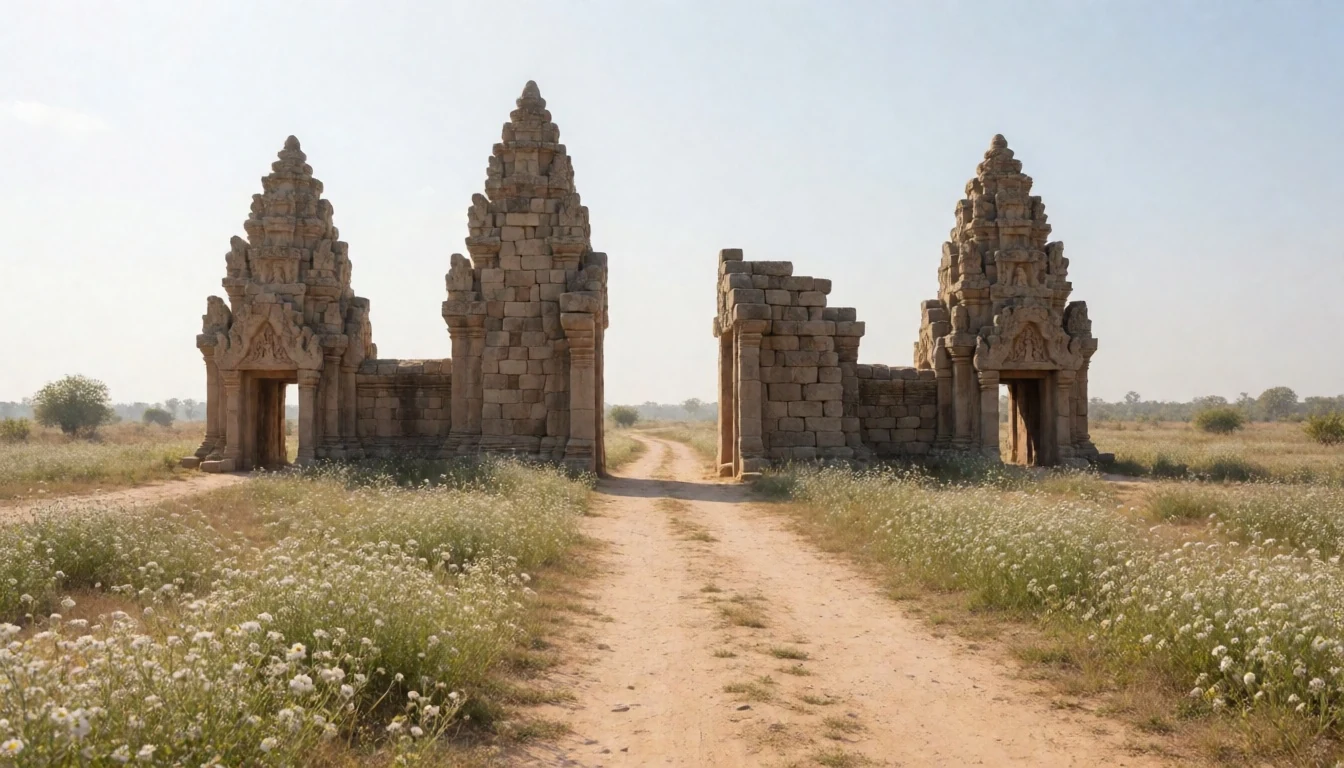
- Phanom Rung, to the north — North of Muang Tam, towards Phanom Rung
Phanom Rung is the hilltop Khmer sanctuary within easy reach of Muang Tam, and the two are usually visited on one trip. It is a steeper, more elevated site, so pairing it with the flat plan of Muang Tam gives a useful comparison. Allow separate time for each.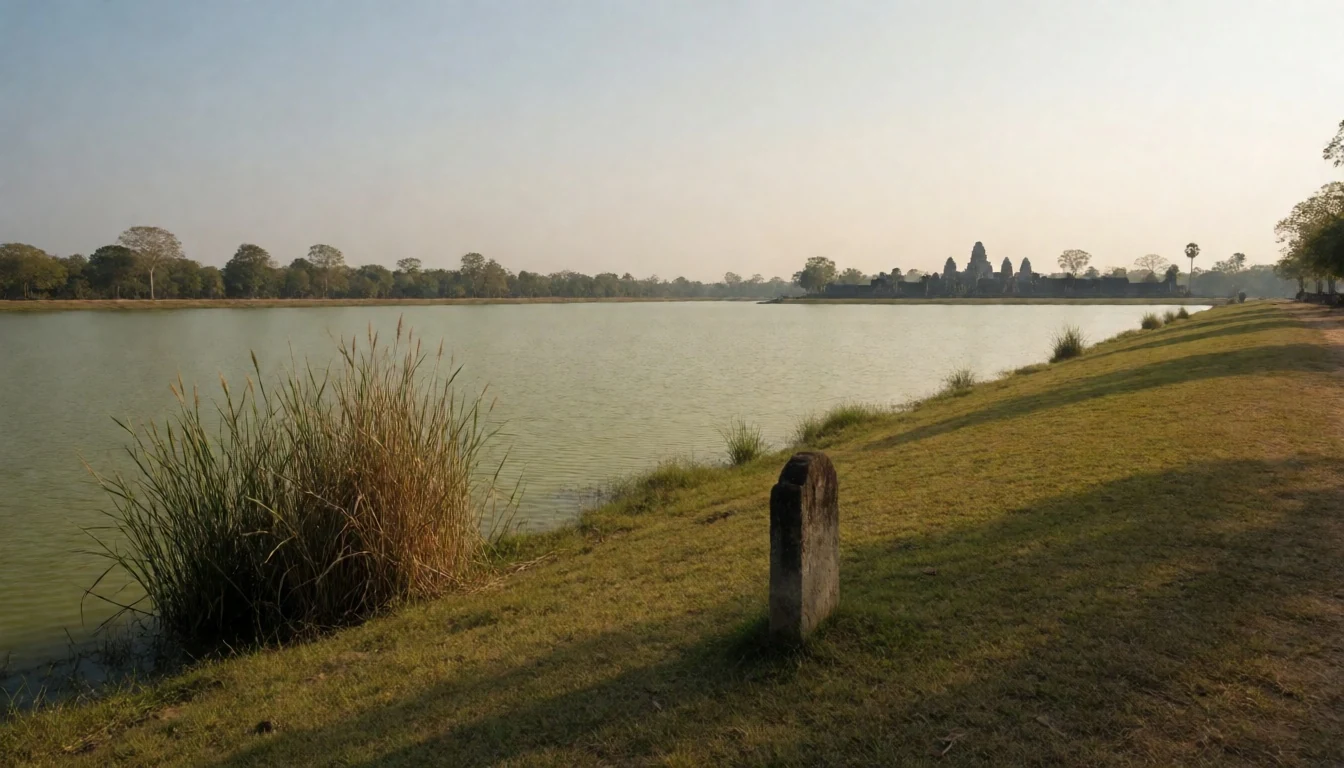
Culture
Muang Tam is a Hindu temple in a country that is overwhelmingly Buddhist today, and that layering is part of what makes the region interesting. Isaan has a strong local identity of its own, with its own food, its own dialect and a long memory of Khmer influence. Thai people in general are friendly and polite, and a few habits help when talking to locals.
Communication tends to be indirect, shaped by the idea of saving face. A smile or a nod does not always mean agreement or understanding, so it pays to be clear and plain, and to avoid idiom and sarcasm that may not translate. Open, honest conversation is valued, but it works best when delivered calmly and without criticism of the person in front of you. Raised voices and visible irritation tend to make things worse, not better.
The temple is an archaeological site and not an active place of daily worship, but it was built as a sacred space, and many Thai visitors treat it with respect. Local people may leave offerings or pray at some Khmer sites, so it is worth watching what others are doing before taking photographs or walking close.
Do not climb on the stonework or step over fallen carved blocks, and dress modestly with covered shoulders and knees, as the site is a sacred place and the stone is fragile.
What to wear
Traditional dress in Thailand varies by region. In Isaan, the north-east, the famous textile is hand-woven silk, often made with the tie-dyed technique called mudmee, where the threads are dyed in patterns before weaving. Women traditionally wore the pha sin, a wrapped tubular skirt, with a fitted blouse and sometimes a shoulder cloth. Men wore the chong kraben, a length of cloth passed between the legs and tucked, or the checked cotton pha khao ma, which doubles as a belt, towel and sun cover. Formal Thai dress, such as the chut thai, appears at weddings, ceremonies and festivals.
Day to day, people around Prakhon Chai dress as in most of rural Thailand: light cotton shirts, long trousers or knee-length skirts, and wide-brimmed hats or scarves against the sun. Farmers often wear long sleeves for protection, which can look odd in the heat but works. In towns, school and government uniforms are common, and local silk shows up on special occasions.
For a visit, dress for sun and uneven ground. Light, loose, breathable clothing in cotton or linen suits the heat. Cover shoulders and knees out of respect for a sacred site, and carry a hat, sunglasses and a scarf. Sturdy closed shoes or trainers are better than sandals on the worn stone and gravel paths. In the rainy months a light waterproof is useful, and slip-on shoes help if you visit a nearby temple where shoes come off.
What to eat
- Som tam — Roadside stalls and local markets in Prakhon Chai and Buriram town
Som tam is green papaya salad pounded in a mortar with chilli, lime, fish sauce and peanuts. Isaan cooks make it fiercely spicy, so ask for less chilli if needed. It is sold at roadside stalls and in local market food sections.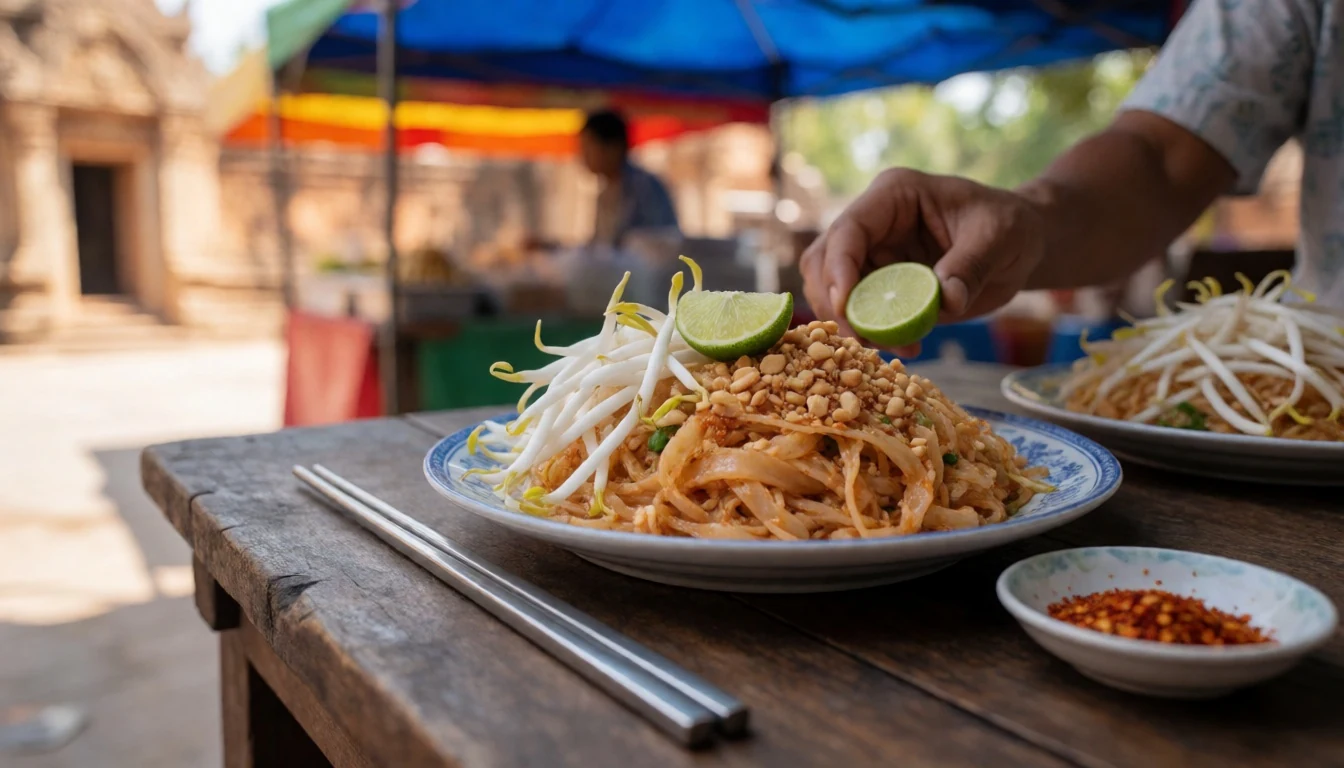
- Gai yang — Grill stalls beside the main roads
Gai yang is chicken marinated and grilled over charcoal until the skin is smoky and a little charred. It is usually eaten with sticky rice and a sharp dipping sauce. Look for the grill smoke outside small eateries along main roads.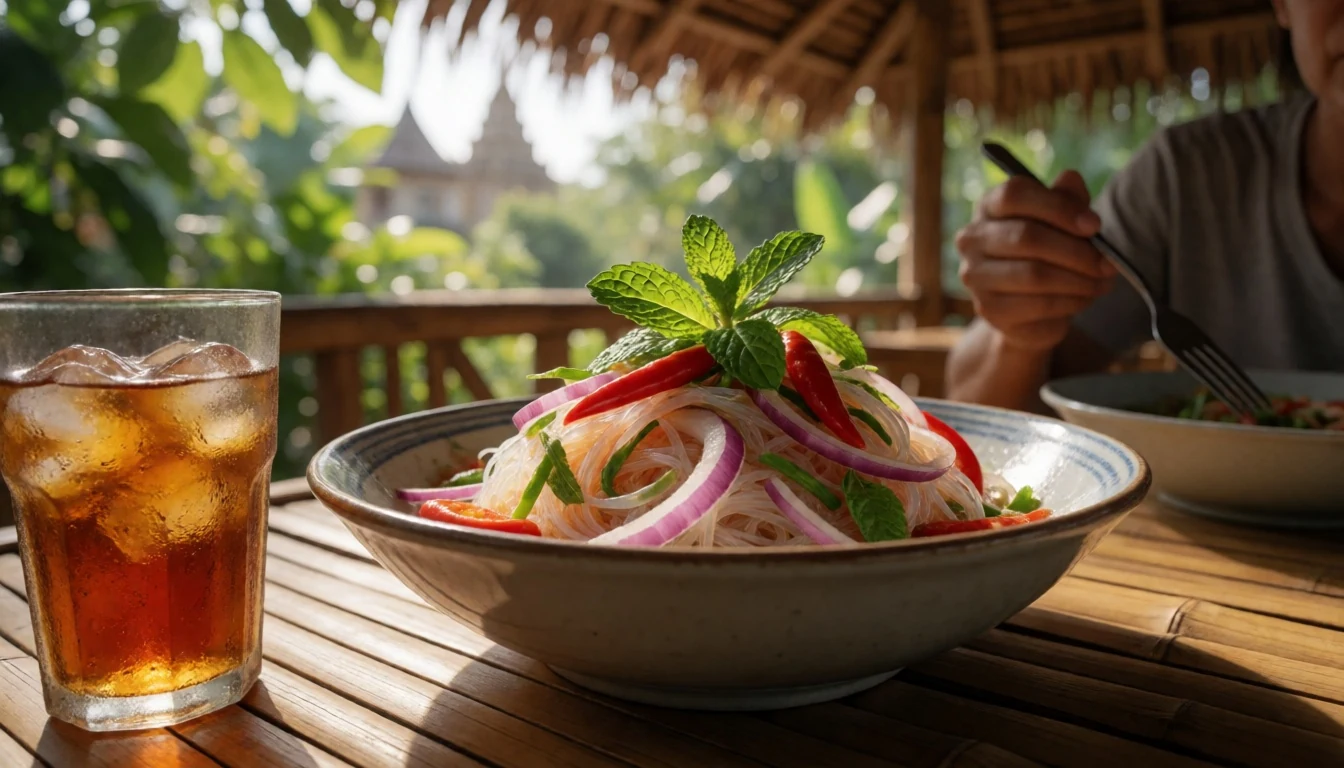
- Larb — Family-run eateries and market stalls
Larb is a minced meat salad, dressed with lime juice, fish sauce, toasted ground rice and fresh herbs. It is eaten warm or at room temperature and is a staple across Isaan. Pork and chicken are common, and the toasted rice gives a nutty crunch. - Sticky rice — Morning markets and village food stalls
Sticky rice is the everyday starch of Isaan, steamed in bamboo baskets and eaten by hand, rolled into small balls. It goes with grilled meat, salads and dips. Many stalls sell it in small bags, handy for a picnic near the temple. - Sai krok Isan — Market grills and roadside snack stalls
Sai krok Isan is a fermented pork and rice sausage with a tangy, sour taste, usually grilled and served with fresh cabbage, chilli and ginger. It is a regional snack that is easy to find, and best eaten fresh off the grill.
Plan it
Best time. November to February is the cooler, drier part of the year and the most comfortable for walking an open site. March to May is very hot, with little shade at the temple. June to October is the rainy season, with greener fields but showers that can interrupt a visit.
How long. 1
Getting there. Fly to Bangkok, then continue to Buriram by domestic flight, train or bus; check current schedules. The last leg from Buriram town to Prakhon Chai district is by taxi, hired car or motorbike, usually combined with a trip to Phanom Rung. Foreign visitors to Thailand need to complete the Digital Arrival Card online before arrival.
Budget. low
Tips
- Go early in the morning, when the air is cooler and the light is good for photographs
- Carry water, sun protection and a hat, as shade is limited
- Check opening times and entry arrangements locally before you go, as these can change
- Combine the visit with Phanom Rung and arrange a driver for the day
- Carry some cash for small stalls and local eateries, as cards are not accepted everywhere
Etiquette
- Cover shoulders and knees, as this is a sacred site
- Do not climb on walls, towers or fallen carved stones
- Be polite and calm if a misunderstanding arises, and avoid raising your voice
Nearby
Sources
- Wikidata Q475392 (CC0)
- Wikipedia: Prasat Muang Tam (rev 1367128797) (CC BY-SA 4.0)
- Wikivoyage: Thailand (rev 5399396) (CC BY-SA 4.0)
- Photo 01-prasat-muang-tam-pano-5.jpg, Ddalbiez (CC BY-SA 1.0)
- Photo 02-prasat-muang-tam-027.jpg, Ddalbiez (CC BY-SA 1.0)
- Photo 03-.jpg, Warawut Srisopark (CC BY 3.0)
- Photo 04-02b-prasat-muang-tam-ngnl-08369.jpg, No(0)GoodNamesLeft (CC BY-SA 4.0)
- Photo 05-02b-prasat-muang-tam-ngnl-08371.jpg, No(0)GoodNamesLeft (CC BY-SA 4.0)
- Photo 06-02b-prasat-muang-tam-ngnl-08372.jpg, No(0)GoodNamesLeft (CC BY-SA 4.0)
- Photo 07-02b-prasat-muang-tam-ngnl-08373.jpg, No(0)GoodNamesLeft (CC BY-SA 4.0)
- Photo 08-02b-prasat-muang-tam-ngnl-08374.jpg, No(0)GoodNamesLeft (CC BY-SA 4.0)


