Muang Ngoi
Muang Ngoi, Laos
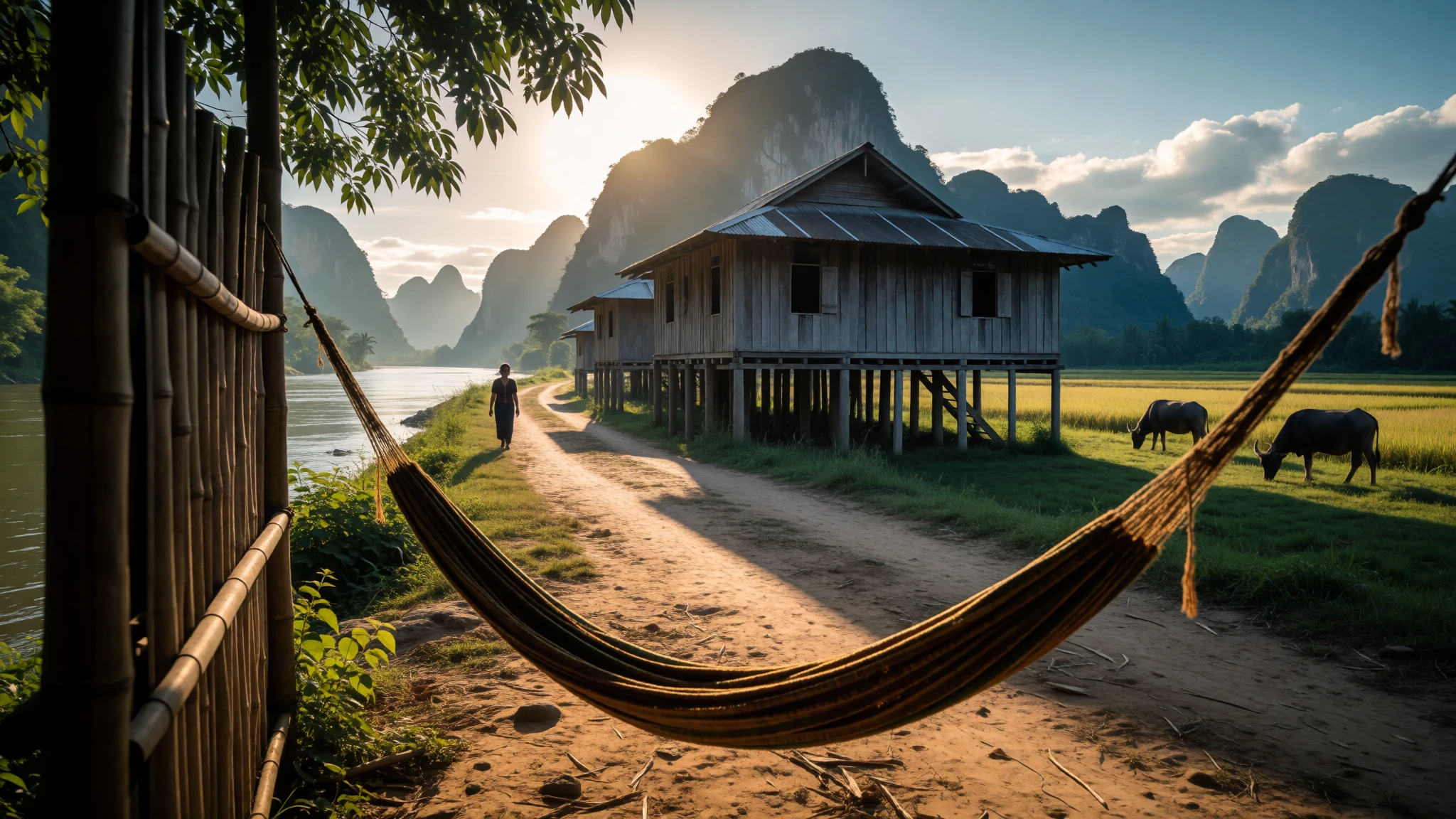
Muang Ngoi is a slow riverside village on the Nam Ou, ringed by limestone peaks, where the days go to walks, caves and hammocks.
The place
Muang Ngoi Neua is a small village on the Nam Ou in northern Laos, in Luang Prabang Province and roughly 170 km north-east of the city of Luang Prabang. About 700 people live here, mostly Lao Loum, the lowland Lao majority. Limestone peaks close in on both banks, and the river is the main road: visitors arrive by boat, most of them from Nong Khiaw downstream.
The village is essentially one main street running parallel to the water, lined with wooden guesthouses, small eateries, a book exchange and shops selling snacks and trekking supplies. Behind it, paths drop into rice fields, buffalo wander across the lanes, and the pace is set by farming rather than timetables. Because the restaurants on the main street serve travellers almost exclusively, menus are in English and service is often slow. Most people treat that as part of the setting.
Muang Ngoi works better as a base than as a single sight. Days go on short climbs to viewpoints, walks to caves that sheltered villagers during the war, lunches in neighbouring hamlets, and long afternoons in a hammock watching boats pass. It is also the starting point for ecotourism treks into the surrounding hills. Every ten days a regional market brings upland villagers down to trade, which is worth planning around.
Crowds are modest compared with Luang Prabang, but the village is small, so the main street feels busy in the cool, dry months. Rainy-season visits are quieter, muddier and greener.
Its story
Muang Ngoi Neua has the history of a river outpost on the edge of larger powers. It is counted among the early Tai principalities of what is now Laos, one link in a string of Tai muang, or town-states, spaced along the Nam Ou. Settlements existed in the area by the 12th century, and the present town goes back to the 15th, when it served as the seat of its district.
A single episode in 1713 gives the place a footnote in royal history. Chao Intasom, a son of the first king of Luang Prabang, brought his troops here while preparing to move against his nephew, Chao Ong Kham. Instead of a battle, the two relatives talked and agreed to rule jointly.
In 1892, with French Indochina about to absorb Laos, Siam kept a small frontier garrison here of 25 men.
The Laotian Civil War left deeper marks. The Pathet Lao used caves in the hills around the village as bases, and the Royal Laotian Air Force bombed the area heavily. The threat of air raids emptied the town for more than two years, and hundreds of villagers sheltered in a neighbouring cave instead of their homes. Some of those caves can still be visited on foot. Families later returned to rebuild beside the river, and today the local economy rests on rice farming, fishing and a modest guesthouse trade.
What to see
- Phanoy Lookout — Hillside above the village
Phanoy Lookout is a steep climb on a rough path to a platform above Muang Ngoi Neua. From the top the village, the bend of the Nam Ou and the surrounding ridges lie spread out. Go early or late for cooler air and softer light, and wear shoes with grip.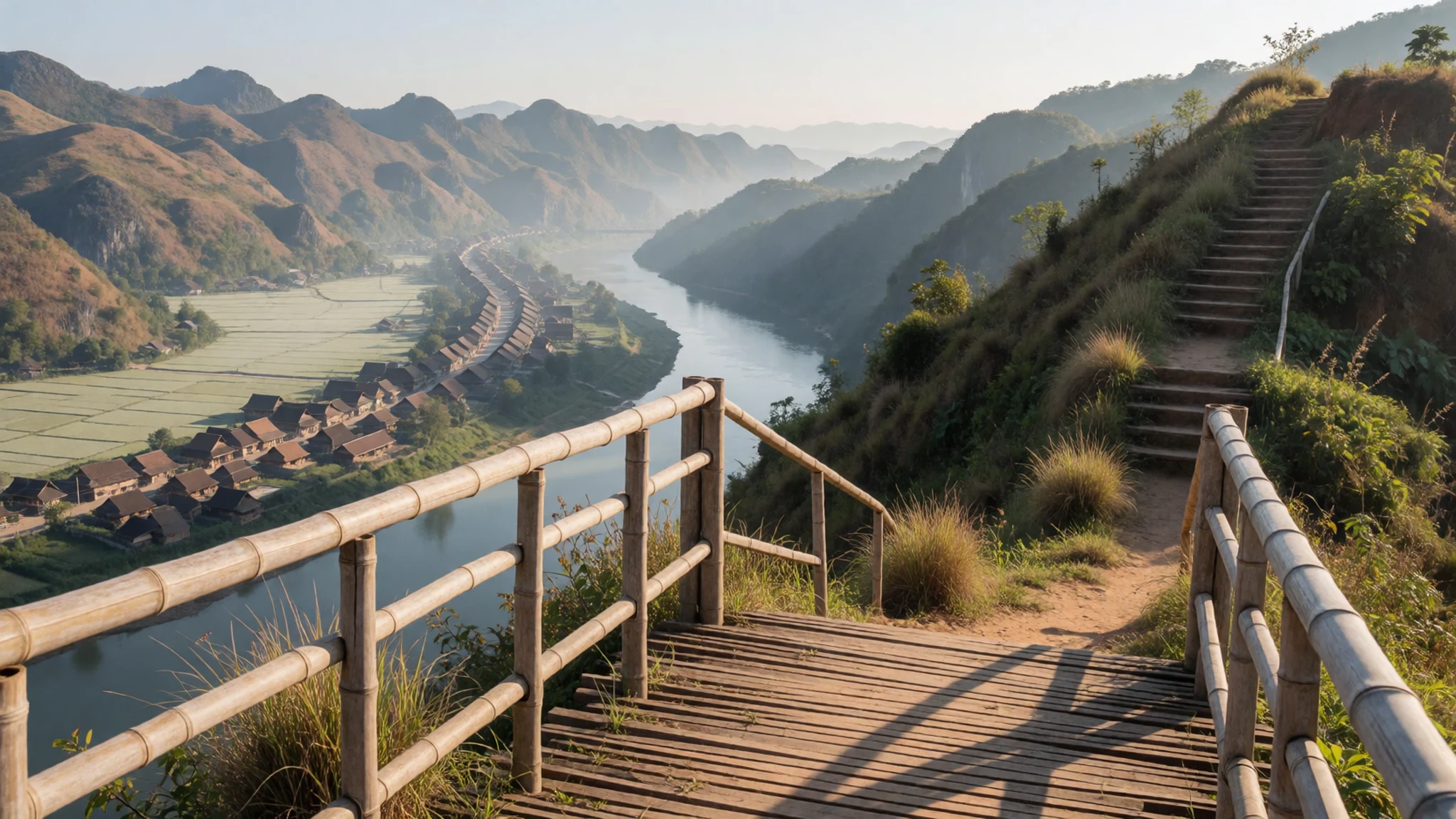
- Phaboom Lookout — Limestone mountain immediately south of the village
Phaboom Lookout is the harder alternative for anyone who finds Phanoy too easy. The route climbs the limestone mountain just south of the village and is rough underfoot, so it suits fit walkers in dry weather. The reward is a wider view over the river valley and the peaks beyond.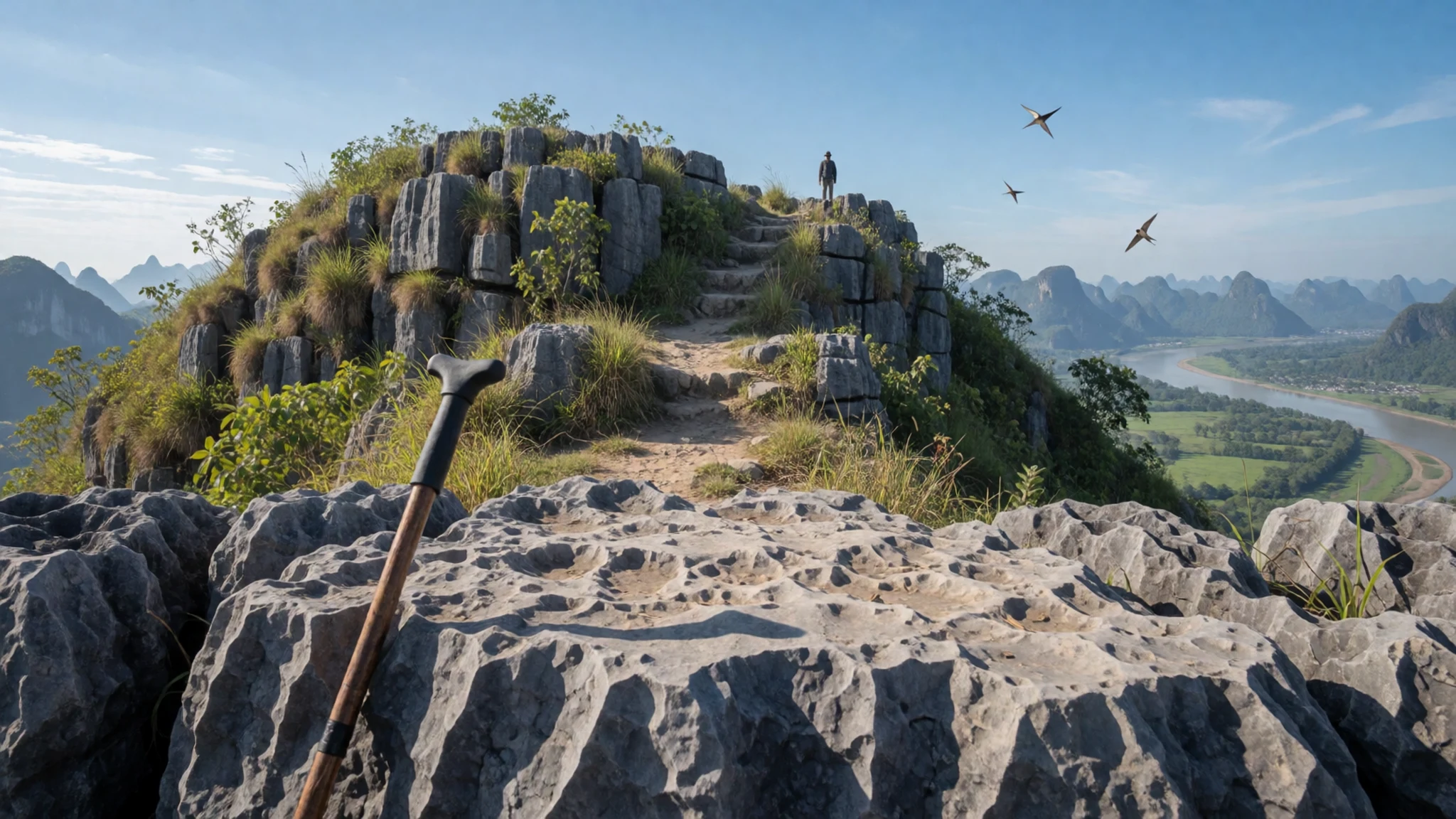
- Tham Kang and Tham Pha Kaew caves — North of the village, about 50 minutes on foot
Tham Kang and Tham Pha Kaew are caves that served as bomb shelters during the Vietnam War era. The track north of town can be followed without a guide, and a small toll is collected locally, so carry some cash. Bring a torch and treat the caves as a place of memory.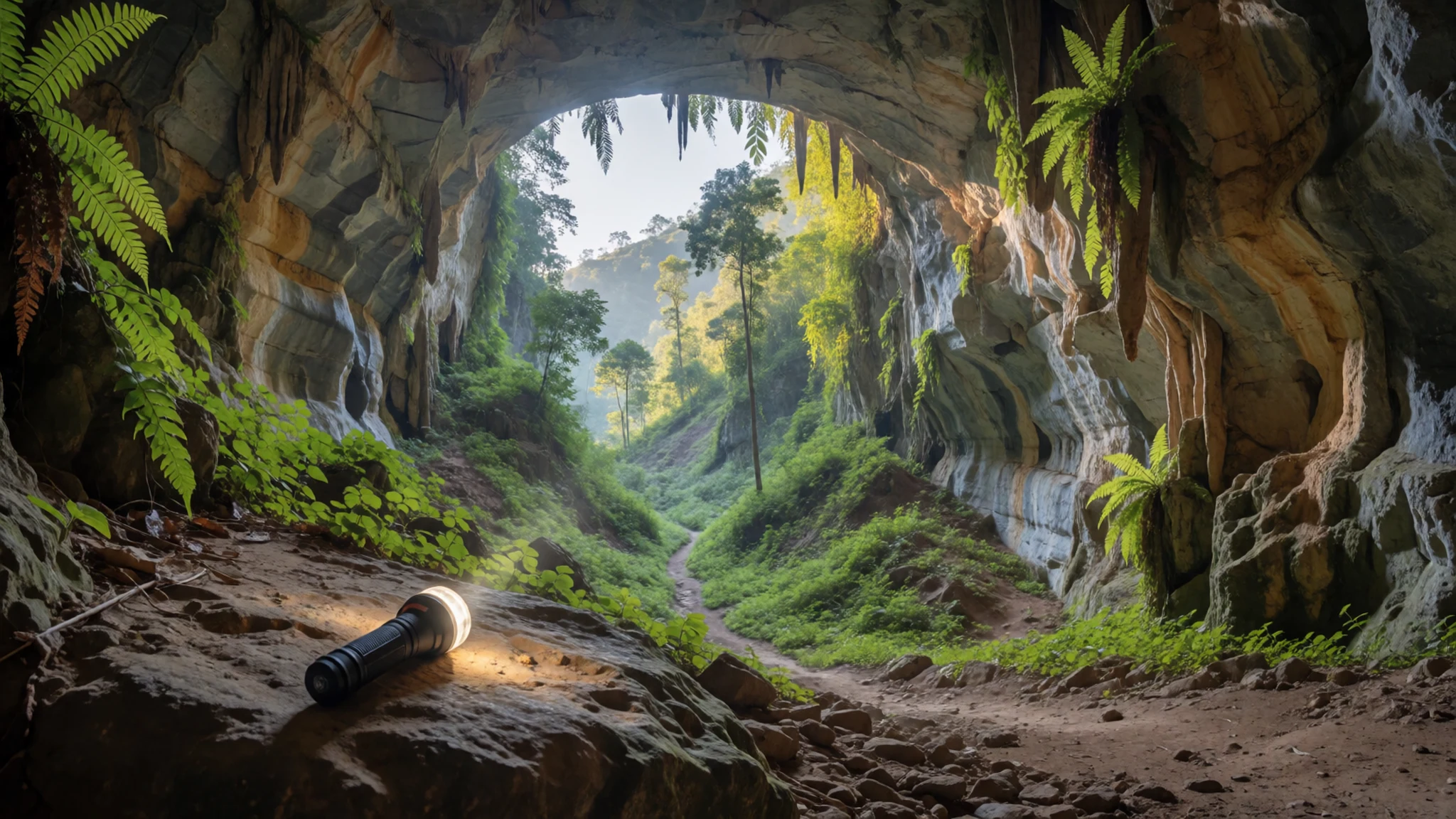
- The Nam Ou and its beach — Riverbank at the village
The Nam Ou is the village's front door, and the view from a boat or the bank shows how the karst walls frame the settlement. When the water drops towards the end of the dry season, a sandy strip appears where people swim and sit with a cold drink.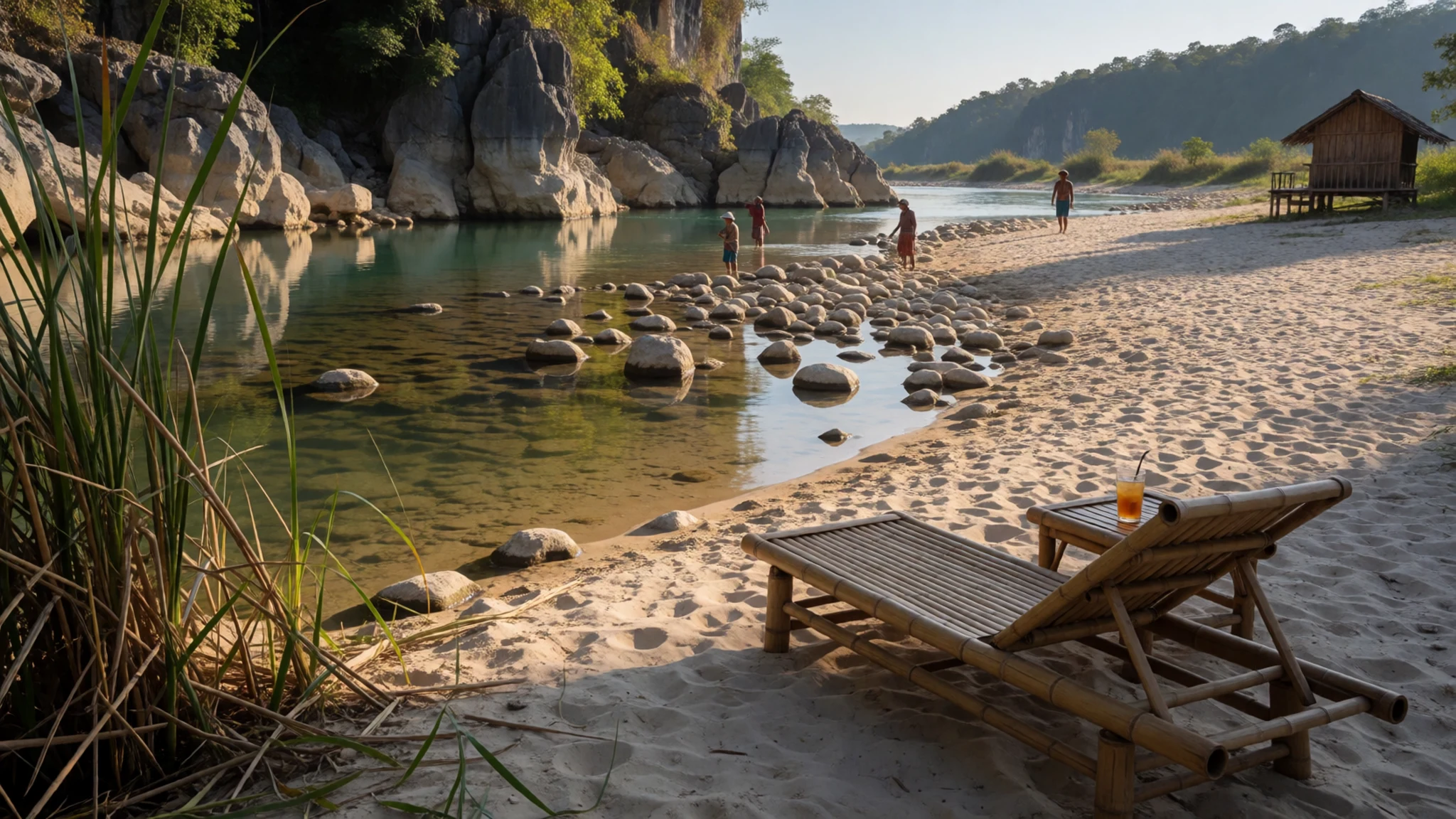
- Ban Na and the surrounding villages — Footpaths and boat routes beyond the caves
Ban Na is the nearest neighbouring village, about an hour's walk beyond the caves, with two more further along the same route. Many visitors walk out for lunch, passing fields and buffalo. Sop Chem lies upstream and is reached by private boat. Simple guesthouses exist in these villages.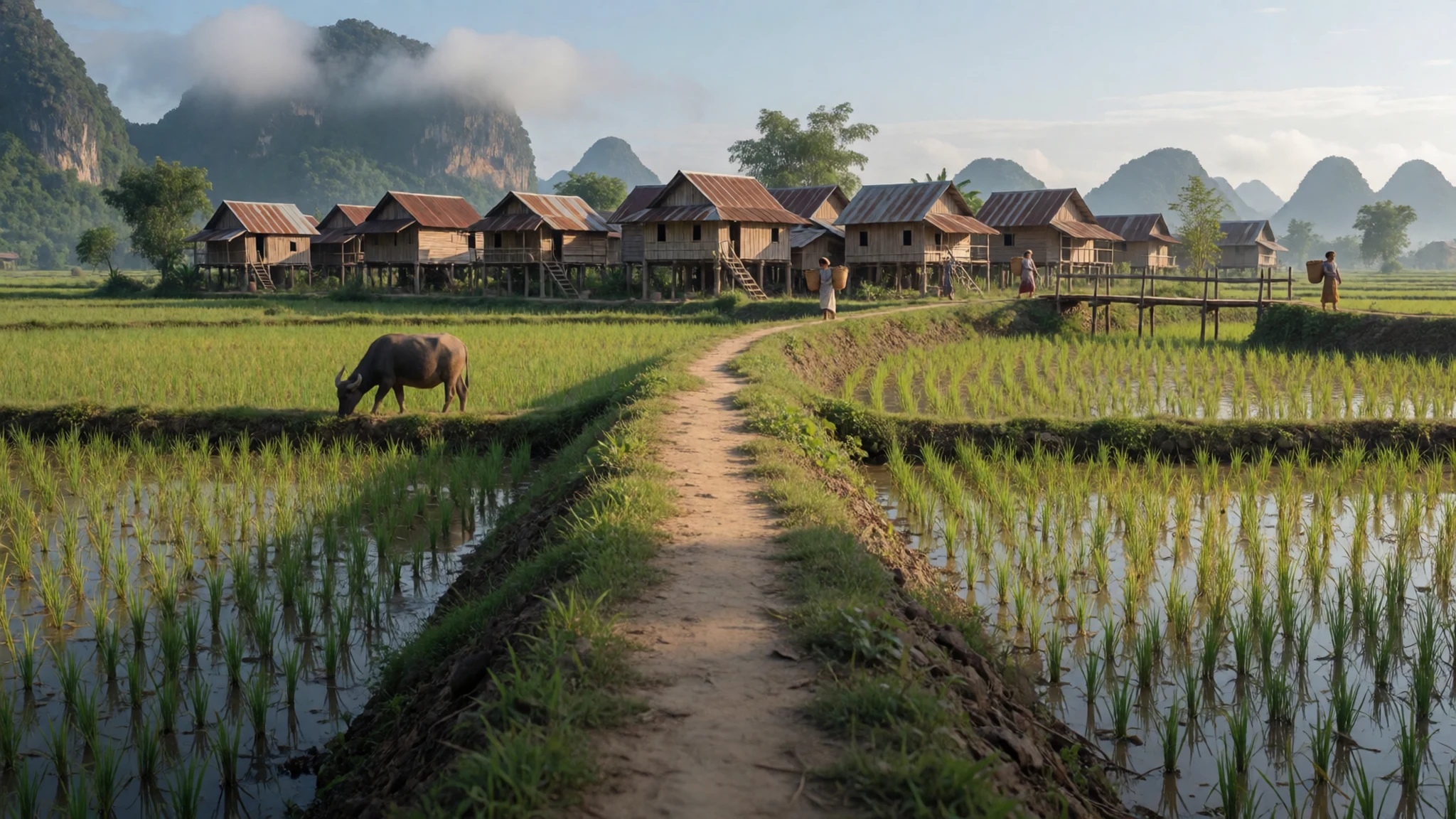
Culture
Muang Ngoi Neua is a Lao Loum village, part of the lowland Lao world of Theravada Buddhism, sticky rice and close-knit farming communities. Life follows the agricultural year more than the tourist calendar. Planting and harvest set the pace, and festivals such as Lao New Year in mid-April bring water-throwing and family gatherings.
The war remains part of local memory. The village was heavily bombed, and older residents grew up knowing the caves as shelter. Visitors who walk to Tham Kang and Tham Pha Kaew are seeing places that were once refuges for whole families, and locals tend to speak about this plainly and without drama.
Tourism is now a major source of income, but the village is not a performance. Guesthouses are usually family-run, and meals, laundry and boat bookings are often handled by the same household. Every ten days the regional market draws people from upland villages who trade produce and goods. It is a working market first, so browse politely and bargain gently if at all. A smile and a simple 'sabaidee' (hello) are received warmly almost everywhere.
Ask before photographing villagers, especially at the market and inside homes, and keep shoulders and knees covered when walking through the village.
What to wear
Muang Ngoi Neua sits in a lowland Lao area where the traditional garment for women is the sinh, a tubular wrapped skirt woven from silk or cotton, often with a patterned band at the hem. It is worn for festivals, weddings, temple days and official occasions, usually with a fitted blouse and sometimes a shoulder cloth. Upland groups who come down to the regional market wear their own embroidered jackets, head cloths and indigo or hand-woven cloth, and styles differ from one community to the next.
In daily life, most people dress for farm work and heat: T-shirts, loose trousers or shorts, wide-brimmed hats, rubber boots in the fields and flip-flops around the village. Women often wrap a sarong at home or at the river. Dress is modest by Western beach standards, and swimwear is for the riverbank only.
Visitors should pack light, quick-drying clothes that cover shoulders and knees, plus a long-sleeved top for evenings and mosquitoes. Sturdy sandals or trail shoes matter more than anything else, because the viewpoint paths and cave tracks are steep, rocky and slippery after rain. Nights from November to February can be cool, so a thin fleece helps. A light rain jacket earns its place in the wet season, and a sarong is useful for shade, a quick cover-up and the riverbank.
What to eat
- Grilled skewers — Street stalls on the main street, mostly in the evening
Barbecued sticks of meat and vegetables are the easiest snack in Muang Ngoi Neua. A couple of stalls grill them over charcoal along the main street. They suit a walk before dinner, and are best eaten hot with sticky rice.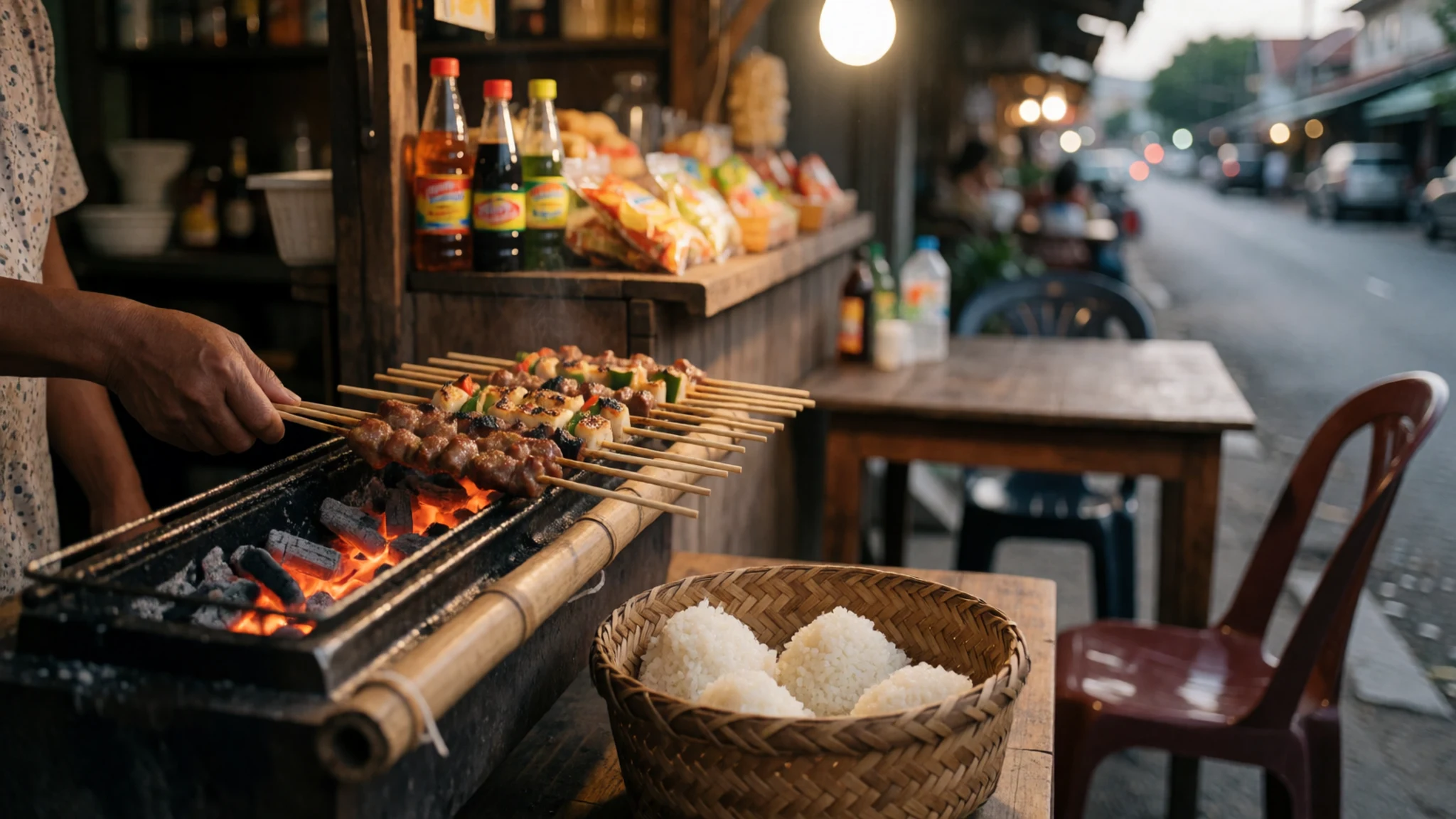
- Battered banana and taro fritters — Street stalls on the main street
Bananas and taro are coated in batter, sometimes with coconut, and fried until crisp. They are sold by the piece from roadside stalls and make a cheap, sweet snack after a climb. Eat them fresh from the pan.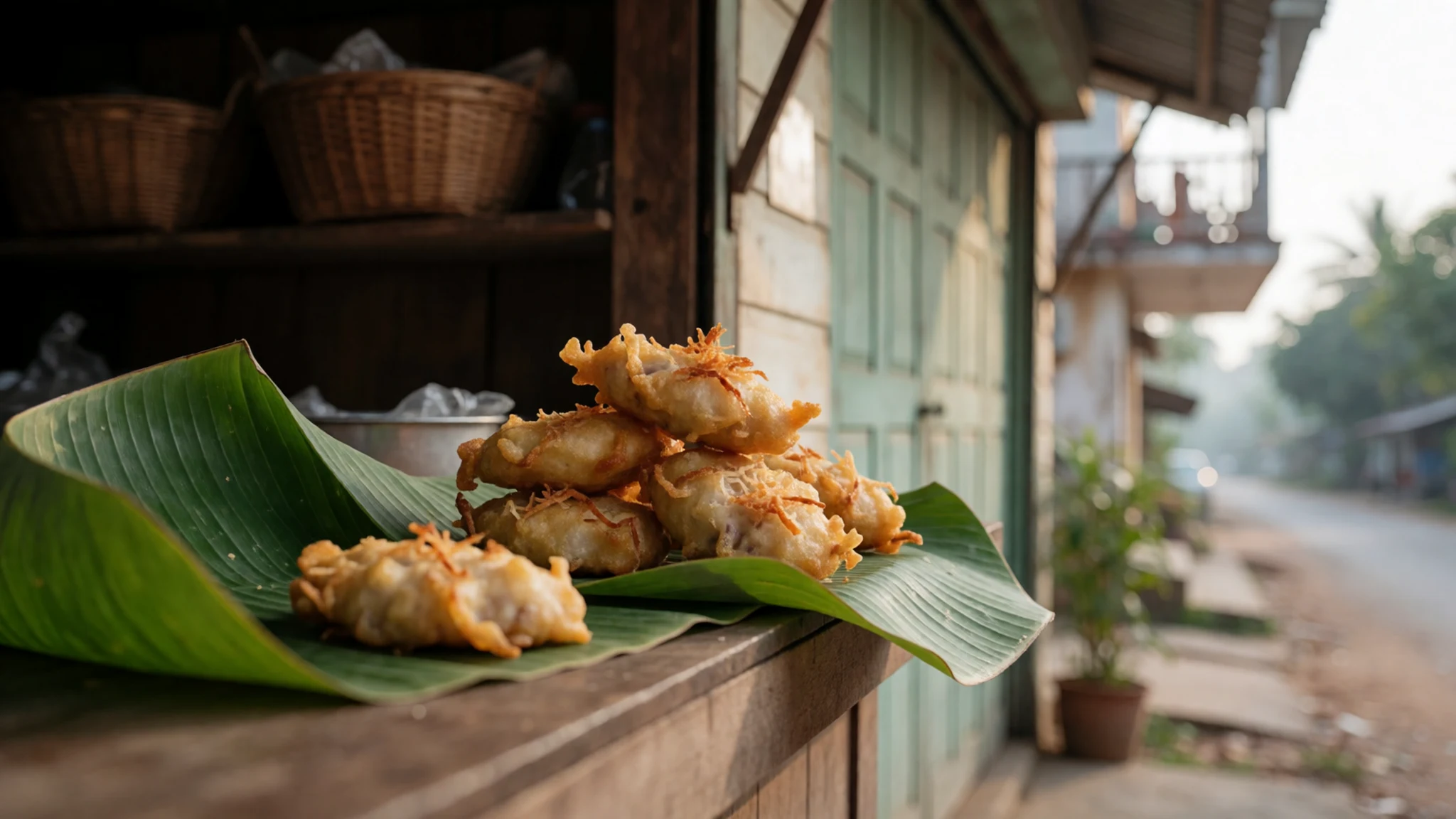
- Lao plates with sticky rice — Guesthouse restaurants and riverside eateries
Most guesthouses run a kitchen serving Lao dishes: sticky rice, grilled or stewed meat and fish, minced-meat salad (laap) and vegetable soups. Pair them with a cold Beerlao on a riverside terrace, and allow plenty of time because service is leisurely. - Indian and Lao curries — The small Indian eatery on the main street
An Indian restaurant in the village serves curries and bread alongside Lao dishes, a welcome change after several days of rice. Portions are generous, and vegetarians can usually find something. - Fresh bread, pizza and breakfast spreads — Guesthouse restaurants and bakery-style kitchens on the main road
Some kitchens bake their own bread and pizza dough, and several guesthouses offer breakfast buffets. The food is plain rather than special, but it is filling before a hike. Some places close in the off season.
Plan it
Best time. November to February is cool and dry, which suits walking and viewpoint climbs. March brings heat and low water, when the sandy riverbank appears. The wet season, roughly May to October, turns paths muddy but the hills are green and the village is quieter.
How long. 2–3
Getting there. The nearest airport is Luang Prabang. From there, minivans run from the north bus station to Nong Khiaw, about 3½ hours, then a boat goes upstream to Muang Ngoi Neua, about 1 hour. From the north, boats run from Muang Khua, about 5 hours. Departure times change with season and river level, so check locally.
Budget. low
Tips
- Carry cash in small notes, because card payment is rare and there is a small toll for the caves
- Check boat and minivan times a day ahead, as services change with season and water level
- Stay on well-used paths when walking to caves and villages, as unexploded bombs remain a risk in rural Laos
- Start viewpoint climbs early to avoid the heat, and bring a torch for the caves
- Time a visit for the regional market, held every ten days
Etiquette
- Ask before photographing villagers
- Keep shoulders and knees covered in the village and swimwear to the riverbank
- Take litter away with you, as the village has limited waste services
Nearby
Sources
- Wikidata Q6930719 (CC0)
- Wikipedia: Muang Ngoi Neua (rev 1370656692) (CC BY-SA 4.0)
- Wikivoyage: Muang Ngoi Neua (rev 5247432) (CC BY-SA 4.0)
- Photo: Muang Ngoi Neua from the Phanoi Viewpoint — Christophe95 (CC BY-SA 4.0)
- Photo: View of Muang Ngoi Neua from Nam Ou River — Mattun0211 (CC0 1.0)
- Photo: Muang Ngoi Neua village — Ekrem Canli (CC BY-SA 4.0)
- Photo: Buffaloes in Muang Ngoi Neua — Christophe95 (CC BY-SA 4.0)
- Photo: A butterfly in Muang Ngoi Neua 1 — Christophe95 (CC BY-SA 4.0)
- Photo: A butterfly in Muang Ngoi Neua 2 — Christophe95 (CC BY-SA 4.0)
- Photo: The main street in Muang Ngoi Neua — Christophe95 (CC BY-SA 4.0)
- Photo: Muang ngoi banner — Bitswonders (CC BY 3.0)


