Mount Greylock
Mount Greylock, United States
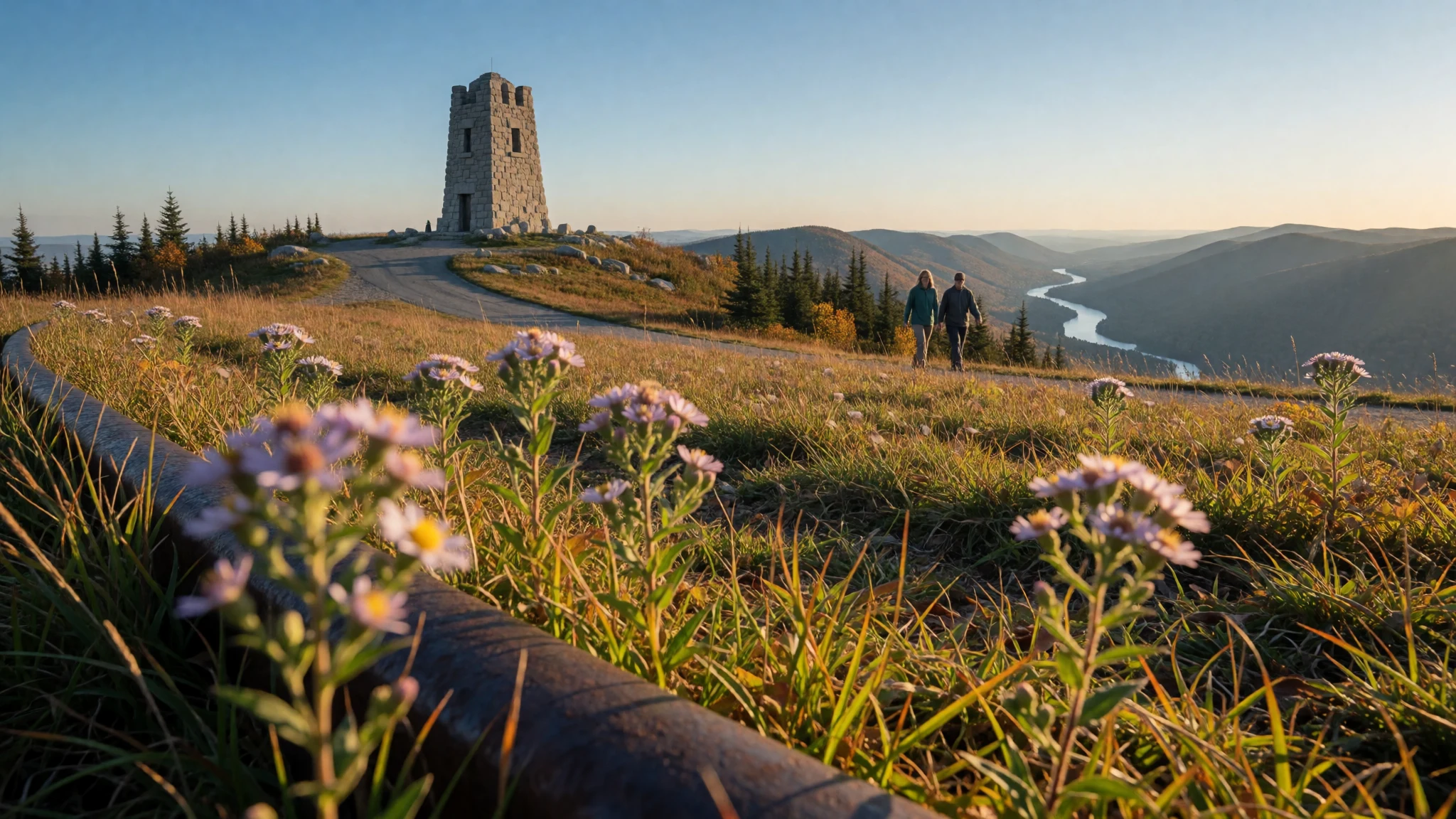
Mount Greylock is Massachusetts' highest summit, a forested ridge with a stone tower, a mountain lodge and a literary pedigree, reachable by road or trail.
The place
Mount Greylock is the highest point in Massachusetts, rising to 1064 metres in the state's north-west corner, in the town of Adams. It belongs to the Taconic Mountains, a range that is geologically separate from the neighbouring Berkshires and Green Mountains, and the shape shows it: a broad, long-backed massif rather than a tidy cone. The Hoosic River curls around its eastern and northern foot, and the summit stands far above the valley floor, so the outlook from the top is wide whenever the cloud allows. The highest slopes carry a small patch of sub-alpine forest, an odd sight in southern New England, where the air up here is cooler and wetter than in the villages below. A seasonal road climbs to the summit, where three structures from the 1930s form a small national historic district. Paths of every length cross the mountain, including a stretch of the Appalachian Trail, and all of it sits inside Mount Greylock State Reservation. Other summits of the range, such as Saddle Ball Mountain and Mount Fitch, spread into neighbouring towns. This is a mountain for a day out rather than an expedition: drive up, walk up, or do a bit of both. Weather is the main variable. Cloud can sit on the top while the valley is bright, and the reverse happens too, so a clear view is a bonus, not a promise.
Its story
Mount Greylock became a literary mountain in the nineteenth century, once better transport brought visitors into the hills of north-west Massachusetts. Writers and painters came to look at it, among them Nathaniel Hawthorne, William Cullen Bryant, Oliver Wendell Holmes, Herman Melville and Henry David Thoreau. Hawthorne spent a summer around North Adams and climbed the mountain several times. One midnight walk, during which he noticed a lime kiln glowing in the dark, fed the story that later became 'Ethan Brand'. Melville lived at Arrowhead, a farmhouse in Pittsfield, and the snowy outline of Greylock from his window is said to have helped shape the image of a white whale's back breaking the surface in Moby-Dick. He later dedicated another novel, Pierre, to the mountain itself. Melville also joined a small camping party that spent a night on the summit, and the poet Sarah Morewood was one of the group. Thoreau had already made his own ascent and stayed overnight, then wrote about the approach in A Week on the Concord and Merrimack Rivers. The route he described is what walkers now call the Bellows Pipe Trail. Underneath the literary layer lies older geology: Greylock is a Taconic mountain, and its rock and its shape set it apart from the Berkshires beside it.
What to see
- Summit war memorial tower — Summit, Adams
The memorial tower stands at the top of Mount Greylock beside the summit road, one of the 1930s structures in the small historic district. Climbing it, where it is open, adds height above the trees and a wider look over the Hoosic Valley. Check the state reservation's official pages for access before relying on it.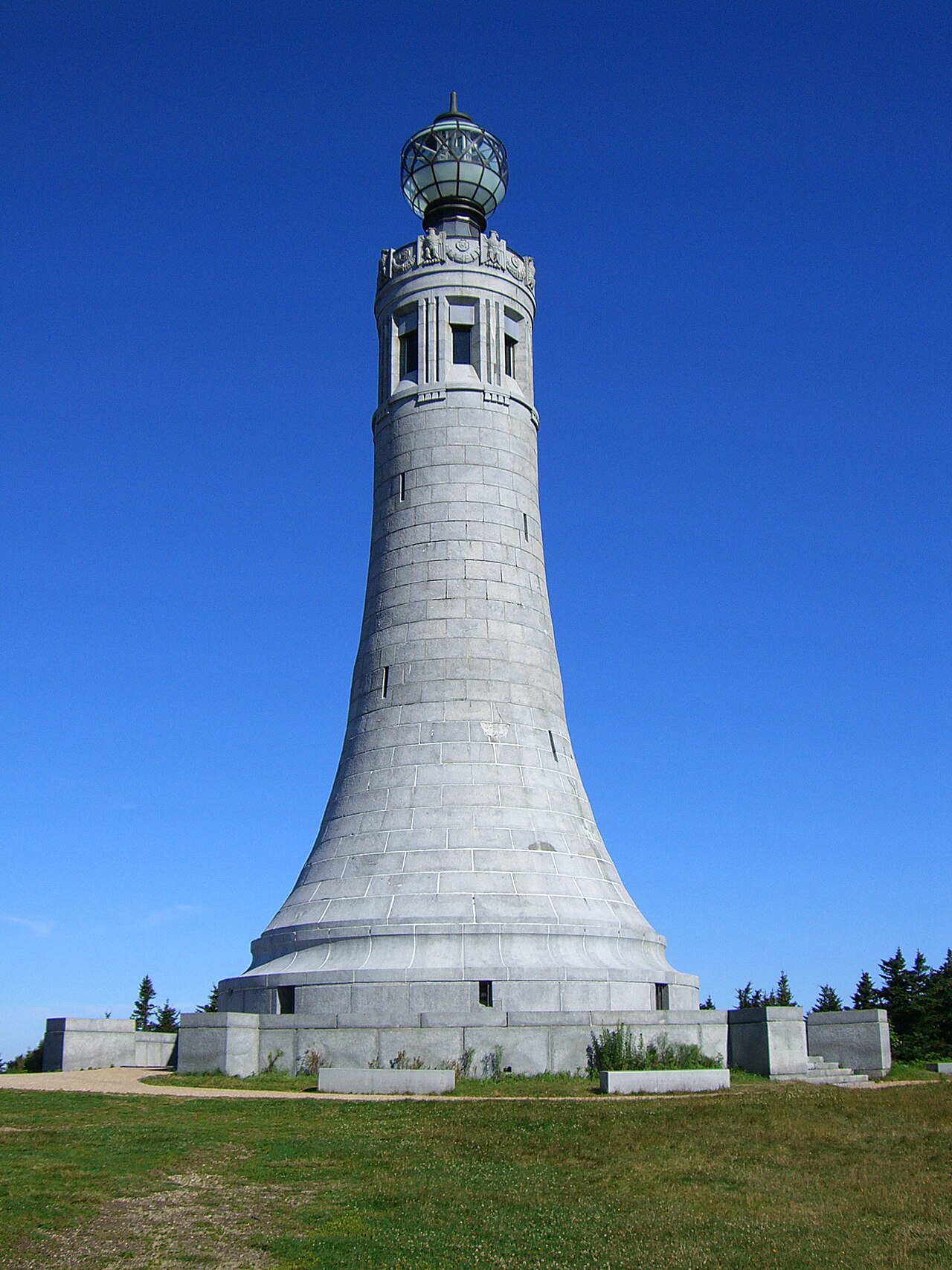
- Bascom Lodge — Summit, Adams
Bascom Lodge is a stone-and-timber building on the summit, another of the 1930s trio. It works as a rest stop, a place to shelter from wind and a base for overnight stays. Hikers arriving on the Appalachian Trail often pause here. Opening dates are seasonal, so confirm them before planning a meal or a bed.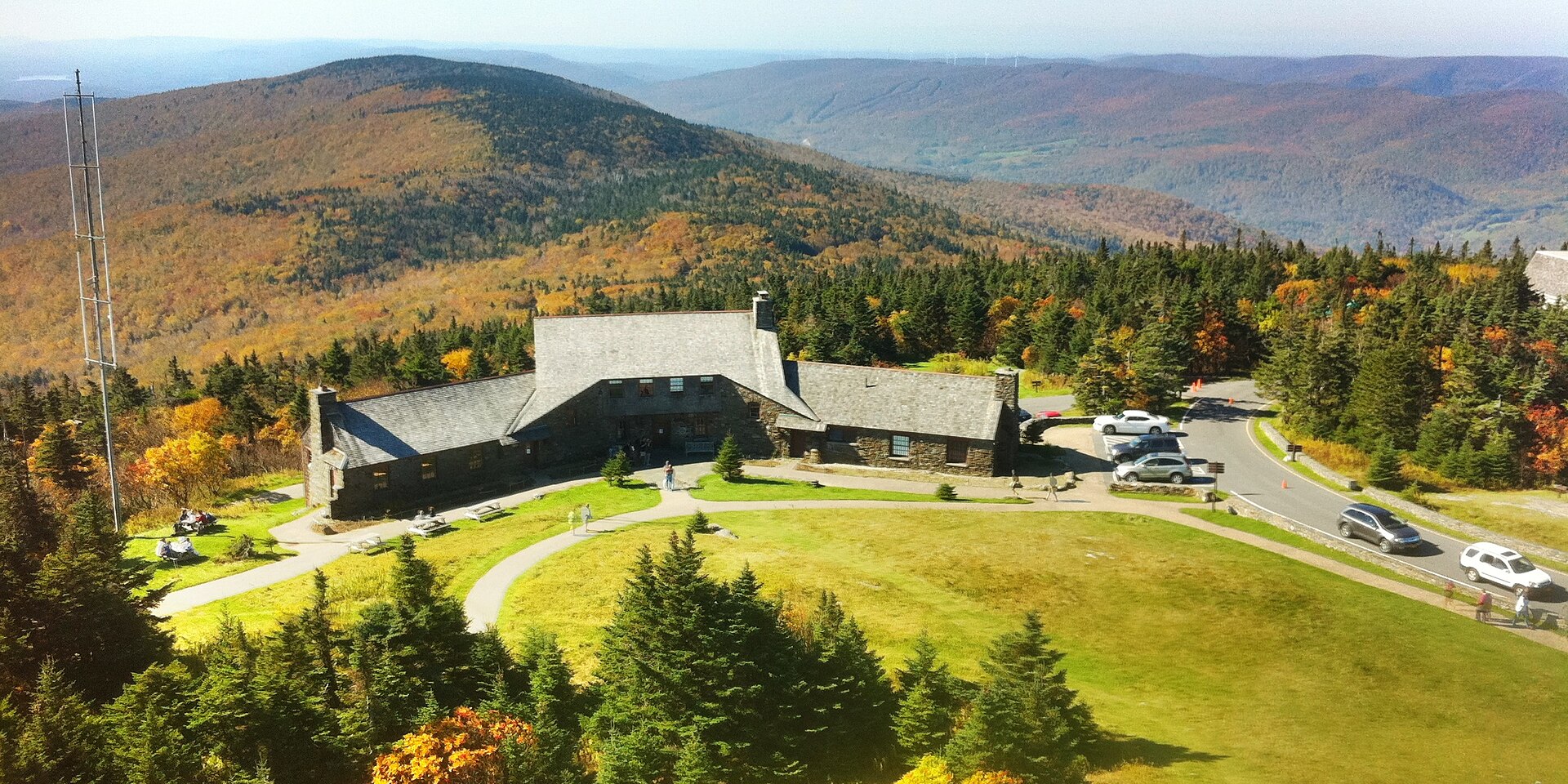
- The Hopper from South Williamstown — South Williamstown
Seen from the west, the mountain looks massive, with the great bowl of the Hopper cut into its flank. The roadside and fields near South Williamstown give a good view without any climbing. It is an easy stop for photographers, best in clear, low-angled morning or evening light.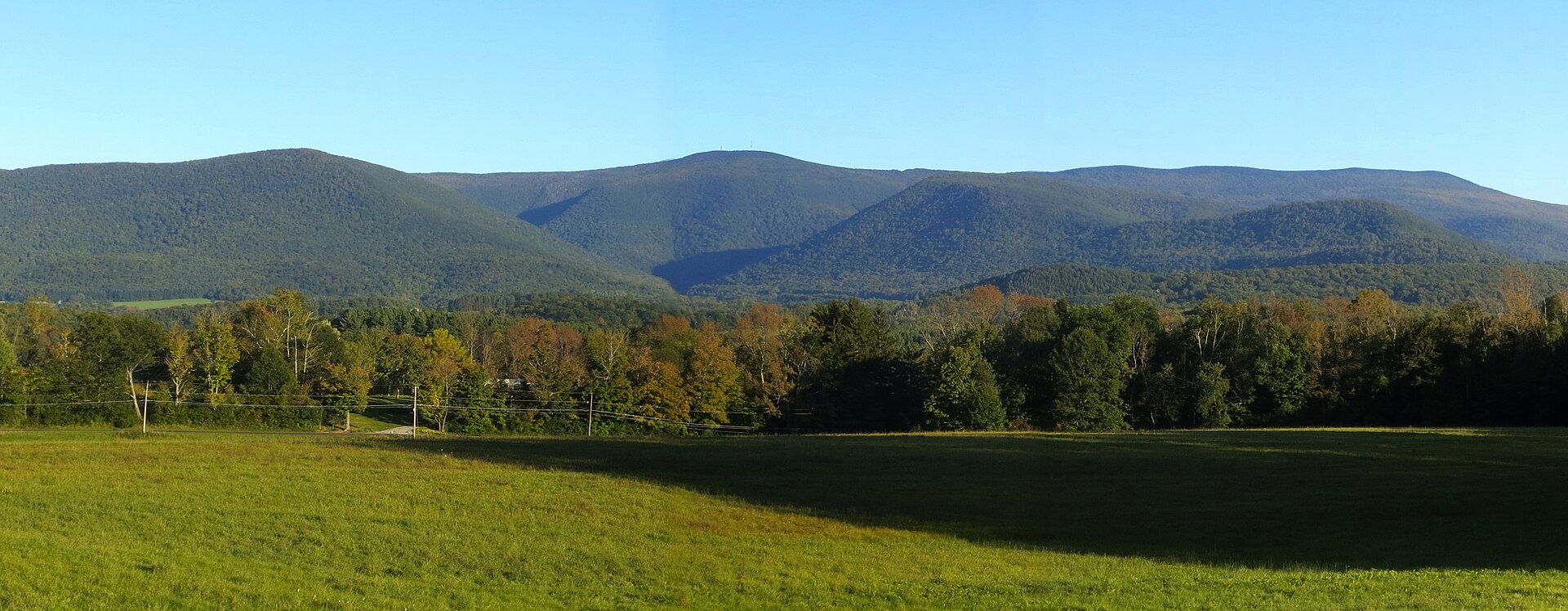
- Bellows Pipe Trail — Northern slopes, near Adams
This is the route Thoreau described, now a marked walking trail up to the summit area. It climbs steadily through woods, so allow a full day and good footwear. Taking it makes the mountain feel like more than a drive-up viewpoint, and it links easily to the summit loop. - Summit spruce forest — Upper slopes, Mount Greylock State Reservation
The patch of sub-alpine forest near the top is dominated by red spruce, with dark, dense growth and mossy ground. The temperature drops noticeably here compared with the valley. In early autumn, wild asters add pale purple colour along the clearings. It is worth a slow loop on the short paths.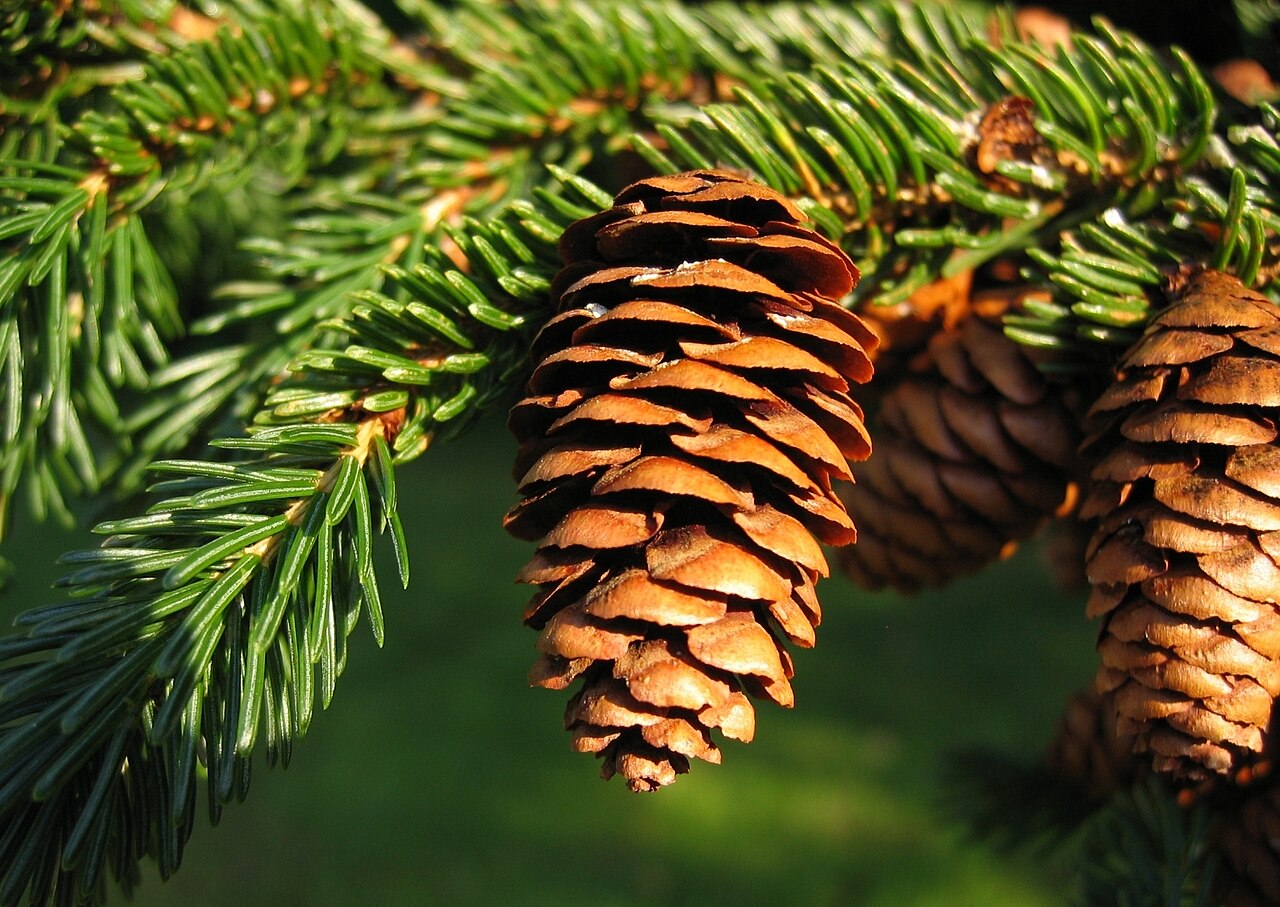
Culture
Mount Greylock sits in the Berkshire hill country of western Massachusetts, where life is quieter than in Boston and the mountain is treated as a shared local asset. People here tend to be reserved and direct. Strangers are often brief rather than chatty, which visitors from elsewhere sometimes mistake for coldness; a simple greeting on the trail is usually returned warmly. The state's wider culture is proudly sporting, with long-running rivalries against New York in baseball and American football, so a Red Sox or Patriots cap is a common conversation starter in a village shop or diner. Art and history also matter in this region: nearby towns have galleries and living-history museums, including Hancock Shaker Village in Pittsfield, and the Greylock connection to Hawthorne, Melville and Thoreau is taken seriously by local libraries and guides. The mountain itself is a place of walking, camping and quiet seasons, from summer picnics to autumn leaf-watching and winter snow sports. Weekends in fine weather bring families, runners and long-distance hikers from the Appalachian Trail onto the same paths. On the summit, keep to the marked paths and take all your rubbish home, because the thin high-altitude soil and spruce are slow to recover from trampling.
What to wear
Mount Greylock has no regional costume of its own, but the area's historic dress is well documented. Early New England settlers wore wool, linen and homespun cloth, with plain bonnets, coats and aprons, and living-history museums such as Hancock Shaker Village show these garments being made and worn today. Everyday dress now is practical and weather-led: fleece, flannel shirts, jeans, waterproof shells and boots, with a baseball cap or wool hat. Locals dress for the hills, not for show, and nobody will look twice at muddy trousers. Visitors should dress in layers. The summit is cooler and windier than the valley, even on a warm day, and cloud can bring a chill within minutes. Bring a waterproof jacket in every season, a warm hat and gloves outside summer, and sunscreen and a hat for clear days. Footwear matters most: sturdy walking shoes or boots with grip are better than sandals or smooth trainers, especially on wet roots and rock steps. In winter, expect snow and ice on trails and take proper boots, traction aids or snowshoes. No religious dress code applies on the mountain, though the war memorial deserves ordinary respect in dress and manner. A small daypack for water, snacks and spare layers completes the kit.
What to eat
- New England clam chowder — Pubs and diners in Adams, North Adams and Williamstown
A thick, creamy soup of clams, potato and onion, often served with oyster crackers. It is a coastal staple, but pubs and diners in the Berkshire towns near Mount Greylock usually carry it, especially in colder months. - New England boiled dinner — Irish-style pubs and traditional town eateries
A simmered pot of corned beef, cabbage, carrots and potatoes, sometimes with turnips, eaten with mustard or horseradish. It came with Irish immigrants and suits a cold day after hiking. - Clambake — Seasonal events and seafood restaurants; the coast does it best
Lobster, clams, potatoes and corn steamed together over hot stones under seaweed. It is a coastal tradition rather than a Greylock one, but community events and seasonal restaurants in the region sometimes serve versions. - Maple syrup — Farm stands and sugar houses in the Berkshire hills
Syrup from sugar maples is a hill-country product here, poured over pancakes or sold in glass bottles. Late winter is sugaring season, and many small producers welcome visitors on set days. - Apple cider doughnuts — Orchards and farm stands in early autumn
Warm, lightly spiced doughnuts made with apple cider, a classic autumn treat in New England. They pair well with a cold-weather walk and the turning leaves around the mountain.
Plan it
Best time. June to October, when the summit road is normally open: late September and early October for autumn colour, summer for long days and easier walking. Winter brings snow and cold, and the summit road is seasonal, so check its status first.
How long. 1–2
Getting there. Fly into Albany or Bradley International (near Springfield) for western Massachusetts, or Boston Logan for the east; Worcester and Providence are also regional options. There is no simple rail link to the mountain, so hire a car and drive to Adams or Lanesborough, then take the summit road or a trailhead.
Budget. mid
Tips
- Check the state reservation's official pages for road opening dates and any closures before you travel
- Start early on autumn weekends, when colour-seekers fill the road and car parks
- Carry water, snacks and spare layers; the summit is cooler and windier than the valley
- Cloud can hide the view, so check the forecast and have a lower-level plan
- Mobile signal can be patchy on trails, so download a map in advance
Etiquette
- Keep to marked trails and take all rubbish home
- Say hello to other walkers; a brief greeting is the local norm
- Give way to uphill walkers and keep noise low on the summit
Nearby
Sources
- Wikidata Q1587225 (CC0)
- Wikipedia: Mount Greylock (rev 1383112571) (CC BY-SA 4.0)
- Wikivoyage: Massachusetts (rev 5430935) (CC BY-SA 4.0)
- An Entire Shot of Mount Greylock, MA — Jstergis (CC BY 3.0)
- View southeast towards Mount Greylock from Berlin Mountain — Famartin (CC BY-SA 4.0)
- Greylock and the Hopper from the west — Ericshawwhite (CC BY 3.0)
- Picea rubens — Keith Kanoti, Maine Forest Service (CC BY 3.0 us)
- New England Aster on Mount Greylock — Protophobic (CC BY-SA 4.0)
- Bascom Lodge atop Mount Greylock — Protophobic (CC BY-SA 4.0)
- Snowboarders near the Needles Eye on the Thunderbolt — Ericshawwhite (CC BY-SA 4.0)
- Mount Greylock war memorial — Kelson (CC BY-SA 1.0)


