Monterey Bay
Monterey Bay, United States
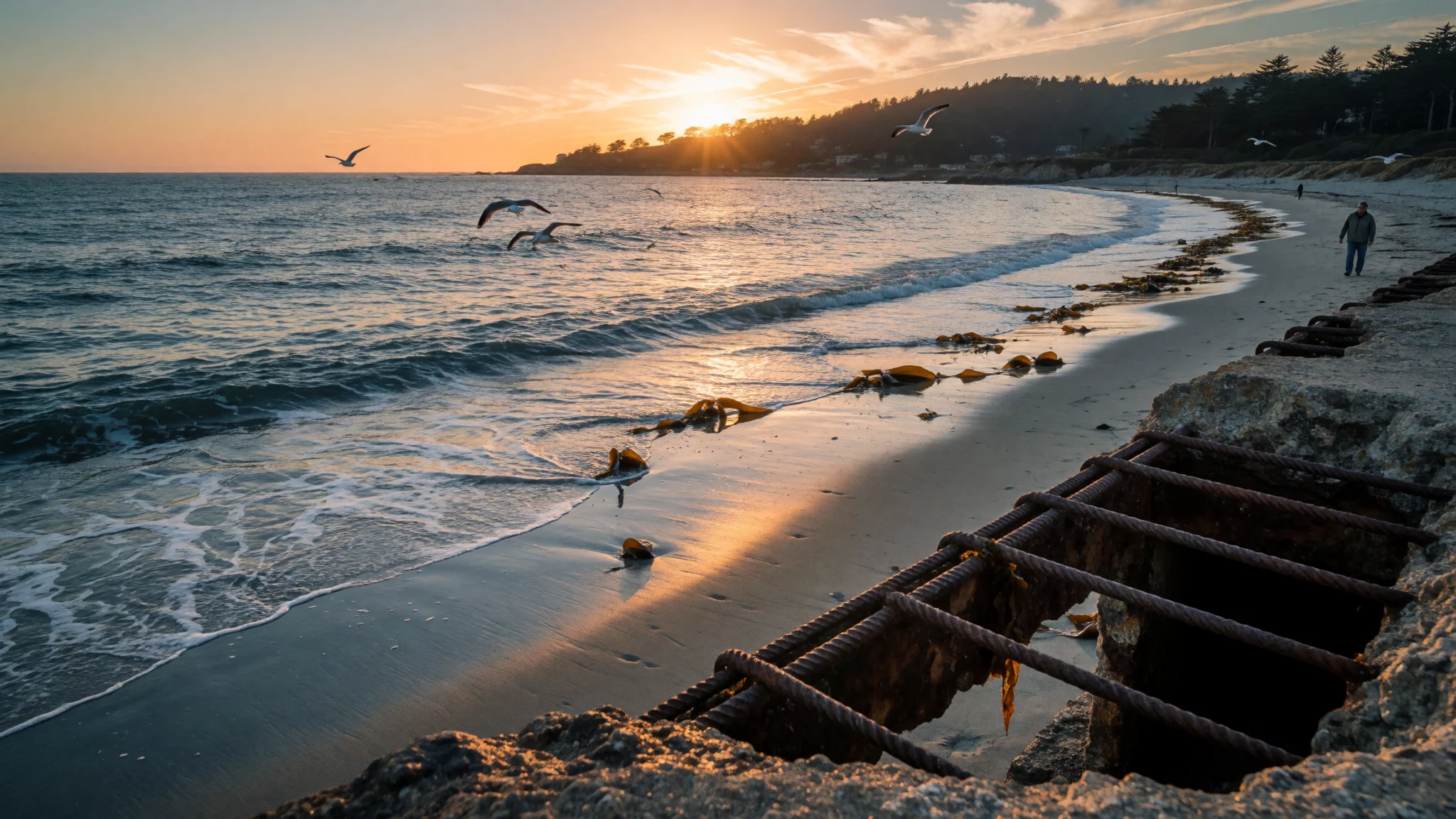
Monterey Bay is a cool, wildlife-rich curve of Pacific coast where a deep undersea canyon brings whales, otters and seabirds close to shore.
The place
Monterey Bay is a wide curve of the Pacific on California's Central Coast, south of the San Francisco Bay Area and about 120 km (75 miles) down the coast from the city of San Francisco. Santa Cruz marks its northern end, while the town of Monterey sits on a pine-covered peninsula at the south. Between them the shore changes character: surf beaches and cliffs near Santa Cruz, dunes and fields of artichokes and strawberries around the middle, and a working fishing harbour at Moss Landing. Locals use "Monterey Bay Area" loosely for the communities around the water, taking in Santa Cruz, Monterey and San Benito counties, and the local governments cooperate on regional planning. The bay's most unusual feature is out of sight. Monterey Canyon starts just offshore from Moss Landing and runs out to sea for 401 km (249 miles), a deep trench whose floor is constantly reworked by currents and drifting sediment. Marine life changes as the canyon deepens, which is why researchers and whale-watching boats both favour this stretch of coast. The climate is cool and often foggy in summer, so the bay suits jumpers and binoculars better than swimming. The water stays cold all year, and the beaches are for walking, surfing in wetsuits and watching sea otters, seals and birds. Getting around is easiest by car, though buses link the main towns along the shore.
Its story
Monterey Bay was home to the Ohlone and Esselen peoples long before European ships appeared offshore. Spanish explorers sailed in and named the bay after a viceroy of New Spain, the Count of Monterrey, and the name stuck to the bay and to the town on its southern shore. Monterey later served as the capital of Alta California under both Spain and Mexico, before the region passed to the United States. The waterfront then turned to fish. Canneries lined the shore beside the town, packing sardines in such quantities that the street behind them became known as Cannery Row, and John Steinbeck wrote it into American fiction. The sardines eventually vanished, the canneries closed, and the empty buildings were left to rot, burn or be reborn. Some of them became restaurants, shops and an aquarium that now draws visitors from around the world. Conservation grew from the same loss. The bay's waters are protected as a national marine sanctuary, and the canyon and kelp forests are studied closely. Today the bay's story is partly about what was taken from it and partly about a slow recovery that lets sea otters, whales and seabirds be watched from the shore. Old cannery foundations still stand on the beach, a reminder of the industry that made the waterfront.
What to see
- Cannery Row — Monterey
Cannery Row in Monterey is the old sardine-packing street, now lined with restaurants, shops and sea views. It is busy and touristy, but the plaques, rusting machinery and cannery foundations on the shore explain how the place worked. Go early on a weekday for quiet, and walk down to the sand.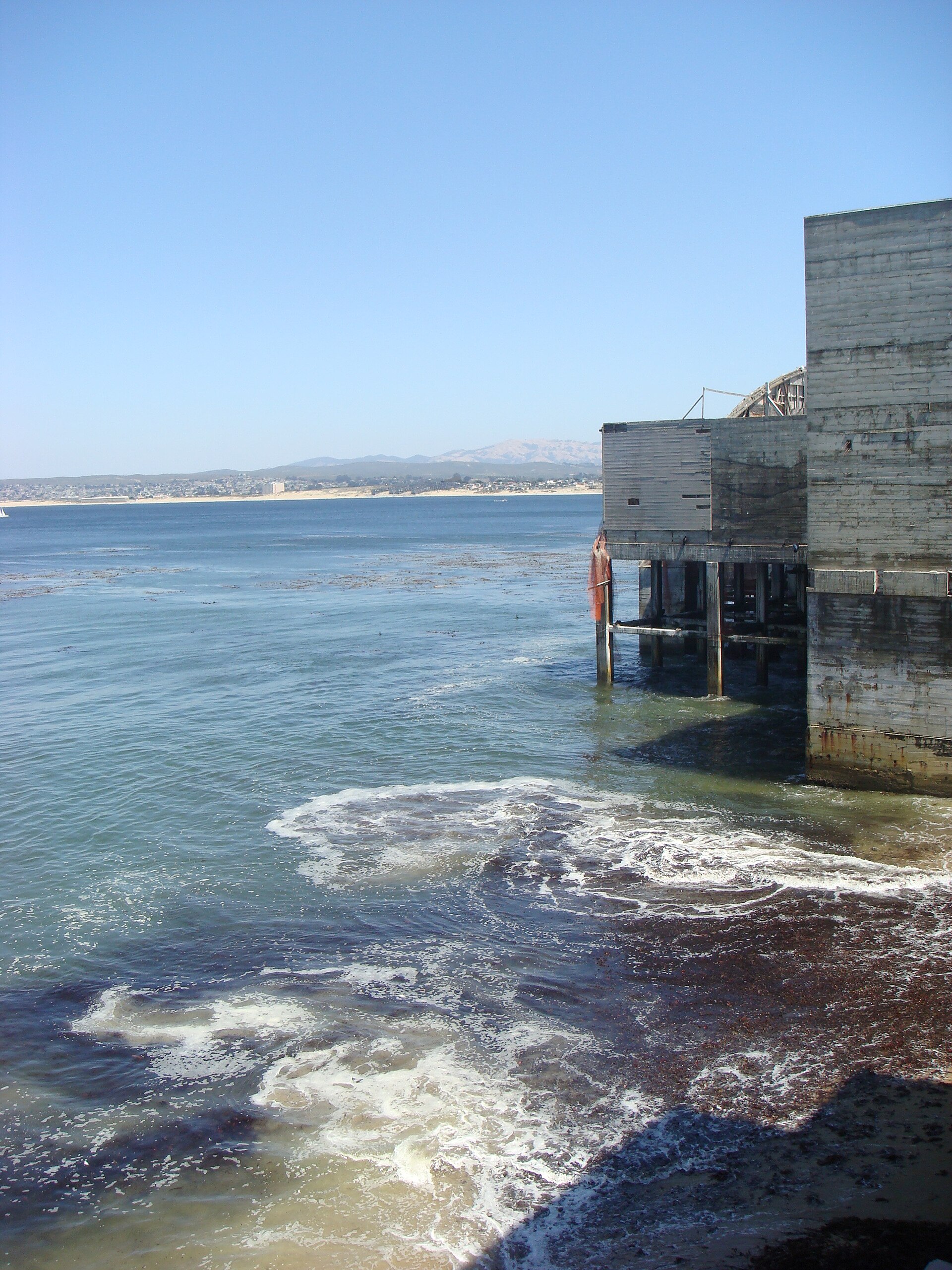
- Monterey Bay Aquarium — Monterey
The Monterey Bay Aquarium sits in a former cannery at the end of Cannery Row, and its tanks show the kelp forest and deep-water life that the offshore canyon supports. It is popular, especially at weekends and in school holidays, so check the official site for tickets and opening times before you travel.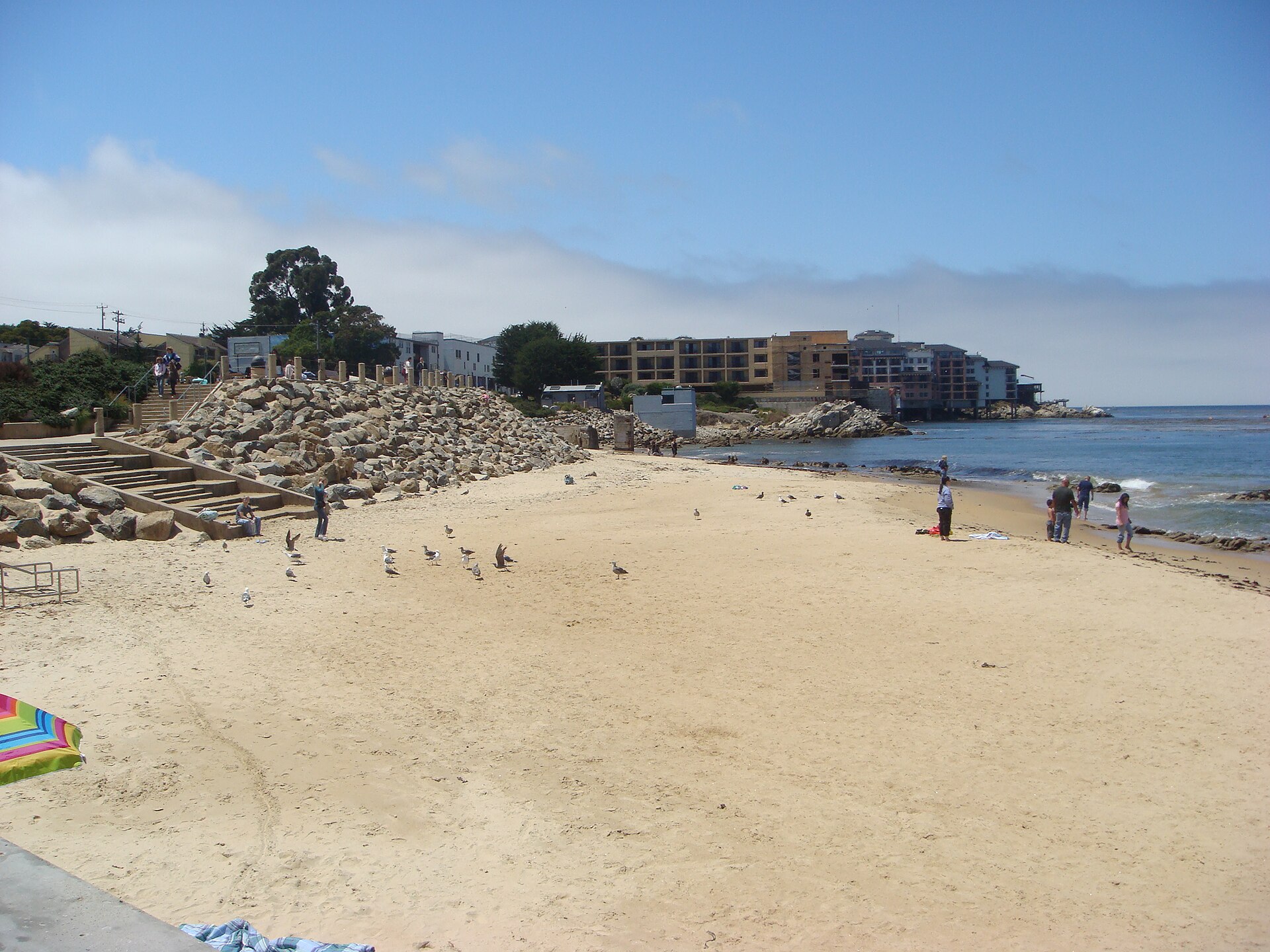
- Moss Landing — Central bay
Moss Landing is a small fishing harbour near the middle of the bay, right beside the point where the underwater canyon begins. Boats leave from here to watch whales, and the nearby slough is a reliable spot for sea otters, harbour seals and wading birds. Bring binoculars, and expect wind and fog.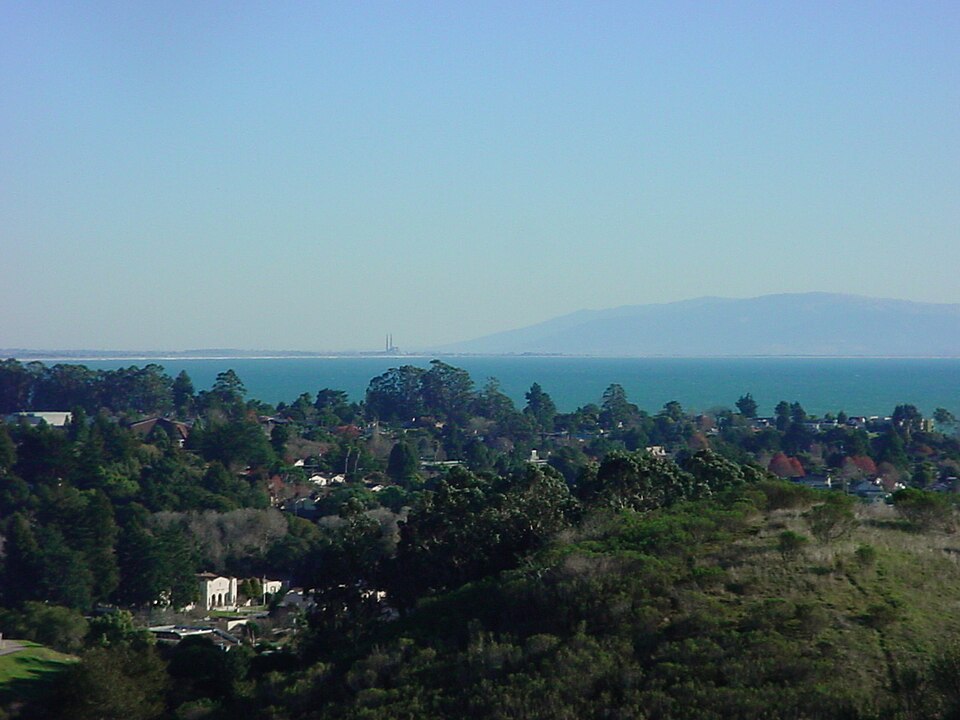
- Jacks Peak Park — Above Monterey
Jacks Peak Park is a hilltop above Monterey with trails through Monterey pines and a clear view over the town and the bay below. It is a good place to understand the bay's shape, and the walk is gentle enough for most visitors. Pick a clear morning, because fog often fills the view later.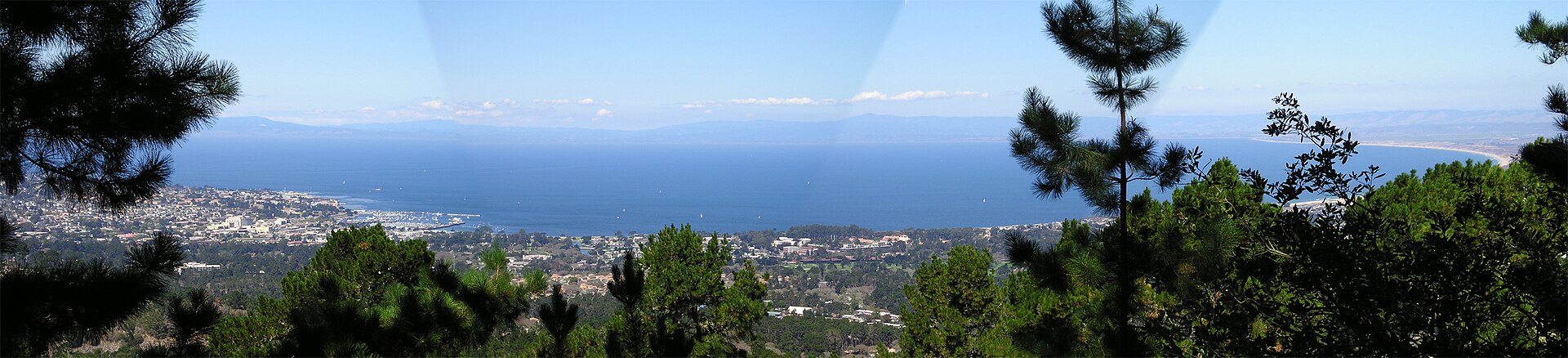
- West Cliff Drive, Santa Cruz — Santa Cruz
West Cliff Drive follows the clifftop at the northern end of the bay in Santa Cruz, with a path used by walkers, cyclists and runners. Surfers work the breaks below, and the wharf and its sea lions are a short stroll away. It is the livelier, more casual side of the bay.
Culture
Monterey Bay has a layered culture, shaped by indigenous communities, Spanish and Mexican settlers, fishermen and writers. The Ohlone and Esselen peoples were the first residents, and descendants still live in the region and run cultural programmes. The Spanish and Mexican period survives in the adobe buildings and old missions around Monterey, while Cannery Row preserves the working-class waterfront that Steinbeck described. Fishing families, many of Italian, Portuguese and Japanese descent, once ran the boats, and their influence lingers in the harbours and in local food. Today the region's identity leans heavily on the sea. Marine science, conservation and surfing are all points of local pride, and residents tend to be protective of the shoreline and the animals along it. Santa Cruz has a relaxed, alternative reputation, while Monterey and neighbouring Pacific Grove feel more traditional. Farming shapes the inland edge of the bay, and field workers are a large part of the local community, though visitors rarely see their work from the road. Seasonal festivals, music events and farmers' markets fill the calendar, and plenty of them are free to attend. Whatever the season, the bay rewards visitors who slow down and watch the water. When you see sea otters, seals or whales from the shore, keep well back, stay quiet and never feed or approach them.
What to wear
Monterey Bay has no single regional costume today, but its first peoples had their own dress. The Ohlone and Esselen historically used materials such as animal skins, plant fibres, woven reeds and shell ornaments, and community members still wear regalia at ceremonies and cultural gatherings. Spanish and Mexican settlers later added the wool serape, wide hats and leather riding gear, which survive mostly in festivals and museum displays. What people wear now is practical and casual. Fleece, hoodies, waterproof shells and jeans are standard, and the dress code even in good restaurants is relaxed. Surf brands, wetsuits and cycling kit are everyday sights in Santa Cruz, while Monterey and Pacific Grove lean towards neat outdoor wear, with golf clothing common near the peninsula's courses. Visitors should dress for cool, changeable weather rather than a beach holiday. Pack layers, a windproof jacket and a light waterproof, even in summer, because fog and breeze can make the coast feel much colder than inland towns. Closed shoes with grip suit cliff paths, wet rocks and boat decks, and sandals are fine for sand. A hat and sunscreen help on clear days. There are no special modesty rules at the missions or churches, though shoulders covered and quiet voices are polite inside.
What to eat
- Clam chowder in a sourdough bowl — Cafés on Monterey's Old Fisherman's Wharf and Santa Cruz wharf
A thick, creamy chowder served in a hollowed-out sourdough loaf is the classic warming meal after a cold, foggy walk. It is a staple of the seafront and wharf cafés, and a bowl can easily be shared. - Fried calamari — Harbour-side restaurants at Monterey and Moss Landing
Squid is fished in the bay, and lightly battered, deep-fried rings are a standard order, usually with lemon and a dipping sauce. Quality varies, so choose a place where the fish are landed locally. - Castroville artichokes — Roadside farm stands and restaurants around Castroville
The fields around Castroville grow a large share of the region's artichokes. They are served steamed with dip, grilled, fried or stuffed, and make a good vegetarian choice in a seafood-heavy area. - Fresh strawberries — Farm stands and farmers' markets around Watsonville and Santa Cruz
Strawberries from the fields near Watsonville are sold in season at the roadside, sweet and soft, and are best eaten the same day. Locals buy them by the tray for jam and baking too. - Fish tacos — Taquerias in Santa Cruz and the towns along the bay
Grilled or battered local white fish in a soft tortilla with cabbage, salsa and lime is an easy, affordable meal. The Mexican influence on the Central Coast is strong, and the quality is often excellent.
Plan it
Best time. September–October is usually the clearest and calmest part of the year, with the least fog, and April–May is good for wildflowers and fresher air. Summer is cool and often foggy on the coast, and winter brings rain and rougher seas, though it is a good season for some whale migrations.
How long. 2–3
Getting there. The nearest airport is Monterey Regional Airport, with larger airports at San Jose and San Francisco, from where the drive south is a couple of hours depending on traffic. Having a car makes the whole bay easy to explore, though buses link Santa Cruz, Monterey and the main towns.
Budget. high
Tips
- Book the aquarium and whale-watching trips ahead for weekends and school holidays, and check the official sites for times and tickets
- Visit Cannery Row and the wharves early in the morning, before tour groups arrive
- Carry layers even on sunny days, because fog and wind can arrive quickly
- Bring binoculars: otters, seals and seabirds are often visible from the shore
- Parking in Monterey and Santa Cruz fills up on summer weekends, so arrive early or use park-and-ride
Etiquette
- Keep well back from sea otters, seals and sea lions, and never feed them
- Stay on marked cliff paths, because the edges are unstable
- Pick up all litter, including at the beach and on the boat
Nearby
Sources
- Wikidata Q584588 (CC0)
- Wikipedia: Monterey Bay (rev 1384740688) (CC BY-SA 4.0)
- Wikivoyage: Monterey Bay (rev 4278337) (CC BY-SA 4.0)
- Photo: Bahía de Monterey, California (en:Seano1) (CC BY 3.0)
- Photo: Monterey Bay STS090-705-5 (Public domain)
- Photo: Viceroy Gaspar de Zúñiga y Acevedo (Public domain)
- Photo: Map of the Monterey Bay area (Qneiro) (CC BY-SA 4.0)
- Photo: Monterey Bay from Jacks Peak Park (Elf) (CC BY 3.0)
- Photo: Old cannery on Monterey Bay (Amadscientist) (CC BY-SA 2.0)
- Photo: Beach near Cannery Row, Monterey (Amadscientist) (CC BY-SA 1.0)
- Photo: Monterey Bay from Soquel (Roofus) (CC BY-SA 2.5)


Wildlife
- Sea otter (animal)
The sea otter is the fluffiest swimmer in the sea: a small marine mammal, yet the heaviest member of the weasel family, wrapped in the thickest fur of any animal. It can shuffle about on land but needs nothing except the ocean to live. In Monterey Bay, the slough near where the whale boats leave is a dependable place to look for it. Watch from a good distance, speak softly, and consider going with a guide. Never feed it.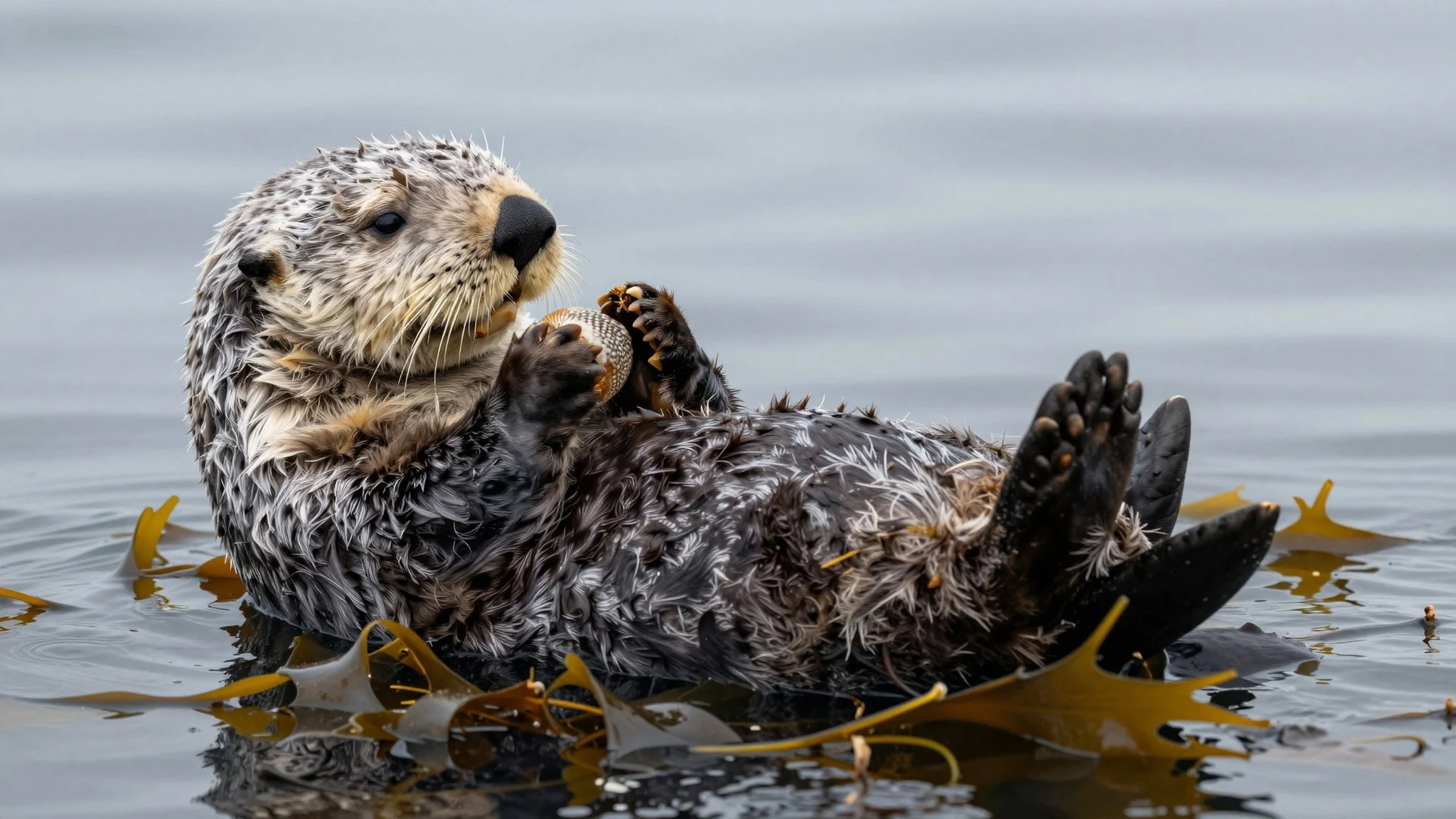
- Harbour seal (animal)
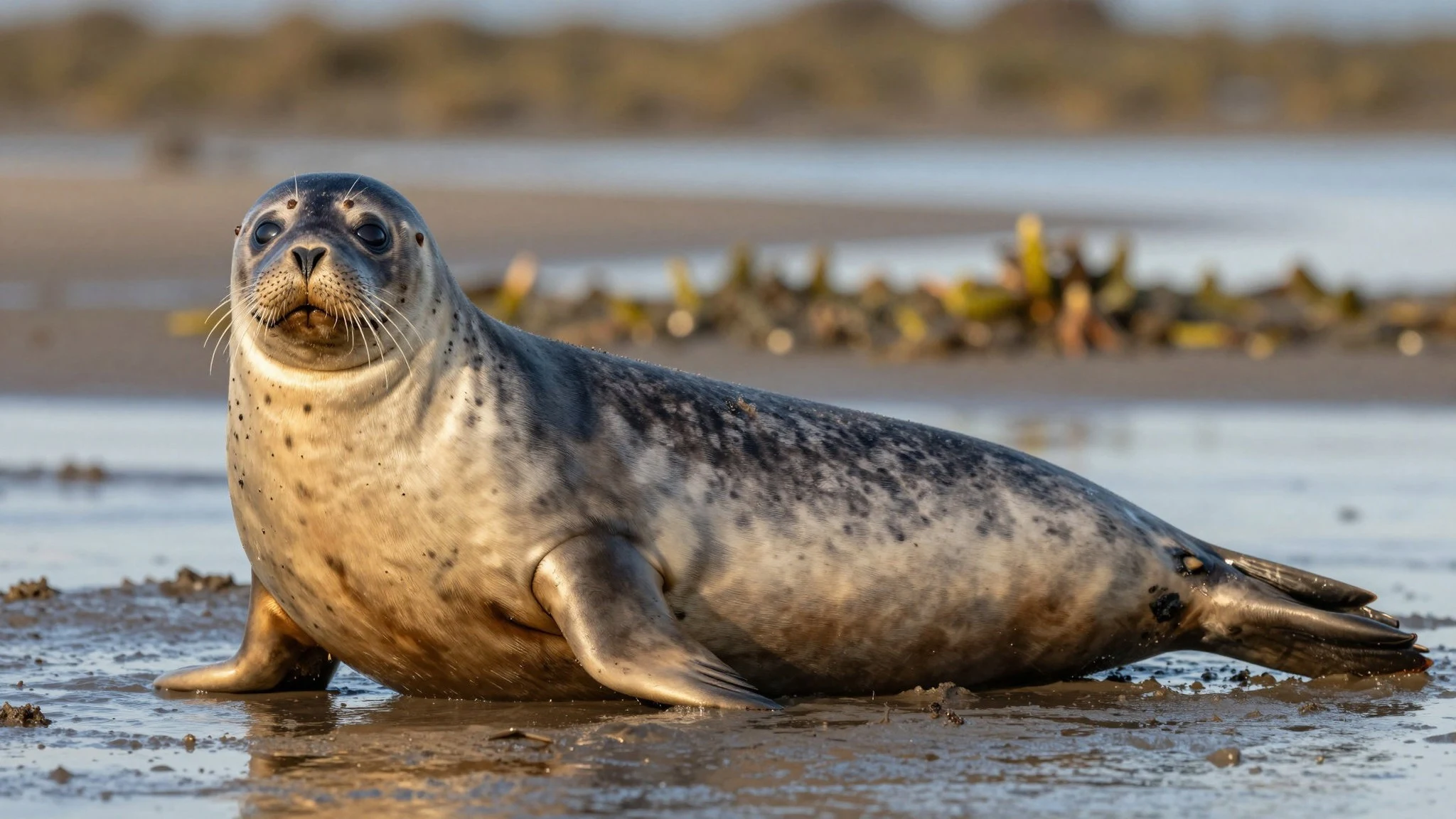
The harbour seal, also called the common seal, is a true seal: a flippered sea animal with one of the widest homes of its kind, found along northern coasts around the world. In Monterey Bay, the slough near where the whale boats leave is a reliable place to find it, alongside otters and wading birds. Keep well back, stay quiet so it feels safe, and let a guide help you watch. Never offer it food.