Montauk
Montauk, United States
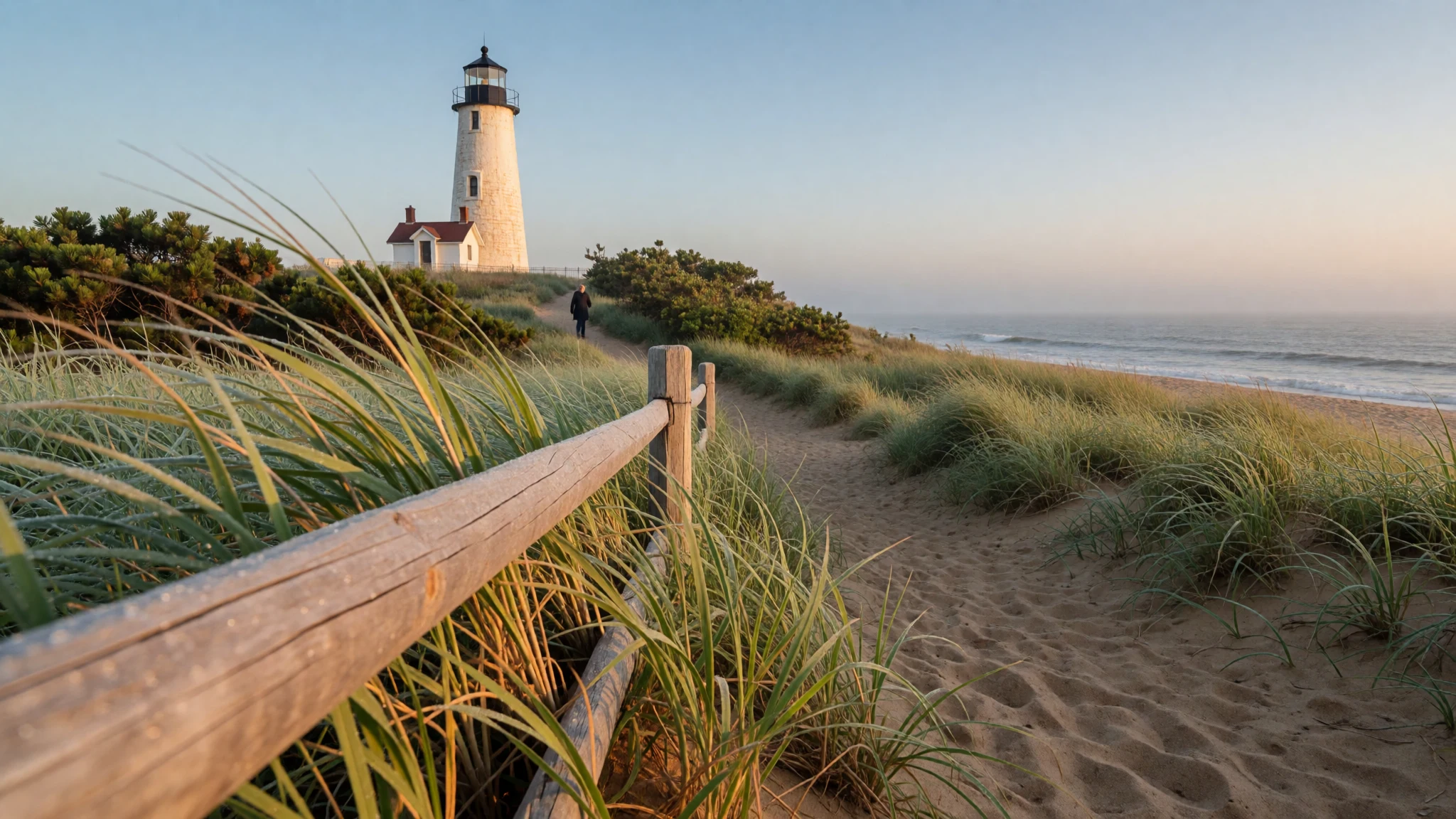
Montauk is where Long Island runs out: surf beaches, a working fishing harbour, windswept cliffs and a historic lighthouse at the end of the road.
The place
Montauk sits at the far tip of Long Island's South Fork, a hamlet of 4,318 people at about 10 m above sea level, where the land simply stops and the Atlantic begins. Road, rail and bus all end here, which explains the local nickname, "The End". The settled core is small: a harbour, a short main street of shops and eateries, and motels strung out near the beaches. Around it lies a long, thin stretch of dunes, moorland, ponds and bluffs, much of it protected as state or county parkland, so the built-up area never really sprawls. Fishing built the town and still shapes it. Charter boats leave at dawn, seafood counters sit beside the docks, and fishermen drink in the same bars as weekenders from the city. Surfers, walkers, cyclists and families fill the beaches through summer. The climate is humid subtropical, edging towards temperate oceanic, so summers are warm without being fierce, winters are cold and windy, and the cold sea keeps spring cool. Sea fog and onshore breezes are common. Chain hotels are not allowed, so places to stay are independent motels, guesthouses and inns, and prices swing sharply with the season. Montauk is crowded on summer weekends and very quiet in January, and both versions have their appeal. New York City is a long drive or a slow train away, which is why many visitors come for a weekend and stay longer than planned.
Its story
Montauk takes its name from the Montaukett, an Algonquian-speaking people who lived on this end of Long Island long before European ships appeared. In 1614 the Dutch captain Adriaen Block met them at the point and called it Hoeck van de Visschers, the Point of the Fishers, a name that still suits the waters. The following decades were hard on the Montauketts. They sided with New England settlers in the Pequot War, sold Gardiners Island afterwards, and in 1653 suffered a destructive war with the Narragansett, while smallpox thinned their numbers. When colonists purchased western territory in 1648 to form what later became East Hampton, the eastern section extending to the point was excluded, creating a division that still forms the western border of present-day Hither Hills State Park. Later centuries gave Montauk other roles. Its position made it useful to the military, and the Army, Navy, Coast Guard and Air Force all held ground here, which is why concrete batteries and a tall radar antenna survive among the dunes. The lighthouse at the point was the first built in New York state, and ships have used it as a landmark ever since. Offshore, the schooner La Amistad was seized near Culloden Point after the enslaved Africans aboard had taken control of the vessel, a case that went on to reach the American courts. Fishing, meanwhile, never stopped, and the harbour fleet is the thread tying all these layers together.
What to see
- Montauk Point Lighthouse — Montauk Point, eastern tip
Montauk Point Lighthouse stands on a bluff at the very end of the island and was the first lighthouse built in New York state. It now doubles as a museum, and the grounds look over open Atlantic. Check the official site for opening and climbing arrangements before driving out, and go early in summer to avoid queues for parking.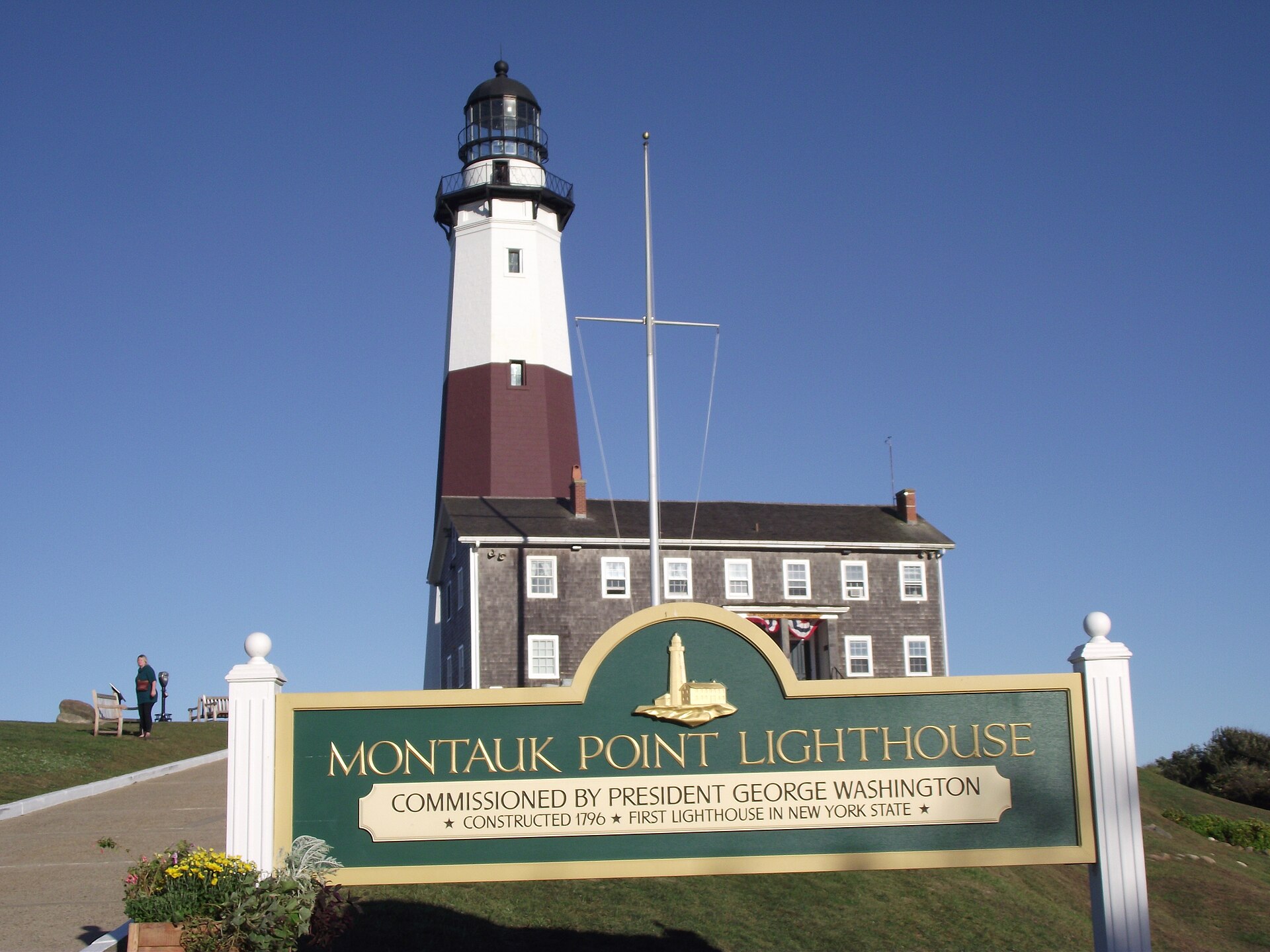
- Camp Hero State Park — Cliffs west of the lighthouse
Camp Hero State Park is a former military base on the bluffs, where gun batteries, empty buildings and a tall radar antenna now stand among windswept scrub. Trails lead to the cliff edge and long views along the coast. It is an odd, atmospheric stop that suits grey days, and it pairs well with the lighthouse.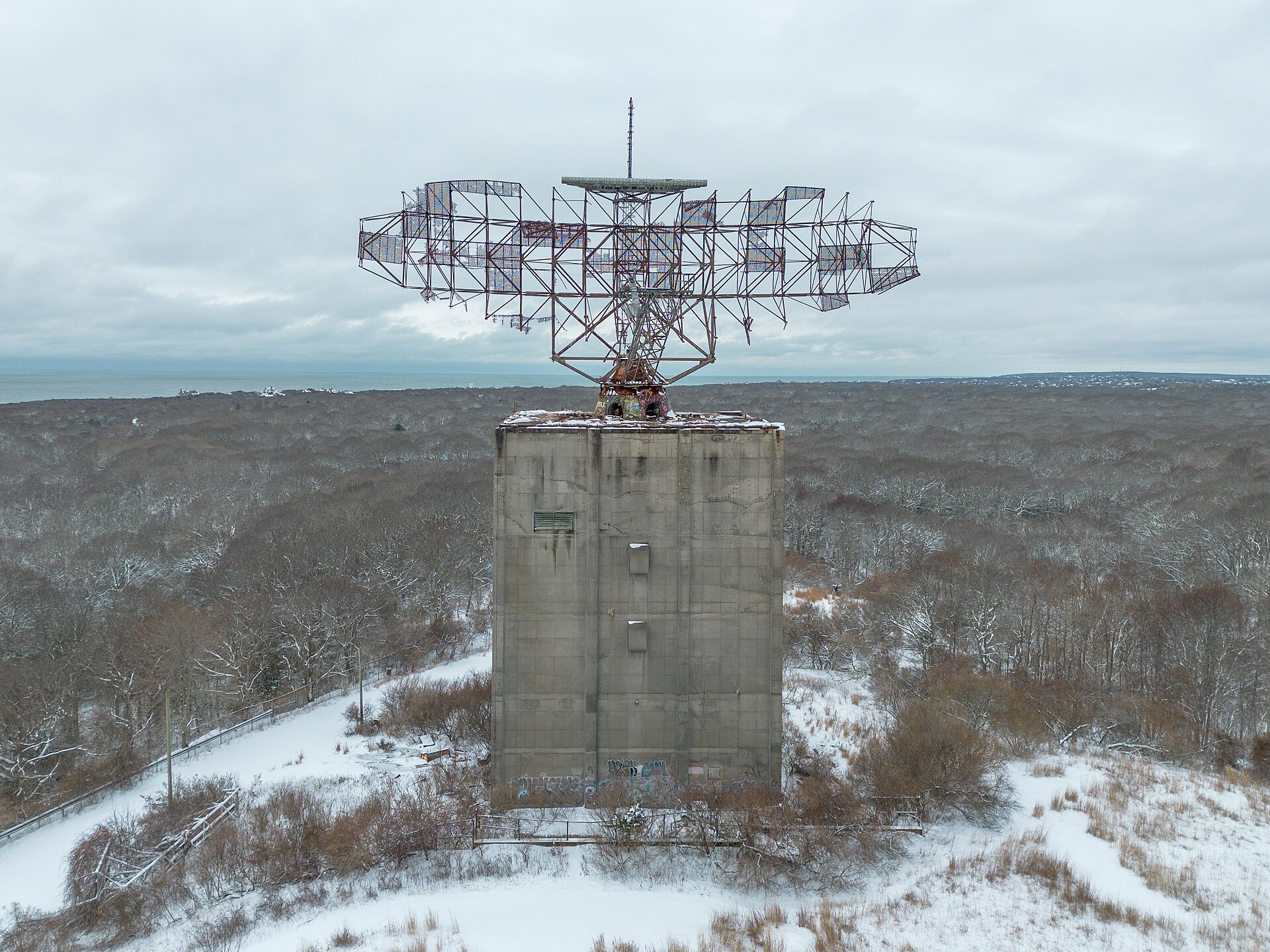
- Hither Hills State Park — Western side of Montauk
Hither Hills State Park has a wide ocean beach, walking trails through dunes and woodland, and a campground that families book well ahead for summer. Its western edge follows the old 1648 purchase line between the settlers' land and the Montaukett territory. A good choice for a full beach day with space to spread out. - Shadmoor State Park — Clifftop east of the village
Shadmoor State Park is a strip of clifftop grassland and scrub east of the village, with paths along eroding bluffs and views across the sea. It is much quieter than the main beaches and works well for a short walk near sunset. Keep to the marked paths, because the bluff edge is crumbling. - The working harbour and boat trips — Fort Pond Bay and the docks
Fishing is the old trade of Montauk, and the working docks are where to see it. Operators such as the Viking Fleet run fishing and whale-watching trips, and seasonal ferries link the port with Block Island and New London. Book ahead in summer, and choose a calm day if the sea tends to upset you.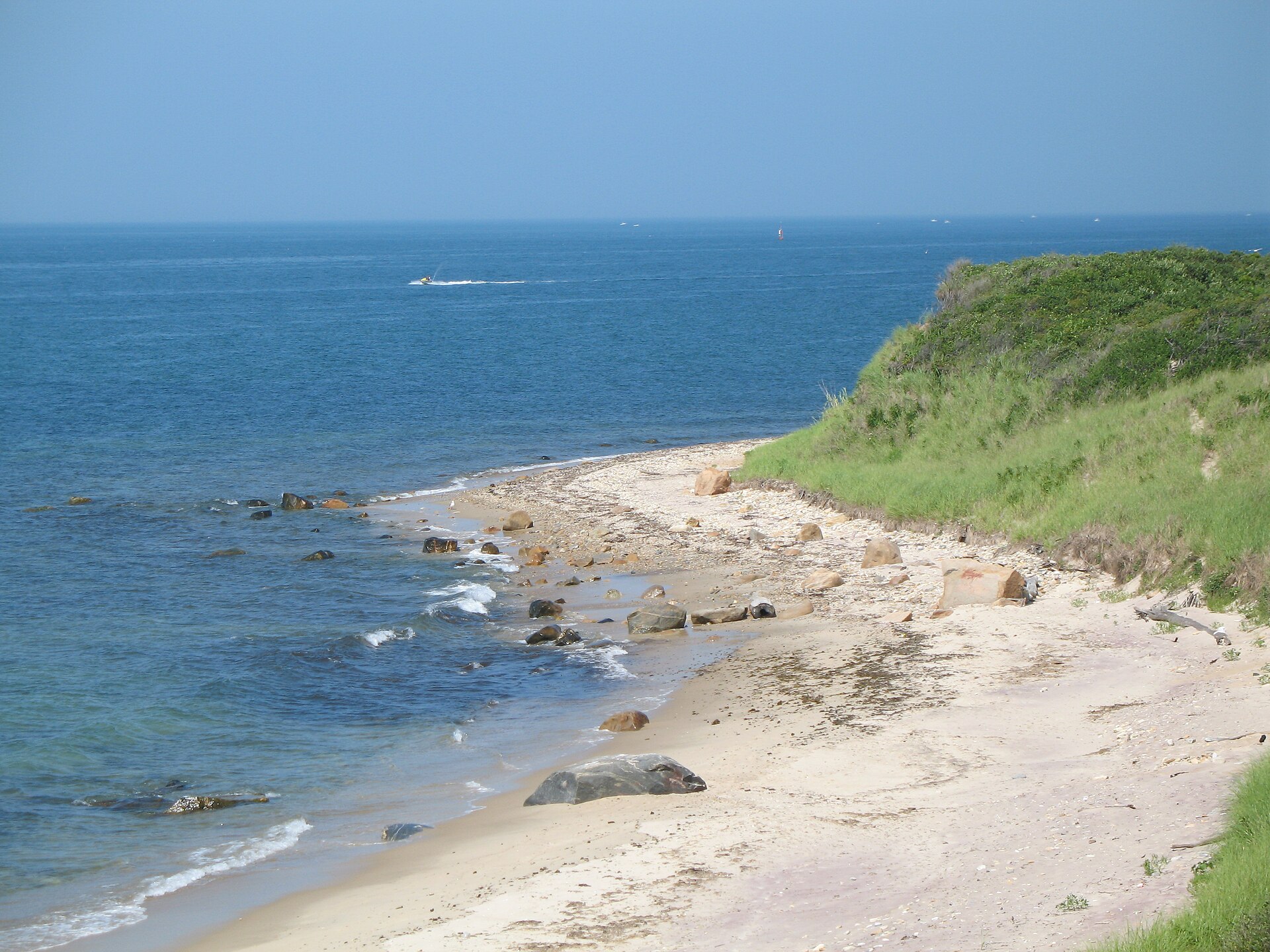
Culture
Montauk's culture is a blend of working fishing port, surf beach town and summer retreat for people from New York City. The Montaukett heritage comes first in the story and survives in the name and in local history; the community is still here, and local museums and events touch on it. Fishing shapes daily life: boats go out early, catches arrive at dockside markets, and talk in the bars often turns to weather and tides. Surf culture arrived later and is strong on the ocean beaches, with lessons, board shops and dawn sessions before the crowds. Weekenders and second-home owners bring a polished, expensive side, especially in high summer, and locals have mixed feelings about it. Out of season the village returns to its residents, who tend to be friendly but busy. The military past, from coastal batteries to the radar station, adds a quieter strand, and the lighthouse is a point of local pride. Tipping is expected in restaurants and bars, as elsewhere in the United States, and service staff in summer are working long, tiring shifts. Montauk is not a monument town; it is a place to take part in its rhythms, which means walking, swimming, eating well and watching the boats come in. Stay on marked paths and boardwalks across the dunes, since walking on the dune grasses speeds up erosion that the beaches can ill afford.
What to wear
Montauk has no single traditional costume, but the Montaukett and other Algonquian peoples of coastal New York historically wore deerskin garments and made beads from shell, known as wampum, for belts and ornament. Today such pieces appear mainly in museums, regalia at community events and heritage displays. What people actually wear now is shaped by sea and work: oilskin jackets, rubber boots and caps on the docks, wetsuits and board shorts at the surf breaks, and relaxed linen, cotton and knitwear among weekenders. The look is deliberately casual, even in the more expensive places, and swimwear gives way to shorts and a shirt once off the beach. Visitors should dress in layers, because the wind off the Atlantic can turn a warm morning chilly by evening. Pack a windproof jacket even in summer, a hat and sunscreen, and a swimsuit. Sandals suit the sand, but sturdy shoes or trainers are better for the bluffs, clifftop paths and old military sites. Restaurants are mostly informal, though some expect smart-casual dress in the evening. There are no religious dress codes to worry about, but cover up when walking through the village. For boat trips, bring non-slip shoes and a waterproof layer.
What to eat
- Lobster roll — Dockside shacks and harbour-side eateries
Montauk's classic order is lobster meat served in a soft toasted bun, either dressed lightly with mayonnaise or warm with butter. Look for casual decks near the harbour, where the shellfish comes straight from the boats. Expect queues on summer weekends. - Fresh-caught fish — Harbour restaurants and seafood markets
Local boats land tuna, striped bass and other fish, and seafood markets by the docks sell it whole or in fillets. Restaurants serve it grilled, seared or raw. Ask what came in that day, since the catch changes with season and weather. - Clam chowder — Casual eateries around Fort Pond Bay
Thick, creamy chowder with clams, potato and onion is the warming staple here, especially after a cold day on the beach or a boat trip. It appears at many casual eateries and bars, often served with crackers. - Raw oysters and clams — Oyster bars and seafood counters
Shellfish from nearby Long Island waters are served on ice with lemon and sauce at raw bars across the village. They suit a summer evening, and staff can tell you where each variety was grown. Go early, because popular counters fill up. - Bakery breakfast — Village bakeries and cafés on the main street
Surfers, fishermen and early walkers start the day at the village bakeries with coffee, muffins, breakfast sandwiches and pastries. It is a cheaper way to eat in a pricey town, and a sensible stop before heading out to the lighthouse.
Plan it
Best time. Late June to early September for warm beaches and open seasonal services; September is calmer with the sea still warm, and late May and early October suit walking with fewer crowds. Winters are cold and windy, and many seasonal businesses close.
How long. 2–3
Getting there. Fly to JFK or LaGuardia in Queens, or MacArthur Airport in Islip, then continue by road; the Queens airports are a long way off, so taxis are expensive. The Hampton Jitney coach runs from Manhattan, and the Long Island Rail Road runs east from Jamaica station in Queens, with local buses or taxis for the last stretch. By car, the main highway from the city is the only road in and jams on summer Friday evenings.
Budget. high
Tips
- Book rooms well ahead for summer weekends, as there are no chain hotels and independent places fill quickly
- Travel midweek or leave very early on Fridays and Sundays to avoid long traffic queues on the highway
- A car or bicycle makes the state parks and lighthouse far easier to reach than public transport
- Bring a windproof layer, sunscreen and water, since the clifftops and beaches have little shade
- Check the official site (http://ehamptonny.gov/333/Montauk) for beach, parking and park arrangements before you go
Etiquette
- Stay on marked paths and boardwalks across the dunes
- Tip restaurant and bar staff, as is normal in the United States
- Keep noise down and take rubbish away from beaches and clifftops
Nearby
Sources
- Wikidata Q498773 (CC0)
- Wikipedia: Montauk, New York (rev 1379641823) (CC BY-SA 4.0)
- Wikivoyage: Montauk (rev 5411375) (CC BY-SA 4.0)
- Montauk Point Lighthouse — Anthony Montemurro (CC BY 3.0)
- Aerial view of downtown Montauk — Quintin Soloviev (CC BY 4.0)
- Montauk Point Lighthouse winter view — Hayden Soloviev (CC BY 4.0)
- AN-FPS-35 radar at Camp Hero State Park — Hayden Soloviev (CC BY 4.0)
- Location map of Long Island — L9A8M (CC BY-SA 2.0)
- Culloden Point — Americasroof (CC BY-SA 2.5)
- La Amistad seizure site — Vitsuha (CC0 1.0)
- La Amistad (ship), restored painting (Public domain)


Wildlife
- Humpback whale (animal)
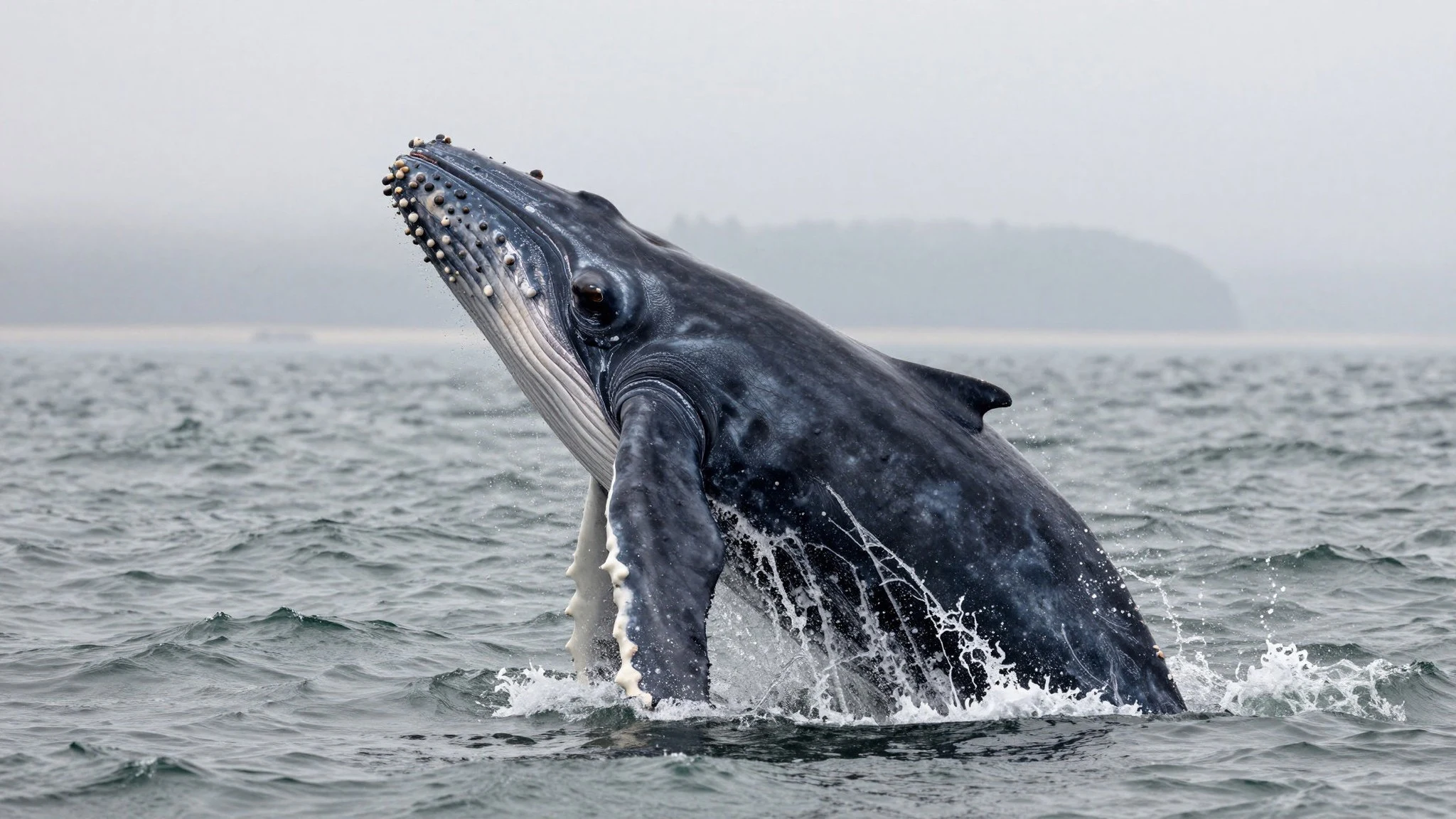
The humpback is a giant baleen whale with flippers so long they look like wings, and it is famous for leaping out of the sea. Males also sing long, complicated songs. In Montauk, the way to meet one is on a whale-watching trip from the port, with an operator such as the Viking Fleet, whose crew know how to find them. Watch from the boat, keep a respectful distance, stay quiet, and never feed wildlife.