Monhegan Island
Monhegan Island, United States
Monhegan Island is a car-free fishing community off Maine where cliff paths, birdlife and a long artists' tradition share a walkable footprint.
The place
Monhegan Island lies in the Gulf of Maine, about 22 km off the mainland coast, and is organised as a plantation, an old New England term for a small settlement with its own local government, within Lincoln County. About 64 people live there year-round. The small neighbouring island of Manana sits across the water and, with Monhegan, forms the sheltered harbour where the boats come in. The main island is about 2.8 km long and 1.2 km wide, so every path is walkable, which suits a place where visitors' cars are not permitted. Access is by scheduled passenger ferry only. The village gathers near the harbour, and from there trails lead through spruce woods and out to cliffs facing the open Atlantic. In 1966 the island was named a National Natural Landmark for its coastal and island plants, and much of it still feels wild rather than landscaped. Working life is still part of the picture. Fishermen here manage the only lobster conservation area in Maine, and traps, buoys and boats are everywhere around the waterfront. Artists have come for generations, drawn by the light and the rock, and their tradition is part of the island's identity. Quiet is the norm, with few services, limited lodging that fills early in summer, and ferries that fog or rough seas can disrupt.
Its story
Monhegan Island takes its name from Monchiggon, an Abenaki word meaning an island out at sea. English visitors reached it early: Martin Pring called in 1603, Samuel de Champlain in 1604, George Weymouth in 1605 and John Smith in 1614. The island began as a fishing camp, where cod from the Gulf of Maine was dried on wooden racks and shipped to Europe, and a trading post handled the fur trade with Native communities. Those traders figure in a well-known episode. Samoset, an Abenaki leader who had learned English on Monhegan, walked into the new Pilgrim village at Plymouth in 1621 and greeted the settlers in their own language. A less welcome chapter came in April 1717, when a small ship called the Anne, crewed by pirates, arrived at Monhegan. The crew had expected to meet the pirate ship Whydah there, not knowing it had been wrecked off Cape Cod in a storm days earlier. After waiting in vain, they raided shipping at nearby places and abandoned their captured vessels. Monhegan was organised as a plantation in 1839, and fishing is still central to island life. In the last century or so the island gained a second identity as an artists' colony, with painters including Edward Hopper, George Bellows, Rockwell Kent and Jamie Wyeth working among its cliffs and coves.
What to see
- Fish Beach — Beside the harbour
Fish Beach is a small cove near the harbour where fishing boats and gear sit close to the water. It is also where painters have set up easels for generations, and an old photograph shows Sears Gallagher doing just that. Early morning gives soft light and fewer people.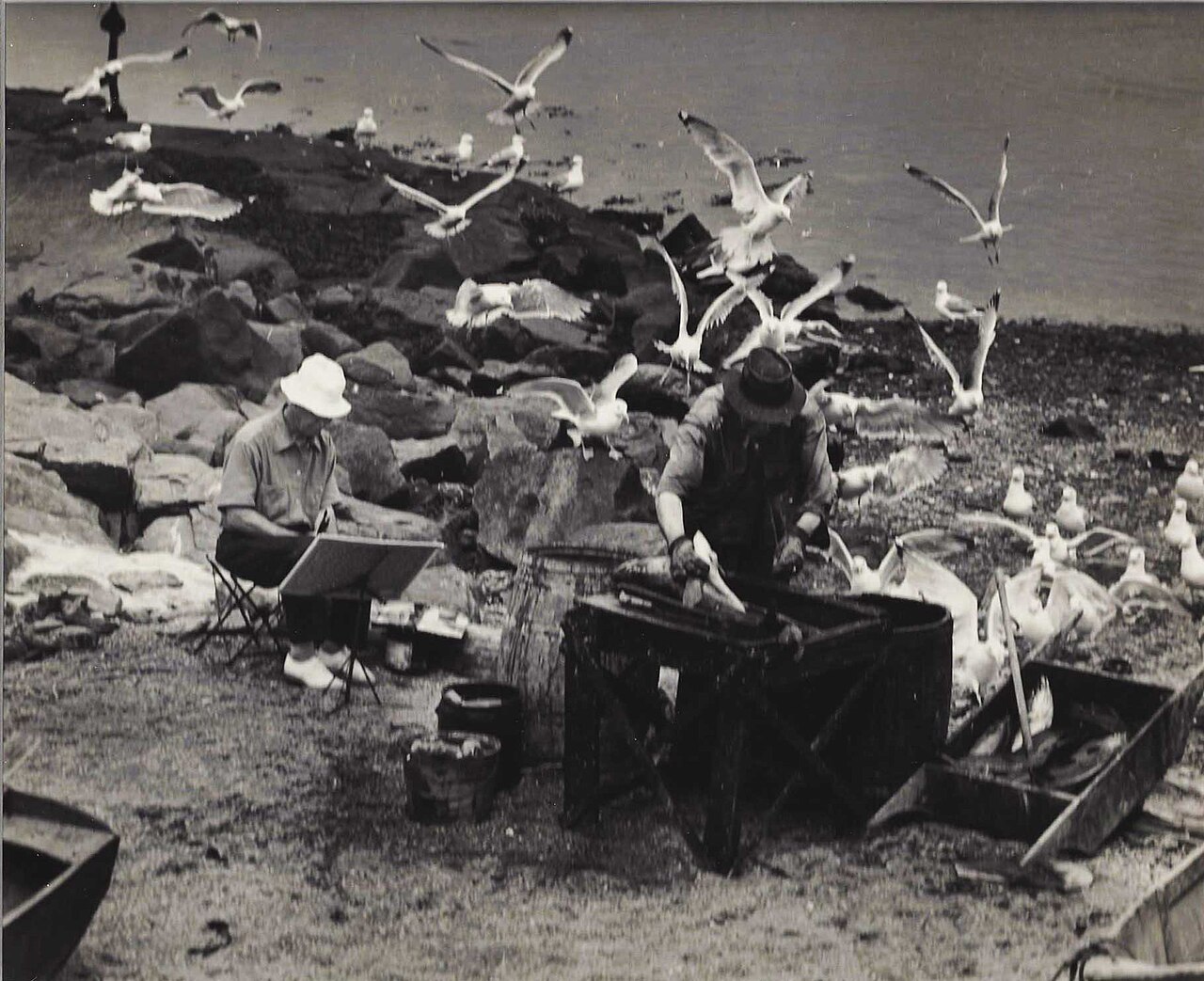
- The village and harbour — Village centre
The village of Monhegan is a compact cluster of weathered houses, small galleries and working buildings along a few lanes behind the harbour. It takes minutes to cross on foot. Visitors wander the lanes, browse local art and watch lobster boats come and go, because the harbour remains a working one.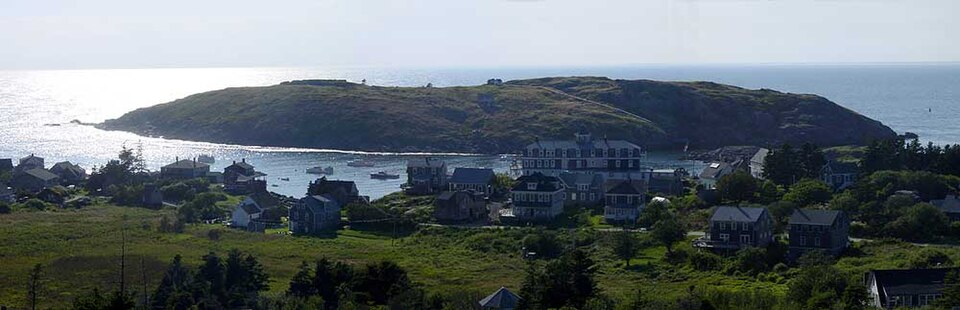
- The headland cliffs — Eastern side of the island
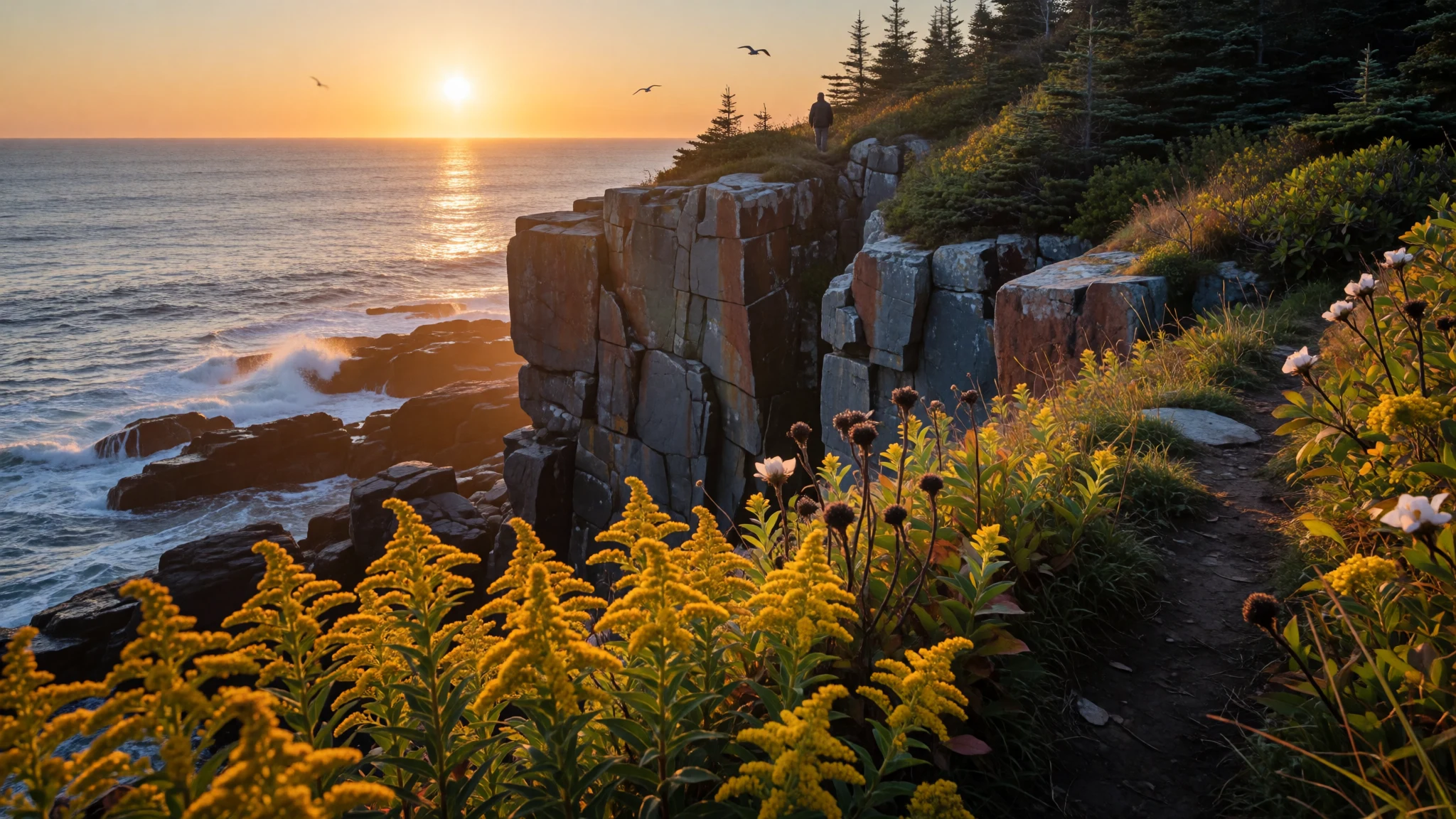
The headland cliffs on the seaward side of Monhegan Island draw walkers along trails that run close to the edge, with views over open Atlantic. The drops are real, so footing and weather matter. Seabirds, wildflowers and the smell of salt and spruce reward a clear day.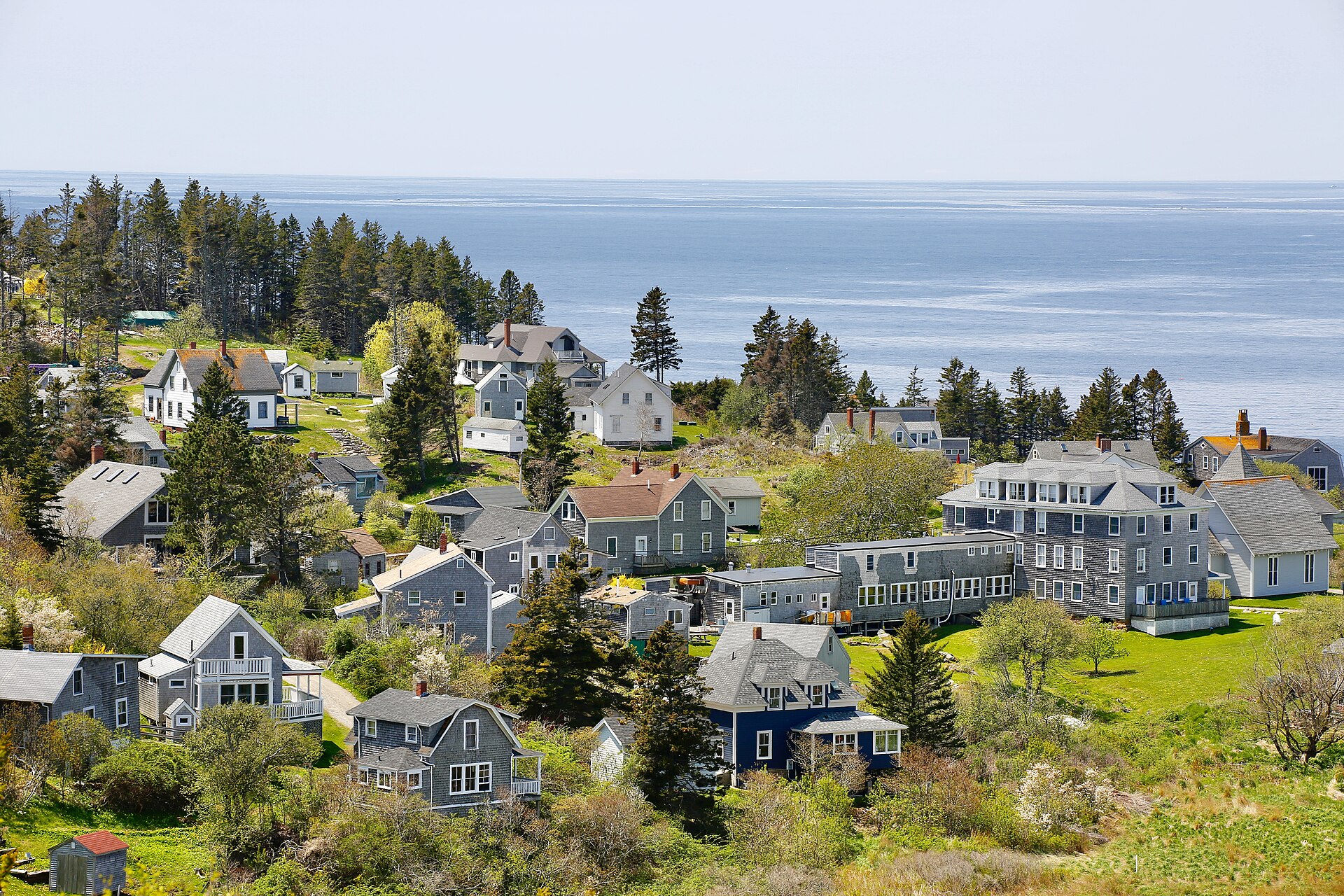
- Manana Island — Across the harbour
Manana Island is the smaller neighbour, close enough to frame the harbour view and to give boats shelter. It is best seen from the village shore and the western paths, especially around sunset. Landing there is a separate question, so ask locally first.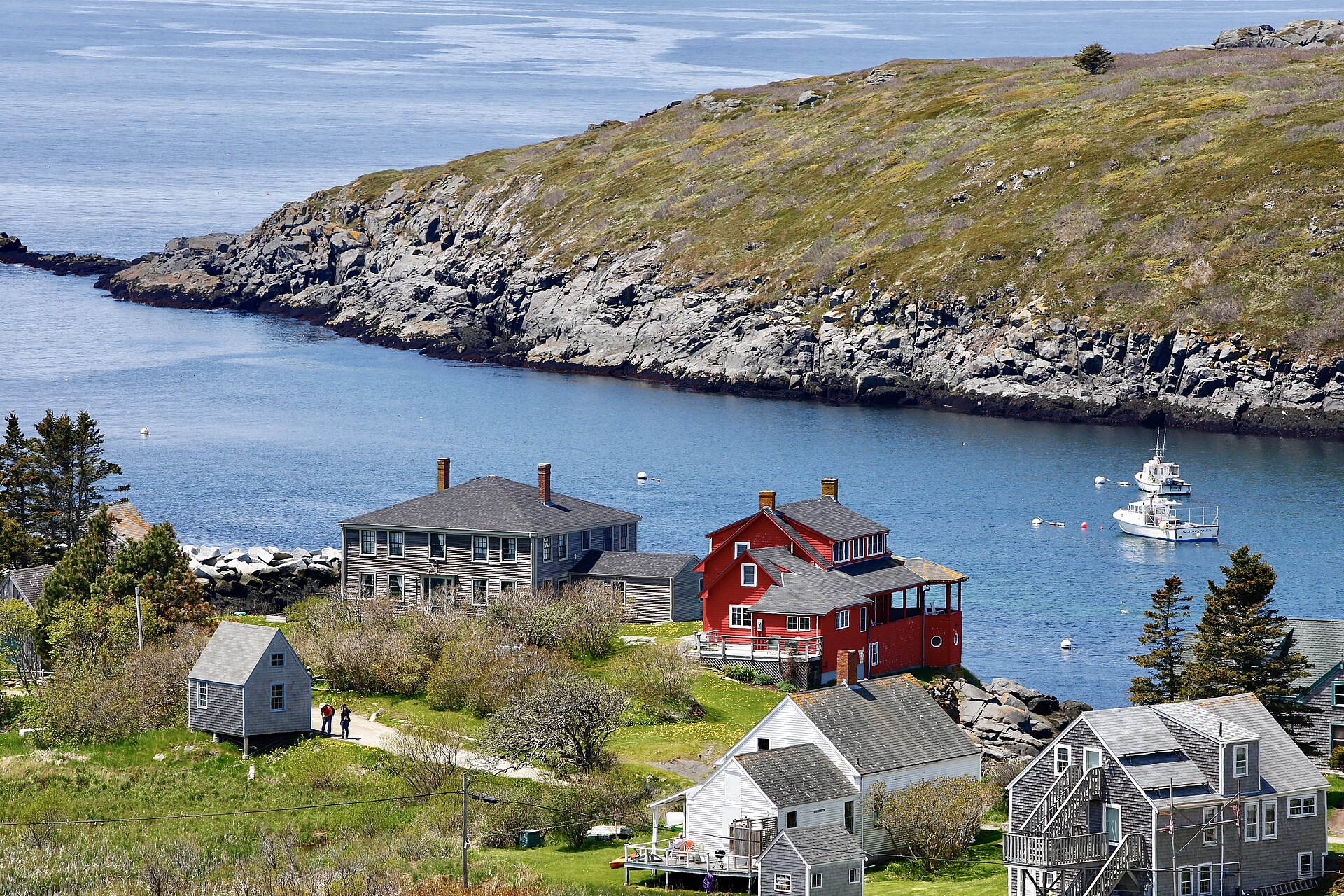
- The spruce woods and inland paths — Island interior
Inland, Monhegan Island's spruce woods and open meadows give a calmer contrast to the cliffs. Trails are quiet, mossy in places and rooty underfoot, and the tree cover is a useful shelter from wind. The island's status as a National Natural Landmark rests on its plants, so staying on marked paths matters here.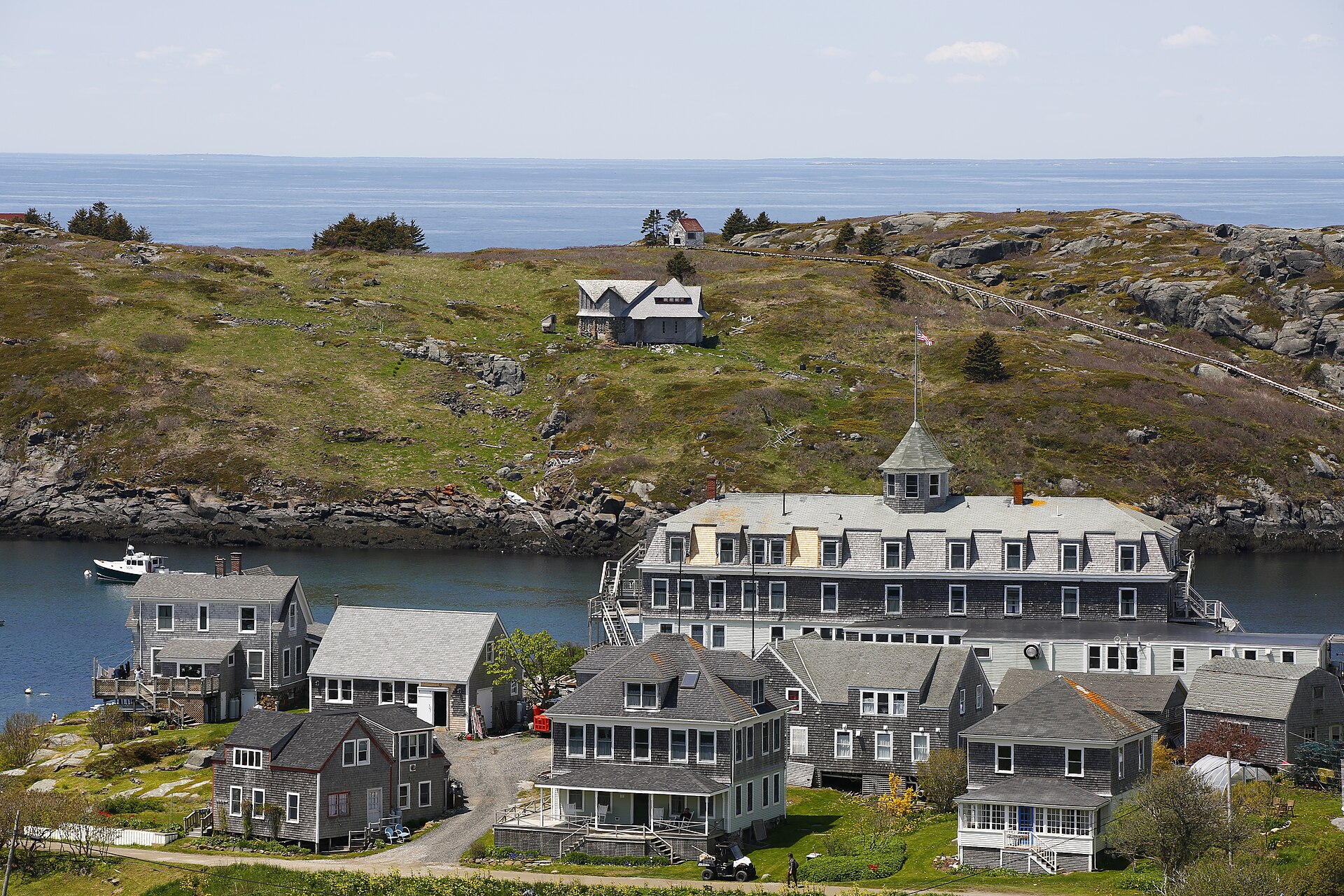
Culture
Monhegan Island runs on a rhythm of boats, weather and a small year-round community of about 64 people. Fishing families, artists and visiting walkers share a place where everyone knows the ferry timetable and the state of the sea. The island's fishermen manage Maine's only lobster conservation area, which is a source of local pride and a reason traps and buoys deserve respect. The arts are the other thread. Painters such as Edward Hopper, George Bellows, Rockwell Kent and Jamie Wyeth found subjects here, and Nicholas Roerich painted the island too. Galleries and studios open in season, and sketchbooks and cameras are common sights on the trails and beaches. Artists and walkers often share the same viewpoint, which makes patience and a little distance a form of good manners. The island also takes conservation seriously. Visitors' cars are kept off, the ecosystem is fragile, and the National Natural Landmark designation of 1966 reflects a long habit of looking after the plants and shoreline. Evenings are quiet, with little late-night entertainment, so a visit tends to be about walking, reading, sketching and watching the harbour. Keep to marked trails, leave lobster traps and fishing gear untouched, and ask before photographing fishermen or artists at work.
What to wear
Monhegan Island has no formal traditional costume of the kind a visitor might see on a festival day elsewhere. The clothing that belongs to the place is working gear from the fishing trade: oilskin or waxed jackets, heavy knitted wool jumpers, thick socks and tall rubber boots, all chosen to stay warm and dry on a wet deck. These are worn daily rather than for occasions, and wool and oilcloth remain the practical textiles of the Gulf of Maine.
What people wear now is a blend of that workwear and relaxed outdoor style. Fishermen still dress for the boat, residents favour fleeces, jeans, caps and boots, and the artists who work outdoors tend to wear old layers with a hat against the sun. Dressing up is rare, and smart clothing would look out of place.
For a visit, dress in layers whatever the month. The sea wind can make a bright day feel cold, and fog can roll in quickly, so bring a windproof, waterproof jacket, a warm mid-layer and a hat. Footwear matters most: the cliff trails are rooty, rocky and sometimes wet, so wear boots or trail shoes with good grip rather than sandals or smooth soles. Long trousers help against scratchy undergrowth and ticks in the woods. Sunscreen and sunglasses are worth packing for open ground. No religious dress codes apply, and the sea stays cold even in summer.
What to eat
- Boiled lobster — Harbour-side eateries in the village
Whole lobster, boiled, cracked by hand and dipped in melted butter, is the meal most visitors come for. The catch lands from local boats, so the supply is close at hand. On summer evenings, expect queues or a need to book ahead. - Lobster roll — Casual eateries and takeaway counters near the harbour
Lobster meat, picked from the shell and piled into a soft split bun, served with mayonnaise or with butter, depending on who is making it. It suits a walk-and-eat lunch beside the harbour. - Fish chowder — Village eateries, especially at lunchtime
A creamy soup of white fish, potato and onion, thick enough to warm hands after a windy cliff walk. Versions differ from kitchen to kitchen, and a cup with bread makes a sensible lunch on a cool or foggy day. - Blueberry pie — A café or bakery in the village
Maine is known for wild blueberries, and a slice of blueberry pie, sometimes with ice cream, is a common sweet finish. Availability on the island varies by season and by who has been baking that week. - Bread, muffins and pastries — A village bakery or café, in the morning
Muffins, bread and pastries from a village bakery or café make a practical breakfast or picnic for a day on the trails. Mornings are best, since popular items can run out, and opening times change with the season, so ask locally.
Plan it
Best time. June to early October. Summer is warmest, though fog is possible and the island is busiest; September and early October bring cooler days and good light for walkers and painters. Winters are cold, windy and very quiet, with limited services.
How long. 2–3
Getting there. Fly to Portland International Jetport in Maine, then hire a car or arrange a transfer to a mainland ferry port such as Port Clyde. Scheduled passenger ferries also serve the island from other mainland ports, so check the operators' current timetables. Cars cannot be taken over, so leave yours on the mainland.
Budget. mid
Tips
- Book ferry places and lodging well ahead for summer, and check the operators' official sites for current timetables
- Carry some cash as well as a card, and do not count on shops or services staying open late
- Bring water and snacks for trail days, as the island has few places to buy them away from the village
- Wear sturdy footwear, because trails near the cliffs are uneven and can be wet
- Leave slack in the plan, since fog or rough seas can delay ferries
Etiquette
- Stay on marked trails to protect the plants and keep clear of cliff edges
- Do not touch lobster traps, buoys or fishing gear
- Ask before photographing people at work
Nearby
Sources
- Wikidata Q3288454 (CC0)
- Wikipedia: Monhegan, Maine (rev 1373645320) (CC BY-SA 4.0)
- Wikivoyage: Lincoln County (Maine) (rev 3746700) (CC BY-SA 4.0)
- Photo: Gallagher (in white hat) painting on Monhegan Island, Maine, Warner Taylor (Public domain)
- Photo: George Bellows, The Gulls, Monhegan (Public domain)
- Photo: Broadway, Monhegan, Sears Gallagher (Public domain)
- Photo: N. Roerich, Monhegan, Maine (Google Art Project) (Public domain)
- Photo: Monhegan pano, Halfblue (CC BY 3.0)
- Photo: View from Monhegan Island 4, Rorythomasoconnor (CC BY-SA 4.0)
- Photo: View from Monhegan Island 3, Rorythomasoconnor (CC BY-SA 4.0)
- Photo: View from Monhegan Island 2, Rorythomasoconnor (CC BY-SA 4.0)


Wildlife
- American lobster (animal)
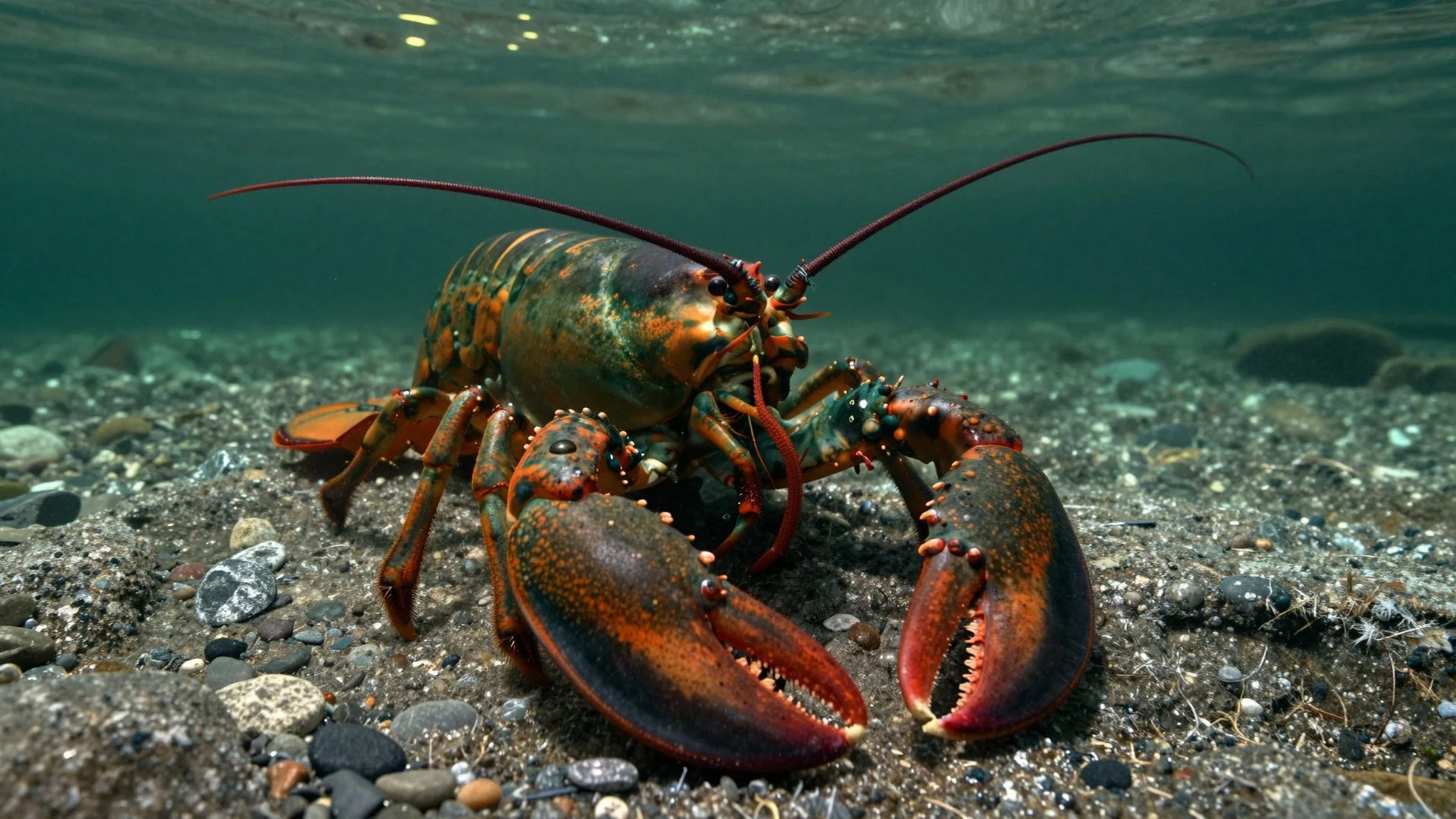
The American lobster is an armoured sea creature, the heaviest crustacean on Earth, often greenish-blue or brown with red spikes. On Monhegan its story lives around the waterfront, where traps, buoys and boats are everywhere, and the island's fishermen look after Maine's only lobster conservation area. Wander the waterfront, watch the working boats quietly and from a respectful distance, and let the fishermen get on with their work.