Mongar Dzong
Mongar Dzong, Bhutan
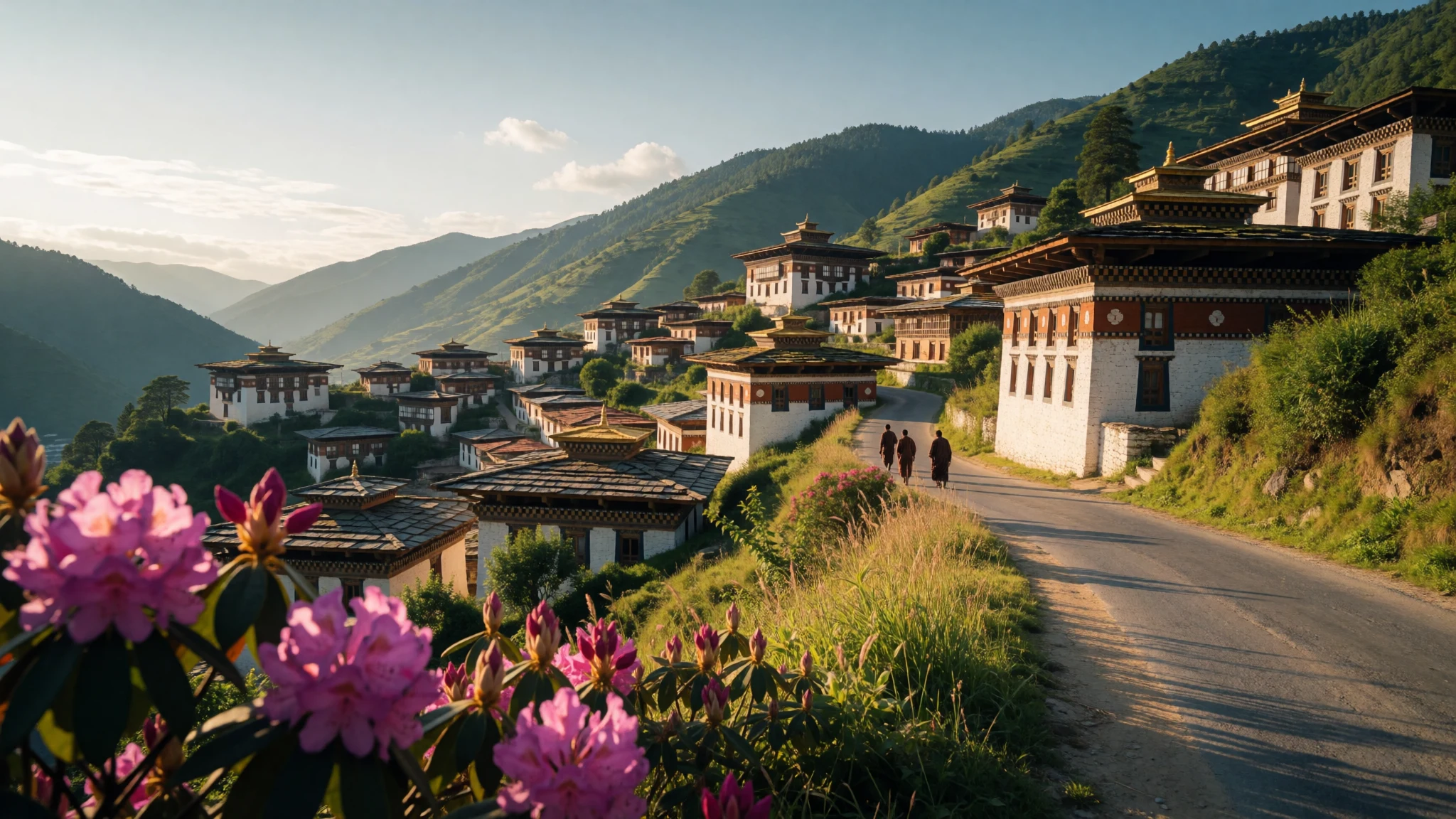
Mongar is a quiet eastern Bhutan district town where a working dzong, a ruined older fortress and slow mountain roads reward unhurried travel.
The place
Mongar stands at 1,600 metres on a hillside in eastern Bhutan and serves as the administrative seat of Mongar District, which has about 36,000 residents. Most of them live in scattered villages rather than in town, farming maize, rice and vegetables on terraced slopes. The town itself is small: a ribbon of shops, offices, eateries and guesthouses along the highway between Thimphu and Trashigang, with a regional hospital and schools that draw families from across the east. Prayer flags mark the ridges above, and an old chörten stands among the buildings.
The setting shapes everything. Mongar lies far lower than the passes that separate it from central Bhutan, so the climate is humid subtropical with a dry winter. Summers are warm, wet and green, with cloud rolling up the valleys and landslides that can slow the road. Winter days are clear and mild, though mornings are cold. Neither season is harsh, but the monsoon deserves respect.
Visitors are few compared with Paro or Thimphu, which is much of the appeal. Evenings are quiet, people greet strangers, and a morning walk can take in the dzong, the market and the lanes without a tour group in sight. Mongar is also a practical overnight halt: the road east is long and winding, and most travellers use the town to rest before pushing on to Trashigang, Tashiyangtse or back towards Bumthang. It suits two or three unhurried days rather than a checklist.
Its story
Mongar's story is one of fortresses and roads. A dzong, in Bhutan, is a fortified building that houses both monks and civil officials, and each district has one. Mongar's older fortress, Zhongar Dzong, has stood in ruins since 1889, its remains left on the outskirts as a reminder of an earlier chapter in the region's history. The district's working dzong now stands in town and continues the old arrangement, with the district administration on one side and a monastic body on the other.
For most of Bhutan's history, the eastern valleys were reached on foot and by mule along ridge trails, a journey of many days from the west. The modern highway changed that. It links Thimphu to Trashigang, and Mongar became one of its natural stopping points, which helped it grow into a centre for health care, schooling and government in the east. The regional referral hospital is the clearest sign of this role: people travel from distant valleys to reach it.
Religion runs through the district as well. Yagang Lhakhang, a temple on the town's outskirts, and Losel Yangchenling Nunnery, where women study and practise, show Buddhism as a living routine rather than a museum piece. Each year the Mongar Tshechu fills the dzong courtyard with masked dances, and families from surrounding villages arrive in their best clothes. Dates follow the lunar calendar and shift from year to year; the 2025 festival ran in late November.
What to see
- Mongar Dzong — Mongar town
Mongar Dzong is the district's working fortress, where officials and monks share one set of whitewashed walls and carved wooden windows. Visitors can usually walk the courtyard and look into the temple when it is open, though access varies with ceremonies and administrative days. Go early, dress modestly, and ask before taking photographs inside any sanctuary.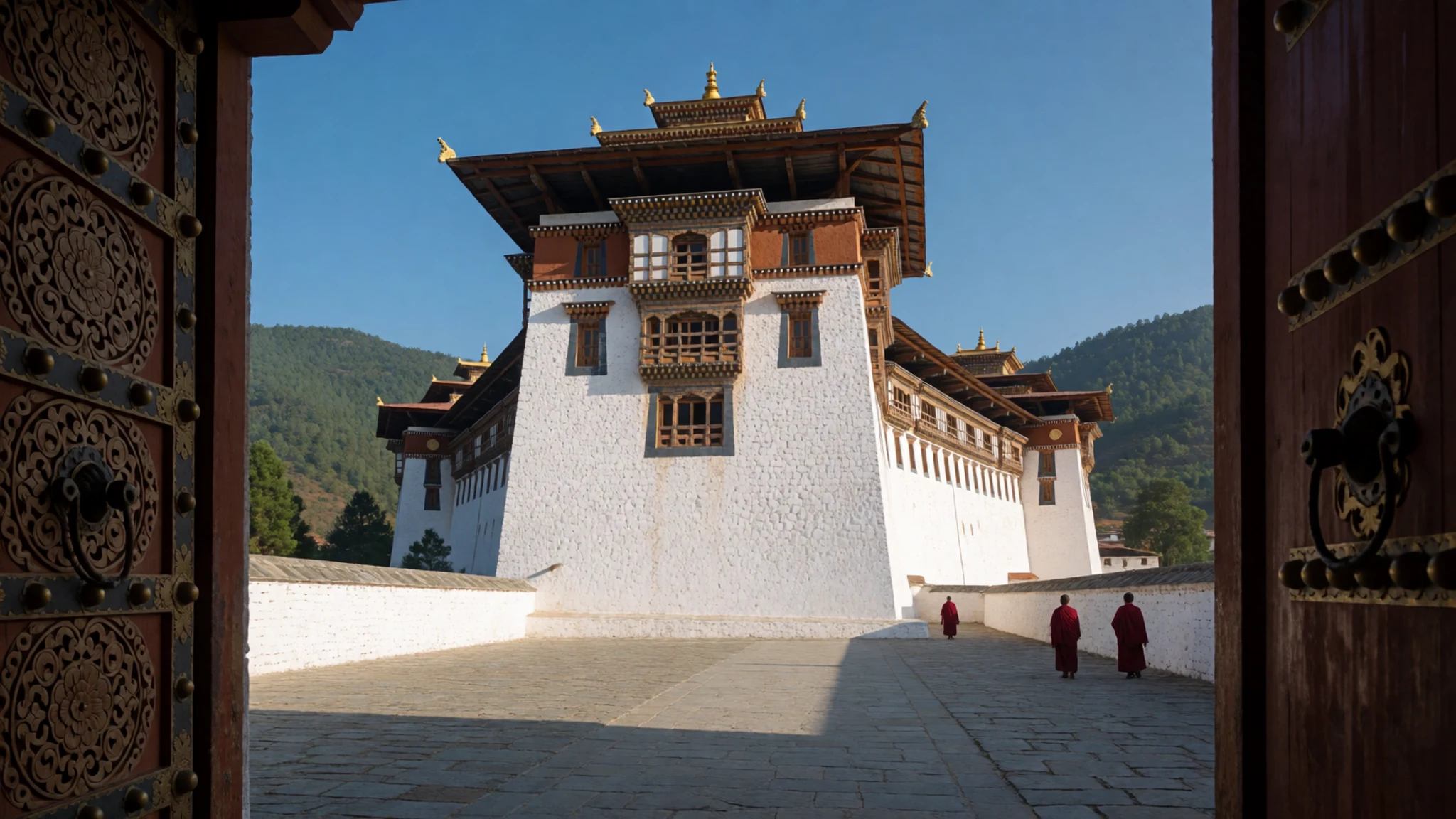
- Zhongar Dzong ruins — Outskirts of Mongar
The ruins of Zhongar Dzong lie on the edge of town, the remains of the older fortress that was abandoned long ago. There is little to see beyond old walls and a view, but it gives a sense of how the district was once governed. Ask locally for the best approach.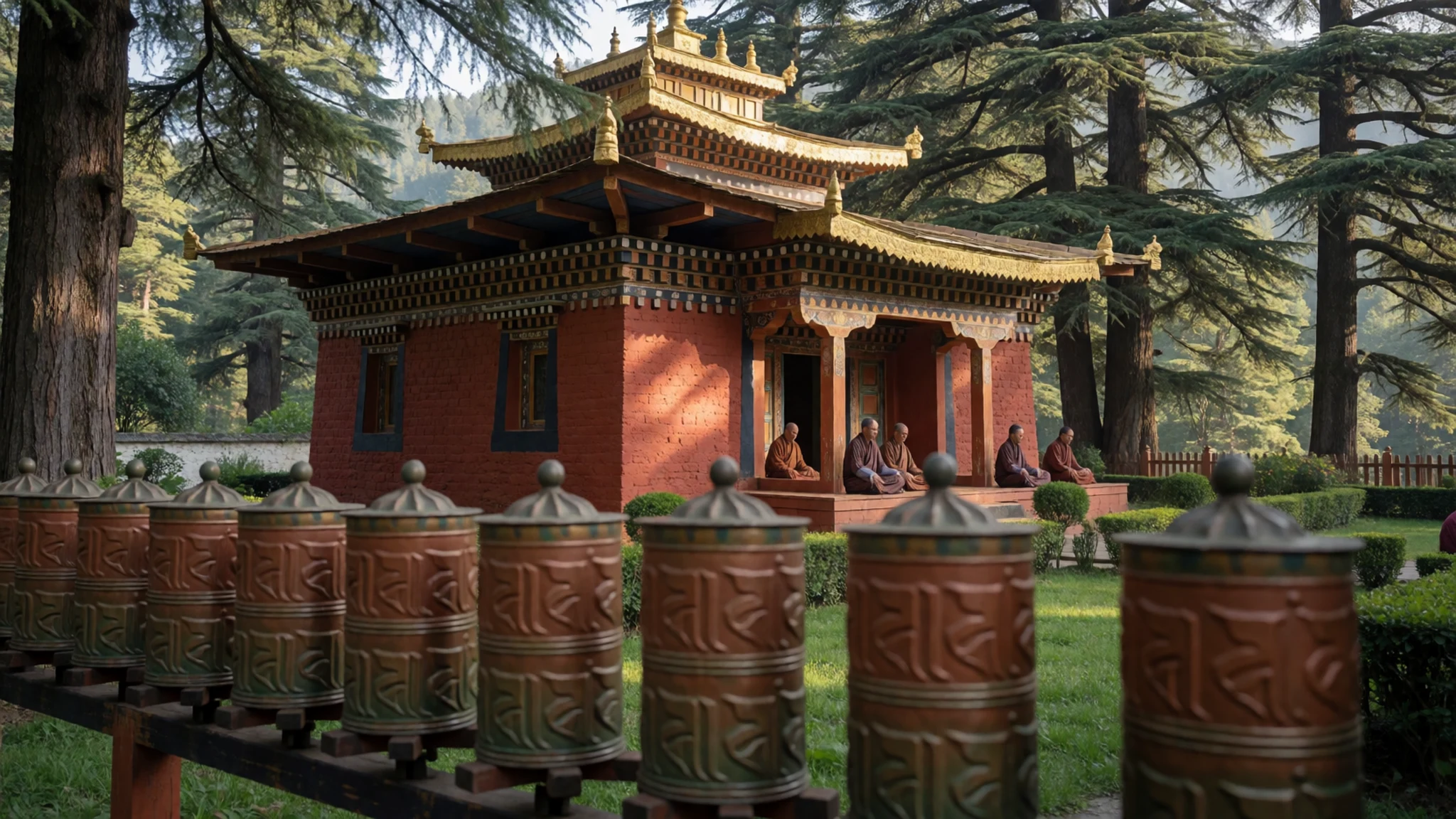
- Yagang Lhakhang — Outskirts of Mongar
Yagang Lhakhang is a temple-monastery on the outskirts of Mongar, a short drive from the centre. Like most Bhutanese lhakhang it is a small, active place of worship, so quiet visits suit it best. If the door is closed, ask a neighbour or your guide to find the caretaker, and leave shoes outside.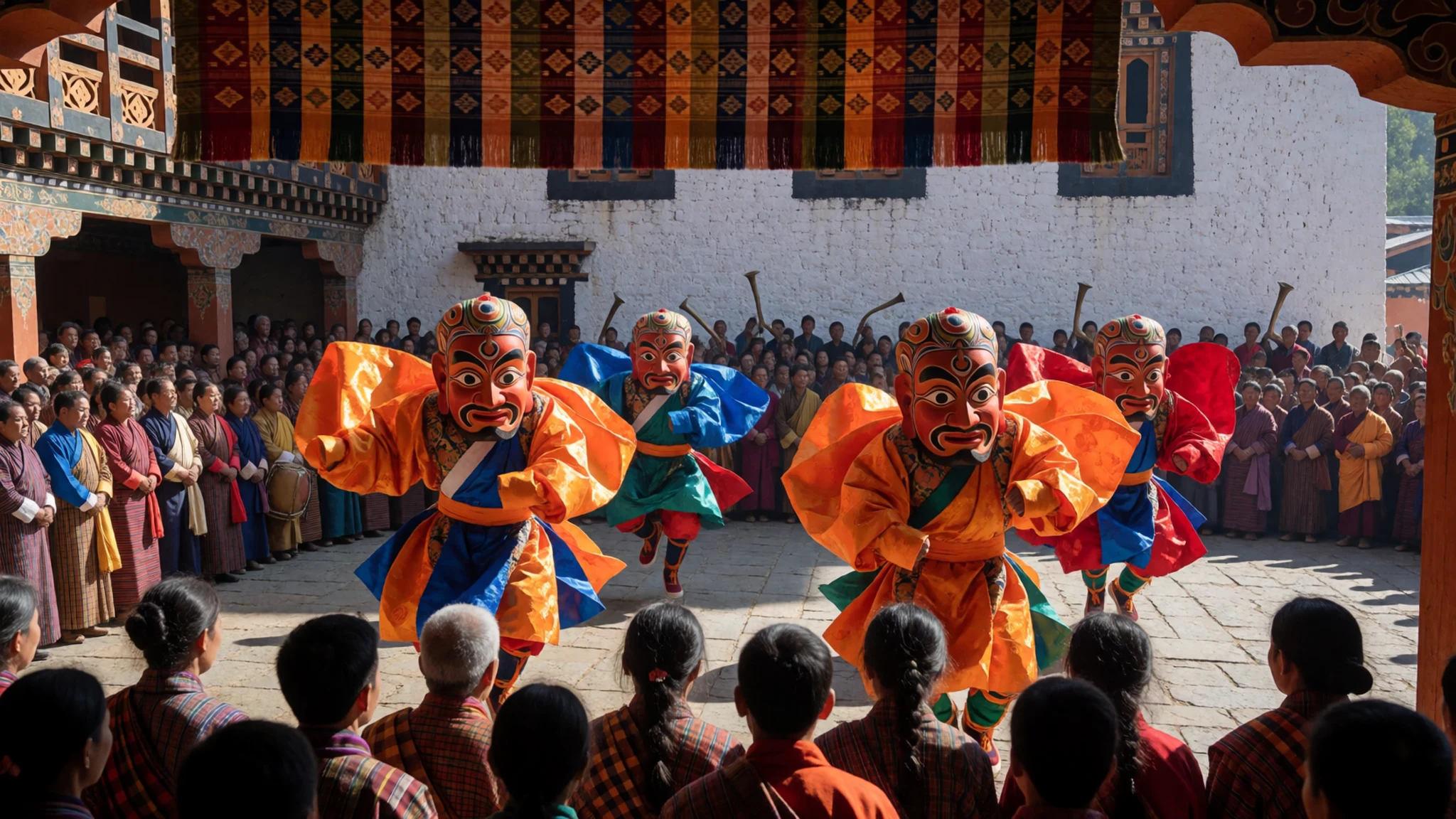
- Losel Yangchenling Nunnery — Mongar area
Losel Yangchenling Nunnery is a community of nuns whose white buildings catch the light well in early morning, and look striking under snow in winter. Photographers like it, but it is a place of study and prayer first. Visit politely, keep voices low, and check locally what access is allowed.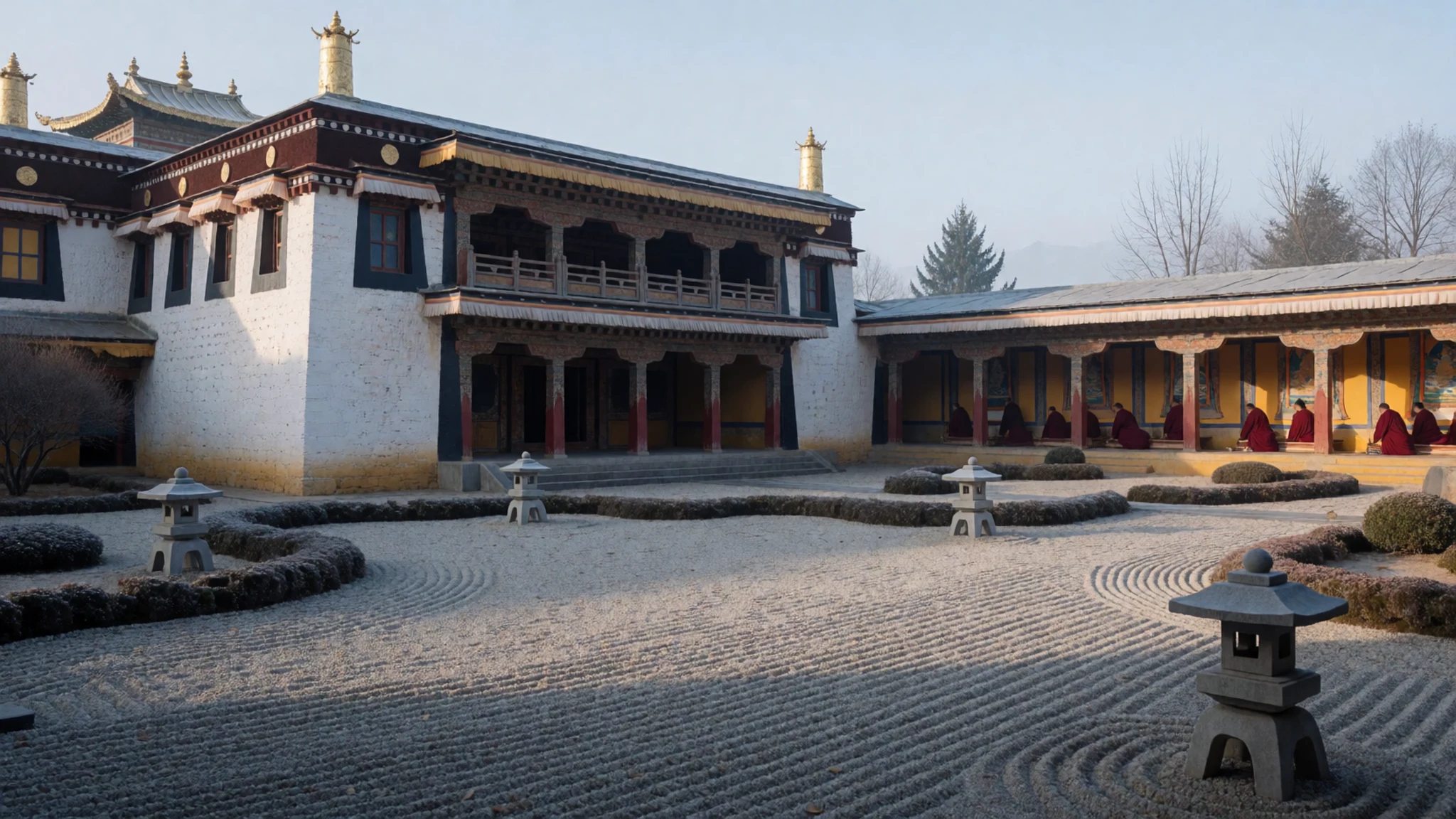
- Aja Ney — Mongar area
Aja Ney is a sacred site, a ney, in the Mongar area, where local Buddhists come to pray and walk the paths around the shrine. Ask your guide or someone in town about the route and the behaviour expected there. It suits travellers who enjoy quiet pilgrimage places rather than polished attractions.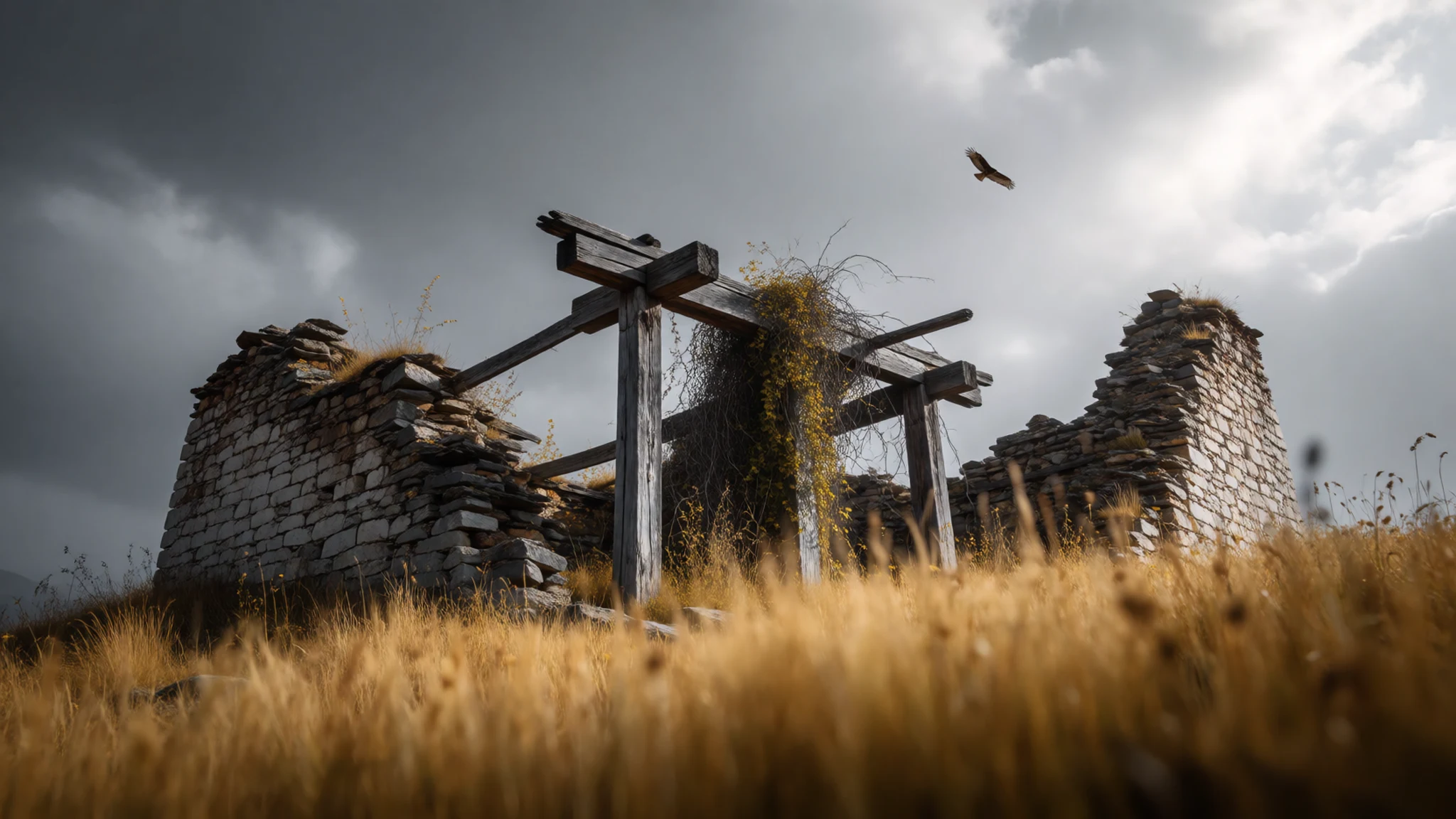
- The old chörten and town walk — Mongar town centre
The old chörten in Mongar town is a whitewashed stupa among the shops, and local people pass it clockwise. A slow walk around the centre, taking in the chörten, the market and the view over the valley, makes a good first hour. Keep the monument on your right as you walk round it.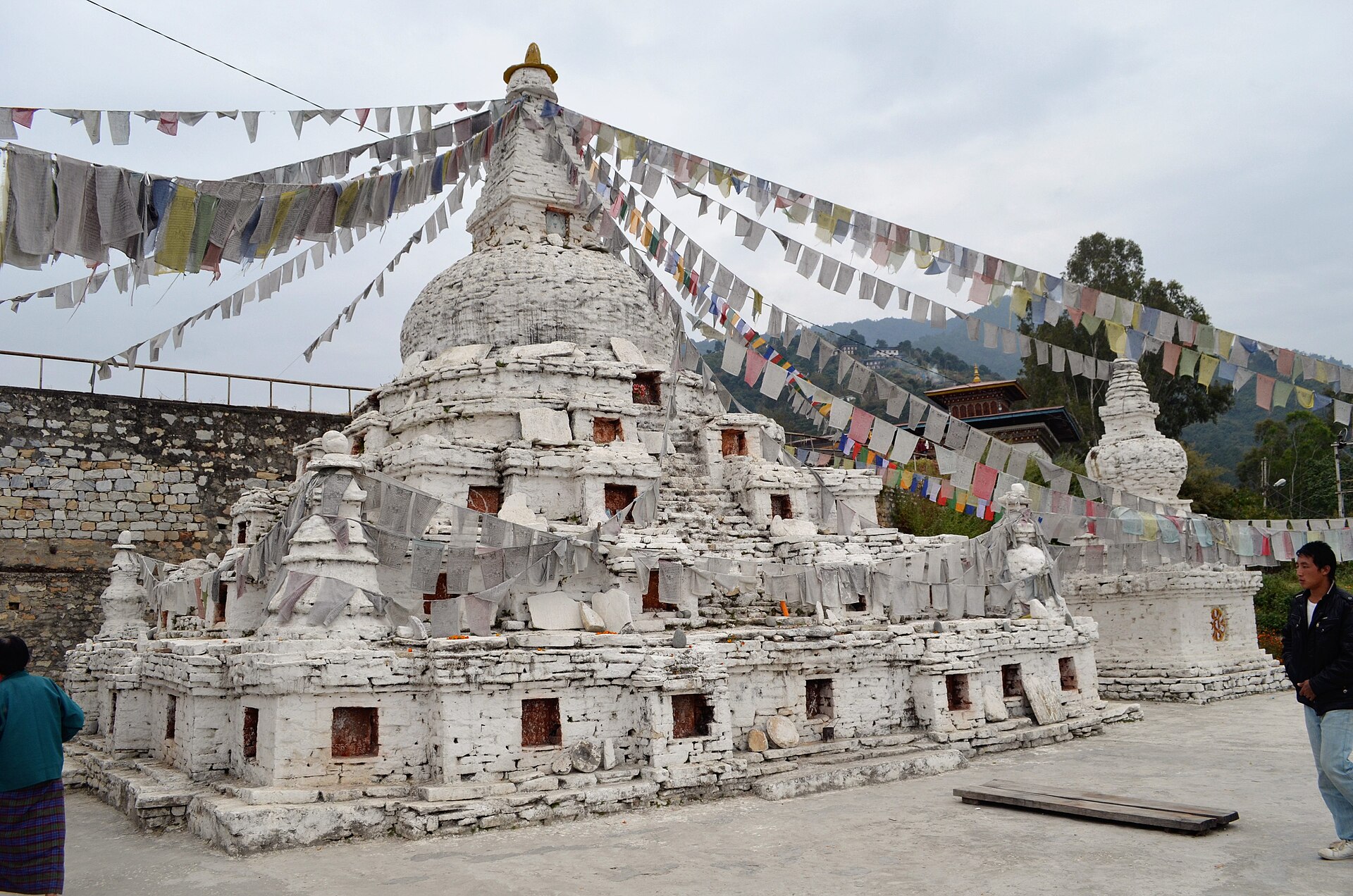
Culture
Mongar's culture is Bhutanese Buddhism lived at village scale. Prayer flags, chörtens and small temples sit on everyday routes, and people often walk a circuit of a sacred monument in the morning or evening. The eastern districts have their own languages, foods and weaving traditions, so the Mongar region feels distinct from the west even though Dzongkha is used in schools and offices.
The Mongar Tshechu is the main annual gathering. A tshechu is a religious festival of masked dances performed in the dzong courtyard, with blessings for those who attend. Families come in their finest clothes, and the day mixes devotion with picnics and gossip. The dates follow the Bhutanese lunar calendar, so check them with the district office or your guide before building a trip around them.
Local life also revolves around farming seasons, schools and the hospital, and the pace is unhurried. Greetings are polite and often a little formal; a smile and a nod go a long way. Offerings of butter lamps, water bowls and incense are common at temples, and the visitor's role is mostly to watch quietly and ask if unsure.
When you enter a dzong or temple in Mongar, dress modestly with shoulders and knees covered, take off shoes and hats before the sanctuary door, walk clockwise around shrines and chörtens, and ask before photographing people or anything inside.
What to wear
In Mongar, traditional dress is the national dress of Bhutan, worn every day by many people rather than saved for festivals. Men wear the gho, a knee-length robe belted at the waist, usually with long socks. Women wear the kira, an ankle-length wrap dress fastened at the shoulders and belted, over a blouse called a wonju and often a short jacket, the tego. Cotton and wool are everyday fabrics, with silk for good occasions. Eastern Bhutan is known for handwoven textiles with intricate patterns in coloured silk and cotton, and kira cloth is often woven at home on a loom.
Formal occasions add layers. Men wear a kabney, a long scarf, and women a rachu, a narrow shawl, when visiting a dzong or attending the Tshechu. The colour of a kabney signals rank among officials.
Day to day, many people in Mongar wear the gho or kira to school and the office, then switch to jeans, fleeces and trainers at home. Younger people mix in jackets and hoodies, and evenings can be cool.
Visitors should pack for changing weather: light layers, a fleece for evenings, and a rain jacket from late spring to early autumn. Trousers or long skirts and tops that cover the shoulders suit dzongs and temples. Footwear matters: sturdy shoes with grip for steep, wet paths, plus slip-ons that are easy to remove at temple doors.
What to eat
- Ema datshi — Any local eatery in town, or home meals
Ema datshi is the national dish: chillies cooked in a soft, salty cheese sauce. In Mongar it appears at almost every meal, usually with red rice. Heat levels vary, so ask whether the chillies are mild, as cooks in the east tend to be generous.
- Red rice — Served at local eateries and guesthouses
Red rice is the soft, slightly nutty grain that comes with most Bhutanese meals, grown on terraces across the country. It carries sauces well and fills the plate alongside vegetable and cheese dishes.
- Momo — Small eateries near the town centre
Momo are dumplings filled with cabbage, cheese or meat, steamed and served with a chilli sauce. They make an easy snack after a day on the road, and small eateries in town often cook them to order. - Suja — Local homes, tea stalls and festival stalls
Suja is Bhutanese butter tea, salty and rich, poured into small cups and refilled often. It tastes unusual at first but is welcome on a cold morning. Locals often have it with puffed rice or other snacks. - Ara — Village homes by invitation, and some bars in town
Ara is a home-made spirit distilled from grain, often rice or maize, and sometimes served warm with egg and butter in rural homes. Drink in moderation: it is stronger than it tastes, and a polite host will keep topping up your cup.
Plan it
Best time. March–April and October–November, when skies are clearer and temperatures comfortable. Summer is warm and wet, with landslide delays on the road; winter is dry and cool.
How long. 2–3
Getting there. From Thimphu the road east takes two days, with a night in Bumthang; buses run the route. Domestic flights serve Yonphula near Trashigang (check current schedules with the airline), followed by a drive to Mongar.
Budget. mid
Tips
- Allow two days for the road from Thimphu; a night in Bumthang breaks the journey
- In the monsoon, check road conditions and leave slack in your plans
- Carry cash for small eateries and shops, as card machines are unreliable outside larger lodges
- If you want the Mongar Tshechu, check the dates well ahead and book a place to stay early
- Check Bhutan's current entry rules and fees through official tourism sources before you travel
Etiquette
- Remove shoes and hats before entering a temple sanctuary
- Walk clockwise around chörtens and shrines
- Ask before photographing people, especially monks and nuns
Nearby
Sources
- Wikidata Q2582611 (CC0)
- Wikipedia — Mongar (rev 1379035559) (CC BY-SA 4.0)
- Wikivoyage — Mongar (rev 5088352) (CC BY-SA 4.0)
- A view of Mongar Town, Mongar Didtrict, Bhutan — Christopher J. Fynn (CC BY 3.0)
- The Regional Referral Hospital at Mongar, Bhutan — Christopher J. Fynn (CC BY 3.0)
- Rainbow upon nunnery in eastern Bhutan — Lakzom606 (CC BY-SA 4.0)
- Aja Ney — Le Dacy Tiger (CC BY-SA 4.0)
- Losel Yangchenling Nunnery in winter — Losel2024 (CC BY-SA 4.0)
- Old Buddhist Chöten, Mongar Town, Bhutan — Christopher J. Fynn (CC BY 3.0)
- Wangchuk Hotel, Mongar, Bhutan — Christopher J. Fynn (CC BY 3.0)


